1. Introduction
The ability of people and goods to move is a key aspect of how modern society and the global economy function. Transportation is essential for enabling people to control their lives, allowing them to choose where they live, work, and spend their leisure time. There is a strong link between economic growth and the efficient movement of goods and people. This has led to a major increase in transport activities since the 19th century, resulting in a significant rise in greenhouse gas emissions from the transport sector. In 2023, the industrial sector was the largest global energy consumer, accounting for 34% of total final energy consumption. Buildings followed with 31%, and transport accounted for 31%, agriculture for 2.5%, and other energy uses for 1.5%. In the European Union, transport was the largest energy user in 2023, accounting for 32% of the total, exceeding buildings at 26.4%, industry at 24.7%, and services at 13.6% [
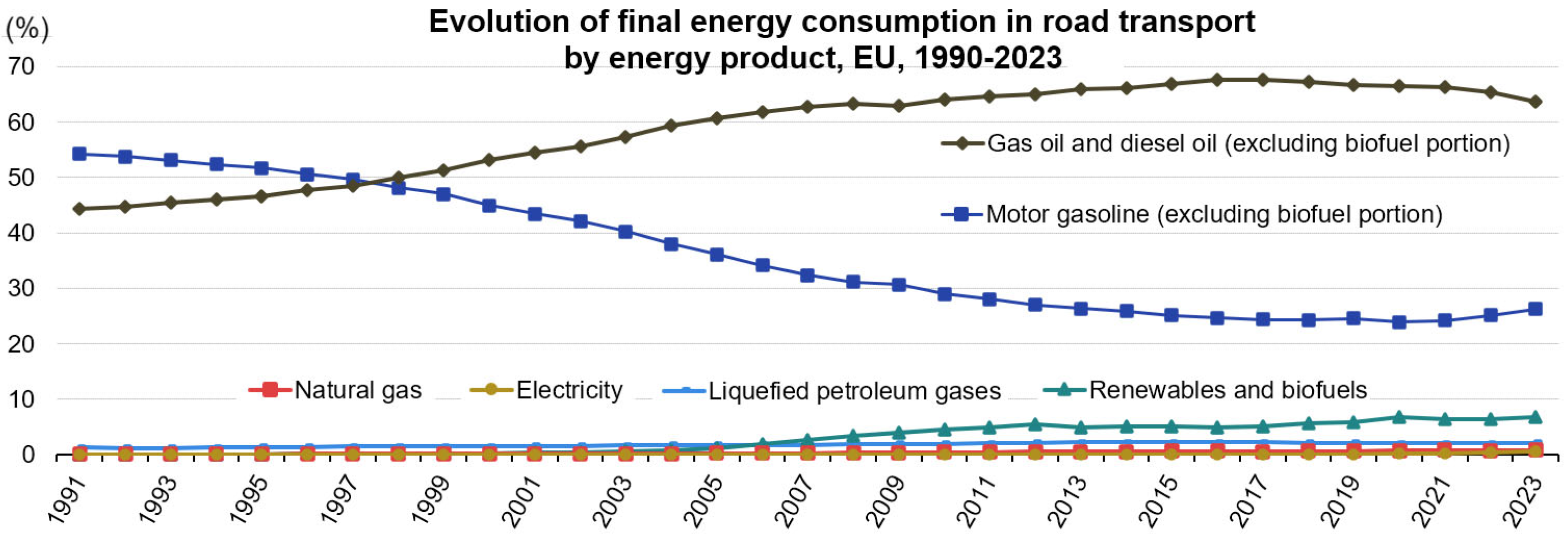
1]. Furthermore, gas oil and diesel oil made up 63.67% of energy sources, while motor gasoline accounted for 26.24%. In contrast, renewables and biofuels represented only 6.69%, with electricity contributing just 0.51%. Despite substantial efforts to promote the use of electricity in transport,
Figure 1 shows that its share has increased steadily in recent years but remains modest.
In addition to consuming large amounts of energy, the transportation sector is responsible for nearly a quarter of all CO
2 emissions from fuel combustion, according to [
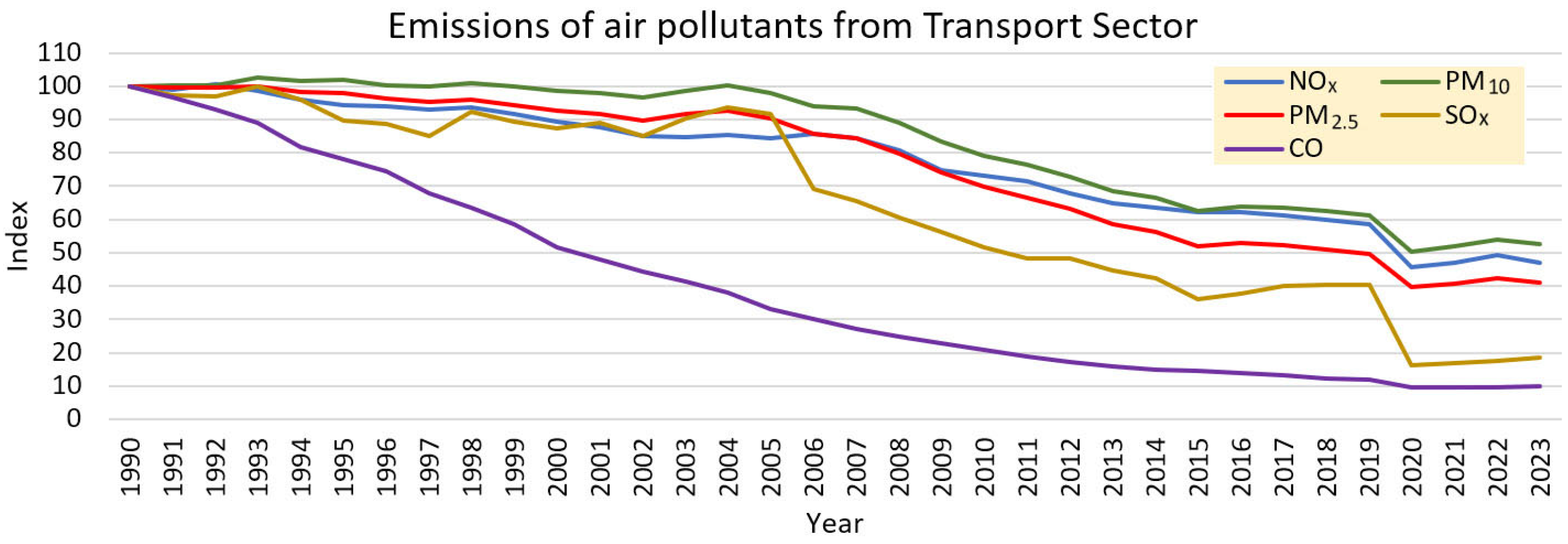
2]. It also plays a major role in releasing various harmful pollutants, as shown in
Figure 2.
Figure 2 shows the normalised index (1990 = 100) for pollutants in the EU-27 (NO
x −53%, PM
2.5 −59% in 2023). The method used is a bottom-up inventory based on fuel sales, activity data and emission factors (COPERT model). Emissions from transportation activities increase air pollution, placing significant pressure on both the environment and human health. Air pollution is considered one of the top four risks to human health worldwide, after high blood pressure, unhealthy diets and smoking. While most other sectors in the EU have managed to reduce their emissions, the transportation sector has not achieved the same level of improvement. While most sectors in the EU have seen emissions decrease, the transport sector has experienced the largest increase in emissions (0.7%) [
3] due to increases in traffic volumes. Furthermore, the number of deaths and injuries in road traffic is rising, and the healthcare costs associated with road traffic are substantial. European policy efforts in recent decades have addressed air pollution related to road, rail, aviation, and maritime transport. For example, the National Emission Reduction Commitments Directive (NEC Directive) sets national emission reduction commitments for five main air pollutants [
4]. As a result of these policies, emissions of many pollutants from the transport sector have been reduced. In the EU-27 member states, between 1990 and 2023, emissions of nitrogen oxides (NO
x) were reduced by 53%, sulphur oxides (SO
x) by 82%, and carbon monoxide (CO) by 90%. In the same period, emissions of particles from transport in the EU-27 with particle diameters of 10 µm (PM
10) and 2.5 µm (PM
2.5) or less, including non-exhaust emissions, were reduced by 47% and 59%, respectively [
5].
While substantial reductions have been achieved for both PM
10 and PM
2.5, the proportion of emissions not attributed to combustion in internal combustion engines—such as those from brake and tyre wear or road abrasion—is increasing in relative terms. In 2023, this share accounted for 77% and 60% of PM
10 and PM
2.5 emissions from road transport, respectively, and is expected to rise further due to the ongoing decarbonisation of the transport sector and the increasing vehicle mass associated with a growing proportion of heavier electric vehicles in the fleet [
6]. For developing nations to sustain economic growth amid climate change, it is imperative to decouple transport sector emissions from economic development. Any plan to keep climate change near the 1.5 °C threshold above pre-industrial levels must take into account greenhouse gas (GHG) emissions from the transport sector. To achieve the European Green Deal target of reducing transport emissions by 90% by 2050, all modes of transport must become more environmentally friendly [
7]. Achieving a global energy transition that ensures energy security, reduces air pollution, and mitigates climate change requires changes in the types of fuel used for transport. The demand for more efficient, faster, and cleaner transport is becoming increasingly important, especially in emerging nations where urban areas are expanding rapidly. This makes the transition even more challenging.
Rail transport has been pivotal since George Stephenson introduced the first practical locomotive in 1814. Over nearly two centuries of development, rail systems have achieved significant advancements in construction materials, control methods, efficiency, speed, emissions reduction, and safety. Railways account for around 2% of energy use within the transport sector [
8] and are identified as the mode with the lowest emissions share: despite facilitating 7% of global passenger-kilometres and 6% of freight tonne-kilometres, they contribute only about 1% of transport-related emissions [
9].
In the EU, rail transport accounts for approximately 16.9% of freight transport and 5.1% of passenger transport while being responsible for only 0.4% of total transport emissions and 1.9% of energy consumption in the transport sector [
1,
10,
11].
The European Commission published its 2024 report, “Communication on the 2040 Climate Target” [
12], which recommends a 90% reduction in GHG emissions by 2040 compared to 1990 levels. Achieving this target requires a major contribution from the transport sector. Among other measures, this necessitates a shift from road to rail transport, resulting in a transfer of overall costs from operational expenses (mainly the purchase of fossil fuels) to capital costs for rail infrastructure. This strategy is clear and justified, as rail transport offers significant advantages: energy efficiency (trains are on average almost twelve times more energy efficient than road and air transport per passenger-kilometre travelled, and eight times more efficient than trucks per tonne-kilometre of freight carried), reliance on diverse energy sources, substantial potential to reduce environmental emissions, and the ability to alleviate transport congestion [
13]. Railways are also efficient in land use. While rail requires around 7 m
2 per passenger transported, bus transport requires 20 m
2 per passenger, and passenger car transport as much as 100 m
2 per passenger [
14]. Given the expected growth in freight transport and the limited potential for rapid adoption of low-carbon technologies for trucks, the shift to rail freight transport offers a logical and sustainable solution [
15]. Consequently, rail is becoming an important component of the European Green Deal.
The development of modern electrified railways and associated infrastructure can significantly contribute to the development of smart cities by promoting sustainability, efficiency, and quality of life through reduced CO2 emissions and air pollution compared to cars or buses, supporting cleaner urban air and public health, and alleviating traffic congestion.
This research examines the status, role, and potential of rail transport in achieving the decarbonisation of transport, as well as its ability to meet modern demands for the mobility of passengers and goods both within individual countries and between regions of the EU (transport corridors). The focus is on Europe, with particular attention to the EU-27 member states, but key global data related to transport and railways are also included.
Although railway decarbonisation technology has been relatively well studied in developed countries with high levels of railway electrification (such as Switzerland, France, and Germany), a systematic analysis of how these technologies can be implemented in regions with lower electrification, such as many countries in Southeastern Europe, is lacking. For example, Croatian Railways electrified 38.7% of the total network by 2024, making the traditional path of complete electrification economically or infrastructurally unfeasible [
16]. In such circumstances, a combination of alternative technologies—batteries, hydrogen, biofuels, photovoltaic cells—can be more efficient than relying on a single technology.
This research is based on a review of the available literature to identify and evaluate:
which technologies are available for decarbonising railways;
how the effectiveness and implementability of these technologies vary depending on geographical context, traffic density, and the electricity grid;
which conditions and assumptions are required to achieve the desired modal shift;
where the critical gap exists between available technology and actual implementation.
The contribution of this research is the synthesis of knowledge from four domains—energy, transport, policy, and economics—to form a holistic framework for decision-making on the selection of appropriate technologies and priority actions. The paper pays particular attention to the state of implementation of alternative and renewable energy sources in railway transport as a key means of decarbonising this subsector, supporting cleaner urban air and public health, and reducing traffic congestion.
This research aims to be a valuable resource for the climate and academic communities, as well as policymakers, to better understand emissions from the transport sector, the potential of railways in mitigating climate change, and the connection between the energy and transport sectors in achieving decarbonisation goals.
2. Materials and Methods
The first phase, data collection, involved searching the WOS and Scopus databases using an advanced search strategy. Queries were designed to capture literature focused on key concepts, using the keywords “railway”, “transport”, “emission”, “energy”, and “renewable” within the keyword field. The search included all document types but was limited to research published in English. The search results are shown in
Table 1.
Of the 1847 records identified, 551 duplicates were removed, and 1435 records were excluded due to non-essential topics (e.g., those solely on roads, specific design topics for trains, or non-EU subjects). Full text was available for 412 results. Of these, some were excluded because they were not reviewed, and part of a record was also considered irrelevant. In total, approximately 160 papers were analysed in detail. In addition, around 35 different grey literature sources, such as EUROSTAT, EEA, and IEA reports, were included, resulting in approximately 195 literature sources analysed.
For the analysis, published research from the past decade was considered relevant, accounting for over 70% of all literature sources, as this period saw more intensive development of technologies such as battery trains, hydrogen-powered trains, and the application of PV systems in trains. Conversely, empirical data older than 10 years are limited.
The Scopus database provides a much larger number of works, as shown in
Table 1, and the vast majority of works in the WOS database are also included in Scopus. Given the very large number of different literary sources yielded by the searches (with only a small number of overlaps between different queries), considerable time was required to analyse and collect relevant data for this research. As it was not possible to obtain the latest statistical data on energy consumption in transport and railways, or the share of renewable energy sources in the transport sub-sectors, from this multitude of literature sources, it was necessary to use so-called “grey literature” in the research. To collect the latest statistical data on GHG emissions, data from EUROSTAT and the European Environment Agency were used as reliable sources. In addition, data from reports by specialised global and European agencies such as the International Energy Agency (IEA), the Association of European Rail Rolling Stock Lessors, REN21 (Renewable Energy Policy Network for the 21st Century), and similar organisations were used. Overall, grey literature accounts for about 18% (35/195) of the input sources. Finally, of the analysed literature, 71 references are cited directly in the paper.
Based on the selected literature, relevant data were analysed and synthesised regarding the type and share of energy sources used in transport, environmental emissions, railway electrification in individual countries, and the necessary investment in infrastructure to meet the standards of the Trans-European Transport Network (TEN-T). Special emphasis was also placed on the potential for using renewable energy sources in railways, which directly contributes to achieving the decarbonisation goals of this sub-sector.
The literature review is based exclusively on published studies in English, which may introduce language bias into the data analysis. This may lead to an incomplete sample, (excluding data specific to individual EU regions and countries), thus limiting the comprehensiveness of the analysis. Empirical analyses confirm that the exclusion of non-English papers can alter the conclusions of reviews in up to 10% of cases [
17]. In this EU transport research, the authors estimate that language bias is less than 5%, owing to the predominance of English in (a) official EUROSTAT and European Environmental Agency statistics, (b) railway decarbonisation technology documents, including Overhead Line Electrification (OLE) standards, Battery Electric Multiple Unit (BEMU) specifications, and hydrogen (H2) locomotive documentation, all of which follow International Union of Railways (UIC) and European Train Control System (ETCS) norms documented exclusively in English, and (c) an additional search conducted by the authors in WoS using non-English keywords (Croatian, German and French), which yielded no further relevant results. Therefore, over 90% of works on railway transport and engineering published in WoS or Scopus are in English.
3. Results
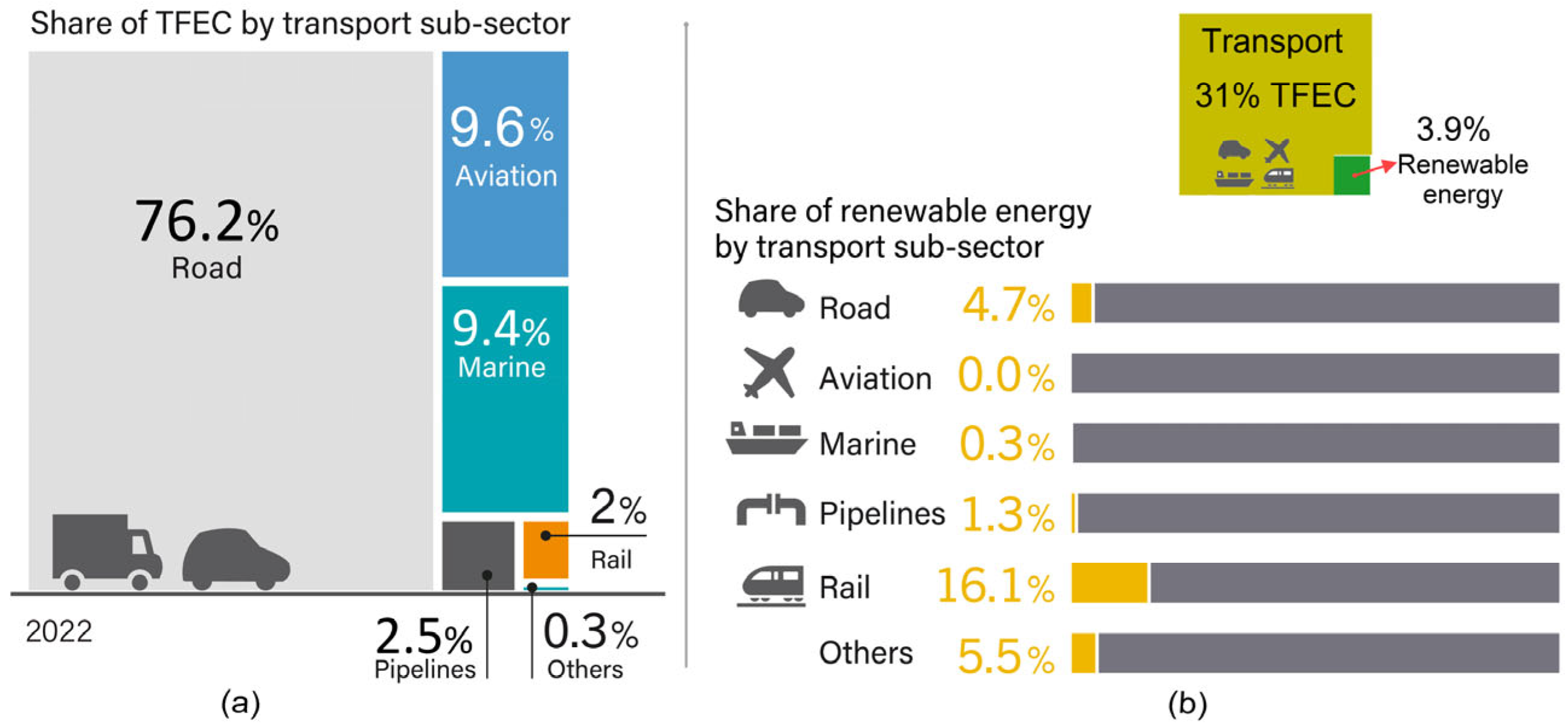
An analysis of the global transportation sector in 2022 shows that road transport accounted for the largest share of final energy consumption at 76.2%. Air transport followed with 9.6%, water transport with 9.4%, pipeline transport with 2.5%, and rail transport with only 2% (
Figure 3a). Only 3.9% of total energy consumption in the transport sector was from renewable sources. Of this, biofuels comprised the majority at 3.5% of total energy consumption, while renewable electricity contributed only 0.4% [
18]. Notably, the railway sub-sector had the highest share of renewable energy sources (
Figure 3b).
Data for Europe in 2023 show that road transport accounted for 73.4% of total energy consumption in transport, air transport for 12.5%, water transport for 12.1%, and rail transport for only 1.4% [
1]. Rail transport was the only category in which final energy consumption decreased in 2023 compared to 1990, by a significant 30.5%, mainly due to reduced traffic volumes. In 2024, renewable energy sources accounted for an average of 11.20% of energy consumption in EU transport. Renewable electricity accounted for only 1.04%, with the remainder being biofuels. The highest shares of renewable energy sources and biofuels in EU transport were recorded in Sweden (26.4%), Finland (20.3%), the Netherlands (19.7%), and Austria (14.6%), while the lowest were in Croatia (0.94%), Greece (3.87%), and the Czech Republic (5.74%) [
19].
The transport sector remains a major source of air pollutants, despite many political and technological advances. Analysing the EU-27 (data for 2023), the share of transport in NO
x emissions was 49.83% (2480 kt), and in PM
2.5 emissions it was 11.64% (136 kt). Road transport had the highest share of PM
2.5 emissions in transport (98 kt, or 72%), representing 8.4% of total PM
2.5 emissions. Rail transport contributed 2.8% of PM
2.5 emissions in transport, or only 0.33% of total PM
2.5 emissions. The largest share of NO
x emissions also came from road transport (71.91%), while rail transport accounted for 1.69%. The share of rail in total NO
x emissions (4978 kt) was 41.82 kt, or 0.84% [
20]. NO
x is largely (around 75%) the result of the combustion of oil and petrol in internal combustion engines, making it one of the main sources of air pollution and health risks, especially in urban areas. Therefore, decarbonisation of transport is key to reducing greenhouse gas emissions.
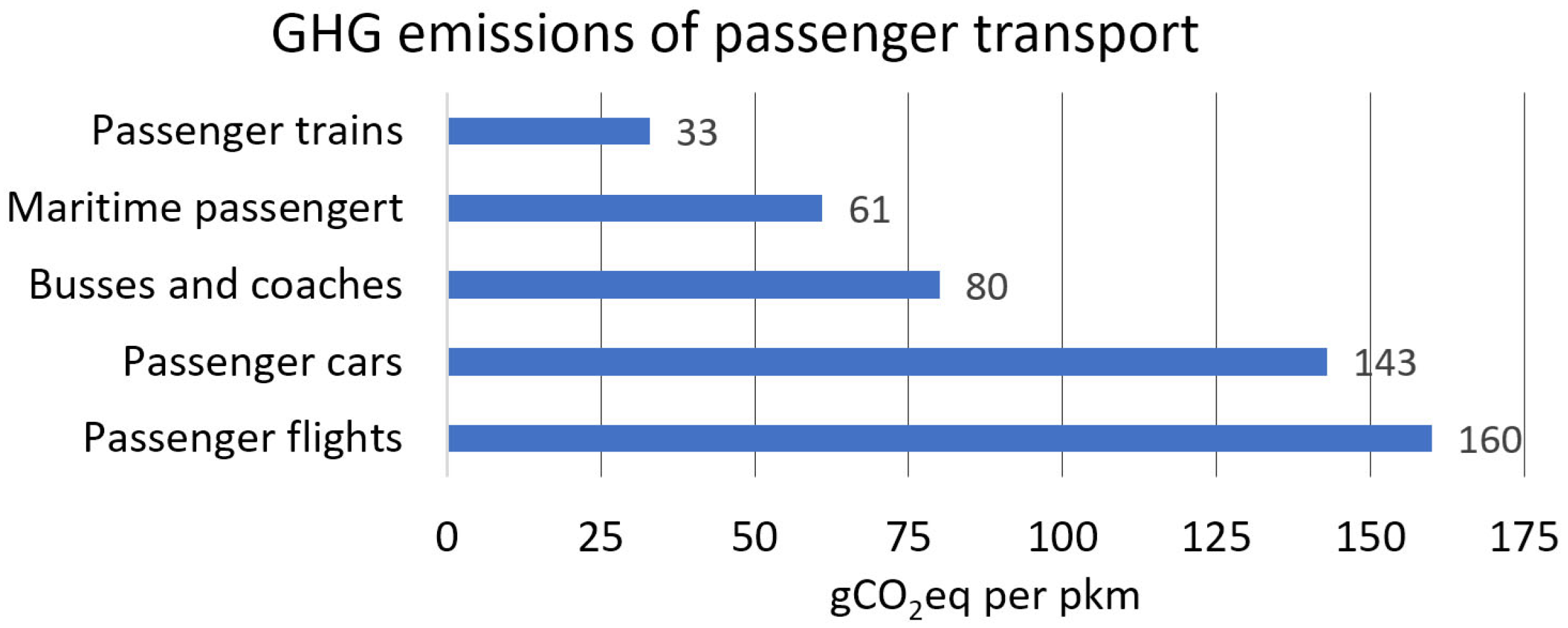
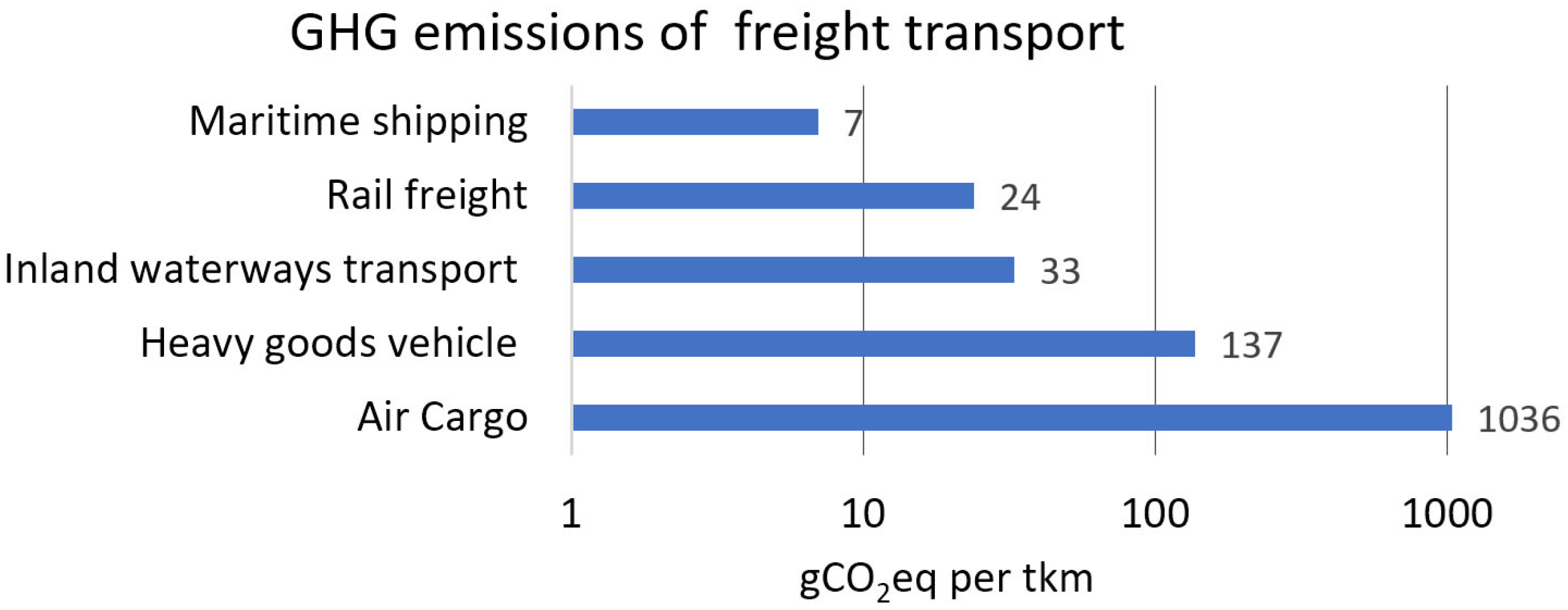
Rail plays an increasingly important role in the modal shift to low-GHG transport, as it has the lowest GHG emissions in passenger transport on average (
Figure 4) and, after maritime shipping, the lowest GHG emissions for freight transport (
Figure 5) [
21].
While diesel remains the primary choice for moving goods by road, it still accounts for 75% of the energy used in freight transport. In contrast, for rail transport, electricity comprises between 45% and 47% of the total energy mix, with biodiesel playing a minor role [
9,
13]. Battery-powered trains have become an important part of the rail network in recent years, supporting electrification and increasing energy efficiency. To ensure trains operate smoothly and efficiently, researchers are developing improved methods for charging their batteries. Kociu et al. [
22] state that electrified railways are among the most environmentally friendly modes of transport, especially when they use regenerative substations (RSSs) to store and reuse energy. However, establishing and maintaining these systems require significant financial investment and careful planning. The energy losses involved in these systems are justified only when there is a high level of train activity, making them most effective on busy routes. It is clear that rail transport, like other forms of transport, must contribute to global efforts to reduce carbon emissions.
This includes supporting European goals like the European Green Deal and the Recovery Plan. Electrifying additional railway lines is one of the most effective ways to reduce greenhouse gas emissions from rail transport, especially if the electricity is generated from renewable energy sources. Electrifying trains is not just better for the environment; it is also more cost-effective than using diesel-powered trains, provided the turnover volume justifies the capital cost. Because of this, the share of electrified railway tracks has been growing steadily over the past few years.
In 2023, 49.6% of the railway network in European countries (31 countries) was electrified. The level of electrification varies significantly between countries. Switzerland has a 100% electrified railway network, Luxembourg 96.8%, Belgium 91.6%, and the Netherlands 78.2%, while the countries with the least electrified networks are Kosovo with 0%, Lithuania with 7.9%, Estonia with 15.6%, the Czech Republic with 34.4%, and Croatia with 38.7% [
16,
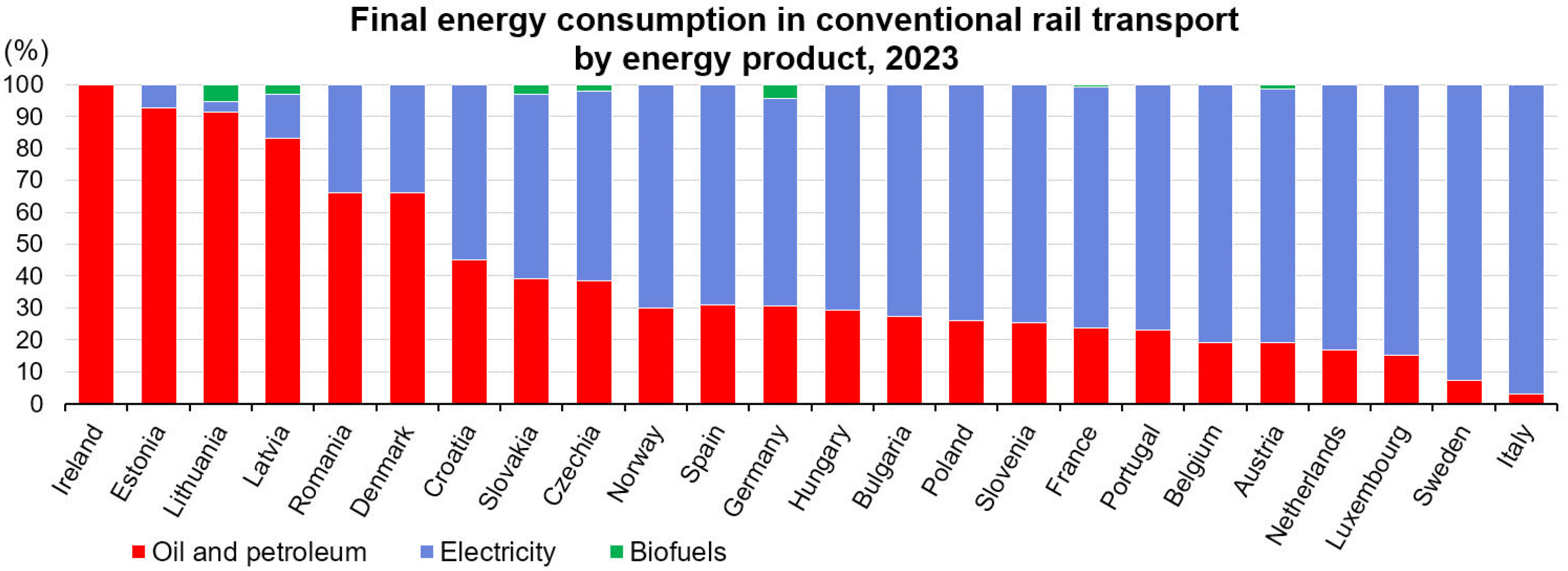
23]. Currently, about 45 to 47 percent of the energy used in rail transport worldwide comes from electricity. However, in the European Union, the percentage of energy that comes from electricity is much higher. For example, in 2023, more than 79.6 percent of the energy used in rail transport in the EU was electricity, which is a significant increase from the 52.4 percent in 1990 [
1]. When looking at specific countries, the situation varies quite a bit (
Figure 6). In Ireland, all the energy used for railway operations comes from oil and oil products, meaning it is 100 percent oil-based. In Denmark, about 66 percent of the energy used in rail transport comes from oil and oil products, while in Croatia, it is around 45 percent. On the other hand, in Italy, only 3 percent of conventional rail transport uses oil and oil products, and in Sweden, this figure is 7.1 percent. These differences show how the energy mix for rail transport can vary greatly depending on the country.
Germany had the highest absolute electricity consumption in rail transport, at 11,501 GWh, followed by France at 8420 GWh and Italy at 6179 GWh [
1].
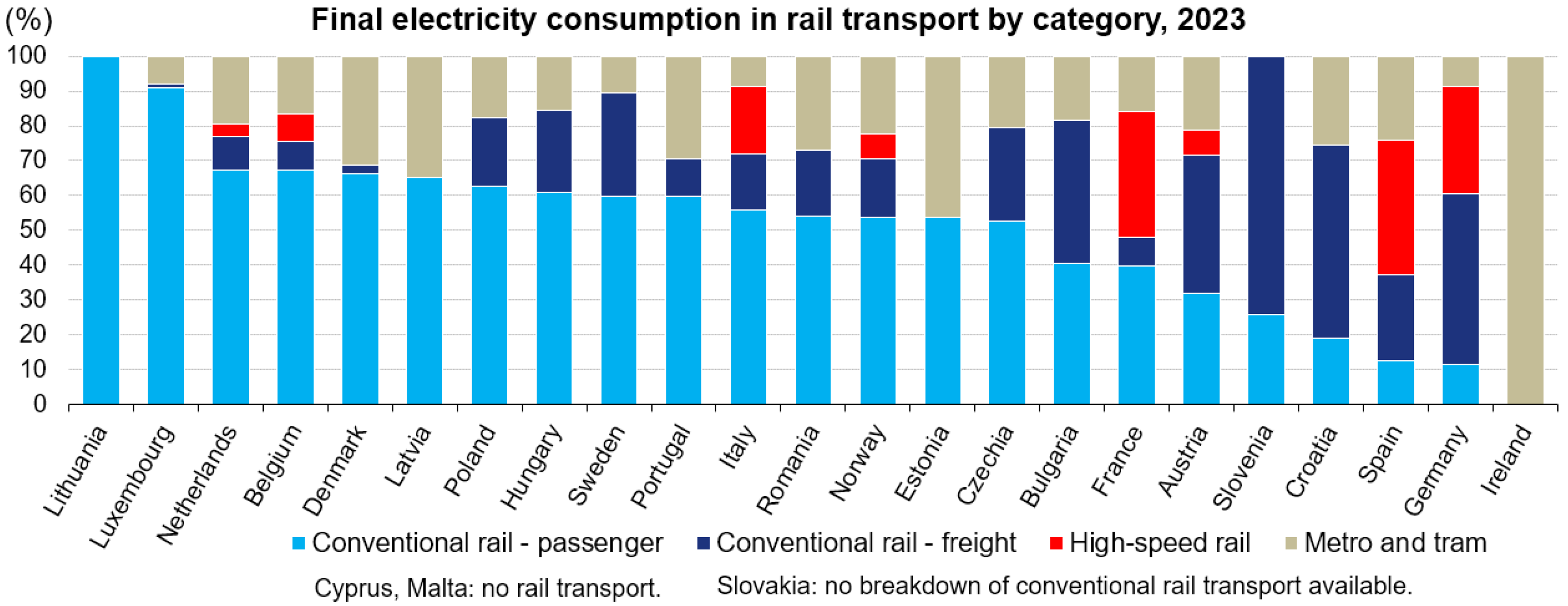
An in-depth analysis of freight and passenger train-kilometres shows that rail systems in countries such as Canada, Mexico, the United States, Russia, Brazil, and Australia are primarily used for transporting goods. In contrast, rail networks in the European Union, Japan, and South Korea are mainly used for passenger transport. These differences are also reflected in the planning and management of rail systems, as well as in infrastructure ownership. For example, in North America and South Africa, freight trains have priority on the rail network, while in the European Union, India, and Japan, passenger services are prioritised. Furthermore, in most European Union member countries, more than half the electricity used by the rail system is for passenger transport, as shown in
Figure 7 [
1]. This supports the earlier points about the different uses of rail systems in various regions [
13].
The share is 19% in Croatia, 26% in Slovenia, and approximately 38% in Austria. In two European Union countries, high-speed trains consumed more electricity than conventional passenger trains: in Spain, the shares were 38.6% and 12.5%, respectively, and in Germany, they were 31.0% and 11.6%, respectively. Additionally, metro and tram systems accounted for over 8% of electricity consumption in the transport sector in most countries. They contributed 46.4% in Estonia, about 26% in Croatia, and 100% in Ireland, while in Slovenia, this share is 0%. These data clearly show significant potential for railway electrification in most EU countries and globally.
In addition to using electricity directly from the power grid, trains can also be powered by batteries. For example, the Japanese BEC819 (DENCHA) series are the world’s first battery electric passenger trains (in operation since 2016) that are charged via the overhead power grid. These trains mainly operate on non-electrified lines and are charged on electrified sections [
18].
To improve efficiency and flexibility on non-electrified lines, the Italian company Trenitalia employs a four-mode train that can operate on diesel fuel, batteries, overhead wire power, or in a hybrid diesel–battery mode [
24]. This reduces CO
2 emissions on non-electrified routes in urban areas and also lowers noise levels at railway stations. In Croatia, battery-powered trains will be manufactured by KONČAR—Electric Vehicles from 2025. The trains are designed for an average daily range of up to 480 km and an average daily operating time of up to 18 h [
25].
Many institutions and agencies specialising in the transport or energy sectors are engaged in forecasting the development of railways globally until 2050. One of the most renowned is the International Energy Agency (IEA) [
13], which has created various railway development scenarios.
The Baseline Scenario projects substantial growth in high-speed rail networks, especially over the next decade. China remains a key driver of high-speed railway development, with nearly half of the projects expected to be launched by 2050 located within its territory. This has led to a significant increase in high-speed rail activity, shown by a threefold rise in passenger transport in China, an 85% increase in Japan, and a 66% increase in the European Union. Urban rail systems—including commuter trains, light rail, metro, and tram networks operating on fixed routes within cities and their suburbs—also contribute significantly to this growth.
The development of suburban rail systems in India is highly significant, as they are expected to handle the highest level of passenger traffic worldwide by 2050. The Baseline Scenario indicates strong growth in rail transport activities, resulting in a substantial increase in energy demand. By 2050, electricity consumption for rail transport is projected to reach approximately 700 TWh. Furthermore, by that time, nearly 97% of passenger rail travel and about two-thirds of freight transport are expected to be conducted by electrified rail, making rail by far the most electrified mode of transport overall [
13].
In the High Rail Network scenario, the volume of passenger rail travel is predicted to rise by 60% compared to the Baseline Scenario by 2050, while freight rail transport is expected to increase by 14%.
The greatest potential for growth lies in urban rail systems, such as metros and light rail. These systems are likely to experience activity levels 2.6 times higher than in the Baseline Scenario, especially in densely populated urban areas of China, India, and Southeast Asia. These regions often face heavy traffic and poor air quality, making rail an attractive option. In large cities, there will be strong demand for rail services from people living near the stations [
26].
For both regular and high-speed rail services, the most promising areas for development are those with high transport demand. Specifically, this includes:
Alternative Fuels and Renewable Energy Sources in Transport
The European Association of Railway Lessors (AERRL) has estimated that half of the locomotive fleet, with a large portion being used for freight transport—specifically around 13,350 locomotives—still runs on diesel [
28]. Most of these diesel-powered locomotives are shunting engines, which are primarily used in marshalling yards throughout Europe, totalling about 10,500 units. However, there are still around 2850 mainline diesel locomotives in operation.
Given the significant environmental impact of these diesel-powered trains in terms of greenhouse gas emissions and air pollution, various solutions are being explored to make rail transport more sustainable.
These include electrifying railway lines, using alternative fuels, and integrating renewable energy sources into both rail transport and infrastructure. A recent study [
28] looked into the potential of using HVO (hydrotreated vegetable oil), hydrogen, or battery/electric trains as viable alternatives. Each of these solutions has its own set of benefits and drawbacks, and they are more suitable for certain applications than others:
HVO can be used by the current diesel train fleet without requiring significant investment. However, while this option is convenient and easy to implement, it still results in relatively high GHG emissions when compared to hydrogen or battery/electric trains.
Hydrogen is a promising alternative because it offers excellent autonomy and very low emissions. However, hydrogen-powered locomotives are more expensive, costing between 1.5 to 2.5 times more than diesel locomotives. Despite this, advancements in proton exchange membrane fuel cell technology and improvements in the production of green hydrogen are making hydrogen trains more sustainable and efficient. These developments allow hydrogen trains to reach speeds of up to 140 km/h and travel up to 1000 km without refuelling, which is better than battery-powered trains. As a result, hydrogen trains are becoming increasingly competitive [
29].
Battery/electric trains are expected to be more cost-effective than hydrogen trains, with their costs falling somewhere between diesel and hydrogen-powered options. These trains also produce very low emissions. However, one limitation is that battery-powered passenger trains typically have a limited range—usually between 80 to 200 km on a single charge. This restricts their use mainly to shorter, non-electrified routes that are under 70 km in length.
In recent years, there has been growing interest in incorporating renewable energy sources into railway systems, as shown by several scholarly studies.
Liu et al. [
30], for example, showed the technological and financial advantages of integrating photovoltaic (PV) systems into railway infrastructure. Similarly, Aguado et al. [
31] suggested the use of hybrid energy storage systems that combine ultracapacitors and batteries to ensure a reliable energy supply for railway transport, relying on renewable energy sources.
Electricity from photovoltaic cells is among the most promising renewable sources due to its wide availability, ease of installation, low maintenance costs, and zero greenhouse gas emissions during operation. Ongoing technological progress makes photovoltaic systems economically competitive and well suited to high-consumption sectors such as transport [
32]. Many studies confirm the potential of using existing high-speed and conventional railway infrastructure to generate electricity through photovoltaic systems, with significant economic and environmental benefits, for example through the installation of panels along the tracks, integration with the electricity grid, and storage systems (Chen et al. [
33], Park et al. [
34], Binduhewa et al. [
35]). In Germany, 39% of the total area covered by ground-mounted PV plants is along transport routes, of which 22% is along railways and the remainder is along road routes [
36].
Fallast et al. [
37] present regulations and standards related to road and railway noise barriers, and consider the application of photovoltaic systems to such infrastructure.
The energy output of photovoltaic cells installed on the roof of a passenger car travelling on Iran’s Kerman–Tehran railway is examined by Rohollahi et al. [
38] under various conditions, including different months, hours, and train speeds. Nale et al. [
39] investigated in detail the potential of solar-powered trains as an environmentally friendly option for future rail transport. They conducted a comprehensive analysis of the environmental, economic, and technical benefits of integrating photovoltaic cell technology on the roofs of carriages. They also explored the complexities of implementing solar-powered rail transport in practice, including the required infrastructure development, energy storage options, and efficiency optimisation techniques.
Darvishpour and their team in their study [
40] suggest the idea of placing photovoltaic systems directly on the wagon roofs to create electricity, which can help cut down on energy expenses and reduce harmful emissions. This approach aims to build a more sustainable and eco-friendlier railway system. Their research specifically looks at the Milano Cadorna–Saronno regional railway line, where solar systems installed on the tops of train carriages could produce energy for use inside the train. This energy would be used for things like lighting and air conditioning. They used software called PVSOL 2023 (R7) to run simulations, and their results show that having solar panels on the train roofs could provide nearly 10% of the train’s extra energy needs. That translates to about 600 megawatt-hours of electricity being used each year from this renewable energy source.
Wind turbines along railway corridors have the potential to be a valuable renewable energy source, with results indicating a significant contribution to the energy supply, depending on wind availability and turbine efficiency (Kuznetsov et al. [
41]).
Numerous projects and programmes are being developed to incorporate renewable energy sources into rail transport. In 2010, TER-SNCF, the national railway company of France, conducted a test with a diesel multiple unit (DMU) fitted with thin-film CIGS solar photovoltaic (SPV) modules on its roof. This system had a capacity of 990 Wp (watt-peak) and supplied part of the electricity for the train’s lighting system [
42]. In 2011, Indian Railways began using 1 kWp SPV modules on the roofs of some trains in Pathankot, Punjab, India. These modules provided power to a 420 W electrical load. Another notable effort was made by the Kalka-Simla Mountain Railway in Himachal Pradesh, India, where SPV technology powered six 6-watt LED bulbs [
42].
In Australia, Byron Bay Railway introduced an electric train with solar panels on its roof. These panels generated electricity mainly for traction to power the train’s movement and to charge the batteries [
43]. A study by Vasisht et al. [
44] examined the financial benefits of installing solar photovoltaic modules on the roofs of train carriages in India. Solar energy was used only for purposes unrelated to traction. Their findings showed that the energy produced during daylight hours exceeded the train’s electrical demand. As a result, they estimated annual savings of €57,300 and a reduction in CO
2 emissions of 239 tonnes. In 2017, Indian Railways introduced its first solar-powered train, which also had photovoltaic panels on the roofs of its carriages [
45]. According to research by Raizade et al. [
46], installing solar panels on train roofs along with advanced power electronic converters is an effective and economical way to supply trains with electricity for purposes unrelated to traction. Muhammad Talha et al. [
47] conducted a study involving the installation of solar panels on the roof of a CRH2 high-speed train in China. This arrangement enabled the charging of supercapacitors while the train was in motion and provided a power source in sections of the “Lanshin” railway lacking electrical infrastructure.
A recent analysis by Ouaida et al. [
48] indicates that installing solar panels on the roofs of Moroccan trains can provide a sustainable and environmentally friendly solution for meeting the energy requirements of the railway system. The efficiency of a photovoltaic system largely depends on radiation intensity and temperature. As these factors can vary over time, improving Maximum Power Point Tracking (MPPT) algorithms is crucial to ensure that the maximum possible power is extracted from the photovoltaic cells in real time [
40,
49].
Hydrogen-powered and battery-powered trains are becoming increasingly important as alternatives to rail electrification. Major fuel cell and hydrogen manufacturers have planned a portfolio of more than 100 trains for production over the next five years [
24]. Germany will introduce 14 hydrogen-powered trains in 2022, replacing diesel locomotives on 100 km of track [
18]. Several other EU countries have ordered hydrogen-powered trains to phase out diesel locomotives on secondary routes. To achieve full commercial operation by 2030, Japan has introduced the HYBARI, a prototype hydrogen-powered hybrid train equipped with fuel cells and batteries. This alternative can reduce fuel consumption by 50% compared to trains running solely on diesel. The hybrid drive allows switching between battery power, mains power (typically 3 kV), and diesel. The train can travel approximately 15 km using only batteries. The batteries can be charged during braking (regenerative braking) or by drawing electricity from the overhead grid [
24].
The main advantage of hydrogen trains is that they do not require investment in electrical infrastructure along the tracks, and hydrogen can be produced from renewable sources [
50]. However, the high cost of “green hydrogen” produced by electrolysis remains an obstacle. Research on the design of hydrogen refuelling infrastructure shows that by optimising the location of stations, storage, and pipelines, efficient solutions can be achieved, adapted to parameters such as the number of trains and available space [
51].
The development of internal combustion engines using hydrogen as a fuel source creates the possibility of their use in railway systems. Marjani et al. [
52] conducted a comprehensive technical, economic and environmental study on the feasibility of converting trains from diesel to hydrogen propulsion using internal combustion engines. The researchers evaluated train performance, fuel consumption, and emissions associated with both hydrogen and diesel engines. According to their research, trains running on hydrogen emit no carbon dioxide, whereas diesel trains emit similar amounts of nitrogen oxides. The authors concluded that hydrogen combustion engines, which have significantly lower investment costs than fuel cell technology, offer a viable medium-term alternative for regional railway decarbonisation. Additionally, regenerative braking systems have proven to be an effective approach for enhancing energy efficiency and reducing operational costs in high-speed trains [
34,
53]. These systems harness the kinetic energy generated during braking and convert it into electrical energy, thereby offering a substantial opportunity to improve the energy efficiency of railway operations.
4. Discussion
According to the IEA study [
13], major global trends such as urbanisation and digitalisation are expected to influence future energy consumption in the transport sector. Railway systems have the potential to serve as a pivotal component by capitalising on their inherent advantages in transporting passengers and freight along densely populated corridors. By diversifying energy sources and improving mobility efficiency, railways can significantly reduce energy demand and associated emissions, including CO
2, NO
x, and PM
2.5. As already mentioned, emissions from brake and tyre wear or road abrasion increase with the electrification of road vehicles and account for a significant share of PM
10 and PM
2.5 emissions from road transport. Railways do not have these issues and enable a substantial reduction in particulate emissions, although braking mechanisms and friction between wagon wheels and rails are also sources of particulate matter. The advantages of railways also extend to the economic and social spheres, as railway systems can be competitive in key criteria such as speed, volume of freight and passengers transported, reliability, safety, and price.
In 2024, worldwide financial commitments to electrified transportation amounted to USD 757.4 billion. The majority of this investment was allocated to electric road vehicles [
18]. This demonstrates that transport is increasingly shifting towards electricity as a fuel. The European Union invests approximately EUR 40 billion annually in railway infrastructure [
54]. Of this, 25% is allocated to maintenance, 27% to renewal, 28% to modernisation, and 20% to new infrastructure. However, the system remains fragmented, with large sections of national networks not meeting the standards of the Trans-European Transport Network (TEN-T). This limits the competitiveness of rail compared to road and air transport, preventing fast, reliable, low-emission services.
Empirical data highlight critical weaknesses in EU railways: less than 20% of Trans-European Transport Network (TEN-T) corridors are equipped with the European Rail Traffic Management System/The European Train Control System (ERTMS/ETCS), which is essential for interoperability, safety, and capacity [
54]. While five countries support speeds above 240 km/h (most lines in Spain, France, and Italy), in eight countries more than 55% of the network is limited to speeds below 80 km/h (mainly in Luxembourg, Croatia, and the Czech Republic) [
54]. Therefore, the revision of the TEN-T regulation sets minimum standards for speed and interoperability along key EU rail corridors.
According to the authors of this paper, investment in rail infrastructure should be doubled to achieve the TEN-T targets by 2030 and 2040, and the private sector should also be encouraged to invest.
In 2024, the countries of the European Union placed strong emphasis on upgrading their rail infrastructure and improving cross-border travel. Germany, for example, has set a target for 75% of its rail network to be powered by electricity by 2030. However, achieving this goal will require significant work, as highlighted in reference [
18]. One of the main reasons for promoting electrified rail transport is its economic and environmental benefits. Although the infrastructure required to supply electricity to rail systems is expensive to build and maintain, it becomes a sound investment when there is sufficient traffic on the tracks, as costs can be distributed over a large number of journeys [
22,
55]. Unfortunately, very few train systems in developing nations experience enough traffic to justify the economic viability of electrification. At the same time, the development of new train power systems, such as battery electric and hydrogen-powered engines, is making significant progress. These systems are particularly useful for low-traffic routes, which are common in many regions. These technologies are rapidly evolving for both passenger and freight services and are currently undergoing real-world testing. By 2035 or 2040, experts predict that these new systems will be widely adopted. Additionally, many older diesel-powered locomotives still in use can be retrofitted with batteries or hydrogen fuel cells during regular overhauls. This upgrade process helps reduce ongoing reliance on diesel fuel, which is not only costly but also contributes to pollution.
The benefits of converting railways to electricity or hydrogen depend on the availability and reliability of these fuels, as well as the proportion of renewable energy sources in electricity generation. Therefore, the timing of the railways’ transition to these fuels must be coordinated with the energy sector’s shift to renewable energy sources. There are significant differences of opinion among policymakers and scientists regarding the “right” fuel mix, with varying perspectives on the advantages, disadvantages, and barriers to implementation. Central to this disagreement are issues of cost and responsibility: the transition to a more sustainable transport system based on renewable fuels has a considerable impact on energy infrastructure at various levels of the supply chain, depending on the type of fuel used. As individual countries possess different local energy resources, established infrastructure, and contracts with energy suppliers, such disagreement is unsurprising.
The latest data (2024) show that in Europe, the carbon intensity of electricity generation ranges from 24 g CO
2eq/kWh to 895 g CO
2eq/kWh, depending on the country’s electricity mix [
56] (for Croatia it is 174 g CO
2eq/kWh, for neighbouring Bosnia and Herzegovina it is 638 g CO
2eq/kWh, and the lowest is 24 g CO
2eq/kWh in Albania). The average for Europe is 281 g CO
2eq/kWh, the average for Asia is the highest at 594 g CO
2eq/kWh, while the lowest is in North America at 172 g CO
2eq/kWh. It follows that countries investing in renewable energy sources for transport before the energy sector has transitioned to renewables will not realise the full potential of these investments until the energy sector achieves very low emissions [
57]. However, it should also be noted that the complexity—and thus the accuracy—of measuring these emissions arises from a wide range of factors throughout the life cycle of rail transport [
58].
The mean energy expenditure for electric rail systems is 18 kWh per 100 passenger-kilometres. In comparison, diesel-powered automobiles consume 58 kWh, petrol-powered vehicles 74 kWh, and aircraft 75 kWh per 100 passenger-kilometres [
59,
60]. This shows that rail transport achieves energy savings of approximately 70–76%.
Since rail is currently highly energy efficient, its main potential for climate change mitigation lies in shifting transport from less energy-efficient modes, such as road and air, to rail [
61]. For example, using a diesel train instead of a two-person car saves around 84 g CO
2eq per kilometre, while moving one tonne-kilometre of freight from a heavy truck to a diesel train saves around 55 g CO
2eq. Electrification of rail transport saves an additional 13 to 19 g CO
2eq per passenger-kilometre or tonne-kilometre, assuming an overall grid emission factor of 400 and 200 g CO
2eq per kilowatt-hour of consumption, respectively [
57]. In addition, new technologies, alternative fuels, operational improvements, and increased energy efficiency can further reduce the already low emissions of rail transport. These include electrification of traction combined with green energy generation, regenerative braking, ride optimisation, and technologies that maximise train capacity utilisation [
34]. While other forms of passenger and freight transport are also undergoing innovations and improvements to increase energy efficiency and reduce CO
2 emissions, these reductions are smaller than those for rail transport.
A full transition to electric or other carbon-free fuels for train traction will take about ten years. In the meantime, shifting from air or road to diesel rail transport reduces CO
2 emissions by 70% or more per passenger-kilometre (pkm) or tonne-kilometre (tkm) and can be an important step towards zero GHG emissions in transport [
57].
An adequate level of infrastructure is essential for reliable and cost-effective rail transport, and improved terminals are needed to ensure intermodal access. Enhanced transport services are also necessary to encourage modal shift. In this context, national governments play an important role in supporting the development of infrastructure and services [
57]. In areas with existing rail lines, modifications may be required. Key examples of infrastructure adaptation include converting freight lines to accommodate suburban passenger services, altering intercity passenger routes for higher speeds, and modernising freight infrastructure to maintain reasonable minimum speeds and ensure reliable operation. Complex institutional, political, and financial obstacles typically arise when developing suburban rail systems, as these networks often cross municipal borders and require planning, coordination, and political support from multiple jurisdictions. To keep rail transport affordable for economically disadvantaged people, ongoing government subsidies are usually required. Increasing service frequency and reliability is essential to maintain competitiveness on medium-distance, higher-speed intercity routes. Constructing new lines can support environmentally friendly economic development in areas where transport demand is rising significantly. The volume of freight that can be delivered competitively by rail in a given country determines whether a shift from road to rail is feasible. Since rail is best suited to large commodities, the type of items being transported is a crucial consideration. Different items have different distribution patterns, which affect connectivity at destination train stations and the distances they must travel. When choosing modes of transportation, shippers consider factors beyond door-to-door costs, even though rail transport often offers lower line-haul costs. Key parameters influencing rail competitiveness include minimum shipment sizes, freight value, connectivity at the destination station, and overall transport distance [
57]. The shift towards complete electrification of railway systems, together with the incorporation of renewable energy sources into the broader rail infrastructure, presents a viable strategy for decarbonising this industry. The proportion of renewable energy in global electricity generation directly influences the emission levels associated with the rail sector. Each year, the contribution of renewable energy to national electricity grids rises in most countries, resulting in a gradual increase in the environmental sustainability of electricity used for rail transport.
Advances in locomotive traction motors, power electronics, and control systems are improving the operational performance and energy efficiency of electric and hybrid trains, reducing overall energy consumption. The rapid expansion of solar photovoltaic capacity, expected to become the primary source of electricity for the economy and transport by the middle of the century, indicates that the global potential for renewable energy still exceeds the requirements of the transport sector [
62]. However, several obstacles remain to fully incorporating renewable energy sources into railway infrastructure. To optimise distribution and maintain network stability, more efficient energy storage solutions [
63] and intelligent energy management systems [
64] must be developed, given the intermittent nature of solar and wind energy.
Table 2 below compares key aspects of individual train traction technologies based on the facts presented above.
Critical comparison reveals context-dependent trade-offs. OLE is economically superior on busy lines (Benefit–Cost Ratio > 1.5, payback period 6–11 years in Norway and US cases), but capital expenditure (CAPEX) barriers remain in Southeastern Europe (e.g., Croatia, 39% electrified). Batteries enable faster deployment (payback period 1.6–3 years by 2050) for regional routes, serving as a bridge to full electrification, though scaling for freight requires oversized packs. Hydrogen offers greater autonomy but lags in total cost of ownership (2–4 times diesel energy costs), and is viable only with low-cost green hydrogen (<3 €/kg). Hybrid strategies (battery-hydrogen) balance risks, with the IEA projecting 97% passenger rail electrification by 2050, supplemented by alternatives on 10–20% of networks.
The future of rail transport depends on its ability to meet the growing demand for passenger and freight mobility amid competition from other transport options. In developing countries, population growth and economic expansion are increasing mobility needs, while road and air transport are often preferred for their speed and flexibility. As demand for rapid delivery of valuable, lightweight items increases due to digital technology and higher disposable incomes, freight transport is also expanding. The rail sector has significant potential to increase its share of goods transport, but this will require targeted investment in modernising rail infrastructure and promoting technological advancement. For both freight and passenger services, these upgrades are necessary to make rail a more attractive alternative to other forms of transport [
13]. Cost and delivery time are the primary factors in deciding how to move products. These factors, in turn, depend on several variables that are difficult for policymakers to control. The primary factor, the accessibility of infrastructure, is largely determined by investment decisions and government policy frameworks.
Advanced operational tools, including Smart Communications for Efficient Rail Operations (SFERA), Driver Advisory Systems (DAS), and Digital Instructions, are being adopted to improve real-time energy management. These technologies allow the modification of train profiles and schedules according to battery charge levels and available energy. The transition to electrified, more energy-efficient rail networks is essential for reducing dependence on fossil fuels, promoting the integration of renewable energy sources, and achieving the global target of net-zero transport emissions by 2050. The advantages of electrification are further enhanced by strategies such as regenerative braking, eco-driving techniques, intelligent lighting and heating systems, and the use of alternative fuels, which maximise energy efficiency and reduce environmental impact.
As in almost all industries, digitalisation is a major area of innovation in rail freight transport and contributes to more efficient, safer, and environmentally sustainable rail transport. However, areas of technological innovation such as advanced freight wagons, grid-independent propulsion systems—especially for the “last mile”—and quiet brakes for trains with lower noise levels are also relevant for improving the competitiveness of rail freight transport. Driverless trains are already a reality in metro systems. Finally, innovations in transhipment for combined transport are increasing the efficiency of rail freight transport.
Based on previous analyses and data, it can be said that European railways support the EU’s target of reducing CO2 emissions from transport by 80% by 2040 through:
Electrification of non-electrified sections of the railways
Phasing out diesel engines by developing hybrid and battery trains, hydrogen trains, and further use of biofuels to improve transport on non-electrified lines
Use of low-carbon and renewable energy sources
Technological advances that improve energy efficiency and railway safety
Expansion of the railway network through increased investment in the renovation, modernisation, and development of railway infrastructure
Increase in railway services (higher speeds, construction of terminals), thus encouraging a modal shift from road transport
Improvement and development of urban railways.
The transport sector plays a vital role in enabling a country to meet its greenhouse gas emission reduction targets, in accordance with recommendations from the Intergovernmental Panel on Climate Change (IPCC). These recommendations emphasise the need to limit the global temperature rise to below 1.5 °C to prevent severe and irreversible environmental damage [
65]. Reducing reliance on fossil fuels requires the adoption and use of zero-emission and low-emission vehicle technologies. In this context, electric, hydrogen, and biofuel-powered vehicles are considered the main options for transitioning to a more sustainable transport system [
61,
66,
67,
68]. Railway systems, especially electrified trains, generate lower CO
2 emissions and less air pollution than cars or buses, contributing to cleaner urban air and improved public health. Train stations transformed by projects such as Rail4Cities and QuieterRail promote green mobility, circular economy principles, noise reduction, and climate change resilience solutions [
69].
4.1. Roadmap for Regions with Low Rail Electrification (e.g., South-Eastern Europe)
In the short term (2026–2030), the focus should be on low capital investment. Prioritise non-electrified alternatives on lines with low traffic. Implement battery-powered trains and electric systems and rooftop photovoltaic systems for auxiliary power. Upgrade 30% of diesel rolling stock to hybrid batteries during overhauls. These align with CEF funding cycles (2021–2027) and EU taxonomy for sustainable rail, achieving 20–30% emissions reduction by 2030 without major infra spending.
Table 3 presents a structured analysis of short-term recommendations. All data are derived from the previous discussions.
Medium-term (2030–2035 the focus should be on infrastructure upgrades): Electrify high-traffic TEN-T core lines to 160 km/h standards, integrating grid-tied PV systems along rail tracks (e.g., noise barriers) and hydrogen refuelling at 100–200 km intervals for secondary lines. Aim for 60% renewable electricity mix via national Power Purchase Agreements. These are long-term contracts (typically 10–20 years) between national railway operators and renewable energy producers to secure fixed-price green electricity for electrified rail networks.
Table 4 presents a structured analysis of medium-term recommendations. All data are derived from the previous discussions.
In the long term (2035–2050), the focus should be on the complete decarbonisation of railways. The aim is to achieve 90% electrification or a modal shift to other modes of transport through the use of digital twins for energy optimisation and the introduction of ERTMS/ETCS. Biofuels (HVO) should serve as a bridging fuel, alongside the production of green hydrogen from surplus photovoltaic energy. Policy measures include doubling national investment in railways and intermodal terminals to increase cargo transit by 15%.
Table 5 presents a structured analysis of long-term recommendations. All data are taken from earlier discussions.
4.2. Railway Electrification and Power System Integration
Railway electrification places unique demands on the power grid: high instantaneous power requirements (5–10 MW per train during acceleration) create localised peaks, particularly on shared rural networks in South-East Europe with limited capacity. Integrating renewable energy sources into the grid increases variability and the risk of service interruptions if energy storage capacity is insufficient.
Railway electrification interacts bidirectionally with the power system. In regions with low capacity (e.g., Balkan networks operating at less than 100 kV on secondary lines), introducing overhead line equipment (OLE) risks overloading the grid and necessitates a network upgrade of 20–50% (1–5 million euros per kilometre).
If rail schedules were aligned with renewable energy generation (e.g., Germany’s 22% trackside photovoltaic) or with dedicated wind farms, 30–50% of traction needs could be met, reducing grid load through power purchase agreements (PPAs). On-board batteries or energy storage systems (ESSs) at stations (e.g., flow batteries) would enable peak load reduction and regenerative energy capture (up to 30% energy recovery), making rail a flexible load for grid stability. IEA scenarios [
13] predict 700 TWh of electricity consumption in rail by 2050, with more than 60% from renewables, provided energy storage is increased. For constrained grids, hybrid battery removes rail from grid peak loads, allowing time for grid upgrades.
4.3. Pathway Evaluation Matrix (PEM) as a Decision-Making Tool
PEM is a quantitative framework that synthesises the domains of energy (Grid/Renewables), traffic (Traffic/Route), economics (Payback Period/Levelized Cost of Traction (PBP/LCOT), and politics (CEF/TEN-T). This model operationalises the issues from
Section 4.1 and
Section 4.2, providing a replicable decision-making tool. The scale of values in
Table 6 ranges from 0 to 10 for each criterion.
The economic factor considers LCOT, CapEx, PBP, and total costs. Grid Readiness assesses whether the existing electricity grid can support a particular technology without significant upgrades. H2 receives a low score because it does not use the electricity grid directly but faces logistical and infrastructure constraints. Electrolysis is grid-dependent, requiring 50 MW per electrolyser for 10 trains per day; electrolysers are needed every 150–200 km, or H2 pipelines must be constructed. OLE receives a score of 6 because rail electrification in SE EU is low. The Route Length factor measures the technical and economic suitability of the technology for the line lengths in the SE EU network considered. Scores are determined by a combination of three parameters: technology reach, CapEx depreciation, and infrastructure dependency. The Renewables Mix factor measures the availability and integration of renewable energy sources into the railway energy mix for each technology. The weighting factors in
Table 6 are the authors’ estimates and apply to Southeastern Europe. In other regions of the EU, these factors may vary.
From
Table 6, it can be concluded that BEMU is most suitable for SE EU networks.
Sensitivity Analysis
A Monte Carlo analysis was conducted to assess the robustness of the ranking of alternatives (BEMU, OLE, and H2) under varying criteria weights. The weights were varied within a discrete set of values from 0.10 to 0.40 in increments of 0.05, with the constraint that their sum was 1.00. A total of 826 valid weight combinations were analysed.
The analysis results show that the BEMU alternative ranks first in 823 out of 826 cases (99.64%), while in the remaining 3 cases (0.36%) there is a tie between the BEMU and OLE alternatives. Notably, the OLE alternative does not achieve first place on its own in any simulation, while the H2 alternative consistently ranks last or, in the event of a tie, second behind a shared first place. The results indicate strong, though not absolute, robustness of the decision in favour of the BEMU option for SE EU networks.
5. Conclusions
This literature review on the role and potential of rail in decarbonising transport has identified key findings on technologies, emissions, and the need to shift from other modes of transport to rail.
A clear and ambitious vision for the future of the transport sector is essential to achieve radical changes in the movement of people and goods. An important first step is to identify the current situation both globally and nationally. The second step is to set appropriate targets in national and EU transport policies, applying a holistic approach and considering links with other sectors, such as energy and land use. Setting targets is ineffective without clear policies and measures to achieve them. For instance, public transport infrastructure will be essential for reducing greenhouse gas emissions from passenger travel and improving quality of life in metropolitan areas by reducing air pollution, traffic congestion, and fatalities. Transport produces both positive and negative consequences, and related costs are often imposed on other stakeholders or society at large rather than being included in transport prices. Transport contributes to climate change and causes environmental stressors such as soil erosion, noise pollution, water and air pollution, and negative effects on biodiversity and landscapes. It also has social repercussions, affecting public health, safety, and overall quality of life. Furthermore, transport influences economic factors, including infrastructure deterioration and employment dynamics.
Decisions on how to transport goods mainly depend on delivery costs and timeframes, which in turn depend on various circumstances that policymakers cannot easily influence. The main factor—the availability of infrastructure—depends largely on government policy frameworks and investment decisions. Therefore, to achieve the EU targets for the decarbonisation of transport, it is necessary to provide significant funds for the modernisation and upgrading of railway infrastructure in most EU countries. Given that less than 20% of the TEN-T corridors have ETCS, the authors believe that investments in railway infrastructure should be twice as high as currently planned if the TEN-T targets for 2030 and 2040 are to be achieved.
High-speed rail lines must be improved and expanded in the coming years in accordance with the European master plan to connect all capitals and major cities in the EU. The TEN-T regulation requires member states to electrify the entire TEN-T network by 2040. Where this is not economically viable, strategies should be developed to use alternative propulsion systems powered by batteries, hydrogen, or biofuels. The use of renewable energy sources in railway transport enables large-scale decarbonisation and positively impacts the reduction in air pollution in cities. This can be achieved directly by using photovoltaic cells or hydrogen in railway operations, or by electrifying the railway with the aim of making the electricity supplied to the network as green as possible.
In this study, the authors developed the Path Evaluation Matrix (PEM), a quantitative decision-making framework that integrates the fields of energy, transport, politics and economics. The results of the PEM for South-Eastern Europe show that BEMU is optimal for 68% of secondary lines.
In conclusion, the role and importance of railways in the transport of people and goods are as follows:
Railway transport is highly efficient.
Railway transport is much safer than road transport.
Emissions of pollutants are much lower in railway transport.
It allows the transport of larger quantities of cargo and greater numbers of people per transport unit.
It has a smaller land footprint than road transport.
It offers the potential for higher speeds than road transport.
Modal shift from road to rail enables significant reductions in emissions, and thus in costs related to human health due to air pollution and traffic accidents.
The development of urban rail contributes to reductions in air pollution.
The priority objectives for achieving the planned role of rail in the decarbonisation of the transport sector are:
Completion and full electrification of the core TEN-T network by 2030
Increasing the speed of passenger trains to 160 km/h and freight trains to over 100 km/h
Construction of a high-speed rail network between major cities in the EU
Increasing the share of rail transport (modal shift)
Increasing the share of renewable energy sources in rail infrastructure and train traction.