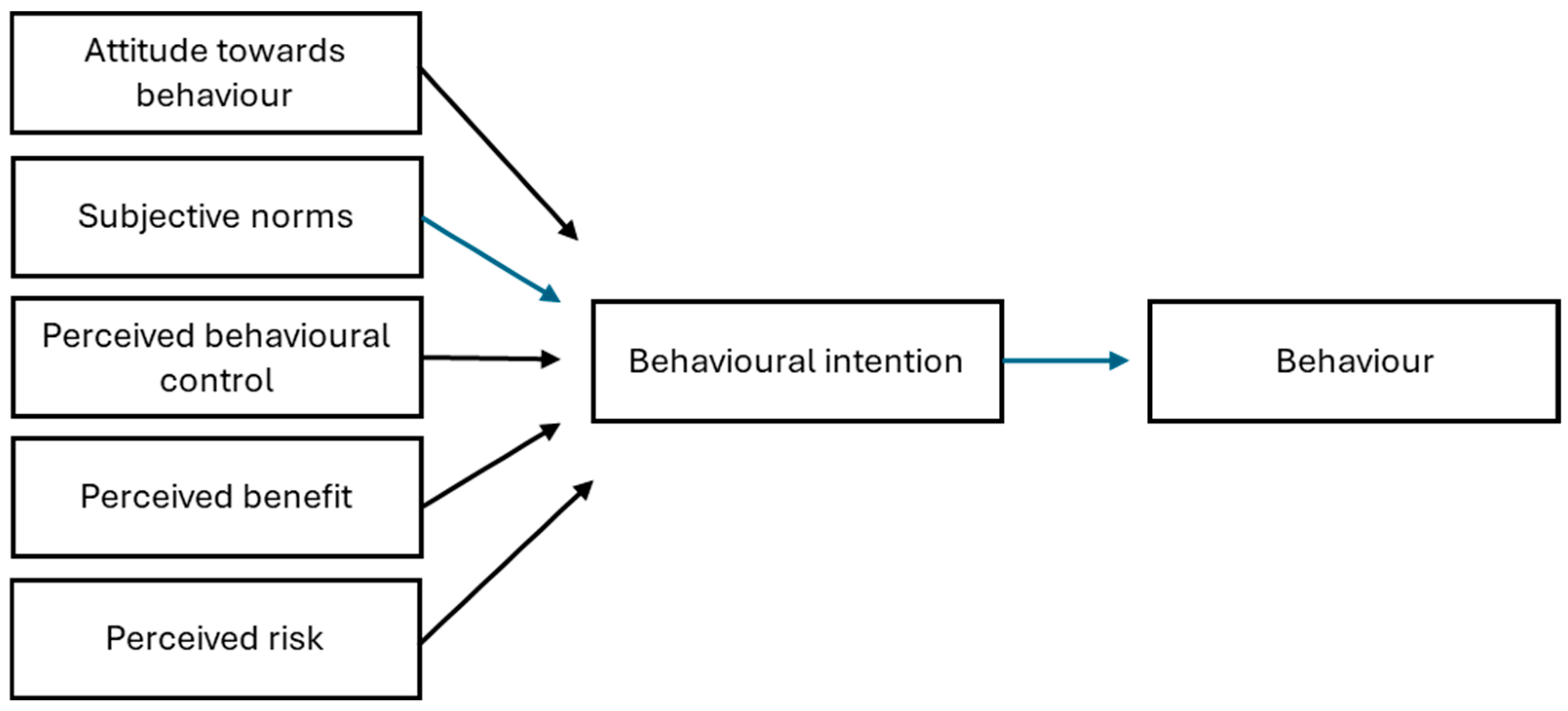
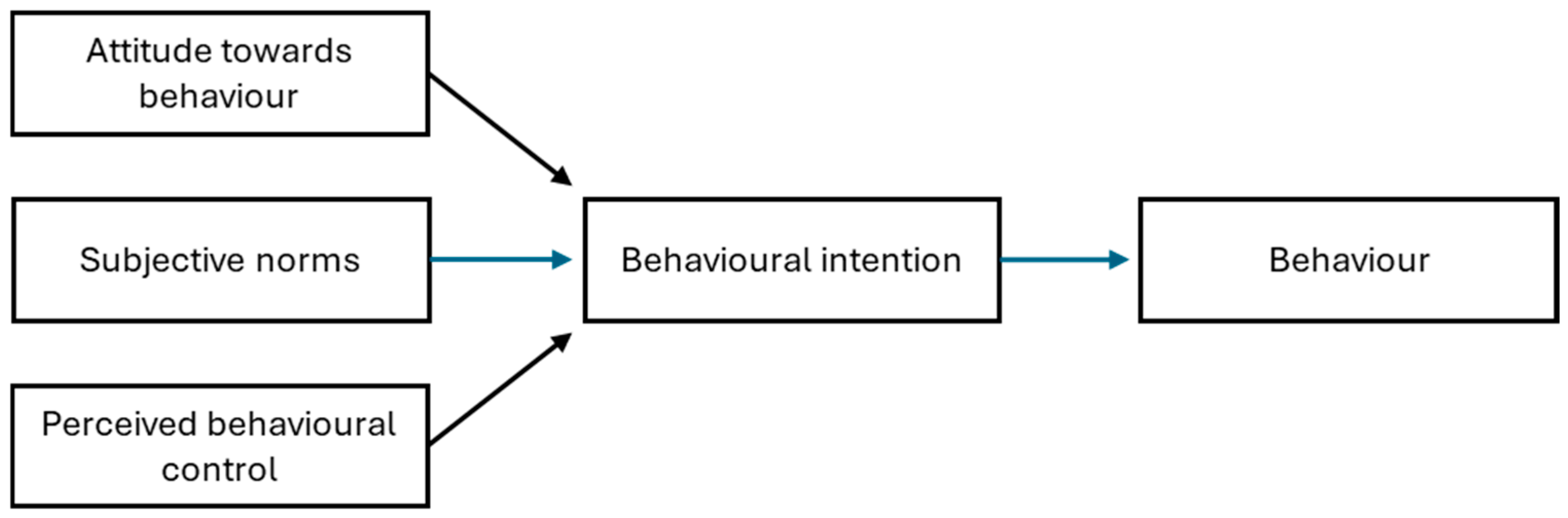
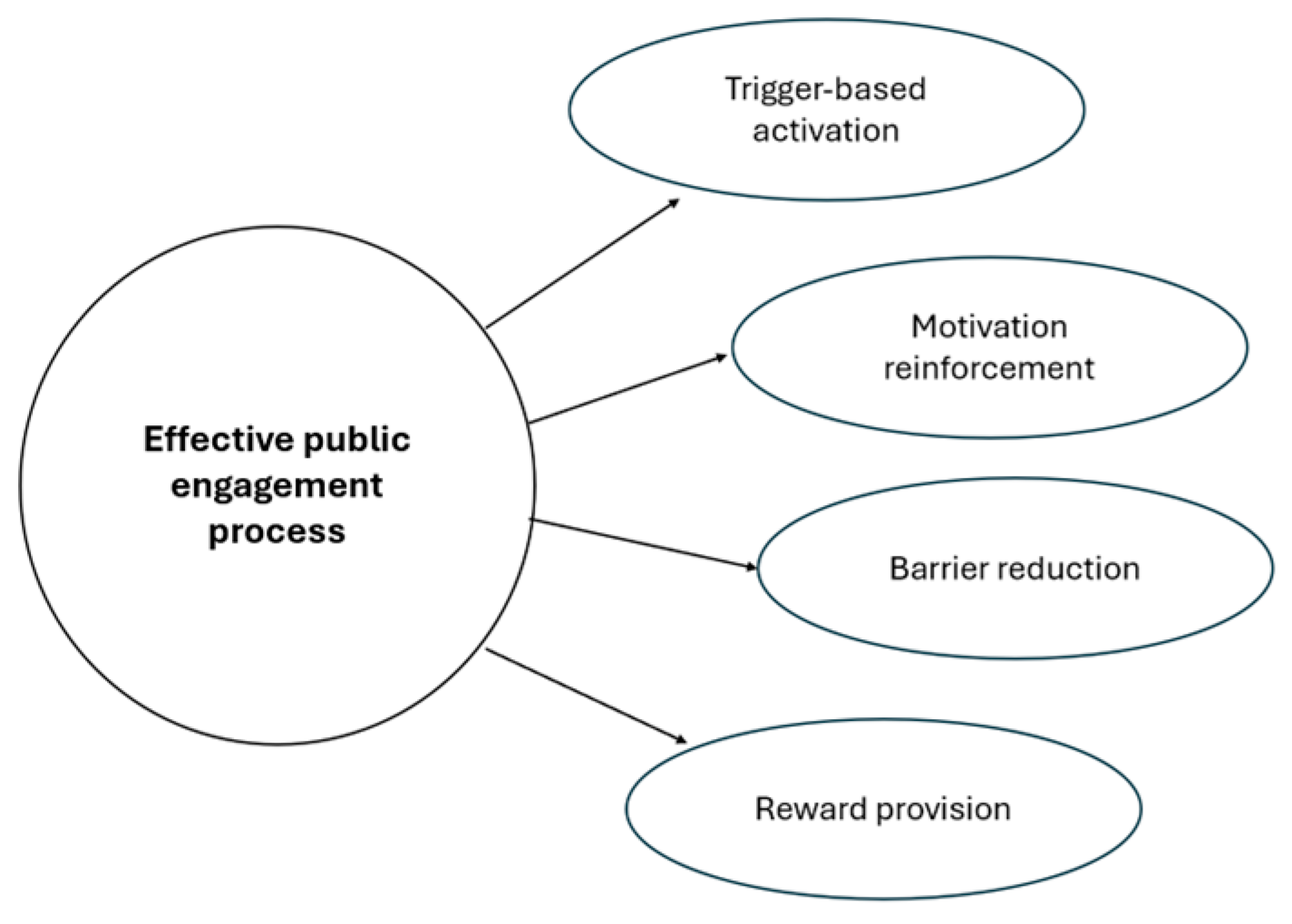
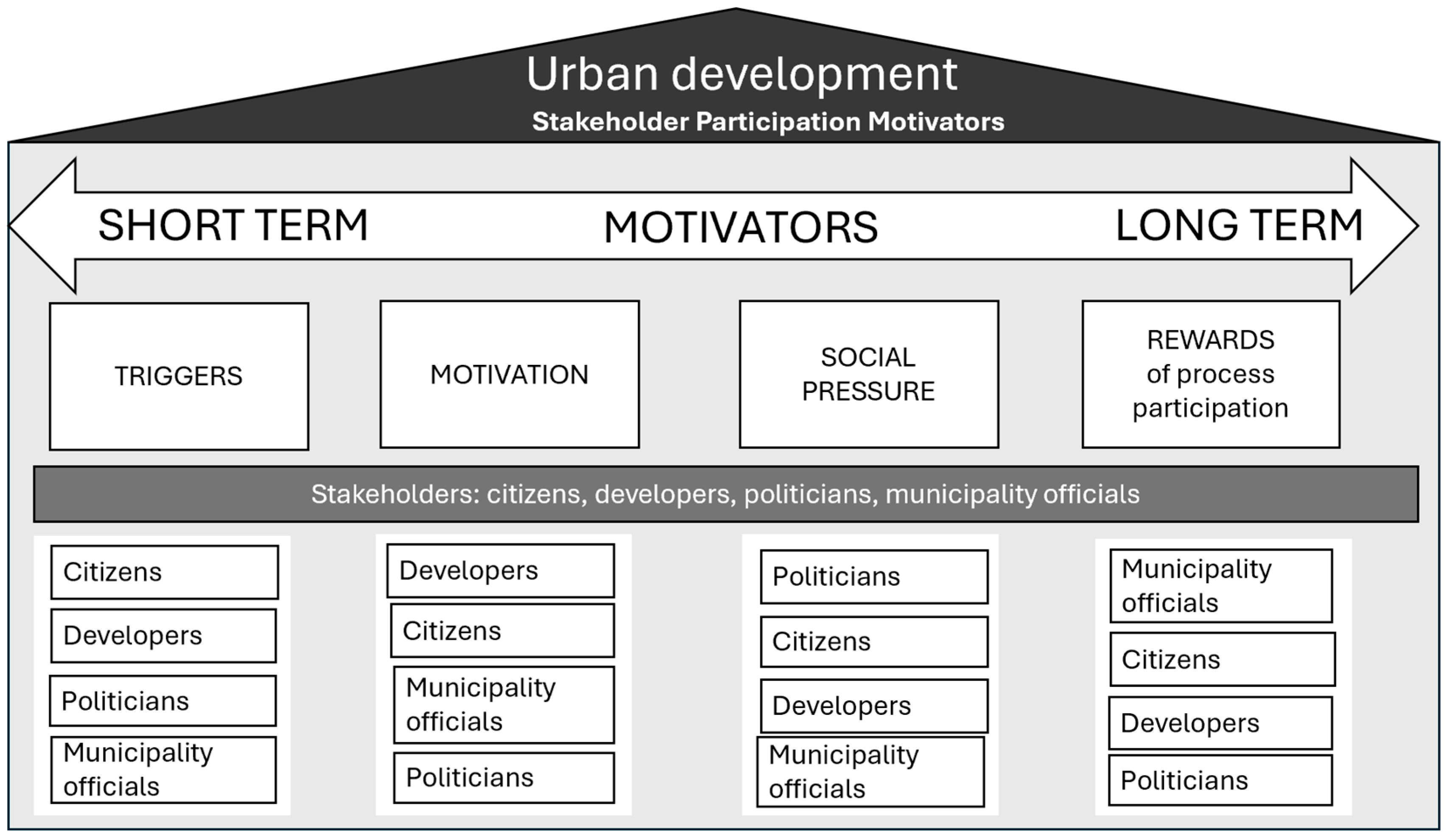
Public participation represents a central component of democratic urban governance. Decisions taken within urban development processes have long-term implications for residents, spatial environments, and future generations. However, stakeholder perspectives frequently diverge: some groups actively support development initiatives, while others express concerns or opposition. In this context, meaningful public consultation requires balanced engagement across stakeholder categories.
In practice, participation intensity varies considerably. Certain groups—such as residents—may be more visibly engaged, while others—including developers, elected officials, or administrative representatives—may participate less actively. Uneven engagement can limit the inclusiveness and deliberative quality of consultation processes. Identifying the motivators that shape stakeholders’ decisions to participate is therefore essential for understanding participation dynamics in urban governance.
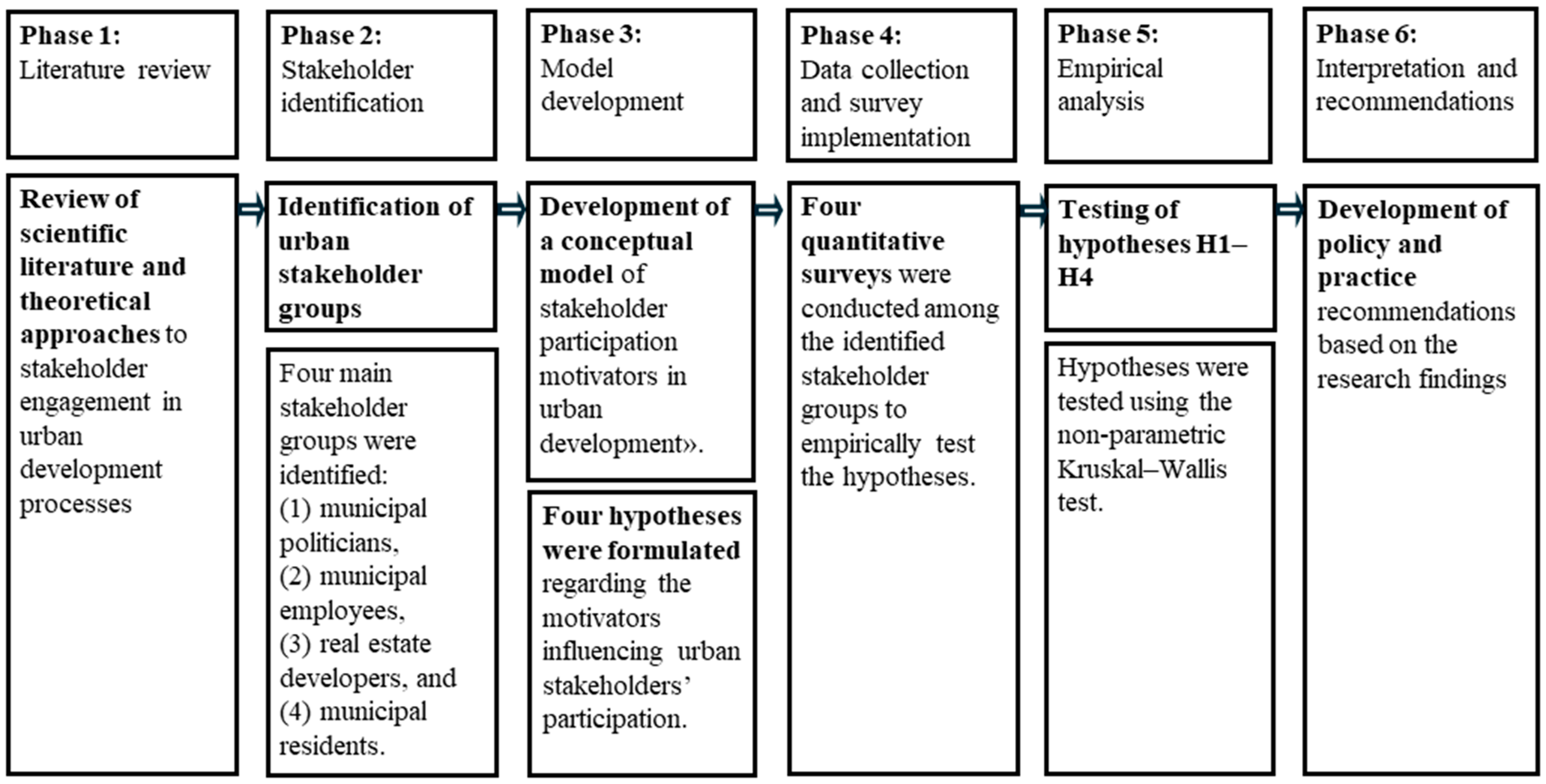
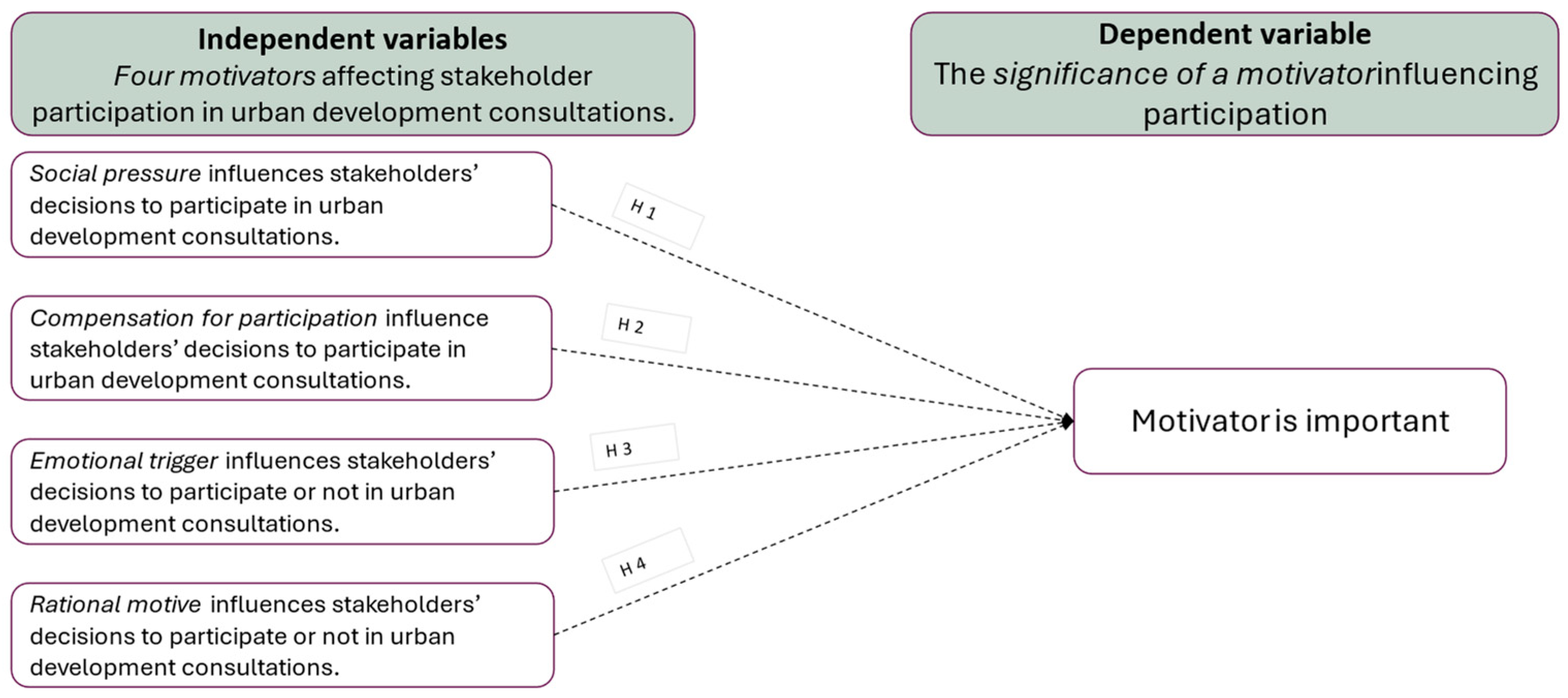
Participation in public consultations entails the allocation of individual resources, particularly time, attention, and knowledge. The authors developed a conceptual model capturing four central motivators that may influence stakeholders’ decisions to engage in or abstain from consultation processes: social pressure, reward for participation, emotional trigger, and rational motivation. These motivators reflect distinct behavioural mechanisms and provide an analytical framework for comparative assessment.
5.2. General Results Showing the Importance of Motivators in the Urban Development Participation Process Across Different Stakeholder Groups: Riga Residents, Politicians, Responsible Municipal Officials, and Developers
The study data reveal substantial differences in the perceived importance of various motivators in the urban participation process. It should be noted that the reported mean values reflect the perceived importance of participation motivators rather than actual levels of civic engagement or participation intensity. Notable variations were identified across stakeholder groups regarding the extent to which each motivator influences decisions to engage in urban participatory processes.
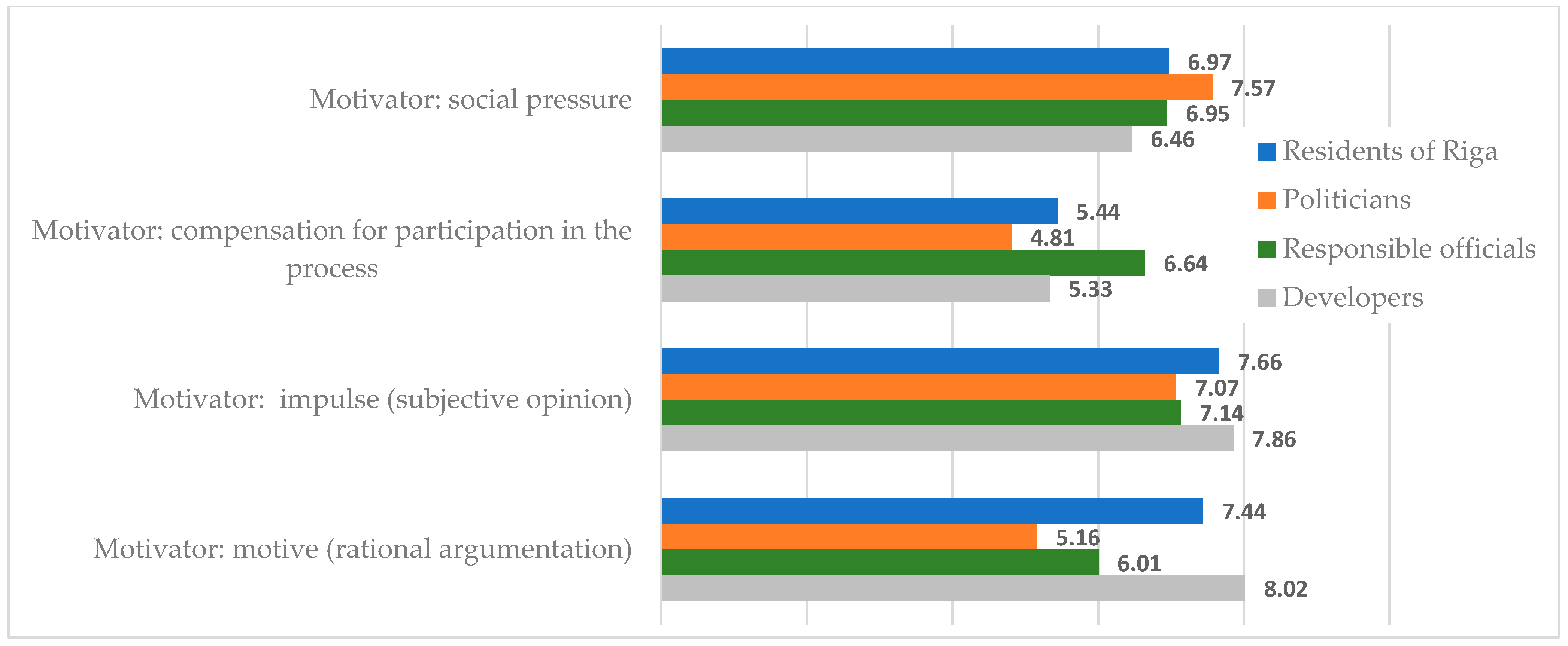
Figure 7 presents the aggregated results illustrating the relative importance of the analysed motivators across stakeholder groups.
Overall, emotional trigger (subjective opinion) emerges as the most influential motivator, with an aggregated mean importance score of 7.43 across all respondent groups on a 10-point Likert scale (1 = “Not important at all”, 10 = “Very important”). Social pressure ranks second, with a mean score of 6.99, followed by rational motivation (rational argumentation), with a mean value of 6.66. Compensation or reward for participation is comparatively the least influential motivator, exhibiting the lowest overall mean score of 5.66.
Applying the non-parametric Kruskal–Wallis test, statistically significant differences among stakeholder groups were identified for three out of the four analysed motivators: reward for participation (H(3) = 21.702, p < 0.001), emotional trigger (H(3) = 11.178, p = 0.011), and rational motivation (H(3) = 41.466, p < 0.001). The ranking of motivator importance differs across stakeholder groups. For Riga’s residents and developers, emotional trigger and rational motivation are the most salient factors. In contrast, for politicians and responsible municipal officials, social pressure and emotional trigger emerge as the dominant motivators influencing participation decisions.
These findings resonate with research emphasising affective engagement and social norm dynamics in civic participation within smart city environments. Similar to studies highlighting emotional attachment and perceived risk as drivers of urban mobilisation, emotional triggers appear as the strongest motivator across stakeholder groups. The prominence of social pressure among political actors reflects prior research on reputational dynamics and media visibility in governance contexts, while the stronger role of rational motivation among professional stakeholders corresponds with literature describing outcome-oriented participation among developers and institutional actors. Compared to technology-driven smart city models, the results reinforce human-centred perspectives that emphasise socio-psychological dimensions of participation. The Riga case therefore illustrates how motivational dynamics observed internationally may manifest differently depending on stakeholder roles and governance context.
5.3. Analysis of Four Urban Participation Motivators: Reward, Emotional Trigger, Rational Motivation, and Social Pressure
The following subsections present a detailed analysis of the four urban participation motivators across different stakeholder groups involved in the urban development process.
5.3.1. Reward as Motivator for Participation
Reward or compensation for participation is identified as one of the key motivators influencing stakeholder participation in urban development processes. This motivator encompasses both financial rewards, such as bonuses or premiums, and non-monetary forms of reward, including public recognition or feedback from organisers, provided in return for the time and resources invested in public consultations and discussions related to urban planning and development.
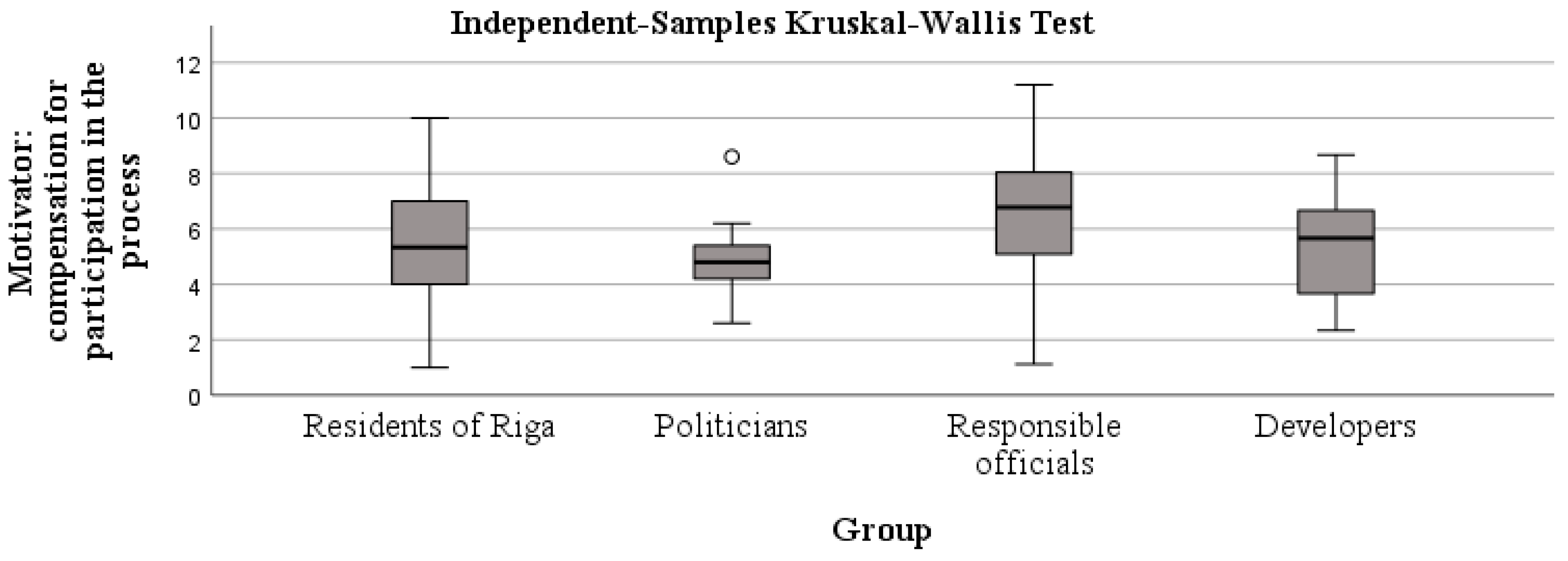
The results in
Figure 8 indicate that the importance of reward as a motivator varies substantially across stakeholder groups. Analysing measures of central tendency reveals that this motivator is most important among responsible municipal officials, slightly less important for developers, followed by Riga’s residents, and least important among politicians. Considering the wide dispersion of data and the relatively small number of respondents in certain groups, statistically significant differences in opinions exist between responsible municipal officials and all other groups, as confirmed by the Kruskal–Wallis test. Meanwhile, differences among
residents of Riga,
politicians, and
developers are not statistically significant (
p > 0.05). Given the exploratory nature of the study and unequal group sizes, no post hoc pairwise tests were conducted.
The results indicate that within the group of responsible municipal officials, the data are not homogeneous, as a wide dispersion of responses is observed across the entire scale (from 1 to 10), indicating a high degree of heterogeneity in opinions within this group. In contrast, the group of politicians appears to be the most homogeneous in its assessments, assigning comparatively low importance to compensation as a motivator.
In summary, the findings indicate that reward as a motivator is most important among responsible municipal officials. Thus, the practical implementers of the urban development process—whose professional responsibilities directly involve urban development issues—evaluate reward as a motivator significantly more highly than political decision-makers or residents.
H2. Reward for participation influences stakeholders’ decisions to participate or not participate in the urban development process.
H2 is supported. Kruskal–Wallis test: H(3) = 21.702, p < 0.001.
5.3.2. Emotional Trigger as a Motivator for Participation
Emotional trigger as a motivator encompasses spontaneous reactions rooted in subjective experience and affective responses that stimulate individuals’ willingness to engage in decision-making processes related to the urban development. Such triggers may manifest as indignation, enthusiasm, or a sense of belonging to a particular neighbourhood.
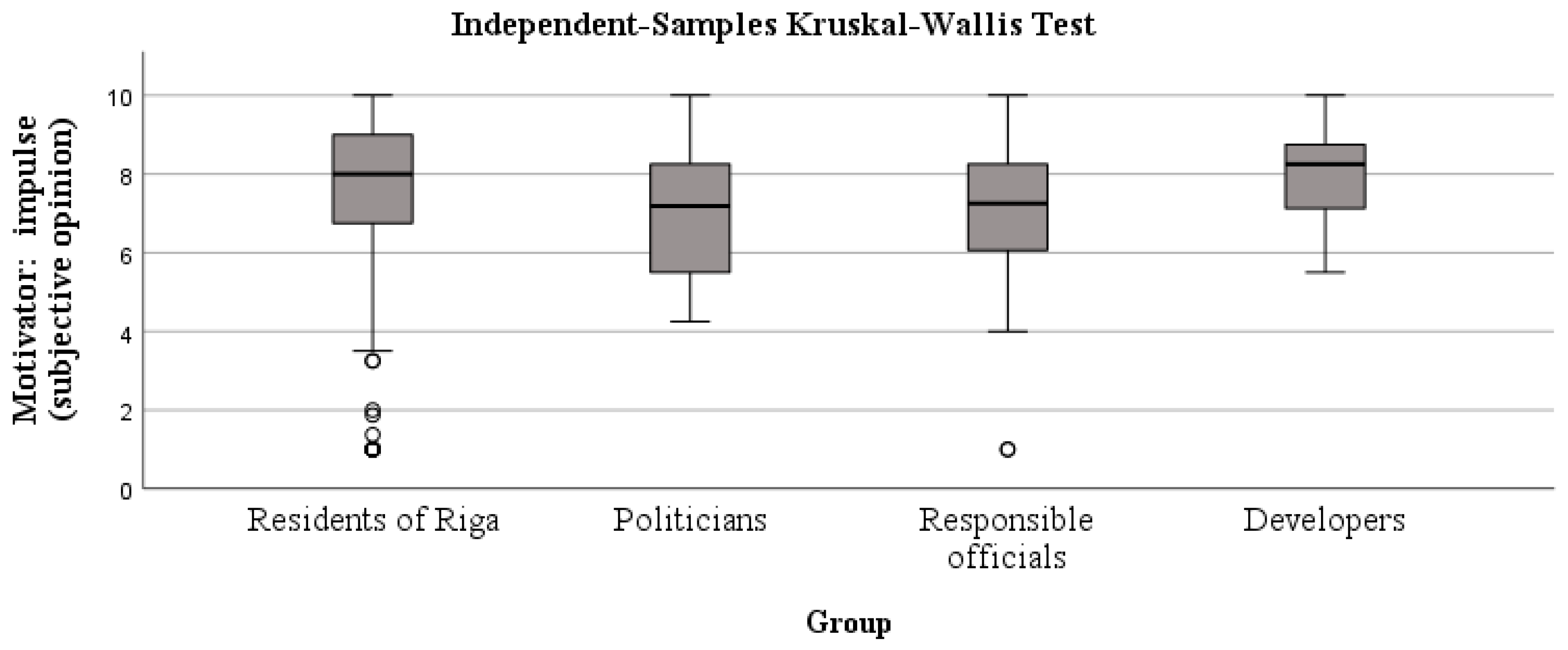
The results shown in
Figure 9 of the non-parametric Kruskal–Wallis test indicate that emotional trigger is most pronounced among Riga’s residents in the urban participation process. Although the mean value is higher within the developer group, these differences are not statistically significant due to the relatively small number of respondents in this group. This suggests the presence of potential trends that would require further investigation using a larger sample.
These findings allow the conclusion that emotional trigger is particularly important for residents, who often lack formal influence over decision-making processes. Residents tend to base their participation decisions on personal convictions and are frequently guided by subjective perceptions of fairness or injustice within the proposed process. The results therefore highlight that, within urban participation processes, the role of emotional trigger as a motivator must be given special consideration for the resident stakeholder group.
H3. Emotional triggers influence stakeholders’ decisions to participate or not participate in the urban development process.
H3 is supported. Kruskal–Wallis test: H(3) = 11.178, p = 0.011.
5.3.3. Rational Motivation as a Motivator for Participation
Rational motivation refers to logical, evidence-based arguments and factual considerations that are oriented toward the achievement of specific, consciously defined objectives. Rational motivation tends to dominate among stakeholder groups that recognise the strategic value of participation in public consultation processes related to urban development.
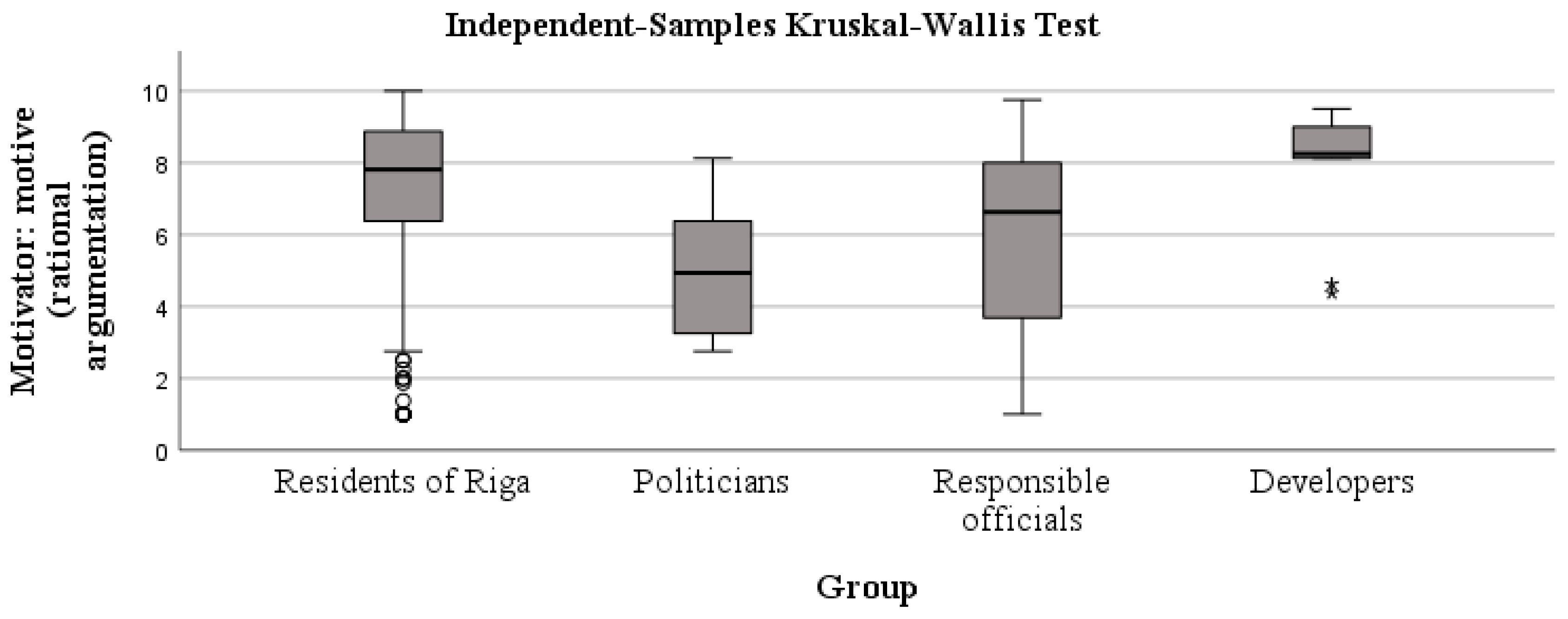
This motivator is particularly important for developers, among whom the evaluations are both the highest and the most homogeneous across all stakeholder groups (see
Figure 10). Residents also assign a relatively high importance to rational motivation as a motivator.
The results reveal statistically significant differences between the resident and politician groups, as well as between residents and responsible municipal officials. These differences are interpreted descriptively on the basis of group-level distributions; no post hoc pairwise tests were applied due to unequal group sizes. For politicians, rational motivation is of moderate importance and represents the lowest mean value among all stakeholder groups. Although the dispersion of opinions within the politician group is not especially large, it is nevertheless substantially greater than that observed among developers.
It is important to note that within the developer group, responses are highly homogeneous, with only a few exceptions, whereas in the resident and responsible municipal official groups, the dispersion of opinions is considerably wider.
Overall, the analysis indicates that rational motivation is particularly salient for professional stakeholder groups, such as developers, whose participation decisions are typically grounded in assessments of expected outcomes and risk analysis. Among residents, this motivator is also rated relatively highly; however, the wide dispersion of responses suggests internal heterogeneity—while rational motivation is a key driver for some residents, it is of limited relevance for others. For part of the resident population, participation is based on reasoned conviction and logical analysis, whereas others attribute greater importance to emotional trigger. Consequently, the role of rational motivation in society is not uniform: for some individuals it constitutes a primary driver of participation, while for others it is secondary or marginal. Within the politician group, rational motivation is the least influential, possibly reflecting a different understanding of participation and distinct engagement objectives.
H4. Rational motivation influences stakeholders’ decisions to participate or not participate in the urban development process.
H4 is supported. Kruskal–Wallis test: H(3) = 41.466, p < 0.001.
5.3.4. Social Pressure as Motivator for Participation
Social pressure was analysed based on six dimensions representing both the external informational environment (social media and mass media) and the influence of the immediate social environment (family members, neighbours, friends, and colleagues), as well as subjective feelings of obligation and professional competition. Respondents were asked to evaluate the following questions.
Please rate how important each of these factors is to you in deciding whether to participate in public discussion about a construction project or changes to the territorial plan:
- (1)
Social networks and mass media are paying increased attention to the development plan.
- (2)
Local residents or other civic activists express dissatisfaction or organise protests against the planned development project.
- (3)
My friends, neighbours, work colleagues or relatives express dissatisfaction with the development project and call on me to take action together.
- (4)
Someone important to me personally asks me to get involved in discussions about the development plan.
- (5)
It is my civic duty to get involved in the discussion of the development project.
- (6)
Competitors are actively involved in discussions about the development project (this question was included only in politician and developer groups; for other groups, the question is not relevant).
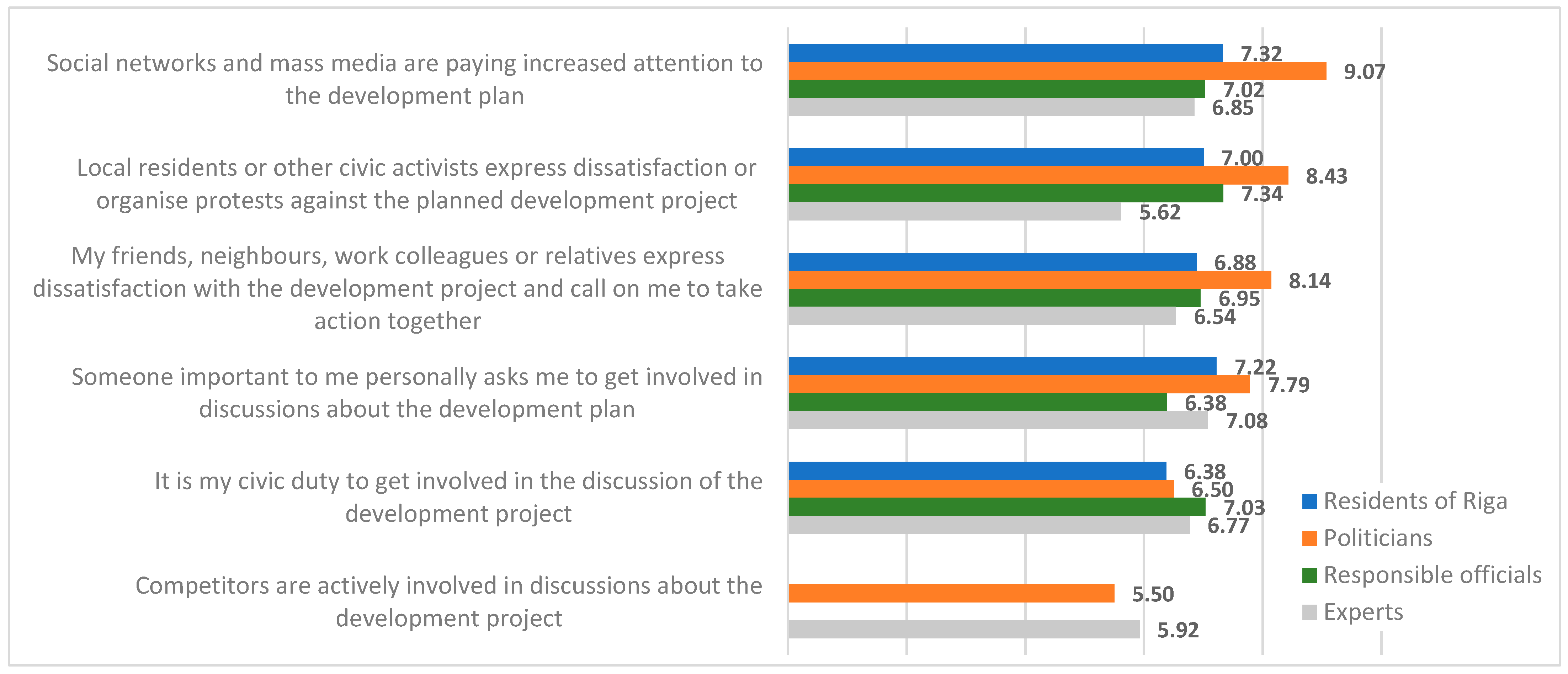
The study results in
Figure 11 indicate that pressure generated by social media and mass media constitutes one of the most influential drivers of participation, with an overall mean score of 7.57 across all stakeholder groups. Encouragement to participate from a personally significant individual is also highly important (mean score 7.22), underscoring the role of emotionally close social ties as a key motivator in urban participation. In contrast, local community activity, the opinions of close social contacts, and a sense of civic duty are rated slightly lower yet remain substantial influencing factors.
H1. Social pressure influences stakeholders’ decisions to participate or not participate in the urban development process.
H1 is partially supported. Social pressure driven by social media and mass media ranks among the highest-rated factors across all stakeholder groups, with a mean = 7.57, and the Kruskal–Wallis test confirms statistically significant differences: H(3) = 13.086, p = 0.004.
5.4. Differences Between Stakeholders
The results of the Kruskal–Wallis test indicate statistically significant differences between stakeholder groups in only one dimension—namely, in relation to the statement “Social networks and mass media are paying increased attention to the development”, H(3) = 13.086, p = 0.004.
The data show that social pressure as a motivator is substantially more important for politicians than for the other stakeholder groups (developers, residents, and municipal officials). Moreover, the politician group exhibits a high level of internal consistency: on a 10-point scale (where 1 denotes “Not important at all” and 10 denotes “Very important”), all responses fall within the range of 7 to 10. This pattern indicates a heightened sensitivity among politicians to the informational environment and reputational considerations in the public sphere, where media visibility generates social pressure.
The remaining analysed factors—influence of friends, relatives, colleagues, and neighbours, neighbourhood activity, encouragement from a personally significant individual, and a sense of civic duty—do not display statistically significant differences between stakeholders. This suggests a relatively uniform perception across stakeholder groups regarding the role of the immediate social environment in these categories.
Overall, the analysis confirms that social pressure as a motivator for participation in urban development processes operates with varying intensity depending on its specific manifestation. Among all analysed dimensions, attention from mass media and social networks and encouragement from a personally significant individual received the highest evaluations. Other factors—such as community activity, opinions of friends and acquaintances, and civic duty—were rated considerably lower.
Furthermore, statistically significant differences between stakeholder groups were identified in only one of the six analysed dimensions: politicians rated the influence of mass media and social networks significantly higher than other groups. This finding suggests that politicians, as public figures, are particularly responsive to signals from the information environment that may affect their reputation and political capital.
The results imply that, in order to effectively promote public participation, urban communication strategies should prioritise visibility within the media environment and leverage the influence of social media, including the involvement of socially prominent individuals in communication campaigns. Formal participation appeals based solely on civic duty or traditional justifications for participation may be insufficient to activate broader public engagement.
5.4.1. Reward: Differences in Perceived Importance Across Stakeholder Groups
Reward as a motivator for participation was analysed based on five dimensions encompassing both material and symbolic factors. Respondents were asked to assess the importance of the following elements: public recognition, financial compensation, feedback from organisers, fulfilment of job responsibilities, and bonuses or premiums (the latter two were assessed only among public officials and politicians). To evaluate the role of reward as a motivator, respondents were asked the following questions.
Please rate the importance of each of these factors to you when deciding whether to participate in public discussion about a construction project or changes to the territorial plan:
- (1)
Public recognition or gratitude from discussion participants or organisers for my participation in discussing the development plan.
- (2)
Financial compensation for my time spent discussing the development proposal.
- (3)
Feedback from the discussion organisers on my comments or suggestions regarding the development project.
- (4)
It is part of my job responsibilities (this question is only included in the questionnaires for civil servants and politicians).
- (5)
Bonus or premium from the local government for organising and participating in discussions on development plans (this question is only included in the questionnaires for civil servants and politicians).
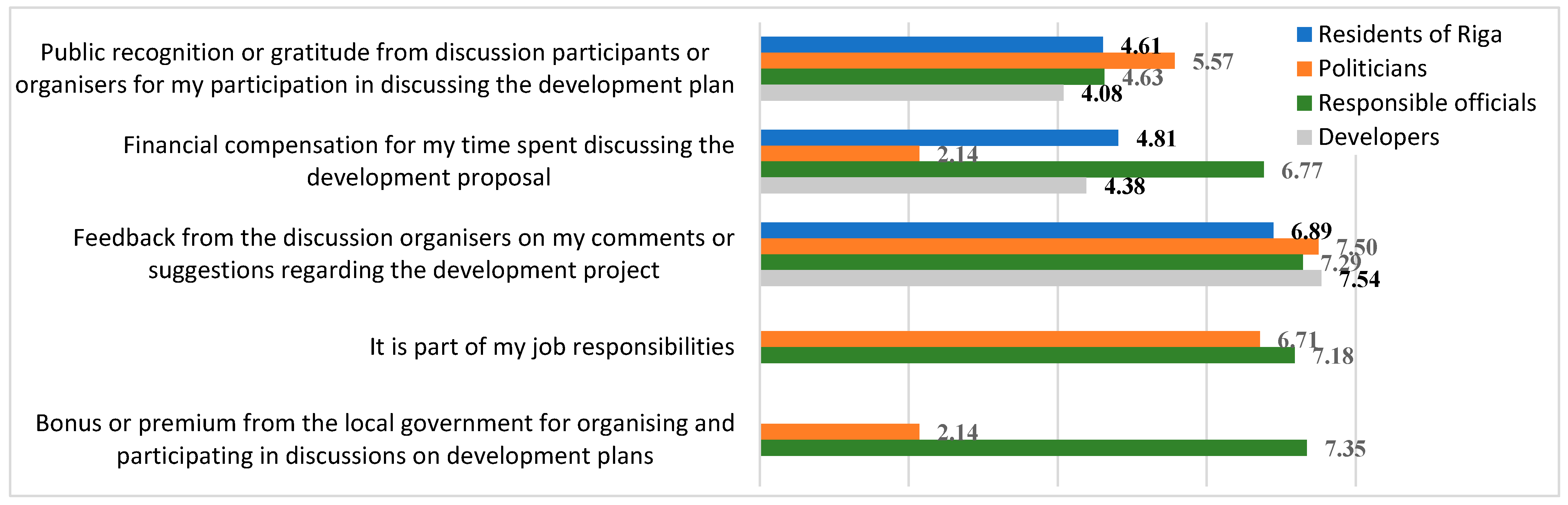
The importance of compensation or reward as a motivator was examined at two analytical levels (see
Figure 12).
- (1)
All respondent groups were asked to evaluate general compensation-related factors, including public recognition, financial compensation for time invested, and feedback from organisers.
- (2)
In contrast, only two groups—municipal officials and politicians—were asked to assess the relevance of institutional compensation mechanisms, namely, “this is part of my job responsibilities” and “a bonus or premium from the local government”, in order to capture the role of formal organisational incentives.
Overall, the most important factor within the group of compensation-related motivators is “Feedback from the discussion organisers on my comments or suggestions regarding the development project,” with a mean score of 7.31 on a 10-point scale across all stakeholder groups. In three out of the four analysed stakeholder groups, this factor ranks as the highest priority. This finding indicates that respondents consider it important to recognise or perceive that their opinions are taken into account and have a tangible influence on decision-making processes. The only exception is observed among public administration representatives, who rate “bonus or premium from the local government for organising and participating in discussions on development plans” as slightly more important.
The opinions of Riga’s residents regarding the significance of the factor “Feedback from the discussion organisers on my comments or suggestions regarding the development project” are not homogeneous. Although the measure of central tendency (6.9 points on a 10-point scale) indicates that this factor is generally considered important by the majority of permanent residents, there is a substantial proportion of respondents who hold a divergent view and perceive such feedback as an insignificant component of the overall compensation framework. Such a wide dispersion of opinions is not observed among the other stakeholder groups.
Conversely, for the parameter “Public recognition or gratitude from discussion participants or organisers for my participation in discussing the development plan,” three out of four stakeholder groups (residents, politicians, and responsible officials) exhibit a heterogeneous attitude toward the importance of this factor—the values reported by respondents range from 1 (the lowest possible) to 10 (the highest possible).
The widest dispersion of opinions regarding the importance of “Financial compensation for my time spent discussing the development proposal” is observed within the group of responsible officials, where responses on a 10-point scale range from 1 to 10. A moderate level of variability is found among Riga’s residents and developers, whereas the most homogeneous responses were provided by politicians, who consistently evaluated this factor as distinctly insignificant.
Among the two factors within this compensation category assessed exclusively by politicians and responsible officials, the one rated higher by both groups is “It is part of my job responsibilities.” While the majority of respondents in these stakeholder groups regard this factor as highly significant, there are also individuals who hold an opposing view. Notably, in relation to the parameter “Bonus or premium from the local government for organising and participating in discussions on development plans,” politicians’ opinions are largely consistent—with only one exception, all other respondents in this group considered such bonuses or premiums to be of minimal importance.
Statistically significant differences between stakeholder groups were identified for two compensation-related factors associated with material remuneration.
First, statistically significant differences were observed regarding financial compensation for time invested in discussing the development proposal (Kruskal–Wallis test: H(3) = 35.246, p < 0.001). The results indicate that this motivator was rated significantly lower by politicians than by residents and municipal officials. This suggests that material incentives are not perceived by politicians as a relevant factor in participation-related decision-making. In contrast, municipal officials and residents tend to view financial compensation as an appropriate acknowledgment of the time and effort devoted to participation.
Second, among municipal officials and politicians, the perceived importance of bonuses or premiums granted by the local government for participation in urban development discussions was also examined (Kruskal–Wallis test: H(3) = 22.258, p < 0.001). The findings show that a statistically significantly larger share of municipal officials assign higher importance to this form of compensation, whereas politicians consider it a less relevant motivator. This divergence can be explained by the functional roles of the two groups: for municipal officials, organising and participating in discussions is more often a direct professional responsibility, for which financial recognition may serve as an additional motivating factor. For politicians, by contrast, such activities are more frequently interpreted as a civic or public duty rather than remunerated work.
Overall, these results confirm that perceptions of compensation as a motivator differ substantially depending on the stakeholder group’s role in the urban development process. Across all groups, feedback from discussion organisers emerges as a key factor, highlighting the importance of creating a sense that each participant’s input is heard and respected. The importance of financial motivation, however, varies markedly between groups: it is considered significant by municipal officials and residents, but of limited relevance for politicians. Similarly, institutional compensation, such as bonuses or premiums, is more salient for municipal officials, while remaining marginal for politicians.
Consequently, when designing participatory mechanisms, compensation should not be reduced solely to material incentives. Communication practices that acknowledge participants’ contributions and provide meaningful feedback can function as effective drivers of participation, complementing material forms of compensation that are relevant for certain stakeholder groups in urban development processes.
5.4.2. Emotional Trigger: Differences in Perceived Importance Across Stakeholder Groups
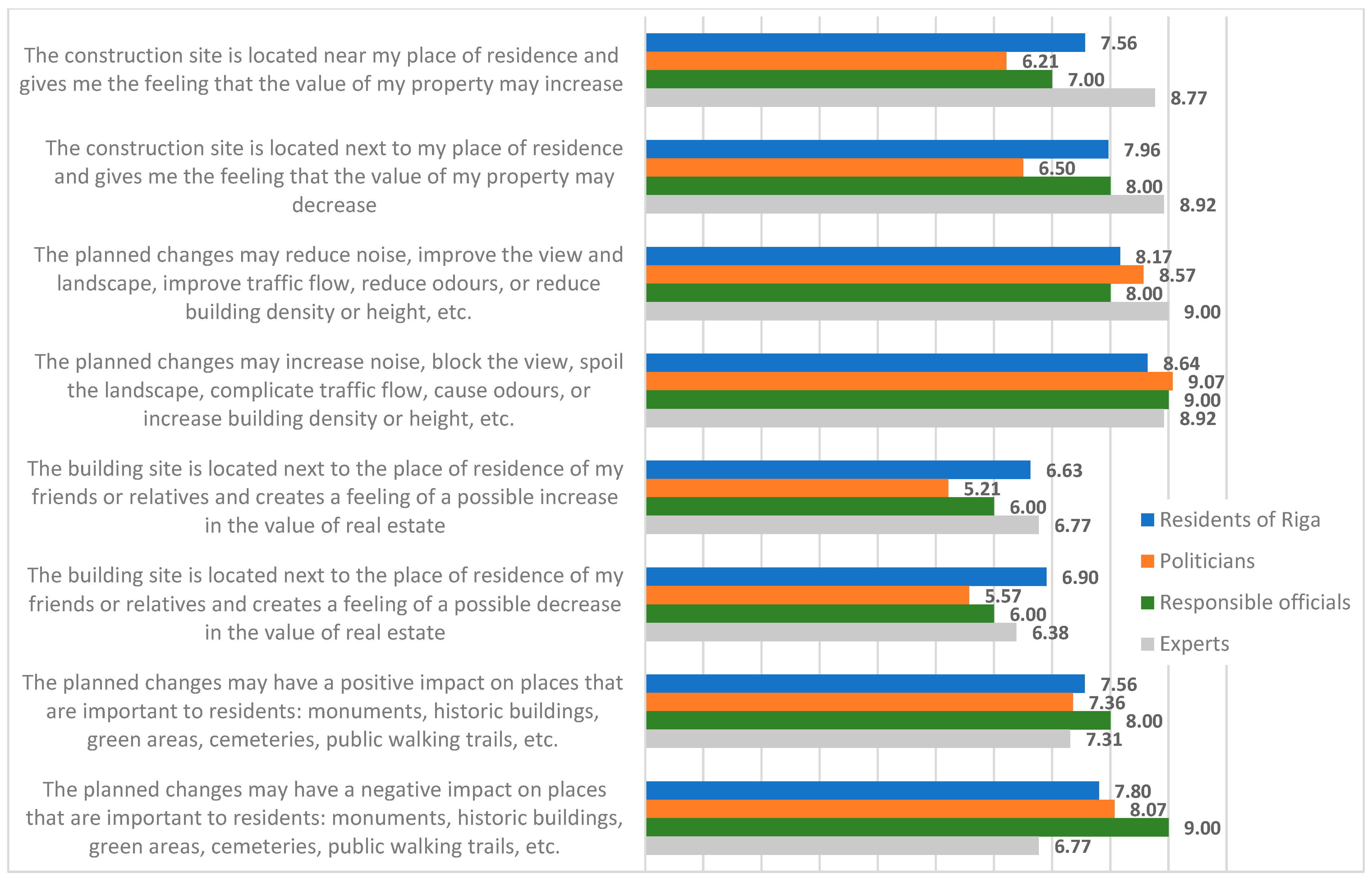
Emotional trigger as a motivator was examined by surveying respondents about their subjective experiences and attitudes toward potential changes in their surrounding environment (
Figure 13). The analysis incorporated both perceived personal gains and losses, such as potential changes in property value or improvements/deterioration in quality of life, as well as the influence of close social ties (friends and relatives) and emotional attachment to specific places within the urban environment. To assess the role of emotional triggers as a motivator, respondents were asked the following questions.
Please rate the importance of each of these factors to you when deciding whether to participate in public discussion about a construction project or changes to the territorial plan:
- (1)
The construction site is located near my place of residence and gives me the feeling that the value of my property may increase.
- (2)
The construction site is located next to my place of residence and gives me the feeling that the value of my property may decrease.
- (3)
The planned changes may reduce noise, improve the view and landscape, improve traffic flow, reduce odours, or reduce building density or height, etc.
- (4)
The planned changes may increase noise, block the view, spoil the landscape, complicate traffic flow, cause odours, or increase building density or height, etc.
- (5)
The building site is located next to the place of residence of my friends or relatives and creates a feeling of a possible increase in the value of real estate.
- (6)
The building site is located next to the place of residence of my friends or relatives and creates a feeling of a possible decrease in the value of real estate.
- (7)
The planned changes may have a positive impact on places that are important to residents: monuments, historic buildings, green areas, cemeteries, public walking trails, etc.
- (8)
The planned changes may have a negative impact on places that are important to residents: monuments, historic buildings, green areas, cemeteries, public walking trails, etc.
The urban participation motivator emotional trigger is closely associated with a perceived sense of personal gain or threat that emerges when a development project is located in close proximity to an individual’s place of residence or other personally significant locations. The study examines both positive and negative affective responses, such as perceived opportunities to improve the environment, as well as concerns about landscape degradation, increased noise levels, or potential declines in property value.
Among the eight analysed factors, the highest-rated emotional triggers—based on mean values aggregated across all stakeholder groups—were as follows:
“The planned changes may increase noise levels, obstruct views, or damage the landscape” (mean = 8.91).
“The planned changes may reduce noise, improve views, or enhance the landscape” (mean = 8.43).
“The planned changes may negatively affect significant places, such as monuments, historical buildings, or green spaces” (mean = 7.91).
“The planned changes may positively affect significant places, such as monuments, historical buildings, or green spaces” (mean = 7.56).
The findings demonstrate that emotionally charged narratives of potential threats or benefits exert a substantial influence on individuals’ decisions to engage in urban planning processes. Urban development issues that involve tangible changes to environmental quality, rather than abstract or distant benefits, are particularly effective in motivating public participation in discussions on urban development.
The data obtained in the study indicate substantial differences between stakeholder groups, with a particularly distinct position observed among municipal officials.
The potential increase in real estate value as an emotional trigger was rated significantly lower by municipal officials compared to residents and developers (Kruskal–Wallis test: H(3) = 19.141, p < 0.001).
The potential decrease in real estate value was similarly perceived as a weaker motivator among municipal officials and politicians (Kruskal–Wallis test: H(3) = 16.952, p < 0.00).
The potential increase or decrease in the value of friends’ or relatives’ residences was significantly less likely to be identified as influencing participation intentions among municipal officials (Kruskal–Wallis test: H(3) = 13.833, p = 0.003 for both aspects).
These differences point to a distinct motivational structure across stakeholder groups. For municipal officials and politicians, who are professionally involved in planning and decision-making processes, emotional trigger alone is often insufficient to trigger personal engagement. This contrasts with residents, whose participation is more frequently driven by a direct connection to their living environment and by personal perceptions of potential benefits or harms associated with proposed urban development.
5.4.3. Rational Motivation: Differences in Perceived Importance Across Stakeholder Groups
Rational motivation is grounded in economic and utilitarian considerations that potentially shape individuals’ willingness to participate in public consultations on development projects or changes in spatial planning. This motivator encompasses anticipated financial gains or losses affecting the individual or close others, as well as expectations regarding improvements or deterioration of the urban environment, which may influence participation decisions. To assess the role of rational motivation as a motivator, respondents were asked the following questions.
Please rate the importance of each of these factors to you when deciding whether to participate in public discussion about a construction project or changes to the territorial plan:
- (1)
The implementation of the construction project is guaranteed to provide me with financial benefits, such as profit, bonuses, commission fees from the transaction, etc.
- (2)
The implementation of the construction project is guaranteed to cause me financial losses: I will lose my planned profit, bonuses, commission fees, etc.
- (3)
The construction project is guaranteed to increase the value of my real estate.
- (4)
The construction project is guaranteed to decrease the value of my real estate.
- (5)
The construction project is guaranteed to increase the value of my friends’ or relatives’ real estate.
- (6)
The construction project will definitely decrease the value of my friends’ or relatives’ property.
- (7)
The planned changes are guaranteed to improve the urban environment: improving mobility in the city, making it greener, cleaner, more visually appealing, etc.
- (8)
The planned changes are guaranteed to have a negative impact on the urban environment: they will worsen mobility in the city, cause pollution (air, noise, odour), eliminate green areas, etc.
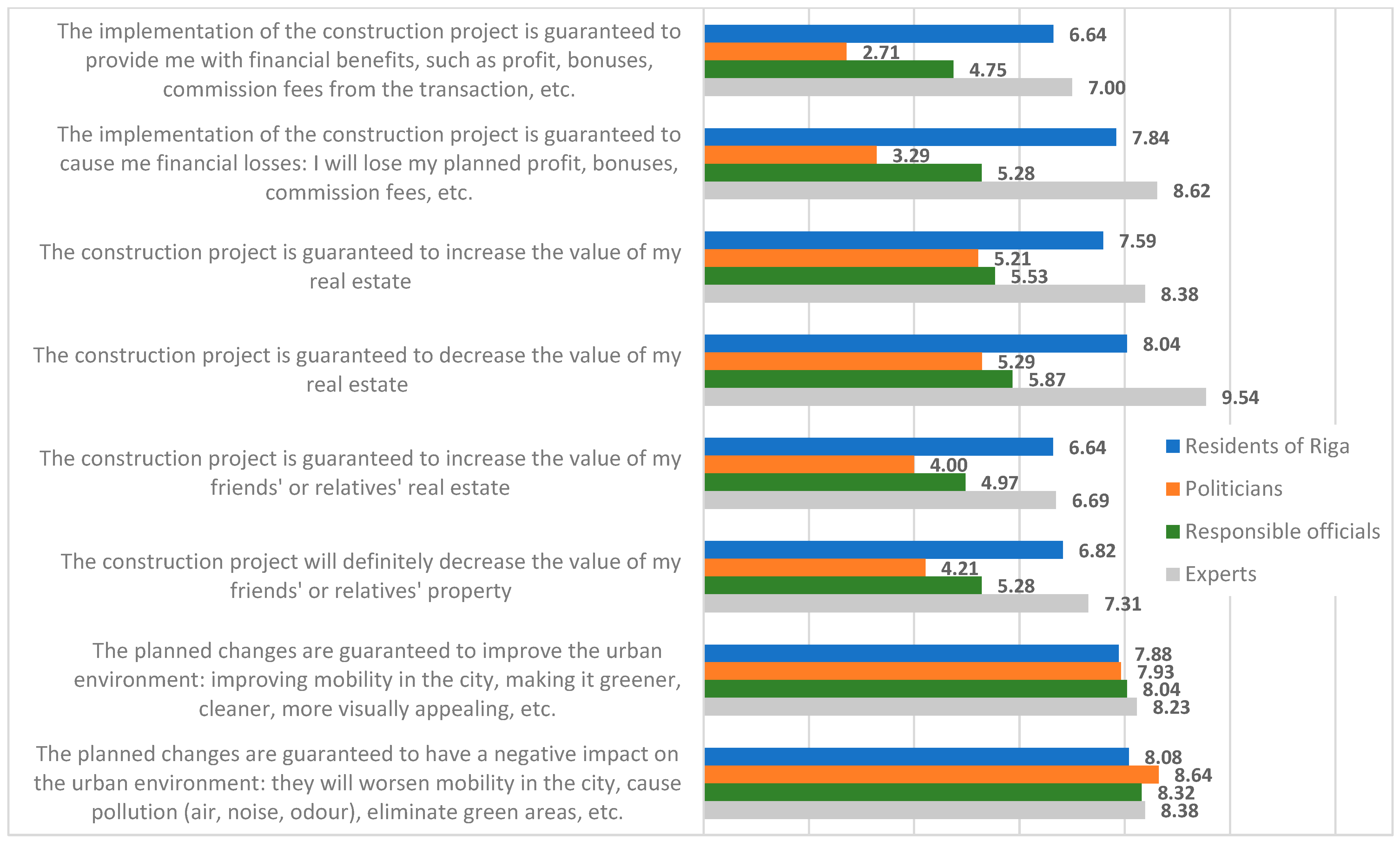
The lowest mean scores within this motivational category were reported by politicians and municipal officials (see
Figure 14). The statement
“The implementation of the development project guarantees me a financial benefit, etc.”, received a mean value of 2.71 among politicians and 4.75 among municipal officials, whereas residents evaluated this factor at 6.64, and developers at 7.00. These differences are statistically significant (Kruskal–Wallis test: H(3) = 38.276,
p < 0.001). Similar patterns are observed with respect to potential financial losses: the mean value among politicians is 3.29, among municipal officials 5.28, while residents and experts rate this factor substantially higher (7.84 and 8.62, respectively).
These results reflect fundamental differences in perception between actors holding positions of institutional power—politicians and municipal officials—and private individuals and industry representatives or developers. The findings suggest that individuals occupying institutional roles, particularly politicians, are less likely to associate their participation with direct personal gains or losses, possibly perceiving such motivations as inappropriate or ethically undesirable within their professional roles.
The statement “The development project will guarantee an increase in the value of my property” was rated highest by developers (8.38) and residents (7.59). In contrast, this aspect received significantly lower ratings among politicians (5.21) and municipal officials (5.53), again indicating a weaker emphasis on private-interest considerations. Identical tendencies are observed when potential threats to property value are considered: developers and residents perceive such threats as a strong motivator (9.54 and 8.04, respectively), whereas politicians and municipal officials report mean values below 6.00.
Notably, within the developer group, all statements related to real estate value received either the highest or second-highest ratings among all groups, underscoring their direct economic interest in this dimension.
Compared to personal financial benefits, motivations related to friends’ or relatives’ property values were rated lower across all groups. For instance, among politicians, this factor received mean scores of 4.00 (increase) and 4.21 (decrease), representing the lowest values across all stakeholder groups. Among residents, the corresponding values were 6.64 and 6.82, while among developers they were 6.69 and 7.31. This indicates that direct personal financial interests remain a stronger motivator than indirect benefits accruing to close social contacts, although these factors still exert a measurable influence across groups.
Across all stakeholder groups, the highest-rated rational arguments were associated with anticipated changes in the urban environment. The statement “The planned changes will improve the urban environment” received mean values ranging from 7.88 to 8.23 with no substantial differences between stakeholders, suggesting a shared understanding of the importance of environmental quality improvements. The potential negative environmental impacts were rated even more highly—reaching 8.64 among politicians and 8.08 among residents—indicating that perceived environmental degradation functions as a powerful negative driver of participation, regardless of stakeholder group. This highlights the central role of environmental quality preservation or threat as a core element of rational motivation in urban participation.
In summary, the findings demonstrate that rational motivation linked to personal economic outcomes and changes in environmental quality significantly influence decisions to participate in public discussions on development projects. Politicians and municipal officials consistently assign lower importance to material gain-related considerations, possibly reflecting a perception of their roles as more neutral or detached. In contrast, residents and developers exhibit higher sensitivity to these factors, particularly to changes in property value. At the same time, environmental quality considerations—both positive and negative—emerge as a unifying and robust rational motivator across all stakeholder groups.