
Tackling the Complexity of Emergency Response Systems: Creating Transport-Focused Digital Twins

Highlights
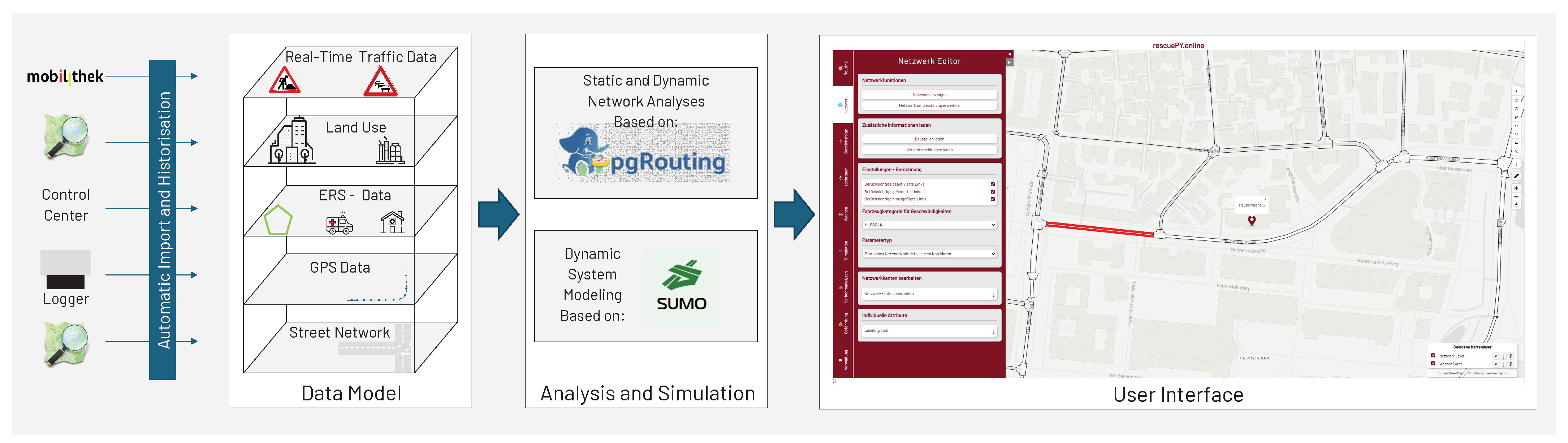
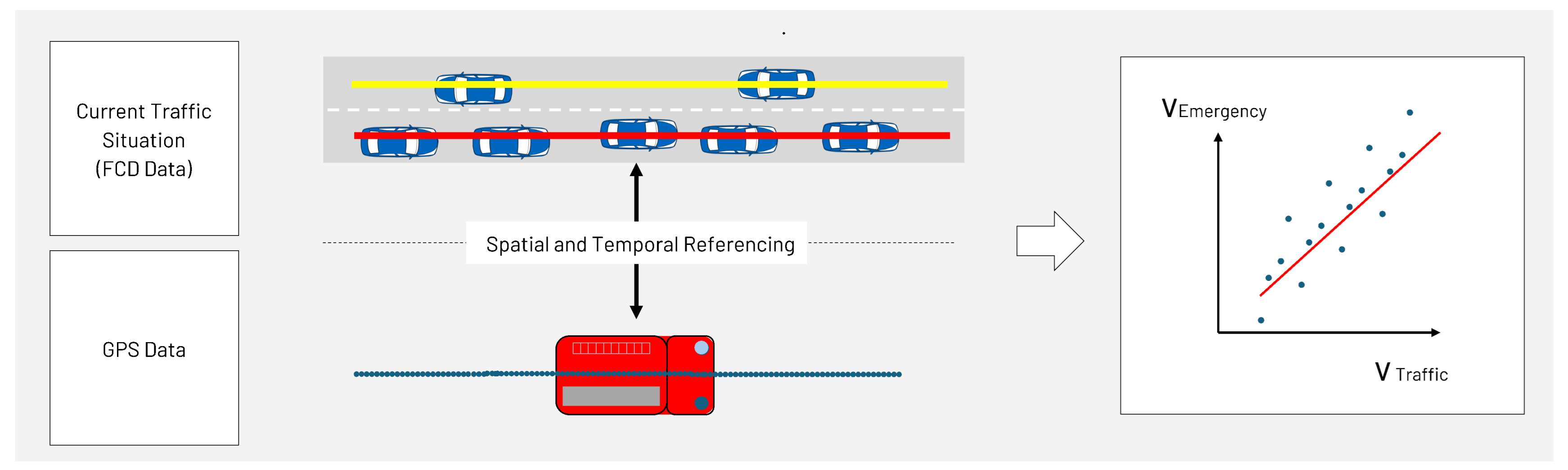
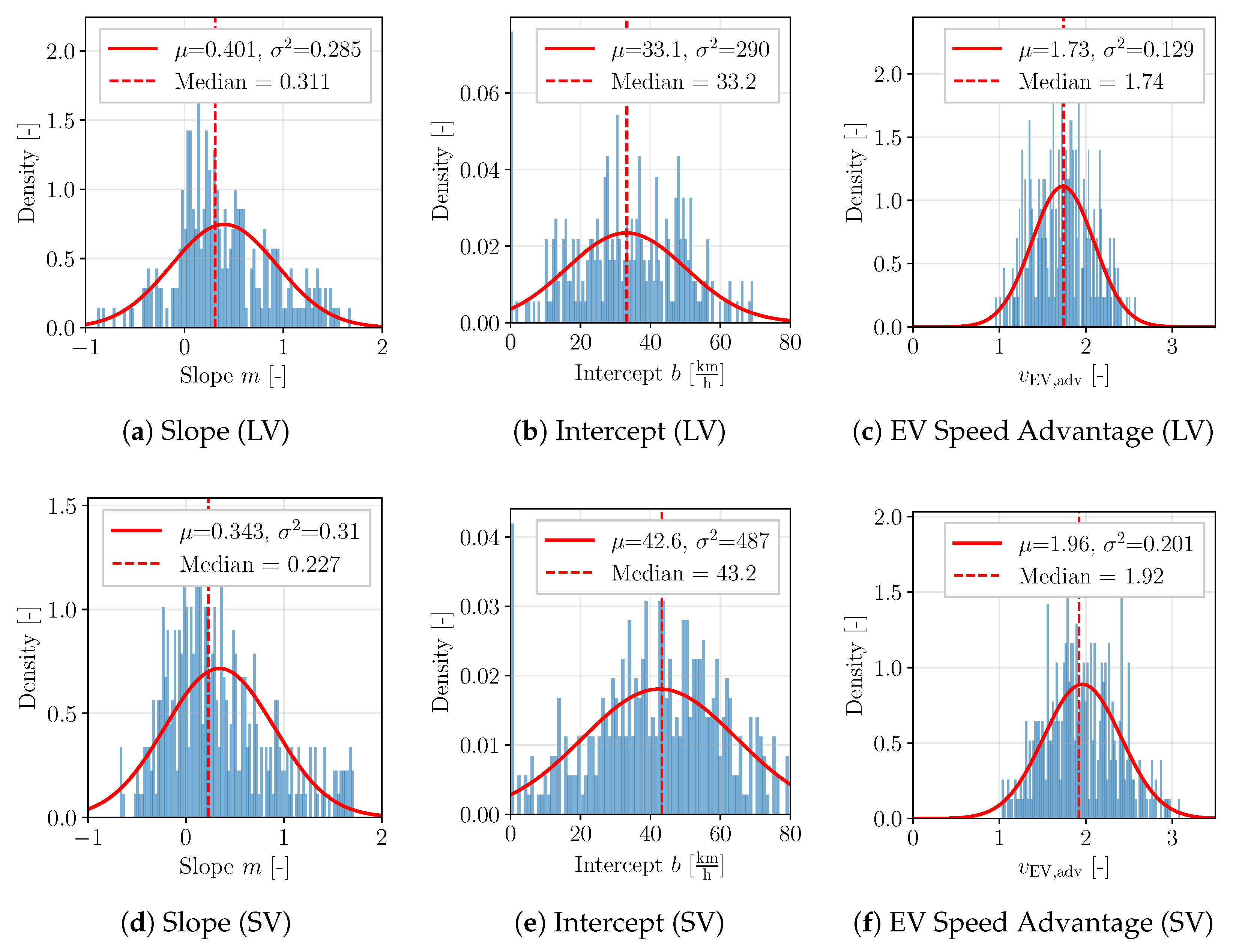
- The proposed framework builds transport-focused digital twins of emergency response systems, combining multiple data sources. The combination of real-time traffic data, GPS data from emergency vehicles (EVs), and road network information enables precise network analysis, e.g., identifying bottlenecks where EVs are affected by traffic. Our data shows that more favorable traffic conditions and more spacious road structures are positively associated with improved EV progress in urban environments.
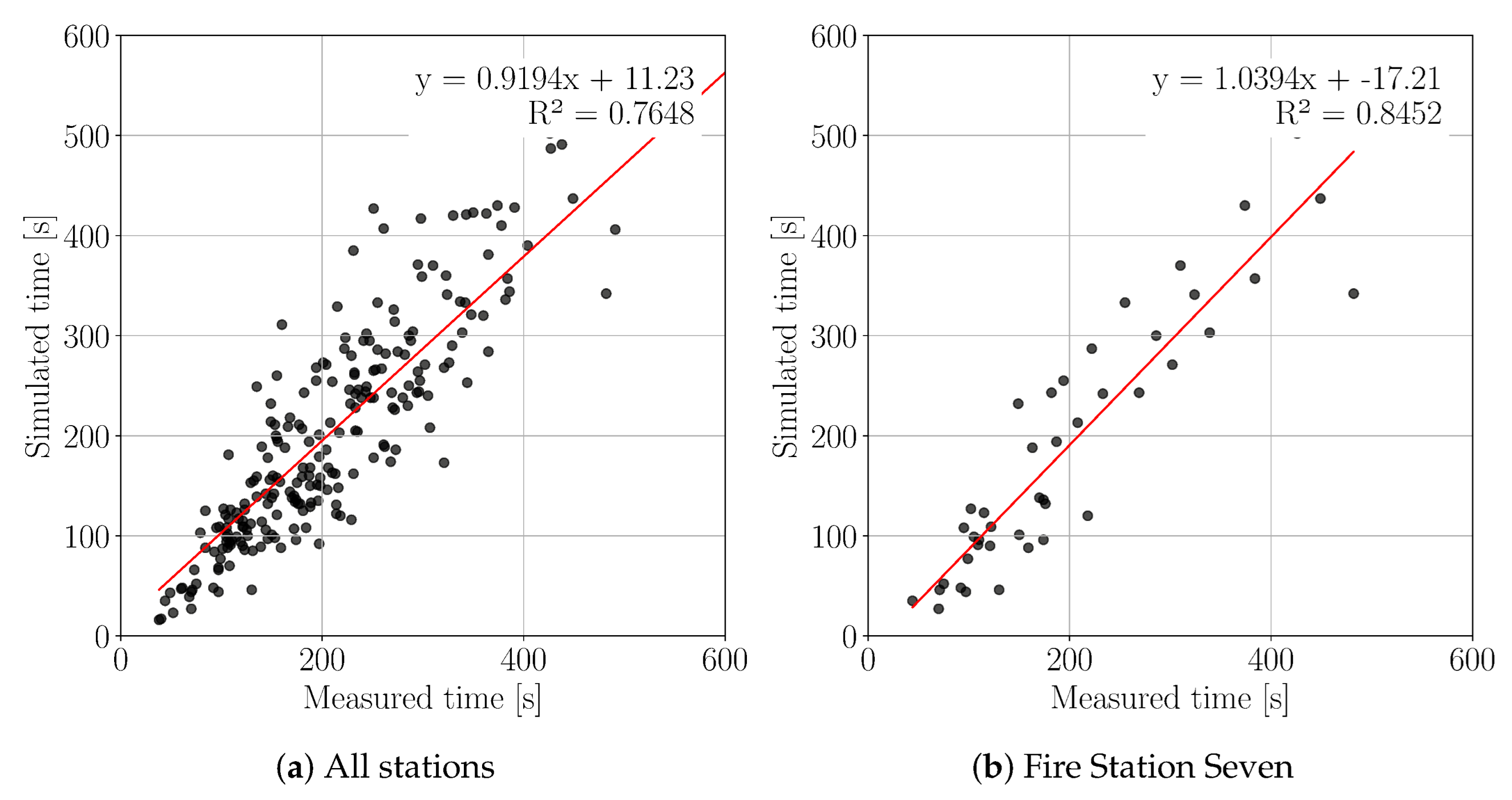
- The agent-based, mesoscopic model of the Munich Fire Department shows good results in validation compared to historical incident data.
- Digital twins can be used to assess the impact of the transport system on the emergency response system and to systematically simulate future ‘what-if’ scenarios.
- Our data suggests that the transition to sustainable mobility can have a positive impact on emergency services. However, additional datasets and research are needed to develop specific recommendations for action.
Abstract
1. Introduction
2. State of the Art
2.1. Emergency Service Specific Extensions in Transport Simulation Models
2.2. Commercially Available Software
2.3. GPS-Based Data Analysis for EVs
2.4. How rescuePY Stands out
3. Methods
3.1. Data Analysis
3.1.1. Data Analysis Pipeline
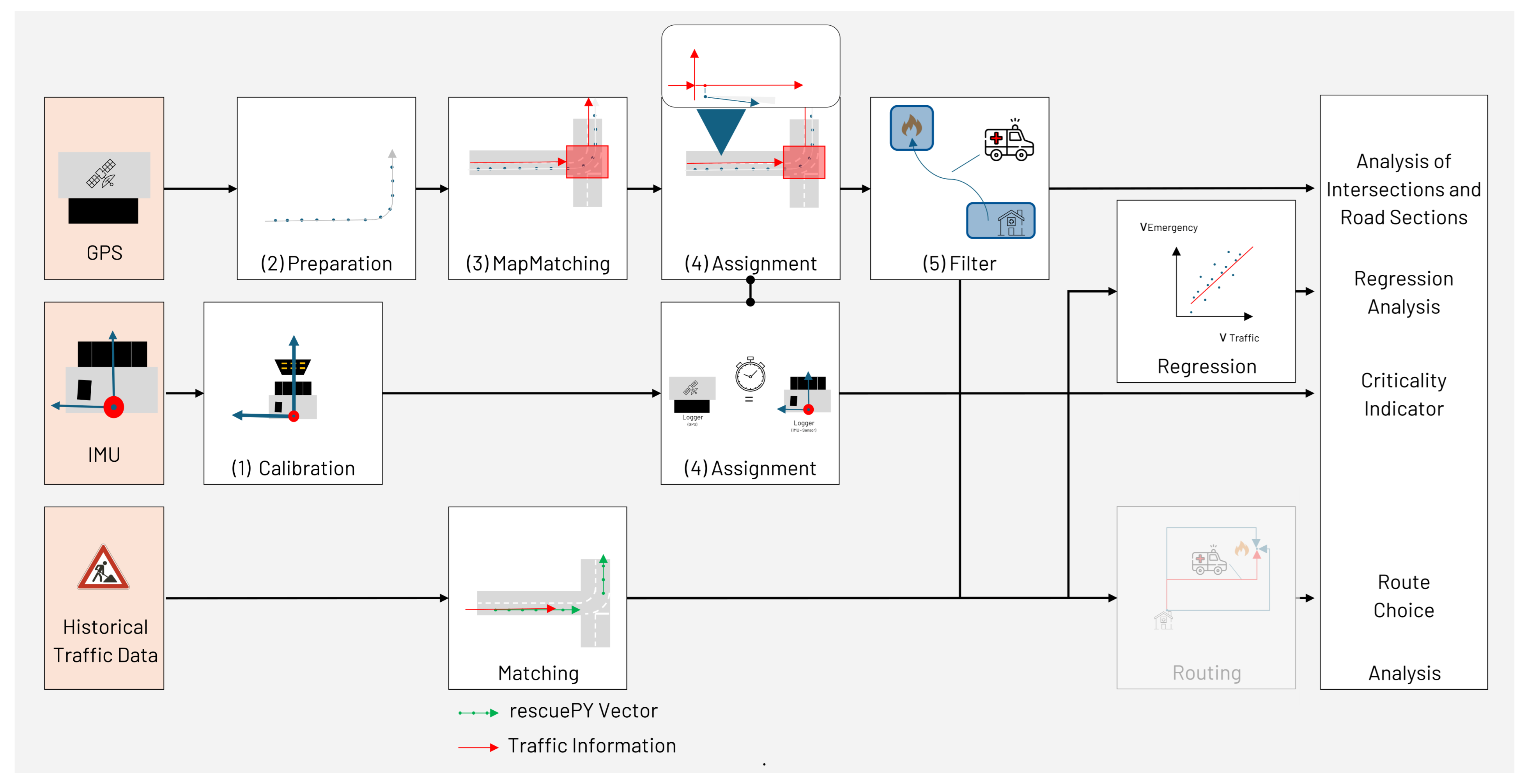
- Step 1—Calibration: Transformation of IMU data into the vehicle coordinate system according to [35], supplemented by smoothing.
- Step 2—Preparation: Aggregation of GPS points to emergency trips (speed ). Short interruptions of up to , e.g., due to tunnels or traffic jams, are permitted and will be taken into account.
- Step 3—MapMatching: Since EVs have special privileges (driving against the direction of traffic, exceeding speed limits, ignoring turn restrictions), the approach of [36] was adapted for our use case. The result is a sequence of edges that were traversed by the EV.
- Step 4—Assignment: Assignment of GPS points to edge sections based on geometric criteria (next edge , same direction, and ensuring that the projection lies within the edge). The chosen two-step process ensures quality and efficiency.
- Step 5—Filter: Filtering by signal quality (number of satellites, DOP), start at the station, end at the location of incident/operation, and comparison with the control center protocol logs.

3.1.2. Definition of Indicators
3.2. Dynamic System Model
3.2.1. Modeled Agents, Additional Components and Their Properties
- Modeled Agents:
- Hospital: A hospital treats patients arriving by ambulance. The hospitals are characterized by a defined capacity and a fixed location.
- Fire station: Fire stations are responsible for managing the allocation of crew members to specific roles and vehicles. They also serve as the home base for all EVs. Each fire station has a defined location, and every EV is assigned to exactly one station, to which it returns after each operation. Stations are assigned specific emergency capabilities.
- Dispatch Agent: The dispatch agent becomes active when an incident occurs. The dispatch logic corresponds to the real system. Based on predefined zones and the pre-calculated order of fire stations, it is determined which station should respond, given the current status of the EVs and the required resources. The incident is then assigned accordingly.
- Emergency Vehicles: EVs are vehicle-agents. Every EV has a home base, to which it returns after completing an operation. They each have a type, which indicates different capabilities. This is needed to assign the required EV for each emergency type. Ambulances are specifically designed to receive and transport a single patient. Each EV has a list of currently assigned personnel and a status reflecting its current position/task. The most important statuses can be described as follows: In status 2, the EV is at its base. Once assigned to an emergency and ready for deployment, it enters status 3 and proceeds to the incident location. Upon arrival and engagement, it is in status 4. After completing the operation, it switches to status 1 and returns to its home base.
- Additional Components:
- Incident: An incident is an emergency event defined prior to the simulation run, which is triggered at a predefined time. Each incident has a location and a classification.
- Person: A person can either be a member of an EVs crew or a patient. Crew members possess a set of roles they are qualified to perform, as well as an active role they currently fulfill. If a crew member belongs to a volunteer fire station, an additional parameter is defined: a radius indicating the distance from which the member can be randomly dispatched to the station in case of an emergency.
- Log Entry: Every status change of an EV, as well as every trip, generates a log entry that can be used for a more detailed analysis of the simulation results.
- Zones: The simulated area of interest is divided into multiple smaller zones, which are required for the station order. These zones must be generated or provided as input before executing the simulation.
- Station Order: The station order defines, based on the zone in which an emergency occurs, the order of the nearby stations to respond to an emergency in that zone. The first available station with the required equipment from the calculated order is selected. This configuration must be defined prior to running the simulation.
- Alarm and Dispatch Order: The alarm and dispatch order specifies the required number and type of equipment and personnel for each type of incident. This configuration must be defined before the simulation begins.
3.2.2. Implementation of the Transport Model
3.2.3. Modeled Processes
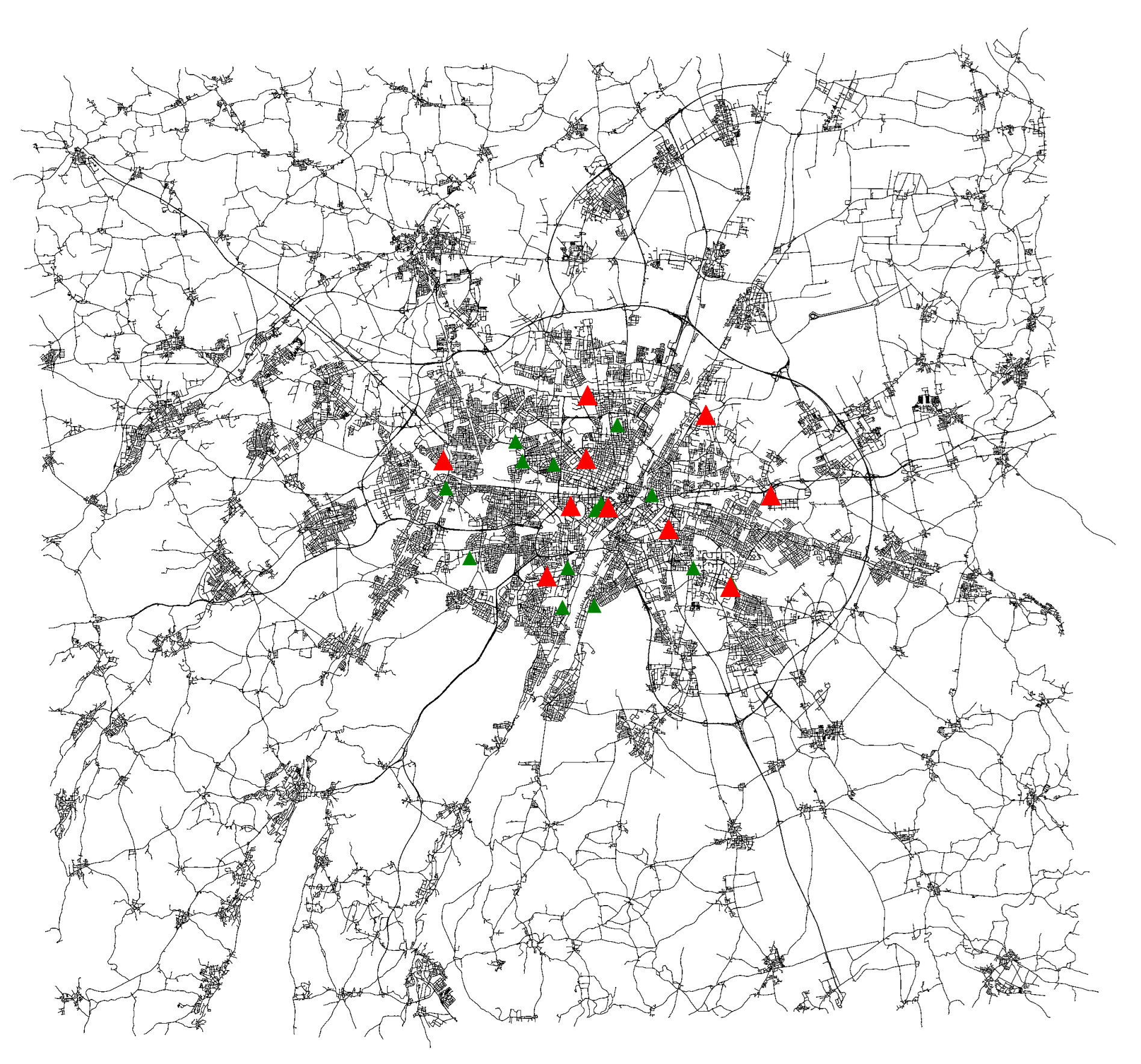
4. Case Study: Munich Fire Department
- Cycling infrastructure: Presence of cycle lanes accessible to cars without a curb
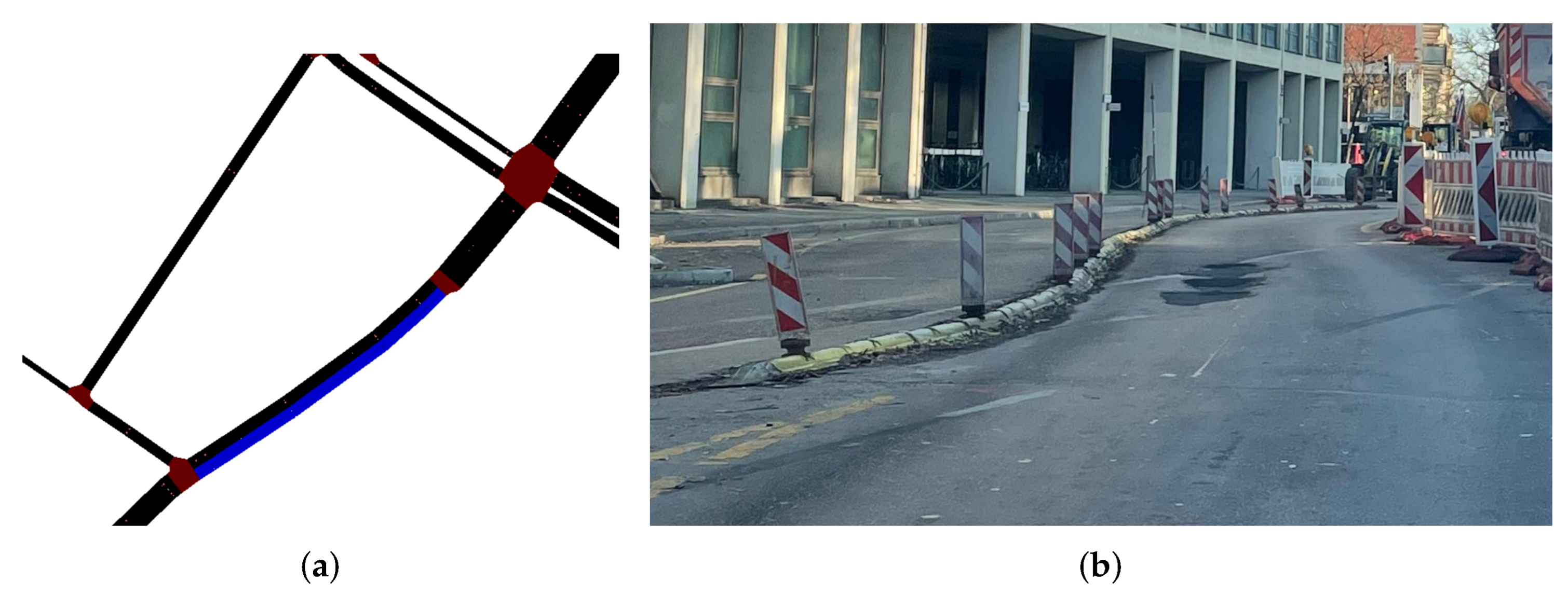
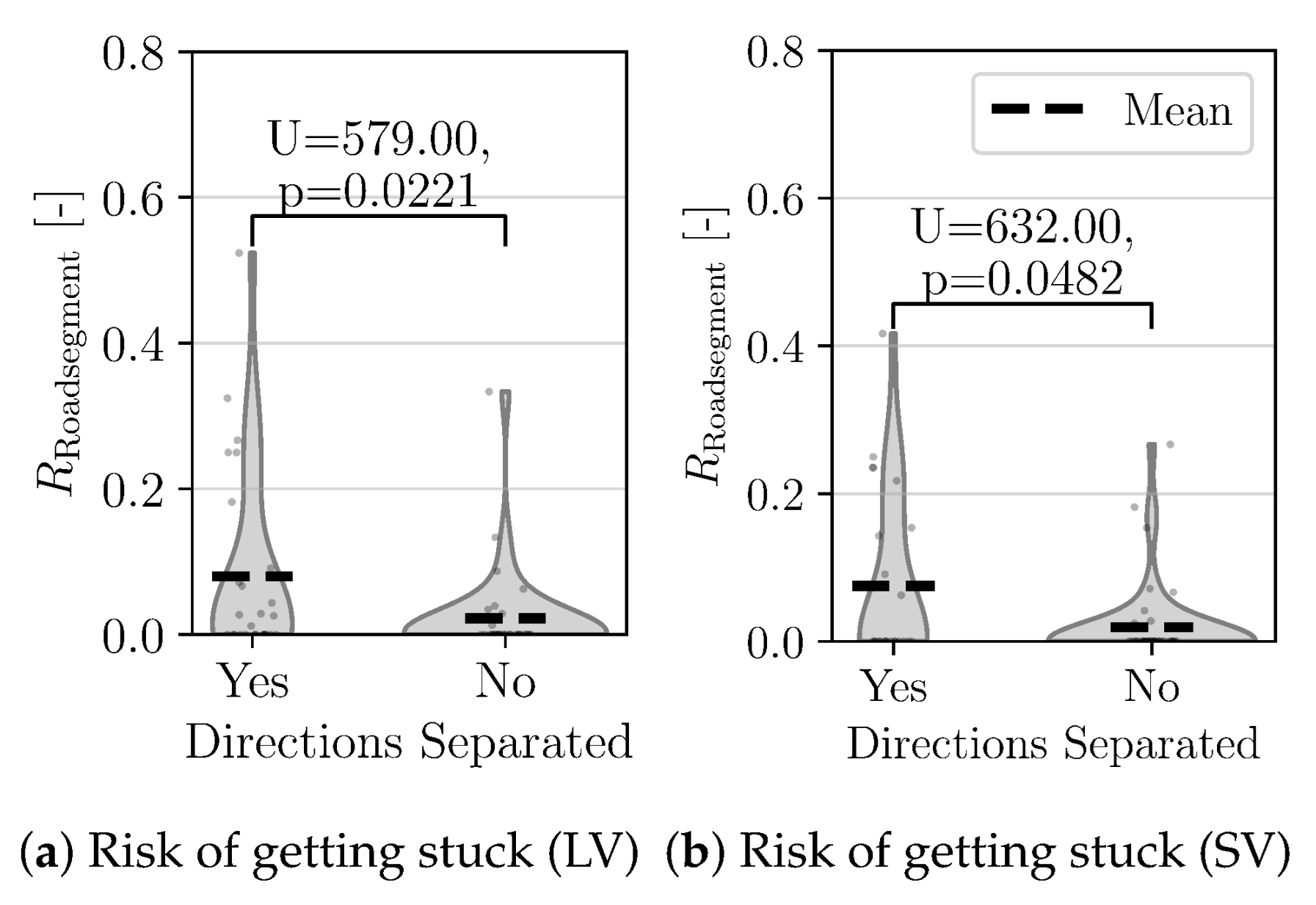
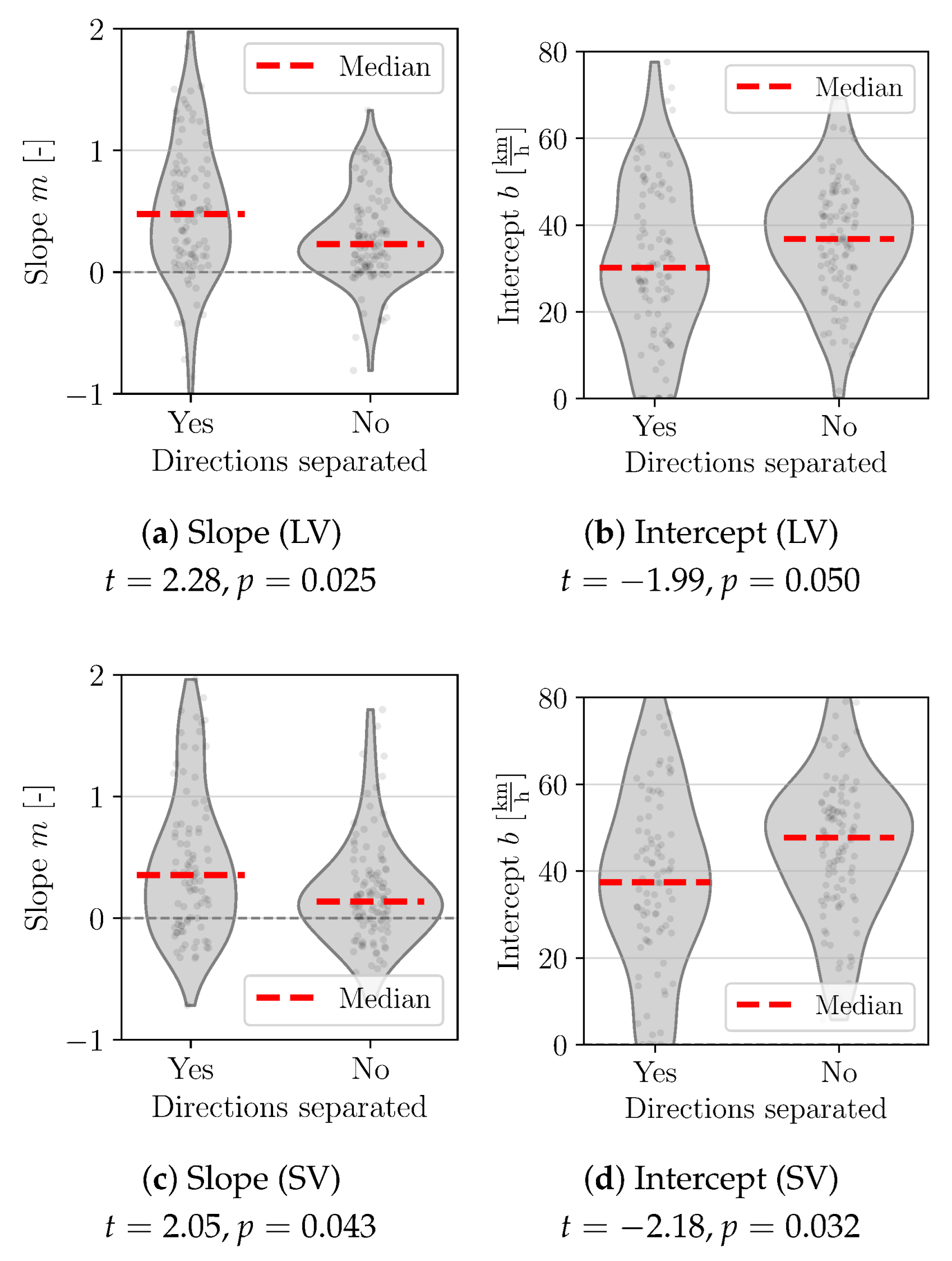
- Separation of traffic directions: no structural separation (only markings); structural separation (guard rails, central reservation);
- Special lanes: special lanes are available and accessible to EVs (e.g., bus lanes).
5. Results
5.1. Results of the Data Analysis
5.1.1. General Indicator Analysis
5.1.2. Discussion of the Influence of Structural Separations Between Traffic Directions
5.1.3. Discussion of Various Road Cross-Sections
5.2. Results of the Dynamic System Model
5.2.1. Validation
5.2.2. Sensitivity Analysis
6. Discussion
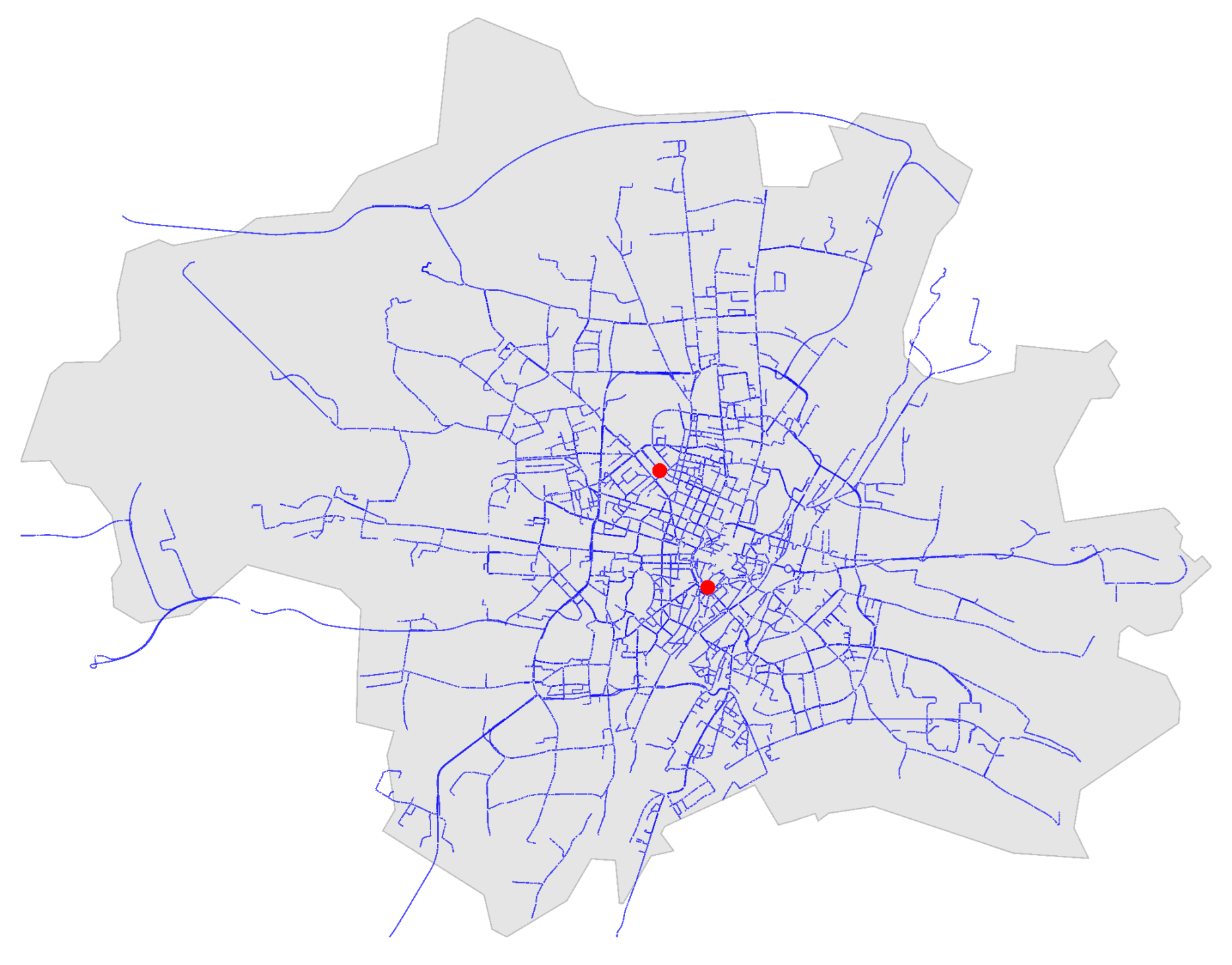
- Firstly, the underlying data set is limited. Our analysis is based on a limited observation window from two out of ten stations of the Munich Fire Department. Although this data set is comprehensive and detailed compared to the literature, it nevertheless represents only a snapshot of a single city. The transferability of the results to other urban contexts needs to be verified by applying the framework to other fire stations and cities.
- Secondly, the regression analysis is sensitive to the quality of the input data. Both network-to-network referencing and the data, e.g., the FCD-reported average speed used as an indicator for the traffic condition, itself introduce errors. Future data collection should supplement the logger data with actual scene recordings, for example, through ego-perspective, geo-referenced camera recordings. This would enable a precise reconstruction of the traffic situation including traffic light states and the observed behavior of the surrounding road users encountered by the EV. This would allow driving behavior and conflict situations to be modeled more accurately, and the causes for observed values to be investigated. The regression-based speed-coupling indicator was designed as a simple, edge-wise and univariate measure. Therefore, multicollinearity is not of concern here. Heteroskedasticity is handled by reporting bootstrapped uncertainty for the Theil–Sen slope, including confidence intervals. Some spatial dependence between adjacent links is expected in road networks, however, the indicator is computed separately for each topologically defined link. We therefore treat link-to-link tests as descriptive.
- Thirdly, the current assessment is based on geometric simplifications. To reduce distortions, future work should take into account lane width, geometry at lane level, and the exact intersection layouts. Therefore, the detailed relationship between structural design decisions and operational safety, including the perspective of vulnerable road users, remains an open question.
- Fourthly, the simulation model offers an accessible, end-to-end approach for realistically simulating ground-based rescue operations at the system level; however, it is not yet complete. Air medical services have not been integrated, which limits coverage of the emergency response system to ground-based vehicles. Processes and interactions at the scene, such as extrication in road-traffic collisions, are currently out of scope, even though they can materially influence both duration and outcomes. The target variable in the present validation is arrival at the presumed incident location; in practice, arrival at the actual patient location is more relevant and should be reflected in future versions. A comprehensive validation and application in the context of a case study for volunteer fire departments remains outstanding and should be completed to ensure robustness across organizational types.
- Fifthly, the simulation model uses a mesoscopic traffic model that does not explicitly simulate surrounding traffic. Therefore, it does not consider congestion caused by bottlenecks or the redistribution of traffic within the network. Nevertheless, detailed simulations under changed traffic conditions require a microscopic simulation of surrounding traffic to capture diversion and congestion effects. While this can be achieved with tools such as hybridPY and the microscopic fire brigade model [16,43], it presupposes an underlying traffic demand model. Incorporating such an assignment where warranted will improve fidelity for scenario analyses that include widespread speed changes, construction phases, or modal filters.
- Finally, the model has been tailored to the Bavarian context; its applicability to other countries has not yet been tested and will likely require adapting institutional rules, dispatch logic, and infrastructure constraints. In order to transfer the model to other cities, the underlying database can be derived from publicly available data and specific data from emergency service operators, e.g., station locations and incident data, can be integrated to perform initial analyses. Detailed data, e.g., GPS measurements for traffic analysis, can then be added in a second step. Thus, the model centres on globally transferable components enriched with city-specific data.
7. Conclusions
Author Contributions
Funding
Data Availability Statement
Acknowledgments
Conflicts of Interest
Abbreviations
| A | Ambulance |
| CV | Command vehicle |
| EV | Emergency vehicle |
| eVTOL | Electric vertical take-off and landing aircraft |
| FCD | Floating car data |
| FD | Fire Department |
| FE | Fire engine |
| GNSS | Global Navigation Satellite System |
| GPS | Global Positioning System |
| IMU | Inertial measurement unit |
| LV | Large vehicles |
| MAE | Mean Absolute Error |
| MAPE | Mean Absolute Percentage Error |
| OBD | On-board diagnostics |
| OSM | OpenStreetMap |
| pgRouting | PostGIS routing extension |
| PostGIS | PostgreSQL geospatial extension |
| SUMO | Simulation of Urban MObility |
| SV | Small vehicles |
| TL | Turntable ladder vehicle |
| VFD | Volunteer Fire Department |
References
- Bachmeier, P. Fachempfehlung der Arbeitsgemeinschaft der Leiterinnen und Leiter der Berufsfeuerwehren und des Deutschen Feuerwehrverbandes Mobilitätswende, 2022. Available online: https://feuerwehr-frankfurt.de/mediathek/vorbeugender-brandschutz/strassenraum/fachempfehlung-mobilitaetswende (accessed on 25 August 2025).
- Deutsche Umwelthilfe e.V. Sofortmaßnahmen für Die Mobilitätswende—Effektiv und Kostengünstig. Available online: http://www.duh.de/projekte/pop-up-mobilitaetswende (accessed on 25 August 2025).
- Kim, J.; Kweon, D.; Kweon, S.J. Emergency Water Distribution Systems to Improve Spatial Equality and Spatial Equity in a Heterogeneous Community with Differing Mobility Characteristics. Int. J. Disaster Risk Reduct. 2024, 112, 104730. [Google Scholar] [CrossRef]
- Tanoumand, A.; Mashayekhi, M.; Majdi, A.; Noroozinejad Farsangi, E. A Metaheuristic-Based Approach for Optimizing the Allocation of Emergency Water Reservoirs for Fire Following Earthquake Suppression. Results Eng. 2025, 27, 105925. [Google Scholar] [CrossRef]
- Sadler, R.C. Misalignment Between ZIP Codes and Municipal Boundaries: A Problem for Public Health. Cityscape 2019, 21, 335–340. [Google Scholar] [PubMed]
- Liu, C.; Yang, Y.; Liu, H.; Hu, J. Agent-based modeling for estimating the performance of medical service systems in disaster scenarios. Int. J. Disaster Risk Reduct. 2025, 117, 105183. [Google Scholar] [CrossRef]
- Bieker-Walz, L.; Behrisch, M.; Junghans, M. Analysis of the traffic behavior of emergency vehicles in a microscopic traffic simulation. EPiC Ser. Eng. 2018, 2, 1–13. [Google Scholar] [CrossRef]
- Lopez, P.A.; Behrisch, M.; Bieker-Walz, L.; Erdmann, J.; Flötteröd, Y.P.; Hilbrich, R.; Lücken, L.; Rummel, J.; Wagner, P.; Wießner, E. Microscopic Traffic Simulation using SUMO. In Proceedings of the 21st IEEE International Conference on Intelligent Transportation Systems, Maui, HI, USA, 4–7 November 2018; pp. 2575–2582. [Google Scholar] [CrossRef]
- Soni, S.; Weronek, K. Analysis and Modelling of Road Traffic Using SUMO to Optimize the Arrival Time of Emergency Vehicles. SUMO Conf. Proc. 2023, 4, 165–178. [Google Scholar] [CrossRef]
- Capodieci, N.; Cavicchioli, R.; Muzzini, F.; Montagna, L. Improving emergency response in the era of ADAS vehicles in the Smart City. ICT Express 2021, 7, 481–486. [Google Scholar] [CrossRef]
- Horni, A.; Nagel, K.; Axhausen, K. (Eds.) Multi-Agent Transport Simulation MATSim; Ubiquity Press: London, UK, 2016. [Google Scholar] [CrossRef]
- Koch, Z.; Yuan, M.; Bristow, E. Emergency Response after Disaster Strikes: Agent-Based Simulation of Ambulances in New Windsor, NY. J. Infrastruct. Syst. 2020, 26, 06020001. [Google Scholar] [CrossRef]
- Bandyopadhyay, M.; Singh, V. Development of agent based model for predicting emergency response time. Perspect. Sci. 2016, 8, 138–141. [Google Scholar] [CrossRef]
- Bandyopadhyay, M.; Singh, V. Agent-based geosimulation for assessment of urban emergency response plans. Arab. J. Geosci. 2018, 11, 165. [Google Scholar] [CrossRef]
- Taillandier, P.; Gaudou, B.; Grignard, A.; Huynh, Q.N.; Marilleau, N.; Caillou, P.; Philippon, D.; Drogoul, A. Building, composing and experimenting complex spatial models with the GAMA platform. GeoInformatica 2019, 23, 299–322. [Google Scholar] [CrossRef]
- Schuhmann, F.; Sievers, M.; Schrott, S.; Kapovich, I.; Feng, L.; Lienkamp, M. rescuePY: Simulation-Based Rescue Response Impact Assessment. SUMO Conf. Proc. 2024, 5, 17–37. [Google Scholar] [CrossRef]
- Wachter, F.; Krivohlavek, J.; Rossa, J.; Rupp, A. Generalistic Assessments of the Potential of Medical Drones in Urban Environment: Based on Microscopic Travel Time Comparison with Ground-Based Services. SUMO Conf. Proc. 2024, 5, 57–70. [Google Scholar] [CrossRef]
- Mínguez, A.; Tozan, V.; El-Assaad, M.; Solà-Muñoz, S.; Azeli, Y.; de La Cruz Llopis, L.J.; Jiménez-Fàbrega, X.; Galup, C.; Dalmau, R.; Aguilar Igartua, M. Design of a SUMO-Based Simulator for Optimal Location of Emergency Vehicles in the Emergency Medical Systems. Emerg. Med. Int. 2025, 2025, 4823481. [Google Scholar] [CrossRef]
- Lülf+ Premergency GmbH. Premergency: Die Lage Unter Kontrolle. 2025. Available online: https://www.premergency.de/ (accessed on 15 October 2025).
- rescuetrack GmbH. Routing und Isochronen: Schnellste Verbindungen und Erreichbarkeitsanalyse. Available online: https://www.rescuetrack.de/de-de/products/routing/ (accessed on 15 October 2025).
- Lupa, M.; Chuchro, M.; Sarlej, W.; Adamek, K. Emergency Ambulance Speed Characteristics: A Case Study of Lesser Poland Voivodeship, Southern Poland. GeoInformatica 2021, 25, 775–798. [Google Scholar] [CrossRef]
- Pappinen, J.; Nordquist, H. Driving Speeds in Urgent and Non-Urgent Ambulance Missions during Normal and Reduced Winter Speed Limit Periods—A Descriptive Study. Nurs. Rep. 2022, 12, 50–58. [Google Scholar] [CrossRef]
- Bieker-Walz, L.; Flötteröd, Y.P.; Sohr, A. Modelling of Emergency Vehicles Route Choice with Use of Trajectory Data. In Proceedings of the 2019 6th International Conference on Models and Technologies for Intelligent Transportation Systems (MT-ITS), Krakow, Poland, 5–7 June 2019; pp. 1–8. [Google Scholar] [CrossRef]
- Steinvoord, M. GIS-Gestützte Analyse von Fahrgeschwindigkeiten Unter Sonder- und Wegerecht. Bachelorarbeit, Hochschule für Angewandte Wissenschaften Hamburg, Hamburg, 21 June 2012. Available online: https://reposit.haw-hamburg.de/handle/20.500.12738/5972 (accessed on 25 August 2025).
- Schuhmann, F.; Herrmann, T.; Weirauch, C.; Schneider, M.; Müller, H. Der digitale Feuerwehr-Zwilling—Teil 1: GPS-Datenanalyse als Grundlage bei der Berufsfeuerwehr München. BRANDSchutz 2025, 79, 279–285. [Google Scholar]
- Schuhmann, F.; Herrmann, T.; Weirauch, C.; Schneider, M.; Müller, H. Der digitale Feuerwehr-Zwilling—Teil 2: Open-Source-Verkehrssimulation bei der Berufsfeuerwehr München. BRANDSchutz 2025, 79, 286–289. [Google Scholar]
- Schuhmann, F.; Lienkamp, M. Understanding the Route Choice Behavior of Emergency Vehicles: A Case-Study in Munich. In Proceedings of the 2025 8th International Conference on Models and Technologies for Intelligent Transportation Systems (MT-ITS), Luxembourg, 8–10 September 2025; pp. 1–6. [Google Scholar] [CrossRef]
- Bundesministerium für Verkehr. Mobilithek. 2025. Available online: https://mobilithek.info/ (accessed on 15 October 2025).
- Landesbaudirektion Bayern. BayernInfo. 2025. Available online: https://www.bayerninfo.de/ (accessed on 15 October 2025).
- OpenStreetMap contributors. Planet Dump. 2025. Available online: https://www.openstreetmap.org (accessed on 15 July 2025).
- The PostGIS Project Steering Committee (PSC). PostGIS, Spatial and Geographic Objects for PostgreSQL, Software Version 3.5.2. 2023. Available online: https://www.postgis.net/ (accessed on 25 August 2025).
- pgRouting contributors. pgRouting: Routing on PostgreSQL, Software Version 3.7.3. 2025. Available online: https://pgrouting.org/ (accessed on 25 August 2025).
- Schuhmann, F.; Sturm, M. rescuePY. Software Version 1.0.0. Available online: https://github.com/TUMFTM/rescuePY-public (accessed on 15 October 2025).
- Vereinigung zur Förderung des Deutschen Brandschutzes e. V. Posterbook. 2025. Available online: https://www.vfdb.de/media/doc/sonstiges/jft/poster/2025/Posterbook2025.pdf (accessed on 15 October 2025).
- Kreibich, J.; Brenner, F.; Lienkamp, M. Lane-Level Matching Algorithm Based on GNSS, IMU and Map Data. In Proceedings of the 2021 8th International Conference on Soft Computing & Machine Intelligence (ISCMI), Cairo, Egypt, 26–27 November 2021; pp. 211–218. [Google Scholar] [CrossRef]
- Millard-Ball, A.; Hampshire, R.C.; Weinberger, R.R. Map-matching poor-quality GPS data in urban environments: The pgMapMatch package. Transp. Plan. Technol. 2019, 42, 539–553. [Google Scholar] [CrossRef]
- National Highway Traffic Safety Association. The 100-Car Naturalistic Driving Study. Technical Report DOT HS 810 593, 2006. Available online: https://rosap.ntl.bts.gov/view/dot/37370 (accessed on 15 October 2025).
- Johnson, D.A.; Trivedi, M.M. Driving Style Recognition Using a Smartphone as a Sensor Platform. In Proceedings of the 2011 14th International IEEE Conference on Intelligent Transportation Systems (ITSC), Washington, DC, USA, 5–7 October 2011; pp. 1609–1615. [Google Scholar] [CrossRef]
- Serre, T.; Naude, C.; Fournier, M. Vehicle Dynamics Endured by Patients during Emergency Evacuation—Ambulance versus Helicopter. Safety 2022, 8, 4. [Google Scholar] [CrossRef]
- Bagdadi, O. Assessing Safety Critical Braking Events in Naturalistic Driving Studies. Transp. Res. Part F Traffic Psychol. Behav. 2013, 16, 117–126. [Google Scholar] [CrossRef]
- Cortés, C.E.; Stefoni, B. Simulation of Emergency Vehicle Operations. SSRN Electron. J. 2022. [Google Scholar] [CrossRef]
- Kumar, G.N.S.; Hunter, M.; Guin, A. Enhancing Driver Behavior Models in Response to Emergency Vehicles. In Proceedings of the 2024 Winter Simulation Conference (WSC), Orlando, FL, USA, 15–18 December 2024; pp. 1410–1421. [Google Scholar] [CrossRef]
- Schuhmann, F.; an Nguyen, N.; Schweizer, J.; Huang, W.C.; Lienkamp, M. Creating and Validating Hybrid Large-Scale, Multi-Modal Traffic Simulations for Efficient Transport Planning. Smart Cities 2025, 8, 2. [Google Scholar] [CrossRef]



 = not available,
  = low,
  = medium,
  = high,
  = comprehensive; Use Case Type: R = regular operation, D = disaster; Emergency Service: A = Ambulance, FD = Fire Department, VFD = Voluntary Fire Department, † = conceptionally).
= not available, = low, = medium, = high, = comprehensive; Use Case Type: R = regular operation, D = disaster; Emergency Service: A = Ambulance, FD = Fire Department, VFD = Voluntary Fire Department, † = conceptionally).
= comprehensive; Use Case Type: R = regular operation, D = disaster; Emergency Service: A = Ambulance, FD = Fire Department, VFD = Voluntary Fire Department, † = conceptionally).
= not available, = low, = medium, = high, = comprehensive; Use Case Type: R = regular operation, D = disaster; Emergency Service: A = Ambulance, FD = Fire Department, VFD = Voluntary Fire Department, † = conceptionally).| Source | Year | Region | Number of Stations | Emergency Service | Use Case Type | Level of Detail: Emergency Data | Agent-Based System Model | Level of Detail: Transport Model | Capability: System Monitoring | Applicability by Operators |
|---|---|---|---|---|---|---|---|---|---|---|
| [7] | 2018 | Brunswick, DE | n.a. | n.a. | R | | | | | |
| [9] | 2023 | Frankfurt, DE | n.a. | n.a. | R | | | | | |
| [10] | 2021 | Modena, IT | n.a. | A | R | | | | | |
| [12] | 2020 | New Windsor, US | 1 | A | D | | | | | |
| [13,14] | 2016/2018 | Allahabad, IN | 1 | FD | D | | | | | |
| [17] | 2024 | Stavanger, NO | 1 | A | R | | | | | |
| [16] | 2024 | Munich, DE | 10 | FD | R | | | | | |
| [18] | 2025 | Catalonia, ES | 4 | A | R | | | | | |
| This Work | 2025 | Munich, DE | 10 | FD, A, VFD † | R | | | | | |
| Road Section | Small Vehicles | Large Vehicles | ||||||||||
|---|---|---|---|---|---|---|---|---|---|---|---|---|
| m | b | N | Range | Pearson r |
Bootstrap | m | b | N | Range | Pearson r | Bootstrap | |
 | 0.10 | 45.98 | 208 | 11–34 | −0.036 | 0.100, [−0.115, 0.305], 0.344 | −0.07 | 47.42 | 254 | 12–34 | −0.092 | −0.043, [−0.283, 0.227], 0.752 |
 | 0.28 | 46.93 | 212 | 10–34 | 0.113 | 0.320, [0.087, 0.566], 0.008 | 0.07 | 49.58 | 252 | 11–34 | −0.025 | 0.085, [−0.152, 0.335], 0.436 |
 | 0.78 | 34.57 | 91 | 11–42 | 0.247 * | 0.797, [0.168, 1.378], 0.008 | 0.82 | 28.20 | 121 | 10–45 | 0.357 * | 0.856, [0.528, 1.341], 0.000 |
 | 0.19 | 43.25 | 65 | 13–35 | −0.059 | 0.239, [−0.310, 0.804], 0.360 | 0.06 | 44.18 | 101 | 12–35 | −0.071 | 0.085, [−0.187, 0.317], 0.496 |
 | 0.80 | 26.51 | 95 | 14–34 | 0.243 * | 0.823, [0.388, 1.450], 0.000 | 0.99 | 20.81 | 141 | 9–32 | 0.338 * | 1.005, [0.638, 1.502], 0.000 |
| Scenario | Response Time of Large EVs to Incidents [s] | Total Travel Time to Hospital [s] | ||
|---|---|---|---|---|
| Median | Mean | Median | Mean | |
| Base Scenario | 244 | 297 | 576 | 662 |
| Interruption 1 | 277 | 337 | 658 | 749 |
| Interruption 2 | 270 | 330 | 660 | 744 |
| Interruption 3 | 271 | 332 | 647 | 739 |
Disclaimer/Publisher’s Note: The statements, opinions and data contained in all publications are solely those of the individual author(s) and contributor(s) and not of MDPI and/or the editor(s). MDPI and/or the editor(s) disclaim responsibility for any injury to people or property resulting from any ideas, methods, instructions or products referred to in the content. |
© 2026 by the authors. Licensee MDPI, Basel, Switzerland. This article is an open access article distributed under the terms and conditions of the Creative Commons Attribution (CC BY) license.
Share and Cite
Schuhmann, F.; Sturm, M.; Zacher, T.; Lienkamp, M. Tackling the Complexity of Emergency Response Systems: Creating Transport-Focused Digital Twins. Smart Cities 2026, 9, 36. https://doi.org/10.3390/smartcities9020036
Schuhmann F, Sturm M, Zacher T, Lienkamp M. Tackling the Complexity of Emergency Response Systems: Creating Transport-Focused Digital Twins. Smart Cities. 2026; 9(2):36. https://doi.org/10.3390/smartcities9020036
Chicago/Turabian StyleSchuhmann, Fabian, Moritz Sturm, Till Zacher, and Markus Lienkamp. 2026. "Tackling the Complexity of Emergency Response Systems: Creating Transport-Focused Digital Twins" Smart Cities 9, no. 2: 36. https://doi.org/10.3390/smartcities9020036
APA StyleSchuhmann, F., Sturm, M., Zacher, T., & Lienkamp, M. (2026). Tackling the Complexity of Emergency Response Systems: Creating Transport-Focused Digital Twins. Smart Cities, 9(2), 36. https://doi.org/10.3390/smartcities9020036