
Article

A Predictive Compact Model of Effective Travel Time Considering the Implementation of First-Mile Autonomous Mini-Buses in Smart Suburbs

1
Department of Software Science, Tallinn University of Technology, 12618 Tallinn, Estonia
2
Department of Mechanical and Industrial Engineering, Tallinn University of Technology, 19086 Tallinn, Estonia
3
FinEst Centre for Smart Cities, Tallinn University of Technology, 19086 Tallinn, Estonia
*
Author to whom correspondence should be addressed.
Smart Cities 2024, 7(6), 3914-3935; https://doi.org/10.3390/smartcities7060151

Submission received: 4 October 2024 / Revised: 4 December 2024 / Accepted: 6 December 2024 / Published: 11 December 2024
(This article belongs to the Special Issue Cost-Effective Transportation Planning for Smart Cities)

Abstract

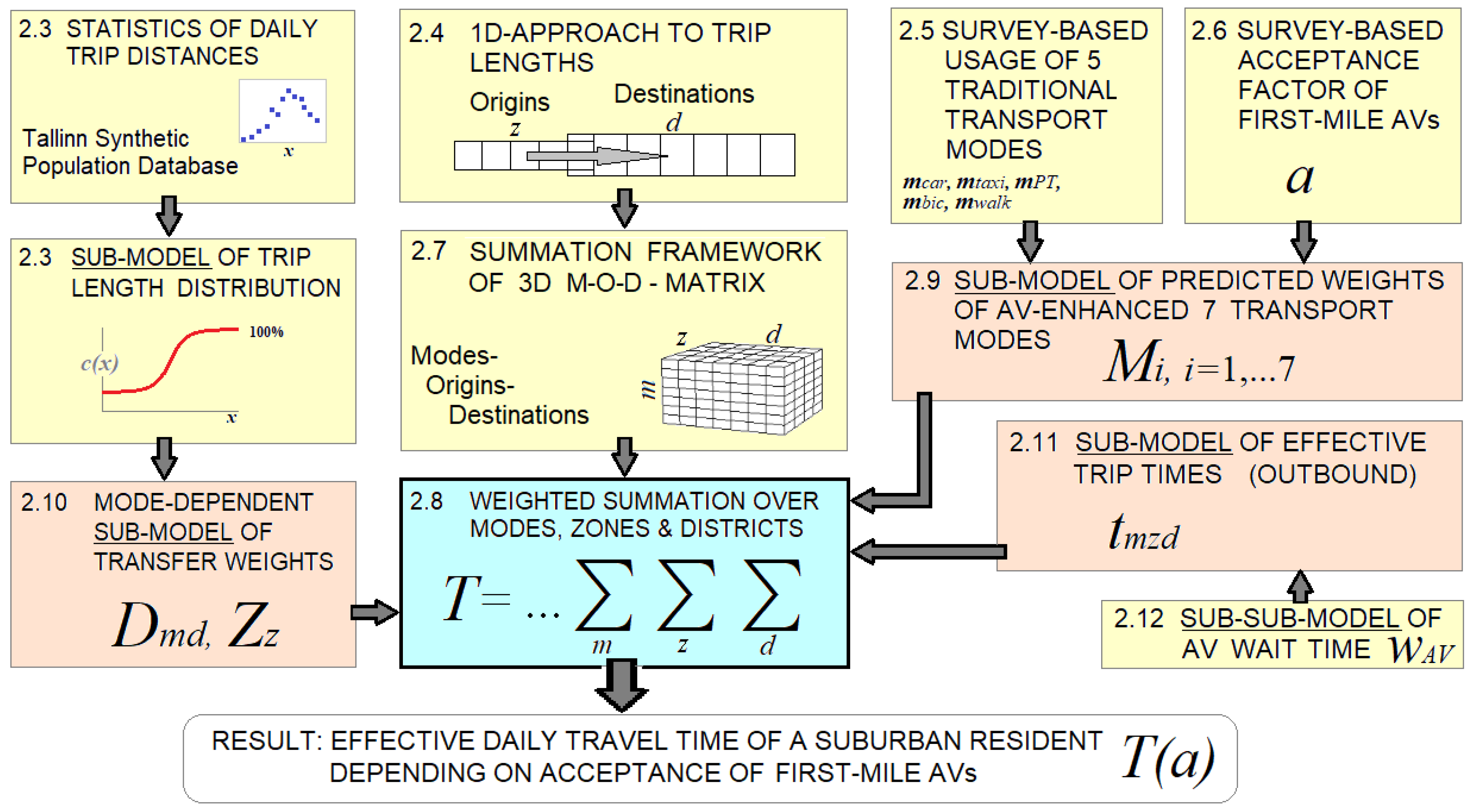
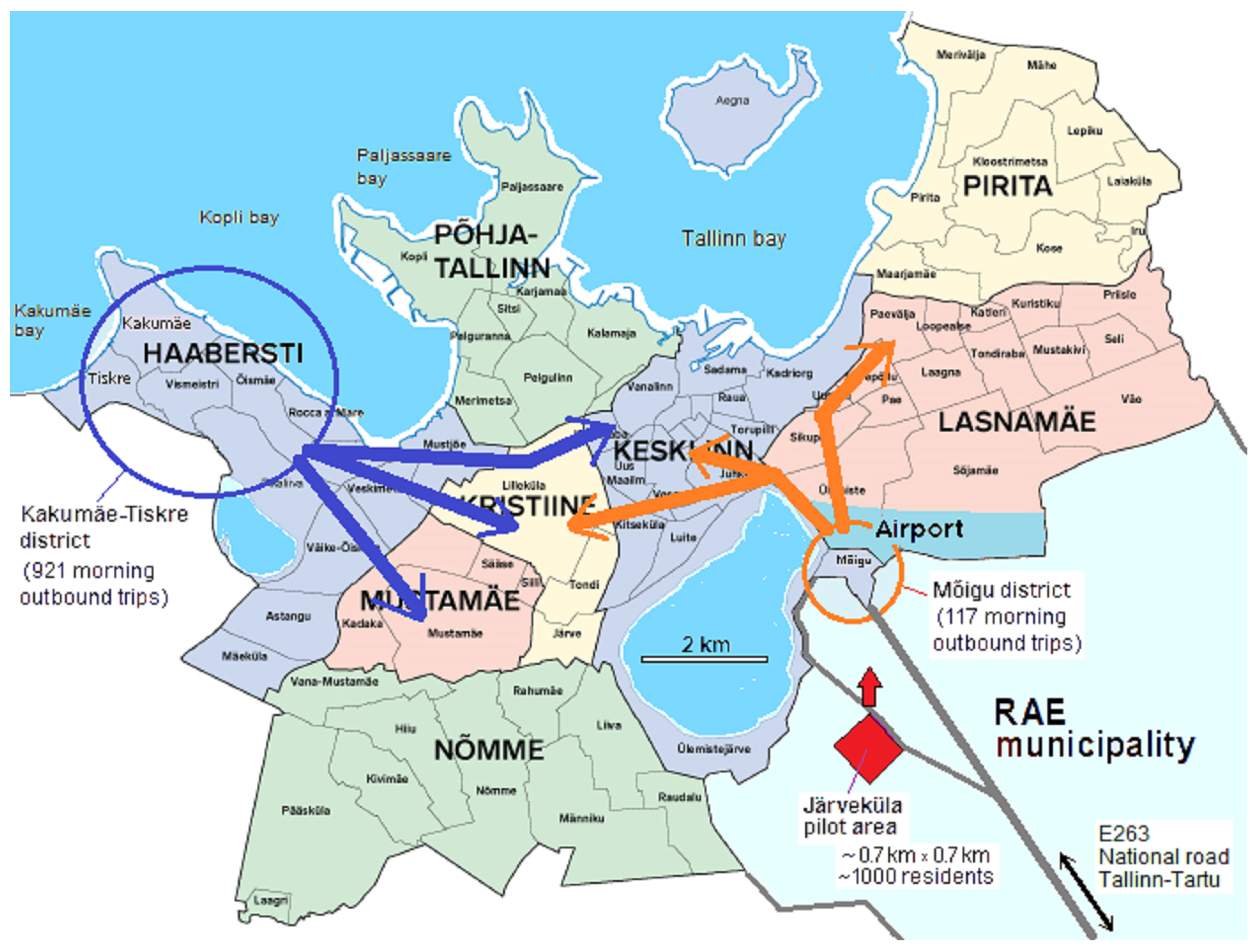
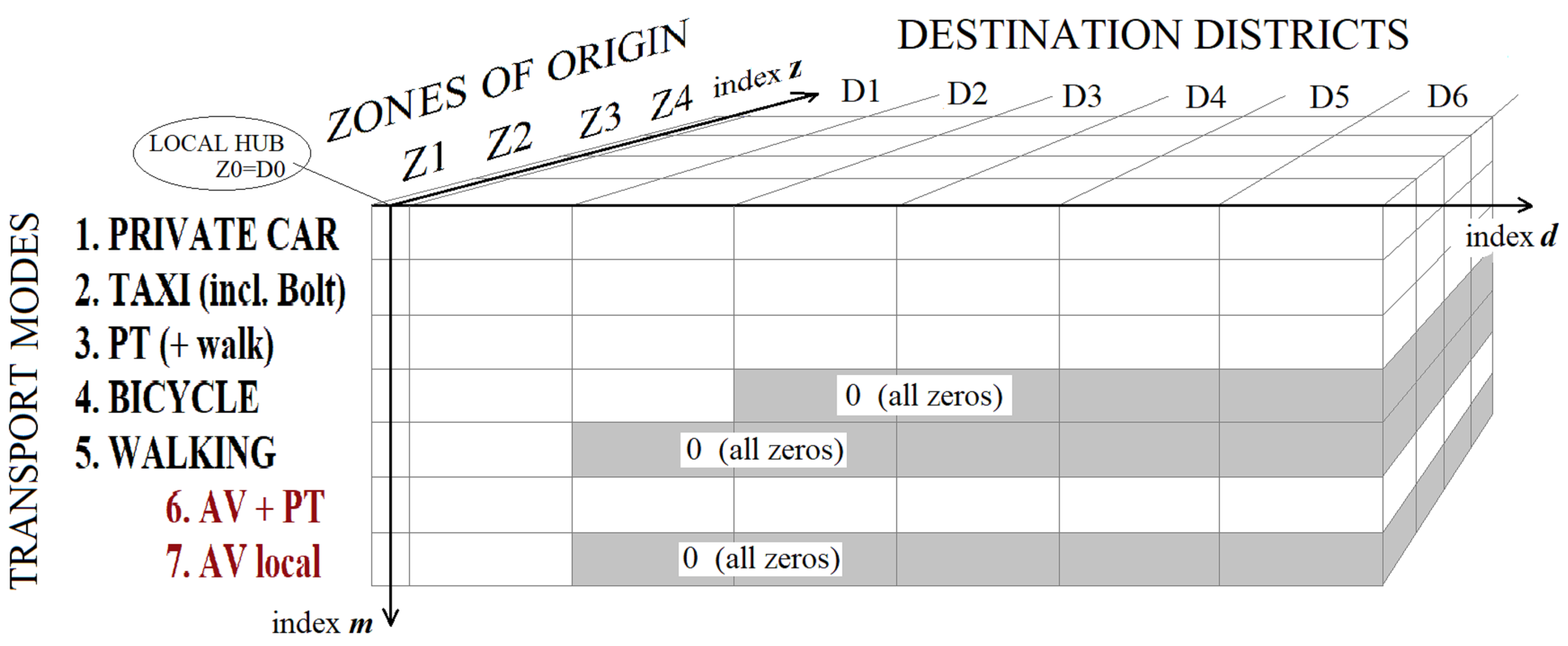
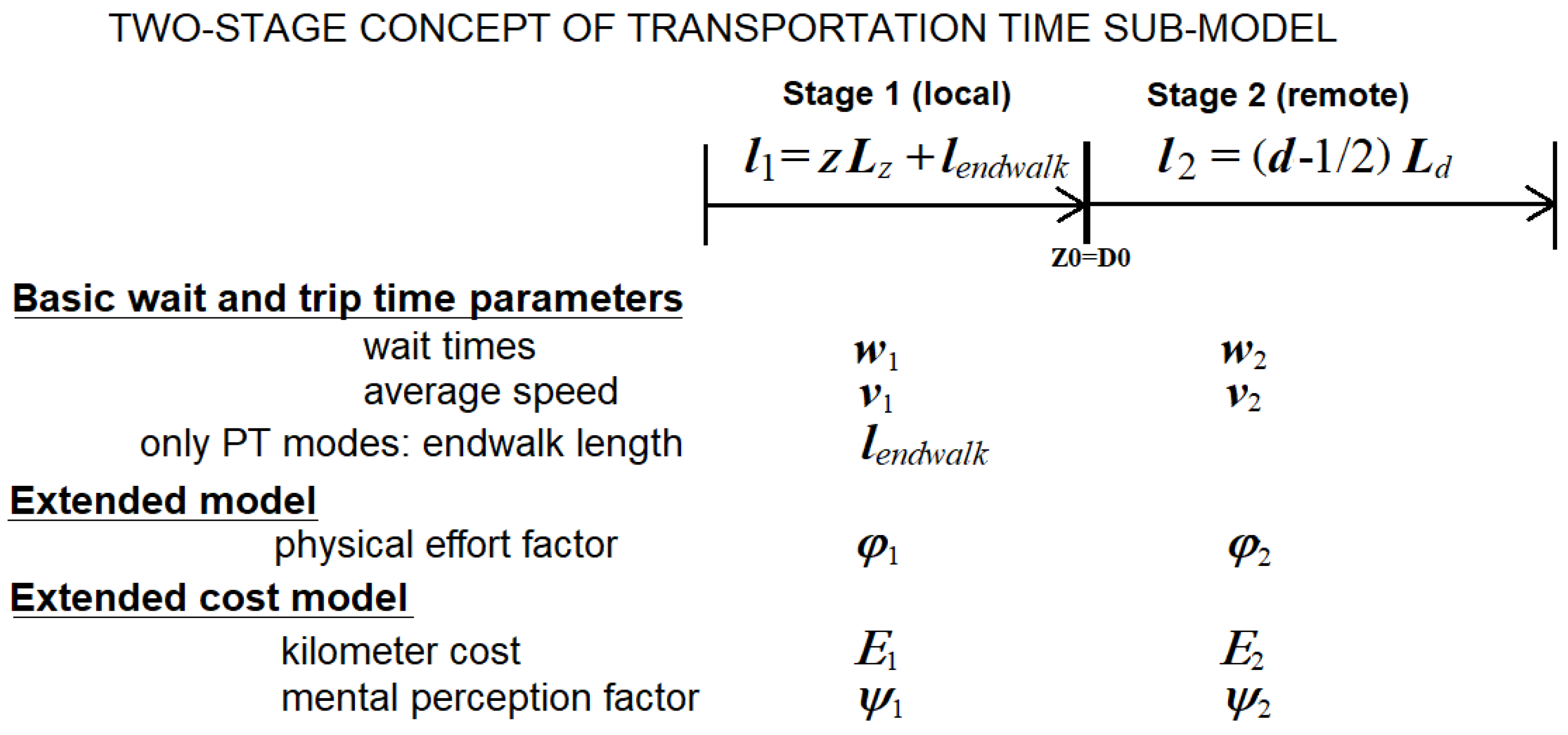
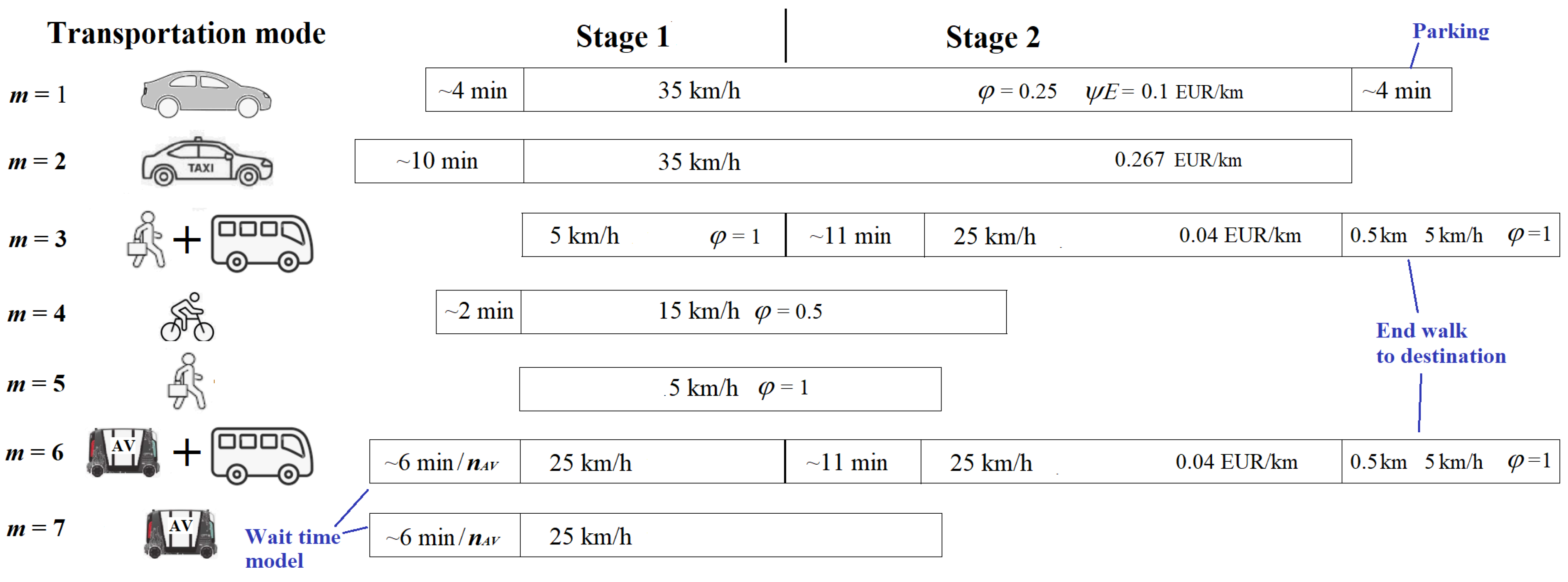
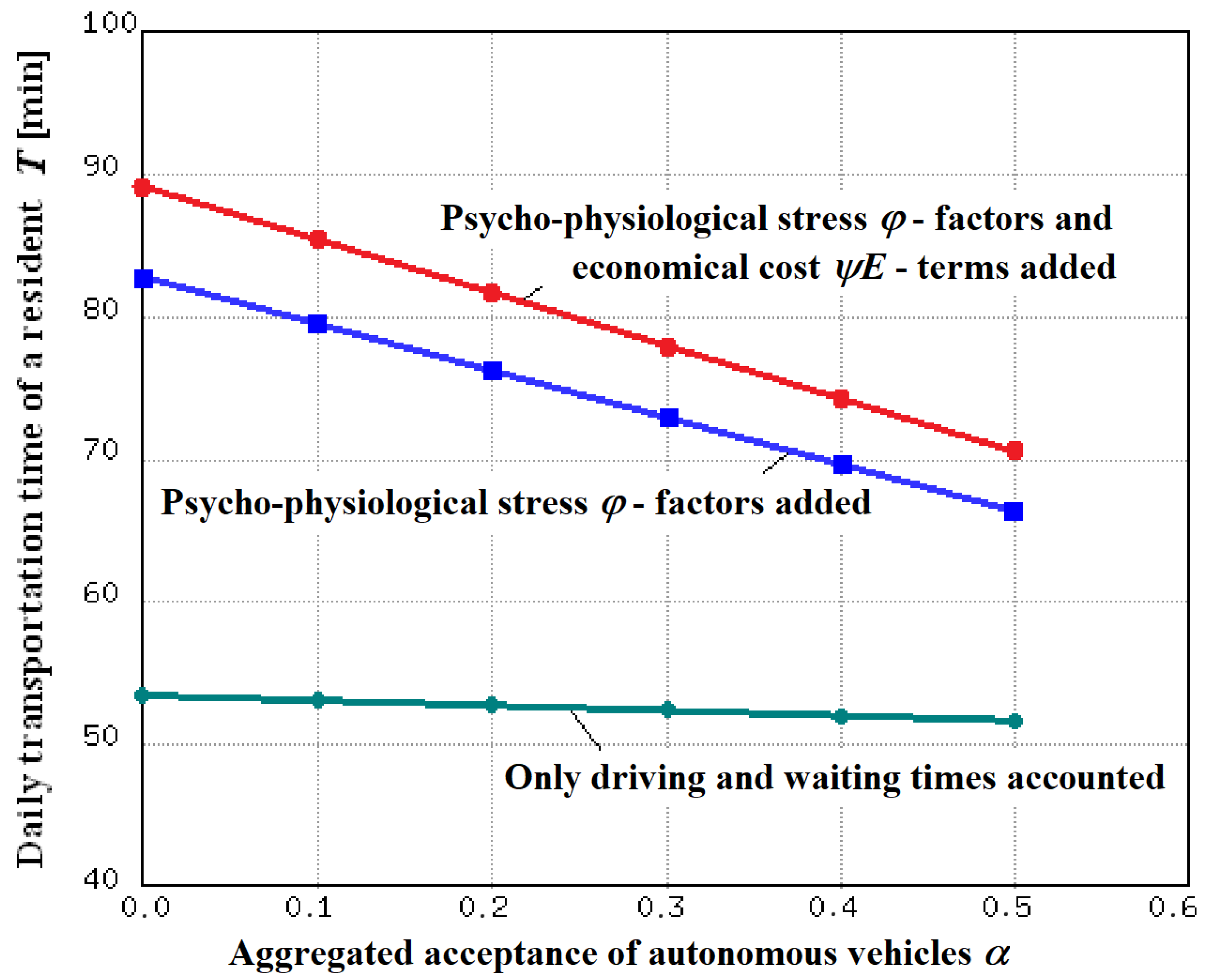
An important development task for the suburbs of smart cities is the transition from rigid and economically inefficient public transport to the flexible order-based service with autonomous vehicles. The article proposes a compact model with a minimal input data set to estimate the effective daily travel time (EDTT) of an average resident of a suburban area considering the availability of the first-mile autonomous vehicles (AVs). Our example case is the Järveküla residential area beyond the Tallinn city border. In the model, the transport times of the whole day are estimated on the basis of the forenoon outbound trips. The one-dimensional distance-based spatial model with 5 residential origin zones and 6 destination districts in the city is applied. A crucial simplification is the 3-parameter sub-model of the distribution of distances on the basis of the real mobility statistics. Effective travel times, optionally completed with psycho-physiological stress factors and psychologically perceived financial costs, are calculated for all distances and transportation modes using the characteristic speeds of each mode of transport. A sub-model of switching from 5 traditional transport modes to two AV-assisted modes is defined by an aggregated AV acceptance parameter ‘a’ based on resident surveys. The main output of the model is the EDTT, dependent on the value of the parameter a. Thanks to the compact and easily adjustable set of input data, the main values of the presented model are its generalizability, predictive ability, and transferability to other similar suburban use cases.
Keywords: autonomous vehicle acceptance; autonomous shuttle vehicle; compact model; distance distribution function; effective travel time; first-mile transport; psycho-physiological stress factor; smart city suburb; travel time model autonomous vehicle acceptance; autonomous shuttle vehicle; compact model; distance distribution function; effective travel time; first-mile transport; psycho-physiological stress factor; smart city suburb; travel time model