
Article

The Impact of Lunch Timing on Nap Quality
by
Jennifer E. Fudge
*,
Emily T. Peterson
,
Shae-Lynn M. Koe
and
Hans C. Dringenberg
*
Department of Psychology, Queen’s University, Kingston, ON K7L 3N6, Canada
*
Authors to whom correspondence should be addressed.
Clocks & Sleep 2024, 6(3), 402-416; https://doi.org/10.3390/clockssleep6030027

Submission received: 3 May 2024 / Revised: 23 July 2024 / Accepted: 31 July 2024 / Published: 5 August 2024
(This article belongs to the Section Human Basic Research & Neuroimaging)

Abstract

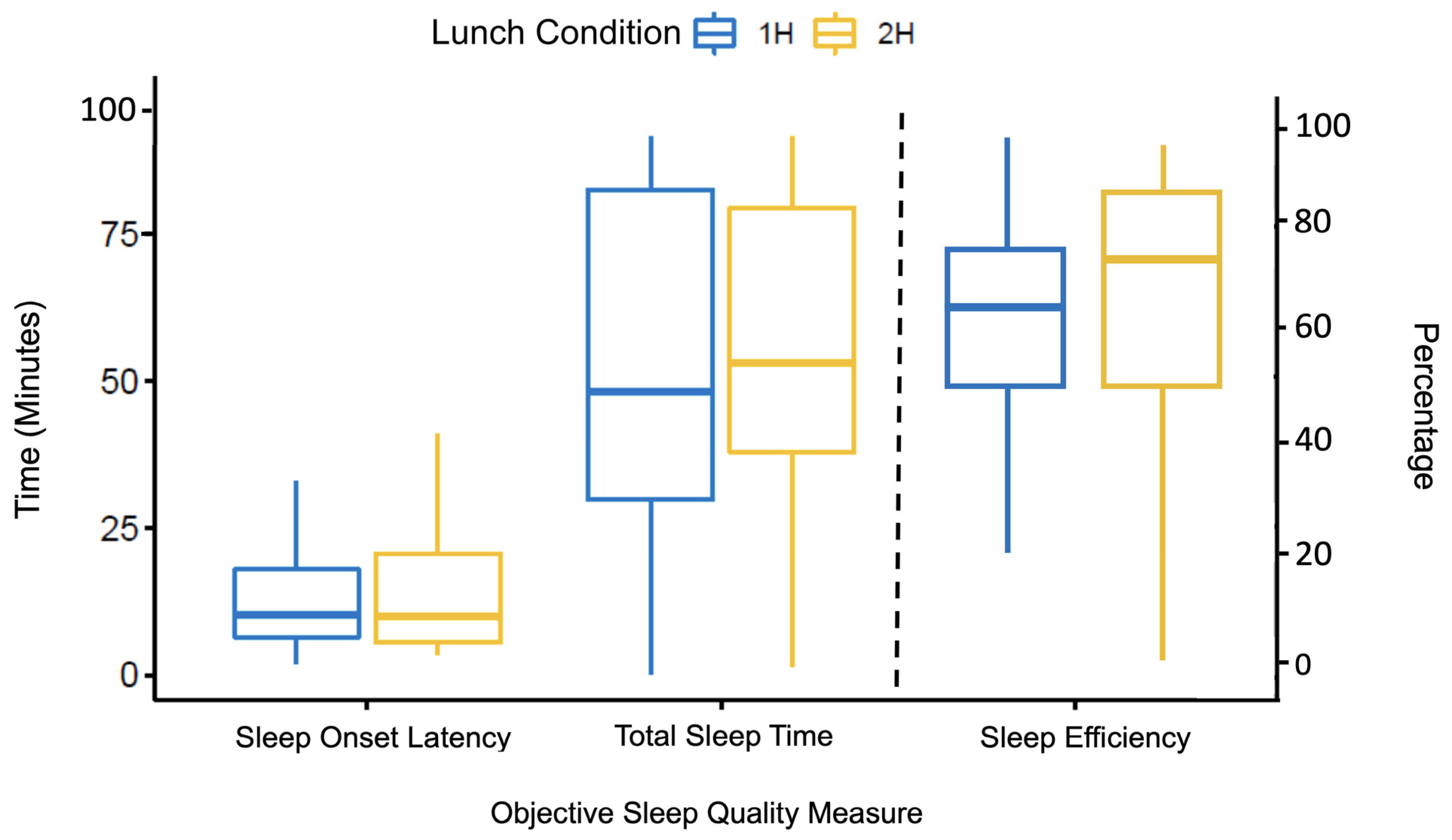
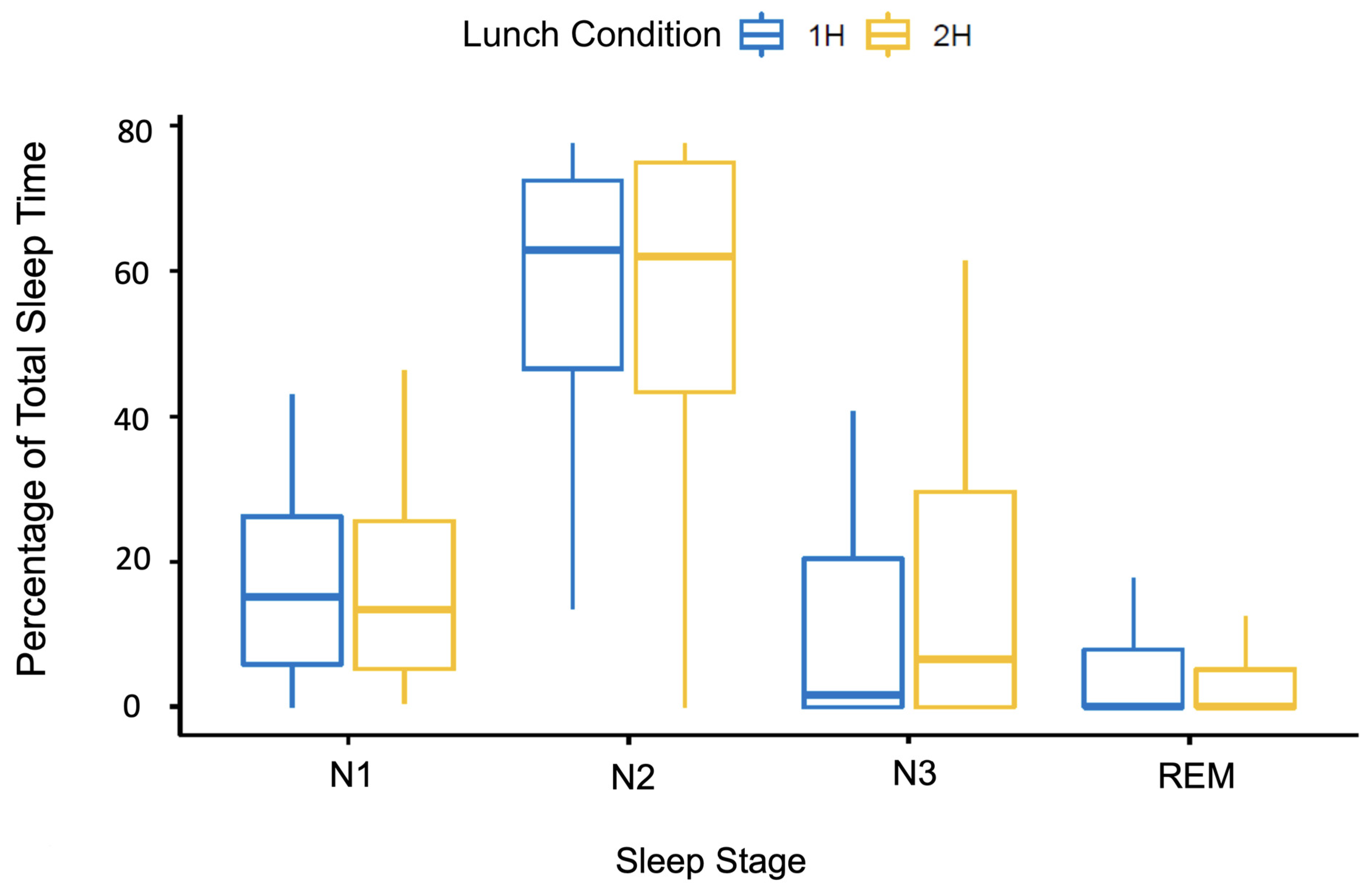
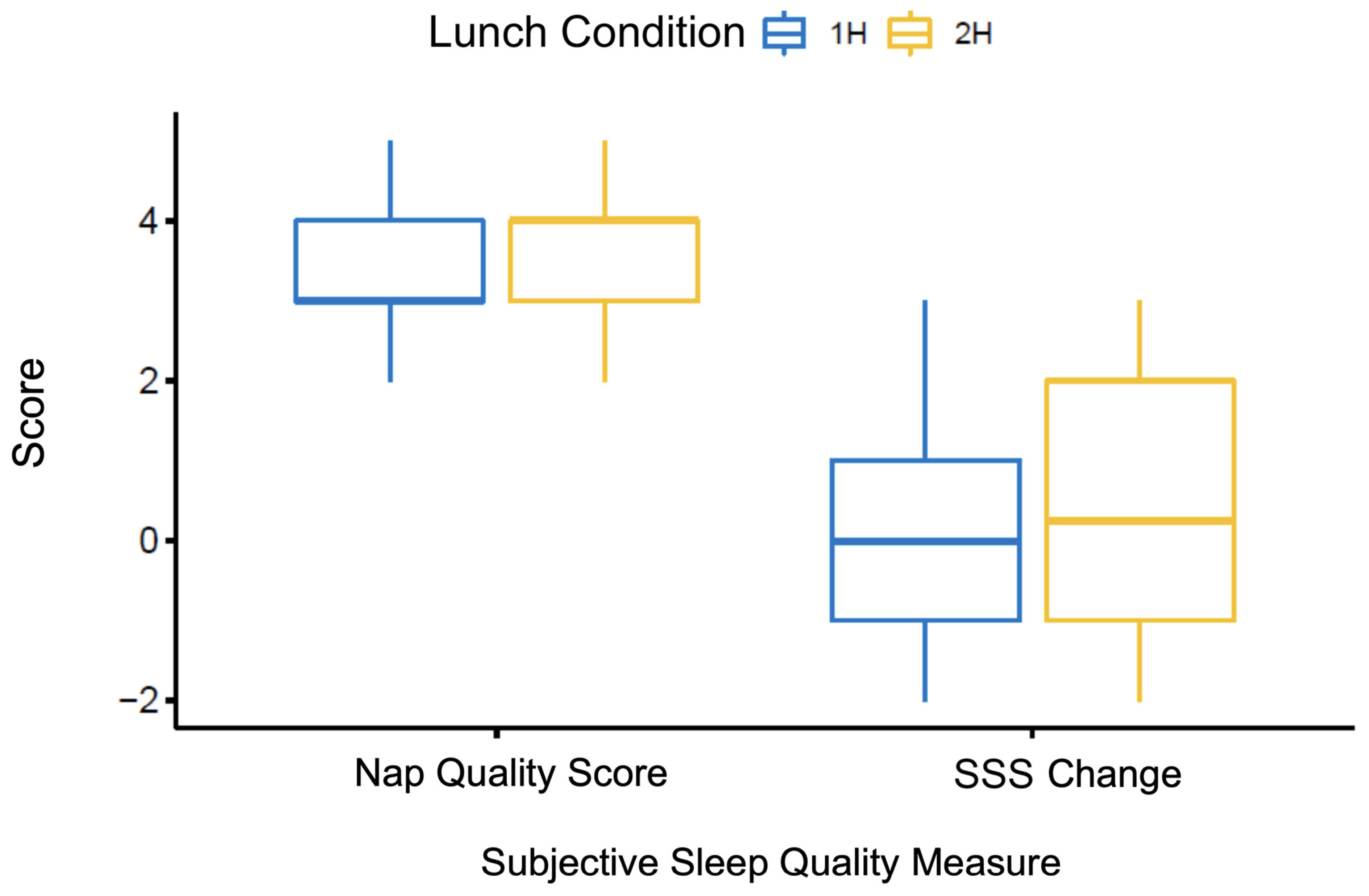
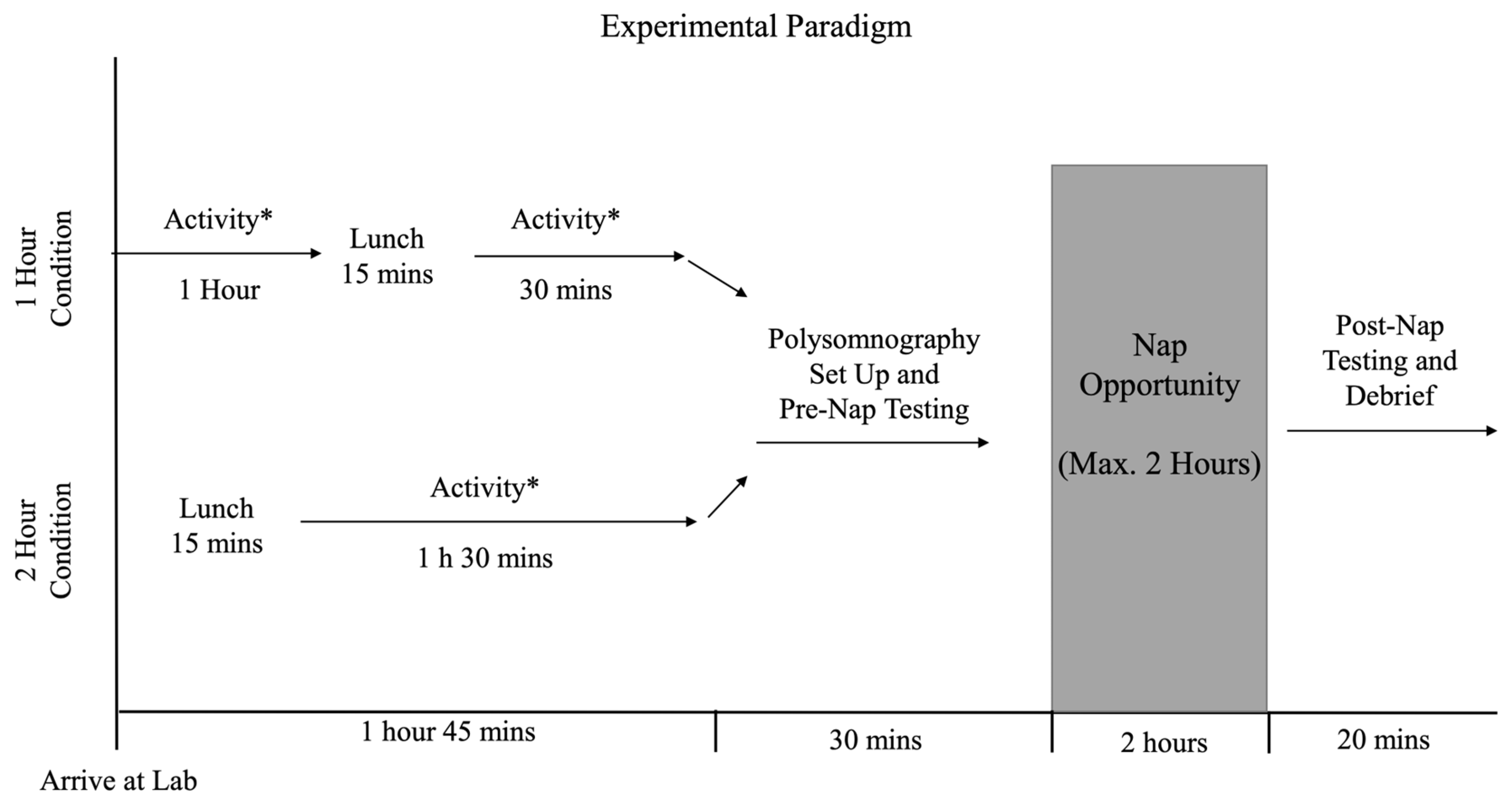
Purpose: Previous research has established that food intake is a biological regulator of the human sleep–wake cycle. As such, the timing of eating relative to sleep may influence the quality of sleep, including daytime naps. Here, we examine whether the timing of lunch (1 h vs. 2 h interval between lunch and a napping opportunity) impacts the quality of an afternoon nap. Methods: Using a randomized within-subject design over two separate experimental sessions (7 days apart), participants (n = 40, mean age = 25.8 years) consumed lunch 1 h and 2 h prior to an afternoon nap opportunity. Polysomnography and subjective self-reports were used to assess sleep architecture, sleepiness levels, and nap quality. Results: Results revealed no significant differences in subjective ratings of sleep quality and sleepiness, or in sleep architecture (total sleep time, sleep efficiency, sleep onset latency, sleep stages) between the 1 h and 2-h lunch conditions. Conclusions: All sleep measures were similar when napping followed eating by either 1 h or 2 h, suggesting that eating closer to nap onset may not negatively impact sleep architecture and quality. Future research should continue to identify conditions that improve nap quality, given the well-documented benefits of naps to reduce sleep pressure and improve human performance.
Keywords: sleep hygiene; EEG analysis; food intake; circadian rhythm sleep hygiene; EEG analysis; food intake; circadian rhythm