1. Introduction
Adhesive bonding has emerged as a key technique in modern materials engineering, offering distinct advantages over traditional joining methods such as riveting, bolting, soldering, and welding [
1,
2,
3,
4]. Unlike these conventional techniques, adhesive bonding enables more uniform stress distribution across the joint, reduces stress concentrations, preserves the integrity of lightweight materials, and facilitates the joining of dissimilar substrates. These advantages make adhesive bonding particularly attractive for high-performance applications in aerospace, automotive, and defense industries [
5,
6]. However, the reliability and durability of adhesive joints are governed primarily by the interfacial strength between the adhesive and the substrate, often quantified through single lap shear (SLS) strength [
7].
Aluminum and its alloys are widely used in structural applications due to their low density, high strength-to-weight ratio, corrosion resistance, and excellent machinability [
8]. Despite these advantages, achieving durable adhesive bonding on aluminum surfaces remains challenging. This is mainly due to the presence of a native oxide layer, surface contamination, and relatively low surface energy, which limits wettability and restricts chemical interaction with adhesives [
8,
9]. As a result, untreated aluminum surfaces often exhibit weak interfacial adhesion and are prone to adhesive failure, especially under environmental exposure [
10,
11,
12,
13].
To overcome these limitations, various surface preparation techniques have been developed to modify the physicochemical properties of aluminum. Mechanical treatments such as abrasion and grit blasting increase surface roughness and promote mechanical interlocking with adhesives [
14,
15]. However, excessive roughness can also reduce effective wettability and surface energy, thereby limiting adhesive interaction. Chemical treatments, including acid or alkaline etching and anodization, are more effective in enhancing adhesion by increasing surface hydroxyl group density and modifying the oxide layer [
16,
17]. In particular, anodization produces a porous oxide structure that provides both mechanical interlocking and a high density of reactive sites for chemical bonding. Physicochemical methods such as plasma or corona treatment can further introduce functional groups onto the surface, but their industrial application is often limited by cost, equipment complexity, and processing constraints [
18,
19].
In this context, self-assembled monolayers (SAMs) based on organosilane coupling agents have emerged as a promising and environmentally benign strategy for improving aluminum–adhesive bonding. Silane molecules undergo hydrolysis to form silanol (Si–OH) groups, which can react with hydroxylated aluminum surfaces to form stable covalent Al–O–Si bonds. Simultaneously, condensation reactions between silanol groups lead to the formation of a crosslinked siloxane network (Si–O–Si), resulting in a thin, organized interfacial layer. This interphase acts as a molecular bridge between the inorganic aluminum substrate and the organic adhesive, enhancing both chemical bonding and interfacial cohesion.
A wide range of silane chemistries, including aminopropyltriethoxysilane (APTES), bis-[triethoxysilyl]ethane (BTSE), (3-glycidyloxypropyl)trimethoxysilane (GPTMS), and tetramethoxysilane (TMOS), have been explored for aluminum bonding applications. These treatments improve surface acidity and wettability, thereby enhancing adhesive interactions through hydrogen bonding or covalent bonding.
In addition, hybrid silane and sol–gel systems have been developed to increase crosslink density and improve corrosion resistance, leading to enhanced durability under aggressive environments [
20,
21,
22,
23,
24,
25]. Despite these advances, the performance of silane-treated interfaces remains highly sensitive to surface preparation, processing conditions, and environmental exposure, highlighting the need for a deeper understanding of interfacial mechanisms.
Among the various silane coupling agents, GPTMS has attracted particular attention due to its bifunctional structure and excellent compatibility with epoxy adhesives. GPTMS contains hydrolyzable methoxy groups that enable strong anchoring to the aluminum oxide surface through the formation of Al–O–Si bonds. At the same time, its epoxy functional group can participate in curing reactions with epoxy adhesives, forming covalent linkages across the interface. This dual reactivity results in the formation of a chemically integrated interphase capable of efficient load transfer and reduced interfacial failure [
26].
The effectiveness of GPTMS is strongly influenced by surface preparation and processing conditions. On hydroxyl-rich surfaces produced by etching or anodization, GPTMS can form more uniform and densely crosslinked siloxane networks. In anodized systems, the porous oxide structure allows for the penetration of silane molecules, leading to an interpenetrating network that combines chemical bonding with mechanical interlocking. Consequently, GPTMS-treated aluminum substrates often exhibit substantial improvements in bond strength and durability, with reported increases in lap shear strength exceeding 100% under optimized conditions [
27], while GPTMS-based hybrid sol–gel systems have shown similarly significant enhancements, depending on surface preparation and testing methodology [
28].
Despite extensive research, several critical gaps remain in the mechanistic understanding of silane-mediated adhesion. The formation of effective self-assembled silane layers is highly sensitive to processing parameters, including silane concentration, hydrolysis conditions, solution pH, deposition time, and curing temperature. These variables govern the extent of surface coverage, siloxane network formation, and interfacial chemistry, which ultimately control the mechanical performance of bonded joints. While prior studies have established the importance of these parameters, the temporal evolution of the silane layer, particularly the transition from initial adsorption to the formation of a structurally interconnected siloxane network remains insufficiently understood. In particular, the role of silane passivation time in controlling the development, saturation, and effectiveness of the interfacial layer has not been systematically clarified.
Furthermore, many existing investigations involve complex surface modification strategies or dissimilar material systems, making it difficult to isolate the specific contribution of silane treatment to interfacial bonding. In contrast, aluminum–aluminum adhesive joints provide a simplified and well-controlled model system, where both adherends exhibit similar surface chemistry. This enables a more direct evaluation of the intrinsic role of silane passivation in governing interfacial adhesion.
In this context, the present study systematically investigates the effect of GPTMS passivation time on the formation and evolution of the interfacial silane layer and its direct correlation with adhesion performance. By combining surface characterization with mechanical testing, this study reveals the time-dependent development of the siloxane network and its relationship with lap shear strength. The lap shear strength increases markedly up to the onset of a plateau, beyond which the performance stabilizes, indicating a self-limiting interfacial process associated with surface saturation.
These findings provide new insights into the structure–property relationship governing silane-mediated adhesion and highlight the critical role of controlled passivation time in optimizing interfacial bonding in aluminum systems. Unlike previous studies, this work isolates the effect of passivation time under controlled conditions and directly correlates siloxane network evolution with adhesion performance.
In this study, attenuated total reflection–Fourier transform infrared (ATR-FTIR) and scanning electron microscopy coupled with energy-dispersive X-ray spectroscopy (SEM-EDS) were used as complementary surface-characterization techniques to follow the formation of silane-derived species on the aluminum surface. Although X-ray photoelectron spectroscopy (XPS) is a more surface-sensitive technique for determining elemental composition and chemical states, ATR-FTIR/IRRAS has been widely used in aluminum surface-treatment and silane-based adhesion studies to identify oxide, hydroxyl, siloxane, and organosilane-related vibrational features. For example, Saleema et al. used IRRAS together with XPS and EDX to characterize NaOH-treated AA6061 aluminum surfaces for adhesive bonding applications [
16]. Similarly, Wang et al. and Lee et al. used FTIR to identify silane functional groups and Si–O–Al-related vibrational bands, while XPS provided complementary elemental and bonding-state confirmation [
29,
30]. Therefore, in the present work, ATR-FTIR is interpreted as complementary chemical evidence for GPTMS-derived functional groups and siloxane network development, while SEM/EDS provides supporting morphological and elemental information.
3. Results
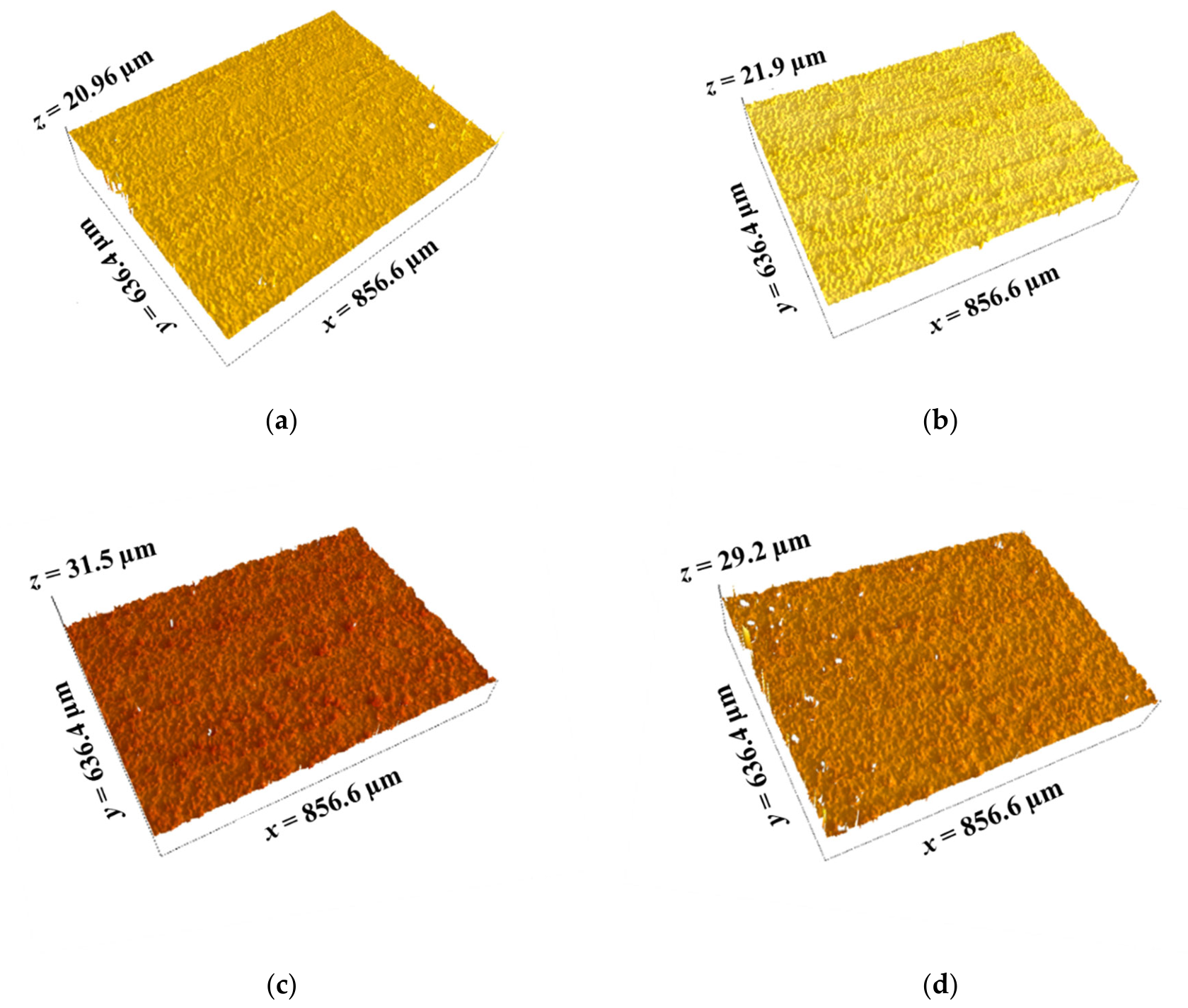
Figure 1 presents the three-dimensional (3D) surface topography of aluminum substrates in the as-received state, after alkaline etching, and following GPTMS passivation for different immersion durations. The as-received surface (
Figure 1a) is relatively smooth, with a root-mean-square (RMS) roughness of 0.37 ± 0.04 µm. After alkaline etching in 1 M NaOH at 55 °C for 3 min (
Figure 1b), the surface exhibits a slight increase in texture, with the RMS roughness increasing to 0.48 ± 0.04 µm, indicating the development of surface features. Following GPTMS passivation, the surface topography evolves with immersion time. At 1 min (
Figure 1c), the RMS roughness is 0.58 ± 0.04 µm, which is comparable to the etched substrate, indicating limited modification of the substrate surface at short immersion time. With increasing immersion time, the RMS roughness increases to 1.32 ± 0.03 µm (2 min) and 1.51 ± 0.05 µm (3 min). This increase suggests progressive surface coverage and formation of a silane layer on the aluminum substrate surface. For prolonged immersion durations, the roughness values stabilize at 1.30 ± 0.04 µm (4 min) and 1.40 ± 0.04 µm (5 min), indicating a plateau in surface evolution. The roughness values beyond 3 min remain within a relatively narrow range (1.30–1.40 µm), indicating that the surface topography reaches a quasi-steady state, which is consistent with the plateau observed in SLS strength. In addition to surface topography characterization, static water contact angle measurements were conducted to evaluate changes in surface wettability following alkaline etching and GPTMS passivation. The contact angle values and representative water droplet profiles are presented in the
Supplementary Information (Figure S3 and Table S1).
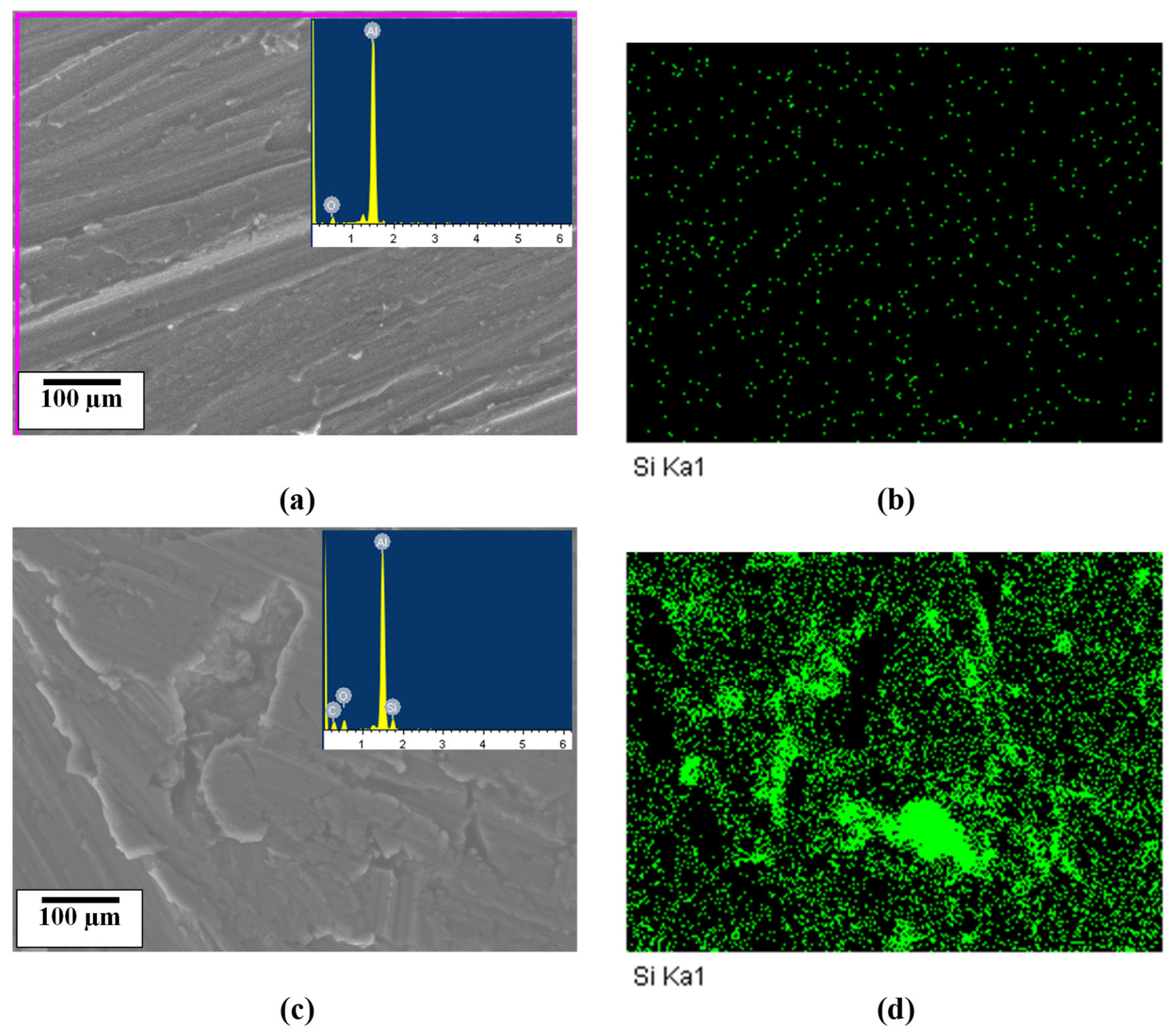
Figure 2 presents SEM micrographs along with corresponding EDS spectra and Si Kα
1 elemental maps for the as-received and GPTMS-passivated aluminum surfaces. The as-received surface (
Figure 2a) exhibits characteristic linear features resulting from the rolling process during fabrication of the aluminum substrate. The corresponding EDS spectrum (inset of
Figure 2a) shows no detectable silicon signal. This is consistent with the Si Kα
1 map (
Figure 2b), which displays sparse and randomly distributed Si signals, attributed to trace silicon inherent to the AA6061-T6 alloy composition.
After alkaline etching followed by GPTMS passivation for 4 min (
Figure 2c), the EDS spectrum (inset of
Figure 2c) reveals a distinct silicon peak, indicating the presence of silicon-containing species on the substrate surface. The corresponding Si Kα
1 map (
Figure 2d) shows a significantly higher density of Si signals distributed across the surface compared to the as-received substrate (
Figure 2b). The clear contrast between the negligible Si signal in the as-received surface and the pronounced Si distribution after GPTMS passivation indicates the incorporation of silicon-containing species following 4 min passivation. The relatively uniform distribution of Si signals suggests the presence and spatial distribution of these species across the analyzed surface; however, it should be noted that EDS mapping provides qualitative elemental information and does not confirm continuous surface coverage or interfacial bonding. The 4 min passivated surface was selected as a representative surface to qualitatively confirm the presence of silicon-containing species following GPTMS treatment. All sets of images are provided in the
supplementary information (Figure S1). To complement the SEM/EDS results, ATR-FTIR was used to evaluate the chemical features associated with GPTMS passivation. This combination is important because EDS can confirm the presence of silicon-containing species but cannot identify the bonding environment of silane-derived groups. In contrast, FTIR/IRRAS can provide vibrational evidence for functional groups and network formation, such as Si–O–Si, Si–O–Al, Si–O–CH
3, and C–O–C bands, which are commonly used to support the formation of silane-modified aluminum surfaces [
16,
29,
30].
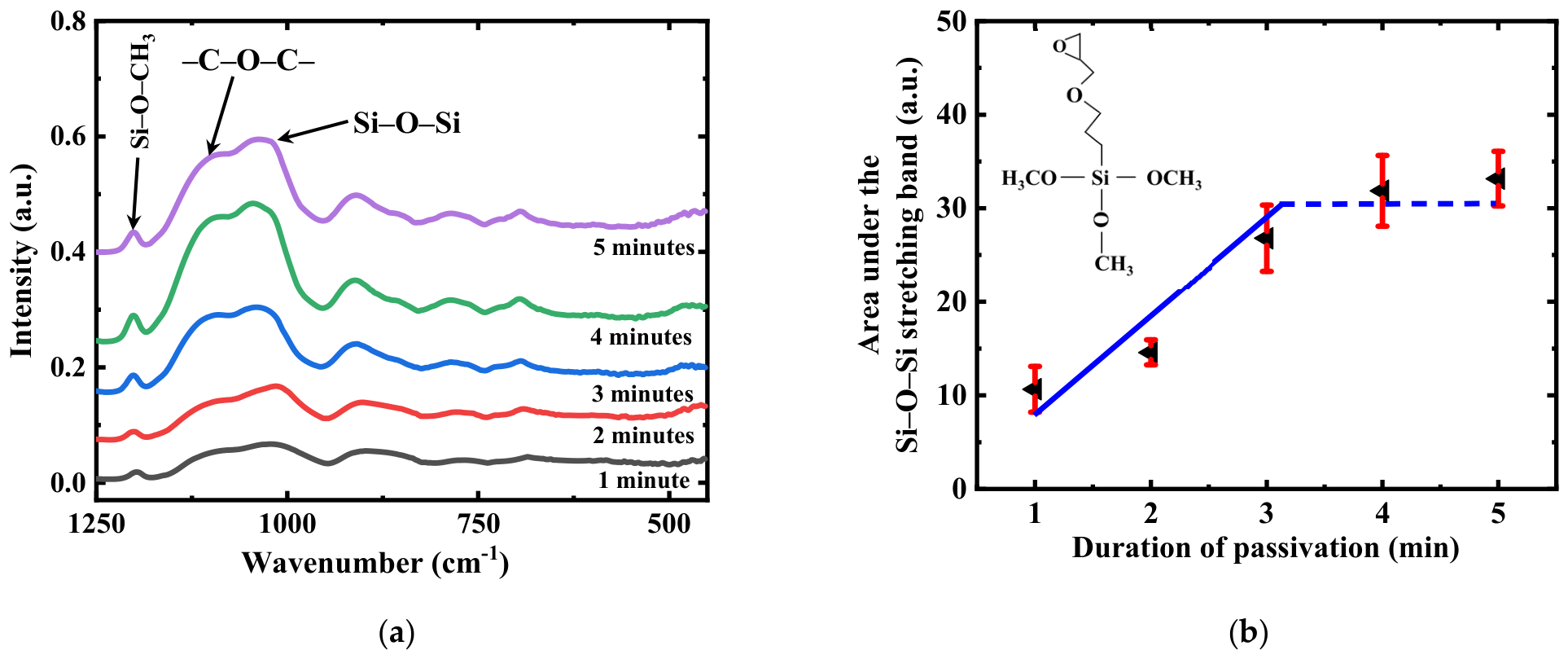
Figure 3 presents the ATR-FTIR spectra of GPTMS-passivated aluminum substrates for different immersion times. The spectra indicate the presence of silane-derived species and the time-dependent evolution of siloxane bonding on the aluminum surface. The main vibrational features include a broad C–O–C absorption band around ~1100 cm
−1, associated with the glycidoxy/ether functionality of GPTMS, and Si–O–CH
3 related stretching features near ~1200 cm
−1. The Si–O–Si asymmetric stretching contribution is observed in the ~1000 cm
−1 region, consistent with condensation of silanol groups and development of a siloxane network [
32,
33,
34,
35,
36,
37]. Similar assignments have been reported in silane-modified aluminum systems, where FTIR or IRRAS was used to identify silane functional groups, Si–O–Si network formation, and Si–O–Al/Al–O related bonding environments [
16,
29,
30]. These FTIR features support the presence of GPTMS-derived species on the aluminum surface and are consistent with hydrolysis and condensation reactions during passivation. However, because FTIR provides vibrational information rather than direct elemental chemical-state analysis, these results are interpreted as complementary evidence of surface modification rather than as a substitute for XPS.
The Si–O–Si band intensity increases progressively with immersion time, indicating the development of siloxane bonding on the surface. The rapid increase at short immersion times suggests initial formation of the siloxane network. At higher passivation durations, the evolution slows and begins to level off, indicating a reduction in available reactive sites and stabilization of the interfacial condition. All spectra were recorded under identical ATR measurement conditions and are interpreted comparatively to evaluate the relative evolution of the Si–O–Si band with passivation time.
It should be noted that FTIR band intensity provides qualitative information and does not allow direct quantification of network density or crosslinking. This limitation is important because the surface chemistry of silane-modified aluminum is typically best resolved through a combination of techniques. In previous studies, XPS was used to identify elemental composition and chemical states, while FTIR/IRRAS provided complementary information on molecular vibrations and functional groups [
16,
29,
30]. Accordingly, the present ATR-FTIR results are used to follow the relative evolution of siloxane-related bonding with passivation time, whereas the SEM/EDS results provide supporting evidence for the incorporation of silicon-containing species on the treated aluminum surface.
Figure 3b further supports this interpretation. The integrated Si–O–Si band area increases markedly from 1 to 3 min, indicating rapid siloxane formation during the early stage of passivation. Beyond 3 min, the curve reaches a plateau, suggesting that the surface approaches saturation and that further silane incorporation becomes limited as available reactive sites are progressively consumed. Similar trends have been reported for silane-modified metal oxide surfaces [
35,
36,
37]. Overall, siloxane bonding develops rapidly at short immersion times and stabilizes at longer durations, contributing to improved interfacial bonding and adhesion performance.
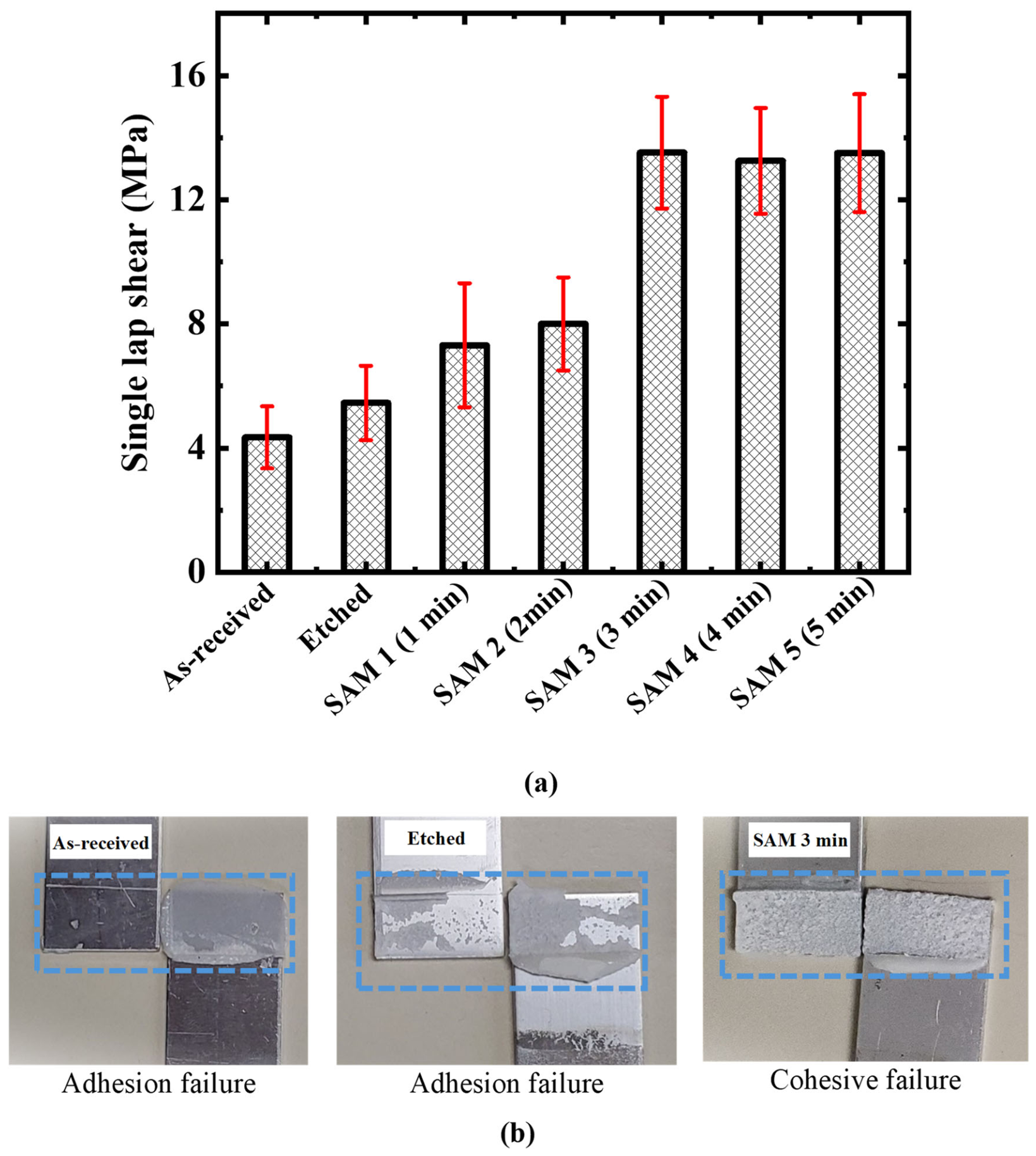
Figure 4a and
Table 1 present the SLS strengths of aluminum joints for the as-received, etched, and GPTMS-passivated substrates. The as-received substrates exhibit low SLS strength (4.3 ± 1.0 MPa), indicating weak interfacial bonding between the aluminum surface and the adhesive. After alkaline etching, the SLS strength increases to 5.5 ± 1.2 MPa, corresponding to an improvement of approximately 28% relative to the as-received substrate. This moderate enhancement is attributed to both the increase in surface roughness, which promotes mechanical interlocking, and the modification of surface chemistry, which enhances the reactivity of the oxide surface and its interaction with the adhesive.
Building on this surface activation, GPTMS passivation was performed to further modify the interface and improve adhesion performance. GPTMS passivation results in a further increase in SLS strength with immersion time. The strength increases to 7.3 ± 2.0 MPa after 1 min and 8.0 ± 1.5 MPa after 2 min, indicating the initial development of a siloxane network on the aluminum surface. A significant increase is observed at 3 min, where the SLS strength reaches 13.5 ± 1.8 MPa, corresponding to an improvement of approximately ~200% relative to the as-received substrate. At subsequent durations (4 and 5 min), the SLS strength remains comparable to the value at 3 min, indicating a plateau in adhesion performance. This stabilization in adhesion strength is consistent with the stabilization of the Si–O–Si band area observed in
Figure 3b, indicating that the saturation of siloxane bonding within the silane layer is reflected in the mechanical response. This behavior suggests that the interfacial modification reaches a saturation state, where further silane incorporation does not lead to additional improvement. This stabilization is consistent with the limited availability of reactive sites on the aluminum surface and the progressive saturation of siloxane bonding. To evaluate the variability and uncertainty of the SLS measurements, a basic statistical analysis was performed by calculating the standard error (SE) and margin of error (MoE). The results are summarized in
Table 1.
In the present study, the lap shear strength increased from 4.3 MPa to 13.5 MPa, corresponding to an improvement of approximately ~200%. This enhancement exceeds typical values reported in the literature, where increases are generally in the range of 60–150% for silane-treated aluminum systems [
27,
28], indicating the effectiveness of the optimized GPTMS passivation conditions employed.
Figure 4b shows representative post-fracture surfaces corresponding to the different surface treatments. All joints were evaluated according to ISO 10365, which classifies adhesive joint failure modes [
38]. The as-received and etched specimens exhibit adhesive failure, characterized by the separation of the adhesive layer from the aluminum substrate. This behavior is consistent with limited interfacial adhesion for the as-received surface and a moderate improvement after etching. A clear transition in failure mode is observed after GPTMS passivation for 3 min. The joints exhibit cohesive failure within the adhesive layer rather than at the interface between the aluminum substrate and the adhesive. This shift in failure mode indicates a significant improvement in interfacial bonding at the aluminum–adhesive interface following GPTMS passivation. The enhanced adhesion performance is further influenced by the chemical compatibility between the epoxy functional group of GPTMS and the epoxy adhesive system, which can promote interfacial interactions and contribute to improved load transfer. This behavior is consistent with the onset of the SLS strength plateau observed at 3 min (
Figure 4a) and the increased siloxane network formation indicated by the Si–O–Si band in
Figure 3. Together, these results demonstrate that the formation of the silane-derived interphase enhances load transfer across the interface, leading to a transition from adhesive to cohesive failure.
To further support the failure-mode assessment, ATR-FTIR analyses were performed on both opposing fracture surfaces after lap-shear testing. The corresponding spectra and quantitative peak-area analyses are presented in
Figures S4 and S5 and
Table S3, respectively. Comparable intensities of characteristic adhesive-related functional groups were observed on both fracture surfaces within experimental uncertainty, indicating the presence of adhesive residues on both substrates after fracture. This observation supports a predominantly cohesive contribution to failure rather than purely interfacial failure. However, the fracture images were obtained by macroscopic camera observation, and no SEM fractography was performed in the present study. Therefore, the failure-mode interpretation should be considered supportive rather than definitive. More detailed fracture-surface characterization, such as SEM fractography, would be required to conclusively determine the fracture path and interfacial failure mechanisms.
The specimens passivated for 4 and 5 min also exhibit cohesive failure. This behavior indicates that the interfacial strength remains high at extended immersion times. Although the SLS strength stabilizes after 3 min, the persistence of cohesive failure suggests that the silane layer continues to provide effective interfacial adhesion. All images of ruptured specimens are provided in the
Supplementary Information (Figure S2). Overall, the macroscopic fracture observations and ATR-FTIR results support the conclusion that GPTMS passivation improves the interfacial bonding of aluminum/epoxy joints. Under the present experimental conditions, the strength plateau begins at an immersion time of 3 min.
To provide a simplified and semi-quantitative interpretation of the relationship between silane surface coverage and adhesion strength, a linear additive model is proposed. In this approach, the 3 min passivation time is assumed to represent the onset of effective surface saturation under the present experimental conditions. Accordingly, a direct proportional interpretation is adjusted to account for the baseline contribution of the hydroxylated aluminum surface following alkaline etching.
A simplified linear addition model may be expressed as:
with the constraint:
where
represents the fractional surface coverage of GPTMS-derived silane layer, and
represents the remaining fraction of the surface corresponding to the hydroxylated aluminum substrate. It should also be noted that the present model does not explicitly account for the separate contributions of surface roughness, adhesive layer thickness, wetting behavior, or the transition to cohesive failure, all of which may influence the measured SLS strength. Although water contact angle measurements were used to assess the evolution of surface wettability after chemical etching and GPTMS passivation, these measurements were not incorporated as an independent quantitative variable in the model. Therefore, the model should be regarded as a simplified first-order approximation based on linear additivity between surface contributions. Here,
denotes the SLS strength associated with the effectively saturated GPTMS-modified surface, while
represents the baseline strength of the etched aluminum surface attributed to hydroxyl-mediated interactions. The model does not account for interfacial interactions, siloxane network connectivity, or non-linear effects during interphase evolution. The assumption that the 3 min passivation time corresponds to an effective surface saturation state under the present experimental conditions is an approximation. Similarly, the SLS strength of the 3 min passivated surface is used as
because this treatment time corresponds to the onset of the experimentally observed strength plateau.
Therefore, this model should be interpreted as a first-order approximation rather than a rigorous quantitative description of interfacial behavior.
For the substrates passivated for 1 min, with an SLS strength of 7.3 MPa, Equation (1) can be written as:
Substituting
from Equation (2) gives:
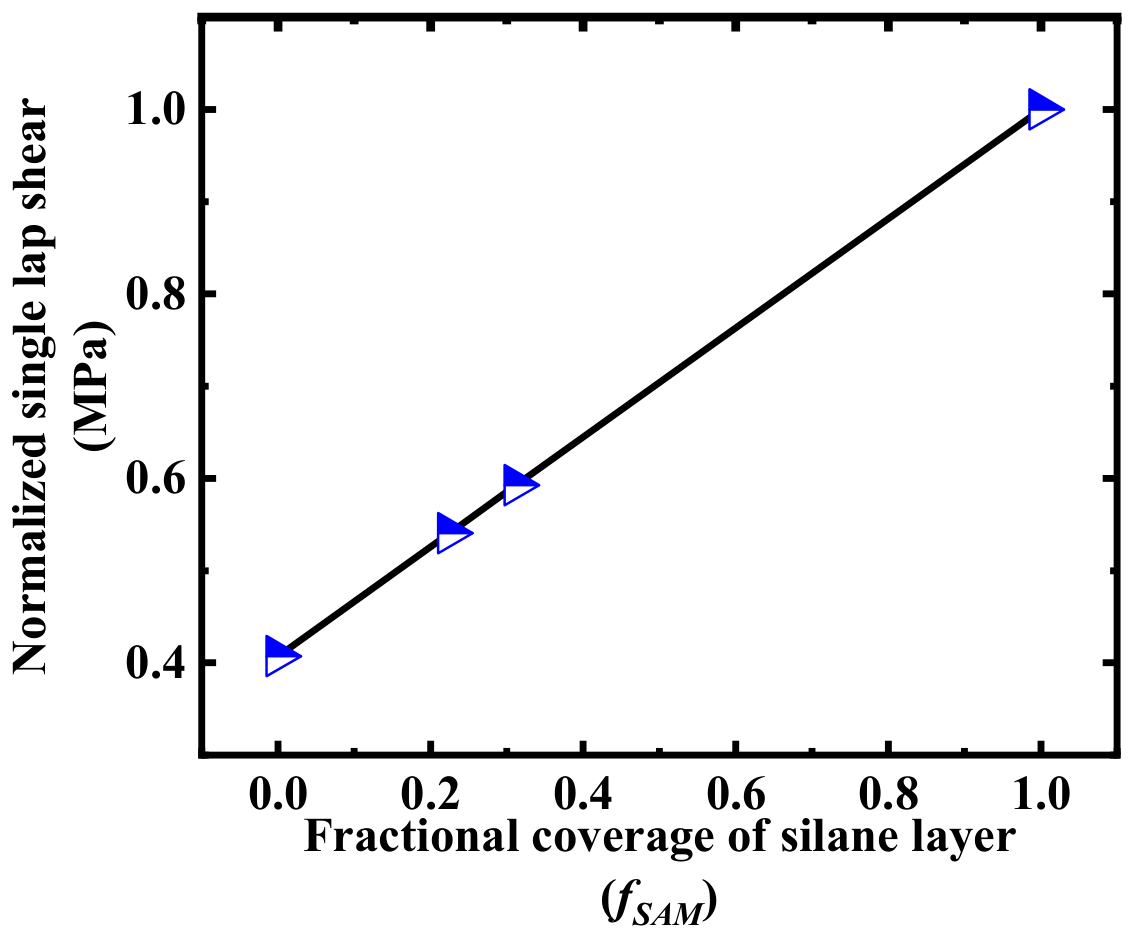
Using = 13.5 MPa and = 5.5 MPa in Equation (5), the fractional coverage is calculated to be ~0.2 for the 1 min passivated surface and increases to ~0.3 for the 2 min passivated surface. These results indicate that significant improvements in adhesion can occur even at partial surface coverage, highlighting the importance of the degree of siloxane condensation and interfacial organization, rather than complete surface coverage.
Figure 5 shows semi-quantitative relationship between fractional coverage of silane layer,
, and normalized single-lap shear strength (σ), for etched and GPTMS-passivated aluminum substrates. The sharp increase in σ between partial coverage and full coverage indicates that adhesion is governed not only by surface coverage but also by the formation of a sufficiently interconnected siloxane network. It is important to note that the semi-quantitative framework proposed in this study is intended strictly as a first-order conceptual interpretation of the observed trends. Direct molecular-scale quantification of GPTMS surface coverage was not performed, as techniques such as XPS, ellipsometry, or ToF-SIMS were not available in the present work. However, the water contact angle measurements provide a direct wettability-based indication of the evolution of the GPTMS-modified surface. Since the passivation process does not significantly alter the surface morphology and the substrates remain comparatively smooth, the marked decrease in water contact angle can be mainly attributed to changes in surface chemistry rather than roughness-induced wetting effects. The near-complete wetting observed from 3 min onward, together with the plateau in lap-shear strength, suggests that an effective surface saturation condition is reached under the present passivation conditions.
The marked increase in SLS strength between 2 and 3 min coincides with a pronounced increase in the Si–O–Si band intensity shown in
Figure 3. This correlation suggests that siloxane network formation may contribute to enhanced bonding performance.
The experimental data from 0 to 3 min appears approximately linear with fractional silane coverage within the limited data range; however, this trend should be interpreted with caution, as it likely represents a simplified approximation rather than a strictly linear relationship. This behavior is consistent with the simplified assumptions used in the semi-quantitative model, while the underlying adhesion mechanisms involve contributions from both surface coverage and siloxane network formation. These observations provide a useful framework for interpreting the present results and facilitate comparison with trends reported in the literature.
Table 2 summarizes the variation in SLS strength with the estimated fractional coverage of the GPTMS-derived silane layer. The results indicate that bond strength increases with increasing silane coverage, reaching a maximum at 3 min of SAM deposition. The comparable strengths obtained after 3, 4, and 5 min suggest that effective surface coverage has reached saturation, beyond which further deposition does not significantly enhance adhesion.
Comparable enhancements in lap shear strength following silane treatment of aluminum substrates have been consistently reported across a wide range of material systems and surface preparation strategies. For instance, Qiu et al. reported that the application of aminopropyltriethoxysilane (APTES) in bonding of aluminum–aluminum substrates using phenolic adhesive increased joint strength by approximately 160% relative to untreated substrates [
20]. In another investigation, Jiang et al. reported that GPTMS treatment of an aluminum–CFRTP system increased the SLS strength by approximately 140% [
21]. The same study further showed that combining plasma activation with silane treatment led to an additional increase of ~40–52%, highlighting the synergistic role of surface activation in promoting silane grafting and interfacial bonding [
21]. Additional studies demonstrate that silane-induced improvements are strongly influenced by surface morphology and chemical functionality. Kometani et al. studied bis-[triethoxysilyl]ethane (BTSE) treatment and observed enhancements of approximately 185% in shear strength relative to untreated conditions [
22]. They also reported that the introduction of microstructured surface features in conjunction with silane treatment provided an additional ~28–97% improvement relative to silane-only surfaces, emphasizing the combined effect of surface topography and chemical modification [
22]. For aerospace-grade aluminum systems, Aakkula et al. showed that epoxy- and amine-functional silanes (GPTMS, APTES) increased lap shear strength by approximately 50–70% compared to untreated substrates [
23]. Moreover, Chen et al. showed that BTESPT silane treatment improved the adhesion of an epoxy/polyamide system to aluminum through the formation of a chemically bonded siloxane interphase, leading to a 42% increase in SLS strength compared with as-received aluminum [
24]. In another study, Sun et al. investigated silane pretreatment of AA6111 aluminum alloy produced using the Hot Form Quench process and observed an increase of ~100% in SLS strength compared to the pristine aluminum [
25]. In the present work, the SLS strength reaches a plateau beginning at 3 min of GPTMS passivation, with a value of 13.5 MPa, corresponding to an improvement of approximately ~200% compared to the as-received substrate. This value lies within the upper range of reported enhancements and is consistent with the formation of an effective silane layer, as supported by FTIR and fracture observations. The steady-state SLS strength observed at longer passivation times further indicates that a stable adhesion response is achieved within a limited processing window. Therefore, a passivation time of 3 min is identified as the shortest treatment time required to reach the strength plateau under the present experimental conditions.
As discussed above, the silane treatment consistently enhances adhesion performance across a wide range of aluminum systems, with reported improvements typically ranging from ~60% to 150%, depending on the surface preparation, silane chemistry, and adhesive compatibility.
In the present work, an improvement of approximately ~200% is achieved, which lies at the upper end of the reported range. This enhancement is attributed to the combined effect of alkaline etching and controlled GPTMS passivation, as well as the compatibility between the epoxy adhesive system and the epoxy-functional silane, which promotes the formation of an effective interfacial layer at the aluminum–adhesive interface.
Furthermore, the observed plateau in SLS strength at subsequent durations is consistent with literature findings, where optimal adhesion is achieved within a limited processing window [
25,
39]. Beyond this point, additional silane exposure does not lead to further improvement, as sufficient surface coverage and siloxane network formation have already been established. These literature trends provide a useful framework for interpreting the present results and support the semi-quantitative relationship observed between silane coverage and adhesion performance.
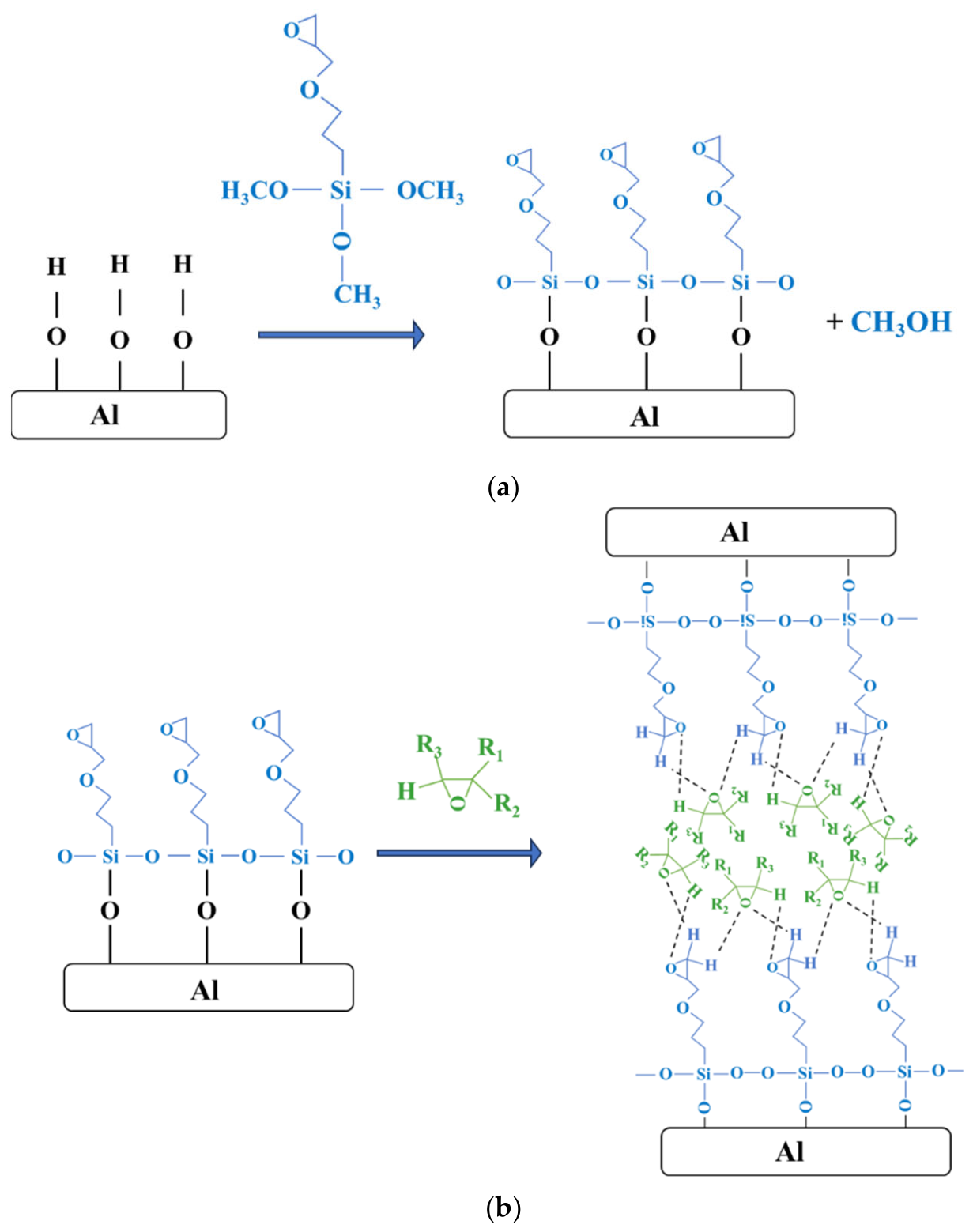
Figure 6 presents a schematic illustration of the proposed interfacial mechanism for GPTMS passivation on the aluminum substrate. The model is consistent with the experimental observations, including the formation of siloxane structures (
Figure 3), the presence of silicon on the surface (
Figure 2), and the improved adhesion performance and failure mode transition (
Figure 4).
The hydrolysis of GPTMS and subsequent condensation reactions lead to the formation of Si–O–Al and Si–O–Si linkages at the aluminum surface. The resulting silane layer provides a chemically active interphase that can interact with the epoxy adhesive, facilitating improved load transfer across the aluminum–adhesive interface.
While direct chemical bonding is not explicitly indicated, the observed trends are consistent with the formation of a silane-mediated interphase involving both surface anchoring and network formation.