Article

Surfactant-Modified Acidic Magadiites as Adsorbents for Enhanced Removal of Eosin Y Dyes: Influence of Operational Parameters


1
Department of Chemistry, Faculty of Science, Taibah University, Madinah 30002, Saudi Arabia
2
Department of Chemistry, Faculty of Science, Islamic University of Madinah, Madinah 42351, Saudi Arabia
3
Laboratory of Applied Organic Chemistry (LCOA), Chemistry Department, Faculty of Sciences and Techniques, Sidi Mohamed Ben Abdellah University, Imouzzer Road, P.O. Box 2202, Fez 30000, Morocco
4
Engineering Laboratory of Organometallic, Molecular Materials, and Environment (LIMOME), Chemistry Department, Faculty of Sciences, Sidi Mohamed Ben Abdellah University, P.O. Box 1796, Fez 30000, Morocco
*
Authors to whom correspondence should be addressed.
Surfaces 2026, 9(1), 9; https://doi.org/10.3390/surfaces9010009
Submission received: 16 November 2025 / Revised: 16 December 2025 / Accepted: 6 January 2026 / Published: 9 January 2026

Abstract

Organophilic acidic magadiites were prepared after an acidic magadiite (A-Mgd) reaction with cetyltrimethylammonium solutions containing different anions, such as cetyltrimethylammonium bromide (C16TMABr), cetyltrimethylammonium chloride (C16TMACl), and cetyltrimethylammonium hydroxide (C16TMAOH). The resulting materials were studied as adsorbents for Eosin Y removal from artificially contaminated solution. Successful preparation of oganophilic A-Mgd was achieved using C16TMAOH solution with an increased basal spacing from 1.21 nm to 3.15 nm and uptake C16TMA amount of 1.16 mmol/g. Meanwhile, no variation in the basal spacing of 1.20 nm occurred using C16TMACl and C16TMA Br solutions with an uptake mount of 0.07 to 0.09 mmol/g, respectively. Other techniques supported the behavior of the counteranion of surfactant solution on the synthesis of organophilic A-Mgd samples. 13C CP/MAS NMR data revealed that C16TMA cations displayed all-trans conformation comparable to C16TMABr solid, and 29Si MAS NMR confirmed the stability of the host silicate layers during the reaction. The specific surface area of A-Mgd was reduced after the intercalation of C16TMA cations from 38 m2/g to 11 m2/g. The removal properties of organophilic samples were investigated under different conditions, including the Eosin Y pH solution, initial concentration, dosage mass, and content of C16TMA cations. The maximum removal amount was 70 mg/g at acidic pH and using A-Mgd prepared from C16TMAOH solution, while the other organophilic A-Mgds exhibited low removal amounts of 3 to 5 mg/g. The regeneration tests indicated that the efficiency was maintained after four reuse tests with a drop of 30 to 50% from the initial value after seven cycles. The adsorber batch design was employed to estimate theoretically the required masses of used samples to treat an effluent volume of 10 L at a removal percentage of 95% at a fixed initial concentration of 200 mg/L. In total, 20 g of organophilic prepared from A-Mgd and C16TMAOH solution was needed, while 243 g of sample prepared from C16TMABr solution was required. This study proposes the development of a cost-effective, sustainable solution for dye-contaminated wastewater treatment.

1. Introduction

The family of hydrated layered polysilicates (HLSs) has gained a lot of interest due to the interlayer spacing lined and filled with silanol (Si–OH) groups, which leads to stable negative charge via deprotonation [1]. One of the HLS members is Na-magadiite (Na-Mgd), which is considered a nontoxic material and is easy to prepare in the laboratory. It has a typical chemical composition of Na2Si14O29·nH2O depending on synthesis conditions [2]. Certain precautions must be taken during their preparation, especially when selecting the silica source, the SiO2/NaOH/H2O molar ratios, and the temperature range [2,3]. Na-Mgd exhibits higher cation exchange capacity (CEC) values than clay minerals. Their applications have been reported in different fields, including catalysis [4], composites [5], zeolite precursors [6], porous heterostructure materials [7], and environment remediation to remove or adsorb some metals and organic pollutants [8,9,10,11,12,13,14,15,16,17,18,19]. In the case of acidic dyes, once dissolved in water, they hold a negative charge, and owing the negative-layered silicate of Na-Mgd, their removal seems to be difficult, and some modifications are required prior to their use. A simple modification with surfactants was reported to change the negatively charged character to a positively charged one, as reported for clay minerals and other adsorbents [20,21]. After treating Na-Mgd with C16TMA surfactants from bromide solution, the content of C16TMA cations can be tuned by changing the initial concentrations of C16TMABr solution. The maximum content of intercalated C16TMA cations was in the range of 0.94 mmol/g, resulting in the maximum removal amount of Eosin Y at 80 mg/g [17]. In addition, the removal of acidic dyes was preferred in an acidic environment with a pH range from 2 to 5 [22]. Two methods were proposed to adjust the pH environment either through the direct addition of HCl solution to the dye solution prior to the removal process or by treating the removal agent in acidic solution before its usage without altering the dye solution’s pH. Indeed, the treatment of organophilic montmorillonites and magadiites prepared from Na-Mgd led to the improvement of the removal properties after modification with HCl solution; however, during the HCl treatment of organophilic materials, one has to be careful not to exchange intercalated C16TMA cations with protons [17,23].
The acid activation process of the starting clay was proposed to enhance the uptake amount of C16TMA cations from C16TMAOH solution. These values depended on the acid activation extent [24]. However, with C16TMABr solution, the uptake amounts of C16TMA cations were not enhanced and actually decreased, thus affecting the maximum removal capacity of Eosin Y [25].
Despite an excess of studies handling the applications of organophilic clays and organophilic acid-activated clays to the removal of Eosin Y [20,25], it is surprising to note a scarcity in the literature of the use of organophilic acidic HLS to remove dyes. In analogy to organo-acid-activated clays, the authors aimed to hit two birds with one stone: firstly, to convert Na-Mgd to acidic magadiite (A-Mgd) using HCl solution to decrease its pH, and secondly, to exchange the protons in A-Mgd with C16TMA cations to intercalate more surfactants and study the valorization of the removal properties of Eosin Y dye. Different types of C16TMA solutions were used, especially C16TMABr, C16TMACl, and C16TMAOH. It is worth noting that the choice of these three solutions was based on previous reports dealing with acid-activated clays [23,24]. These materials were characterized through different physicochemical techniques, including XRF, C.H.N elemental analysis, XRD, TGA, 29Si MAS NMR, solid 13C CP MAS/NMR, SEM, and N2 adsorption isotherms. The removal properties of these materials were tested using Eosin Y dye. This dye is of interest to the study group; it was selected as a model because of its use in different industries, especially in textile. This dye is non-biodegradable, and its presence in water stream affects the stability of aquatic ecosystems and human and animal health [26,27]. In addition, no comprehensive examination has been reported of how operational parameters like pH, adsorbent dosage, initial concentration, and acid treatment affect the Eosin Y removal properties of these organophilic acidic magadiites. The regeneration was examined with a chemical method using oxone and cobalt nitrate solution as reagents for seven consecutive tests. A single-batch adsorber design was proposed using the mass balance equation and the Langmuir or Freunldich isotherm parameters.

2. Experimental Part

2.1. Materials

All chemicals were used as received. A silica source for fumed silica, sodium hydroxide (NaOH) pellets, HCl solution, and solid C16TMABr, C16TMACl, and C16TMAOH solutions were supplied by Aldrich. Eosin Y dye with chemical formulae C2OH6Br4Na2O5, oxone, and cobalt nitrate salt were purchased from Across Organics.

2.2. Synthesis of Sodium Magadiite and Acidic Magadiite

Na-Mgd was prepared by dissolving 4.8 g of NaOH pellets in 105 mL of deionized water and then adding 30 g of fumed silica to the NaOH solution. After stirring for one hour at ambient temperature, the Na2O/5SiO2/122H2O gel composition was moved to a Teflon line autoclave (Parr Instrument Company, Moline, IL, USA) and heated for 48 h at 150 °C in an oven under autogenous pressure. The autoclave was quenched in an ice bath. Filtration was used to isolate the solid, then repeatedly rinsed with 500 mL of deionized water, and dried at room temperature for 18 h.
A-Mgd was prepared through the ion exchange of 2 g of Na-Mgd in 200 mL of HCl solution (0.1 N) for 2 h at ambient temperature [28]. Then, it was separated via filtration, washed with 500 mL of deionized water, and left to air-dry at room temperature for about 18 h. The chemical formulae is H4Si14O30 nH2O.

2.3. Organophilic Acidic Magadiite Synthesis

Calculated amounts of C16TMAOH, C16TMABr, and C16TMACl were added separately to 25 mL of deionized water to prepare a solution containing 2.86 mmol of surfactant, then one gram of A-Mgd was added to each solution, the suspensions were stirred for 18 h at ambient temperature. The solids were filtered, rinsed with 200 mL of deionized water until neutral pH, and left to dry at room temperature. Samples were identified as C16OH@A-Mgd, C16Br@A-Mgd, and C16Cl@A-Mgd.

2.4. Chemical Stability Properties of C16OH@A-Mgd

To study these properties, 0.1 g of C16OH@A-Mgd was suspended in 25 mL of different solutions of HCl, NaOH, and NaCl (1 M) for 18 h at room temperature. The products were filtrated and rinsed six times with 500 mL deionized water, and left to dry at room temperature for overnight.

2.5. Removal of Eosin Tests

A stock solution of 1000 mg/L of Eosin Y was prepared. The different concentrations were used via dilution. A total of 100 mg of C16OH@A-Mgd sample was added to a volume of 10 mL of different initial concentrations from 25 mg/L to 1000 mg/L in separated glass tubes. The sealed tubes were shaken at 25 °C for 18 h in a water bath shaker and then centrifuged at 4000 rpm for 20 min. The supernatants were analyzed to estimate Eosin Y concentrations using an UV-Vis spectrophotometer at 516 nm [23]. The same procedure was repeated using C16Br@A-Mgd and C16Cl@A-Mgd materials. All removal tests were assessed in duplicate.
The effects of the removal conditions were investigated by varying parameters such as the Eosin Y pH solution, dosage mass, used initial concentrations, and C16TMA’s content and keeping the other ones constant.

2.6. Regeneration Tests

The sulfate radical-based oxidation method was applied, as described in a previous study [17]. It consists of using oxone as the oxidant and homogeneous Co2+ ions as catalyst, respectively. In total, 100 mg of C16OH@A-Mgd or C16Br@A-Mgd precursors was immersed into 50 mL of Eosin Y solution with 200 mg/L of Ci for 6 h. After separation, the spent adsorbents were dispersed into a Co(NO3)2.6H2O aqueous solution; then, 10 mg of oxone was added, and the mixture was stirred for 30 min at room temperature. The suspension was centrifuged, and the solid was washed five to six times with 300 mL of deionized water and reused for the next run, following the same procedure.

2.7. Characterization

An X-ray diffractometer Advance 8 (Karlsruhe, Germany, with 1.54 Å wavelength Cu Kα radiation) was used to analyze the structure of the prepared samples. C.H.N analysis was performed with a EURO EA elemental analyzer (Waltham, MA, USA) to estimate the uptake of C16TMA cations with the A-Mgd. Two runs were performed for every sample. Morphology was assessed via scanning electron microscopy (SEM) using Jeol limited Model JSM-6700F (Tokyo, Japan). The thermal characteristics were investigated using a TA thermogravimetric analyzer, model SDT2960 (TA instruments New Castle, DE, USA), in air atmosphere in the range of 25 °C to 800 °C. To investigate the stability of the host A-Mgd and conformation of C16TMA cations, 29Si MAS NMR and 13C CP MAS NMR runs were performed on a Bruker DSX 400 MHz instrument (Karlsruhe, Germany). The details of the runs are reported elsewhere [28]. The specific surface area (SBET), total pore volume (T.P.V.), and average pore diameters (A.P.D.s) were estimated from nitrogen adsorption isotherms measured with a Quantachrome S6 autosampler (Boynton Beach, FL, USA). The samples were outgassed at 120 °C for 18 h. A spectrophotometer (Cary 100) from Variant (Mulgrave, Australia) was utilized to determine the concentration of Eosin Y in the supernatants after equilibrium conditions at a maximum wavelength of 516 nm.

3. Results and Discussion

3.1. C.H.N. Elemental Analysis Data

Table 1 summarizes the obtained Carbon Hydrogen Nitrogen (C.H.N.) analysis data for the different organophilic acid activated samples. The highest percentage of C% (26.8%) was achieved when the C16TMAOH solution was used to prepare C16OH@A-Mgd material. However, lower carbon percentages of 1.65% and 2.14% were detected when C16TMABr and C16TMACl solutions were employed. To compute the amount of C16TMA cations in mmol/g, Equation (1) was employed:
C (%)/[12 × (number of carbon atoms in C16)] × 1000
A total of 1.16 mmol/g was taken up from C16TMAOH solution, and 0.07 mmol/g and 0.09 mmol/g from the C16TMABr and C16TMACl solutions, respectively. The uptake of 1.16 mmol/g was lower than the cation exchange capacity of A-Mgd (2.25 meq/g). This indicates that the modification occurred via a cation exchange reaction [28]. Comparable data were observed for acid-activated clay minerals treated with the same surfactant solution [24]. However, an adsorption of A-Mgd’s external surface occurred when the C16TMABr and C16TMACl solutions were used.
When C16OH@A-Mgd was reacted with NaCl or NaOH solutions, the carbon and nitrogen contents (%) were slightly changed, indicating that the exchange of the inserted C16TMA with Na+ cations did not occur. However, when C16OH@A-Mgd was treated with HCl solution (1 M), the C % and N % were significantly reduced, revealing a full exchange of the surfactants with the protons originated from HCl solution. Comparable results were reported for organoclays and organosilicates [23,29]. When C16OH@A-Mgd was kept in contact with deionized water, no change in C % or N % occurred even after 7 days.

3.2. Powder XRD Data

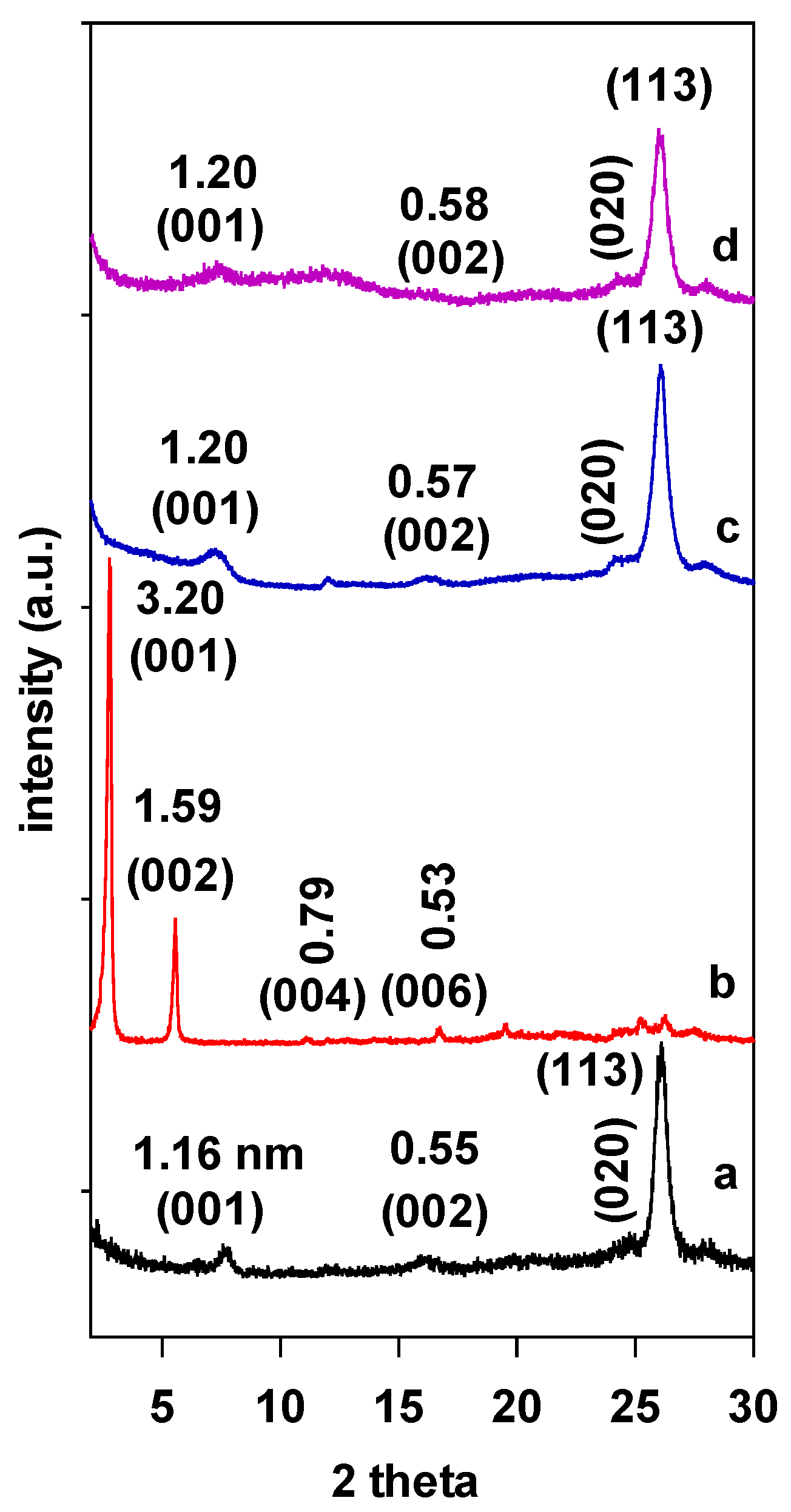
The A-Mgd sample exhibited hkl values of 001 and 002 at 7.68 and 16.10 degrees, corresponding to d001 and d002 values of 1.15 nm and 0.557 nm, respectively, with an average basal spacing close to that of comparable materials [28,30,31,32] (Figure 1). The other peaks were indexed based on JCPDS card 0-029-0668. The intense reflection at 26.18 (2θ degree) corresponds to an hkl value of 131 and d131 of 0.34 nm. The stacking disorder of the silicate layers occurred and gave rise to a broadening of the diffraction reflections. Comparable facts were noted for acid-activated clay minerals [33]. The reaction with C16TMABr and C16TMACl solutions did not significantly change the PXRD features and the d001 of the starting A-Mgd, with an average value of 1.20 nm was recorded. This suggests that the intercalation did not take place and the adsorption of C16TMA cations occurred on the external surface of the magadiite layers [28]. The 020 and other reflections did not vary in position. However, with C16TMAOH solution, the d001 value increased from 1.16 nm to 3.20 nm, and additional multiples of 00l were observed (Figure 1), supporting surfactant intercalation between the silicate layers (Figure 1). Comparable values were reported when the Na-Mgd sample was used, independently of the surfactant, either C16TMABr or C16TMAOH solution [17,28,34]. An improvement occurred in the PXRD reflections as a result of the enhancement of the stacking of Mgd layers and the well crystallinity of the C16OH@A-Mgd sample.
The pH of the surfactant solution could be the key player to obtaining organophilic silicate from A-Mgd, which was not the case for the Na-Mgd precursor. A suspension of solid A-Mgd had a pH value of 2, and once added to C16TMAOH solution, the suspension displayed a pH value above 10. In this case, the silicate layers acquired negative charges and thus promoted the electrostatic attraction between them and the positive C16TMA+ cations. Similar behavior was reported in some cases of acid-activated clays, and the intercalation of C16TMA surfactants occurred when the C16TMAOH solution was used [25], with a change in the basal spacing from 0.96 nm to 3.85 nm. Meanwhile, A-Mgd and C16TMABr or C16TMACl suspensions exhibited pH values of 2.4 and 3.5, respectively. These values did not facilitate the intercalation of C16TMA cations due to the electrostatic repulsion between the positively charged cations and the silicate layers. Different results were obtained when acid-activated clay minerals were used, and the intercalation of C16TMA cations occurred with C16TMABr solution [25].
The chemical stability of the C16OH-A-Mgd indicated that this sample was stable in NaOH and NaCl solutions with a d001 value of 3.15 nm, and the exchange of the surfactant cations did not occur with Na+ cations. However, C16TMA exchange took place when the C16OH@A-Mgd was treated in HCl solution, with a reduction in the d001 value from 3.15 nm to 1.20 nm. These observations support the C.H.N. analysis results.
The thickness of the fully dehydrated A-Mgd is about 1.15 nm [35], and a basal spacing of 3.20 nm results in an interlayer gallery of 2.0 nm. This value is lower than the size of C16TMA cations ranging from 2.3 to 2.5 nm, depending of the calculation method [36,37,38]. In this case, the surfactants adopted a similar monolayer paraffin arrangement, and a tilt of 65 degree occurred between alkyl chains and silicate layers. The values of the titled angle depend on the host silicate layers and on their charge [39]. Ltifi et al. suggested a formulae with which to calculate the tilt angle of C16TMA cations intercalated in clay minerals, assuming that the organization of ammonium ions is paraffinic:
sin α = d 001 e a
Here, “e” represents the nail head’s thickness (0.51 nm), and “a”, the length of the C16TMA cations (2.53 nm) [40]. In the present case, through the application of Equation (2), the sin α value was 1.05, greater than 1, which is impossible. The discrepancy in this method results from the fact that the authors did not use interlayer spacing (d001—minus the thickness of the clay mineral layer, fully dehydrated) [41].

3.3. TGA/DTG Data

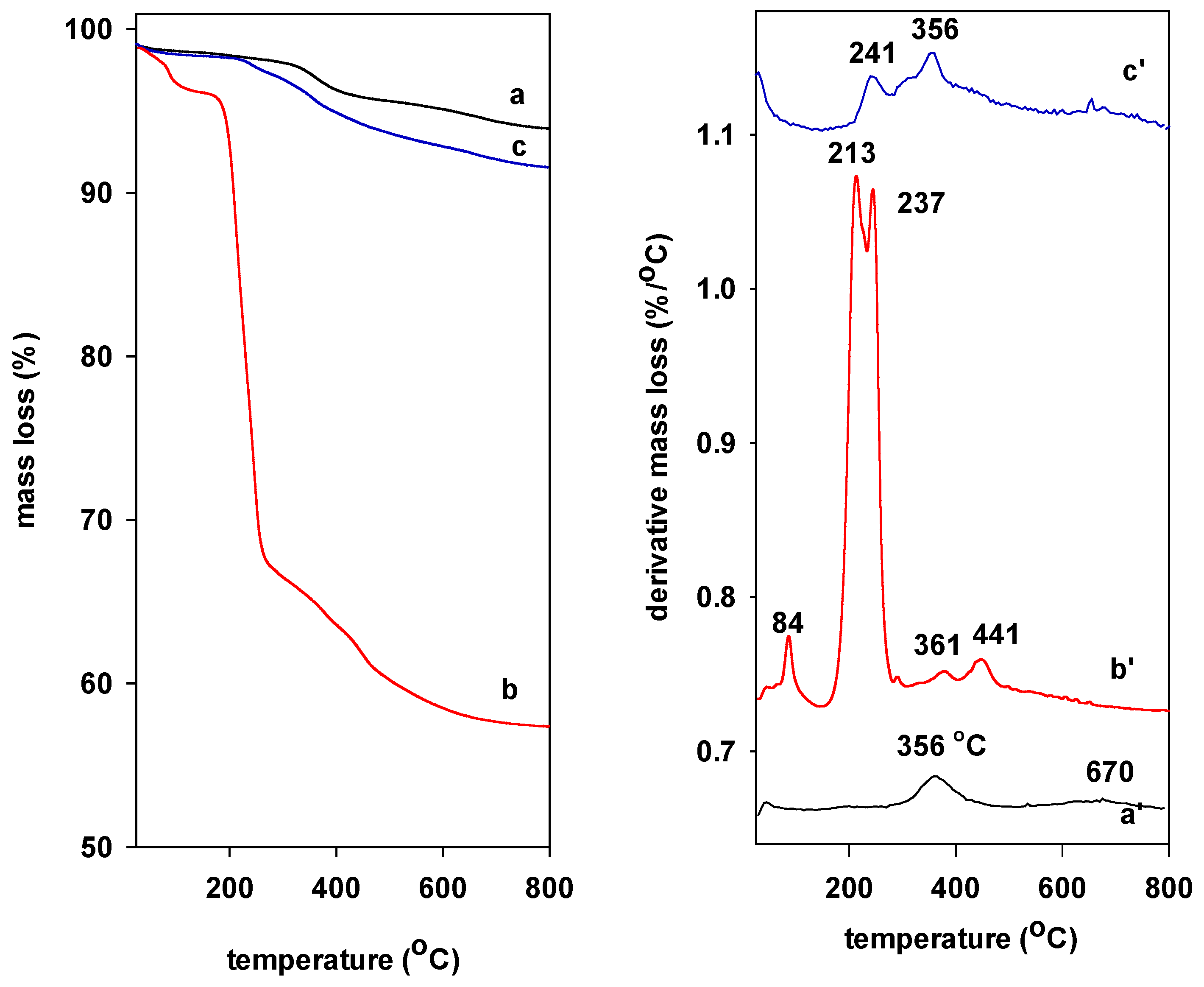
Figure 2 presents the TGA and DTG data of A-Mgd precursor and the C16OH@A-Mgd and C16Br@A-Mgd organophilic counterparts.
TGA of A-Mgd indicated a mass loss step of 0.5% below 200 °C, associated with the removal of physiadsorbed water, and no DTG peak was associated with it (Figure 2, left and right). At temperatures above 300 °C, OH groups of the silicate layers were removed, associated with a DTG peak at 356 °C, in addition to a weak signal at 670 °C (Figure 2 (right)). The residual mass between 25 °C and 800 °C was 94.86% [3,31].
The TGA feature of C16OH@A-Mgd exhibited an additional step of 29% between 180 and 350 °C, related to the combustion of C16TMA cations occurring in one step (Figure 2 (left)). This step was not detected in the A-Mgd sample, confirming the presence of C16TMA cations. The DTG feature showed two DTG peaks at 213 and 237 °C (Figure 2 (right)). A continuous mass loss step was associated with the oxidative combustion of residual carbonaceous materials accompanied with a weak DTG peak at 441 °C [24]. The weak water molecule loss of 3% in the range of 25 °C to 90 °C confirmed the material’s hydrophobic character [34]. The decrease in the affinity of the C16OH@A-Mgd for water molecules could be elucidated by the reduction in the available sites for interaction with water due to the presence of hydrophobic organic groups. The in situ PXRD data indicated a decrease in the d001 of 3.15 nm to 3.03 nm at 200 °C and then a significant collapse to 1.42 nm at 220 °C, due to the destruction of surfactant moieties (Figure S1). It then continued to shrink to 1.26 nm at 400 °C [29].
C16Br@A-Mgd did not exhibit significant mass loss in the range of 180 °C and 350 °C (Figure 2 (left)), and only one step exhibited a loss of 2%, related to the adsorbed lesser contents of C16TMA cations compared to C16OH@A-Mgd. Then, two broad DTG peaks with lower intensities at 241 °C and 356 °C (Figure 2 (right)) were recorded. The behavior of C16Cl@A-Mgd was similar to that of C16Br@A-Mgd, with the same TGA and DTG features. The percentage of mass loss related to C16TMA cations agreed well with the C.H.N analysis results (as presented in Table 1).

3.4. 29Si MAS NMR and 13C CP MAS NMR Data

The stability of the layered silicate structure during the formation of the organophilic materials was assessed via 29Si MAS NMR, which is sensitive to changes in the local Si environments.
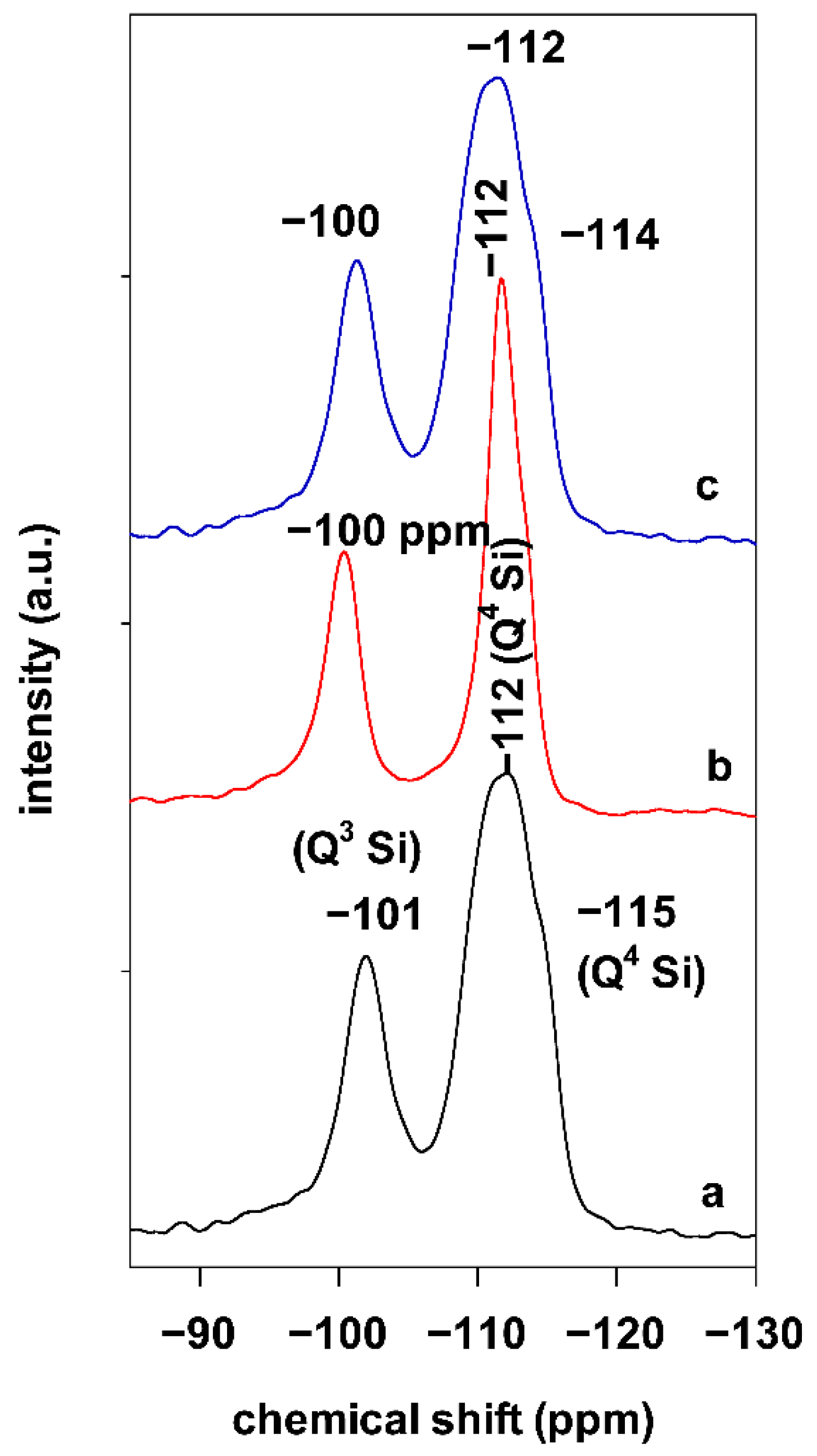
The 29Si MAS NMR spectrum of A-Mgd (Figure 3) exhibited one intense resonance peak in the range of −107 and −115 ppm, related to Q4 Si sites, as well as another one at −100 ppm due to the existence of Q3 silicon. The deconvolution of the Q4 and Q3 bands is presented in Figure S2, and a Q4 to Q3 ratio of 2.54 was obtained [42]. In the case of C16OH@A-Mgd, the Q4 peak changed in shape and broadness, and only one peak at −112 ppm was observed, in addition to the one at −100 ppm. A slight shift in the bands was observed, and the deconvolution of these bands is presented in Figure S3, and relates to the stacking order of silicate layers as revealed by PXRD data. A decrease in the estimated Q4/Q3 ratio from 2.54 to 2.00 was observed and could be related to the partial dissolution of the silica species. The high pH value of the surfactant solution (more than 12) could be the reason. Similar data were reported when acid activated clays were treated with NaOH solution. Using the C16TMABr solution with lower pH values, the C16Br@A-Mgd exhibited the same spectrum than the starting A-Mgd indicating a stability of the silicate layers in the surfactant solution. The Q4/Q3 ratio was estimated to be 2.57 after a deconvolution operation (Figure S4). The slight increase in this value from 2.54 to 2.57 could be associated with the some difference in the stacking order during the reaction with the surfactant solution. The condensation of the silicate layers was reported to be the origin of the Q4/Q3 ratio after treatment at temperatures higher than 200 °C [43]. Similar behavior was reported for the C16Cl@A-Mgd sample.

3.5. 13C CP MAS NMR

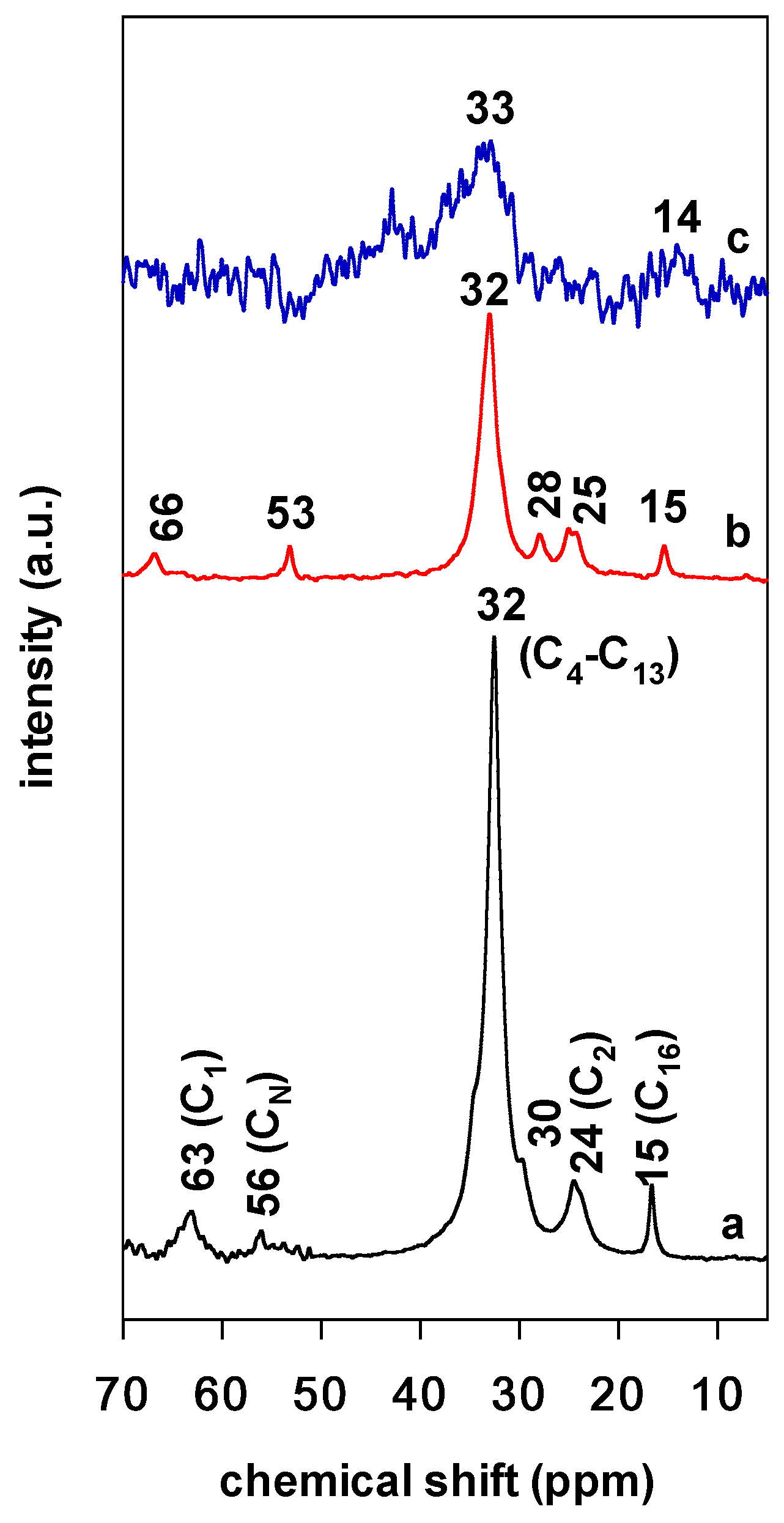
Solid 13C CP MAS NMR is considered a puissant technique for examining the conformation and mobility of intercalated organic surfactants in layered materials [44,45,46]. Figure 4 depicts the spectra of C16OH@A-Mgd and C16Br@A-Mgd samples, and the C16TMABr solid spectrum is presented for comparison purpose. The C16TMABr solid displayed a dominant all-trans conformation of the aliphatic chain, with a resonance of 32.5 ppm, associated with the C4–C13 inner CH2 group, and minor disordered gauche conformations at 30 ppm (Figure 4a). The other peaks at 56 ppm and 63 ppm were related to the methyl groups bonded to N (CN) and C1 carbon, respectively [47] (Figure 4).
The C16OH@A-Mgd exhibited an intense resonance peak at 32.5 ppm, revealing that the C16TMA cations adopted all-trans conformation (Figure 4b). The spectrum was comparable to that of the C16TMABr solid [17,46]. In this case, the interlayer environment did not affect the conformation of the C16TMA cations.
The intensity of the other resonance peaks was enhanced, with some changes in shape. The broadness was ascribed to the confined motion of C16TMA cations in the interlayer spacing. Comparable results have been described for organoclays and organokenyaites [46,48]. However, in the case of C16Br@A-Mgd, the resonance peaks were broad and weak in intensity, due to the C16TMA’s low content (Figure 4c). Qualitatively, the adsorbed surfactants exhibited an all-trans configuration with a peak around 33 ppm, and only the C16 resonance peak was observed at 15 ppm [28].

3.6. Textural Properties

Textural property alterations in A-Mgd and the organophilic counterparts are summarized in Table 2. The A-Mgd sample showed an SBET value of 40 m2/g, which is comparable to that of similar materials [49]. The T.P.V. value was associated with voids between the A-Mgd particles. The intercalation of C16TMA cations in the case of C16OH@A-Mgd led to an SBET reduction of 10 m2/g, yet the interlayer spacing was expanded; however, the C16TMA cations blocked the N2 molecules’ access to void space. Comparable values were reported for other organoclay minerals and organosilicates [40,48]. The head groups of C16TMA cations are typically positively charged and strongly bound to the silicate layers; therefore, it was expected that all C16TMA cations will decrease the external surface area of the C16OH@A-Mgd and covered some or all of the A-Mgd surface. Moreover, C16TMA’s head groups could promote the aggregation of C16OH@A-Mgd particles, thus resulting in a reduction in surface area by decreasing inter-particle repulsive forces. The T.P.V was also reduced due to the reorganization of the silicate layers after reaction with C16TMAOH solution and the aggregation of C16OH@A-Mgd particles, leading to a decrease in the A.P.D value. In the case of C16Br@A-Mgd and C16Cl@A-Mgd samples, the C16TMA cations were adsorbed on the surface, and thus, a slight decrease in the textural properties was noted (an average of 30 m2/g), compared to the A-Mgd sample. In all cases, the textural properties supported the C. H. N. and PXRD data.

3.7. SEM Morphology

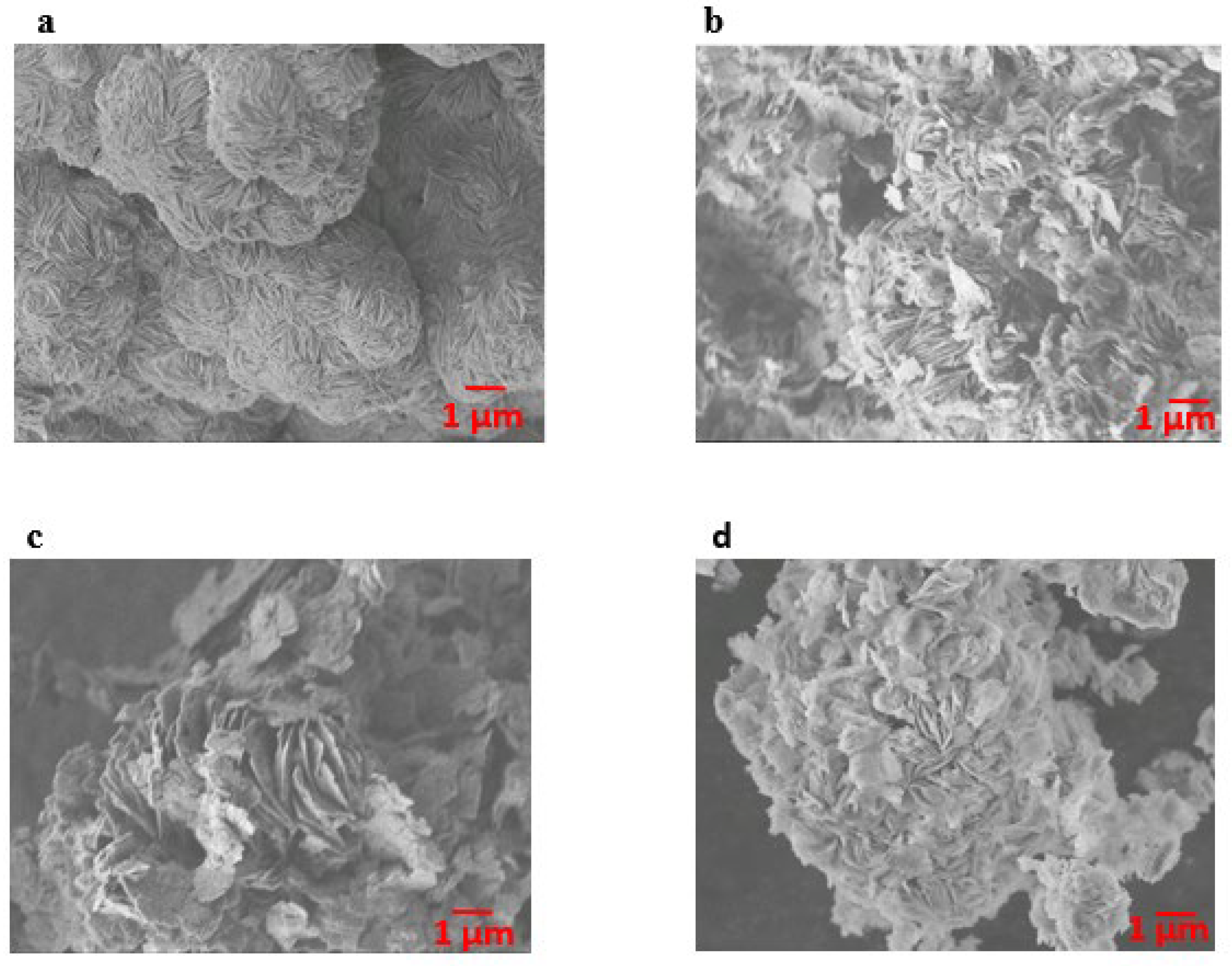
SEM monographs of A-Mgd and organophilic counterparts are shown in Figure 5. Sodium magadiite exhibited a coly flower-like shape, with a particle size of 1 micron [50]. After HCl treatment, the coly flower morphology for A-Mgd was almost lost, and some clusters of intergrown layered silicates were observed. This caused a crystallinity reduction, as detected using the PXRD technique. The organophilic C16OH@A-Mgd presented some change in morphology and reorganized layered silicates during the exchange process. Comparable observations were made when Na-Mgd was used [51,52,53]. The reaction with C16TMABr and C16TMACl solutions did not alter the morphology of the parent A-Mgd, and the reorganization of silicate layers did not occur as easily. 29Si MAS NMR data indicate that the structure of the layered silicates was not altered during the exchange reaction; however, a morphological change occurred.

3.8. Eosin Y Removal Study

3.8.1. Effect of Initial Concentration

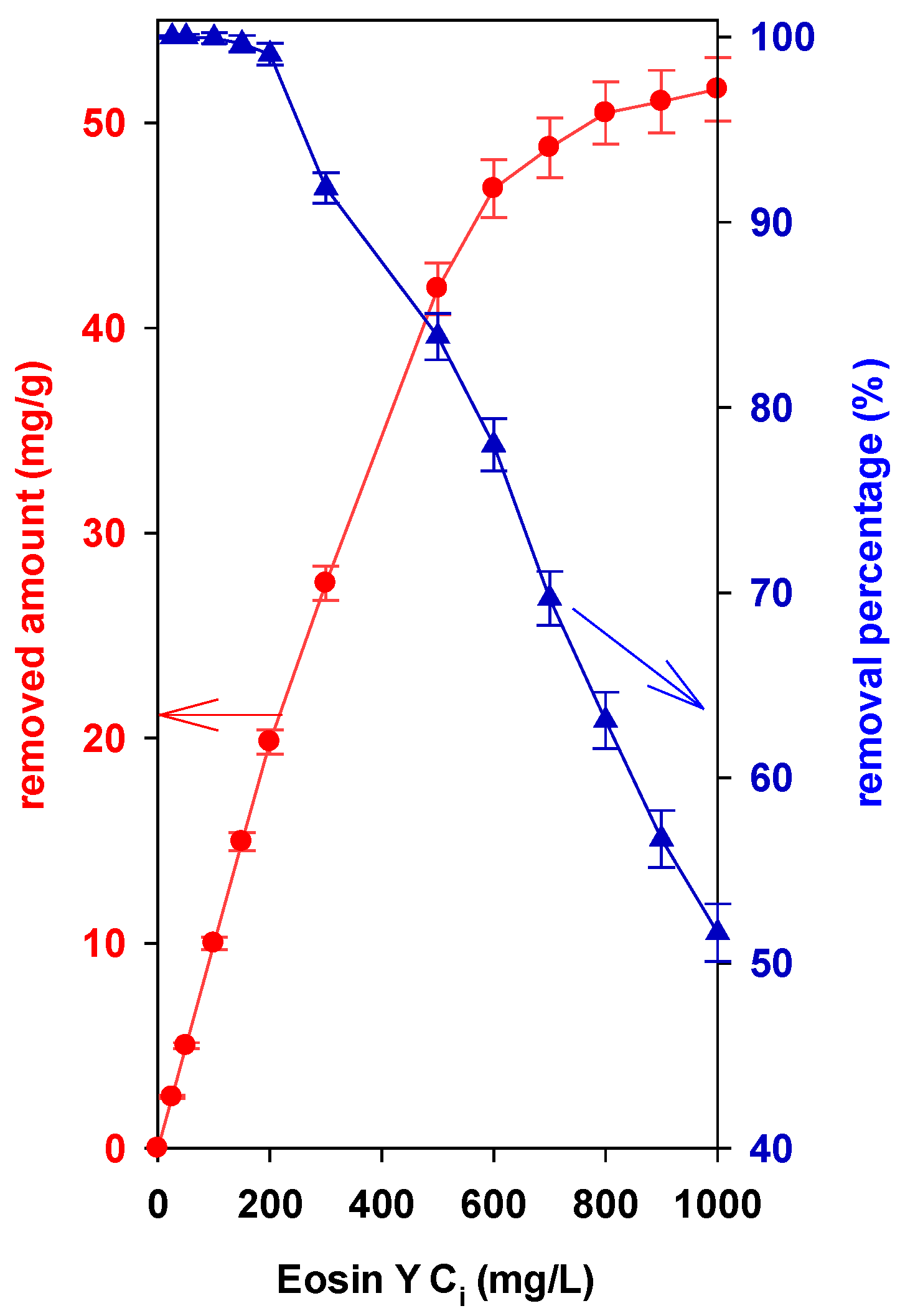
In this part, the C16OH-A-Mgd mass was fixed at 100 mg, and different initial dye concentrations were used, from 25 mg/L to 1000 mg/L. C16OH@A-Mgd displayed about 100% removal effectiveness at lower starting concentrations between 25 mg/L and 200 mg/L. Higher initial dye concentrations exceeding 200 mg/L were found to be a significant driving factor for overcoming the mass transfer barrier between the aqueous and solid phases [50,53], and the removal percentage was reduced. Similar behavior was described for other organoclays, organomagadiites, and kenyaites [17,18,54]. Furthermore, the removal ability was enhanced with starting concentrations reaching 51 mg/g (Figure 6). The reduction in the Eosin Y percentage removal efficacy with increasing dye concentrations from 100% to 51% was due to the saturation of the removal sites on the C16OH@A-Mgd surface. More Eosin Y molecules can be removed at lower Ci values since many active sites remain unoccupied. Moreover, many active sites fill up at increasing concentrations, leaving fewer sites accessible for additional dye molecules. C16Br@A-Mgd and C16Cl@A-Mgd exhibited the same behavior in the sense that they removed negligible amounts of Eosin Y, about 2 to 3 mg/g, with a removal percentage of less than 7%. The low contents of C16TMA cations could be the cause of this performance.

3.8.2. Effect of Used Mass

In this study, C16OH@A-Mgd and C16Br@A-Mgd masses were varied from 0.025 g to 1 g, and the initial dye concentration was fixed to 200 mg/L. The removal percentage was enhanced by increasing the mass of the C16OH@A-Mgd sample from 35% to 99%; then, no change was reported when adding mass beyond 0.10 g (Figure S5). When the mass of additional C16OH@A-Mgd was increased, extra removal sites were provided and completely taken up by the Eosin Y molecules, thus increasing the removal % [23,55]. The number of Eosin Y molecules did not change for a specific volume; for a lower mass of C16OH@A-Mgd, there were not enough removal sites to eliminate all dye molecules present, and a smaller percentage was achieved. The amount of Eosin Y (in mg/g) removed was reduced by adding more C16OH@A-Mgd sample. Because there is an inversely proportional relationship between the removal amount (qe) and the mass of the adsorbent, the Eosin Y removed amount was attained with a lesser mass of C16OH@A-Mgd [23,55]. With C16Br@A-Mgd, a different tendency was noted: the removal percentage change slightly by varying the mass added to Eosin Y solution, reaching a maximum of 7% when 1 g of sample was added. This could be related to the C16TMA cations contents in the two samples (see below).

3.8.3. Effect of C16TMA Contents

The A-Mgd sample presented a very controlled amount of removed Eosin owing to the repulsion between the negative electrical charge of Mgd silicate layers and the dye anions. Comparable findings have been reported for clay minerals and other layered silicates. In some cases, the presence of protons in acid-activated clays slightly improved the removal of acidic dyes [25]. Thus, the surface of Mgd layers requires a conversion of charge from negative to positive through the cationic surfactant’s adsorption intercalation.
As reported above in paragraphs 3.1 and 3.2, the intercalation of C16TMA cations from bromide solution did not occur, only adsorption on the external surface; thus, a slight change in charge occurred. The amount of removed Eosin Y slightly improved by a maximum of 3 mg/g at higher concentrations of Eosin Y.
Meanwhile, C16OH@A-Mgd presented different behavior, and the amount of removed Eosin Y increased from 3 mg/g to about 50 mg/g because the C16TMA cations covered the negative charge of the Mgd layers, overcoming electrical repulsion between the Mgd layers and anionic Eosin Y dyes. This effect has been reported for organoclay minerals and other silicate-layered materials [17,18,20]. The removal of dye molecules has been associated with the surface area values for certain materials; however, in the present case, the surface area was low (10 m2/g) and still exhibited good removal efficiency. Thus, this effect was hindered by the charge type of the removal agent.

3.8.4. Impact of pH Parameter

Impact of Eosin Y Solution’s pH
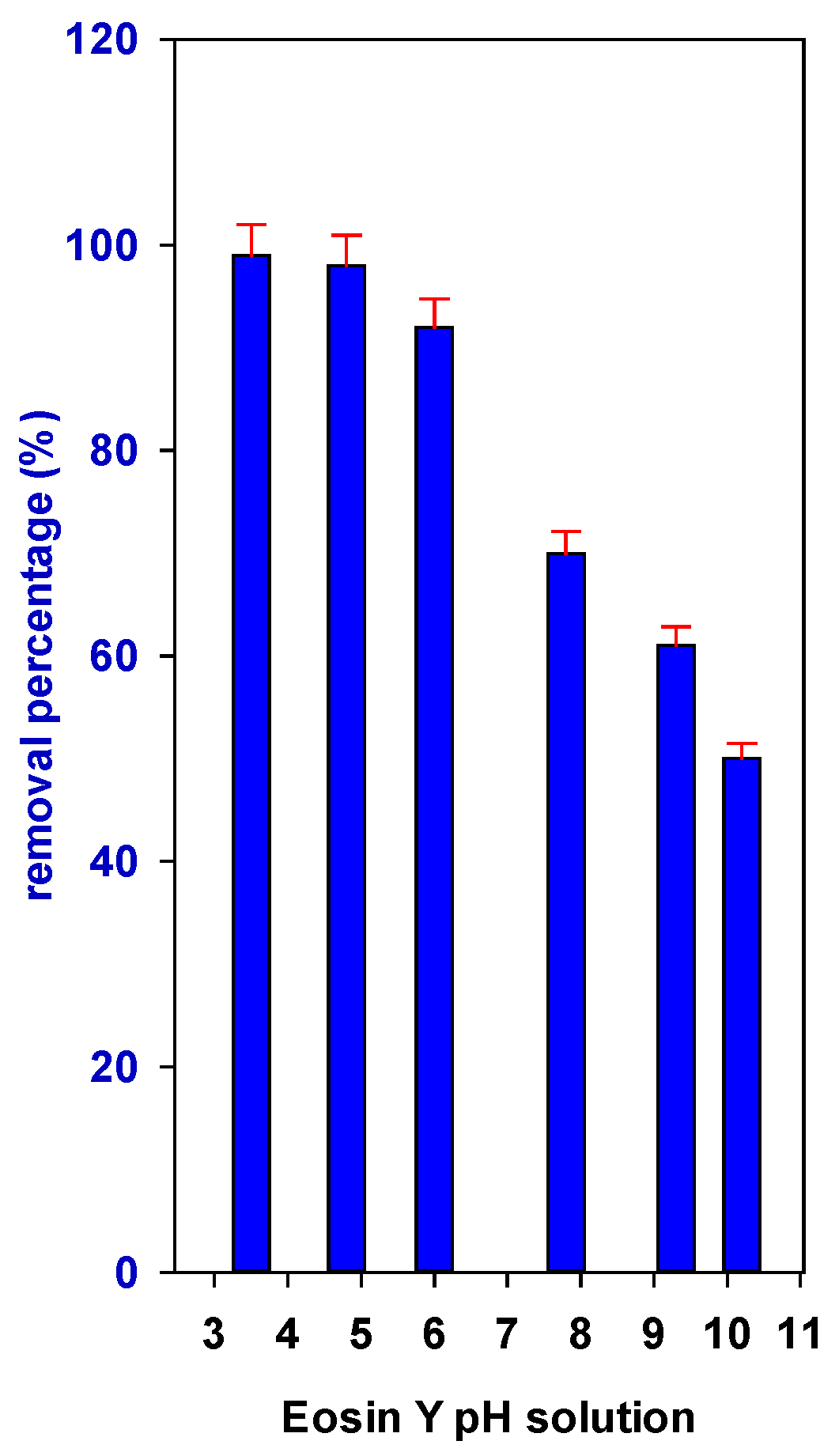
The initial pH of the dye solution plays a crucial role in the chemistry of dye molecules and the adsorbent [56]. The impact of pH solution can be leveraged by altering the pH from 2 to 12 through the addition of NaOH (0.1 M) or HCl (0.1 M) solutions and by keeping a fixed dye concentration of 200 mg/L and adsorbent dose of 0.1 g. Eosin Y solution has an initial pH of 4.1, while pH values of 4.9 have been reported for Eosin Y solutions of 50 mg/L [57]. In general, the Eosin Y removal percentage is related to the pH, as presented in Figure 7. This study was performed at pH values greater than 3 because Eosin Y precipitates in acidic conditions at pH values below 2 [17]. Generally, the removal percentage decreased to 50% at pH values higher than 7, whereas a decrease in pH close to 3 increased the removal by 40%. These data confirm that the removal of anionic dye was enhanced in acidic medium. In this case, when adding the C16OH@A-Mgd solid to Eosin Y solution, the pH of the suspension increased above 7, and thus reduced the removal percentage.
The maximum removal percentage was obtained with a solution pH range of 3 to 5. In this pH range, the surface of the C16OH@A-Mgd remained positively charged, which facilitated the removal of anionic dyes. In the case of C16Br@A-Mgd, and by adding the sample to Eosin Y solution, the pH of the suspension did not change significantly, and low removal percentage was obtained. These data confirm the importance of the surfactant content and the pH of organophilic solids.
pH Effect of C16OH@A-Mgd
In this part, the pH of Eosin Y solution (Ci of 200 mg/L) was not altered; it was used as it was. However, the pH of the C16OH@A-Mgd solid was altered by soaking it in NaOH or HCl solution (0.1 M) prior to its addition to the Eosin Y solution. The soaked samples were separated via filtration and dried at room temperature. The treatment of C16OH@A-Mgd with HCl solution significantly changed the removal percentage, enhancing it from 45% to 93%. This unanticipated enhancement suggests that the acidic pH of the soaked C16OH@A-Mgd affected the pH’s suspension. However, when the starting C16OH@A-Mgd was treated in NaOH solution, the removal percentage was reduced due to the higher pH value of C16OH@A-Mgd and Eosin Y suspension, which did not favor acidic dye removal.
Eosin Y’s hydroxyl group tends to dissociate more readily than the carboxylic group after dissolving in water, producing a monoanion or dianion [58]. The pKa1 and pKa2 ionization constants for Eosin Y were 2.10 and 2.85, respectively [59]. Over 80% of Eosin Y anions are dianion in solution. In addition, the pH of the solution also impacts the solid surface’s charge [56]. The A-Mgd precursor has a zero-charge pH point (pHpzc) value of 3.7 [3,60]. Following the reaction with the C16TMAOH solution, the pHpzc of the C16OH@A-Mgd sample increased from 3.7 to 7, indicating a transition of the charge to positive. However, the pHpzc values of the C16Br@A-Mgd and C16Cl@A-Mgd samples slightly changed compared to those obtained for A-Mgd, with values of 3.9 and 4. When the environment pH is lower than pHpzc, the solid surface has a positive charge. Then, it can be altered to a negative charge at pH values greater than the pHpzc. A positively charged C16OH@A-Mgd surface attracts negatively charged Eosin Y anions through electrostatic forces at pH values between 3 and 5, thus improving the amount of Eosin Y removed. At higher pH levels, C16OH@A-Mgd exhibited a negative charge and electrical repletion, which led to a reduction in the Eosin Y removal. In the cases of C16Br@A-Mgd and C16Cl@A-Mgd, the surface displayed a negative charge, and thus, electrical repulsion occurred, thereby significantly reducing the amount of removed Eosin Y.

3.9. Isotherm Models

Equilibrium data were analyzed using Freundlich and Langmuir models to gain insights into the surface properties and adsorbent affinity. The linear form of the Langmuir equation is expressed as Equation (S3); the Langmuir model assumes monolayer adsorption and helps estimate the maximum removal capacity (qmax, mg/g) and adsorption energy (KL, L/mg) [61]. Meanwhile, the Freundlich adsorption isotherm is a mathematical model that describes adsorption onto heterogeneous surfaces, where adsorption occurs in multiple layers [62]. Its linear form, which takes natural logarithms, is presented in Equation (S4). KF denotes the Freundlich adsorption capacity (L/mg), and n, the adsorption intensity. The linear Langmuir and Freundlich isotherms are presented in Figures S6 and S7 and the deduced parameters of each model are summarized in Table 3.
The C16OH@A-Mgd sample showed higher qm values (51.8 mg/g) than the pristine A-Mgd, with C16Br@A-Mgd exhibiting the lowest maximum removal capacity of 4.58 mg/g. A high correlation coefficient (R2 = 0.9979) confirms the Langmuir model’s suitability. The KL value of 0.1383 (L/g) was high and confirmed the affinity of Eosin Y to the organophilic sample. Meanwhile, the Freundlich model reasonably fit the data with an R2 close to 0.9891; this could indicate that the removal of Eosin Y with C16OH@A-Mgd could be described through multilayer adsorption on heterogeneous sites.
The improvement of the qmax amount for C16OH@A-Mgd could be related to the presence of C16TMA cations that rendered the surface of A-Mgd positive, suggesting that electrostatic-type interactions predominate. The high affinity for Eosin Y anions was attributed to the hydrophobic interaction between Eosin Y and the incorporated long alkyl chains of the cetyltrimethylammonium cations [63] at lower equilibrium concentrations. In general, when uptake amount of C16TMA cations was higher than the CEC value, it formed a partition phase in the silicate interlayer spacing and thus enhance the Eosin Y removal amount [20]. In the current study, the uptake of C16TMA cations was lower than that of the CEC of A-Mgd sample, forming only one monolayer parafilm. In the case of C16Br@A-Mgd, for example, a low amount of C16TMA cations was adsorbed on the surface and still kept the negative charge, thus reducing the Eosin Y amount.
The PXRD pattern of the C16OH@A-Mgd sample did not change after the Eosin Y removal process, and the d001 value of 3.20 nm was maintained. This indicates that no surfactant exchange by Eosin Y occurred, confirming the stability of the samples during this process, and the strong attraction of C16TMA cations to the Mgd silicate layers.
To have a better understanding of how effectively the organo acid magadiites to remove the Eosin Y dye, a comparison analysis with various adsorbents is required. Table 4 presents selected data from the literature for Eosin Y removal using organo-layered materials. Other materials were used for this purpose; however, they did not have structures similar to those of the investigated materials. The data indicated that the present C16OH@A-Mgd exhibited good and comparable removal capacity compared to the organo-kenyaites and some organoclays, However, it exhibited lower efficiency than organo-magadiite prepared from C16TMABr solution and organoclay prepared from C16TMAOH solution. The latter two samples exhibited also good adsorption performance The C16OH@A-Mgd sample could be considered a potential candidate for water treatment. The proposed method to prepare organophilic acidic magadiite has led to an improvement of the C16TMA cations uptake amounts; however, it did not improve the removal amounts of Eosin Y dye.

3.10. Regeneration Tests

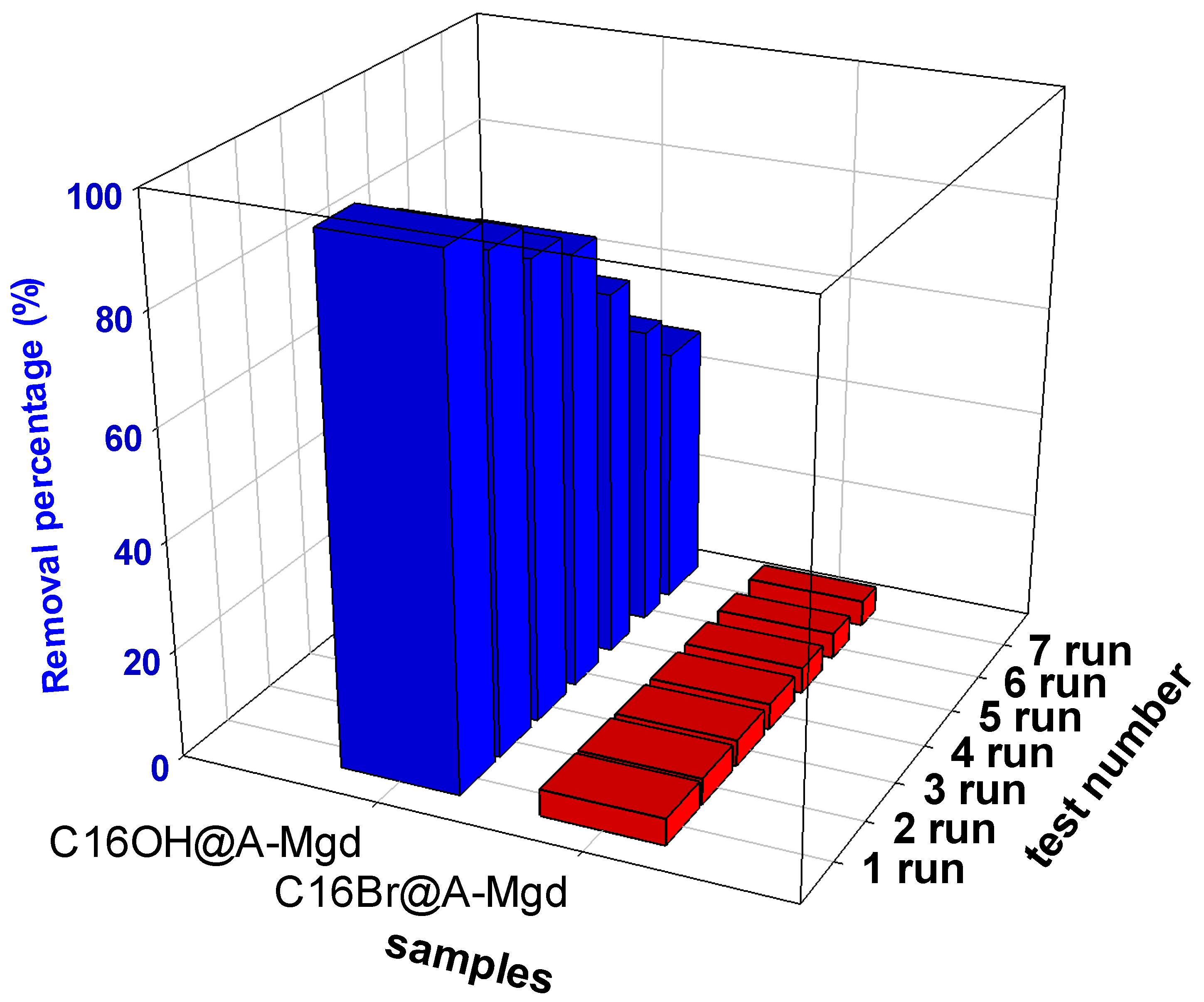
This process is considered an important factor for the sustainability usage of the adsorbent, and it will help reduce costs and environmental impact [65]. Different physical, chemical, and biological methods were used to regenerate the spent adsorbents [66]. In this study, an environmentally friendly method was adopted because it required less chemicals and could be used again without losing its effectiveness; in addition, it decomposes the dye into non-dangerous molecules [17] without altering the structure of removal sample. C16OH@A-Mgd and C16Br@A-Mgd were selected for this test. Figure 8 depicts the results obtained after seven consecutive tests. As expected for the C16Br@A-Mgd sample, with a low removal percentage of Eosin Y, the percentage efficiency of 4.95% was maintained for up to six tests with slight fluctuation in this value. Comparable behavior was obtained for different materials and dyes with low removal percentage [20]. Indeed, the low removed amount was located on the external surface of the silicate layers, thus facilitating its accessibility to the sulfate radicals and its degradation. However, for C16OH@A-Mgd with a higher content of removed Eosin Y, different data were obtained: the initial removal percentage of 95% was maintained for up to three regeneration tests with a decrease of 15%, and a drop to 50% was reached after the seventh test. Comparable data were reported for materials with higher Eosin Y removed amounts [20,25]. The significant drop could be explained by two reasons: the dye molecules’ strong attraction to the materials hindering their reaction with the sulfate radicals and the radicals’ difficult access to the dye molecules due to their location in the C16OH@A-Mgd sample.
The PXRD data indicated that the C16OH@A-Mgd basal spacing was not affected by this process even after 7 runs, and d001 value of 3.15 to 3.20 nm was recorded. These data confirmed that the structure of C16OH@A-Mgd was stable and the intercalated C16TMA surfactants were strongly attached to the Mgd silicate layers.

3.11. Single-Batch Design Process

As expected, the design of a single-batch adsorber is the feasible next step for utilizing the equilibrium data obtained from experimental work to predict the adsorbent loading and the outlet concentration for a given set of operating conditions [67]. The design allows to minimize the costs of the process and reduce the formation of additional slag [68]. The mass balance abridges the relationship between the initial and equilibrium concentrations of the dye in the solution and the amount adsorbed onto the adsorbent [69]. Its equation is expressed as
CoV = CeV + qeM
and reformulated as
M V = C o C e q e
The qe term was substituted in Equation (4) using the Langmuir or Freundlich models and their respective parameters reported in Table 4, thus obtaining Equations (5) and (6) for the C16OH@A-Mgd sample.
M V = C o C e 51.8 × 0.1383 . C e 1 + 0.1383 × C e
M V = C o C e 17.0 × C e 1 / 0.1907
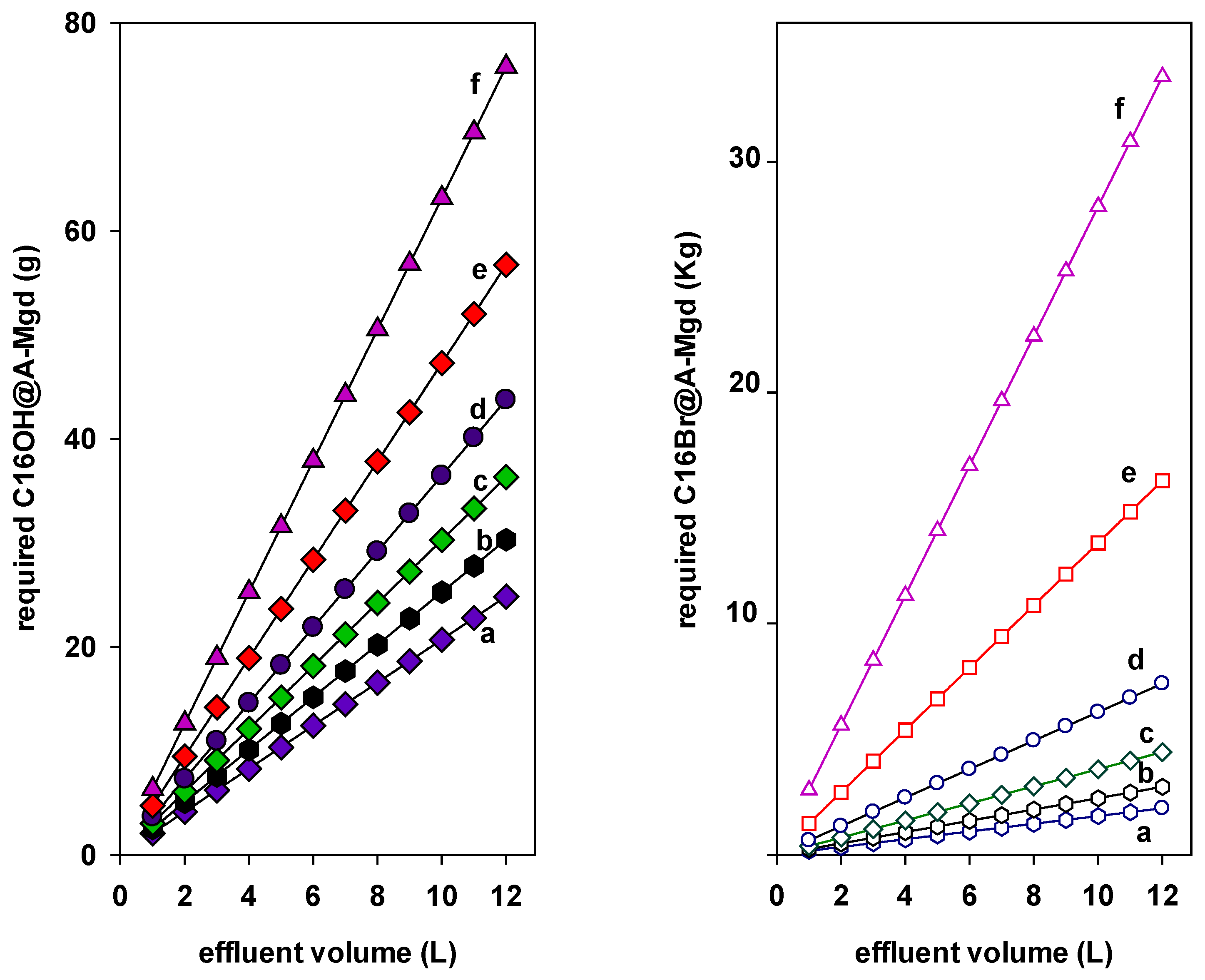
Based on Equation (5), Figure 9 (left) depicts the relationship between the needed masses of C16OH@A-Mgd to treat different volumes of Eosin Y solution (Ci of 200 mg/L) at desired outlet concentrations or removal percentages. Two general trends were observed: Firstly, the amounts of required masses increased with the treated volume for a fixed removal percentage. Secondly, for a fixed treated volume, the required masses increased with the removal percentage. Comparable trends were reported using different removal agents and dyes [70,71,72]. In fact, for a given volume of 10 L, it was predicted that 20.7 g, 25.3 g, 30.3 g, 36.5 g, 47.3 g, and 63.2 g of C16OH@A-Mgd would be needed to achieve the intended concentrations of 100 mg/L, 80, 70, 60, 40, 20, and 5 mg/L.
Moreover, in order to reduce a 10 L of solution (200 mg/L) at different removal percentages of 50, 60, 70, 80, 90, and 95%, respectively, additional masses of C16Br@A-Mgd were needed, such as 1.68 kg, 2.45 kg, 3.70 kg, 6.17 kg, 13.50 kg, and 28.10 kg (Figure 9 (right)). Comparable behaviors can be observed for similar or other pollutant dyes and with different materials. The difference in mass quantity between the two samples is related to the C16Br@A-Mgd sample’s qmax compared to that of C16OH@A-Mgd (Table 4).
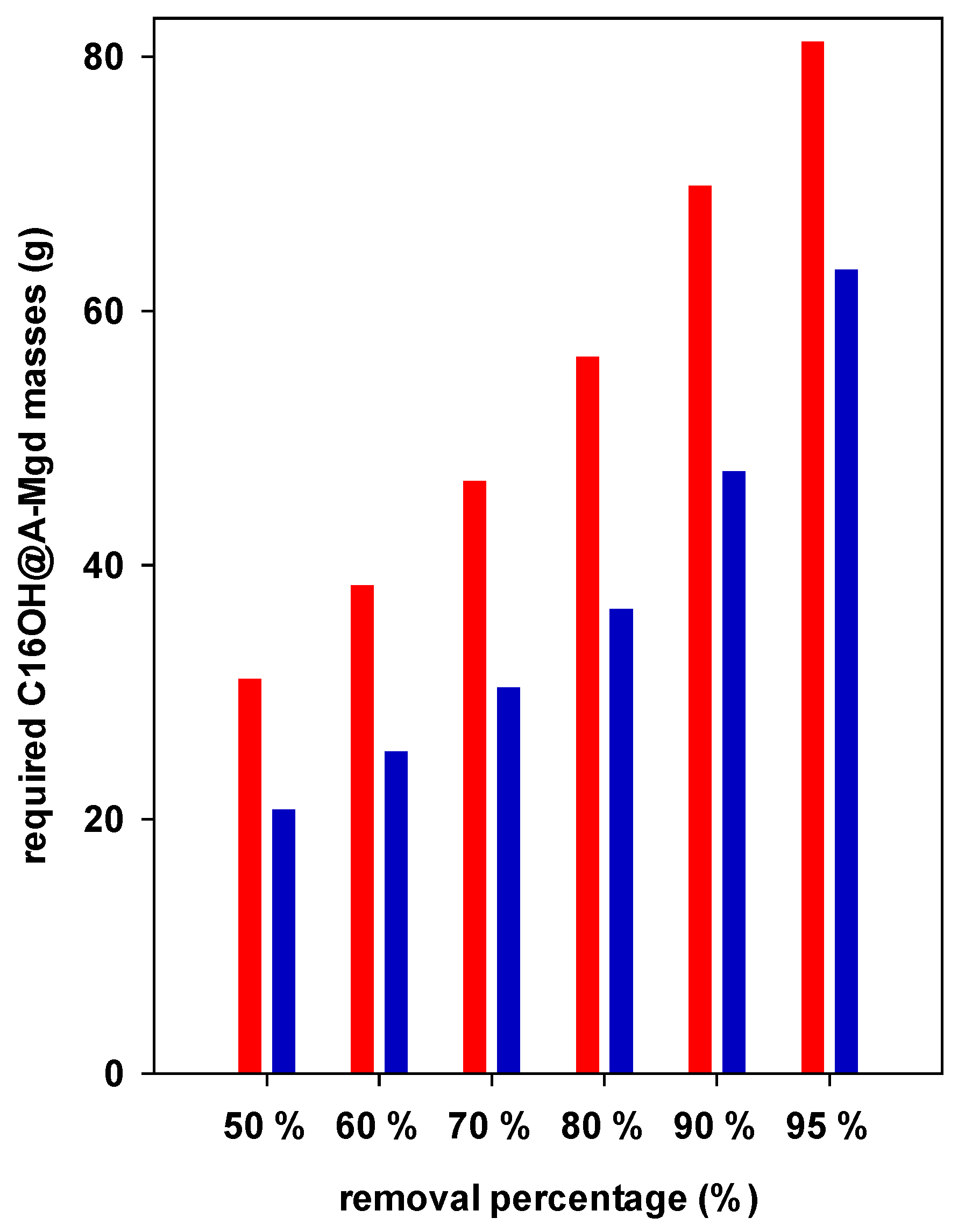
The effect of the isotherm model on the design process was examined. The data estimated using Freundlich and Langmuir equations indicated that the necessary C16OH@A-Mgd masses deduced from Freundlich were higher than those derived using the Langmuir model (Figure S8). When treating 10 L of Ci 200 mg/L and targeting different removal percentages, a reduction in more than 35% in C16OH@A-Mgd mass was noticed (Figure 10). The Freundlich model overvalued the necessary masses, while the Langmuir model underestimated them. In some cases, the Freundlich model underestimated the calculated required masses compared to the Langmuir model [73]. In this situation, the form of the isotherm curves over the examined concentration range was linked to the difference between the two models.
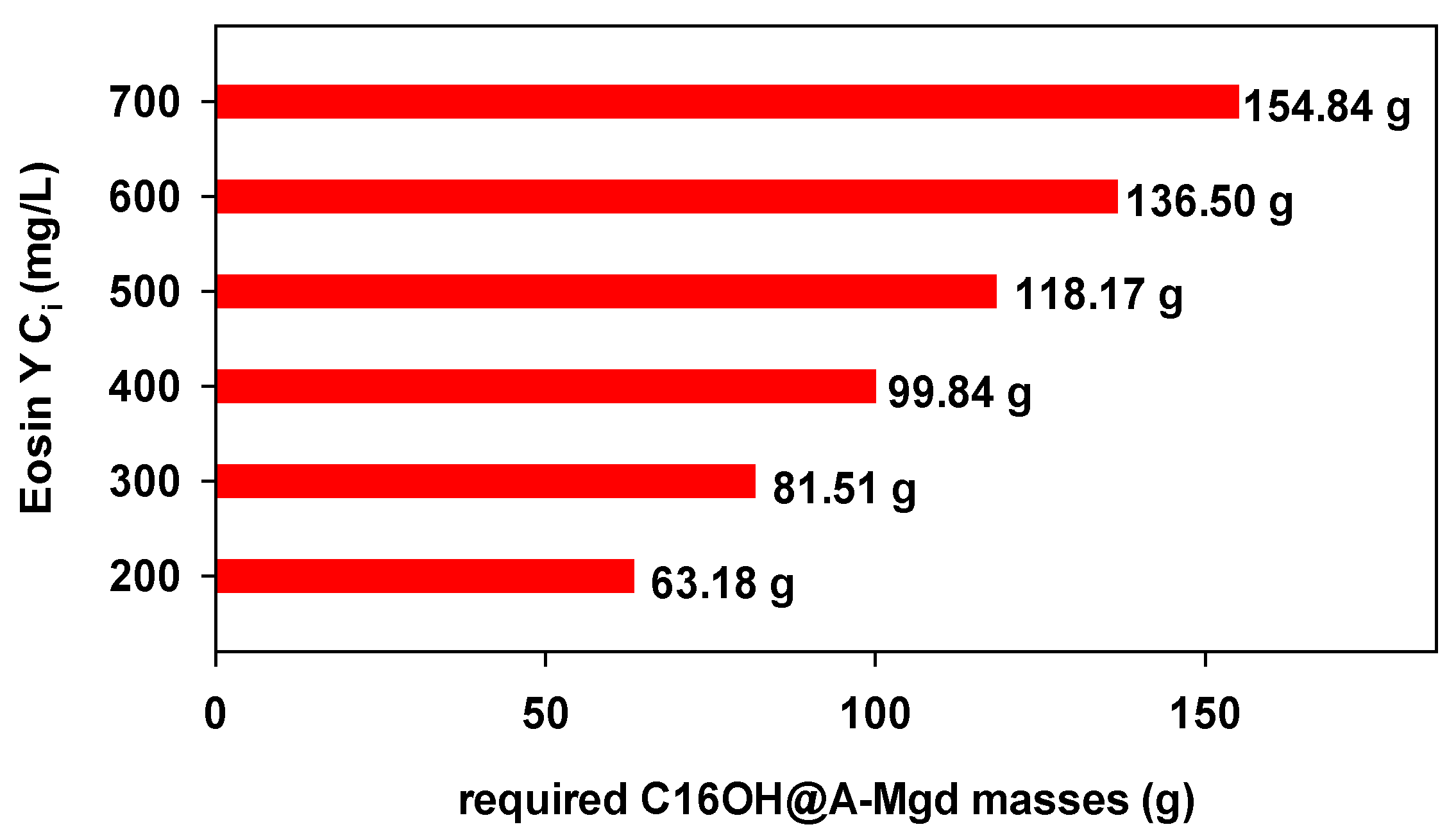
During the design process, the impact of the initial concentrations is also taken into consideration. Figure 11 depicts the impact of Ci values on the required masses of C16OH@A-Mgd to treat 10 L of effluent at a fixed removal percentage of 95%. The required masses increased with the initial concentrations. The predicted masses of 63.18 g, 81.51 g, 99.84 g, 118.17 g, 136.50 g, and 154.84 g were needed to treat 200 mg/L, 300 mg/L, 400 mg/L, 500 mg/L, 600 mg/L, and 700 mg/L, respectively.

4. Conclusions

Acidic magadiite (A-Mgd) was easily prepared from Na-magadiite in hydrochloric (HCl) acid solution. Three cetyl trimethyl ammonium (C16TMA) solutions with different hydroxide (OH), bromide (Br), and chloride (Cl) anions were used. Successful intercalation was achieved using the C16TMAOH solution with a layer spacing expansion of 3.15 nm, where the C16TMA cations adopted a monolayer parafilm structure with an all-trans configuration, as indicated with the 13C CP MAS NMR technique. Unlike with C16TMABr and C16TMACl solutions, the cations were adsorbed on the external surface of the A-Mgd layers with no change in the d001 value of 1.15 nm. It seems that the higher pH of C16TMAOH has enhanced the uptake of the surfactants which is not the case for C16TMABr and C16TMACl solutions. The Eosin Y removal properties of A-Mgd was enhanced via C16TMA cation organophilisation. Eosin Y removal was enhanced at lower pH values between 3 and 5 with a qmax of 51.8 mg/g for the C16OH@A-Mgd sample and between 3 and 5 mg/g for the C16TBr@A-Mgd and C16Cl@A-Mgd samples. After four regeneration tests, C16OH@A-Mgd showed good reusability; however, it steadily declined as the number of cycles increased. The structure of the tested samples was stable according to the PXRD data. During the single-batch adsorber design, different factors were taken into account such as the initial concentration, the intended removal percentage and the treated effluent volumes. Additional masses were required as the treated effluent volumes and intended removal percentages increased: the Langmuir model underestimated the required masses, while the Freundlich model overestimated them. This study also stressed how essential selecting an appropriate isotherm is to reaching high removal percentages with minimum masses. Kinetic studies will be carried out in the future in order to comprehend the removal mechanisms and minimize the time needed for effective removal percentages.

Supplementary Materials

The following supporting information can be downloaded at: https://www.mdpi.com/article/10.3390/surfaces9010009/s1, Equations (S1) and (S2) represent the removed amount (qe, mg/g) and the removal percentage (R %), respectively. Equations (S3) and (S4) represent the Linear Langmuir and Freundlich model equations, respectively. Figure S1: Deconvolution of 29Si MAS NMR of A-Mgd sample. Figure S2: Deconvolution of 29Si MAS NMR of C16OH-Mgd sample. Figure S3: Deconvolution of 29Si MAS NMR of C16Br-Mgd sample. Figure S4. in-situ PXRD of C16OH@A-Mgd sample calcined at different temperatures. Figure S5. Impact of added C16OH@A-Mgd on the removal percentage and removed amount of Eosin Y dye. Figure S6. Linear Langmuir isotherms of (left) C16OH@A-Mgd and (right) C6Br@A-Mgd samples. Figure S7. Linear Freundlich isotherms of (left) C16OH@A-Mgd and (right) C6Br@A-Mgd samples. Figure S8. The predicted masses (g) of C16OH@A-Mgd calculated using Freundlich (left) and Langmuir (right) models to reduce different effluent volumes (L) of Eosin Y (Ci = 200 mg/L) to (a) 50%, (b) 60%, (c) 70%, (d) 80%, (e) 90%, and (f) 95%.

Author Contributions

Conceptualization, T.S.A., F.K., and M.G.A. data curation, S.R., S.A.P. and H.O.H.; formal analysis, T.S.A., F.K., H.O.H. and S.R.; funding acquisition, R.A.-F., S.R. and F.K.; investigation, T.S.A., M.G.A., F.K., S.A.P., H.O.H. and R.A.-F.; methodology, T.S.A., S.R., S.A.P. and F.K. resources, F.K., S.R., T.S.A., R.A.-F. and H.O.H.; supervision, F.K., S.R.; and R.A.-F. validation, T.S.A., S.A.P., F.K., H.O.H. and R.A.-F. writing—original draft, T.S.A., F.K., R.A.-F., H.O.H. and S.A.P. writing—review & editing, F.K., M.G.A., S.A.P. and H.O.H. All authors have read and agreed to the published version of the manuscript.

Funding

This research received no external funding.

Data Availability Statement

Data are available on request.

Conflicts of Interest

The authors declare no conflicts of interest.

References

  1. dos Santos, T.G.; de Assis, G.C.; da Silva, A.O.S.; Meneghetti, S.M.P. Progress in development of magadiite to produce multifunctional lamellar materials. ACS Appl. Mater. Interfaces 2023, 15, 43234–43250. [Google Scholar] [CrossRef] [PubMed]
  2. Mokhtar, A.; Abdelkrim, S.; Hachemaoui, M.; Adjdir, M.; Zahraouia, M.; Boukoussa, B. Layered silicate magadiite and its composites for pollutants removal and antimicrobial properties: A review. Appl. Clay Sci. 2020, 198, 105823. [Google Scholar] [CrossRef]
  3. Alraddadi, T.S.; Alam, M.G.; Al-Faze, R.; Popoola, S.A.; Rakass, S.; OudghiriHassani, H.; Kooli, F. Comparative removal properties of sodium magadiite and its protonic form on basic-blue 41 from contaminated aqueous solution. Inorganics 2025, 13, 303. [Google Scholar] [CrossRef]
  4. Novodárszki, G.; Valyon, J.; Illés, Á.; Dóbé, S.; Mihályi, M.R. Synthesis and characterization of Al-magadiite and its catalytic behavior in 1,4-pentanediol dehydration. Reac Kinet. Mech. Cat. 2017, 121, 275–292. [Google Scholar] [CrossRef]
  5. Mao, Y.T.; Li, S.G.; Fang, R.L.; Ploehn, H.J. Magadiite/styrene-butadiene rubber composites for tire tread applications: Effects of varying layer spacing and alternate inorganic fillers. J. Appl. Polym. Sci. 2017, 134, 44764. [Google Scholar] [CrossRef]
  6. Liu, B.; Gao, Y.; Xu, H.; Feng, Y.; Zhou, Z.; Gao, Y.; Jiang, R. Synthesis and crystallization mechanism for sapo-34 zeolite derived from magadiite. ChemPlusChem 2024, 89, e202400104. [Google Scholar] [CrossRef]
  7. Sun, Q.; Zhang, C.; Sun, H.; Zhang, H. aluminated derivatives of porous magadiite heterostructures for acid-catalyzed tert-butylation of catechol. Ind. Eng. Chem. Res. 2014, 53, 12224–12237. [Google Scholar] [CrossRef]
  8. Sun, Q.; Guo, X.; Guo, B.; Tang, Q.; Yu, W.; Wan, Q.; An, Y. Adsorption of Pb2+ and methylene blue by Al-incorporated magadiite. Appl. Clay Sci. 2023, 231, 106745. [Google Scholar] [CrossRef]
  9. Atulba, S.L.S.; Jang, J.H.; Park, M. TiO2-pillared magadiite and its arsenic adsorption capacity. J. Porous Mater. 2019, 26, 311–318. [Google Scholar] [CrossRef]
  10. Guerra, D.L.; Ferrreira, J.N.; Pereira, M.J.; Viana, R.R.; Airoldi, C. Use of natural and modified magadiite as adsorbents to remove Th(iv), U(vi), and Eu(iii) from aqueous media—Thermodynamic and equilibrium study. Clays Clay Miner. 2010, 58, 327–339. [Google Scholar] [CrossRef]
  11. Ge, M.; Xi, Z.; Zhu, C.; Liang, G.; Yang, Y.; Hu, G.; Jamal, L.; S.M., J.A. Adsorption process and properties analyses of a pure magadiite and a modified magadiite on rhodamine-b from an aqueous solution. Processes 2019, 7, 565. [Google Scholar] [CrossRef]
  12. Homhuan, N.; Bureekaew, S.; Ogawa, M. Efficient concentration of Indium (iii) from aqueous solution using layered silicates. Langmuir 2017, 33, 9558–9564. [Google Scholar] [CrossRef]
  13. Sruamsiri, D.; Sirinakorn, T.; Ogawa, M. Efficient concentration of Pb from water by reactions with layered alkali silicates, magadiite and octosilicate. Clays Clay Miner. 2021, 69, 416–424. [Google Scholar] [CrossRef]
  14. França, D.B.; Torres, S.M.; Silva Filho, E.C.; Fonseca, M.G.; Jaber, M. Understanding the interactions between ranitidine and magadiite: Influence of the interlayer cation. Chemosphere 2019, 222, 980–990. [Google Scholar] [CrossRef]
  15. Boudahri, M.; Bouazza, D.; Adjdir, M.; Miloudi, H.; Abdelkader, N.; Tayeb, A. Remediation of copper ions from aqueous solution using hybrid magadiite: Kinetics, isotherm and mechanism of removal. Res. Chem. Intermed. 2018, 44, 6105–6117. [Google Scholar] [CrossRef]
  16. Belkadi, A.; Meliani, M.F.; Kebir-Medjhouda, Z.A.; Mokhtar, A.; Abdelkrim, S.; Djelad, A.; Bengueddach, A.; Sassi, M. Amoxicillin magadiite derivatives: Advanced materials for antibacterial and drug delivery applications. Silicon 2023, 15, 1793–1806. [Google Scholar] [CrossRef]
  17. Kooli, F.; Liu, Y.; Abboudi, M.; Rakass, S.; Hassani, H.O.; Ibrahim, S.M.; Al-Faze, R. Application of organo-magadiites for the removal of eosin dye from aqueous solutions: Thermal treatment regeneration. Molecules 2018, 23, 2280. [Google Scholar] [CrossRef]
  18. Mokhtar, A.; Abdelkrim, S.; Sardi, A.; Hachemaoui, M.; Chaibi, W.; Chergui, F.; Boukoussa, B.; Djelad, A.; Sassi, M.; Abboud, M. A strategy for the efficient removal of acidic and basic dyes in wastewater by organophilic magadiite@alginate beads: Box-Behnken design optimization. Int. J. Biol. Macromol. 2024, 277, 134348. [Google Scholar] [CrossRef]
  19. Saxena, N.; Islam, M.M.; Baliyan, S.; Sharma, D. A comprehensive review on removal of environmental pollutants using a surfactant based remediation process. RSC Sustain. 2023, 1, 2148–2161. [Google Scholar] [CrossRef]
  20. Popoola, S.A.; Al Dmour, H.; Messaoudi, B.; Fatimah, I.; Rakass, S.; Liu, Y.; Kooli, F. Organophilic clays for efficient removal of eosin Y dye properties. J. Saudi Chem. Soc. 2023, 27, 101723. [Google Scholar] [CrossRef]
  21. Biswas, S.; Nayak, A.K.; Pal, A. Surfactant-influenced biosorption as a sustainable and effective way for the eradication of environmental pollutants: A review. RSC Sustain. 2025, 3, 112. [Google Scholar] [CrossRef]
  22. Jozwiak, T.; Filipkowska, U. The use of rapeseed husks to remove acidic and basic dyes from aquatic solutions. Appl. Sci. 2024, 14, 1174. [Google Scholar] [CrossRef]
  23. Kooli, F.; Liu, Y.; Abboudi, M.; Rakass, S.; Oudghiri Hassani, H.; Ibrahim, S.M.; Al-Faze, R. Removal properties of anionic dye eosin by cetyltrimethylammonium organo-clays: The effect of counter-ions and regeneration studies. Molecules 2018, 23, 2364. [Google Scholar] [CrossRef] [PubMed]
  24. Kooli, F.; Khimyak, Y.Z.; Alshahateet, S.F.; Chen, F. Effect of the acid activation levels of montmorillonite clay on the cetyltrimethylammonium cations adsorption. Langmuir 2005, 21, 8717–8723. [Google Scholar] [CrossRef]
  25. Alanazi, A.M.; Jefri, O.A.; Alam, M.G.; Al-Faze, R.; Kooli, F. Organo acid-activated clays for water treatment as removal agent of Eosin-Y: Properties, regeneration, and single batch design absorber. Heliyon 2024, 10, e30530. [Google Scholar] [CrossRef]
  26. Sun, J.D.; Henderson, R.F.; Marshall, T.C.; Cheng, Y.S.; Dutcher, J.S.; Pickrell, J.A.; Mauderly, J.L.; Hahn, F.F.; Banas, D.A.; Seiler, F.A.; et al. The inhalation toxicity of two commercial dyes: Solvent yellow 33 and solvent green 3. Fund. Appl. Toxicol. 1987, 8, 358–371. [Google Scholar] [CrossRef]
  27. Borzelleca, J.F.; Capen, C.C.; Hallagan, J.B. Lifetime toxicity/carcinogenicity study of FD & C Red No. 3 (erythrosine) in rats. Food Chem. Toxicol. 1987, 25, 723–733. [Google Scholar] [CrossRef] [PubMed]
  28. Kooli, F.; Liu, Y. Thermal stable cetyl trimethylammonium-magadiites: Influence of the surfactant solution type. J. Phys. Chem. C 2009, 113, 1947–1952. [Google Scholar] [CrossRef]
  29. Kooli, F.; Li, M.; Alshahateet, S.F.; Chen, F.; Zhu, Y. Characterization and thermal stability properties of intercalated Na magadiite with cetyltrimethylammonium (C16TMA) surfactants. J. Phys. Chem. Solids 2006, 67, 926–931. [Google Scholar] [CrossRef]
  30. Steudel, A.; Batenburg, L.F.; Fischer, H.R.; Weidler, P.G.; Emmerich, K. Alteration of non-swelling clay minerals and magadiite by acid activation. Appl. Clay Sci. 2009, 44, 95–104. [Google Scholar] [CrossRef]
  31. de Oliveira, M.M.; Fernandes, M.M.; Fonseca, M.G.; da Silva Filho, E.C.; de Souza, A.G.; Jaber, M.; Gaslain, F. Direct grafting of ethylene sulfide onto silicic acid magadiite. Microp. Mesop. Mater. 2014, 196, 292–299. [Google Scholar] [CrossRef]
  32. Amari, A.; Gannouni, H.; Khan, M.I.; Almesfer, M.K.; Abubakr, M.; Elkhaleefa, A.M.; Gannouni, A. Effect of structure and chemical activation on the adsorption properties of green clay minerals for the removal of cationic dye. Appl. Sci. 2018, 8, 2302. [Google Scholar] [CrossRef]
  33. Alraddadi, T.S.; Al-Faze, R.; Popoola, S.A.; Alam, M.G.; Rakass, S.; Al Dmour, H.; Kooli, F. Combination of acid and base activation of montmorillonite clay and its impact on the basic blue-41 removal properties: Regeneration and single batch design. Inorganics 2025, 13, 228. [Google Scholar] [CrossRef]
  34. de Brito França, D.; Pereira da Costa, D.; da Silva-Filho, E.C.; Osajima, J.A.; Medina-Carrasco, S.; Orta Cuevas, M.D.M.; Jaber, M.; Fonseca, M.G. Organo magadiites for diclofenac adsorption: Influence of the surfactant chain. Environ. Sci. Pollut. Res. 2024, 31, 54695–54712. [Google Scholar] [CrossRef]
  35. Dailey, J.S.; Pinnavaia, T.J. Silica-pillared derivatives of H+-magadiite, a crystalline hydrated silica. Chem. Mater. 1992, 4, 855–863. [Google Scholar] [CrossRef]
  36. Zhu, R.; Zhu, L.; Zhu, J.; Xu, L. Structure of cetyltrimethylammonium intercalated hydrobiotite. Appl. Clay Sci. 2008, 42, 224–231. [Google Scholar] [CrossRef]
  37. Macedo, T.R.; Petrucelli, G.C.; Airoldi, C. Silicic acid magadiite as a host for N-alkyldiamine guest molecules and features related to the thermodynamics of intercalation. Clays Clay Miner. 2007, 55, 151–159. [Google Scholar] [CrossRef]
  38. Vidal, N.; Volzone, C. Influence of organobentonite structure on toluene adsorption from water solution. Mater. Res. 2012, 15, 944–953. [Google Scholar] [CrossRef]
  39. Zhu, L.; Zhu, R.; Xu, L.; Ruan, X. Influence of clay charge densities and surfactant loading amount on the microstructure of CTMA–montmorillonite hybrids. Colloids Surf. A Physicochem. Eng. Asp. 2007, 304, 41–48. [Google Scholar] [CrossRef]
  40. Ltifi, I.; Fadhila Ayari, F.; Dalila Ben Hassen Chehimi, D.; Malika Trabelsi Ayadi, M. Physicochemical characteristics of organophilic clays prepared using two organo-modifiers: Alkylammonium cation arrangement models. Appl. Water Sci. 2018, 8, 91. [Google Scholar] [CrossRef]
  41. Yu, W.H.; Ren, Q.Q.; Tong, D.S.; Zhou, C.H.; Wang, H. Clean production of CTAB-montmorillonite: Formation mechanism and swelling behavior in xylene. Appl. Clay Sci. 2014, 97–98, 222–234. [Google Scholar] [CrossRef]
  42. Macedo, T.R.; Airoldi, C. Host lamellar silicic acid magadiite for some heterocyclic amine inclusions and quantitative calorimetric data. Microp. Mesop. Mater. 2006, 94, 81–88. [Google Scholar] [CrossRef]
  43. Garces, J.M.; Rocke, S.C.; Crowder, C.E.; Hasha, D.L. Hypothetical structures of magadiite and sodium octosilicate and structural relationships between the layered alkali metal silicates and the mordenite- and pentasil-group zeolites. Clays Clay Miner. 1988, 36, 409–418. [Google Scholar] [CrossRef]
  44. He, H.; Frost, R.L.; Deng, F.; Zhu, J.; Wen, X.; Yuan, P. Conformation of surfactant molecules in the interlayer of montmorillonite studied by 13C MAS NMR. Clays Clay Miner. 2004, 52, 350–356. [Google Scholar] [CrossRef]
  45. Kubies, D.; Jérôme, R.; Grandjean, J. Surfactant molecules intercalated in laponite as studied by 13C and 29Si MAS NMR. Langmuir 2002, 18, 6159–6163. [Google Scholar] [CrossRef]
  46. Gerstmans, A.; Urbanczyk, L.; Jérôme, R.; Robert, J.L.; Grandjean, J. XRD and NMR characterization of synthetic hectorites and the corresponding surfactant-exchanged clays. Clay Clays Miner. 2008, 43, 205–212. [Google Scholar] [CrossRef]
  47. Earl, W.L.; VanderHart, D.L. Observations in Solid Polyethylenes by Carbon-13 Nuclear Magnetic Resonance with Magic Angle Sample Spinning. Macromolecules 1979, 12, 762–767. [Google Scholar] [CrossRef]
  48. Kooli, F.; Liu, Y.; Hbaieb, K.; Ching, O.Y.; Al-Faze, R. Characterization of organo-kenyaites: Thermal stability and their effects on eosin removal characteristics. Clay Miner. 2018, 53, 91–104. [Google Scholar] [CrossRef]
  49. Asakura, Y.; Hosaka, N.; Osada, S.; Terasawa, T.; Shimojima, A.; Kuroda, K. Interlayer condensation of protonated layered silicate magadiite through refluxing in N-Methylformamide. Bull. Chem. Soc. Jpn. 2015, 88, 1241–1249. [Google Scholar] [CrossRef]
  50. Lellou, S.; Kadi, S.; Ouadjenia, F.; Benhebal, H.; Schott, J.; Marouf, R. Synthesis and application of montmorillonite nanocomposites/phenolic resins for the elimination of Basic Blue 41. Desalin. Water Treat. 2021, 218, 389–400. [Google Scholar] [CrossRef]
  51. de Souza e Silva, J.M.; Paul, G.; Bendall, J.; Bisio, C.; Marchese, L.; Heloise, O.; Pastore, H.O. Novel insights on magadiite disaggregation: A multitechnique study on thermal stability. Phys. Chem. Chem. Phys. 2013, 15, 13434–13445. [Google Scholar] [CrossRef]
  52. Kooli, F.; Liu, Y.; Kais Hbaieb, K.; Al-Faze, R. A novel synthetic route to obtain RUB-15 phase by pseudo solid-state conversion. Microp. Mesop. Mater. 2016, 228, 116–122. [Google Scholar] [CrossRef]
  53. En-naji, S.; Ghazi, S.; Mabroum, H.; Mabroum, S.; Khatib, K.; Taha, Y.; Lodeiro, I.G.; Hakkou, R. Design of acid-geopolymers based on clays by-products for methylene blue removal from wastewater. Appl. Clay Sci. 2023, 245, 107126. [Google Scholar] [CrossRef]
  54. Brito, D.F.; Silva Filho, E.C.; Fonseca, M.G.; Jaber, M. Organophilic bentonites obtained by microwave heating as adsorbents for anionic dyes. J. Environ. Chem. Eng. 2018, 6, 7080–7090. [Google Scholar] [CrossRef]
  55. Iwasaki, T. Simple and Rapid synthesis of organically modified natural acid clay for the adsorption of anionic and cationic dyes. Minerals 2023, 13, 14. [Google Scholar] [CrossRef]
  56. Rápó, E.; Tonk, S. Factors affecting synthetic dye adsorption; desorption studies: A review of results from the last five years (2017–2021). Molecules 2021, 26, 5419. [Google Scholar] [CrossRef]
  57. Srisamai, P.; Pankaew, P.; Sudtikoonaseth, P.; Kangwanrangsan, N.; Iamtham, S.; Jiraungkoorskul, W. Efficacy of Eosin Dye Removal by Peanut Shell Agrowaste Adsorbent. Braz. Arch. Biol. Technol. 2021, 64, e21200741. [Google Scholar] [CrossRef]
  58. Derayea, S.M.; Nagy, D.M. Application of a xanthene dye, eosin Y, as spectroscopic probe in chemical and pharmaceutical analysis; a review. Rev. Anal. Chem. 2018, 37, 20170020. [Google Scholar] [CrossRef]
  59. Batistela, V.R.; Pellosi, D.S.; de Souza, F.D.; da Costa, W.F.; de Oliveira Santin, S.M.; de Souza, V.R.; Caetano, W.; de Oliveira, H.P.M.; Scarminio, I.S.; Hioka, N. pKa determinations of xanthene derivates in aqueous solutions by multivariate analysis applied to UV–Vis spectrophotometric data. Spectrochim. Acta A Mol. Biomol. Spectrosc. 2011, 79, 889–897. [Google Scholar] [CrossRef]
  60. Attar, K.; Bouazza, D.; Miloudi, H.; Tayeb, A.; Boos, A.; Sastre, A.M.; Demey-Cedeno, H. Cadmium removal by a low-cost magadiite-based material: Characterization and sorption applications. J. Environ. Chem. Eng. 2018, 6, 5351–5360. [Google Scholar] [CrossRef]
  61. Chen, J.P.; Wu, S. Acid/Base-treated activated carbons:  Characterization of functional groups and metal adsorptive properties. Langmuir 2004, 20, 2233–2242. [Google Scholar] [CrossRef]
  62. Wang, J.; Guo, X. Adsorption isotherm models: Classification, physical meaning, application and solving method. Chemosphere 2020, 258, 127279. [Google Scholar] [CrossRef]
  63. Saavedra-Labastida, E.; Díaz-Nava, M.C.; Illescas, J.; Muro, C. Comparison of the removal of an anionic dye from aqueous solutions by adsorption with organically modified clays and their composites. Water Air Soil. Pollut. 2019, 230, 88. [Google Scholar] [CrossRef]
  64. Al-Faze, R.; Kooli, F. Eosin removal properties of organo-local clay from aqueous solution. Oriental J. Chem. 2014, 30, 675–680. [Google Scholar] [CrossRef]
  65. Baskar, A.V.; Bolan, N.; Hoang, S.A.; Sooriyakumar, P.; Kumar, M.; Singh, L.; Jasemizad, T.; Padhye, L.P.; Singh, G.; Vinu, A.; et al. Recovery, regeneration and sustainable management of spent adsorbents from wastewater treatment streams: A review. Sci. Total Environ. 2022, 822, 153555. [Google Scholar] [CrossRef] [PubMed]
  66. Gkika, D.A.; Mitropoulos, A.C.; Kyzas, G.Z. Why reuse spent adsorbents? The latest challenges and limitations. Sci. Total. Environ. 2022, 822, 153612. [Google Scholar] [CrossRef]
  67. Murphy, O.P.; Mayank Vashishtha, M.; Parimaladevi Palanisamy, P.; Kumar, K.V.A. Review on the adsorption isotherms and design calculations for the optimization of adsorbent mass and contact time. ACS Omega 2023, 8, 17407–17430. [Google Scholar] [CrossRef] [PubMed]
  68. Shirazi, E.K.; Metzger, J.W.; Fischer, K.; Hassani, A.H. Design and cost analysis of batch adsorber systems for removal of dyes from contaminated groundwater using natural low-cost adsorbents. Int. J. Ind. Chem. 2020, 11, 101–110. [Google Scholar] [CrossRef]
  69. Ho, Y.S.; McKay, G. Batch Sorber Design Using Equilibrium and Contact Time Data for the Removal of Lead. Water. Air. Soil. Pollut. 2000, 124, 141–153. [Google Scholar] [CrossRef]
  70. Debnath, S.; Ballav, N.; Maity, A.; Pillay, K. Single stage batch adsorber design for efficient Eosin yellow removal by polyaniline coated ligno-cellulose. Int. J. Biol. Macromol. 2015, 72, 732–739. [Google Scholar] [CrossRef]
  71. Mansour, R.A.; Aboeleneen, N.M.; AbdelMonem, N.M. Adsorption of cationic dye from aqueous solutions by date pits: Equilibrium, kinetic, thermodynamic studies, and batch adsorber design. Int. J. Phytoremediation. 2018, 20, 1062–1074. [Google Scholar] [CrossRef] [PubMed]
  72. Mansour, R.A.E.; Simeda, M.G.; Zaatout, A.A. Removal of brilliant green dye from synthetic wastewater under batch mode using chemically activated date pit carbon. RSC Adv. 2021, 11, 7851–7861. [Google Scholar] [CrossRef] [PubMed]
  73. Alyasi, H.; Mackey, H.R.; Loganathan, K.; McKay, G. Adsorbent minimisation in a two-stage batch adsorber for cadmium removal. J. Ind. Eng. Chem. 2020, 81, 153–160. [Google Scholar] [CrossRef]
Figure 1. PXRD patterns of (a) A-Mgd, (b) C16OH@A-Mgd, (c) C16Br@A-Mgd, and (d) C16Cl@A-Mgd samples.
Surfaces 09 00009 g001
Figure 2. TGA (left) and DTG (right) of (a,a’) A-Mgd, (b,b’) C16OH@A-Mgd, and (c,c’) C16Br@A-Mgd samples.
Surfaces 09 00009 g002
Figure 3. 29Si MAS NMR of (a) A-Mgd, (b) C16OH@A-Mgd, and (c) C16Br@A-Mgd samples.
Surfaces 09 00009 g003
Figure 4. 13C CP MAS/NMR of (a) C16TMABr solid, (b) C16OH@A-Mgd, and (c) C16Br@A-Mgd samples.
Surfaces 09 00009 g004
Figure 5. SEM micrographs of (a) Na-Mgd, (b) A-Mgd, (c) C16OH@A-Mgd, and (d) C16Br@A-Mgd samples.
Surfaces 09 00009 g005
Figure 6. Variation in removed amount (red line) and removal percentage (blue line) with Eosin Y initial concentrations, using C16OH@A-Mgd sample.
Surfaces 09 00009 g006
Figure 7. Influence of Eosin Y pH solution on removal percentage of C16OH@A-Mgd sample.
Surfaces 09 00009 g007
Figure 8. Regeneration tests of C16OH@A-Mgd (Surfaces 09 00009 i001) and C16Br@A-Mgd (Surfaces 09 00009 i002) samples.
Surfaces 09 00009 g008
Figure 9. (left) Required mass of C16OH@A-Mgd and (right) C16Br@A-Mgd (right) samples to treat different effluent volumes at desired removal percentages (a) 50%, (b) 60%, (c) 70%, (d) 80%, (e) 90%, and (f) 95%.
Surfaces 09 00009 g009
Figure 10. Estimated masses of C16OH@A-Mgd using Langmuir (Surfaces 09 00009 i003) and Freundlich (Surfaces 09 00009 i004) models to treat 10 L volume of Eosin Y solution at different desired removal percentages.

Surfaces 09 00009 g010
Figure 11. Effect of Eosin Y initial concentration (Ci) on the required masses of C16OH@A-Mgd to treat 10 L of solution at a removal percentage of 95%.
Surfaces 09 00009 g011
Table 1. C. H. N. percentages (% weight) of A-Mgd and organophilic derivatives.
SamplesC %N %H %Up Take Amount +Mass Loss *
C16OH@A-Mgd26.811.715.641.1629.56
C16Br@A-Mgd1.650.24---0.072.24
C16Cl@A-Mgd2.140.510.510.093.45
+ mmol/g, * estimated from TGA data.
Table 2. Microtextural properties of A-Mgd and its organophilic derivatives.
SamplesSBET (m2/g)T.P.V. (cc/g)A.P.D. (nm)
A-Mgd400.26325.8
C16OH-A-Mgd10.60.06926.2
C16Br@A-Mgd29.60.20327.4
C16Cl@A-Mgd31.20.23029.3
Table 3. Langmuir and Freundlich isotherm parameters for Eosin Y removal by H-Mgd and its organophilic derivatives.
SamplesLangmuirFreundlich
qmax
(mg/g)
KL
(L/mg)
R21/nKF
(L/mg)
R2
A-MgdVery lown.d.n.d.n.d.n.d.n.d.
C16OH@A-Mgd51.800.13830.99790.190717.00.9891
C16Br@A-Mgd4.580.00150.94620.82870.0110.9808
n.d. not determined.
Table 4. Summarized of qmax (mg/g) of some reference materials.
SamplesC16TMA Amount (mmol/g)qmax (mg/g)Reference
Organo-magadiites *0.9769[17]
Organo-kenyaites +0.6548[48]
Organo-polymer grade montmorillonites +0.9390 [23]
Organo-local clays *0.6048[64]
Organo acid activated clays *0.80–1.2243–79[25]
Organophilic acidic magadiites1.2051.8This study
* prepared from C1TMABr solution, + prepared from C16TMAOH solution.
Disclaimer/Publisher’s Note: The statements, opinions and data contained in all publications are solely those of the individual author(s) and contributor(s) and not of MDPI and/or the editor(s). MDPI and/or the editor(s) disclaim responsibility for any injury to people or property resulting from any ideas, methods, instructions or products referred to in the content.