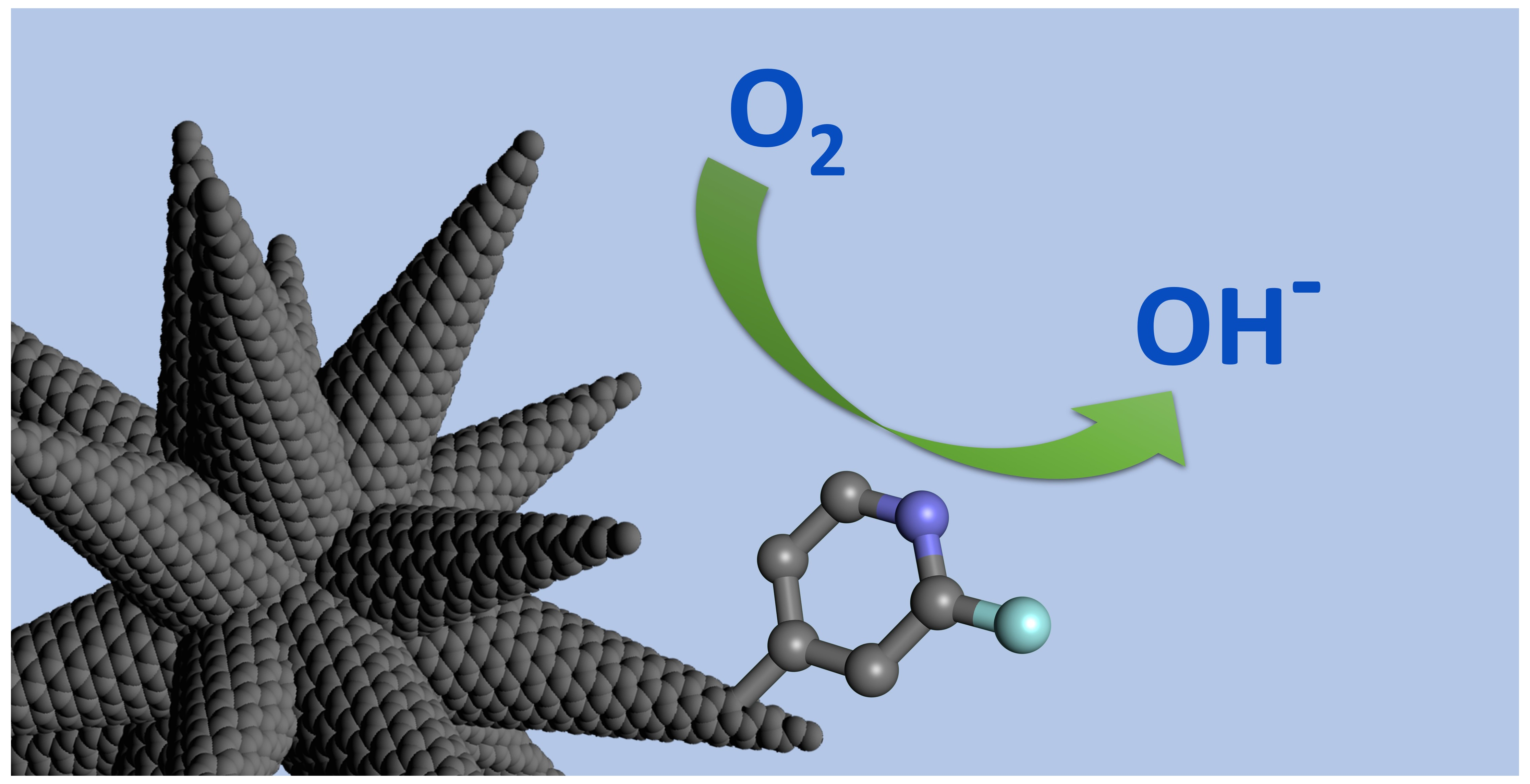

Nitrogen- and Fluorine-Doped Carbon Nanohorns as Efficient Metal-Free Oxygen Reduction Catalyst: Role of the Nitrogen Groups





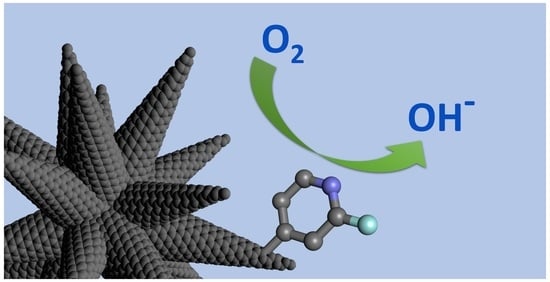
Abstract
Share and Cite
Tosin, E.; Gatti, T.; Agnoli, S.; Calvillo, L.; Menna, E. Nitrogen- and Fluorine-Doped Carbon Nanohorns as Efficient Metal-Free Oxygen Reduction Catalyst: Role of the Nitrogen Groups. Surfaces 2023, 6, 227-238. https://doi.org/10.3390/surfaces6030015
Tosin E, Gatti T, Agnoli S, Calvillo L, Menna E. Nitrogen- and Fluorine-Doped Carbon Nanohorns as Efficient Metal-Free Oxygen Reduction Catalyst: Role of the Nitrogen Groups. Surfaces. 2023; 6(3):227-238. https://doi.org/10.3390/surfaces6030015
Chicago/Turabian StyleTosin, Elisa, Teresa Gatti, Stefano Agnoli, Laura Calvillo, and Enzo Menna. 2023. "Nitrogen- and Fluorine-Doped Carbon Nanohorns as Efficient Metal-Free Oxygen Reduction Catalyst: Role of the Nitrogen Groups" Surfaces 6, no. 3: 227-238. https://doi.org/10.3390/surfaces6030015
APA StyleTosin, E., Gatti, T., Agnoli, S., Calvillo, L., & Menna, E. (2023). Nitrogen- and Fluorine-Doped Carbon Nanohorns as Efficient Metal-Free Oxygen Reduction Catalyst: Role of the Nitrogen Groups. Surfaces, 6(3), 227-238. https://doi.org/10.3390/surfaces6030015