
Review

A Use-Centred Evaluation Framework for HBIM and Heritage Digital Twins
Department of Civil Engineering and Architecture, University of Pavia, Via Ferrata 3, 27100 Pavia, Italy
*
Author to whom correspondence should be addressed.
Heritage 2026, 9(8), 309; https://doi.org/10.3390/heritage9080309

Submission received: 26 June 2026 / Revised: 23 July 2026 / Accepted: 3 August 2026 / Published: 8 August 2026

Abstract

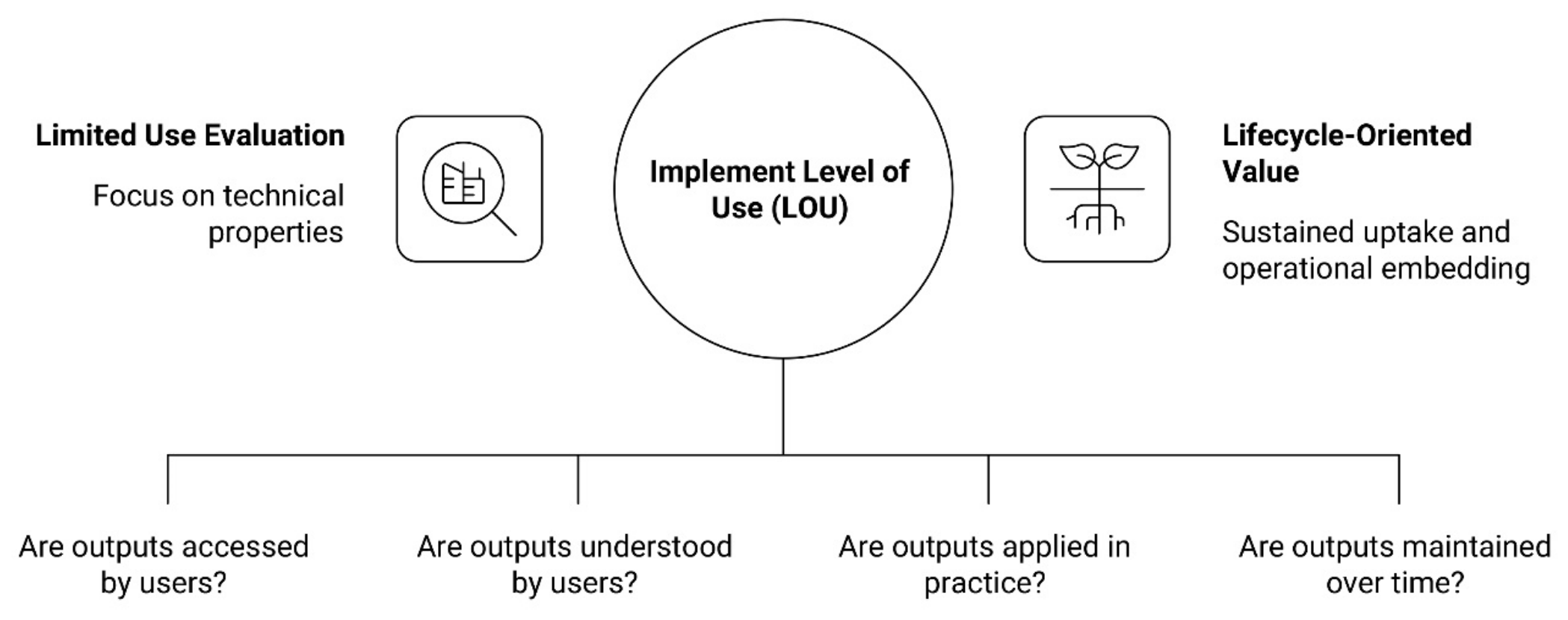
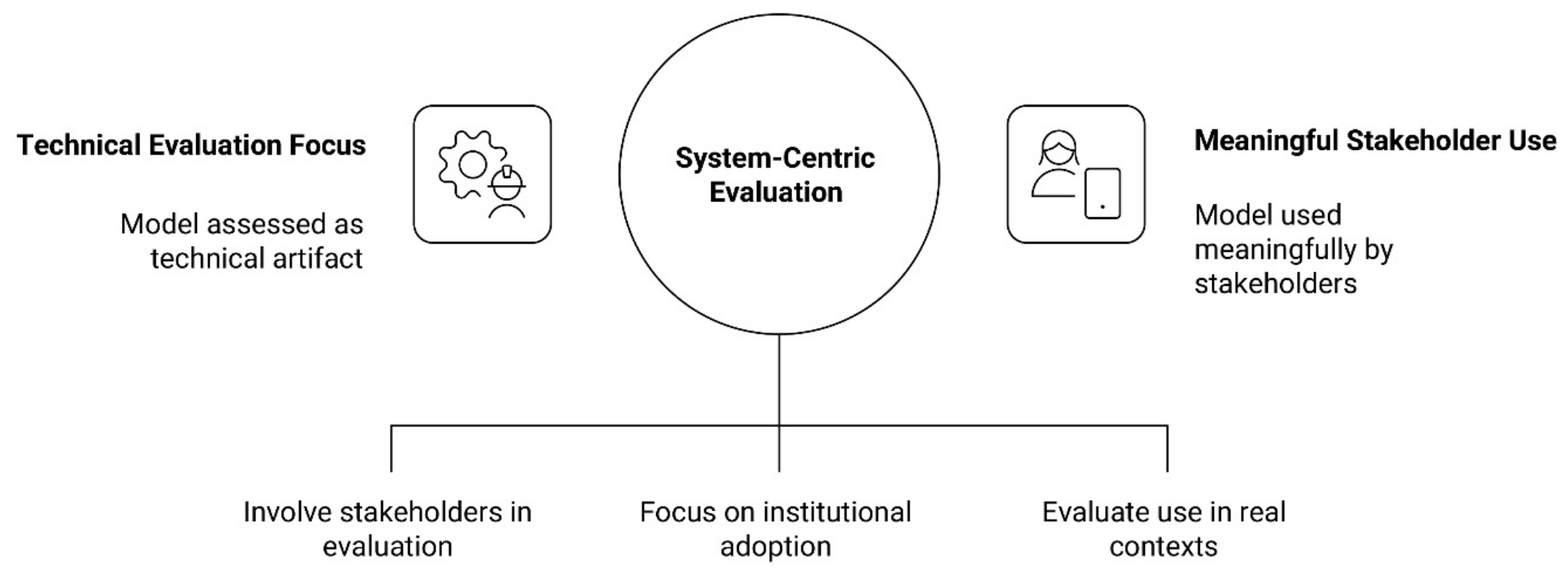
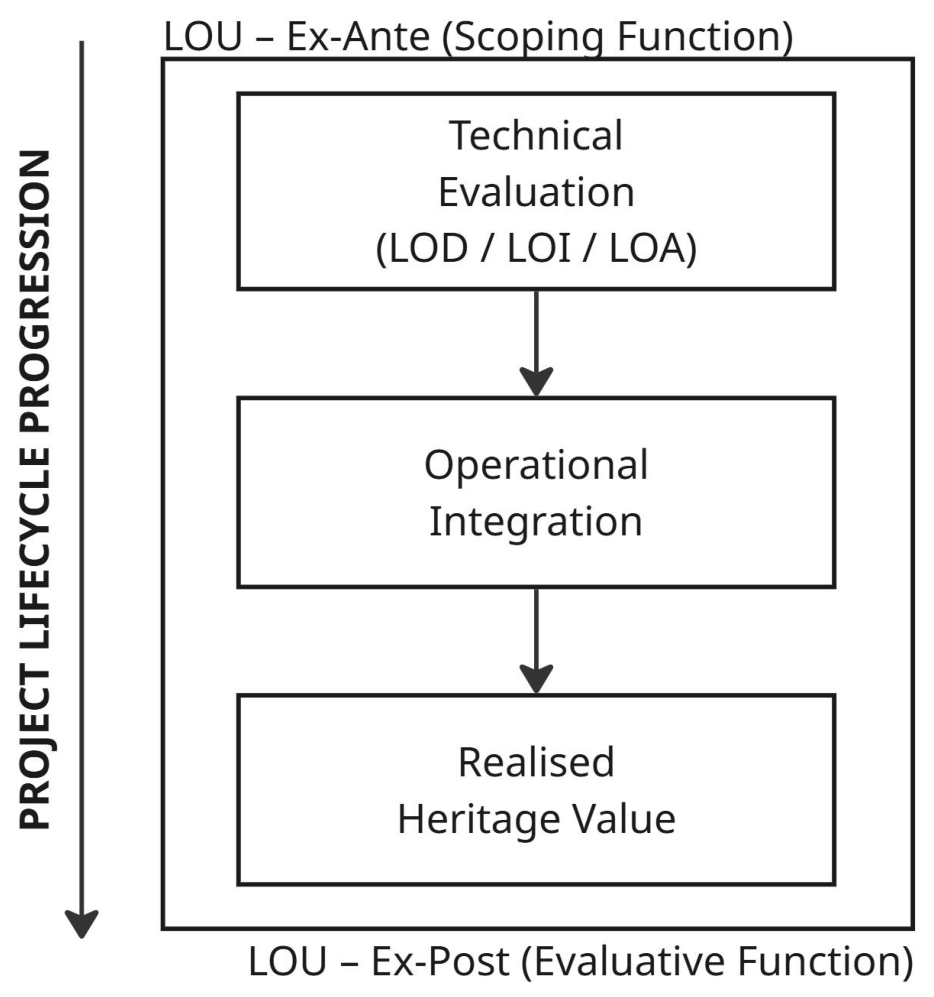
HBIM (Historic Building Information Modelling) and Heritage Digital Twins (HDT) are increasingly used to organize geometric, historical, and conservation knowledge in digital environments. While research has advanced modelling accuracy, semantic enrichment, and interoperability, evaluation approaches remain largely focused on technical descriptors such as Level of Development/Detail (LOD), information completeness, and geometric reliability. Less attention is given to whether these digital outputs are effectively accessed, interpreted, used, and maintained within institutional practice. This paper examines how use is currently framed in HBIM and HDT literature and identifies a gap between technical performance metrics and the conditions required for sustained real-world adoption. Based on an interpretive review of recent research, it analyses existing evaluation paradigms and highlights their limitations in capturing operational and lifecycle dimensions of digital heritage initiatives. To address this gap, the paper introduces Level of Use (LOU) as a complementary evaluation dimension. LOU is defined as the extent to which digital heritage models are accessible, interpretable, actionable, and maintained over time within their organisational context. Positioned alongside LOD, Level of Information (LOI), and accuracy specifications, LOU links technical model quality with institutional adoption, long-term usability, and sustainable heritage management.
Keywords: HBIM; Heritage Digital Twin; HBIM evaluation; Level of Use (LOU); lifecycle governance; built heritage HBIM; Heritage Digital Twin; HBIM evaluation; Level of Use (LOU); lifecycle governance; built heritage