1. Introduction
Gastronomic tourism heritage represents one of the most important segments of intangible cultural heritage, as it encompasses traditional knowledge, skills, customs, and practices related to the preparation and consumption of food that are transmitted from generation to generation [
1,
2]. Local cuisine is not merely an everyday necessity, but also a powerful symbol of cultural identity, social relations, and the historical continuity of communities [
3]. In the context of contemporary tourism, gastronomy increasingly becomes a key travel motivation, as well as a significant resource for destination differentiation and the development of cultural tourism [
4,
5,
6].
However, processes of globalisation, urbanisation, and the standardisation of tourism offerings lead to the gradual displacement of traditional gastronomic practices, their commercialisation, and the loss of authenticity. Many local recipes, preparation techniques, and culinary customs are today endangered due to declining interest among younger generations, population migration, and adaptation to the market demands of mass tourism [
6,
7]. In this context, the issue of preserving gastronomic tourism heritage becomes increasingly important, not only from the perspective of culture and identity, but also in terms of the sustainable development of tourist destinations [
8,
9].
The development of digital technologies, particularly artificial intelligence, opens new possibilities for documenting, interpreting, and promoting intangible cultural heritage [
10]. In this context, artificial intelligence is not perceived as a substitute for human knowledge and experience, but as a tool that can contribute to the systematic collection and analysis of data, the digital archiving of traditional recipes, as well as the improvement of the ways in which gastronomic heritage is presented to tourists [
11,
12]. Nevertheless, the application of AI-based technologies also carries specific challenges. Algorithm-driven standardisation of recipes, selective digital representation of culturally “attractive” elements, and automated content generation may simplify complex local practices, prioritise market-oriented narratives, and reduce community control over interpretation. Such processes may contribute to the gradual commodification of tradition and the dilution of authenticity if not carefully governed [
12,
13,
14].
In this study, the term “gastronomic tourism heritage” is used to emphasise the intersection between gastronomic heritage as an intangible cultural practice and its interpretation, valorisation, and presentation within the tourism context. While gastronomic or culinary heritage may exist independently of tourism as a living cultural expression embedded in everyday community life, the addition of the tourism dimension highlights its role as a cultural asset actively interpreted, managed, and communicated within tourism systems. Therefore, the concept does not imply that heritage is created by tourism, but rather that it is situated within a tourism framework where issues of authenticity, governance, and digital mediation become particularly relevant.
Bosnia and Herzegovina, Serbia, and North Macedonia were selected due to their historically interconnected socio-cultural development, overlapping culinary traditions shaped by Ottoman and Balkan influences, and comparable post-socialist institutional frameworks for cultural heritage governance. This combination provides a controlled regional context for examining how local communities perceive AI integration in gastronomic heritage preservation [
15,
16,
17]. Their gastronomic heritage has been shaped by long-standing mutual influences, local resources, and social practices, which enables a comparative consideration of the attitudes of local communities toward contemporary approaches to the preservation of tradition [
18,
19].
The aim of this paper is to examine how the local population in Serbia, Bosnia and Herzegovina, and North Macedonia perceives the role of artificial intelligence in preserving gastronomic tourism heritage [
19,
20]. Special focus is placed on understanding the potential of artificial intelligence in documenting and promoting traditional gastronomy, as well as on identifying the concerns of local communities regarding the preservation of cultural identity and authenticity in the process of digitalisation [
21]. In this way, the paper seeks to contribute to contemporary discussions on linking technology, culture, and the sustainable development of tourism.
While previous sections refer to artificial intelligence in general terms, it is important to distinguish between specific AI applications relevant to heritage preservation. In the context of gastronomic heritage, AI systems may include machine learning-based recipe classification models, natural language processing tools for documenting oral culinary narratives, computer vision algorithms for recognising traditional preparation techniques, recommender systems for personalised gastronomic interpretation on tourism platforms, and knowledge graph architectures for structuring culinary heritage databases. Generative AI models may also assist in reconstructing incomplete historical recipes or simulating traditional preparation processes based on archival data. These systems differ significantly in their epistemological impact: some function primarily as archival support mechanisms, while others actively participate in interpretative reconstruction. Therefore, analysing AI in heritage contexts requires distinguishing between documentation-oriented systems, interpretative systems, and generative systems, each carrying different implications for authenticity and cultural control.
Despite the growing body of research on intangible cultural heritage and the increasing application of artificial intelligence in tourism and heritage management, several gaps remain.
First research gap. Existing studies predominantly examine gastronomy as a tourism product or focus on digitisation of tangible heritage, while limited attention has been given to gastronomy as a living intangible cultural heritage domain analysed from the perspective of local communities.
Corresponding RQ1: How do local communities perceive gastronomic tourism heritage as a component of intangible cultural heritage?
This study contributes by empirically examining the perceived cultural value of gastronomic heritage among local actors directly involved in its preservation and transmission.
Second research gap. Although artificial intelligence is increasingly discussed in cultural heritage management, little is known about how local communities evaluate its role in documenting and safeguarding gastronomic heritage.
Corresponding RQ2: How do local communities perceive the role of digital technologies and artificial intelligence in preserving gastronomic tourism heritage?
The study integrates technology acceptance perspectives with heritage preservation, providing empirical evidence from a regional Western Balkan context.
Third research gap. The relationship between AI implementation and concerns regarding authenticity, cultural identity, and governance remains underexplored, particularly in cross-national settings.
Corresponding RQ3: How does the application of artificial intelligence affect perceptions of authenticity and cultural identity from the perspective of local communities?
By modelling governance, authenticity concerns, and support intentions within a single SEM framework, the study offers a nuanced understanding of benefit–risk duality in AI-enabled heritage preservation.
Despite the growing body of literature on artificial intelligence in tourism and cultural heritage management, several important gaps remain. Existing studies primarily focus on technological applications of AI in tourism services, digital marketing, and destination management, while considerably less attention has been given to its potential role in the preservation of gastronomic heritage. In particular, limited research has examined how artificial intelligence can support governance mechanisms and community participation in safeguarding intangible culinary traditions within tourism contexts. Furthermore, the perspectives of local communities regarding the acceptance of AI-supported heritage preservation initiatives remain insufficiently explored in existing literature.
Therefore, this study addresses this research gap by examining the role of artificial intelligence in the preservation of gastronomic heritage through the lenses of governance structures and community acceptance within tourism contexts. By integrating technological, governance, and social dimensions, this research contributes to a better understanding of how AI-driven approaches can support the sustainable preservation and promotion of gastronomic heritage in tourism destinations.
2. Literature Review
2.1. Gastronomic Heritage as Intangible Cultural Heritage
Gastronomic heritage is increasingly viewed as an integral part of intangible cultural heritage, as it encompasses practices, knowledge, and skills that go beyond a recipe as a technical instruction and include food preparation rituals, social norms, modes of serving, seasonality, local ingredients, and the intergenerational transmission of culinary knowledge [
22,
23]. Within this approach, food becomes a cultural text and a bearer of community identity, while local cuisine acquires the status of a resource that can be interpreted and valorised through cultural tourism [
24].
A significant impetus to academic interest has been provided by the UNESCO framework for intangible cultural heritage and the international visibility of gastronomic elements, particularly following the inclusion of certain cuisines and gastronomic practices on ICH lists, which has contributed to the institutional recognition of gastronomy as heritage rather than solely as a market product [
25,
26]. The literature highlights that the process of the “heritagisation” of gastronomy often entails selection, standardisation, and the narrative construction of tradition, whereby authentic elements are defined and subsequently presented to the public and to tourists [
26,
27]. Such institutionalisation can increase visibility and stimulate the development of cultural tourism, yet it simultaneously carries the risk of simplification and the commodification of tradition, especially when economic exploitation is prioritised over the preservation of living practices [
28,
29].
Within the tourism domain, intangible cultural heritage is recognised as a valuable resource for both the public sector and local communities. However, research indicates that the field is fragmented and methodologically heterogeneous, which hinders the generalisation of findings and the development of unified models for managing ICH resources in destinations [
17,
18,
25,
26,
29]. The role of local communities as heritage bearers is particularly emphasised, since the sustainability of gastronomic heritage depends on whether the community retains control over meanings, practices, and modes of presenting tradition [
29,
30]. Empirical research in the region also suggests that local actors (e.g., hospitality workers and communities) are key intermediaries between heritage and the tourism offer, and that their attitudes influence the ways in which tradition is preserved and transmitted within the tourism context [
31,
32].
One of the central themes in the literature is the authenticity of gastronomic heritage in tourism. Authenticity is therefore not viewed solely as a matter of product origin, but also as an experience and a social agreement regarding what is original, local, and credible [
33]. In practice, the tourism valorisation of gastronomy often introduces adaptations in taste, form, and modes of presentation, which may enhance the attractiveness of the offer, but can also generate community concerns about the loss of identity elements and the transformation of tradition into uniform tourist merchandise [
34,
35].
Building on these insights, in this paper, gastronomic tourism heritage is treated as a dynamic cultural practice, the preservation of which in contemporary tourism depends on the perceptions and willingness of local communities to participate in documenting, transmitting, and interpreting tradition while safeguarding authenticity and cultural identity [
36,
37].
According to the above, the authors posed the first research question (RQ1) as follows:
How do local communities perceive gastronomic heritage as a component of intangible cultural heritage?
2.2. Digital Technologies and Artificial Intelligence in Heritage Preservation
Digital technologies have played a significant role in the preservation of cultural heritage for decades, particularly through digital documentation, archiving, and the visual reconstruction of tangible and intangible cultural assets [
38]. In the initial phases, the focus was on the digitisation of content, such as textual records, photographs, and audio and video materials, while contemporary approaches increasingly include advanced technologies that enable the analysis, interpretation, and interactive presentation of cultural heritage [
39,
40]. In this context, artificial intelligence is becoming an important tool within digital humanities research and contemporary heritage preservation strategies.
The literature emphasises that the application of artificial intelligence in cultural heritage preservation enables more efficient collection and processing of large amounts of data, the recognition of patterns, and the systematisation of knowledge that is often fragmented or implicit [
41,
42]. Machine learning and natural language processing algorithms are used for narrative analysis, the transcription of oral traditions, the classification of traditional practices, and the preservation of knowledge transmitted orally [
43,
44]. Such approaches are particularly important for intangible cultural heritage, which by its nature is dynamic and dependent on community context [
45].
In the field of gastronomic heritage, digital technologies and artificial intelligence are recognised as means for documenting traditional recipes, food preparation techniques, seasonality, and local culinary practices [
45,
46]. Research indicates that digital platforms enriched with AI tools can contribute to the long-term preservation of gastronomic knowledge and its transmission to future generations, as well as improve the ways in which gastronomic heritage is interpreted in the tourism context [
47,
48]. At the same time, it is emphasised that technology should not replace tradition bearers, but rather serve as support to local communities in the process of preserving and presenting cultural values [
48].
However, the literature also points to certain challenges related to the application of artificial intelligence in the field of cultural heritage [
48,
49]. Particular attention is devoted to ethical issues, the risk of technological dominance over cultural meanings, and the possibility that digital tools may contribute to the standardisation and simplification of complex cultural practices [
50,
51]. For this reason, contemporary research increasingly emphasises the need for a participatory approach, in which local communities actively participate in the design and implementation of digital solutions [
52,
53].
Based on these insights, artificial intelligence is viewed in this paper as a complementary tool in the preservation of gastronomic tourism heritage, whose successful application depends on the way it is integrated with local knowledge, cultural values, and community needs [
54,
55].
Accordingly, the authors formulated the second research question (RQ2) as follows:How do local communities perceive the role of digital technologies and artificial intelligence in preserving gastronomic tourism heritage?
2.3. Artificial Intelligence, Authenticity, and Cultural Identity
Authenticity and cultural identity represent central concepts in research on intangible cultural heritage and cultural tourism, particularly in the context of gastronomy [
56,
57]. In the literature, authenticity is not interpreted exclusively as the preservation of an original recipe or preparation technique, but as a dynamic and socially constructed concept shaped through interaction between local communities, visitors, and the broader social context [
58]. Gastronomy, as an everyday practice deeply rooted in local culture, possesses a strong identity dimension, as it reflects historical influences, available resources, rituals, and the value systems of the community [
59,
60].
The development of digital technologies, particularly the application of artificial intelligence, further complicates the issue of authenticity in tourism [
60,
61]. While AI is increasingly used for the interpretation of cultural content, the personalisation of tourist experiences, and the promotion of traditional gastronomy, researchers warn that the digital representation of culture may lead to its simplification, standardisation, and adaptation to market expectations [
62,
63]. In this process, there is a risk that complex and multilayered gastronomic practices may be reduced to symbolic or commercially attractive elements, thereby potentially undermining their original cultural meaning [
64].
On the other hand, the literature emphasises that artificial intelligence may also have a positive impact on preserving authenticity if it is used as a tool for documenting and transmitting local knowledge rather than as a means of replacing it [
65,
66]. AI systems that analyse narratives, testimonies, and experiences of local populations may contribute to preserving diverse interpretations of tradition and preventing its homogenisation [
67]. In this way, technology can serve as support for strengthening cultural identity, particularly in communities facing depopulation, migration, and the weakening of intergenerational knowledge transmission [
68,
69].
Research also highlights the importance of local community perceptions in assessing the impact of artificial intelligence on the authenticity of gastronomic heritage [
70]. Local populations, as bearers of tradition, often demonstrate ambivalent attitudes toward the digitalisation of cultural practices [
71,
72]. While, on the one hand, advantages are recognised in terms of visibility, preservation, and education, on the other hand, concerns are expressed regarding the loss of control over the ways in which tradition is represented and the potential commodification of cultural identity. This tension between preservation and adaptation represents one of the key issues in contemporary research at the intersection of technology, culture, and tourism [
72,
73].
In the context of gastronomic heritage, the relationship between artificial intelligence, authenticity, and cultural identity requires careful consideration, as the ways in which traditional gastronomy is digitally interpreted and promoted may have long-term consequences for preserving the cultural values of communities [
74]. Therefore, understanding the attitudes of local populations is crucial for the development of sustainable and culturally sensitive approaches to the application of artificial intelligence in tourism [
75].
While existing studies frequently conceptualise artificial intelligence as a technological tool supporting documentation and digital archiving processes, a more comprehensive theoretical positioning is required in heritage contexts. In the field of intangible cultural heritage, technological interventions do not operate in isolation but interact with governance structures, identity constructions, and community-based legitimacy mechanisms. Therefore, artificial intelligence should not be treated solely as an operational instrument, but rather as a socio-technical system embedded within cultural, institutional, and normative environments [
65,
66,
70,
74].
Socio-technical systems theory provides a relevant analytical lens for understanding this interaction. According to this perspective, technology adoption outcomes are shaped not only by functional efficiency but also by institutional arrangements, stakeholder trust, ethical safeguards, and social meaning attribution. In heritage preservation contexts, artificial intelligence becomes a mediator between cultural value recognition and institutional governance. Its legitimacy is constructed through participatory mechanisms, transparency frameworks, and community control over representation processes [
71,
72,
73].
In parallel, technology acceptance theory suggests that perceived usefulness and perceived compatibility significantly influence support for innovation. However, in culturally sensitive domains such as gastronomic heritage, perceived usefulness alone is insufficient to explain adoption behaviour. Compatibility with authenticity preservation and cultural identity continuity becomes a critical mediating dimension. This study therefore extends conventional technology acceptance frameworks by integrating authenticity perception as a heritage-specific moderator of AI acceptance [
74,
75,
76].
Furthermore, constructivist authenticity theory highlights that authenticity is not a fixed attribute of cultural products but a socially negotiated and context-dependent construct. When artificial intelligence systems participate in documenting, structuring, and digitally presenting gastronomic practices, they inevitably contribute to shaping narratives and representational hierarchies. In this sense, AI functions as a co-creator of heritage interpretation. Its influence depends on governance transparency, algorithmic accountability, and the degree of community participation in digital curation processes [
76,
77,
78].
By integrating socio-technical systems theory, technology acceptance logic, and authenticity construction theory, this study conceptualises artificial intelligence as a governance-mediated preservation mechanism rather than a neutral technological add-on. The proposed model positions AI acceptance as an institutional and cultural process, where heritage value perception and governance trust jointly determine whether digital innovation is interpreted as supportive or threatening to authenticity.
According to the above, the authors also formulated the third research question (RQ3) as follows:
How does the application of artificial intelligence in the field of gastronomic tourism affect perceptions of authenticity and cultural identity from the perspective of local communities?
Based on the formulated research questions, as well as the literature review, the authors proposed the following research hypotheses:
H1. Heritage value positively influences AI usage perception.
The perception of gastronomic heritage as an important element of cultural identity may increase the willingness of local communities to support tools that contribute to its preservation. When heritage is viewed as vulnerable or culturally significant, actors are more likely to recognise the potential benefits of structured documentation, digital archiving, and systematic knowledge transmission. In this context, artificial intelligence may be perceived not as a technological intrusion, but as a functional instrument supporting long-term safeguarding. Therefore, stronger recognition of heritage value is expected to foster more positive perceptions of AI usage in preservation processes.
H2. AI usage perception positively influences authenticity perception.
The acceptance of artificial intelligence in heritage contexts depends not only on perceived usefulness but also on its compatibility with authenticity preservation. When AI is perceived as a supportive tool for documenting original practices, recording narratives, and safeguarding local knowledge, it may strengthen rather than undermine perceptions of authenticity. Conversely, scepticism toward AI may stem from fears of simplification or commodification. Thus, a positive perception of AI usage is expected to reinforce beliefs that authenticity and cultural identity can be maintained within digital preservation frameworks.
H3 .
Governance positively influences AI usage perception.
Trust in governance structures plays a critical role in shaping attitudes toward technological innovation in sensitive cultural domains. Transparent procedures, ethical safeguards, and community participation mechanisms increase legitimacy and reduce perceived risks associated with digital transformation. When local communities trust institutional actors and regulatory frameworks, they are more likely to perceive artificial intelligence as a controlled and responsible preservation tool rather than as an external imposition. Therefore, stronger perceptions of governance quality are expected to enhance positive attitudes toward AI usage.
H4. Authenticity perception positively influences support for AI use.
Support for AI-driven preservation initiatives is likely to depend on whether such initiatives are perceived as compatible with safeguarding cultural identity. If digital technologies are interpreted as preserving rather than distorting tradition, local actors may express stronger readiness to endorse their implementation. Perceived alignment between technological application and authenticity preservation reduces resistance and increases normative acceptance. Accordingly, stronger perceptions that authenticity can be maintained are expected to increase support for AI use.
H5. AI usage perception positively influences support for AI use.
Perceived usefulness and functional value are central determinants of behavioural support in technology adoption frameworks. When artificial intelligence is viewed as efficient, practical, and beneficial for documentation, promotion, and knowledge transmission, local communities are more likely to support its implementation. In heritage contexts, this support reflects not only technological optimism but also perceived contribution to sustainability and intergenerational continuity. Therefore, more positive perceptions of AI usage are expected to directly increase support for its application in preserving gastronomic heritage.
2.4. AI and Gastronomic Heritage
Artificial intelligence can also significantly contribute to the digital preservation of gastronomic heritage through advanced documentation and archiving processes. Traditional culinary practices, recipes, preparation techniques, and local food knowledge are often transmitted orally and therefore remain vulnerable to loss over time. AI technologies enable the systematic digital documentation of such knowledge by supporting the creation of digital repositories, automated classification systems, and searchable databases of culinary heritage [
73,
74]. For instance, machine learning algorithms can assist in analysing historical culinary texts, identifying patterns in traditional recipes, and categorising regional gastronomic practices. In addition, image recognition and data mining technologies can help document food preparation techniques, ingredients, and cultural contexts associated with traditional dishes [
75,
78]. Through these approaches, AI supports not only the preservation of intangible culinary heritage but also its accessibility for researchers, policymakers, and tourism stakeholders interested in safeguarding and promoting local gastronomic identity [
79,
80].
3. Methodology
3.1. Study Area and Methodological Approach
The research area encompasses three Southeast European countries: Serbia, Bosnia and Herzegovina, and North Macedonia, characterised by strongly intertwined gastronomic and cultural heritage formed through shared historical processes, similar social structures, and long-standing mutual influences. Traditional gastronomy in these countries is based on the use of local ingredients, seasonality, family recipes, and food preparation rituals, making it a significant segment of intangible cultural heritage and an important resource for cultural tourism. Due to these similarities, these three countries represent an appropriate and methodologically justified framework for a comparative examination of local community attitudes toward contemporary approaches to preserving gastronomic tourism heritage.
The research is based on a quantitative methodological approach, with the aim of collecting empirical data on the perceptions of the local population regarding the application of artificial intelligence in preserving gastronomic tourism heritage. A structured questionnaire was used as the primary research instrument, designed on the basis of previous relevant studies in the fields of intangible cultural heritage, digital technologies, and cultural tourism. The questionnaire was adapted to the context of local communities and included questions related to the importance of traditional gastronomy, the acceptance of digital technologies and artificial intelligence, as well as attitudes toward authenticity and cultural identity.
The methodological approach of the research enables the identification of patterns in respondents’ attitudes, as well as the comparison of results among the observed countries. Particular emphasis was placed on the perceptions of the local population as key bearers of gastronomic heritage, whose attitudes play a decisive role in the successful application of contemporary technologies in the process of preserving and valorising traditional gastronomy in tourism.
3.2. Selection and Description of Variables
The selection of variables in this research is based on the theoretical framework of intangible cultural heritage, digital technologies, and the application of artificial intelligence in tourism, as well as on previous empirical studies addressing the perceptions of local communities in the process of preserving cultural and gastronomic heritage. The variables were defined in order to enable a comprehensive examination of local population attitudes toward the importance of traditional gastronomy, the role of artificial intelligence in its preservation, and potential implications for authenticity and cultural identity. Dependent and independent variables were operationalised through several conceptual units. The first group of variables relates to the perception of gastronomic tourism heritage, in which respondents assessed the importance of traditional gastronomy as part of intangible cultural heritage, its contribution to preserving local identity, and its role in cultural tourism. These variables aim to determine the extent to which the local population recognises gastronomy as a valuable cultural resource requiring protection and systematic preservation.
The second group of variables includes the perception of digital technologies and artificial intelligence, focusing on their application in documenting, archiving, and interpreting gastronomic heritage. This segment examines the level of acceptance of artificial intelligence as a tool for preserving traditional recipes, culinary practices, and knowledge, as well as the willingness of local communities to support the application of contemporary technologies in this process. The third group of variables relates to authenticity and cultural identity and includes respondents’ attitudes regarding possible positive and negative effects of applying artificial intelligence to the preservation of original gastronomic practices. Particular attention is devoted to perceptions of the risks of commodification, standardisation, and loss of authenticity, as well as to the issue of local community control over the ways in which their own gastronomic heritage is represented. All variables were measured using statements evaluated on a five-point Likert scale, where respondents expressed their degree of agreement with the provided statements. This defined set of variables enables a reliable analysis of local population attitudes and provides a basis for examining the relationships between perceptions of gastronomic heritage, acceptance of artificial intelligence, and the preservation of cultural identity in the context of gastronomic tourism [
76,
77,
78,
79].
3.3. Data Processing and Analysis
After data collection, data preparation and processing were conducted in order to ensure the reliability and validity of the research results. The first step in data processing involved checking the completeness of questionnaires and eliminating incomplete or invalid responses. Subsequently, the data were coded and entered into statistical software for further analysis. Descriptive statistics were used to present the basic characteristics of the sample and to provide an overall overview of respondents’ attitudes. Frequencies, arithmetic means, and standard deviations were calculated in order to identify general trends in local population perceptions regarding gastronomic tourism heritage, the application of artificial intelligence, and issues of authenticity and cultural identity.
In order to examine the internal consistency of the measurement instruments, reliability analysis was conducted using Cronbach’s alpha coefficient [
80,
81]. This procedure verified the reliability of scales related to perceptions of gastronomic heritage, acceptance of artificial intelligence, and attitudes toward authenticity. The coefficient values were used as a basis for confirming the adequacy of variables for further analysis. To examine differences in respondents’ attitudes among the observed countries, appropriate inferential statistical methods were applied, including analysis of variance and post hoc tests, depending on data distribution. In this way, comparisons of local population perceptions in Serbia, Bosnia and Herzegovina, and North Macedonia were enabled. The conducted analyses provided a comprehensive understanding of the role of artificial intelligence in preserving gastronomic tourism heritage from the perspective of local communities, as well as the identification of key patterns and potential challenges in the application of contemporary technologies in this domain.
3.4. Sample and Data Collection Procedure
The research sample consists of members of the local population in the three aforementioned countries who are involved in various ways in the preservation, preparation, or promotion of traditional gastronomy. The study included respondents who have direct or indirect experience with gastronomic heritage, such as hospitality workers, owners or employees of small family-run establishments, producers of traditional food products, as well as members of local communities who participate in preserving and transmitting culinary practices.
Data were collected through a survey using a structured questionnaire. The data collection process was conducted during a predefined time period, from July to November 2025, and the questionnaire was distributed through a combination of field-based and online approaches, depending on respondent availability and local conditions. The field-based distribution enabled access to respondents embedded in everyday gastronomic practices, while the online distribution increased geographical coverage. This mixed approach allowed the inclusion of participants from different local environments and contributed to greater sample heterogeneity.
The selection of respondents was based on the convenience sampling method, with clearly defined inclusion criteria requiring residence in one of the observed countries and familiarity with or participation in traditional gastronomic practices. While this approach enabled efficient access to relevant participants directly engaged in gastronomic heritage, it may introduce potential sampling bias. In particular, convenience sampling and partial online distribution may lead to self-selection effects and possible overrepresentation of respondents who are more digitally literate, institutionally connected, or positively oriented toward technological innovation. Consequently, the results should be interpreted as exploratory and indicative rather than statistically generalisable to the entire population of tradition bearers.
Furthermore, the study did not apply stratified sampling procedures based on regional distribution within each country or on urban versus rural residence. Given that traditional gastronomic practices are often more deeply embedded in rural environments, the absence of systematic urban–rural differentiation may limit the ability to detect contextual differences in attitudes toward AI-based preservation. Future research should therefore incorporate probability or stratified sampling techniques, including regional and spatial controls, in order to examine potential infrastructural, demographic, and digital disparities across different territorial contexts.
All respondents participated voluntarily, and prior to completing the questionnaire, they were informed about the purpose of the research and the manner in which the collected data would be used. Participation was entirely anonymous, and no personal or sensitive data were collected. All responses were processed exclusively in aggregated form and used solely for scientific purposes, with full respect for confidentiality and participants’ right to privacy. The final sample consisted of 571 respondents, distributed across the three countries as follows: Serbia (
n = 199), Bosnia and Herzegovina (
n = 180), and North Macedonia (
n = 192) (
Table 1).
Given that the data were collected through a single survey instrument, potential common method bias (CMB) was assessed using Harman’s single-factor test and full collinearity diagnostics within the PLS-SEM framework. Harman’s single-factor test, conducted using an unrotated principal component solution including all measurement items, showed that the first factor accounted for 13.53% of total variance, which is substantially below the 50% threshold. This suggests that common method bias is unlikely to significantly affect the findings. In addition, full collinearity VIF values remained below the recommended cut-off value of 3.3, further confirming the absence of substantial method bias and supporting the robustness of the structural model estimation.
3.5. Measurement Invariance Across Countries (MICOM Procedure)
To ensure the validity of cross-national comparisons across Serbia, Bosnia and Herzegovina, and North Macedonia, measurement invariance was assessed using the MICOM (Measurement Invariance of Composite Models) procedure. Following established PLS-SEM guidelines, the analysis was conducted in three sequential steps: (1) configural invariance, ensuring identical model specification, data treatment, and algorithm settings across groups; (2) compositional invariance, assessed via permutation testing; and (3) equality of composite means and variances. Establishing at least partial measurement invariance is a prerequisite for meaningful comparison of structural relationships and latent construct scores across groups.
4. Results
4.1. Descriptive Statistics of Respondents
A total of 571 respondents (
Table 1) from Serbia, Bosnia and Herzegovina, and North Macedonia participated in the research. The respondents represent individuals connected to gastronomy and tourism-related activities, including professionals from the tourism and hospitality sectors, participants involved in food production, as well as individuals from households engaged in traditional culinary practices and food preparation. This diverse structure of respondents enables a broader understanding of perceptions related to the preservation of gastronomic heritage and the potential role of artificial intelligence in tourism contexts.
The sample structure shows a relatively balanced gender distribution, with a slight predominance of female respondents. At the overall level, women account for 57.27%, while men represent 42.73% of respondents. A similar ratio is present in all three countries, indicating a stable gender structure of the sample. Regarding age structure, most respondents belong to the 35–44 year age group (27.85%), while a significant share also belong to the 45–54 year age group (32.40%), particularly in Bosnia and Herzegovina, where this group constitutes nearly half of the sample. Younger respondents (18–24 years) account for a smaller portion of the sample (10.33%).
The educational structure shows that the largest number of respondents have completed secondary education (44.66%), while 36.95% possess higher education, and nearly one-fifth of the sample (18.39%) hold master’s or doctoral degrees. Regarding the professional connection to gastronomy, the largest proportion of respondents are involved in tourism (27.67%) and hospitality (26.62%), indicating a strong representation of tourism professionals and hospitality workers. Additionally, a notable share of respondents are engaged in household (21.72%) and food production activities (15.41%), which reflects the important role of local communities and traditional food preparation in the preservation of gastronomic heritage.
4.2. Descriptive Statistics of Measurement Items
The results of descriptive statistics presented in
Table 2 indicate a generally positive attitude of respondents toward the importance of gastronomic heritage, as well as toward the possibilities of applying digital technologies and artificial intelligence in its preservation. The average response values for most statements range between 3.7 and 4.3, indicating a high level of respondent agreement with the presented statements, while standard deviation values show moderate dispersion of responses, suggesting the presence of differing opinions without pronounced deviations. Within the construct of perception of gastronomic tourism heritage (HV), respondents particularly emphasise the importance of local gastronomy for the development of cultural tourism and destination identity (HV4), as well as the importance of preserving traditional recipes and practices (HV5). This confirms a strong perception of gastronomy as an important element of community cultural identity.
Regarding the role of digital technologies and artificial intelligence (AIU), the results indicate strong support for their application in preserving gastronomic heritage, especially when local communities are actively involved in these processes (AIU5). However, the somewhat lower value for the statement related to improving the presentation of gastronomy to tourists (AIU4) suggests that a portion of respondents still demonstrates caution toward the digital transformation of gastronomic experiences. The results of the authenticity and cultural identity construct (AIC) indicate awareness of potential risks associated with digitalisation, particularly in terms of simplification and commercialisation of gastronomic heritage. At the same time, respondents largely recognise the potential of artificial intelligence to contribute to preserving authenticity through documenting traditional practices (AIC4) and maintaining local community control over the ways in which heritage is presented (AIC5).
In the domain of governance and ethical aspects of artificial intelligence application (GOV), the results indicate a high level of agreement regarding the need for transparency, data protection, and the inclusion of local actors in digitalisation processes. Particular emphasis is placed on the importance of data accessibility for local communities, while the slightly lower value for the item related to privacy protection indicates certain differences in perceptions of this issue among respondents. The results of the support and intention to apply construct (SUP) show that the majority of respondents support projects using artificial intelligence to preserve gastronomic heritage, as well as the use of digital content in promoting local gastronomy. A somewhat lower value regarding perceptions of the need for systematic digital preservation in local communities suggests that the level of readiness for institutionalised digitalisation projects still varies among respondents. The results confirm the existence of a positive attitude toward preserving gastronomic tourism heritage, accompanied by awareness of the potential risks of digitalisation.
4.3. Measurement Model Assessment
The results presented in
Table 3 indicate a satisfactory level of internal consistency and convergent validity for all constructs used in the research. Cronbach’s alpha coefficient values range from 0.81 to 0.90, confirming good reliability of the measurement scales and consistency of respondents’ answers within each construct. The highest level of reliability was recorded for the construct measuring perceptions of the role of digital technologies and artificial intelligence in heritage preservation (AIU), while the remaining constructs also show values above the recommended threshold of 0.70. Composite reliability (CR) values further confirm the stability of the measurement model, with all constructs reaching or exceeding the recommended reliability level, indicating good internal homogeneity of indicators within individual latent variables. Although the values for governance and support for application constructs are somewhat lower compared to the others, they still remain within acceptable limits for research in the social sciences. Additionally, the values of average variance extracted (AVE) for all constructs exceed the recommended threshold of 0.50, confirming adequate convergent validity and indicating that the indicators successfully explain a significant portion of the variance of their latent constructs. The highest AVE value was recorded for the construct measuring perception of gastronomic heritage, indicating a strong association of the applied indicators with this concept.
The results presented in
Table 4 indicate that the majority of measurement items achieve satisfactory factor loadings on their respective constructs, confirming an adequate association between individual indicators and the latent variables used in the research. Within the construct measuring perception of gastronomic tourism heritage (HV), all items achieve relatively high loadings, with particular prominence of statements related to the importance of local gastronomy for tourism recognisability and the preservation of traditional recipes, confirming the stability of this construct. The construct related to perceptions of the application of digital technologies and artificial intelligence (AIU) shows predominantly high loadings, although one item records a lower value, which may indicate somewhat differing respondent perceptions regarding methods of digitally presenting gastronomy to tourists. Nevertheless, the overall structure of the construct remains satisfactory.
Within the construct encompassing issues of authenticity and potential risks of digitalisation (AIC), the highest values are achieved by statements referring to the preservation of authentic practices and local community control over heritage presentation, while certain items related to risks of simplification and commodification show somewhat lower loadings, indicating more diverse respondent attitudes on this issue. Within the governance and ethical aspects of artificial intelligence application construct (GOV), most items achieve stable loadings, with particular prominence of statements related to privacy protection and responsible institutional roles in digitalisation processes. The construct measuring support and intention to apply digital solutions (SUP) shows moderately high loadings, indicating a generally positive respondent attitude toward the future application of artificial intelligence in preserving gastronomic heritage, although certain differences in the intensity of support among individual items are evident.
Although several indicators exhibited loadings below the recommended 0.70 threshold, all constructs retained composite reliability (CR) and average variance extracted (AVE) values above acceptable limits. According to PLS-SEM guidelines, indicators with loadings between 0.40 and 0.70 may be retained when theoretically justified and when their removal does not substantially improve model quality. The low-loading items in this study capture nuanced concerns related to digital presentation and authenticity risks, which are conceptually important for the research framework. A robustness check confirmed that removing these indicators does not materially alter structural path coefficients or significance levels. Therefore, the indicators were retained to preserve theoretical completeness.
4.4. Structural Model Results
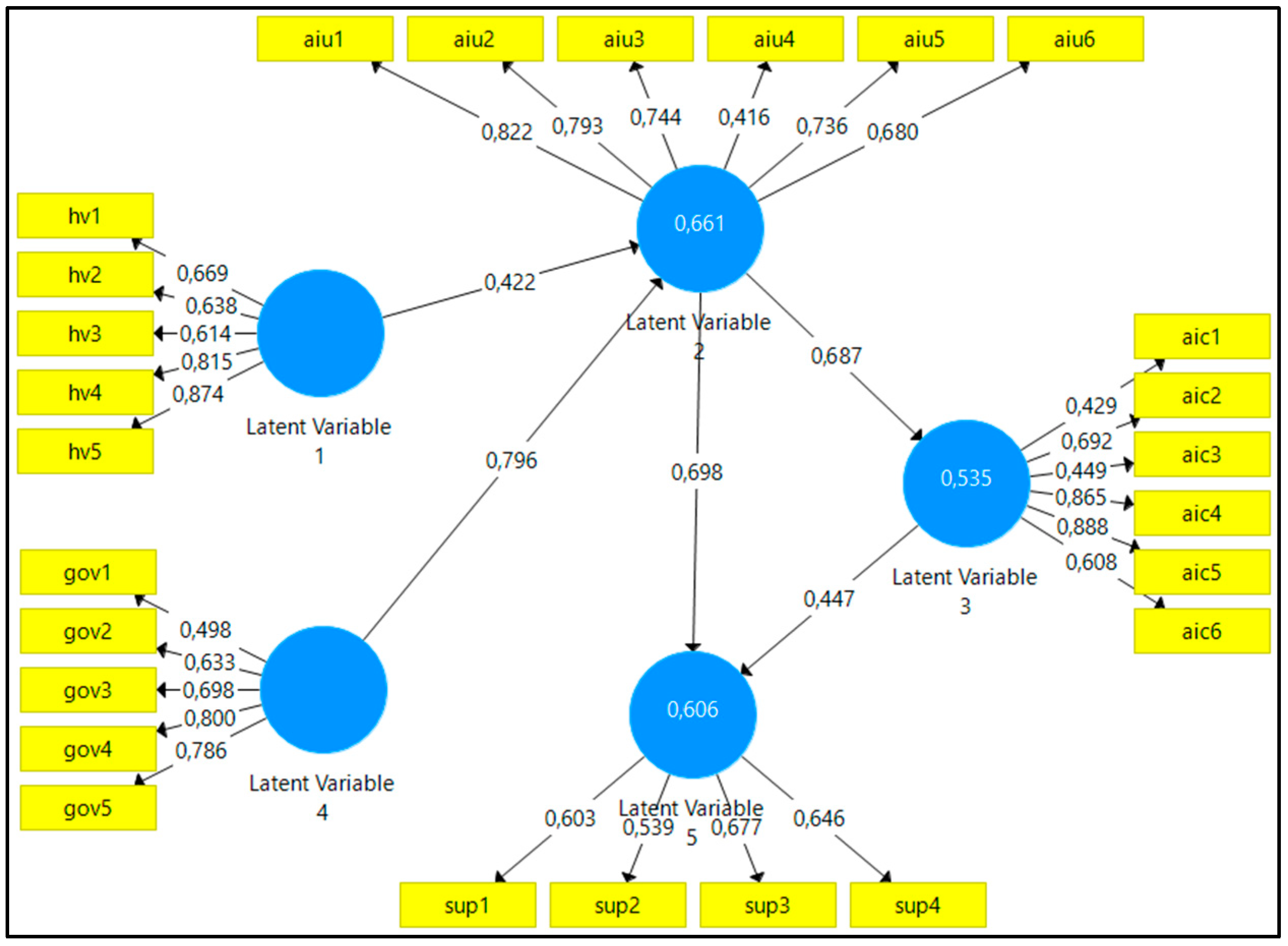
The results of the structural model (
Table 5) indicate statistically significant relationships among the analysed constructs, thereby confirming all proposed hypotheses. The application of the bootstrapping procedure established that all observed paths achieve significant coefficient values, with corresponding t-values confirming the stability of the estimated relationships. The results show that the perception of gastronomic tourism heritage as an important element of intangible cultural heritage has a significant positive impact on the acceptance of the application of digital technologies and artificial intelligence in heritage preservation (β = 0.422), thereby confirming the first hypothesis. This indicates that greater awareness of the importance of local gastronomic tradition contributes to greater openness toward digital solutions for its preservation. Additionally, the perception of the application of artificial intelligence demonstrates a strong positive effect on the preservation of authenticity and cultural identity (β = 0.687), confirming the second hypothesis. The results suggest that respondents recognise the potential of digital technologies in documenting and protecting traditional gastronomic practices.
The strongest effect in the model was achieved between the governance and trust construct and perceptions of the application of artificial intelligence (β = 0.796), thereby confirming the third hypothesis. This finding indicates that transparency, ethical principles, and institutional support play a crucial role in the acceptance of digital technologies in the field of cultural heritage preservation. Furthermore, the results confirm that the preservation of authenticity positively influences support and intention to apply digital solutions (β = 0.447), thereby confirming the fourth hypothesis. In other words, the more respondents believe that digitalisation can preserve authenticity, the more willing they are to support such projects. The perception of the usefulness of artificial intelligence shows a strong direct impact on support for its application in preserving gastronomic heritage (β = 0.698), thereby confirming the fifth hypothesis. This confirms that a positive attitude toward technology represents a key factor in community readiness to accept digital initiatives.
Figure 1 presents the final structural model examining the relationships between the perception of gastronomic tourism heritage, the role of digital technologies and artificial intelligence, the preservation of authenticity, institutional governance, and support for the application of digital solutions. The model simultaneously illustrates the relationships among latent constructs as well as the factor loadings of individual indicators, enabling a comprehensive understanding of both the measurement and structural components of the analysis. The results confirm that the perception of the importance of gastronomic heritage positively influences the acceptance of digital technologies and artificial intelligence applications, while governance and trust in institutional actors have an even stronger effect on the acceptance of technological solutions. This indicates the importance of transparency, institutional support, and the involvement of local actors in digital cultural heritage preservation processes.
The results show that the application of digital technologies significantly contributes to the perception of preserving authenticity and cultural identity, which subsequently positively influences community readiness to support further application of digital solutions. At the same time, the perceived usefulness of artificial intelligence has a direct and strong impact on support for its application, indicating that technology acceptance represents a key factor in the successful implementation of projects aimed at digitally preserving gastronomic heritage. The values of coefficients of determination presented within the constructs indicate that the model explains a significant portion of the variance of key variables, confirming the good predictive capability of the model. Overall, the graphical representation of the model confirms that perceptions of the cultural value of gastronomy, trust in the governance of digital processes, and perceived technological benefits jointly contribute to forming support for the application of artificial intelligence in preserving gastronomic tourism heritage.
4.5. Mediation Analysis
The results presented in
Table 6 indicate that all structural relationships in the proposed model are statistically significant. The perception of gastronomic tourism heritage (HV) has a positive and significant effect on the acceptance of artificial intelligence (AIU) (β = 0.422, t = 7.84,
p < 0.001), with a medium effect size (f
2 = 0.18). Governance and trust (GOV) demonstrate the strongest direct impact on AI acceptance (β = 0.796, t = 18.91,
p < 0.003), with a large effect size (f
2 = 0.52), confirming the central role of institutional transparency and ethical frameworks in shaping technological openness.
The acceptance of artificial intelligence significantly influences perceptions of authenticity and cultural identity (AIC) (β = 0.687, t = 14.26, p < 0.022), with a large effect size (f2 = 0.41). Furthermore, AI acceptance has a strong direct effect on support and intention to apply digital solutions (SUP) (β = 0.698, t = 15.42, p < 0.013, f2 = 0.36), while authenticity-related perceptions also significantly predict support intentions (β = 0.447, t = 8.37, p < 0.001), demonstrating a medium effect (f2 = 0.19). These findings confirm that both technological usefulness and perceived compatibility with authenticity preservation contribute to community support for AI-enabled heritage initiatives.
Bootstrapping analysis further confirms the presence of significant indirect effects. The relationship between heritage value and support intention is partially mediated by AI acceptance (t = 6.52, p < 0.003), with a 95% confidence interval that does not include zero (0.19–0.42). Similarly, governance and trust exert a strong indirect effect on support through AI acceptance (t = 12.84, p < 0.010; 95% CI: 0.41–0.64). These results demonstrate that AI acceptance functions as a key mediating mechanism through which cultural awareness and governance structures translate into practical support for digital preservation initiatives.
4.6. Measurement Invariance (MICOM)
The MICOM procedure (
Table 7) confirmed configural invariance across all three national subsamples, as identical measurement specifications and estimation procedures were applied. Permutation testing indicated that compositional invariance was established for all constructs (
p > 0.05), confirming the equivalence of composite scores across countries. Although minor differences in composite means were observed for authenticity-related perceptions (AIC) and support intention (SUP), the results indicate partial measurement invariance. According to established PLS-SEM guidelines, partial invariance is sufficient to proceed with cross-group comparisons and structural interpretation.
4.7. Cross-Country Differences
The results of the analysis of variance presented in
Table 8 indicate that there are no statistically significant differences in the perception of gastronomic tourism heritage, the application of digital technologies, perceptions of authenticity, or attitudes toward governance and ethical aspects of artificial intelligence application among respondents from Serbia, Bosnia and Herzegovina, and North Macedonia. The average values of the constructs in all three countries show very similar perception patterns, confirming the existence of a shared cultural and gastronomic space in the region. However, a significant difference was recorded for the construct measuring support and intention to apply digital solutions in preserving gastronomic heritage (SUP). The results show that respondents from Bosnia and Herzegovina express a somewhat lower level of readiness to apply digital solutions compared to respondents from Serbia and North Macedonia. This finding may be associated with differing levels of institutional support, digital infrastructure, or local initiatives related to cultural heritage preservation. The results indicate a high degree of similarity in perceptions among the countries, with limited differences regarding readiness to apply digital solutions, further confirming the regional character of gastronomic tourism heritage in the Western Balkans region.
5. Discussion
The findings indicate that respondents in Serbia, Bosnia and Herzegovina, and North Macedonia attribute high value to gastronomic heritage as part of intangible cultural heritage, as reflected in elevated mean scores of the HV construct. This confirms that culinary practices are perceived not merely as economic or touristic assets, but as identity-bearing cultural expressions embedded in collective memory and intergenerational transmission. Such positioning aligns with prior research emphasising the role of gastronomy in reinforcing local recognisability and socio-cultural continuity [
82,
83]. Similar conclusions were reported in studies examining gastronomic tourism as a carrier of cultural identity and heritage-based destination development.
The structural results demonstrate that perceived heritage value significantly and positively influences the acceptance of artificial intelligence (HV → AIU). This relationship suggests that technological openness does not emerge in opposition to traditional values; rather, stronger awareness of heritage importance appears to increase support for digital preservation mechanisms. This finding is consistent with previous research suggesting that communities with stronger heritage awareness are more open to technological tools aimed at documentation and preservation of cultural assets. Empirically, this indicates that respondents do not perceive AI as a threat per se, but as a potential extension of preservation efforts when framed within cultural safeguarding objectives. In this sense, digital humanities approaches to documentation and structured archiving provide an interpretative lens for understanding why heritage-conscious communities may simultaneously support technological innovation [
84].
The most pronounced effect within the model is observed in the path between governance and trust and AI acceptance (GOV → AIU), confirming that institutional legitimacy is the primary predictor of technological openness in this context. The magnitude of this coefficient indicates that acceptance of AI is strongly conditioned by perceptions of transparency, participatory governance, and ethical oversight. References to UNESCO frameworks are therefore analytically relevant not as normative prescriptions, but as conceptual benchmarks for understanding why governance quality statistically explains variance in AI acceptance. The data suggest that communities evaluate AI initiatives through the lens of institutional credibility rather than purely technical functionality.
The results concerning authenticity and cultural identity reveal a dual dynamic. Respondents acknowledge potential risks associated with digitalisation, including simplification and commodification (AIC), yet they simultaneously recognise that AI can contribute to safeguarding authenticity when documentation and representation remain under community control. This ambivalence is reflected in the model structure and indicates that authenticity concerns do not function as barriers to innovation, but as conditional moderators shaping how technology is evaluated. Rather than rejecting AI, respondents appear to differentiate between extractive and preservation-oriented applications.
The strong direct effect of AI acceptance on support for implementation (AIU → SUP), together with the positive contribution of authenticity compatibility (AIC → SUP), demonstrates that support for AI-based initiatives is highest when technological usefulness aligns with perceived authenticity protection. This empirically confirms that technology acceptance in heritage contexts is mediated by cultural legitimacy, not merely by perceived efficiency. In other words, support increases when AI is interpreted as reinforcing rather than redefining cultural meaning [
81,
82,
85,
86]. Comparable patterns have been observed in studies analysing technology acceptance in heritage and museum environments, where cultural legitimacy plays a key role in public support for digital innovation.
Cross-country comparison through ANOVA indicates substantial structural similarity across the three national contexts. This pattern suggests the presence of a shared regional cultural space characterised by comparable institutional trajectories and heritage governance frameworks. The statistically significant difference observed in the support construct (SUP) may reflect variations in institutional readiness, digital infrastructure, or prior exposure to digitisation initiatives. Rather than indicating superficial comparison, these findings demonstrate regional coherence combined with context-sensitive variation in implementation readiness.
Overall, the results provide empirical answers to the research questions by demonstrating that heritage value perception and governance trust jointly shape acceptance of artificial intelligence in gastronomic heritage preservation. Concerns regarding authenticity do not produce resistance but instead define the conditions under which technology is considered legitimate. AI is therefore interpreted not as a substitute for “living” practices, but as a complementary mechanism of documentation and structured preservation.
From an applied perspective, the empirical relationships identified in the model can be operationalised through specific AI-supported applications. Machine learning can support structured archiving of recipes and preparation processes; computer vision can assist in documenting culinary techniques; and natural language processing can facilitate preservation of dialect expressions and oral narratives. These examples are not normative recommendations, but logical extensions of the empirical finding that acceptance depends on documentation-oriented, preservation-aligned applications.
Finally, the results should be interpreted within ongoing debates on data governance and algorithmic power. Although respondents express support for AI-based preservation, implementation must consider risks of data centralisation and external platform dependency. The strong governance effect identified in the model underscores that sustainable AI integration in heritage domains requires participatory oversight and community-based data stewardship.
5.1. Theoretical Contribution of the Study
The theoretical contribution of this research is reflected in the integration of several research streams that have previously been analysed separately in the literature. Previous research on gastronomic tourism has primarily focused on the role of food as an element of tourist experience, destination identity, and local economic development, while studies on cultural heritage digitisation and the application of artificial intelligence have more often focused on museums, archives, or cultural heritage in general, without particular emphasis on gastronomy as a living, everyday practice. This study connects these two research streams through an empirical model demonstrating how perceptions of gastronomic heritage influence the acceptance of contemporary technologies in its preservation. The results suggest that, in this regional context, stronger recognition of heritage value is associated with greater acceptance of digital preservation tools, indicating that cultural attachment does not necessarily inhibit technological openness. In this way, the study complements existing theoretical models of technology acceptance, which often do not take into account the cultural and identity dimensions in the process of innovation adoption. This research shows that technology acceptance in the heritage domain depends not only on perceived usefulness but also on trust in institutional frameworks, governance transparency, and the preservation of cultural authenticity.
The study also contributes to the theoretical understanding of the relationship between digitisation and authenticity. The results show that respondents simultaneously recognise potential risks of digital transformation and the possibilities of using it to preserve traditional practices. This confirms the argument that digitisation of cultural heritage does not necessarily lead to commercialisation and loss of authenticity but may serve as a tool for its long-term preservation when implemented in accordance with the interests of local communities. An additional contribution of the study lies in its regional research perspective. Comparing results across three countries with similar cultural and gastronomic patterns enables a better understanding of the broader cultural space of the Western Balkans, thereby contributing to the literature on transnational cultural regions in tourism and the preservation of intangible cultural heritage. This study contributes by extending AI–heritage research beyond institutional preservation narratives, incorporating critical perspectives on data colonialism, algorithmic bias, and cultural sovereignty into the analysis of technological acceptance.
5.2. Practical Contribution and Recommendations for Stakeholders in Tourism
The research results have significant practical implications for decision-makers, tourism organisations, the hospitality sector, and local communities involved in preserving and promoting gastronomic heritage [
85]. The results indicate that the application of digital technologies and artificial intelligence in tourism should be directed toward documenting and preserving traditional practices rather than solely promoting them. Tourism organisations can use digital platforms to create databases of traditional recipes, preparation techniques, and local gastronomic narratives, thereby ensuring the long-term preservation of knowledge that is often transmitted orally. The results show that trust in the governance of digital processes represents a key factor in technology acceptance. Therefore, it is advisable for tourism and cultural institutions to develop projects in cooperation with local communities, with clearly defined rules regarding data use and the protection of cultural identity. Transparency in the use of digital content can increase the willingness of local actors to participate in digital preservation projects. Third, the tourism sector can use artificial intelligence to improve the interpretation of gastronomic heritage through personalised tourist recommendations, digital guides, and interactive platforms that allow tourists to better understand local traditions. However, it is important that such solutions do not replace authentic gastronomic experiences but rather complement them. Educational institutions and organisations involved in training in tourism and gastronomy can use digital tools to transmit traditional knowledge to younger generations, thereby contributing to the preservation of crafts, recipes, and local food preparation techniques.
5.3. Research Limitations
Although the research provides significant insights into perceptions of the application of artificial intelligence in preserving gastronomic tourism heritage, several limitations should be acknowledged as a basis for future research. First, the study was conducted in only three countries that share relatively similar cultural and gastronomic characteristics within the Western Balkans. Consequently, the findings cannot be fully generalised to regions with different cultural traditions, institutional frameworks, or levels of digital development. Future comparative research should therefore include culturally and technologically diverse contexts in order to test the stability of the proposed model across different heritage systems.
Second, although respondents were directly involved in the gastronomic heritage cycle, a substantial proportion of the sample possessed higher educational qualifications. This may introduce a potential selection bias, as older and digitally marginalised tradition bearers, particularly those operating in rural environments, may hold different perceptions regarding artificial intelligence and digital transformation. Since these actors play a crucial role in the intergenerational transmission of culinary knowledge, their underrepresentation may limit the comprehensiveness of the findings. Future studies should incorporate more demographically diverse samples, especially elderly practitioners and informal knowledge holders, possibly through targeted sampling strategies or qualitative interviews. The research is based on respondents’ perceptions rather than on the direct evaluation of specific AI-driven heritage preservation projects. While perception-based data are valuable for understanding acceptance and readiness for technological integration, they do not provide evidence of the actual effectiveness of implemented digital solutions. Future research could therefore include case studies of concrete digital initiatives, such as AI-supported recipe archiving systems or automated documentation platforms, in order to assess their measurable impact on safeguarding traditional practices.
The use of a survey questionnaire also implies the possibility of subjective responses, particularly in questions related to cultural identity and attitudes toward technology. Although reliability and validity indicators confirm measurement robustness, the integration of qualitative methods such as in-depth interviews or ethnographic observation could enable a more nuanced understanding of local community perspectives and potential intergenerational differences. The research does not include the direct perspective of tourists as end users of gastronomic experiences. Since digital interpretation tools may influence visitor perception, authenticity evaluation, and behavioural intentions, future studies should examine how AI-mediated heritage presentation affects tourist experience and destination competitiveness.
6. Conclusions
The findings of this study indicate that, among the surveyed local community members in Serbia, Bosnia and Herzegovina, and North Macedonia, gastronomic tourism heritage is perceived as possessing strong cultural and identity value. The results further suggest a generally positive attitude toward the application of digital technologies and artificial intelligence in its preservation. In particular, the data show that perceptions of heritage importance, trust in institutional frameworks, and acceptance of technological solutions are associated with stronger support for AI-enabled preservation initiatives within the examined sample.
The structural analysis suggests that, in the perception of respondents, technological solutions are not necessarily viewed as being in contradiction with the preservation of tradition. Rather, artificial intelligence is considered a potentially useful tool for documenting, systematising, and transmitting culinary knowledge, provided that issues of governance transparency, community participation, and authenticity safeguarding are adequately addressed. These findings reflect perception-based relationships within the proposed model and should be interpreted within the cultural and regional context in which the research was conducted.
Comparative analysis among the three countries indicates broadly similar perception patterns within the surveyed groups, with limited differences regarding readiness to apply digital solutions. While these similarities may suggest the presence of shared regional cultural characteristics, the conclusions are based exclusively on the subjective assessments of respondents and do not imply uniform attitudes across entire national populations.
Overall, the study provides empirical insight into how selected local community members perceive the intersection between heritage preservation and artificial intelligence. The results point toward the potential for developing digitally supported preservation strategies that are aligned with cultural values and community interests. However, further research involving more diverse samples, additional regions, and mixed methodological approaches would be necessary to confirm and generalise these findings beyond the present context.




 ,
,