Article

Microclimates, Geometry, and Constructive Sustainability of the Inca Agricultural Terraces of Moray, Cusco, Peru


1
Faculty of Architecture and Urbanism, Ricardo Palma University (URP), Santiago de Surco, Lima 15039, Peru
2
Research Laboratory for Formative Investigation and Architectural Innovation (LABIFIARQ), Ricardo Palma University (URP), Santiago de Surco, Lima 15039, Peru
3
Faculty of Mechanical Engineering, National University of Engineering (UNI), Rímac, Lima 15081, Peru
4
Postgraduate University School (EUPG), Federico Villarreal National University (UNFV), Cercado de Lima, Lima 15001, Peru
*
Author to whom correspondence should be addressed.
Heritage 2026, 9(2), 56; https://doi.org/10.3390/heritage9020056
Submission received: 10 December 2025 / Revised: 26 January 2026 / Accepted: 27 January 2026 / Published: 2 February 2026

Abstract

Moray (Cusco, Peru) represents one of the most sophisticated examples of Inca agricultural engineering, where architecture, environmental management, and constructive systems converge to generate controlled microclimates for agricultural experimentation. Recognized as an important archaeological heritage site, Moray provides valuable insight into ancestral Andean strategies for adapting agriculture to complex high-altitude environments. However, the site is increasingly exposed to environmental pressures associated with climatic variability, soil erosion, structural collapses, and tourism intensity. This study aims to analyze the relationship between microclimates, geometric design, and constructive sustainability of the Moray archaeological complex through integrated spatial, functional, and constructive analyses, supported by digital tools such as Google Earth Pro, AutoCAD 2023, SketchUp 2023, and environmental simulations developed by Andrew Marsh. The research examines the geometric configuration of the circular terraces, which present radii between 45 and 65 m, heights ranging from 3 to 5 m, and slope variations between 14% and 48%, generating temperature gradients of 12–15 °C between upper and lower levels. These conditions enabled the Incas to experiment with and adapt diverse ecological species across different thermal zones. The study also evaluates the irrigation and infiltration systems composed of gravel, sand, and stone layers that ensured soil stability and moisture regulation. Climate data from SENAMHI (2019–2024) indicate that Moray is located in a semi-arid meso-Andean environment, reinforcing its interpretation as an ancestral environmental laboratory. The results demonstrate Inca mastery in integrating environmental design, hydrological engineering, and agricultural experimentation while also identifying current conservation challenges related to erosion processes, structural deterioration, and tourism pressure. This research contributes to understanding Moray as a climate-sensitive heritage system, offering insights relevant to contemporary strategies for sustainable agriculture, climate adaptation, and heritage conservation in Andean regions.

1. Introduction

History acts as a guiding thread that connects societies to their past, revealing their identity, way of life, and evolution over time [1]. In this context, agriculture has been a fundamental pillar in the course of humanity, marking the beginning and expansion of early civilizations and providing livelihood for numerous families and communities [2]. Globally, agriculture has played a transformative role, deeply interacting with natural processes [3].
Within this broad historical framework, agricultural practices have not only ensured food production but have also shaped cultural landscapes and technological systems that reflect the adaptive capacity of societies to diverse environmental conditions.
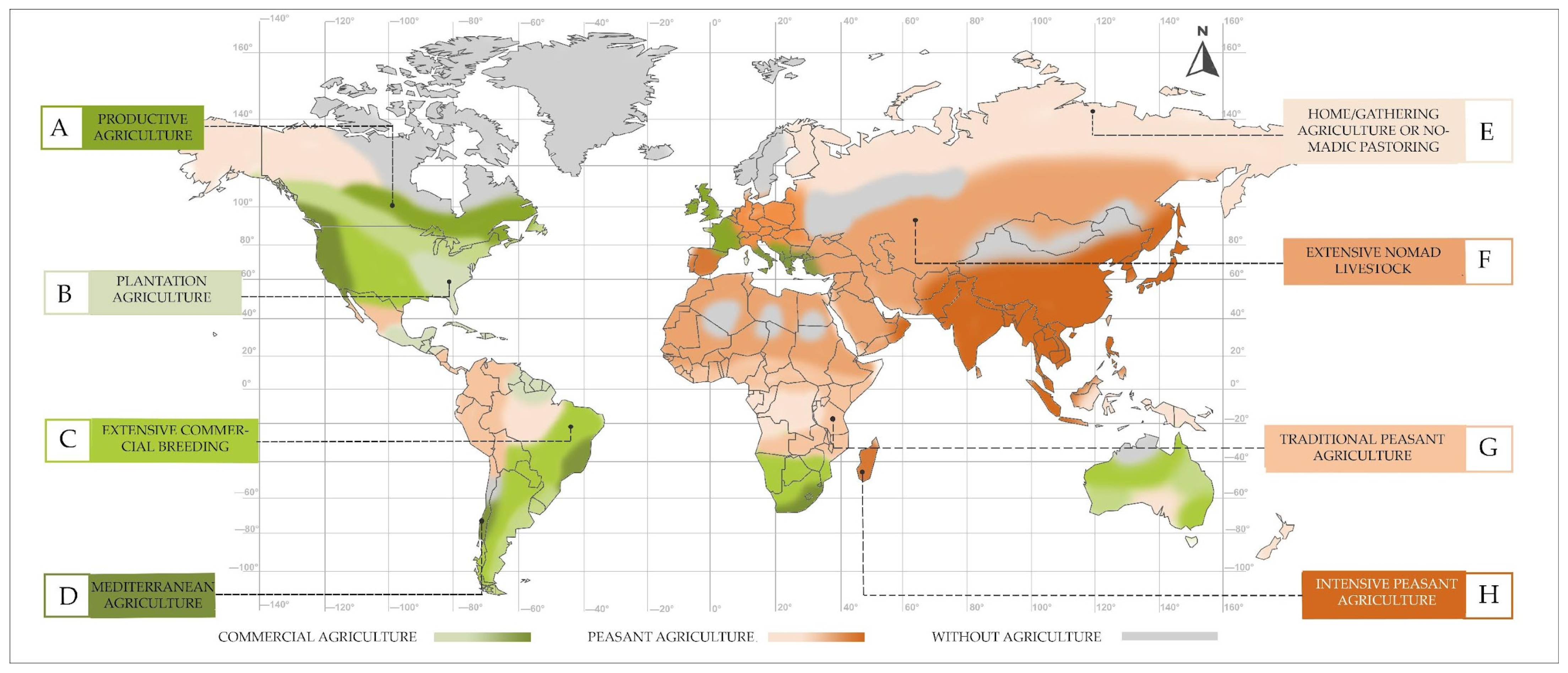
In Figure 1, eight types of agricultural systems worldwide are shown, divided into commercial and peasant agriculture. In Figure 1A, productive agriculture is characterized by significant investments and high profitability per hectare, though with elevated costs. On the other hand, in Figure 1B, plantation agriculture is distinguished by its scattered crops, primarily perennial and tropical. Compared to these, in Figure 1C, extensive commercial livestock farming is characterized by semi-free herds and large areas monitored by a limited amount of labor. Meanwhile, in Figure 1D, the effectiveness of agriculture is attributed to a high labor force and the use of irrigation. In contrast, Figure 1E, dedicated to hunting/gathering, agriculture, or nomadic pastoralism, mainly focuses on slash-and-burn shifting agriculture. In Figure 1F, extensive nomadic livestock farming develops in areas with severe limitations, restricting agriculture to isolated oases. In Figure 1G, traditional agriculture is characterized by collective labor and varies according to local materials and climatic conditions, presenting diverse structural complexity. Finally, in Figure 1H, intensive agriculture seeks to meet the needs of a rapidly growing population, developing various irrigation techniques to achieve high yields [4].
These diverse agricultural systems demonstrate how human societies have historically modified landscapes through specific spatial, constructive, and environmental strategies, many of which remain embedded in ancestral agricultural infrastructures.
Recent research has emphasized that ancestral agricultural infrastructures, particularly terraced landscapes, should be understood as complex socio-environmental systems that integrate spatial configuration, construction techniques, and microclimatic regulation. Studies conducted in different Andean contexts demonstrate that terrace geometry, slope, and orientation play a fundamental role in temperature modulation, soil moisture retention, and erosion control, contributing to agricultural resilience under variable climatic conditions [5]. More recent interdisciplinary approaches highlight the relevance of these systems for contemporary discussions on sustainability, climate adaptation, and heritage conservation [6].
The Peruvian territory has historically been a key center for agricultural development. Civilizations such as the Incas not only mastered advanced agricultural techniques to harness the ecological diversity of the region but also adapted and enhanced knowledge inherited from earlier societies, such as the use of terraces built by preceding cultures [7].
Today, Peru has 11.6 million hectares dedicated to agricultural activities throughout its territory [8].
This long agricultural tradition positions Peru as a particularly relevant context for studying ancestral farming systems, especially those developed in complex high-altitude Andean environments.
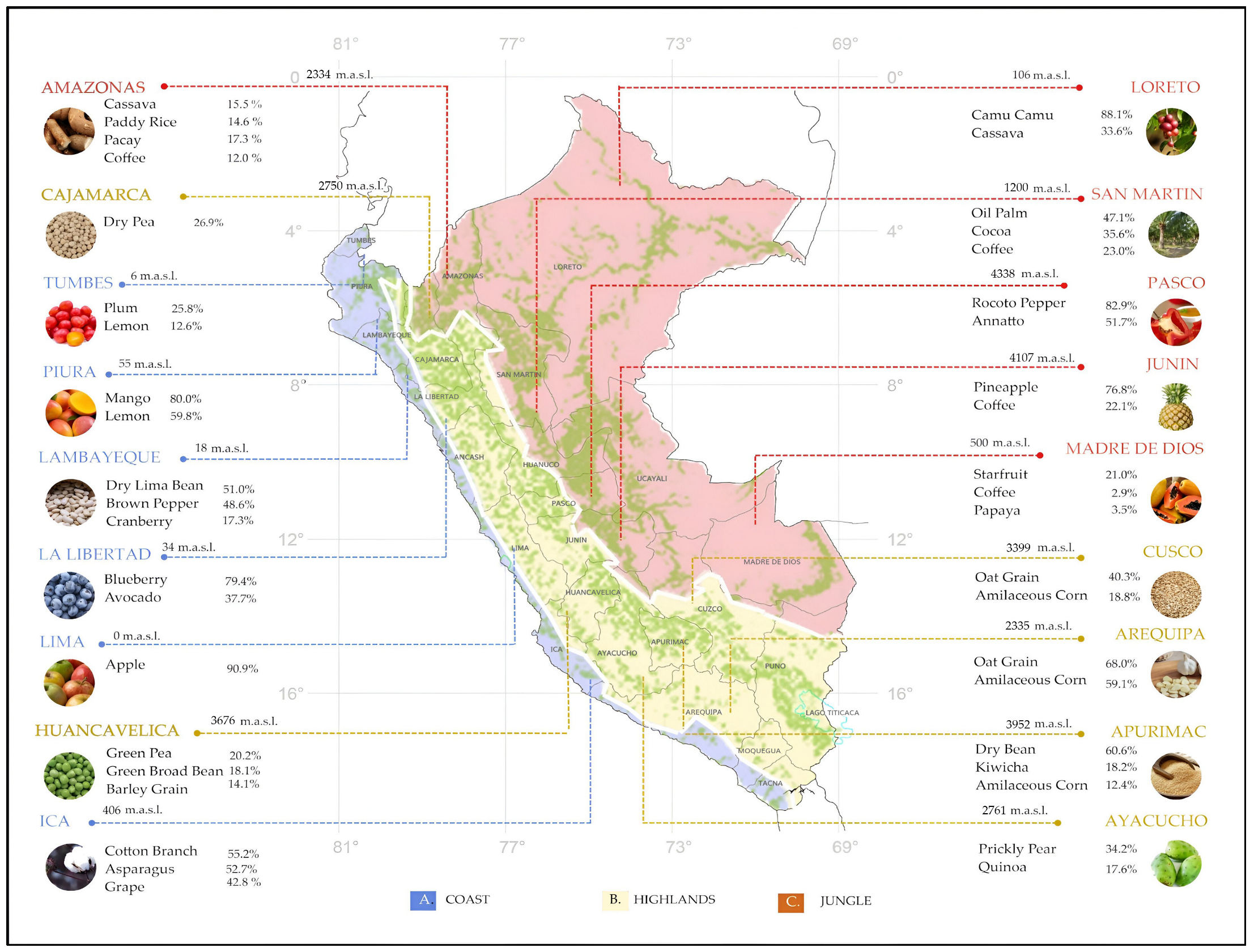
Figure 2 shows the diversity of products generated by crops in Peru. In Figure 2A, the Coast (0–500 m.a.s.l.) stands out for having the most fertile land in the country, thanks to its excellent quality, flat terrain, abundant water, and significant investment in infrastructure accumulated in the area [9]. Fruit crops such as plums, blueberries, apples, and mangoes, as well as vegetables like peas, are produced. Similarly, in Figure 2B, the Highlands (500–6768 m.a.s.l.) represent one of the diversity centers according to Vavilov’s theory, harboring 38 domesticated plant species [10]. These include varieties of tubers, roots, grains, fruits, and vegetables, while many other medicinal and ornamental plants have yet to undergo the domestication process [11]. On the other hand, in Figure 2C, the Jungle (500–3500 m.a.s.l.), agriculture in the Peruvian Amazon is an activity of great economic and social importance, recognized for its diversity and productive capacity in crops such as coffee, fruits like camu camu, papaya, pineapple, and medicinal plants. However, deforestation and new forest regulations, particularly those enforced by the European Union, impose restrictions on land use, which could affect agricultural expansion and the sustainability of production in the region [12].
Among these regions, the Andean highlands stand out for the development of terrace-based agricultural systems, which allowed pre-Hispanic societies to cultivate steep terrains while regulating water, soil, and microclimatic conditions [13].
The Tahuantinsuyo, also known as the Inca Empire, represents the culmination of pre-Columbian civilizations by integrating inherited scientific, technological, and artistic knowledge. This sophisticated and advanced culture wielded considerable power and extended its dominion over various regions of South America [8]. Although Lima holds the title of the current capital and is the main economic hub and gateway to Peru, the city of Cusco was and continues to be the true capital of the Inca Empire [14].
Cusco not only served as a political capital but was also the cultural, religious, and economic heart of the empire. According to Inca mythology, Cusco was the place of origin of the first Inca, Manco Capac, and his wife, Mama Ocllo [15]. As the administrative and political center of the empire, Cusco exercised control over an extensive network of roads that connected its territories, as well as over the redistribution of resources and the tax system that sustained the imperial economy [16]. Additionally, in the religious sphere, it houses the most significant temples of the Tahuantinsuyo, including the Coricancha or Temple of the Sun, revered as the main center of worship for the Sun god, Inti [17]. Historically, Cusco has been one of the most important areas in terms of agriculture and cultural development.
Within the Cusco region, several archaeological sites preserve evidence of advanced Inca agricultural engineering, forming part of Peru’s recognized cultural heritage.
The archaeological centers of Cusco, both before and after the arrival of the Spanish, are witnesses to the splendor and complexity of the Inca civilization. Before the Spanish conquest, these structures served as administrative, religious, and cultural centers of the vast Inca Empire [15].
Recent regional research indicates that Andean agricultural systems are increasingly sensitive to changes in climate variability, particularly shifts in temperature and precipitation that affect traditional farming practices and crop viability at high altitudes [18]. In the Peruvian Andes, observed climatic shifts—including increased temperature trends and altered rainfall distribution—have been associated with impacts on soil moisture regimes, water availability, and agricultural productivity in rural terrains [19]. Studies in highland areas also document perceived climate changes among farming communities, such as increased occurrence of temperature extremes and irregular precipitation, which contribute to uncertainties in planting calendars, crop cycles, and water management strategies [19].
Traditional Andean agricultural infrastructures such as terraces and other landscape modifications are recognized not only as food production technologies but also as adaptive systems that modulate local microclimates and help manage water and soil dynamics under variable climatic conditions [20].
Recent studies have also emphasized Moray as a unique experimental center, with terraces designed to generate controlled microclimates for diverse crops. Previous research on Cusco’s archaeological sites—including Tipon and Pisaq—documents terrace geometry, irrigation networks, and slope adaptation strategies that enabled sustainable agriculture at high altitudes [21]. These works provide an essential comparative framework for analyzing the spatial, constructive, and environmental logic observed at Moray, reinforcing its relevance within Andean agricultural heritage.
In this broader Andean context, archaeological terrace systems are increasingly understood as climate-sensitive heritage infrastructures whose conservation depends on their original spatial configuration, constructive logic, and environmental performance.
To contextualize the spatial, hydraulic, and terracing strategies observed at Moray, a comparative reference is established with two representative Inca archaeological sites—Pisaq and Tipon—which exhibit well-documented terrace systems and water management infrastructures.
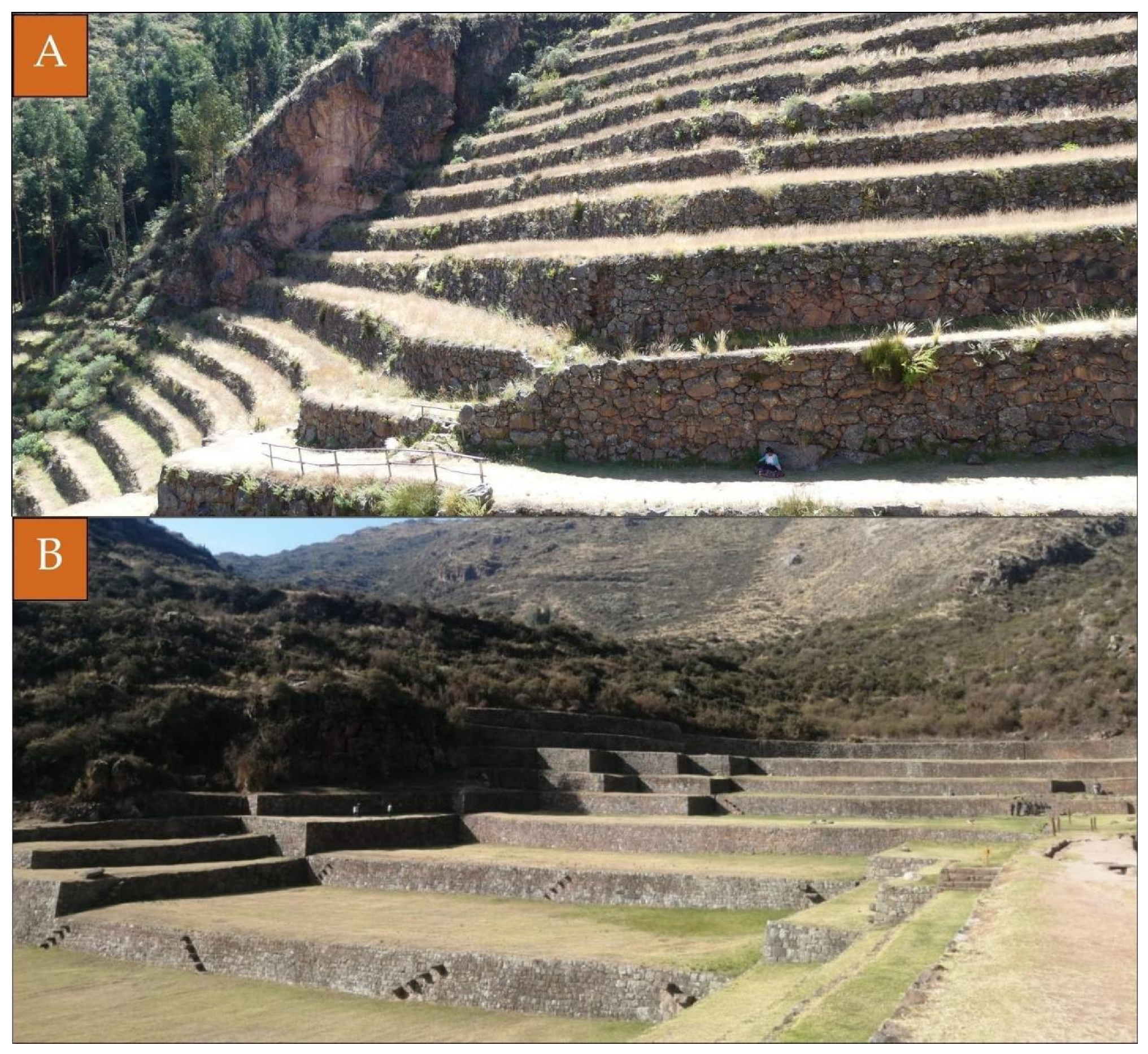
Figure 3 highlights ancient settlements such as Pisaq and Tipon, which, alongside Moray, stand out for their advanced water management systems and strong connection to terrace-based agricultural practices.
In Figure 3A, the terraces of Pisaq serve as an outstanding example of Inca agricultural engineering, designed to optimize production on steep terrains. These terraces not only controlled soil erosion but also regulated drainage and retained moisture, enabling the cultivation of crops adapted to high-altitude climates. Their construction involved advanced techniques, such as soil selection and the implementation of efficient irrigation systems, achieving a harmonious integration between architecture and agriculture in the region [22]. However, recent studies indicate that climatic variability in the Andean region, particularly changes in precipitation intensity and seasonal rainfall patterns, has increased erosion processes and slope instability in terrace-based agricultural systems, posing growing risks to the conservation of sites such as Pisaq [22,23]. Meanwhile, in Figure 3B, the terraces of Tipon facilitated efficient farming on slopes, ensuring the uniform distribution of water through expertly integrated channels. These terraces not only preserved fertile soil but also enhanced crop adaptation to high-altitude environmental conditions, showcasing the Inca’s technical mastery in harmonizing with their natural surroundings [6]. Despite their sophisticated hydraulic design, climate-related stressors such as prolonged dry periods, irregular rainfall, and fluctuations in water availability have begun to affect traditional irrigation networks in Tipon, increasing vulnerability to structural deterioration and reduced hydraulic performance [6,21]. Similar patterns of climate-induced risk have been documented in other highland archaeological landscapes, where agricultural terraces and water management systems are increasingly exposed to environmental degradation linked to climate variability [20,24].
Moray has been the subject of several archaeological and environmental interpretations that describe it as a unique agricultural experimentation center within the Inca landscape. Previous studies associate its concentric circular terraces with intentional microclimatic manipulation aimed at crop adaptation across different thermal zones [6]. However, most existing research has approached Moray from isolated perspectives—morphological, symbolic, or functional—without fully integrating spatial geometry, environmental performance, and constructive systems within a climate-sensitive heritage framework.
After the Spanish conquest in the 1500s and the destruction of numerous Inca structures, Inca culture was largely buried under colonial influence. However, some sites distant from the city, like Moray, survived partially intact [25].
Moray is recognized as an archaeological heritage site of outstanding value, distinguished by its unique concentric terracing system and its association with agricultural experimentation in high-altitude environments.
Today, these archaeological centers, including Moray, are essential for understanding the culture and history of ancient Cusco. At the same time, they highlight the growing need to address climate-related risks in the conservation of Andean agricultural heritage, as environmental pressures increasingly threaten the stability and functionality of these complex terrace systems [26].
In recent decades, the Moray agricultural terraces have been increasingly exposed to environmental pressures associated with climate-related variability, including soil erosion, localized structural instability, and alterations in moisture distribution. While this study does not address long-term climate change trends through extended climatic datasets, these processes reveal a growing sensitivity of the site to changing environmental conditions and microclimatic stressors, highlighting climate variability as a key risk factor affecting both the physical stability and environmental performance of the terraces.
Within the context of heritage risk and climate-related vulnerability, understanding how the original architectural design of Moray interacts with its environmental setting becomes essential. The site’s geometry, spatial configuration, construction systems, and material characteristics directly influence drainage behavior, moisture retention, thermal regulation, and structural performance, positioning these elements at the core of risk assessment and preventive conservation planning.
In this context, the research is guided by the following question: How do microclimates, geometric configuration, and constructive systems influence the environmental behavior and conservation challenges of the Inca agricultural terraces of Moray under conditions of climatic variability? Accordingly, this study aims to analyze the Moray agricultural terraces through integrated spatial, microclimatic, and constructive perspectives in order to identify patterns of environmental behavior, structural sensitivities, and climate-related conservation challenges. By doing so, the research seeks to contribute to the development of more informed and sustainable heritage management strategies that address risk and resilience in climate-sensitive archaeological sites.
  • Terraced landscapes and cultural heritage
Terraced agricultural landscapes constitute complex cultural heritage systems in which traditional productive practices, historical knowledge, and landscape identity are integrated over time. These systems represent long-term interactions between human communities and the natural environment, reflecting adaptive strategies to territory and climate [27]. The conservation of terraced landscapes requires an integrated understanding of their cultural value as well as their environmental and socio-economic functions, particularly in contexts where tourism and heritage valorization play a significant role in local development [28].
  • Green infrastructure and landscape regeneration
Green infrastructure is understood as a strategically planned network of natural and semi-natural spaces capable of providing essential ecosystem services, such as water regulation, soil stabilization, and climate change adaptation across different territorial scales [29]. In heritage landscapes and peri-urban areas, this approach has proven to be an effective tool for landscape regeneration, as it enhances ecological connectivity and promotes sustainable land-use planning, particularly in environmentally sensitive territories [30].
  • Sustainable management of terraced systems
The sustainable management of terraced agroecosystems involves integrating environmental conservation, cultural heritage protection, and local development through adaptive strategies supported by scientific evidence and traditional knowledge [31].
Several studies indicate that effective management must address issues such as erosion control, agricultural land abandonment, and structural degradation of terraces while ensuring the functional continuity of traditional agricultural systems [32].
  • Environmental vulnerability and climate sensitivity
Terraced landscapes exhibit high vulnerability to climate variability, extreme weather events, and changes in land use, factors that can intensify soil erosion processes and compromise terrace stability [33]. In high-altitude agricultural systems, dependence on specific microclimatic conditions and reduced maintenance significantly increase the susceptibility of these landscapes to environmental degradation [34].
  • Resilience and multifunctionality of cultural landscapes
Terraced systems perform multiple environmental and social functions by providing ecosystem services such as microclimate regulation, water management, biodiversity support, and food production, thereby contributing to the resilience of cultural landscapes [35]. This multifunctionality positions terraced landscapes as relevant models for sustainable heritage conservation and climate-adaptive territorial management in mountainous regions [36].

2. Study Area

Location, Topography, and Water Resources

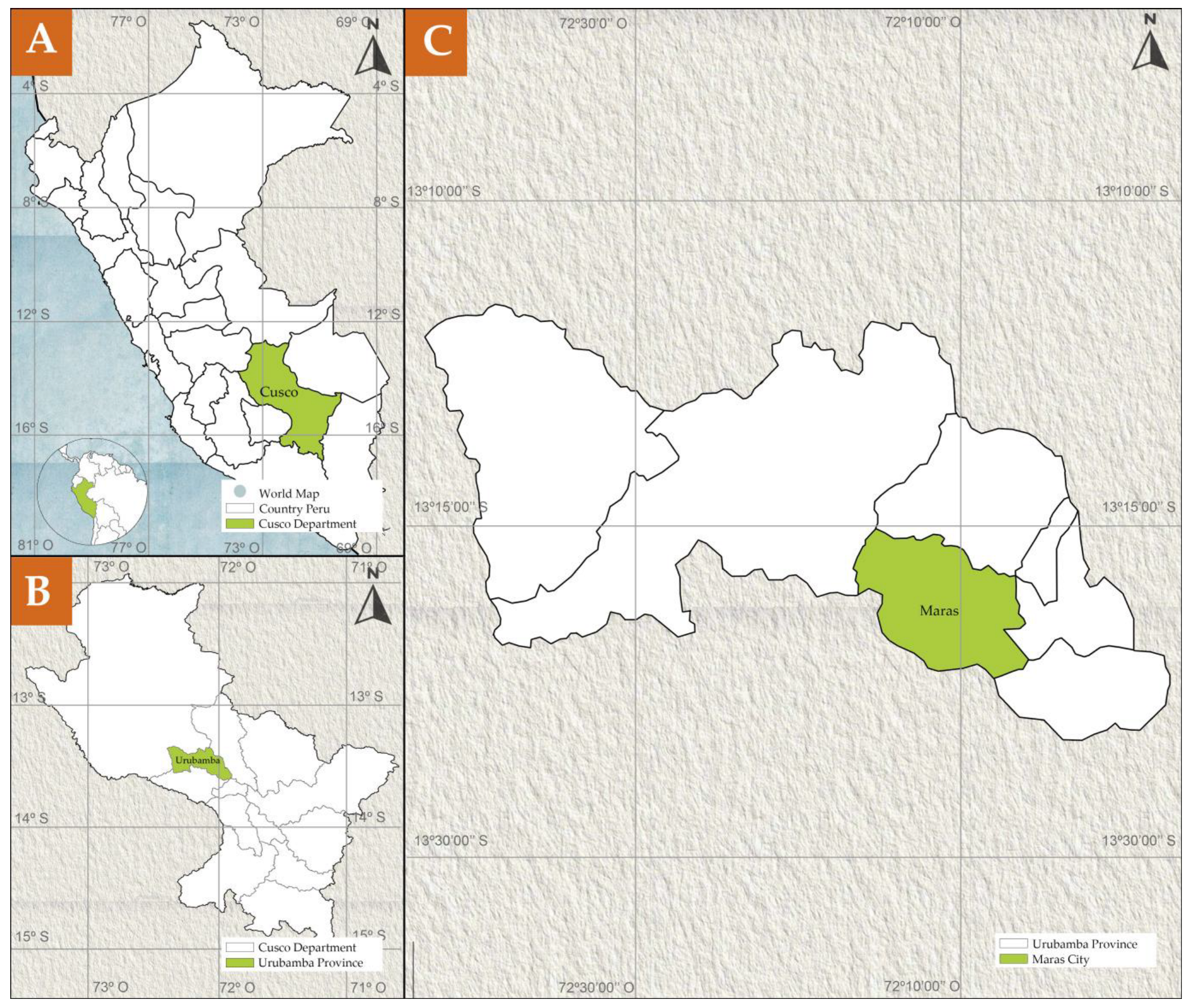
The archaeological site of Moray is located in the district of Maras, province of Urubamba, department of Cusco, Peru, at an altitude of approximately 3500 m.a.s.l. [37]. Figure 4 illustrates the geographical location of the Moray Archaeological Center at different territorial scales. Figure 4A situates Peru within the South American continent, bordering the Pacific Ocean. Figure 4B shows the location of the department of Cusco at latitude 13°19′48.97″ S and longitude 72°09′47.12″ W. Figure 4C presents the province of Urubamba and the district of Maras, where Moray is located, at coordinates 13°18′15″ S and 72°07′00″ W [38].
Moray represents a remarkable example of sophisticated Inca agricultural planning and architectural design, characterized by a system of concentric terraces integrated into a natural depression [37]. The name “Moray,” derived from Quechua terms such as moraya (dehydrated potato) or amaru (snake), reflects its close association with agricultural experimentation and symbolic meaning within Inca culture. Beyond their productive function, the terraces also held ceremonial significance, embodying the Andean worldview in which environmental knowledge, architectural practice, and spiritual beliefs were deeply interconnected [39].
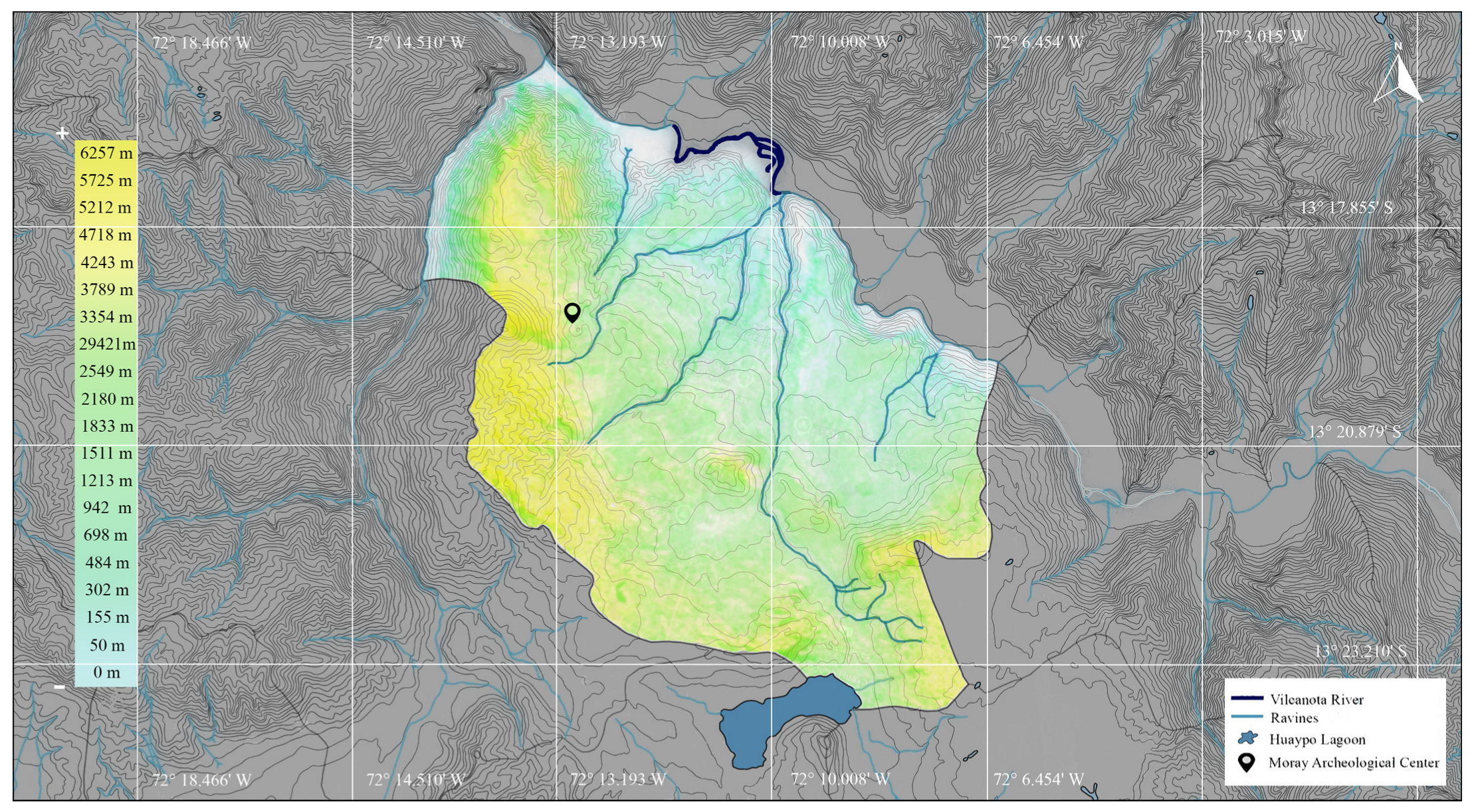
Figure 5 shows that the archaeological site of Moray is located at an altitude of 3500 m.a.s.l., surrounded by a mountainous landscape characteristic of the Andean region. Moray is situated near a ravine originating from the Vilcanota River, suggesting that in ancient times, the Inca civilization might have used these water sources to supply their agricultural systems and enable cultivation on the terraces. The proximity to this watershed reinforces the theory that the site was not only used for agricultural experimentation but was also strategically connected to local water resources.
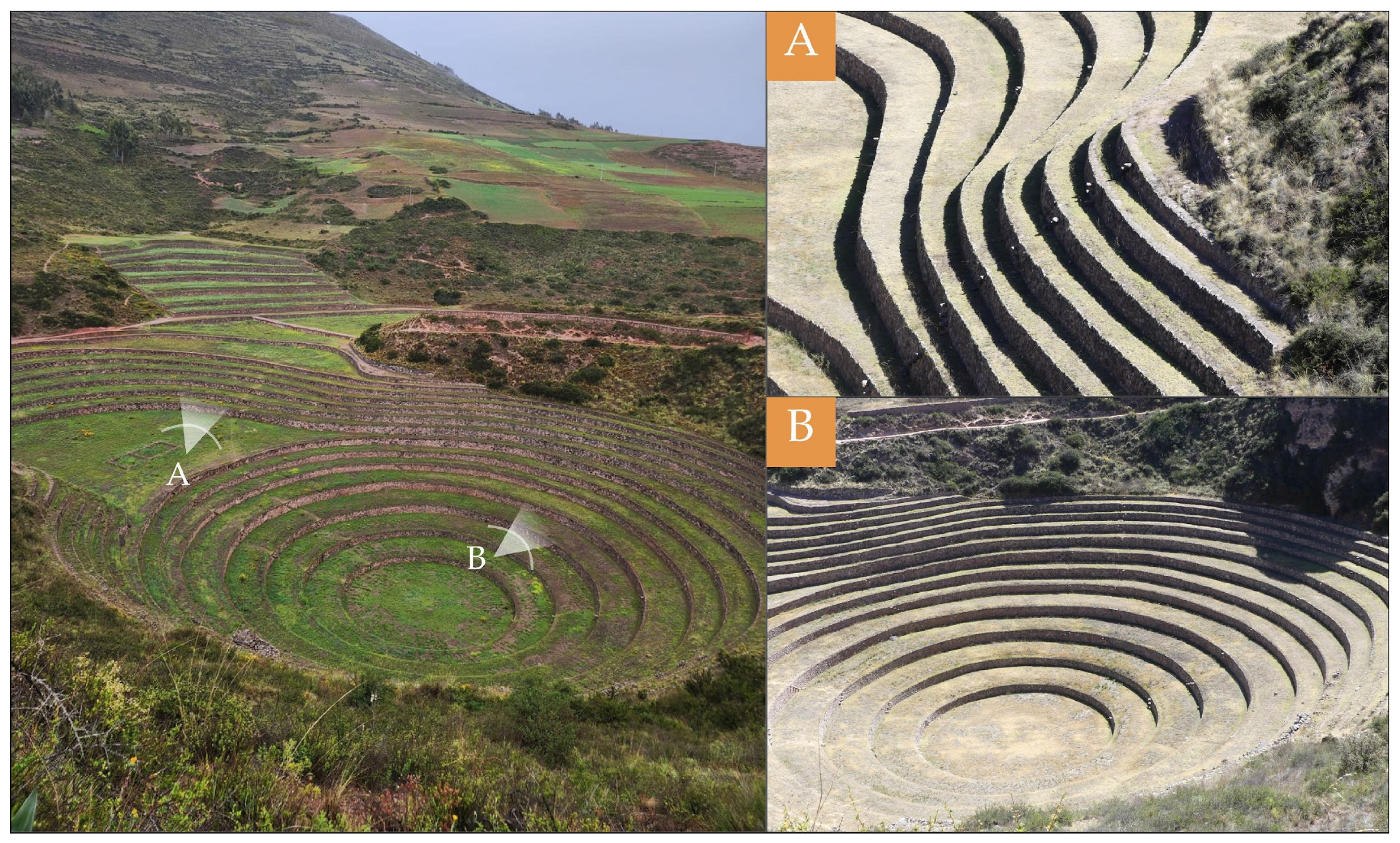
In Figure 6, the terraces of Moray are shown, clearly displaying the circular agricultural terraces that are distinctive features of this site. These terraces provide tangible evidence of the advanced agricultural techniques and microclimate management developed by the Incas [40]. The image allows one to appreciate the different levels and how they adapt to the topography, which is Pisaq crucial for understanding the cultivation methods and agricultural engineering that made sustainable food production possible under various climatic conditions. Additionally, this view is essential for appreciating the scale and complexity of Inca design, as well as for analyzing the relationship between the structures and the natural environment [41].
In this context, Moray stands out for its significant contribution to the ancestral agriculture practiced by the Incas. The morphology of the site consists of four natural depressions, known as muyus, which were modified by the Incas to create agricultural terraces with geometric patterns. Each terrace has a specific width, height, and slope, adapted to the climatic conditions and the terrain’s characteristics. This organization, along with the arrangement of its architectural elements, demonstrates the Incas’ advanced knowledge of adapting to topography and controlling the microclimate, which allowed them to experiment with various crops and optimize the use of soil and water, achieving efficient and sustainable agricultural development. The architectural layout of Moray reflects a strategic planning that responds to agricultural functionality and its relationship with the environment, serving as a clear example of the harmonious interaction between architecture, agriculture, and nature [41].
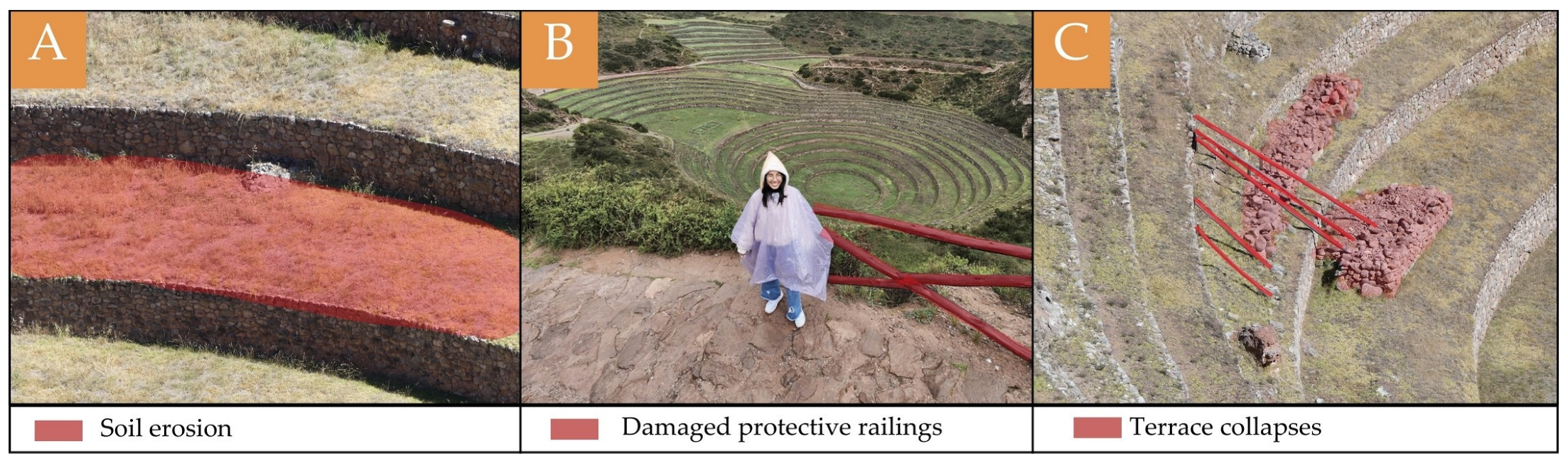
Figure 7 illustrates the main deterioration factors currently affecting Moray, including soil erosion, inadequate maintenance, structural instabilities, and increasing tourist pressure. Together, these issues directly threaten the integrity, stability, and long-term conservation of this unique archaeological landscape [41]. In Figure 7A, soil erosion has become a critical threat to Moray’s circular depressions and agricultural terraces. The site’s stepped geometry, combined with intense seasonal rainfall and higher climatic variability, accelerates the degradation of both stone structures and soil layers, compromising the terraces’ microclimatic performance [42]. The loss of fine soil also alters the thermal behavior of the terraces, reducing their capacity to retain heat and maintain controlled temperature gradients. Figure 7B shows that the absence, discontinuity, or poor condition of protective railings along tourist trails constitutes a significant risk factor within the Moray Archaeological Site. In several areas, incomplete or deteriorated railings increase visitors’ exposure to steep slopes and uneven terrain while also allowing uncontrolled access to sensitive areas of the terraces. This situation intensifies localized soil disturbances, material displacement, and surface erosion caused by pedestrian traffic, contributing to the progressive structural and environmental vulnerability of the terraces. In Figure 7C, evident collapses along several terrace walls highlight the vulnerability of Moray’s constructive system. The original Inca engineering—composed of drainage layers of gravel, sand, and stone—has been progressively altered by climate-driven humidity variations and inadequate restoration practices, reducing its capacity to regulate moisture and filtration [43]. These structural failures not only affect the hydraulic and agricultural functionality of the terraces but also compromise the conservation of Moray as a heritage site. Collectively, these issues underscore the absence of a long-term conservation strategy that integrates preventive maintenance, climate-responsive management, and structural monitoring. Without such measures, Moray remains at high risk, and its archaeological, environmental, and heritage values may be irreversibly affected in the coming decades [41].

3. Methodology

3.1. Research Framework

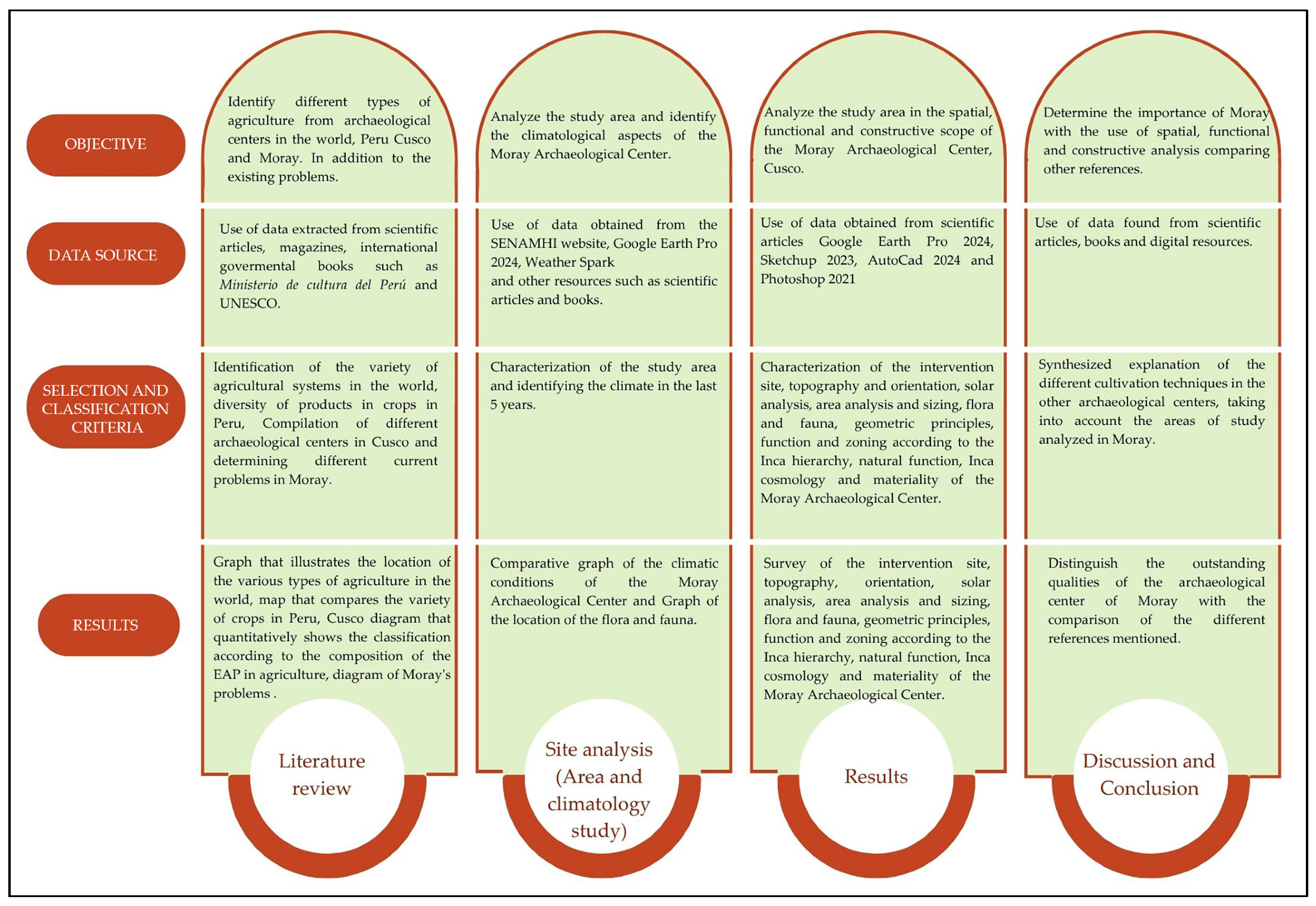
Figure 8 summarizes the methodological framework adopted in this study.

3.1.1. Literature Review Procedure

In the first stage, an exhaustive gathering of information was carried out to contextualize the spatial, functional, and constructive analysis of the archaeological site of Moray. This process involved the search and selection of academic sources, scientific articles, and documents issued by recognized institutions such as the Ministerio de Cultura del Perú and UNESCO, which provided a solid theoretical framework for the study.
The literature review identified the main characteristics of the agricultural terraces and their relationship with the Inca hydraulic systems, highlighting not only their productive functionality but also their advanced engineering and integration with local microclimates. This comprehensive approach contributed to a more detailed understanding of the interactions between architectural design, environmental dynamics, and the cultural practices developed in Moray.

3.1.2. Study Area, Climate Analysis and Flora Procedure

Site analysis is important as it allows us to understand the context in which the archaeological center is located. It also provides geographical characteristics such as longitude, latitude, and altitude of the site. To develop this analysis, digital platforms such as Google Earth have been used, as they offer three-dimensional information about the natural and urban context of specific areas. This tool allows for approximate measurements from one point to another or within a specific area. Additionally, it displays satellite images or aerial photographs accompanied by geographic coordinates for greater accuracy.
Understanding the climate analysis is fundamental, as, in recent years, it has been essential for research to identify climatic data because it influences site analysis [41,44]. This process includes the climatological study, which encompasses factors such as temperature, wind speed, relative humidity, and precipitation. The process is detailed as follows:
  • Collect climatic classification information according to Senamhi and the Ministry of Housing.
  • Gather data from the last 5 years (2019–2024) from Senamhi’s hydrometeorological station in Urubamba, including maximum and minimum temperature (°C), relative humidity (%), and monthly precipitation (mm).
  • Collect meteorological data from Weather Spark EPW for the year 2024, including wind speed (km/h).
  • Collect solar radiation data (Kwh) for the Cusco region from Senamhi.
  • Perform rigorous statistical processing of the collected data.
  • Generate graphs presenting the data collected in points 1, 2, and 3.

3.1.3. Digital Modeling and Analytical Procedure

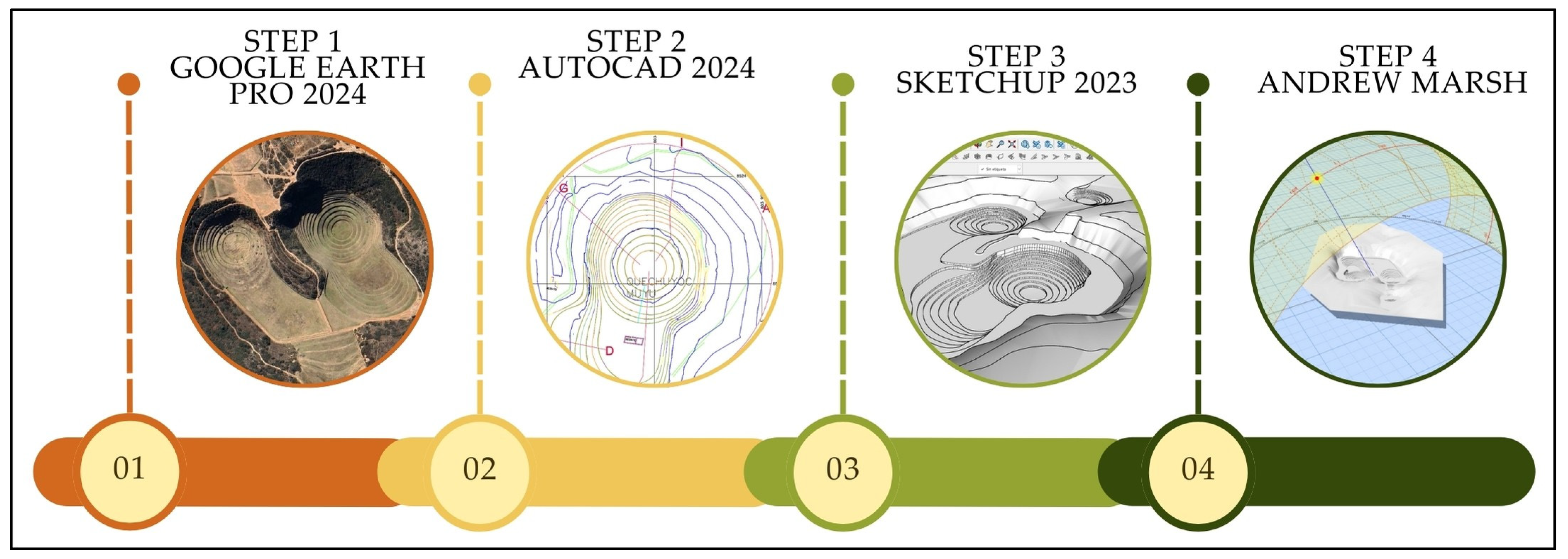
Figure 9 shows the modeling process of the Moray archaeological center. This process includes the geographic location and relief, which are represented in a 3D model. Additionally, a solar orientation analysis is conducted using digital tools. Step 1 involves acquiring terrain data through Google Earth Pro 2024, which provides crucial information about elevations, topographic sections, and the site’s orientation. In step 2, a PDF document prepared by the Instituto Nacional de Cultura (INC) was consulted. The INC was the institution in place at the time of the publication of the file and was later replaced by the Ministry of Culture. This document contained a topographic map of the study area of the archaeological site of Moray, which was used as a reference in the analysis [45]. This map was imported into AutoCAD 2024 to accurately delineate the boundaries and dimensions of the terraces. In Step 3, a three-dimensional model of the archaeological center was created using SketchUp 2023, allowing for detailed visualization of the structure and terrain depths. Finally, in Step 4, a solar analysis of Moray was performed using Andrew Marsh’s Sun-Path and Shading software, based on two-dimensional solar trajectory diagrams that provide information on solar incidence at the site.

3.1.4. Comparative and Interpretative Framework

The analysis of Moray, compared to archaeological sites such as Tipon and Pisaq, examines the terracing systems, bioclimatic strategies, hydrology, and construction techniques. It highlights the similarities and differences in terrace design and how the Incas adapted their terracing systems to the geographical and climatic conditions of each site. Bioclimatic strategies, such as microclimate management and the use of advanced hydrological systems, demonstrate the Incas’ profound understanding of their environment. Through the construction of terraces and canals, they optimized agricultural conditions, achieving a seamless integration of functionality, sustainability, and aesthetics in their infrastructure.

3.2. Climate Analysis

3.2.1. Climatic Classification and Recent Data

In Moray, Cusco, the climate is predominantly dry and temperate, with an average annual temperature of approximately 21 °C. According to the national climatic classification by SENAMHI, Moray is characterized as a semi-arid climate with dry autumns and winters, and it is classified as Zone 4—Mesoandino by the Ministry of Housing [18,46]. In order to facilitate international comparison, the Köppen–Geiger climate classification is also considered, under which the Moray archaeological site corresponds to a Cwb climate type (temperate highland climate with dry winters and mild summers), consistent with the national classification [23].
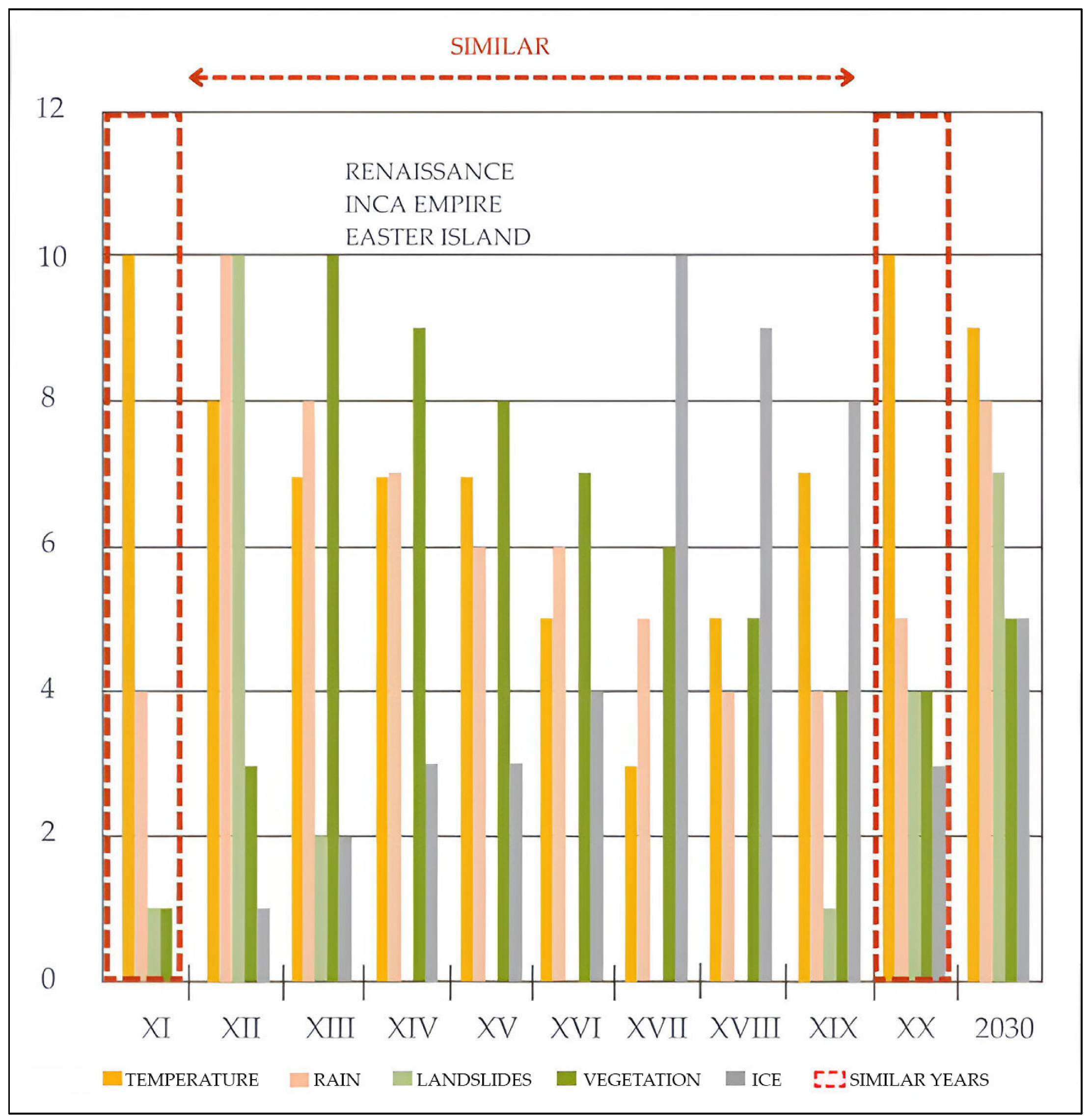
For the climatic characterization of the site, meteorological data recorded between 2019 and 2023 were analyzed to describe recent environmental conditions influencing the terraces. In addition, long-term paleoclimatic studies reported in the literature indicate cyclical temperature variations over the last millennium. These cyclical patterns, illustrated in Figure 10, represent reconstructed long-term temperature trends based on secondary sources and highlight recurring fluctuations rather than continuous linear change [47,48]. These historical references are used to contextualize climatic variability rather than to assess long-term climate change trends.
The origins of the Inca Empire date back to the 13th century; however, agricultural practices and landscape transformations in the region may have occurred earlier. Previous studies suggest that periods of intense and prolonged rainfall between the 11th and 12th centuries could have influenced early agricultural adaptations, including the use of unstable terrain formations [47]. In this context, the analysis of recent climatic data is employed to support the interpretation of current environmental conditions and microclimatic behavior at the site.

3.2.2. Microclimatic Characteristics and Solar Geometry

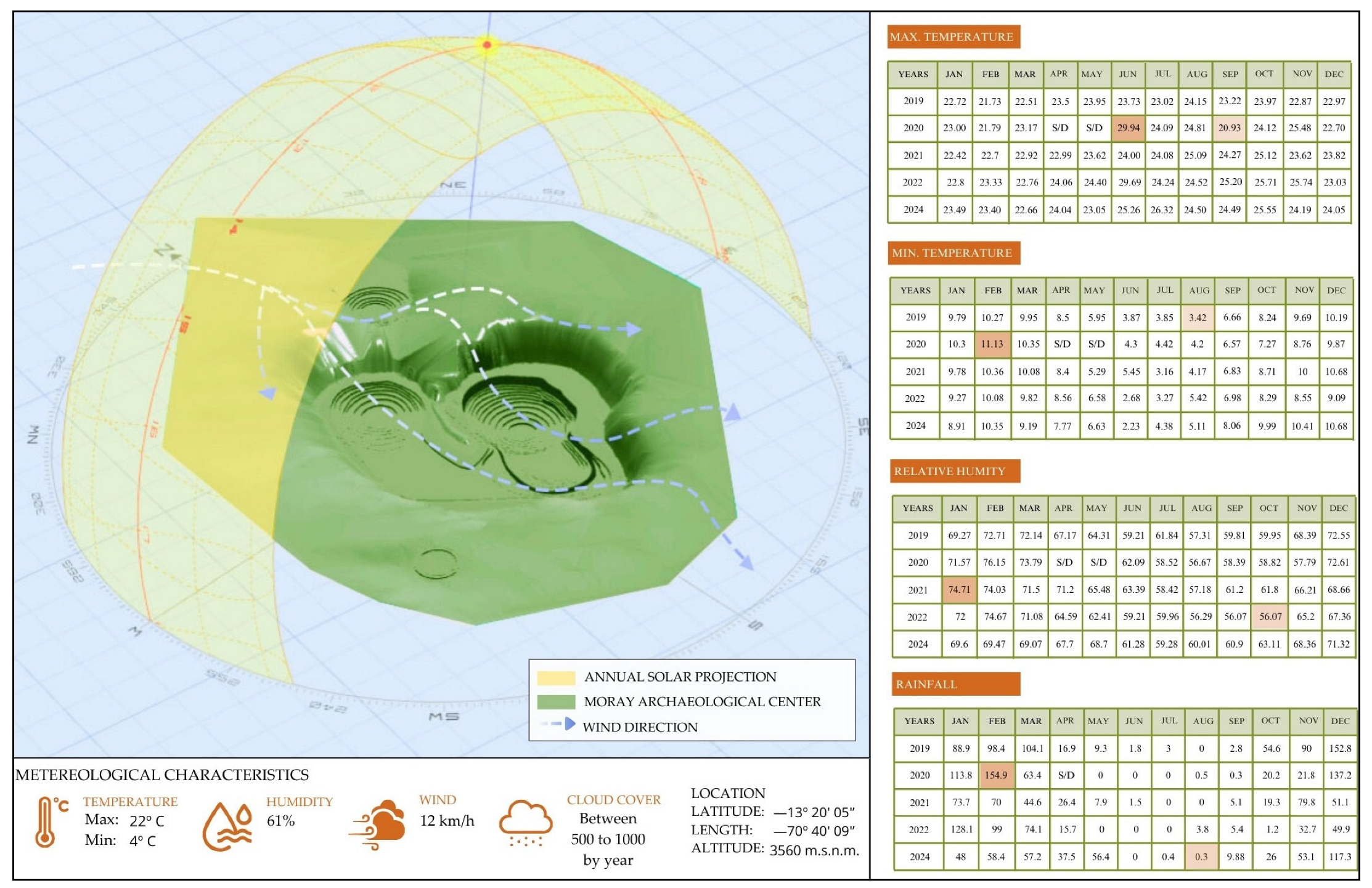
Figure 11 integrates a three-dimensional isometric representation of the Moray Archaeological Center with annual solar exposure and prevailing wind direction, allowing a comprehensive interpretation of the site’s environmental behavior. The solar projection indicates a relatively stable daily solar exposure throughout the year, with limited seasonal variation in daylight duration, a condition associated with the site’s latitudinal position and high-altitude context. This representation emphasizes the geometric relationship between terrace orientation, slope inclination, and solar incidence, which contributes to the formation of localized microclimates within the concentric depressions of Moray [49,50].
The climatic parameters summarized in Figure 11 show modest annual variability in temperature and relative humidity, with maximum temperatures reaching approximately 22 °C and minimum values around 4 °C, as well as relatively stable humidity levels throughout the year. These conditions are characteristic of temperate highland climates in the Cusco region and reflect a low seasonal thermal amplitude, as documented by regional meteorological records [18,49]. Such climatic stability would have favored agricultural experimentation by reducing thermal stress on crops while enabling differentiated growing conditions across terrace levels.
Wind direction and average wind speed, represented in the isometric diagram, further contribute to understanding site performance, as airflow interacts with terrace geometry and depth, influencing ventilation, moisture dispersion, and thermal regulation [50]. The inclusion of the three-dimensional isometry in this section is therefore essential, as it visually synthesizes the interaction between solar exposure, wind patterns, and architectural form, supporting the interpretation of Moray as a deliberately engineered system designed to manage environmental conditions rather than merely respond to them [51].

3.2.3. Seasonal Observations

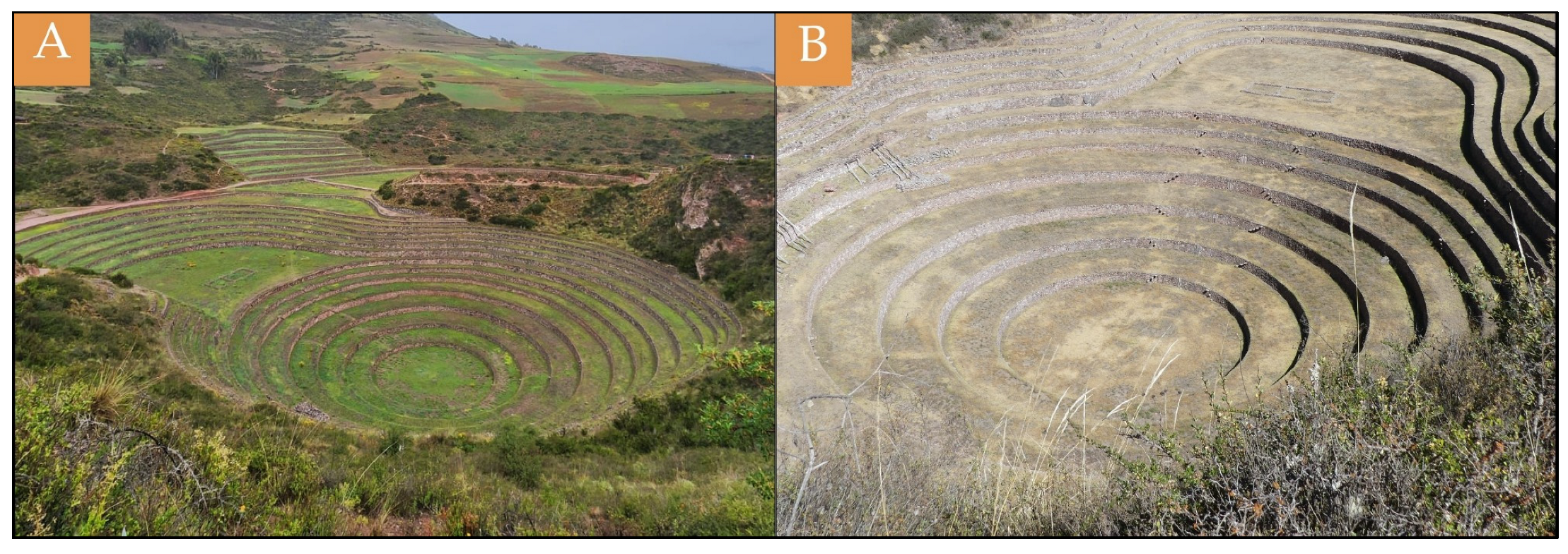
In Figure 12, a notable comparison is made between photographs taken at different times of the year. In Figure 12A, the photograph is taken during the rainy season (from November to April), when the region experiences regular rainfall. Despite the rains, the landscapes are greener, and the environment is more tranquil, offering a unique perspective of the site. On the other hand, in Figure 12B, the photograph is taken during the dry season (from May to November), where the days are usually sunny with little chance of rain, although the nights can become considerably colder [18].

3.3. Flora and Fauna

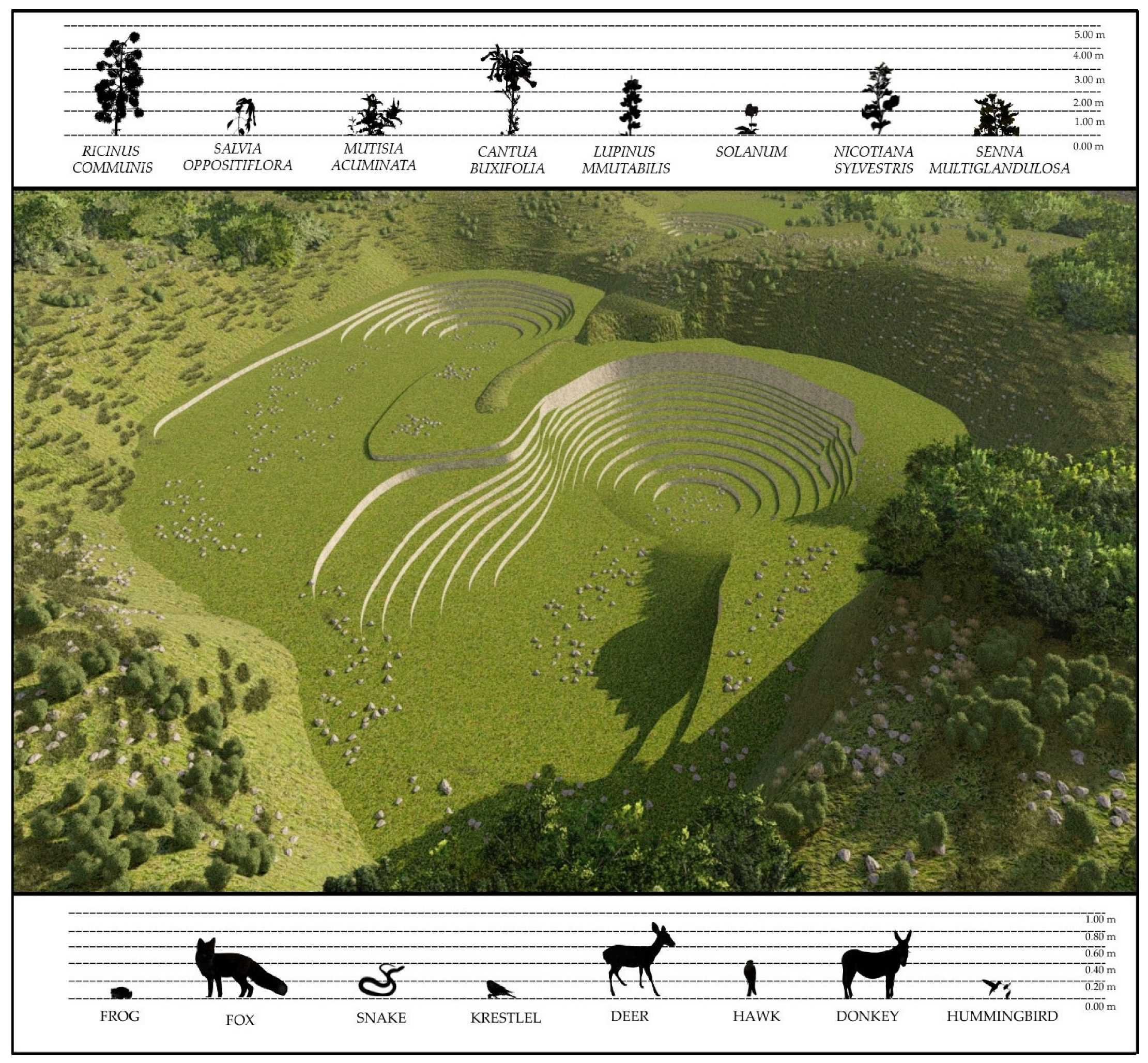
In Figure 13, the diversity of flora and fauna in Moray is observed. Regarding the flora, we find species such as the castor bean plant, known for its medicinal properties and use in the production of castor oil. The nucchu (Salvia oppositiflora) is an ornamental plant with medicinal uses. The chinchirkoma (Mutisia viciifolia) is used in traditional medicine and as an ornamental plant. The kantu (Polemoniaceae), the national flower of Peru, is appreciated for its beauty and cultural value. The wild tarwi (Lupinus mutabilis Sweet) is a leguminous plant used as food and green manure. The wild potato (Solanum neocardenasii), an ancestor of cultivated potatoes, is important for genetic studies and biodiversity conservation. The wild tobacco (Nicotiana glauca) is used in ceremonies and rituals and has medicinal properties. The mutuy (Senna multiglandulosa) has medicinal properties and is used in local crafts [52].
The fauna of Moray includes the frog (Rufo spinulosus), an endangered amphibian due to the use of insecticides in crops. The fox (Vulpes vulpes) is a carnivorous mammal that controls populations of rodents and other small animals. The snake (Colubridae), a reptile, helps in pest control and maintains the ecosystem balance. The kestrel (Falco sparverius), a small bird of prey, hunts insects and small mammals, contributing to pest control. The deer (Cervidae), an herbivorous mammal, is indicative of a healthy ecosystem.
The falcon (Falconidae), another bird of prey, controls populations of small animals and birds. The Falconidae family includes various species such as the crested caracara (Caracara plancus), the aplomado falcon (Falco femoralis), and the peregrine falcon (Falco peregrinus). The donkey (Equus asinus) is a domesticated animal used for transportation and agricultural work. The hummingbird (Trochilidae), known for its ability to pollinate flowers while feeding on nectar, is vital for the reproduction of many plants [53]. However, the use of fertilizers in agriculture at Moray may have adverse effects on the ecosystem. Chemical fertilizers can alter pH levels in both water and soil, impacting water quality and plant health. An imbalanced pH can interfere with the availability of essential nutrients and negatively affect plant and animal species that rely on these resources for survival [54].
In conclusion, the flora and fauna of Moray play a crucial role in preserving the ecosystem and supporting the region’s agricultural sustainability. The diversity of plant species not only contributes to ecological balance but also provides important medicinal, nutritional, and cultural resources, such as tarwi, wild potatoes, and kantu, among others. Regarding the fauna, it includes endangered species like the toad and natural predators such as the fox and kestrel, which are essential for pest control and maintaining ecological equilibrium.

4. Results

4.1. Place of Intervention, Topography and Orientation

Moray is located in a transitional area between the Highlands and the Amazon rainforest. It is characterized by its circular agricultural terraces that descend toward the center of the complex, forming a unique stepped topography [55].
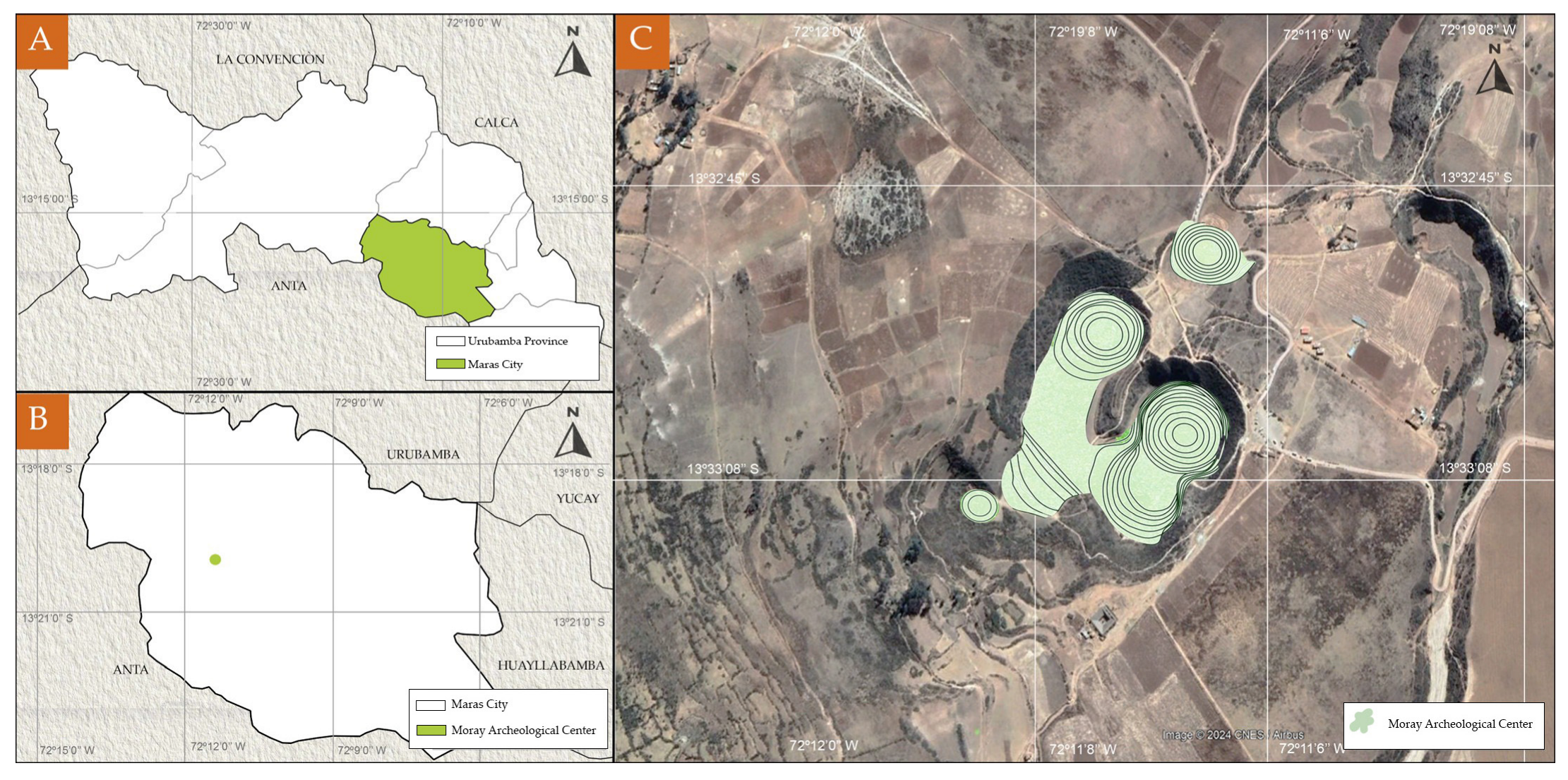
Figure 14 presents the intervention area at the Moray Archaeological Center. In Figure 14A, the map of Urubamba is shown, located at coordinates 13°18′37.2″ S and 72°7′12″ W. In Figure 14B, the map of Maras is visible, situated at coordinates 13.3356° S and 72.1570° W. In Figure 14C, a top view of the Moray Archaeological Center is provided, with coordinates 13.3299° S and 72.1971° W [38].
Similarly, the agricultural terraces of Moray provide important lessons on the sustainable management of natural resources in environments with complex topographical and climatic conditions. The orientation and layout of these terraces allowed the ancestors to cultivate a variety of plants adapted to specific microclimates, which was crucial for agricultural production and ensuring food security in the region [56].
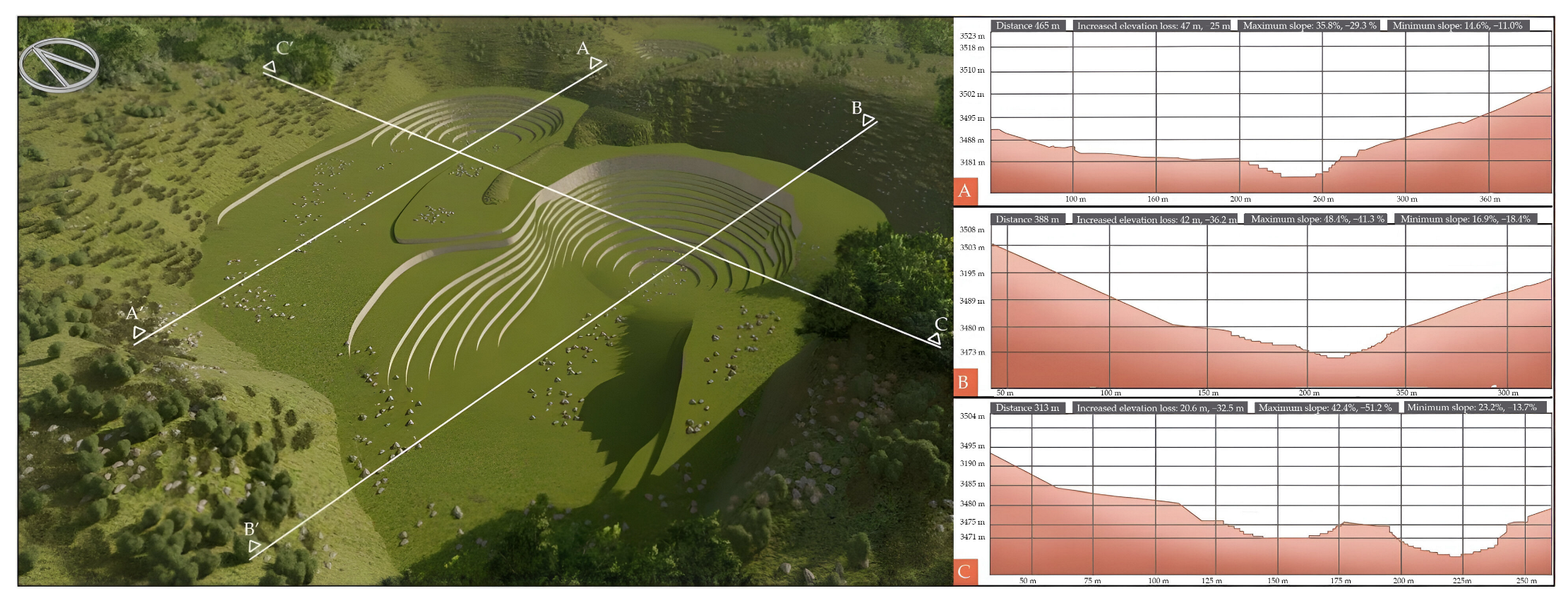
Figure 15 shows a three-dimensional representation of the circular terraces. These terraces are constructed on gentle slopes that allow for maximum sun exposure, which results in soil temperatures that can vary by up to 12 °C between the highest and lowest terraces [18]. On the other hand, in Figure 15A, a 465 m cut was made in the Simamuyu muyu, which has a maximum slope of 35.8%, −29.3%, and a minimum slope of 14.6%, −11.0%. Similarly, in Figure 15B, a 388 m cut in the Quechuyoc Muyu shows a maximum slope of 48.4%, −41.3%, and a minimum slope of 16.9%, −18.4%. Finally, in Figure 15C, the topographic cut runs horizontally through both muyus, creating a maximum slope of 42.4%, −51.2%, and a minimum slope of 23.2%, −13.7% [38].

4.2. Solar Analysis and Microclimatic Effects

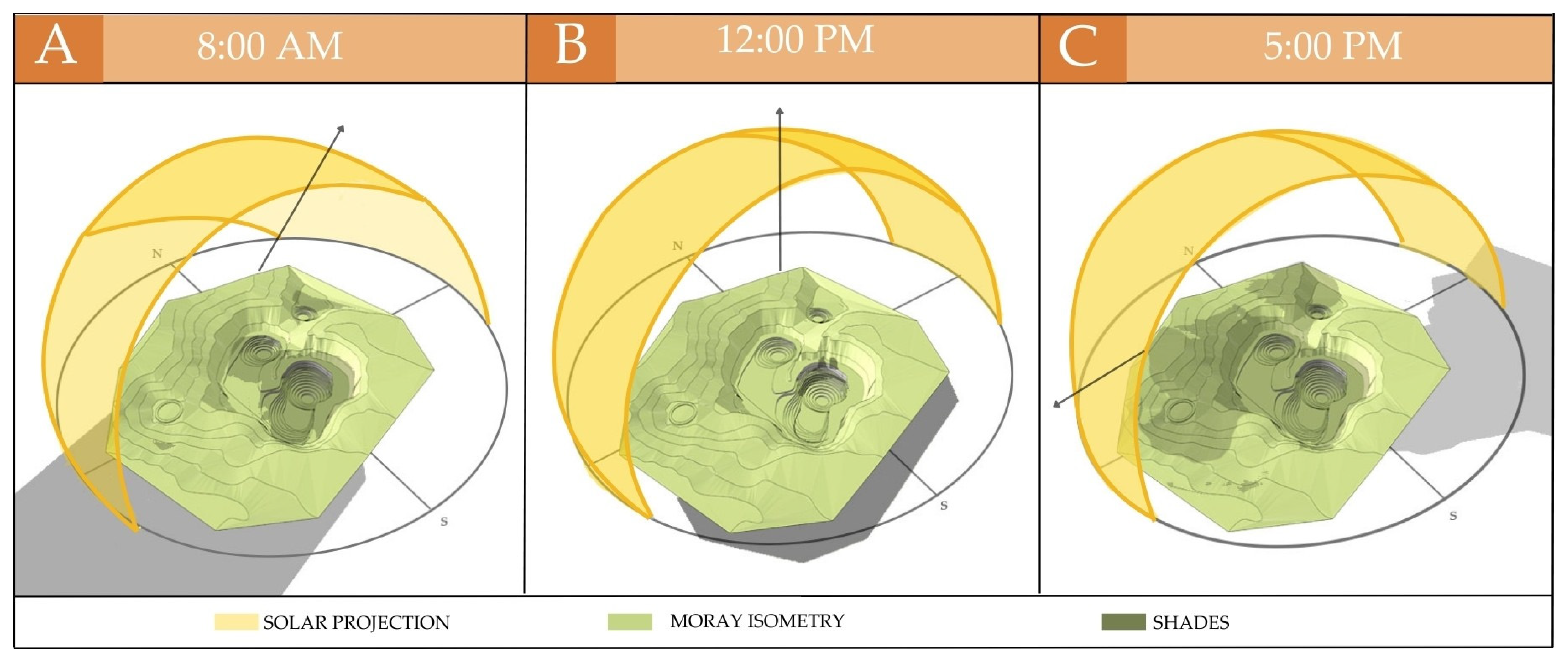
Figure 16 shows a three-dimensional graph displaying the solar analysis of Moray’s topography in May. In Figure 16A, the sun is at 6:00 a.m., meaning that the northeast side remains in shadow, while the southwest side receives more solar radiation during the day. Conversely, in Figure 16B, the sun is at its highest point at noon, and the circular shape of the terraces allows all levels to receive adequate solar exposure. In contrast, in Figure 16C, there is less solar radiation, which implies that the southeast side warms up less than the others.
Moreover, according to Wright, Moray has vertical stones that mark the limits of the shadows at sunset during equinoxes and solstices. This suggests that the Incas used these terraces to experiment with agriculture in different ecological zones of the empire [56].
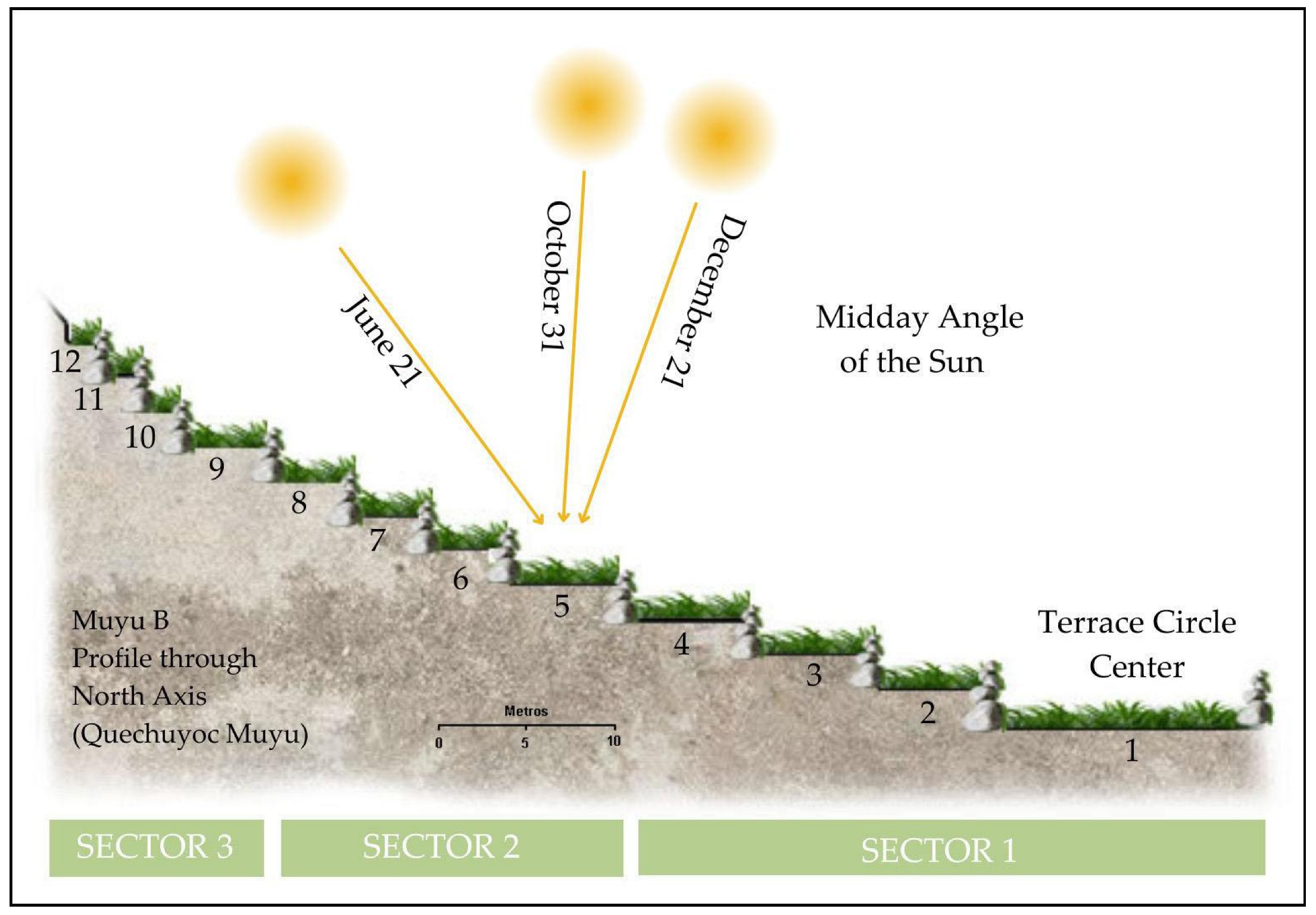
Figure 17 shows a cross-section of Muyu B alongside the solar angles during different seasons of the year. This leads to the division into three sectors for temperature analysis. In Sector I (Terraces 1–4), temperatures ranged between 9.4 °C and 6.7 °C, with higher soil moisture that supports cultivation without irrigation and allows natural soil cooling through evaporation. Terrace 1 is the warmest due to its sun exposure. In Sector II (Terraces 5–8), temperatures varied between 7.1 °C and 10.2 °C, with a sharp drop between Terraces 8 and 9 due to winter shadows. In Sector III (Terraces 9–12), the lowest temperatures were between 3.2 °C and 0.5 °C, influenced by the sun’s low angle and the terrain’s slope. This limits agricultural activity in June but also enables varied planting times due to the uneven warming of the terraces after the solstice [57,58].

4.3. Spatial and Geometric Characterization

4.3.1. Master Plan: Area Analysis and Sizing

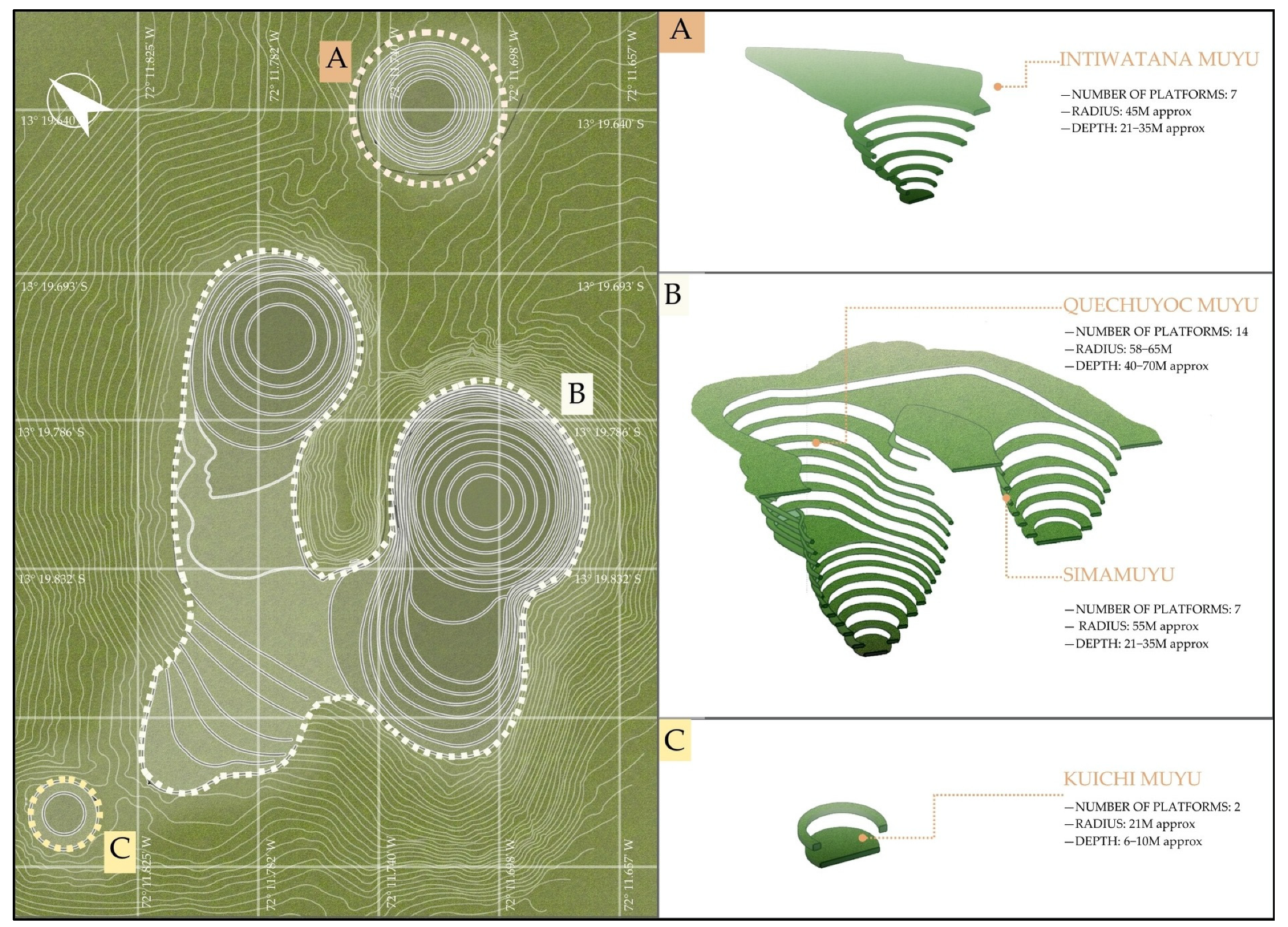
In Figure 18, the Master Plan of the archaeological site of Moray is depicted, divided into sections for more detailed analysis. In Figure 18A, the Intiwatana Muyu is located, a complex with six circular walls and a radius of approximately 45 m, which includes water cascade structures and stairs embedded in the walls. In this case, its design is not oriented towards irrigation [56]. In Figure 18B, there are two muyus and two terraces: the Quechuyoc Muyu, which is the main one, is characterized by having 14 terraces and a radius of approximately 58 to 65 m. Additionally, the Simamuyu, connected to the former but smaller in size, has 7 terraces and a radius of approximately 55 m. The seventh terrace stands out for its large size, covering an area of 2.3 hectares that extends up to the aqueduct. In Figure 18C, Kuichi Muyu is located, the smallest of the three lower muyus, formed as a result of a local landslide. Although this Muyu was not designed for irrigation [58], the use of water in the terraces of Moray is supported by the presence of drop structures, indicating that water played a role in the site, potentially related to drainage or specific rituals. Additionally, nearby springs and groundwater seepage in the area might have influenced the construction and purpose of the terraces [58]. Before restoration efforts, the lower circle of Moray contained numerous rocks, some considered sacred. It is essential to highlight that the restoration work carried out in Moray has sparked debates among specialists. In some instances, the techniques and materials used during restoration may not fully align with the original construction methods, potentially impacting the site’s authenticity and historical significance [59].

4.3.2. Shape, Volume, and Scale: According to the Guidelines of the Environment

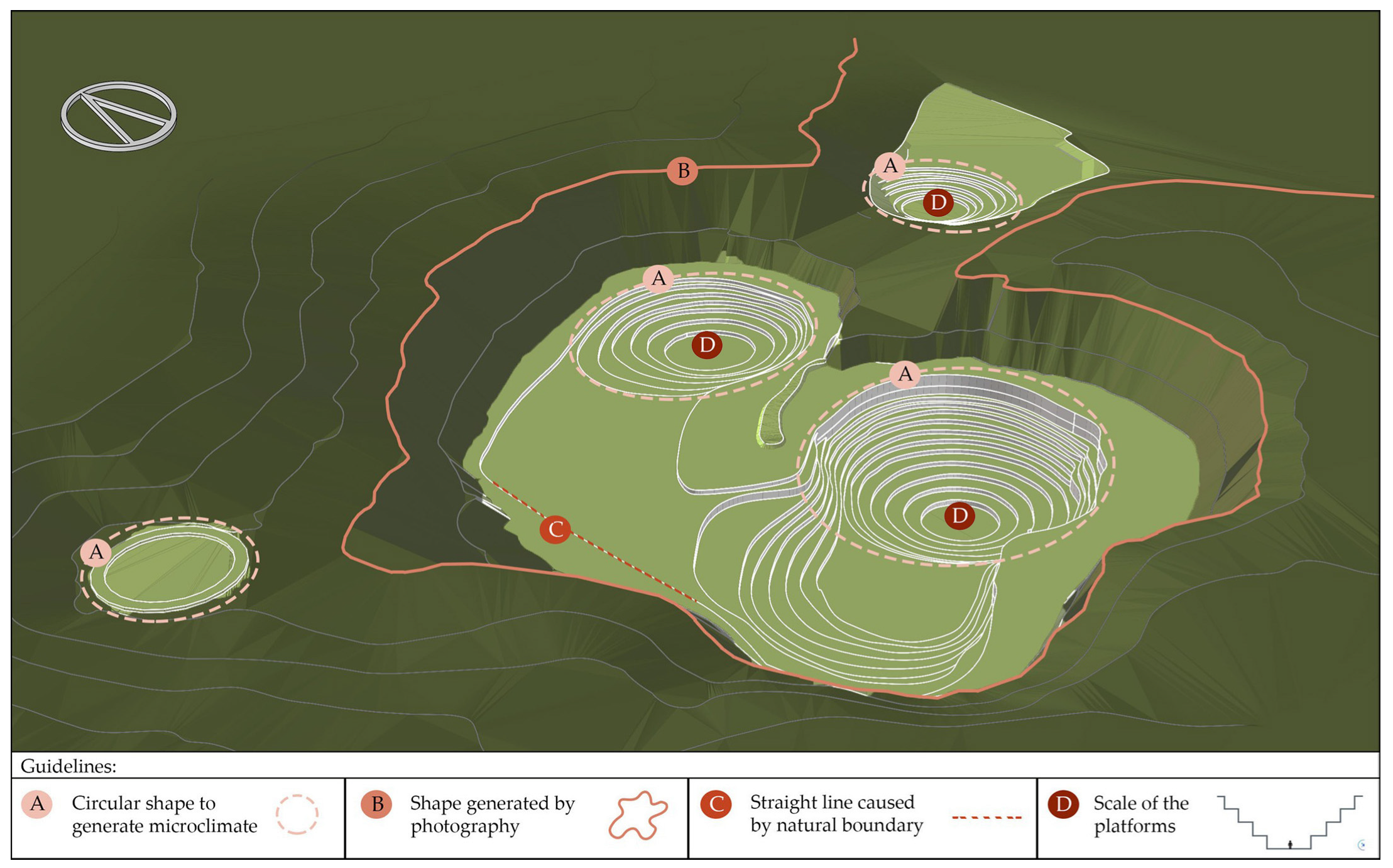
In Figure 19, it is observed that the configuration of Moray presents a distinctive shape influenced by various guidelines that define its space. In Figure 19A, the circular arrangement of the area creates diverse microclimates; these microclimates vary due to subtle differences in soil composition, color, texture, and exposure to sun and shade, among other factors. These particular soil characteristics affect the metabolic processes of plants and the duration of their vegetative cycles [18]. Similarly, in Figure 19B, the site’s topography contributes to the formation of the shape by surrounding the central muyus. Additionally, in Figure 19C, a significant natural feature is the mountain located to the southwest, which acts as a boundary for the terraces, creating a straight line. Finally, in Figure 19D, the terraces vary in height, with an average height of approximately 1.8 m in height [58,60].

4.3.3. Geometric Principles (Proportion, Rhythm, Symmetry)

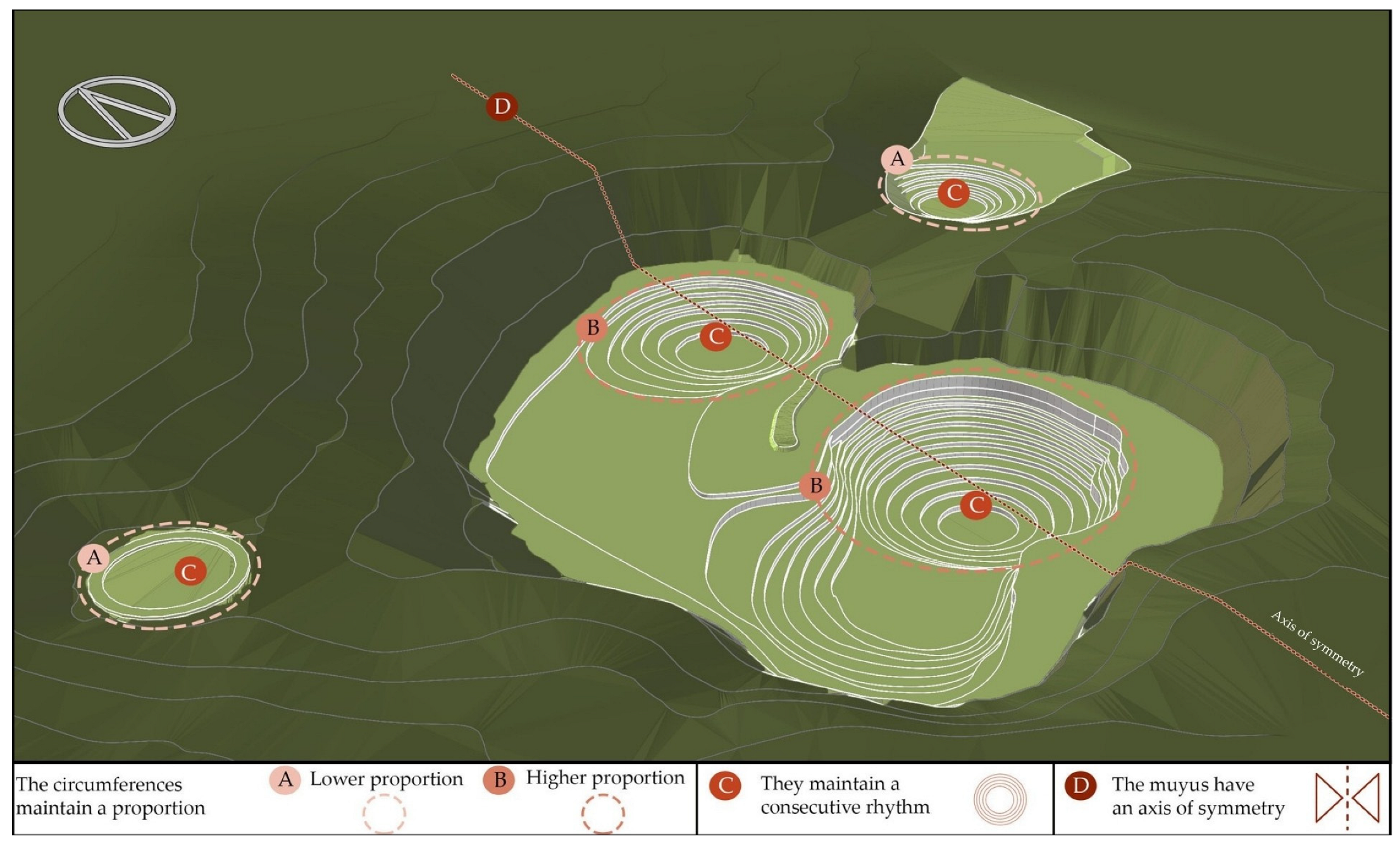
In Figure 20, various geometric principles can be observed, which assist in a better analysis of Moray’s design. In Figure 20A, the largest ones are located in the center, while in Figure 20B, the smaller ones are positioned at the ends. Similarly, in Figure 20C, the pattern of consecutive circles repeats approximately every 2–3 m, contributing to the creation of the different muyus and reflecting a coherent geometric rhythm throughout the complex. Finally, in Figure 20D, this arrangement leads to the formation of a symmetrical horizontal line with the larger muyus, which were utilized for agriculture, allowing for efficient use of space [60].

4.4. Functional and Environmental Performance Analysis

4.4.1. Function and Zoning According to the Inca Hierarchy

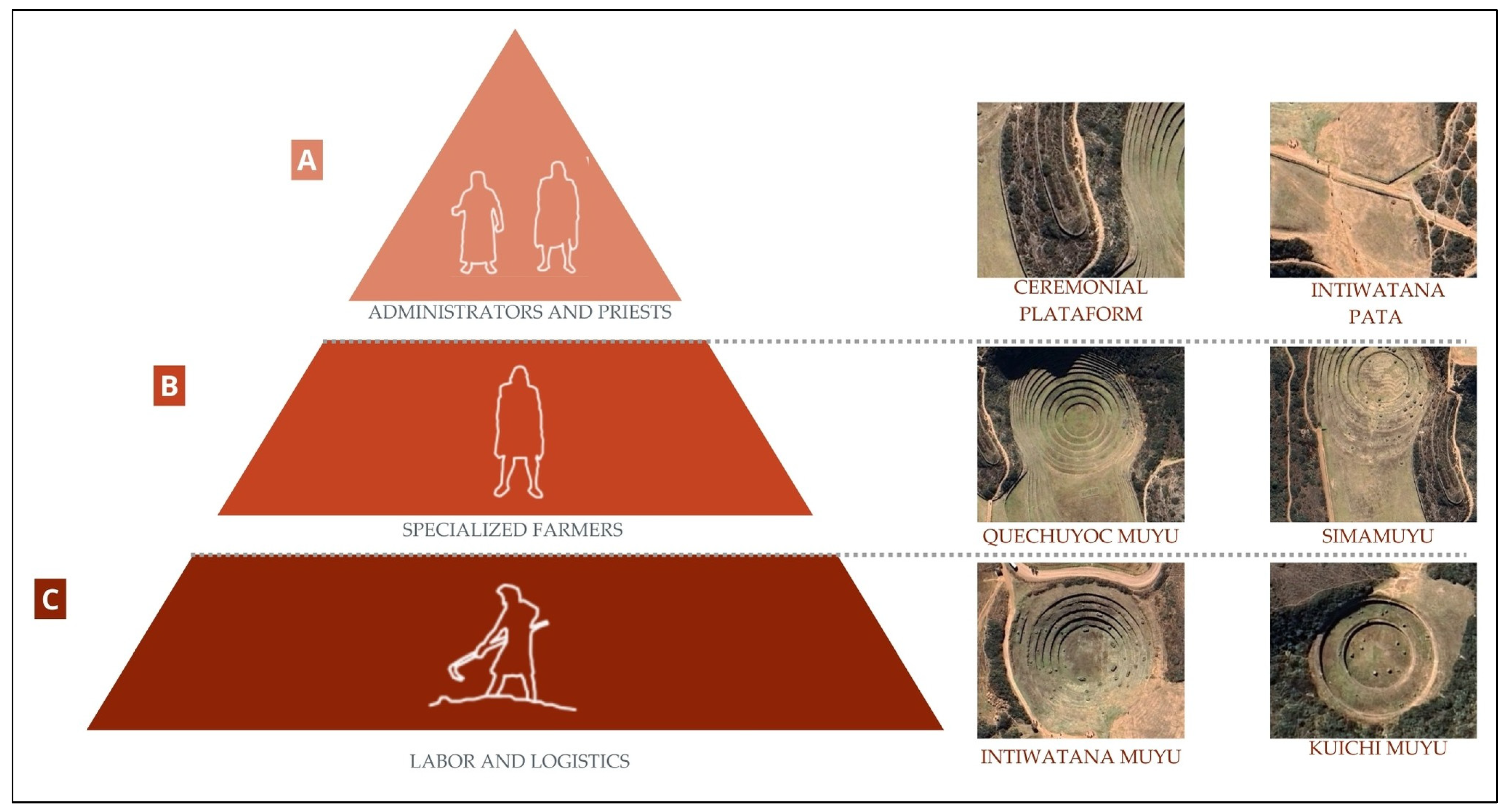
In Figure 21, the hierarchical pyramid of Moray is illustrated according to the roles performed by the Incas. Although the social organization of Moray remains a topic of debate, the structure of the terraces could reflect specific roles within Inca society. At the top, represented by Figure 21A, are the administrators and priests, who were responsible for the management of Moray. This site was overseen by Inca officials specialized in agriculture, while priests played a crucial role, as agriculture was deeply intertwined with religion and the ceremonial practices conducted on the terraces [61]. However, it is important to note that the hierarchical distribution of Inca society cannot be solely deduced from the terraces, and further archaeological studies and historical sources are needed to corroborate these inferences. In Figure 21B, the farmers are situated, who were highly specialized due to the complexity of the agricultural experiments carried out at Moray. The presence of terraces with a variety of microclimates indicates advanced agricultural knowledge and a remarkable ability to adapt crops to different conditions. Finally, in Figure 21C, the workers responsible for labor and logistics are found, as the construction and maintenance of the terraces required a considerable amount of organized labor. This suggests the existence of a well-defined hierarchical structure that coordinated the tasks of construction, maintenance, and harvesting [58,60,62]. Despite evidence of work organization, the interpretation of a precise social hierarchy remains a topic of debate among experts.
It is also relevant to consider the collective labor systems implemented by Inca society, such as the mita and minka, which were fundamental to the construction and maintenance of these complex structures. The mita, a mandatory labor system that mobilized populations for state-led projects, likely played a critical role in enabling the engineering feats required for the agricultural terraces, ensuring both their scale and functionality. Meanwhile, the minka, rooted in voluntary communal labor, may have been utilized for the continuous maintenance of the terraces and their irrigation systems, fostering collaboration among local inhabitants [63].

4.4.2. Hydraulic and Drainage Systems

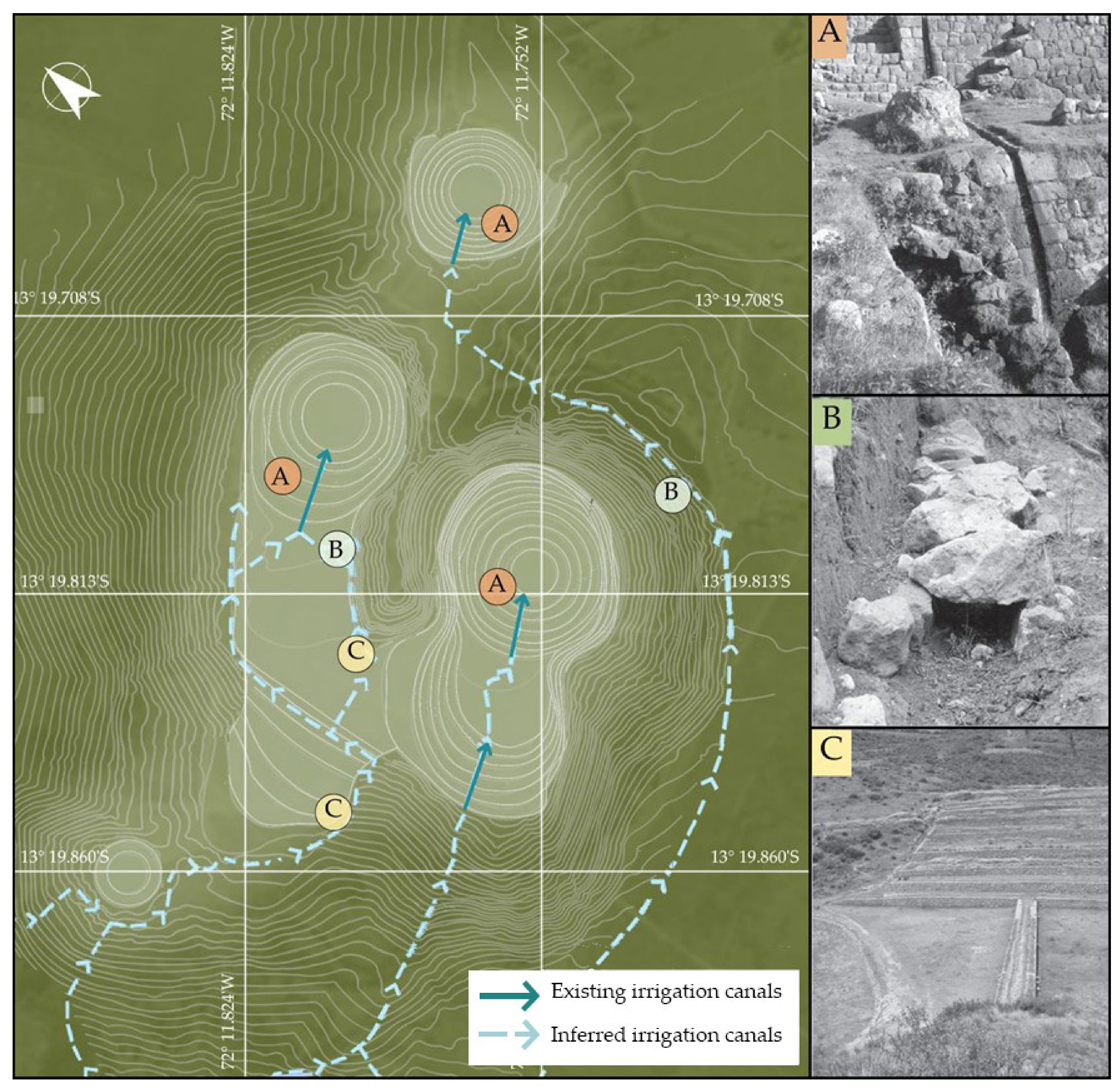
In Figure 22, the estimated water map of the Moray water channels can be observed. In Figure 22A, a type of vertical channel with a hydraulic drop is presented that directs the water towards the muyus, specifically towards the bottom of these. Continuing in Figure 22B, two Inca channels known as “north channel” and “east channel” are shown according to their location; the “east channel” is visible from the surface and extends from the spring to the northeast, running approximately 3.9 m, while the “north channel” also emerges to the surface and is similar in size to the east channel. Finally, in Figure 22C, a channel used to transfer water from the Main Spring of Moray to Simamuyu through the terraces is observed, with a structure width of 3.3 m, which is considerably wider than necessary [58]. Water was essential in Moray for both agriculture and ceremonial practices. The Incas developed advanced irrigation systems with channels and reservoirs to ensure the terraces were adequately irrigated, creating microclimates ideal for agricultural experimentation. Furthermore, water held sacred significance in the Andean worldview, playing a key role in rituals and offerings associated with land fertility and successful harvests [61].
The overengineering, a recurring feature in pre-colonial Andean architecture, is evident in this hydraulic system. First, in its adaptation to seasonal climate variability, the intense rainy periods (from December to March, with an average annual precipitation of 20 inches) required infrastructure to ensure efficient and sustainable water management. Second, in its durability, the Incas designed their systems to withstand long-term geological or climatic changes. Finally, the symbolic and social dimension of water, which in the Andean worldview held a sacred and strategic role, justifies the implementation of systems capable of serving both practical and ritual purposes. These conditions influence the design and functionality of the canals, which combine existing structures and reconstructions based on archaeological evidence and inferences [58].
It is possible that the agricultural experiments carried out allowed adaptation to other altitudes, managing to adapt around 60% of the plants currently consumed in the Andes [52]. Historian Edward Ronney indicates that this place was probably used for the development of special [58]. Photographic evidence of mother plants was found: potato, oca, mashua, quinoa, kiwicha, tarwi, arracacha, squash, tobacco, and caihua. According to Kenneth R. Wright, in the Muyus B and C of Moray, various cultivated plants were identified, reflecting the site’s agricultural complexity and diversity. Among these are species such as mustard (Brassicaceae), cactus (Cactaceae), ornamental or edible roots of the canna type, beans (Fabaceae), cord fiber (Furcraea), grass (Poaceae), and knotty herb (Polygonaceae). Also notable are crops like chili, tomato, and other ornamental varieties from the Solanaceae family, along with corn (Zea mays L.), which appears rarely. Additionally, unidentified but considered significant plants (Unknown C) were found, as well as species like soursop (Anona), myrtle (Myrtaceae), elderberry (Sambucus), sapote (Sapotaceae), and Peruvian pepper tree (Schinus molle) [44,58].

4.4.3. Inca Cosmology and Irrigation Management

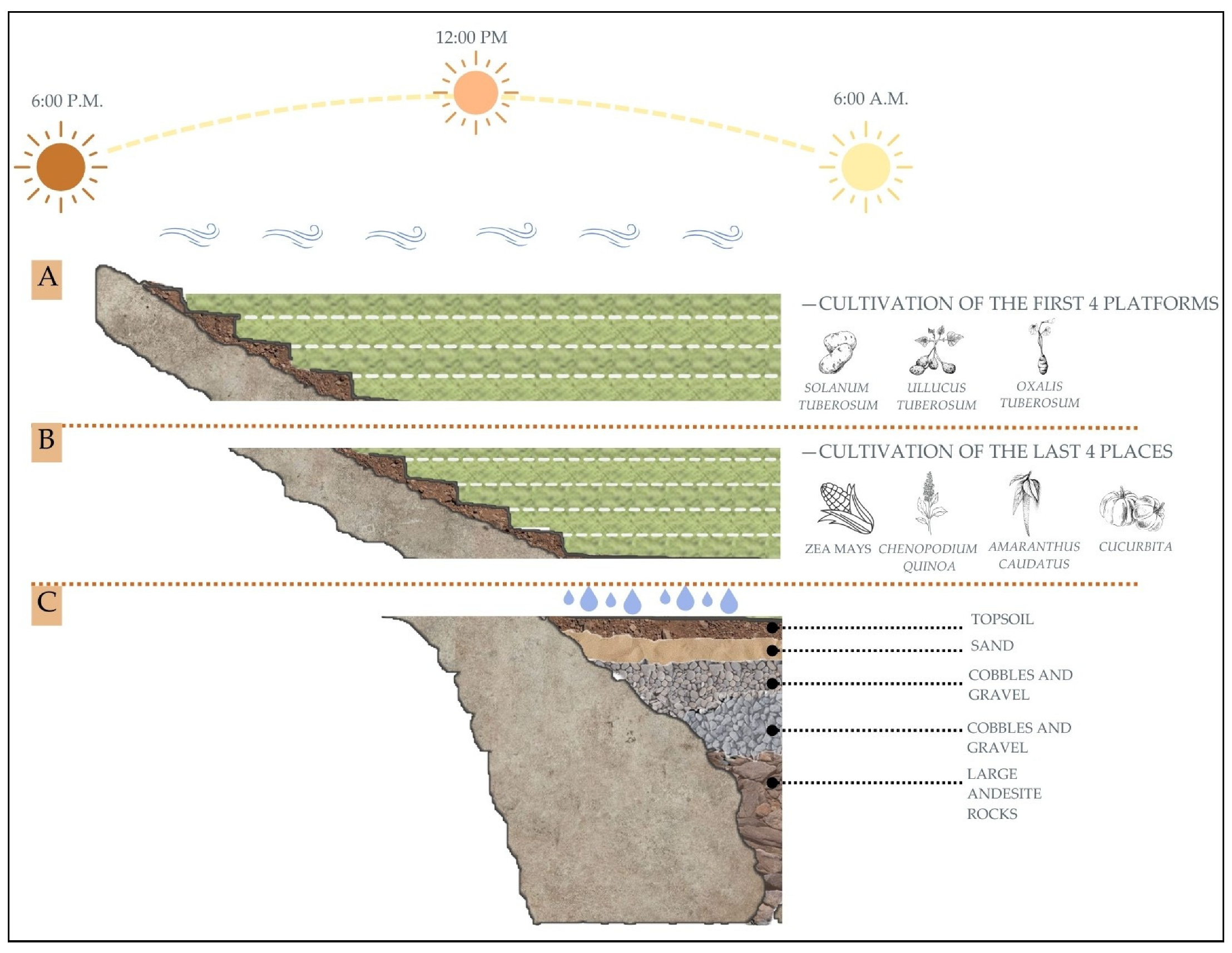
In Figure 23, the functioning of the irrigation system in the terraces is shown, highlighting the relationship between precipitation and channel irrigation that characterizes Moray. In zone Figure 23A, the channels had a descending direction, and the last terraces were exposed to the sun, rain, and winds. This location, combined with the variability of precipitation, meant that crops in this area relied on both rainwater and irrigation, especially during months with low water availability. Therefore, it is likely that more resistant crops, such as potatoes, olluco, and oca, which require less irrigation, were grown here. In contrast, in zone Figure 23B, the first four terraces were the most humid and better protected. This microclimate, combined with higher water availability from the springs during the rainy season, favored the cultivation of crops like maize, kiwicha, and squash [52]. In Figure 23C, water accumulation hindered plant growth. To solve this issue, a water filtration system using rocks was implemented, possibly linked to underground irrigation, which helped manage excess water and ensured efficient irrigation [58,59].

4.5. Constructive Materials and Structural Stability

Construction Materials

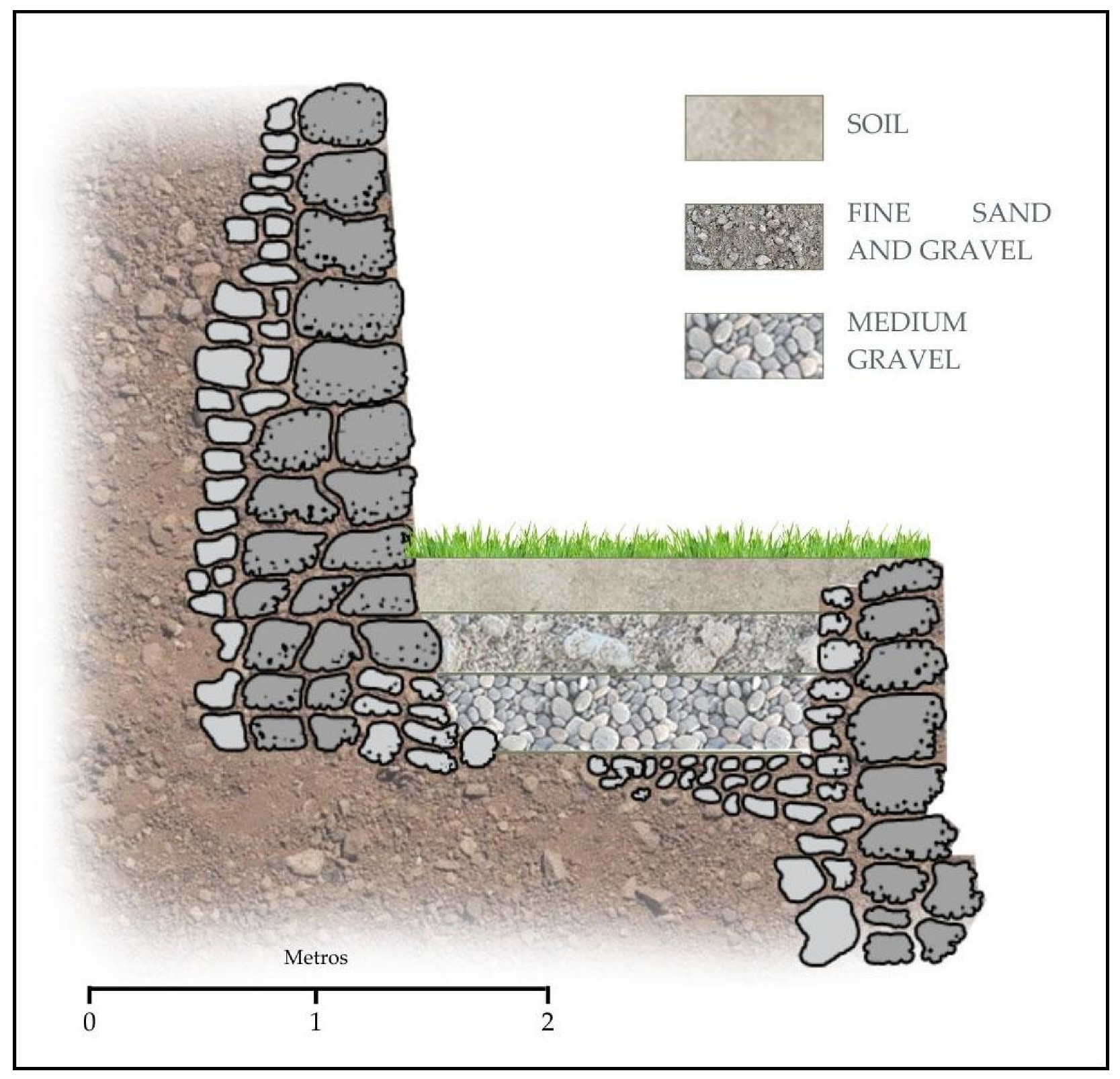
In Figure 24, the internal structure of the Moray terraces is shown, constructed with local stone and earth to create a precise concentric circular design. This structure consists of three layers to ensure its effectiveness. In Figure 24, the top layer, there is fertile soil brought from different parts of the valley, suitable for agriculture. Below this, the layer consists of gravel and sand, which facilitates water drainage, thus preventing saturation and landslides. Finally, the bottom layer is composed of large stones that provide additional drainage and structural stability. Additionally, in the last layer, the structural system includes stone retaining walls that support the terrace soil, where agricultural experiments were conducted. These medium to large stones help prevent landslides [58,59].

4.6. Conservation Strategies for the Moray Archaeological Site

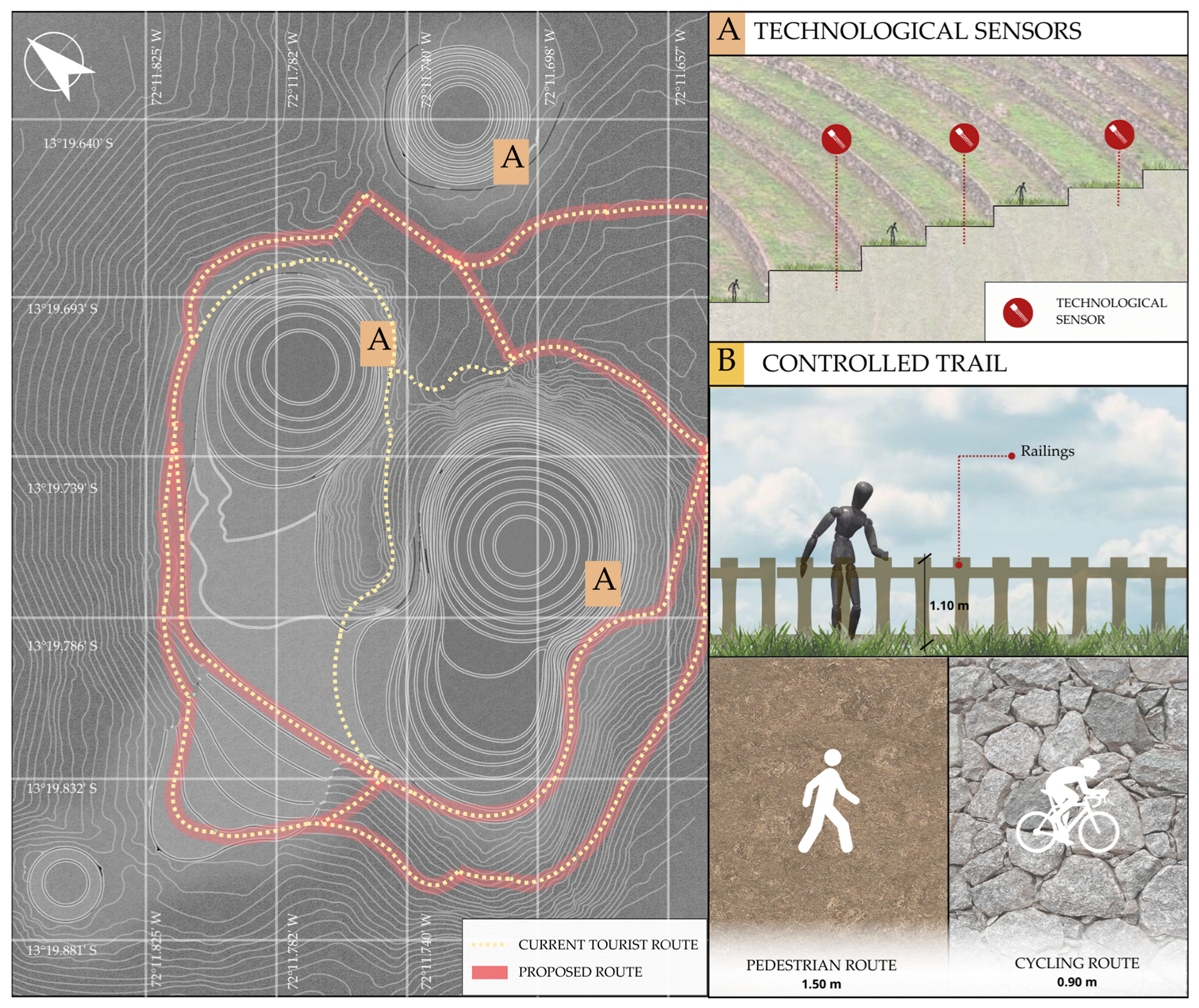
In Figure 25, following the integrated evaluation of the spatial, functional, constructive, and environmental aspects of the Moray archaeological site, a comprehensive conservation and management proposal is presented, aimed at preserving its physical stability, environmental functionality, and landscape value. The proposal is grounded in principles of minimal intervention, reversibility, and landscape compatibility, prioritizing preventive actions that do not alter the original construction system nor the cultural legibility of the site.
In Figure 25A, the implementation of an environmental monitoring system is proposed through sensors measuring temperature, ambient humidity, and soil moisture, strategically located at the bottom of the depression, on intermediate terraces, and on upper levels. This arrangement allows for the recording of vertical microclimatic variations, the identification of incipient erosion processes, and the anticipation of potential risks of structural instability in the terraces. The data obtained constitute a key tool for strengthening preventive management in response to climate change effects and increasing tourist pressure on the site.
In Figure 25B, the tourist route is reorganized through a clearly delineated controlled path, constructed with stabilized gravel using a natural binder. This permeable and reversible material is chromatically integrated into the archaeological landscape and reduces the compaction of the original soil, minimizing physical impact on the terraces. The total width of the route is approximately 2.40 m, distributed into a 1.50 m pedestrian lane and a secondary 0.90 m lane intended for cyclists and light maintenance, designed as a one-way route to minimize circulation conflicts, reduce physical impact, and ensure greater safety. Both lanes are differentiated through chromatic and textural variations in the pavement, avoiding rigid elements that could alter the visual reading of the landscape. In higher-risk areas, the replacement of the current railing system is proposed with a more visually permeable design based on alternating diagonal elements arranged in a mirrored pattern. This solution maintains protective functionality without obstructing views, enhances visual perception of the terrace depth, and facilitates photographic documentation, thereby reducing visual impact on the heritage ensemble.
In summary, the stability of Moray’s terraces is addressed through a preventive approach based on continuous environmental monitoring using sensors and on the control of tourist circulation as an impact management tool. Regulating visitor flow and clearly defining circulation areas help reduce soil compaction, surface erosion, and progressive terrace deterioration, reinforcing the site’s integrated conservation. In this context, the stability of the terraces does not depend solely on structural interventions but also on the control of tourist use.

5. Discussion

Archaeological and ethnohistorical evidence shows that Andean societies developed their identity and territorial organization through a close and dynamic relationship with the natural environment [1,64]. Agriculture constituted a central pillar of social development, sustained by highly adaptive systems capable of responding to complex climatic and topographic conditions, with more than 2000 plant species cultivated during the Inca period [2,65]. In line with previous literature, agricultural terraces should be understood not only as productive infrastructures, but as integrated environmental systems that articulate spatial organization, microclimatic control, and cultural meaning [66]. At the archaeological site of Moray, this integration reaches an exceptional level, reinforcing its interpretation as a specialized space for environmental management and agricultural experimentation in high-altitude landscapes [3,67].
The results obtained confirm the high level of engineering refinement at Moray while also revealing its increasing vulnerability under current climatic conditions. Recorded thermal gradients reaching up to 15 °C indicate a carefully designed microclimatic system whose functioning depends on a precise environmental balance. Although previous studies have highlighted the Incas’ ability to manipulate climate at a local scale, the analyzed data suggest that this effectiveness was conditioned by environmental stability that is now being altered. Contemporary climate variability, together with soil erosion processes and localized structural deterioration, reinforces the interpretation of Moray as a system highly sensitive to environmental and anthropogenic disturbances, with direct implications for its long-term conservation.
From a spatial perspective, the findings confirm that Moray is distinguished by a concentric organization that prioritizes microclimatic differentiation through vertical depth rather than horizontal expansion. This configuration, documented through terrace depths ranging approximately between 6 and 7 m and wall heights between 3 and 5 m, allows the generation of differentiated thermal conditions within a confined space [18]. Unlike other extensively studied Inca sites, this spatial logic does not respond to criteria of extensive territorial control but rather to the optimization of environmental variability, reinforcing its experimental character.
Based on the comparative and interpretative framework described in Section 3.1.4, the discussion now focuses on the results derived from the systematic comparison between Moray, Tipón, and Pisaq. This comparison aims to identify shared design principles and distinctive strategies related to terracing systems, microclimatic management, and adaptation to topography, contributing to a broader understanding of Inca agricultural engineering.
From a comparative perspective, Moray, Tipon, and Pisaq represent distinct design strategies within the Inca agricultural system. Tipon presents a more linear and predictable spatial structure, organized around a spring and an extensive hydraulic network that efficiently distributes water across terraces and platforms [8,68]. Pisaq, in turn, exhibits greater spatial complexity, integrating agriculture, urbanism, rituality, and circulation to reinforce connectivity and territorial control [22,69]. Within this comparative framework, Moray stands out for a spatial logic that prioritizes environmental experimentation over structural resilience, explaining both its uniqueness and its greater vulnerability to climatic change.
Functionally, the comparative analysis highlights Moray’s singularity within the Inca system. While the three sites reflect multifunctional planning that integrates agricultural, ritual, and social dimensions, the results of this study reinforce the interpretation of Moray as a space where agricultural experimentation played a predominant role, closely linked to ceremonial practices associated with agricultural cycles and environmental observation [44]. At Tipon, water functions as both a practical and symbolic axis through canal systems extending over 3 km that supplied irrigation, daily use, and ritual activities [6]. At Pisaq, agricultural production is articulated with urban development and community organization [22]. These functional differences underscore that Moray was not conceived as a center of extensive production but rather as an agricultural laboratory within the Inca system.
From a constructive perspective, the comparative results further emphasize Moray’s distinctiveness. The site primarily employed local materials such as fine sand, soil, and gravel, arranged to optimize moisture regulation, soil stability, and thermal behavior, prioritizing environmental performance over monumentality [59]. In contrast, Tipon is characterized by advanced stone masonry applied to hydraulic infrastructure, while Pisaq combines finely cut masonry with drainage systems that ensured terrace durability on steep slopes [6,22,70]. These constructive differences have direct implications for heritage management, as conservation at Moray depends to a greater extent on maintaining stable environmental conditions.
Overall, the comparative analysis suggests that Moray’s circular configuration and pronounced depth, while fundamental to its microclimatic effectiveness, simultaneously increase its vulnerability to contemporary climatic fluctuations. Unlike the more linear and structurally robust systems of Tipon and Pisaq, Moray depends on a delicate interaction among temperature, humidity, solar radiation, precipitation, and wind. Even moderate environmental variations can affect both the thermal behavior and the structural stability of the terraces, posing specific challenges for conservation.
These interpretations have direct implications for archaeological heritage management. The results support understanding Moray not only as an archaeological monument, but as a dynamic environmental system that requires differentiated management strategies. Rather than applying generalized conservation models, interventions at Moray must respond to its specific microclimatic dependence and singular spatial configuration. Continuous environmental monitoring, preventive assessment of terrace stability, and regulation of visitor flow emerge as priority measures to reduce environmental stress and anthropogenic pressure. In this sense, Moray provides a key perspective for Andean heritage management by simultaneously evidencing the technical sophistication and inherent fragility of microclimate-based agricultural systems, reinforcing the need for site-specific and adaptive conservation approaches over the long term.

6. Conclusions

The spatial, functional, and constructive analysis of the Moray Archaeological Center reveals the Andean worldview, based on a close relationship between architecture, agriculture, and the environment, as well as a high level of planning aimed at optimizing agricultural productivity under complex topographic and climatic conditions. The results confirm that Moray functioned not only as agricultural infrastructure but also as an integrated system where environmental adaptation, ceremonial practices, and technical knowledge converged. The concentric spatial configuration, the variations in depth (approximately 6 to 70 m), and the vertical thermal gradients of up to 15 °C demonstrate that the site was intentionally designed to generate differentiated microclimates, allowing for agricultural experimentation with species from different ecological ranges [58]. Likewise, the sequential arrangement of the circular terraces reflects the application of geometric principles that contribute to both agricultural efficiency and environmental regulation. The hydraulic system, based on interconnected channels and filtration layers, reinforces the sophistication of Inca engineering and its capacity to adapt to high-altitude conditions [18]. Taken together, these elements confirm that Moray constitutes an exceptional example of integrated landscape engineering, in which architectural form, construction techniques, and environmental control were deliberately articulated for both practical and symbolic purposes [58].
Despite its remarkable engineering refinement, the results indicate that Moray exhibits high sensitivity to current environmental conditions. Evidence of soil erosion, localized deterioration of the terraces, and dependence on a precise microclimatic balance suggests that the site is particularly vulnerable to contemporary climate variability. However, a limitation of the study lies in the availability of long-term environmental data, which restricts a detailed assessment of the temporal evolution of variables such as soil moisture, temperature, and structural stability. Furthermore, the analysis is based primarily on single-point spatial, construction, and climatic data, highlighting the need to complement these results with continuous monitoring and systematic instrumental measurements.
The findings underscore the need to implement preventive and climate-sensitive conservation strategies, adapted to Moray’s specific microclimatic dependence. Priority actions include continuous environmental monitoring, preventive assessment of terrace stability, and regulation of visitor flow to reduce physical pressure on sensitive areas. Future research should focus on expanding long-term environmental monitoring, incorporating quantitative assessments of soil temperature and moisture, and analyzing the effectiveness of tourism management strategies. These lines of research will strengthen the scientific basis for the sustainable conservation of the site, recognizing Moray not as a static archaeological monument, but as a dynamic environmental system exposed to increasing climate uncertainty.
It is important to highlight that the Inca culture has left a valuable legacy of sustainable architecture, evident in their agricultural terrace systems. These structures reflect principles that closely align with several of today’s Sustainable Development Goals (SDGs): (SDG 8), Decent Work and Economic Growth; (SDG 12), Responsible Consumption and Production; (SDG 13), Climate Action; and (SDG 15), Life on Land [51].

Author Contributions

Conceptualization, J.V.C., C.H. and A.C.; methodology, D.E. and J.V.C.; validation, D.E. and J.V.C.; formal analysis, C.H. and A.C.; investigation, C.H., A.C. and J.V.C.; resources, G.Y., T.V., P.Z. and D.B.; data curation, J.V.C.; writing—original draft preparation, C.H., A.C. and J.V.C.; writing—review and editing, C.H. and J.V.C.; visualization, J.V.C. and C.H.; supervision, D.E. and J.V.C.; project administration, D.E.; funding acquisition, G.Y., T.V., P.Z. and D.B. All authors have read and agreed to the published version of the manuscript.

Funding

This research received no external funding.

Data Availability Statement

All the data is in the manuscript.

Acknowledgments

The authors would like to express their sincere gratitude to the colleagues whose support and collaboration made possible the development of this study entitled Microclimates, Geometry, and Constructive Sustainability of the Inca Agricultural Terraces of Moray, Cusco, Peru.

Conflicts of Interest

The authors declare no conflicts of interest.

References

  1. National Geographic Society. Cultural Memory. National Geographic Education. 2023. Available online: https://education.nationalgeographic.org/resource/cultural-memory/ (accessed on 27 June 2024).
  2. Ojala, E.M. The importance of agriculture to humanity. Sci. Public Policy 1975, 2, 131–136. [Google Scholar] [CrossRef]
  3. Vos, R. Agriculture, the Rural Sector, and Development; Oxford University Press: Oxford, UK, 2019; pp. 160–185. Available online: https://academic.oup.com/book/37380/chapter/331372166 (accessed on 6 October 2024).
  4. Whittlesey, D. Major Agricultural Regions of the Earth. Ann. Assoc. Am. Geogr. 1936, 26, 199–240. [Google Scholar] [CrossRef]
  5. Zimmerer, K.S. Conserving agrobiodiversity amid global change, migration, and nontraditional livelihood networks: The dynamic uses of cultural landscape knowledge. Ecol. Soc. 2014, 19, 1. [Google Scholar] [CrossRef]
  6. Esenarro, D.; Lescano, J.; Chalco, B.; Tapia, N.; Cairo, J.V.; Beltran, C.V.; Arriola, C.; Ruiz Reyes, R. Spatial, Functional, and Constructive Analysis of the Water Resource at the Archaeological Center of Tipon, Cusco, Peru, 2023. Heritage 2024, 7, 6629–6656. [Google Scholar] [CrossRef]
  7. Chuctaya Alccamari, A. Importancia de las Técnicas Agrícolas de las Comunidades Quechuas Para la Sostenibilidad Ecológica. Ph.D. Thesis, Universidad de Salamanca, Salamanca, Spain, 2024. Available online: https://gredos.usal.es/bitstream/handle/10366/152226/Chuctaya%20Alccamari,%20Agapito%20(vr).pdf?sequence=1 (accessed on 29 June 2024).
  8. Khelladi, H. Huellas Culturales de la Civilización Inca “Tahuantinsuyo”. 2024. Available online: https://heg-eg.org/uploads/candil/13.pdf (accessed on 30 December 2024).
  9. Centro Peruano de Estudios Sociales (CEPES). 2024. Available online: https://cepes.org.pe/ (accessed on 3 January 2025).
  10. Baranski, M. Nikolai Ivanovic Vavilov (1887–1943). In Embryo Project Encyclopedia; Arizona State University: Tempe, AZ, USA, 2014; Available online: https://hdl.handle.net/10776/7819 (accessed on 8 October 2024).
  11. Jacobsen, S.-E.; Mujica, A.; Ortiz, R. La importancia de los cultivos andinos. Fermentum. Rev. Venez. Sociol. Antropol. 2003, 13, 14–24. Available online: https://www.redalyc.org/pdf/705/70503603.pdf (accessed on 11 November 2024).
  12. Monitoring of the Andean Amazon Project (MAAP). MAAP #134: Agricultura y Deforestación en la Amazonía Peruana; Amazon Conservation Association: Washington, DC, USA, 2021; Available online: https://www.maapprogram.org/es/deforestacion-agricultura-peru/ (accessed on 27 June 2024).
  13. Instituto Nacional de Estadística e Informática (INEI). Informe Técnico N° 1: Actividad Productiva Departamental, Cuarto Trimestre 2019; Instituto Nacional de Estadística e Informática: Lima, Peru, 2020. Available online: https://www.inei.gob.pe/media/MenuRecursivo/boletines/informe_ttecnico_de_la_actividad_productiva_departamental.pdf (accessed on 5 July 2024).
  14. De Pablo, J.M. Perú, el Corazón del Imperio Inca; Real Automóvil Club de España: Madrid, Spain, 2018; Available online: https://www.race.es/revista-autoclub/viajes/viajes-excepcionales/peru-corazon-del-imperio-inca/ (accessed on 29 December 2024).
  15. Bertini, A.; Caruso, I.; Colesanti, G.T.; Vitolo, T. (Eds.) Cultura en Tránsito: Arroz y Tecnología Para el Patrimonio Cultural; Torrossa: Florence, Italy, 2019; Available online: https://www.torrossa.com/en/resources/an/4696206 (accessed on 3 November 2024).
  16. Poole, D. Los santuarios religiosos en la economía regional andina (Cusco). Allpanchis 1982, 14, 79–116. [Google Scholar] [CrossRef]
  17. Ancajima Ojeda, R. Andenes de Moray en el Cusco. Hidráulica Inca. 2013. Available online: https://hidraulicainca.com/cusco/andenes-de-moray-en-el-cusco/ (accessed on 5 March 2025).
  18. Anzualdo, V.I.T.; Chavez, F.A.; Vega-Guevara, M.; Esenarro, D.; Cairo, J.V. Causes and effects of climate change 2001 to 2021, Peru. Sustainability 2024, 16, 2863. [Google Scholar] [CrossRef]
  19. Landaverde, R.; Rodriguez, M.T.; Niewoehner-Green, J.; Kitchel, T.; Chuquillanqui, J. Peruvian highland farmers’ perceptions of climate change and agricultural impacts. Sustainability 2022, 14, 16015. [Google Scholar] [CrossRef]
  20. Esenarro, D.; Bacalla, S.; Chuquiano, T.; Cairo, J.V.; Delgado, G.W.S.; Velásquez, M.R.B.; Terry, A.I.L.; Medina, A.G.S. Ancestral Inca Construction Systems and Worldview at the Choquequirao Archaeological Site, Cusco, Peru, 2024. Heritage 2025, 8, 494. [Google Scholar] [CrossRef]
  21. Esenarro, D.; Gutierrez, D.P.; Peña, K.S.C.; Cairo, J.V.; Anzualdo, V.I.T.; Garagatti, M.V.; Delgado, G.W.S.; Aucca, C.A. Water Efficiency in the Construction of Water Channels and the Ancestral Constructive Sustainability of Cumbemayo, Peru. Heritage 2025, 8, 345. [Google Scholar] [CrossRef]
  22. Huaman, F.; Esenarro, D.; Meza, J.P.; Cairo, J.V.; Beltran, C.V.; Aucca, C.A.; Arriola, C.; Calle, V.P. Biophysical, spatial, functional, and constructive analysis of the pre-Hispanic terraces of the ancient city of Pisaq, Cusco, Peru. Heritage 2024, 7, 6526–6565. [Google Scholar] [CrossRef]
  23. Subtropical Highland Climate (Cwb). SKYbrary Aviation Safety. 2025. Available online: https://skybrary.aero/articles/subtropical-highland-climate-cwb-0 (accessed on 3 January 2025).
  24. Gómez, C.; Fernández, M.; García, M. Adaptation in agricultural systems to climate change in highlands of the Andes. IOP Conf. Ser. Earth Environ. Sci. 2009, 6, 412022. [Google Scholar] [CrossRef]
  25. Guillén Rojas, N. Imagen del Atractivo “Complejo Arqueológico de Moray” Desde la Perspectiva de los Agentes Orgánicos e Inductivos Bajo el Enfoque de Minería de Datos. Bachelor’s Thesis, Universidad San Ignacio de Loyola, Lima, Peru, 2017. Available online: https://repositorio.usil.edu.pe/entities/publication/a0cf87ef-dbd1-4dec-8ad5-15834b0efce4 (accessed on 20 November 2024).
  26. Lozano Povis, A.; Álvarez Montalván, C.E.; Moggiano, N. Climate change in the Andes and its impact on agriculture: A systematic review. Sci. Agropecu. 2021, 12, 101–108. [Google Scholar] [CrossRef]
  27. Cobeñas, P.; Esenarro, D.; Vilchez Cairo, J.; Gómez, A.; Prado, M.; Pérez Sosa, A.A.; Raymundo, V.; Garcia, F.L.P.; Peña, J.; Porras, E.; et al. Strategies for the Revalorization of the Natural Environment and Landscape Regeneration at La Herradura Beach, Chorrillos, Peru, 2024. Urban Sci. 2026, 10, 2. [Google Scholar] [CrossRef]
  28. Esenarro, D.; Montenegro, L.K.; Medina, C.; Cairo, J.V.; Legua Terry, A.I.; Veliz Garagatti, M.; Salas Delgado, G.W.; Escate Lira, M.M. Green Corridor Along the Chili River as an Ecosystem-Based Strategy for Social Connectivity and Ecological Resilience in Arequipa, Arequipa, Peru, 2025. Urban Sci. 2025, 9, 488. [Google Scholar] [CrossRef]
  29. Acabado, S.; Albano, A.; Martin, M. Conservation for Whom? Archaeology, Heritage Policy, and Livelihoods in the Ifugao Rice Terraces. Land 2025, 14, 1721. [Google Scholar] [CrossRef]
  30. Vilchez Cairo, J.; Rodriguez Chumpitaz, A.N.; Esenarro, D.; Ruiz Huaman, C.; Alfaro Aucca, C.; Ruiz Reyes, R.; Veliz, M. Green Infrastructure and the Growth of Ecotourism at the Ollantaytambo Archeological Site, Urubamba Province, Peru, 2024. Urban Sci. 2025, 9, 317. [Google Scholar] [CrossRef]
  31. Jiao, W.; Yu, Z.; Sun, Y.; Liu, Y. An Analytical Framework for Formulating Conservation and Development Measures for Important Agricultural Heritage Systems. Sustainability 2023, 15, 4439. [Google Scholar] [CrossRef]
  32. Tsouko, E.; Papadaki, A.; Carmona-Cabello, M.; Dorado, M.; Freire, D.M.G.; Papanikolaou, S.; Koutinas, A.A. Bioconversion of Agro-Residues into Microbial Oil-Based Oleochemicals Employing Packed Bed Bioreactor. Sustainability 2022, 14, 14135. [Google Scholar] [CrossRef]
  33. Fang, X.; Gu, Z.; Zhu, Y. Quantification of Agricultural Terrace Degradation in the Loess Plateau Using UAV-Based Digital Elevation Model and Imagery. Sustainability 2023, 15, 10800. [Google Scholar] [CrossRef]
  34. Wainaina, P.; Minang, P.A.; Duguma, L.; Muthee, K. A Review of the Trade-Offs across Different Cocoa Production Systems in Ghana. Sustainability 2021, 13, 10945. [Google Scholar] [CrossRef]
  35. Carta, M.; Ronsivalle, D.; Lino, B. Inner Archipelagos in Sicily. From Culture-Based Development to Creativity-Oriented Evolution. Sustainability 2020, 12, 7452. [Google Scholar] [CrossRef]
  36. Yan, L.; Lei, X.; Hong, K.; Li, H.; Chen, M. Improving Farmer Willingness to Participate in the Transfer of Land Rights in Rural China: A Preference-Based Income Distribution Scheme. Land 2022, 11, 379. [Google Scholar] [CrossRef]
  37. Complejo Arqueológico de Moray. Ministerio de Comercio Exterior y Turismo (MINCETUR). 2023. Available online: https://consultasenlinea.mincetur.gob.pe/fichaInventario/index.aspx?cod_Ficha=1814 (accessed on 3 January 2025).
  38. Vista Satelital del Complejo Arqueológico de Moray. Google Earth. 2024. Available online: https://earth.google.com/web/@-13.3298569,-72.1971438,3481.45279348a,819.95784479d,35y,0h,0t,0r/data=OgMKATA (accessed on 3 January 2025).
  39. Diccionario Quechua–Español–Quechua. Arqueología del Perú: Historia, Turismo, Arte, Inca, Prehispánico, Pre-Inca, Arqueología del Perú. 2018. Available online: https://arqueologiadelperu.com/diccionario-quechua-espanol-quechua-qheswa-espanol-qheswa-simi-taqe/ (accessed on 12 March 2025).
  40. Gade, D.W. Landscape, system, and identity in the post-Conquest Andes. Ann. Assoc. Am. Geogr. 1999, 89, 29–46. Available online: https://www.jstor.org/stable/2563356 (accessed on 23 February 2025).
  41. Magistral, C. Moray: Agua, Control y Biodiversidad de los Andes; Ministerio del Ambiente (MINAM): Lima, Peru, 2015. Available online: https://www.minam.gob.pe/diadiversidad/wp-content/uploads/sites/63/2015/01/resumen2.pdf (accessed on 24 February 2025).
  42. Santos, T.; Orihuela, C. Sistema de Andenes en el Perú: La Recuperación y Construcción una Solución a los Problemas de Desertificación de Tierras e Inversión a Largo Plazo. Cusco Mágico. 2015. Available online: https://cuscomagico.com/wp-content/uploads/2015/02/sistema-andenes-peru.pdf (accessed on 12 March 2025).
  43. Rojas Velarde, Y.A. Turismo de Bienestar para la Salud Mental en Tiempos de COVID-19 en los Ciudadanos de Lima Metropolitana. CORE Repository. 2022. Available online: https://files01.core.ac.uk/download/561061971.pdf (accessed on 18 March 2025).
  44. Esenarro, D.; Vilchez, J.; Adrianzen, M.; Raymundo, V.; Gómez, A.; Cobeñas, P. Management Techniques of Ancestral Hydraulic Systems, Nasca, Peru; Marrakech, Morocco; and Tabriz, Iran in Different Civilizations with Arid Climates. Water 2023, 15, 3407. [Google Scholar] [CrossRef]
  45. Ministerio de Vivienda, Construcción y Saneamiento. Gobierno del Perú. 2024. Available online: https://www.gob.pe/vivienda (accessed on 5 January 2025).
  46. Planos Topográficos: Equipo Estación Total. Biblioteca Central DDC-Cusco. 2024. Available online: https://biblioteca.culturacusco.gob.pe/ (accessed on 28 July 2024).
  47. García Ruiz, V.; González Ruiz, R. Rilce Revista de Filología Hispánica. Rilce. Rev. De Filol. Hispánica 2018, 23, 283. Available online: https://revistas.unav.edu/index.php/rilce/article/view/26361?articlesBySameAuthorPage=2 (accessed on 3 January 2025). [CrossRef]
  48. Cuya, N.; Estrada, P.; Esenarro, D.; Vega, V.; Vilchez Cairo, J.; Mancilla-Bravo, D.C. Comfort for Users of the Educational Center Applying Sustainable Design Strategies, Carabayllo-Peru-2023. Buildings 2024, 14, 2143. [Google Scholar] [CrossRef]
  49. Servicio Nacional de Meteorología e Hidrología del Perú (SENAMHI). Datos Climatológicos Históricos de la Región Cusco. SENAMHI. 2024. Available online: https://www.senamhi.gob.pe (accessed on 19 August 2024).
  50. Weather Spark. Average Weather Conditions in Cusco, Peru. 2024. Available online: https://weatherspark.com (accessed on 25 August 2024).
  51. Marsh, A.J. SunTool: Solar Analysis Software for Architectural and Environmental Design. Andrew Marsh. 2023. Available online: https://andrewmarsh.com/software (accessed on 30 November 2024).
  52. Información Acerca de Moray. CuscoMania. 2010. Available online: https://www.cuscomania.com/contributors/informacion-acerca-de-moray.html (accessed on 8 January 2025).
  53. Servat, G.P.; Mendoza, W.C.; Ochoa, J.A. Flora and fauna of four Polylepis forests (Rosaceae) in the Vilcanota Mountain Range, Cusco, Peru. Ecol. Apl. 2002, 1, 25–35. Available online: https://www.researchgate.net/publication/26446729_Flora_y_fauna_de_cuatro_bosques_de_Polylepis_Rosaceae_en_la_Cordillera_del_Vilcanota_Cusco_Peru (accessed on 26 January 2026). [CrossRef]
  54. Tahat, M.; Alananbeh, K.; Othman, Y.A.; Leskovar, D.I. Soil Health and Sustainable Agriculture. Sustainability 2020, 12, 4859. [Google Scholar] [CrossRef]
  55. Masalías, V. Moray, el Territorio Perdido en Perú: Experimentando Muyus. ArchDaily en Español. 2022. Available online: https://www.archdaily.cl/cl/983508/moray-el-territorio-perdido-en-peru-experimentando-muyus (accessed on 6 January 2026).
  56. Canziani Amico, J. Paisajes Culturales y Desarrollo Territorial en Los Andes. Repositorio PUCP. 2024. Available online: https://repositorio.pucp.edu.pe/items/d0a6632c-2c03-45a8-80a3-1a6b12600d3d (accessed on 19 June 2024).
  57. Infante, K.A. Andenes de Moray, Perú. ArchDaily Perú. 2009. Available online: https://www.archdaily.pe/pe/02-26803/andenes-de-moray-peru (accessed on 28 November 2024).
  58. Wright, K.R.; Wright, R.; Zegarra, A.V.; McEwan, G. Moray: Inca Engineering Mystery; American Society of Civil Engineers: Reston, VA, USA, 2011. [Google Scholar]
  59. Earls, J.C.; Cervantes, G. Inka cosmology in Moray: Astronomy, agriculture, and pilgrimage. In The Inka Empire; University of Texas Press: Austin, TX, USA, 2015; pp. 121–148. [Google Scholar]
  60. Ching, F.D.K. Arquitectura: Forma, Espacio y Orden. G. Gili. 2002. Available online: https://www.academia.edu/126125703/Arquitectura_Forma_Espacio_y_Orden_Cuarta_Edici%C3%B3n_Ampliada_Francis_D_K_Ching (accessed on 12 June 2025).
  61. Aranzábal Oroz, L.F.; Farfán Vargas, L.V. Condiciones de la Infraestructura Turística del Centro Arqueológico de Moray, Maras, Cusco, 2020. Bachelor’s Thesis, Cesar Vallejo University, Trujillo, Peru, 2020. Available online: https://alicia.concytec.gob.pe/vufind/Record/UCVV_9e05272c622755bf610eaaa3513fdb7e (accessed on 6 June 2025).
  62. Zubiate, E.R. Moray: Enigma de la Ingeniería Incaica. Devenir 2018, 5, 182. Available online: https://revistas.uni.edu.pe/index.php/devenir/article/view/209 (accessed on 13 December 2024). [CrossRef]
  63. Sternfeld, G. La Organización Laboral del Imperio Inca, las Autoridades Locales Básicas; Scribd: San Francisco, CA, USA, 2007; Available online: https://es.scribd.com/document/405085642/Sternfeld-Gabriela-La-organizacion-laboral-del-Imperio-Inca-las-autoridades-locales-basicas-2007-pdf (accessed on 14 November 2024).
  64. UNESCO. Policy Document for the Integration of a Sustainable Development Perspective into the Processes of the World Heritage Convention; UNESCO World Heritage Centre: Paris, France, 2024; Available online: https://whc.unesco.org/uploads/activities/documents/activity-496-1.pdf (accessed on 1 July 2024).
  65. Angelakιs, A.N.; Zaccaria, D.; Krasilnikoff, J.; Salgot, M.; Bazza, M.; Roccaro, P.; Jimenez, B.; Kumar, A.; Yinghua, W.; Baba, A.; et al. Irrigation of World Agricultural Lands: Evolution through the Millennia. Water 2020, 12, 1285. [Google Scholar] [CrossRef]
  66. Esenarro, D.; Garcia, M.; Calampa, Y.; Vasquez, P.; Aguilar Vizcarra, D.; Vargas, C.; Tafur Anzualdo, V.I.; Cairo, J.V.; Cobeñas, P. Sustainable Interpretation Center for Conservation and Environmental Education in Ecologically Sensitive Areas of the Tumbes Mangrove, Peru, 2025. Urban Sci. 2026, 10, 57. [Google Scholar] [CrossRef]
  67. Esenarro, D.; Rodriguez, C.; Arteaga, J.; Garcia, G.; Flores, F. Sustainable use of natural resources to improve the quality of life in the Alto Palcazu population center, Iscozazin-Peru. Int. J. Environ. Sci. Dev. 2021, 12, 146–150. [Google Scholar] [CrossRef]
  68. Arangoitia Valdivia, V.M. Eficiencia Hídrica del Sistema de Riego Inka de Tipón, Considerando la Concepción del Sistema y Sus Obras de Infraestructura Hidráulica, Cusco–2020. Ph.D. Thesis, Universidad Andina del Cusco, Cusco, Peru, 2024. Available online: https://repositorio.uandina.edu.pe/item/2cbf40d9-a170-42bc-aa6a-aaf7a9d2ea20 (accessed on 17 July 2025).
  69. Erickson, C.L. The domesticated landscapes of the Andes. In The Andean World; Routledge: London, UK, 2018; pp. 29–43. [Google Scholar]
  70. Ortloff, C.R. Inka hydraulic engineering at the Tipon Royal Compound (Peru). Water 2022, 14, 102. [Google Scholar] [CrossRef]
Figure 1. The diversity of agriculture in the world: (A) Productive agriculture; (B) plantation agriculture; (C) extensive commercial breeding; (D) Mediterranean agriculture; (E) home/gathering agriculture or nomadic pastoring; (F) extensive nomad livestock; (G) traditional peasant agriculture; and (H) intensive peasant agriculture.
Heritage 09 00056 g001
Figure 2. Variety of crops in Peru: (A) Coast; (B) Highlands; and (C) Jungle.
Heritage 09 00056 g002
Figure 3. (A) Archaeological Center of Pisaq; (B) Archaeological Center of Tipon.
Heritage 09 00056 g003
Figure 4. (A) Map of Peru, Cusco Department; (B) Map of the Cusco Department, Urubamba Province; and (C) Map of the Urubamba Province, Maras City.
Heritage 09 00056 g004
Figure 5. Topography and hydrography map of the Maras district from Ref. [39], 2021, Google Earth.
Heritage 09 00056 g005
Figure 6. (A) View of the terracing of the Moray platform; (B) View of the central terracing of Moray. Photographs were taken by Jesica Vilchez Cairo, one of the authors, using a digital camera.
Heritage 09 00056 g006
Figure 7. (A) Soil erosion at Moray; (B) Poor condition of protective railings; (C) Terrace collapses. Photographs (taken by Jesica Vilchez Cairo, one of the authors, using a digital camera).
Heritage 09 00056 g007
Figure 8. Methodology applied in the study.
Heritage 09 00056 g008
Figure 9. Steps for developing the analysis.
Heritage 09 00056 g009
Figure 10. Graphical representation of the environmental effects throughout the last millennium.
Heritage 09 00056 g010
Figure 11. Climatological Analysis and Solar Geometry of Moray.
Heritage 09 00056 g011
Figure 12. (A) Photograph taken on 24 March 2024; and (B) photograph taken on 5 June 2024.
Heritage 09 00056 g012
Figure 13. Flora and fauna of Moray.
Heritage 09 00056 g013
Figure 14. Location of the intervention: (A) Urubamba; (B) Maras; (C) Moray Archaeological Center.
Heritage 09 00056 g014
Figure 15. Topography of Moray: (A) Circular terraces; (B) Simamuyu muyu topographic cut; (C) Quechuyoc muyu topographic cut.
Heritage 09 00056 g015
Figure 16. (A) Solar analysis at 8:00 a.m.; (B) Solar analysis at 12:00 p.m.; and (C) Solar analysis at 5:00 p.m.
Heritage 09 00056 g016
Figure 17. Solar Angles in the Muyu B.
Heritage 09 00056 g017
Figure 18. Master Plan of Moray: (A) Intiwatana Muyu; (B) Quechuyoc and Simamuyu; and (C) Kuichi Muyu.
Heritage 09 00056 g018
Figure 19. Analysis of shape, volume, and scale: (A) Circular arrangement generating microclimates; (B) topography shaping the central muyus; (C) southwestern mountain acting as a boundary; and (D) variation in terrace heights.
Heritage 09 00056 g019
Figure 20. Analysis of proportion, rhythm, and symmetry: (A) Larger circles located at the center; (B) smaller circles positioned at the ends; (C) repetition of consecutive circles forming the muyus; and (D) symmetrical horizontal alignment of the main agricultural muyus.
Heritage 09 00056 g020
Figure 21. Moray Hierarchical Pyramid: (A) Administrators and priests; (B) specialized farmers; and (C) laborers responsible for construction and maintenance.
Heritage 09 00056 g021
Figure 22. Hydrological map projection for Moray: (A) Vertical channel with hydraulic drop directing water toward the muyus; (B) North and east Inca channels connected to the spring; (C) Water transfer channel from the main spring to Simamuyu through the terraces.
Heritage 09 00056 g022
Figure 23. Inca Cosmology and irrigation management: (A) Descending channels exposing lower terraces to sun, rain, and wind; (B) first terraces with higher humidity and protection, favoring maize, kiwicha, and squash; and (C) water accumulation area with rock filtration system for irrigation control.
Heritage 09 00056 g023
Figure 24. Materiality of the platforms.
Heritage 09 00056 g024
Figure 25. Environmental monitoring interventions and control of the tourist route at the Moray archaeological site: (A) Sensors for monitoring temperature, humidity, and soil moisture; and (B) controlled tourist path with stabilized gravel lanes and permeable railing system.
Heritage 09 00056 g025
Disclaimer/Publisher’s Note: The statements, opinions and data contained in all publications are solely those of the individual author(s) and contributor(s) and not of MDPI and/or the editor(s). MDPI and/or the editor(s) disclaim responsibility for any injury to people or property resulting from any ideas, methods, instructions or products referred to in the content.