

Article

Multi-Technique Characterization of Antonio Basoli’s Picturesque Views of Bologna: An Integrated Approach to 19th-Century Graphic Heritage Conservation


1
Science and Innovation Directorate, Italian Space Agency, via del Politecnico s.n.c., 00133 Rome, Italy
2
Accademia di Belle Arti di Bologna, Via delle Belle Arti, 54, 40126 Bologna, Italy
3
Istituto Nazionale di Fisica Nucleare (INFN), Sezione di Firenze, via G. Sansone 1, 50019 Sesto Fiorentino, Firenze, Italy
4
Department of Chemical Science and Technologies, University of Rome “Tor Vergata”, Via della Ricerca Scientifica, 00133 Rome, Italy
5
NUC-FUSEN, ENEA Frascati Research Centre, Via Enrico Fermi, 45, 00044 Frascati, Rome, Italy
6
Istituto di Fisica Applicata “Nello Carrara” del Consiglio Nazionale delle Ricerche di Sesto Fiorentino (CNR-IFAC), Via Madonna del Piano, 10, 50019 Sesto Fiorentino, Firenze, Italy
*
Authors to whom correspondence should be addressed.
Heritage 2026, 9(2), 44; https://doi.org/10.3390/heritage9020044
Submission received: 3 November 2025 / Revised: 19 January 2026 / Accepted: 21 January 2026 / Published: 23 January 2026
(This article belongs to the Special Issue Deterioration and Conservation of Ancient Writing Supports)

Abstract

Antonio Basoli’s one hundred Picturesque views of the city of Bologna (1824–1836) include 95 preparatory drawings, 16 of which were executed on oil-impregnated lightweight paper now showing advanced degradation. This study aims to investigate the materials and techniques used by Basoli’s workshop and to develop an evidence-based conservation approach for these fragile works. An integrated analytical methodology combining non-invasive hyperspectral imaging (HSI), Fiber Optics Reflectance Spectroscopy (FORS) and Ion Beam Analysis (IBA) with micro-invasive SEM-EDX and FTIR-ATR spectroscopy was applied on five drawings on lightweight impregnated paper to characterize both the paper supports and drawing media. Linseed oil containing lead-based drying agents was suggested to be the impregnating substance, while iron oxide (sanguine) over metalpoint (Cu, Sb, Pb) defined the graphic media. The detection of copper–lead residues suggests that Basoli employed a direct pressure transfer technique similar to James Watt’s copying machine. Conservation treatments resulted in significant pH stabilization (from 5.35 ± 0.20 to 6.45 ± 0.33) and reduced yellowing (ΔE* = 4.9 ± 1.8) while maintaining the paper’s translucency. The results elucidate the innovative practices of Basoli’s workshop and establish a reproducible analytical and conservation methodology applicable to the preservation of nineteenth-century graphic heritage.

1. Introduction

Antonio Basoli (1774–1848) is a figure of extraordinary importance in the Bolognese artistic panorama of the early 19th century, distinguishing himself as an architect, set designer and engraver of exceptional talent.
He taught at the Academy of Fine Arts in Bologna from 1803, holding the chair of Ornamentation, which led him to devote himself to teaching until his death in 1848. His experimental nature and passion for study made him interested in various artistic activities, but he excelled in set design and interior decoration, where his contribution was widely studied by generations of artists after him [1].
Among his most significant projects, the collection of Picturesque views of the city of Bologna emerges as a documentary corpus of inestimable historical–artistic value, offering a detailed and poetic representation of the Bolognese urban fabric through the sensitivity of an artist deeply connected to his city [2].
The methods of representation and the views are carefully researched, not only with the intent for the views to be painted, but especially for the creation of copies through the engraving medium, which represents the spread of the imagery of the city of Bologna.
The works related to this series are preserved in the collection dedicated to him, created after his death in 1857. Thanks to the preservation of the collection, it has been possible to outline how the editorial project, started in 1824 and ended in 1836, was not limited to the final aquatint prints. The views, in fact, primarily came from sketches from life preserved in small notebooks, where the artist portrayed glimpses of the city in graphite and watercolor. The drawings from life were then reworked in his studio to become oil paintings, most of them now preserved in private collections. From each painting he produced, the artist commissioned an exact scale copy to the students who worked in his workshop. This copy served as a preparatory drawing for the final print, engraved by the Basoli brothers.
The importance of this collection transcends mere aesthetic value, establishing itself as a fundamental iconographic source for understanding the urban and architectural evolution of Bologna in the period before the unification of Italy. However, the natural degradation process affecting 19th-century paper supports and graphic media has made urgent the need for a targeted conservative intervention, preceded by an in-depth diagnostic campaign aimed at characterizing the constituent materials.
The present study, born from the fruitful collaboration between the Academy of Fine Arts of Bologna and laboratories specializing in scientific analyses of cultural heritage, is part of a broader project for the valorization and conservation of Basoli’s graphic heritage.
The adopted methodological approach is based on the integration of complementary documentation and analytical techniques, from macro to molecular scale, to obtain a complete cognitive framework of the materials employed by the artist in creating the views.
In-depth analyses were conducted on five of the sixteen preparatory drawings of the views executed on thin impregnated paper and stored in Album 98 of the Basoli collection. This selection was driven by the need to carry out compatible and methodologically sound conservation treatments on these fragile works through material characterization. The study of the five preparatory drawings also gave insight into the systematic technique applied in Antonio Basoli’s engraving workshop for various publishing projects carried out over thirty years of activity. Thus, investigating the materials and techniques used for the five samples had a significant impact on the rest of the collection, contributing to characterizing over four hundred preparatory drawings preserved in the collection and providing the basis for a long-term conservation project.
The diagnostic investigation was conducted through a multi-technique analytical protocol that involved the use of non-invasive and micro-invasive methodologies, optimized to maximize obtainable information while minimizing impact on the works. The Ion Beam Analysis (IBA) technique and hyperspectral reflectance (HSI) imaging enabled extended analysis of entire drawings specifically selected, providing detailed compositional maps of pigments and support materials. In parallel, analysis through Scanning Electron Microscopy with Energy-Dispersive X-ray Spectroscopy (SEM-EDX) [3] and Fourier transform infrared spectroscopy in attenuated total reflectance mode (FTIR-ATR) [4] allowed molecular characterization of non-replaceable micro-samples, completing the cognitive framework with information on the chemical composition and structure of materials.
The choice of a multi-technique approach responds to the need to combine different observation scales and different physical principles of analysis, overcoming the intrinsic limits of individual methodologies and obtaining complementary information that provides a holistic understanding of the studied materials. This analytical strategy proves particularly effective in studying complex graphic works, where the variety of employed materials—from different types of paper to inks with variable compositions—requires an articulated and flexible diagnostic approach.

1.1. Antonio Basoli Collection at the Art Academy of Fine Arts in Bologna

After his death in 1848, Antonio Basoli left behind his paintings and his immense library of art, literature and archival material accumulated throughout his long life. Everything was inherited by his brothers Luigi and Francesco; the latter took care of cataloguing all the objects, followed by a donation in 1857 to the Academy of Fine Arts in Bologna. The collection consists of one hundred and four items, including folders and bindings, containing over ten thousand drawings, twenty-four collections of prints and twenty-eight manuscript volumes [5]. From a technical point of view, there is a wide variety of objects, some made using more traditional methods and others as the result of experimentation.
The collection can be divided into two broad categories. The first relates to the artist’s research and continuous learning, recognizable in the countless notebooks used for copying from life, and the collection of tracing papers, which he used to make from prints and books consulted in public and private libraries, in particular that of Count Ulisse Aldrovandi, allowing him to build up an invaluable source for expanding his graphic repertoire [6]. This opportunity allowed Basoli to develop his own style through book culture and his encyclopedic curiosity, limiting the travel associated with artistic training.
The second category relates to his artistic legacy, which influenced the Bolognese school not only during his years of teaching at the Academy, but also after his death. This consists of watercolors of scenography or interior design projects and manuscripts, lessons prepared for his students, various notes, his autobiography and useful tools for navigating the collection, such as the catalogue of all the works, bearing the indexes and captions of all the drawings in the albums of the collection. In addition to these there are preparatory drawings, proofs and final prints of the publishing projects carried out by him and his workshop from 1810 to 1839.
The systematic cataloguing and indexing of the works by the artist and his brother Francesco Basoli have ensured the optimal preservation of the collection in the past and allowed specific monitoring and conservation activities to be carried out in the present. For this study, all the catalogues were used to make a general survey of the collection, with a view to reorganizing the materials, which were already stored in metal drawers in accordance with the correct conservation criteria. The potential of the cataloguing system not only proved that it was a useful tool for monitoring operations but also formed the basis for reconstructing the creative and technical process of the collection relating to the Picturesque views of the city of Bologna.

1.2. The Album of the Preparatory Drawings

Album 98 consists of a collection of preparatory drawings of the printed edition of the Picturesque views of the city of Bologna, published in 1836, although the first publication of some of the aquatints began in 1833. The binding contains all the preparatory drawings executed by Basoli’s students Gaetano Dalla Noce and Francesco Pezzini [7], which were then given to the artist’s brothers, Francesco and Luigi Basoli, who were responsible for translating the drawings into engravings [8]. The album mounting pages are made of various types of reclaimed paper bearing different media. Among these there are drawings from life and from imagination, many of them consisting of sketches and tracings.
Album 98 was assembled according to two guiding principles: the first is thematic, as it collects all the subjects of the views intended for printing, and the second relates to the different methods and materials used or independently experimented with for the image duplication processes.
The final function the preparatory drawings assumed in the stages of the publishing project was also reflected in their state of preservation and in the techniques used. During the first visual analyses the presence of intaglio ink spots was noticed on the preparatory drawings. The contamination of materials related to different techniques evokes how the artist’s workshop was physically conceived as a single space, where the stages of the creative process took place in a continuous flow, albeit relying on a methodical division of tasks.
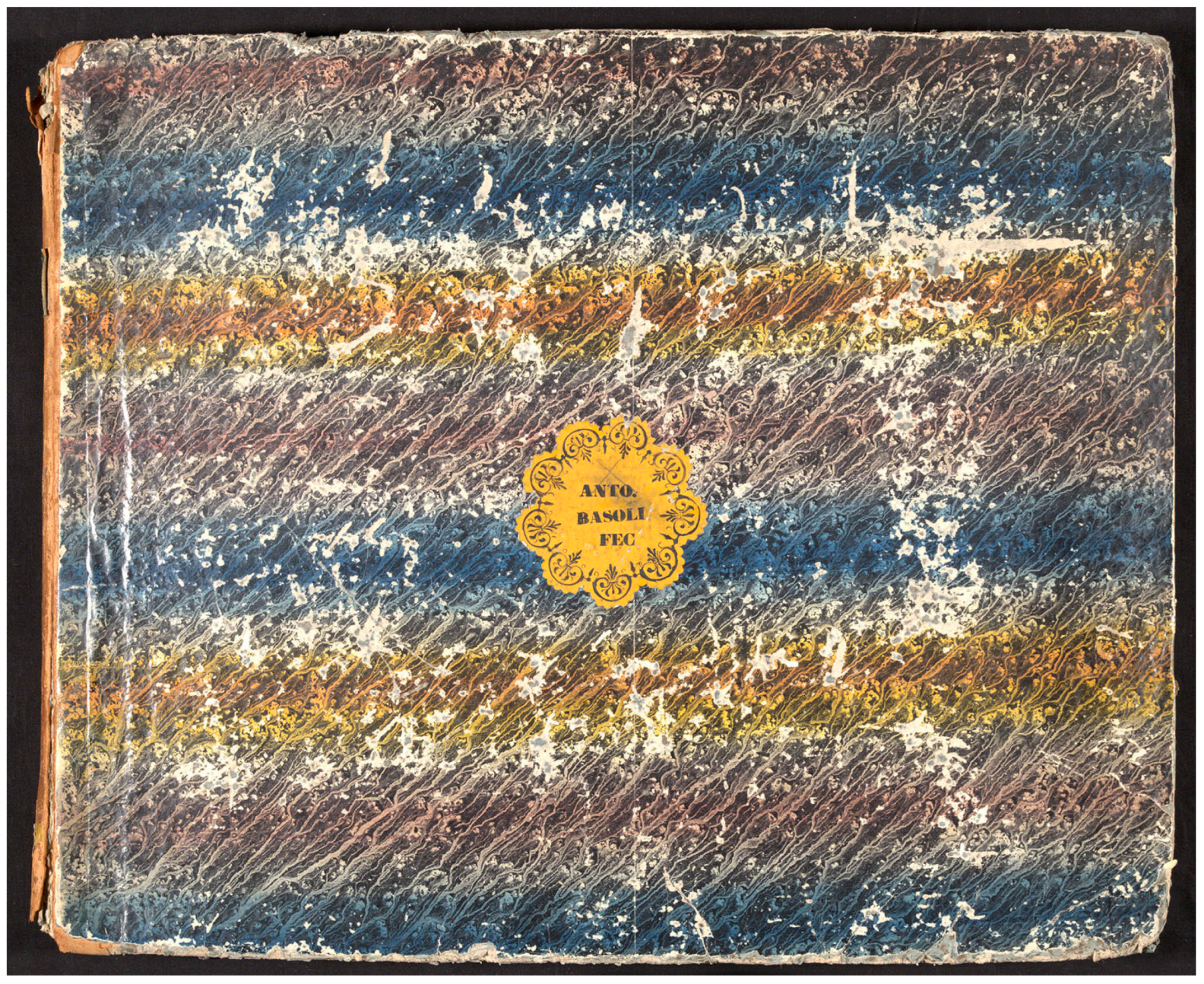
The album includes a half-leather and marbled paper cover. The preparatory drawings are mounted on the backing pages through large spots of adhesive, identified as starch paste-based after a Lugol test response. The drawings are mainly mounted on the reverse side of each page, so that the drawing executed directly on the mounting page can be seen on the front (Figure 1).
The drawings contained in Album 98 are made on paper of different thicknesses, treated with an impregnating substance, and the subjects are traced with a red-brown ink. The mounting pages show the different graphic registers that distinguish Antonio Basoli, visible in the sketches from life and monochrome watercolor in grey-blue tones (Figure 2a), typical of his style. The techniques used to execute these drawings involve the use of red ink, iron–gall ink (Figure 2b) and black (Figure 2c) and lithography pencils, all media that the artist declared himself to use in his catalogues stored in the collection. In addition to the freehand drawings, there are those traced with graphite and those derived from direct contact transfer. In the latter case, three categories have been identified: the first consists of drawings obtained by direct contact with copying ink (Figure 3a), while the others are contact transfers from aquatint (Figure 3b) and lithographs (Figure 3c). In this context, the album represents a huge source of information about the methods and techniques he used and experimented with daily.
The album pages are bound together with double stitching. The first is an overcast stitch, which forms the quires, joined on three sewing supports. Looking at the cover structure and materials implied, it was also supposed that the album was executed inside the artist’s workshop and not by a bookbinder.
The necessity to perform deep projected conservation treatment on this exemplar was strictly linked to its frequent manipulation together with its material characteristics, which catalyzed different types of deterioration.
Physical degradation was concentrated on the cover, particularly on the cardboard corners and the spine, which showed significant mechanical damage (Figure 4), caused by handling, materials, the album structure and the conservation methods used. Since it is necessary to use all the available space, some albums are placed one on another, which causes the bindings to rub against each other and exacerbates the abrasion already affecting the items.
The paper block of Album 98 was also in a precarious state of preservation, both mechanically and chemically. In this case too, the degradation was attributable to the characteristics of the object, which consisted of various types of media and materials. The irregular paper block created favorable conditions for the development of tears and gaps (Figure 5).
There were also modular undulations located on the edges of the backing pages. This phenomenon depended on the preparatory drawing mounted, whose thickness had led to a greater distance between one page and another, allowing humidity and atmospheric agents to interact more internally with the supports [9]. The undulations stopped at the perimeter of the mounted drawings, an area where flatness was particularly guaranteed thanks to the drawings’ weight (Figure 6).
Furthermore, the interaction of the support with the various graphic media and substances used for the treatment of many papers has catalyzed chemical degradation processes such as yellowing and a decrease in surface pH.
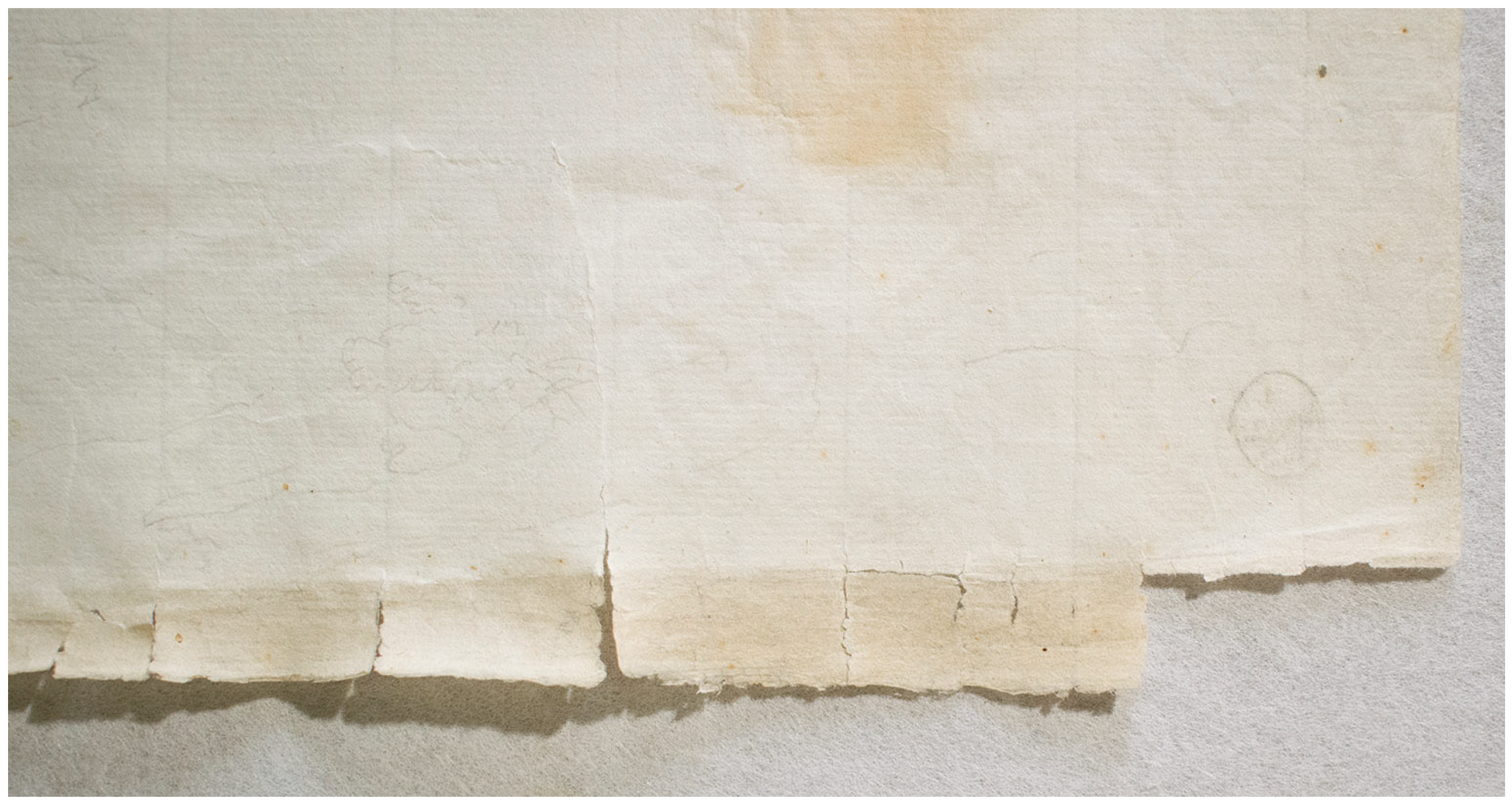
Chemical degradation also affected the adhesives used for mounting, compromising the drawings. In addition, severe yellowing related to adhesive degradation led to localized deformations and stiffening of the paper surfaces (Figure 7).

2. Materials and Methods

2.1. The Preparatory Drawings with Handmade Copying Inks

The album of preparatory drawings of the hundred Picturesque views of the city of Bologna preserves ninety-five drawings, sixteen of them executed on lightweight paper and treated with an impregnating substance. All the drawings show a preparatory sketch, traced with a copying red-brown ink with characteristics related to the engraving process, such as residues of intaglio ink and signs of plate marks on their surface.
The thin impregnated papers showed significant mechanical damage and tears, due to their intrinsic fragility, but also to the loss of mechanical strength related to the impregnating substance’s degradation. The mechanical damage was also linked to the loss of adhesion to the backing page of the album, caused by the lack of adhesive penetration into the paper fibers, shielded by the impregnating substance. This condition led to an increase of creases and accidental mechanical damage that developed over time when the album was handled.
Considering the chemical degradation, the thin impregnated papers also required targeted action to restore their stability.
In addition to acidity, another critical issue was the severe yellowing of the thin impregnated papers and the transfer of their oxidative markings onto the mounting pages, compromising the legibility of the drawings [10].
While the degradation required the design of specific actions to counter its progression, it also allowed us to hypothesize some of the constituent materials and, consequently, to design an in-depth but targeted diagnostic campaign. In particular, the impregnating substance was supposed to be a drying oil or resin, both widely used in the 19th century for impregnating paper [11]. The degradation phenomena of drying oils, such as linseed oil, manifest at a macroscopic level, generally in the form of yellowing. The process is linked to several factors that depend on the intrinsic characteristics of the substance, such as its purity, the manufacturing process, the presence of drying agents and the storage environment [12]. Among all drying oils, linseed oil seems to be the most prone to this alteration, given its significant component of linoleic acid with three double bonds, which favors degradation processes. From a chemical point of view, hydrolytic and oxidative activities lead to the partial breakdown of the polymer’s cross-links. The result of this process is a general increase in the polarity of the entire film and the formation of acidic degradation products [13].
The ongoing deterioration affecting both the drawings and the album’s supporting pages made it necessary to plan and carry out restoration practices that would respect the object’s nature while at the same time allowing the drawings to be re-housed in their album in acceptable conditions.
During the restoration of the impregnated papers, operations were performed to deacidify the supporting pages as well, in order to prepare the most suitable storage environment for the drawings.
In this case, the diagnostic campaign was crucial in characterizing the materials, which was essential for choosing the products and solvents to be used for a conscious and respectful treatment.
Impregnated papers take on peculiar characteristics in terms of appearance when treating them with substances that have a refractive index close to that of the paper, allowing light to penetrate without substantial deviations and reducing the phenomenon of diffusion. The result is a semi-transparent appearance, amplified by the use of thin supports. The oxidation of the impregnating substance has led to partial opacification and a change in color. From a methodological point of view, the extraction of the impregnating substance [14] would have solved the problem of its degradation, but it would have completely altered the objects’ nature, leading to total alteration of their appearance.
The peculiarity of these supports resulted in the necessity to investigate materials through the application of non-invasive analytical techniques, such as multiband (MBI) and hyperspectral (HSI) imaging and spectroscopic techniques. The measurement criteria adhered to the following parameters: non-invasiveness, rapidity, sensitivity and complementarity between each technique. The study focused on five drawings, which were subjected to the characterization of the support, the impregnating substance and the graphic media. The investigation revealed new information on the technique applied to multiply the images, which used a mixed copying ink handcrafted in the artist’s workshop to transfer the images directly onto the copper plate in a process that involved paper impregnation and strong pressure. The preparatory drawing techniques and supports suggested the artist’s deep knowledge of direct image transfer methods: twelve of the sixteen drawings were executed on a specific paper from a copying machine patented by James Watt [15], which also implied similar materials and processes were used in Basoli’s drawings. Historical and archival research showed how Basoli was familiar with copying ink production, employed by him from an early age to trace classical repertoires and engravings by famous artists for study purposes [16].

2.2. Conservation Treatment on Lightweight Impregnated Paper and Its Mounting Pages

The diagnostic campaign led to the characterization of materials and the development of intervention approaches, including both aqueous and anhydrous operations. The treatments described focus on the actions carried out on sixteen lightweight impregnated papers and their mounting pages. The first operation involved temporarily dismounting the drawings using a stainless-steel spatula. Drawings were then subjected to capillary humidification through a Sympatex membrane [17], with the aim of reducing creases and relaxing the fibers. The lining treatment was performed on each drawing with Japanese tissue Vang 25-561 (AN.T.A.RES srl., Bologna, Italy) and Tylose MH 300P (CTS srl. Vicenza, Italy) 3% in water.
After the lining treatment, the drawings were dried and flattened under weight using a press by layering them in a sandwich structure made of Remay, blotters and cardboard.
Two of the sixteen lightweight impregnated papers required additional non-water-based actions. These impregnated drawings had two original joints of thicker paper. After their separation and recovery of flatness, re-adhesion involved the use of pre-coated Japanese paper with Plextol B 500 (CTS srl. Vicenza, Italy), activated with butyl acetate.
Gaps were mended using the same materials and methods after pre-dyeing Japanese tissue with acrylic colors to ensure chromatic homogeneity with the drawings.
Before mounting the artworks in the album, the mounting pages were treated with a deacidification solution of calcium propionate at 3.5 g/L in ethanol by nebulization.
Finally, the drawings were replaced in the album using V-hinge mounting with pre-coated Bondina and Plextol B500 mixed with 1% Klucel G reactivated with ethyl acetate.
Treatments and materials were chosen based on specific criteria, with the aim of respecting the appearance of the objects and, at the same time, recovering them from damage.
The 6 g Japanese tissue was selected for lining treatment based on weight and fiber homogeneity.
The advantages of using Tylose MH 300P, a methylhydroxyethilcellulose, in water can be seen through three different aspects. Firstly, the adhesive allows the correct lining to be applied and repair the mechanical damage. At the same time, the water-based solvent of Tylose removes some of the soluble acidity products related to the supports and the impregnating substance. This action leads to a reduction in yellowing, partially recovering the original state of the drawings prior to the oxidative process of the materials.
The use of pre-coated and solvent-reactivable tissues avoided new deformations, taking advantage of the rapid solvent evaporation. Also, this type of approach allows efficient and almost complete removal of the used material if necessary in future interventions, demonstrating itself as a respectful operation on the work’s surfaces [18].

2.3. Multi-Technique Diagnostic Characterization

In this study, a multi-technique diagnostic campaign was carried out to characterize the drawing materials and understand the execution technique.
Imaging methods (visible, IR, UV-induced luminescence, HSI) provided information on the artwork’s structure and composition across different spectral ranges, complemented by SEM imaging for detailed morphological analysis.
Analytical techniques were used to identify the atomic and molecular composition of inks and residues. FORS enabled the detection of materials based on UV–VIS–NIR spectral transitions, while IBA methods (PIXE, PIGE, RBS) combined with EDX determined elemental composition and depth profiles. SEM coupled with EDX further clarified the distribution of elements, especially high-atomic-mass ones. FT-IR spectroscopy identified organic and inorganic functional groups, contributing essential information on the chemical nature of the samples.

2.4. Instruments and Set-Up

2.4.1. Multiband Imaging (MBI)

The measurements were performed at the CNR IFAC laboratory in Sesto Fiorentino [19]. The system is composed of a Canon EOS RP mirrorless digital camera with a full-frame 26.2 megapixel silicon CMOS sensor with an EF 50 mm f/1.8 STM lens; Vis-IR acquisitions with a pair of 12 V, 50 W Osram halogen lamps (3200 K color temperature); UV acquisitions with a pair of CTS ART LUX 100LW LED lamps with a UG11 filter; a Kolari Vision UV/IR Cut Hot Mirror Pro 2 filter; an Asahi Spectra Filter/UV 422 nm 50 × 50 mm; and OptoSigma® bandpass filters, SCF-50S-85IR Black 850 SCF-50S-85IR Black, OptoSigma® Europe.

2.4.2. Hyperspectral Imaging (HSI)

The system employed is a push-broom type available at the CNR IFAC laboratory in Sesto Fiorentino [20]. The VNIR measurement head comprises an ImSpector™ spectrograph mod. V10E, a telecentric lens and a Hamamatsu CCD ORCA–ERG camera. The source is a 150 Watt tungsten–quartz halogen lamp (QTH) with a temperature of 3200 K, connected to a system of two linear fiber optic illuminators, oriented at 45°. Scanning was performed in adjacent vertical strips of approximately 56 mm each and slightly overlapping. Calibration was performed with a 99% Spectralon white target. Spatial sampling of 11 points per millimeter (approximately 279 ppi) was performed in the VNIR. The VNIR system acquires 400 bands with a sampling step of approximately 1.25 nm.

2.4.3. Reflectance Spectroscopy via Optical Fibers (FORS)

The CNR IFAC laboratory in Sesto Fiorentino has also performed FORS measurements [21]. The system used is based on two Zeiss spectroanalysers: models MCS 601 UV-NIR and MCS 611 NIR 2.2 WR. The first one operates in the 190–1015 nm (UV-NIR) range with a sampling step of 0.8 nm/pixel (resolution: approximately 2 nm) and is equipped with a dispersive grating and a linear detector of 1024 silicon photodiodes. The second operates in the wavelength range 910–2200 nm (NIR) with a sampling step of approximately 6 nm/pixel (resolution: approximately 15 nm), with a dispersive grating and a linear detector of 256 indium gallium arsenide (InGaAs) photodiodes. The radiation source employed is a Zeiss CLH600 halogen lamp of 10 W with a color temperature of approximately 3000 K and an emission spectrum in the 320–2500 nm range. Calibration was performed with a 99% reflective Spectralon® target.
The measurement configuration included a backscattered signal in 8°/8° geometry and a measurement spot of approximately 2 mm diameter. Software processing was performed with Zeiss Aspect Plus®. The investigated area on the sample has a diameter of 1.5 mm. The distance between probe and sample was kept constant at 1 mm (focal distance).

2.4.4. Ion Beam Analysis (IBA)

A 3 MeV proton beam, accelerated with the 3 MV Tandem accelerator from INFN LABEC ion beam laboratory, collimated to 0.5 mm diameter and extracted into ambient pressure through a thin silicon nitride (Si3N4) membrane, was employed for external-beam IBA measurements [22] [total IBA applications]. The samples were mounted vertically at approximately 8 mm from the extraction window on a remotely controlled mobile stage with micrometric resolution and a laser alignment system. The detector set-up comprises two X-ray Silicon Drift detectors for PIXE (Particle-Induced X-ray Emission) analyses (one with helium flow in front of it to reduce absorption of low-energy X-rays for elements Na-Ca and the other for elements heavier than Ca); a Si-PIN diode used as a particle detector for RBS (Rutherford backscattering spectrometry) and an ORTEC HPGe gamma-ray detector with a mechanical cooler used for PIGE (Particle-Induced Gamma-ray Emission).

2.4.5. Scanning Electron Microscope and EDX

The system used, made available to the ENEA-NUC-FUSTEN laboratory at the Frascati Research Center, is composed of a ZEISS EVO-40 Scanning Electron Microscope with a Zeiss SmartSEM software suite for medium- and high-resolution imaging (max resolution—3 nm @ 30 kV; acceleration voltage—0.2 to 30 kV; magnification—7 to 1,000,000×; 4-sector detector for backscattered electrons) and an Oxford Instruments INCA X-sight EDS Detector with INCA Energy software for qualitative and semi-quantitative elemental microanalysis (limit of detection—0.1/0.5%). For this investigation, six samples of 1 × 3 mm2 were provided, one for each type of impregnated paper. Each sample was examined at two different sites, which were specifically selected for their lack of drawing signs to accurately represent the composition of the paper substrate.
EDX was performed on two different sites for each sample at 10 KV, 500× magnification and 360 s live time (additionally, one sample was split and further analyzed to highlight possible compositional differences between different color pigments). A quantitative calibration was performed before each analysis on a dedicated Co sample.
Quantitative results were obtained by considering a fixed list of the most abundant elements (C, O, Mg, Al, Si, S, K and Ca) and normalizing the results to 100%. The contribution of elements lower than 0.1% or lower than 3 sigma was neglected.

2.4.6. Fourier Transform Infrared Spectroscopy in Attenuated Total Reflectance Mode

The measurements were conducted at the Department of Chemical Science and technologies of Tor Vergata University of Rome. FTIR spectra on samples in attenuated total reflectance (ATR) mode were obtained using a Thermo-Scientific instrument (model is50) (Thermo Scientific Inc., Madison WI, USA) equipped with a single reflection diamond ATR cell. Spectra were recorded in the wavenumber region from 4000 to 600 cm−1, averaging over 32 scans with a resolution of 4 cm−1.
In the following Table 1, we propose an analytical technique summary.

3. Results

3.1. Evaluation of Treatments Carried out on the Preparatory Drawings and Their Mounting Pages

Before the conservation treatment on the preparatory drawings and their backing pages, some preliminary tests were conducted to determine their state of conservation. pH surface measurements showed that the thin impregnated paper had values never exceeding 5.6. The same phenomenon was found on the support pages of the album on which they were mounted and those adjacent to them. Further measurements carried out on the supporting pages, both on the areas covered by the drawings and on the edges, showed a slight difference, with greater acidity on the overlapping surfaces (Table 2).
For an objective treatment evaluation, many property measurements were conducted before and after the restoration, in particular colorimetric variations by ΔE76 and pH changes [23], which revealed (Table 3) variations above the perceptibility threshold (ΔE* > 3) but below ΔE76* = 10 (the maximum value of 9.8 was obtained on the sample Drawing 75). Color changes reflected soluble chromophore removal and yellowing reduction (mean Δb* = +3.5), with minimal a* variation (0.9) confirming selective oxidation product removal while preserving characteristic appearance [23].
pH increased significantly (mean +1.10 units), achieving a stabilization range (6.0–7.5) without alkaline reserve application (Table 4). This result is related to the water-based solvent contained in Tylose MH 300P, which contributed to the partial removal of soluble acid products during the lining treatment and avoided potential long-term opacification risks [14].
Following the measurements carried out on the drawings, it was possible to evaluate the intervention in line with the initial hypotheses: compared to the appearance of the impregnated papers, the lining process led to colorimetric variations just above the threshold perceptible to the human eye, without ever exceeding a value of nine (Table 3). The color variation is related to the soluble chromophore (due to cellulosic byproducts) removal and the lowering of yellowing.
In terms of chemical properties, the lining treatment had beneficial effects on all the treated supports (Table 4), avoiding the use of deacidifying substances or the application of an alkaline reserve.
At the same time, the backing pages bearing the preparatory drawings were subjected to pH measurements before and after their deacidification with calcium propionate in an alcoholic solution. Post-treatment pH measurements (Table 5) clearly show that deacidification was successful on all the supports treated, bringing them to pH levels suitable for remounting the preparatory drawings. Deacidification resulted in an average increase of one unit, without causing any pH shock to the supports. The alcoholic solvent also allowed for gradual and repeated application, while preventing page deformation [24].

3.2. Multi-Technique Diagnostic Characterization

The investigations carried out have provided information on the materials used and the techniques employed in the creative process applied on the engravings of the Picturesque views of the city of Bologna.
The diagnostic campaign was conducted on five examples of thin paper, differing in terms of manufacture and origin but showing the same impregnating substance and graphic media. Where possible, investigations involving targeted sampling were carried out on fragments of the drawings of the same type as those investigated, provided in Supplementary Materials (Figures S11–S15). The analysis objective was to provide a comprehensive understanding of the composition and state of conservation of paper, the impregnating substance and graphic media. Simultaneously, the diagnostic campaign proved advantageous in clarifying the hypothesis of the direct transfer of the preparatory drawings on the copper plates to finally be printed.
The combination of the results obtained using different techniques confirmed the hypotheses made during historical and archival research within the collection.
Multiband imaging techniques highlighted the characteristics of the impregnating substance and the media present.
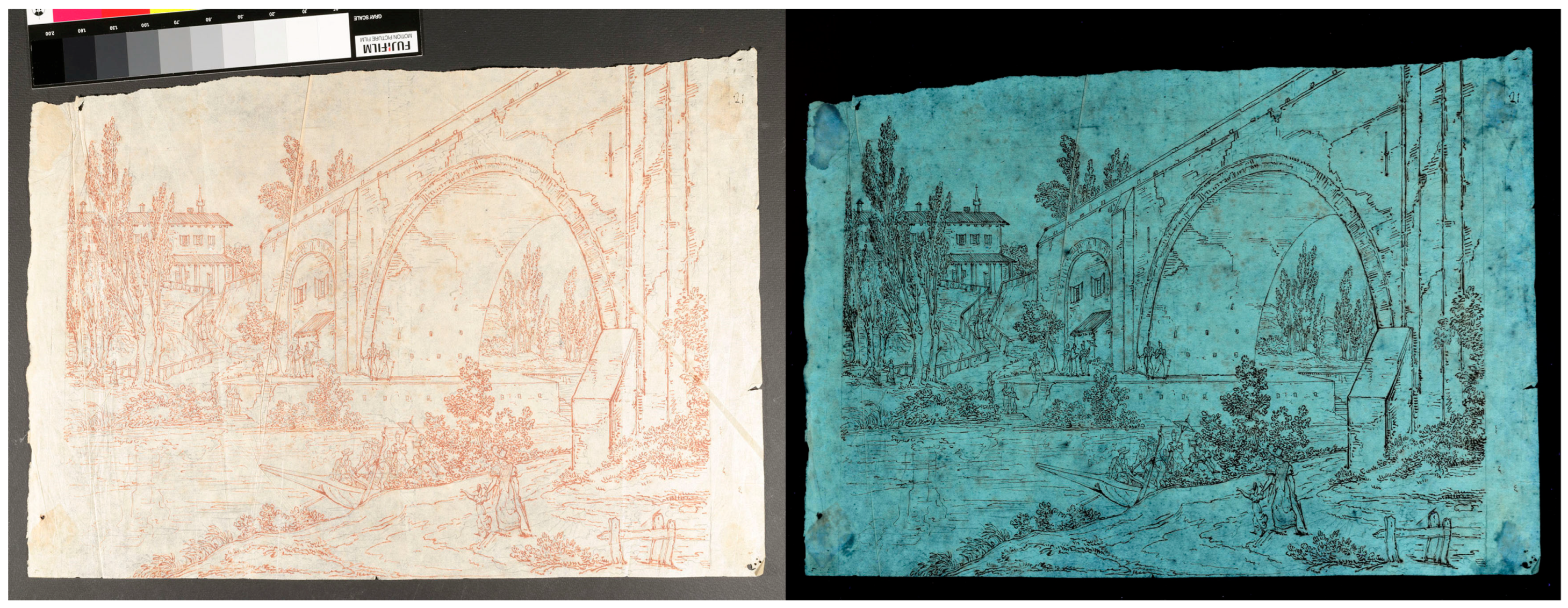
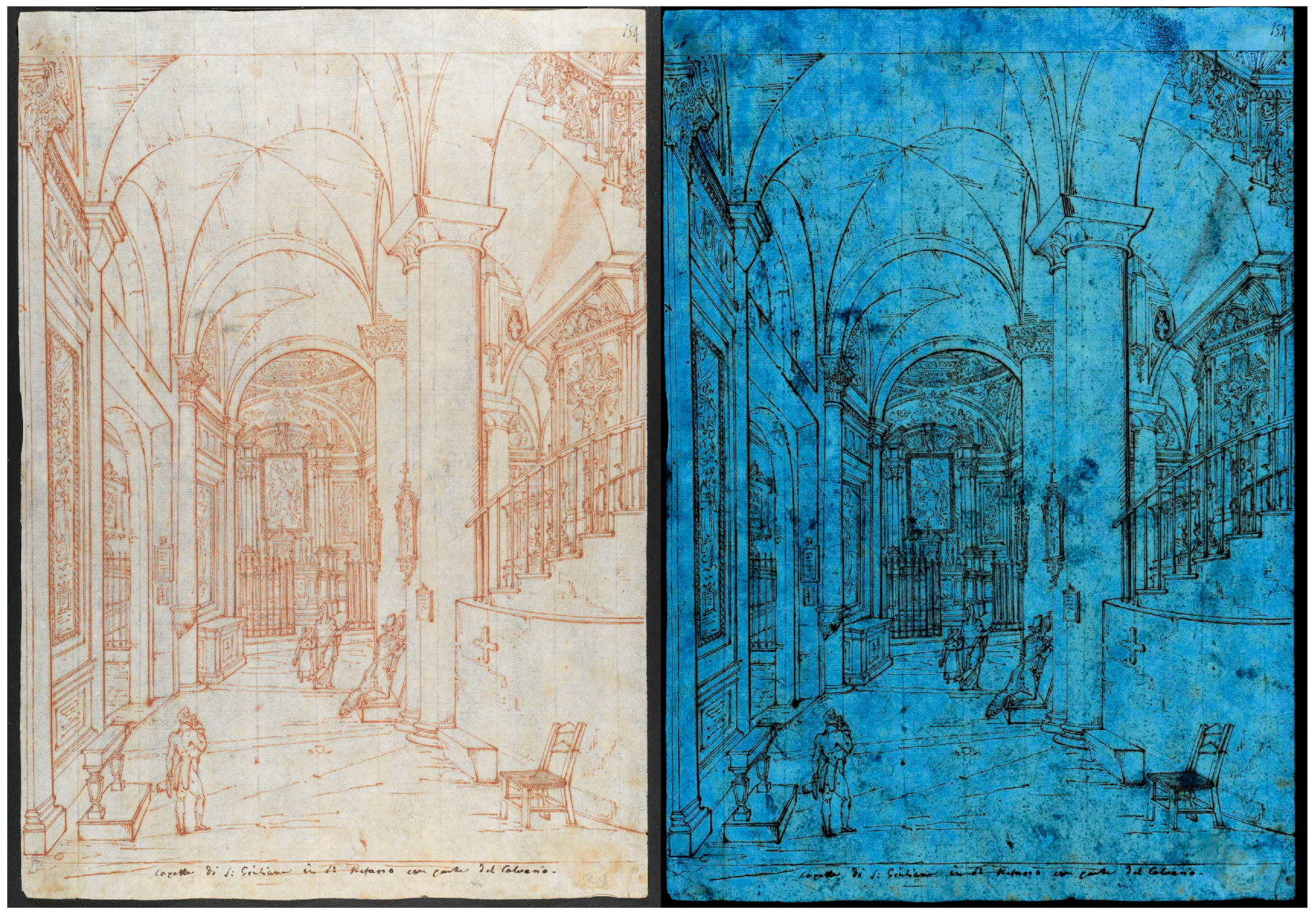
UVL imaging suggested the presence of paper preparation with oil on each drawing, showing a typical yellow fluorescence [25]. The irregular distribution of the impregnated substance emphasized by UV radiation indicates the handmade method of execution and the state of degradation of the materials (Figure 8).
Comparing the analyzed drawings, it was noticed how papers produced with traditional methods showed a more irregular exudation of the impregnating substance. Specifically, Drawing 21, made of James Watt copying paper, seems to have maintained the most uniform degree of impregnating substance presence. James Watt had noticed that unsized paper was more suitable for use in copying machines where a process of impregnation was involved [26]. On the contrary, other drawings made on more traditional supports, such as laid paper, seem to show a much more irregular phenomenon of impregnating substance migration (Figure 9).
IR acquisitions on the red-brown ink showed its transparency, revealing the preparatory sketch. The responses suggested a ferrous component, attributable to sanguine (Figure 10). The same technique was also applied to the other types of ink present on the plates for the captions and numbering of the individual drawings. The black ink used for numbering is completely opaque to infrared radiation, remaining perfectly visible, leading to the hypothesis that it may be carbon-based.
The metal–gall ink used for corrections to the drawings and for writing the captions appears semi-transparent, attributable to a mixture of metal–gall ink and carbon-based ink (Figure 11).
The black stains, identified as presumed residues of Judean bitumen or intaglio ink, showed total opacity to infrared radiation. Both substances have carbon as their main component. This result has provided important information about the processes involved in the preparatory drawings, confirming the idea that they were placed in direct contact with the copper plate and transferred by pressure.
The HSI analysis also showed the media congruence on all the drawings studied. Observing multiband images, particularly the RGB and IR images, and those extracted from HSI data in the NIR wavelengths, it appears that the artist used carbonaceous material for the basic drawing, largely covered and enhanced with sanguine.
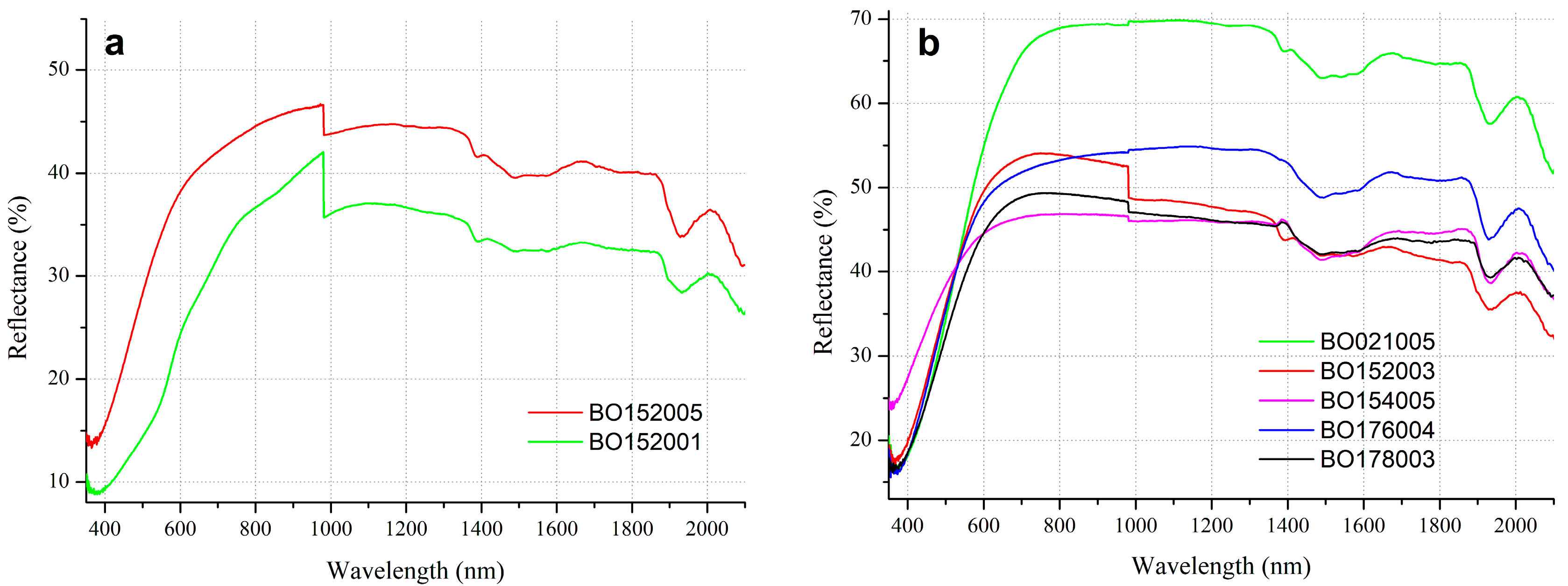
FORS applications detected the presence of iron oxides in measurements taken on the red-brown ink, confirming the presence of sanguine. Spectra show a bend in the curves at 600 nm and a different slope on the ink compared to the spectra acquired on paper (Figure 12a,b).
The intrinsic thinness of the supports and line drawings placed some limitations on this analysis technique. For these reasons, HSI and elementary spectroscopic analytical techniques were used, in particular IBA analyses, to further investigate the general picture of the materials and the possible techniques used.
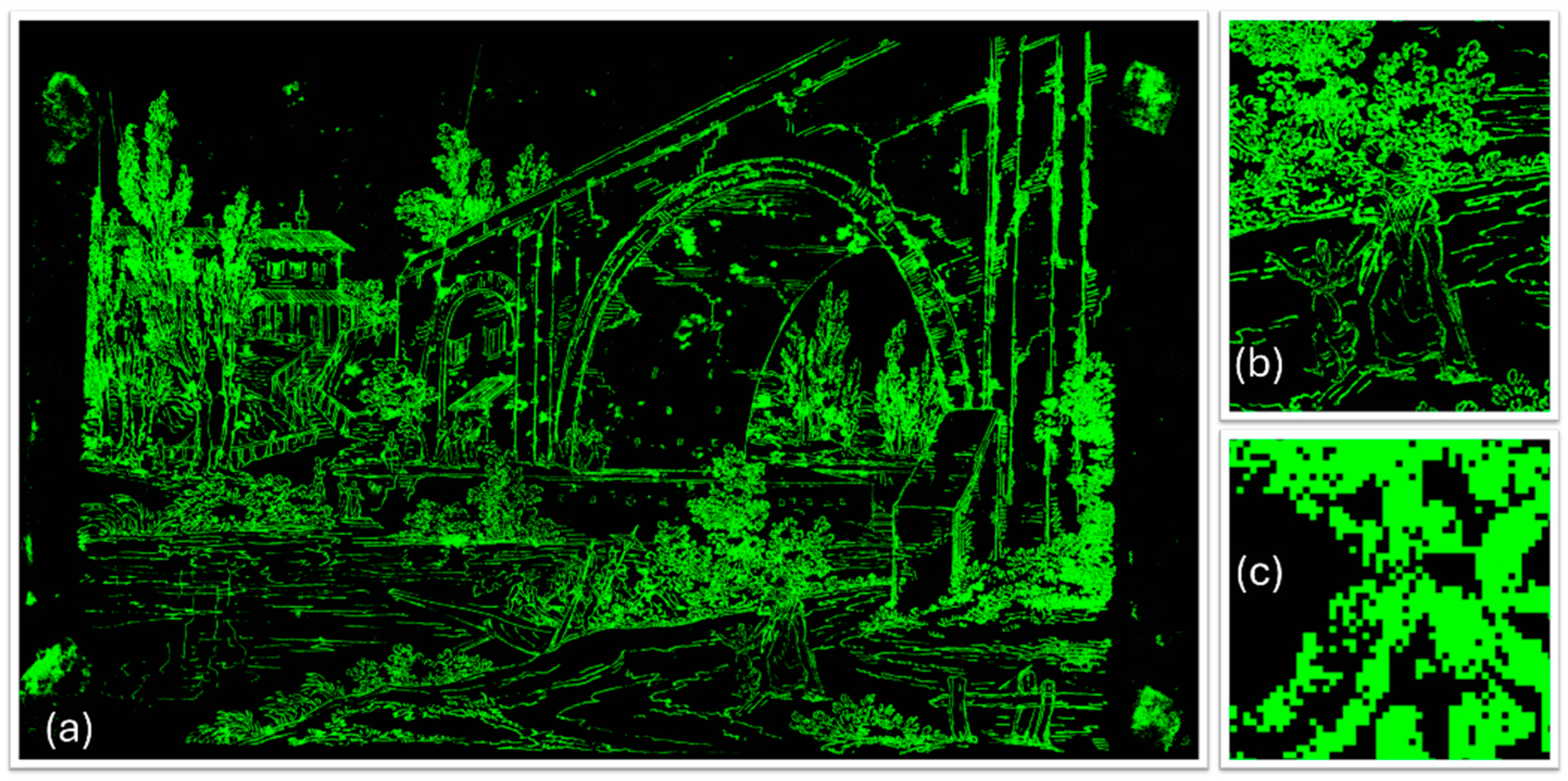
The high spatial resolution of the HSI technique enabled a detailed examination of the artist’s working process and corroborated the observations derived from the MBI images. As illustrated in Figure 13, it is evident that the artist retraced the majority of the initial drawing using an iron(III) oxide-based medium. However, this subsequent intervention does not entirely replicate the original composition; in certain areas, it diverges from the underlying drawing, thereby leaving portions of the initial lines visible. The spot size, measuring fractions of a millimeter (with a minimum dimension of 0.088 mm per side), permits precise spatial mapping of the distribution of sanguine and the detection of underlying carbon-based materials. The application of the Spectral Angle Mapper (SAM) algorithm enabled the identification and enhancement of all lines executed in red chalk (Figure 14). This result was obtained by selecting a reference reflectance spectrum from the hat of the woman in the foreground—who is depicted holding a young girl’s hand—within the hyperspectral data cube. To improve the signal-to-noise ratio, the reference spectrum was generated by averaging the spectral information over a 5 × 5 pixel area.
The Ion Beam Analysis techniques applied (PIXE, PIGE, RBS) were performed simultaneously using the “Total-IBA” analytical system, as each separate technique provides only partial information on the composition and stratification of the objects.
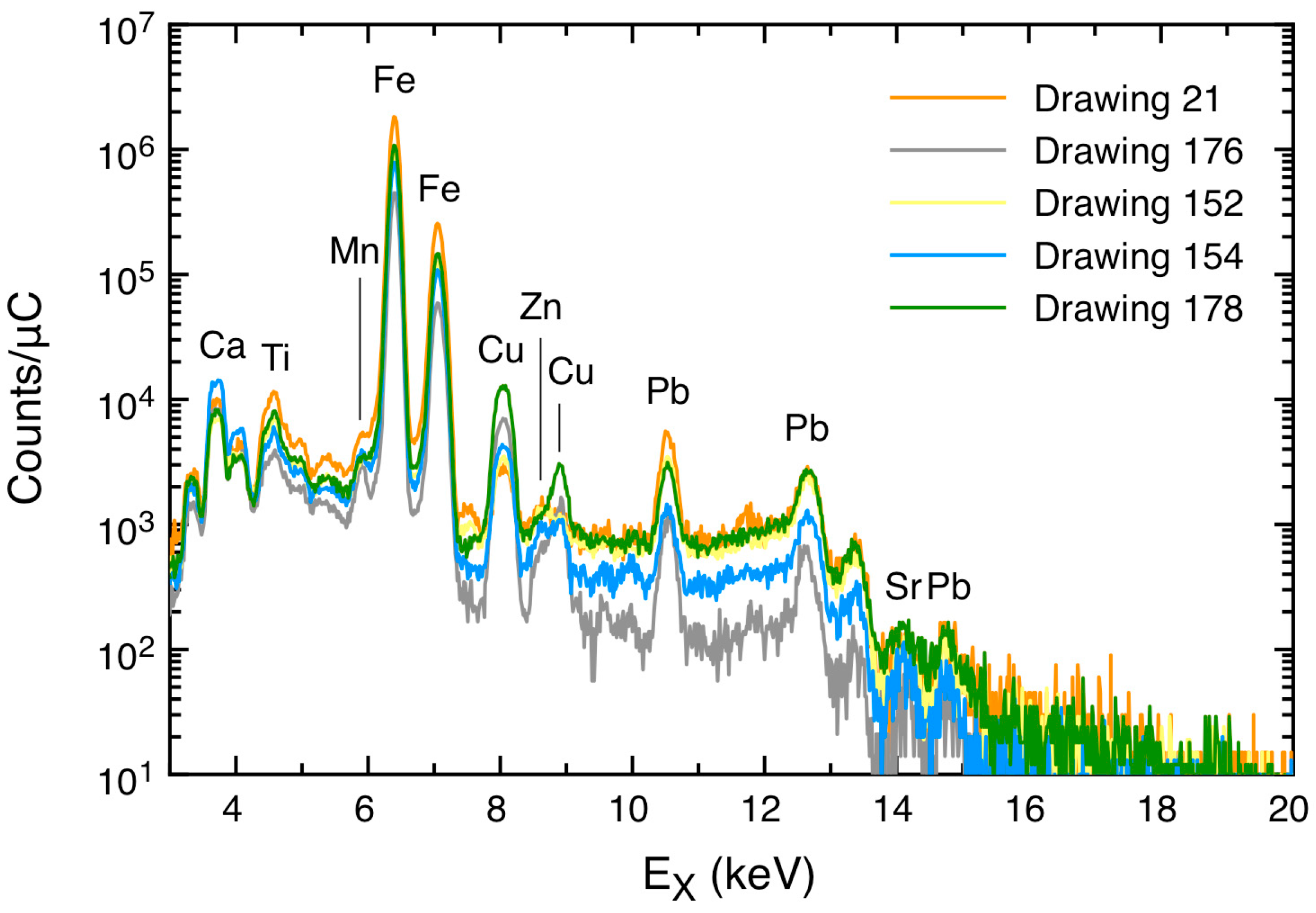
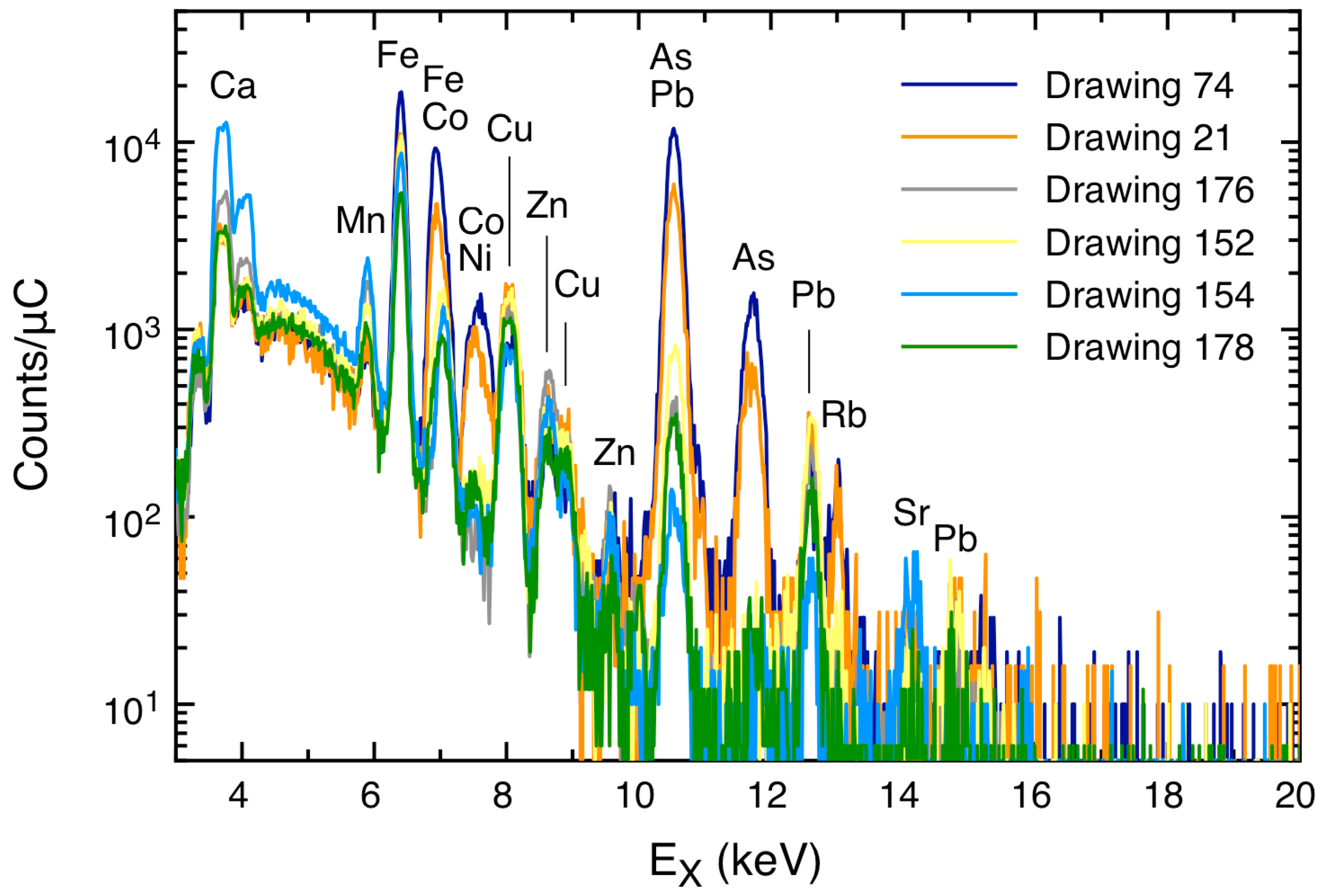
The paper supports are characterized by the presence of Al, Si, Ca and K, elements relating to the filling substances used in paper manufacturing processes. On some Drawings (152, 176), traces of lead were detected, which could be attributable to drying agents added to the impregnating substance to speed up the drying process of the oil [12] (Figure 15).
Detections on red-brown inks revealed high Fe content, in line with the observations previously made following FORS analyses (Figure 16).
Compared to the black ink used for the numbering of each drawing, elements such as Fe, Cu and Zn were found in the majority of cases. These elements can be found in materials used for metal–gall inks. Among the vitriols used are (FeSO4), (CuSO4) and (ZnSO4) [27]. The presence of Cu and Zn in proportions similar to those of Fe is a clear indication of the intentional use of different vitriols, in addition to the more common and traditional ferrous sulfate, confirming the predominantly metal–gall nature of the compound. The media color and the low quantity of S, typical of iron–gall inks, have led to the hypothesis that black ink was added in varying proportions. Analyses carried out on metal–gall ink used for the captions revealed higher quantities of Fe and S, which is the result of the addition of (FeSO4) to tannic substances, generally from gallnuts.
Interesting data were found on the preparatory outline underneath the sanguine ink. What had been supposed to be graphite revealed elements such as Cu, Sb and Pb, typical of metalpoint, historically made of silver, lead and other soft metals [28] (Figure 17).
Measurements taken on the black halos revealed the presence of Cu and Pb due to residues from the copper plate used to make the prints (Figure 18). These elements could confirm the technique of image transfer by direct contact through a simultaneous process of impregnation and pressure with the copper plate.
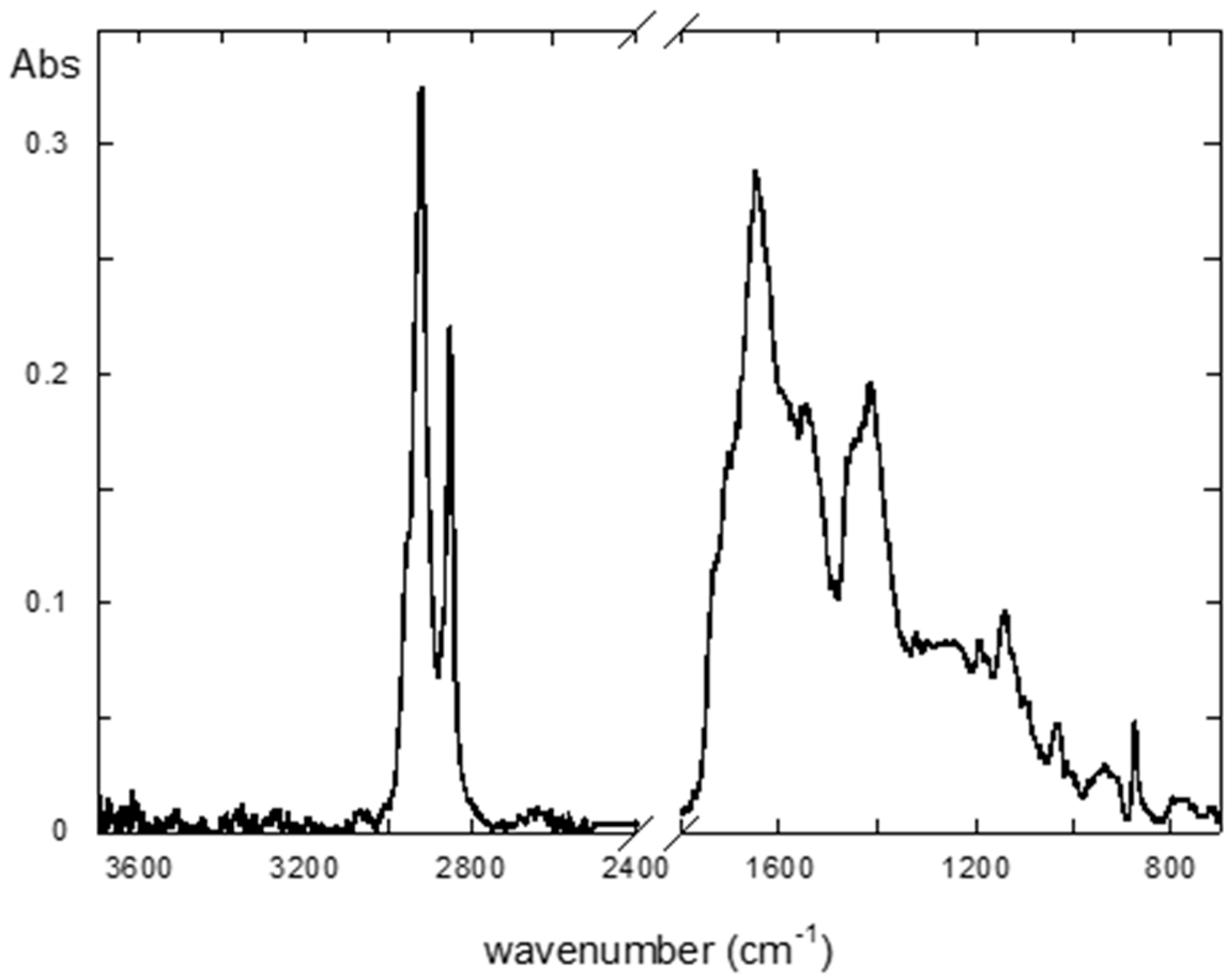
As regards the impregnating substance, the FTIR spectrum of a non-relocatable fragment (Figure 19) revealed the presence of a broad band in the region between 1800 and 1500 cm−1 and two sharp peaks at about 2920 cm−1. For clearness, a subtraction spectrum between two differently impregnated fragments is reported in Figure 20. These features are compatible with aged linseed oil (a common way to obtain impregnated paper as reported by Cennino Cennini [29]) in terms of it containing degradation products of triglycerides such as fatty acids and other oxidation products such as aldehydes, anhydrides, ketones and lactones [30]. However, due to the degradation status of the compound, it is not possible to exclude the possibility that resins of vegetal origin have been used as impregnating substances [31].
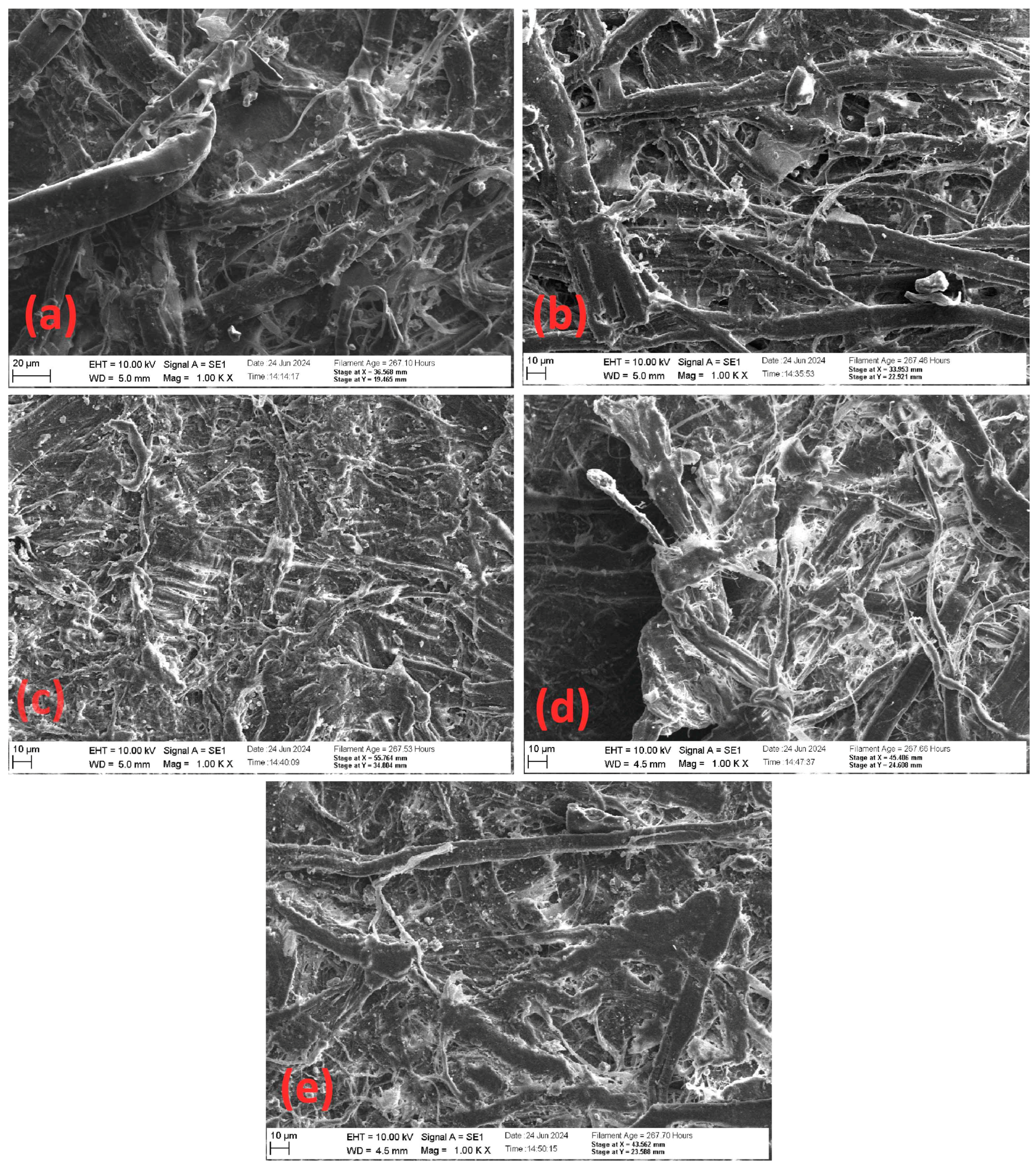
SEM magnifications also outlined the morphological characteristics of the different paper fibers, made of cotton and linen. It was also possible to observe the technical process of impregnation, showing the fibers enveloped by the oily substance (Figure 21). The magnifications allowed us to study more deeply the characteristics of very different papers in relation to their manufacturing processes. These dissimilarities were highlighted in particular on two samples, the first relating to the English copy paper patented by James Watt and the second to a paper from Fabriano paper mills (Figure 21a,b). In the first case, the English paper shows shorter fiber length when compared with the Italian one. The reason is related to the manufacture of woven paper, the first type of tissue paper produced in England since 1750. The production of woven paper involved a frame made by a silver mesh and later brass instead of a frame with chains and laid lines as in the analyzed Fabriano paper [32].
The same characteristics were noticed on the other samples. On the five thin impregnated supports analyzed there was another one made of laid paper, with an unidentified watermark (Figure 21c). As for the Fabriano paper, visible fibers were noticed, and their distinctive twisting resembles cotton. The fibers are intertwined together and randomly disposed, aligning with the characteristic of the handmade production of paper. In addition, they appeared particularly flattened, a typical characteristic of impregnated papers. The last two samples analyzed were both made of wove paper, similar to the James Watt paper. In this case the supports did not have any watermark, so their provenance could not be investigated, but the decision was made to examine them because of their different appearance; in particular, Drawing 178 showed a lower thickness and a glossier surface than Drawing 152. Drawing 152 highlighted cotton fibers, flattened and wrapped by the impregnating substance (Figure 21d). The last sample showed similar features but with a more compact distribution of the fibers, suggesting a different method of production and consequently a different origin from the previous paper (Figure 21e).
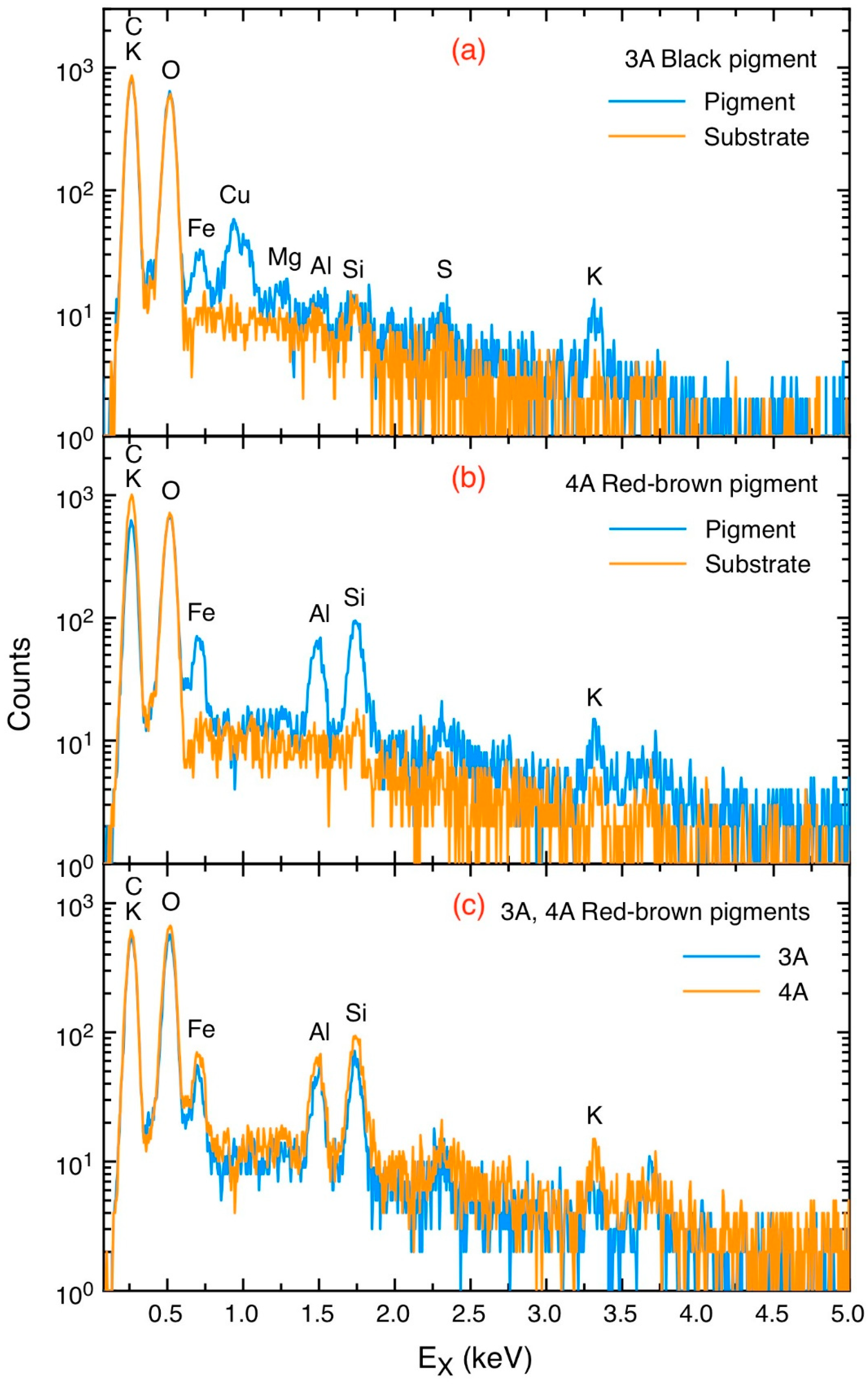
EDX detected the elements in the red-brown and black ink. The black ink showed the highest peaks for Cu, Fe and K (Figure 22a). Comparing these data with those found by IBA analysis, it is possible to confirm that the Fe and Cu components are attributable to metal–gall ink, while the presence of K could be related to vine black. Vine black consists mainly of C and small amounts of soluble material, including potassium salts [33]. From these results, it can be hypothesized that the ink used for numbering the drawings is not pure but rather consists of a mixture of two inks.
The same sample was also examined to detect sanguine ink (Figure 22b); the elements found in the highest concentrations were Si, Al, Fe and a minimal amount of S. The presence of Fe definitively confirms the use of sanguine ink detected in all previous analyses, while Si and Al can be attributed to residual impurities of Al2O3 and SiO2 that can be found in hematite [34]. The measurement was repeated on a second sample bearing red-brown ink, which was slightly different in color, in order to determine the consistency of the graphic media used on the preparatory drawings. The results illustrated in Figure 22c emphasize that the composition is the same, showing two spectra that are practically indistinguishable from each other.

4. Discussion

This study reveals the remarkable technical sophistication of Antonio Basoli’s workshop, particularly in the manipulation of linseed oil with traces of lead-based drying agents—an advanced 19th-century practice aimed at accelerating polymerization. The distribution of these agents differs according to the paper structure, being irregular in traditional supports and homogeneous in James Watt’s copying paper, which proved more suitable for impregnation. This property, intentionally preserved during conservation, forms part of the material history of the artworks. The sequential use of metalpoint and sanguine represents a significant finding: while metalpoint is traditionally associated with Renaissance techniques, its continued use in the 19th century for precise preliminary sketches suggests Basoli’s deliberate technical choice. The alloy composition of copper, antimony and lead indicates custom-made styluses, while the systematic sequence of metalpoint sketching, sanguine reinforcement and intaglio transfer reveals a carefully orchestrated workflow optimized for reproducibility. The presence of multi-vitriol inks containing iron, copper and zinc sulfates, as well as carbon variations, demonstrates a nuanced understanding of ink chemistry, with formulations adjusted for specific functional or visual purposes.
Basoli’s adaptation of direct pressure transfer from oil-impregnated drawings to copper plates reflects a creative reinterpretation of James Watt’s copying machine technology. Unlike Watt’s document-copying process, which employed sugar-based inks and water transfer, Basoli developed an oil-based system capable of transferring complex mixed media directly onto plates. This adaptation reveals a deep technical awareness and possibly an independent innovation within the artistic–technological context of early 19th-century Bologna. The consistent evidence of transfer residues across sixteen drawings confirms a systematic, workshop-level application, allowing scale fidelity, reduced transcription errors and efficiency in the production of the extensive Picturesque views of the city of Bologna series.
The comparative study of James Watt’s copying paper and traditional Fabriano paper illustrates the transition in early 19th-century papermaking. English woven papers, characterized by shorter fibers and industrial uniformity, contrast with the artisanal variability of Italian hand-laid sheets. Differences in filler composition—aluminosilicates and calcium compounds—reflect distinct manufacturing practices and intended uses, highlighting the increasing industrial standardization of materials for specialized artistic and technical purposes.
The conservation approach was based on the results of scientific analysis. Detailed material characterization informed every treatment decision, from consolidant choice to solvent compatibility. The identification of linseed oil as the impregnating medium enabled prediction of degradation mechanisms and guided stabilization strategies. The decision to preserve the original impregnation, rather than attempt its removal, reflects a strong adherence to ethical conservation principles that value historical authenticity and material integrity. Quantitative outcomes confirm the success of this approach: pH stabilization and reduced yellowing were achieved without alkaline reserve addition, avoiding risks of opacity or over-whitening. The partial color stabilization maintained visual evidence of aging, preserving the authenticity of the object’s historical state. The aqueous lining treatment, which removed soluble acidic degradation products while maintaining the oil impregnation, represents an elegant and minimally invasive solution, complemented by reversible non-aqueous remounting to ensure future accessibility and adaptability.
The multi-analytical approach proved essential to the study’s depth and precision. Hyperspectral imaging enabled sub-millimeter pigment mapping, Ion Beam Analysis provided comprehensive elemental data, FTIR identified organic compounds and SEM-EDX established microstructural and compositional relationships. The synergy of these non-invasive and micro-invasive techniques produced a complete understanding unattainable through any single method. Nevertheless, some open questions remain—such as precise lead compound speciation or the detection of possible sugar residues—suggesting the potential for future investigations using synchrotron-based and chromatographic analyses. Mechanical testing before and after treatment could further complement pH and colorimetric data, providing insight into long-term mechanical stability.
Beyond its technical outcomes, this research enhances understanding of 19th-century artistic production amid technological transformation. Basoli’s integration of industrial copying processes into artistic printmaking epitomizes the interplay between craft tradition and scientific innovation. The methodology developed here—combining diagnostic precision, ethical conservation and quantitative evaluation—offers a model applicable to similar cases of oil-impregnated papers used in art, architecture and engineering. Such works, often at risk due to complex degradation, benefit from approaches that balance stabilization with respect for original materiality, ensuring both their preservation and interpretive authenticity within the broader heritage of 19th-century graphic art.

5. Conclusions

The historical, technical and scientific research carried out during the reconstruction of the hundred Picturesque views of the city of Bologna allowed us to outline processes and materials used by Antonio Basoli and his workshop.
The results of the analyses carried out on the papers were compared with each other in order to obtain as general and accurate a view as possible when interpreting the data. Three main questions were addressed: The first concerned the nature of the impregnating substance, which was found to be common to all thin papers, suggested to be linseed oil or vegetable resin following the results of FT-IR investigations. Further confirmation was provided by multiband imaging techniques, particularly the responses obtained following UVL imaging, which also highlighted the phenomenon of exudation of the impregnating substance.
The supports were also examined, attempting to identify the substances present in the paper mixture and their morphology through analysis with SEM-EDX: the results confirmed that Basoli chose papers of excellent quality, mainly handmade or industrially produced, but in any case, suitable for the impregnation treatment. Among these, one of English origin stands out, produced as copying paper for the copying machine patented by James Watt, whose operating mechanism has many similarities to the process applied on Basoli’s drawings. It is possible that the artist attempted to reproduce the process, applying it to preparatory drawings and adapting it to the materials available in his workshop.
The characterization of the graphic media was carried out using spectroscopic investigations and multiband imaging. These analyses highlighted the ferrous component attributable to sanguine for the red ink.
The synergy between the bibliographic information and that obtained from the results of the investigations led to the formulation of the final hypothesis that the preparatory outline drawings were made to be transferred to the copper plate by direct contact, confirming how a multidisciplinary approach to a work of art determines its proper conservation.

Supplementary Materials

The following supporting information can be downloaded at https://www.mdpi.com/article/10.3390/heritage9020044/s1.

Author Contributions

Conceptualization, methodology, formal analysis and investigation, M.V. and F.I.; resources, C.C., M.C., F.I., S.L., C.M., M.P., L.S. and M.V.; data curation, M.V. and F.I.; writing—original draft preparation, C.C., M.C., F.I., C.M., M.P., L.S., M.V., C.L.Z. and C.R.M.; writing—review and editing, M.V. and F.I. All authors have read and agreed to the published version of the manuscript.

Funding

This research received no external founding.

Data Availability Statement

The original contributions presented in this study are included in the article. Further inquiries can be directed to the corresponding authors.

Acknowledgments

The research presented in this work does not represent the institutional activities or scientific scope of the Italian Space Agency (ASI). The affiliation is provided solely for identification purposes.

Conflicts of Interest

The authors declare no conflicts of interest.

References

  1. Farneti, F.; Riccardi Scassellati Sforzolini, V. La Vita Artistica di Antonio Basoli; Minerva Edizioni: Bologna, Italy, 2006; p. 14. ISBN 978-88-7381-152-3. [Google Scholar]
  2. Poli, M.; Santucci, A. Vedute Pittoresche di Bologna di Antonio Basoli, 100 Immagini Della Città Ottocentesca; Costa Editore: Bologna, Italy, 2002; pp. 7–8. [Google Scholar]
  3. Schreiner, M.; Melcher, M.; Uhlir, K. Scanning electron microscopy and energy dispersive analysis: Applications in the field of cultural heritage. Anal. Bioanal. Chem. 2007, 387, 737–747. [Google Scholar] [CrossRef] [PubMed]
  4. Rosi, F.; Cartechini, L.; Sali, D.; Miliani, C. Recent trends in the application of Fourier Transform Infrared (FT-IR) spectroscopy in Heritage Science: From micro- to non-invasive FT-IR. Phys. Sci. Rev. 2019, 4, 20180006. [Google Scholar] [CrossRef]
  5. Farneti, F.; Frattarolo, E.; Emiliani, A. Antonio Basoli 1774 1848 Ornatista, Scenografo, Pittore di Paesaggio. Il Viaggiatore che Resta a Casa; Minerva Edizioni: Bologna, Italy, 2008; pp. 21–90. ISBN 8873812082. [Google Scholar]
  6. Coccolini, G.; Merelli, C. Conservazione e Restauro Di Opere d’arte Su Carta Da Lucido. Applicazione Di Nanotecnologie per La Deacidificazione Di Disegni Su Carta Da Lucido Impregnata. OPD Restauro 2017, 29, 276–283. Available online: https://www.jstor.org/stable/26840897 (accessed on 15 October 2025).
  7. Giumanini, M.L. Tra disegno e scienza. In Gli Studenti dell’Accademia di Belle Arti di Bologna (1803–1876); Minerva Edizioni: Bologna, Italy, 2002; p. 128. ISBN 978-88-7381-028-4. [Google Scholar]
  8. Cavina, A.O.; Roversi, G. Antonio Basoli Vedute di Bologna; Vallecchi Editore: Firenze, Italy, 1994; pp. 8–10. ISBN 108882520145. [Google Scholar]
  9. Banik, G.; Brünckle, I. Paper and Water: A Guide for Conservators; Routledge: London, UK, 2018; pp. 400–401. ISBN 9783932704697. [Google Scholar]
  10. Antonio, M. Contesti storici, fabbricazione, e degrado delle carte da lucido. In Proceedings of the Carte Lucide e Carte Trasparenti Nella Pratica Artistica Tra Otto e Novecento: Uso, Conservazione e Restauro, Tortona, Italy, 3–4 September 2014; pp. 27–42, ISBN 978-88-97213-13-0. [Google Scholar]
  11. Yates, S.A. The conservation of nineteenth-century tracing paper. Pap. Conserv. 1984, 8, 20–39. [Google Scholar] [CrossRef]
  12. Matteini, M.; Moles, A. La Chimica del Restauro, I Materiali Dell’arte Pittorica; Nardini Editore: Firenze, Italy, 1989; pp. 78–80. ISBN 108840440070. [Google Scholar]
  13. Juita; Dlugogorski, B.Z.; Kennedy, E.M.; Mackie, J.C. Low temperature oxidation of linseed oil: A review. Fire Sci. Rev. 2012, 1, 3. [Google Scholar] [CrossRef]
  14. Gianferrari, M.; Montalbano, L.; Frosinini, C.; Rizzi, M.; Casu, G. Il Restauro dei Disegni su Carta Trasparente di Francesco Hayez, Diploma Thesis—Drawings and Prints Department; Opificio delle Pietre Dure in Florence and Restoration Laboratory: Firenze, Italy, 2002; p. 51. [Google Scholar]
  15. Giovannini, A. Procedimenti di copia e problemi di conservazione. Un excursus nel mondo delle tecniche di riproduzione dal 1800 al 1950. Bibl. Oggi 2001, 19, 24–32. [Google Scholar]
  16. Basoli, A. Vita Artistica di Antonio Basoli/Cattalogo Delle Opere Eseguite e Suoi Prezzi; Accademia di Belle Arti di Bologna Archives: Bologna, Italy, 1848; p. 62. [Google Scholar]
  17. Dobrusskin, S.; Singer, H.; Banik, G. Humidification with Moisture Permeable Materials. In Proceedings of the 7th International Congress of Restorers of Graphic Art, Uppsala, Sweden, 26–30 August 1991. [Google Scholar] [CrossRef]
  18. del Bianco, A.; Gianferrari, M.; Roversi Monaco, C.; Zanasi, C.L. Metodi di adesione non acquosa applicabili ai materiali car-tacei, pergamenacei e fotografici. In Proceedings of Lo Stato dell’Arte 13, XIII IGIIC National Congress, Torino, Italy, 22–24 October 2015; Nardini Editore: Firenze, Italy, 2015; pp. 299–301. ISBN 9788840444543. [Google Scholar]
  19. Herrero-Cortell, A.M.; Creus, M.R.; Artoni, P.; Sanchis, I.P. Multi-band technical imaging in the research of the execution of paintings. The case study of the portrait of Carlos IV, by Francisco de Goya. Ge-Conserv. 2018, 14, 5–15. [Google Scholar] [CrossRef][Green Version]
  20. Cucci, C.; Delaney, J.K.; Picollo, M. Reflectance hyperspectral imaging for investigation of works of art: Old master paintings and illuminated manuscripts. Acc. Chem. Res. 2016, 49, 2070–2079. [Google Scholar] [CrossRef] [PubMed]
  21. Aceto, M.; Agostino, A.; Fenoglio, G.; Idone, A.; Gulmini, M.; Picollo, M.; Delaney, J.K. Characterisation of colourants on illuminated manuscripts by portable fiber optic UV-visible-NIR reflectance spectrophotometry. Anal. Methods 2014, 6, 1488–1500. [Google Scholar] [CrossRef]
  22. Chiari, M. External Beam IBA Measurements for Cultural Heritage. Appl. Sci. 2023, 13, 3366. [Google Scholar] [CrossRef]
  23. Van Der Reyden, D.; Hofmann, C.; Baker, M. Effects of aging and solvent treatments in some properties of contemporary tracing papers. In Proceedings of the Journal of the American Institute for Conservation, General Session and Textiles Specialty Group Update of the 20thAnnual Meeting of the American Institute for Conservation of Historic and Artistic Works, Buffalo, NY, USA, 2–7 June 1992. [Google Scholar] [CrossRef]
  24. Bicchieri, M. Chimica dei processi degradativi e dei trattamenti di restauro delle opere grafiche su carta. in Rendiconti della Accademia Nazionale delle Scienze detta dei XL. Memorie di Scienze Fis. E Nat. XXV 2001, 119, 159–161. Available online: https://media.accademiaxl.it/memorie/S5-VXXV-P1-2-2001/Bicchieri151-167.pdf (accessed on 15 October 2025).
  25. Pelagotti, A.; Pezzati, L.; Bevilacqua, N.; Vascotto, V.; Reillon, V.; Daffara, C. A study of UV fluorescence emission of painting materials. In Proceedings of the European Signal Processing Conference, Florence, Italy, 4–8 September 2006, ISSN 2219-5491. [Google Scholar]
  26. Dickinson, H.W. James Watt: Craftsman & Engineer; Cambridge University Press: Cambridge, UK, 2010; p. 166. [Google Scholar] [CrossRef]
  27. Aceto, M.; Calà, E. Analytical evidences of the use of iron-gall ink as a pigment on miniature paintings. Spectrochim. Acta 2017, 187, 1–8. [Google Scholar] [CrossRef] [PubMed]
  28. Montalbano, L. La Tecnica del Disegno a Punta Metallica dal XIV al XVI Secolo Attraverso L’Analisi delle Fonti e Dei Materiali. Mitteilungen des Kunsthistorischen Institutes in Florenz 52, no. 2/3, 2008, 214–225. Available online: http://www.jstor.org/stable/20749534 (accessed on 15 October 2025).
  29. Broecke, L. Cennino Cennini’s Il Libro dell’Arte: A New English Translation and Commentary with Italian Transcription; Archetype Publications: London, UK, 2015; ISBN -13 978-1909492288. [Google Scholar]
  30. Mazzeo, R.; Prati, S.; Joseph, E.; Millemaggi, A. Attenuated Total Reflection–Fourier transform infrared microspectroscopic mapping for the characterization of paint cross-sections. Anal. Chim. Acta 2007, 599, 107–117. [Google Scholar] [CrossRef] [PubMed]
  31. Favvas, E.P.; Kouvelos, E.P.; Papageorgiou, S.K.; Tsanaktsidis, C.G.; Mitropoulos, A.C. Characterization of natural resin materials using water adsorption and various advanced techniques. Appl. Phys. 2015, 119, 735–743. [Google Scholar] [CrossRef]
  32. Mariani, G. Le Tecniche Calcografiche D’incisione Diretta Bulino, Puntasecca, Maniera Nera; De Luca Editori d’Arte: Roma, Italy, 2005; Volume 3, p. 156. ISBN 9788880165194. [Google Scholar]
  33. Ruggiero, D. Chimica e Biologia Applicate alla Conservazione Degli Archivi; Ministero per i Beni e le Attività Culturali, Direzione Generale per gli Archivi: Roma Italy, 2002; p. 38. ISBN -13 978-8871252360. [Google Scholar]
  34. Dobrescu, M.; Vasilescu, M. Hematite. processing and applications. The Annals of “Dunarea de Jos” University of Galati Fascicle IX. Metall. Mater. Sci. 2019, 42, 19–24. [Google Scholar] [CrossRef]
Figure 1. Mounting method of Album 98 showing the reuse of an old unfinished project as a backing page.
Heritage 09 00044 g001
Figure 2. Drawings with different techniques on backing pages: iron–gall ink and watercolor (a), iron–gall ink and graphite (b), pencil (c).
Heritage 09 00044 g002
Figure 3. Direct transfer techniques on backing pages: copying inks and impregnated paper (a), transfer from aquatint (b), transfer from lithography (c).
Heritage 09 00044 g003
Figure 4. State of conservation of the album cover with original paper label before the conservation treatment.
Heritage 09 00044 g004
Figure 5. Detail of tears and gaps on one of the backing pages.
Heritage 09 00044 g005
Figure 6. Undulations on the edges of the backing pages (raking light).
Heritage 09 00044 g006
Figure 7. Deformations and stiffness on backing pages and preparatory drawings due to adhesive (raking light).
Heritage 09 00044 g007
Figure 8. Vis and UV light acquisitions show the impregnating substance (data acquired on Drawing 21).
Heritage 09 00044 g008
Figure 9. Vis and UV light acquisitions. UV shows the impregnating substance’s state of conservation (data acquired on Drawing 154).
Heritage 09 00044 g009
Figure 10. VIS and IR 850 nm acquisitions. Detail of ink traces not detectable with IR radiation (data acquired on Drawing 21).
Heritage 09 00044 g010
Figure 11. VIS and IR 850 nm acquisition on black-brown ink used for caption (data caption on Drawing 176).
Heritage 09 00044 g011
Figure 12. (a) FORS red-brown ink spectra (data acquired on Drawing 152); (b) FORS papers spectra (data acquired on drawings 21, 152, 154, 176, and 178).
Heritage 09 00044 g012
Figure 13. sRGB reconstruction of Drawing 21 derived from HSI data (a), with a detailed view of the analyzed area (b) and an enlargement of the specific region from which the reflectance spectrum was extracted (c). Panel (d) presents the corresponding average spectrum obtained from a 5 × 5 pixel area, displaying the characteristic absorption features of iron(III) oxide.
Heritage 09 00044 g013
Figure 14. Distribution maps of sanguine obtained using the SAM algorithm (rad = 0.130) applied to Drawing 21 (a), with a detailed view of the analyzed area (b) and an enlargement of the region from which the reference spectrum was extracted (c).
Heritage 09 00044 g014
Figure 15. PIXE spectra of paper supports.
Heritage 09 00044 g015
Figure 16. PIXE spectra of red-brown inks from different drawings.
Heritage 09 00044 g016
Figure 17. PIXE spectra of the preparatory outline underneath the sanguine ink on Drawing 154.
Heritage 09 00044 g017
Figure 18. PIXE spectra of intaglio inks from different drawings.
Heritage 09 00044 g018
Figure 19. FTIR spectrum of a non-relocatable sample, 7A. The features of cellulose-based material are clearly visible (band at about 1020 cm−1). The bands in the red square in the 1800–1500 cm−1 region are attributable to linseed oil degradation products.
Heritage 09 00044 g019
Figure 20. FTIR difference spectrum of two differently impregnated non-relocatable samples.
Heritage 09 00044 g020
Figure 21. SEM acquisition of impregnated paper supports of James Watt copying paper (a), Fabriano paper (b), FI paper (c), Drawing 152 (d) and Drawing 178 (e), Mag. 1000×.
Heritage 09 00044 g021
Figure 22. EDX spectra of black ink (a) and red-brown ink (b); comparison of red-brown inks on two different samples (c).
Heritage 09 00044 g022
Table 1. Analytical technique summary. Pictures and descriptions of each sample are provided in Supplementary Materials.
TechniqueInformationResolutionSamplingDrawing/Sample
MBIPigment distribution, underdrawing, fluorescence~0.1 mm/pixelNon-invasive21, 152, 154, 176, 178
HSISpectral signatures, pigment mapping0.088 mm/pixelNon-invasive21, 152, 154, 176, 178
FORSReflectance spectra, pigment ID1.5 mm spotNon-invasive21, 152, 154, 176, 178
PIXEElemental composition (Z > 11)0.5 mm beamNon-invasive21, 152, 154, 176, 178
PIGELight elements (Na, Mg, Al, Si)0.5 mm beamNon-invasive21, 152, 154, 176, 178
RBSDepth profiling0.5 mm beamNon-invasive21, 152, 154, 176, 178
4A, 4B
SEM-EDXMorphology, elemental composition1–100 μmMicro-invasive4A, 5A, 6A, 7A, 8A
FTIR-ATRMolecular structure, functional groups~100 μmNon-invasive7A
Table 2. pH pattern on representative drawing (Drawing 74) and backing page. The measurements were taken with 4% agarose gel plugs in deionized water and 3 min time of application on the surface. The values shown in the table do not represent an average, but a single measure to ensure the non-invasive analysis of sensitive material.
LocationpHObservation
Drawing 74, impregnated paper5.33Oil degradation
Oxidation halo on backing5.60Oxidation
Adhesive area5.40Localized acidification
Unexposed backing area5.90Less affected
Table 3. Colorimetric variation before and after the treatment on tables made of thin impregnated paper (CIELab 1976 D65/10°).
DrawingΔE*ΔL*Δa*Δb*Interpretation
185.2−0.31.25.1Reduced yellowing
214.21.02.23.4Slight lightening
253.91.11.13.6Minimal change
726.01.01.75.7Reduced yellowing
759.88.2−3.44.1Significant lightening
1444.6−3.51.52.6Slight darkening
1484.8−2.02.53.6Balanced change
1504.43.20.03.0Lightening
1524.9−1.42.63.9Reduced yellowing
1544.7−0.20.34.7Reduced yellowing
1563.41.51.02.9Minimal change
172 bis4.60.21.44.4Reduced yellowing
1744.13.3−0.92.3Lightening
1761.3−0.10.71.1Minimal change
1785.95.2−0.9−2.6Lightening, less yellow
Mean ± SD4.9 ± 1.81.2 ± 2.90.9 ± 1.43.5 ± 1.5
Table 4. pH before and after lining. The measurements were taken with 4% agarose gel plugs in deionized water and 3 min time of application on the surface. The values shown in the table do not represent an average, but a single measure to ensure the non-invasive analysis of sensitive material.
DrawingpH BeforepH AfterΔpHStatus
185.006.00+1.00Stabilized
235.666.60+0.94Stabilized
255.516.00+0.49Stabilized
445.306.33+1.03Stabilized
705.206.00+0.80Stabilized
725.406.76+1.36Well stabilized
745.516.08+0.57Stabilized
755.116.84+1.73Well stabilized
805.356.70+1.35Well stabilized
1445.676.70+1.03Stabilized
1485.346.74+1.40Well stabilized
1505.576.44+0.87Stabilized
1525.306.35+1.05Stabilized
1545.226.50+1.28Stabilized
1565.656.06+0.41Stabilized
1605.456.83+1.38Well stabilized
Mean ± SD5.35 ± 0.206.45 ± 0.33+1.10 ± 0.36
Table 5. Album page pH before and after calcium propionate application. The measurements were taken with 4% agarose gel plugs in deionized water and 3 min time of application on the surface. The values shown in the table do not represent an average, but a single measure to ensure the non-invasive analysis of sensitive material.
PagepH BeforepH AfterΔpH
185.306.38+1.08
235.836.88+1.05
255.606.67+1.07
445.816.36+0.55
705.266.06+0.80
725.206.60+1.40
745.607.00+1.40
755.607.03+1.43
805.496.94+1.45
1445.806.42+0.62
1485.406.21+0.81
1505.106.08+0.98
1525.707.10+1.40
1545.217.03+1.82
1565.586.77+1.19
1605.096.00+0.91
172 bis5.186.23+1.05
1745.866.78+0.92
1765.876.37+0.50
1784.716.36+1.65
Mean ± SD5.44 ± 0.336.56 ± 0.34+1.12 ± 0.34
Disclaimer/Publisher’s Note: The statements, opinions and data contained in all publications are solely those of the individual author(s) and contributor(s) and not of MDPI and/or the editor(s). MDPI and/or the editor(s) disclaim responsibility for any injury to people or property resulting from any ideas, methods, instructions or products referred to in the content.