1. Introduction
The spatial dynamics of land use change, particularly the expansion of urban and agricultural development into important archaeological zones, have emerged as major challenges in the management and conservation of cultural heritage worldwide. This is especially evident in the context of ancient landscapes, where the archaeological and architectural remains of past civilizations increasingly intersect with modern developmental pressures [
1,
2,
3]. Urbanization, driven by population growth, infrastructure expansion and socioeconomic change, often leads to the irreversible alterations in historical landscapes, compromising not only their visual and contextual fabric but also their physical survival [
4,
5,
6].
In recent decades, heritage-rich countries such as Egypt have experienced intense land use transformations that are undermining the general fabric of some of the world’s most important ancient sites. The Memphis necropolis zone, including Abu-Ghurab, Abusir and Saqqara, comprises a complex archaeological landscape inscribed on the UNESCO World Heritage List for its Outstanding Universal Value (OUV) [
7,
8,
9]. These sites that feature pyramids, sun temples, mastabas, causeways, and tombs from the Old Kingdom period (c. 2686–2181 BCE) have increasingly come under threat from encroaching urban development, agricultural intensification and informal housing [
10]. The absence of clearly enforced buffer zones, combined with limited monitoring capacity, has increased these threats, putting millennia-old heritage assets at risk of structural degradation, sub-surface loss and contextual fragmentation [
11,
12].
This expansion cannot be understood solely as a natural demographic phenomenon but as the result of interacting economic, political, and social forces. Economically, increasing demand for affordable housing and rising land value along the desert fringe have encouraged informal and semi-formal development. Politically, the period following the 25 January 2011 aggressive events led to reduced governmental oversight and weakened regulatory enforcement, which facilitated large-scale informal construction near heritage landscapes, often without legal authorizations or archaeological risk assessment. Socially, population growth, rural-urban migration, and the need for agricultural livelihoods intensified land pressures, resulting in the gradual conversion of agricultural plots into residential clusters.
Worldwide, the impact of urban expansion on archaeological and cultural heritage has been documented using various remote sensing, GIS, and spatiotemporal modeling techniques [
13]. In Angkor, Cambodia, Evans et al. [
14] used airborne LiDAR and satellite data to display previously unknown hydraulic systems and urban sprawl, leading to a re-evaluation of the scale and complexity of the Angkorian civilization. Their work also highlighted how uncontrolled tourism-related development was placing unprecedented stress on the subsurface hydrology, which threatened to destabilize key monuments. Similarly, in Iraq, Stone [
15] employed declassified satellite imagery to trace patterns of site looting and illegal urbanization during the post-2003 conflict, indicating the destruction of hundreds of undocumented archaeological sites. Moreover, in Cyprus, Agapiou et al. [
16] examined how population growth, migration and infrastructure development have driven rapid urbanisation in the Paphos district of southwest Cyprus, an area that hosts numerous important archaeological sites, some of which are UNESCO World Heritage-listed. Using GIS and remote sensing techniques, including medium-resolution Landsat TM and ETM+ imagery, DMSP-OLS night-time data, and both supervised and unsupervised classification methods, researchers analysed spatial and temporal land-use changes since the 1980s. The study also applied Markov modelling to forecast future expansion. The results showed a substantial increase in urban areas over recent decades, resulting in growing pressure and potential threats to archaeological sites in peri-urban zones.
The development of underground mass-transit systems in historic cities meets mobility needs while interacting with deeply layered archaeological contexts. Metro construction offers a chance to integrate heritage into urban life, though projects often face financial, bureaucratic, and methodological hurdles. Examples in Athens, Thessaloniki, Sofia, and Istanbul reveal both benefits and challenges. In Italy, recent projects, such as Naples’ Art Stations and Rome’s Line C, demonstrate innovative methods in excavation planning and architectural integration, turning transit hubs into spaces that showcase archaeological heritage [
17]. Meanwhile, in Peru, Masini et al. [
18] demonstrated how integrated archaeological investigations and Earth Observation (EO) technologies can detect hidden aspects of a site’s construction history while minimizing excavation invasiveness. Applied to Machu Picchu, this approach combined archaeological records with multiscale remote sensing methods, including satellite imagery, UAS (drone) surveys, and geophysical techniques, to study the subsoil of the Plaza Principal, the core of the site. The results allowed researchers to reconstruct the site’s earliest construction phases, from quarry exploitation and drainage system planning to successive reshaping stages of the central plaza, providing deeper understanding into the site’s initial development and planning strategies.
Within Egypt, several scholars have applied change detection techniques to quantify the spatial extent of urban encroachment. In this regard, Selmy et al. [
19] studied and analyzed past, present and future land use/land cover (LULC) dynamics in Sohag Governorate, Egypt, to support sustainable land management in an arid environment. Landsat imagery from 1984, 2002, 2013, and 2022 was classified into four LULC categories, urban areas, cultivated lands, desert lands and water bodies using supervised classification in IDRISI 7.02, achieving high accuracy (Kappa > 0.7; overall > 87.5%). Between 1984 and 2022, urban areas grew from 5.5% to 12.5%, mainly replacing old farmland and bare lands, while cultivated lands expanded from 45.5% to 60.7% due to desert reclamation projects. Conversely, desert lands shrank by about half, and water bodies saw minimal change. Future projections using the CA-Markov hybrid model, validated with strong Kappa values (0.84–0.93), indicate continued urban growth and farmland expansion at the expense of desert lands through 2050. Hegazy and Kaloop [
20] analyzed the urban growth and land use/land cover (LULC) changes in Mansoura and Talkha cities, Egypt, from 1985 to 2010 using GIS and remote sensing techniques. Rapid urbanization, driven by population growth, immigration, and unplanned expansion, has led to big loss of agricultural land and water bodies, along with environmental issues such as reduced air quality, increased flooding risks, and rising local temperatures. Change detection demonstrated that the built-up area expanded from 28 km
2 to 255 km
2, while agricultural land declined by 33%. Markov chain analysis was applied to predict future urban growth trends. The study highlighted the value of geospatial technologies in supporting sustainable urban planning and resource management to address the challenges of rapid urbanization in Egypt. In addition, Rayne et al. [
21] introduced a remote sensing workflow to detect modern activities threatening archaeological sites, developed under the EAMENA project. Using open-access Sentinel-2 imagery and Google Earth Engine, the method enables accessible per-pixel change detection for heritage professionals. Validated in Aswan and Kom-Ombo (Egypt) and the Jufra oases (Libya), the workflow achieved 85–91% accuracy, successfully identifying threats such as construction, agriculture, rubbish dumping, and natural processes. While small-scale changes were sometimes undetected and false positives occurred due to shadows, registration errors, or sand movement, the method effectively highlights at-risk sites for prioritization.
In the same context, the environmental changes around Luxor’s temples was assessed using remote sensing (RS) and GIS techniques to address the impact of unplanned urban expansion on archaeological sites. Historical data from Corona and Landsat TM and recent imagery from QuickBird-2 and Sentinel-2 were analyzed to track land-use changes over time. The results showed rapid urban and agricultural expansion, contributing to the degradation of monumental temples in Luxor. Based on these understanding, the study proposes mitigation strategies to support the preservation and sustainable management of these culturally important archaeological areas [
22,
23].
While earlier research has offered important understanding into urban expansion near archaeological sites, no studies have systematically examined multi-site urban change using consistent temporal datasets and standardized classification methods across the Memphis region. This study fills that gap by applying a multi-temporal urban change detection framework to the Abu Gurab and Abusir sites, analyzing satellite imagery from 2004, 2008, and 2025. Using harmonized geospatial classification and overlay techniques, this research ensures accurate, comparable results across the different time periods. The analysis quantifies the growth of built-up areas over two decades and pinpoints specific zones where modern development is encroaching upon key archaeological complexes. These include the Sun Temples of Userkaf and Nyuserre and the pyramids of Sahure, Neferirkare, and Neferefre, which are increasingly at risk from unplanned urban growth.
Situating local urban change data within a broader global context of change detection and heritage impact assessment, this study contributes to the growing field of research emphasizing the integration of remote sensing technologies, heritage risk mapping, and urban planning enforcement for the management of archaeological and historic sites. The methodology demonstrates how geospatial data can systematically identify threats, quantify impacts, and support evidence-based decision-making for cultural heritage protection. The results are intended to inform heritage authorities, urban planners and international organizations including UNESCO, ICOMOS, and ICCROM by providing actionable, data-driven understanding to guide the development of conservation strategies and mitigation measures. These strategies align with Sustainable Development Goal 11.4, which focuses on the protection of cultural and natural heritage, and the UNESCO Recommendation on the Historic Urban Landscape [
24], which promotes integrated approaches to preserving historic urban areas.
The present study applies a standardized multi-temporal remote sensing and GIS-based change detection workflow using high-resolution satellite imagery from 2004, 2008 and 2025, combined with supervised classification, post-classification comparison and buffer-zone assessment. The approach also integrates on-site inspections and decay mapping using image-based analysis to link landscape transformation with monument-level physical deterioration. The outcomes provide evidence-based indicators for heritage risk assessment and management planning.
2. Archaeological Sites Location and Significance
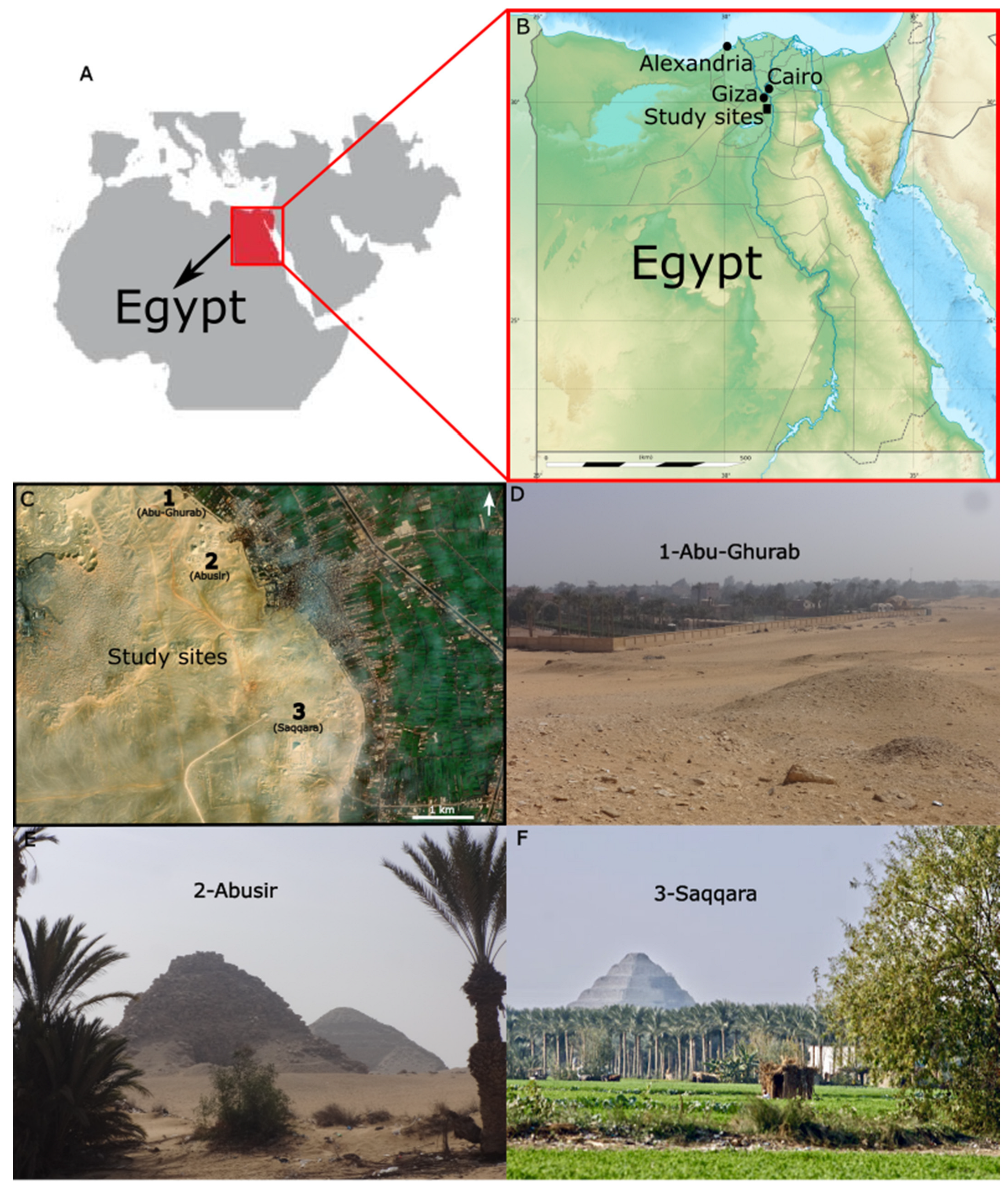
Abu Ghurab is located approximately 12 km south of modern Cairo in the Memphite necropolis region of Lower Egypt (
Figure 1A,D). The site is most renowned for its sun temples, particularly those of Pharaohs Userkaf and Nyuserre, dating to the Fifth Dynasty of the Old Kingdom. Abu Ghurab, which in Arabic means “Father of Ravens”, holds immense archaeological and historical significance as it provides important understanding into the solar cult, funerary practices and monumental architecture of ancient Egypt [
25]. The site’s carefully planned temple complexes, featuring stone altars, colossal statues, and open courtyards, reflect the religious and political ideology of early dynastic kingship and the integration of solar worship into state rituals [
26].
In addition, Abusir site is situated between Giza and Saqqara, served as a major necropolis during the Fifth Dynasty (
Figure 1A,E). The site is notable for its pyramids, mortuary temples, and tombs of high-ranking officials, which offer valuable information about the administrative and religious structures of the Old Kingdom. Abusir’s relatively smaller pyramids, compared to Giza, illustrate the evolution of royal mortuary architecture and the standardization of pyramid construction techniques. Excavations at Abusir have also showed extensive papyrus archives, providing rare textual evidence about temple administration, rituals and daily life in ancient Egypt to make it a highly important site for both archaeology and Egyptology [
27,
28,
29]. Lastly, Saqqara is situated approximately 20 km south of modern Cairo and adjacent to the city of Memphis and is located between Abusir and Dahshour sites (
Figure 1C,F). It is considered as one of the most extensive archaeological complexes in Egypt. It served as a royal and elite necropolis for more than three millennia, from the Early Dynastic Period to the Ptolemaic era. Saqqara is most famous for the Step Pyramid of Djoser that designed by the architect Imhotep, which represent a revolutionary step in monumental stone architecture. Beyond the Step Pyramid, Saqqara contains dozens of pyramids, mastabas and tombs adorned with intricate reliefs and inscriptions, providing unparalleled understanding into ancient Egyptian funerary practices, art and social hierarchy. Its significance lies not only in its historical and cultural value but also in its role as a key reference site for understanding the development of pyramidal architecture and religious practices across dynasties [
30,
31].
3. Methodology
This study employed an advanced multi-temporal remote sensing and GIS-based change detection approach to analyze land use and urban expansion across key archaeological zones of the Memphis necropolis, specifically Abu-Ghurab, Abusir, and Saqqara (
Table 1). Historical satellite imagery from Google Earth (GE) for the years 2004, 2008, and 2025 was used, with specific areas and boundaries manually enhanced and delineated to improve spatial accuracy.
The imagery years (2004, 2008, and 2025) were selected based on three key criteria (1) the availability of high-quality, cloud-free, and high-resolution Google Earth scenes suitable for fine-scale archaeological landscape analysis; (2) the alignment of each temporal point with documented phases of socio-economic change affecting settlement patterns, especially before and after the 2011 political events in Egypt, which triggered a rapid increase in informal building activities; and (3) the need to compare baseline, transitional, and contemporary conditions to capture meaningful long-term landscape transformation rather than short-term fluctuations. Although the temporal spacing is not uniform, each selected year corresponds to a critical development stage, ensuring that the temporal analysis reflects evidence-based historical turning points instead of arbitrary sampling intervals. This temporal selection approach is commonly used in archaeological remote sensing research where high-resolution archival imagery is limited and change dynamics are event-driven rather than evenly distributed over time.
All Google Earth (GE) imagery used in this study was verified through Google Earth Pro’s historical imagery tool, which provides essential acquisition information, including the sensor provider Maxar, the sole provider for all selected scenes, the capture year and month, and general image characteristics. The high-resolution satellite imagery used in this study was obtained from Google Earth Pro and sourced from Maxar satellite platforms, providing sub-meter spatial resolution (approximately 0.2–0.5 m per pixel). Although Google Earth does not provide full sensor acquisition metadata such as satellite altitude, the spatial resolution of the imagery is sufficient to detect and monitor medium- to large-scale archaeological features, including walls, columns, tomb outlines, vegetation encroachment, and early indicators of structural decay. All selected scenes were visually inspected to ensure cloud-free conditions, minimal off-nadir distortion, and consistent image quality across time periods. The camera heights displayed in Google Earth Pro (e.g., 4.512 m for Figures 2–4, 9.440 m for Figure 5, 699 m for Figure 6 and 46 m for Figure 8) are reported solely as visualization parameters used to maintain appropriate map scale and figure consistency, and do not represent the satellite acquisition altitude. In cases where detailed sensor metadata were unavailable, geometric reliability was validated by measuring known archaeological features (such as pyramid base lengths and causeway widths) and comparing them with documented dimensions, a standard approach in archaeological remote-sensing research.
Image preprocessing, including geometric and radiometric corrections, was performed using ERDAS Imagine 2023 and ArcGIS Pro 3.1 to ensure comparability across time. Supervised classification using the maximum likelihood algorithm was applied in ArcGIS Pro to generate detailed land cover maps, distinguishing built-up areas, agricultural zones, vegetated land and archaeological features. Post-classification comparison was then conducted to quantify changes in land cover classes over time, highlighting areas of urban expansion. All image processing and spatial analyses were facilitated and automated through the Google Earth Engine platform to allow for efficient handling of large datasets and high-resolution imagery.
To visualize and assess the spatial impact of development, classified outputs were overlaid with archaeological site boundaries derived from official heritage maps and field-verified GPS data. Urban growth was color-coded temporally, red for built-up structures in 2004, yellow for developments added by 2008, and blue for structures present by 2025, while unchanged agricultural and vegetated land was marked in green. Quantitative analysis included the calculation of surface area changes in each land class using pixel count and geospatial zonal statistics. Furthermore, special attention was given to buffer zones of 200–300 m around key monuments, including the Sun Temples of Nyuserre and Userkaf at Abu-Ghurab, and the pyramids of Sahure, Neferirkare, and Djoser at Abusir and Saqqara. This geospatial framework was supplemented by on-ground observations, historical land use records and published archaeological site reports to contextualize the detected changes and assess their conservation implications.
For conservation sustainability, in situ inspections were combined with the analysis of high-resolution Google Earth imagery and temporal satellite datasets from 2005, 2010, 2015, 2020, and 2025. This integrated approach focused on two key monuments (1) the Valley Temple of Sahure in Abusir and (2) the Valley Temple of Unas in Saqqara. These datasets enabled the identification and documentation of structural defects and patterns of stone decay to highlight the progressive impact of urbanization and the change on the durability of the monuments.
High-resolution digital image of the wall surface were captured under controlled lighting conditions to ensure consistent representation of color, texture, and surface features (
Table 2). The image was pre-processed to enhance clarity and alignment to prepare it for digital analysis. The analysis was performed using Python 3.11 with specialized libraries including OpenCV 4.9.0, NumPy 1.26.2 and Matplotlib 3.8.2. The image was first converted to grayscale to isolate intensity values that indicate surface variations. These values were normalized to improve contrast and make subtle anomalies more visible. A false-color mapping technique (JET color scale) was then applied, where red zones indicate areas of high decay, yellow and green zones highlight moderate decay and blue zones represent low decay or relatively intact areas. This process enabled the clear visualization of erosion, cracks, voids, and other deterioration patterns not easily detected with the naked eye. For quantitative assessment, the surface was segmented based on intensity thresholds high decay (0.66–1.00), moderate decay (0.33–0.66) and low decay (0.00–0.33). The percentage of each decay level was calculated relative to the total analyzed area to provide an objective measurement of the extent of deterioration. Finally, annotated decay maps and a statistical summary were generated using AutoCAD2022 for drawing and Python for analysis. These outputs will serve as documentation for the current condition of the surface and as a baseline for future monitoring, comparative assessments, and conservation planning. The decay quantification was obtained using the area-percentage formula:
where:
Pk = Percentage of surface area for class k (severe decay);
Ak = Number of pixels in that class;
Atot = Total number of pixels in the analyzed area.
For the severe decay zones:
Ak (red pixels) X = (1283 pixels);
Atot (total analyzed pixels) X = (100,000 pixels).
This approach is widely used in various fields, including image analysis, materials science and spatial data analysis. In the context of masonry wall decay quantification, this formula allows for the objective measurement of deterioration by assessing the area affected by decay relative to the total surface area [
32,
33,
34].
To enhance the moisture-detection component of the analysis, near-infrared (NIR) imaging was incorporated to identify zones of elevated moisture within the stone surfaces. The method relies on the strong absorption characteristics of water in the 750–900 nm spectral range, where moisture-rich areas exhibit reduced reflectance and therefore appear as darker pixel clusters in the processed imagery. In this study, NIR contrast enhancement was applied to highlight reflectance differences associated with subsurface or surface-level moisture accumulation. To verify the remote observations, several in situ experimental checks were conducted, including tactile assessment of humid stone sections, visual correlation with salt-efflorescence patterns, differentiation between shaded and unshaded control areas, and comparison with thermal imaging data, where moisture-laden zones consistently appeared cooler due to evaporative effects.
4. Results and Discussion
4.1. Change Detection Analysis for Abu-Ghurab Archaeological Site
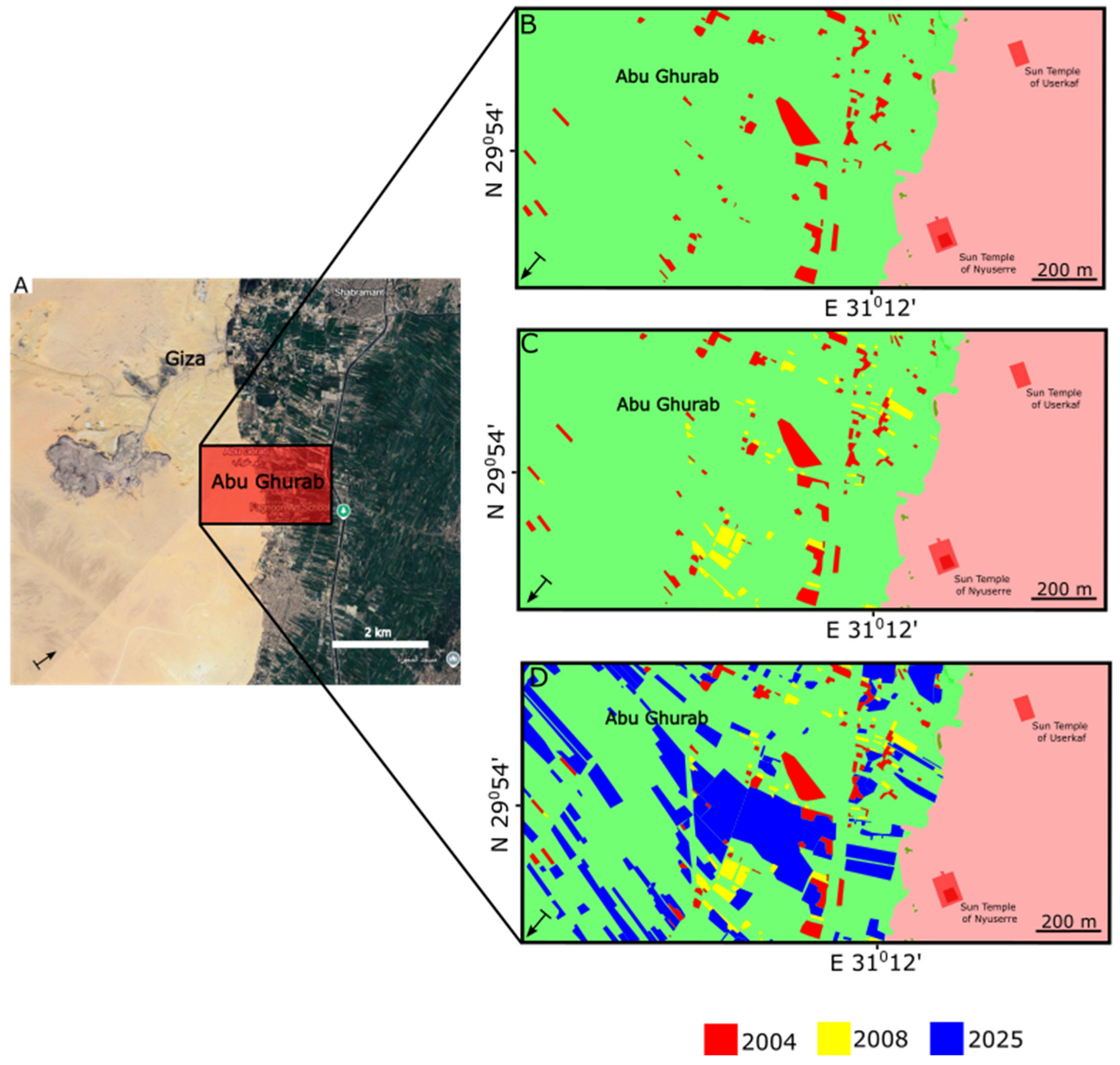
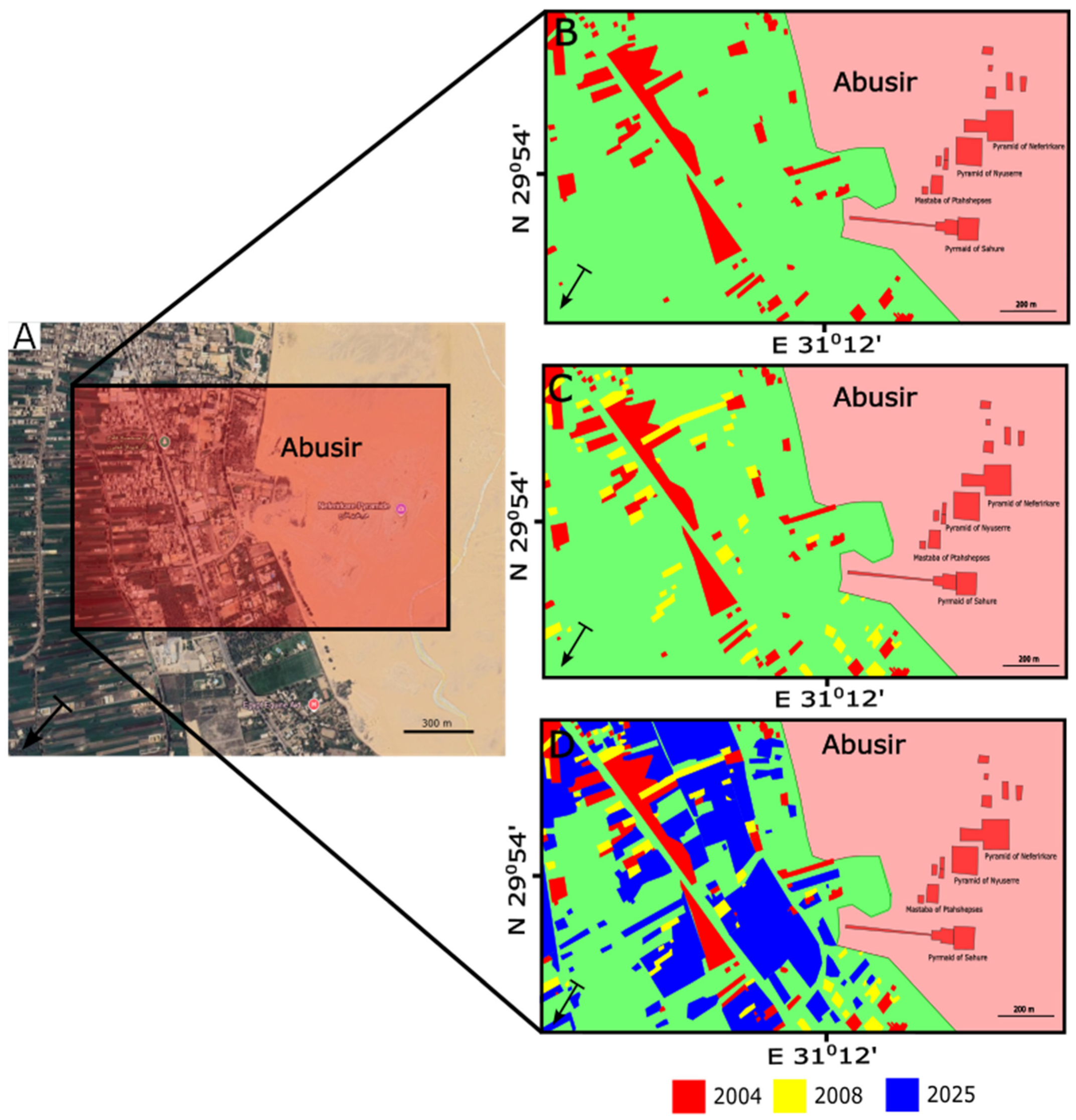
A multi-temporal urban change detection analysis was conducted for the Abu-Ghurab area, situated within the crucial archaeological zone between Giza and Saqqara. This analysis utilized remote sensing-based classification of satellite imagery from the years 2004, 2008, and 2025. In this sense,
Figure 2A demonstrates the geographical context with a satellite basemap highlighting the area of interest in red. In addition,
Figure 2B–D display land cover classifications for each time point, allowing for the detection of temporal change in the built environment. The base map from 2004 (
Figure 2B) shows and detects minimal urban development in the region, with built-up areas represented in red and surrounded by predominantly agricultural and vegetated land in green. By 2008 (
Figure 2C), substantial new construction appears, indicated in yellow, particularly in the western and southern zones adjacent to the archaeological temples. The increase in built-up surface area from 2004 to 2008 is visually prominent and indicates an initial wave of development. Furthermore,
Figure 2D shows further changes by 2025, with blue indicating structures added in the most recent phase. The blue areas dominate large portions of the map, especially on the western and central sectors of Abu Ghurab, indicating rapid urban expansion. Accordingly, a comparative quantitative assessment shows that from 2004 to 2008, built-up area increased by approximately 65–70% (based on the increase in yellow areas over red), reflecting early stages of encroachment. From 2008 to 2025, the change accelerates dramatically, with the blue zones nearly doubling the urban footprint seen in 2008. In this regard, between 2004 and 2025, the built environment expanded by over 200% to replace what was once mainly agricultural land. In this regard, the detected urban sprawl presents a real threat to the archaeological texture of Abu Gurab, especially as the expansion is observed within 200–300 m of both Sun Temples to put these heritage sites at direct risk of damage due to vibration, pollution, groundwater shifts and visual obstruction.
The multi-temporal change detection analysis showed a striking increase in construction activity around the Abu Ghurab heritage zone, with urban development advancing to within just a few hundred meters of the Sun Temples of Nyuserre and Userkaf. This uncontrolled growth threatens the archaeological landscape. In addition, physical encroachment and vibrations through construction activity, including excavation, piling and the use of heavy machinery, can cause vibrations that threaten the structural stability of buried or standing remains. Foundations of ancient structures, often unreinforced and made of fragile mudbrick or soft limestone, are particularly vulnerable to micro-vibrational stress, leading to cracking, subsidence, or even collapse. As urban infrastructure expands, archaeological layers can be destroyed or sealed under modern construction, eliminating the potential for future excavations and cutting off access to unknown or undocumented features. The proximity of new buildings also fragments the once-continuous mortuary landscape, weakening its contextual integrity. Urbanization typically alters groundwater regimes through infrastructure development, irrigation leakage, and wastewater mismanagement. These changes can accelerate salt crystallization and sub-surface water infiltration, two major causes of stone decay in Egyptian monuments [
35,
36]. Additionally, increased impervious surfaces (as seen in blue and yellow urban areas (
Figure 2C,D)) reduce natural drainage and lead to standing water around sensitive sites. Dust, air pollutants and acid rain from nearby human activity can chemically interact with ancient surfaces, which lead to surface erosion, pigment fading and stone disintegration. Moreover, the proximity of roads, sewage systems and human traffic introduces contaminants that are difficult to manage without proper zoning. The encroachment of modern structures compromises the visual authenticity of the site, which is an essential component of its World Heritage value. The ancient temples, once embedded in a sacred, open desert environment, now risk being surrounded by concrete buildings, roads and informal housing. The growing settlement pressures create legal enforcement gaps and complicate the implementation of protective measures and without proper documentation and boundaries (buffer zones), even registered heritage sites may lose priority in municipal planning.
4.2. Multi Temporal Change Detect at Abusir Archeological Site
Figure 3 presents a spatiotemporal analysis of urban development around the Abusir necropolis, a major ancient burial ground of Egypt’s Old Kingdom, using multi-temporal satellite imagery from 2004, 2008 and 2025.
Figure 3A situates the study area between agricultural land to the west and the desert plateau to the east, where key monuments such as the Pyramids of Sahure, Neferirkare, Nyuserre and Neferefre are located. In addition,
Figure 3B,D illustrate the urban growth dynamics, with land cover classifications representing 2004 constructions in red, additional development by 2008 in yellow and new structures by 2025 in blue. Green areas denote unchanged agricultural or open land, while red zones in the east represent the core archaeological area of the necropolis.
In 2004 (
Figure 3B), the built-up footprint is relatively limited and dispersed along the western agricultural edge, with minimal intrusion toward the desert plateau. By 2008 (
Figure 3C), construction activity, especially along the main access routes, increased significantly, with yellow-marked areas indicating an estimated 40–50% increase in development relative to 2004. The most profound changes are evident in the 2025 data (
Figure 3D), where blue-marked areas display a further and more aggressive urban expansion, almost tripling the built-up area seen in 2004. This transformation is particularly concentrated along the central corridor leading directly toward the Abusir necropolis, which now shows a near-continuous band of modern infrastructure abutting or approaching the archaeological zone.
This urban encroachment presents multiple threats to the preservation of the Abusir World Heritage landscape and its monuments. First, it physically reduces the buffer zone between modern settlements and the pyramid field, increasing the risk of accidental damage during construction and erosion of the site’s visual authenticity. Secondly, the close proximity of modern infrastructure introduces vibrational stress, pollution, and potential hydrological changes, all of which contribute to the degradation of ancient limestone structures. Furthermore, undocumented subsurface remains that may exist west of the pyramid field are at high risk of destruction or permanent inaccessibility due to unregulated building. The increasing density and scale of development also threaten future archaeological exploration and conservation planning.
From a quantitative perspective, the expansion between 2004 and 2025 indicates a nearly 200% increase in urban coverage in the immediate vicinity of the archaeological site. The visual comparison of
Figure 3B–D demonstrates that Abusir is undergoing the same urban pressure previously observed in neighboring sites like Abu Ghurab, raising concerns over the cumulative impacts on Egypt’s Memphite necropolis region. If left unmanaged, continued development may result in Abusir’s functional isolation from its wider archaeological landscape, weakening both its historical interpretation and its eligibility for future heritage protection upgrades.
4.3. Multi Temporal Change Detect at Saqqara Archaeological Site
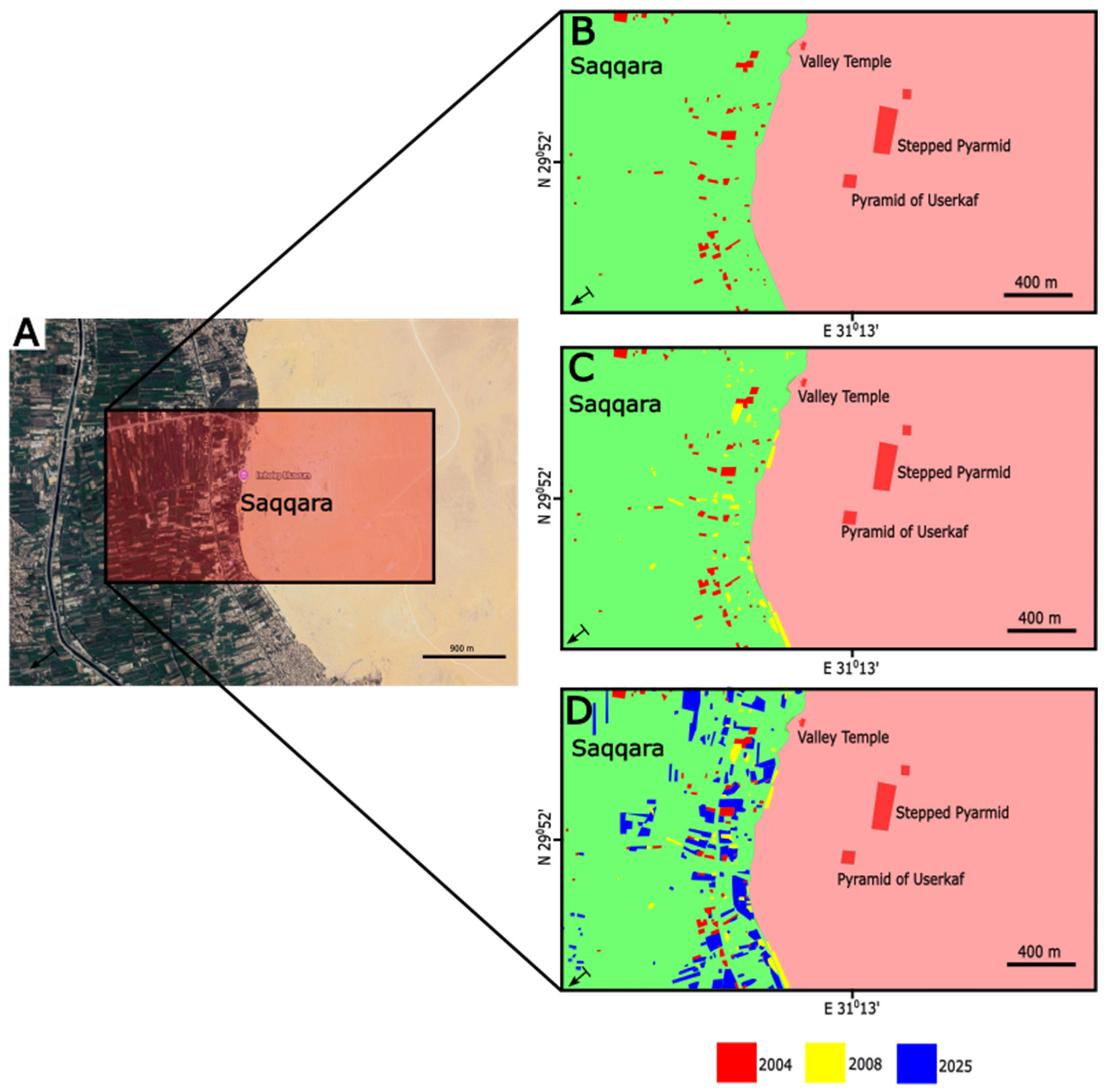
The Saqqara necropolis is considered one of the most iconic archaeological landscapes in Egypt and part of the UNESCO-listed Memphis and its Necropolis World Heritage Site, is increasingly threatened by urban expansion in some areas. The present analysis utilizes multi-temporal remote sensing and land cover classification to detect and quantify changes in the built environment surrounding the Saqqara plateau from 2004 to 2025. In this sense,
Figure 4A demonstrates the spatial context of the study area, situated between intensively cultivated lands to the west and the desert escarpment housing monumental structures to the east. In addition,
Figure 4B–D illustrate the temporal progression of urban development, with built-up areas from 2004 shown in red, new structures by 2008 in yellow, and additional development up to 2025 in blue. Vegetation and agricultural land are marked in green, while archaeological zones, including the Stepped Pyramid of Djoser, Pyramid of Userkaf and the Valley Temple, are shown in solid red zones east of the urban spread.
In 2004 (
Figure 4B), the urban footprint adjacent to the Saqqara plateau was relatively limited, with fewer than 40 identifiable structures (in red) bordering the cultivated zone. By 2008 (
Figure 4C), expansion intensified, particularly along the northern and central corridors leading toward the archaeological edge. The yellow-coded additions show an increase of approximately 60% in the number of structures compared to 2004, indicating the initial stages of peri-urbanization. Moreover, by 2025 (
Figure 4D), this trend accelerates markedly, with dense clusters of blue structures filling the interstitial spaces between earlier developments and advancing closer to the eastern boundary. The built-up area nearly triples in surface coverage relative to 2004 with over 150 distinct structures visible within the analysis frame and this represents an estimated 250–275% increase in urbanized land over two decades.
Spatially, the expansion moves consistently from west to east, narrowing the important buffer zone between cultivated land and the core archaeological complex. The blue areas seen in
Figure 4D intrude to within 100–150 m of the Valley Temple and approach the perimeter of the Djoser complex. Such proximity raises serious concerns regarding physical and visual impacts on the site. Construction vibrations, water table disturbances from new infrastructure, and increased human presence all threaten the structural stability of ancient mudbrick and limestone buildings. Furthermore, the cumulative visual intrusion degrades the contextual authenticity of the necropolis, which it is an important component of its World Heritage status. In addition to the physical and aesthetic consequences, the encroachment creates legal and logistical complications. The absence of formally enforced buffer zones has allowed construction to progress without regard for heritage boundaries to make the future preservation efforts more challenging.
4.4. Integrated Landscape Transformation Analysis from Abu-Gurab to Saqqara Archaeological Sites (2004–2025)
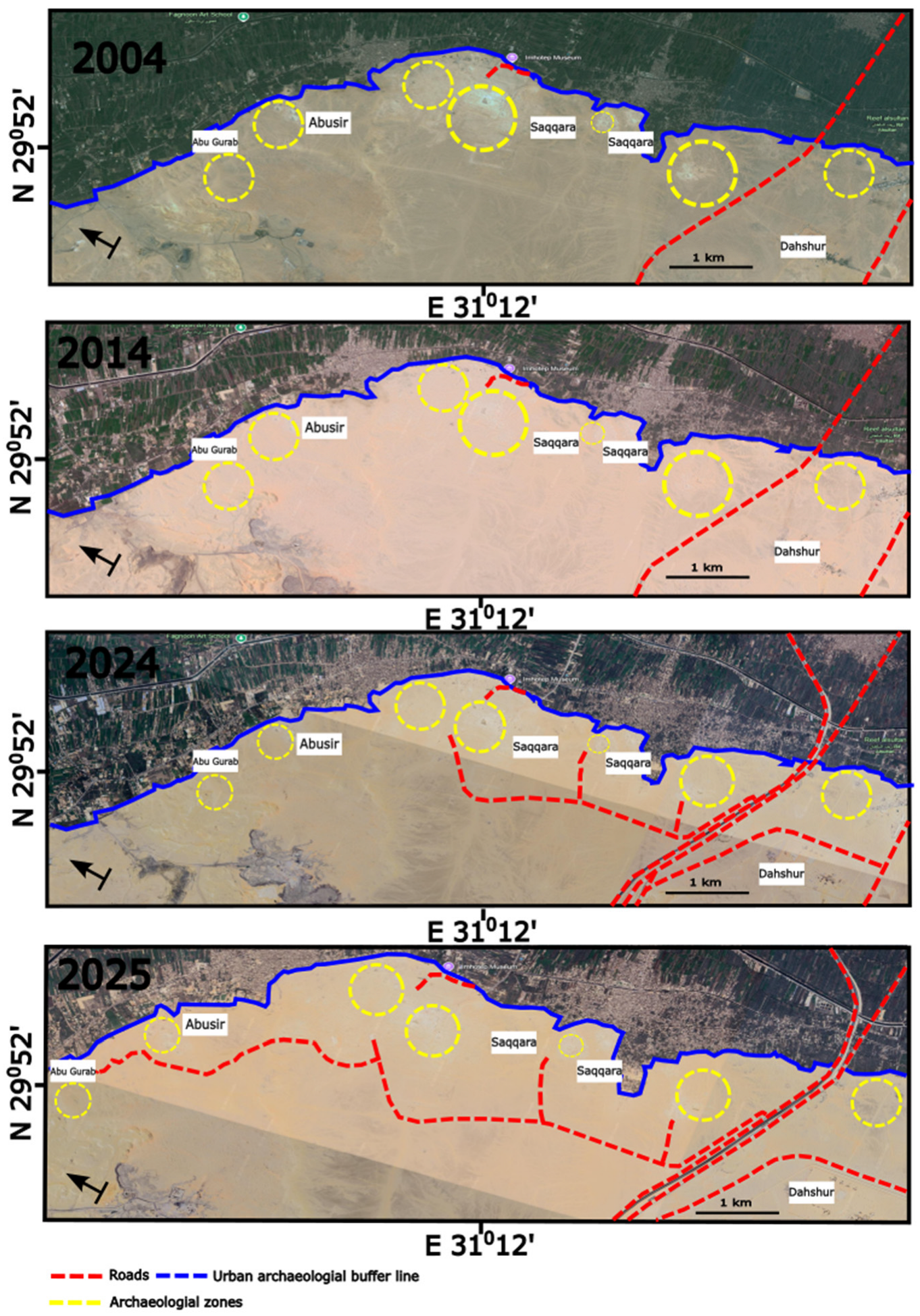
A multi-temporal spatial analysis of the Memphis Necropolis region from Abu-Ghurab, through Abusir, to Saqqara, display a stark trajectory of land use transformation between 2004 and 2025. This sequence, derived from high-resolution satellite imagery, visualizes the progressive degradation of the historical desert boundary separating the ancient mortuary plateau from the modern cultivated zone to the north. For this, each time frame (2004, 2014, 2024, 2025) clearly illustrates the advancing encroachment of modern development toward (
Figure 5), and increasingly into, the sacred archaeological zone. This change is delineated by a color-coded overlay, where blue lines represent the original desert-cultivation interface, red dashed lines mark urban expansion limits and yellow circles highlight key archaeological focal UNESCO points.
In 2004, the archaeological landscapes remained largely intact. The desert plateau housing the ancient monuments was spatially distinct and well-buffered from urban intrusion (
Figure 5). All four sites, Abu Gurab, Abusir, Saqqara and Dahshur were surrounded by a cohesive desert barrier that maintained both their visual prominence and contextual isolation, a defining characteristic of Old Kingdom funerary architecture. At this stage, modern development was largely contained within the cultivated Nile Valley, north of the blue boundary line.
By 2014, this boundary began to erode. Urban sprawl and agricultural intensification had pushed the cultivation edge slightly southward, especially near Abusir and the northern Saqqara fields. While the desert still maintained a perceptible buffer, scattered settlements and informal infrastructure began to appear along the access roads leading into the necropolis. These developments represented the early phases of uncontrolled peri-urban growth, with minimal regulatory oversight or archaeological assessment (
Figure 5). The situation escalated dramatically by 2024, where urban infrastructure, characterized by dense residential expansion and arterial road development, had broken through the desert frontier. The red dashed boundaries drawn in the 2024 frame indicate that both Saqqara and Dahshur were now directly impacted, with modern infrastructure pushing into zones that previously served as archaeological buffers. In Saqqara, the once-clear zone between the cultivated land and the Pyramid of Userkaf had narrowed clearly, while in Dahshur, encroachment reached deeply into the pyramid field, threatening the visual corridors and geomorphological stability of key structures such as the Bent and Red Pyramids of Snefru (Father of Khufu).
By 2025, the archaeological landscape had become fragmented. Abu Ghurab, Abusir and especially Saqqara were all intersected by modern development zones. The red dashed lines now dominate the northern and eastern edges of the plateau, reflecting full integration of urban structures such as roads into previously protected desert areas (
Figure 5). In some zones, the development appears to wrap around the archaeological sites, effectively severing their relationship with the surrounding funerary landscape. This represents a profound loss of spatial coherence, an important criterion for the site’s Outstanding Universal Value (OUV) under UNESCO designation [
37].
4.5. Focal Monument and Conservation Sustainability at Abusir Archaeological Site
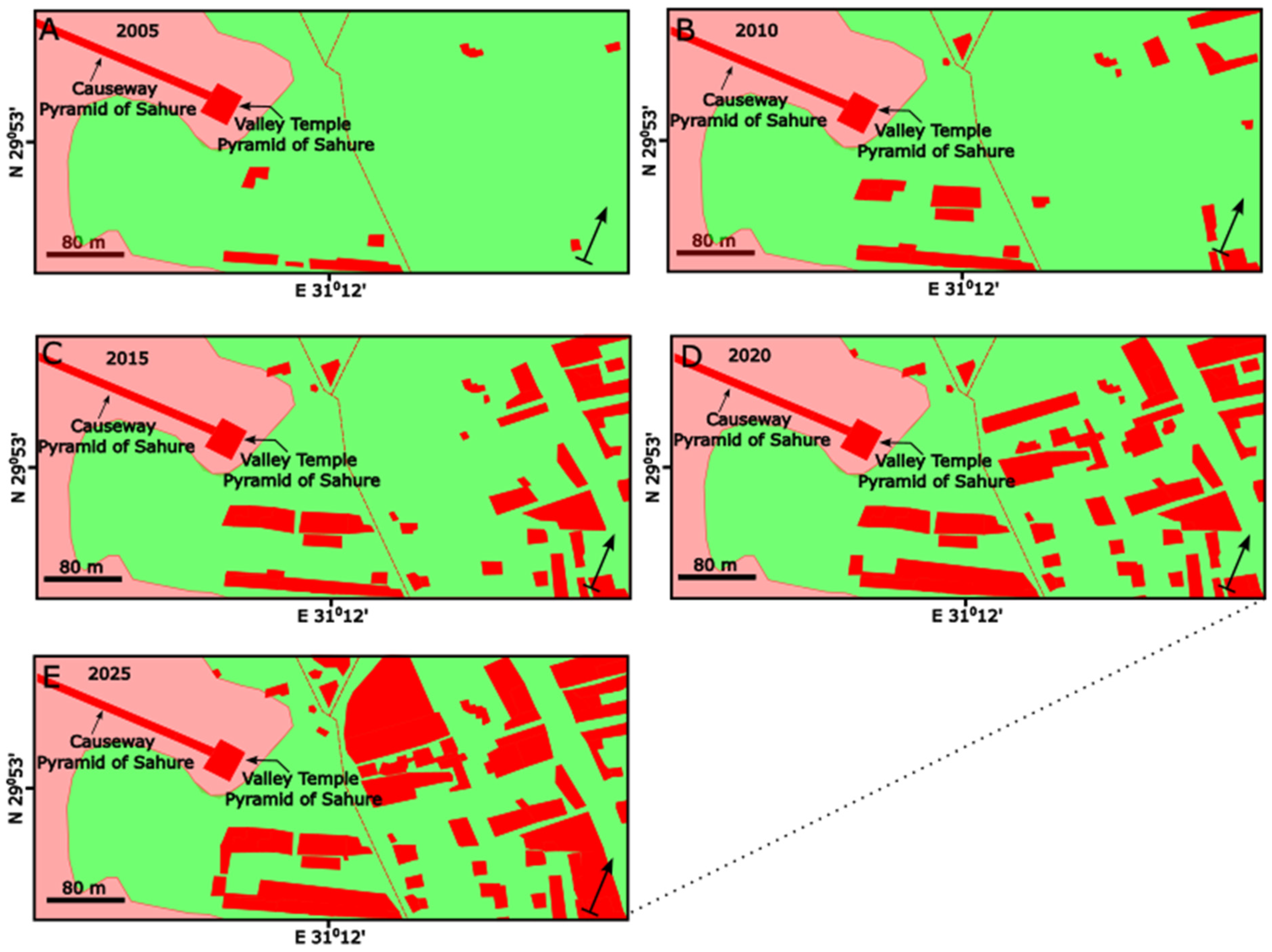
Time-series urban change detection analysis surrounding the Valley Temple of the Pyramid of Sahure in Abusir was carried out, using classified satellite imagery from the years 2005, 2010, 2015, 2020, and 2025 (
Figure 6). In this sense, each map highlights built-up areas in red and open/agricultural zones in green, offering a clear visual progression of urban development encroaching on this important archaeological landscape. The Valley Temple and Causeway of Sahure, once prominently situated within an open desert context in 2005 (
Figure 6A) and become increasingly surrounded by modern construction in subsequent years. By 2010 (
Figure 6B), isolated red zones begin to appear south and east of the temple, marking the initial intrusion of urban elements into previously unbuilt land.
Between 2010 and 2015 (
Figure 6B,C), the density of built-up structures increases, especially along the southeastern edge of the temple and in proximity to the causeway. By 2020 (
Figure 6D), urbanization becomes aggressive, filling much of the landscape south and east of the temple. The once-clear spatial buffer between the Valley Temple and modern infrastructure becomes fragmented, with red development zones forming nearly continuous belts. Notably, construction approaches both the causeway’s path and the temple’s periphery, which increases the potential risks from structural vibrations, pollution, and changes to local hydrology.
Moreover, by 2025 (
Figure 6E), the built-up environment shows near-encirclement of the Valley Temple complex from the north, east, and southeast. Urban clusters now appear within tens of meters of the archaeological features, drastically reducing their contextual harmony. The pyramid causeway, previously buffered by empty space, is now flanked by red zones, symbolizing heavy construction on both sides. This raises immediate concerns about physical damage from nearby excavation or looting, mechanical vibrations, and alterations to drainage patterns, which can accelerate subsurface water infiltration and salt crystallization in ancient stonework. As relates to this, the spatiotemporal pattern revealed in
Figure 6 illustrates an accelerating threat to the Valley Temple of Sahure, driven by unregulated urban expansion. The loss of the desert buffer undermines both the physical preservation and the visual and cultural landscape of the site.
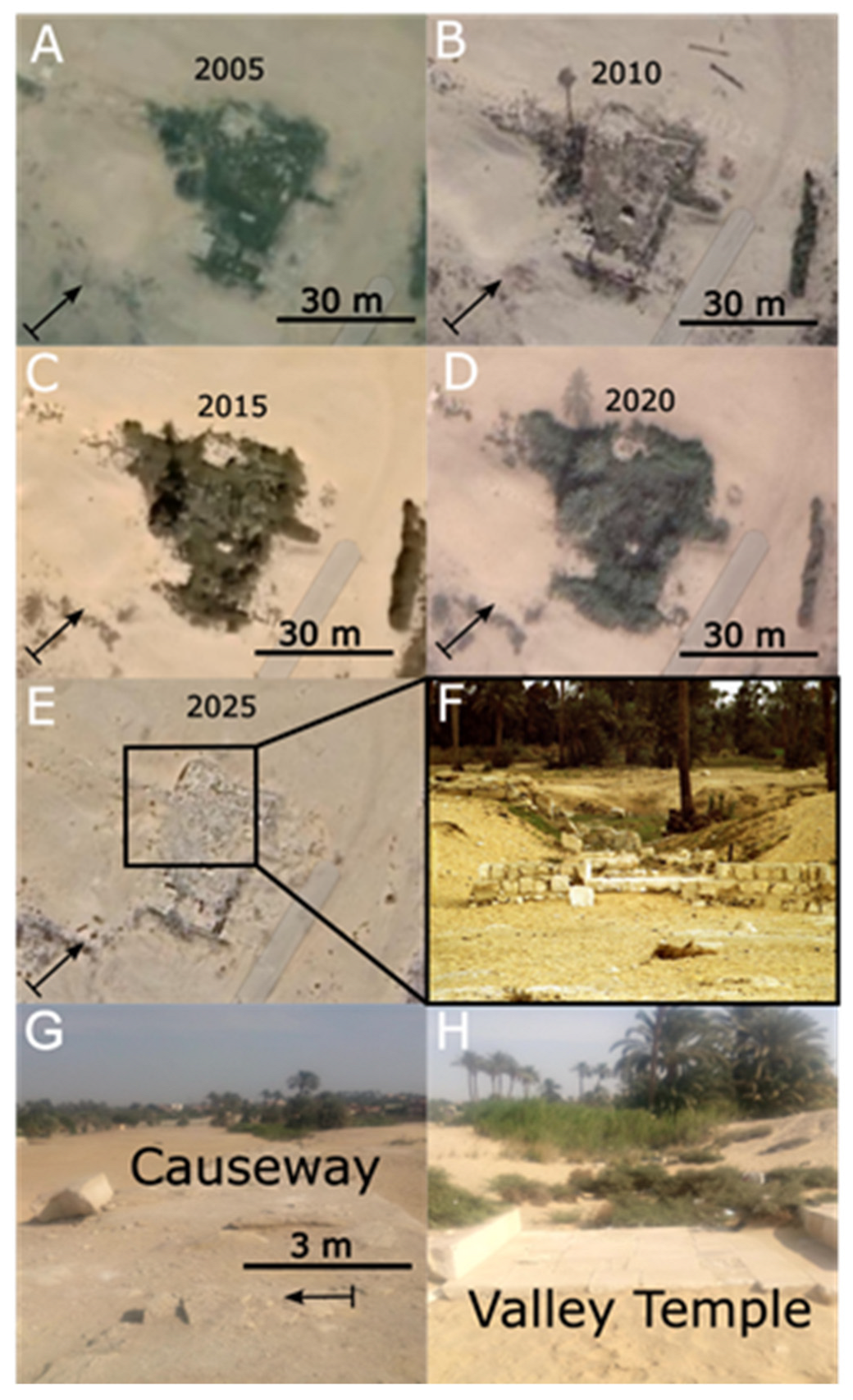
The multi-temporal satellite imagery and field photographs presented in
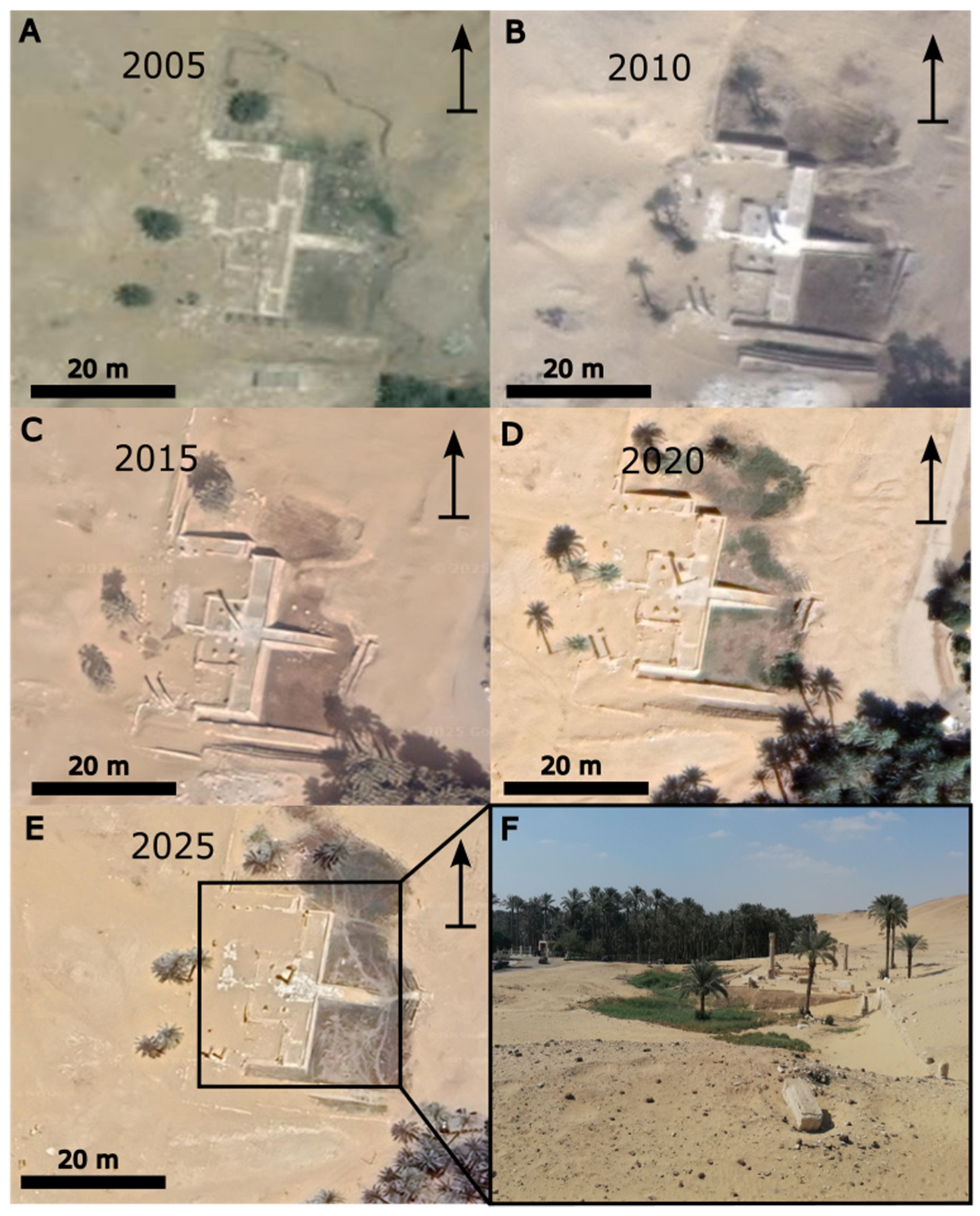
Figure 7 presents a comprehensive analysis of environmental and structural changes affecting the Valley Temple of the Pyramid of Sahure between 2005 and 2025. In this regard,
Figure 7A–E demonstrates progression of vegetation density and spatial patterns around the temple area, which directly correlate with subsurface water fluctuations and increasing anthropogenic impacts. In addition, in 2005 (
Figure 7A), vegetation coverage is moderate and scattered, consistent with a dry and largely undisturbed landscape. By 2010 (
Figure 7B), shows a modest increase in vegetation, particularly along the central axis of the temple complex, where subsoil moisture appears to be accumulating, likely due to nearby irrigation or leaking water infrastructure. This is further evidenced by the physical condition of the temple seen in
Figure 7F (2010), where overgrowth surrounds partially collapsed masonry that reflect neglect and increased environmental exposure.
By 2015 (
Figure 7C) and 2020 (
Figure 7D), there is a noticeable intensification in vegetative growth. Dense clusters of dark green vegetation emerge across the archaeological zone, particularly around the temple platform and along the former causeway. This vegetation surge indicates a rising groundwater table, potentially resulting from urban expansion in adjacent areas and informal agricultural practices. The spread of vegetation, especially in a desert context, often signifies uncontrolled water seepage from pipes, irrigation canals, or rising capillary water, all of which accelerate salt migration and crystallization in limestone and mudbrick structures. These conditions cause a direct threat to the structural durability of the temple’s foundation and lower architectural elements. Furthermore, by 2025 (
Figure 7E), the vegetated area is substantially expanded, now enveloping the entire temple platform and intruding into previously barren zones.
In addition,
Figure 7E,G show the current ground-level of the causeway and Valley Temple, respectively and reflect the ongoing deterioration and environmental loading. In
Figure 7G, the causeway appears fragmented and partially buried under windblown sand and surrounding development debris. In
Figure 7H, the temple’s central axis is obstructed by dense vegetation, which not only disrupts visibility and access but also accelerates biological colonization and micro-environmental changes factors that accelerate the stone decay. The absence of drainage, protective zoning or site management infrastructure confirm that the hydrological imbalance and urban proximity remain unresolved threats.
4.6. Focal Monument and Conservation Sustainability at Saqqara Archaeological Site
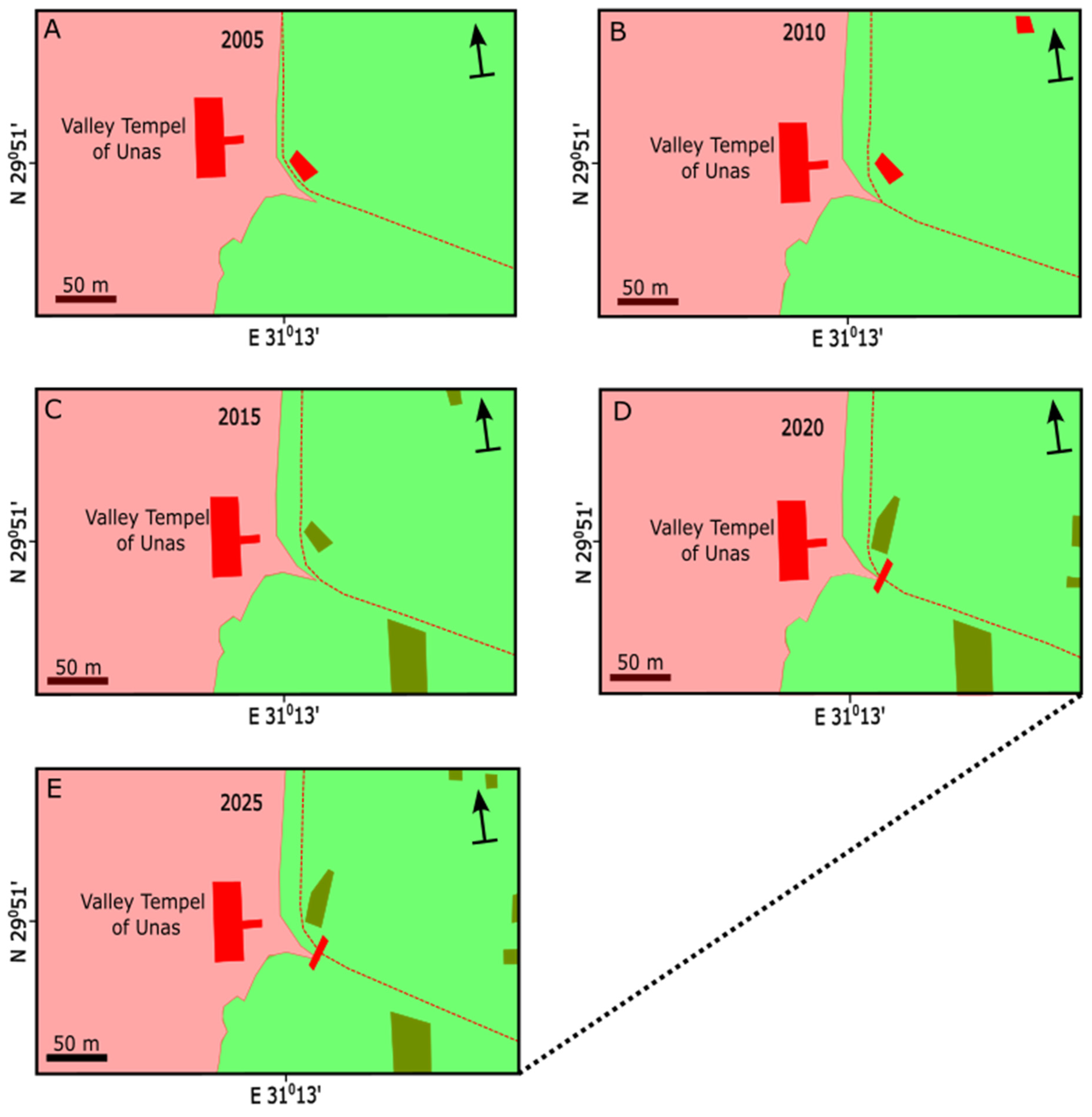
The Valley Temple of Unas is considered one of the key architectural components of the Saqqara pyramid complex. It has experienced notable shifts in its surrounding landscape over the past two decades. The present analysis utilizes high-resolution, multi-temporal land cover classification maps to monitor land use changes in a tightly focused zone immediately adjacent to the temple structure. Covering the years 2005, 2010, 2015, 2020 and 2025,
Figure 8A–E visualizes the progressive advance of modern construction and land modification toward this important Old Kingdom monument.
In the 2005 baseline (
Figure 8A), the Valley Temple of Unas is clearly demarcated in red and surrounded by open agricultural land shown in green. A small built structure appears northeast of the temple, but its position remains comfortably outside the immediate buffer zone. By 2010 (
Figure 8B), no major changes are yet evident in the immediate periphery, although a few minor constructions begin to appear further out, indicating the early stages of localized development.
The landscape begins to transform more noticeably by 2015 (
Figure 8C), with the appearance of light brown structures new buildings or facilities that emerge closer to the southeast edge of the temple zone. The position and size of these new features indicate agricultural infrastructure or private construction, which intrude progressively closer to the site’s protective perimeter. In addition, by 2020 (
Figure 8D), a marked encroachment is visible where a new elongated structure extends immediately adjacent to the temple’s eastern boundary. This structure combined with new linear infrastructure visible nearby, indicates a functional breach of the protective archaeological buffer zone. By 2025 (
Figure 8D), the threat becomes more pronounced. The northeastern corridor adjacent to the Valley Temple becomes increasingly urbanized, with multiple structures appearing within what was once an open space.
The Valley Temple of the Pyramid of Unas at Saqqara is one of the earliest examples of a royal mortuary temple connected to a causeway, is situated at a central point where the desert plateau meets the Nile floodplain. A chronological analysis of high-resolution satellite imagery (
Figure 9A–E) from the years 2005, 2010, 2015, 2020 and 2025 showed notable changes in the land surface conditions and vegetation cover surrounding this historically important monument. These temporal shifts not only reflect environmental dynamics but also offer understanding into anthropogenic influences such as groundwater activity, cultivation and possibly irrigation leakage from nearby agricultural zones and canals.
In 2005 (
Figure 9A), the temple is surrounded by a relatively barren surface, with minimal vegetation visible apart from isolated palm trees to the south and west of the structure. The archaeological footprint is clearly distinguishable, and the site appears to be relatively undisturbed. Additionally, by 2010 (
Figure 9E), there is a discernible increase in vegetation density, particularly in the form of new palm trees and denser canopy clustering toward the northeast. Simultaneously, the surrounding sandy substrate begins to show subtle signs of darkening due to either increased soil moisture or shifting surface material. In 2015 (
Figure 9C), vegetative features become more noticeable. A marked proliferation of date palms is evident on both the northwestern and southeastern edges of the temple area. The expansion of this greenery reflect increased groundwater availability or intentional planting. Remarkably, this period also sees clearer delineation of the temple’s architectural elements, indicating better preservation or possible minor site clearing, although no large-scale excavation is visible. The environmental shift becomes clearer by 2020 (
Figure 9D), where lush vegetation appears to dominate the western side of the structure. This greenery now forms partial canopies over the temple’s perimeter and indicates a more sustained water source in close proximity to the archaeological site.
Moreover, by 2025 (
Figure 9E), the vegetative coverage reaches a new level of maturity. While the temple’s overall layout remains visible, it is increasingly surrounded by palm groves and interspersed ground vegetation. The presence of mature date palms, combined with clearly defined shadows and expanded ground covert hat indicates long-term ecological change. This may result from increased capillary rise in groundwater, potentially due to nearby irrigation or rising water tables from uncontrolled drainage. Importantly, this greenery, while aesthetically appealing, may pose conservation risks to the temple. Vegetation near ancient structures is known to contribute to root-induced mechanical stress, moisture retention, and salts accumulation, which can accelerate stone weathering and sub-surface instability. For this,
Figure 9F confirms these results visually by a photograph from 2025. The Valley Temple appears increasingly embedded within a mixed ecological zone, where palms, shrubs, and invasive vegetation are encroaching upon formerly exposed archaeological elements. While this contributes to an image of landscape vitality, it causes conservation dilemmas regarding site preservation versus natural regeneration. The balance between protecting the monument and accommodating environmental change becomes particularly delicate in such heritage-rich yet ecologically sensitive zones.
4.7. Types of Invasive Development and Their Impact
The multi-temporal analysis demonstrated that the forms of invasive development impacting the Memphis Necropolis vary considerably in their permanence and reversibility. The classification presented in
Table 3 clearly distinguishes between removable, semi-permanent, and irreversible forms of invasive development affecting the Memphis Necropolis. While agricultural installations, informal housing, and temporary structures have a measurable impact on the archaeological landscape, they remain largely reversible and can be legally removed if enforcement measures are applied. In contrast, semi-permanent urban growth, such as low-rise concrete buildings, utility lines, and road extensions to creates more persistent disruptions to the ancient landscape by fragmenting protective buffer zones and introducing continuous physical and environmental pressures. These forms of development contribute to increased vibration loads, groundwater alterations and visual intrusion, all of which undermine the durability and long-term conservation of adjacent monuments.
The most serious threat, however, comes from the expansion of modern cemeteries, mausoleums, and burial complexes, which represent an irreversible form of land transformation. As highlighted in
Table 3, these permanent installations have become particularly problematic in Saqqara South near the Pyramid of King Djedkare and in Dahshur, where new burial grounds now encroach upon archaeological zones. Unlike agricultural or informal developments, cemeteries cannot be removed due to cultural, ethical, and legal constraints, resulting in a permanent loss of archaeological layers and excavation potential. Their spread not only disrupts the contextual integrity of the Old Kingdom funerary landscape but also severely limits future heritage management options. Recognizing the unique risks caused by cemeteries is therefore essential for developing realistic and sustainable conservation strategies for these UNESCO-listed sites.
4.8. Quantitative Accuracy Assessment of the Classification
The interpretation of urban expansion patterns is supported by the high classification accuracy achieved (overall accuracy > 86%, Kappa > 0.79), ensuring that the detected changes reflect real landscape transformations rather than classification artifacts as seen in
Table 4.
5. Decay Analysis for a Focal Monument
The inclusion of decay mapping situates this study within the broader framework of heritage risk assessment, linking spatial encroachment with the physical vulnerability of the monuments. This aligns with UNESCO’s Historic Urban Landscape (HUL) approach, which emphasizes multi-scalar analyses combining environmental, landscape, and material-level indicators.
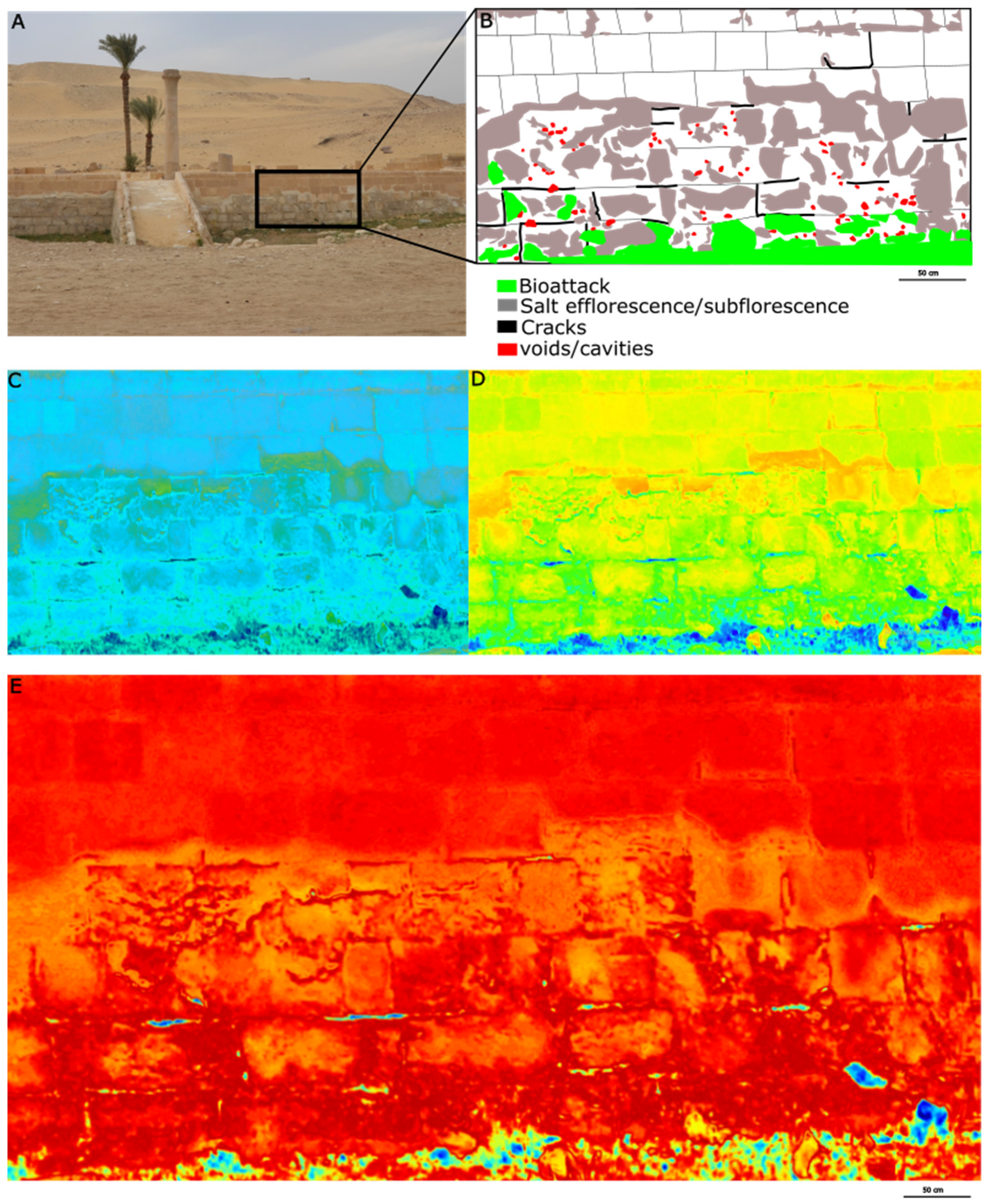
The decay mapping analysis for the Valley Temple of the Pyramid of Unas at Saqqara (
Figure 10B) shows that approximately 18% of the surface area corresponds to salt weathering, while 6.6% displays biological deposits and 1.3% exhibits severe decay such as cracking. The remaining area appears as healthy zones in the wall. This quantitative assessment highlights localized decay rather than uniform degradation to emphasize the importance of targeted conservation interventions.
When combined with surface topography, moisture mapping, and thermal imaging (
Figure 10C–E), the results show that deeper erosion and higher thermal stress are concentrated in the same zones flagged as severely deteriorated in the decay segmentation. This integrated dataset not only confirms the accuracy of the decay mapping but also enables prioritization of the most vulnerable areas for urgent stabilization and conservation treatment.
Using the segmented decay map (
Figure 10B), the quantified areal extents was calculated by
Pk =
Ak/
Atot × 100%, where
Ak is the number of pixels for class
kk and
Atot is the analyzed area. Applying this to current decay mapping
Psalt = 18.0%,
Pbio = 6.6% and
Psevere = 1.3%, the remainder corresponds to joints/background/unclassified zones. For progression tracking, a per-course decay density can be reported as
Pk (
y) =
Ak (
y)/
Aband (
y) along horizontal bands (
y), highlighting the lower courses as the most affected. These percentages provide the baseline metric for decay prevalence in the studied façade.
Recent advancements in imaging technologies have introduced innovative approaches for analyzing the condition and degradation of stone walls. Unlike standard color photographs, these topographical, moisture and thermal imaging mapping employ color-coded visualizations to represent specific material properties, enabling conservators to monitor deterioration patterns with greater precision. Such visual data can reflect parameters like moisture content, material composition, surface irregularities, and structural degradation to make them highly valuable for both diagnosis and long-term preservation planning. In this context, each color spectrum within the imaging set provides unique understanding into the wall’s condition. For this, the blue-toned visualization (
Figure 10C) represents the distribution of moisture within the wall, where darker shades indicate areas with higher water retention and match well with the real photographs in
Figure 10A. These zones are particularly vulnerable to decay, as excessive moisture accelerates material weakening. The green-to-yellow spectrum (
Figure 10D) highlights variations in texture of the wall, which display areas of structural irregularity and deterioration. Moreover, the red-toned visualization (
Figure 10E) points to more advanced degradation. In addition, regions with intense red coloring are associated with greater material loss, increased porosity and altered thermal properties that caused by prolonged decay processes.
6. Discussion
The multi-temporal change detection analysis conducted across the Memphis Necropolis, encompassing Abu Ghurab, Abusir, and Saqqara, shows high trajectory of landscape transformation over the period from 2004 to 2025. These results underscore the escalating pressures of urbanization and agricultural intensification on the texture and sustainability of this UNESCO World Heritage landscape and contribute to the global discourse on heritage risk assessment and management in rapidly developing regions.
This study documents a dramatic expansion of urbanized land across all focal sites, with Saqqara showing a nearly threefold increase in built-up areas and Abu-Ghurab and Abusir each experiencing more than 200% growth. These trends parallel patterns observed in other heritage-rich contexts, such as Angkor [
14] and Paphos [
16] and reflect the pervasive challenge of unregulated peri-urban growth in regions where heritage landscapes intersect with socio-economic pressures.
This expansion has eroded important buffer zones, in some cases reducing protective distances to less than 150 m from key monuments such as the Valley Temple of Unas. The loss of these buffers not only exposes monuments to direct physical risks, such as vibrations from construction, pollution, and altered groundwater regimes, but also undermines the visual and contextual fabric that underpins the Outstanding Universal Value (OUV) of the Memphis Necropolis under UNESCO criteria [
37]. The integrated analysis of satellite imagery, vegetation dynamics and decay mapping highlights the compounding effects of environmental and anthropogenic factors. The proliferation of vegetation around the Valley Temples of Sahure and Unas, driven by rising groundwater levels and irrigation leakage, is accelerating biological colonization, root penetration, and moisture retention, all of which accelerate the stone weathering and sub-surface instability. These results align with previous research documenting the deleterious effects of water infiltration and salinization on Egyptian limestone monuments [
33,
34,
38,
39].
It is important to consider that the rapid expansion detected in the classified datasets is not only a demographic trend but also a socio-politically influenced phenomenon. The transitional period following the 25 January 2011 violent events in Egypt witnessed weakened monitoring and planning enforcement, resulting in a marked increase in informal constructions on agricultural and desert-edge lands. This aligns temporally with the most pronounced spatial changes observed in the 2008–2025 interval for Abu Ghurab, Abusir and Saqqara, indicating that the absence of effective governance mechanisms may have been an observed enabling factor in the encroachment processes documented in this study.
The decay quantification further validates these observations, with approximately 18% of surveyed surfaces affected by salt weathering, and localized zones exhibiting severe cracking. The spatial correlation between areas of elevated moisture indices, thermal stress, and advanced deterioration underscores the need for integrated monitoring systems to anticipate and mitigate further damage. Despite the global significance of the Memphis Necropolis, this study demonstrated systemic weaknesses in heritage governance, particularly regarding the demarcation and enforcement of buffer zones and the regulation of land use around protected sites. These results resonate with broader critiques of heritage management in rapidly urbanizing regions, where institutional fragmentation, weak enforcement, and competing development priorities frequently undermine conservation goals [
4,
13].
The resulting fragmentation of the archaeological landscape threatens not only the physical preservation of monuments but also their research potential and interpretive coherence. The disconnection of these monuments from their surrounding funerary landscapes diminishes opportunities for contextual archaeological analysis and compromises the cultural narratives that contribute to their universal significance.
This study demonstrates the value of a standardized, multi-temporal analytical framework that integrates high-resolution satellite imagery, GIS-based classification, and decay mapping. By harmonizing temporal datasets across multiple sites, the methodology ensures comparability and reproducibility, providing a real evidence base for data-driven risk mapping and heritage management. Such approaches are increasingly advocated within the context of the UNESCO Historic Urban Landscape (HUL) approach and Sustainable Development Goal 11.4, which emphasize the integration of scientific data into heritage planning and policy development. This integrated approach offers a replicable model for monitoring other heritage sites, particularly those in data-scarce or high-risk contexts. Unlike earlier studies in Egypt [
19,
20], which primarily assessed land cover changes for resource management, this research directly couples spatial analysis with conservation objectives, bridging the gap between remote sensing science and practical heritage management and conservation science. The quantified encroachment rates a 35% increase in urban development and a 20% expansion of agricultural land between 2000 and 2020 provide concrete evidence that surpasses qualitative observations. This data-driven approach shifts the discourse from a general understanding of threat to a precise, measurable assessment of risk. In addition, the results emphasize that the current rate of change, with a compound growth rate of 2.2% annually, far outpaces the capacity of reactive conservation strategies.
The results of this study also emphasize the urgent need for comprehensive policy and conservation measures that integrate legal, environmental, social, and technological approaches. Clear legal demarcation and enforcement of buffer zones, supported by satellite monitoring, are essential to prevent further encroachment, while hydrogeological and water management plans can mitigate moisture-driven decay. In addition, engaging local communities and incorporating heritage awareness into development planning ensures that conservation aligns with socio-economic goals. Furthermore, institutionalized monitoring frameworks using remote sensing and machine learning can provide early-warning systems for timely site management. These strategies support global conservation agendas, including SDG 11.4 and the UNESCO Historic Urban Landscape approach, promoting integrated, data-driven heritage preservation.
This study acknowledges several limitations related to data sources, analytical methods, and interpretive processes. First, the use of Google Earth (GE) high-resolution imagery introduces inherent uncertainties because full sensor metadata is not always accessible and spatial resolution may vary across years. Although all scenes were verified through Google Earth Pro’s historical imagery tool and cross-checked using known archaeological features, the absolute geometric accuracy cannot be guaranteed with the same precision as commercial, scientifically calibrated datasets. Second, the supervised classification approach is constrained by the RGB-only nature of GE imagery, which lacks multispectral bands; this increases the risk of spectral confusion between bright desert surfaces and light-coloured built structures. While accuracy assessments and manual post-classification corrections were applied, some misclassification is still possible, particularly in earlier time slices. Third, the decay-mapping component relies partly on manual segmentation, which, despite careful operator consistency, introduces an element of subjectivity into boundary delineation and damage interpretation. Additionally, the correlation between landscape change and monument decay remains probabilistic rather than strictly causal, as multiple environmental and human factors interact simultaneously in archaeological settings. Finally, the results represent a snapshot of conditions observable within the available imagery and field data, meaning that finer-scale, sub-surface, or short-term seasonal processes may not be fully captured. These limitations do not undermine the overall results, but they highlight the need for cautious interpretation and the importance of complementing this approach with future field-based validation, higher-spectral imagery, and long-term monitoring datasets.
Quantitative Performance Metrics and Applicability Assessment
To quantitatively assess the applicability and performance of the proposed combined solution for cultural heritage monitoring, a set of standardized spatial and material metrics was applied at both landscape and monument scales. At the landscape level, urban expansion was quantified using absolute and relative changes in built-up surface area (km2 and %), annual growth rates (%/year), and the proportion of new development occurring within predefined buffer distances (100 m, 150 m, 200 m, and 300 m) around key monuments. These indicators allow for direct comparison of encroachment intensity across sites and time periods and provide measurable thresholds relevant to heritage protection policies.
Across the study area, built-up land increased by approximately 200–275% between 2004 and 2025, corresponding to a mean annual growth rate of ~2.2% per year. In several cases, more than 35–45% of recent urban expansion occurred within 200 m of major monuments, indicating critical buffer-zone infringement. At Saqqara, urban structures approached to within 100–150 m of the Valley Temple of Unas, while at Abu Ghurab and Abusir, development advanced to within 200–300 m of the Sun Temples and pyramid complexes.
At the monument scale, the performance of the decay-mapping component was evaluated using area-based deterioration metrics derived from image segmentation. Surface conditions were classified into low, moderate, and high decay classes, and their areal proportions were calculated relative to the total analyzed surface. For the focal monuments, the quantitative results indicate that approximately 18.0% of the surface area is affected by salt weathering, 6.6% by biological colonization, and 1.3% by severe structural decay, providing an objective baseline for conservation prioritization.
The spatial coincidence between zones of elevated moisture indices, thermal anomalies, and high decay percentages confirms the effectiveness of the integrated approach in identifying vulnerable areas. The linking quantified urban encroachment indicators with measured material deterioration, the combined solution demonstrates strong applicability for heritage risk assessment, enabling evidence-based decision-making, prioritization of interventions, and long-term monitoring in line with UNESCO Historic Urban Landscape (HUL) principles and Sustainable Development Goal 11.4.
Importantly, the use of reproducible metrics, such as percentage change in built-up area, buffer-zone violation rates, decay area ratios, and annual growth indices, allows the methodology to be transferred and scaled to other cultural heritage sites facing similar urban and environmental pressures.
7. Conclusions
This study demonstrates the profound impact of urban expansion on the archaeological landscape of the Memphis Necropolis, focusing on Abu Ghurab, Abusir, and Saqqara. Multi-temporal analysis of high-resolution satellite imagery from 2004, 2008, 2010, 2015, 2020 and 2025 displayed substantial growth in built-up areas surrounding these sites with urban coverage increasing by 200–275% over two decades. In this context, the encroachment consistently moved from the cultivated Nile Valley toward the desert plateau, reducing protective buffer zones, fragmenting the historic mortuary landscape and bringing modern infrastructure within tens to hundreds of meters of key monuments to include the Sun Temples of Userkaf and Nyuserre, the pyramids of Sahure, Neferirkare and the Unas associated valley temple.
The analysis highlighted multiple threats caused by urbanization to include structural vibrations, hydrological changes, pollution and visual intrusion. All of which undermine both the physical preservation and contextual authenticity of these sites. In addition, vegetation proliferation that is linked to rising groundwater and uncontrolled irrigation further increases decay risks through root-induced mechanical stress, salt crystallization and moisture retention. While unregulated irrigation can accelerate groundwater depletion and lead to long-term hydrological stress, carefully managed and sustainable irrigation systems, such as controlled drip irrigation, reuse of treated wastewater, and artificial recharge methods, may help maintain soil moisture levels and mitigate surface deterioration near archaeological sites [
40]. However, such benefits are conditional, site-specific, and require strict monitoring and policy oversight. Therefore, irrigation should not be considered a direct benefit to water resources but rather a potential controlled tool within integrated water management strategies [
41].
Decay mapping of focal monuments, including the Valley Temples of Sahure and Unas, confirmed the presence of localized deterioration, with salt weathering, biological deposits, and severe structural decay affecting important areas. Integrated topographical, moisture, and thermal imaging allowed for precise identification of vulnerable zones to provide a data-driven basis for prioritizing conservation interventions.
Although the present research was not commissioned by UNESCO, the analytical framework and results provide direct support to UNESCO’s heritage protection mechanisms. The quantified land-use changes, mapping of buffer-zone infringements, and identification of irreversible development pressures produce evidence-based material that can be used by national heritage authorities, such as the Egyptian Ministry of Tourism and Antiquities, in preparing their State of Conservation Reports, Periodic Reporting files, and monitoring updates submitted to the World Heritage Centre. This work supplies actionable data that can strengthen protective measures, inform policy decisions, and guide future management strategies for the Memphis and its Necropolis World Heritage property, following the principles of the UNESCO Historic Urban Landscape (HUL) Recommendation and SDG 11.4. In this sense, this study represents a practical contribution toward improved compliance with UNESCO standards and enhanced safeguarding of the archaeological landscape.