Brief Report

Exploiting Indoor-Induced Vibrations at Castello Normanno-Svevo Aci Castello

1
DIEEI, Dipartimento di Ingegneria Elettrica Elettronica e Informatica, Università degli Studi di Catania, Viale Andrea Doria 6, 95125 Catania, Italy
2
DFA, Dipartimento di Fisica e Astronomia, Università degli Studi di Catania, Via Santa Sofia 64, 95123 Catania, Italy
3
DISFOR, Dipartimento di Scienze della Formazione, Università degli Studi di Catania, Via Teatro Greco 84, 95124 Catania, Italy
*
Author to whom correspondence should be addressed.
Heritage 2026, 9(1), 36; https://doi.org/10.3390/heritage9010036
Submission received: 2 November 2025 / Revised: 24 December 2025 / Accepted: 8 January 2026 / Published: 20 January 2026

Abstract

This study investigates the vibrations at the Castello Svevo-Normanno in Aci Castello (Catania), focusing on its historical and cultural significance. The research aims to analyze vibration levels and frequency distribution to achieve two objectives: protecting historical artifacts and structures through preventive vibration analysis and exploring the use of kinetic energy for powering autonomous systems. The study specifically focuses on the indoor context to understand its unique vibrational characteristics. Measurements were recorded along the X, Y, and Z axes, with detailed analysis of the Z axis using Fast Fourier Transform (FFT) and Power Spectral Density (PSD). The results revealed consistent vibration patterns across all axes, with the Z axis significantly influenced by environmental factors such as wind and sea movement. These findings provide valuable insights for designing optimized energy harvesting systems, electromechanical converters, and monitoring devices suitable for operation in this specific historical context.

1. Introduction

Vibration analysis has emerged as a critical tool for assessing the structural integrity of historical buildings, offering non-invasive insights into their dynamic behavior while preserving cultural heritage [1,2]. Traditional approaches, such as laboratory-based modal analysis, numerical simulations [3,4], and analytical or semi-analytical formulations for beam-like elements on elastic foundations [5], often fail to account for real-world environmental factors (e.g., wind, traffic) that influence structural responses. While these methods provide controlled data, they lack the fidelity required to evaluate aging structures in their natural settings, particularly in seismically active regions like Sicily [6,7]. In [8], the authors conducted a study on vibration analysis at the Castello Ursino Picture Gallery in Sicily, Italy. Their research focused on monitoring vibrations within the gallery and exploring the possibility of using them as a source of energy. They examined how vibrations, including those caused by visitors, could be harnessed. Recent advancements in portable sensor technology and on-site measurement techniques now enable researchers to capture real-time, multi-axis vibration data directly from heritage sites, a shift that addresses gaps in traditional methodologies [9].
This study presents the results of an analysis carried out on the 11th-century Norman castle of Aci Castello, a small town located on the northern coast of Catania, Sicily. The monument represents the main attraction of the area, and every year, it houses a huge number of visitors. Through the ages, the castle became the symbol of Aci Castello and its architecture, overlooking the sea, and naturally merged with the basaltic spur upon which it is built, providing a strongly evocative view. Inside the castle, an archeological museum illustrates the history of the area from the Neolithic to Medieval Age, enriched with a mineralogical collection. In this respect, conservation and valorization of the monument are crucial for improving the touristic economy of the town, on one hand, and for reinforcing the identity and sense of self of the local community.
It is worth noting that a preliminary outdoor study was presented in [10]. Our approach combines triaxial measurements with environmental context, capturing the castle’s dynamic response to natural forces such as wind loads. Unlike previous works that prioritized controlled environments or simplified models, our research focuses on triaxial vibration measurements (X, Y, Z axes) across critical structural zones of the castle.
This approach aligns with the growing emphasis on operational modal analysis (OMA), which extracts structural dynamics under ambient conditions without artificial excitation [11]. Within multi-level assessment approaches for very old masonry constructions, ambient vibration measurements provide a fundamental observational level for identifying global dynamic properties while fully preserving the structure. For historic castles, where material degradation, construction irregularities, and complex soil–structure interaction are often unknown, vibration data acquired under operational conditions support the calibration of numerical models by constraining stiffness distribution and boundary conditions. The analysis of induced vibrations therefore contributes to a more reliable interpretation of the structural behavior of ancient monuments, reducing uncertainties inherent in purely analytical or numerical approaches. For instance, Brigante et al. demonstrated the value of vibration testing for heritage preservation but limited their work to isolated laboratory settings, overlooking site-specific environmental interactions [12]. Similarly, Russotto et al. applied vibration monitoring to Sicilian monuments but used single-axis sensors, reducing data granularity [13].
Focusing attention on structural health monitoring (SHM), structural identification [14], this study plays a crucial role in preserving historical buildings by providing data on their stability and response to environmental factors. In fact, recent studies have demonstrated that advanced monitoring techniques, such as vibration analysis and wireless sensor networks, offer reliable and non-invasive ways to assess the condition of heritage structures without causing damage [15]. For example, research by Drdácký and Urushadze highlights the importance of using dynamic testing methods to capture authentic structural behavior, while other studies emphasize the benefits of triaxial vibration measurements for detecting site-specific influences like wind and seismic activity [16]. By integrating modern SHM techniques [17,18] with on-site measurement approaches, researchers can better understand how historical buildings respond to natural forces, helping to develop more effective preservation and restoration strategies [19,20]. It is worth mentioning that various studies have focused on a multi-level approach, such as the one proposed in [21] for Romanian Orthodox masonry churches in the Banat area, and in [22], where the authors proposed an inventory of masonry churches in the Groningen area.
This paper improves the state of the art by presenting, for the first time to the authors’ knowledge, a study on indoor vibrations induced by natural agents such as wind, wave-generated kinetic energy from the sea, and external sources acting on the studied site. It is worth noting that the novelty lies in the in situ study of this historic site, which has never been previously investigated in terms of indoor-induced vibrations and analyses conducted within the archeological museum.
On-site measurements at Castello Normanno-Svevo Aci Castello revealed unique challenges and insights. For example, the castle’s basaltic rock foundation, volcanic geology, and coastal exposure to humidity introduce complex vibrational modes that cannot be easily replicated in simulations, except under specific assumptions. By comparing our results with earlier studies on Mediterranean historical sites [14], for example, we demonstrate how site-specific factors influence structural behavior, emphasizing the need for context-aware monitoring. The study is of interest not only in terms of conservation and preventive conservation but also for estimating kinetic energy levels that could potentially be harnessed for energy recovery, with the goal of powering autonomous monitoring systems and sensor nodes. By establishing a framework for adaptive preservation strategies in the region, the findings also aim to guide restoration protocols for comparable historical structures, helping to ensure their resilience to natural hazards while maintaining their architectural integrity.

2. Materials and Methods

This study employed a smartphone-based approach to perform on-site vibration analysis at the Castel of Aci Castello in Catania, Sicily. The objective was to collect and analyze real-world vibration data in different parts of the monument, capturing its structural response under natural conditions. The methodology focused on precision and repeatability, ensuring comprehensive and reliable results.

2.1. Data Collection

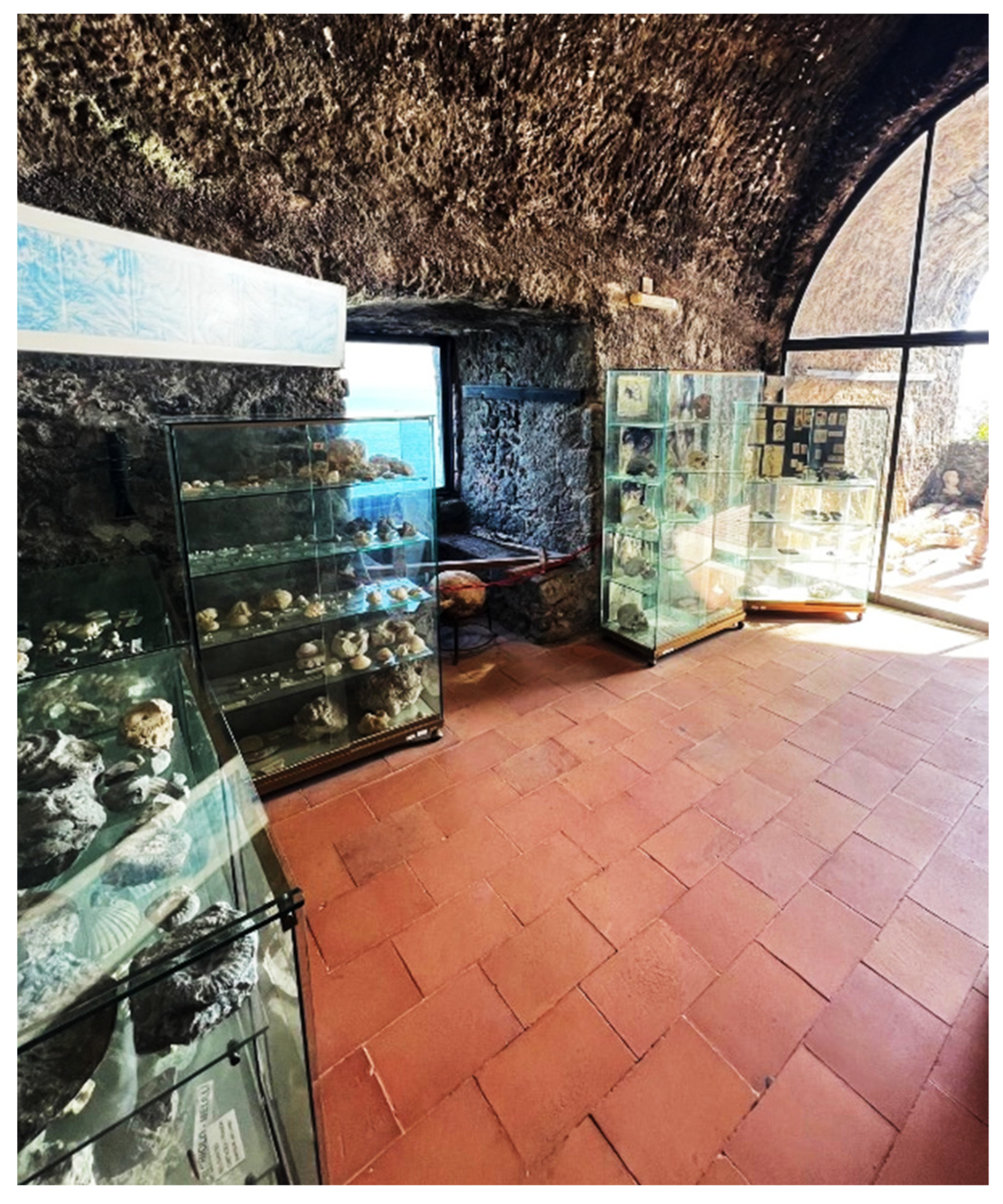
The environmental conditions during the measurements were documented to ensure proper operating conditions. The temperature ranged from 18.5 °C to 20 °C, with a northern wind direction and a wind speed of approximately 20 km/h. Figure 1 shows a real photo of one of the rooms where the measurements were carried out.
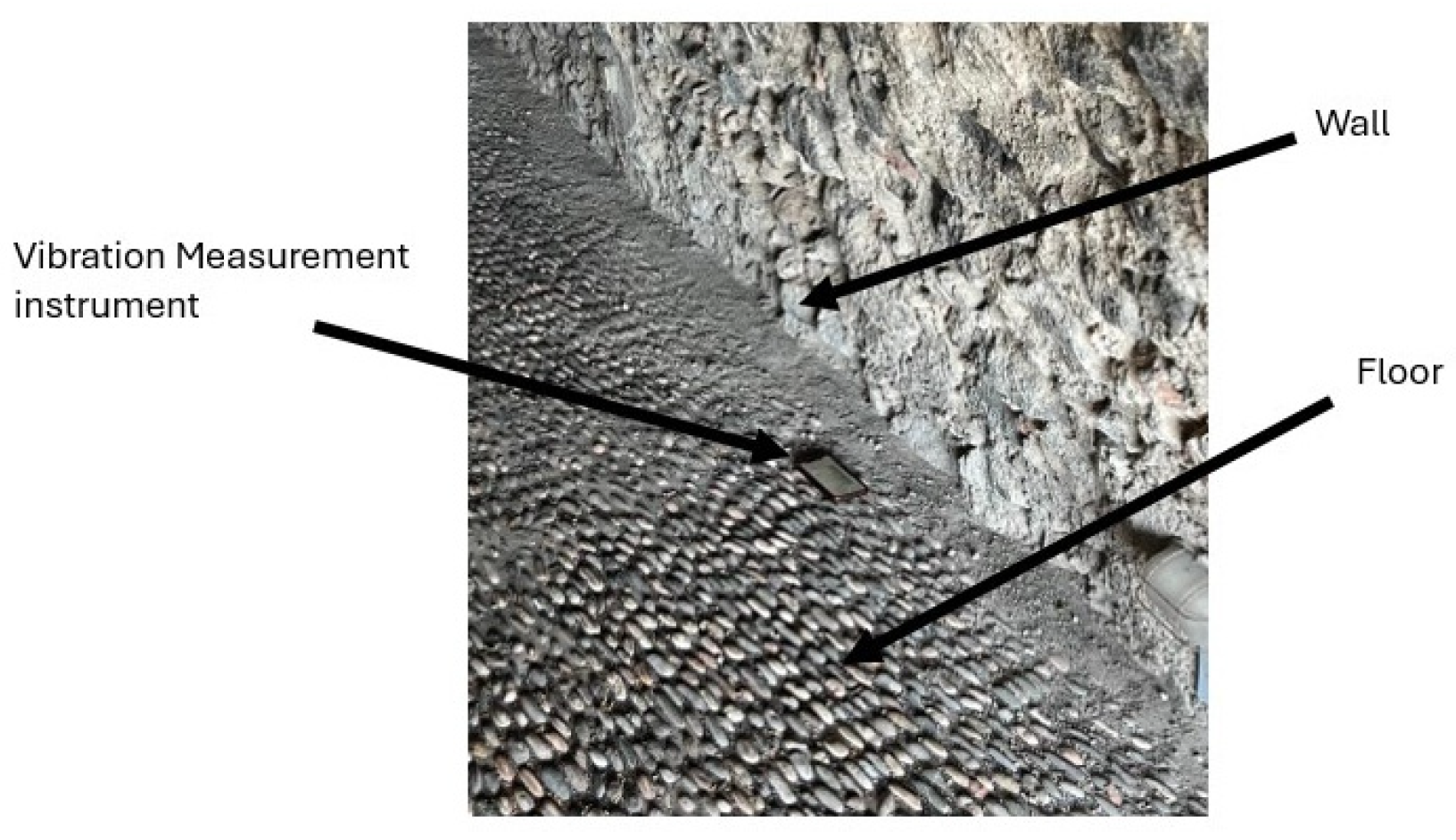
The measurements were conducted using an iPhone 13 Pro Max equipped with the Vibration Analysis application. This application allowed for the real-time recording of vibrations along the X, Y, and Z axes. A compass was used to standardize the orientation of the smartphone, which was placed horizontally on the ground with its top aligned to a fixed direction of 260° west. This alignment ensured consistency across all measurements.
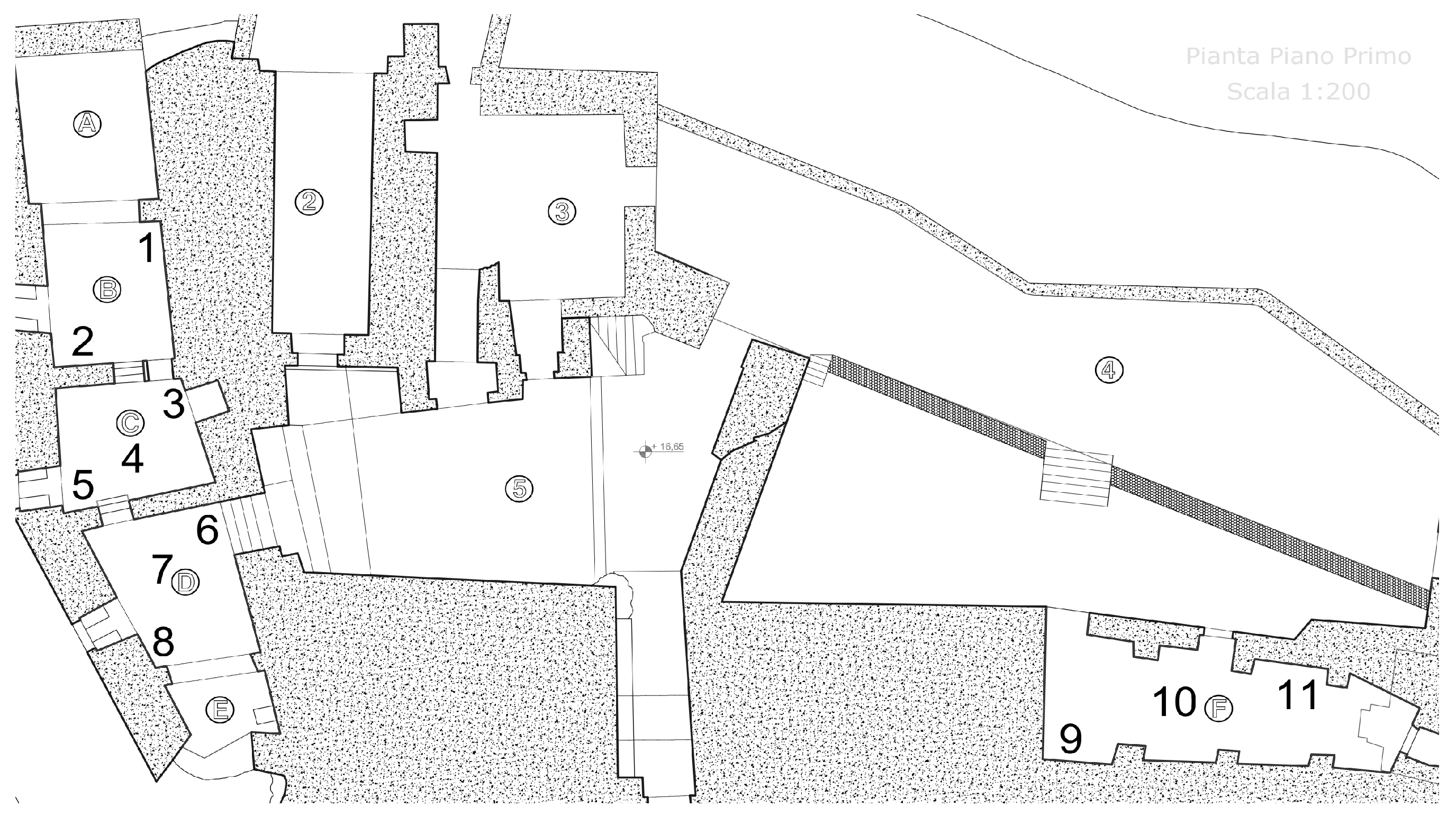
To achieve comprehensive coverage, vibration measurements were conducted in four different rooms inside the castle, as shown in Figure 1 and Figure 2. Within each room, measurements were recorded at three distinct positions. Each measurement session lasted 5 min, during which the smartphone remained stationary on the floor. The measurements were conducted sequentially. All selected locations were within enclosed areas of the castle and were chosen to represent different structural zones in order to analyze variations in the structural response. It is also noted that the castle was closed to the public on the day the measurements were carried out, ensuring minimal external disturbance.

2.2. Data Processing

The raw vibration data collected were exported for analysis. Signal processing was performed using MATLAB® R2024b, leveraging its robust tools for vibration analysis. Two key techniques were applied:
  • An FFT-based method was used to convert the time-domain vibration data into the frequency domain, identifying the dominant frequencies and spectral components [23].
  • PSD-based analysis provided a detailed representation of the energy distribution across different frequencies, enabling the assessment of structural dynamics and resonances [24].

3. Results

3.1. Time-Domain Analysis

The measurements in this study were taken in eleven fully enclosed areas, which are numerically indexed (1–11) in Figure 3 to indicate the specific measurement locations. Uppercase letters (A–F) identify the corresponding museum rooms in which these locations are situated.
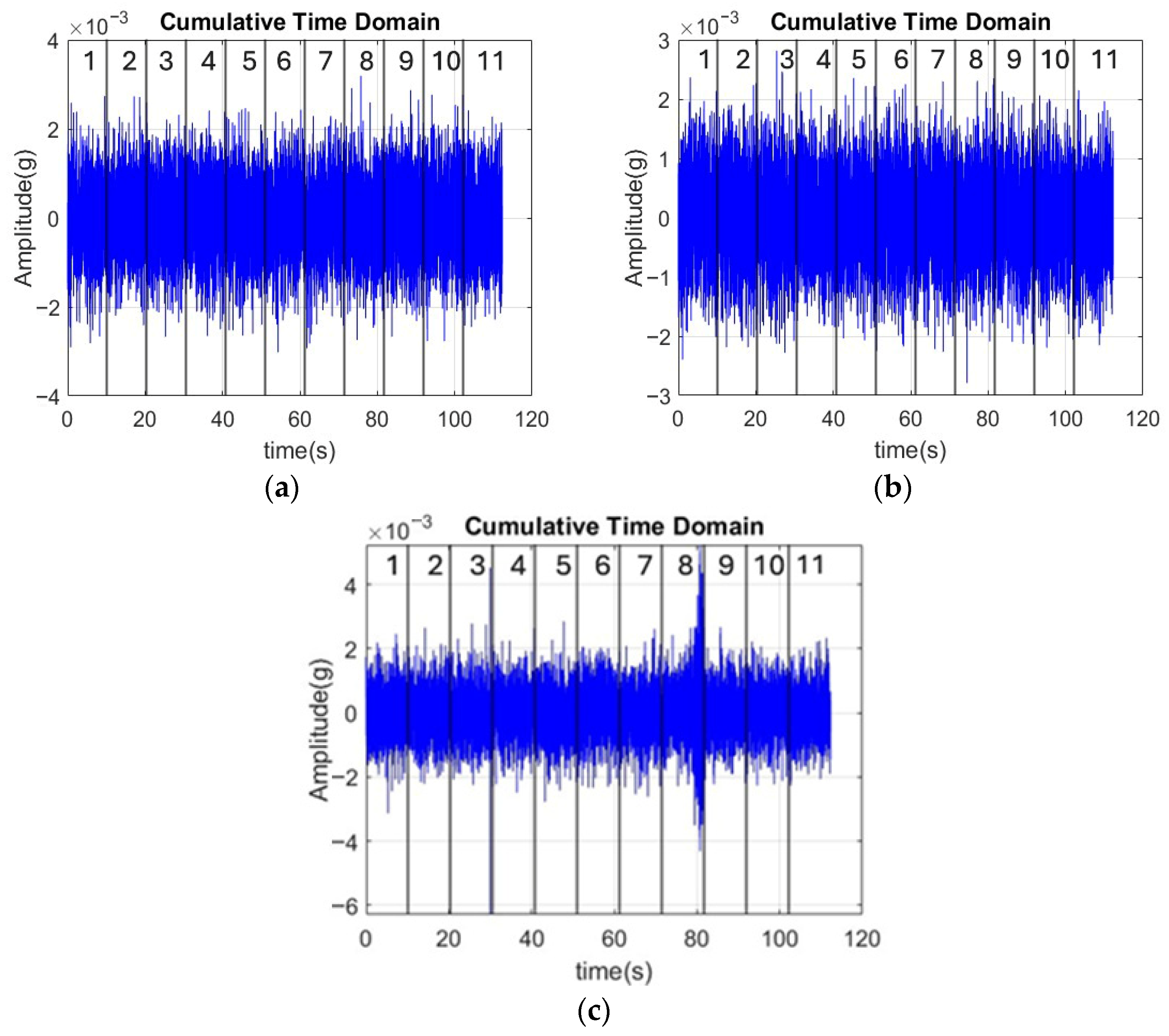
To study the general behavior of the signal, we plotted the time domain of the cumulative signal. In this way, we can identify the consistency of the vibrations not only at each point by itself but also across all the measurement points. The time-domain analysis helps in identifying whether there is any uncommon behavior at a specific spot.
Figure 4 shows the time-domain waveforms and, in particular, their variations along the X, Y, and Z axes.
From the analysis of the plots, it is possible to observe the consistency of the vibrations regardless of time and location, particularly along the X and Y directions. However, the vibrations along the Z axis exhibit more spikes. The sign denotes the direction of motion: upward/downward along the Z-axis, backward/forward along the X-axis, and left/right along the Y-axis.
From Table 1, Table 2 and Table 3, it is possible to observe the consistency of the vibrations along the X and Y axes. Similarities can also be noticed among the three signals in the mean and standard deviation values. The mean acceleration values are reported as absolute values. Additionally, the vibration magnitude is generally bounded between ±0.003 g, with some exceptions in the Z direction, where it reaches up to 0.006 g.
In the next section, an in-depth analysis is performed by conducting FFT analysis on the vibration on the Z axis to understand the reason behind the observed spikes.

3.2. Fast Fourier Transform Analysis

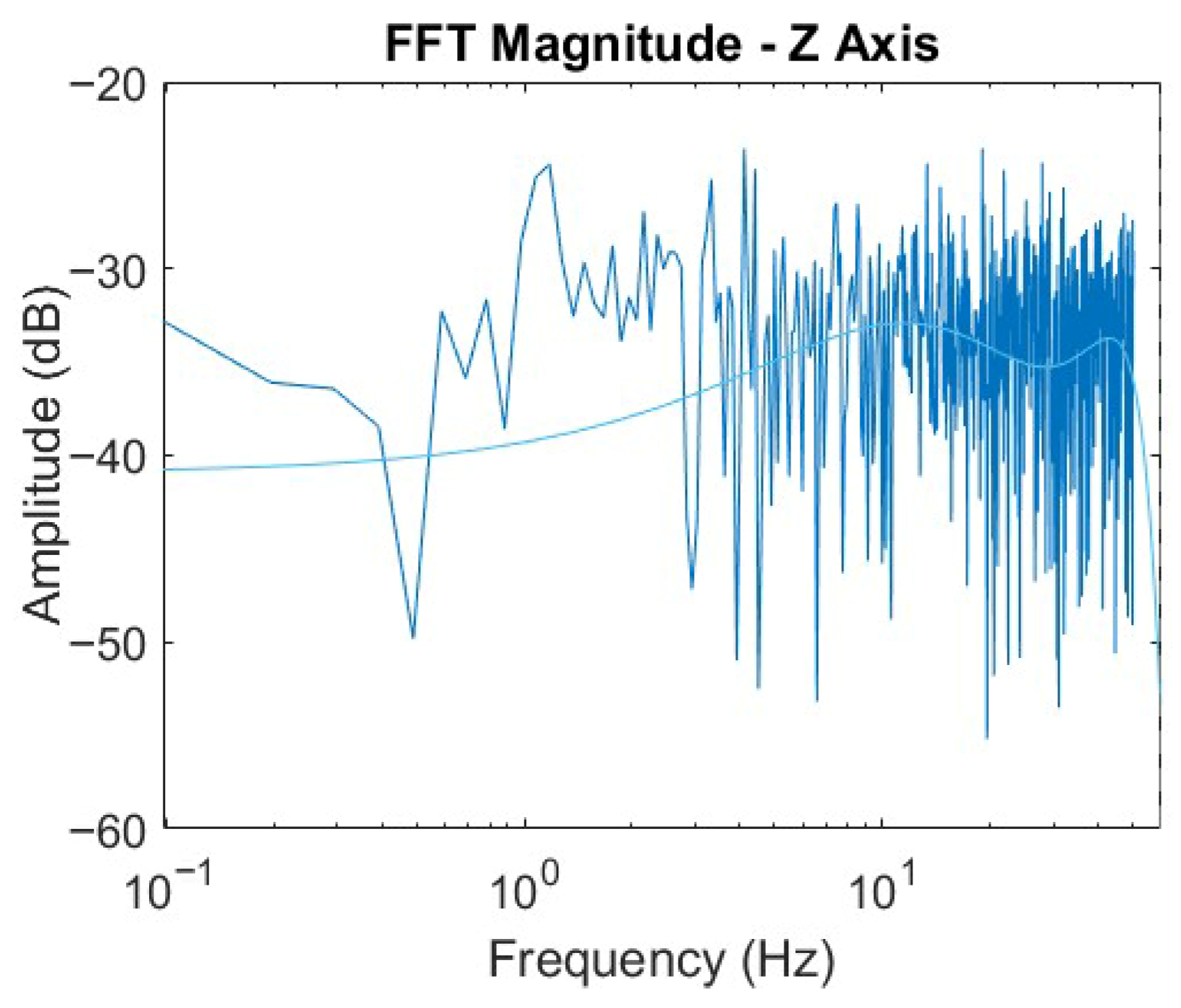
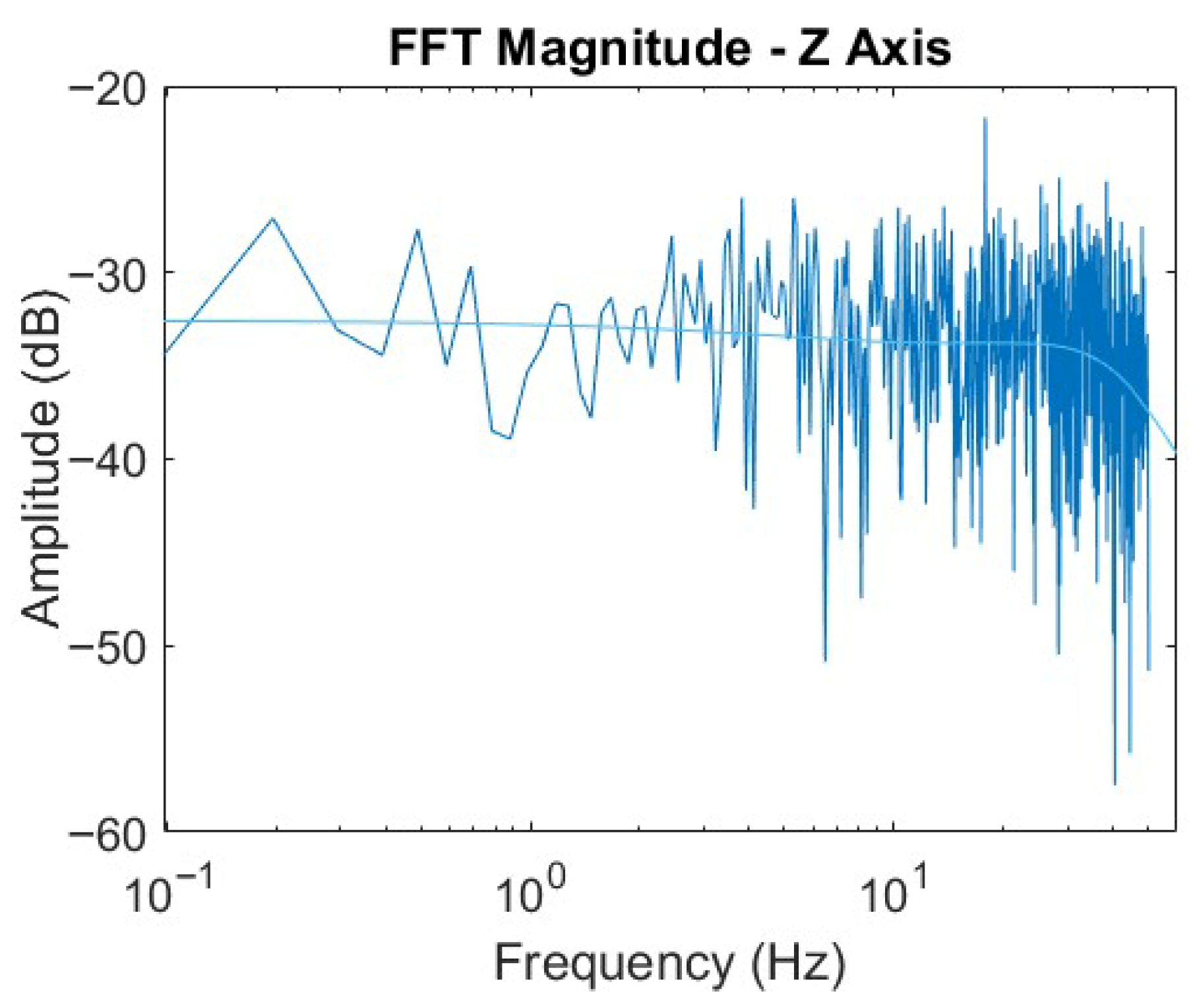
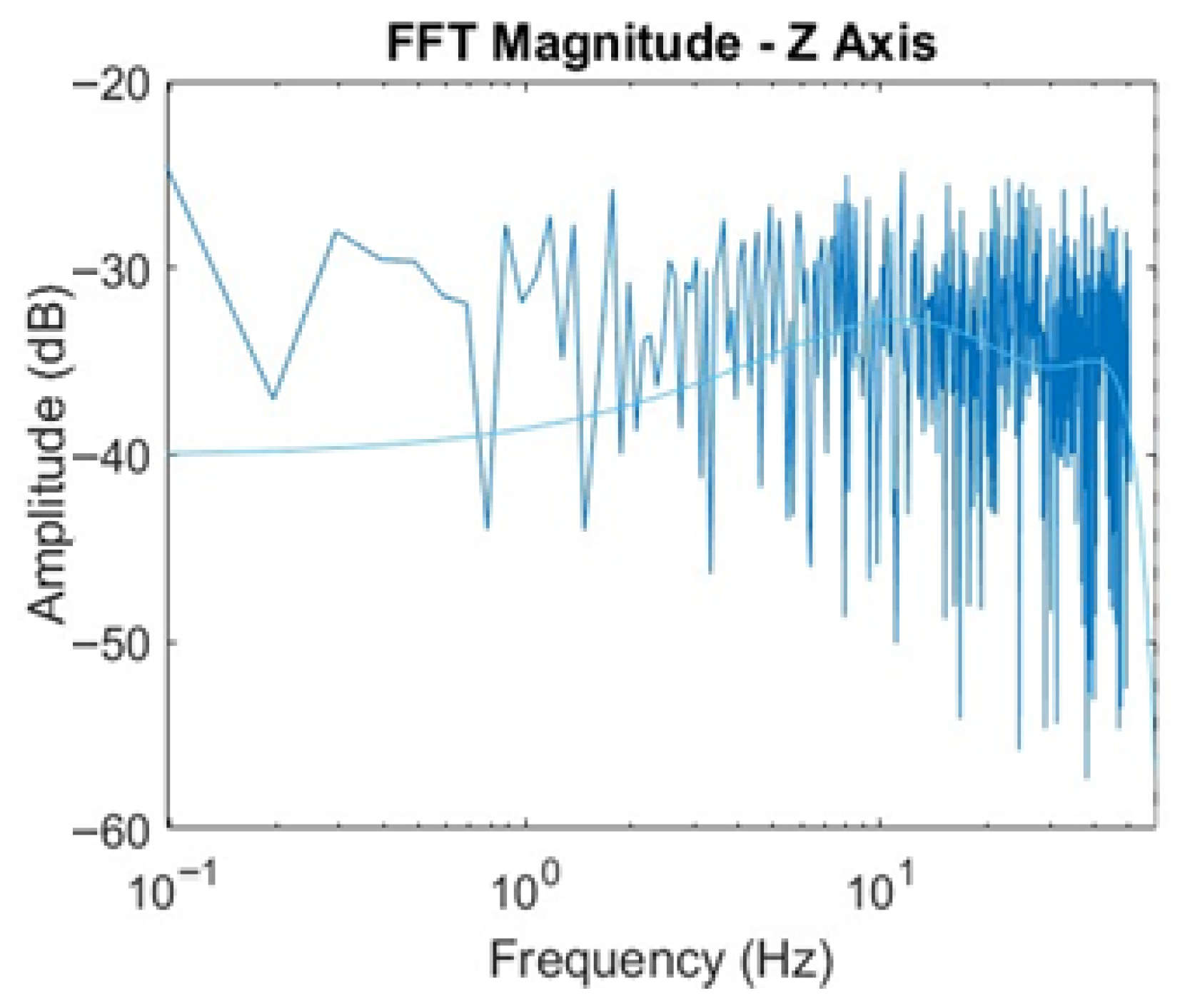
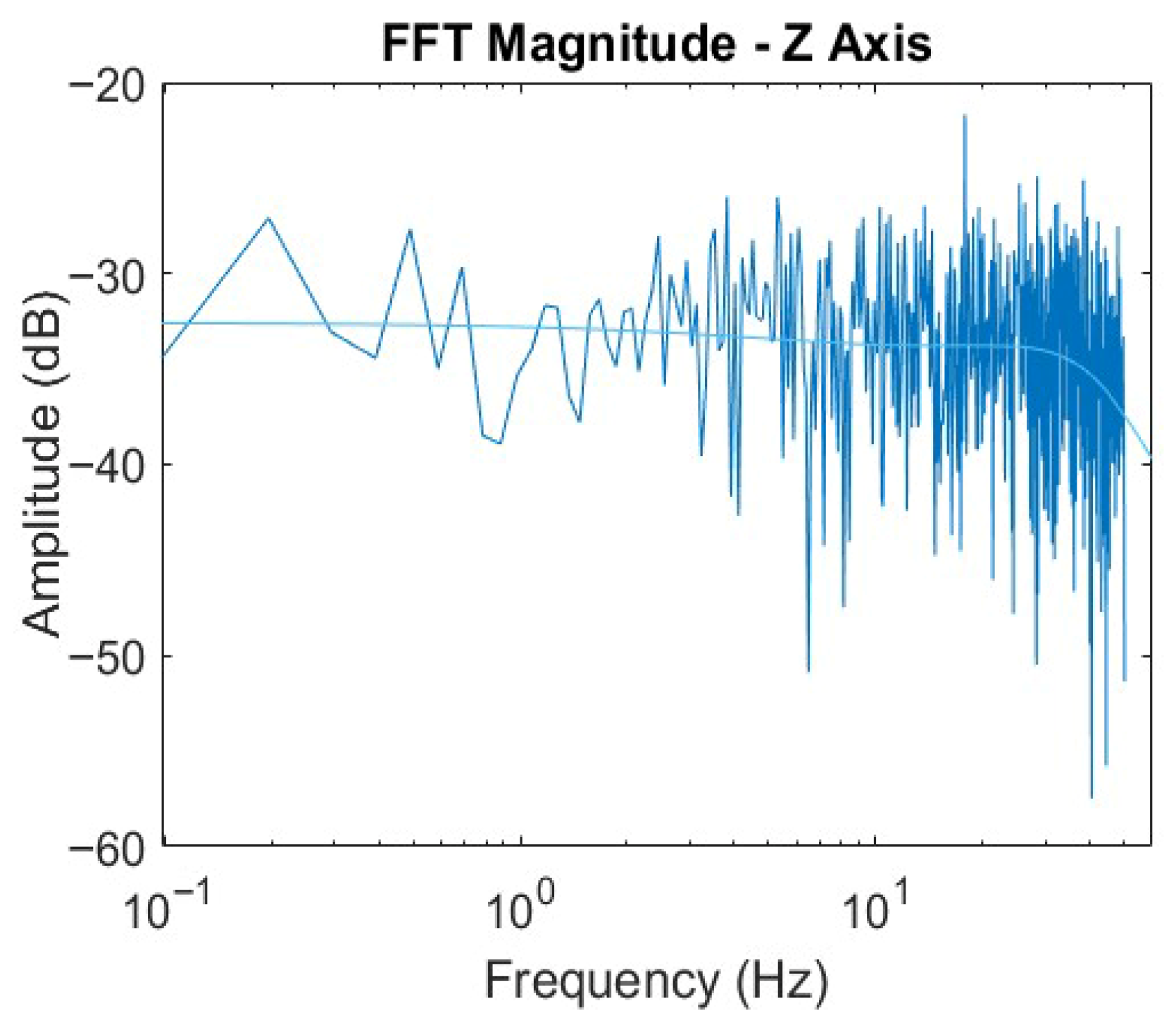
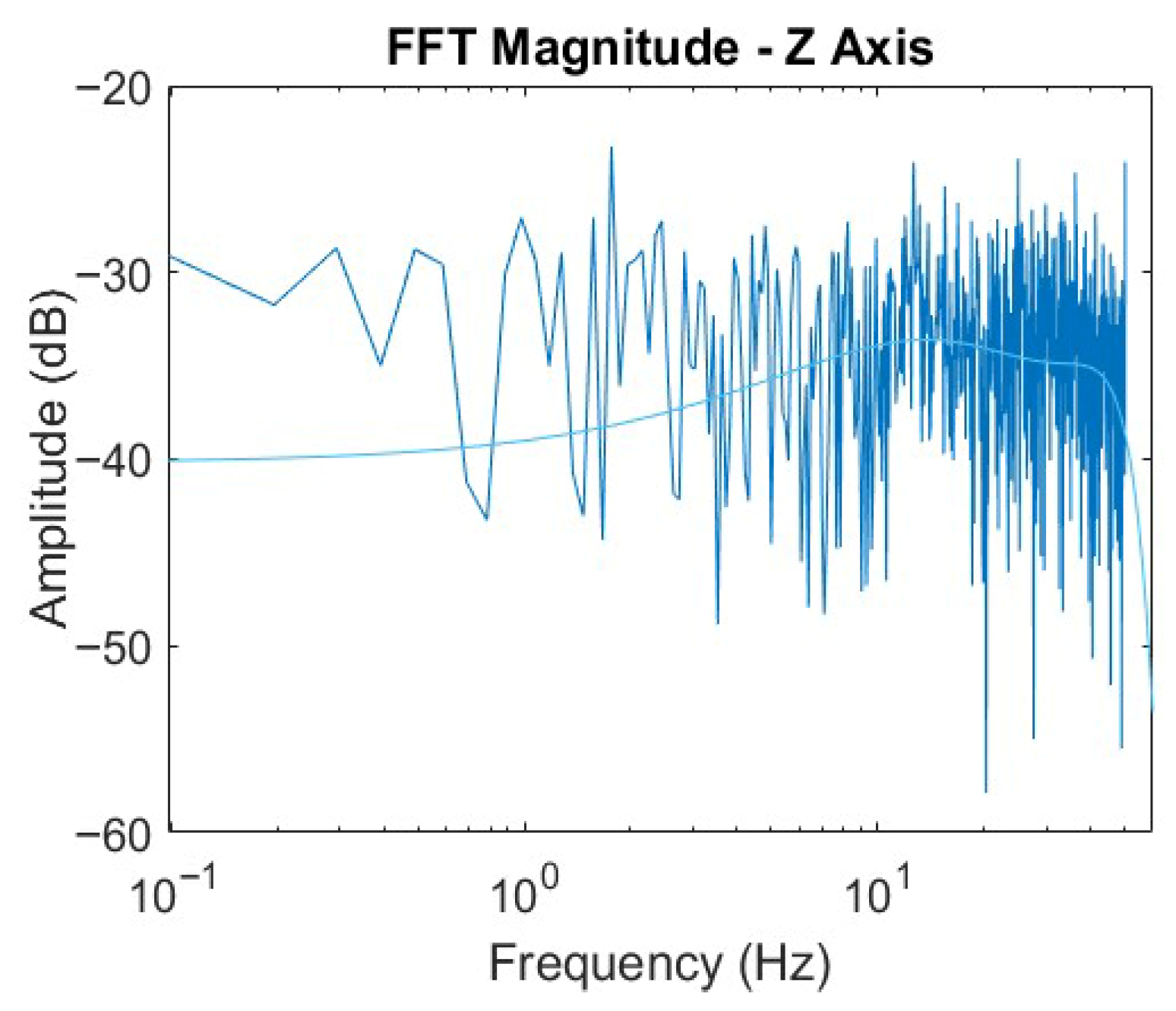
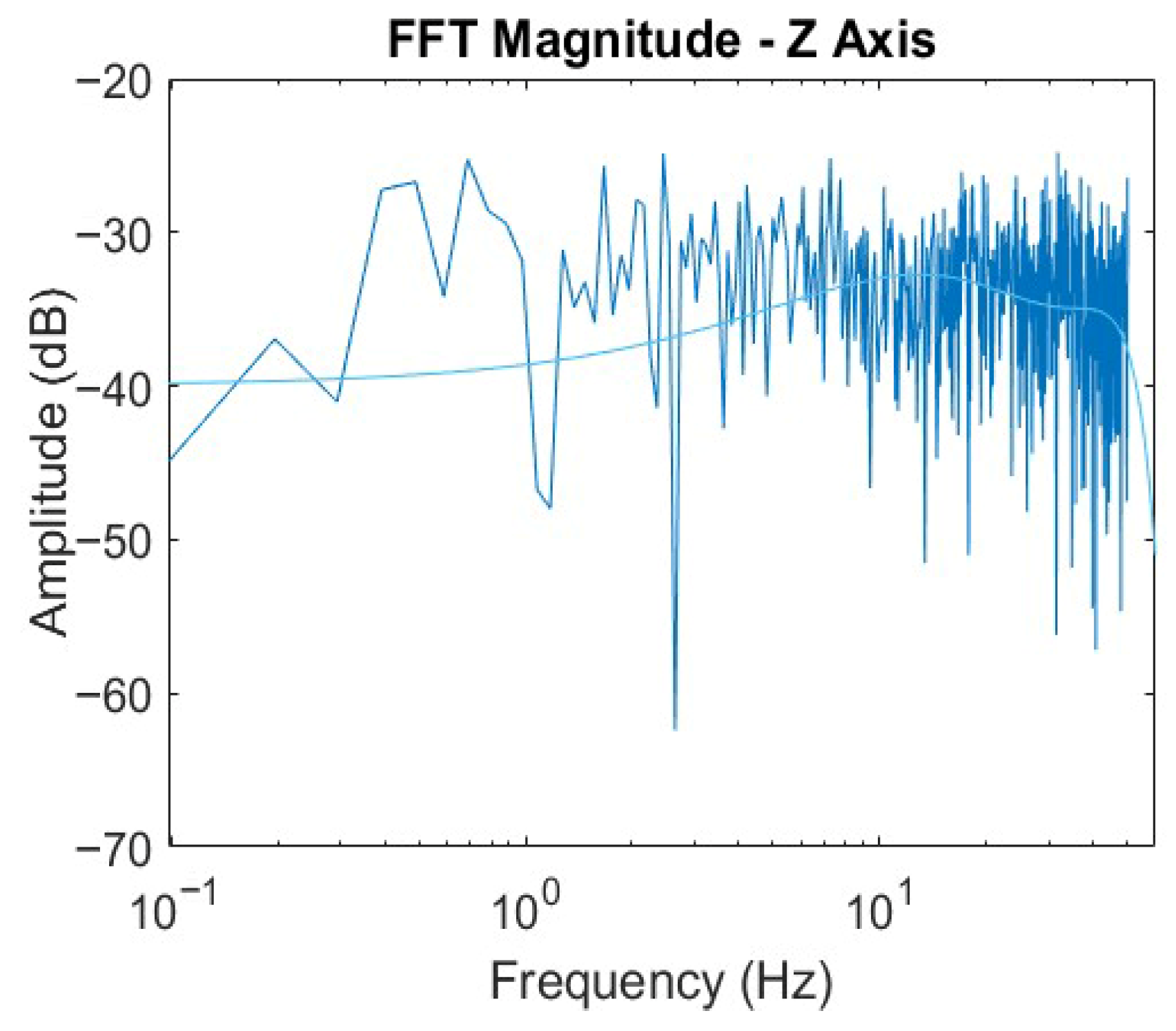
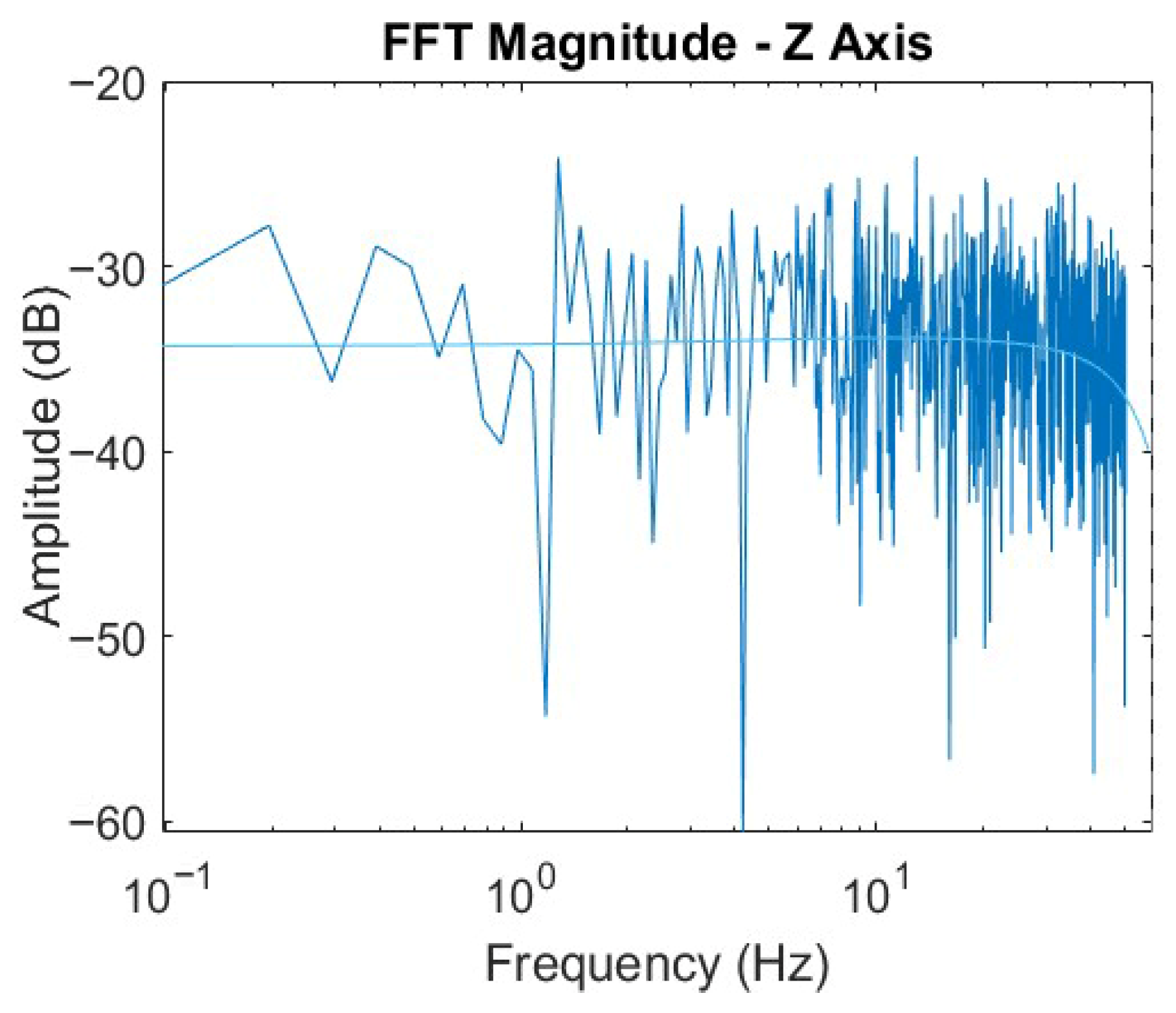
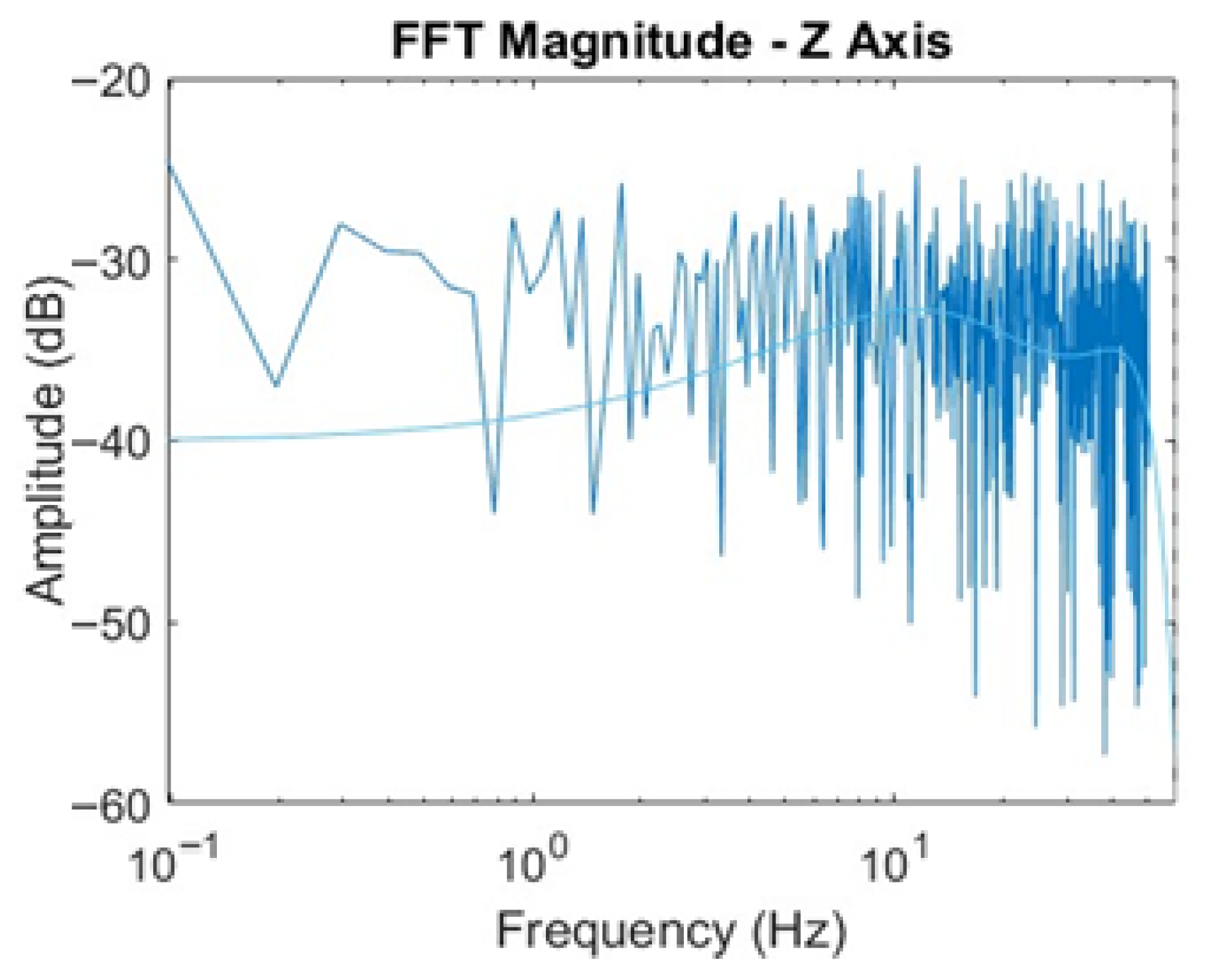
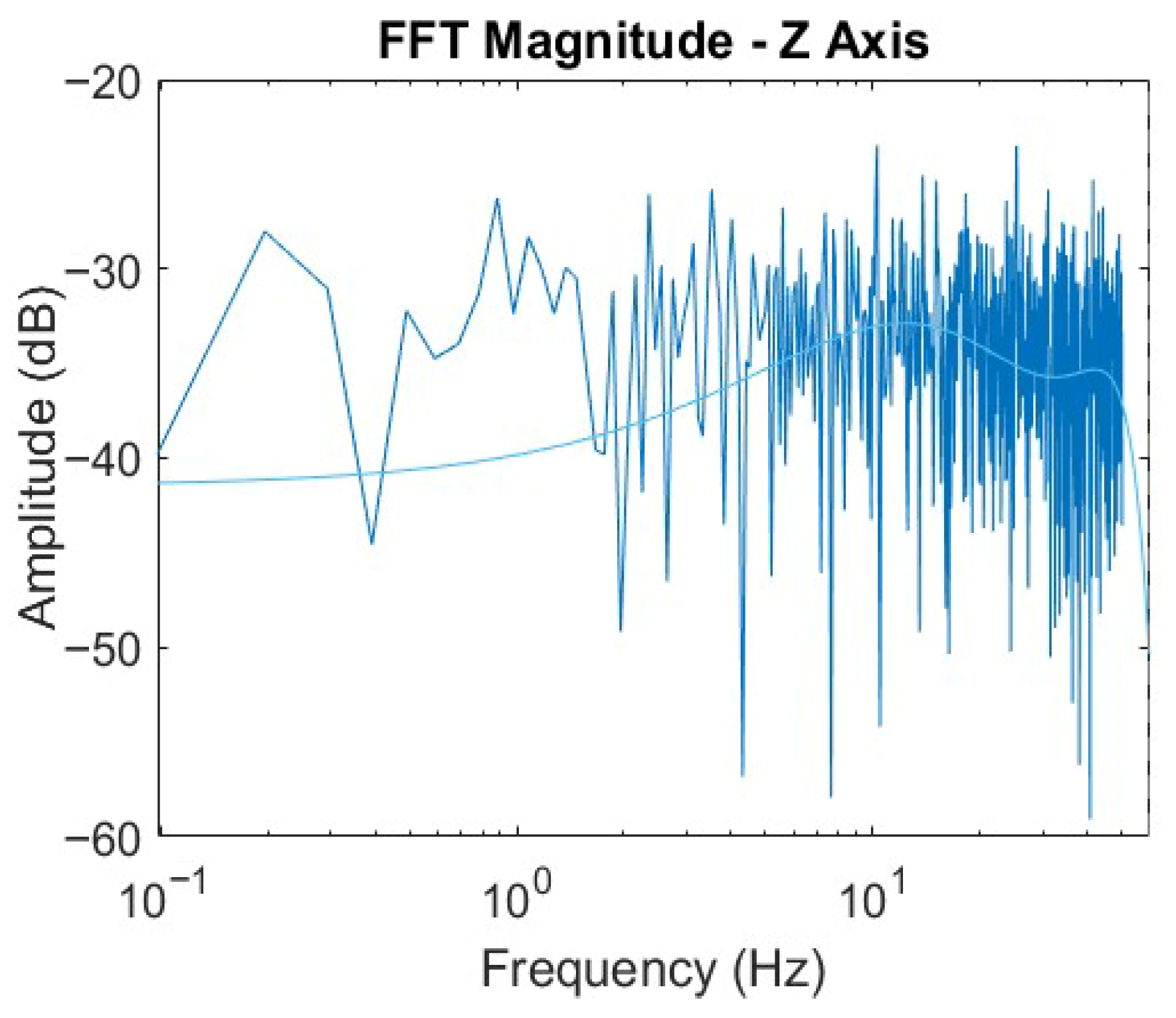
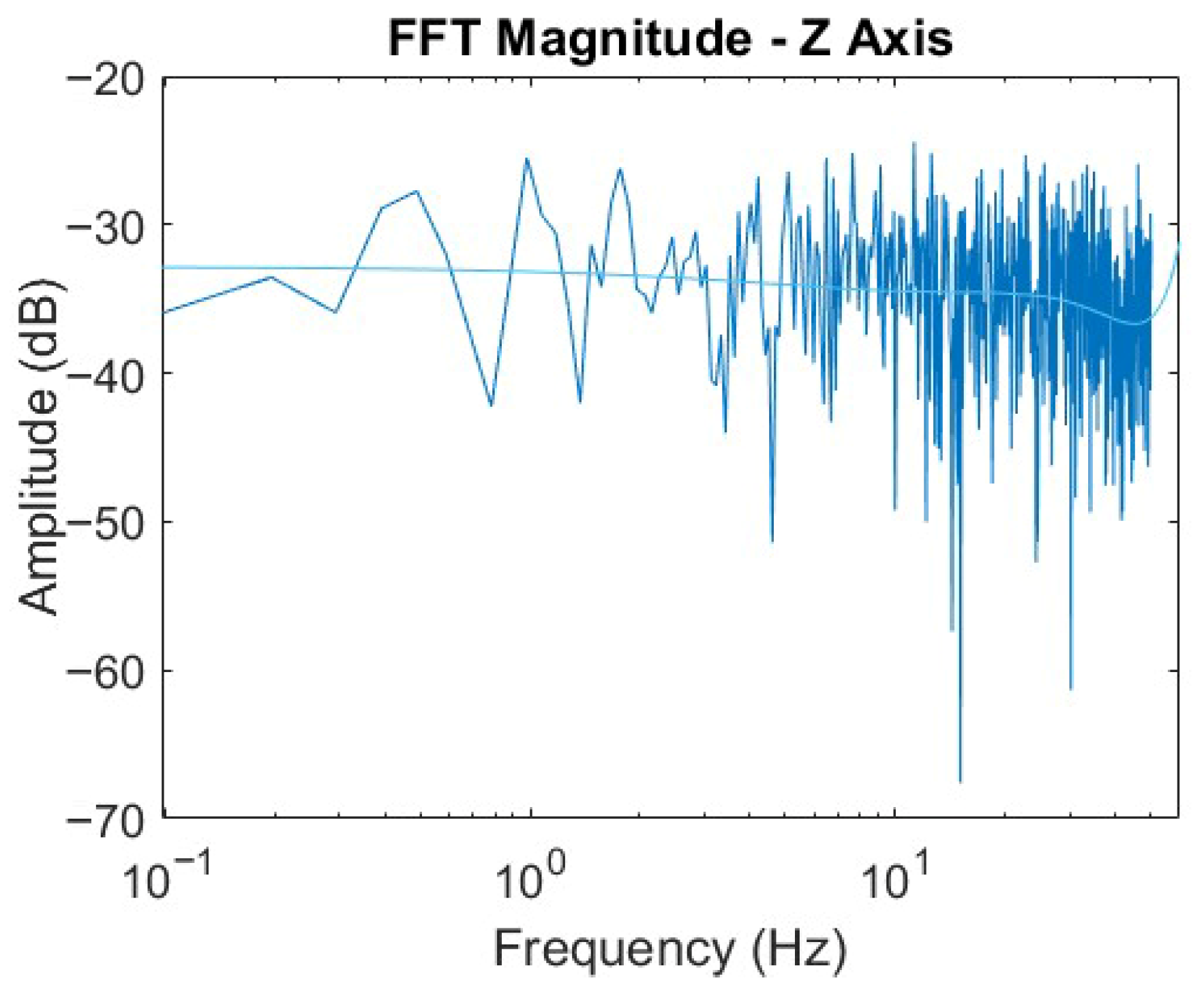
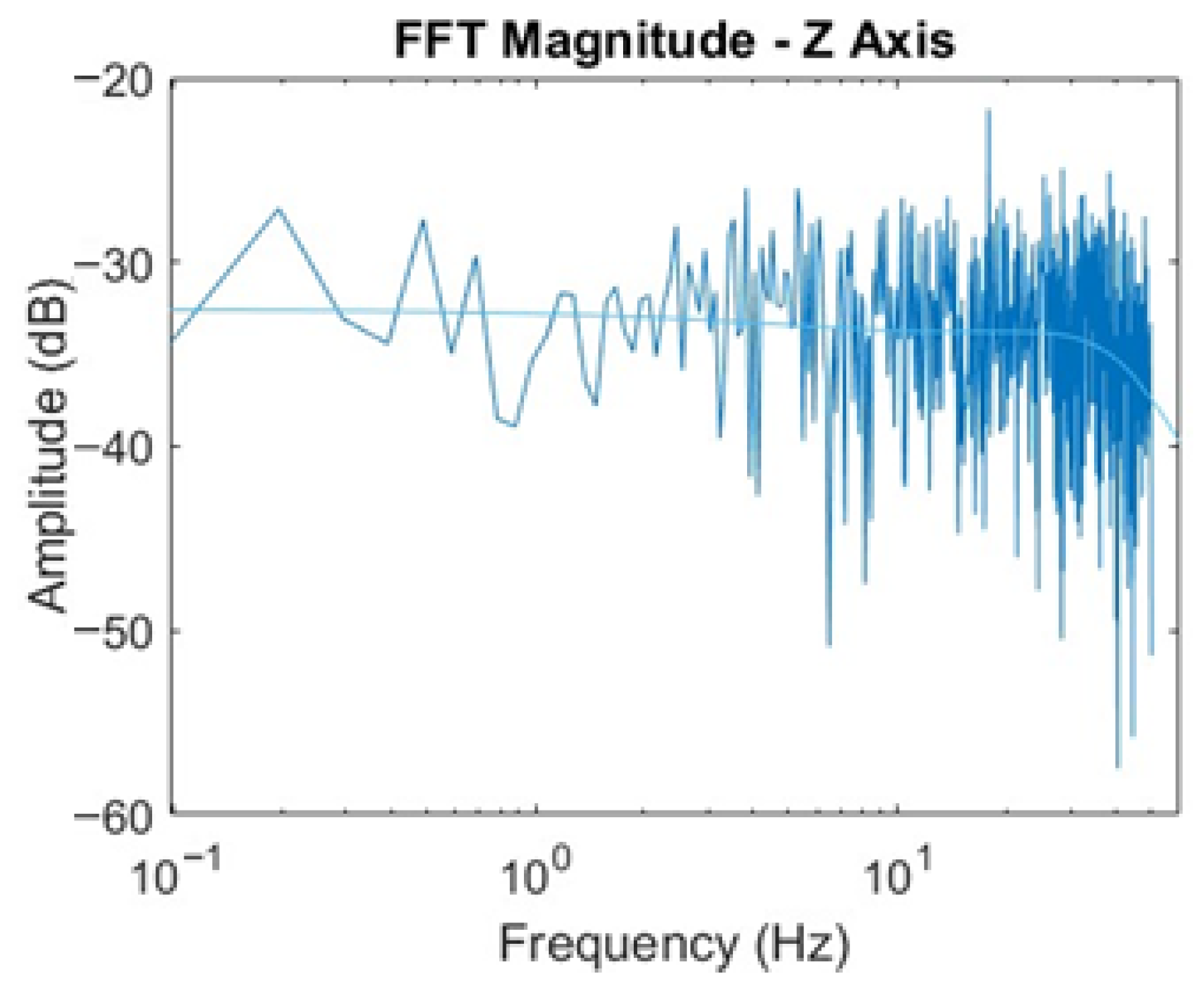
The FFT breaks down a signal to its frequency components which would provide an understanding of the dominant frequencies of the signal. We therefore study the FFT of the measured vibrations. Two of the signals contain spikes (spots 3 and 8) and the other 9 spots have more consistent signals.
The plotting of the FFT curves is on a logarithmic scale to allow us to focus on the influence of low frequencies on the vibrations. Figure 5, Figure 6, Figure 7, Figure 8, Figure 9, Figure 10, Figure 11, Figure 12, Figure 13, Figure 14 and Figure 15 show the FFT waveforms of the vibrations on Z axis in spots 1 to 11, respectively. The overlaid line is provided as a guide for the eye.

3.3. Formatting of Mathematical Components

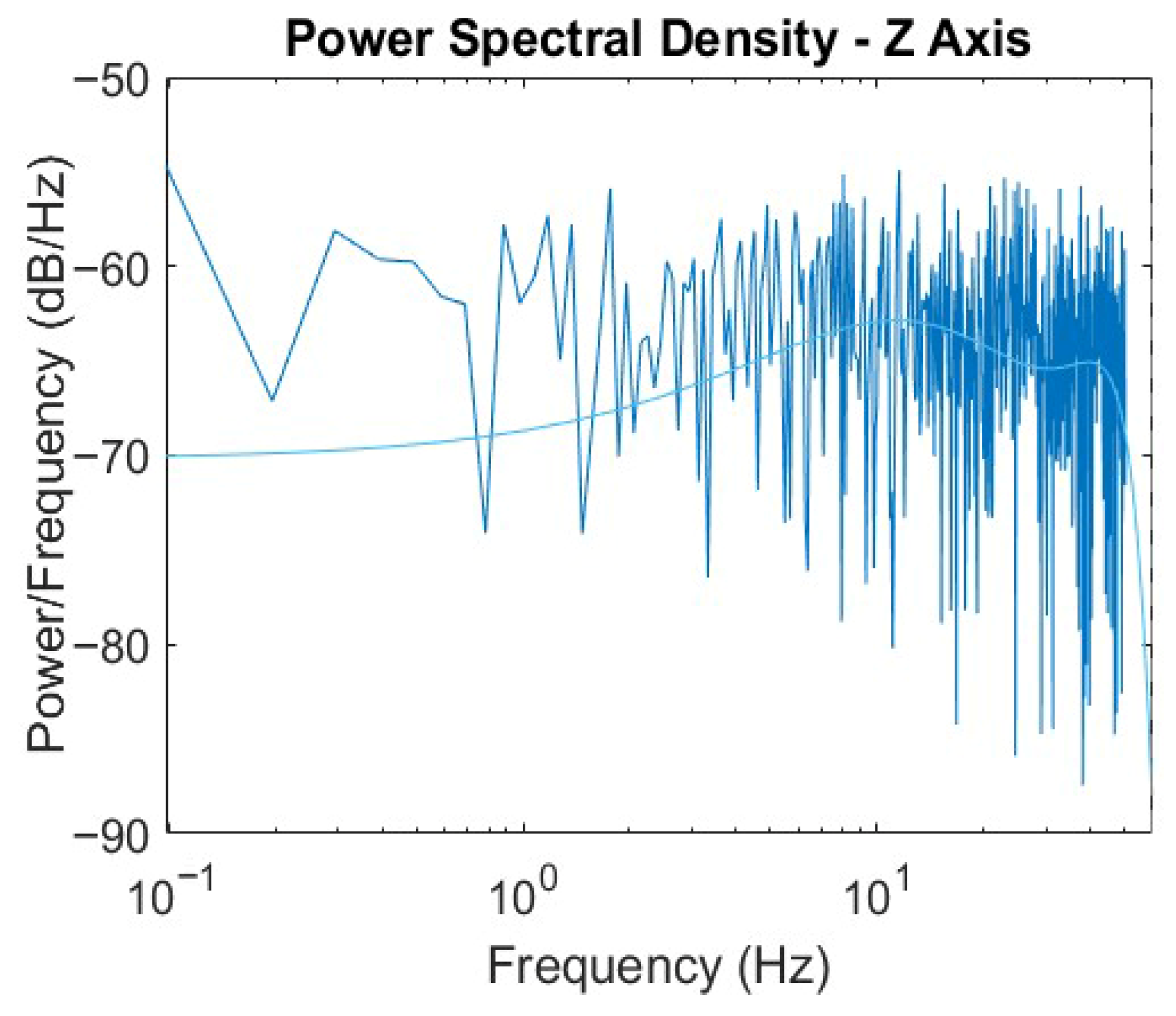
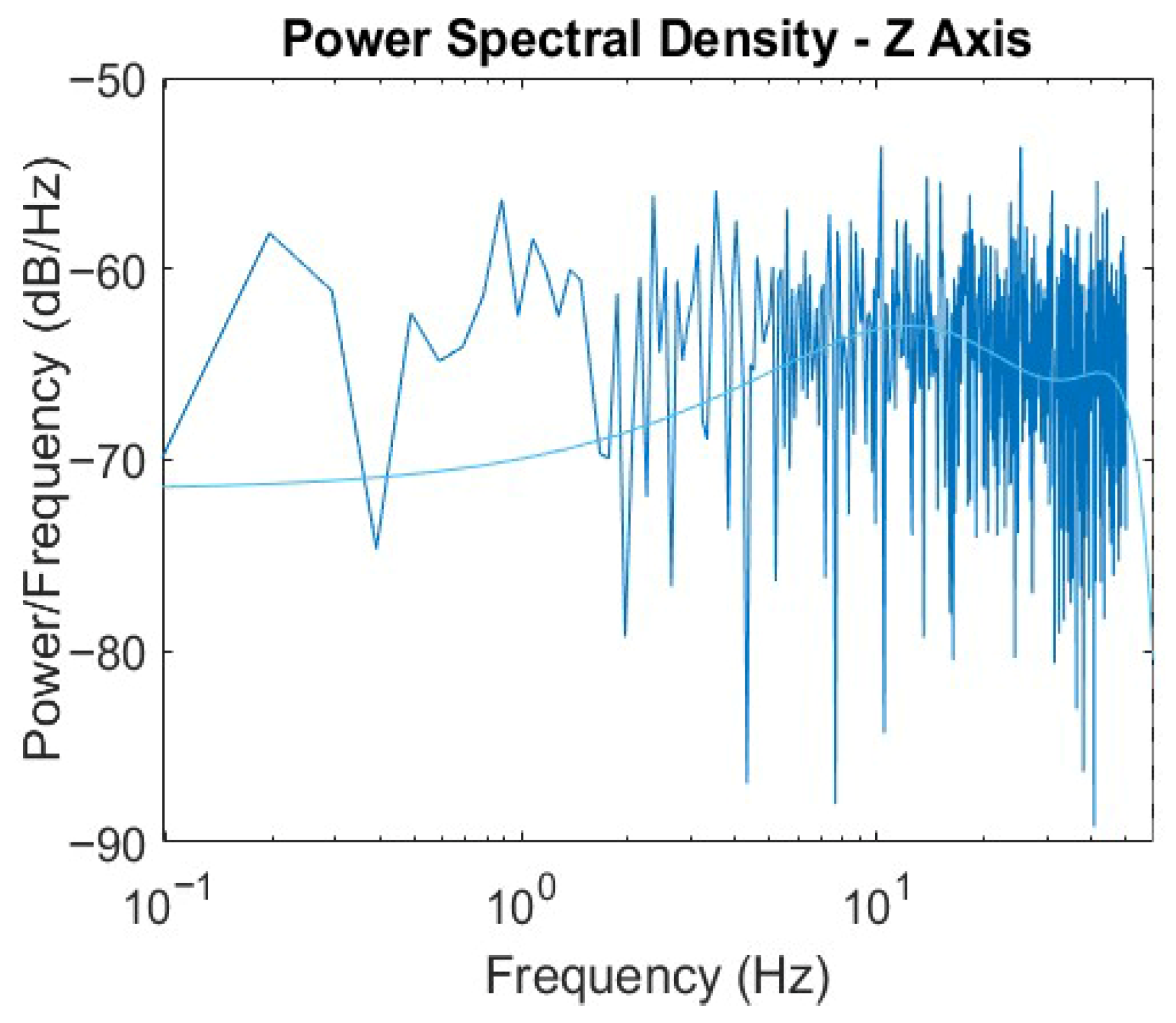
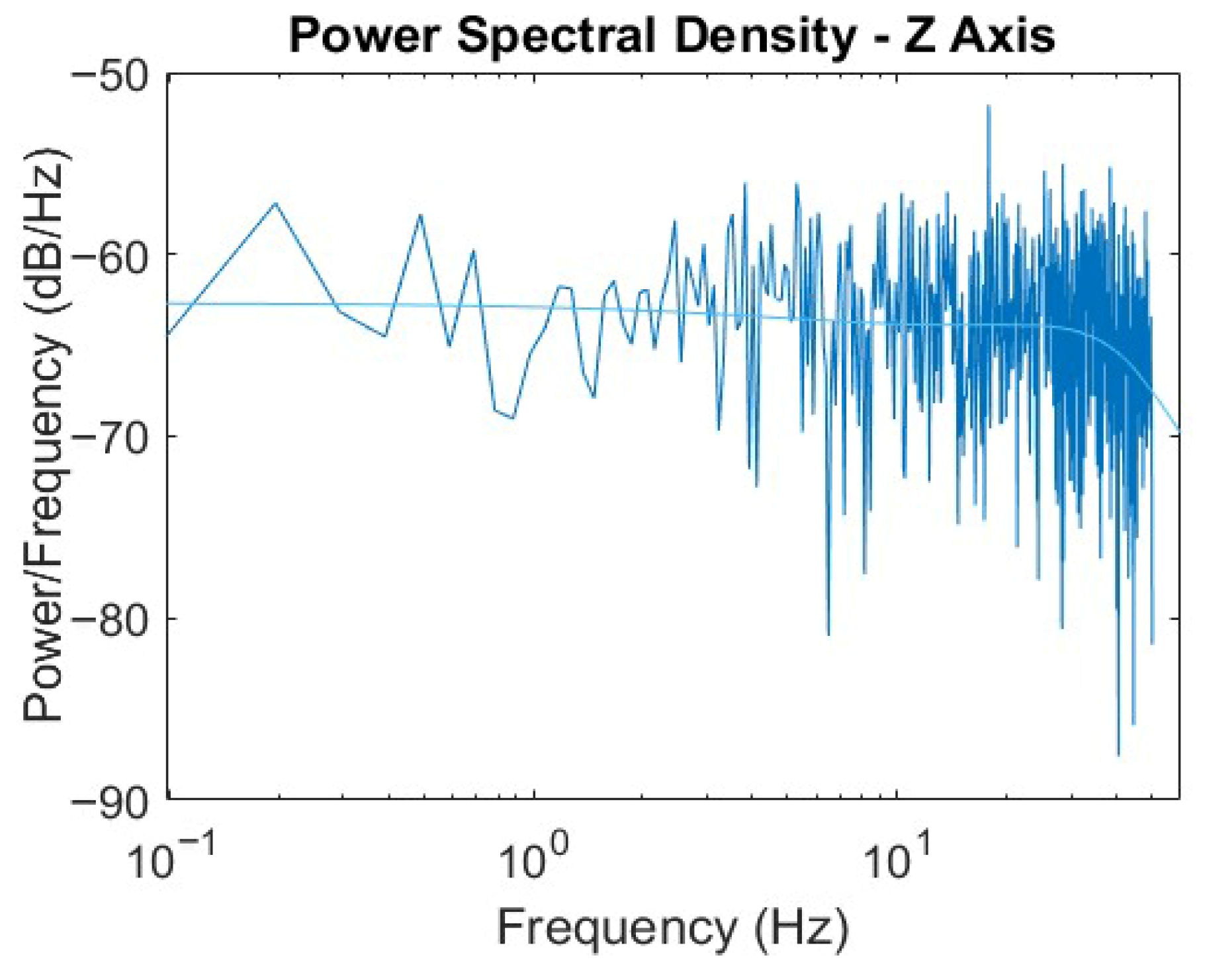
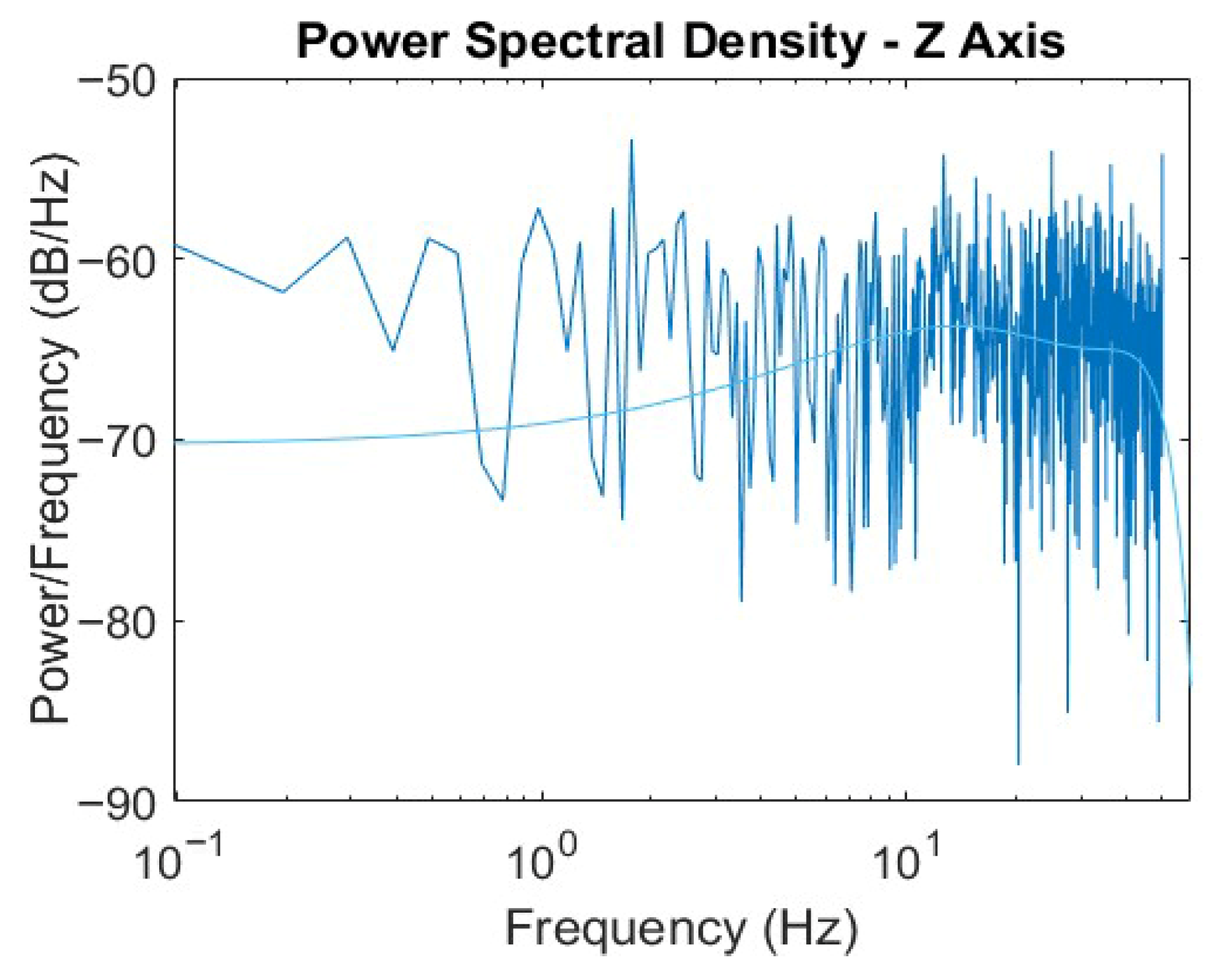
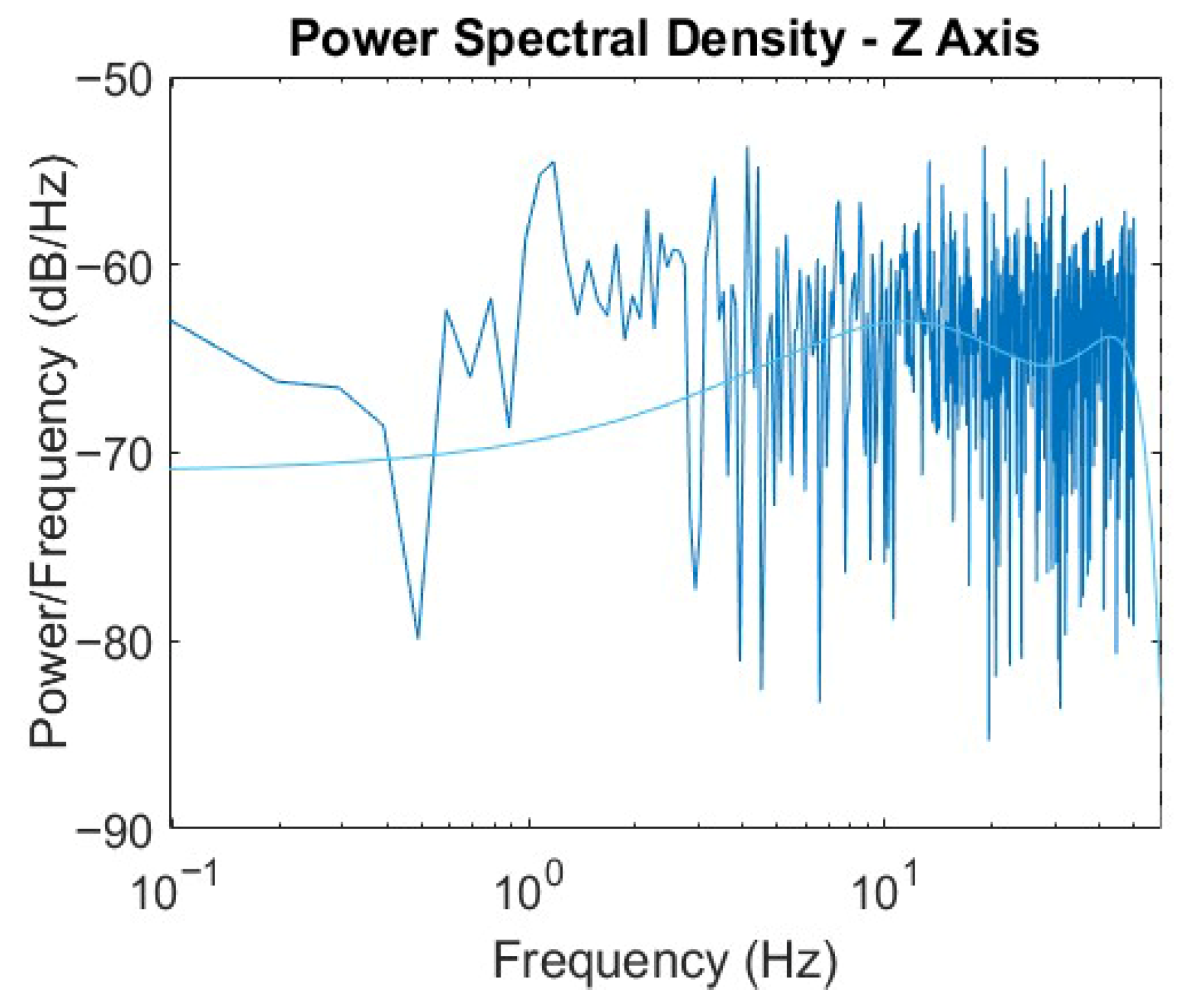
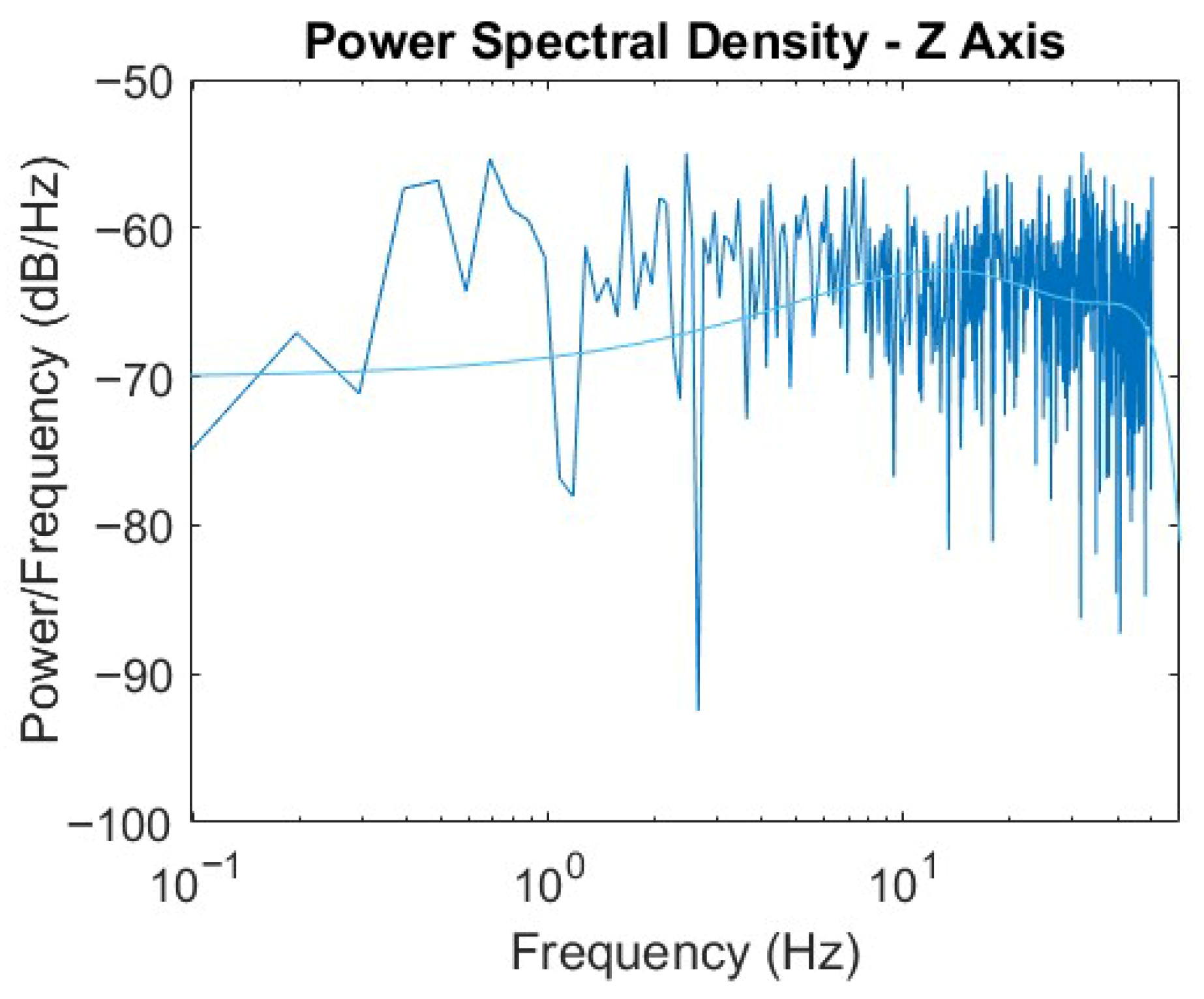
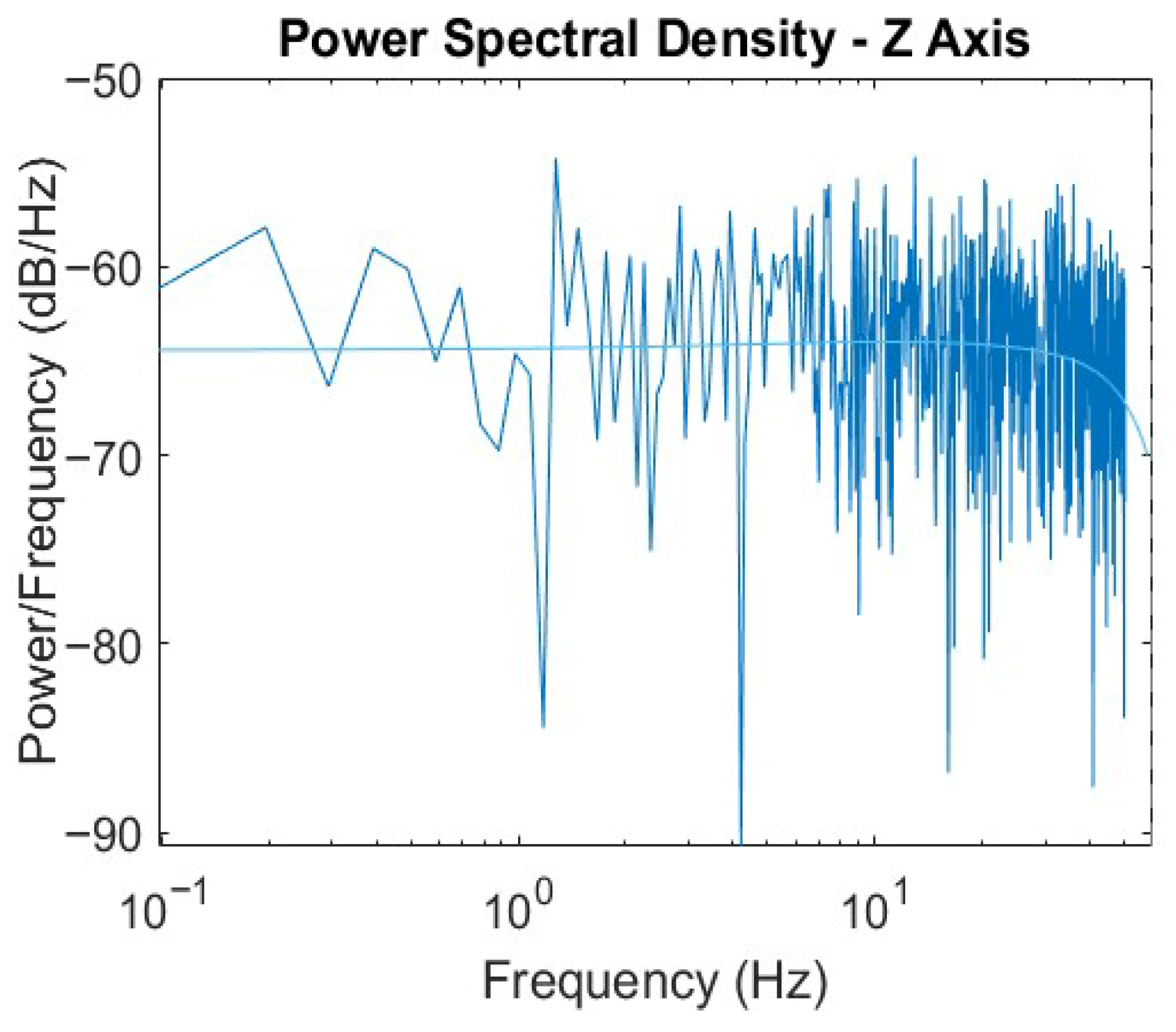
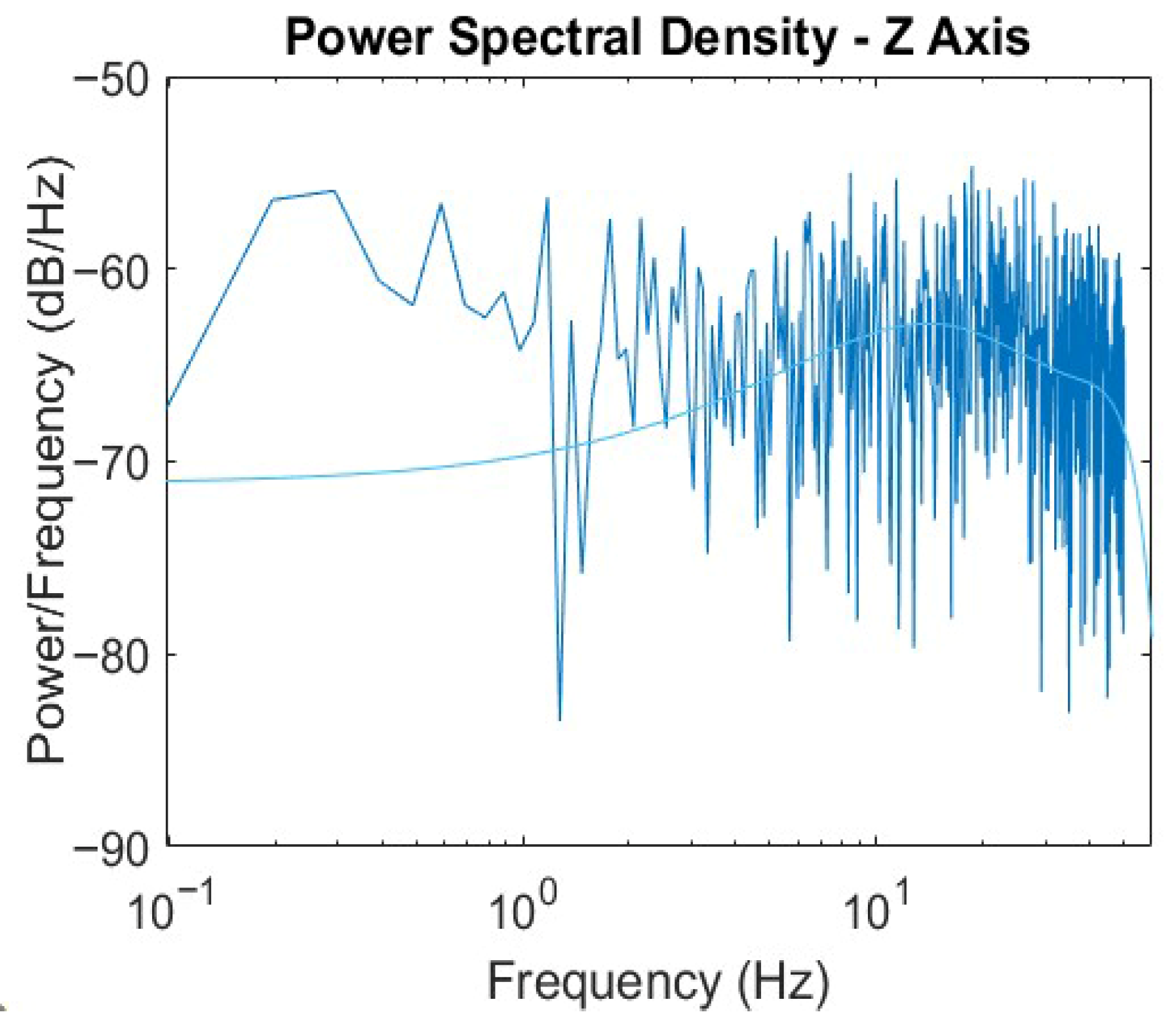
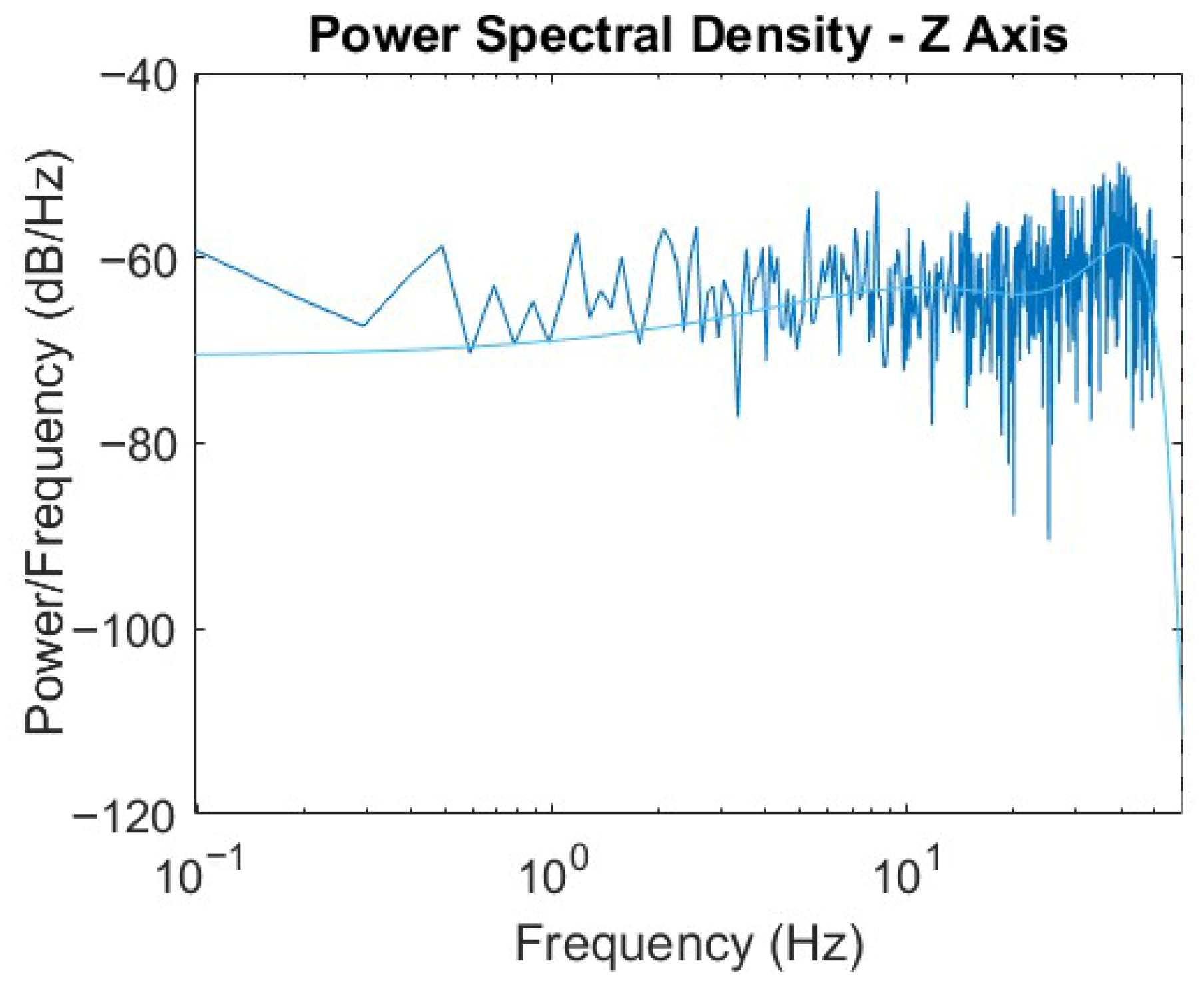
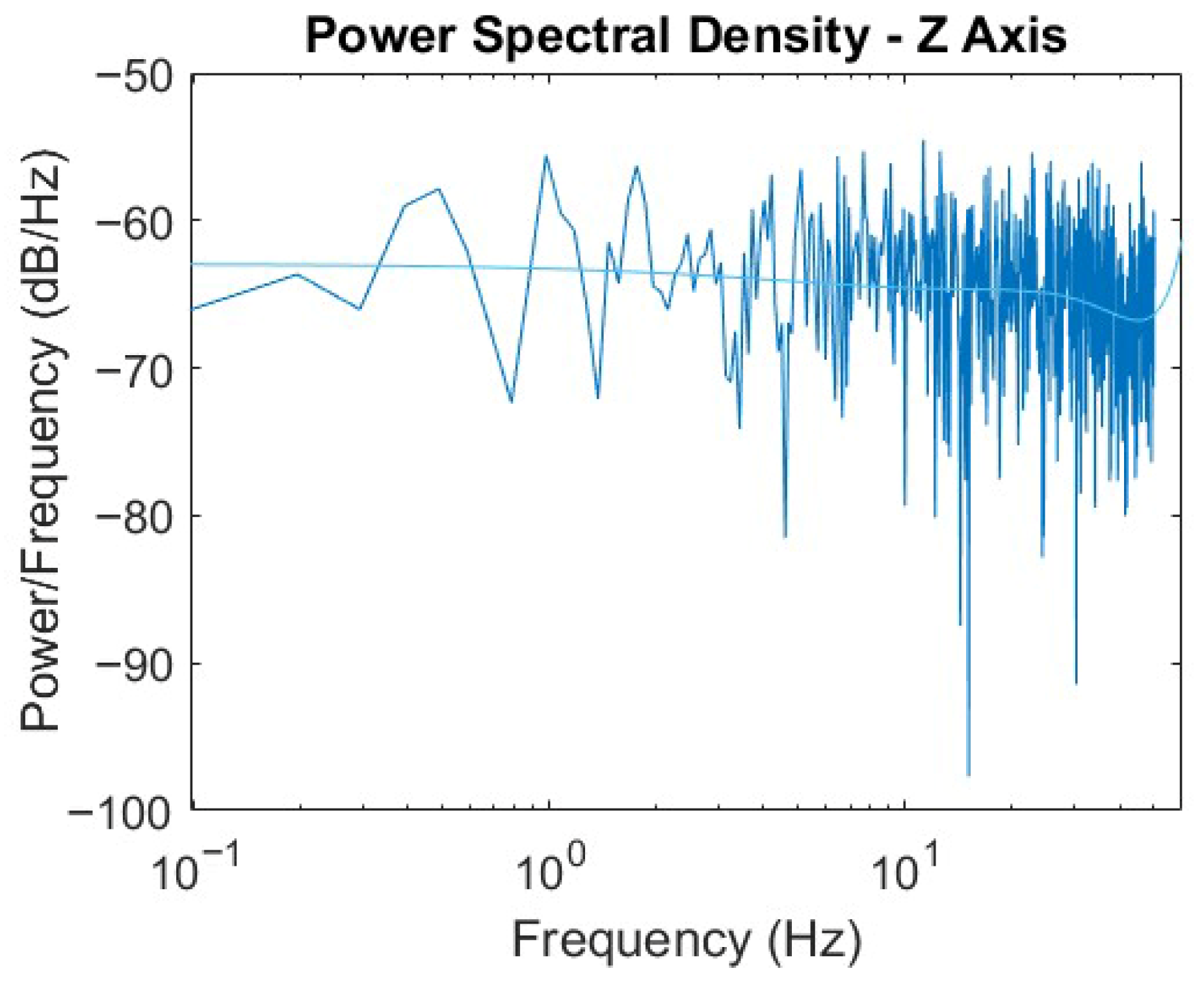
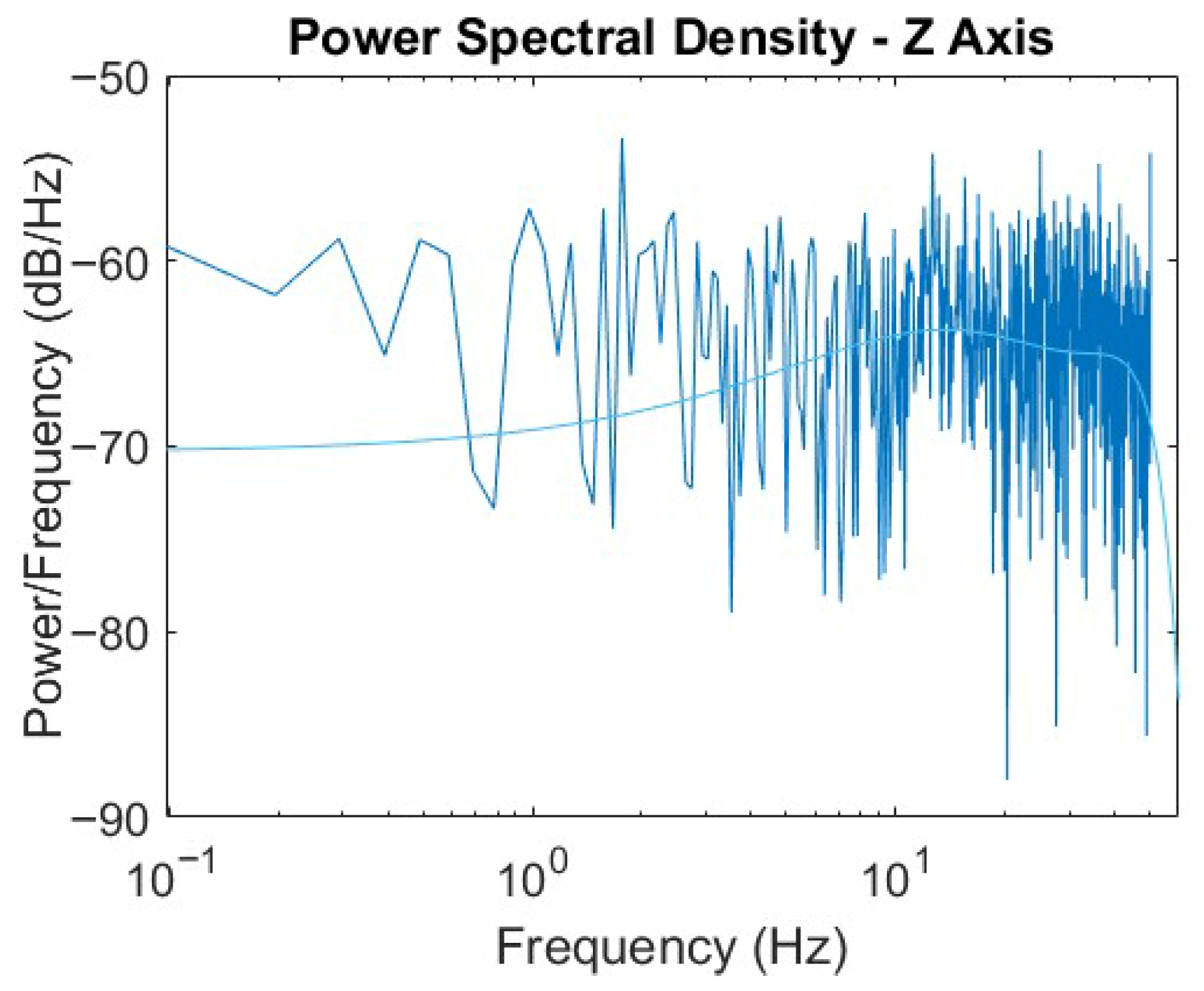
In this section, we present the PSD plots of the signals to identify frequency ranges with high energy. Figure 16, Figure 17, Figure 18, Figure 19, Figure 20, Figure 21, Figure 22, Figure 23, Figure 24, Figure 25 and Figure 26 show the PSD plots of the vibrational signal from spots 1 to 11, respectively. Also in this analysis, the overlaid line is provided as a guide for the eye.

4. Discussion

Based on the time-domain analysis, the vibrational signals within the castle exhibit consistent behavior across various measurement intervals and locations, particularly along the horizontal axes. This consistency indicates that the signals remain relatively uniform in both timing and spatial distribution. However, at the third and eighth measurement locations, noticeable spikes were observed on the vertical axis.
Further examination using FFT reveals that all eleven signals display similar spectral patterns, with no single dominant frequency emerging. This finding suggests that the observed vibrations arise from multiple sources at different frequencies. The PSD analysis also shows a uniform distribution of energy in the 0–50 Hz range.
Taken together, these results imply that the vertical-axis spikes recorded at the third and eighth locations are most likely attributable to transient events (e.g., human activity) rather than any resonant or persistent frequency component.
Observing the vibrations in the castle is crucial not only for monitoring purposes [25,26] but also for enabling energy-harvesting strategies [27,28,29,30]. In particular, vibrational energy harvesting through piezoelectric devices is gaining momentum due to their capacity to convert mechanical energy into electrical energy [31,32]. In terms of extractable power to supply a measurement node, the potential power source is in the order of tens of nW by using a microscale piezoelectric energy harvester [33,34]. Clearly, appropriate power management circuits are required in this case to intermittently power the measurement node.
The results presented in this study align well with the application of nonlinear energy harvesting techniques, which exploit broader frequency and energy distributions [35,36,37,38]. Even though the observed vibration amplitudes are small and concentrated primarily within the low-frequency range, these conditions still allow for feasible low-voltage generation [35,36,37,38,39,40,41].
The use and selection of appropriate technology, especially in light of the measurements and results obtained, are crucial, including MEMS solutions with SOI substrates and energy-converting materials [42,43].
Such an approach can be highly beneficial for powering sensors [35,44,45,46] and other monitoring equipment, demonstrating how integrating piezoelectric-based solutions within the castle monitoring system can improve both sustainability and autonomy in long-term structural health management.

5. Conclusions

This paper studies the vibrations inside the Aci Castello historical monument. The measurements were taken in closed spaces to isolate any wind effect from the measurement tool, which was an iPhone 13 Pro Max in our use case. This study compares the spots with the highest vibration spikes and studies their frequency component in comparison with spots with constant behavior. The results helped in understanding the general behavior of the vibrations in the castle as well as the frequency dominance and energy distribution. These results may be enhanced by taking simultaneous measurements across multiple spots and for longer periods to check the consistency of the measured behavior. Further applications may address the use of vibration for energy-harvesting purposes using nonlinear systems.

Author Contributions

Conceptualization, C.T. and G.P; Methodology, C.T. and A.M.G.; Software, M.A.K. and A.D.; Validation, C.T., A.D. and M.A.K.; Formal Analysis, C.T., A.D. and M.A.K.; Investigation, A.D. and M.A.K.; Resources, C.T., G.P. and A.M.G.; Data Curation, M.A.K. and A.D.; Writing—original draft preparation, A.D. and M.A.K.; Writing—review and editing, M.A.K., A.D., G.P., C.T., E.P. and A.M.G.; Visualization, M.A.K. and A.D; Supervision, C.T., G.P, E.P. and A.M.G.; Project Administration, A.M.G. and C.T.; Funding Acquisition, A.M.G. and C.T. All authors have read and agreed to the published version of the manuscript.

Funding

C. Trigona, A. Derbel, A. M. Gueli, G. Politi, and E. Pappalardo would like to thank the European Union (NextGeneration EU), through the MUR-PNRR project SAMOTHRACE (ECS00000022) “SiciliAn MicronanOTecH Research And Innovation CEnter”–Ecosistema dell’innovazione (PNRR, Mission 4, Component 2 In-vestment 1.5, Avviso n. 3277 del 30 December 2021), Spoke 1–Università di Catania–Work Package 6 Cultural Heritage.

Data Availability Statement

Raw data supporting the findings of this study are available from the corresponding author upon reasonable request.

Acknowledgments

All the authors would like to thank Carmelo Scandurra, Mayor of Aci Castello, and all the staff of the Norman Castle for their helpfulness and support.

Conflicts of Interest

The authors declare that there are no financial, professional, or other conflicts of interest.

Abbreviations

The following abbreviations are used in this manuscript:
FFTFast Fourier Transform
PSDPower Spectral Density
OMAOperational Modal Analysis
SHMStructural Health Monitoring

References

  1. Farrar, C.R.; Worden, K. Structural Health Monitoring: A Machine Learning Perspective; John Wiley & Sons: Hoboken, NJ, USA, 2012. [Google Scholar]
  2. Bezas, K.; Komianos, V.; Koufoudakis, G.; Tsoumanis, G.; Kabassi, K.; Oikonomou, K. Structural Health Monitoring in Historical Buildings: A Network Approach. Heritage 2020, 3, 796–818. [Google Scholar] [CrossRef]
  3. Masciotta, M.G.; Ramos, L.F. 8—Dynamic Identification of Historic Masonry Structures. In Long-Term Performance and Durability of Masonry Structures; Ghiassi, B., Lourenço, P.B., Eds.; Woodhead Publishing Series in Civil and Structural Engineering; Woodhead Publishing: Cambridge, UK, 2019; pp. 241–264. [Google Scholar] [CrossRef]
  4. Sesana, E.; Gagnon, A.S.; Ciantelli, C.; Cassar, J.A.; Hughes, J.J. Climate Change Impacts on Cultural Heritage: A Literature Review. WIREs Clim. Change 2021, 12, e710. [Google Scholar] [CrossRef]
  5. Ozturk, B.; Coskun, S.B.; Koc, M.Z.; Atay, M.T. Homotopy Perturbation Method for Free Vibration Analysis of Beams on Elastic Foundation. In IOP Conference Series: Materials Science and Engineering; IOP Publishing: Bristol, UK, 2010; Volume 10, p. 012158. [Google Scholar] [CrossRef]
  6. Pavano, F.; Romagnoli, G.; Tortorici, G.; Catalano, S. Active tectonics along the Nebrodi–Peloritani boundary in northeastern Sicily (Southern Italy). Tectonophysics 2015, 659, 1–11. [Google Scholar] [CrossRef]
  7. D’Alessandro, A.; Vitale, G.; Scudero, S. MEMS-Based System for Structural Health Monitoring and Earthquake Observation in Sicily. In European Workshop on Structural Health Monitoring (EWSHM 2020); Rizzo, P., Milazzo, A., Eds.; Lecture Notes in Civil Engineering; Springer: Cham, Switzerland, 2021; Volume 127, pp. 103–110. [Google Scholar] [CrossRef]
  8. Gueli, A.M.; Imposa, S.; Mancuso, B.; Pinto, V.; Pirrotta, C.; Politi, G.; Salerno, G.A.; Trigona, C. Castello Ursino Museum’s Structural Monitoring Enhanced by Self-Energized Solutions. In Proceedings of the 2024 21st International Multi-Conference on Systems, Signals & Devices (SSD), Erbil, Iraq, 22–25 April 2024. [Google Scholar] [CrossRef]
  9. Rainieri, C.; Fabbrocino, G. Operational Modal Analysis of Civil Engineering Structures: An Introduction and Guide for Applications; Springer: New York, NY, USA, 2014. [Google Scholar] [CrossRef]
  10. Trigona, C.; Derbel, A.; Karoui, M.A.; Politi, G.; Pappalardo, E.; Gueli, A.M. Exploiting Outdoor-Induced Vibrations at Castello Normanno-Svevo Aci Castello. In Proceedings of the 2025 IEEE 22nd International Multi-Conference on Systems, Signals & Devices (SSD), Monastir, Tunisia, 17–20 February 2025; pp. 1322–1328. [Google Scholar]
  11. Okuyucu, D. Operational Modal Analysis Method for Historic Masonry Structures: Applications. In Handbook of Cultural Heritage Analysis; D’Amico, S., Venuti, V., Eds.; Springer: Cham, Switzerland, 2022. [Google Scholar] [CrossRef]
  12. Brigante, D.; Rainieri, C.; Notarangelo, M.A.; Fabbrocino, G. Vibration-Based Procedure for the Structural Assessment of Heritage Structures. In Handbook of Cultural Heritage Analysis; D’Amico, S., Venuti, V., Eds.; Springer: Cham, Switzerland, 2022. [Google Scholar] [CrossRef]
  13. Russotto, S.; Masnata, C.; Pirrotta, A. Vibration Based Structural Health Monitoring: A Real Case Study Framed into Cultural Heritage. In Lecture Notes in Civil Engineering, Proceedings of the 10th International Operational Modal Analysis Conference (IOMAC 2024), Naples, Italy, 22–24 May 2024; Rainieri, C., Gentile, C., Aenlle López, M., Eds.; Springer: Cham, Switzerland, 2024; Volume 514. [Google Scholar] [CrossRef]
  14. Gentile, C.; Saisi, A. Ambient vibration testing of historic masonry towers for structural identification and damage assessment. Constr. Build. Mater. 2007, 21, 1311–1321. [Google Scholar] [CrossRef]
  15. Ceravolo, R.; Pistone, G.; Fragonara, L.Z.; Massetto, S.; Abbiati, G. Vibration-Based Monitoring and Diagnosis of Cultural Heritage: A Methodological Discussion in Three Examples. Int. J. Archit. Herit. 2014, 10, 375–395. [Google Scholar] [CrossRef]
  16. Drdácký, M.; Urushadze, S. Load Testing of Cultural Heritage Structures and Sculptures: Unconventional Methods for Assessing Safety. Heritage 2023, 6, 5538–5558. [Google Scholar] [CrossRef]
  17. Warsi, Z.H.; Irshad, S.M.; Khan, F.; Shahbaz, M.A.; Junaid, M.; Amin, S.U. Sensors for Structural Health Monitoring: A Review. In Proceedings of the 2019 Second International Conference on Latest Trends in Electrical Engineering and Computing Technologies (INTELLECT), Karachi, Pakistan, 13–14 November 2019; pp. 1–6. [Google Scholar] [CrossRef]
  18. Rossi, M.; Bournas, D. Structural Health Monitoring and Management of Cultural Heritage Structures: A State-of-the-Art Review. Appl. Sci. 2023, 13, 6450. [Google Scholar] [CrossRef]
  19. Vignali, L.; Bartolini, G.; De Falco, A.; Gianfranceschi, L.; Martino, M.; Pucci, F.; Resta, C. Interactive Visualization Tools for Managing the Monitoring System of the Piazza del Duomo UNESCO Site in Pisa. Heritage 2025, 8, 5. [Google Scholar] [CrossRef]
  20. Mazzanti, P.; Marcon, B.; Cocchi, L.; Goli, G.; Riparbelli, L.; Uzielli, L. An Innovative Method Based on In Situ Deformometric Monitoring to Support Decisions for the Structural Restoration of a Historic Panel Painting. Heritage 2024, 7, 4193–4205. [Google Scholar] [CrossRef]
  21. Monaco, A.L.; Grillanda, N.; Onescu, I.; Fofiu, M.; Clementi, F.; D’Amato, M.; Formisano, A.; Milani, G.; Mosoarca, M. Seismic assessment of Romanian Orthodox masonry churches in the Banat area through a multi-level analysis framework. Eng. Fail. Anal. 2023, 153, 107539. [Google Scholar] [CrossRef]
  22. Moratti, M.; Gaia, F.; Martini, S.; Tsioli, C.; Grecchi, G.; Casotto, C.; Calvi, G.M.; Den Hertog, D.; Calvi, P.M.; Proestos, G.T. A methodology for the seismic multilevel assessment of unreinforced masonry church inventories in the Groningen area. Bull. Earthq. Eng. 2019, 17, 4625–4650. [Google Scholar] [CrossRef]
  23. Iizuka, K. The Fast Fourier Transform (FFT). In Engineering Optics; Springer Series in Optical Sciences; Springer: Berlin/Heidelberg, Germany, 1987; Volume 35. [Google Scholar] [CrossRef]
  24. Youngworth, R.N.; Gallagher, B.B.; Stamper, B.L. An overview of power spectral density (PSD) calculations. In Proceedings of the SPIE 5869, Optical Manufacturing and Testing VI, 58690U, San Diego, CA, USA, 18 August 2005. [Google Scholar] [CrossRef]
  25. Holst, C.; Neuner, H. Spatio-temporal models for vibration monitoring of elongated structures using profile laser scans. Remote Sens. 2021, 13, 1369. [Google Scholar] [CrossRef]
  26. Casazza, M.; Barone, F. Preliminary Design of a Vibration Monitoring System to Be Installed in an Archaeological Heritage Structure: The Case of the Hera Temple (Paestum, S Italy). Meas. Sens. 2025, 38, 101760. [Google Scholar] [CrossRef]
  27. Priya, S.; Inman, D.J. (Eds.) Energy Harvesting Technologies; Springer: New York, NY, USA, 2009; Volume 21, p. 2. [Google Scholar]
  28. Liu, X.; Li, M.; Chen, X.; Zhao, Y.; Xiao, L.; Zhang, Y. A Compact RF Energy Harvesting Wireless Sensor Node with an Energy Intensity Adaptive Management Algorithm. Sensors 2023, 23, 8641. [Google Scholar] [CrossRef] [PubMed]
  29. Vullers, R.J.M.; Van Schaijk, R.; Doms, I.; Van Hoof, C.; Mertens, R.M.E.H. Micropower energy harvesting. Solid-State Electron. 2009, 53, 684–693. [Google Scholar] [CrossRef]
  30. La Rosa, R.; Trigona, C.; Zoppi, G.; Di Carlo, C.A.; Di Donato, L.; Sorbello, G. RF energy scavenger for battery-free Wireless Sensor Nodes. In Proceedings of the 2018 IEEE International Instrumentation and Measurement Technology Conference (I2MTC), Houston, TX, USA, 14–17 May 2018; pp. 1–5. [Google Scholar]
  31. Hinchet, R.; Khan, U.; Falconi, C.; Kim, S.W. Piezoelectric properties in two-dimensional materials: Simulations and experiments. Mater. Today 2018, 21, 611–630. [Google Scholar] [CrossRef]
  32. Mahapatra, S.D.; Mohapatra, P.C.; Aria, A.I.; Christie, G.; Mishra, Y.K.; Hofmann, S.; Thakur, V.K. Piezoelectric materials for energy harvesting and sensing applications: Roadmap for future smart materials. Adv. Sci. 2021, 8, 2100864. [Google Scholar] [CrossRef]
  33. Mitcheson, P.D.; Yeatman, E.M.; Rao, G.K.; Holmes, A.S.; Green, T.C. Energy harvesting from human and machine motion for wireless electronic devices. Proc. IEEE 2008, 96, 1457–1486. [Google Scholar] [CrossRef]
  34. Trigona, C.; Graziani, S.; Baglio, S. Changes in sensors technologies during the last ten years: Evolution or revolution? IEEE Instrum. Meas. Mag. 2020, 23, 18–22. [Google Scholar] [CrossRef]
  35. Stanton, S.C.; McGehee, C.C.; Mann, B.P. Nonlinear dynamics for broadband energy harvesting: Investigation of a bistable piezoelectric inertial generator. Phys. D Nonlinear Phenom. 2010, 239, 640–653. [Google Scholar] [CrossRef]
  36. Jiang, J.; Liu, S.; Feng, L.; Zhao, D. A review of piezoelectric vibration energy harvesting with magnetic coupling based on different structural characteristics. Micromachines 2021, 12, 436. [Google Scholar] [CrossRef]
  37. Ahmed, R.; Mir, F.; Banerjee, S. A review on energy harvesting approaches for renewable energies from ambient vibrations and acoustic waves using piezoelectricity. Smart Mater. Struct. 2017, 26, 085031. [Google Scholar] [CrossRef]
  38. Adhikari, S.; Friswell, M.A.; Inman, D.J. Piezoelectric energy harvesting from broadband random vibrations. Smart Mater. Struct. 2009, 18, 115005. [Google Scholar] [CrossRef]
  39. Li, H.; Tian, C.; Deng, Z. Energy harvesting from low frequency applications using piezoelectric materials. Appl. Phys. Rev. 2014, 1, 041301. [Google Scholar] [CrossRef]
  40. Rosso, M.; Armenato, R. A Review of Nonlinear Mechanisms for Frequency Up-Conversion and Vibration Energy Harvesting. Actuators 2023, 12, 456. [Google Scholar] [CrossRef]
  41. Toyabur, R.M.; Salauddin, M.; Cho, H.; Park, J.Y. A multimodal hybrid energy harvester based on piezoelectric-electromagnetic mechanisms for low-frequency ambient vibrations. Energy Convers. Manag. 2018, 168, 454–466. [Google Scholar] [CrossRef]
  42. Trigona, C.; Andò, B.; Baglio, S. Fabrication and characterization of an MOEMS gyroscope based on photonic bandgap materials. IEEE Trans. Instrum. Meas. 2016, 65, 2840–2852. [Google Scholar] [CrossRef]
  43. Jeong, B.; Lee, S.; Kim, S.G. Development of MEMS Multi-Mode Electrostatic Energy Harvester Using SOI Wafer-Based Process. Micromachines 2017, 8, 51. [Google Scholar] [CrossRef]
  44. Yang, Z.; Zhou, S.; Zu, J.; Inman, D. High-performance piezoelectric energy harvesters and their applications. Joule 2018, 2, 642–697. [Google Scholar] [CrossRef]
  45. Trigona, C.; Andò, B.; Baglio, S. Performance Measurement Methodologies and Metrics for Vibration Energy Scavengers. IEEE Trans. Instrum. Meas. 2017, 66, 3327–3339. [Google Scholar] [CrossRef]
  46. Kanoun, O. (Ed.) Energy Harvesting for Wireless Sensor Networks: Technology, Components and System Design; Walter de Gruyter GmbH & Co KG: Berlin, Germany, 2018. [Google Scholar]
Figure 1. Photo of a room used for measurements (the museum).
Heritage 09 00036 g001
Figure 2. Picture of the measurement setup in one of the chosen spots.
Heritage 09 00036 g002
Figure 3. Plan of the castle with the measurement spots.
Heritage 09 00036 g003
Figure 4. Time domains of the vibration of the cumulative signal on (a) X, (b) Y, and (c) Z axes.
Heritage 09 00036 g004
Figure 5. FFT 1st spot.
Heritage 09 00036 g005
Figure 6. FFT 2nd spot.
Heritage 09 00036 g006
Figure 7. FFT 3rd spot.
Heritage 09 00036 g007
Figure 8. FFT 4th spot.
Heritage 09 00036 g008
Figure 9. FFT 5th spot.
Heritage 09 00036 g009
Figure 10. FFT 6th spot.
Heritage 09 00036 g010
Figure 11. FFT 7th spot.
Heritage 09 00036 g011
Figure 12. FFT 8th spot.
Heritage 09 00036 g012
Figure 13. FFT 9th spot.
Heritage 09 00036 g013
Figure 14. FFT 10th spot.
Heritage 09 00036 g014
Figure 15. FFT 11th spot.
Heritage 09 00036 g015
Figure 16. PSD 1st spot.
Heritage 09 00036 g016
Figure 17. PSD 2nd spot.
Heritage 09 00036 g017
Figure 18. PSD 3rd spot.
Heritage 09 00036 g018
Figure 19. PSD 4th spot.
Heritage 09 00036 g019
Figure 20. PSD 5th spot.
Heritage 09 00036 g020
Figure 21. PSD 6th spot.
Heritage 09 00036 g021
Figure 22. PSD 7th spot.
Heritage 09 00036 g022
Figure 23. PSD 8th spot.
Heritage 09 00036 g023
Figure 24. PSD 9th spot.
Heritage 09 00036 g024
Figure 25. PSD 10th spot.
Heritage 09 00036 g025
Figure 26. PSD 11th spot.
Heritage 09 00036 g026
Table 1. Statistical parameters of vibrational data on X axis.
SpotsMinimum (g)Maximum (g)Mean (g)STD (g)
P1−2.908 × 10−32.738 × 10−33.906 × 10−138.640 × 10⁻⁴
P2−2.410 × 10−32.733 × 10−33.681 × 10−68.283 × 10−4
P3−2.673 × 10−32.592 × 10−34.883 × 10−138.479 × 10⁻⁴
P4−2.653 × 10−32.413 × 10−39.766 × 10−138.472 × 10⁻⁴
P5−2.646 × 10−32.465 × 10−37.812 × 10−138.401 × 10⁻⁴
P6−3.020 × 10−32.428 × 10−31.238 × 10−68.428 × 10−4
P7−2.928 × 10−32.291 × 10−31.953 × 10−138.585 × 10⁻⁴
P8−2.744 × 10−33.192 × 10−37.813 × 10−138.714 × 10⁻⁴
P9−2.669 × 10−32.870 × 10−38.789 × 10−138.718 × 10⁻⁴
P10−2.770 × 10−32.769 × 10−34.883 × 10−138.407 × 10⁻⁴
P11−2.451 × 10−32.416 × 10−31.367 × 10−128.360 × 10⁻⁴
Cumulative−3.020 × 10−33.192 × 10−34.472 × 10−78.496 × 10−4
Table 2. Statistical parameters of vibrational data on Y axis.
SpotsMinimum (g)Maximum (g)Mean (g)STD (g)
P1−2.395 × 10−32.365 × 10−34.883 × 10−137.552 × 10⁻⁴
P2−2.188 × 10−32.268 × 10−31.207 × 10−67.696 × 10−4
P3−2.279 × 10−32.817 × 10−33.388 × 10−217.311 × 10⁻⁴
P4−1.847 × 10−32.166 × 10−37.813 × 10−137.157 × 10⁻⁴
P5−2.068 × 10−32.357 × 10−32.148 × 10−127.753 × 10⁻⁴
P6−2.249 × 10−32.252 × 10−36.263 × 10−77.606 × 10−4
P7−2.263 × 10−32.300 × 10−31.172 × 10−127.272 × 10⁻⁴
P8−2.790 × 10−32.353 × 10−32.051 × 10−127.243 × 10⁻⁴
P9−2.142 × 10−32.131 × 10−34.883 × 10−137.200 × 10⁻⁴
P10−2.195 × 10−32.062 × 10−31.660 × 10−127.139 × 10⁻⁴
P11−2.154 × 10−32.149 × 10−33.906 × 10−137.066 × 10⁻⁴
Cumulative−2.790 × 10−32.817 × 10−35.279 × 10−87.306 × 10−4
Table 3. Statistical parameters of vibrational data on Z axis.
SpotsMinimum (g)Maximum (g)Mean (g)STD (g)
P1−3.133 × 10−32.467 × 10−39.766 × 10−147.829 × 10⁻⁴
P2−2.211 × 10−32.657 × 10−31.668 × 10−57.724 × 10−4
P3−6.291 × 10−34.528 × 10−37.813 × 10−138.056 × 10⁻⁴
P4−2.487 × 10−32.640 × 10−31.074 × 10−127.568 × 10⁻⁴
P5−2.774 × 10−32.857 × 10−38.789 × 10−137.753 × 10⁻⁴
P6−2.334 × 10−32.075 × 10−32.068 × 10−67.764 × 10−4
P7−2.614 × 10−32.620 × 10−31.953 × 10−137.596 × 10⁻⁴
P8−4.316 × 10−35.236 × 10−31.855 × 10−1210.950 × 10−4
P9−2.225 × 10−32.673 × 10−32.930 × 10−137.671 × 10⁻⁴
P10−2.260 × 10−32.226 × 10−37.516 × 10−67.394 × 10−4
P11−2.266 × 10−32.343 × 10−38.789 × 10−137.872 × 10⁻⁴
Cumulative−6.291 × 10−35.236 × 10−31.021 × 10−68.068 × 10−4
Disclaimer/Publisher’s Note: The statements, opinions and data contained in all publications are solely those of the individual author(s) and contributor(s) and not of MDPI and/or the editor(s). MDPI and/or the editor(s) disclaim responsibility for any injury to people or property resulting from any ideas, methods, instructions or products referred to in the content.