
Next Article in Journal
Socio-Economic Drivers of Cultural Heritage Digitization in the EU
Previous Article in Journal
Sustaining Vernacular Heritage: Challenges and Strategies for Residential Conservation in Suzhou’s Pingjiang Historical Block
Previous Article in Special Issue
The Heritage Paradox: When Tourism Turns the Idyllic into the Mercantile in Rural Transylvania
error_outline You can access the new MDPI.com website here. Explore and share your feedback with us.
 
 
This is an early access version, the complete PDF, HTML, and XML versions will be available soon.
Article

Transhumance as Biocultural Heritage in Island Territories: Conservation Challenges and Tourism Opportunities in Gran Canaria (Spain)

by
Claudio Moreno-Medina
1,
Juan Manuel Parreño-Castellano
1,*,
Ilaria Gesualdi
2 and
Javier Gil-León
3
1
Research Institute of Textual Analysis and Applications (IATEXT-ULPGC), Department of Geography, University of Las Palmas de Gran Canaria, 35003 Las Palmas de Gran Canaria, Spain
2
Scientific and Social Innovation (DIUSS), Department for Humanistic, Basilicata University, 75100 Matera, Italy
3
Livestock and Fisheries of the Government of the Canary Islands, Regional Ministry of Agriculture, 35004 Las Palmas de Gran Canaria, Spain
*
Author to whom correspondence should be addressed.
Heritage 2026, 9(1), 15; https://doi.org/10.3390/heritage9010015

Submission received: 30 November 2025 / Revised: 26 December 2025 / Accepted: 4 January 2026 / Published: 6 January 2026
(This article belongs to the Special Issue Revitalizing Heritage Places and Memories for Sustainable Tourism)

Abstract

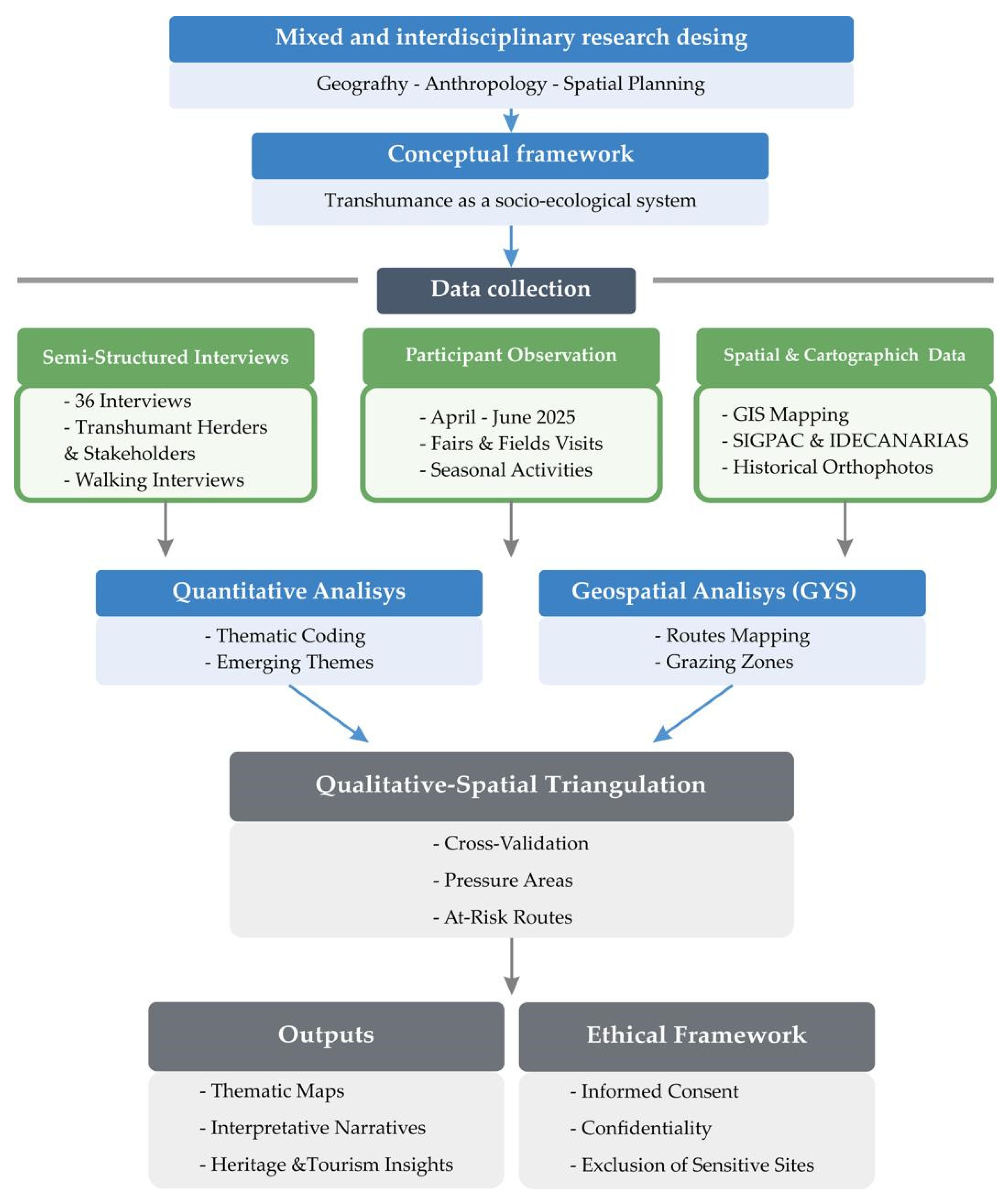
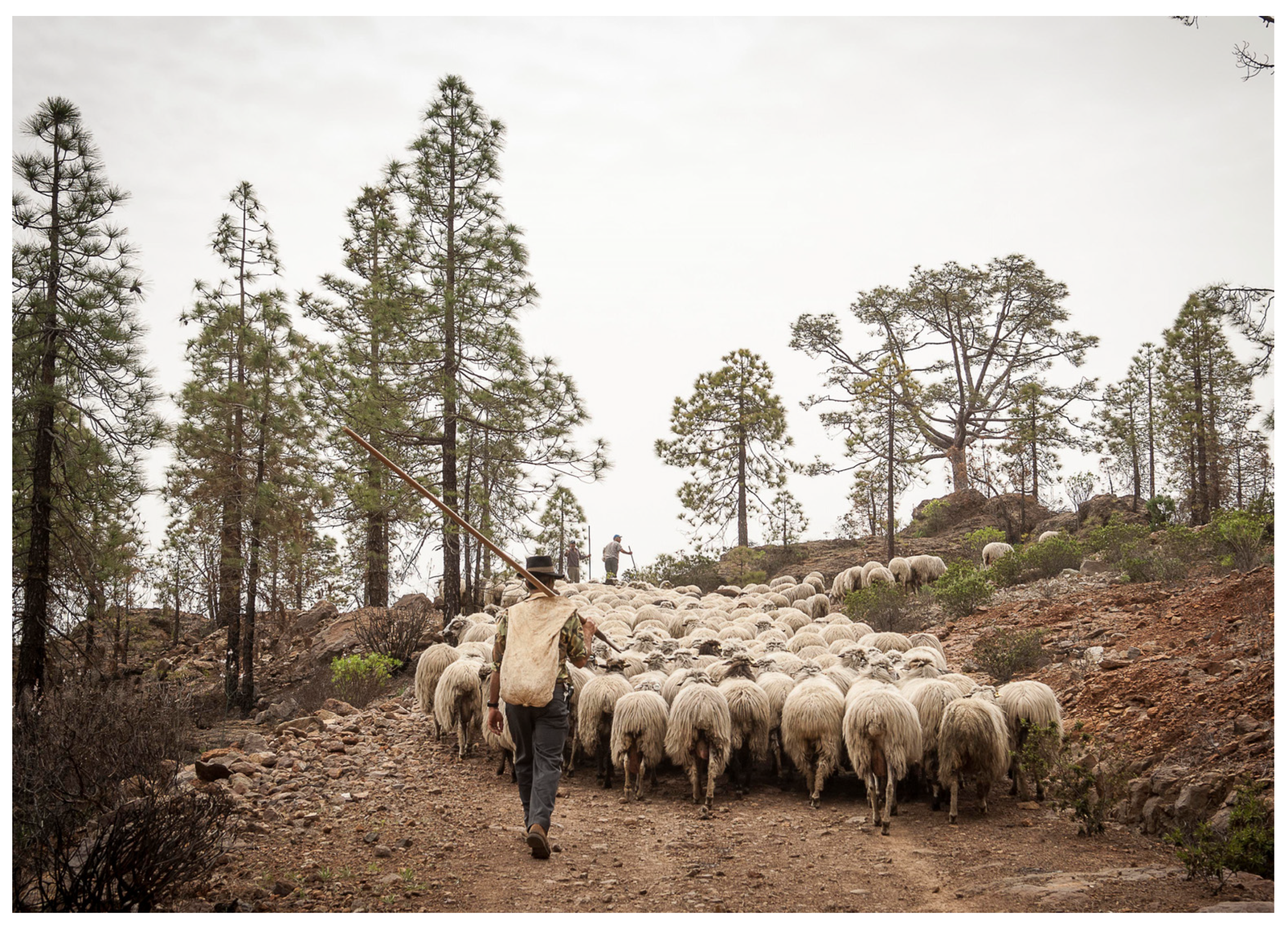
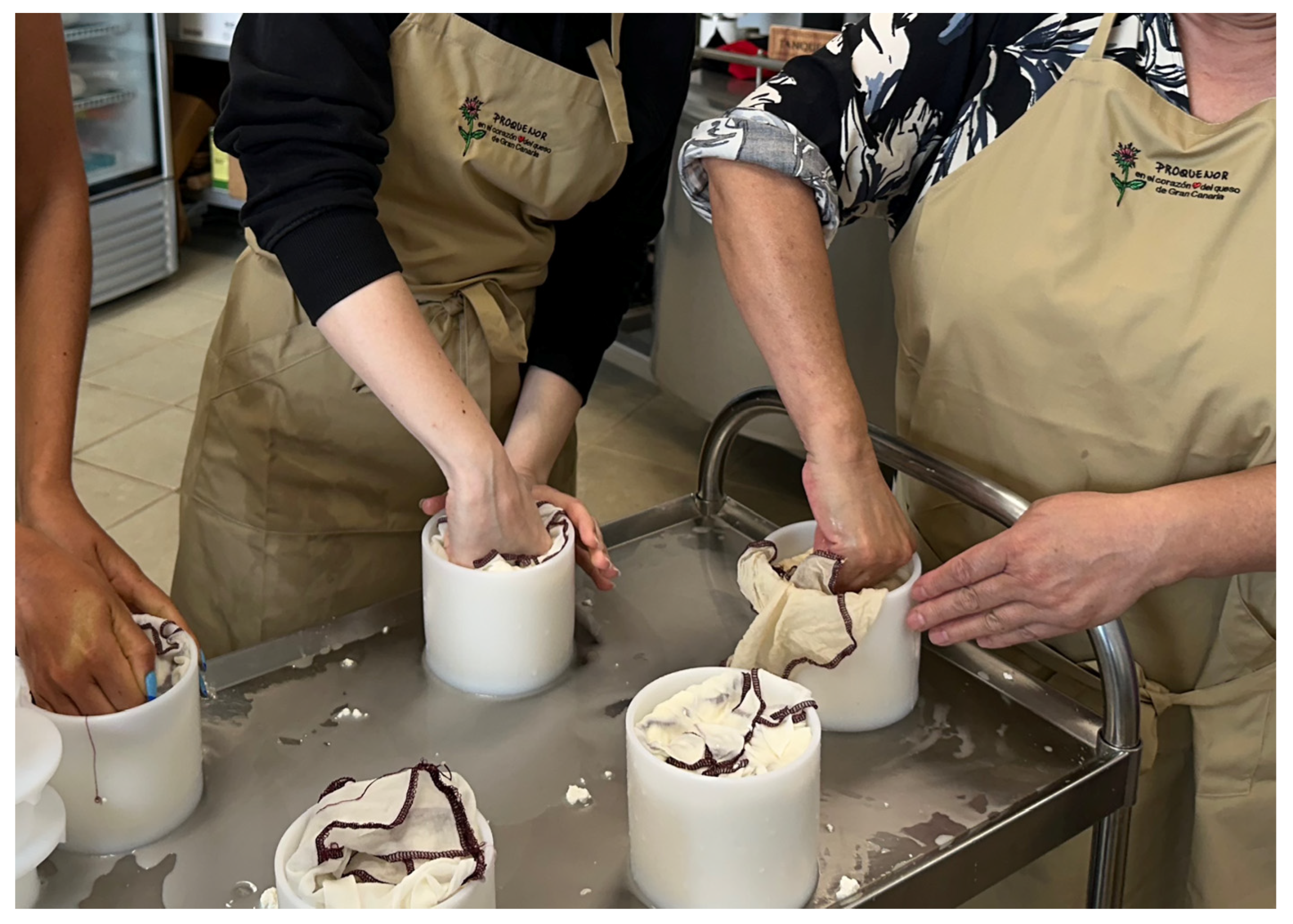
This article analyses contemporary transhumance in Gran Canaria as a singular case of insular pastoralism and biocultural heritage within the Mediterranean and Atlantic contexts. While transhumance has been widely recognised for its ecological, cultural and socio-economic relevance, in Gran Canaria it persists in an especially fragile form, maintained by a small, ageing group of herders. Drawing on an interdisciplinary methodology that combines 36 semi-structured interviews, ethnographic fieldwork and GIS-based spatial analysis of routes and grazing areas, the study characterises the socio-ecological functioning of the system, its environmental and cultural contributions, and the threats it faces. The results highlight the role of transhumance in sustaining agrobiodiversity, fire prevention, ecological connectivity and traditional ecological knowledge, as well as in shaping a distinctive pastoral soundscape, toponymy and material culture. At the same time, the system is undermined by demographic ageing, land fragmentation, urban and tourism pressure, bureaucratic burdens and climate uncertainty. The article examines emerging initiatives in cultural and experiential tourism linked to cheese production, wool and participatory transhumant journeys, arguing that tourism can support, but not substitute, the protection of pastoral livelihoods. It concludes by outlining policy implications for island territories, emphasising the need for integrated governance that recognizes transhumance as living heritage and a strategic tool for cultural landscape management.
Keywords: biocultural heritage; transhumance; cultural landscapes; experiential tourism; islands biocultural heritage; transhumance; cultural landscapes; experiential tourism; islands