
Comparative Study of Ethyl Silicate and Nanolimes with Fluorescent Properties as Consolidants for Mural Paintings and Mortars




Abstract
1. Introduction
2. Materials and Methods
2.1. Materials
2.2. Sample Preparation and Consolidation
2.3. Evaluation Methods
2.4. Statistical Analysis
3. Results and Discussion
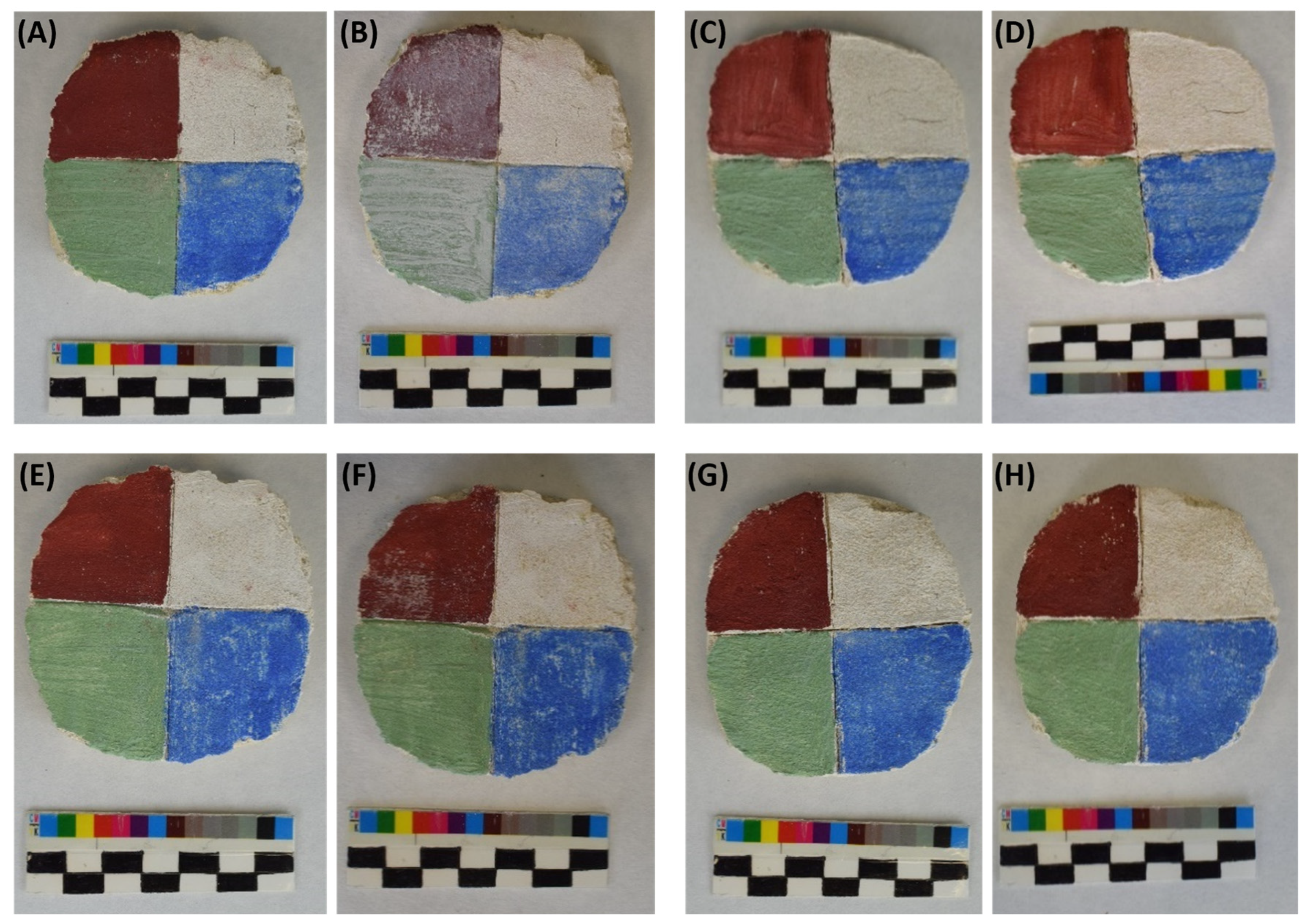
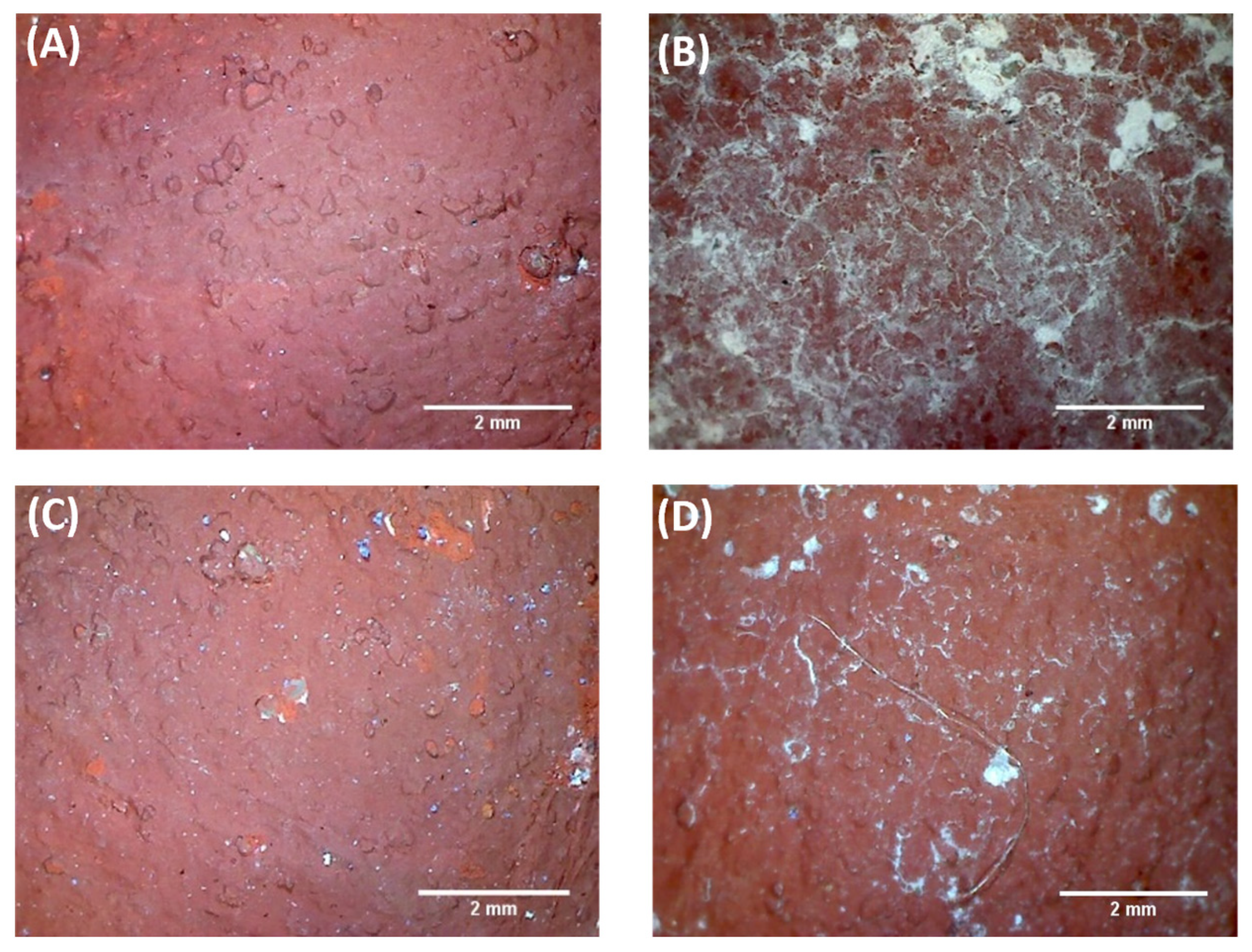
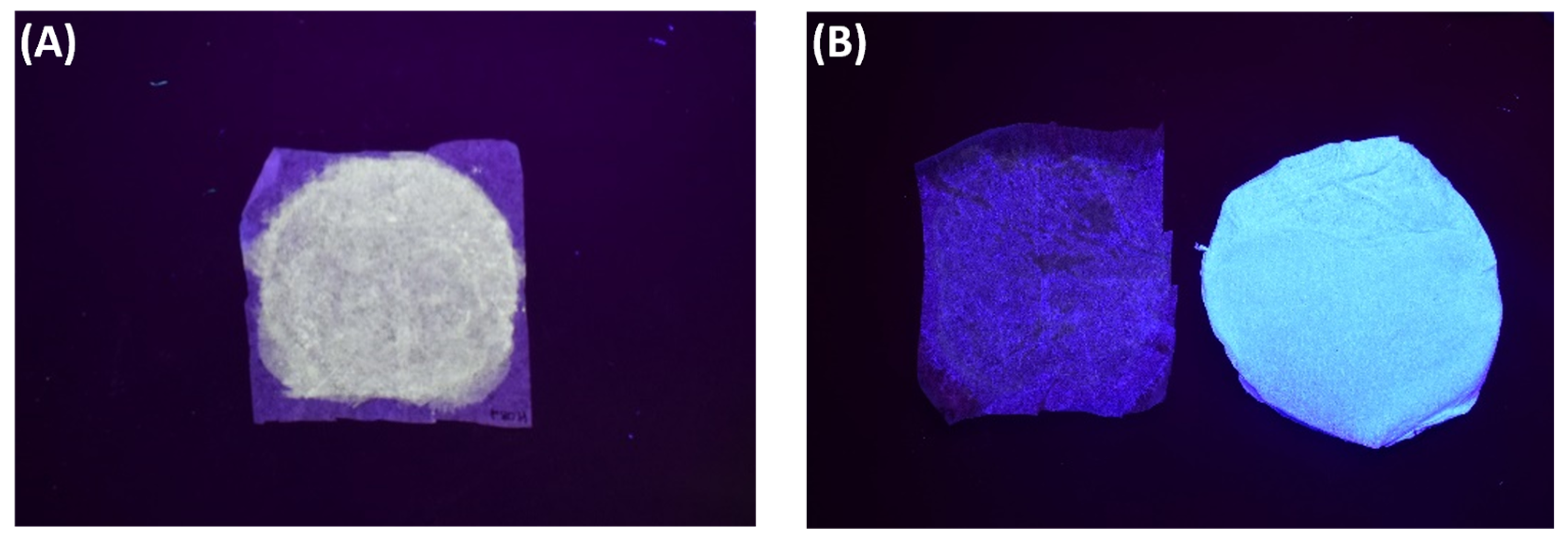
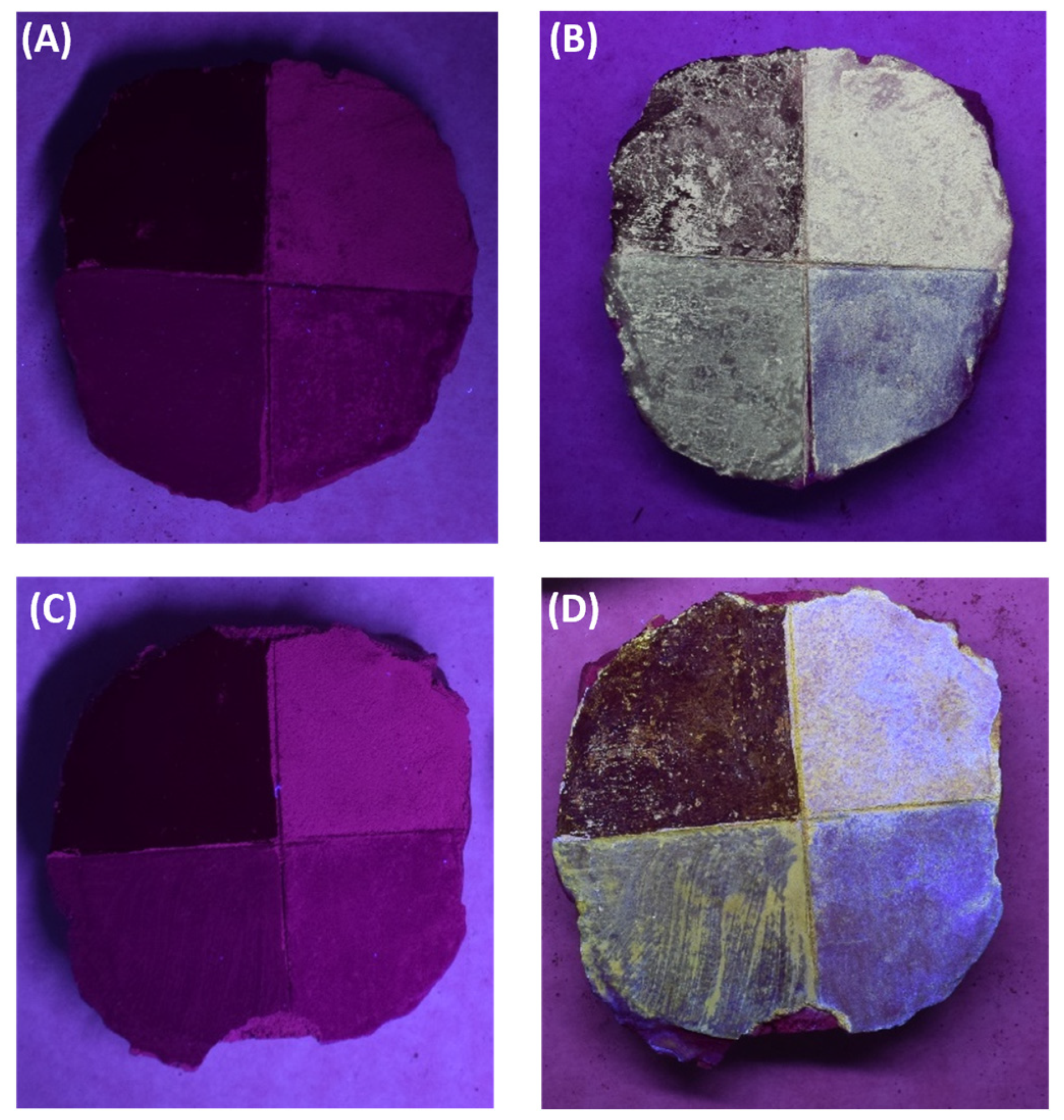
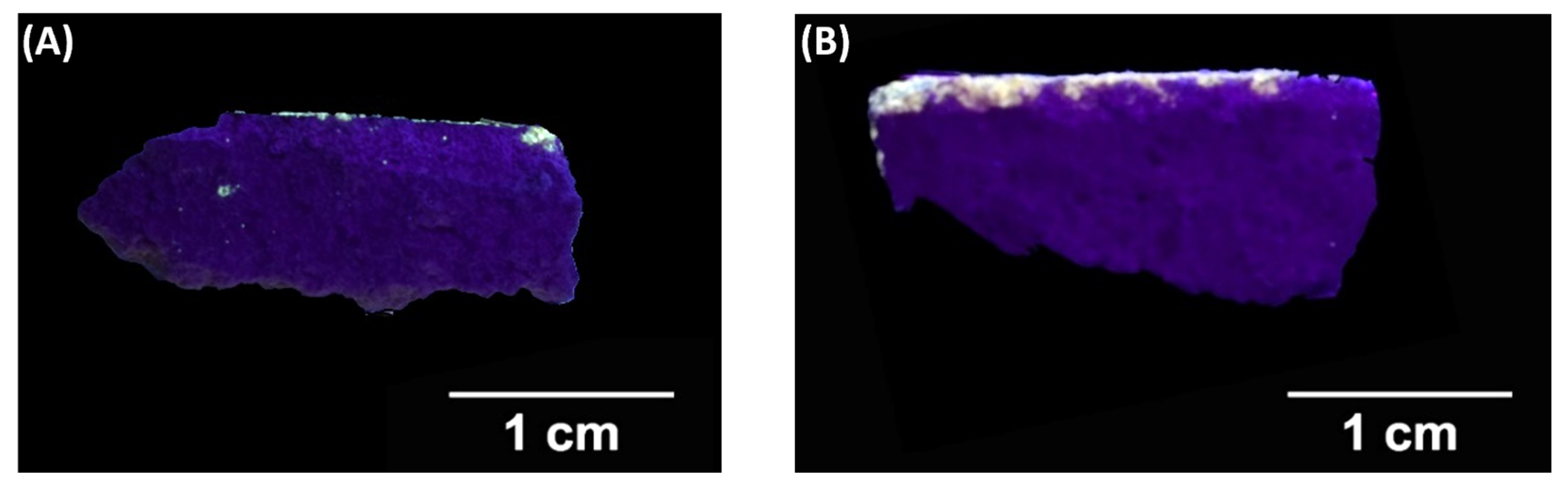
3.1. Visual Condition Under Vis and UV Light
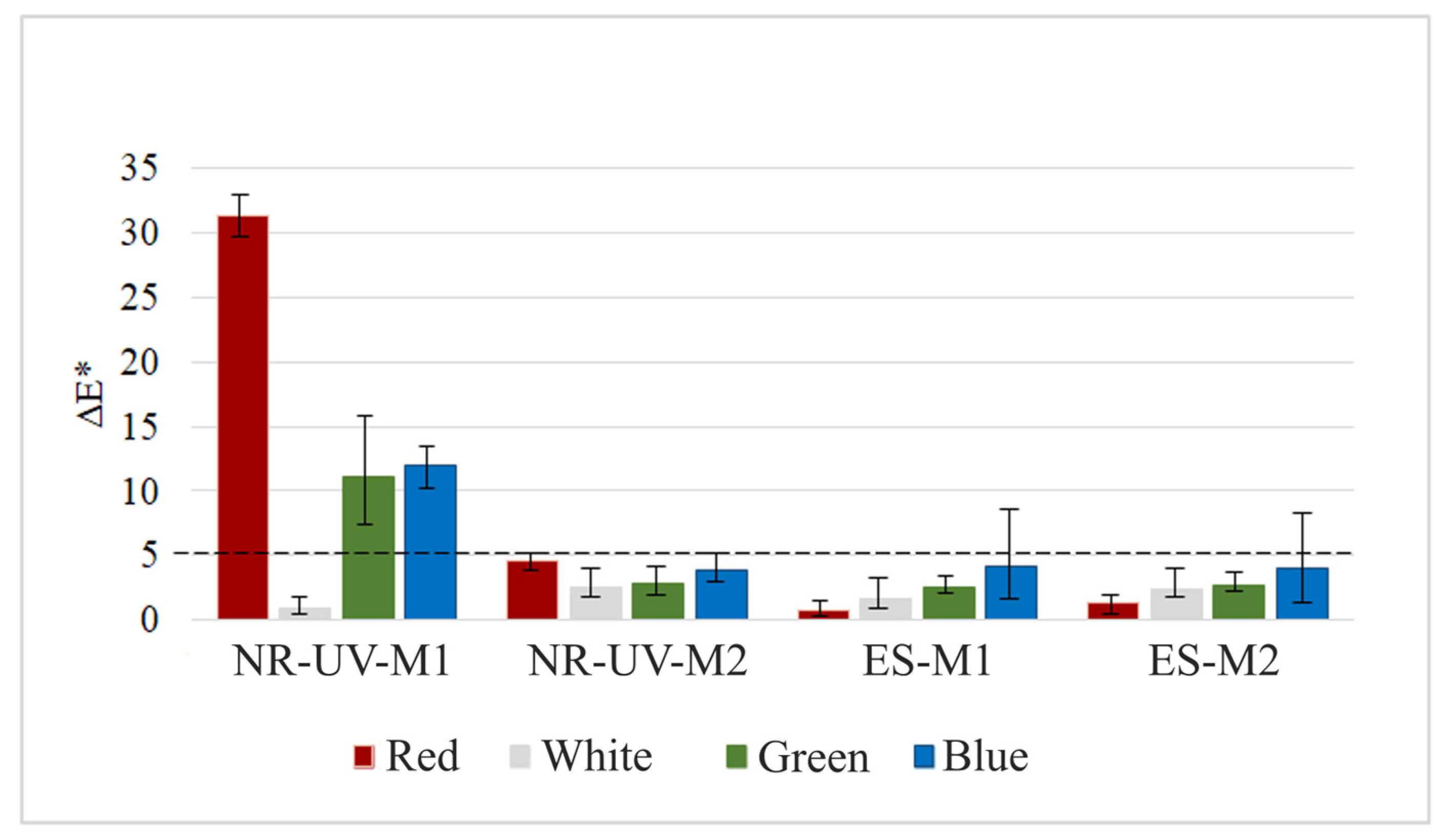
3.2. Chromatic Changes
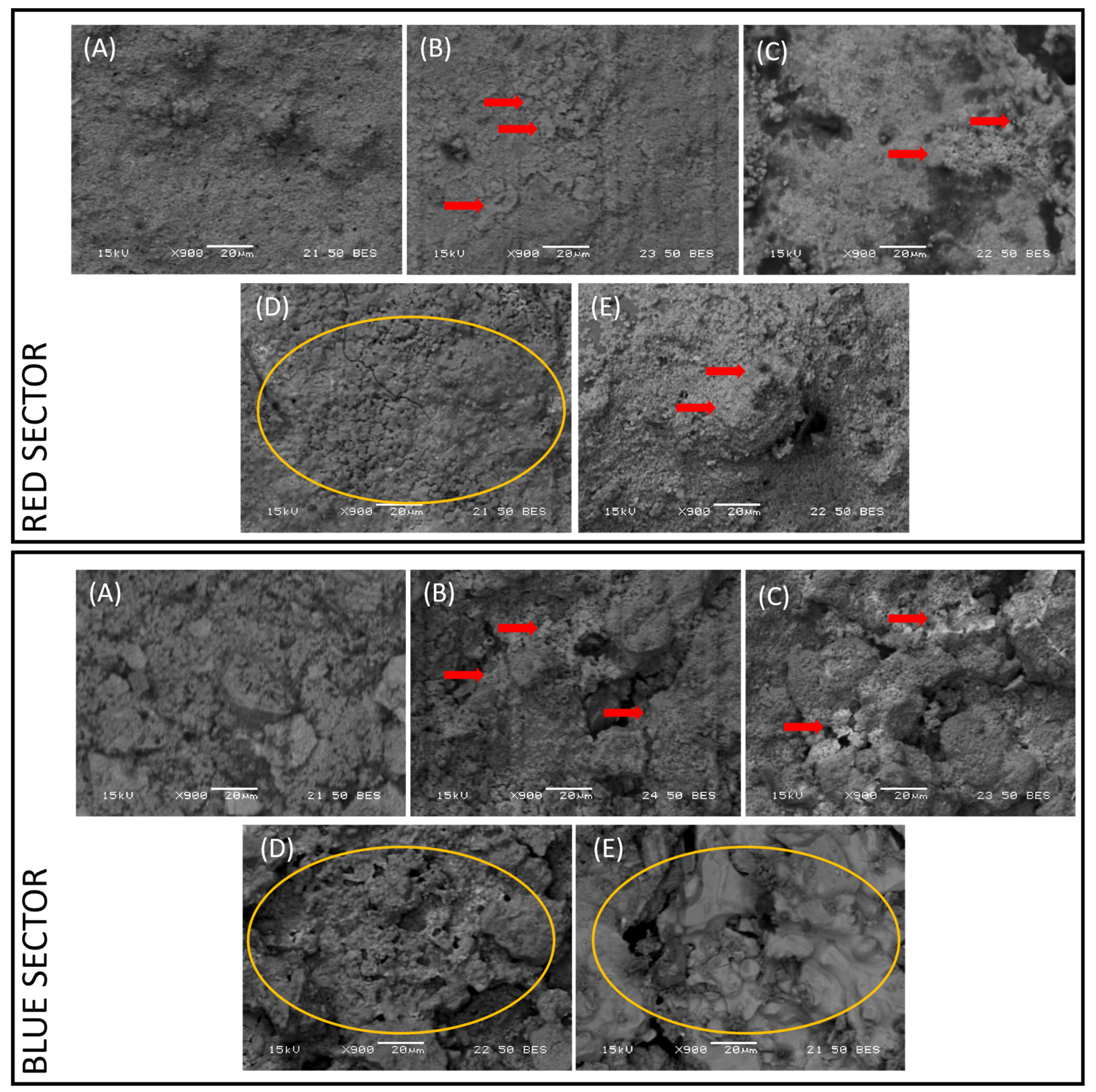
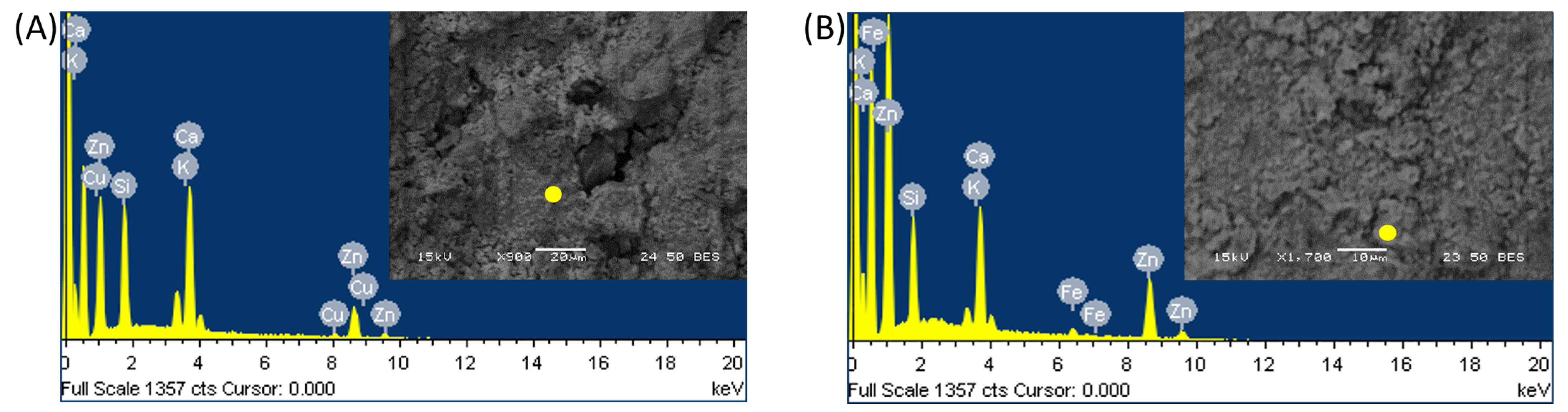
3.3. SEM-EDX Analysis
3.4. Consolidation Percentage
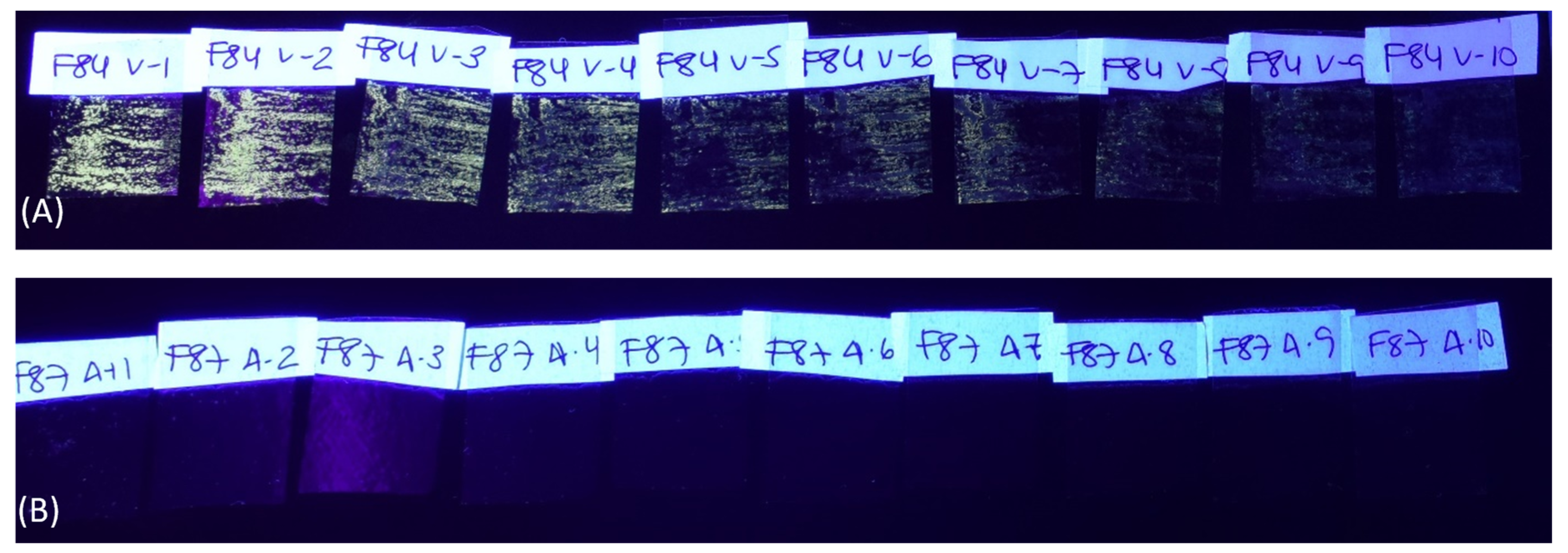
3.5. Depth of Penetration
4. Conclusions
Author Contributions
Funding
Data Availability Statement
Acknowledgments
Conflicts of Interest
References
- International Council on Monuments and Sites. International Charter for the Conservation and Restoration of Monuments and Sites (The Venice Charter 1964). In Proceedings of the II International Congress of Architects and Technicians of Historic Monuments, Venice, Italy, 25–31 May 1964. [Google Scholar]
- Santabárbara Morena, C. Cesare Brandi and Contemporary Art: Theory, Aesthetic and Restoration. A Tempestuous Dialectic. Conversaciones Cesare Brand. Giulio Carlo Argan 2019, 7, 230–247. [Google Scholar]
- Laborde Marqueze, A. (Ed.) VVAA COREMANS Project: “Criteria for Working in Stone Materials”; Ministerio de Educación, Cultura y Deporte: Madrid, Spain, 2013; ISBN 9788481815627.
- van Hees, R.; Veiga, R.; Slížková, Z. Consolidation of Renders and Plasters. Mater. Struct. 2017, 50, 65. [Google Scholar] [CrossRef]
- Mora, P.; Mora, L.; Paul, P. La Conservazione Delle Pitture Murali; Editrice Compositori: Bologna, Italy, 1999; ISBN 88-7794-183-9. [Google Scholar]
- Chiantore, O.; Lazzari, M.; Aglietto, M.; Castelvetro, V.; Ciardelli, F. Photochemical Stability of Partially Fluorinated Acrylic Protective Coatings I. Poly(2,2,2-Trifluoroethyl Methacrylate) and Poly(1H,1H,2H,2H-Perfluorodecyl Methacrylate-Co-2-Ethylhexyl Methacrylate)s. Polym. Degrad. Stab. 2000, 67, 461–467. [Google Scholar] [CrossRef]
- Favaro, M.; Mendichi, R.; Ossola, F.; Simon, S.; Tomasin, P.; Vigato, P.A. Evaluation of Polymers for Conservation Treatments of Outdoor Exposed Stone Monuments. Part II: Photo-Oxidative and Salt-Induced Weathering of Acrylic-Silicone Mixtures. Polym. Degrad. Stab. 2007, 92, 335–351. [Google Scholar] [CrossRef]
- Pozo-Antonio, J.S.; Otero, J.; Alonso, P.; Mas i Barberà, X. Nanolime- and Nanosilica-Based Consolidants Applied on Heated Granite and Limestone: Effectiveness and Durability. Constr. Build. Mater. 2019, 201, 852–870. [Google Scholar] [CrossRef]
- Dei, L.; Salvadori, B. Nanotechnology in Cultural Heritage Conservation: Nanometric Slaked Lime Saves Architectonic and Artistic Surfaces from Decay. J. Cult. Herit. 2006, 7, 110–115. [Google Scholar] [CrossRef]
- Carretti, E.; Dei, L. Physicochemical Characterization of Acrylic Polymeric Resins Coating Porous Materials of Artistic Interest. Prog. Org. Coat 2004, 49, 282–289. [Google Scholar] [CrossRef]
- Zornoza-Indart, A.; Lopez-Arce, P.; Leal, N.; Simão, J.; Zoghlami, K. Consolidation of a Tunisian Bioclastic Calcarenite: From Conventional Ethyl Silicate Products to Nanostructured and Nanoparticle Based Consolidants. Constr. Build. Mater. 2016, 116, 188–202. [Google Scholar] [CrossRef]
- Del Hierro, I.; Pérez, Y. Alcoxysilanes for the Consolidation of Stonework. Rev. OtArq Otras Arqueol. 2016, 1, 171–180. [Google Scholar] [CrossRef]
- Mosquera, M.J.; De Los Santos, D.M.; Montes, A.; Valdez-Castro, L. New Nanomaterials for Consolidating Stone. Langmuir 2008, 24, 2772–2778. [Google Scholar] [CrossRef] [PubMed]
- Otero, J.; Charola, A.E.; Grissom, C.A.; Starinieri, V. An Overview of Nanolime as a Consolidation Method for Calcareous Substrates. Ge-Conservación 2017, 1, 71–78. [Google Scholar] [CrossRef]
- Otero, J.; Starinieri, V.; Charola, A.E. Nanolime for the Consolidation of Lime Mortars: A Comparison of Three Available Products. Constr. Build. Mater. 2018, 181, 394–407. [Google Scholar] [CrossRef]
- Gómez-Villalba, L.S.; López-Arce, P.; Fort, R.; Álvarez de Buergo, M.; Zornoza, A. Aplicación de Nanopartículas a La Consolidación Del Patrimonio Pétreo (Application of Nanoparticles to the Consolidation of Stone Cultural Heritage). In La Ciencia y el Arte III. Ciencias Experimentales y Conservación del Patrimonio; Ministerio de Cultura: Madrid, Spain, 2011; pp. 38–57. [Google Scholar]
- Molina-Prieto, L.F. Nanotecnología: Herramienta Inteligente Para La Conservación Del Patrimonio Arquitectónico y Urbano (Nanotechnology: A Smart Tool for the Conservation of Architectural and Urban Heritage). Rev. De Investig. 2016, 9, 7–22. [Google Scholar] [CrossRef]
- Becerra, J.; Zaderenko, A.P.; Gómez-Morón, M.A.; Ortiz, P. Nanoparticles Applied to Stone Buildings. Int. J. Archit. Herit. 2021, 15, 1320–1335. [Google Scholar] [CrossRef]
- Baglioni, P.; Chelazzi, D.; Giorgi, R. Consolidation of Wall Paintings and Stone. In Nanotechnologies in the Conservation of Cultural Heritage; Springer: Dordrecht, The Netherlands, 2015; pp. 15–59. [Google Scholar] [CrossRef]
- Ferrazza, L. Nanomateriales Basados en Hidroxiapatita para la Conservación del Patrimonio Cultural en Soporte Pétreo y Pintura Mural (Hydroxyapatite-Based Nanomaterials for the Conservation of Cultural Heritage on Stone Supports and Mural Paintings). Ph.D. Thesis, Universitat Jaume I, Castellón de la Plana, Spain, 2017. [Google Scholar]
- Daehne, A.; Herm, C. Calcium Hydroxide Nanosols for the Consolidation of Porous Building Materials—Results from EU-STONECORE. Herit. Sci. 2013, 1, 11. [Google Scholar] [CrossRef]
- Vasanelli, E.; Calia, A.; Masieri, M.; Baldi, G. Stone Consolidation with SiO2 Nanoparticles: Effects on a High Porosity Limestone. Constr. Build. Mater. 2019, 219, 154–163. [Google Scholar] [CrossRef]
- Borsoi, G.; Lubelli, B.; van Hees, R.; Veiga, R.; Santos Silva, A. Evaluation of the Effectiveness and Compatibility of Nanolime Consolidants with Improved Properties. Constr. Build. Mater. 2017, 142, 385–394. [Google Scholar] [CrossRef]
- Chelazzi, D.; Poggi, G.; Jaidar, Y.; Toccafondi, N.; Giorgi, R.; Baglioni, P. Hydroxide Nanoparticles for Cultural Heritage: Consolidation and Protection of Wall Paintings and Carbonate Materials. J. Colloid Interface Sci. 2013, 392, 42–49. [Google Scholar] [CrossRef] [PubMed]
- Giorgi, R.; Dei, L.; Baglioni, P. A New Method for Consolidating Wall Paintings Based on Dispersions of Lime in Alcohol. Stud. Conserv. 2000, 45, 154–161. [Google Scholar] [CrossRef]
- Rodriguez-Navarro, C.; Suzuki, A.; Ruiz-Agudo, E. Alcohol Dispersions of Calcium Hydroxide Nanoparticles for Stone Conservation. Langmuir 2013, 29, 11457–11470. [Google Scholar] [CrossRef]
- Ambrosi, M.; Dei, L.; Giorgi, R.; Neto, C.; Baglioni, P. Colloidal Particles of Ca(OH)2: Properties and Applications to Restoration of Frescoes. Langmuir 2001, 17, 4251–4255. [Google Scholar] [CrossRef]
- López-Martínez, T.; Otero, J. Preventing the Undesired Surface Veiling after Nanolime Treatments on Wall Paintings: Preliminary Investigations. Coatings 2021, 11, 1083. [Google Scholar] [CrossRef]
- Becerra, J.; Ortiz, P.; Martín, J.M.; Zaderenko, A.P. Nanolimes Doped with Quantum Dots for Stone Consolidation Assessment. Constr. Build. Mater. 2019, 199, 581–593. [Google Scholar] [CrossRef]
- Otero, J.; Starinieri, V.; Charola, A.E.; Taglieri, G. Influence of Different Types of Solvent on the Effectiveness of Nanolime Treatments on Highly Porous Mortar Substrates. Constr. Build. Mater. 2020, 230, 117112. [Google Scholar] [CrossRef]
- Borsoi, G.; Lubelli, B.; van Hees, R.; Veiga, R.; Silva, A.S.; Colla, L.; Fedele, L.; Tomasin, P. Effect of Solvent on Nanolime Transport within Limestone: How to Improve in-Depth Deposition. Colloids Surf. A Physicochem. Eng. Asp. 2016, 497, 171–181. [Google Scholar] [CrossRef]
- Borsoi, G.; Lubelli, B.; van Hees, R.; Veiga, R.; Silva, A.S. Understanding the Transport of Nanolime Consolidants within Maastricht Limestone. J. Cult. Herit. 2016, 18, 242–249. [Google Scholar] [CrossRef]
- Otero, J.; Pozo-Antonio, J.S.; Montojo, C. Influence of Application Method and Number of Applications of Nanolime on the Effectiveness of the Doulting Limestone Treatments. Mater. Struct. Mater. Constr. 2021, 54, 41. [Google Scholar] [CrossRef]
- Borsoi, G.; Lubelli, B.; van Hees, R.; Veiga, R.; Silva, A.S. Optimization of Nanolime Solvent for the Consolidation of Coarse Porous Limestone. Appl. Phys. A 2016, 122, 846. [Google Scholar] [CrossRef]
- Jang, J.; Matero, F.G. Performance Evaluation of Commercial Nanolime as a Consolidant for Friable Lime-Based Plaster. J. Am. Inst. Conserv. 2018, 57, 95–111. [Google Scholar] [CrossRef]
- Becerra Luna, J.; Zaderenko Partida, A.P.; Ortiz Calderón, P. Composición para la Consolidación de Materiales Carbonatados, Método y Usos (Composition for Consolidating Carbonate-Based Materials: Method and Applications); Universidad Pablo de Olavide: Seville, Spain, 2018. [Google Scholar]
- Becerra, J.; Zaderenko, A.P.; Ortiz, R.; Karapanagiotis, I.; Ortiz, P. Comparison of the Performance of a Novel Nanolime Doped with ZnO Quantum Dots with Common Consolidants for Historical Carbonate Stone Buildings. Appl. Clay Sci. 2020, 195, 105732. [Google Scholar] [CrossRef]
- Zhang, Y.; Nayak, T.R.; Hong, H.; Cai, W. Biomedical Applications of Zinc Oxide Nanomaterials. Curr. Mol. Med. 2013, 13, 1633–1645. [Google Scholar] [CrossRef]
- Millers, D.; Grigorjeva, L.; Łojkowski, W.; Strachowski, T. Luminescence of ZnO Nanopowders. Radiat. Meas. 2004, 38, 589–591. [Google Scholar] [CrossRef]
- Guglielmi, V.; Comite, V.; Andreoli, M.; Demartin, F.; Lombardi, C.A.; Fermo, P. Pigments on Roman Wall Painting and Stucco Fragments from the Monte d’Oro Area (Rome): A Multi-Technique Approach. Appl. Sci. 2020, 10, 7121. [Google Scholar] [CrossRef]
- C.T.S. España. ESTEL 1200 Datasheet. 2015. Available online: https://shop-espana.ctseurope.com/documentacioncts/fichastecnicasweb2018/2.1consolidantes2016/ESTEL%201200%20ESP.pdf (accessed on 8 October 2025).
- Baglioni, P.; Chelazzi, D.; Giorgi, R.; Carretti, E.; Toccafondi, N.; Jaidar, Y. Commercial Ca(OH)2 Nanoparticles for the Consolidation of Immovable Works of Art. Appl. Phys. A Mater. Sci. Process. 2014, 114, 723–732. [Google Scholar] [CrossRef]
- Martinez, P.; Soto, M.; Zunino, F.; Stuckrath, C.; Lopez, M. Effectiveness of Tetra-Ethyl-Ortho-Silicate (TEOS) Consolidation of Fired-Clay Bricks Manufactured with Different Calcination Temperatures. Constr. Build. Mater. 2016, 106, 209–217. [Google Scholar] [CrossRef]
- López-Arce, P.; Gómez-Villalba, L.S.; Martínez-Ramírez, S.; Álvarez de Buergo, M.; Fort, R. Influence of Relative Humidity on the Carbonation of Calcium Hydroxide Nanoparticles and the Formation of Calcium Carbonate Polymorphs. Powder Technol. 2011, 205, 263–269. [Google Scholar] [CrossRef]
- Pigino, B.; Leemann, A.; Franzoni, E.; Lura, P. Ethyl Silicate for Surface Treatment of Concrete—Part II: Characteristics and Performance. Cem. Concr. Compos. 2012, 34, 313–321. [Google Scholar] [CrossRef]
- Mokrzycki, W.S.; Tatol, M. Color Difference Delta E—A Survey. Mach. Graph. Vis. 2011, 20, 383–411. [Google Scholar]
- Pinho, L.; Rojas, M.; Mosquera, M.J. Ag–SiO2–TiO2 Nanocomposite Coatings with Enhanced Photoactivity for Self-Cleaning Application on Building Materials. Appl. Catal. B 2015, 178, 144–154. [Google Scholar] [CrossRef]
- Ortiz, P.; Antúnez, V.; Ortiz, R.; Martín, J.M.; Gómez, M.A.; Hortal, A.R.; Martínez-Haya, B. Comparative Study of Pulsed Laser Cleaning Applied to Weathered Marble Surfaces. Appl. Surf. Sci. 2013, 283, 193–201. [Google Scholar] [CrossRef]
- García, O.; Malaga, K. Definition of the Procedure to Determine the Suitability and Durability of an Anti-Graffiti Product for Application on Cultural Heritage Porous Materials. J. Cult. Herit. 2012, 13, 77–82. [Google Scholar] [CrossRef]
- Drdácký, M.; Lesák, J.; Niedoba, K.; Valach, J. Peeling Tests for Assessing the Cohesion and Consolidation Characteristics of Mortar and Render Surfaces. Mater. Struct. Mater. Constr. 2015, 48, 1947–1963. [Google Scholar] [CrossRef]
- Drdácký, M.; Lesák, J.; Rescic, S.; Slížková, Z.; Tiano, P.; Valach, J. Standardization of Peeling Tests for Assessing the Cohesion and Consolidation Characteristics of Historic Stone Surfaces. Mater. Struct. 2012, 45, 505–520. [Google Scholar] [CrossRef]
- Sandrolini, F.; Franzoni, E.; Pigino, B. Ethyl Silicate for Surface Treatment of Concrete—Part I: Pozzolanic Effect of Ethyl Silicate. Cem. Concr. Compos. 2012, 34, 306–312. [Google Scholar] [CrossRef]
- Scherer, G.W.; Wheeler, G.S. Silicate Consolidants for Stone. Key Eng. Mater. 2009, 391, 1–25. [Google Scholar] [CrossRef]
- Nevin, A. Pigment Alteration. In The Encyclopedia of Archaeological Sciences; Wiley: Hoboken, NJ, USA, 2018; pp. 1–4. [Google Scholar]
- Lanzón, M.; García-Vera, V.E.; Tenza-Abril, A.J.; De Stefano, V. Use of Image Analysis to Evaluate Surface Dispersion and Covering Performance of Nanolime Coatings Sprayed on Heritage Material Substrates. Appl. Surf. Sci. 2019, 480, 962–968. [Google Scholar] [CrossRef]
- Zhu, J.; Zhang, P.; Ding, J.; Dong, Y.; Cao, Y.; Dong, W.; Zhao, X.; Li, X.; Camaiti, M. Nano Ca(OH)2: A Review on Synthesis, Properties and Applications. J. Cult. Herit. 2021, 50, 25–42. [Google Scholar] [CrossRef]
- Jroundi, F.; Gonzalez-Muñoz, M.T.; Garcia-Bueno, A.; Rodriguez-Navarro, C. Consolidation of Archaeological Gypsum Plaster by Bacterial Biomineralization of Calcium Carbonate. Acta Biomater. 2014, 10, 3844–3854. [Google Scholar] [CrossRef]
- Calero-Castillo, A.I.; López-Martínez, T.; García-Bueno, A.; Teresa González-Muñoz, M.; Medina-Flórez, V.J. Ensayos de Consolidación en los Revestimientos Murales del Conjunto Arqueológico de Castulo (Linares, Jaén). Ge-Conservación 2016, 10, 31–43. [Google Scholar] [CrossRef]
- López-Arce, P.; Gomez-Villalba, L.S.; Pinho, L.; Fernández-Valle, M.E.; de Buergo, M.Á.; Fort, R. Influence of Porosity and Relative Humidity on Consolidation of Dolostone with Calcium Hydroxide Nanoparticles: Effectiveness Assessment with Non-Destructive Techniques. Mater. Charact. 2010, 61, 168–184. [Google Scholar] [CrossRef]
- He, J.; Otero, J.; Crespo-López, L.; Monasterio-Guillot, L.; Benavides-Reyes, C.; Elert, K.; Rodriguez-Navarro, C. Ethyl Silicate–Nanolime Treatment for the Consolidation of Calcareous Building Materials. Constr. Build. Mater. 2024, 418, 135437. [Google Scholar] [CrossRef]
- Graziani, G.; Sassoni, E.; Franzoni, E. Consolidation of Porous Carbonate Stones by an Innovative Phosphate Treatment: Mechanical Strengthening and Physical-Microstructural Compatibility in Comparison with TEOS-Based Treatments. Herit. Sci. 2015, 3, 1. [Google Scholar] [CrossRef]
- Zhao, J.-H.; Liu, C.-J.; Lv, Z.-H. Photoluminescence of ZnO Nanoparticles and Nanorods. Opt. Int. J. Light Electron Opt. 2016, 127, 1421–1423. [Google Scholar] [CrossRef]
- Vaseem, M.; Umar, A.; Hahn, Y. ZnO Nanoparticles: Growth, Properties, and Applications. In Metal Oxide Nanostructures and Their Applications; Umar, A., Hahn, Y.-B., Eds.; American Scientific Publishers: Valencia, CA, USA, 2010; Volume 5, pp. 1–36. ISBN 1588831701. [Google Scholar]
- Ditaranto, N.; van der Werf, I.D.; Picca, R.A.; Sportelli, M.C.; Giannossa, L.C.; Bonerba, E.; Tantillo, G.; Sabbatini, L. Characterization and Behaviour of ZnO-Based Nanocomposites Designed for the Control of Biodeterioration of Patrimonial Stoneworks. New J. Chem. 2015, 39, 6836–6843. [Google Scholar] [CrossRef]
- Becerra, J.; Ortiz, P.; Zaderenko, A.P.; Karapanagiotis, I. Assessment of Nanoparticles/Nanocomposites to Inhibit Micro-Algal Fouling on Limestone Façades. Build. Res. Inf. 2020, 48, 180–190. [Google Scholar] [CrossRef]
- Lebaka, V.R.; Ravi, P.; Reddy, M.C.; Thummala, C.; Mandal, T.K. Zinc Oxide Nanoparticles in Modern Science and Technology: Multifunctional Roles in Healthcare, Environmental Remediation, and Industry. Nanomaterials 2025, 15, 754. [Google Scholar] [CrossRef] [PubMed]
- Anupama, V.A.; Sassoni, E.; Santhanam, M. Consolidants in Salt-Weathered Masonry: Retention and Efficiency of DAP and TEOS. RILEM Tech. Lett. 2024, 9, 76–86. [Google Scholar] [CrossRef]
- Jiang, Z.; Cai, G.; Tian, G.; Liu, X. Effect of Aggregate Particle Size on Mortar Pore Structure. Constr. Build. Mater. 2022, 352, 128988. [Google Scholar] [CrossRef]
- Gueli, A.M.; Bonfiglio, G.; Pasquale, S.; Troja, S.O. Effect of Particle Size on Pigments Colour. Color Res. Appl. 2017, 42, 236–243. [Google Scholar] [CrossRef]
- Miliani, C.; Velo-Simpson, M.L.; Scherer, G.W. Particle-Modified Consolidants: A Study on the Effect of Particles on Sol–Gel Properties and Consolidation Effectiveness. J. Cult. Herit. 2007, 8, 1–6. [Google Scholar] [CrossRef]



| Consolidant Product | Number of Applications (Dilution) | Application Method * (Abbreviation) | Amounts of Dry Product (mg/cm2) | Environmental Conditions |
|---|---|---|---|---|
| Nanorepair UV® (NR-UV) | 5 (1:5) | Method 1 (NR-UV-M1) | 0.51 | 58 ± 9.2% RH 20 ± 1.8 °C |
| Method 2 (NR-UV-M2) | ||||
| Estel 1200® (ES) | 1 (1:1) | Method 1 (ES-M1) | 16.89 | 58 ± 9.2% RH 20 ± 1.8 °C |
| Method 2 (ES-M2) | ||||
| Untreated * | ||||
| Sector | Treatment | ∆L | ∆a* | ∆b* | ∆E* | T-Student (α = 0.05, 2-Tailed) | ANOVA (α = 0.05) Significant Comparisons (Tukey HSD) |
|---|---|---|---|---|---|---|---|
| Red | NR-UV-M1 | 22.68 ± 2.54 | −15.60 ± 2.06 | −15.10 ± 0.85 | 31.38 ± 3.02 | t(2) = 14.91 p = 0.004 | F3,8 = 253.86, p = 2.86 × 10⁻⁸ Tukey HSD: NR-UV-M1 vs. NR-UV-M2, ES-M1, ES-M2 |
| NR-UV-M2 | 2.02 ± 0.97 | −0.37 ± 3.32 | −0.56 ± 3.58 | 4.54 ± 0.79 | |||
| ES-M1 | −0.08 ± 0.44 | −0.50 ± 0.54 | −0.03 ± 0.59 | 0.82 ± 0.47 | t(4) = –1.25 p = 0.28 | ||
| ES-M2 | −0.68 ± 0.48 | −0.21 ± 1.07 | 0.61 ± 0.32 | 1.31 ± 0.48 | |||
| White | NR-UV-M1 | −0.21 ± 0.76 | −0.24 ± 0.13 | −0.39 ± 0.55 | 0.90 ± 0.23 | t(2) = −1.80 p = 0.21 | F3,8 = 1.77, p = 0.231 |
| NR-UV-M2 | −1.01 ± 1.24 | 0.69 ± 0.46 | 2.07 ± 1.25 | 2.53 ± 1.54 | |||
| ES-M1 | −0.88 ± 0.60 | 0.62 ± 0.23 | 1.09 ± 0.13 | 1.58 ± 0.47 | t(3) = −1.16 p = 0.33 | ||
| ES-M2 | −1.23 ± 0.95 | 0.66 ± 0.32 | 1.88 ± 0.71 | 2.38 ± 1.10 | |||
| Green | NR-UV-M1 | 8.36 ± 4.66 | 3.07 ± 1.01 | −6.62 ± 2.24 | 11.15 ± 5.10 | t(3) = 2.64 p = 0.08 | F3,8 = 7.18, p = 0.012 Tukey HSD: NR-UV-M1 vs. NR-UV-M2, ES-M1, ES-M2 |
| NR-UV-M2 | −2.65 ± 1.77 | 0.10 ± 0.36 | 1.07 ± 0.65 | 2.90 ± 1.82 | |||
| ES-M1 | −1.52 ± 0.45 | 0.72 ± 1.13 | 1.63 ± 0.40 | 2.54 ± 0.43 | t(4) = −0.35 p = 0.74 | ||
| ES-M2 | −1.91 ± 0.11 | 0.64 ± 0.86 | 1.52 ± 0.82 | 2.67 ± 0.51 | |||
| Blue | NR-UV-M1 | 8.78 ± 1.68 | 0.28 ± 0.10 | 8.10 ± 1.92 | 11.95 ± 2.53 | t(3) = 5.05 p = 0.015 | F3,8 = 3.69, p = 0.062 Tukey HSD: NR-UV-M1 vs. NR-UV-M2, ES-M1, ES-M2 |
| NR-UV-M2 | −0.74 ± 0.73 | −0.85 ± 0.22 | 0.22 ± 4.61 | 3.87 ± 1.14 | |||
| ES-M1 | 0.91 ± 3.78 | −0.65 ± 1.03 | 3.12 ± 4.20 | 4.21 ± 4.78 | t(4) = 0.05 p = 0.96 | ||
| ES-M2 | 1.30 ± 3.61 | 0.43 ± 0.55 | 3.09 ± 3.77 | 4.02 ± 4.52 |
| Sector | Treatment | %C | T-Student (α = 0.05, 2-Tailed) | ANOVA (α = 0.05) Significant Comparisons (Tukey HSD) |
|---|---|---|---|---|
| Red | NR-UV-M1 | −17.5 ± 31.4 | t(2) = 5.47 p = 0.032 | F3,8 = 12.86, p = 0.002 Tukey HSD: NR-UV-M1 vs. NR-UV-M2, ES-M1, ES-M2 NR-UV-M2 vs. ES-M1 ES-M1 vs. ES-M2 |
| NR-UV-M2 | 81.8 ± 1.0 | |||
| ES-M1 | 41.7 ± 33.4 | t(2) = 2.22 p = 0.156 | ||
| ES-M2 | 85.0 ± 4.5 | |||
| White | NR-UV-M1 | −67.3 ± 101.2 | t(2) = 2.48 p = 0.131 | F3,8 = 4,09, p = 0.049 Tukey HSD: NR-UV-M1 vs. NR-UV-M2, ES-M2 NR-UV-M2 vs. ES-M1, ES-M2 ES-M1 vs. ES-M2 |
| NR-UV-M2 | 80.8 ± 20.9 | |||
| ES-M1 | −68.2 ± 64.0 | t(3) = 2.34 p = 0.101 | ||
| ES-M2 | 33.7 ± 40.0 | |||
| Green | NR-UV-M1 | −33.1 ± 63.1 | t(2) = 2.60 p = 0.121 | F3,8 = 5.86, p = 0.020 Tukey HSD: NR-UV-M1 vs. NR-UV-M2, ES-M1, ES-M2 NR-UV-M2 vs. ES-M2 ES-M1 vs. ES-M2 |
| NR-UV-M2 | 64.1 ± 14.0 | |||
| ES-M1 | 63.4 ± 13.5 | t(4) = −1.02 p = 0.367 | ||
| ES-M2 | 52.9 ± 11.7 | |||
| Blue | NR-UV-M1 | 64.2 ± 11.5 | t(2) = 4.47 p = 0.045 | F3,8 = 3.54, p = 0.068 Tukey HSD: NR-UV-M1 vs. NR-UV-M2, ES-M1 NR-UV-M2 vs. ES-M1, ES-M2 ES-M1 vs. ES-M2 |
| NR-UV-M2 | 94.5 ± 2.6 | |||
| ES-M1 | 51.1 ± 26.6 | t(3) = 0.86 p = 0.454 | ||
| ES-M2 | 66.7 ± 16.9 |
| Sector | Treatment | Depth of Penetration (µm) | T-Student (α = 0.05, 2-Tailed) |
|---|---|---|---|
| Red | NR-UV-M1 | 169 ± 25 | t(8) = −5.71 p = 0.0004 |
| NR-UV-M2 | 237 ± 15 | ||
| White | NR-UV-M1 | 123 ± 1 | t(5) = −31.66 p = 5.9 × 10⁻⁷ |
| NR-UV-M2 | 544 ± 33 | ||
| Green | NR-UV-M1 | 161 ± 28 | t(10) = −3.05 p = 0.012 |
| NR-UV-M2 | 214 ± 32 | ||
| Blue | NR-UV-M1 | 260 ± 33 | t(10) = −18.24 p = 5.3 × 10⁻⁹ |
| NR-UV-M2 | 628 ± 237 |
Disclaimer/Publisher’s Note: The statements, opinions and data contained in all publications are solely those of the individual author(s) and contributor(s) and not of MDPI and/or the editor(s). MDPI and/or the editor(s) disclaim responsibility for any injury to people or property resulting from any ideas, methods, instructions or products referred to in the content. |
© 2025 by the authors. Licensee MDPI, Basel, Switzerland. This article is an open access article distributed under the terms and conditions of the Creative Commons Attribution (CC BY) license (https://creativecommons.org/licenses/by/4.0/).
Share and Cite
Rebollo, P.; Becerra, J.; Karapanagiotis, I.; Spathis, P. Comparative Study of Ethyl Silicate and Nanolimes with Fluorescent Properties as Consolidants for Mural Paintings and Mortars. Heritage 2025, 8, 529. https://doi.org/10.3390/heritage8120529
Rebollo P, Becerra J, Karapanagiotis I, Spathis P. Comparative Study of Ethyl Silicate and Nanolimes with Fluorescent Properties as Consolidants for Mural Paintings and Mortars. Heritage. 2025; 8(12):529. https://doi.org/10.3390/heritage8120529
Chicago/Turabian StyleRebollo, Patricia, Javier Becerra, Ioannis Karapanagiotis, and Panagiotis Spathis. 2025. "Comparative Study of Ethyl Silicate and Nanolimes with Fluorescent Properties as Consolidants for Mural Paintings and Mortars" Heritage 8, no. 12: 529. https://doi.org/10.3390/heritage8120529
APA StyleRebollo, P., Becerra, J., Karapanagiotis, I., & Spathis, P. (2025). Comparative Study of Ethyl Silicate and Nanolimes with Fluorescent Properties as Consolidants for Mural Paintings and Mortars. Heritage, 8(12), 529. https://doi.org/10.3390/heritage8120529