Article

Acoustic Characteristics and Influencing Mechanisms of the Traditional Ancestral Temple Theatre in Northeast Jiangxi


1
Architecture and Design College, Nanchang University, Nanchang 330031, China
2
Key Laboratory of Regional Architecture, Department of Housing and Urban-Rural Development of Jiangxi Province, Nanchang 330031, China
3
Department of Architecture, School of Engineering, The University of Tokyo, Tokyo 113-8656, Japan
4
School of Arts, Nanchang University, Nanchang 330031, China
*
Author to whom correspondence should be addressed.
Heritage 2025, 8(12), 515; https://doi.org/10.3390/heritage8120515
Submission received: 11 October 2025 / Revised: 23 November 2025 / Accepted: 4 December 2025 / Published: 9 December 2025
(This article belongs to the Section Architectural Heritage)

Abstract

Currently, there remains a lack of systematic quantitative analysis of the acoustic impact mechanism of ancestral temple theatres in relation to their core function of opera performance. This paper takes the Zhaomutang—a typical ancestral temple theatre in northeast Jiangxi—as an example, and comprehensively uses on-site mapping, impulse response testing, and ODEON three-dimensional sound field simulation to conduct acoustic sensitivity analysis on five key spatial elements of the theatre. The results show that the theatre has a hierarchical sound field pattern along its depth, characterized by “high in the front, low in the rear, stronger on the sides and weaker in the middle”. The front patio and the Xiangtang support the clarity of Gan opera dialogue and the fullness of singing through early lateral reflections and moderate reverberation (EDT of 0.8–1.1 s, C80 of 3.2–6.1 dB). However, the rear patio and the Qintang show apparent loudness deficiency (G of −1.5–3.2 dB) and lack of spatial immersion (LF80 below 0.23). The most effective optimization comes from the reconstruction of the geometric relationship between performers and audience: moving the performers forward and appropriately raising the stage and audience area floor can significantly shorten the rear area EDT and increase C80 and G; in contrast, the improvement in sound quality brought about by adding a patio cover and raising the gables is minimal, and the changes in various parameters are generally less than 1 JND. Based on this, the “schedule priority—reversible intervention” acoustic maintenance strategy for living heritage is proposed, and it is suggested that reversible reflective components be set in the side corridor to specifically enhance the sense of immersion in the rear area sound field. The study constructs a quantitative correlation framework of space, materials, and sound field, providing methodological support and parameter basis for the acoustic assessment and protective utilization of ancestral temple theatres.

1. Introduction

Traditional Chinese Opera spaces are not merely performance containers, but integrated systems that combine rituals, structures, and acoustics [1,2]. In particular, ancestral temple theatres in northeast Jiangxi Province, with the core function of “entertaining ancestors through opera and connecting the clan through music,” organically integrate the stage with the ancestral temple’s ritual axis, forming a vertical multi-entry complex sequence in spatial form [3]. Compared to traditional palaces, guild halls, or temple theatres, these spaces carry collective memories and clan ethics and cultivate unique acoustic characteristics through a semi-open spatial sequence. On the one hand, they must ensure the clarity and focus of the language used in sacrificial recitations and ritual guidance; on the other hand, they must maintain the richness and spatial envelopment of the opera singing, thereby establishing a dynamic balance between semantic intelligibility and musical expressiveness [4]. This balance is governed by the interaction of multiple factors, including geometric scale, boundary materials, detailed construction, and the relative positioning of actors and audience. This ultimately forms a synergistic space, materials, and sound field mechanism with a distinct regional identity [5].
Northeast Jiangxi, situated at the intersection of Anhui and Jiangxi cultures, boasts exquisite wood construction techniques and a restrained esthetic focusing on detail. Furthermore, the high-pitched, bright vocals and delicate transitions of Gan Opera create higher thresholds for speech intelligibility and early reflected energy [6,7]. The ancestral temple theatres in this area generally have vertical extension, multiple patios, and a hybrid raised-beam and column-and-tie structural system. Boundary elements, such as beams, columns, side corridors, brackets, and gables, jointly participate in the reflection, scattering, and diffraction of sound energy, creating a relatively balanced and layered sound field pattern in each frequency band [8,9]. Existing ancestral temple theatres from the Ming and Qing dynasties are densely distributed in northeast Jiangxi, and many serve the dual purpose of “live performance” and “cultural heritage preservation,” providing rare empirical evidence for revealing original acoustic mechanisms. However, with the advancement of urbanization and rural tourism development, renovation and renovation projects such as structural reinforcement, patio coverings, platform filling, and hardened stands often prioritize safety and convenience, potentially causing irreversible changes to the original acoustic boundary conditions [10]. At the same time, there is a relative lack of acoustic evaluation systems and intervention guidelines for this type of heritage space. As a result, the historical value of “acoustic authenticity” (the inherent acoustic field characteristics presented by maintaining the original spatial form, material properties, and structural features of the building) is obscured by decorative renovations or visual landscapes in practice, becoming a weak link in the protection of living heritage.
International academic research on the acoustic mechanisms of historical performance spaces has accumulated systematically [11,12,13,14,15,16]. Typical case studies show that specific spatial forms and structural designs can optimize acoustic performance in a targeted manner: the stepped stone stands of the Epidaurus open-air theatre in Greece optimize speech intelligibility [17]; the Bayreuth Festspielhaus in Germany enhances the sense of sound field immersion through a fan-shaped plane and a sunken orchestra pit [18]; the horseshoe-shaped opera house in Italy enhances the spatial experience through continuous lateral reflections [19,20]; and the Noh theatre in Japan achieves efficient diffusion of mid-to-high frequencies through a resonating urn and a wooden lattice ceiling [21]. These cases collectively demonstrate that meticulous design of spatial form, boundary materials, and audience-performance relationships can effectively enhance sound quality while preserving historical character. Since the 21st century, the “on-site measurement—geometric acoustic simulation—subjective perception assessment” approach has become the mainstream research paradigm in this field [22,23]. It has been successfully applied in the acoustic restoration of important theaters in many countries, providing methodological support for this study.
Acoustic research on traditional Chinese opera spaces began relatively late. Early on, it focused on performance spaces of representative opera genres, such as Peking Opera and Kunqu Opera, emphasizing the propagation of direct sound and early reflections, as well as the combined effects of semi-open boundaries on reverberation and intelligibility [24,25,26,27]. Over the past decade, research has gradually expanded to include regional operas such as Cantonese Opera, Shanxi Opera, and Henan Opera, encompassing diverse styles, including palace, guild hall, and temple operas. The integration of field measurements and geometric acoustic simulations has become increasingly common [28,29,30,31,32]. Overall, existing research confirms the potential of semi-open spaces and wood-stone hybrids to enhance speech intelligibility and musical scalability. However, systematic architectural acoustic evaluation and mechanism research are lacking for “ancestral temple theatres” in northeast Jiangxi, which combine multiple depths, rich wooden details, and the adaptability of Gan Opera vocalizations. This research gap leads to two major practical dilemmas: first, the lack of quantitative benchmark parameters to characterize the acoustic properties of traditional ancestral temple theatres makes acoustic evaluations incomparable; second, the lack of acoustic sensitivity intervention guidelines for cultural relic restoration makes it challenging to balance structural safety and acoustic authenticity in restoration practice.
This paper selects Zhaomutang in Yongshan Town, Leping City, Jiangxi Province as a typical case study. As an ancestral temple theatre preserved from the Ming Dynasty, Zhaomutang’s typicality is reflected in three dimensions. In terms of spatial form, the “three-tiered” longitudinal sequence provides an ideal carrier for studying the gradual change in acoustic parameters along the longitudinal direction [33]. In terms of structural features, its mixed wooden structure, gables, and exquisite carvings constitute a multi-scale acoustic interface. At the same time, the openness of the patio creates typical conditions for studying the sound energy attenuation mechanism of semi-open spaces [34]. In terms of functional attributes, it simultaneously undertakes the dual functions of Gan opera performances and clan sacrifice, and is a provincial-level cultural relic protection unit. This unique state of “living use” and “cultural relic restoration” makes it an ideal research object for exploring traditional acoustic wisdom and assessing the impact of restoration intervention.
This study comprehensively adopts on-site mapping, acoustic measurement, and computer simulation methods to systematically analyze the acoustic characteristics of Zhaomutang and its influencing mechanisms. The research objectives mainly include the following three aspects: (1) to establish an acoustic evaluation system and mechanism analysis framework applicable to ancestral temple theatres, and to clarify the perceptible impact threshold of typical spatial elements on key acoustic parameters; (2) to identify effective acoustic control paths without destroying historical boundary conditions; and (3) to provide operable strategies and parameter basis for the coordination between live performances and cultural relic restoration. Based on this, the full text is organized as follows: Section 2 Methods introduces the research scheme, measurement and modeling calibration process; Section 3 Results analyzes the acoustic characteristics and spatial element sensitivity of the theatre; Section 4 Discussion focuses on the acoustic impact mechanism and improvement strategies, and points out the limitations of the research; Section 5 Conclusion summarizes the research findings and proposes future work prospects.

2. Methods

2.1. Study Design

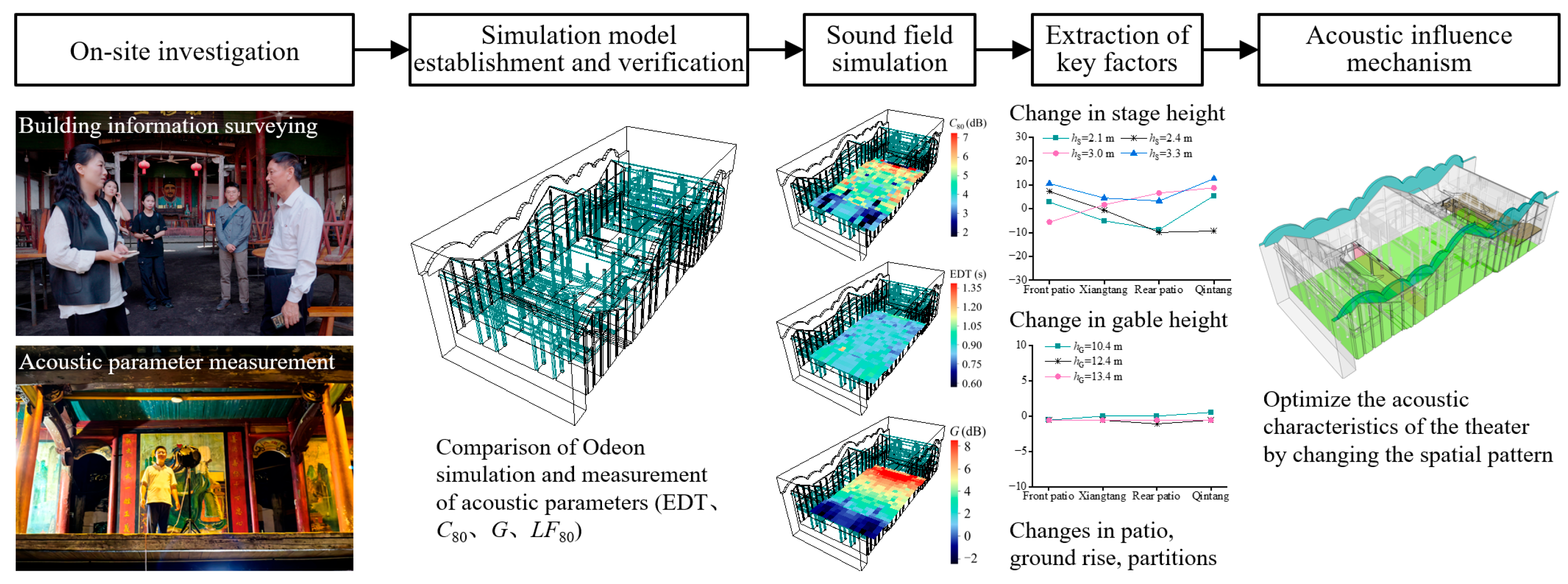
This study adopts a mature method system based on the acoustic research of historical buildings [5,15,28], following the technical route of “on-site survey and mapping—model construction and calibration—sound field simulation and mechanism analysis” (Figure 1). First, the building’s form, materials, and detailed construction were systematically mapped. Second, impulse response testing was conducted under empty-seat conditions, as specified in ISO 3382-1:2009 [35], to obtain the current acoustic parameter benchmarks. A three-dimensional model was constructed in ODEON and calibrated using the just noticeable difference (JND). Finally, a full-seat condition was simulated on the validated model. A sensitivity analysis of five key spatial elements was conducted using the control variable method. The influencing mechanisms were analyzed by combining sound ray distribution, early reflection sequences, and three-dimensional reflection paths. Perceptible thresholds were then linked to actionable strategies to develop an acoustic optimization strategy.

2.2. Site Research and Architectural Surveying

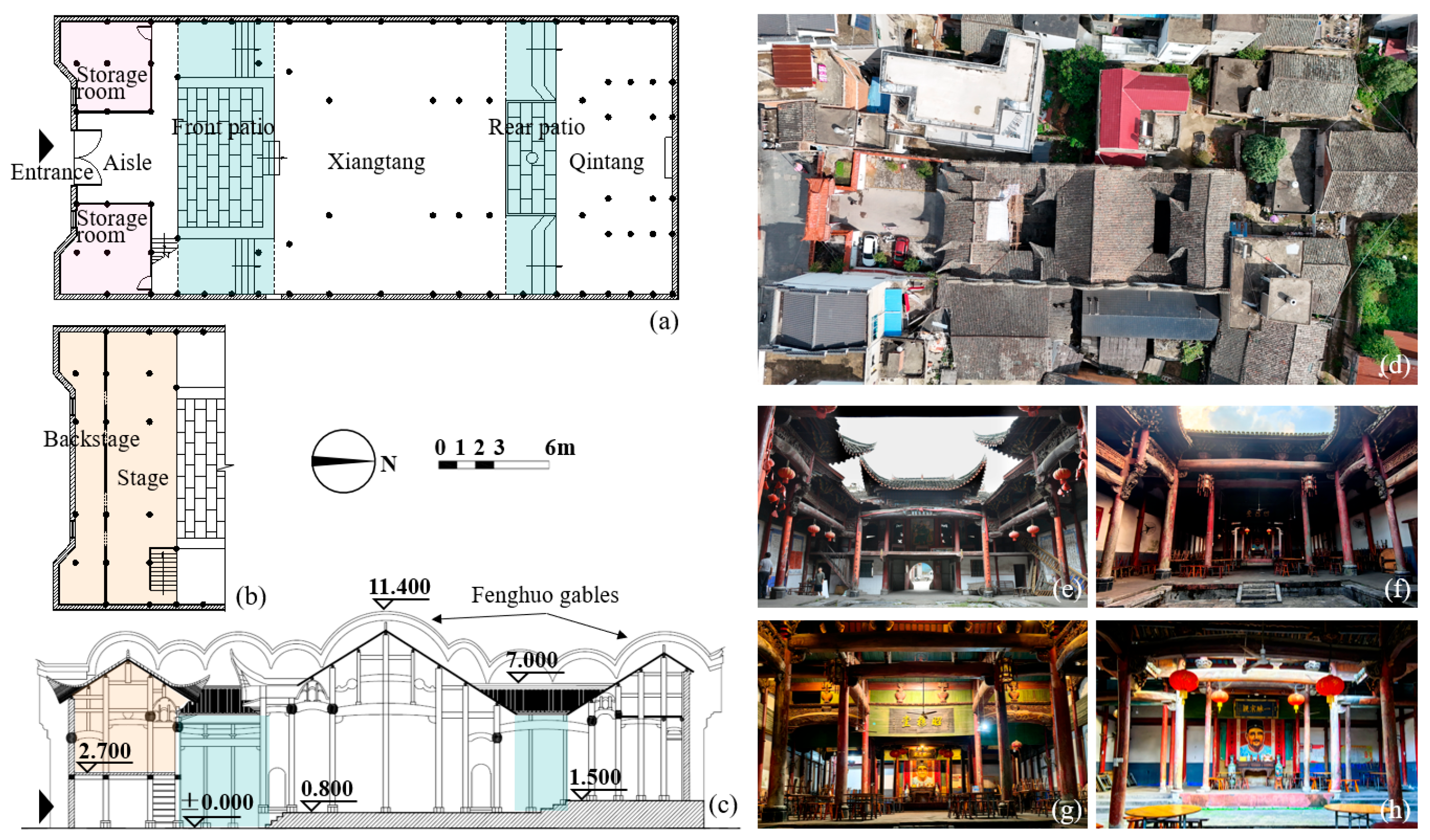
Zhaomutang was initially built during the Chongzhen period of the Ming Dynasty (1628–1644), and underwent two renovations in 1877 and 1996. It was designated a Jiangxi Provincial Cultural Relic Protection Unit in 2018. The architectural spatial structure follows the patriarchal ritual order, forming a precise vertical sequence along the central axis (Figure 2): from south to north, the stage, front patio, Xiangtang, rear patio, and Qintang form a classic “three-entry” layout. The stage, located at the southernmost end of the building, has a height of 2.7 m. The elevated space below also serves as the main entrance. The front patio extends the performance area with its open top and moderate scale. The Xiangtang is the core, boasting the most significant volume and the highest headroom, and is the primary viewing area for opera performances. With its relatively compact dimensions, the rear patio is a transitional space between the Xiangtang and the Qintang. The Qintang, situated at the highest elevation, is primarily used for ancestral tablets and family ceremonies. The rear patio and Qintang served as secondary audience areas during opera performances. The building’s two sides were connected by side rooms, each enclosed by a 35 m-long gable. Side corridors and courtyards connected each central space, optimizing ritual flow and acoustic transmission.
This study used a combination of a laser rangefinder and a tape measure to meticulously map the three-dimensional dimensions of each functional space in the theatre (Table 1) and the detailed dimensions of key components. Accuracy was verified by referencing historical documents such as the “Leping City Chronicles.” Zhaomutang utilizes a hybrid load-bearing system combining wooden beams with a masonry base. Major load-bearing components, such as columns, beams, and brackets, utilize mortise and tenon joints. Exterior and load-bearing walls are primarily constructed of grey brick, while the foundation rests on a stone base, enhancing the building’s overall stability and moisture resistance. The roof features a multi-sloped hip roof covered in grey tiles [36]. Exquisite wood carvings adorn wooden components, such as brackets, corbels, and lintels, embodying ancestral temple theatres’ distinctive architectural and esthetic harmony in northeast Jiangxi. The flooring is primarily paved with stone slabs and grey bricks, while the stage area features wooden flooring and guardrails.

2.3. Acoustic Parameter Measurement

To calibrate the simulation model and verify its accuracy, the impulse response of Zhaomutang under empty performance conditions was measured in accordance with ISO 3382-1:2009 [35]. The measurement adopted the interrupted sound source method and used the 1102 wireless building acoustic measurement system (AHAI, Hangzhou, China). The system includes an ISV 1101 acoustic analyzer, an AWA 14425 free-field microphone, a 2032A dodecahedral loudspeaker, and a 2044A power amplifier. All measuring equipment met the requirements of ISO 3382-1:2009 [35] for instrument accuracy, and the system was calibrated using a 2601 acoustic calibrator (AHAI, Hangzhou, China) prior to measurement. The signal source adopted a pink noise sequence. After the impulse response signal was acquired, it was imported into DIRAC software (v 7841) for acoustic parameter analysis. The sampling frequency was set to 44.1k Hz. To minimize environmental noise interference, measurements were conducted at night (23:00–02:00), and ambient temperature, humidity, and background noise (18.4–27.7 dB) in the 125–4k Hz frequency band were recorded.
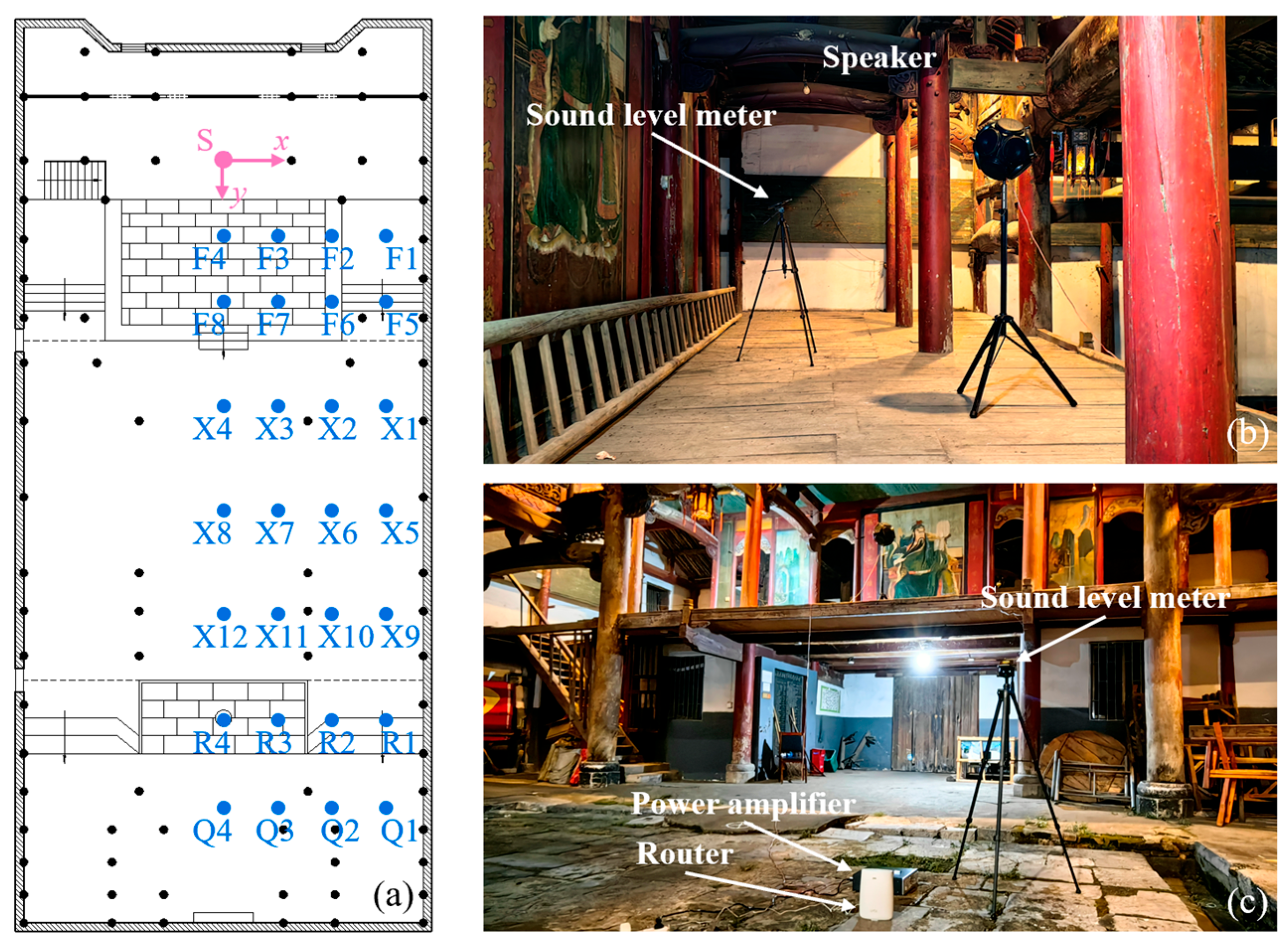
As shown in Figure 3, the sound source was placed in the center of the stage at a height of 1.6 m. 28 receiving points were arranged along one side of the central axis: front patio F1–F8, Xiangtang X1–X12, rear patio R1–R4, and Qintang Q1–Q4, at a height of 1.2 m. The distance between each receiving point and the nearest reflecting surface was no less than 1.4 m, and the distance between adjacent receiving points was no less than 2.0 m. The impulse response measurement duration for each receiving point was 4 s to ensure sufficient attenuation of sound energy. The measurement was repeated three times, and the average value was taken to improve the reliability of the results. Complete measured data are shown in Table A1 (Appendix A).

2.4. Model Construction and Calibration

Geometric modeling was completed in SketchUp (v 2022) and imported into ODEON (v 18.10) for acoustic simulation. The model was refined to include key reflective and scattering elements, including beams, columns, walls, roof, floor, and brackets. Its acoustic parameters were determined based on literature data, manufacturer’s manuals, and on-site visual calibration (Table 2, excluding audience members) [37,38]. Equivalent scattering coefficients were characterized to accurately represent decoration and carving details, ensuring computational accuracy while minimizing computational burden from over-modeling.
Regarding simulation parameter settings, the model used a regular mesh with a size of 1.0 m and a height of 1.2 m. The total number of sound rays was set to 126,064, and the impulse response length was set to 1500 ms to ensure sufficient sound energy attenuation. The geometric accuracy of the model was controlled within an edge length error range of 0.1 m. An omnidirectional point source model was employed, with a sound power level of 31 dB. The positions of the sound source and receiver points were consistent with the actual measured locations. The environmental parameters were set according to the actual measurement conditions, with a temperature of 26 °C and a relative humidity of 78%.
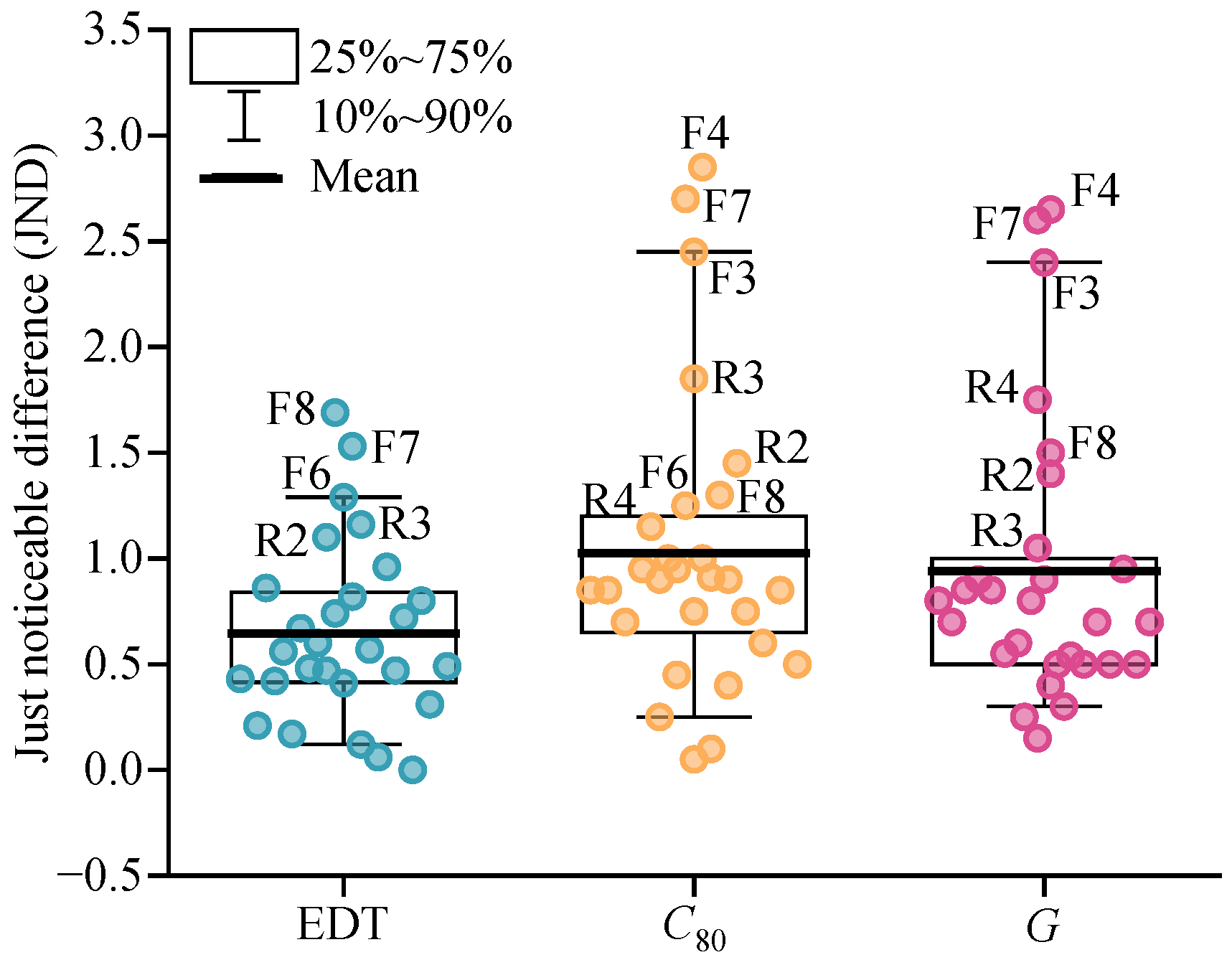
Four metrics, including early decay time (EDT), musical clarity (C80), intensity index (G), and lateral energy factor (LF80), were used to evaluate the acoustic quality of the theater auditorium, addressing the core requirements of opera performances for speech intelligibility and vocal richness. The model calibration process used the JND as a criterion to constrain perceptible deviations in each metric [39]. Small iterations of the absorption and scattering coefficients of a few detailed materials (such as roof tiles, carvings, and decorations) were performed without changing the geometry or key structural elements. Table 3 shows the JND values and simulation deviations for each acoustic parameter. Overall, the deviations between the simulated and measured values for the three parameters in the auditorium are all less than 1 JND, indicating high simulation accuracy.
Figure 4 further shows that the deviations at most measurement points are within 1 JND. Except for F7 and F8, the maximum EDT deviation at all measurement points does not exceed 1.5 JND; only a few measurement points at C80 and G exceed 2 JND. The front and rear atriums, where errors are relatively concentrated, have small spatial dimensions and open roofs, resulting in significant frequency fluctuations in the coupled sound field. Furthermore, high-frequency scattering and diffraction effects are simplified in the model, resulting in low simulation results in the high-frequency range. After scattering coefficient correction and mesh refinement, the ODEON model agrees well with the measured results, sufficient to support subsequent numerical experiments.

2.5. Simulation Experiment Setup

To identify key spatial elements influencing the acoustic performance of the theatre and their perceptibility thresholds, a sensitivity analysis experiment under full-audience conditions was designed based on the calibration model.
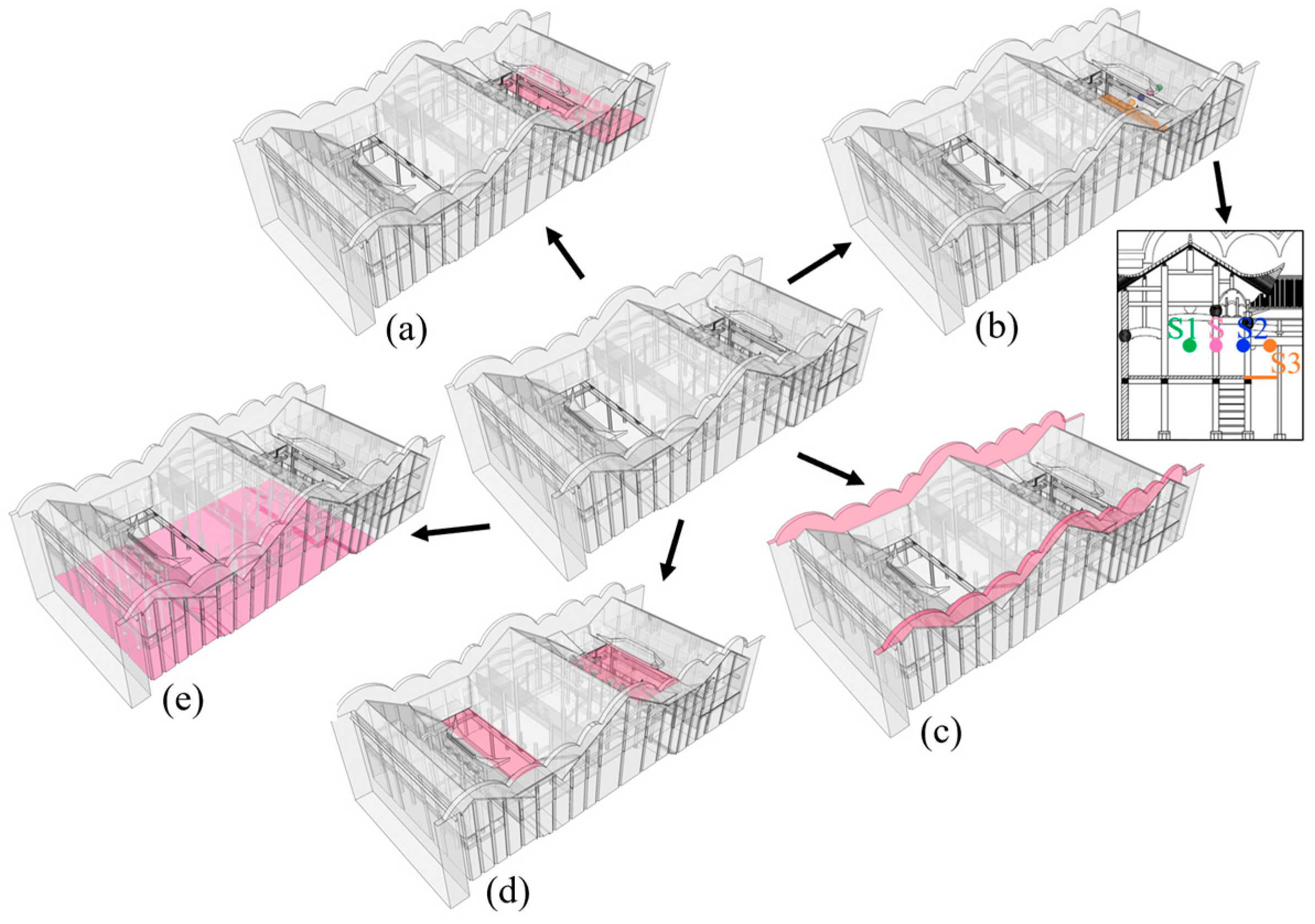
Patial elements and values (Figure 5): (a) stage height hS: 2.1–3.3 m, with a step length of 0.3 m; (b) performer positions: back area (S1), middle area (S), front area (S2), and extended area (S3), corresponding to the sequence of decreasing direct sound path and obstruction; (c) Fenghuo gable height hG: 10.4–13.4 m, with a step length of 1.0 m; (d) patio status: the front and rear patios are set to open or closed, forming four combinations; (e) ground elevation (hX, hQ): (0, 0), (0.4, 0.75) m, (0.8, 1.2) m, and (1.2, 2.25) m.
Simulation settings: The audience area is represented by an equivalent audience sound absorption layer; the receiving point layout is consistent with Section 2.3, and a grid sound receiving array with a spacing of 1.0 m is set up to obtain the spatial distribution map of the sound field; the number of sound ray reflections, impulse response length, environmental conditions, etc., are consistent with Section 2.4.
Analysis method and criterion: For each scenario, the partition means of EDT2, C80, 2, G2, and LF80, 4 is calculated, and the value is expressed as Δ = scenario − current situation. Perceptible changes were determined using the JND method. Early reflection sequences from 0 to 200 ms at typical locations and a three-dimensional representation of the first three reflection paths were output to reveal the physical mechanism. The redistribution of reflected sound energy and path reconstruction were analyzed by combining sound line density and incident angle.

3. Results

3.1. Current Acoustic Characteristics of the Zhaomutang

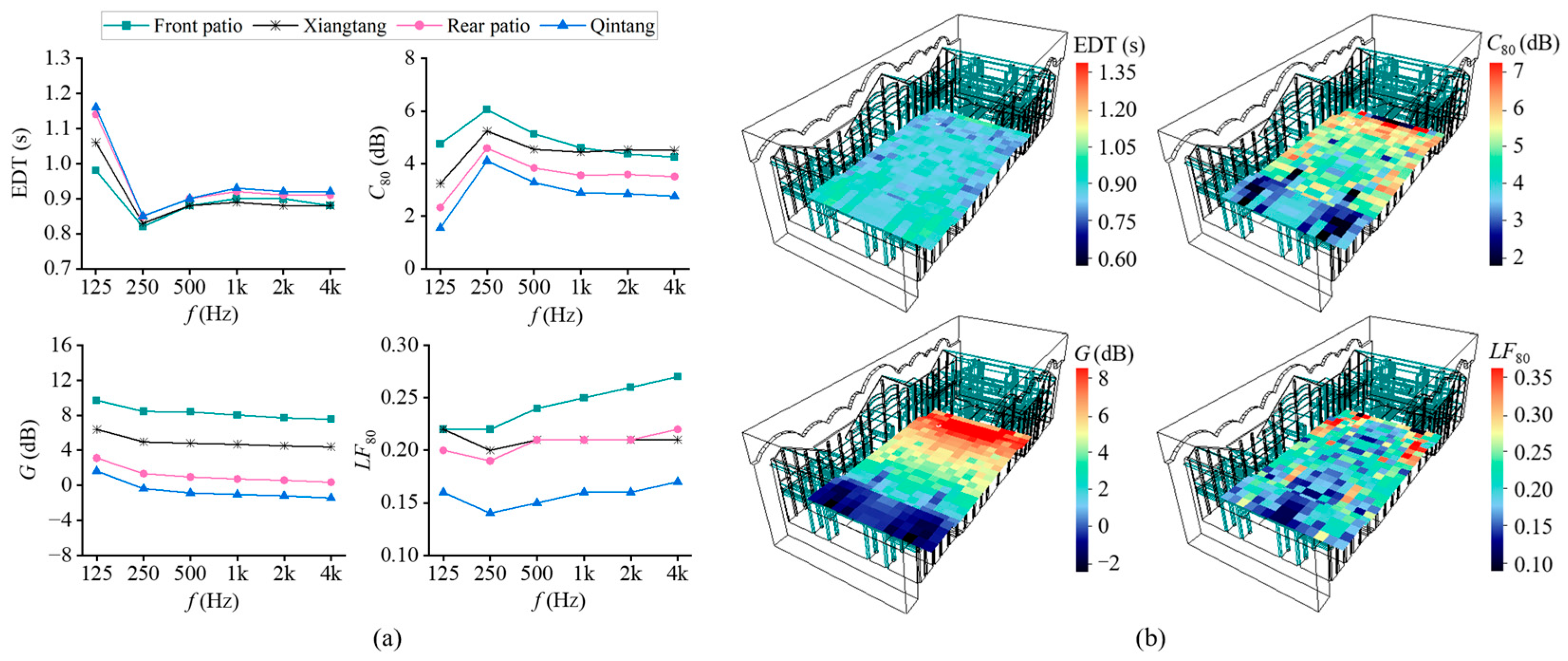
Figure 6 shows each functional area’s octave-band response and 1k Hz spatial distribution of the sound field. Overall, the Zhaomutang exhibits a hierarchical sound field pattern along its depth: high in the front, low in the back, strong in the sides, and weak in the middle. Affected by the openness of the patio and spatial coupling, the EDT is slightly higher at 125 Hz (1.00–1.15 s), gradually converges to 0.80–0.95 s from 250 Hz, and remains stable with frequency. This trend indicates that the depth sequence, beams, and decorative components suppress low-frequency smearing, meeting the requirements for transient dialogue clarity. C80 peaks at 250 Hz, reaching 5–6 dB in the front patio and Xiangtang, and 4–5 dB in the rear patio and Qintang. After 250 Hz, the difference between adjacent functional areas is within 1 dB, indicating that high-frequency scattering makes early sound energy uniform. G decreases slightly with frequency and decreases with depth, reflecting the dissipation of sound energy caused by distance attenuation and open coupling. LF80 increases slowly with frequency, with the most significant increase in the front patio (0.26–0.27) and the lowest in the Qintang (0.16–0.17).
The 1k Hz spatial distribution diagram shows that EDT is evenly distributed in the main performance area. C80 forms a continuous high band along the front edge of the stage, and on both sides of the front patio and the Xiangtang, indicating that the beams, side walls, and eaves system jointly provide sufficient early lateral reflections. G peaks in the front patio and then rapidly decays towards the rear. LF80 rises significantly in the front patio and the Xiangtang’s side corridors, relatively low in the central axis, and in Qintang. Taking into account multiple parameters, the front area of Zhaomutang (front patio and Xiangtang) achieves a coordinated match of “appropriate EDT and LF80, high C80, and ample G″ to ensure both speech intelligibility and the richness of vocals. The rear area (rear patio and Qintang) suffers from a long sound path, open coupling, and insufficient lateral reflections, resulting in the main shortcomings in loudness and envelopment. This constitutes the dominant gradient in the listening quality of the deep, complex space.

3.2. Effect of Spatial Elements on Theatre Acoustics
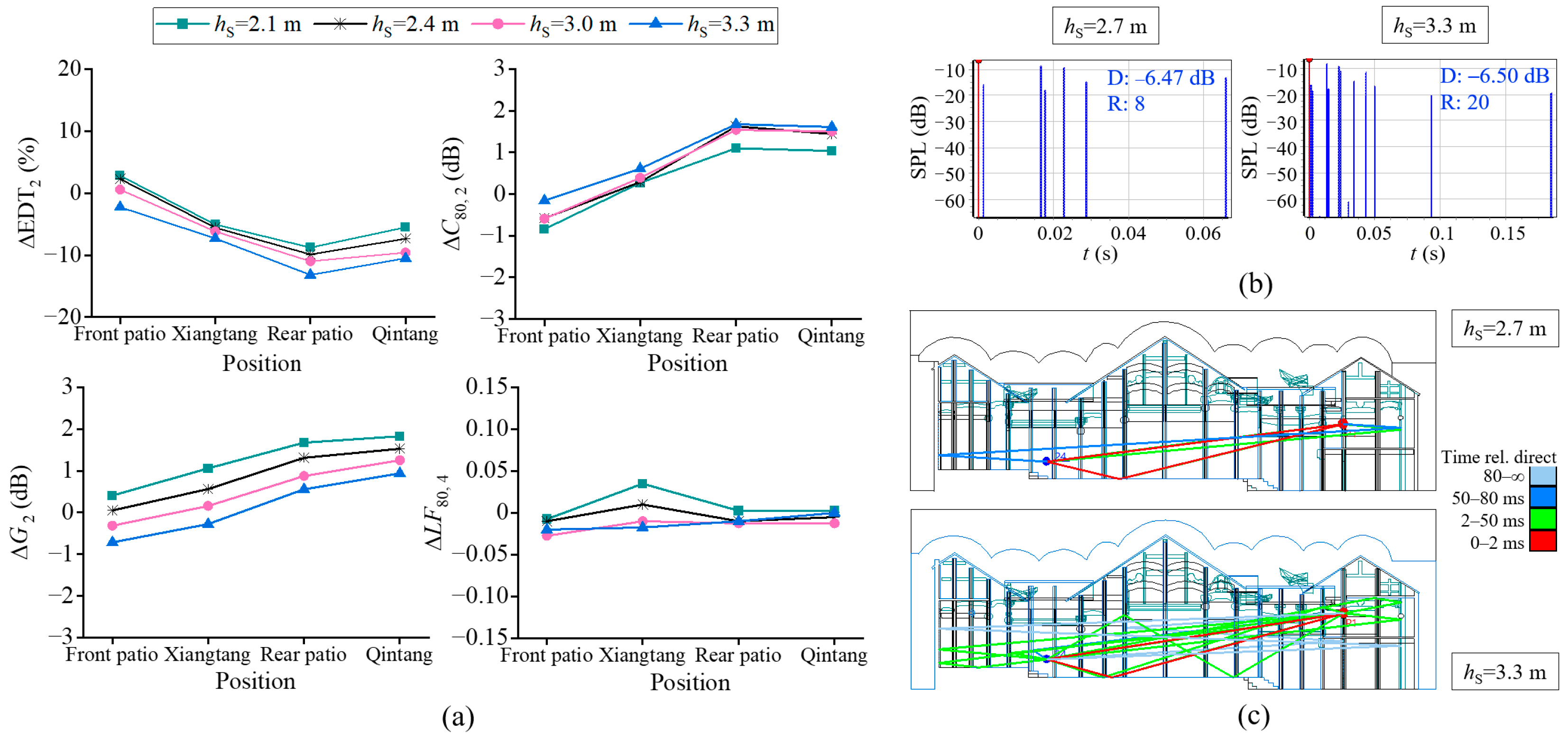
(1) Effect of stage height (hS) (Figure 7)
Based on the current hS = 2.7 m, after raising it to 3.0–3.3 m, the EDT2 of the rear patio and the Qintang shortens by 10–15% (2–3 JND), C80, 2 increases by more than 1.5 dB (≥1.5 JND), and G2 increases by about 1.0 dB (≈1 JND). The C80, 2 and G2 of the front patio and the Xiangtang are close to zero or slightly decrease (both below JND). The overall sensitivity of LF80, 4 is low, with only a slight increase of about 0.035 (<JND) in the Xiangtang at hS = 2.1 m. The sequence and path of early reflections reveal its mechanism: when hS = 3.3 m, the number of reflections at point R4 in the rear patio increases from 8 to 20 within 0–200 ms, with the gain mainly concentrated in the two time periods of 2–50 ms and 80–200 ms. The early sound energy formed by the beams, Side walls, and rear walls is reflected to the rear area at a steeper incident angle, which increases the proportion of early sound energy and compresses EDT2. The results show that raising the stage first improves the clarity and loudness of the rear area. At the same time, the effect on the front area is negligible, which is an energy redistribution of “improving the rear area and maintaining the front area”.
Figure 7. Effect of stage height (hS) on acoustics. (a) Variation in acoustic parameters of various functional spaces with hS (based on the current hS = 2.7 m); (b) R4 early reflection sound sequence diagram for hS of 2.7 m and 3.3 m, D represents the sound pressure level of direct sound, and R represents the amount of reflected sound; (c) R4 early reflection sound paths for hS of 2.7 m and 3.3 m.
Heritage 08 00515 g007
(2) Effect of the performer’s position (Figure 8)
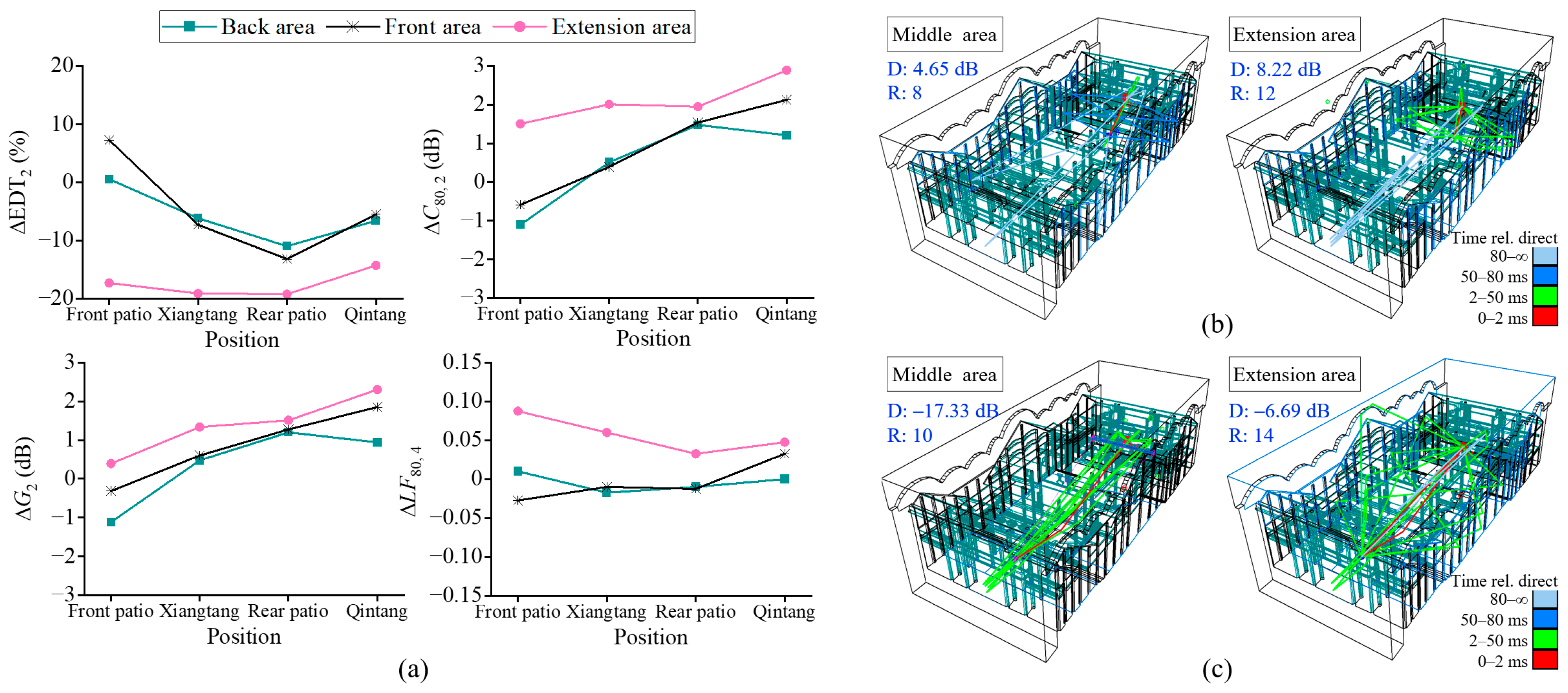
Moving from the back area (S1) to the front area (S2) and finally to the extended area (S3) significantly reconstructs the coupling relationship between direct sound and early reflections, and the impact on acoustic parameters is the strongest among the five elements. Taking the center stage as a benchmark, extended-stage performances experienced noticeable improvements in all four functional areas: EDT2 was generally shortened by 15–20%, C80, 2 increased by 1.5–2.9 dB, G2 gained over 1.5 dB in the rear patio and Qintang, and LF80, 4 rose by 0.03–0.09, indicating substantial improvements in clarity and fullness throughout the auditorium. Typical validation points included an increase in the direct sound level at F8 in the front patio from 4.65 dB to 8.22 dB, with the number of early reflections increasing from 8 to 12. The direct sound level at R4 in the rear patio jumped from −17.33 dB to −6.69 dB, with reflections increasing from 10 to 14. Extending the performance shortens the propagation distance, reduces the obstruction of the stage structure, and increases the multiple reflections of the beams and side walls. The early reflected sound energy accumulates significantly within 2–50 ms, resulting in a simultaneous increase in C80, 2 and G2 and a convergence of EDT2. In comparison, the front area (S2) has the second most significant improvement, while the back area (S1) decreases more than 1 dB in C80, 2, and G2 in the front patio. The above results show that the forward movement of the performers (especially S3) can achieve a perceptible gain in the sound quality of the entire hall without changing the boundary conditions of the theatre, and the improvement in the rear area is particularly significant.
Figure 8. Effect of performer position on acoustics. (a) Variation in acoustic parameters of various functional spaces with performer position (based on the middle area of the stage); (b) 3D paths of early reflections from F8 when the performer is located in the middle and extension areas; (c) 3D paths of early reflections from R4 when the performer is located in the middle and extension areas.
Heritage 08 00515 g008
(3) Effect of the height of the Fenghuo gable (hG) (Figure 9)
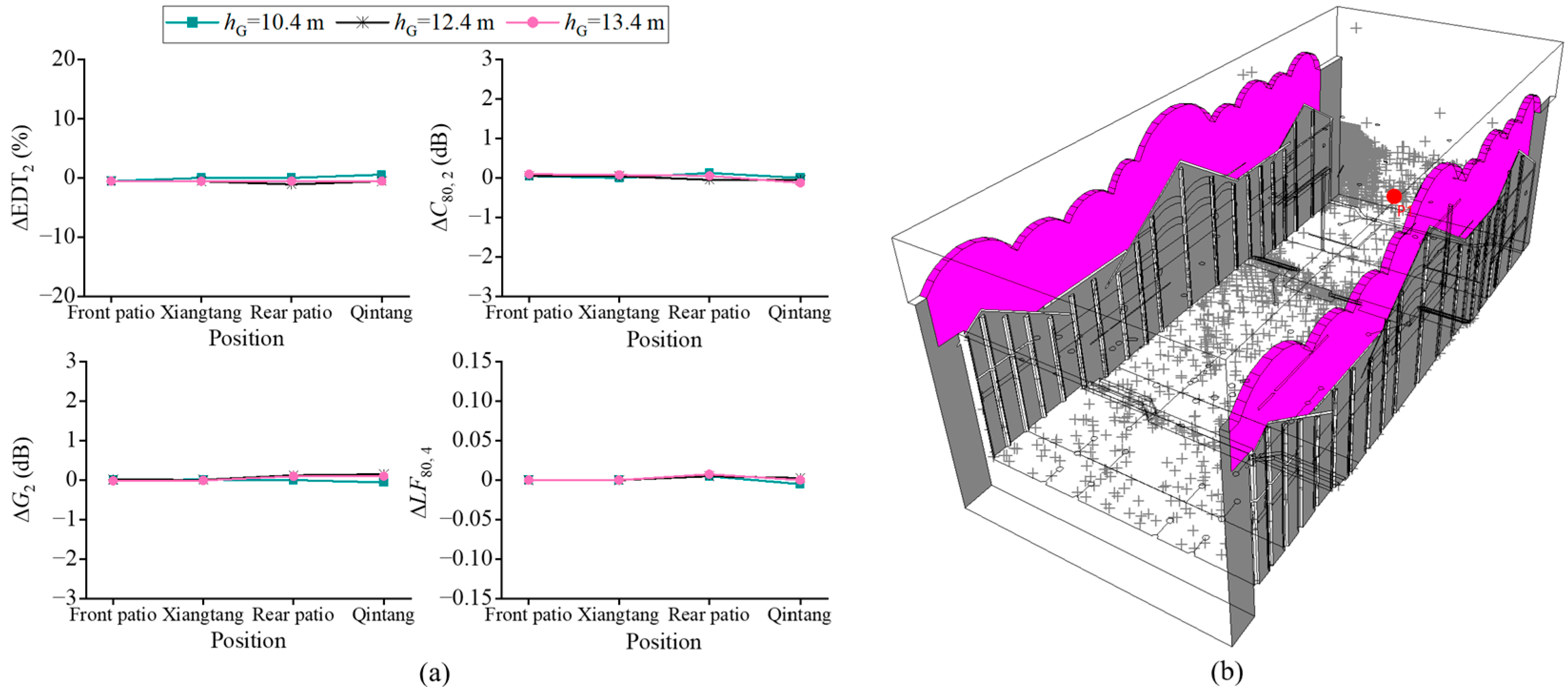
In the height range of 10.4–13.4 m, the change range of the four acoustic parameters in each functional area is far lower than the JND, and is challenging to detect subjectively. Reflection path analysis shows that when hG = 13.4 m, the first three reflected sound particles from the Fenghuo gable in the audience area are almost absent, and the reflected sound from the lower gable is denser and evenly distributed. Since the Fenghuo gable is far away from the sound source and the receiving point, the time it takes for the reflected sound to reach the receiving point is mostly outside 200 ms; at the same time, due to the obstruction of the eaves and the scattering of the beams, the geometric visibility is low, resulting in a minimal contribution to the clarity and loudness of the auditorium. Therefore, under the existing boundary conditions, simply raising the Fenghuo gable is challenging to form an effective early reflection intervention.
Figure 9. Effect of Fenghuo gables (hG) on acoustics. (a) Variation in acoustic parameters of various functional spaces with hG (based on hG = 11.4 m); (b) the first three reflection sound particles of the lower gable (grey) and Fenghuo gable (magenta) at hG =13.4m, other components are hidden in the figure, and the particle color is the same as the gable color.
Heritage 08 00515 g009
(4) Effect of the patio state (Figure 10)
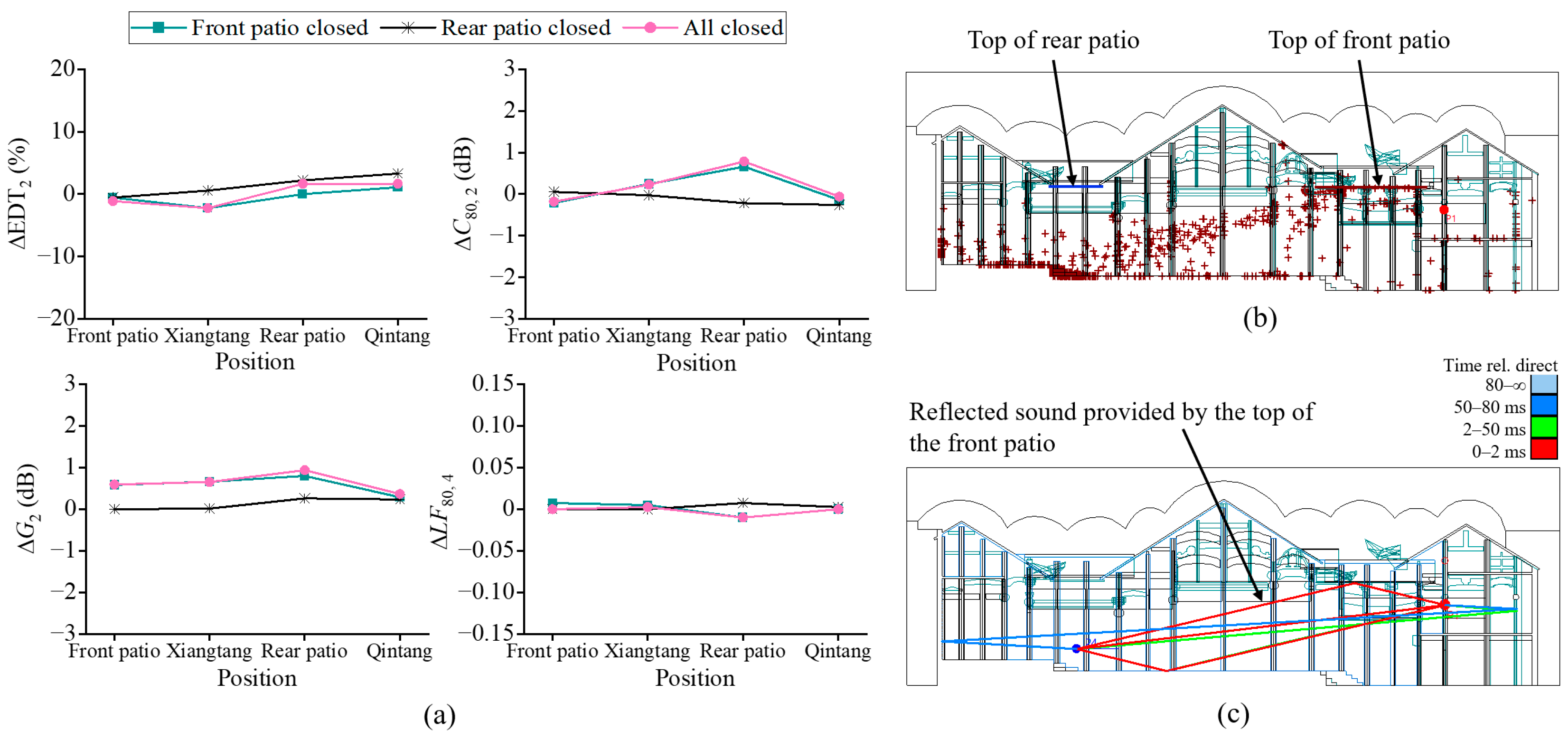
Overall, the patio state has a limited impact on the acoustics of the auditorium. EDT2 increases slightly along the depth (<3%, below JND). C80, 2 and G2 increase by 0.7–0.8 dB and 0.8–0.9 dB, respectively, (approaching JND) when the front and rear patios are closed. However, when only the rear patio is closed, the change is less than ±0.3 dB. LF80, 4 remains stable within ±0.01, indicating lateral envelopment is largely unaffected. Mechanically, the front patio closure creates an effective top boundary, allowing early reflections within 0–2 ms to bypass the beams and reach the rear patio, resulting in clarity and loudness gains close to JND. Because the additional reflections are primarily concentrated along the longitudinal axis rather than on either side, there is virtually no gain in lateral sound energy. Overall, covering the patio is not a decisive variable. However, it can be used slightly as a contextual measure to enhance speech intelligibility in the rear area during specific performances.
Figure 10. Effect of patio opening and closing on acoustics. (a) Variation in acoustic parameters of various functional spaces with patio opening and closing occur (based on the two patio openings); (b) the first three reflection sound particles from the top of the two patios, the particle color is the same as the top color; (c) the early reflection sound path from the top of the front patio.
Heritage 08 00515 g010
(5) Effect of ground elevation (hX, hQ) (Figure 11)
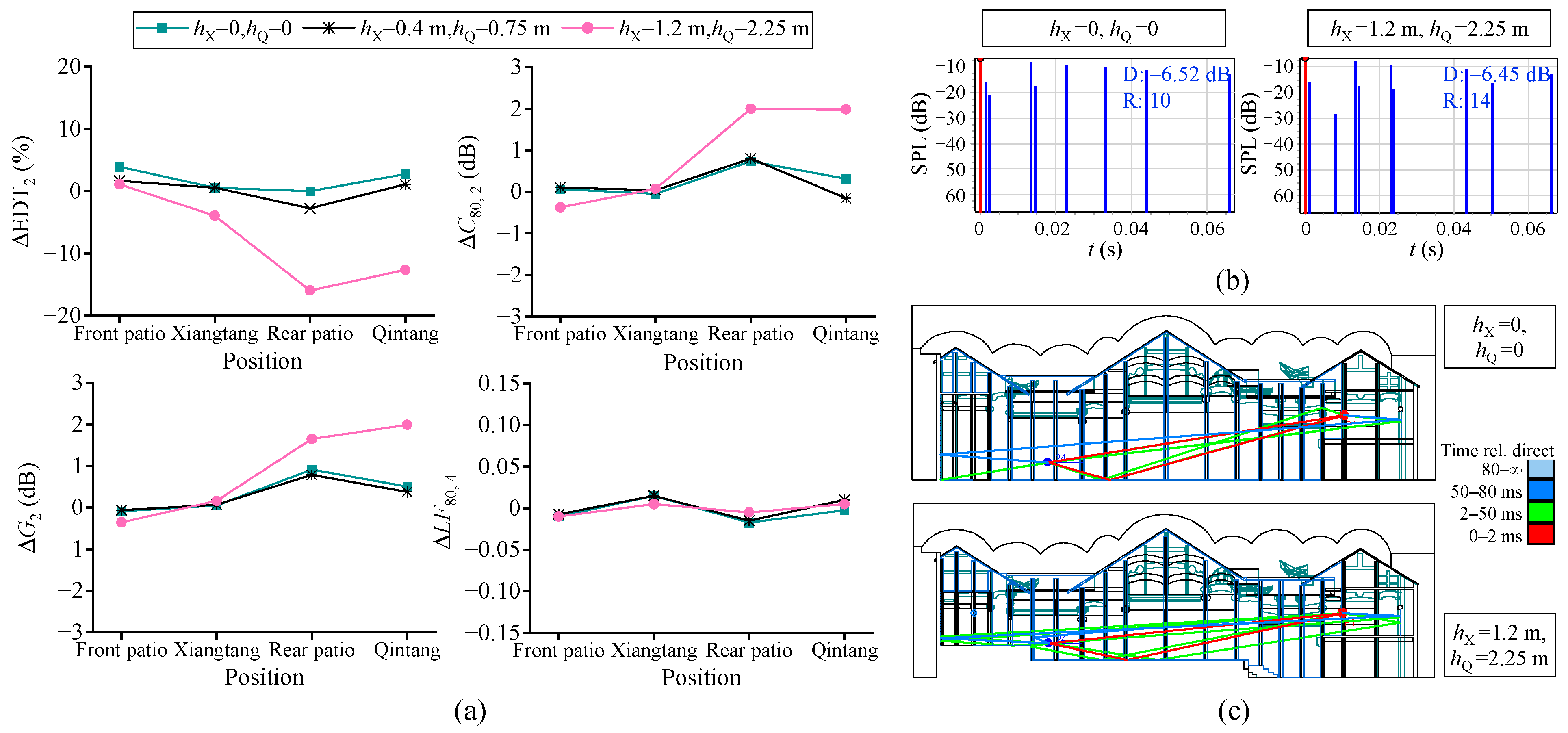
When the ground elevation of the Xiangtang and Qintang was raised to hX = 1.2 m and hQ = 2.25 m, the EDT2 of the rear patio and Qintang was shortened by 16% and 13%, respectively, C80, 2 increased by about 2.0 dB, and G2 gained 1.7–2.0 dB, all significantly exceeding JND. The front patio only experienced a slight decrease of 0.3–0.4 dB, reflecting the energy redistribution of “improvement in the rear area and maintenance in the front area”. The reflected sound sequence and path showed that the ground elevation hardly changed the direct sound level, but the number of reflected sounds within 0–80 ms increased from 10 to 14. After the ground elevation, the distance between the receiving point and the sound source decreased, the geometric visibility of the reflection points on the ground and the side walls increased, and the time duration of some reflection paths was shortened, which increased the proportion of early sound energy, manifested as an increase in C80, 2 and G2 and a decrease in EDT2. Because the additional reflections primarily form longitudinally along the central axis, LF80, 4 remained within ±0.02 in all zones. Therefore, raising the floor effectively improves Speech intelligibility and loudness in the rear area, with minimal impact on the sense of spatial envelopment.
Figure 11. Effects of ground rise in Xiangtang and Qintang (hX, hQ) on acoustics. (a) Variation in acoustic parameters of various functional spaces with ground rise (based on hX = 0.8 m, hQ = 1.5 m); (b) R4 early reflection sound sequence diagram for (hX, hQ) are (0, 0) and (1.2 m, 2.25 m), D represents the sound pressure level of direct sound, and R represents the amount of reflected sound; (c) R4 early reflection sound paths for (hX, hQ) are (0, 0) and (1.2 m, 2.25 m).
Heritage 08 00515 g011

4. Discussion

(1) Sound field pattern and functional adaptation mechanism
The front patio and Xiangtang of Zhaomutang, with their moderate reverberation time, high speech intelligibility, and sufficient sound energy intensity, simultaneously meet the dual requirements of the Gan Opera’s dialogue clarity and vocal fullness at the acoustic level. The rear patio and Qintang, however, exhibit insufficient loudness and a lack of sound field immersion due to the extended sound propagation path and the dissipation of sound energy in the open space. This acoustic structure is highly consistent with the ritual spatial sequence, indicating that the ancestral temple theatre is not a simple functional superposition, but rather a product of the coupling of ritual, structure, and acoustic performance systems. Compared to traditional Western stone open-air theatres [40] or modern enclosed halls [41], this type of theatre achieves a dynamic balance of sound energy diffusion and zoning in the mid-to-low frequency range through the coupling of longitudinal sequence and semi-open atrium, demonstrating unique regional adaptability.
(2) Mechanism and optimization path of spatial elements
The sensitivity analysis of spatial elements (Table 4) further clarifies the key path of acoustic control. The geometric relationship between performers and audience has been proven to be the most significant factor: moving performers forward (especially extending them out of the stage) can effectively shorten the sound path, increase the early reflected sound density, and significantly converge the EDT2 in the rear zone, with C80, 2 and G2 rising synchronously; moderately raising the stage and audience area ground can optimize the distribution of sound energy in the depth direction by improving the geometric path of direct sound and early reflected sound. In contrast, structural interventions such as covering the atrium and raising the fire wall are limited by the reflection time path and geometric visibility, and their contribution to early sound energy is limited, with parameter changes generally less than 1 JND. These findings echo the conclusion of Pérez-Aguilar et al. [23] that “geometric fine-tuning is better than structural changes” observed in the renovation of historical theatres, and also provide empirical support from local Chinese cases for the “low-intervention” acoustic restoration concept advocated by the Bevilacqua team [14,40].
(3) Living heritage protection strategies and research limitations
Based on the triple considerations of acoustic perception threshold, reversibility of cultural relics, and engineering feasibility, this study proposes an acoustic maintenance strategy of “scheduling priority—reversible intervention.” Specifically, performance scheduling (such as moving performers forward) and low-intrusion geometric adjustments (such as temporary stages) should be prioritized, while permanent structural changes should be treated with caution; for the shortcomings of the rear area LF80, 4, it is recommended to deploy reversible lightweight reflective components in the side corridors to achieve precise compensation for the sense of enclosure. This study also has several limitations: First, the simplification of high-frequency scattering components such as brackets and wood carvings in the model using equivalent coefficients may underestimate the diffusion effect of high-frequency sound energy; second, the study only focuses on the Zhaomutang as a single case and has not systematically compared the potential impact of different architectural styles, audience attendance rates, and the types of plays on the sound field. These variables will be important directions for future research.

5. Conclusions

This study, within an integrated research framework of “on-site measurement—model calibration—sensitivity analysis—mechanism analysis,” systematically reveals the acoustic characteristics and influencing mechanisms of ancestral temple theatres in northeast Jiangxi. The study reveals that this type of theatre creates a hierarchical sound field pattern along its depth. The front patio and the Xiangtang maintain the fullness of the singing while ensuring the clarity of dialogue through the coordinated configuration of parameters such as EDT, C80, G, and LF80. In contrast, the rear patio and the Qintang exhibit significant deficiencies in loudness and immersion due to sound energy attenuation and insufficient lateral reflection. Sensitivity analysis of spatial elements further reveals that reconstructing the geometric relationship between performers and the audience is the most effective acoustic control method: moving performers forward, moderately raising the stage, and raising the audience area floor all significantly improve the acoustic performance of the rear area, with parameter changes generally exceeding those of the JND. In contrast, structural interventions such as adding a patio cover and raising the Fenghuo gables have relatively limited effects.
Based on these findings, this study proposes a “scheduling priority—reversible intervention” acoustic maintenance strategy for living heritage. This strategy combines performance scheduling with reversible physical interventions to achieve precise improvement in acoustic performance while maintaining the authenticity of the historical building. The significant value of this study lies not only in revealing the specific acoustic mechanisms of ancestral temple theatres through case analysis but, more importantly, in establishing a transferable research paradigm: integrating quantitative acoustic analysis, cultural heritage protection theory, and adaptive intervention strategies, providing a methodological framework for the acoustic diagnosis and protective renewal of traditional performance spaces. Future research will combine subjective listening experiments and binaural recording technology to establish a mapping relationship between subjective and objective perceptions, thereby further verifying and refining the conclusions of this study through multi-case comparisons.

Author Contributions

Conceptualization, W.X.; methodology, W.X.; validation, W.X. and Z.H.; formal analysis, J.L.; investigation, W.X., J.L. and K.M.; resources, Z.H.; writing—original draft preparation, W.X.; writing—review and editing, J.L.; visualization, Z.L. and X.L.; supervision, Z.L. and X.L.; project administration, W.X.; funding acquisition, W.X. and K.M. All authors have read and agreed to the published version of the manuscript.

Funding

This research was funded by the MOE (Ministry of Education in China) Liberal arts and Social Sciences Foundation [grant numbers 25YJCZH307]; the Jiangxi Province Social Science Fund Project [grant numbers 25YS25]; the Academic Research Project of Social Science Academic Societies of National Social Science Foundation of China [grant number 24SGC090]; and the Nanchang University Doctoral Research Start-up Fund [grant number 28770675].

Data Availability Statement

The datasets used and analyzed during the current study are available from the corresponding author on reasonable request.

Conflicts of Interest

The authors declare no conflicts of interest.

Appendix A

Table A1. Measurement results (average of three measurements) of Zhaomutang acoustic parameters.
Receiving PointEDT (s)C80 (dB)G (dB)
500 Hz1k Hz500 Hz1k Hz500 Hz1k Hz
F11.0 1.1 1.3 1.7 7.1 6.6
F21.0 1.1 0.0 0.5 6.7 6.2
F31.1 1.1 −0.5 0.0 6.8 6.2
F41.0 1.1 −0.3 0.1 6.9 6.4
F51.0 1.1 4.2 4.7 9.4 9.0
F61.0 1.1 4.6 5.1 9.9 9.5
F71.1 1.1 4.5 5.0 10.0 9.7
F81.0 1.1 4.6 5.0 10.1 9.7
X11.0 1.1 3.4 4.0 8.2 7.8
X21.0 1.1 3.4 3.9 8.3 7.8
X31.0 1.1 3.0 3.6 8.3 7.8
X41.1 1.1 2.8 3.3 8.1 7.5
X51.0 1.1 2.9 3.4 7.4 6.8
X61.0 1.1 −0.1 0.3 5.7 5.0
X71.0 1.1 3.3 3.9 7.9 7.3
X81.1 1.1 2.0 2.6 7.0 6.4
X91.0 1.1 2.6 3.2 6.5 5.9
X101.0 1.1 2.2 2.7 6.3 5.7
X111.0 1.1 2.7 3.2 6.7 6.1
X121.0 1.1 1.6 2.2 6.0 5.3
R11.0 1.1 1.5 2.0 4.6 3.8
R21.0 1.1 0.2 0.5 3.7 2.9
R31.0 1.1 2.0 2.6 4.9 4.2
R41.0 1.1 2.4 2.9 5.2 4.6
Q11.0 1.1 0.5 1.0 3.3 2.4
Q21.0 1.1 0.2 0.5 3.2 2.3
Q31.0 1.1 1.0 1.5 3.8 3.1
Q41.0 1.1 1.2 1.6 3.9 3.1

References

  1. Hu, Q.; Yang, P.; Ma, J.; Wang, M.; He, X. The Spatial Differentiation Characteristics and Influencing Mechanisms of Intangible Cultural Heritage in China. Heliyon 2024, 10, e38689. [Google Scholar] [CrossRef] [PubMed]
  2. Zhu, J.; Kang, J.; Ma, H.; Wang, C. Grounded Theory-Based Subjective Evaluation of Traditional Chinese Performance Buildings. Appl. Acoust. 2020, 168, 107417. [Google Scholar] [CrossRef]
  3. Zhang, J. A Discussion on Strategies for Protecting and Inheriting Traditional Construction Skills of Leping Ancient Stage. Sichuan Drama 2020, 1, 155–157. [Google Scholar]
  4. Xu, J.; Zhang, X. The Study of Leping Ancient Stage from the Perspective of Folk Belief. Art Des. 2015, 1, 83–85. [Google Scholar] [CrossRef]
  5. Xiong, W.; Ma, K.; Liu, J.; Wang, X.; Leng, H. Acoustic adaptation mechanism of a traditional ancestral temple theatre in northeast Jiangxi. NPJ Herit. Sci. 2025, 13, 446. [Google Scholar] [CrossRef]
  6. Kong, Q. An Analysis of the Band Evolution and Accompanying Characteristics of Tanqu in Gan Opera. Chin. Theatre 2020, 8, 94–96. [Google Scholar]
  7. Gao, T.; Kuang, L.; Jia, L. Chinese Aesthetic Features of Traditional Costumes in Gan Opera. J. Educ. Humant. Soc. Sci. 2023, 11, 194–200. [Google Scholar] [CrossRef]
  8. Yang, L. Research on Performance Form of Gan Opera and Ancient Stage in Leping. Art Des. 2013, 8, 92–93. [Google Scholar] [CrossRef]
  9. Peng, R.; Su, C.; Xu, W. Simulation Research on Acoustic Environment of Typical Ancestral Temple Theater with Odeon Software: A Case Study of Wu’s Ancestral Temple in Hong’an County. J. Wuhan Inst. Technol. 2020, 42, 91–96. [Google Scholar] [CrossRef]
  10. Zhao, Y.; Liu, D.; Wu, S. The Acoustics of the Traditional Theater in South China: The Case of Wanfu Theatre. In Proceedings of the 2011 International Conference on Electric Technology and Civil Engineering, Lushan, China, 22–24 April 2011; pp. 3599–3602. [Google Scholar] [CrossRef]
  11. Mu, J.; Wang, T.; Zhang, Z. Research on the Acoustic Environment of Heritage Buildings: A Systematic Review. Buildings 2022, 12, 1963. [Google Scholar] [CrossRef]
  12. Kaleris, K.; Moiragias, G.; Hatziantoniou, P.; Mourjopoulos, J. Time-Frequency Diffraction Acoustic Modeling of the Epidaurus Ancient Theatre. Acta Acust. 2023, 7, 3090–3099. [Google Scholar] [CrossRef]
  13. Zhu, X.; Oberman, T.; Aletta, F. Defining Acoustical Heritage: A Qualitative Approach Based on Expert Interviews. Appl. Acoust. 2024, 216, 109754. [Google Scholar] [CrossRef]
  14. Bevilacqua, A.; Iannace, G. From Discoveries of 1990s Measurements to Acoustic Simulations of Three Sceneries Carried Out Inside the San Carlo Theatre of Naples. J. Acoust. Soc. Am. 2023, 154, 66–80. [Google Scholar] [CrossRef]
  15. Zhang, D.; Ren, G.; Cheng, F.; Xiao, D.; Zhang, M.; Kang, J. Sound field characteristics and influencing factors of traditional Chinese interlocked timber-arched covered bridges. J. Acoust. Soc. Am. 2025, 158, 1156–1176. [Google Scholar] [CrossRef] [PubMed]
  16. Brian, F.; Cécile, C.; Stéphanie, P.; Julien, D. The Past Has Ears at Notre-Dame: Acoustic digital twins for research and narration. Digit. Appl. Archaeol. Cult. Herit. 2024, 34, e00369. [Google Scholar] [CrossRef]
  17. Psarras, S.; Hatziantoniou, P.; Kountouras, M.; Tatlas, N.A.; Mourjopoulos, J.N.; Skarlatos, D. Measurements and Analysis of the Epidaurus Ancient Theatre Acoustics. Acta Acust. United Acust. 2013, 99, 30–39. [Google Scholar] [CrossRef]
  18. D’Orazio, D.; De Cesaris, S.; Morandi, F.; Garai, M. The Aesthetics of the Bayreuth Festspielhaus Explained by Means of Acoustic Measurements and Simulations. J. Cult. Herit. 2018, 34, 151–158. [Google Scholar] [CrossRef]
  19. Mazzarella, L.; Cairoli, M. Petrarca Theatre: A Case Study to Identify the Acoustic Parameters Trends and Their Sensitivity in a Horseshoe Shape Opera House. Appl. Acoust. 2018, 136, 61–75. [Google Scholar] [CrossRef]
  20. Tronchin, L.; Yan, R.; Bevilacqua, A. The Only Architectural Testimony of an 18th Century Italian Gordonia-Style Miniature Theatre: An Acoustic Survey of the Monte Castello di Vibio Theatre. Appl. Sci. 2023, 13, 2210. [Google Scholar] [CrossRef]
  21. Büttner, C.; Yabushita, M.; Parejo, A.S.; Morishita, Y.; Weinzierl, S. The Acoustics of Kabuki Theaters. Acta Acust. United Acust. 2019, 105, 1105–1113. [Google Scholar] [CrossRef]
  22. Tronchin, L.; Bevilacqua, A. The Royal Tajo Opera Theatre of Lisbon: From Architecture to Acoustics. J. Acoust. Soc. Am. 2023, 153, 400–414. [Google Scholar] [CrossRef]
  23. Pérez-Aguilar, B.; Quintana-Gallardo, A.; Gasent-Blesa, J.L.; Guillén-Guillamón, I. The Acoustic and Cultural Heritage of the Banda Primitiva de Llíria Theater: Objective and Subjective Evaluation. Buildings 2024, 14, 2329. [Google Scholar] [CrossRef]
  24. Wang, J. Introduction of Chinese Traditional Theatrical Buildings Part A: History. J. Tongji Univ. Nat. Sci. 2002, 2, 27–34. [Google Scholar]
  25. Wang, J.; Mo, F. Quantitative Analyses of the Acoustic Effect of the Pavilion Stage in Traditional Chinese Theatres. Appl. Acoust. 2013, 32, 290–294. [Google Scholar]
  26. Wang, J. Acoustics of Traditional Chinese Courtyard Theatrical Buildings. Acta Acust. 2015, 40, 317–330. [Google Scholar] [CrossRef]
  27. Wen, M.; Ma, H.; Yang, J.; Yang, L. Main Acoustic Attributes and Optimal Values of Acoustic Parameters in Peking Opera Theaters. Build. Environ. 2022, 217, 109041. [Google Scholar] [CrossRef]
  28. Zhang, D.; Feng, Y.; Zhang, M.; Kang, J. Sound Field of a Traditional Chinese Palace Courtyard Theatre. Build. Environ. 2023, 230, 109741. [Google Scholar] [CrossRef]
  29. Yang, Y.; Gao, C.; Ding, H. A Preliminary Study on the Classification of Pre-Modern Shanxi Opera Stages Based on Their Acoustic Characteristics. Hist. Stud. Nat. Sci. 2016, 35, 175–190. [Google Scholar] [CrossRef]
  30. Wang, Y.; Mao, W.; Zhang, H. Acoustics of Traditional Courtyard Theatre of Yue Opera. Huazhong Archit. 2024, 42, 56–61. [Google Scholar] [CrossRef]
  31. Chung, F.M.Y. Safeguarding Traditional Theatre Amid Trauma: Career Shock Among Cultural Heritage Professionals in Cantonese Opera. Int. J. Herit. Stud. 2022, 28, 1091–1106. [Google Scholar] [CrossRef]
  32. Wen, Q.; Zhong, J. The Living Inheritance and Moving Progress of Contemporary Cantonese Opera from the Perspective of Communication. Commun. Humanit. Res. 2023, 17, 52–58. [Google Scholar] [CrossRef]
  33. Cai, R. Entertainment and Worship Within One Temple: Research on Zhaomu Ancestry Temple with Theatre in Leping, Jiangxi Province. Huazhong Archit. 2016, 34, 174–178. [Google Scholar] [CrossRef]
  34. Leng, H.; Xiong, W.; Zhou, B. The Sound Quality Characteristics of the Gan Opera Ancestral Temple Theater Based on Impulse Response: A Case Study of Zhaomutang in Leping, Jiangxi Province. Buildings 2025, 15, 986. [Google Scholar] [CrossRef]
  35. ISO 3382-1:2009; Measurement of Room Acoustic Parameters. International Organization for Standardization: Geneva, Switzerland, 2009.
  36. Xu, J.; Zhang, X. On the Aesthetic Value of the Ancient Stage in Leping. Art Obs. 2020, 5, 65–66. [Google Scholar]
  37. Zhang, D.; Kong, C.; Zhang, M.; Meng, Q. Courtyard Sound Field Characteristics by Bell Sounds in Han Chinese Buddhist Temples. Appl. Sci. 2020, 10, 1279. [Google Scholar] [CrossRef]
  38. Wu, S. Architectural Acoustics Design Principles, 2nd ed.; China Architecture & Building Press: Beijing, China, 2019. [Google Scholar]
  39. Martellotta, F. The Just Noticeable Difference of Center Time and Clarity Index in Large Reverberant Spaces. J. Acoust. Soc. Am. 2010, 128, 654–663. [Google Scholar] [CrossRef] [PubMed]
  40. Bevilacqua, A.; Fuchs, W. Digital Soundscape of the Roman Theatre of Gubbio: Acoustic Response from Its Original Shape. Appl. Sci. 2023, 13, 12097. [Google Scholar] [CrossRef]
  41. Prodi, N.; Pompoli, R.; Martellotta, F.; Sato, S. Acoustics of Italian Historical Opera Houses. J. Acoust. Soc. Am. 2015, 138, 769–781. [Google Scholar] [CrossRef] [PubMed]
Figure 1. Research technical route, illustrating the complete process of field investigation, acoustic measurement, model building and calibration, simulation experiments, and mechanism analysis.
Heritage 08 00515 g001
Figure 2. Technical drawings and photos of the Zhaomutang. (a) Ground floor plan; (b) second floor plan; (c) sectional view; (d) aerial view; (e) stage; (f) front patio; (g) Xiangtang; (h) rear patio and Qintang.
Heritage 08 00515 g002
Figure 3. Acoustic parameter measurement. (a) Distribution of sound sources and measuring points; (b) instrument settings on stage; (c) instrument settings in the auditorium.
Heritage 08 00515 g003
Figure 4. Differences between simulated and measured values of acoustic parameters at each receiving point. The scattered points represent the single point deviation, and the box plot shows the difference distribution statistics.
Heritage 08 00515 g004
Figure 5. Schematic diagram of changes in spatial elements. (a) Stage height; (b) performer position; (c) Fenghuo gables; (d) patio open or closed; (e) ground rises.
Heritage 08 00515 g005
Figure 6. Zhaomutang sound field simulation results. (a) Spectral distribution curves of acoustic parameters of each functional space; (b) sound field (1k Hz) spatial distribution in the auditorium.
Heritage 08 00515 g006
Table 1. Basic dimensions of each subspace of the Zhaomutang theatre. (a) The width of the patio opening is 8.7 m, and the total width of the side corridor is 6 m; (b) here is a sloping roof, with a lowest point of 6.2 m and a highest point of 9.5 m; (c) the width of the patio opening is 6.2 m, and the total width of the side corridor is 8.5 m.
SubspaceEast–West
Width (m)
North–South
Width (m)
Net Height
(m)
Interior Volume
(m3)
Elevation
(m)
Stage14.73.83.2178.82.7
Backstage14.71.63.293.22.7
Front patio8.7 (6) a5.2//0
Xiangtang14.712.56.2 (9.5) b1414.60.8
Rear patio6.2 (8.5) c2.7//0.8
Qintang14.76.34.4407.51.5
Table 2. Sound absorption and reflection coefficients of material parameters in the model.
MaterialSound Absorption Coefficient Under the Following Frequencies (Hz)Scattering Coefficient
1252505001k2k4k
Clay tile roof0.010.010.010.010.020.020.50
Ceiling0.160.150.100.100.100.100.40
Beams and columns0.100.070.050.050.050.050.30
Bucket arch0.190.430.440.400.420.400.40
Plastering brick wall0.010.010.020.020.020.030.05
Wooden floor0.120.080.050.050.040.040.10
Wooden door0.160.150.100.100.100.100.10
Brick floor0.010.010.020.020.020.020.05
Audience0.300.450.520.620.610.560.70
Transmission interface1.001.001.001.001.001.000
Table 3. JND (according to ISO 3382-1:2009) for each acoustic parameter, and the deviation between simulated and measured values (the experimental equipment cannot measure LF80).
Acoustic ParameterJNDDeviation
EDT2 (500–1k Hz)5%0.78 JND
C80, 2 (500–1k Hz)1 dB0.13 JND
G2 (500–1k Hz)1 dB0.59 JND
LF80, 4 (125–1k Hz)0.05/
Table 4. Impact of five spatial elements on key acoustic parameters and their optimization priority.
Spatial ElementImpact on EDT2Impact on C80, 2/G2Impact on LF80, 4Optimization Priority
Performer position forwardSignificantSignificantModerateHigh
Stage height increaseMedium-HighMedium-HighSlightHigh
Audience floor elevationMedium-HighMedium-HighSlightHigh
Patio coveringSlightSlightSlightLow
Gable wall height increaseSlightSlightSlightLow
Disclaimer/Publisher’s Note: The statements, opinions and data contained in all publications are solely those of the individual author(s) and contributor(s) and not of MDPI and/or the editor(s). MDPI and/or the editor(s) disclaim responsibility for any injury to people or property resulting from any ideas, methods, instructions or products referred to in the content.