
Forecasting South Africa’s Coal-to-Clean Energy Transition: A Monte Carlo Simulation


Highlights
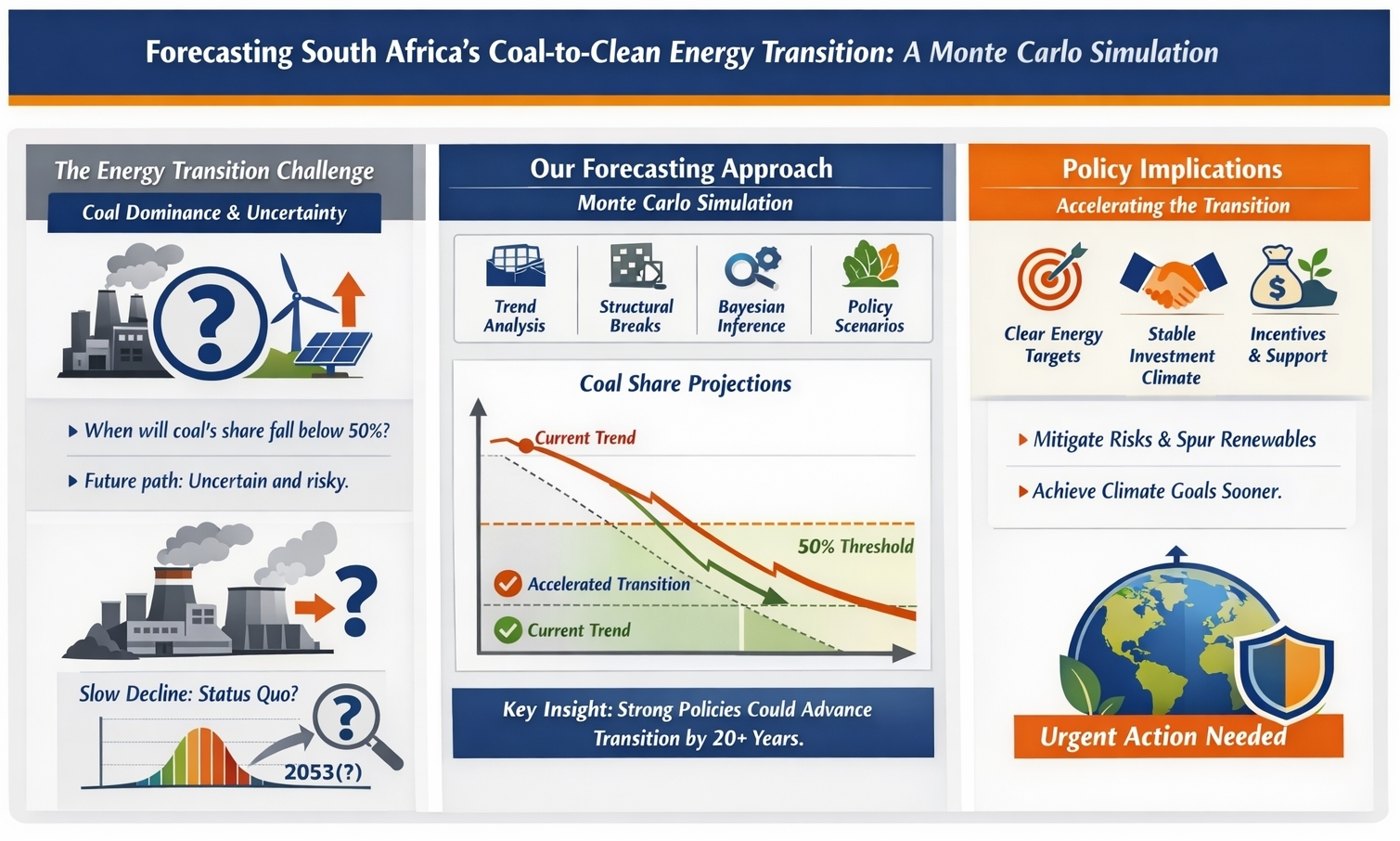
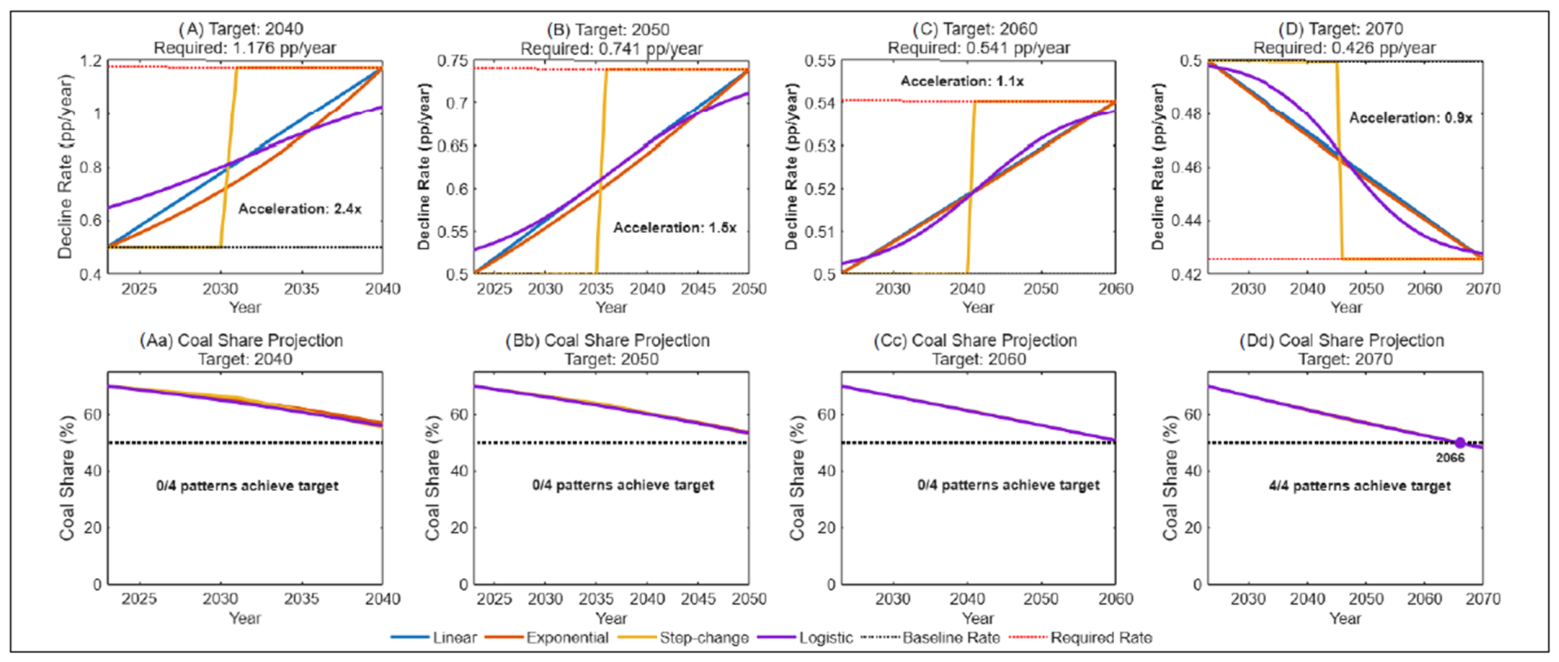
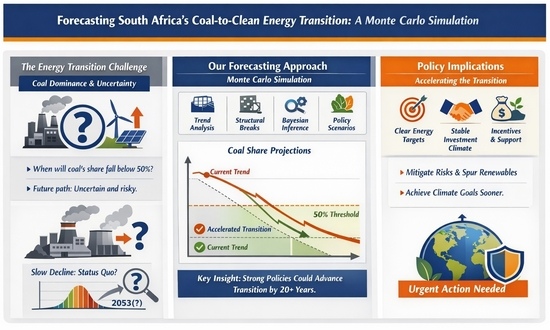
- Under current policies, it is forecasted that coal will lose its majority electricity generation share only around 2053, which is far too slow to meet urgent climate-related targets.
- Policy uncertainty and a very slow baseline decline rate of just 0.75% per year are the main barriers delaying South Africa’s energy transition.
- Credible and stable policy signals are urgently needed because reducing uncertainty could accelerate the coal phase-out by over two decades.
- Ambitious action can shift the transition earlier: a coordinated, multi-instrument policy package could bring the 50% coal-share point into the early–mid 2040s.
Abstract
1. Introduction
2. Literature Review
2.1. Review of Relevant Theoretical Literature
2.1.1. Path Dependence and Technological Lock-In
2.1.2. Directed Technical Change (DTC) Theory
2.1.3. Uncertainty, Irreversibility, and the Real Options Theory of Energy Investment
2.2. Review of Relevant Empirical Literature
3. Methodology
3.1. Theoretical Justification for the Applied Methodology
3.2. Research Design Workflow
3.3. Data Preparation and Pre-Processing
3.3.1. Core Transition Metrics and Threshold Identification
3.3.2. Descriptive Statistical Characterisation
3.3.3. Addressing Model Over-Parameterisation
3.3.4. Nomenclature of Mathematical Notation
3.4. Applied Structural Break Test and Trend Evolution
3.4.1. Chow Test for Pre-Specified Structural Break
3.4.2. Rolling Regression for Trend Detection
3.5. Model Comparison and Selection
3.6. Applied Empirical Estimation Procedure
3.6.1. Estimation Procedure for Multivariate Correlation
3.6.2. Estimating Procedure for Bayesian Parameter
3.6.3. Estimating Procedure for Monte Carlo Simulation with Dynamic Volatility
3.6.4. Estimating Procedure for Transition Statistics and Assessing Probabilities
3.6.5. Estimating Procedure for Policy Scenario Analysis with Synergistic Effects
3.6.6. Estimating Procedure for the Acceleration Pathway for Climate Targets
3.6.7. Estimating Procedure for Global Sensitivity Analysis
3.7. Applied Diagnostic Tests and Methodology Validation
3.8. Method Comparison and Justification
4. Results and Discussion
4.1. Descriptive Statistics Assessment
4.2. Structural Break Test and Trend Evolution Analysis
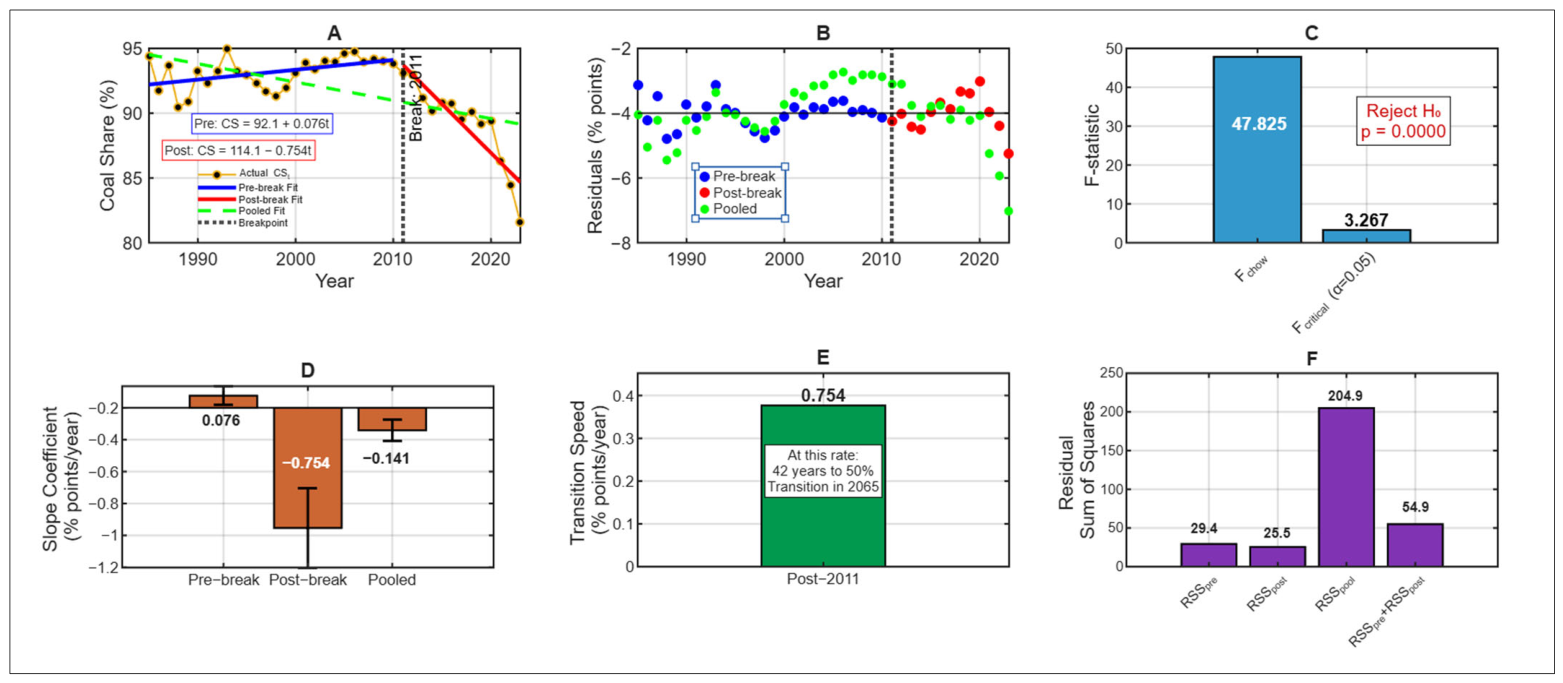
4.2.1. Structural Break Test Assessment
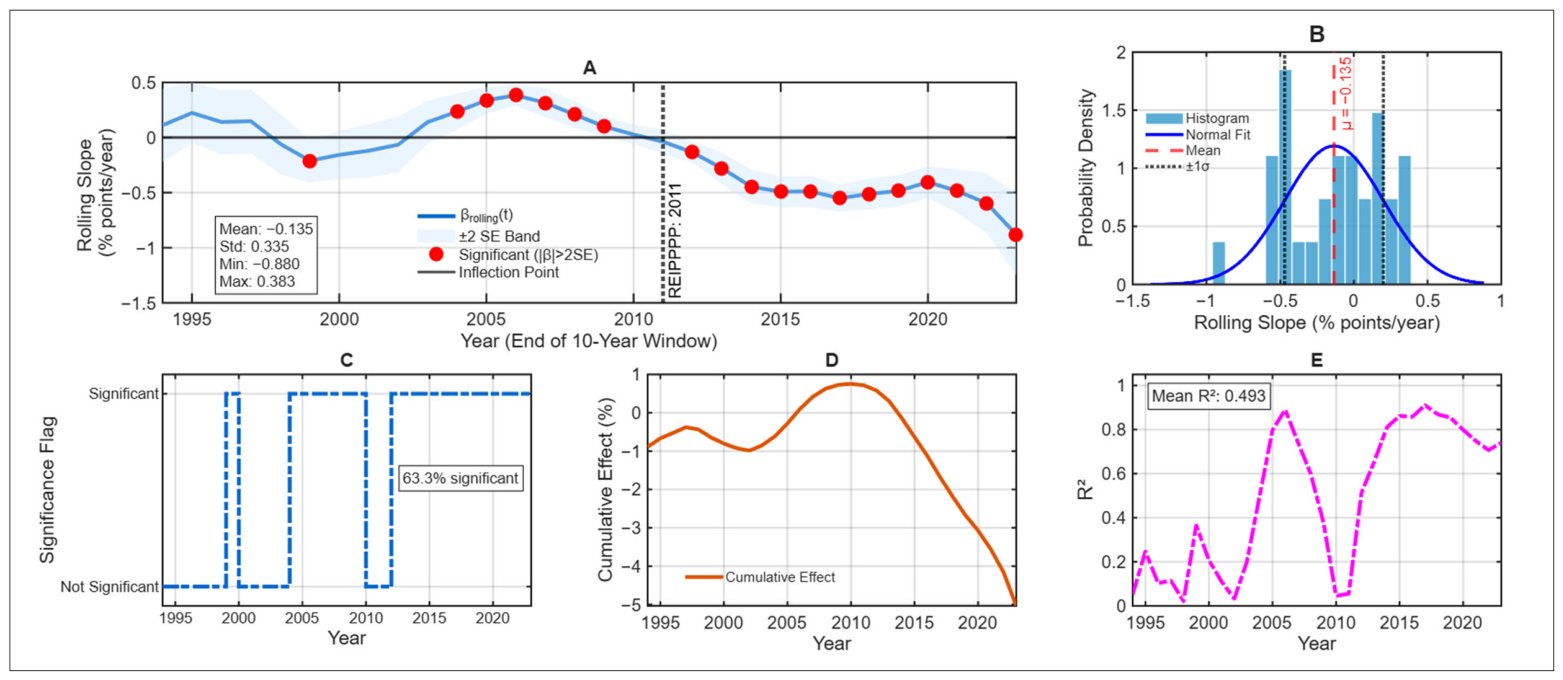
4.2.2. Evolution Trend Analysis
4.3. Results from Model Comparison and Selection
4.4. Multivariate Correlation Analysis
4.5. Bayesian Parameter Analysis
4.5.1. Bayesian Parameter Estimation
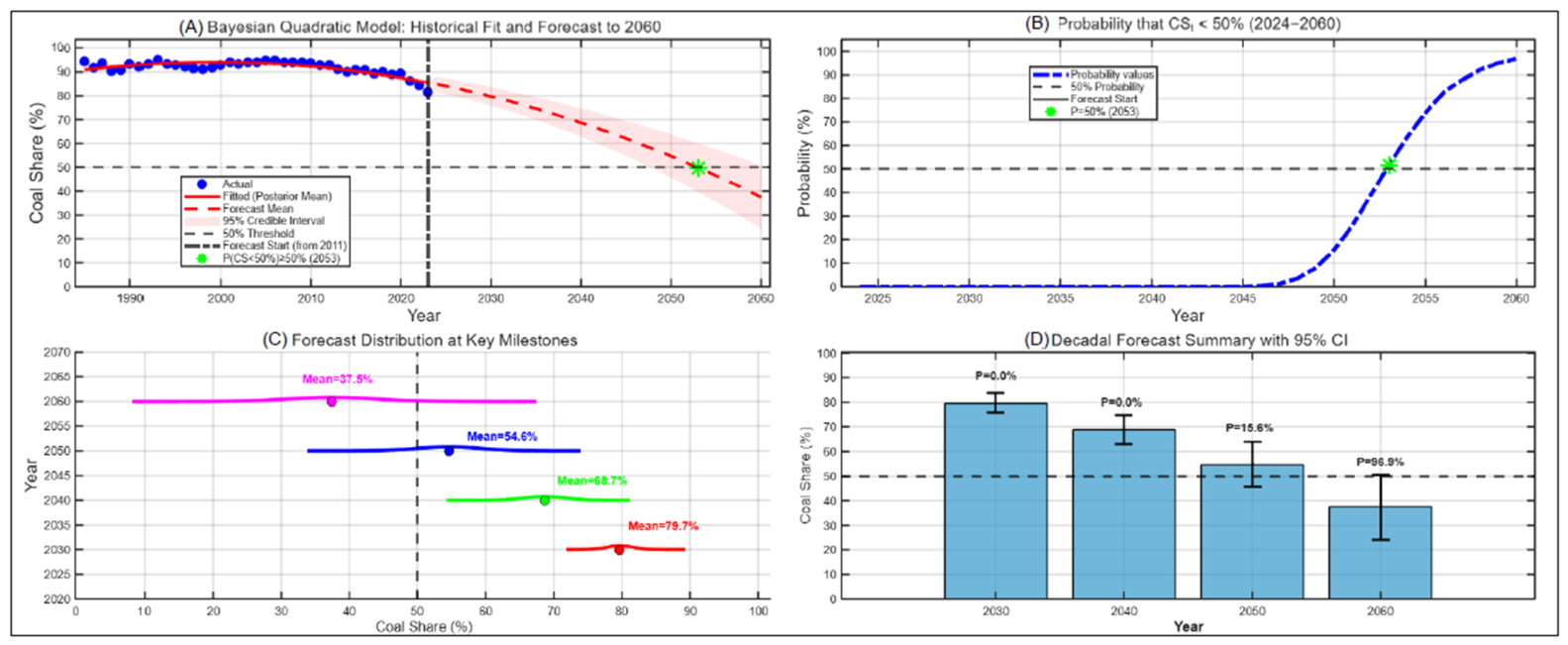
4.5.2. Bayesian Quadratic Model Forecasting
4.5.3. Bayesian Quadratic Model Long-Term Forecast and Uncertainty
4.6. Monte Carlo Simulation Results with Dynamic Volatility
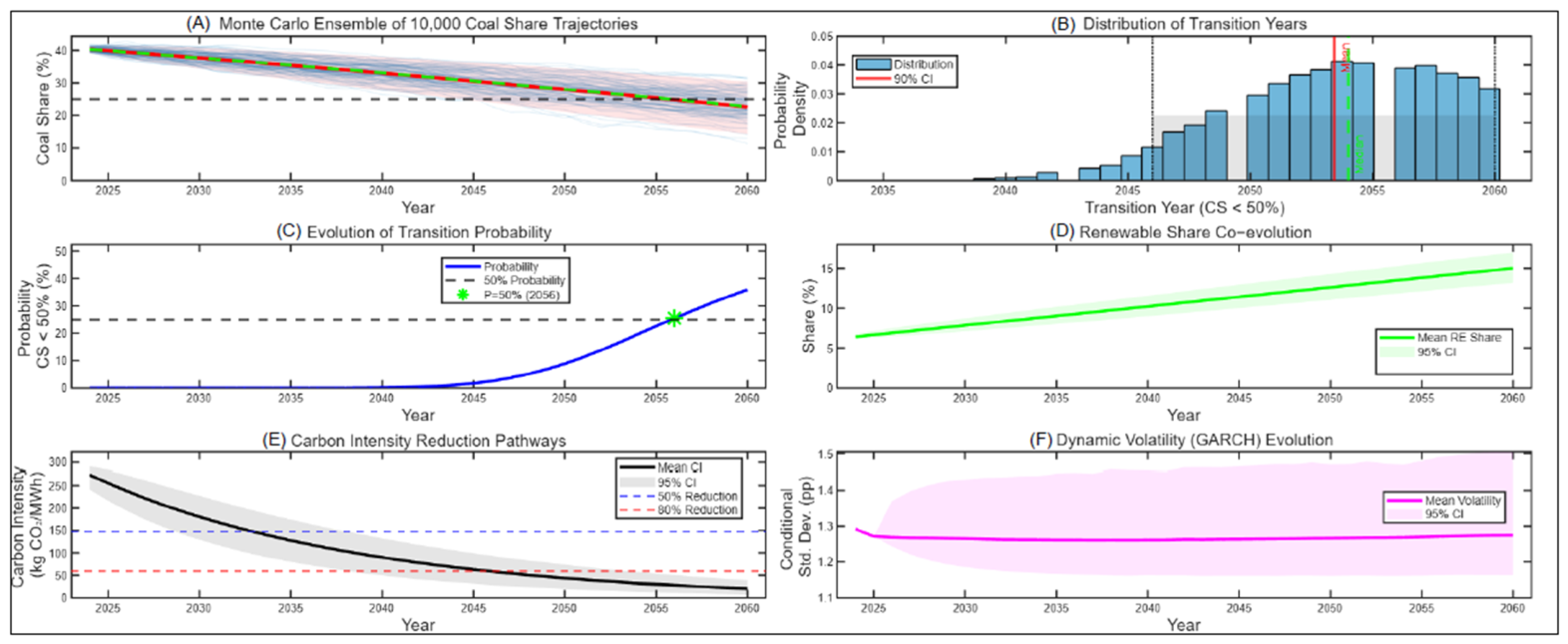
4.6.1. Analysis of Monte Carlo Simulation with Dynamic Volatility
4.6.2. Analysis of Uncertainty Decomposition and Sensitivity Results
4.7. Transition Statistics and Probabilities Analysis
4.8. Analysis of Policy Scenarios: Synergies and Accelerated Pathways for Climate Targets
4.8.1. Policy Scenario with Synergistic Effects Discussion
4.8.2. Acceleration Pathways for Climate Targets Analysis
4.9. Global Sensitivity Analysis
4.10. Diagnostics Test Analysis
5. Conclusions and Policy Recommendations
5.1. Key Summary Findings
5.2. Policy Recommendations
5.3. Limitations and Future Research
Author Contributions
Funding
Data Availability Statement
Conflicts of Interest
References
- Nwani, C.; Omoke, P. Towards an ecologically sustainable electricity mix in South Africa: Evaluating the policy implications of renewable and nuclear energy. Util. Policy 2025, 96, 101972. [Google Scholar] [CrossRef] [Scilit]
- Afrane, S.; Ampah, J.; Yusuf, A.; Jinjuan, Z.; Yang, P.; Chen, J.; Mao, G. Role of negative emission technologies in South Africa’s pathway to net zero emissions by 2050. Energy Sustain. Dev. 2024, 79, 101401. [Google Scholar] [CrossRef] [Scilit]
- Khanyile, N.; Premlall, K.; Mabuza, M. New developments and future innovative opportunities for carbon sequestration in South Africa: A review. Chin. J. Popul. Resour. Environ. 2025, 23, 372–385. [Google Scholar] [CrossRef] [Scilit]
- Singh, V.; McGregor, C. Driving sustainable energy futures: Lessons from India and South Africa energy transition strategies. Energy Policy 2026, 209, 114957. [Google Scholar] [CrossRef] [Scilit]
- Michael-Ahile, T.; Samuels, J.; Booysen, M. Energy management framework for low-income schools in developing regions. Energy Strategy Rev. 2025, 62, 101925. [Google Scholar] [CrossRef] [Scilit]
- Lin, D.; Dong, Y.; Ren, Z.; Zhang, L.; Fan, Y. Hierarchical optimization for the energy management of a greenhouse integrated with grid-tied photovoltaic-battery systems. Appl. Energy 2024, 374, 124006. [Google Scholar] [CrossRef] [Scilit]
- Ndubuisi, G.; Avenyo, E.K. Jobs, investments, and exporting: The real effects of electricity crisis in South Africa. Energy Econ. 2026, 157, 109234. [Google Scholar] [CrossRef] [Scilit]
- Folorunso, O.; Sadiku, R.; Hamam, Y. Dispatchable generation analysis and prediction by using machine learning: A case study of South Africa. e-Prime Adv. Electr. Eng. Electron. Energy 2024, 9, 100701. [Google Scholar] [CrossRef] [Scilit]
- Klausbruckner, C.; Annegarn, H.J.; Henneman, L.R.F.; Rafaj, P. A policy review of synergies and trade-offs in South African climate change mitigation and air pollution control strategies. Environ. Sci. Policy 2016, 57, 70–78. [Google Scholar] [CrossRef] [Scilit]
- Khaldi, H.; Mounir, H. Comparative carbon footprint of electric and hydrogen vehicles: Insights from Morocco, Africa, and global energy transitions. Energy Sustain. Dev. 2025, 85, 101685. [Google Scholar] [CrossRef] [Scilit]
- Omole, D.O. Water and energy dynamics in Africa. In Energy Efficiency in Critical Times; Elsevier: Amsterdam, The Netherlands, 2025; pp. 263–276. [Google Scholar] [CrossRef] [Scilit]
- Menyah, K.; Wolde-Rufael, Y. Energy consumption, pollutant emissions and economic growth in South Africa. Energy Econ. 2010, 32, 1374–1382. [Google Scholar] [CrossRef] [Scilit]
- Lawrence, A. Energy decentralization in South Africa: Why past failure points to future success. Renew. Sustain. Energy Rev. 2020, 120, 109659. [Google Scholar] [CrossRef] [Scilit]
- Ayamolowo, O.J.; Manditereza, P.T.; Kusakana, K. South Africa power reforms: The Path to a dominant renewable energy-sourced grid. Energy Rep. 2022, 8, 1208–1215. [Google Scholar] [CrossRef] [Scilit]
- Sanusi, I.A.; Eregie, S.B.; Oluwalana, A.E.; Sanusi, G.P.; Adelakun, J.O. Sustainable biofuel production from waste potato residue in South Africa: Bibliometric analysis and SWOT appraisal. Clean. Waste Syst. 2025, 12, 100417. [Google Scholar] [CrossRef] [Scilit]
- Ukoba, K.; Jen, T.; Yusuf, A. Transformation of South Africa’s energy landscape: Policy implications, opportunities, and technological innovations in the Fourth Industrial Revolution. Energy Strategy Rev. 2025, 59, 101752. [Google Scholar] [CrossRef] [Scilit]
- Irene, J.; Kelly, M.; Irene, B.; Chukwuma-Nwuba, K.; Opute, P. Exploring the role of regime actors in shaping the directionality of sustainability transitions in South Africa. Energy Res. Soc. Sci. 2023, 99, 103068. [Google Scholar] [CrossRef] [Scilit]
- Barnes, J. Divergent desires for the just transition in South Africa: An assemblage analysis. Polit. Geogr. 2022, 97, 102655. [Google Scholar] [CrossRef] [Scilit]
- Chipangamate, N.; Nwaila, G. Assessment of challenges and strategies for driving energy transitions in emerging markets: A socio-technological systems perspective. Energy Geosci. 2024, 5, 100257. [Google Scholar] [CrossRef] [Scilit]
- Pierson, P. Increasing returns, path dependence, and the study of politics. Am. Political Sci. Rev. 2000, 94, 251–267. [Google Scholar] [CrossRef] [Scilit]
- Mah, D.N. Conceptualising government-market dynamics in socio-technical energy transitions: A comparative case study of smart grid developments in China and Japan. Geoforum 2020, 108, 148–168. [Google Scholar] [CrossRef] [Scilit]
- Apajalahti, E.-L.; Kungl, G. Path dependence and path break-out in the electricity sector. Environ. Innov. Soc. Transit. 2022, 43, 220–236. [Google Scholar] [CrossRef] [Scilit]
- Wu, D.; Ma, X.; Zhang, S.; Ma, J. Are more economic efficient solutions ignored by current policy: Cost-benefit and NPV analysis of coal-fired power plant technology schemes in China. Ecol. Indic. 2019, 103, 105–113. [Google Scholar] [CrossRef] [Scilit]
- Huang, R.; Wang, P.; Zhang, S. Experiences and lessons for China’s energy transition: From the firewood era to the low carbon era. Energy Sustain. Dev. 2024, 78, 101368. [Google Scholar] [CrossRef] [Scilit]
- Maréchal, K. The economics of climate change and the change of climate in economics. Energy Policy 2007, 35, 5181–5194. [Google Scholar] [CrossRef] [Scilit]
- Bolwig, S.; Bazbauers, G.; Klitkou, A.; Lund, P.; Blumberga, A.; Gravelsins, A.; Blumberga, D. Review of modelling energy transitions pathways with application to energy system flexibility. Renew. Sustain. Energy Rev. 2019, 101, 440–452. [Google Scholar] [CrossRef] [Scilit]
- Sorge, L.; Neumann, A. Warheads of Energy: Exploring the linkages between civilian nuclear power and nuclear weapons in seven countries. Energy Res. Soc. Sci. 2021, 81, 102213. [Google Scholar] [CrossRef] [Scilit]
- Johnson, F.X.; Silveira, S. Pioneer countries in the transition to alternative transport fuels: Comparison of ethanol programmes and policies in Brazil, Malawi and Sweden. Environ. Innov. Soc. Transit. 2014, 11, 1–24. [Google Scholar] [CrossRef] [Scilit]
- Bjørnåvold, A.; Van Passel, S. The lock-in effect and the greening of automotive cooling systems in the European Union. J. Environ. Manag. 2017, 203, 1199–1207. [Google Scholar] [CrossRef] [Scilit]
- Schlemminger, M.; Lohr, C.; Peterssen, F.; Bredemeier, D.; Niepelt, R.; Bensmann, A.; Hanke-Rauschenbach, R.; Breitner, M.; Brendel, R. Land competition and its impact on decarbonized energy systems: A case study for Germany. Energy Strategy Rev. 2024, 55, 101502. [Google Scholar] [CrossRef] [Scilit]
- Yang, J. Pathways to a sustainable energy future: A comparative case study of four Texas municipalities. Energy Policy 2025, 204, 114663. [Google Scholar] [CrossRef] [Scilit]
- Inah, O.; Bola Akuru, U.; Sotenga, P. Modelling South Africa’s carbon-peak trajectories through a Decoupling-Markov Chain-Monte Carlo (D-MCMC) energy-economic transition framework. Results Eng. 2026, 29, 108979. [Google Scholar] [CrossRef] [Scilit]
- Eitan, A.; Hekkert, M. Locked in transition? Towards a conceptualization of path-dependence lock-ins in the renewable energy landscape. Energy Res. Soc. Sci. 2023, 106, 103316. [Google Scholar] [CrossRef] [Scilit]
- Liu, Y.; Chen, L.; Cao, Z.; Wen, F. Uncertainty breeds opportunities: Assessing climate policy uncertainty and its impact on corporate innovation. Int. Rev. Financ. Anal. 2024, 96, 103560. [Google Scholar] [CrossRef] [Scilit]
- Noailly, J.; Smeets, R. Directing technical change from fossil-fuel to renewable energy innovation: An application using firm-level patent data. J. Environ. Econ. Manag. 2015, 72, 15–37. [Google Scholar] [CrossRef] [Scilit]
- Löschel, A. Modeling Technological Change in Economic Models of Climate Change. In Encyclopedia of Energy, Natural Resource, and Environmental Economics; Elsevier: Amsterdam, The Netherlands, 2014; pp. 89–97. [Google Scholar] [CrossRef] [Scilit]
- Cheng, Z.; Li, L.; Liu, J.; Zhang, H. Research on energy directed technical change in China’s industry and its optimization of energy consumption pattern. J. Environ. Manag. 2019, 250, 109471. [Google Scholar] [CrossRef] [Scilit]
- Squires, D.; Vestergaard, N. Technical change in fisheries. Mar. Policy 2013, 42, 286–292. [Google Scholar] [CrossRef] [Scilit]
- Xiu, J.; Zhang, G.; Hu, Y. Which kind of directed technical change does China’s economy have? From the perspective of energy-saving and low-carbon. J. Clean. Prod. 2019, 233, 160–168. [Google Scholar] [CrossRef] [Scilit]
- Crafts, N.; O’Rourke, K. Twentieth Century Growth. In Handbook of Economic Growth; Elsevier: Amsterdam, The Netherlands, 2014; Volume 2. [Google Scholar] [CrossRef] [Scilit]
- Åhman, M. Government policy and the development of electric vehicles in Japan. Energy Policy 2006, 34, 433–443. [Google Scholar] [CrossRef] [Scilit]
- Fraser, T.; Chapman, A.; Shigetomi, Y. Leapfrogging or lagging? Drivers of social equity from renewable energy transitions globally. Energy Res. Soc. Sci. 2023, 98, 103006. [Google Scholar] [CrossRef] [Scilit]
- Dixit, A.K.; Pindyck, R.S. Investment Under Uncertainty; Princeton University Press: Princeton, NJ, USA, 1994. [Google Scholar]
- Botterud, A.; Korpås, M. A stochastic dynamic model for optimal timing of investments in new generation capacity in restructured power systems. Int. J. Electr. Power Energy Syst. 2007, 29, 163–174. [Google Scholar] [CrossRef] [Scilit]
- Pennings, E. Privatization of real options. J. Comp. Econ. 2008, 36, 489–497. [Google Scholar] [CrossRef] [Scilit]
- Gryglewicz, S.; Huisman, K.; Kort, P. Finite project life and uncertainty effects on investment. J. Econ. Dyn. Control 2008, 32, 2191–2213. [Google Scholar] [CrossRef] [Scilit]
- Lim, D.; Kim, H.; Yee, K. Uncertainty propagation in flight performance of multirotor with parametric and model uncertainties. Aerosp. Sci. Technol. 2022, 122, 107398. [Google Scholar] [CrossRef] [Scilit]
- Tschulkow, M.; Compernolle, T.; Van Passel, S. Optimal timing of multiple investment decisions in a wood value chain: A real options approach. J. Environ. Manag. 2021, 290, 112590. [Google Scholar] [CrossRef] [Scilit]
- Chen, Y.; Cheng, L. Does executive gender matter for corporate financial policies under uncertainty? Glob. Financ. J. 2025, 65, 101108. [Google Scholar] [CrossRef] [Scilit]
- Sun, B.; Zhang, Y.; Fan, B.; Xie, P. An optimal sequential investment decision model for generation-side energy storage projects in China considering policy uncertainty. J. Energy Storage 2024, 83, 110748. [Google Scholar] [CrossRef] [Scilit]
- Zhou, Y.; Yang, J.; Jia, Z. Optimizing energy efficiency investments in steel firms: A real options model considering carbon trading and tax cuts during challenging economic conditions. Resour. Policy 2023, 85, 104042. [Google Scholar] [CrossRef] [Scilit]
- Yu, H.; Wei, Y.; Tang, B.; Mi, Z.; Pan, S. Assessment on the research trend of low-carbon energy technology investment: A bibliometric analysis. Appl. Energy 2016, 184, 960–970. [Google Scholar] [CrossRef] [Scilit]
- Kokubun, K. Energy transition divergence and carbon lock-in: A 50-year comparative analysis of Japan, Australia, India, and South Africa (1970–2022). Sustainability 2026, 18, 3712. [Google Scholar] [CrossRef] [Scilit]
- Bergougui, B.; Ben-Salha, O. The impact of environmental governance on energy transitions: Evidence from a global perspective. Sustainability 2025, 17, 8759. [Google Scholar] [CrossRef] [Scilit]
- Chen, Q. Energy policy uncertainty, financial development and public-private investment in BRIC nations. Financ. Res. Lett. 2025, 72, 106417. [Google Scholar] [CrossRef] [Scilit]
- Nyiwul, L.; Hu, Z.; Koirala, N.P.; Wasson, H. Economic uncertainty and renewable energy investment. Int. Econ. Econ. Policy 2025, 22, 25–48. [Google Scholar] [CrossRef] [Scilit]
- Raman, R.; Ustenko, V.; Filho, W.L.; Nedungadi, P. Energy justice and gender: Bridging equity, access, and policy for sustainable development. Discov. Sustain. 2025, 6, 1–18. [Google Scholar] [CrossRef] [Scilit]
- Taiwo, E.O.; Tozer, L. Community energy justice: A review of origins, convergence, and a research agenda. Energy Res. Soc. Sci. 2025, 119, 104036. [Google Scholar] [CrossRef] [Scilit]
- Xie, Z.; Ali, H.; Kumar, S.; Ahmed, U.; Ye, L. The impact of energy-related uncertainty on corporate investment decisions in China. Energies 2024, 17, 2368. [Google Scholar] [CrossRef] [Scilit]
- Bashir, M.F.; Shahbaz, M.; Ma, B.; Alam, K. Evaluating the roles of energy innovation, fossil fuel costs and environmental compliance towards energy transition in advanced industrial economies. J. Environ. Manag. 2024, 351, 119709. [Google Scholar] [CrossRef] [Scilit]
- Ollier, L.; Melliger, M.; Metz, F. How do governments’ policy priorities change as the energy transition progresses? A cross-country comparison. J. Comp. Policy Anal. Res. Pract. 2024, 26, 245–267. [Google Scholar] [CrossRef] [Scilit]
- Shyu, C.-W. Referendum as a policy instrument to enhance energy democracy in formulating energy transition path, agenda, and policies: A case study of Taiwan’s referendums in 2018 and 2021. Energy Policy 2024, 185, 113914. [Google Scholar] [CrossRef] [Scilit]
- Wyse, S.M.; Das, R.R. Energy democracy: Reclaiming a unique agenda in energy transitions research. Energy Res. Soc. Sci. 2024, 114, 103774. [Google Scholar] [CrossRef] [Scilit]
- Gao, S.; Zhou, P.; Zhang, H. Does energy transition help narrow the urban-rural income gap? Evidence from China. Energy Policy 2023, 182, 113759. [Google Scholar] [CrossRef] [Scilit]
- Kime, S.; Jacome, V.; Pellow, D.; Deshmukh, R. Evaluating equity and justice in low-carbon energy transitions. Environ. Res. Lett. 2023, 18, 123008. [Google Scholar] [CrossRef] [Scilit]
- Haas, C.; Kempa, K.; Moslener, U. Dealing with deep uncertainty in the energy transition: What we can learn from the electricity and transportation sectors. Energy Policy 2023, 173, 113632. [Google Scholar] [CrossRef] [Scilit]
- Puttachai, W.; Phadkantha, R.; Yamaka, W. The threshold effects of ESG performance on the energy transitions: A country-level data. Energy Rep. 2022, 8, 1459–1470. [Google Scholar] [CrossRef] [Scilit]
- Borozan, D. Detecting a structure in the European energy transition policy instrument mix: What mix successfully drives the energy transition? Renew. Sustain. Energy Rev. 2022, 163, 112621. [Google Scholar] [CrossRef] [Scilit]
- Shao, Y.-T.; Ma, K.S.-K. Renewable energy policies and the design of electricity market for energy transition: Benefits, challenges, and strategies. In Proceedings of the 2022 International Conference on Green Energy, Computing and Sustainable Technology (GECOST), Miri Sarawak, Malaysia, 26–28 October 2022; pp. 1–6. [Google Scholar] [CrossRef] [Scilit]
- Coenen, L.; Hansen, T.; Glasmeier, A.; Hassink, R. Regional foundations of energy transitions. Camb. J. Reg. Econ. Soc. 2021, 14, 219–236. [Google Scholar] [CrossRef] [Scilit]
- Joshi, N.; Agrawal, S. Understanding the uneven geography of urban energy transitions: Insights from Edmonton, Canada. Camb. J. Reg. Econ. Soc. 2021, 14, 317–334. [Google Scholar] [CrossRef] [Scilit]
- Saundry, P.D. Review of the United States energy system in transition. Energy Sustain. Soc. 2018, 8, 1–14. [Google Scholar] [CrossRef] [Scilit]
- Romano, T.; Fumagalli, E. Greening the power generation sector: Understanding the role of uncertainty. Renew. Sustain. Energy Rev. 2018, 91, 442–456. [Google Scholar] [CrossRef] [Scilit]
- Rogge, K.S.; Kern, F.; Howlett, M. Conceptual and empirical advances in analysing policy mixes for energy transitions. Energy Res. Soc. Sci. 2017, 33, 1–10. [Google Scholar] [CrossRef] [Scilit]
- Fouquet, R. Historical energy transitions: Speed, prices and system transformation. Energy Res. Soc. Sci. 2016, 22, 7–12. [Google Scholar] [CrossRef] [Scilit]
- Araújo, K. The emerging field of energy transitions: Progress, challenges, and opportunities. Energy Res. Soc. Sci. 2014, 1, 112–121. [Google Scholar] [CrossRef] [Scilit]
- Gunningham, N. Regulation, economic instruments, and sustainable energy. In The Handbook of Global Energy Policy; Goldthau, J., Witte, M., Eds.; Wiley-Blackwell: Hoboken, NJ, USA, 2013; pp. 277–296. [Google Scholar] [CrossRef]
- Tambach, M.; Hasselaar, E.; Itard, L. Assessment of current Dutch energy transition policy instruments for the existing housing stock. Energy Policy 2010, 38, 981–996. [Google Scholar] [CrossRef] [Scilit]
- Dunne, T.; Mu, X. Investment spikes and uncertainty in the petroleum refining industry. J. Ind. Econ. 2010, 58, 23–51. [Google Scholar] [CrossRef] [Scilit]
- Osifeko, M.; Munda, J. Seasonal and diurnal variability of renewable resources in South Africa: Data-driven insights for hybrid system design and policy implementation. Energy Rep. 2026, 15, 108942. [Google Scholar] [CrossRef] [Scilit]
- Hastie, H.; Hull, S.; Adeleke, A.; Nyembezi, S.; Mkhabela, S. Plot, power, promises: Community decision-making at the land-energy nexus in South Africa. Energy Res. Soc. Sci. 2026, 125, 104657. [Google Scholar] [CrossRef] [Scilit]
- Michael-Ahile, T.; Samuels, J.A.; Booysen, M.J. A simulation-based assessment of community-based energy trading for circular energy sharing in low-income communities. Energy Convers. Manag. X 2026, 29, 101665. [Google Scholar] [CrossRef] [Scilit]
- Bergougui, B.; Ghosh, S.; Doğan, B.; Nepal, R.; Shahbaz, M. When does high-tech research investment enable green energy transition? Energy Convers. Manag. X 2026, 30, 101598. [Google Scholar] [CrossRef] [Scilit]
- Miller, M.; Yokwana, X.; Sumbwanyambe, M. Evaluating the role of hybrid renewable energy systems in supporting South Africa’s energy transition. Processes 2025, 13, 3455. [Google Scholar] [CrossRef] [Scilit]
- Xaba, N. Evaluating the implementation of South Africa’s just energy transition in coal regions. Wiley Interdiscip. Rev. Energy Environ. 2025, 14, e70009. [Google Scholar] [CrossRef] [Scilit]
- von Lüpke, H. The just energy transition partnership in South Africa: Identification and assessment of key factors driving international cooperation. Earth Syst. Gov. 2025, 23, 100274. [Google Scholar] [CrossRef] [Scilit]
- Bothongo, K.; Kinyar, A. Rethinking the coal phase-out in South Africa: Can renewable energy and eco-innovation promote a just transition and sustainable economic growth? Sustain. Futures 2025, 10, 101246. [Google Scholar] [CrossRef] [Scilit]
- Hussein, M.; Jen, T.-C.; Imoisili, P.E. South Africa clean energy transition: The future of green hydrogen energy technology. Energy Rep. 2025, 11, 5245–5260. [Google Scholar] [CrossRef] [Scilit]
- Mohr, A. Transition or not? Assessing competing narratives in South Africa’s just energy transition. Energy Res. Soc. Sci. 2025, 111, 104099. [Google Scholar] [CrossRef] [Scilit]
- O’Connell, A.-L.; Schot, J. A theoretical and systematic examination of finance in strategic niche management. Environ. Innov. Soc. Transit. 2025, 55, 100991. [Google Scholar] [CrossRef] [Scilit]
- Cole, M.J.; Canpolat, E.; Sijapati, B. Profiling risk in South Africa’s just transition: Who is left behind? Energy Res. Soc. Sci. 2025, 112, 104351. [Google Scholar] [CrossRef] [Scilit]
- Essex, S.; Caprotti, F.; de Groot, J.; Baker, L.; Mkhabela, S. The ‘capability’ of South African energy governance to deliver urban sustainable transitions. Urban Res. Pract. 2024, 17, 189–210. [Google Scholar] [CrossRef] [Scilit]
- Mirzania, P.; Gordon, J.A.; Balta-Ozkan, N.; Marais, L.; Mkhabela, S. Barriers to powering past coal: Implications for a just energy transition in South Africa. Energy Res. Soc. Sci. 2023, 101, 103122. [Google Scholar] [CrossRef] [Scilit]
- Msimango, N.; Orffer, C.; Inglesi-Lotz, R. South Africa’s energy policy: Prioritizing competition and climate change for decarbonisation. Energy Policy 2023, 183, 113815. [Google Scholar] [CrossRef] [Scilit]
- Hanto, J.; Schroth, A.; Krawielicki, L.; Oei, P.-Y.; Burton, J. South Africa’s energy transition—Unraveling its political economy. Energy Sustain. Dev. 2022, 69, 164–178. [Google Scholar] [CrossRef] [Scilit]
- Murombo, T. Regulatory imperatives for renewable energy: South African perspectives. J. Afr. Law 2022, 66, 1–24. [Google Scholar] [CrossRef] [Scilit]
- Müller, F.; Claar, S. Auctioning a ‘just energy transition’? South Africa’s renewable energy procurement programme and its implications for transition strategies. Rev. Afr. Political Econ. 2021, 48, 226–244. [Google Scholar] [CrossRef] [Scilit]
- Nene, S.; Nagy, H. Legal regulations and policy barriers to development of renewable energy sources in South Africa. Eng. Rural Dev. 2021, 20, 1570–1577. [Google Scholar] [CrossRef] [Scilit]
- McEwan, C. Spatial processes and politics of renewable energy transition: Land, zones and frictions in South Africa. Political Geogr. 2017, 56, 1–12. [Google Scholar] [CrossRef] [Scilit]
- Mudziwepasi, S.K.; Scott, M.S. Towards the exploration of renewable energy technologies as an alternative to grid extension for rural electrification in South Africa. In Proceedings of the 22nd Conference on the Domestic Use of Energy (DUE), Cape Town, South Africa, 1–2 April 2014; pp. 1–6. [Google Scholar] [CrossRef] [Scilit]
- Baker, L.; Newell, P.; Phillips, J. The political economy of energy transitions: The case of South Africa. New Political Econ. 2014, 19, 791–818. [Google Scholar] [CrossRef] [Scilit]
- Ducoli, S.; Zacco, A.; Valentim, B.; Zanoletti, A.; Ye, G.; Mousa, E.; Bontempi, E. ESCAPE simplified approach designed to evaluate materials sustainability: The case of new adsorbent materials for activated carbon substitution. Sustain. Mater. Technol. 2023, 38, e00709. [Google Scholar] [CrossRef] [Scilit]
- Watts, N.; Amann, M.; Arnell, N.; Ayeb-Karlsson, S.; Beagley, J.; Belesova, K.; Boykoff, M.; Byass, P.; Cai, W.; Campbell-Lendrum, D.; et al. The 2020 report of The Lancet Countdown on health and climate change: Responding to converging crises. Lancet 2021, 397, 129–170. [Google Scholar] [CrossRef] [Scilit]
- Bøe, V.; Holden, E.; Linnerud, K. Measuring renewables’ impact on biosphere integrity: A review. Ecol. Indic. 2023, 156, 111135. [Google Scholar] [CrossRef] [Scilit]
- Davis, M.; Moronkeji, A.; Ahiduzzaman, M.; Kumar, A. Assessment of renewable energy transition pathways for a fossil fuel-dependent electricity-producing jurisdiction. Energy Sustain. Dev. 2020, 59, 243–261. [Google Scholar] [CrossRef] [Scilit]
- Gatto, A.; Drago, C. When renewable energy, empowerment, and entrepreneurship connect: Measuring energy policy effectiveness in 230 countries. Energy Res. Soc. Sci. 2021, 78, 101977. [Google Scholar] [CrossRef] [Scilit]
- Sterl, S.; Donk, P.; Willems, P.; Thiery, W. Turbines of the Caribbean: Decarbonising Suriname’s electricity mix through hydro-supported integration of wind power. Renew. Sustain. Energy Rev. 2020, 134, 110352. [Google Scholar] [CrossRef] [Scilit]
- Chikore, T.; Nyabadza, F. Topological signatures of socio-energy transitions in South Africa. Environ. Sustain. Indic. 2026, 30, 101175. [Google Scholar] [CrossRef] [Scilit]
- Fedajev, A.; Mitić, P.; Kojić, M.; Radulescu, M. Driving industrial and economic growth in Central and Eastern Europe: The role of electricity infrastructure and renewable energy. Util. Policy 2023, 85, 101683. [Google Scholar] [CrossRef] [Scilit]
- Zhao, X.; Xie, Y.; Tian, Z.; Hu, Q.; Hou, M.; Deng, M.; Dong, S.; Liu, Y. The sustainability trilemma of land scarcity: Quantifying the societal cost of Taiwan’s energy transition. Energy Policy 2026, 213, 115223. [Google Scholar] [CrossRef] [Scilit]
- Pan, W.; Guo, Z.; Zhang, J.; Luo, L. Forecasting of coal and electricity prices in China: Evidence from the quantum bee colony-support vector regression neural network. Energy Econ. 2024, 134, 107565. [Google Scholar] [CrossRef] [Scilit]
- Xiong, S.; Wang, Y.; Wang, Y.; Wei, Y. Forecasting carbon–coal price co-movement evolution and its implications for emission reduction: An AI-based complex network approach. Energy 2026, 348, 140611. [Google Scholar] [CrossRef] [Scilit]
- Zhang, H.; Fang, B.; Shao, L. From brown investment to green investment: Will the Russia–Ukraine war present opportunities or threats? Financ. Res. Lett. 2025, 85, 108030. [Google Scholar] [CrossRef] [Scilit]
- Paitakis, K.; Tsiotas, G. Regime switching differentials in the green and non-green energy market. In Encyclopedia of Monetary Policy, Financial Markets and Banking; Academic Press: Cambridge, MA, USA, 2025. [Google Scholar] [CrossRef] [Scilit]
- Xie, J.J.; Brutschin, E.; Rogelj, J.; Staffell, I. Past socio-political transitions away from coal and gas show challenges and opportunities ahead. Environ. Res. Lett. 2025, 20, 064009. [Google Scholar] [CrossRef] [Scilit]
- Majenge, L.; Mpungose, S.; Msomi, S. Threshold effects on South Africa’s renewable energy–economic growth–carbon dioxide emissions nexus: A nonlinear analysis using threshold-switching dynamic models. Energies 2025, 18, 4642. [Google Scholar] [CrossRef] [Scilit]
- Wang, G.; Wan, H.; Sbai, E. Nonlinear impacts of distributed generation on extreme electricity prices under policy shocks: Evidence from New Zealand’s oil and gas exploration ban. Energy 2025, 335, 137754. [Google Scholar] [CrossRef] [Scilit]
- Cárdenas-Montes, M. Creating hard-to-solve instances of travelling salesman problem. Appl. Soft Comput. 2018, 71, 268–276. [Google Scholar] [CrossRef] [Scilit]
- Silva-Acosta, V.d.C.; Román-Godínez, I.; Torres-Ramos, S.; Salido-Ruiz, R.A. Automatic estimation of continuous elbow flexion-extension movement based on electromyographic and electroencephalographic signals. Biomed. Signal Process. Control 2021, 70, 102950. [Google Scholar] [CrossRef] [Scilit]
- Majenge, L.; Mpungose, S.; Msomi, S. Comparative Analysis of VAR and SVAR Models in Assessing Oil Price Shocks and Exchange Rate Transmission to Consumer Prices in South Africa. Econometrics 2025, 13, 8. [Google Scholar] [CrossRef] [Scilit]
- Arrieta-Gomez, M.; Vélez-García, S.; Hincapié Zuluaga, D.; Tejada, J.C.; Sanin-Villa, D. Efficiency optimization of a hybrid Savonius-Darrieus hydrokinetic turbine via regression modeling and CFD-based design of experiments. Results Eng. 2025, 27, 105751. [Google Scholar] [CrossRef] [Scilit]
- Wang, S.; Wang, G.; Jiang, X. Bayesian regression-based cross-scale characterization of random rough surfaces using multiple optical instruments. Tribol. Int. 2026, 214, 111226. [Google Scholar] [CrossRef] [Scilit]
- Liu, J.; Shao, Y.; Zhang, S.; Li, J.; Wang, W. UGEA-LMD: A continuous-time dynamic graph representation enhancement framework for lateral movement detection. Comput. Mater. Contin. 2025, 82, 1157–1177. [Google Scholar] [CrossRef] [Scilit]
- Kojima, S.; Park, J.; Carter, E.A.; Walton, K.S.; Realff, M.J.; Sholl, D.S.; Yajima, T.; Fujiki, J.; Kawajiri, Y. Discrepancy Quantification between Experimental and Simulated Data of CO2 Adsorption Isotherm Using Hierarchical Bayesian Estimation. Sep. Purif. Technol. 2022, 296, 121371. [Google Scholar] [CrossRef] [Scilit]
- Zhai, D.; Zhang, T.; Liang, G.; Liu, B. Quantum carbon finance: Carbon emission rights option pricing and investment decision. Energy Econ. 2024, 134, 107628. [Google Scholar] [CrossRef] [Scilit]
- Meng, B.; Zhang, X.; Li, J.; Lv, L. The risk spillover between the crude oil market and the tanker market under the influence of the carbon market. Transp. Res. Part E Logist. Transp. Rev. 2025, 196, 104445. [Google Scholar] [CrossRef] [Scilit]
- Benlemlih, M.; El Ouadghiri, I.; Peillex, J.; Toscano Hernandez, C.; Ureche-Rangau, L. Low-carbon movement and stock market uncertainty: Insights from international comparisons between fossil fuel companies. Energy Econ. 2024, 129, 107746. [Google Scholar] [CrossRef] [Scilit]
- Gilli, M. A gentle introduction to financial simulation. In Numerical Methods and Optimization in Finance; Academic Press: Cambridge, MA, USA, 2011; pp. 211–246. [Google Scholar] [CrossRef] [Scilit]
- Chan, J.C.C.; Grant, A.L. Modeling energy price dynamics: GARCH versus stochastic volatility. Energy Econ. 2016, 54, 182–189. [Google Scholar] [CrossRef] [Scilit]
- Raju, A. Applications of Markov chains in climate change modelling: A comprehensive review of advances, challenges, and future directions. Ecol. Model. 2026, 514, 111470. [Google Scholar] [CrossRef] [Scilit]
- Pallaske, G. Analyzing sustainable development strategies through multi-method integration in the Green Economy Model. Ecol. Model. 2024, 496, 110828. [Google Scholar] [CrossRef] [Scilit]
- Shui, B.; Cai, Z.; Xie, H.; Liu, F.; Luo, X. Harnessing policy synergies to decarbonize China’s light-duty passenger vehicle fleet. J. Clean. Prod. 2026, 538, 147236. [Google Scholar] [CrossRef] [Scilit]
- Song, K.; Burley Farr, K.; Hsu, A. Assessing subnational climate action in G20 cities and regions: Progress and ambition. One Earth 2024, 7, 2189–2203. [Google Scholar] [CrossRef] [Scilit]
- Gao, Z.; Jiang, D.; Liu, J.; Pang, H.; Cui, W.; Zhuang, X.; Yu, T. A global sensitivity analysis method for complex mechanisms of aircraft affected by multiple progressive damage. Chin. J. Aeronaut. 2025, 39, 104031. [Google Scholar] [CrossRef] [Scilit]
- Wu, L.; Yu, C.; Shi, F.; Ni, X. Local and global sensitivity analysis of key durability parameters of concrete under chloride environment. Results Eng. 2025, 26, 105385. [Google Scholar] [CrossRef] [Scilit]
- Li, D.; Jiang, P.; Hu, C.; Yan, T. Comparison of local and global sensitivity analysis methods and application to thermal hydraulic phenomena. Prog. Nucl. Energy 2023, 158, 104612. [Google Scholar] [CrossRef] [Scilit]
- Tian, W. A review of sensitivity analysis methods in building energy analysis. Renew. Sustain. Energy Rev. 2013, 20, 411–419. [Google Scholar] [CrossRef] [Scilit]
- Fang, W.; Lin, X.; Zhang, J.; Hu, J.; Huang, L.; Yuan, G. Spatiotemporal charging demand forecasting for EV stations via cross-attention fusion. Appl. Soft Comput. 2026, 189, 114475. [Google Scholar] [CrossRef] [Scilit]
- Lima, H.S.; Tupinambás, U.; Guimarães, F.G. Estimating time-varying epidemiological parameters and underreporting of Covid-19 cases in Brazil using a mathematical model with fuzzy transitions between epidemic periods. PLoS ONE 2024, 19, e0305522. [Google Scholar] [CrossRef] [Scilit]
- Shiwakoti, N. Understanding differences in emergency escape and experimental pedestrian crowd egress through quantitative comparison. Int. J. Disaster Risk Reduct. 2016, 20, 129–137. [Google Scholar] [CrossRef] [Scilit]
- Marzban, C.; Tardif, R.; Sandgathe, S. Sensitivity analysis of the spatial structure of forecasts in mesoscale models: Noncontinuous model parameters. Mon. Weather Rev. 2020, 148, 1717–1735. [Google Scholar] [CrossRef] [Scilit]
- Burnecki, K.; Sikora, G. Identification and validation of stable ARFIMA processes with application to UMTS data. Chaos Solitons Fractals 2017, 102, 456–466. [Google Scholar] [CrossRef] [Scilit]
- Özdemir, R.; Murat, T.; Veysel, A. EL-NRF: Enhancing Ensemble Learning for Regression with a Noise Reduction Framework. Expert Syst. Appl. 2025, 286, 128074. [Google Scholar] [CrossRef] [Scilit]
- Alsini, A.; Saeed, A.; Amin, D. AlgAlert: A two-level approach for algae bloom prediction using deep learning. Ecol. Inform. 2025, 90, 103260. [Google Scholar] [CrossRef] [Scilit]
- Khalil, I.; Islam, M.R.; Kamrul-Hasan, A.B.M.; Nagendra, L.; Promi, S.A.; Sayed, M.A.; Rahman, M.T.; Sultana, N.; Tasmi, N.A.; Das, M.; et al. Comparative Effectiveness of Glucagon-like Peptide-1 Receptor Agonists in Patients with Heart Failure with Preserved or Minimally Reduced Ejection Fraction: A Comprehensive Bayesian Network Meta-Analysis and Network Meta-Regression. Endocr. Pract. 2025, 31, 1133–1142. [Google Scholar] [CrossRef] [Scilit] [PubMed]
- Ali, W.; Dash, D.P.; Dagar, V.; Kagzi, M.; Elmawazini, K. Financial development for energy access: Evidence from credit rationing and carbon emission in MENA region. Int. Rev. Financ. Anal. 2025, 103, 104176. [Google Scholar] [CrossRef] [Scilit]
- Wei, Z.; Sang, H.; Coulibaly, N. Nonparametric Machine Learning for Stochastic Frontier Analysis: A Bayesian Additive Regression Tree Approach. Econom. Stat. 2024; in press. [CrossRef] [Scilit]
- Xia, M.; Guan, L.; Du, J.; Wang, Y. Crash analysis for urban road networks: Semi-parametric spatial negative binomial models with monotonic constraints. Accid. Anal. Prev. 2026, 225, 108329. [Google Scholar] [CrossRef] [Scilit]
- Li, L.; Guan, T.; Liu, H.; Zhao, W.; Song, S.; Liu, J.; Guo, L.; Yetemen, O. Hydrological niche segregation and water-use strategies of coexisting plant species evidenced by water-stable isotopes in a hyper-arid endorheic basin. J. Environ. Manag. 2025, 393, 127044. [Google Scholar] [CrossRef] [Scilit] [PubMed]



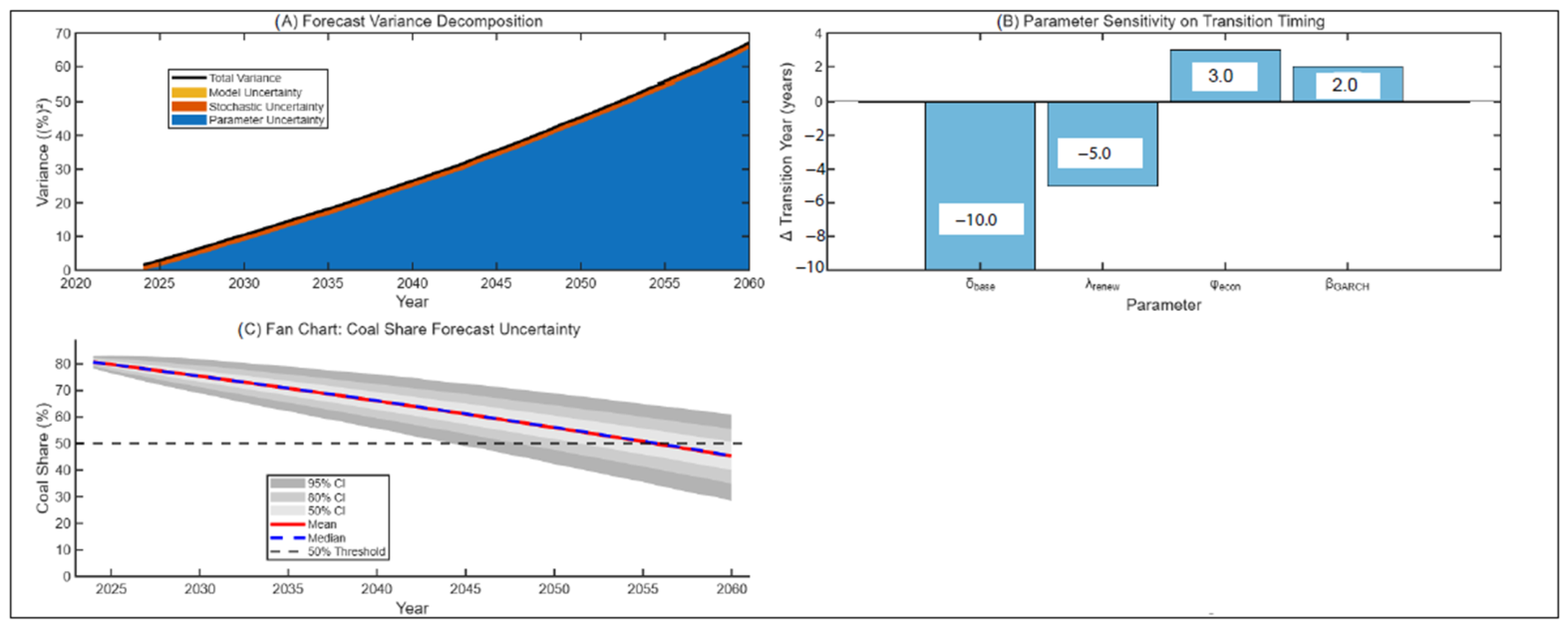
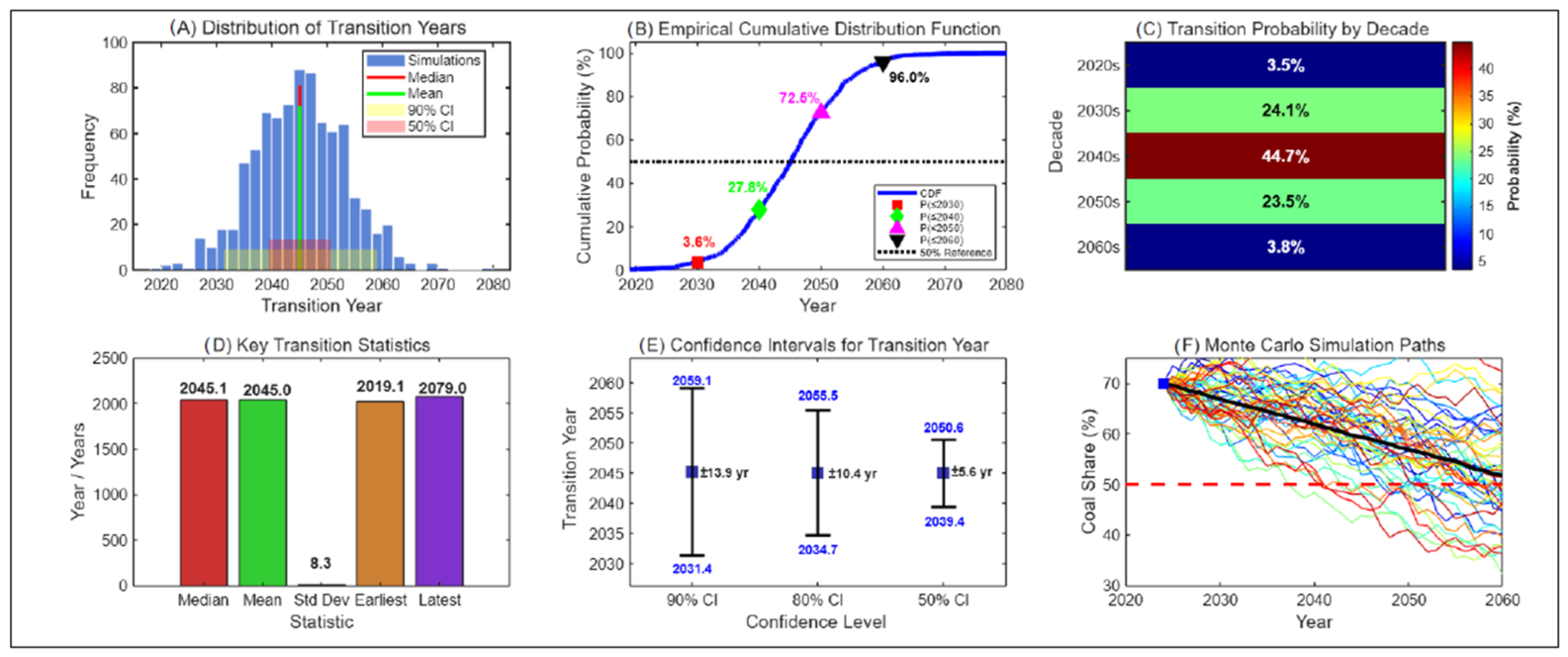

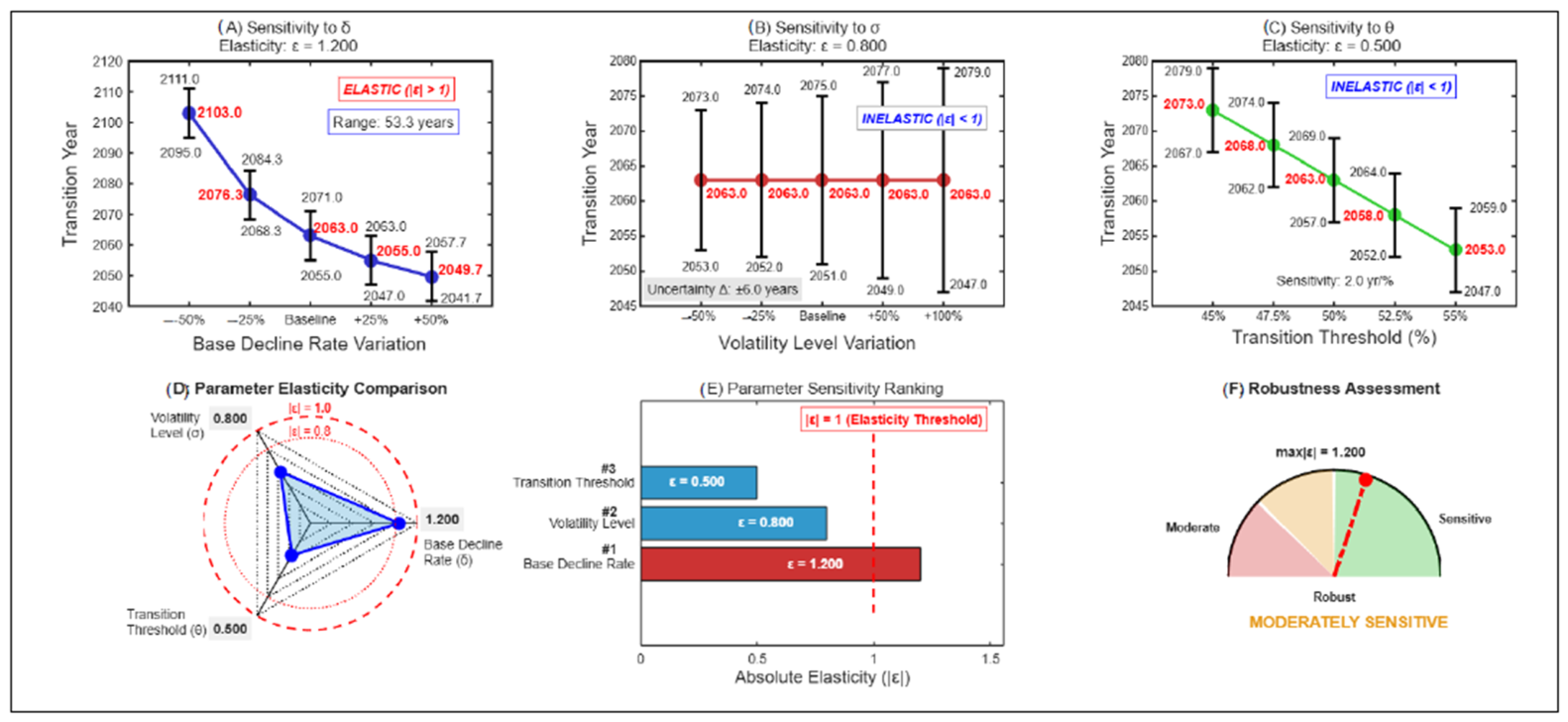
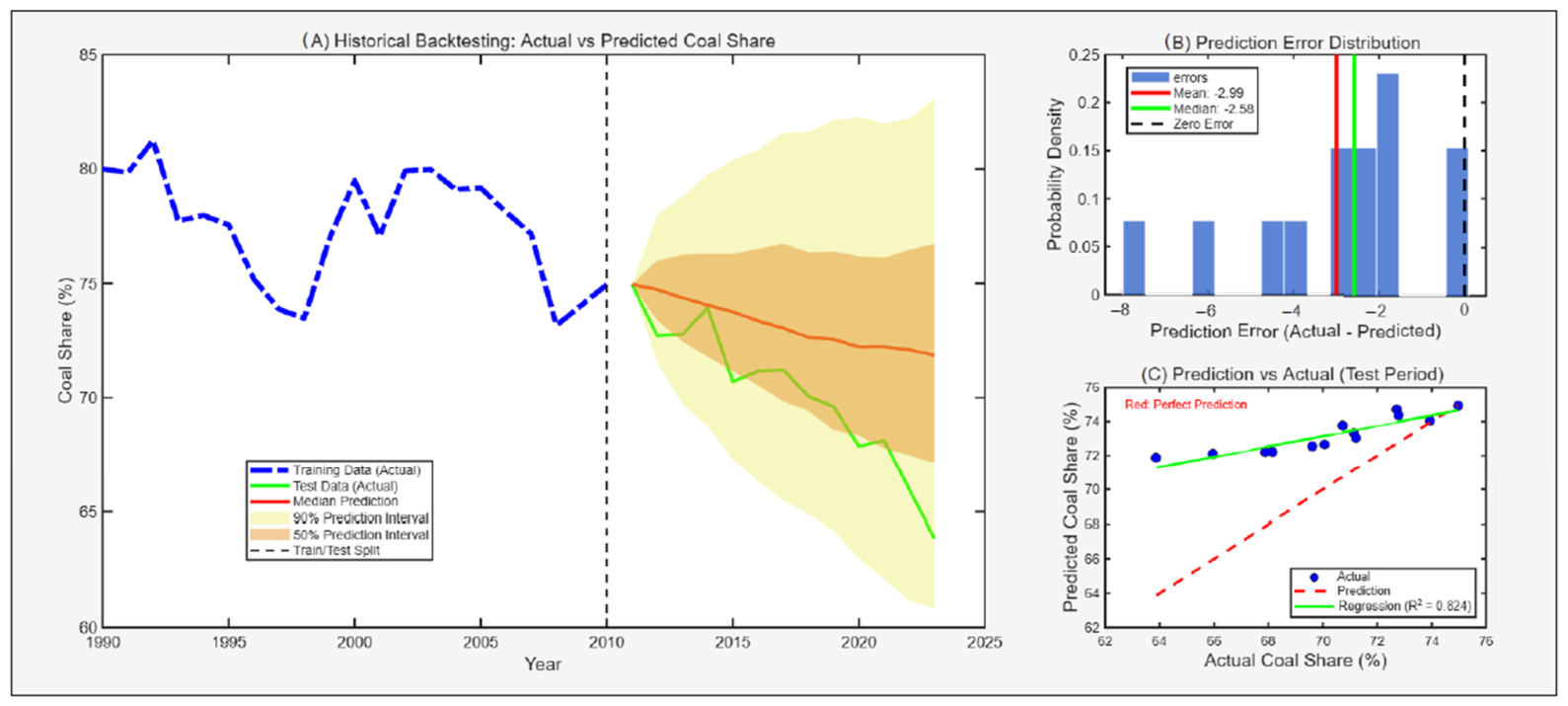

| Author(s) | Objective of the Study | Methodology | Key Findings |
|---|---|---|---|
| Kokubun [53] | Understand carbon lock-in and transition pathway variation across Japan, Australia, India, and South Africa (1970–2022). | 50-year comparative analysis relying on historical energy data and institutional analysis. | A variety of transition pathways exist due to institutional and infrastructural constraints. |
| Bergougui & Ben-Salha [54] | Assess the impact of environmental governance on global energy transitions; identify drivers of cleaner energy shifts. | Panel data econometrics using fixed-effects and system GMM estimation techniques across a large number of countries. | Environmental policy stringency and governance quality significantly speed up transitions. |
| Chen [55] | Examine how energy policy uncertainty impacts public–private investment in BRIC countries; test predicted negative correlation. | Panel econometric methods on BRIC country data. | Energy policy uncertainty significantly discourages investment in all four BRIC countries. |
| Nyiwul et al. [56] | Determine if global economic uncertainty reduces clean energy investment across 93 countries. | Panel data models with fixed effects for country and year. | Economic uncertainty consistently reduces global renewable energy investment. |
| Raman et al. [57] | Link energy justice and gender equity to connect equity, access, and policy for sustainable development. | Systematic review of the literature as well as policy analysis. | Gender justice must be explicitly integrated; otherwise, transitions may worsen existing inequalities. |
| Taiwo & Tozer [58] | Investigate origins and convergence of community energy justice frameworks. | Qualitative synthesis of community energy literature. | Procedural power and benefit distribution are critical to just transitions. |
| Xie et al. [59] | Test how energy-related uncertainty affects corporate investment decisions in China at the firm level. | Panel data models with Chinese firm data. | Energy uncertainty reduces investment, especially in energy-intensive firms. |
| Bashir et al. [60] | Examine relationships between energy innovation, fossil fuel costs, and environmental compliance in advanced industrial economies. | Panel econometric methods with OECD country data. | Technological innovation and R&D investments significantly boost transition progress. |
| Ollier et al. [61] | Understand how government policy priorities shift with transition progress, policy sequencing, and credibility effects. | Comparing policies across countries. | Inconsistent or uncertain policies cause investment delays and distort transition pathways. |
| Shyu [62] | Assess referendums as policy instruments for promoting energy democracy; how democratic tools influence transitional governance. | Case study of Taiwan’s referendums in 2018 and 2021. | Community-oriented instruments improve legitimacy and democratic engagement. |
| Wyse & Das [63] | Examine the energy democracy concept in transition research; reclaim a unique agenda for equitable energy transitions. | Qualitative literature synthesis. | Balancing procedural power and benefit distribution is essential for social sustainability. |
| Gao et al. [64] | Examine whether energy transition can reduce the income gap between urban and rural areas in China; assess equity impacts. | Panel data econometrics with Chinese regional data. | Transitions can either narrow or widen socioeconomic disparities. |
| Kime et al. [65] | Assess equity and justice during low-carbon energy transitions; create metrics for evaluating justice outcomes. | Systematic review of justice frameworks. | Transitions can increase burden on low-income/frontline communities; justice must be explicitly integrated. |
| Haas et al. [66] | Investigate dealing with deep uncertainty in the electricity and transportation sectors; how uncertainty influences transition investment. | Case studies and real-options analysis. | Uncertainty hinders low-carbon technology adoption; unclear policies increase waiting behavior. |
| Puttachai et al. [67] | Investigate threshold effects of ESG performance on energy transitions; identify socioeconomic drivers of transition trajectories. | Threshold regression models for country-level data. | ESG factors, unemployment, and school enrolment significantly impact transitions. |
| Borozan [68] | Identify the structure of European energy transition policy instrument mix; determine which policy combinations effectively drive transitions. | Factor and cluster analysis on EU policy data. | Successful transitions require well-designed policy mixes that incorporate multiple instruments. |
| Shao & Ma [69] | Evaluate the effectiveness of renewable energy policies and electricity market design for transitions. | Qualitative policy review. | Feed-in tariffs, renewable portfolio standards, and fiscal incentives significantly impact renewable deployment. |
| Coenen et al. [70] | Investigate regional foundations of energy transitions; how geography influences transition paths. | Conceptual framework and regional case studies. | Transition pathways vary based on institutional and infrastructure lock-ins. |
| Joshi & Agrawal [71] | Study the uneven distribution of urban energy transitions; understand transitional barriers in Edmonton, Canada. | Qualitative case study analysis. | Significant difference in transition speeds and barriers between urban and rural areas. |
| Saundry [72] | Examine the United States’ energy system in transition; assess sectoral variations in transition progress. | Qualitative system review. | Electricity generation and transportation sectors exhibit distinct transition characteristics. |
| Romano & Fumagalli [73] | Examine the impact of uncertainty on greening the power generation sector; understand how uncertainty impacts low-carbon investment. | Systematic literature review | Uncertainty increases waiting behaviour, consistent with real-options logic. |
| Rogge et al. [74] | Improve conceptual and empirical understanding of policy mixes for transitions; investigate how policy instruments interact. | Mixed-methods approach, including case studies and policy analysis. | Effective policy frameworks must be strategic, stable, and coordinated. |
| Fouquet [75] | Investigate historical energy transitions focusing on speed, price, and system transformation; identify drivers of successful transitions. | Historical economic analysis of energy data. | Technologies providing cheaper or better services support transition success. |
| Araújo [76] | Examine the emerging field of energy transitions; evaluate progress, challenges, and opportunities. | Qualitative literature synthesis. | Decarbonisation and replacement of fossil fuels are key transition dynamics. |
| Gunningham [77] | Evaluate the effectiveness of regulations, economic instruments, and policy tools for sustainable energy transitions. | Comparative policy analysis. | Environmental regulations significantly impact renewable deployment and market transformation. |
| Tambach et al. [78] | Evaluate Dutch energy transition policy instruments for the existing housing stock; assess sector-specific policy effectiveness. | Policy evaluation framework. | Sector-specific studies reveal distinct transition speeds and barriers. |
| Dunne & Mu [79] | Test the uncertainty-investment relationship empirically in the petroleum refining industry. | Plant-level data and econometric models. | Uncertainty reduces the likelihood of capacity expansion. |
| Author(s) and Year | Objective of the Study | Methodology | Key Findings |
|---|---|---|---|
| Osifeko & Munda [80] | Assess seasonal and diurnal variability of renewable resources in South Africa; provide data-driven insights for hybrid system design. | High-resolution meteorological datasets and spatial mapping techniques. | Northern Cape, Free State, and North West provinces showed significant solar-wind complementarity. |
| Hastie et al. [81] | Analyse community decision-making at the land-energy nexus; investigate procedural justice and land rights in renewable projects. | Qualitative case study research, participatory mapping, and community focus groups. | Highlighted the possibility of land grabbing and procedural injustices, particularly near the Bolobedu solar plant. |
| Michael-Ahile et al. [82] | Evaluate community-based energy trading for low-income communities; assess circular energy sharing models for grid reduction. | Agent-based modelling, including energy flow simulations and demand profiling. | Community trading can reduce grid reliance by up to 16%. |
| Bergougui et al. [83] | Investigate how high-tech research investment promotes green energy transition across countries; evaluate the moderating effect of institutional quality in South Africa. | Panel data econometrics and system GMM estimation across multiple countries. | Institutional quality is critical in facilitating renewable energy adoption. |
| Miller et al. [84] | Investigate the role of hybrid renewable energy systems in facilitating South Africa’s energy transition; evaluate grid resilience and decentralisation benefits. | Simulation modelling, techno-economic optimisation algorithms, and sensitivity analysis. | Hybrid systems can reduce levelised energy costs by up to 18%. |
| Xaba [85] | Assess the progress of South Africa’s just energy transition in coal regions; evaluate Komati decommissioning as a representative case study. | Qualitative policy evaluation, including site visits and semi-structured stakeholder interviews. | Highlighted vulnerability of coal regions and the need for integrated socioeconomic planning. |
| Von Lüpke [86] | Evaluate Just Energy Transition Partnership (JETP) in South Africa; identify key factors influencing international cooperation and funding. | Qualitative policy analysis, process tracing, and document review of JETP agreements. | Eskom’s indebtedness and supply failures create both barriers and political opportunities for reform. |
| Bothongo & Kinyar [87] | Rethink South Africa’s coal phase-out; determine if renewable energy and eco-innovation promote just transition. | Scenario-based modelling and econometric estimation of environmental and growth outcomes. | Eco-innovation can improve both environmental and economic outcomes during the transition period. |
| Hussein et al. [88] | Investigate the future of green hydrogen energy technology in South Africa; assess the hydrogen economy’s production viability and export potential. | Techno-economic feasibility analysis, infrastructure gap assessment, and cost modelling. | Green hydrogen has significant economic potential, but infrastructure gaps remain a major impediment. |
| Mohr [89] | Investigate competing narratives in South Africa’s just energy transition; learn how various actors frame coal, climate, jobs, and transition planning. | Discourse analysis, semi-structured elite interviews, and media content analysis. | Significant narrative divergence among government, labour, industry, and civil society. |
| O’Connell & Schot [90] | Conduct theoretical and systematic analysis of finance in strategic niche management; investigate how financial mechanisms promote hydrogen innovation. | Case study analysis, document review, and stakeholder interviews in the hydrogen sector. | Further research is needed to understand the dynamics of finance and niche innovation. |
| Cole et al. [91] | Investigate risk in South Africa’s just transition; determine who is left behind under various transition scenarios. | Quantitative risk profiling, composite indicator construction, and scenario analysis across coal regions. | Identified vulnerable groups for delayed versus accelerated transition timelines. |
| Essex et al. [92] | Investigate the capacity of South African energy governance to deliver urban sustainable transitions; evaluate governance capacity across several cities. | Qualitative governance assessments, multi-stakeholder workshops, and institutional analysis frameworks. | Fragmented governance structures undermine coordinated transition planning. |
| Mirzania et al. [93] | Identify barriers to moving beyond coal in South Africa; evaluate implications for a just energy transition across the coal value chain. | Systematic literature review and qualitative synthesis of 150 peer-reviewed studies and policy documents. | Identified gaps in techno-economic modelling and neglected socio-political dimensions. |
| Msimango et al. [94] | Examine South Africa’s energy policy with emphasis on competition and climate change; evaluate policy coherence and institutional alignment for decarbonisation. | Policy analysis, review of energy white papers, and stakeholder interviews. | Institutional quality is critical to promoting renewable energy adoption. |
| Hanto et al. [95] | Conduct a thorough political economy analysis of South Africa’s energy transition; understand the causes of policy inertia and coal persistence. | Mixed methods research, including elite interviews, stakeholder mapping, and policy document analysis. | Governance fragmentation and capability inconsistencies impede transition outcomes. |
| Murombo [96] | Examine regulatory requirements for renewable energy from a South African legal perspective; assess legal and regulatory barriers to renewable deployment. | Doctrinal legal analysis with thorough policy and statute review of energy legislation. | Identified legal and regulatory barriers to renewable deployment. |
| Müller & Claar [97] | Examine South Africa’s REIPPPP; evaluate auction mechanisms and just transition outcomes. | Policy analysis with contract reviews, tender documents, and stakeholder interviews. | REIPPPP increased renewable capacity but also led to spatial and socio-political tensions. |
| Nene & Nagy [98] | Investigate legal regulations and policy barriers to renewable energy development; identify policy inconsistencies and regulatory obstacles to green investment. | Qualitative policy analysis and comparative legal assessment across regulatory frameworks. | Policy inconsistency and regulatory misalignment persist. |
| McEwan [99] | Investigate spatial processes and politics of South Africa’s transition to renewable energy; explore land, zones, and frictions in renewable deployment. | Qualitative spatial analysis and case studies of designated renewable energy development zones. | Land politics and local benefit distribution issues remain unresolved. |
| Mudziwepasi & Scott [100] | Investigate renewable energy technologies as potential alternatives to grid extension for rural electrification; evaluate the cost-effectiveness of standalone systems. | Techno-economic feasibility analysis, including lifecycle costing and rural demand profiling. | Stand-alone photovoltaic and small wind systems are cost-competitive for rural electrification. |
| Baker et al. [101] | Investigate the political economy of energy transitions in South Africa; understand how coal-based interests influence policy inertia and transition speed. | Qualitative case study analysis, semi-structured interviews, and historical document review. | South Africa’s minerals-energy complex and coal-favouring actors limit renewable uptake. |
| Variables | Denoted As | Measurement | * Source |
|---|---|---|---|
| Gross electricity generation | |||
| Total electricity generation | EG | Terawatt-hours (TWh), or a trillion watt-hours. | Energy Institute-Statistical Review of World Energy–with major processing by World in Data |
| Electricity generated using fossil fuels | |||
| Electricity generated from coal | CE | Terawatt-hours (TWh), or a trillion watt-hours. | Energy Institute-Statistical Review of World Energy–with major processing by Our World in Data |
| Electricity generated from gas | GE | Terawatt-hours (TWh), or a trillion watt-hours. | |
| Electricity generated from oil | OE | Terawatt-hours (TWh), or a trillion watt-hours. | |
| Nuclear energy | |||
| Electricity generated from nuclear | NE | Terawatt-hours (TWh), or a trillion watt-hours. | Energy Institute-Statistical Review of World Energy–with major processing by Our World in Data |
| Renewable energy sources | |||
| Electricity generated from wind power | WP | Terawatt-hours (TWh), or a trillion watt-hours. | Energy Institute-Statistical Review of World Energy–with major processing by Our World in Data |
| Electricity generated from solar power | SP | Terawatt-hours (TWh), or a trillion watt-hours. | |
| Electricity generated from Hydropower | HP | Terawatt-hours (TWh), or a trillion watt-hours. | |
| Economic related variables | |||
| Trade | TR | Trade as a share of GDP (%) | World Bank and OECD national accounts–processed by World in Data |
| Gross domestic product | GDP | % annual growth rates | SARB |
| Carbon intensity of energy production | CI | measured in kilograms of CO2 per kilowatt-hour. | Energy Institute-Statistical Review of World Energy–with major processing by World in Data |
| Political Corruption Index | PCI | Index (Central estimate of the extent to which a country is affected by political corruption)–a proxy measure for public sector governance. | V-Dem–processed by World in Data |
| Symbol | Description | Unit Measurement | First Appearance |
|---|---|---|---|
| Coal share of electricity generation | % | Equation (1) | |
| Renewable energy generation | TWh | Equation (3) | |
| Renewable energy share of generation | % | Equation (4) | |
| Mean coal share over sample period | % | Section 3.3.2 | |
| Standard deviation of coal share | % | Section 3.3.2 | |
| Mean annual change in coal share | pp/year | Section 3.3.2 | |
| Standard deviation of annual changes | pp/year | Section 3.3.2 | |
| Baseline annual coal decline rate | pp/year | Equation (11) | |
| Pre-break trend slope | pp/year | Equation (7) | |
| Post-break trend slope | pp/year | Equation (8) | |
| GARCH base volatility | – | Equation (38) | |
| (GARCH) | GARCH shock sensitivity | – | Equation (38) |
| (GARCH) | GARCH volatility persistence | – | Equation (38) |
| Renewable feedback strength | – | Equation (40) | |
| Economic feedback sensitivity | – | Equation (40) | |
| Transition year for simulation | year | Equation (43) | |
| Mean transition year across simulations | year | Equation (45) | |
| Standard deviation of transition years | year | Equation (46) | |
| Cumulative probability of transition by year | % | Equation (48) | |
| Policy multiplier | – | Equation (50) | |
| Total policy-induced acceleration | pp/year | Equation (50) | |
| Arc elasticity | – | Equation (62) | |
| MAPE | Mean absolute percentage error | % | Equation (63) |
| Parameter | Symbol | Value | Justification |
|---|---|---|---|
| Baseline coal decline rate | 0.754% per year | Post-2011 trend from Chow test (Equation (8)). Represents the empirical annual decline in coal’s share of electricity generation following the REIPPPP policy intervention. | |
| GARCH base volatility | Anchors long-run variance to historical volatility (. Standard GARCH specification ensures unconditional variance consistency with observed data. | ||
| GARCH shock sensitivity | 0.1 | Moderate weight assigned to recent shocks. Falls within the literature range of 0.05–0.15 for energy price and policy volatility models [125]. | |
| GARCH volatility persistence | 0.8 | High persistence parameter reflecting the tendency of volatility to cluster over time. Consistent with energy policy and investment cycles where uncertainty propagates across multiple periods (literature range: 0.7–0.9). | |
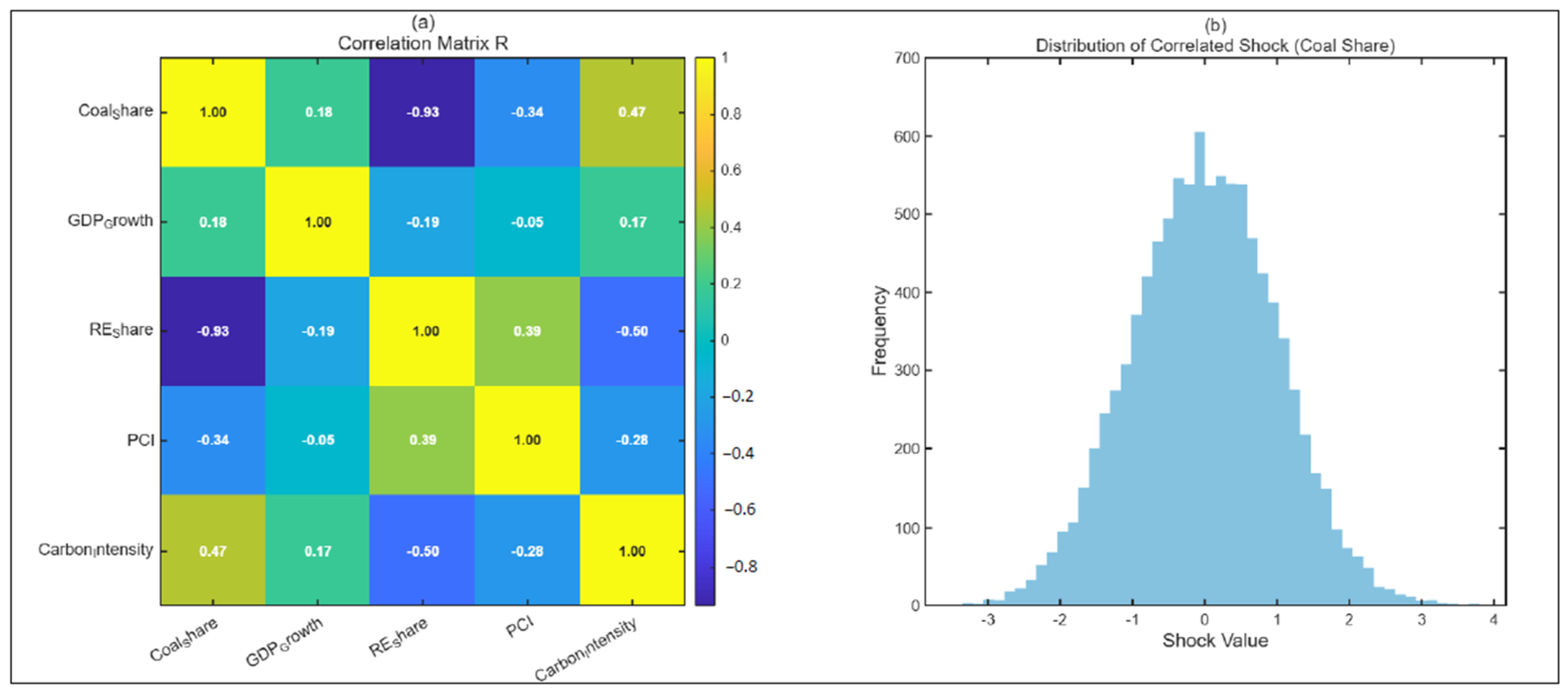
| Renewable feedback strength | 0.8 | Calibrated from historical displacement elasticity between coal and renewable energy (−0.93 from Figure 4A). Sensitivity sweep over 0.5–1.2 showed stability of transition year within ±2 years. | |
| Economic feedback sensitivity | 0.05 | Derived from the GDP–coal correlation (0.18 from Figure 4A). Each one percentage point positive GDP shock temporarily slows coal decline by 0.05 percentage points. This value was validated through sensitivity analysis (Section 4.9). |
| Criterion | ARIMA/ SARIMA | VAR/ VECM | System Dynamics | Machine Learning (LSTM/RF) | Our Integrated Monte Carlo |
|---|---|---|---|---|---|
| Handles non-linear trends | No | Limited | Yes | Yes | Yes |
| Captures stochastic volatility | No | No | Limited | Yes | Yes (GARCH) |
| Incorporates policy shocks | No | Weak | Yes | No | Yes (structural break) |
| Accounts for parameter uncertainty | No | Weak | Limited | No | Yes (Bayesian priors) |
| Multi-variable correlation structure | No | Yes | Yes | Limited | Yes (Cholesky) |
| Policy scenario simulation | No | Limited | Yes | No | Yes (synergy multiplier) |
| Interpretability for policymakers | High | Medium | Medium | Low | High |
| Data requirements (annual) | Low | Medium | High | Very high | Medium |
| Parameter of Interest | Value | Unit of Measurement |
|---|---|---|
| Number of years (T) | 39 | years |
| Mean coal share () | 91.83 | % |
| Standard deviation of coal share () | 2.83 | % |
| Coefficient of variation (/) | 0.03 | coefficient |
| Minimum coal share | 81.57 | % |
| Maximum coal share | 94.99 | % |
| Range | 13.42 | % |
| Median coal share | 92.92 | % |
| Interquartile range of CS | 3.12 | % |
| Mean annual change () | −0.34 | pp/year |
| Standard deviation of annual changes () | 1.34 | pp/year |
| Signal-to-noise ratio (/) | 0.25 | ratio |
| Interquartile range of (ΔCS) | 1.53 | pp/year |
| Current Coal share (2023) | 81.57 | % |
| Distance to 50% threshold | 31.57 | % |
| Model of Interest | k | T | RSS | AIC | BIC | AIC Selected (Yes/No) | BIC Selected (Yes/No) |
|---|---|---|---|---|---|---|---|
| Linear | 2 | 13 | 25.53 | 12.77 | 13.90 | No | No |
| Quadratic | 3 | 13 | 13.84 | 6.81 | 8.51 | Yes | Yes |
| Exponential Decay | 3 | 13 | 101.95 | 32.77 | 34.47 | No | No |
| Row | Coal_Share | GDP_Growth | RE_Share | PCI | Carbon_Intensity |
|---|---|---|---|---|---|
| Coal_share | 1.00 | 0.00 | 0.00 | 0.00 | 0.00 |
| GDP_growth | 0.18 | 0.98 | 0.00 | 0.00 | 0.00 |
| RE_share | −0.93 | −0.02 | 0.36 | 0.00 | 0.00 |
| PCI | −0.34 | 0.01 | 0.20 | 0.92 | 0.00 |
| Carbon_intensity | 0.47 | 0.09 | −0.17 | −0.09 | 0.86 |
| Parameter Coefficient | Posterior Mean | Posterior Std | Confidence Interval (Lower) 95% | Confidence Interval (Upper) 95% | Sample Size | Period |
|---|---|---|---|---|---|---|
| Intercept (α) | 90,459 | 0.752 | 88,982 | 91,962 | 10,000 | 1985–2023 |
| Linear (β) | 0.474 | 0.086 | 0.303 | 0.644 | 10,000 | 1985–2023 |
| Quadratic (γ) | −0.015 | 0.002 | −0.020 | −0.011 | 10,000 | 1985–2023 |
| Error Variance (σ2) | 2.221 | 0.501 | 1.450 | 3.405 | 10,000 | 1985–2023 |
| Scenario | Scenario: No New Policy (m = 0.0) | Scenario: Moderate Implementation (m = 0.5) | Scenario: Full Implementation (m = 1.0) | Scenario: Aggressive Implementation (m = 1.5) |
|---|---|---|---|---|
| Linear impact | 0.0000 pp/year | 0.3050 pp/year | 0.6100 pp/year | 0.9150 pp/year |
| Synergistic impact | 0.0000 pp/year | 0.0044 pp/year | 0.0174 pp/year | 0.0392 pp/year |
| Total policy impact (Δδ) | 0.0000 pp/year | 0.3094 pp/year | 0.6274 pp/year | 0.9542 pp/year |
| Effective decline rate (δ_scenario) | 0.5000 pp/year | 0.8094 pp/year | 1.1274 pp/year | 1.4542 pp/year |
| Deterministic transition year | 2084 | 2060 | 2050 | 2044 |
| Synergy contribution | 0% of total impact | 1.4% of total impact | 2.8% of total impact | 4.1% of total impact |
| Acceleration factor vs. baseline | 1.00× | 1.62× | 2.25× | 2.91× |
| Years saved vs. no new policy | - | 23.5 years | 34.2 years | 40.3 years |
| Parameter | Z-Score | Early Mean | Late Mean | Converged? (Yes/No) |
|---|---|---|---|---|
| Drift (δ) | −0.199 | −0.4942 | −0.4896 | Yes |
| Volatility (σ) | 0.379 | 1.1989 | 1.1927 | Yes |
| Mean Reversion (α) | −2.978 | 0.134 | 0.2994 | No * |
| Long-term Mean (μ) | −1.178 | 49.0193 | 49.8879 | Yes |
| Jump Intensity (λ) | −1.365 | 0.0473 | 0.0486 | Yes |
Disclaimer/Publisher’s Note: The statements, opinions and data contained in all publications are solely those of the individual author(s) and contributor(s) and not of MDPI and/or the editor(s). MDPI and/or the editor(s) disclaim responsibility for any injury to people or property resulting from any ideas, methods, instructions or products referred to in the content. |
© 2026 by the authors. Licensee MDPI, Basel, Switzerland. This article is an open access article distributed under the terms and conditions of the Creative Commons Attribution (CC BY) license.
Share and Cite
Majenge, L.; Msomi, S.; Mpungose, S. Forecasting South Africa’s Coal-to-Clean Energy Transition: A Monte Carlo Simulation. Forecasting 2026, 8, 47. https://doi.org/10.3390/forecast8030047
Majenge L, Msomi S, Mpungose S. Forecasting South Africa’s Coal-to-Clean Energy Transition: A Monte Carlo Simulation. Forecasting. 2026; 8(3):47. https://doi.org/10.3390/forecast8030047
Chicago/Turabian StyleMajenge, Luyanda, Simiso Msomi, and Sakhile Mpungose. 2026. "Forecasting South Africa’s Coal-to-Clean Energy Transition: A Monte Carlo Simulation" Forecasting 8, no. 3: 47. https://doi.org/10.3390/forecast8030047
APA StyleMajenge, L., Msomi, S., & Mpungose, S. (2026). Forecasting South Africa’s Coal-to-Clean Energy Transition: A Monte Carlo Simulation. Forecasting, 8(3), 47. https://doi.org/10.3390/forecast8030047