
A Comparative and Regional Study of Atmospheric Temperature in the Near-Space Environment Using Intelligent Modeling

Highlights
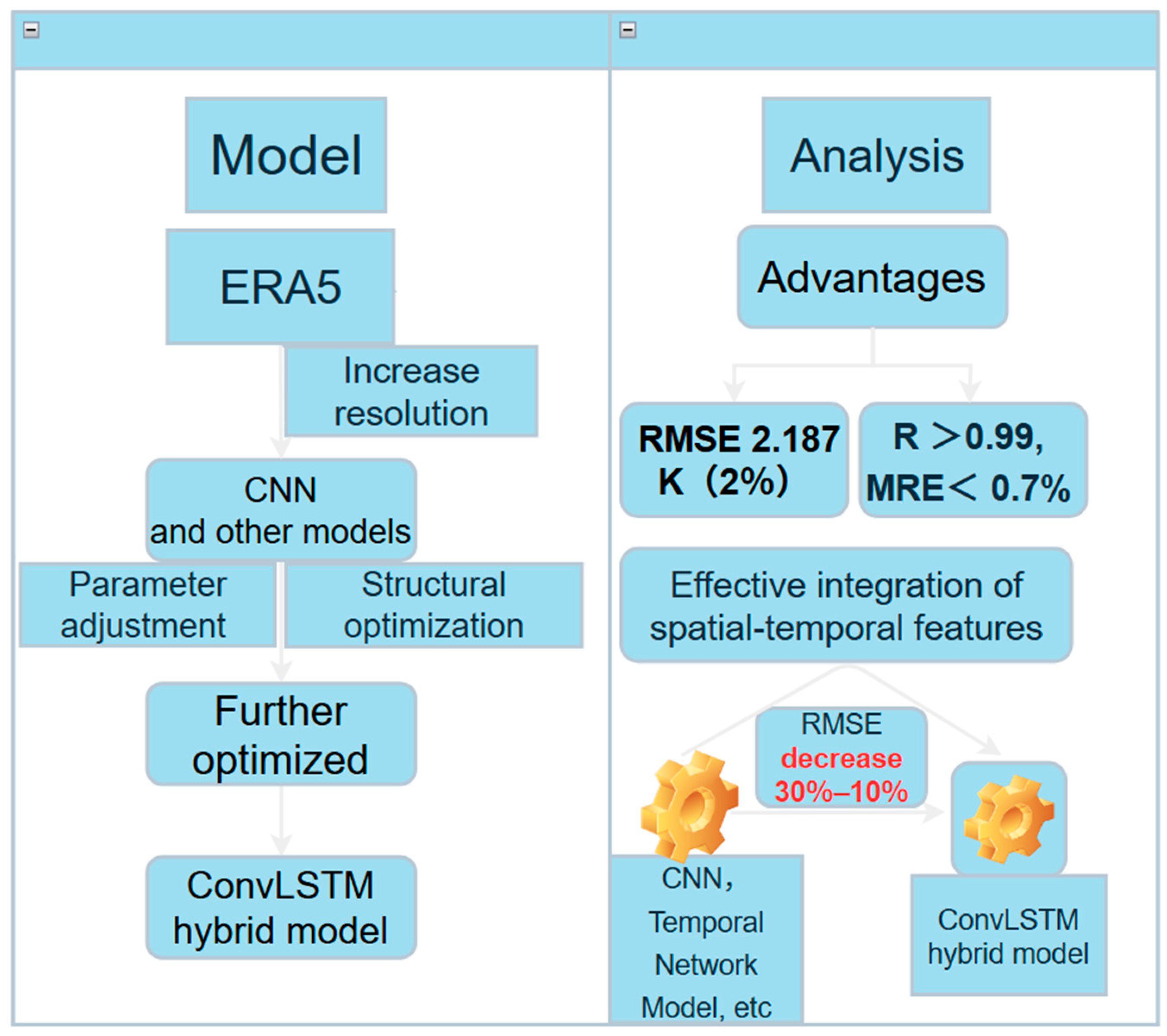
- Novel Hybrid ConvLSTM Model.A ConvLSTM-based hybrid model integrating 3D convolution and a residual attention mechanism are proposed, effectively capturing spatiotemporal features of near-space atmospheric temperature with superior performance.
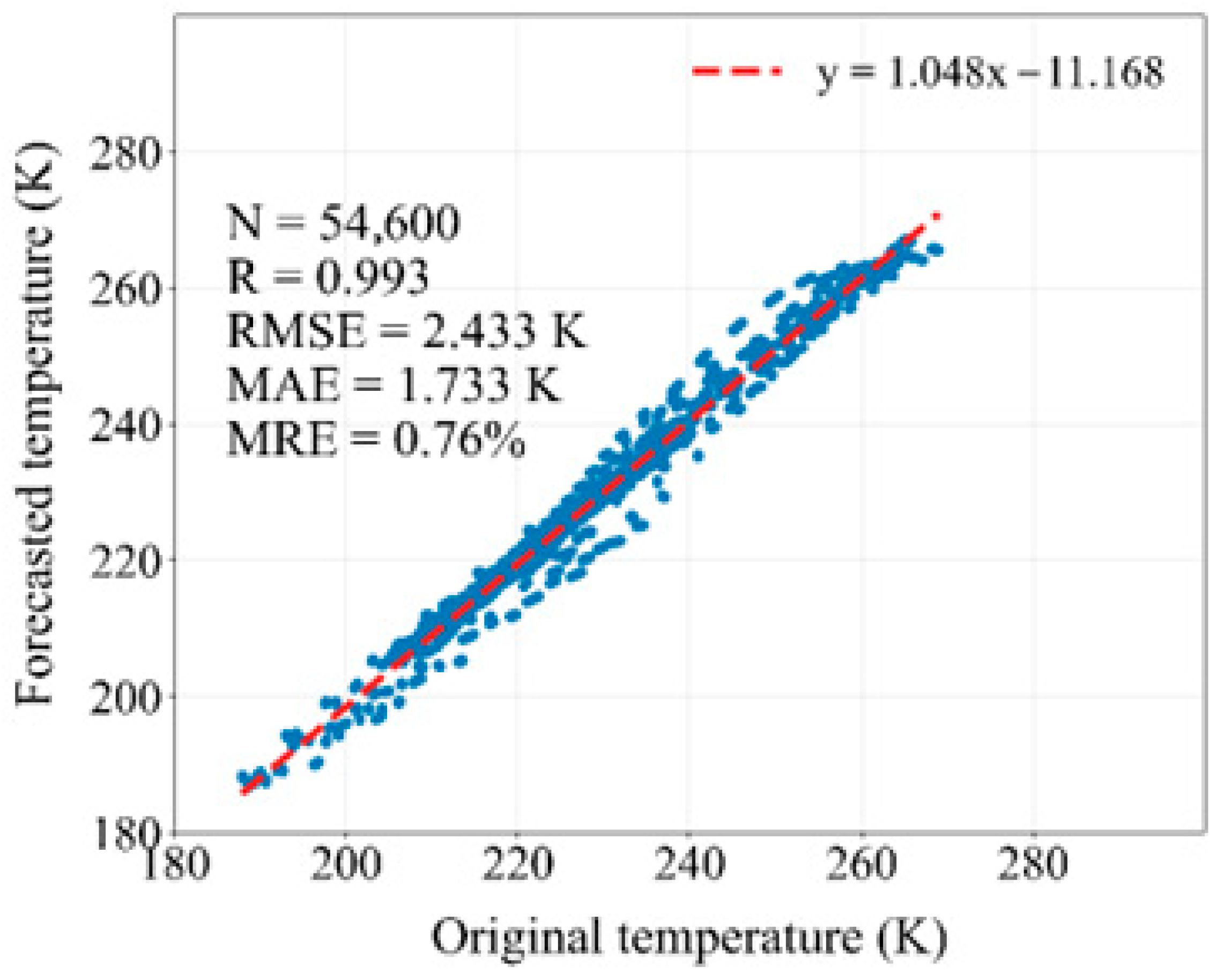
- State-of-the-Art Prediction Accuracy.The model achieves an RMSE of 2.187 K, a correlation coefficient (R) of 0.994, and a Mean relative error (MRE) of 0.67% on the test set, outperforming traditional CNN and sequential models like LSTM and GRU.
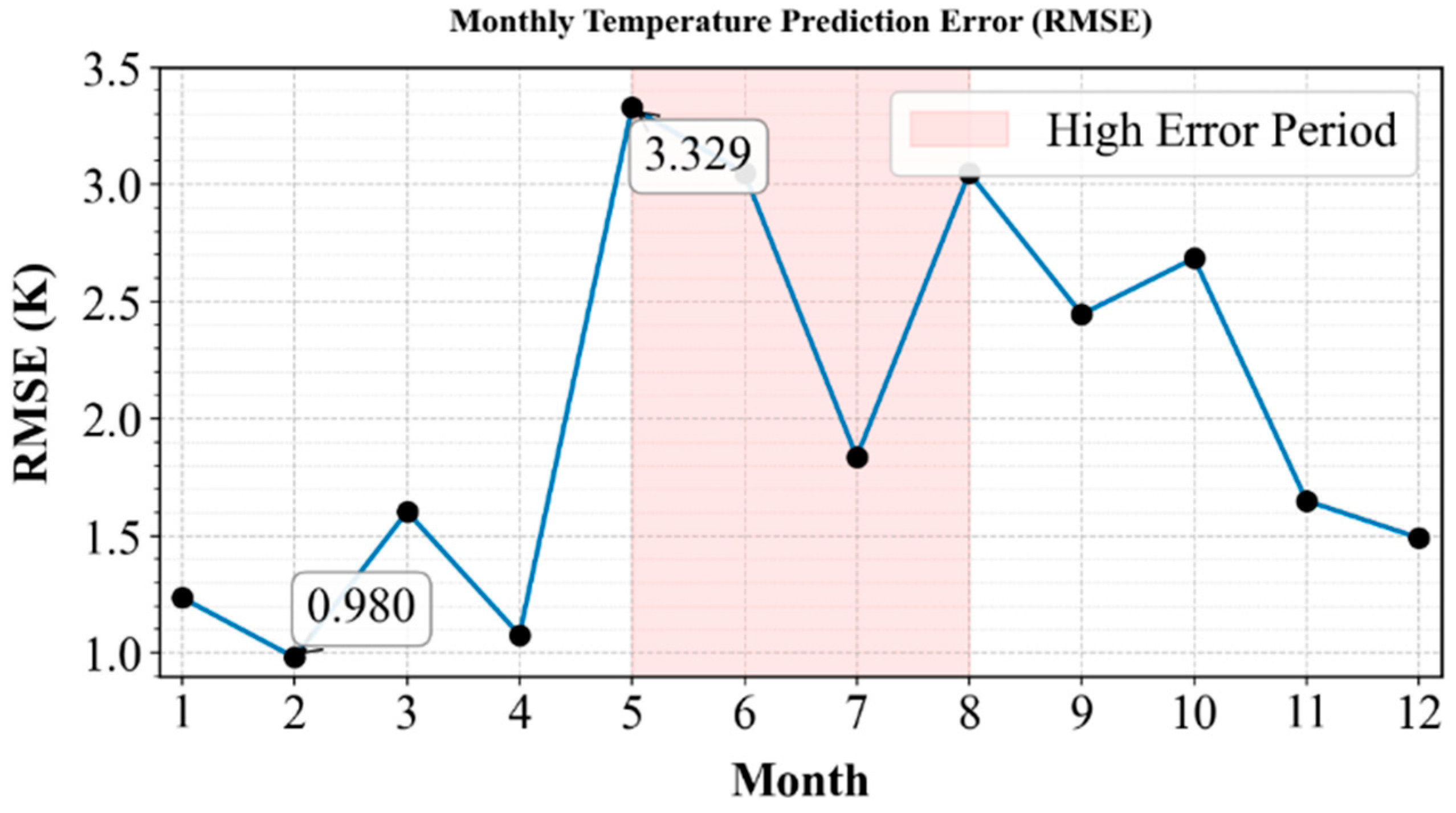
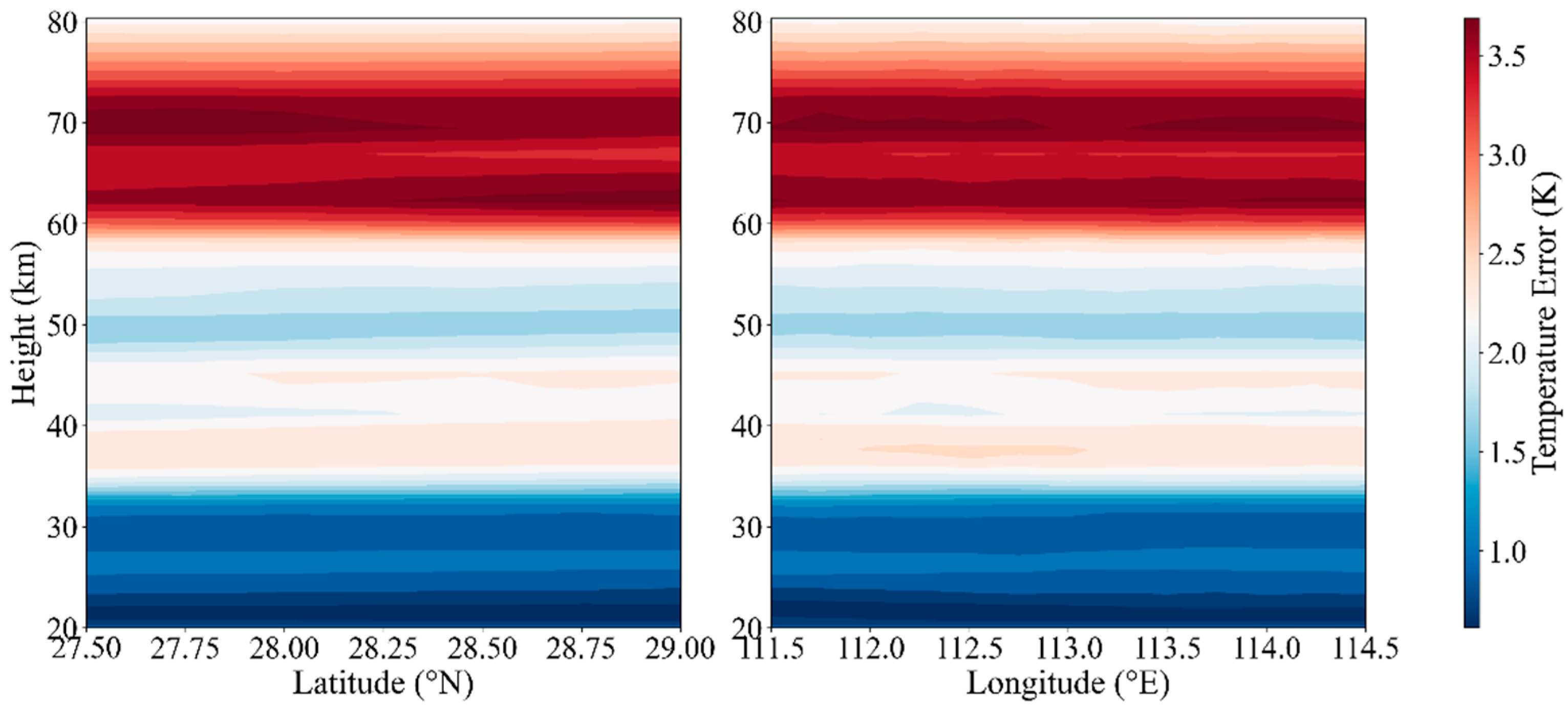
- Seasonal and Vertical Error Analysis.Prediction stability is higher in winter (RMSE < 1.23 K) than in summer (peak RMSE = 3.33 K), with systematic overestimation observed in the mesosphere (50–70 km), attributed to complex atmospheric processes and data resolution limitations.
- Comprehensive Model Comparison.Extensive experiments compare multiple architectures (CNN, FCN, LSTM, BiLSTM, GRU, and hybrid variants), demonstrating the advantage of spatiotemporal modeling over spatial-only or temporal-only approaches.
Abstract
1. Introduction
2. Study Area and Data
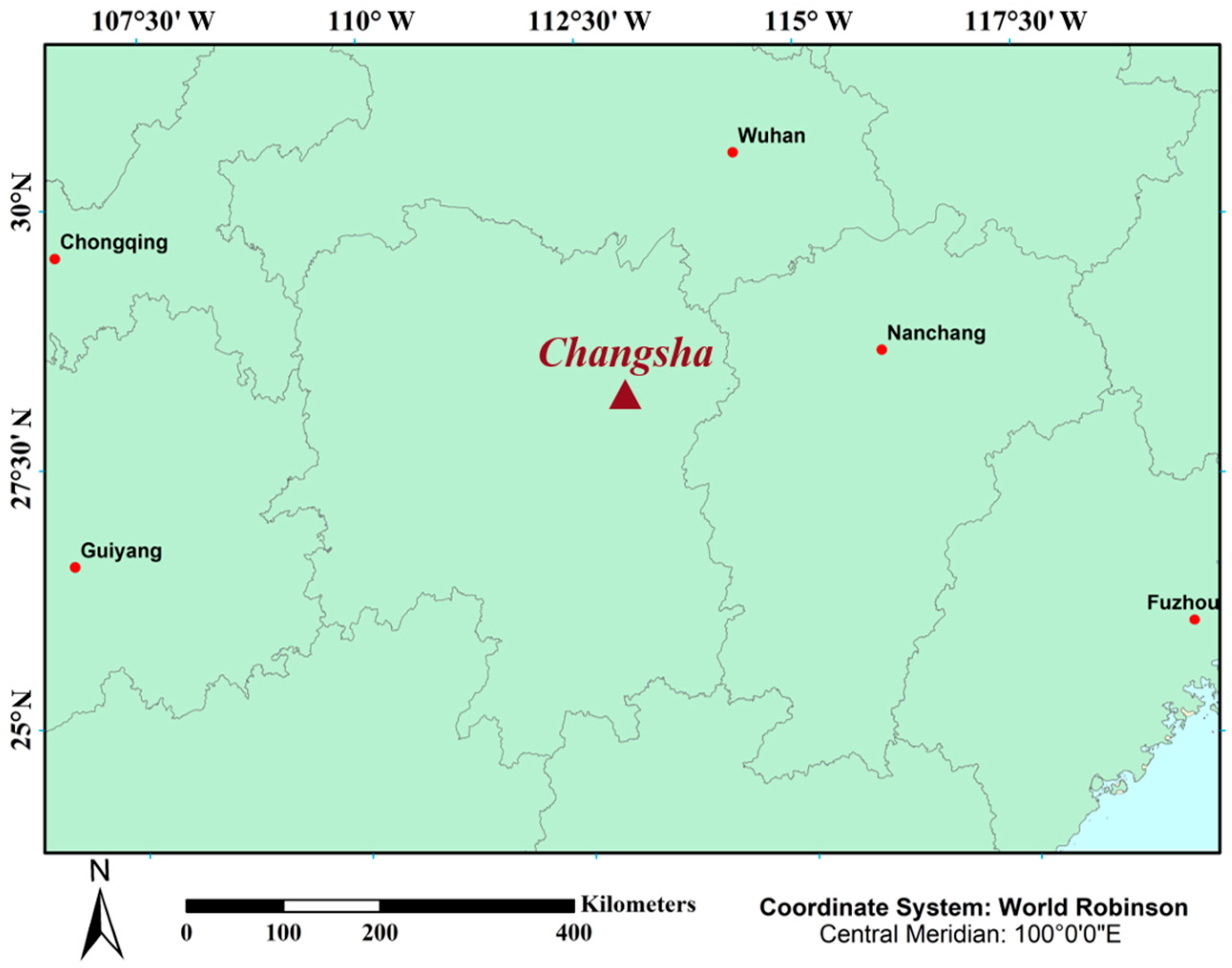
2.1. Study Area Description
2.2. Data Description
2.2.1. ERA5 Dataset Description
- (1)
- The near-space atmosphere exhibits relatively homogeneous horizontal structures at synoptic scales, diminishing the necessity for very high horizontal resolution;
- (2)
- ERA5 incorporates assimilation of multiple observational sources—including satellite data, radiosondes, and aircraft measurements—ensuring high data quality and physical consistency;
- (3)
- The high vertical resolution (137 levels) adequately captures key thermal variations throughout the stratosphere and mesosphere.
2.2.2. FY-4A Dataset Description
2.3. Data Preprocessing and Quality Control
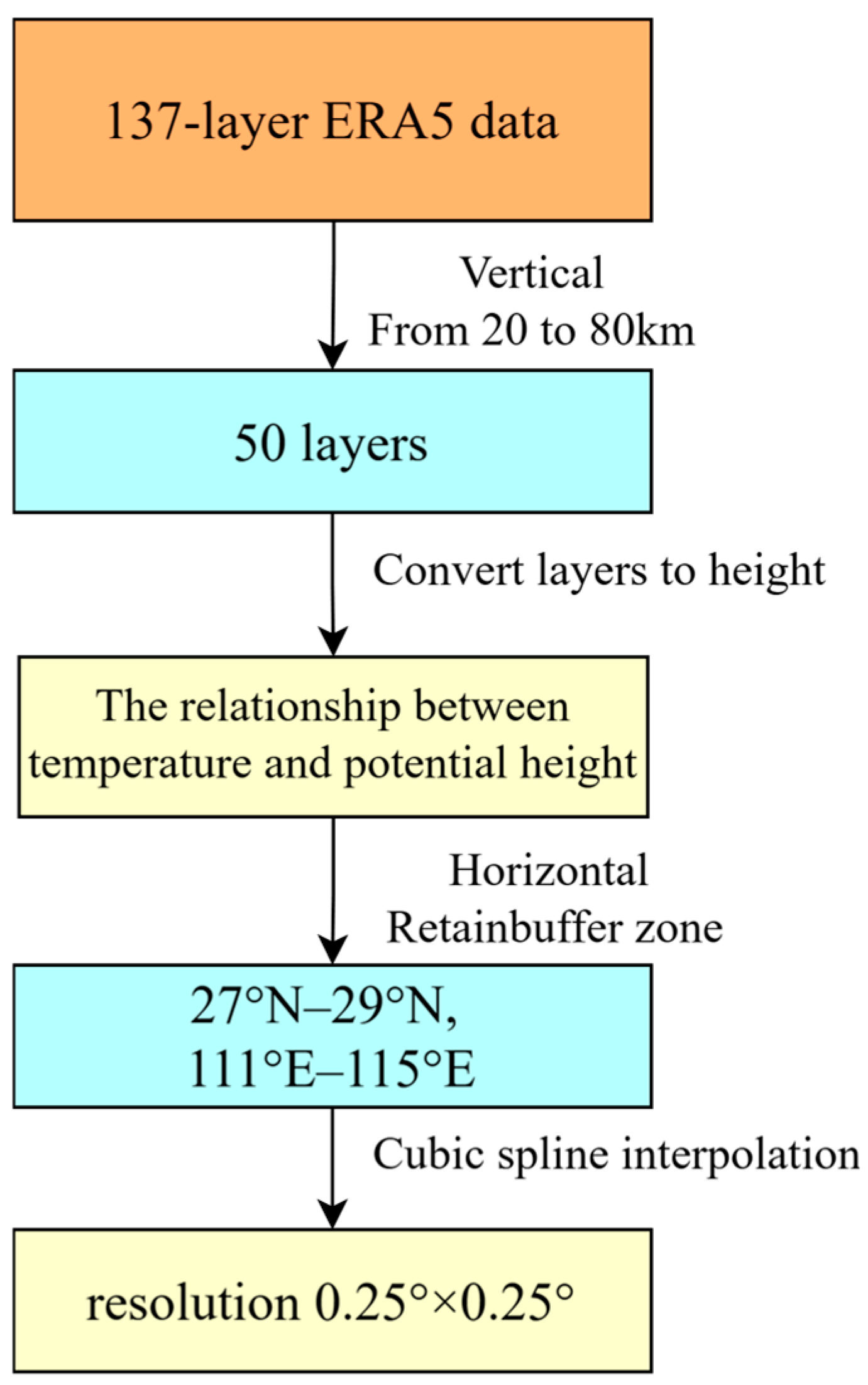
2.3.1. ERA5 Data Preprocessing
2.3.2. FY-4A Data Preprocessing
2.4. Evaluation Metrics
2.5. Analysis of Processed Data
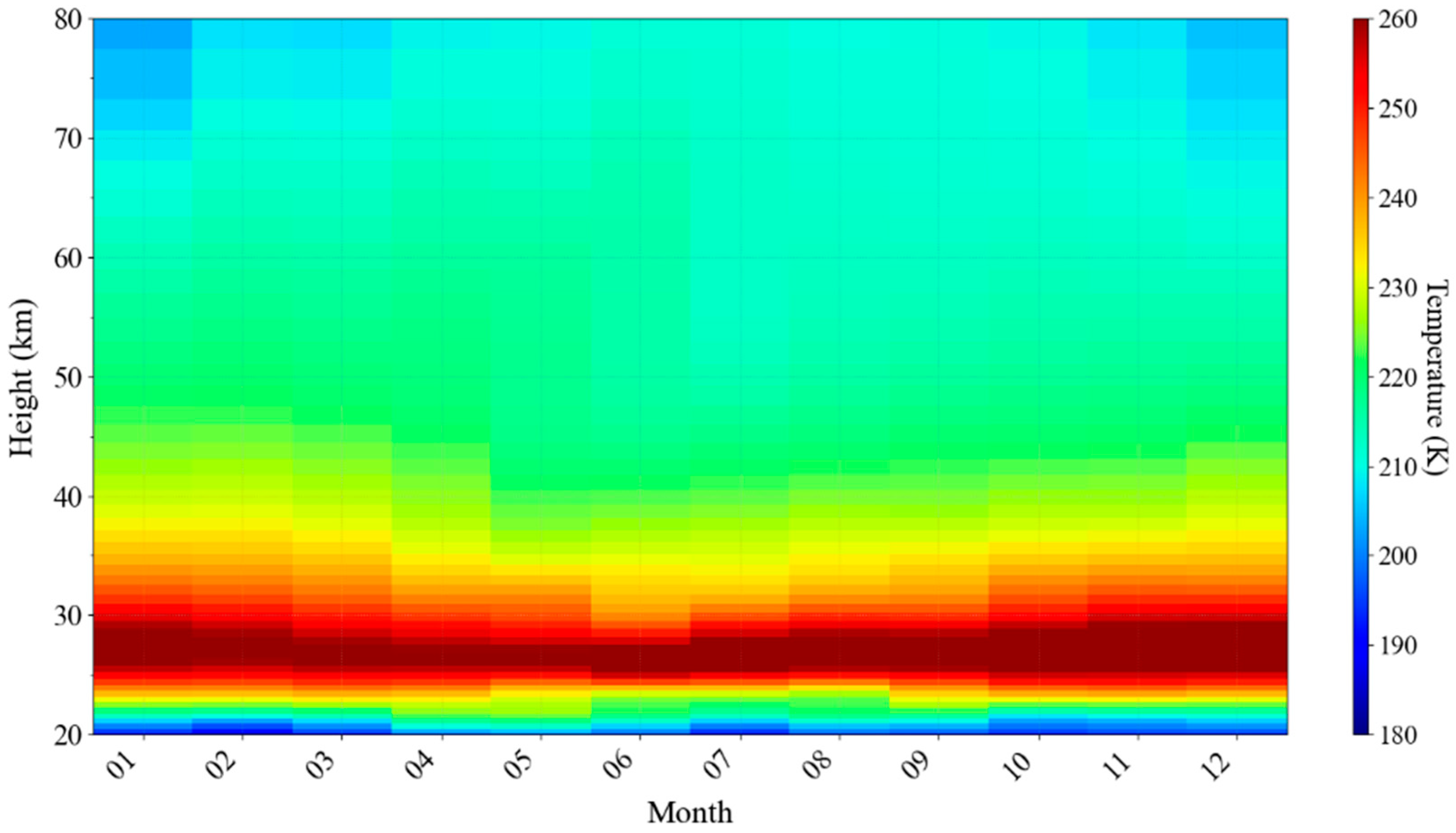
2.5.1. Monthly Average Atmospheric Temperature Profile Distribution
2.5.2. Spatial Autocorrelation Analysis
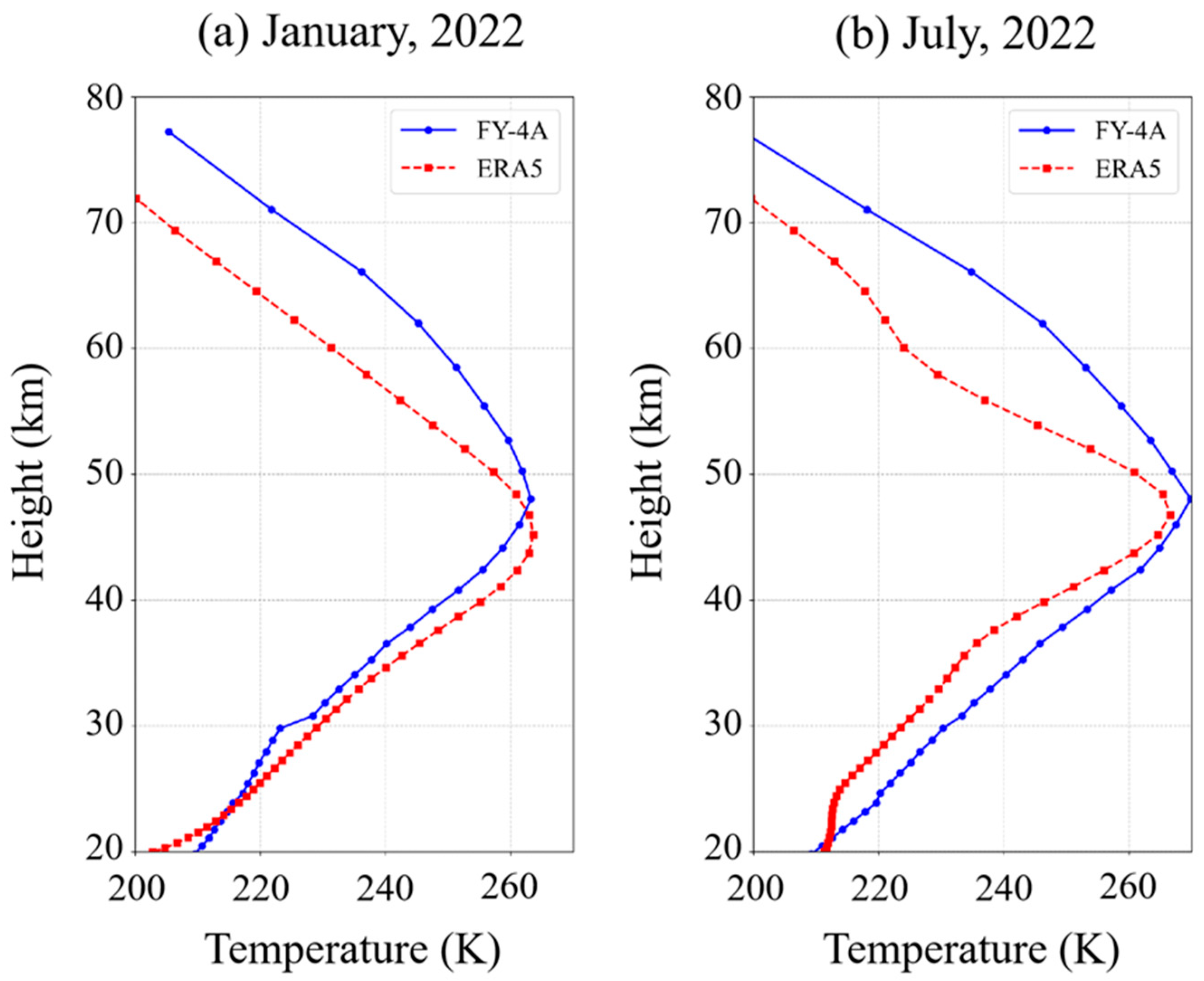
2.5.3. Comparison of Temperature Profiles with FY-4A
3. Models and Methods
3.1. Model Principles
3.1.1. MLP Neural Network
3.1.2. CNN Neural Network Algorithm
3.1.3. LSTM and BiLSTM Neural Network Algorithm Principles
3.1.4. GRU Neural Network Algorithm Principles
3.1.5. ConvLSTM Neural Network Algorithm Principles
3.2. Parameter Training
3.2.1. Training Samples
3.2.2. CNN Model Training
3.2.3. Time-Series Neural Network Model Training
3.2.4. Training Time-Series Neural Networks with CNN Feature Extraction
3.2.5. ConvLSTM Model Training
4. Results and Analysis
5. Summary
5.1. Main Work and Conclusions
- (1)
- Deep neural network model optimization and validation are conducted. An improved Fully Convolutional Network (FCN) is proposed to address the spatial information loss in traditional CNNs. Through introducing dilated convolutions and residual connections, the predicted RMSE is reduced from 4.8 K to 3.23 K. This proves that the accuracy of the CNN model is greatly improved after the modification of FCN. This study constructs LSTM, BiLSTM, GRU, and their attention mechanism variants. It is found that the LSTM encoder–decoder model with attention (RMSE = 2.71 K) significantly outperforms the base LSTM (RMSE = 2.75 K), validating the attention mechanism’s ability to focus on key meteorological events. And it is noted that the error of the hybrid model is significantly lower than that of the standalone CNN model, which proves the advantage of model mixing in dealing with spatiotemporal joint problems. The ConvLSTM-based hybrid architecture emerged as the most effective framework, achieving a minimal RMSE relative to ERA5 reanalysis data of 2.433 K, a near-perfect correlation (0.993), and a mean error approaching zero. This result confirms the high efficacy of synchronously capturing spatiotemporal features with 3D convolutions, augmented by advanced attention and decoding mechanisms, for achieving highly accurate and robust predictions in the complex near-space environment. It should be clearly pointed out that these outstanding performance indicators are the model’s performance within the ERA5 data system. They measure the model’s ability to learn and reproduce the spatiotemporal evolution patterns contained in ERA5. The “absolute prediction accuracy” of the model is fundamentally constrained by the uncertainty of the ERA5 data itself, especially in the intermediate layer above 50 km, where observations are sparse and physical processes are complex.
- (2)
- Model performance analysis is performed. The differences in model performance across seasons and vertical layers are revealed: the lowest errors occur in winter (January–February, RMSE < 1.23 K), while errors surge in summer (May–August, peak RMSE = 3.33 K), which coincides with periods of enhanced convective activity and associated atmospheric instability. Systematic overestimation is identified in the mesosphere (50–70 km, error 2.0–3.0 K), which may be related to the complexity of gravity wave activity and insufficient data resolution. Errors are the lowest in the stratosphere (30–50 km, error < 1.0 K), a region characterized by stable atmospheric conditions and where high-quality assimilated data are generally available. It is also observed that the pure CNN models easily overfit in small grid (7 × 13) scenarios. Although architecturally optimized, it performs the worst (RMSE = 3.23 K), highlighting the necessity of joint spatiotemporal modeling.
5.2. Future Work
- (1)
- Further innovation in model algorithms is needed. Seasonally adaptive attention mechanisms are essential to enhance modeling, specifically for high-error summer periods. To explore hybrid models combining Transformer architectures with ConvLSTM, self-attention is used to capture long-range spatiotemporal dependencies. By introducing physics-constrained loss functions and embedding thermodynamic equations into network training, the physical consistency of predictions is enhanced.
- (2)
- The model evaluation in this study is based on ERA5 reanalysis data as the reference truth. Although ERA5 undergoes rigorous assimilation processing and shows good consistency with other observational data (such as FY-4A), it still carries some degree of uncertainty. Therefore, the forecast errors reported in this paper include error components inherent to the ERA5 data itself. Future research will attempt to incorporate more independent observational datasets to further disentangle model errors from the uncertainties of the data itself.
- (3)
- Regarding the research results, the next step will be to quantitatively analyze the physical processes that cause driving errors. This will be achieved by calculating objective meteorological metrics, such as Convective Available Potential Energy (CAPE) and Convective Inhibition (CIN), to statistically correlate atmospheric instability with the elevated prediction errors observed during summer months. Furthermore, to elucidate the systematic mesospheric bias, we plan to compute the vertical distribution of Gravity Wave Potential Energy (GWPE) by analyzing perturbations in high-resolution wind and temperature data. This will allow for a direct quantitative assessment of gravity wave activity’s specific contribution to the model’s overestimation. Finally, sensitivity experiments will be designed to systematically isolate and quantify the impact of ERA5’s vertical resolution on temperature prediction uncertainties in the mesosphere, thereby clarifying the relative role of data limitations versus model physics in shaping the observed biases.
Author Contributions
Funding
Data Availability Statement
Acknowledgments
Conflicts of Interest
References
- Zhao, X.R.; Sheng, Z.; Shi, H.Q.; Weng, L.B.; He, Y. Middle atmosphere temperature changes derived from saber observations during 2002-20. J. Clim. 2021, 34, 7995–8012. [Google Scholar] [CrossRef]
- Sheng, Z.; He, Y.; Wang, S.C.; Chang, S.; Leng, H.; Wang, J.; Zhang, J.; Wang, Y.; Zhang, H.; Sui, H.; et al. Dynamics, chemistry, and modelling studies in the aviation and aerospace transition zones. Innovation 2025, 6, 101012. [Google Scholar] [CrossRef] [PubMed]
- Li, B.; Cui, R.; Weng, L. Investigation of the solar activity and QBO effects on the near-space environment. Acta Geophys. 2025, 73, 2127–2136. [Google Scholar] [CrossRef]
- Jiang, S.; Ma, Y.; Deng, F.; Lei, L. A deep learning framework for enhanced retrieval of atmospheric temperature and humidity profiles across China: Unifying inversion algorithms across multiple stations. Atmos. Res. 2025, 315, 107793. [Google Scholar] [CrossRef]
- Qu, W.; Gong, W.; Chen, C.; Zhang, T.; He, Z. Optimization design and experimental verification for the mixed-flow fan of a stratospheric airship. Aerospace 2023, 10, 107. [Google Scholar] [CrossRef]
- Yang, X.J.; Li, Y.F.; Wang, H.M.; Wang, Y.; FU, J. Bayesian and least square method for temperature inversion of adjacent space atmosphere based on oxygen A-band. Chin. J. Space Sci. 2021, 41, 769–777. [Google Scholar] [CrossRef]
- Liao, Q.; Sheng, Z.; Guo, P. Research on the Wavelet Denoising Algorithm for Thorpe Analysis Based on the Radiosonde Data. Remote Sens. 2025, 17, 114. [Google Scholar] [CrossRef]
- Zhu, J.W.; Zhou, C.; Zhao, Z.Y.; Liu, Y. Inversion of atmospheric temperature based on THz radiometer. Chin. J. Space Sci. 2025, 45, 125–134. [Google Scholar] [CrossRef]
- Mooers, G.; Pritchard, M.; Beucler, T.; Ott, J.; Yacalis, G.; Baldi, P.; Gentine, P. Assessing the potential of deep learning for emulating cloud superparameterization in climate models with real-geography boundary conditions. J. Adv. Model. Earth Syst. 2021, 13, e2020MS002385. [Google Scholar] [CrossRef]
- He, Y.; Zhu, X.; Sheng, Z.; He, M. Identification of stratospheric disturbance information in China based on the round-trip intelligent sounding system. Atmos. Chem. Phys. 2024, 24, 3839–3856. [Google Scholar] [CrossRef]
- Niu, Z.Y.; Zou, X.L. A new machine learning approach for deriving atmospheric temperatures and typhoon warm cores from FY-3E MWTS-3 observations. J. Geophys. Res. Mach. Learn. Comput. 2024, 1, e2024JH000170. [Google Scholar] [CrossRef]
- Daubechies, I.; DeVore, R.; Foucart, S.; Hanin, B.; Petrova, G. Nonlinear Approximation and (Deep) Networks. Constr. Approx. 2022, 55, 127–172. [Google Scholar] [CrossRef]
- Wu, Y.; Sheng, Z.; Zuo, X. Application of deep learning to estimate stratospheric gravity wave potential energy. Earth Planet. Phys. 2022, 6, 70–82. [Google Scholar] [CrossRef]
- Irrgang, C.; Boers, N.; Sonnewald, M.; Barnes, E.A.; Kadow, C.; Staneva, J.; Saynisch-Wagner, J. Towards neural Earth system modelling by integrating artificial intelligence in Earth system science. Nat. Mach. Intell. 2021, 3, 667–674. [Google Scholar] [CrossRef]
- Johnstone, C.; Sulungu, E.D. Application of neural network in prediction of temperature: A review. Neural Comput. Appl. 2021, 33, 11755–11773. [Google Scholar] [CrossRef]
- Liao, Q.; Mai, Y.; Sheng, Z.; Wang, Y.; Ni, Q.; Zhou, S. The Comparison of Long Short-Term Memory Neural Network and Deep Forest for the Evaporation Duct Height Prediction. IEEE Trans. Antennas Propag. 2023, 71, 4444–4450. [Google Scholar] [CrossRef]
- Qin, C.; Gao, X.G.; Wan, K.F. Deep spatio-temporal convolutional long-short memory network. Acta Autom. Sin. 2020, 46, 451–462. (In Chinese) [Google Scholar] [CrossRef]
- Yao, S.H.; Guan, L. Atmospheric temperature and humidity profile retrievals using a machine learning algorithm based on satellite-based infrared hyperspectral observations. Infrared Laser Eng. 2022, 51, 20210707. (In Chinese) [Google Scholar] [CrossRef]
- Chen, B.; Sheng, Z.; Cui, F. Refined Short-Term Forecasting Atmospheric Temperature Profiles in the Stratosphere Based on Operators Learning of Neural Networks. Earth Space Sci. 2024, 11, e2024EA003509. [Google Scholar] [CrossRef]
- Tian, T.; Wu, H.; Liu, X.; Hu, Q. D3AT-LSTM: An Efficient Model for Spatiotemporal Temperature Prediction Based on Attention Mechanisms. Electronics 2024, 13, 4089. [Google Scholar] [CrossRef]
- Zhang, T.; Meng, S.; Jiang, G.; Ye, H. Retrieval of tropical cyclone temperature and humidity profiles from FY-3E MWTS and MWHS data using deep learning algorithm. In Proceedings Volume 12980, Proceedings of the Fifth International Conference on Geoscience and Remote Sensing Mapping (ICGRSM 2023), Lianyungang, China, 13–15 October 2023; SPIE: Washington, DC, USA, 2024; pp. 558–563. [Google Scholar] [CrossRef]
- Wang, Y.; Huo, P.; Han, Y.; Chen, T.; Wang, X.; Wen, H. A survey of deep learning-based weather forecasting models. Comput. Sci. 2025, 52, 112–126. [Google Scholar]
- Gao, F.; Fei, J.; Ye, Y.; Liu, C. MSLKSTNet: Multi-Scale Large Kernel Spatiotemporal Prediction Neural Network for Air Temperature Prediction. Atmosphere 2024, 15, 1114. [Google Scholar] [CrossRef]
- Sun, X.; Zhou, C.; Feng, J.; Yang, H.; Zhang, Y.; Chen, Z.; Xu, T.; Deng, Z.; Zhao, Z.; Liu, Y.; et al. Research on Short-Term Forecasting Model of Global Atmospheric Temperature and Wind in the near Space Based on Deep Learning. Atmosphere 2024, 15, 1069. [Google Scholar] [CrossRef]
- He, H.Z.; Gu, S.Y.; Qin, Y.S.; Liu, Y.X. Research on temperature forecasting in near space based on CNN-LSTM algorithm. Rev. Geophys. Planet. Phys. 2025, 56, 118–125. (In Chinese) [Google Scholar] [CrossRef]
- Cheng, P.Y.; Zhao, J.; Han, L.Z.; Zhang, Y.Y.; Wu, Y.N. The short-term temperature prediction based on bidirectional multi-scale LSTM. J. Jiangxi Norm. Univ. (Nat. Sci.) 2022, 46, 134–139. [Google Scholar]
- Kreuzer, D.; Munz, M.; Schlüter, S. Short-term temperature forecasts using a convolutional neural network—An application to different weather stations in Germany. Mach. Learn. Appl. 2020, 2, 100007. [Google Scholar] [CrossRef]
- Wang, H.; Liu, D.; Xia, Y.; Xie, W.; Wang, Y. Retrieval of Atmospheric Temperature Profile from Historical Data and Ground-Based Observations by Using a Machine Learning Algorithm. Remote Sens. 2023, 15, 2717. [Google Scholar] [CrossRef]
- Uluocak, I.; Bilgili, M. Daily air temperature forecasting using LSTM-CNN and GRU-CNN models. Acta Geophys. 2024, 72, 1991–2004. [Google Scholar] [CrossRef]
- Zhou, W.; Chen, Z.; Li, R.; Xiao, S. Correlation analysis between weather and tourism based on network attention: Taking Changsha as an example. Meteorol. Sci. Technol. 2020, 48, 607–614. [Google Scholar] [CrossRef]
- Jiang, S.H.; Wei, L.Y.; Ren, L.L.; Zhang, L.Q.; Wang, M.H.; Cui, H. Evaluation of IMERG, TMPA, ERA5, and CPC precipitation products over mainland China: Spatiotemporal patterns and extremes. Water Sci. Eng. 2023, 16, 45–56. [Google Scholar] [CrossRef]
- Kim, M.; Kim, J.; Lim, H.; Lee, S.; Cho, Y.; Chan, P.W. Implementation of the Yonsei Aerosol retrieval algorithm in the GK-2A/AMI and FY-4A/AGRI remote-sensing systems. AIP Conf. Proc. 2024, 2988, 050002. [Google Scholar] [CrossRef]
- Yang, R.F.; Ma, R.Q.; Zhang, G.L. Quality control of radiosonde data based on improved cubic spline interpolation. J. Trop. Meteorol. 2023, 39, 183–192. [Google Scholar]
- Li, R.H.; Yuan, Y.B.; Zhang, H.X. Applicability analysis of ERA5 in regional tropospheric research. J. Navig. Position. 2021, 9, 29–37. [Google Scholar] [CrossRef]
- Chai, T.; Draxler, R.R. Root mean square error (RMSE) or mean absolute error (MAE)? —Arguments against avoiding RMSE in the literature. Geosci. Model Dev. 2014, 7, 1247–1250. [Google Scholar] [CrossRef]
- Willmott, C.J.; Matsuura, K. Advantages of the mean absolute error (MAE) over the root mean square error (RMSE) in assessing average model performance. Clim. Res. 2005, 30, 79–82. [Google Scholar] [CrossRef]
- Hodson, T.O. Root-mean-square error (RMSE) or mean absolute error (MAE): When to use them or not. Geosci. Model Dev. 2022, 15, 5481–5487. [Google Scholar] [CrossRef]
- Mao, X.; Zhuang, Y. Spatiotemporal heterogeneity of carbon emission intensity distribution in the tourism industry and its calculation methods. Sustain. Energy Res. 2025, 12, 14. [Google Scholar] [CrossRef]
- Long, J.; Shelhamer, E.; Darrell, T. Fully convolutional networks for semantic segmentation. In Proceedings of the IEEE Conference on Computer Vision and Pattern Recognition, Boston, MA, USA, 7–12 June 2015; pp. 3431–3440. [Google Scholar]
- Bahdanau, D.; Cho, K.H.; Bengio, Y. Neural machine translation by jointly learning to align and translate. In Proceedings of the 3rd International Conference on Learning Representations (ICLR), San Diego, CA, USA, 7–9 May 2015; pp. 1–15. [Google Scholar]





| Data Properties | Value |
|---|---|
| Projection mode | Conventional latitude and longitude grid |
| Spatial range | 27°30′ N–28°30′ N, 111°30′ E–114°30′ E |
| Original spatial resolution | 1 × 1° |
| Original temporal resolution | 3 h |
| Vertical range | 137 floors (global), select 50 floors with heights ranging from 20 to 80 km |
| Time range | 2002 to 2023 |
| Name of Temporal Neural Network | Structure and Parameters |
|---|---|
| CNN | The number of channels for the first layer of the parameter convolutional layer is set to 8, the size of the convolutional kernel is determined to be 3 × 3, and the number of neurons in the fully connected layer is 128. |
| LSTM and BiLSTM | The number of nodes in the encoder part is (128, 64) and in the decoder is (64, 128). |
| GRU | The number of GRUs in the encoder part is 192 in the first layer and 128 in the second layer. The number of GRU units in the decoder part is 128 in the first layer and 64 in the second layer. |
| ConvLSTM | The number of nodes in the encoder part is (128, 64) and in the decoder is (64, 128). |
| CNN-LSTM & CNN-BiLSTM | The size of CNN partial convolution kernel is determined to be 3 × 3, and the number of neurons in the whole connection layer is 128. The number of nodes in the encoder part of the sequential neural network is (128, 64) and in the decoder is (64, 128). |
| CNN-GRU | The size of CNN partial convolution kernel is determined to be 3 × 3, and the number of neurons in the whole connection layer is 128. The number of GRUs in the encoder part is 192 in the first layer and 128 in the second layer. The number of GRU units in the decoder part is 128 in the first layer and 64 in the second layer. |
| Name of Temporal Neural Network | Test Set RMSE (K) |
|---|---|
| CNN | 4.8023 |
| FCN | 3.3634 |
| LSTM | 2.7173 |
| BiLSTM | 2.6473 |
| GRU | 2.4896 |
| ConvLSTM | 2.4330 |
| CNN-LSTM | 2.8639 |
| CNN-BiLSTM | 2.8047 |
| CNN-GRU | 2.5987 |
Disclaimer/Publisher’s Note: The statements, opinions and data contained in all publications are solely those of the individual author(s) and contributor(s) and not of MDPI and/or the editor(s). MDPI and/or the editor(s) disclaim responsibility for any injury to people or property resulting from any ideas, methods, instructions or products referred to in the content. |
© 2025 by the authors. Licensee MDPI, Basel, Switzerland. This article is an open access article distributed under the terms and conditions of the Creative Commons Attribution (CC BY) license.
Share and Cite
Li, Z.; Han, Z.; Zhang, H.; Liao, Q. A Comparative and Regional Study of Atmospheric Temperature in the Near-Space Environment Using Intelligent Modeling. Forecasting 2026, 8, 1. https://doi.org/10.3390/forecast8010001
Li Z, Han Z, Zhang H, Liao Q. A Comparative and Regional Study of Atmospheric Temperature in the Near-Space Environment Using Intelligent Modeling. Forecasting. 2026; 8(1):1. https://doi.org/10.3390/forecast8010001
Chicago/Turabian StyleLi, Zhihui, Zhiming Han, Huanwei Zhang, and Qixiang Liao. 2026. "A Comparative and Regional Study of Atmospheric Temperature in the Near-Space Environment Using Intelligent Modeling" Forecasting 8, no. 1: 1. https://doi.org/10.3390/forecast8010001
APA StyleLi, Z., Han, Z., Zhang, H., & Liao, Q. (2026). A Comparative and Regional Study of Atmospheric Temperature in the Near-Space Environment Using Intelligent Modeling. Forecasting, 8(1), 1. https://doi.org/10.3390/forecast8010001