Review

The Impact of Precision Livestock Farming Technologies on Productivity, Animal Welfare, and Environmental Sustainability


1
Estação Zootécnica Nacional, Instituto Nacional de Investigação Agrária e Veterinária, Quinta da Fonte Boa, 2005-424 Vale de Santarém, Portugal
2
Centre for Research and Development in Agrifood Systems and Sustainability, Instituto Politécnico de Viana do Castelo, Rua da Escola Industrial e Comercial Nun’Alvares 34, 4900-347 Viana do Castelo, Portugal
Submission received: 30 March 2026 / Revised: 25 April 2026 / Accepted: 1 May 2026 / Published: 5 May 2026

Abstract

Precision Livestock Farming (PLF) has emerged as an approach in modern animal production, integrating advanced technologies such as sensors, automation, data analytics, and artificial intelligence to enable continuous, individualised monitoring of livestock and their environment. This review examines the impact of PLF technologies on three critical dimensions of livestock systems: productivity, animal welfare, and environmental sustainability. PLF applications, including wearable and environmental sensors, automated feeding and milking systems, and video-based monitoring, allow for early detection of health and behavioural deviations, optimisation of feed efficiency, and improved reproductive and disease management. These technologies support proactive, data-driven decision-making that enhances productivity while promoting animal welfare and reducing the environmental footprint of livestock production. Despite these benefits, the adoption of PLF faces significant challenges, including high initial investment costs, technical limitations, system integration issues, data ownership and privacy concerns, and ethical considerations related to automation. Future research and policy efforts should focus on developing cost-effective, scalable solutions, standardised data frameworks, and supportive regulatory measures to enable equitable and responsible implementation across diverse production systems. By addressing these challenges, PLF offers a pathway towards more efficient, welfare-oriented, and environmentally sustainable livestock production, contributing to global food security and resilient agricultural systems.

1. Introduction

Animal production systems play a critical role in global food security, providing essential sources of protein such as meat, milk, and eggs. Over the past decades, livestock production has intensified to meet the demands of a growing population, leading to significant gains in productivity [1]. However, this intensification has also introduced major challenges, including increased disease risk, pressure on animal welfare, and substantial environmental impacts [2,3]. Conventional management approaches often rely on periodic observation and manual intervention, which may limit the ability to detect problems early or optimise resource use efficiently [4].
In response to these challenges, Precision Livestock Farming (PLF) has emerged as an innovative approach that integrates advanced technologies into animal production system. PLF utilises tools such as sensors, automated equipment, and data analytics to continuously monitor individual animals and their environment in real time. This paradigm shift enables farmers to move from reactive to proactive management, improving decision-making processes [5]. By collecting large volumes of data on animal behaviour, physiology, and performance, PLF offers the potential to enhance efficiency while addressing welfare and sustainability concerns [6,7].
Despite the growing body of literature on PLF, a clear and comprehensive understanding of its overall impact on livestock systems remains limited [7,8,9]. Existing reviews have made important contributions by examining specific aspects of PLF, such as technological developments, productivity outcomes, or applications within particular species or production systems (e.g., [10,11,12]). However, these studies often adopt fragmented perspectives, focusing on individual components rather than assessing the integrated effects of PLF across multiple. Particularly, there is a lack of reviews that simultaneously evaluate the interactions between productivity, animal welfare, and environmental sustainability, which are central pillars of modern livestock systems [9,10]. Additionally, inconsistencies in methodologies and evaluation metrics make it difficult to compare results across different studies and production systems [11]. To address these gaps, the present review provides a holistic and integrative analysis of PLF technologies, examining their combined effects across productivity, welfare, and sustainability dimensions, while incorporating quantitative evidence and critical discussion of economic, ethical, and systemic considerations.
This review examines the following key questions: (i) the extent to which PLF technologies generate measurable improvements in productivity, welfare, and sustainability; (ii) the nature of efficiency gains and their economic implications; (iii) whether PLF represents incremental or transformative change; and (iv) the main limitations and barriers affecting adoption. To achieve these aims, the article explores how PLF technologies affect productivity indicators in livestock systems, the ways in which they facilitate the monitoring and management of animal welfare, and the environmental benefits that can arise from their adoption. By integrating these perspectives, the study seeks to provide a comprehensive assessment of PLF and its implications for modern animal production.

2. Technologies in Precision Livestock Farming

2.1. Sensor-Based Monitoring Systems

Sensor technologies form the backbone of PLF, providing the means for continuous, non-invasive, and individualised monitoring of animals within modern production systems [12,13]. These technologies encompass a wide range of devices, including wearable sensors such as collars, ear tags, leg bands, and halters, as well as fixed environmental sensors installed throughout housing facilities [12,14]. Wearable devices can track physiological parameters such as body temperature, heart rate, respiratory rate, and rumination, as well as behavioural indicators including activity levels, feeding and drinking behaviour, and social interactions [13]. Accelerometers, GPS units, and other embedded sensors are widely used to monitor movement, grazing behaviour, and location, enabling detailed assessment of animal activity patterns and welfare status [12,13]. Environmental sensors complement these measurements by monitoring conditions such as ambient temperature, humidity, air quality, and ammonia concentration, which are critical factors influencing animal health, welfare, and productivity [15,16]. Together, these integrated sensing systems enable real-time data acquisition and support early detection of health disorders, optimisation of resource use, and improved decision-making in livestock management [14,17].
The integration of data from multiple sensors enables real-time identification of deviations from normal physiological or behavioural patterns [14,17]. These deviations can serve as early indicators of disease, stress, or suboptimal environmental conditions [18]. For instance, in dairy cattle, decreases in activity, alterations in rumination, or changes in feeding patterns have been shown to precede the clinical manifestation of health disorders such as mastitis or lameness [19]. Similarly, in poultry and swine systems, continuous monitoring of movement and environmental exposure can provide early warning of respiratory or gastrointestinal illnesses [15,20]. By delivering timely and precise information, sensor-based monitoring systems enable proactive management, facilitating early interventions that reduce the severity of disease, enhance animal welfare, and minimise production losses [17,18]. Furthermore, the accumulation of longitudinal data across individual animals supports predictive analytics and machine learning (ML) approaches, allowing farmers to anticipate health or performance issues before they occur and to optimise feeding regimes, housing conditions, and overall herd management [21,22]. In this way, sensor technologies underpin the transition from reactive to data-driven management in modern livestock systems, enhancing both productivity and sustainability [14].

2.1.1. Types of Sensors and Their Applications

Precision Livestock Farming relies on a diverse range of sensor technologies designed to monitor physiological, behavioural, and environmental parameters [23]. These systems are generally categorised into wearable, environmental, and imaging-based sensors, each fulfilling distinct roles within livestock production [21]. Wearable sensors, attached directly to animals, enable continuous and individualised monitoring of key indicators.
While a wide range of sensor technologies are employed in PLF, important differences exist between wearable sensors and imaging-based systems in terms of accuracy, cost, scalability, and level of validation. Wearable sensors, such as accelerometer-based collars and ear tags, are among the most widely validated and commercially adopted technologies, with numerous studies demonstrating high accuracy in detecting behavioural patterns such as activity, rumination, and oestrus [24]. These systems are generally cost-effective, scalable, and suitable for large herds, making them attractive for commercial implementation. However, they typically capture a limited set of behavioural or physiological indicators and may require animal handling for installation and maintenance.
In contrast, imaging-based systems, including RGB cameras, depth sensors, and thermal imaging, offer the advantage of non-invasive, continuous monitoring of multiple behavioural and physiological traits simultaneously, such as posture, locomotion, and body condition. These technologies have shown strong potential for automated health and welfare assessment, particularly when combined with computer vision and machine learning approaches [20]. However, imaging systems are generally associated with higher initial costs, greater computational requirements, and more complex data processing, which can limit their scalability in commercial settings. In addition, many imaging-based approaches remain at the research or prototype stage, with fewer large-scale validation studies compared to wearable sensors.
From a scalability perspective, wearable sensors currently offer a more mature and deployable solution, particularly in intensive production systems, whereas imaging technologies provide greater analytical depth but face challenges in standardisation, validation, and cost-effectiveness. As a result, these technologies should be viewed as complementary rather than competing, with integrated systems combining wearable and imaging data offering the greatest potential for comprehensive monitoring and decision support in livestock production.
Common examples include accelerometer-based collars and GPS devices for tracking movement and grazing behaviour, as well as ear tags and leg-mounted sensors capable of recording temperature, activity, and rumination patterns [24,25]. In dairy cattle, accelerometer data have been widely applied to detect lameness through changes in locomotion and lying behaviour, while rumination monitoring systems can identify metabolic disturbances before clinical diagnosis [26]. Similarly, in pig production, activity-based sensors have proven effective in identifying deviations in movement associated with respiratory or gastrointestinal disorders, supporting earlier intervention [20,27].
Environmental sensors measure the conditions of the animal’s surroundings, providing critical information on factors that affect welfare and productivity [28]. These sensors include temperature and humidity sensors, ammonia detectors, CO2 monitors, and light sensors, which are typically installed within housing or barn facilities [28]. For example, in poultry production, real-time monitoring of temperature and ammonia levels has been used to adjust ventilation systems, maintaining optimal environmental conditions that reduce stress and improve growth rates [29,30]. In swine housing, continuous measurement of humidity and gas concentrations allows farmers to identify ventilation issues that could compromise respiratory health [31].
Video and imaging-based sensors utilise cameras, depth sensors, or thermal imaging to assess behaviour, body condition, and health indicators without direct animal contact [32]. These systems can detect posture changes, feeding patterns, or social interactions and are increasingly applied for automated body condition scoring or early disease detection [33,34]. For instance, thermal infrared cameras have been employed in dairy farms to detect udder surface temperature changes associated with mastitis, providing a non-invasive method for early identification of infection before clinical signs emerge [33,35]. Similarly, RGB cameras coupled with computer vision algorithms have been used in broiler houses to monitor flock activity and spatial distribution, enabling the detection of abnormal behaviour patterns that may signal disease outbreaks or welfare issues [34].
By integrating these sensor types, PLF provides a comprehensive monitoring framework that captures individual animal data alongside environmental context. This integration enables farmers to make informed, real-time management decisions, enhancing animal health, welfare, and overall productivity while supporting sustainable practices. Table 1 summarises and gives examples of the sensors used in PLF, aggregated by type, parameters measured and livestock species targeted.

2.1.2. Data Integration and Analytics

The extensive data generated by sensor-based monitoring systems in PLF requires advanced integration and analytical approaches to transform raw measurements into actionable insights. By combining information from wearable devices, environmental sensors, and video or imaging systems, farmers can obtain a holistic view of both individual animals and the broader production environment [36]. Integration of heterogeneous data streams enables synthesised interpretations of animal health, performance and environmental conditions that cannot be achieved through isolated sensor outputs alone. For example, accelerometer data on activity and lying behaviour can be combined with rumination patterns, body temperature, and environmental conditions to identify early signs of disease or heat stress before clinical symptoms emerge [36]. Such multivariate integration forms the basis of data-driven decision support systems (DSS) that incorporate machine learning, statistical modelling, and expert knowledge to predict health events and guide management decisions [36]. Similarly, video imaging can be used alongside automated feeding and water intake measurements to detect behavioural anomalies or social stress within herds and flocks, with analytics algorithms flagging deviations from expected patterns [37]. By merging behavioural, physiological and environmental datasets into unified analytics platforms, PLF enables real-time and retrospective analyses that enhance early warning, optimise resource allocation, and support precision management at both the individual and group level.
Integration of diverse datasets enables the application of predictive analytics and ML algorithms, which can detect subtle patterns, forecast potential health or productivity issues, and support proactive management decisions in livestock systems. For example, ML applications in PLF have been used to analyse sensor and behavioural data to classify animal states, detect disease risk, or identify deviations from normal behaviour that may indicate welfare problems [38].
ML algorithms are increasingly applied in PLF to analyse complex, high-dimensional datasets and detect subtle patterns associated with animal health, behaviour, and performance. Commonly used approaches include Random Forest (RF), Support Vector Machines (SVM), and deep learning models such as Convolutional Neural Networks (CNNs), which are particularly effective for classification and image-based analysis tasks. For example, RF and SVM models have been widely used to classify behavioural states and detect disease-related deviations from sensor data, while CNN-based models are extensively applied in computer vision systems for posture recognition, lameness detection, and body condition scoring. Reported performance metrics indicate that these models can achieve classification accuracies exceeding 80–95% and area under the curve (AUC) values above 0.85, depending on the dataset and application [32,39].
Such data-driven approaches allow optimisation of feeding regimes, environmental conditions, and overall herd or flock management while improving resource efficiency and reducing environmental impact [7,38,40]. Moreover, continuous multivariate data analysis facilitates benchmarking and comparisons across animals, groups, or production cycles, enabling evidence-based interventions that enhance both welfare and productivity. By enabling early detection of deviations and providing actionable insights, integrated analytics form the core of modern PLF systems, shifting livestock management from reactive problem-solving to proactive, precision-guided decision-making [7,40].

2.2. Automation and Robotics

Automation and robotics have significantly transformed livestock production by reducing labour demands, increasing operational efficiency, and improving consistency in routine management tasks [12]. Technologies such as automatic milking systems (AMS), robotic feeding systems, automated scrapers, and environmental control platforms are increasingly adopted in modern farms, enabling precise and consistent management of feeding, milking, and housing conditions. For example, robotic solutions are now used to automate animal inspection, feed distribution, manure handling and barn cleaning, which can alleviate labour shortages and enhance biosecurity in livestock facilities [41].
Automatic milking systems represent one of the most widely studied and implemented robotic technologies in dairy production. AMS allow animals to be milked voluntarily, distributing milking across a 24 h period rather than fixed sessions, which can reduce handling stress and improve cow comfort [42]. These systems also integrate computing and herd management software that monitor milk yield and milking intervals, supporting decision-making for health and production optimisation.
Robotic feeding systems have similarly advanced precision diet delivery. Automated feeders (such as mobile robotic feed pushers and rationing robots) can provide accurate, repeatable feed distribution tailored to specific groups or individuals, reducing feed waste and labour requirements. Studies show that feeding robots can improve feed management efficiency and support consistent nutrient delivery, which is critical for animal growth and productivity. Research on prototypes and commercial systems demonstrates that robotic feeding automation can address labour shortages and improve feeding timeliness, particularly in structured livestock environments [43].
In addition to feeding and milking technologies, autonomous robotic systems are being developed for targeted tasks such as environmental cleaning and inspection. For instance, integrated robotic platforms can combine precision feeding with environmental hygiene functions, helping to maintain cleaner housing conditions that support respiratory health and overall animal welfare [41].
Across livestock sectors, automation also supports advanced management of animal-robot interactions. In intensive poultry farming, robots are being explored for tasks such as floor egg collection, house cleaning, and inspection, although practical adoption remains in early stages compared to dairy AMS [44].
Automation and robotics contribute to improved productivity by reducing routine labour, enhancing precision in everyday tasks, and enabling farmers to focus on strategic decision-making. By integrating robotic execution with sensor data and control systems, livestock farms can achieve more consistent feeding, milking, and cleaning, all of which support welfare and operational sustainability.

2.3. Data Analytics and Artificial Intelligence

The large volumes of data generated by PLF technologies necessitate advanced analytical tools for effective interpretation and decision-making. Data analytics and artificial intelligence (AI) play a crucial role in transforming raw measurements from sensors, imaging systems, and automated devices into actionable insights that support precision management in livestock systems [32]. AI and machine learning (ML) algorithms can identify complex patterns within multimodal datasets, predict outcomes based on historical and real-time data, and support farm-level decision processes that improve health, welfare, and productivity outcomes [32,38,45].
For instance, AI models have been developed to predict disease outbreaks by recognising subtle changes in behavioural, physiological, or environmental indicators before clinical signs are evident. These models may integrate accelerometer data, feeding patterns, and thermal imaging to detect early signs of infection or stress, allowing for preventive measures to be implemented on time [45].
Similarly, predictive analytics can optimise feeding strategies by analysing historical intake, growth performance, and real-time sensor data to forecast nutrient requirements for individuals or groups. This enables dynamic adjustment of rations to match physiological needs more closely, improving feed efficiency while reducing waste and environmental impact [38].
AI-based analytics also enhance the precision and efficiency of farm management by supporting classification tasks (e.g., identifying specific behaviours or health states), clustering (e.g., grouping animals based on performance profiles), and regression tasks (e.g., forecasting weight gain). Deep learning approaches, particularly convolutional neural networks, have become widely used for tasks such as image-based health diagnosis, behaviour recognition, and anomaly detection due to their ability to automatically extract meaningful features from complex data sources [45].
These capabilities not only improve operational outcomes but also strengthen sustainability by reducing unnecessary interventions (e.g., blanket treatments) and optimising resource allocation. By enabling early detection of deviations and providing actionable insights, data integration and AI analytics form the core of modern PLF systems, shifting livestock management from reactive problem-solving to proactive, precision-guided decision-making that contributes to animal welfare, farm profitability, and environmental resilience.

2.4. Integration of Digital Platforms

A key aspect of PLF is the integration of various technologies into unified digital platforms that support comprehensive farm management. Farm management software systems aggregate data from sensors, automated equipment, environmental monitors, and external sources (such as weather or feed price data) to provide a holistic overview of farm operations and enable more informed decision-making. These platforms commonly feature dashboards, alerts, and decision-support tools that present real-time and historical trends, helping farmers prioritise interventions and manage complex systems with large animal populations [10].
Integrated digital platforms often include modules for performance benchmarking, health event tracking, environmental monitoring, and resource management. By consolidating disparate data streams, they support predictive and prescriptive analytics, allowing management actions to be taken proactively rather than reactively. For example, data on feeding behaviour, environmental conditions, and production indicators can be visualised concurrently on a single platform, helping farm managers identify inefficiencies and opportunities for optimisation more effectively [10].
Despite the potential of these systems, interoperability remains a major challenge, as devices and software developed by different manufacturers may not communicate seamlessly or share standardised data formats. This fragmentation can limit the ability to aggregate and interpret data across diverse technologies, reducing the utility of digital platforms [46]. Open data standards and shared protocols are widely acknowledged as essential for overcoming these barriers, enabling different components of the PLF ecosystem (such as sensor networks, AMS, and environmental controls) to exchange information and support integrated analytics [46].
Advances in data standardisation, cloud computing, and connectivity technologies (e.g., IoT frameworks and API-driven architectures) are improving system integration and enabling more robust digital ecosystems. When fully integrated, these platforms can maximise the benefits of PLF by enabling timely, data-driven decision-making across all aspects of animal production, from health and welfare monitoring to resource allocation and sustainability reporting. Such digital ecosystems not only enhance operational efficiency but also support benchmarking and continuous improvement by enabling comparisons across farm units, production cycles, and even regional or global data networks [10].
The integration of digital platforms is central to realising the full potential of PLF. By linking sensors, automation, environmental controls, and analytics into cohesive systems, farms can transform raw data into actionable insights that improve animal welfare, boost productivity, and promote more sustainable livestock production.

2.5. Incremental Improvements Versus Transformative Change in PLF

While PLF is frequently described as a transformative innovation in livestock production, it is important to distinguish between incremental improvements to existing practices and fundamental transformations of production systems. This distinction is well established in the literature on agricultural innovation, where digital technologies are often characterised as enhancing efficiency rather than replacing underlying system structures [47].
Many PLF applications, including precision feeding, automated milking systems, and environmental monitoring, primarily represent incremental innovations. These technologies improve the precision, consistency, and timeliness of established management practices rather than fundamentally altering them. For example, ration formulation and controlled feeding have long been central to livestock production; PLF enhances these practices through real-time data acquisition and algorithm-driven optimisation, but does not change their underlying principles [23].
Similarly, AMS modify the timing and labour structure of milking operations, but the core biological and production processes remain unchanged. Reviews of AMS adoption indicate improvements in efficiency, animal comfort, and milk yield, yet these systems are generally considered evolutionary rather than disruptive innovations within dairy production [42].
Despite this predominance of incremental change, PLF introduces elements that may be considered transformative, particularly where it alters the mode of decision-making and system organisation. One of the most significant shifts enabled by PLF is the transition from group-based, reactive management to continuous, individualised, and data-driven management. Sensor technologies allow the monitoring of individual animals in real time, enabling early detection of health, behavioural, and physiological deviations and supporting proactive intervention strategies [17].
In addition, the integration of PLF technologies into digital platforms and decision-support systems introduces a shift towards algorithm-assisted management, where data analytics and machine learning increasingly inform farm-level decisions. This transition represents a move from experience-based to data-centric management paradigms, which has been identified as a key characteristic of digital transformation in agriculture [46].
However, the extent to which PLF constitutes a truly transformative change remains context-dependent. In many production systems, particularly those with partial adoption or limited technological integration, PLF functions primarily as an augmentative technology, enhancing existing practices without restructuring the overall system. Fully transformative impacts are more likely to emerge in highly integrated systems where sensors, automation, and analytics are combined into cohesive digital ecosystems that fundamentally reshape management processes and labour organisation. Therefore, PLF should be understood as operating along a continuum from incremental optimisation to potential system-level transformation, depending on the degree of technological integration, scale of adoption, and organisational change.

3. Impacts on Animal Productivity

3.1. Feed Efficiency and Growth Performance

One of the primary benefits of PLF is the optimisation of feed efficiency, a key determinant of productivity in livestock systems. However, the concept of “optimisation” requires a more precise definition. In economic and production theory, efficiency can be broadly distinguished into technical efficiency (TE), or the ability to maximise output from a given set of inputs, and allocative efficiency (AE) or the ability to use inputs in cost-effective proportions given their relative prices. While these concepts are closely related, improvements in one do not necessarily imply improvements in the other.
PLF technologies enable precise monitoring of individual feed intake and feeding behaviour through automated systems such as electronic feeders, AMS, radio-frequency identification (RFID)-enabled stations, and integrated sensor platforms. These tools allow diets to be tailored to the specific nutritional needs of each animal, improving nutrient utilisation and reducing feed waste [48]. Empirical evidence demonstrates that such approaches can improve feed efficiency by approximately 5–15% in dairy systems and reduce feed conversion ratios by 8–12% in pig production, while maintaining or enhancing growth performance [48,49]. These improvements are largely attributed to reduced overfeeding, better nutrient matching, and minimisation of feed waste.
This targeted nutritional approach reduces feed waste and improves nutrient utilisation, leading to enhanced growth performance and production output. Real-time feeding data and behavioural patterns facilitate early detection of deviations in feed consumption (such as reduced intake that could signal illness, heat stress, or social competition), enabling timely interventions that keep animals on optimal growth trajectories [17,24].
In grazing or feedlot systems, electronic feeding stations have been used to monitor individual intake, growth rates, and feed conversion efficiency, providing producers with actionable insights to improve herd performance and profitability [50]. Similarly, the integration of wearable sensors and environmental data has been shown to correlate feeding activity with overall productivity metrics, supporting more nuanced nutritional strategies [4,51].
In the context of PLF, most technologies primarily enhance technical efficiency by improving the precision and timing of feed delivery, reducing waste, and better aligning nutrient supply with animal requirements. Precision feeding systems, for example, allow real-time adjustment of diets based on individual animal needs, leading to measurable improvements in nutrient utilisation and reductions in excess nutrient excretion. Empirical studies have shown that such systems can reduce nitrogen excretion in pig production by approximately 20–30%, while maintaining or improving growth performance [49]. Similarly, advances in sensor-based monitoring of feeding behaviour enable early detection of deviations in intake, supporting timely interventions that help maintain animals on optimal growth trajectories [48].
However, improvements in technical efficiency do not automatically translate into allocative efficiency or economic optimality. Profit maximisation depends not only on biological performance but also on input costs, output prices, and broader management decisions. For example, increasing feed efficiency may not lead to higher profitability if the marginal cost of implementing PLF technologies exceeds the economic gains achieved through improved performance. This limitation has been highlighted in studies of digital agriculture and precision farming, where technological improvements in efficiency are not always accompanied by proportional economic benefits [46].
Another important consideration is that PLF systems often focus on local optimisation, targeting specific processes such as feeding, milking, or environmental control at the individual animal or subsystem level. While this can lead to significant improvements in performance within those domains, it does not necessarily result in global optimisation at the whole-farm level, where trade-offs between different inputs, outputs, and management objectives must be considered. For instance, strategies that maximise feed efficiency may not align with those that maximise labour efficiency, animal welfare outcomes, or overall economic returns. The integration of multiple PLF technologies into coherent farm-level decision-support systems remains a key challenge for achieving system-wide optimisation [47].

3.2. Reproductive Performance

Reproductive efficiency is a critical determinant of productivity and profitability in livestock systems, influencing calving intervals, conception rates, and lifetime output per animal. PLF technologies (especially sensor-based monitoring) have improved the accuracy and timeliness of oestrus detection by capturing behavioural and physiological indicators such as increases in activity, changes in rumination, and body temperature shifts [52].
Automated systems that integrate accelerometers, pedometers, and localisation sensors detect changes in physical patterns associated with the oestrous cycle more reliably than visual observation alone. For example, accelerometer-based activity monitors can identify increased movement and restlessness during oestrus, enabling more precise timing of artificial insemination and increasing conception opportunities [24,53].
ML and multi-sensor fusion techniques have further enhanced detection accuracy by combining behavioural data (e.g., steps, lying time) with thermal and positioning information. Recent research demonstrates that advanced computational models can differentiate oestrous behaviours with high precision, supporting proactive reproductive management and reducing reliance on subjective human observation [53,54].
Accurate detection of oestrus enables better timing of artificial insemination, which is associated with improved conception rates and reduced calving intervals. This leads to a greater number of productive days per animal, contributing to enhanced herd performance and overall farm efficiency. Continuous monitoring also supports the early identification of reproductive disorders, such as silent heat or delayed ovulation, allowing for timely veterinary interventions that can prevent extended non-productive periods [53].
Moreover, sensor networks that include body temperature and behaviour monitoring can assist in assessing heat stress (a known reproductive challenge), enabling management adjustments that support fertility outcomes. Integration with farm management platforms further allows reproductive performance metrics to feed into broader herd health analytics, promoting evidence-based decision-making [52].
Moreover, sensor-based continuous monitoring supports the early identification of reproductive disorders (such as metabolic imbalances and postpartum complications) by detecting deviations in behavioural and physiological patterns that precede clinical symptoms, thereby enabling timely intervention and management [55].
Sensor-based systems have been shown to increase conception rates by approximately 10–20%, primarily due to more precise identification of optimal insemination timing [53]. Advanced machine learning models integrating behavioural and physiological data can achieve oestrus detection accuracies exceeding 90%, further improving reproductive efficiency [54].

3.3. Disease Management and Mortality Reduction

Disease represents a major constraint in animal production, often leading to significant economic losses, reduced productivity and increased mortality. PLF technologies enhance disease management through early detection and continuous health monitoring, enabling interventions before clinical signs become evident [56]. Sensors that capture physiological and behavioural changes such as activity patterns, rumination time, feeding behaviour or body temperature can reveal health deviations long before they would typically be detected by human observation, offering a crucial window for timely treatment [55,57].
For example, accelerometer-based measures of activity and rumination have been shown to change several days before clinical diagnosis of postpartum disorders in dairy cows, indicating that sensor data can serve as early predictors of disease onset [57]. While ML models can detect diseases such as anaplasmosis several days before clinical diagnosis, their performance may be overestimated under controlled conditions [58]. False positives can lead to unnecessary interventions, while false negatives may delay treatment. In addition, model robustness and generalisation remain challenges, as algorithms trained on specific datasets may not perform consistently across different farms or environments. Many studies also lack external validation, raising concerns about real-world applicability [39].
Early intervention not only improves treatment outcomes but also helps reduce the spread of infectious diseases within the herd by triggering isolation or veterinary care sooner, thus lowering transmission risk. By enabling health alerts based on subclinical deviations, farmers can treat affected animals earlier and more effectively, reducing the likelihood of severe disease progression and mortality. Continuous monitoring also increases the overall herd health status by facilitating surveillance that would be impractical to maintain manually in large herds [55,56].
PLF technologies enhance disease management by enabling early detection of health disorders through continuous monitoring of behavioural and physiological parameters. Studies have demonstrated that deviations in rumination and activity can detect disease onset 3–5 days before clinical diagnosis, providing a critical window for early intervention [57,58]. Furthermore, by enabling more precise health surveillance and early intervention, PLF systems can help reduce the reliance on reactive treatments (including broad-spectrum antibiotics) by minimising disease incidence and the overall use of veterinary inputs such as antimicrobials, thereby contributing to antimicrobial stewardship and sustainability in livestock production [59].
In pig production systems, machine learning models analysing feeding behaviour have achieved disease classification accuracies exceeding 85%, enabling rapid identification of affected animals [39,57,58]. These early detection capabilities reduce disease severity, lower mortality rates, and minimise economic losses.
Table 2 quantifies the impact of some of the PLF technologies in different aspects of the livestock farming activity.

4. Implications for Animal Welfare

4.1. Behavioural Monitoring and Welfare Indicators

The application of PLF has significantly enhanced the ability to monitor animal behaviour, which is a key indicator of welfare status. Technologies such as accelerometers, cameras, and feeding sensors provide continuous data on movement, social interactions, feeding patterns, and resting behaviour, allowing high-resolution depiction of natural and abnormal animal states. Accelerometers and other wearable sensors are among the most widely applied tools for observing patterns such as lying time, steps, standing bouts, feeding and rumination, overcoming limitations of manual observation that are labour-intensive and subjective [43].
These behavioural indicators are essential for assessing welfare conditions, as deviations from normal patterns may signal discomfort, illness, or environmental stress. For instance, changes in lying duration, step count, or locomotor activity in dairy cattle are associated with lameness, a major welfare concern, and can be detected by combining location and accelerometer data, improving the accuracy of behavioural classification compared to single-sensor systems [24].
Camera-based systems, including 360-degree monitoring and computer vision algorithms, further expand the range of behaviours that can be tracked objectively. These systems can identify postural changes, social interactions, and abnormal movement patterns that are difficult to detect manually, contributing to the early identification of welfare problems linked to pain, injury, or stress [64].
Moreover, automated behavioural monitoring reduces reliance on subjective human observation and snapshot assessments by enabling continuous and objective measurement of behaviours over long periods. This is particularly useful for welfare states that are transient or context-dependent, such as responses to heat stress or the development of lameness, which may be detected earlier through shifts in behavioural time budgets than through periodic visual checks [65].
By providing a rich and continuous data stream on behavioural patterns, PLF supports enhanced welfare assessment frameworks that integrate multiple indicators, including activity, feeding, and social behaviour, into composite welfare scores. Composite welfare scores combine multiple behavioural, physiological, and environmental indicators into a single assessment by aggregating standardised measures using defined scoring or weighting approaches. These methods are consistent with established frameworks such as the Welfare Quality® protocols and the Five Domains model, which integrate physical health, behaviour, and affective state to provide a holistic evaluation of animal welfare [66]. These continuous measures allow farmers and advisors to identify welfare risks promptly and objectively, improving the quality of welfare management decisions and assisting compliance with welfare assurance schemes [14].

4.2. Early Detection of Stress and Illness

One of the most important contributions of PLF to animal welfare is the early detection of stress and disease. Physiological and behavioural data collected through sensors (including accelerometers, rumination monitors, thermal cameras, and feeding/activity systems) can reveal subtle deviations from normal patterns that often precede visible clinical symptoms [17]. This early warning capability allows farmers and carers to intervene at an earlier stage, preventing the progression of disease and minimising animal suffering.
For example, changes in activity levels, feeding behaviour, rumination time, and body temperature may occur days before overt signs of illness emerge in dairy cattle, providing reliable indicators of physiological stress, metabolic disorders, or infectious disease susceptibility [56,57]. This research monitors sensor-captured feeding behaviour patterns and applies machine learning to detect animals that may require medical treatment or extra care; a clear demonstration that automated behaviour monitoring systems can reveal health issues earlier than traditional observation alone [39].
Early detection is particularly valuable in intensive production systems, where high animal density and workload make individual monitoring impractical through manual observation alone. Sensor networks and machine learning analytics can continuously screen large cohorts of animals, flagging individuals with abnormal patterns so that they can receive veterinary assessment and treatment promptly [55]. Prompt intervention improves health outcomes and enhances well-being by reducing the severity and duration of illness and by lowering stress associated with delayed treatment.

4.3. Ethical Considerations of Automation

Despite its numerous benefits, the increasing use of automation in livestock production raises important ethical considerations. While PLF technologies can enhance monitoring, health management, and decision-making, concerns have been raised that excessive reliance on automated systems may reduce direct human–animal interaction, which remains a fundamental component of good husbandry and stockmanship [67]. Reduced human contact may affect the ability of farmers to interpret subtle behavioural cues and build familiarity with animals, potentially impacting welfare outcomes in ways that are not fully captured by sensors alone.
Moreover, ethical questions arise regarding the balance between maximising productivity and ensuring high welfare standards. PLF technologies are often implemented to improve efficiency and economic returns; however, without appropriate ethical oversight, there is a risk that productivity gains could be prioritised over animal well-being. Scholars have emphasised that PLF should not merely optimise biological performance but must also consider animals as sentient beings with intrinsic value, requiring systems that respect behavioural needs and welfare standards [68].
Another important ethical concern relates to the “technological mediation” of animal care, where decision-making is increasingly delegated to algorithms and automated systems. While such systems can improve objectivity and consistency, they may also create a distance between farmers and animals, shifting responsibility and potentially obscuring accountability in welfare management decisions [67]. This highlights the importance of maintaining human oversight and critical judgement in interpreting data and implementing interventions.
The implementation of PLF must therefore be guided by robust ethical frameworks that integrate animal welfare, farmer responsibility, and societal expectations. Approaches such as the “One Welfare” concept emphasise the interconnectedness of animal welfare, human well-being, and environmental sustainability, supporting a more holistic evaluation of technological adoption in livestock systems [69].
Ensuring that technology complements, rather than replaces, responsible animal care is essential for the sustainable development of modern livestock systems. When appropriately implemented, PLF can support ethical livestock production by enhancing transparency, improving welfare monitoring, and enabling evidence-based decision-making, provided that human responsibility and ethical considerations remain central to its application.

5. Environmental Sustainability Outcomes

5.1. Resource Use Efficiency

The adoption of PLF technologies contributes significantly to improved resource use efficiency in livestock systems. By enabling precise monitoring of feed intake, water consumption, and energy use, PLF technologies allow producers to optimise input utilisation and minimise waste. Sensor-based systems, automated feeders, and integrated farm management platforms provide detailed, real-time information on resource use at both individual animal and herd levels, supporting more efficient allocation of inputs [46,70].
Precision feeding systems are a key example of this approach, as they allow diets to be tailored to the specific nutritional requirements of individual animals or groups. This targeted feeding strategy improves nutrient utilisation efficiency and reduces overfeeding, thereby lowering nitrogen and phosphorus excretion into the environment, major contributors to soil and water pollution in livestock systems [49]. In pig production, precision feeding has been shown to significantly reduce nutrient excretion while maintaining or improving growth performance, demonstrating both environmental and economic benefits [49].
Similarly, automated water management systems equipped with sensors can continuously monitor water consumption and detect leaks or abnormal usage patterns. Early detection of irregularities enables rapid corrective action, preventing water waste and improving overall system efficiency. Monitoring water intake also provides indirect information about animal health and environmental conditions, further supporting integrated resource management [71,72].
In addition to feed and water, PLF technologies contribute to improved energy efficiency through the optimisation of ventilation, heating, and lighting systems in livestock housing. Environmental sensors that track temperature, humidity, and air quality enable dynamic control of these systems, reducing unnecessary energy consumption while maintaining optimal conditions for animal health and productivity [70].
These improvements enhance economic efficiency while simultaneously reducing the environmental footprint of animal production. By minimising waste, improving input-use efficiency, and lowering emissions associated with excess nutrient output and energy consumption, PLF supports the transition towards more sustainable and resource-efficient livestock systems.

5.2. Greenhouse Gas Emissions and Climate Impact

Livestock production is a major contributor to greenhouse gas emissions, particularly methane from enteric fermentation and nitrous oxide from manure management. PLF technologies can play a crucial role in mitigating these emissions by improving feed efficiency, enhancing animal health monitoring, and optimising manure management practices [63,73,74].
Improving feed efficiency is one of the most effective strategies for reducing methane emissions intensity in ruminant systems. Animals that convert feed more efficiently emit less methane per unit of milk or meat produced. Precision feeding systems, which adjust nutrient supply to individual animal requirements, can therefore reduce enteric methane emissions while maintaining productivity [63].
In addition, PLF technologies support continuous monitoring of animal health and performance, which indirectly contributes to lower emissions. Healthier animals exhibit improved productivity and shorter production cycles, thereby reducing emissions per unit of output. Early detection of disease through sensor-based systems can prevent productivity losses that would otherwise increase the environmental footprint of livestock systems [73,74].
Manure management is another critical area where PLF can reduce environmental impact. Sensor-based monitoring of manure storage conditions, including temperature, moisture, and gas concentrations, allows for improved control of emissions during storage and handling. Recent studies highlight that improved manure management strategies, supported by monitoring technologies, can significantly reduce methane and nitrous oxide emissions from livestock operations [75].
By increasing productivity while reducing emissions intensity, PLF supports the development of climate-smart livestock systems. The integration of precision feeding, health monitoring, and manure management technologies enables more efficient use of resources and contributes to lower greenhouse gas emissions per unit of animal product, aligning livestock production with global climate mitigation goals.

5.3. Contribution to Sustainable Agriculture

PLF aligns closely with the principles of sustainable agriculture by promoting a balance between productivity, environmental protection, and animal welfare. By integrating advanced technologies such as sensors, automation, and data analytics, PLF enables more efficient use of natural resources, including feed, water, and energy, while minimising negative environmental impacts such as greenhouse gas emissions and nutrient losses [76,77]. These technologies support more precise management of livestock systems, allowing producers to optimise performance while reducing inefficiencies that contribute to environmental degradation.
In addition, PLF facilitates continuous monitoring and assessment of animal health and welfare, which are key components of sustainable production systems. Improved welfare is increasingly recognised as an integral pillar of sustainability, alongside economic viability and environmental stewardship. By enabling early detection of health and welfare issues, PLF contributes to more responsible and ethical livestock production practices [24].
Moreover, PLF supports data-driven decision-making, which is essential for adapting livestock systems to changing environmental conditions, market demands, and regulatory frameworks. The integration of large datasets from multiple sources allows farmers to make informed decisions regarding feeding strategies, housing conditions, and herd management. This capacity is particularly important in the context of climate change, where increased variability in weather patterns requires more adaptive and resilient production systems [46].
As global demand for animal products continues to rise, the adoption of PLF represents a viable pathway toward more sustainable and resilient agricultural systems. By improving efficiency, reducing environmental impacts, and enhancing animal welfare, PLF contributes to the development of livestock systems that are better aligned with the goals of sustainable agriculture and global food security.

6. Challenges and Limitations

6.1. Economic Barriers and Accessibility

Despite its potential benefits, the adoption of PLF is often constrained by high initial investment costs. Technologies such as sensors, automated systems, and data platforms require substantial capital expenditure, which can be prohibitive, particularly for small- and medium-scale producers. The cost of purchasing and installing equipment, including wearable sensors, automated feeding systems, and data infrastructure, represents a significant barrier to entry and slows the widespread adoption of PLF technologies [78].
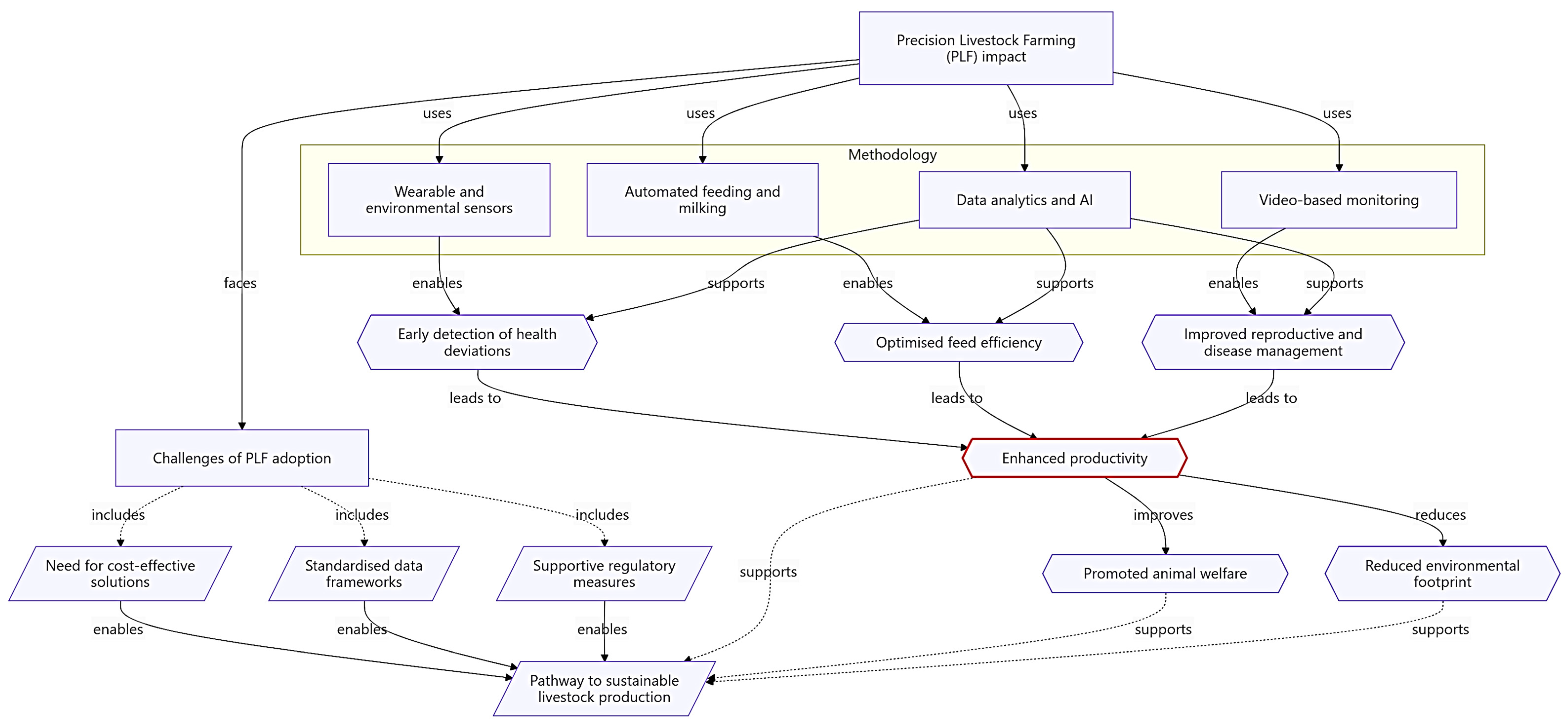
In addition to initial investment, ongoing expenses related to maintenance, software updates, technical support, and staff training further limit accessibility. These recurring costs can be substantial, especially in systems that require continuous data processing and system upgrades. Furthermore, the need for specialised knowledge to operate and interpret PLF systems may necessitate additional training or hiring skilled personnel, increasing the overall financial burden on farmers [79]. As illustrated in Figure 1, PLF technologies influence livestock systems through a series of interconnected causal pathways, linking data acquisition (e.g., sensors and monitoring systems) to decision-making processes and management interventions. These pathways translate into outcomes such as improved productivity, enhanced animal welfare, and reduced environmental impact. Importantly, the framework also highlights the presence of feedback loops, whereby outcomes (e.g., improved health or productivity) generate new data that further refine system performance through adaptive management. This dynamic interaction reflects the shift towards continuous, data-driven optimisation in livestock systems, while also emphasising that system performance depends on the effective integration of technological, biological, and managerial components.
This economic barrier contributes to uneven adoption rates across the livestock sector. Larger farms with greater financial capacity are more likely to invest in advanced technologies, whereas smaller operations may struggle to justify the costs despite potential long-term benefits. As a result, PLF adoption can reinforce structural inequalities within agriculture, widening the gap between technologically advanced farms and those with limited resources [79].
Moreover, uncertainty regarding return on investment remains a key concern for many producers. While PLF technologies can improve efficiency and productivity, the economic benefits are not always immediate or guaranteed, particularly in systems with variable market conditions. This uncertainty may discourage adoption, particularly for farms operating under high financial risk or constrained management capacity, where investment decisions are more sensitive to uncertainty and variability in returns. Profit margins in livestock systems are highly variable and depend on production type, input costs, and market conditions, rather than farm size alone. For example, large-scale operations such as feedlots may experience periods of very narrow margins due to volatility in feed and output prices, while other systems, such as well-managed dairy farms, may achieve more stable returns [46,47]. Addressing these economic challenges is essential to ensure broader accessibility and equitable adoption of PLF technologies [78]. Strategies such as financial incentives, subsidies, cooperative investment models, and the development of cost-effective technologies may help lower barriers and promote more inclusive uptake across diverse livestock production systems.
While high initial investment costs remain a major barrier to the adoption of PLF, particularly for small- and medium-scale producers, it is important to consider the return on investment (ROI) and long-term cost-effectiveness of these technologies. Economic evaluations suggest that the benefits of PLF, including improved feed efficiency, reduced labour requirements, enhanced animal health, and increased productivity, may accumulate over time, potentially offsetting initial costs over a medium- to long-term horizon.
For example, AMS and precision feeding technologies can reduce labour inputs and improve production efficiency, generating economic returns that may not be immediately realised but become significant over periods of 5–10 years. Studies of technology adoption in livestock systems indicate that farmers’ willingness to invest in PLF is strongly influenced by expectations of long-term profitability rather than short-term gains [78]. However, the realisation of positive ROI is highly context-dependent, influenced by factors such as farm size, production system, input and output prices, and the level of integration of PLF technologies into farm management. Smaller farms, in particular, may face longer payback periods due to limited economies of scale, even when technologies deliver measurable improvements in technical efficiency. This creates a disparity between technical performance gains and economic feasibility, reinforcing adoption barriers despite potential long-term benefits. Also, uncertainty regarding economic returns remains a key constraint, as many studies focus on technical performance indicators without comprehensive cost–benefit analysis. As a result, farmers may perceive PLF investments as financially risky, particularly in volatile market conditions.

6.2. Data Management and Privacy Issues

The extensive data generated by PLF systems presents significant challenges in terms of storage, processing, and interpretation. PLF technologies continuously collect large volumes of heterogeneous data, including physiological metrics, behavioural patterns, environmental conditions, and production records, which must be stored, cleaned, integrated, and analysed effectively to yield actionable insights. Managing these large datasets often requires specialised technical knowledge, robust computational infrastructure, and external support services, which can be beyond the capacity of many farmers [32].
In addition to technical and analytical requirements, data ownership and privacy concerns have emerged as critical issues. Because PLF data are frequently stored on cloud-based platforms managed by third-party providers, questions arise regarding who owns the data, how it is used, and the conditions under which it can be accessed or shared. Data governance frameworks in the agricultural sector are still underdeveloped, and many farmers are unsure whether service providers retain rights to data or how it might be monetised, analysed, or shared without their consent [80].
Concerns about data privacy and confidentiality can negatively affect farmers’ willingness to adopt PLF technologies, particularly when there are perceptions of inadequate legal protections, fragmented regulatory frameworks, and a lack of standardised practices for protecting sensitive information [80]. Producers may fear that data could be accessed by competitors, sold to agribusinesses without compensation, or exposed to cyberattacks, which could compromise both farm competitiveness and confidentiality [6].
The complexity of data management in PLF is not only technical but also systemic: multiple standalone technologies often produce siloed datasets that lack interoperability, making it difficult to integrate and interpret information across platforms. Without common data standards, protocols, and open interfaces, farmers may find it challenging to “connect the dots” between different data streams and derive meaningful insights, undermining the potential benefits of PLF [81].
Addressing these data management and privacy issues requires not only technological solutions (such as secure cloud infrastructure, blockchain for traceability, and privacy-preserving data analytics) but also policy responses that clarify data ownership, protect confidentiality, and build trust among farmers. Clear contractual terms, transparent data usage policies, and robust cybersecurity measures are essential for ensuring that data generated by PLF technologies are used responsibly, securely, and in ways that support farmers’ interests and wider societal expectations.

6.3. Technical Limitations and System Integration

Technical challenges remain a significant limitation to the effective deployment of PLF systems. Sensor accuracy and equipment reliability can vary depending on device type, species, and environmental conditions, which may result in inconsistent or noisy data. Such variability can reduce the reliability of automated decision-making and lead to incorrect interpretations of animal health, behaviour, or welfare indicators [24].
Connectivity issues, particularly in rural and remote areas, further constrain the performance of PLF systems. Reliable data transmission is essential for real-time monitoring and analytics; however, limited internet infrastructure can delay or disrupt data flow between on-farm devices and cloud-based platforms, thereby reducing the effectiveness of decision-support systems [82].
Another major limitation is the lack of standardisation across technologies and manufacturers. Many farms operate multiple PLF systems, including wearable sensors, environmental monitors, and automated equipment, that are not fully interoperable. This fragmentation leads to data silos and reduces the overall efficiency of information use, as systems may not communicate effectively or integrate seamlessly. The absence of common data standards and protocols remains a key barrier to achieving fully integrated PLF systems [47,81].
Addressing these technical challenges is essential for maximising the potential of PLF. Improvements in sensor validation, data quality control, connectivity infrastructure, and interoperability standards are required to ensure reliable system performance and facilitate broader adoption of PLF technologies.

7. Future Perspectives and Research Directions

7.1. Technological Innovations

Ongoing advancements in digital technologies are expected to further enhance the capabilities of PLF. Emerging tools such as advanced biosensors, machine learning algorithms, and the IoT are enabling increasingly precise, continuous, and real-time monitoring of livestock systems. These technologies allow for the collection and integration of large volumes of high-resolution data on animal physiology, behaviour, and environmental conditions, significantly improving the depth and accuracy of farm management information [18].
Advanced biosensors, including wearable and implantable devices, are being developed to monitor physiological parameters such as body temperature, metabolites, and stress indicators with high sensitivity. These innovations enable earlier detection of deviations from normal health status and provide new opportunities for non-invasive and continuous health assessment in livestock [21].
ML and AI are also playing an increasingly important role in PLF by enabling predictive analytics and automated decision-making. By analysing complex datasets generated from multiple sensors, machine learning models can identify patterns and predict outcomes such as disease onset, reproductive events, or performance changes. This allows farmers to intervene proactively, improving both productivity and animal welfare [83,84].
The integration of IoT technologies further enhances PLF systems by enabling seamless communication between devices, sensors, and data platforms. IoT-based systems facilitate real-time data transmission and remote monitoring, allowing farmers to manage livestock operations more efficiently and respond quickly to emerging issues. This interconnected infrastructure supports the development of smart farming systems with higher levels of automation and precision [46,85].
As these technologies continue to evolve, they are becoming more accessible and user-friendly, which is likely to drive wider adoption across different types of livestock operations. Advances in cost reduction, data processing capabilities, and interface design are expected to lower barriers to entry and support the transition towards more digitalised and intelligent livestock production systems.

7.2. Policy and Regulatory Frameworks

The successful implementation of PLF depends not only on technological advancements but also on the development of supportive policy and regulatory frameworks. Governments and international organisations play a key role in establishing standards related to data governance, animal welfare, and environmental sustainability. As livestock systems become increasingly digitalised, regulatory frameworks must ensure that technological innovation aligns with ethical, environmental, and societal expectations [86].
Policy instruments such as financial incentives, subsidies, and advisory support are essential to facilitate the adoption of PLF technologies, particularly among small- and medium-scale producers. These mechanisms can help offset high initial investment costs and promote more equitable access to innovation across the agricultural sector. In addition, coordinated policy efforts can support the development of infrastructure and training systems necessary for effective implementation of digital farming technologies [86].
A critical regulatory challenge concerns data ownership, access, and transparency. As PLF systems rely heavily on continuous data collection and cloud-based platforms, uncertainties about how data are stored, shared, and used can hinder adoption. Farmers may be reluctant to engage with digital systems if they lack clarity regarding their rights over data or if there is insufficient transparency in how data-driven decisions are made. Recent research highlights the importance of transparency frameworks in PLF to ensure that stakeholders understand how data are collected, processed, and utilised [87].
Furthermore, the development of harmonised standards is necessary to support interoperability between different PLF technologies. Without common protocols and regulatory guidance, fragmentation across systems can limit the effectiveness of digital livestock management. Establishing clear policies on data governance, system compatibility, and ethical use of technology is therefore essential for building trust and enabling the widespread adoption of PLF [47].
Overall, robust policy and regulatory frameworks are fundamental to ensuring that PLF technologies are implemented in a way that is economically viable, ethically sound, and environmentally sustainable.

7.3. Scaling and Global Adoption

While PLF technologies have been increasingly adopted in developed regions, their implementation in developing countries remains limited. This disparity is largely due to differences in infrastructure, access to capital, technical expertise, and digital connectivity. Studies have shown that adoption of digital and precision technologies is often uneven across regions, with low- and middle-income countries facing significant barriers related to cost, knowledge transfer, and institutional support [88,89].
Adapting PLF technologies to diverse production systems, climatic conditions, and socio-economic contexts represents a major challenge. Livestock systems in developing regions are often more extensive, less standardised, and subject to greater environmental variability than those in industrialised systems. As a result, technologies designed for intensive production systems may not be directly transferable without modification. Context-specific solutions that consider local farming practices, resource availability, and environmental constraints are therefore essential for successful implementation [89].
Future research should focus on developing cost-effective, robust, and scalable PLF solutions that can be applied across a wide range of production environments. Innovations such as low-cost sensors, mobile-based data platforms, and simplified decision-support tools have the potential to increase accessibility and usability for smallholder farmers. In addition, capacity-building initiatives, including training and knowledge exchange, are critical to support effective adoption and long-term sustainability [88].
Expanding access to PLF technologies globally will be essential for improving the sustainability and resilience of livestock production systems. By enabling more efficient resource use, better health management, and improved productivity, PLF can contribute to global food security while reducing environmental impacts. However, achieving widespread adoption will require coordinated efforts involving technological innovation, policy support, and international collaboration [90].

8. Conclusions

PLF represents a transformative approach to modern animal production, offering significant potential to enhance productivity, improve animal welfare, and reduce environmental impacts. By integrating advanced technologies such as sensors, automation, data analytics, and artificial intelligence, PLF enables continuous and individualised monitoring of animals and their environment. This shift from conventional, reactive management to proactive, data-driven decision-making has profound implications for the efficiency and sustainability of livestock systems.
The evidence reviewed in this study indicates that PLF technologies can substantially improve key productivity indicators, including feed efficiency, growth performance, reproductive outcomes, and disease management. At the same time, these technologies contribute to improved animal welfare by enabling early detection of health and behavioural issues, facilitating timely interventions, and supporting more precise and responsive management practices. Furthermore, PLF has the potential to mitigate the environmental footprint of livestock production through optimised resource use, reduced emissions intensity, and improved manure management.
Despite these benefits, several challenges remain that may limit the widespread adoption and effectiveness of PLF. Economic barriers, including high initial investment and operational costs, continue to restrict access, particularly for small- and medium-scale producers. Technical limitations related to data quality, system integration, and connectivity, as well as concerns regarding data ownership and privacy, further complicate implementation. In addition, ethical considerations surrounding automation and the potential reduction in human–animal interaction highlight the need for careful and responsible deployment of these technologies.
The evidence indicates that PLF technologies can deliver measurable improvements in livestock systems, including 5–15% gains in feed efficiency, 2–12% increases in milk yield, and disease detection several days prior to clinical diagnosis. However, these outcomes are highly variable and often derived from controlled or farm-specific studies, limiting their generalisability. A key limitation across the literature is the lack of standardisation in data collection, performance metrics, and evaluation protocols, which complicates comparison across studies and production systems. In addition, many reported results rely on internal validation, with limited use of independent or multi-farm datasets, raising concerns about model robustness and real-world applicability.
Looking ahead, the future of PLF will depend on continued technological innovation, alongside the development of supportive policy and regulatory frameworks. Advances in biosensors, machine learning, and IoT systems are expected to further enhance the precision and reliability of livestock monitoring. At the same time, policies that promote standardisation, ensure data transparency, and provide financial and technical support will be essential to facilitate adoption across diverse farming systems. Particular attention should be given to scaling PLF technologies in developing regions, where tailored, cost-effective solutions are needed to address local constraints and maximise impact.
PLF offers a promising pathway towards more efficient, welfare-oriented, and environmentally sustainable livestock production. However, realising its full potential will require a holistic approach that integrates technological, economic, and social considerations. By addressing current limitations and promoting inclusive adoption, PLF can play a central role in shaping the future of global livestock systems and contributing to long-term food security and sustainability.

Funding

This research received no external funding.

Institutional Review Board Statement

Not applicable.

Informed Consent Statement

Not applicable.

Data Availability Statement

No new data were created or analysed in this study. Data sharing does not apply to this article.

Acknowledgments

To the Foundation for Science and Technology (FCT, Portugal) for financial support to CISAS UIDB/05937/2020 and UIDP/05937/2020.

Conflicts of Interest

The author declares no conflicts of interest.

References

  1. Nielsen, M.B.; Meyer, A.S.; Arnau, J. The Next Food Revolution Is Here: Recombinant Microbial Production of Milk and Egg Proteins by Precision Fermentation. Annu. Rev. Food Sci. Technol. 2024, 15, 173–187. [Google Scholar] [CrossRef]
  2. Banach, J.L.; van der Berg, J.P.; Kleter, G.; van Bokhorst-van de Veen, H.; Bastiaan-Net, S.; Pouvreau, L.; van Asselt, E.D. Alternative Proteins for Meat and Dairy Replacers: Food Safety and Future Trends. Crit. Rev. Food Sci. Nutr. 2023, 63, 11063–11080. [Google Scholar] [CrossRef] [PubMed]
  3. Gil, M.; Rudy, M.; Duma-Kocan, P.; Stanisławczyk, R.; Krajewska, A.; Dziki, D.; Hassoon, W.H. Sustainability of Alternatives to Animal Protein Sources, a Comprehensive Review. Sustainability 2024, 16, 7701. [Google Scholar] [CrossRef]
  4. Chelotti, J.O.; Martinez-Rau, L.S.; Ferrero, M.; Vignolo, L.D.; Galli, J.R.; Planisich, A.M.; Rufiner, H.L.; Giovanini, L.L. Livestock Feeding Behaviour: A Review on Automated Systems for Ruminant Monitoring. Biosyst. Eng. 2024, 246, 150–177. [Google Scholar] [CrossRef]
  5. Bernabucci, G.; Evangelista, C.; Girotti, P.; Viola, P.; Spina, R.; Ronchi, B.; Bernabucci, U.; Basiricò, L.; Turini, L.; Mantino, A.; et al. Precision Livestock Farming: An Overview on the Application in Extensive Systems. Ital. J. Anim. Sci. 2025, 24, 859–884. [Google Scholar] [CrossRef]
  6. Schillings, J.; Bennett, R.; Rose, D.C. Exploring the Potential of Precision Livestock Farming Technologies to Help Address Farm Animal Welfare. Front. Anim. Sci. 2021, 2, 639678. [Google Scholar] [CrossRef]
  7. Jiang, B.; Tang, W.; Cui, L.; Deng, X. Precision Livestock Farming Research: A Global Scientometric Review. Animals 2023, 13, 2096. [Google Scholar] [CrossRef] [PubMed]
  8. Nsabiyeze, A.; Zhang, M.; Li, J.; Zhao, Q.; Zhang, X. Precision Livestock Farming for Climate-Resilient Livestock Management: A Review of Real-Time Monitoring and Decision Support Systems. J. Clean. Prod. 2025, 524, 146454. [Google Scholar] [CrossRef]
  9. Trabachini, A.; Moreira, M.d.R.; Harada, É.d.S.; Amorim, M.d.N.; Silva-Miranda, K.O. da Precision Livestock Farming Applied to Swine Farms—A Systematic Literature Review. Animals 2025, 15, 2138. [Google Scholar] [CrossRef]
  10. Papakonstantinou, G.I.; Voulgarakis, N.; Terzidou, G.; Fotos, L.; Giamouri, E.; Papatsiros, V.G. Precision Livestock Farming Technology: Applications and Challenges of Animal Welfare and Climate Change. Agriculture 2024, 14, 620. [Google Scholar] [CrossRef]
  11. Gómez, Y.; Stygar, A.H.; Boumans, I.J.M.M.; Bokkers, E.A.M.; Pedersen, L.J.; Niemi, J.K.; Pastell, M.; Manteca, X.; Llonch, P. A Systematic Review on Validated Precision Livestock Farming Technologies for Pig Production and Its Potential to Assess Animal Welfare. Front. Vet. Sci. 2021, 8, 660565. [Google Scholar] [CrossRef]
  12. Aquilani, C.; Confessore, A.; Bozzi, R.; Sirtori, F.; Pugliese, C. Review: Precision Livestock Farming Technologies in Pasture-Based Livestock Systems. Animal 2022, 16, 100429. [Google Scholar] [CrossRef]
  13. Zhang, M.; Wang, X.; Feng, H.; Huang, Q.; Xiao, X.; Zhang, X. Wearable Internet of Things Enabled Precision Livestock Farming in Smart Farms: A Review of Technical Solutions for Precise Perception, Biocompatibility, and Sustainability Monitoring. J. Clean. Prod. 2021, 312, 127712. [Google Scholar] [CrossRef]
  14. Stygar, A.H.; Gómez, Y.; Berteselli, G.V.; Dalla Costa, E.; Canali, E.; Niemi, J.K.; Llonch, P.; Pastell, M. A Systematic Review on Commercially Available and Validated Sensor Technologies for Welfare Assessment of Dairy Cattle. Front. Vet. Sci. 2021, 8, 634338. [Google Scholar] [CrossRef]
  15. Li, N.; Ren, Z.; Li, D.; Zeng, L. Review: Automated Techniques for Monitoring the Behaviour and Welfare of Broilers and Laying Hens: Towards the Goal of Precision Livestock Farming. Animal 2020, 14, 617–625. [Google Scholar] [CrossRef]
  16. Van Hertem, T.; Rooijakkers, L.; Berckmans, D.; Fernández, A.P.; Norton, T.; Vranken, E. Appropriate Data Visualisation Is Key to Precision Livestock Farming Acceptance. Comput. Electron. Agric. 2017, 138, 1–10. [Google Scholar] [CrossRef]
  17. Rutten, C.J.; Velthuis, A.G.J.; Steeneveld, W.; Hogeveen, H. Invited Review: Sensors to Support Health Management on Dairy Farms. J. Dairy Sci. 2013, 96, 1928–1952. [Google Scholar] [CrossRef]
  18. Neethirajan, S. The Role of Sensors, Big Data and Machine Learning in Modern Animal Farming. Sens. Bio-Sens. Res. 2020, 29, 100367. [Google Scholar] [CrossRef]
  19. King, M.T.M.; LeBlanc, S.J.; Pajor, E.A.; DeVries, T.J. Cow-Level Associations of Lameness, Behavior, and Milk Yield of Cows Milked in Automated Systems. J. Dairy Sci. 2017, 100, 4818–4828. [Google Scholar] [CrossRef]
  20. Nasirahmadi, A.; Edwards, S.A.; Sturm, B. Implementation of Machine Vision for Detecting Behaviour of Cattle and Pigs. Livest. Sci. 2017, 202, 25–38. [Google Scholar] [CrossRef]
  21. Neethirajan, S.; Kemp, B. Digital Livestock Farming. Sens. Bio-Sens. Res. 2021, 32, 100408. [Google Scholar] [CrossRef]
  22. Morota, G.; Ventura, R.V.; Silva, F.F.; Koyama, M.; Fernando, S.C. Big Data Analytics and Precision Animal Agriculture Symposium: Machine Learning and Data Mining Advance Predictive Big Data Analysis in Precision Animal Agriculture. J. Anim. Sci. 2018, 96, 1540–1550. [Google Scholar] [CrossRef]
  23. Halachmi, I.; Guarino, M.; Bewley, J.; Pastell, M. Smart Animal Agriculture: Application of Real-Time Sensors to Improve Animal Well-Being and Production. Annu. Rev. Anim. Biosci. 2019, 7, 403–425. [Google Scholar] [CrossRef] [PubMed]
  24. Benaissa, S.; Tuyttens, F.A.M.; Plets, D.; De Pessemier, T.; Trogh, J.; Tanghe, E.; Martens, L.; Vandaele, L.; Van Nuffel, A.; Joseph, W. On the Use of On-Cow Accelerometers for the Classification of Behaviours in Dairy Barns. Res. Vet. Sci. 2019, 125, 425–433. [Google Scholar] [CrossRef]
  25. Wolfger, B.; Timsit, E.; Pajor, E.A.; Cook, N.; Barkema, H.W.; Orsel, K. Accuracy of an Ear Tag-Attached Accelerometer to Monitor Rumination and Feeding Behavior in Feedlot Cattle. J. Anim. Sci. 2015, 93, 3164–3168. [Google Scholar] [CrossRef]
  26. Schirmann, K.; Chapinal, N.; Weary, D.M.; Heuwieser, W.; Von Keyserlingk, M.A.G. Rumination and Its Relationship to Feeding and Lying Behavior in Holstein Dairy Cows. J. Dairy Sci. 2012, 95, 3212–3217. [Google Scholar] [CrossRef]
  27. Matthews, S.G.; Miller, A.L.; PlÖtz, T.; Kyriazakis, I. Automated Tracking to Measure Behavioural Changes in Pigs for Health and Welfare Monitoring. Sci. Rep. 2017, 7, 17582. [Google Scholar] [CrossRef]
  28. Qi, F.; Zhao, X.; Shi, Z.; Li, H.; Zhao, W. Environmental Factor Detection and Analysis Technologies in Livestock and Poultry Houses: A Review. Agriculture 2023, 13, 1489. [Google Scholar] [CrossRef]
  29. Miles, D.M.; Branton, S.L.; Lott, B.D. Atmospheric Ammonia Is Detrimental to the Performance of Modern Commercial Broilers. Poult. Sci. 2004, 83, 1650–1654. [Google Scholar] [CrossRef]
  30. Xin, H.; Gates, R.S.; Green, A.R.; Mitloehner, F.M.; Moore, P.A.; Wathes, C.M. Environmental Impacts and Sustainability of Egg Production Systems1. Poult. Sci. 2011, 90, 263–277. [Google Scholar] [CrossRef] [PubMed]
  31. Mautone, A.; Finzi, A. Air Quality Monitoring in Piggeries through an IoT Gas and Environmental Sensors Device. In Precision Livestock Farming 2024; EA-PLF; Università degli Studi di Milano: Milan, Italy, 2024; pp. 1728–1736. [Google Scholar]
  32. Bist, R.B.; Wang, D.; Chai, L.; Xiong, Y. Precision Farming Technologies for Monitoring Livestock and Poultry. AgriEngineering 2026, 8, 64. [Google Scholar] [CrossRef]
  33. Zhang, Q.; Yang, Y.; Liu, G.; Ning, Y.; Li, J. Dairy Cow Mastitis Detection by Thermal Infrared Images Based on CLE-UNet. Animals 2023, 13, 2211. [Google Scholar] [CrossRef] [PubMed]
  34. Guo, Y.; Chai, L.; Aggrey, S.E.; Oladeinde, A.; Johnson, J.; Zock, G. A Machine Vision-Based Method for Monitoring Broiler Chicken Floor Distribution. Sensors 2020, 20, 3179. [Google Scholar] [CrossRef]
  35. Korelidou, V.; Simitzis, P.; Massouras, T.; Gelasakis, A.I. Infrared Thermography as a Diagnostic Tool for the Assessment of Mastitis in Dairy Ruminants. Animals 2024, 14, 2691. [Google Scholar] [CrossRef]
  36. Niloofar, P.; Francis, D.P.; Lazarova-Molnar, S.; Vulpe, A.; Vochin, M.-C.; Suciu, G.; Balanescu, M.; Anestis, V.; Bartzanas, T. Data-Driven Decision Support in Livestock Farming for Improved Animal Health, Welfare and Greenhouse Gas Emissions: Overview and Challenges. Comput. Electron. Agric. 2021, 190, 106406. [Google Scholar] [CrossRef]
  37. de Oliveira, F.M.; Ferraz, G.A.E.S.; Andre, A.L.G.; Santana, L.S.; Norton, T.; Ferraz, P.F.P. Digital and Precision Technologies in Dairy Cattle Farming: A Bibliometric Analysis. Animals 2024, 14, 1832. [Google Scholar] [CrossRef] [PubMed]
  38. Curti, P.d.F.; Selli, A.; Pinto, D.L.; Merlos-Ruiz, A.; Balieiro, J.C.d.C.; Ventura, R.V. Applications of Livestock Monitoring Devices and Machine Learning Algorithms in Animal Production and Reproduction: An Overview. Anim. Reprod. 2023, 20, e20230077. [Google Scholar] [CrossRef]
  39. Kavlak, A.T.; Pastell, M.; Uimari, P. Disease Detection in Pigs Based on Feeding Behaviour Traits Using Machine Learning. Biosyst. Eng. 2023, 226, 132–143. [Google Scholar] [CrossRef]
  40. Berckmans, D. General introduction to precision livestock farming. Anim. Front. 2017, 7, 6–11. [Google Scholar] [CrossRef]
  41. Zhou, L.; Hao, L.; Xiong, Y.; Qin, H.; Bao, A.; Chen, Z. Research Progress of Robotic Technologies and Applications in Smart Pig Farms. Agriculture 2026, 16, 334. [Google Scholar] [CrossRef]
  42. John, A.J.; Clark, C.E.F.; Freeman, M.J.; Kerrisk, K.L.; Garcia, S.C.; Halachmi, I. Review: Milking Robot Utilization, a Successful Precision Livestock Farming Evolution. Animal 2016, 10, 1484–1492. [Google Scholar] [CrossRef] [PubMed]
  43. Zhang, Y.; Sun, W.; Yang, J.; Wu, W.; Miao, H.; Zhang, S. An Approach for Autonomous Feeding Robot Path Planning in Poultry Smart Farm. Animals 2022, 12, 3089. [Google Scholar] [CrossRef]
  44. Yang, D.; Cui, D.; Ying, Y. Development and Trends of Chicken Farming Robots in Chicken Farming Tasks: A Review. Comput. Electron. Agric. 2024, 221, 108916. [Google Scholar] [CrossRef]
  45. Distante, D.; Albanello, C.; Zaffar, H.; Faralli, S.; Amalfitano, D. Artificial Intelligence Applied to Precision Livestock Farming: A Tertiary Study. Smart Agric. Technol. 2025, 11, 100889. [Google Scholar] [CrossRef]
  46. Wolfert, S.; Ge, L.; Verdouw, C.; Bogaardt, M.-J. Big Data in Smart Farming—A Review. Agric. Syst. 2017, 153, 69–80. [Google Scholar] [CrossRef]
  47. Klerkx, L.; Jakku, E.; Labarthe, P. A Review of Social Science on Digital Agriculture, Smart Farming and Agriculture 4.0: New Contributions and a Future Research Agenda. NJAS Wagening. J. Life Sci. 2019, 90–91, 1–16. [Google Scholar] [CrossRef]
  48. Liu, N.; Qi, J.; An, X.; Wang, Y. A Review on Information Technologies Applicable to Precision Dairy Farming: Focus on Behavior, Health Monitoring, and the Precise Feeding of Dairy Cows. Agriculture 2023, 13, 1858. [Google Scholar] [CrossRef]
  49. Pomar, C.; Remus, A. Fundamentals, Limitations and Pitfalls on the Development and Application of Precision Nutrition Techniques for Precision Livestock Farming. Animal 2023, 17, 100763. [Google Scholar] [CrossRef] [PubMed]
  50. Tzanidakis, C.; Tzamaloukas, O.; Simitzis, P.; Panagakis, P. Precision Livestock Farming Applications (PLF) for Grazing Animals. Agriculture 2023, 13, 288. [Google Scholar] [CrossRef]
  51. Paixão, G.; Mata, F.; Cerqueira, J.; Araújo, J.P. Weather and Seasonal Effects in Behavioural Patterns for Grazing Cattle. Appl. Anim. Behav. Sci. 2026, 298, 106935. [Google Scholar] [CrossRef]
  52. Merkelytė, I.; Šiukščius, A.; Nainienė, R. The Role of Sensor Technologies in Estrus Detection in Beef Cattle: A Review of Current Applications. Animals 2025, 15, 2313. [Google Scholar] [CrossRef]
  53. Santos, C.A.d.; Landim, N.M.D.; de Araújo, H.X.; Paim, T.d.P. Automated Systems for Estrous and Calving Detection in Dairy Cattle. AgriEngineering 2022, 4, 475–482. [Google Scholar] [CrossRef]
  54. Sakar, Ç.M.; Ergin, M.; Altay, Y. Comparative Analysis of Machine Learning Algorithms for Estrous Detection in Dairy Cows Using Sensor-Based Behavioral Data across Seasons. Trop. Anim. Health Prod. 2025, 57, 479. [Google Scholar] [CrossRef]
  55. Simoni, A.; König, F.; Weimar, K.; Hancock, A.; Wunderlich, C.; Klawitter, M.; Breuer, T.; Drillich, M.; Iwersen, M. Evaluation of Sensor-Based Health Monitoring in Dairy Cows: Exploiting Rumination Times for Health Alerts around Parturition. J. Dairy Sci. 2024, 107, 6052–6064. [Google Scholar] [CrossRef]
  56. Paudyal, S. Using Rumination Time to Manage Health and Reproduction in Dairy Cattle: A Review. Vet. Q. 2021, 41, 292–300. [Google Scholar] [CrossRef]
  57. Gusterer, E.; Kanz, P.; Krieger, S.; Schweinzer, V.; Süss, D.; Lidauer, L.; Kickinger, F.; Öhlschuster, M.; Auer, W.; Drillich, M.; et al. Sensor Technology to Support Herd Health Monitoring: Using Rumination Duration and Activity Measures as Unspecific Variables for the Early Detection of Dairy Cows with Health Deviations. Theriogenology 2020, 157, 61–69. [Google Scholar] [CrossRef] [PubMed]
  58. Teixeira, V.A.; Lana, A.M.Q.; Bresolin, T.; Tomich, T.R.; Souza, G.M.; Furlong, J.; Rodrigues, J.P.P.; Coelho, S.G.; Gonçalves, L.C.; Silveira, J.A.G. Using Rumination and Activity Data for Early Detection of Anaplasmosis Disease in Dairy Heifer Calves. J. Dairy Sci. 2022, 105, 4421–4433. [Google Scholar] [CrossRef] [PubMed]
  59. Neculai-Valeanu, A.-S.; Ariton, A.-M.; Radu, C.; Porosnicu, I.; Sanduleanu, C.; Amariții, G. From Herd Health to Public Health: Digital Tools for Combating Antibiotic Resistance in Dairy Farms. Antibiotics 2024, 13, 634. [Google Scholar] [CrossRef] [PubMed]
  60. Tse, C.; Barkema, H.W.; DeVries, T.J.; Rushen, J.; Pajor, E.A. Impact of Automatic Milking Systems on Dairy Cattle Producers’ Reports of Milking Labour Management, Milk Production and Milk Quality. Animal 2018, 12, 2649–2656. [Google Scholar] [CrossRef]
  61. Cogato, A.; Brščić, M.; Guo, H.; Marinello, F.; Pezzuolo, A. Challenges and Tendencies of Automatic Milking Systems (AMS): A 20-Years Systematic Review of Literature and Patents. Animals 2021, 11, 356. [Google Scholar] [CrossRef]
  62. Ozella, L.; Brotto Rebuli, K.; Forte, C.; Giacobini, M. A Literature Review of Modeling Approaches Applied to Data Collected in Automatic Milking Systems. Animals 2023, 13, 1916. [Google Scholar] [CrossRef]
  63. Beauchemin, K.A.; Ungerfeld, E.M.; Eckard, R.J.; Wang, M. Fifty Years of Research on Rumen Methanogenesis: Lessons Learned and Future Challenges for Mitigation. Animal 2020, 14, s2–s16. [Google Scholar] [CrossRef]
  64. Kurras, F.; Jakob, M. Smart Dairy Farming—The Potential of the Automatic Monitoring of Dairy Cows’ Behaviour Using a 360-Degree Camera. Animals 2024, 14, 640. [Google Scholar] [CrossRef] [PubMed]
  65. Ferguson, H.J.; Davison, C.; Lima, J.; Haskell, M.J.; Dewhurst, R.J.; Michie, C.; Andonovic, I.; Tachtatzis, C.; Swan, A.; Brooking, M.; et al. Use of Animal-Mounted Accelerometers to Identify Positive Welfare in Dairy Cattle. Dairy Sci. Manag. 2025, 2, 15. [Google Scholar] [CrossRef]
  66. Mellor, D.J.; Beausoleil, N.J. Extending the ‘Five Domains’ Model for Animal Welfare Assessment to Incorporate Positive Welfare States. Anim. Welf. 2015, 24, 241–253. [Google Scholar] [CrossRef]
  67. Werkheiser, I. Technology and Responsibility: A Discussion of Underexamined Risks and Concerns in Precision Livestock Farming. Anim. Front. 2020, 10, 51–57. [Google Scholar] [CrossRef] [PubMed]
  68. Bos, J.M.; Bovenkerk, B.; Feindt, P.H.; Van Dam, Y.K. The Quantified Animal: Precision Livestock Farming and the Ethical Implications of Objectification. Food Ethics 2018, 2, 77–92. [Google Scholar] [CrossRef]
  69. Pinillos, R.G.; Appleby, M.C.; Manteca, X.; Scott-Park, F.; Smith, C.; Velarde, A. One Welfare–a Platform for Improving Human and Animal Welfare. Vet. Rec. 2016, 179, 412–413. [Google Scholar] [CrossRef]
  70. Banhazi, T.M.; Babinszky, L.; Halas, V.; Tscharke, M. Precision Livestock Farming: Precision Feeding Technologies and Sustainable Livestock Production. Int. J. Agric. Biol. Eng. 2012, 5, 54–61. [Google Scholar]
  71. Cardot, V.; Le Roux, Y.; Jurjanz, S. Drinking Behavior of Lactating Dairy Cows and Prediction of Their Water Intake. J. Dairy Sci. 2008, 91, 2257–2264. [Google Scholar] [CrossRef]
  72. Halachmi, I.; Guarino, M. Precision Livestock Farming: A ‘per Animal’Approach Using Advanced Monitoring Technologies. Animal 2016, 10, 1482–1483. [Google Scholar] [CrossRef]
  73. Mottet, A.; de Haan, C.; Falcucci, A.; Tempio, G.; Opio, C.; Gerber, P. Livestock: On Our Plates or Eating at Our Table? A New Analysis of the Feed/Food Debate. Glob. Food Sec. 2017, 14, 1–8. [Google Scholar] [CrossRef]
  74. Llonch, P.; Haskell, M.J.; Dewhurst, R.J.; Turner, S.P. Current Available Strategies to Mitigate Greenhouse Gas Emissions in Livestock Systems: An Animal Welfare Perspective. Animal 2017, 11, 274–284. [Google Scholar] [CrossRef]
  75. Pardo, G.; Moral, R.; Aguilera, E.; Del Prado, A. Gaseous Emissions from Management of Solid Waste: A Systematic Review. Glob. Change Biol. 2015, 21, 1313–1327. [Google Scholar] [CrossRef] [PubMed]
  76. Tullo, E.; Finzi, A.; Guarino, M. Review: Environmental Impact of Livestock Farming and Precision Livestock Farming as a Mitigation Strategy. Sci. Total Environ. 2019, 650, 2751–2760. [Google Scholar] [CrossRef]
  77. Lovarelli, D.; Bacenetti, J.; Guarino, M. A Review on Dairy Cattle Farming: Is Precision Livestock Farming the Compromise for an Environmental, Economic and Social Sustainable Production? J. Clean. Prod. 2020, 262, 121409. [Google Scholar] [CrossRef]
  78. Palma-Molina, P.; Hennessy, T.; O’Connor, A.H.; Onakuse, S.; O’Leary, N.; Moran, B.; Shalloo, L. Factors Associated with Intensity of Technology Adoption and with the Adoption of 4 Clusters of Precision Livestock Farming Technologies in Irish Pasture-Based Dairy Systems. J. Dairy Sci. 2023, 106, 2498–2509. [Google Scholar] [CrossRef] [PubMed]
  79. Selvaggi, R.; Lusk, J.L.; Pappalardo, G. Eliciting Dairy Farmers’ Willingness to Pay for Digital Devices for Precision Livestock Farming. J. Rural Stud. 2025, 119, 103772. [Google Scholar] [CrossRef]
  80. Kaur, J.; Hazrati Fard, S.M.; Amiri-Zarandi, M.; Dara, R. Protecting Farmers’ Data Privacy and Confidentiality: Recommendations and Considerations. Front. Sustain. Food Syst. 2022, 6, 903230. [Google Scholar] [CrossRef]
  81. Kleen, J.L.; Guatteo, R. Precision Livestock Farming: What Does It Contain and What Are the Perspectives? Animals 2023, 13, 779. [Google Scholar] [CrossRef]
  82. Fountas, S.; Carli, G.; Sørensen, C.G.; Tsiropoulos, Z.; Cavalaris, C.; Vatsanidou, A.; Liakos, B.; Canavari, M.; Wiebensohn, J.; Tisserye, B. al Farm Management Information Systems: Current Situation and Future Perspectives. Comput. Electron. Agric. 2015, 115, 40–50. [Google Scholar] [CrossRef]
  83. Menezes, G.L.; Mazon, G.; Ferreira, R.E.P.; Cabrera, V.E.; Dorea, J.R.R. Artificial Intelligence for Livestock: A Narrative Review of the Applications of Computer Vision Systems and Large Language Models for Animal Farming. Anim. Front. 2024, 14, 42–53. [Google Scholar] [CrossRef]
  84. Liakos, K.G.; Busato, P.; Moshou, D.; Pearson, S.; Bochtis, D. Machine Learning in Agriculture: A Review. Sensors 2018, 18, 2674. [Google Scholar] [CrossRef] [PubMed]
  85. Terence, S.; Immaculate, J.; Raj, A.; Nadarajan, J. Systematic Review on Internet of Things in Smart Livestock Management Systems. Sustainability 2024, 16, 4073. [Google Scholar] [CrossRef]
  86. Monteiro, A.; Santos, S.; Gonçalves, P. Precision Agriculture for Crop and Livestock Farming—Brief Review. Animals 2021, 11, 2345. [Google Scholar] [CrossRef]
  87. Elliott, K.C.; Werkheiser, I. A Framework for Transparency in Precision Livestock Farming. Animals 2023, 13, 3358. [Google Scholar] [CrossRef]
  88. Ayre, M.; Mc Collum, V.; Waters, W.; Samson, P.; Curro, A.; Nettle, R.; Paschen, J.-A.; King, B.; Reichelt, N. Supporting and Practising Digital Innovation with Advisers in Smart Farming. NJAS Wagening. J. Life Sci. 2019, 90–91, 100302. [Google Scholar] [CrossRef]
  89. Rotz, S.; Duncan, E.; Small, M.; Botschner, J.; Dara, R.; Mosby, I.; Reed, M.; Fraser, E.D.G. The Politics of Digital Agricultural Technologies: A Preliminary Review. Sociol. Rural. 2019, 59, 203–229. [Google Scholar] [CrossRef]
  90. Herrero, M.; Thornton, P.K.; Mason-D’Croz, D.; Palmer, J.; Bodirsky, B.L.; Pradhan, P.; Barrett, C.B.; Benton, T.G.; Hall, A.; Pikaar, I.; et al. Articulating the Effect of Food Systems Innovation on the Sustainable Development Goals. Lancet Planet. Health 2021, 5, e50–e62. [Google Scholar] [CrossRef]
Figure 1. Conceptual framework of Precision Livestock Farming (PLF) showing how technologies (sensors, automated systems, AI, video monitoring) drive outcomes (early health detection, feed efficiency, reproductive and disease management), enhancing productivity, animal welfare, and sustainability, with key challenges and enablers highlighted.
J 09 00013 g001
Table 1. Key types of sensors used in Precision Livestock Farming, their measured parameters, practical applications, and target livestock species.
Sensor TypeParameters MeasuredApplications/ExamplesSpecies
Wearable Accelerometers (collars, leg bands, ear tags)Activity, lying/standing behaviour, step count, grazing patternsDetect lameness, monitor activity changes linked to illness or stress, track feeding behaviourDairy cattle, pigs, sheep
Temperature Sensors (ear tags, collars, rumen boluses, leg bands)Body temperature, rumen temperatureEarly detection of fever, metabolic disorders, heat stress managementDairy cattle, beef cattle, pigs
Heart Rate/ECG Sensors (collars, halters)Heart rate, heart rate variabilityAssess stress levels, detect cardiovascular abnormalities, welfare monitoringDairy and beef cattle, horses
Rumen/Feeding Sensors (boluses, jaw sensors)Rumination time, feed intakeMonitor digestive health, detect metabolic disorders, optimise feeding strategiesDairy cattle, beef cattle, goats
Environmental Sensors (fixed in barns or pens)Temperature, humidity, ammonia, CO2, light intensityControl ventilation, air quality management, prevent heat or respiratory stress, improve growth and welfarePoultry, swine, dairy and beef cattle
Video/Imaging Sensors (RGB cameras, depth sensors, thermal cameras)Posture, gait, social interactions, body condition, thermal profilesAutomated body condition scoring, detect mastitis or inflammation, monitor flock behaviour, early disease detectionDairy cattle, broilers, pigs, sheep
GPS/Location Sensors (collars)Spatial movement, grazing patterns, pasture utilisationTrack grazing behaviour, pasture management, welfare monitoring in extensive systemsCattle, sheep, goats
Weight/Load Sensors (platform scales, walk-over weighers)Body weight, growth ratesMonitor growth, feed efficiency, detect sudden weight loss linked to diseaseDairy cattle, beef cattle, pigs
Table 2. Quantified impacts of Precision Livestock Farming (PLF) technologies on productivity, animal welfare, and environmental outcomes.
SpeciesTechnologyIndicatorQuantitative ImpactSource
Dairy cattleAMSMilk yieldIncreased yield reported; mean ~32.6 kg/cow/day[60]
Dairy cattleAMSMilk yield+2–12% increase compared to conventional milking[61]
Dairy cattleAMSMilk yield+3–25% increase depending on system[62]
Dairy cattleActivity sensorsReproductive performanceSignificant improvement in oestrus detection accuracy (>90% in ML systems)[52]
Dairy cattleBehaviour sensorsDisease detection3–5 days earlier detection of health disorders[57]
Dairy cattleActivity + rumination sensorsDisease detectionDetection 3–5 days before clinical diagnosis[58]
PigsFeeding behaviour + MLDisease detection>85% classification accuracy[39]
PigsPrecision feedingNitrogen excretion−20–30% reduction[49]
CattleFeed optimisationMethane emissions~5–10% reduction per unit output[63]
PoultryEnvironmental monitoringMortality/PerformanceReduced mortality and improved performance under controlled ammonia[29]
Note: AMS—Automatic Milking Systems.
Disclaimer/Publisher’s Note: The statements, opinions and data contained in all publications are solely those of the individual author(s) and contributor(s) and not of MDPI and/or the editor(s). MDPI and/or the editor(s) disclaim responsibility for any injury to people or property resulting from any ideas, methods, instructions or products referred to in the content.