Relationship between Sunspot Numbers and Mean Annual Precipitation: Application of Cross-Wavelet Transform—A Case Study



Department of Civil and Environmental Engineering and Construction, University of Nevada, Las Vegas, NV 89154, USA
*
Author to whom correspondence should be addressed.
J 2020, 3(1), 67-78; https://doi.org/10.3390/j3010007
Submission received: 8 January 2020
/
Revised: 6 February 2020
/
Accepted: 13 February 2020
/
Published: 15 February 2020
Simple Summary
Abstract
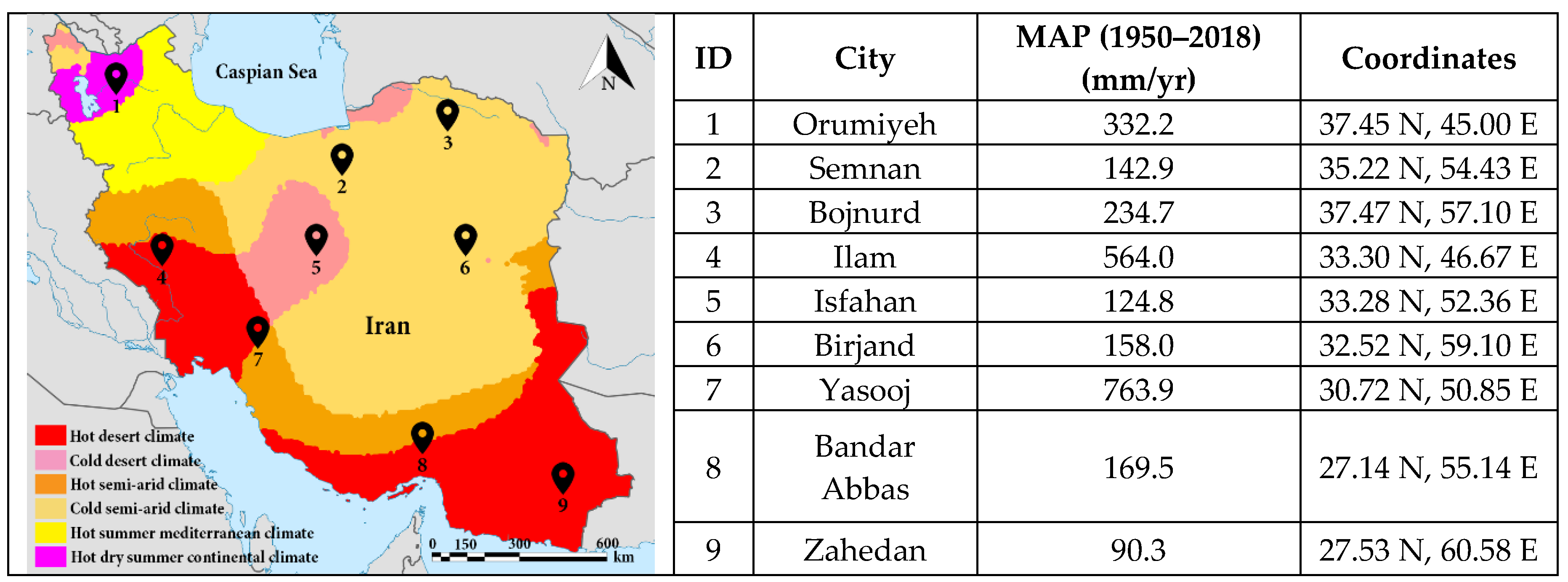
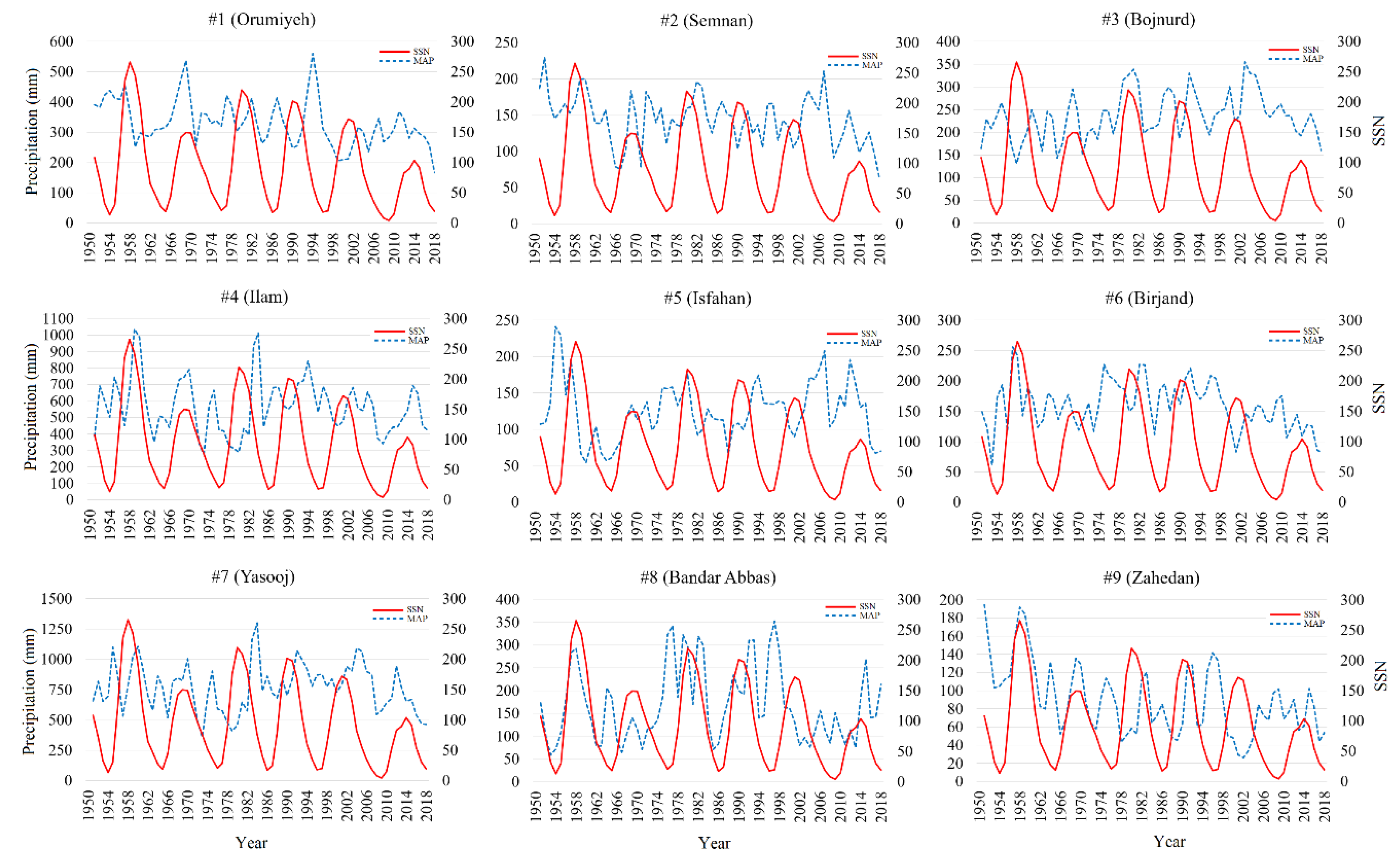
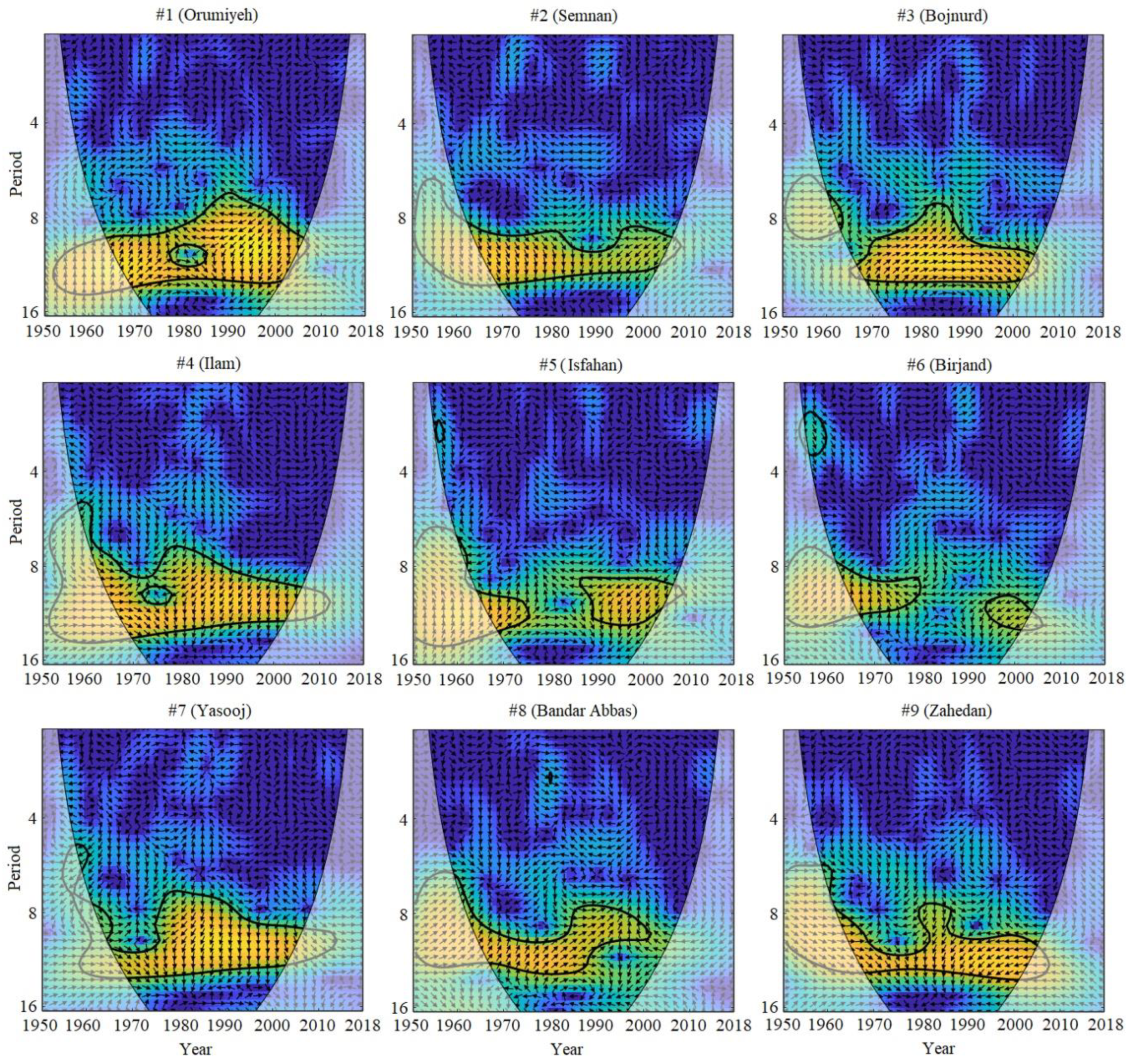
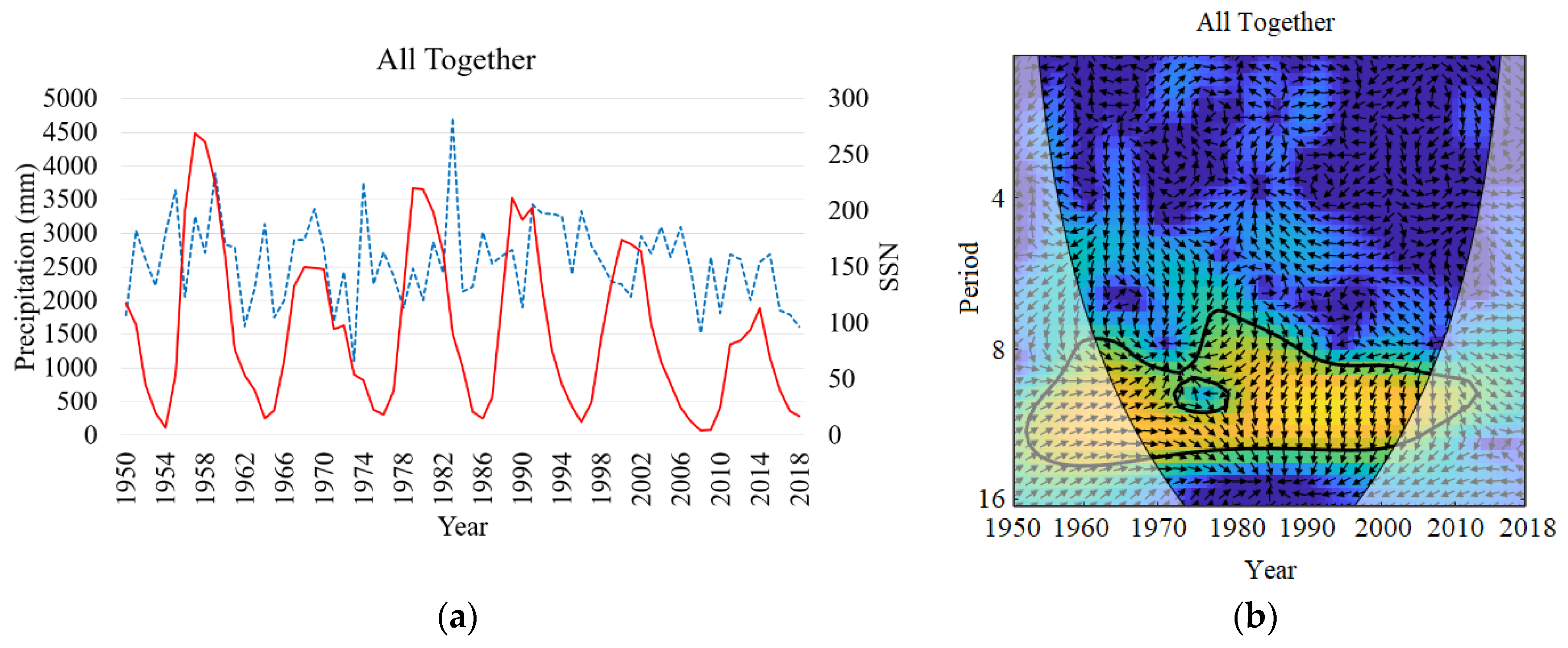
Observations show that the Sun, which is the primary source of energy for the Earth’s climate system, is a variable star. In order to understand the influence of solar variability on the Earth’s climate, knowledge of solar variability and solar–terrestrial interactions is required. Knowledge of the Sun’s cyclic behavior can be used for future prediction purposes on Earth. In this study, the possible connection between sunspot numbers (SSN) as a proxy for the 11-year solar cycle and mean annual precipitation (MAP) in Iran were investigated, with the motivation of contributing to the controversial issue of the relationship between SSN and MAP. Nine locations throughout Iran were selected, representing different climatic conditions in the country. Cross-wavelet transform (XWT) analysis was employed to investigate the temporal relationship between cyclicities in SSN and MAP. Results indicated that a distinct 8–12-year correlation exists between the two time series of SSN and MAP, and peaks in precipitation mostly occur one to three years after the SSN maxima. The findings of this study can be beneficial for policymakers, to consider future potential droughts and wet years based on sunspot activities, so that water resources can be more properly managed.