
Life-Cycle Assessment of a CdTe BIPV Glazing Element with Integrated Phase Change Material


Abstract
1. Introduction
2. Materials and Methods
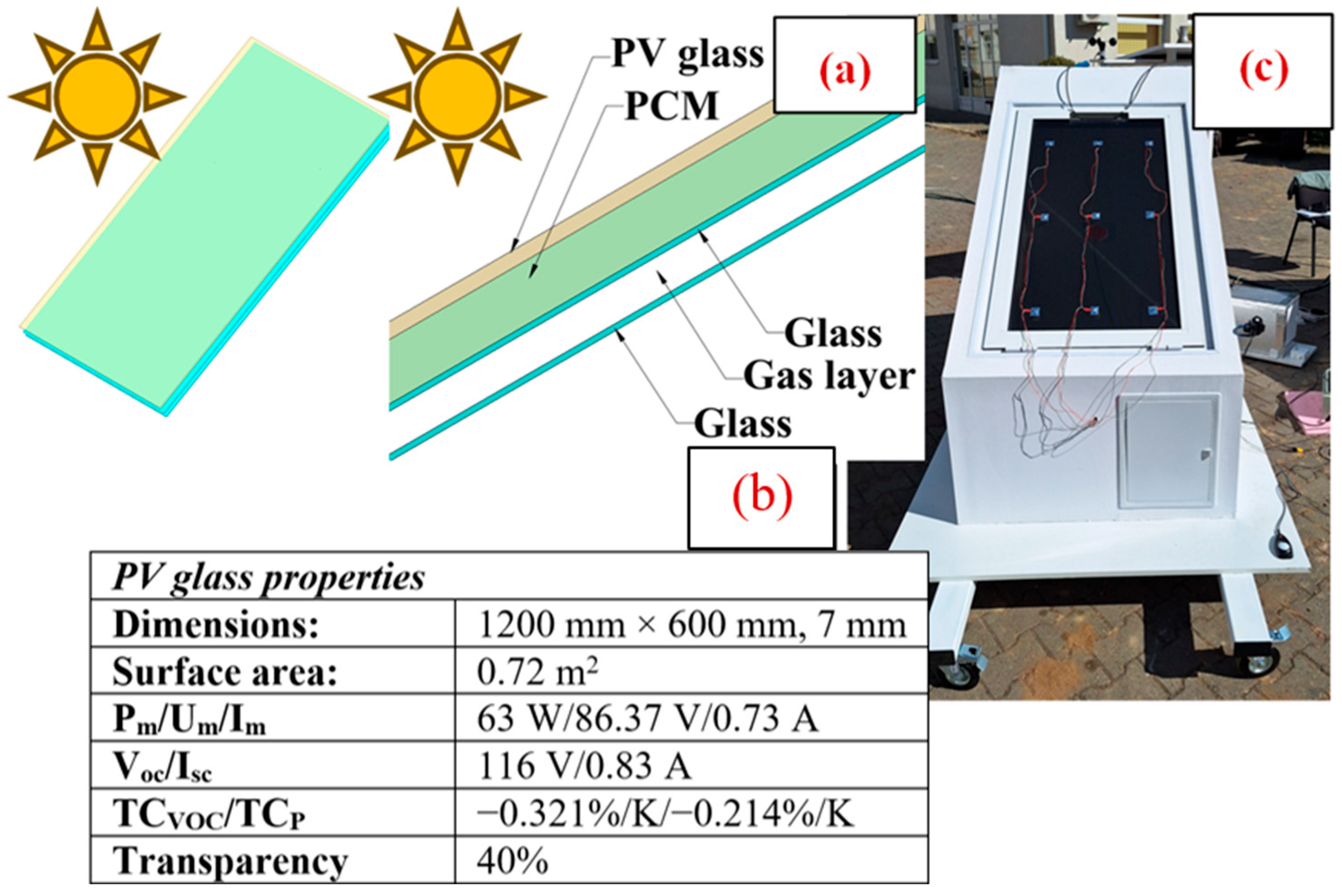
2.1. System Configuration
2.2. Goal, Scope and Declared Unit
2.3. System Boundaries
2.4. Life-Cycle Inventory
2.5. Impact Assessment Method
3. Results
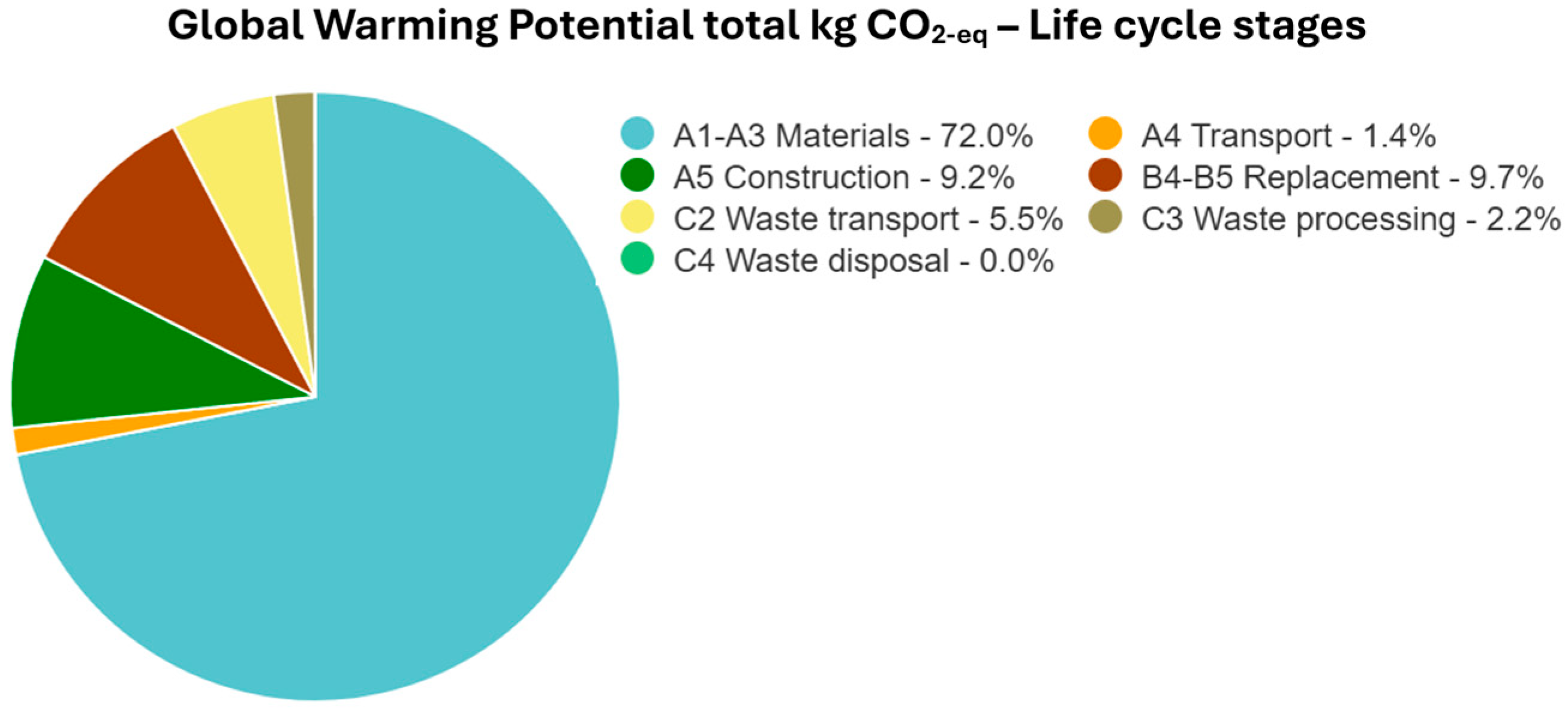
3.1. Global Warming Potential by Life-Cycle Stages
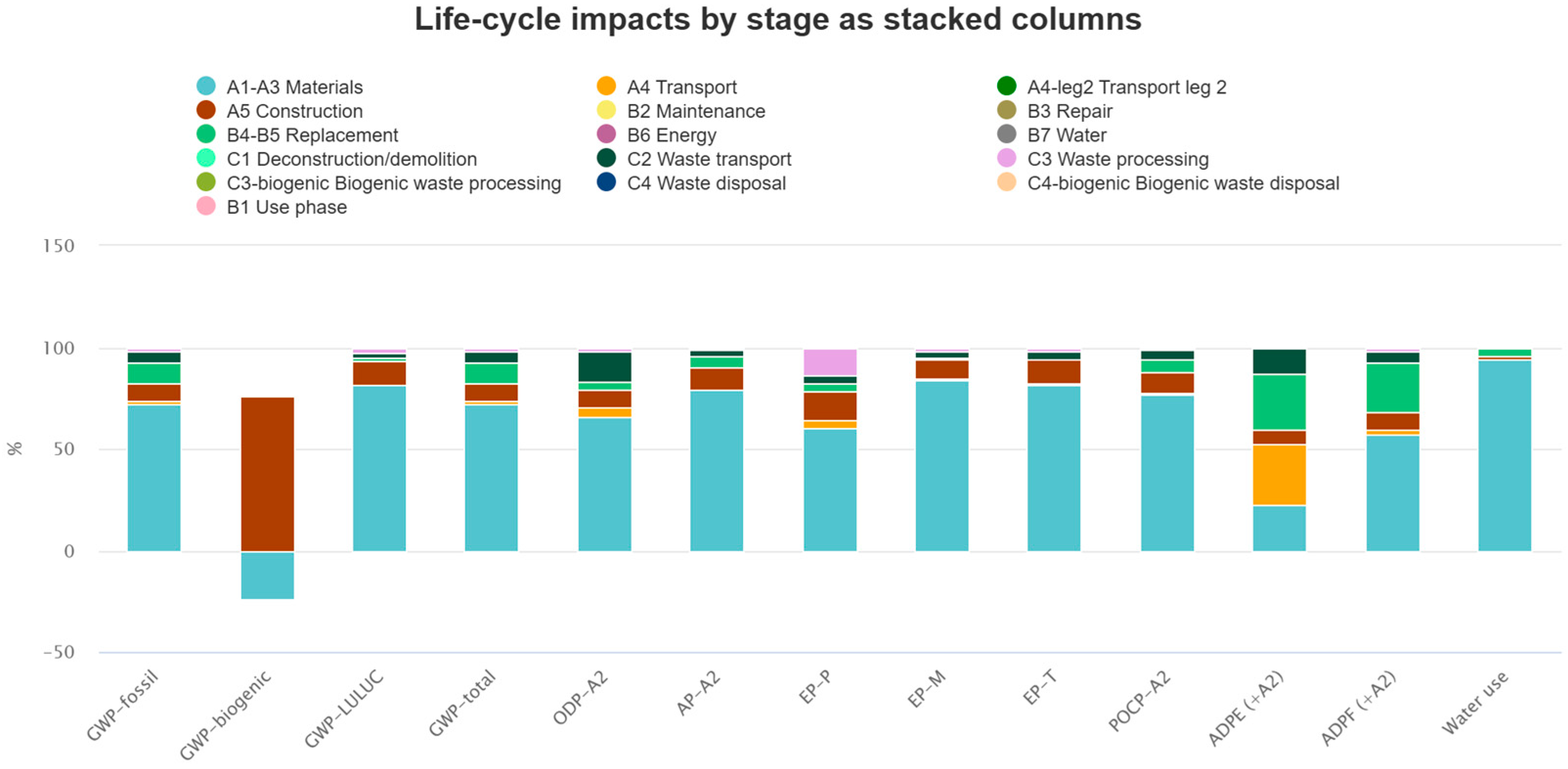
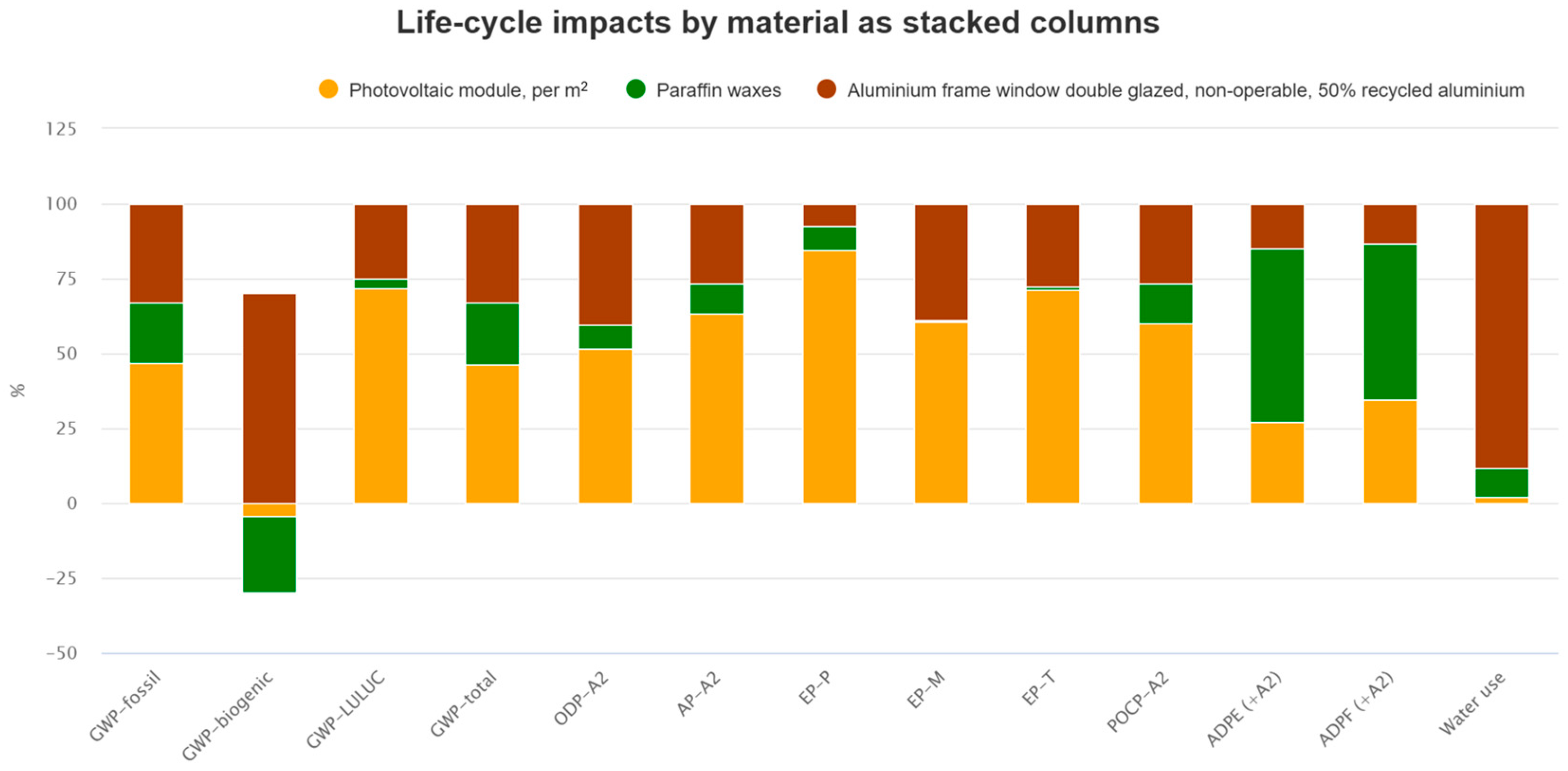
3.2. Life-Cycle Assessment
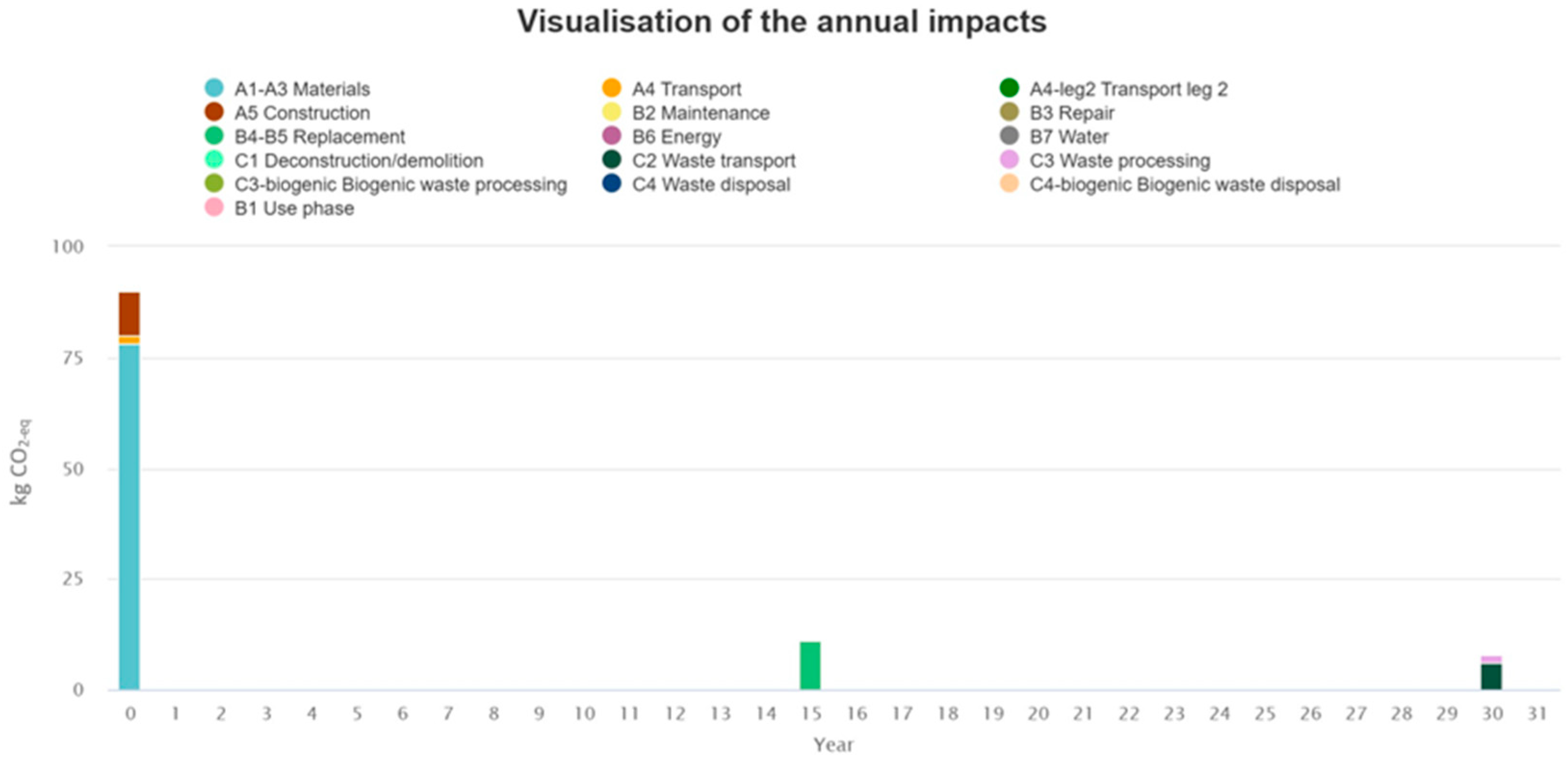
3.3. Temporal Evolution of Impacts
3.4. Benefits and Net Carbon Balance
3.5. Sensitivity Analysis
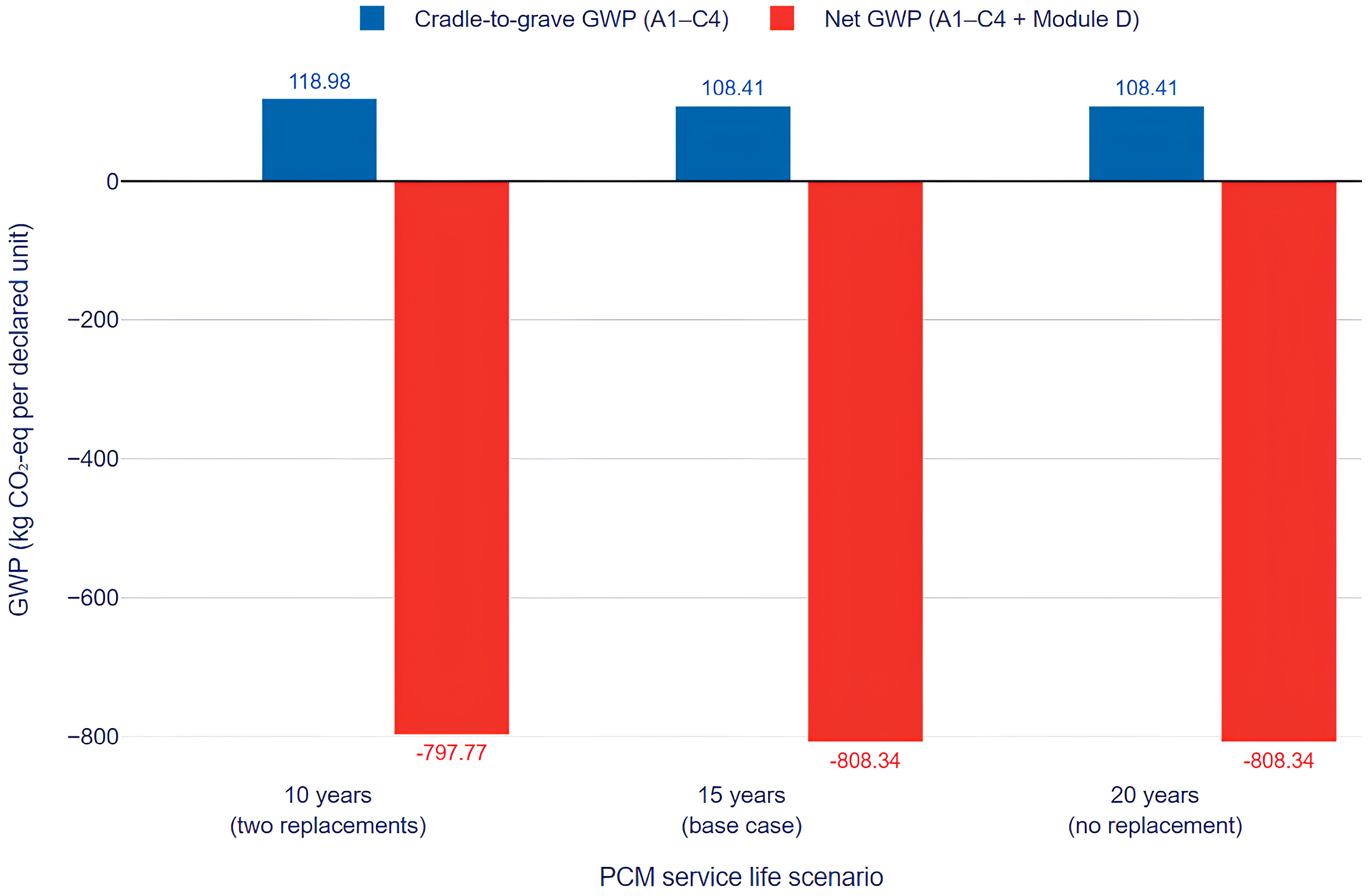
3.5.1. PCM Service Life
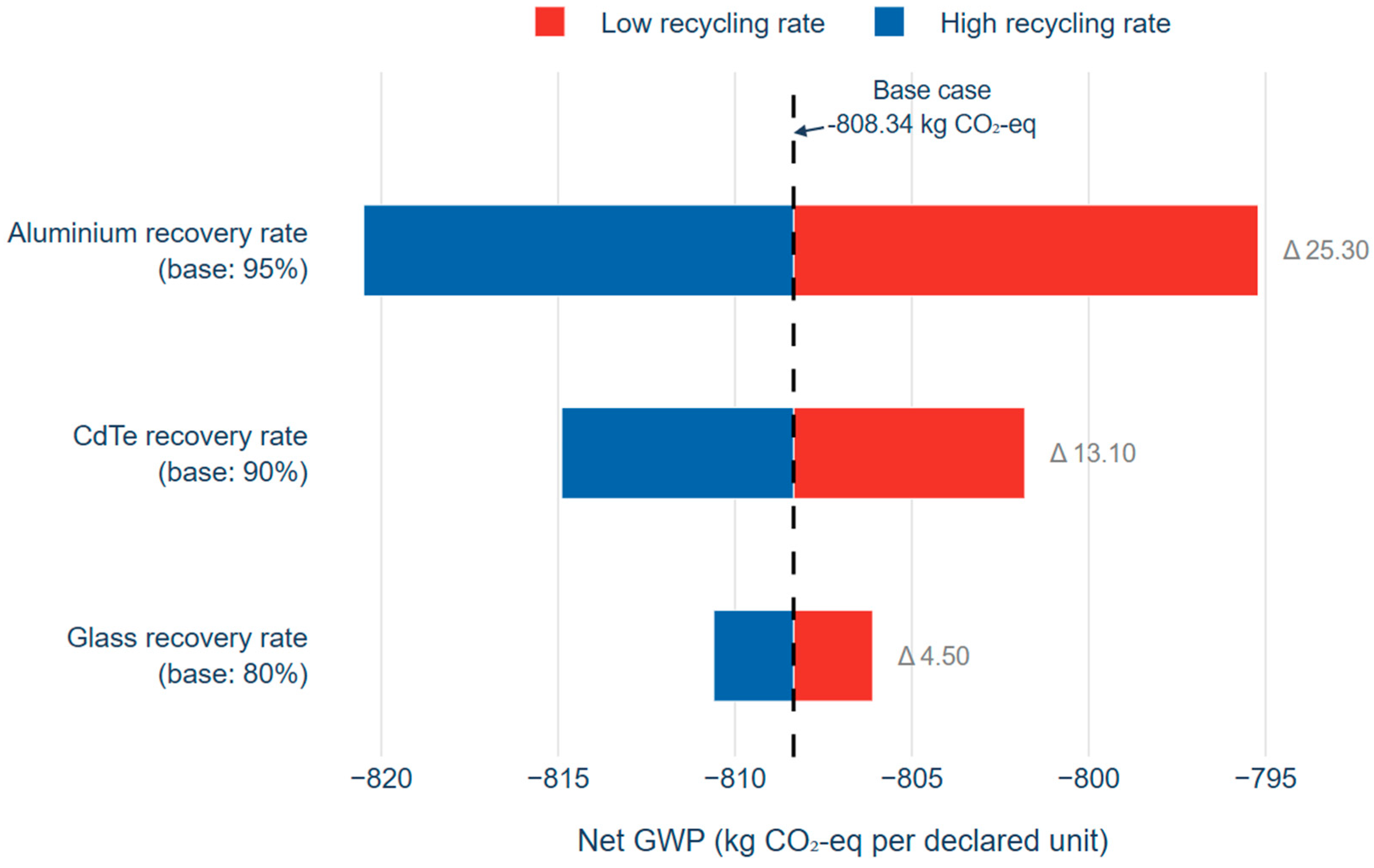
3.5.2. End-of-Life Recycling Rates
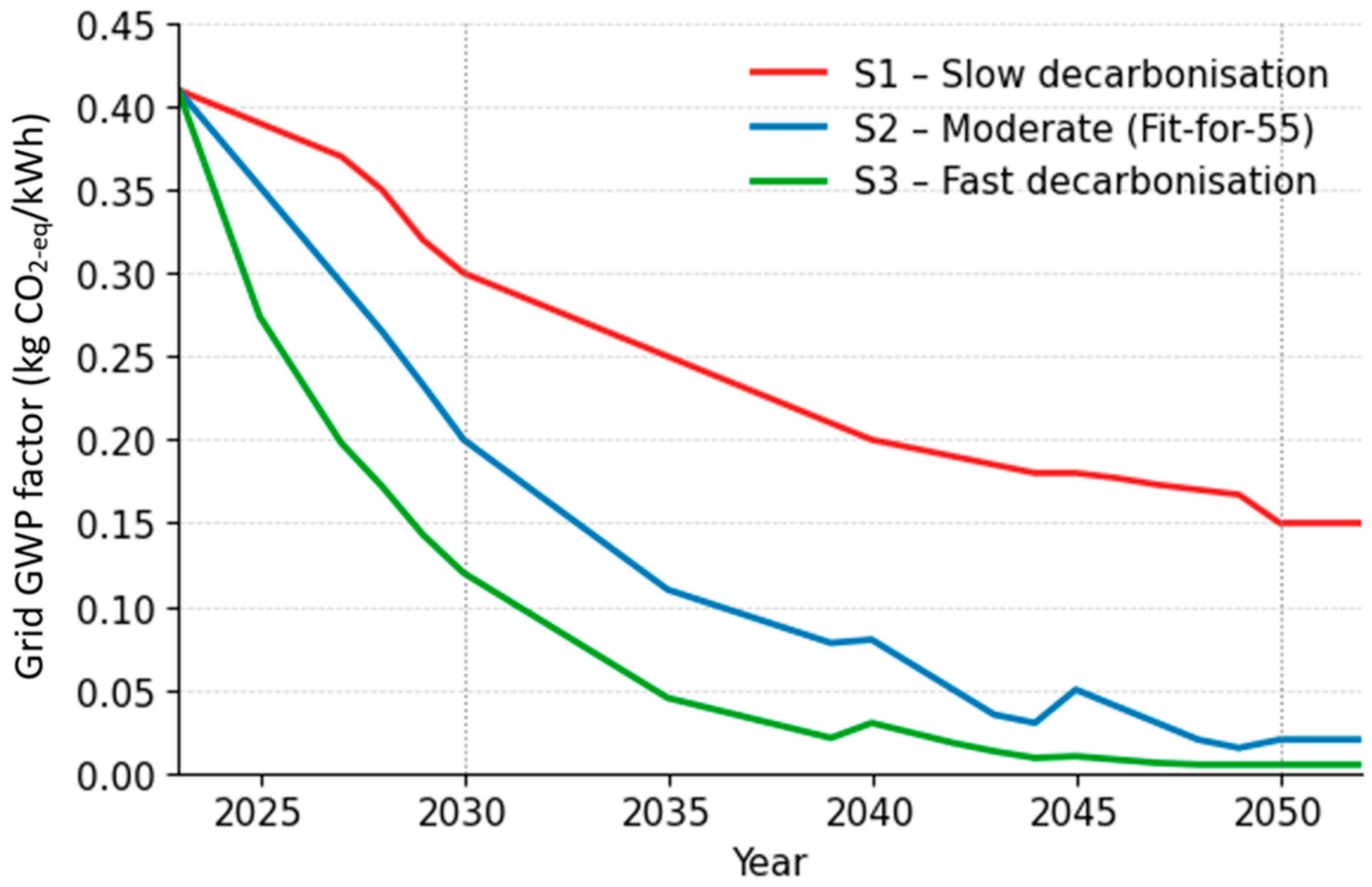
3.5.3. Grid Decarbonization
4. Discussion
4.1. Overview and Key Findings
4.2. Positioning Within the Existing LCA Literature
4.3. Interpretation and Implications
4.4. Limitations
4.5. Future Research Directions
5. Conclusions
Supplementary Materials
Author Contributions
Funding
Data Availability Statement
Acknowledgments
Conflicts of Interest
Abbreviations
| LCA | Life-Cycle Assessment |
| ISO | International Organization for Standardization |
| EN | European Standard |
| EPD | Environmental Product Declaration |
| PCR | Product Category Rules |
| BIPV | Building-Integrated Photovoltaics |
| PV | Photovoltaic |
| CdTe | Cadmium Telluride |
| PCM | Phase Change Material |
| EPBT | Energy Payback Time |
| GHG | Greenhouse Gas |
| A1–A3 | Product stage (Raw material supply, Transport, Manufacturing) |
| A4 | Transport to site |
| B1–B7 | Use stage modules (Use, Maintenance, Repair, Replacement, Refurbishment, Operational Energy Use, Operational Water Use) |
| B4 | Replacement |
| B5 | Refurbishment |
| C1–C4 | End-of-life stage (Deconstruction/demolition, Transport, Waste processing, Disposal) |
| C2 | End-of-life Transport |
| C3 | Waste processing |
| C4 | Disposal |
| D | Module D (Benefits and loads beyond the system boundary) |
| GWP total | Global Warming Potential–Total |
| GWP fossil | Global Warming Potential–Fossil |
| GWP biogenic | Global Warming Potential–Biogenic |
| GWP LULUC | Global Warming Potential–Land Use and Land Use Change |
| ODP | Ozone Depletion Potential |
| POCP | Photochemical Ozone Creation Potential |
| AP | Acidification Potential |
| EP freshwater | Eutrophication Potential–Freshwater |
| EP marine | Eutrophication Potential–Marine |
| EP terrestrial | Eutrophication Potential–Terrestrial |
| ADPE | Abiotic Depletion Potential–Elements |
| ADPF | Abiotic Depletion Potential–Fossil Fuels |
| WU | Water Use |
References
- International Energy Agency. Energy Efficiency 2025. 2025. Available online: https://www.iea.org/reports/energy-efficiency-2025 (accessed on 9 March 2026).
- Oguntade, A.A.; Cimillo, M. Assessing the Environmental Performance of BIPV Systems under Different Environmental Conditions. In 3rd International Conference on Green Building, Civil Engineering and Smart City (GBCESC 2024); Atlantis Press: Kunming, China, 2025; pp. 493–503. [Google Scholar] [CrossRef] [PubMed]
- Ritzen, M. Environmental Impact Assessment of Building Integrated Photovoltaics: Numerical and Experimental Carrying Capacity Based Approach. 2017. Available online: https://pure.tue.nl/ws/portalfiles/portal/77700210/20171012_Ritzen.pdf (accessed on 9 March 2026).
- Ali, K.; Menoufi, I. Life Cycle Assessment of Novel Building Integrated Concentrating Photovoltaic Systems through Environmental and Energy Evaluations. Available online: https://www.tdx.cat/handle/10803/131056 (accessed on 12 March 2026).
- Li, Z.; Zhang, W.; Xie, L.; Wang, W.; Tian, H.; Chen, M.; Li, J. Life Cycle Assessment of Semi-Transparent Photovoltaic Window Applied on Building. J. Clean. Prod. 2021, 295, 126403. [Google Scholar] [CrossRef]
- ISO 14040:2006; Environmental Management—Life Cycle Assessment—Principles and Framework. ISO: Geneva, Switzerland. Available online: https://www.iso.org/standard/37456.html (accessed on 26 January 2026).
- CEN EN 15804:2012+A2:2019; Sustainability of Construction Works—Environmental Product Declarations—Core Rules for the Product Category of Construction Products. British Standards Institution: London, UK, 2019; pp. 1–78.
- Stucki, M.; Götz, M.; De Wild-Scholten, M. Fact Sheet: Environmental Life Cycle Assessment of Electricity from PV Systems; International Energy Agency (IEA) PVPS Task 12: Paris, France, 2024. [Google Scholar] [CrossRef]
- Kim, H.; Cha, K.; Fthenakis, V.M.; Sinha, P.; Hur, T. Life Cycle Assessment of Cadmium Telluride Photovoltaic (CdTe PV) Systems. Sol. Energy 2014, 103, 78–88. [Google Scholar] [CrossRef]
- Rashedi, A.; Khanam, T. Life Cycle Assessment of Most Widely Adopted Solar Photovoltaic Energy Technologies by Mid-Point and End-Point Indicators of ReCiPe Method. Environ. Sci. Pollut. Res. Int. 2020, 27, 29075–29090. [Google Scholar] [CrossRef] [PubMed]
- Fthenakis, V.; Athias, C.; Blumenthal, A.; Kulur, A.; Magliozzo, J.; Ng, D. Sustainability Evaluation of CdTe PV: An Update. Renew. Sustain. Energy Rev. 2020, 123, 109776. [Google Scholar] [CrossRef]
- Fthenakis, V.M.; Hyung, C.K.; Alsema, E. Emissions from Photovoltaic Life Cycles. Environ. Sci. Technol. 2008, 42, 2168–2174. [Google Scholar] [CrossRef] [PubMed]
- Raugei, M.; Bargigli, S.; Ulgiati, S. Energy and Life Cycle Assessment of Thin Film CdTe Photovoltaic Modules. Available online: https://www.civil.uwaterloo.ca/beg/Downloads/NREL_PV_Embodied_Energy.pdf (accessed on 12 March 2026).
- Held, M. Life cycle assessment of CdTe module recycling. In Proceedings of the 24th European Photovoltaic Solar Energy Conference; WIP Wirtschaft und Infrastruktur GmbH & Co Planungs KG: Munich, Germany, 2009. [Google Scholar]
- Shalaby, S.E.M. Environmental Footprint of Phase Change Material (PCM) Used in Thermal Energy Storage (TES): A Life Cycle Assessment Study. 2025. Available online: https://thesis.unipd.it/handle/20.500.12608/85438 (accessed on 12 March 2026).
- Vellini, M.; Gambini, M.; Prattella, V. Environmental Impacts of PV Technology throughout the Life Cycle: Importance of the End-of-Life Management for Si-Panels and CdTe-Panels. Energy 2017, 138, 1099–1111. [Google Scholar] [CrossRef]
- Kylili, A.; Fokaides, P.A. Life Cycle Assessment (LCA) of Phase Change Materials (PCMs) for Building Applications: A Review. J. Build. Eng. 2016, 6, 133–143. [Google Scholar] [CrossRef]
- Cabeza, L.F.; Castell, A.; Pérez, G. Life Cycle Assessment (LCA) of Phase Change Materials (PCMs) Used in Buildings. In Eco-Efficient Construction and Building Materials: Life Cycle Assessment (LCA), Eco-Labelling and Case Studies; Woodhead Publishing Ltd: Cambridge, UK, 2014; pp. 287–310. [Google Scholar] [CrossRef]
- Yadav, A.; Samykano, M.; Pandey, A.K.; Natarajan, S.K.; Vasudevan, G.; Muthuvairavan, G.; Suraparaju, S.K. Sustainable Phase Change Material Developments for Thermally Comfortable Smart Buildings: A Critical Review. Process Saf. Environ. Prot. 2024, 191, 1918–1955. [Google Scholar] [CrossRef]
- Struhala, K.; Ostrý, M. Life-Cycle Assessment of Phase-Change Materials in Buildings: A Review. J. Clean. Prod. 2022, 336, 130359. [Google Scholar] [CrossRef]
- Ye, W.; Dai, M.; Qiao, X.; Liu, X.; Qiu, Y. Integrating Building-Integrated Photovoltaics (BIPV) into Sustainable Architecture: A Review of Architectural-Scale Applications and Emerging Performance Strategies. Renew. Energy Power Qual. J. 2025, 23, 190–207. [Google Scholar] [CrossRef] [PubMed]
- One Click LCA. Available online: https://oneclicklcaapp.com/ (accessed on 16 February 2026).
- Pop, O.-G.; Ali, E.; Mustafa, E.; Lăcrănjan, M.; Fechete-Tutunaru, L. Preliminary Experimental Analysis of a CdTe BIPV Skylight on a Lab-Scale Test Cell. In E3S Web of Conferences; EDP Sciences: Evry, France, 2025. [Google Scholar] [CrossRef]
- Directive-EU-2024/884-EN-EUR-Lex. Available online: https://eur-lex.europa.eu/legal-content/EN/TXT/?uri=celex%3A32024L0884 (accessed on 27 April 2026).
- Ramirez-Cantero, J.; Garcia-Garcia, G.; Ngeles Martín-Lara, M.Á.; Hernández, Z.; Pérez, A.; Calero, M. Life-Cycle Assessment of an Industrial Recycling Process for Photovoltaic Panels Integrating Mechanical and Air-Assisted Pyrolysis Treatments. Energy Fuels 2026, 40, 9488–9498. [Google Scholar] [CrossRef] [PubMed]
- INTEGRATED NATIONAL ENERGY AND CLIMATE PLAN OF ROMANIA 2021–2030 Update First Draft Version. Available online: https://commission.europa.eu/system/files/2023-11/ROMANIA%20-%20DRAFT%20UPDATED%20NECP%202021-2030.pdf (accessed on 12 March 2026).
- Fit for 55: Delivering on the Proposals—European Commission. Available online: https://commission.europa.eu/topics/climate-action/delivering-european-green-deal/fit-55-delivering-proposals_en (accessed on 31 May 2026).
- International Energy Agency. Net Zero by 2050—A Roadmap for the Global Energy Sector. 2050. IEA Publications 2021, France. Available online: https://iea.blob.core.windows.net/assets/deebef5d-0c34-4539-9d0c-10b13d840027/NetZeroby2050-ARoadmapfortheGlobalEnergySector_CORR.pdf (accessed on 13 March 2026).
- Yan, Y.; Xiang, C. Life Cycle Carbon Footprint and Sustainability Assessment of Building-Integrated Photovoltaics: A Comparative Review of Technologies and Applications. Energy Build. 2026, 350, 116678. [Google Scholar] [CrossRef]
- Zhang, T.; Wang, M.; Yang, H. A Review of the Energy Performance and Life-Cycle Assessment of Building-Integrated Photovoltaic (BIPV) Systems. Energies 2018, 11, 3157. [Google Scholar] [CrossRef]
- Kowalczyk, Z.; Twardowski, S.; Malinowski, M.; Kuboń, M. Life Cycle Assessment (LCA) and Energy Assessment of the Production and Use of Windows in Residential Buildings. Sci. Rep. 2023, 13, 19752. [Google Scholar] [CrossRef] [PubMed]
- Ng, P.K.; Mithraratne, N. Lifetime Performance of Semi-Transparent Building-Integrated Photovoltaic (BIPV) Glazing Systems in the Tropics. Renew. Sustain. Energy Rev. 2014, 31, 736–745. [Google Scholar] [CrossRef]
- Park, J.; Hengevoss, D.; Wittkopf, S. Industrial Data-Based Life Cycle Assessment of Architecturally Integrated Glass-Glass Photovoltaics. Buildings 2018, 9, 8. [Google Scholar] [CrossRef]
- Patel, Z. Life Cycle Assessment Practices for PV Technologies: Systematic Literature Review; VERLAG proWiWi eV: Ilmenau, Germany, 2025. [Google Scholar]
- Raj, A.; Ravikumar, D.; Winicov, M. Anticipatory Life Cycle Assessment of an Industry-Scale CdTe Photovoltaic Recycling Process in the United States. Resour. Conserv. Recycl. 2026, 230, 108891. [Google Scholar] [CrossRef]
- Aridi, R.; Yehya, A. Review on the Sustainability of Phase-Change Materials Used in Buildings. Energy Convers. Manag. X 2022, 15, 100237. [Google Scholar] [CrossRef]
- Duggal, P.; Tomar, R.K.; Kaushika, N.D. A Review on Life Cycle Assessment of Phase Change Materials in Buildings. In Proceedings of the 2021 2nd International Conference on Intelligent Engineering and Management (ICIEM); IEEE: New York, NY, USA, 2021; pp. 18–22. [Google Scholar] [CrossRef]



| Impact Category | Abbreviation | Unit | Description/Scope |
|---|---|---|---|
| Global Warming Potential—Total | GWP total | kg CO2-eq | Cumulative GHG emissions contributing to climate change |
| Global Warming Potential—Fossil | GWP fossil | kg CO2-eq | GHG emissions originating exclusively from fossil fuel combustion and extraction |
| Global Warming Potential—Biogenic | GWP biogenic | kg CO2-eq | GHG emissions and removals linked to biogenic carbon cycles |
| Global Warming Potential—Land Use & Land Use Change | GWP LULUC | kg CO2-eq | GHG emissions associated with changes in land use and land cover |
| Ozone Depletion Potential | ODP | kg CFC-11-eq | Potential degradation of the stratospheric ozone layer due to halogenated substance emissions |
| Photochemical Ozone Creation Potential | POCP | kg NMVOC-eq | Contribution to ground-level smog formation through reactions between NOx and volatile organic compounds |
| Acidification Potential | AP | mol H+-eq | Potential acidification of soil and water bodies caused by atmospheric deposition of acid-forming compounds |
| Eutrophication Potential—Freshwater | EP freshwater | kg P-eq | Excess nutrient loading (phosphorus) that promotes algal growth and depletes oxygen in freshwater ecosystems |
| Eutrophication Potential—Marine | EP marine | kg N-eq | Excess nutrient loading (nitrogen) that promotes algal growth and oxygen depletion in coastal/marine environments |
| Eutrophication Potential—Terrestrial | EP terrestrial | mol N-eq | Excess reactive nitrogen deposition that alters nutrient balance and biodiversity in terrestrial ecosystems |
| Abiotic Depletion Potential—Elements | ADP elements | kg Sb-eq | Depletion of non-renewable mineral and metallic resources, referenced against antimony scarcity |
| Abiotic Depletion Potential—Fossil Fuels | ADP fossil | MJ | Depletion of non-renewable fossil energy carriers (coal, oil, natural gas), expressed as lower heating value |
| Water Use | WU | m3 | Net consumption of freshwater resources over the life cycle, accounting for both withdrawals and returns |
| Impact Category | Unit | A1–A3 Materials | A4 Transport | A5 Construction | B4–B5 Replacement | C1–C4 End of Life | Total (A–C) | Module D | Net (incl. D) |
|---|---|---|---|---|---|---|---|---|---|
| GWP total | kg CO2-eq | 78.00 | 1.53 | 9.97 | 10.57 | 8.34 | 108.41 | −916.75 * | −808.34 * |
| GWP fossil | kg CO2-eq | 78.10 | 1.53 | 9.46 | 10.57 | 8.33 | 107.99 | −915.36 * | −807.37 * |
| GWP biogenic | kg CO2-eq | −0.16 * | 0.00 | 0.50 | 0.00 | 0.003 | 0.34 | 0.00 | 0.34 |
| GWP LULUC | kg CO2-eq | 0.0764 | 0.0001 | 0.0114 | 0.0014 | 0.0047 | 0.0940 | −1.39 * | −1.296 * |
| ODP | kg CFC-11-eq | 5.91 × 10⁻⁶ | 3.59 × 10⁻⁷ | 8.04 × 10⁻⁷ | 3.38 × 10⁻⁷ | 1.54 × 10⁻⁶ | 8.95 × 10⁻⁶ | −7.7 × 10⁻⁵ * | −6.78 × 10⁻⁵ * |
| AP | mol H+-eq | 0.423 | 0.0025 | 0.059 | 0.0265 | 0.0243 | 0.535 | −4.29 * | −3.775 * |
| EP freshwater | kg P-eq | 1.46 × 10⁻³ | 1.02 × 10⁻⁴ | 3.52 × 10⁻⁴ | 9.56 × 10⁻⁵ | 4.23 × 10⁻⁴ | 2.43 × 10⁻³ | −0.122 * | −0.119 * |
| EP marine | kg N-eq | 0.0780 | 0.0003 | 0.0094 | 0.0004 | 0.0048 | 0.0929 | −0.742 * | −0.649 * |
| EP terrestrial | mol N-eq | 0.760 | 0.0033 | 0.111 | 0.0039 | 0.0527 | 0.931 | −7.57 * | −6.639 * |
| POCP | kg NMVOC-eq | 0.226 | 0.0014 | 0.0315 | 0.0183 | 0.0175 | 0.295 | −2.12 * | −1.825 * |
| ADPE | kg Sb-eq | 8.37 × 10⁻³ | 1.08 × 10⁻² | 2.68 × 10⁻³ | 1.01 × 10⁻² | 4.78 × 10⁻³ | 3.67 × 10⁻² | −7.4 × 10⁻⁴ * | 3.59 × 10⁻² |
| ADPF | MJ | 1040 | 42.9 | 150 | 448 | 132 | 1813 | −11,731 * | −9918 * |
| Water use | m3 | 542 | 0.00 | 4.75 | 25.4 | 1.50 | 574 | −71,549.8 * | −70,976 * |
| Product Stage | GWP-Fossil (kg CO2-eq) | GWP-Fossil (%) | ADPE (+A2) (kg Sb-eq) | ADPE (+A2) (%) |
|---|---|---|---|---|
| CdTe PV glass | 36.42 | 46.7 | 2.277 × 10⁻³ | 27.2 |
| Recycled aluminum frame + double-glazing unit | 25.55 | 32.8 | 1.267 × 10⁻³ | 15.1 |
| Paraffin-based PCM | 16.03 | 20.6 | 4.825 × 10⁻³ | 57.7 |
| Romanian electricity (background) | 0 | 0.0 | 0 | 0.0 |
| A1–A3 total | 78.00 | 100.0 | 8.37 × 10⁻³ | 100.0 |
Disclaimer/Publisher’s Note: The statements, opinions and data contained in all publications are solely those of the individual author(s) and contributor(s) and not of MDPI and/or the editor(s). MDPI and/or the editor(s) disclaim responsibility for any injury to people or property resulting from any ideas, methods, instructions or products referred to in the content. |
© 2026 by the authors. Licensee MDPI, Basel, Switzerland. This article is an open access article distributed under the terms and conditions of the Creative Commons Attribution (CC BY) license.
Share and Cite
Rus, T.; Pop, O.; Fechete-Tutunaru, L.V. Life-Cycle Assessment of a CdTe BIPV Glazing Element with Integrated Phase Change Material. Clean Technol. 2026, 8, 105. https://doi.org/10.3390/cleantechnol8040105
Rus T, Pop O, Fechete-Tutunaru LV. Life-Cycle Assessment of a CdTe BIPV Glazing Element with Integrated Phase Change Material. Clean Technologies. 2026; 8(4):105. https://doi.org/10.3390/cleantechnol8040105
Chicago/Turabian StyleRus, Tania, Octavian Pop, and Lucian Viorel Fechete-Tutunaru. 2026. "Life-Cycle Assessment of a CdTe BIPV Glazing Element with Integrated Phase Change Material" Clean Technologies 8, no. 4: 105. https://doi.org/10.3390/cleantechnol8040105
APA StyleRus, T., Pop, O., & Fechete-Tutunaru, L. V. (2026). Life-Cycle Assessment of a CdTe BIPV Glazing Element with Integrated Phase Change Material. Clean Technologies, 8(4), 105. https://doi.org/10.3390/cleantechnol8040105