Article

Contribution to Environmental Sustainability Through Artificial Lightweight Aggregates Manufactured from Waste


by
Carlos Javier Cobo-Ceacero
*,
María Teresa Cotes-Palomino
,
Lázaro Márquez-Montes
,
Carmen Martínez-García
,
Francisco José Troyano-Pérez
and
Ana B. López
Department of Chemical, Environmental and Materials, Higher Polytechnic School of Linares, University of Jaén, 23071 Jaén, Spain
*
Author to whom correspondence should be addressed.
Clean Technol. 2026, 8(3), 95; https://doi.org/10.3390/cleantechnol8030095 (registering DOI)
Submission received: 12 March 2026 / Revised: 27 April 2026 / Accepted: 28 May 2026 / Published: 22 June 2026

Highlights

What are the main findings of this study?
  • Waste-based lightweight aggregates have comparable or lower environmental impacts than conventional expanded clay.
  • Sintering energy demand and transport distance are the main contributors to environmental impact.
What are the implications of the main findings?
  • The valorization of industrial and organic residues can reduce reliance on virgin raw materials in the construction sector.
  • Improving energy efficiency and prioritizing local sourcing are key strategies for minimizing environmental impacts.

Abstract
The valorization of industrial mining and organic wastes in construction materials constitutes a key strategy for reducing the environmental impact of the sector. In this context, the present study aims to evaluate the sustainability of innovative Artificial Lightweight Aggregates (ALAs) manufactured from mixtures of inorganic industrial wastes—such as granite and slate cutting sludge and aggregate washing sludge—together with organic wastes, like cork dust, coffee grounds, and olive pits. The methodology included a Life Cycle Assessment (LCA), considering different waste compositions and manufacturing conditions. The results show that the developed ALAs exhibit favorable environmental performance as their bulk density decreases, with an overall environmental impact lower than that of conventional lightweight aggregates made from expanded clay, achieving a reduction in the carbon footprint of up to 7%. Likewise, the comparative analysis reveals that the process stage with the greatest environmental impact is the heat energy required during the sintering stage in the rotary kiln, which in some cases accounts for more than 90% of the total impact. In summary, the results demonstrate the feasibility of obtaining ALAs manufactured solely from waste with a lower carbon footprint compared to traditional expanded clay aggregates. Furthermore, the study highlights that the process stages with the highest contributions to environmental impact are the transport of raw materials and the high-temperature sintering of the ALAs in the rotary kiln. Thus, their production from waste contributes to the valorization of by-products, fostering circular economy strategies and supporting decarbonization processes within the construction sector.

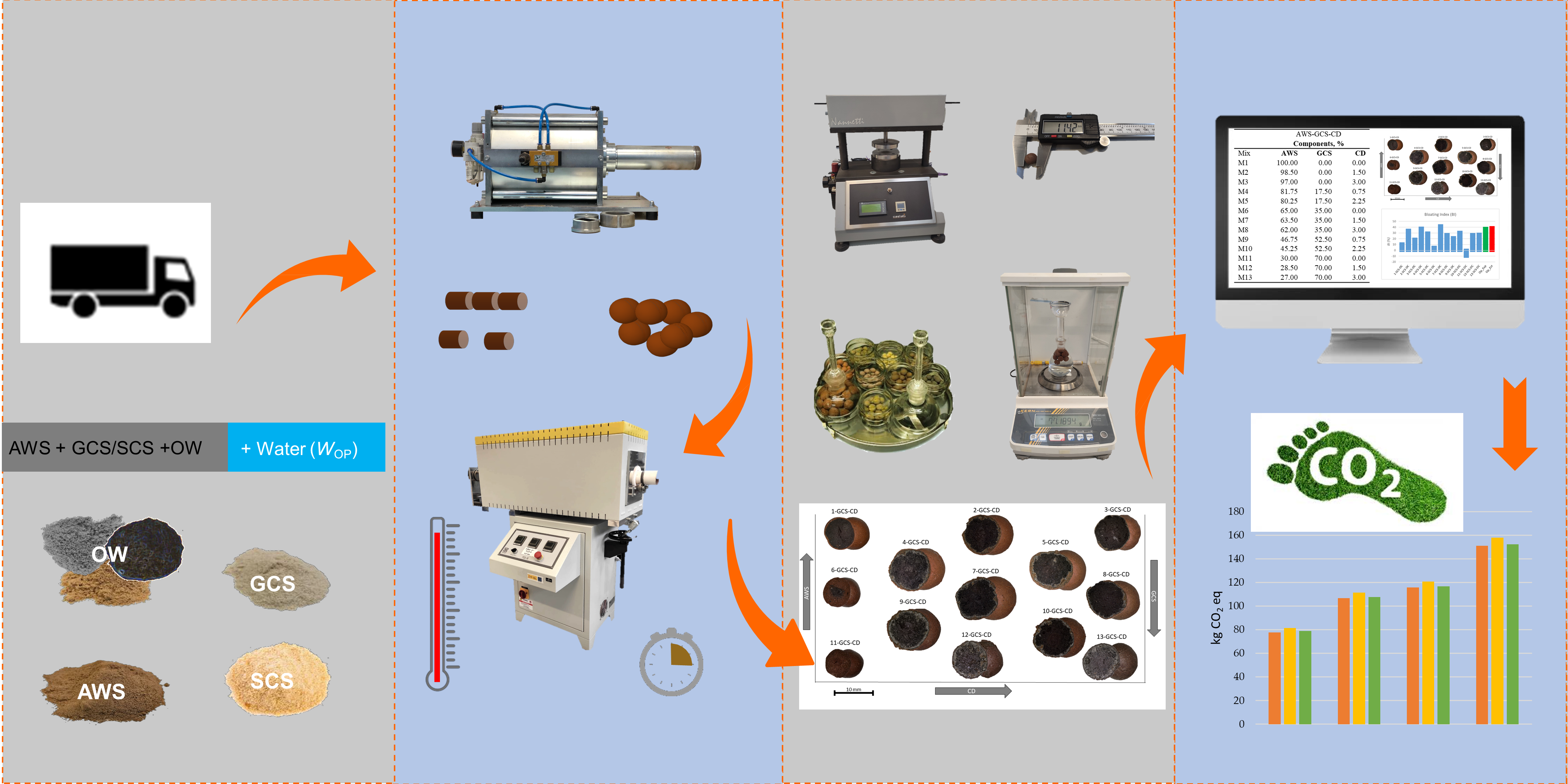
Graphical Abstract

1. Introduction

The growing demand for construction materials, coupled with the urgency to reduce natural resource consumption and industrial emissions, has driven the development of sustainable alternatives within the sector. In this framework, Artificial Lightweight Aggregates (ALAs) have gained significant interest due to their versatility in structural concrete, thermal insulation, and precast elements, as well as their capacity to integrate secondary materials derived from industrial and urban waste [1,2,3,4,5]. However, their conventional manufacturing entails a significant environmental impact, primarily due to the high energy consumption of thermal processes and the dependence on virgin raw materials [6,7]. Therefore, the transition toward a circular economy model is imperative to incorporate by-products into the value chain and mitigate associated ecological impacts [8,9].
In particular, ALAs’ global aggregate production exceeds 40–50 billion tonnes per year, making it the most widely used solid raw material in construction. During the washing and grading of sand and gravel, fine fractions (<75 µm) are generated, which typically accumulate as washing sludge; these represent approximately 4–12% of the processed material, implying the potential generation of billions of tonnes of fine waste annually on a global scale [10]. This vast volume has spurred interest in its valorization in construction materials and other industrial applications [11,12]. The global production of ornamental stone exceeds 125 million tonnes per year, generating significant amounts of waste during industrial processing. In particular, sludge from the cutting and sawing processes of materials such as slate and granite can represent between 20% and 28% of the total volume of processed rock [13,14]. The management of these wastes constitutes a relevant environmental challenge, as they not only contribute to the saturation of controlled landfills but, when improperly managed, can cause alterations in local ecosystems due to their finely powdered nature and leaching potential. The valorization of this sludge as a clay substitute in the production of ALAs is, therefore, presented as a double-benefit solution: it reduces pressure on virgin raw material quarries and offers a technical outlet for a waste that is difficult to manage [15].
Complementarily, the incorporation of Organic Waste (OW), whose annual generation is massive—notably the more than 15 million tonnes of coffee grounds produced worldwide [16], the approximately 1.2 million tonnes of cork industry waste in the Mediterranean basin [17], and the global olive production exceeding 20–23 million tonnes per year—generates between 15 and 18 million tonnes of waste from olive oil extraction, including pomace, mill wastewater, olive pits, and leaves [18,19]. The incorporation of this type of OW acts as a pore-forming agent during the sintering process [20]. These materials, by thermally degrading at high temperatures, favor the formation of an aggregate with a highly porous core, granting the aggregate low density and insulating properties. However, the combustion of this organic matter alters the kiln atmosphere, introducing a complex variable during the expansion stage of the aggregates [21]. These types of waste, such as aggregate washing sludge and ornamental stone cutting sludge, hold potential for the manufacture of ALAs, as they provide the mineral structure (aluminosilicates) required for the formation of the glass phase; they are chemically analogous to natural clays, but without the environmental impact associated with their extraction [22,23]. Together with pore-forming agents, such as organic waste, they become a viable alternative for the manufacture of these lightweight aggregates.
The use of waste as secondary raw materials not only curbs the extraction of natural resources but also valorizes waste that would otherwise end up in landfills. Various studies have validated the technical feasibility of this integration, evaluating physical, mechanical, and microstructural properties [24,25]. Furthermore, it has been demonstrated that the structure of ALAs can encapsulate polluting elements [26,27], achieving a net reduction in environmental impact during manufacturing [28].
Although there are studies in which ALAs are produced from waste [1,2,3,4,5,29], not all of them analyze their LCA; the majority of studies that do analyze the LCA use aggregates produced by partially substituting waste, with virgin clay still predominating [24,30]. There is limited literature on ALAs produced solely from waste where an analysis is also carried out of the environmental impact associated with different waste compositions and treatment conditions, particularly when materials of different types and origins are combined. This knowledge gap is particularly relevant in light of the tightening of international regulations, such as the European Green Deal [31] and the Circular Economy Action Plan, which promote resource efficiency and the valorization of waste as secondary raw materials [32]. In this context, the construction sector faces critical legislative challenges, such as the future requirement for Environmental Product Declarations (EPDs) under Regulation (EU) 2024/3110, which progressively incorporates the communication of the environmental impact of products through EPDs based on Life Cycle Assessments [33].
Nevertheless, the integral sustainability of waste-based materials depends not only on their climate impact, but also on their environmental safety. In accordance with Directive (EU) 2018/851, which amends the Waste Framework Directive 2008/98/EC, the European Union promotes the prevention, reuse, and valorization of waste as key elements for moving toward a circular economy model [34].
In this context, it is essential to enhance their sustainability profile through a systematic analysis that assesses the impact of their manufacturing process. Life Cycle Assessment (LCA) has established itself as the primary tool for assessing the sustainability of new construction materials [22,35,36,37]. Recent studies have shown that producing aggregates from waste can reduce environmental impacts compared to the extraction of natural aggregates, particularly in categories such as resource depletion and land use [6]. However, the final performance of the production process is highly sensitive to manufacturing conditions and transport [24,25]. In the ceramic sector, previous research has evaluated the environmental benefit of incorporating organic waste into bricks [38], the optimization of energy consumption in tiles through scenario analysis [39], the use of industrial ornamental stone waste in various types of new materials [40], and even the manufacture of ALAs with additions of coffee grounds, rice husk and biomass ash [41,42], fly ash [25] or red mud [22].
Under this premise, the main objective of this study is to analyze how the nature and proportion of the wastes used, together with the processing conditions, influence the environmental impact of the resulting ALAs. To this end, SimaPro 10.3.0.1 software is used to perform a comparative LCA of various formulations integrating different proportions of aggregate washing sludge (AWS), slate cutting sludge (SCS), and granite cutting sludge (GCS), combined with OW, such as coffee grounds (CG), cork dust (CD), and olive pits (OP). The evaluation also considers the variability in the final product properties and manufacturing parameters. The results provide solid environmental criteria that complement the technical characterization of these materials [8], facilitating the design of more sustainable lightweight aggregates and the advancement of circular economy strategies within the construction sector.

2. Materials and Methods

2.1. Methodological Approach and Database

The study was developed in accordance with ISO 14040 [43] and ISO 14044 [44] standards, applying an attributional Life Cycle Assessment (LCA) approach. The modeling was performed using SimaPro 10.3.0.1 software, utilizing the Ecoinvent v3.10 database under the Cut-off model and employing unit processes (U). Following the “end-of-waste” principle, the materials used as secondary raw materials are introduced into the system burden free from previous processes. Therefore, the inventory only considers the impacts derived from their transport and the operations necessary for their material valorization within the ALAs manufacturing process. Furthermore, their use does not require prior thermal or mechanical pretreatment processes, as all wastes exhibited a very fine particle size due to their production processes, and their moisture content was utilized for subsequent pelletizing, making prior drying unnecessary.
The Life Cycle Inventory (LCI) was drawn from three main sources: the Ecoinvent v3.10 database, the specialized scientific literature, and primary laboratory data. Specifically, the dosage parameters for the mixtures (Table 1) and the technological properties of the resulting aggregates (Table 2) originate from a previous characterization study [8]. In that work, a D-optimal Mixture Design of Experiments (ME-DOE) methodology was employed to optimize the formulations of the ALAs. The statistical processing of these baseline data was carried out using R 4.4.1 and Design Expert 12 software [8], allowing for the establishment of correlations between waste composition and the physical properties that feed the present environmental analysis.

2.2. Functional Unit and System Boundaries

2.2.1. Funtional Unit

The functional unit (FU) selected for the present study was 1 m3 of ALAs at the plant gate. The selection of the cubic meter as the functional unit is based on technical, functional, and regulatory criteria.
According to the ISO 14044 [44] standard, the FU must be consistent with the function of the studied system and provide a quantified reference that allows for comparability between alternatives. In this sense, the primary function of a lightweight aggregate is not to provide mass, but to occupy volume with reduced weight, providing benefits such as structural load reduction, thermal insulation, or lightweight fill.
The choice of 1 m3 is justified by the following reasons:
  • Consistency with the technical function of the material: Expressing impacts per unit of mass could lead to functionally incorrect comparisons, given that aggregates with different densities do not perform the same volumetric function per kilogram.
  • Unit of commercialization and actual use: In the construction materials market, aggregates are usually marketed and supplied in volumetric units (m3). Likewise, on-site dosages and technical specifications are generally established in terms of volume.
  • Comparability between formulations with different densities: Since the various developed mixtures present different bulk densities, the use of m3 ensures that the comparison of impacts is performed on an equivalent service basis.
All flows of matter, energy, and emissions were normalized using the bulk density, and experimentally measured for each formulation, ensuring that the material and energy requirements correspond strictly to the mass necessary to form 1 m3 of final product and fulfilling the requirements established in ISO 14044 [44].

2.2.2. System Boundaries

The scope of the study is defined under a cradle-to-gate approach and includes the following stages:
  • Waste transport: Transport of the wastes (AWS, granite cutting sludge (GCS), slate cutting sludge (SCS), and organic waste (OW)) from their respective generation points to the processing plant.
  • Preparation and mixture forming: Weighing, dosing, and mixing of components to ensure the homogeneity of the formulations.
  • Pelletizing process: The process for obtaining green aggregates (non-sintered).
  • Sintering or thermal treatment stage: Both the electrical and thermal consumption required for the kiln operation have been accounted for, along with the working temperature for each mixture. Additionally, moisture adjustment where necessary and direct atmospheric emissions derived from combustion and thermal decomposition of materials (including biogenic CO2) have been included.
  • Final conditioning: Processes such as the packaging and bagging of the ALAs at the plant gate.
The following were not included within the system boundaries:
  • Transport of the final product to the consumer or point of use.
  • The use phase of the aggregate.
  • The end of life of the material.
This delimitation of scope is justified by the high variability and uncertainty associated with distribution scenarios and the multiple end-use applications of ALAs (such as concrete, fill, or insulation), which would introduce external factors unrelated to the manufacturing process. By adopting a cradle-to-gate approach, the study ensures an accurate and direct comparison between the different formulations developed. The analysis focuses on the environmental impact of waste recovery and the sintering process, in line with standard academic practice for the design of new construction materials.
Consequently, the study represents the environmental impact associated with the production of ALAs up to the point of leaving the plant, including final conditioning and packaging, but excluding distribution and subsequent life cycle stages.

2.3. Materials Considered

2.3.1. Secondary Raw Materials

For the environmental analysis, the previously described wastes were introduced into the system following the Cut-off approach, accounting only for the impacts derived from their transport and subsequent processing. The modeling in SimaPro 10.3.0.1 was performed by linking each flow with its corresponding dataset from the Ecoinvent v3.10 database, selecting the processes that best represent the technical and geographic reality (Spain {ES}) of each material:
  • Aggregate washing sludge, post-process {ES} | collection of | Cut-off, U
  • Slate cutting sludge, post-process {ES} | collection of | Cut-off, U
  • Granite cutting sludge, post-process {ES} | collection of | Cut-off, U
  • Cork dust, post-process {ES} | collection of | Cut-off, U
  • Coffee grounds, post-consumer {ES} | collection of | Cut-off, U
  • Olive pits, post-process {ES} | collection of | Cut-off, U
The wet-state condition of the materials was maintained in the inventory, thus allowing the Life Cycle Inventory (LCI) to accurately reflect the real conditions of generation.

2.3.2. Collection and Transport

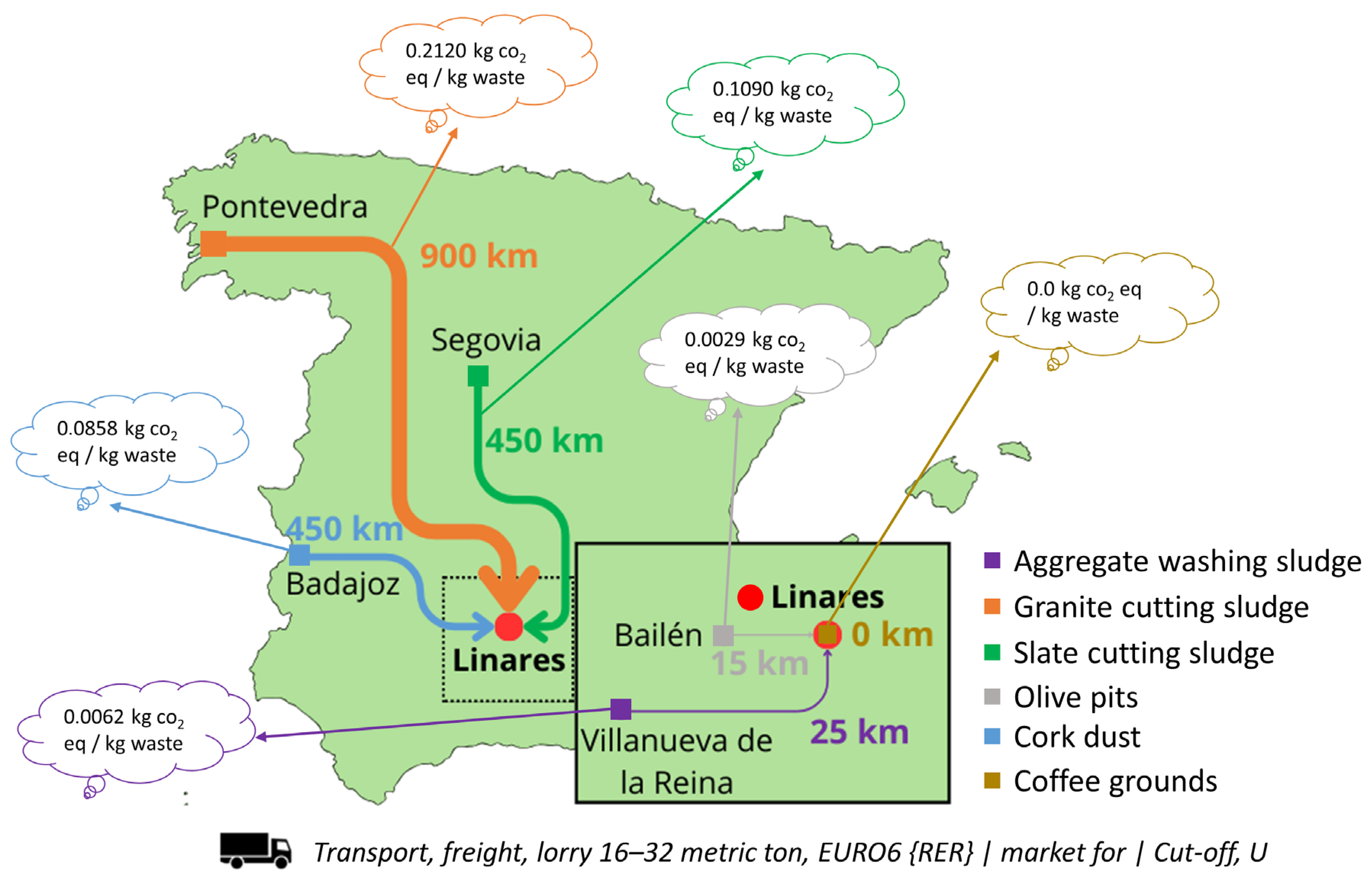
Waste transport from generation points to the manufacturing plant was modeled considering the actual logistical system in Spain. Representative transport distances were assigned for each material (Figure 1), using the process of road freight transport by lorry (>32 t, EURO 6). To ensure an accurate calculation of the transported mass, the moisture content at the source of each waste was accounted for, ensuring that the environmental impact reflects the actual weight of the wet materials. Once the transport stage was completed, the flows became available for processing and were linked in the model to the following datasets:
  • Aggregate washing sludge, treated {ES} | market for | Cut-off, U
  • Slate cutting sludge, treated {ES} | market for | Cut-off, U
  • Granite cutting sludge, treated {ES} | market for | Cut-off, U
  • Cork dust, treated, post-process {ES} | market for | Cut-off, U
  • Coffee grounds, treated, post-consumer {ES} | market for | Cut-off, U
  • Olive pits, post-process {ES} | collection of | Cut-off, U
Figure 1. Transport distances of waste materials to the manufacturing plant and kg CO2 eq emissions associated with transporting 1 kg of waste material. Method: IPCC 2021 GWP100 V1.03.
Cleantechnol 08 00095 g001

2.3.3. Raw Material Conditioning

A separate pre-conditioning stage for the selected wastes was not considered. Since the supplying companies provided these materials with a particle size already suitable for the pelletizing process, no grinding or size reduction operations were necessary. Likewise, the drying of the materials was not proposed as a pre-treatment; instead, it was directly integrated into the thermal treatment phase in the kiln, consistent with the modeled industrial process. This lack of prior conditioning highlights the efficiency of the system by utilizing the wastes in their as-received state.

2.4. Manufacture of Artificial Lightweight Aggregates

The manufacturing of the ALAs was modeled using specific processes developed in SimaPro 10.3.0.1, representing the different formulations based on combinations of the six studied wastes. To define the infrastructure and the baseline consumption profile, the following technological reference dataset from the Ecoinvent v3.10 database was selected:
  • Expanded clay {ES} | expanded clay production | Cut-off, U
This inventory was used as the technological and energy baseline, being adapted and parameterized to reflect the specific characteristics of the waste-based mixtures. This includes the adjustment of raw material inputs (total replacement of virgin clay with waste), the modification of thermal consumption associated with the evaporation of the actual moisture content of the mixtures, and the integration of direct emissions derived from the organic fraction.

2.4.1. Process Electricity

The expanded clay process included in Ecoinvent v3.10 establishes an electricity consumption of 0.035 kWh for the processing of 1.1 kg of virgin clay, the amount required to obtain 1 kg of final product (expanded clay). This baseline consumption was modeled using the dataset
  • Electricity, medium voltage {ES} | market for | Cut-off, U
However, given that the wastes used in this study exhibit a fine particle size and do not require a prior grinding stage, an adjustment to the electricity inventory was performed. Following technical references for the processing of ceramic materials [45], the fraction equivalent to grinding—estimated at 0.010 kWh per kg of ground material—was subtracted.
Consequently, the electricity consumption was adjusted proportionally to the total mass of the mixture used in each test sequence to obtain 1 m3 of ALAs.

2.4.2. Heat Sintering Energy

The reference process for expanded clay establishes a thermal energy of 3.09 MJ to sinter 1.1 kg of clay at 1200 °C, obtaining 1 kg of final product with a bulk density between 260 and 500 kg/m3. For the modeling, the following dataset was used:
  • Heat, district or industrial, other than natural gas {Europe without Switzerland} | market for heat, district or industrial, other than natural gas | Cut-off, U
This value was adjusted and parameterized for each of the developed ALA formulations, calculating the specific thermal demand based on the following factors:
  • The actual loss on ignition (LOI) of the aggregates during the sintering process.
  • The specific sintering temperature of each mixture, in cases where it differs from the reference temperature of 1200 °C.
  • The total mass of the mixture for each formulation required to obtain 1 m3 of aggregates (functional unit), based on the bulk density of the obtained aggregates.
In this way, the thermal inventory was adjusted proportionally to the actual operating conditions of each test, integrating the variations in energy demand derived from the chemical composition and the physical behavior of the wastes used.

2.4.3. Direct Biogenic CO2 Emissions

During the thermal treatment stage, direct CO2 emissions originating from the thermal decomposition and combustion of the organic wastes included in the mixtures (CG, CD, and OP) are accounted for. These emissions were modeled as direct output flows to the air during the ALAs manufacturing stage.
In accordance with the Cut-off approach and standard LCA practice, these emissions were categorized as biogenic CO2. Under this premise, it is assumed that the released carbon was previously captured by the biomass during its growth phase; therefore, its reporting is conducted independently of fossil-based emissions. This treatment allows for the differentiation of the impact derived from the kiln fuels resulting from the valorization of biomass waste, ensuring an accurate assessment of the Global Warming Potential (GWP) of each formulation.

2.5. Life Cycle Inventory (LCI) Analysis

The inventory data have been calculated to fulfill the functional unit of 1 m3 of ALA. To this end, the experimental data contained in Table 1 and Table 2 were used, and their conversion to m3 allowed for the normalization of all material and energy flows.
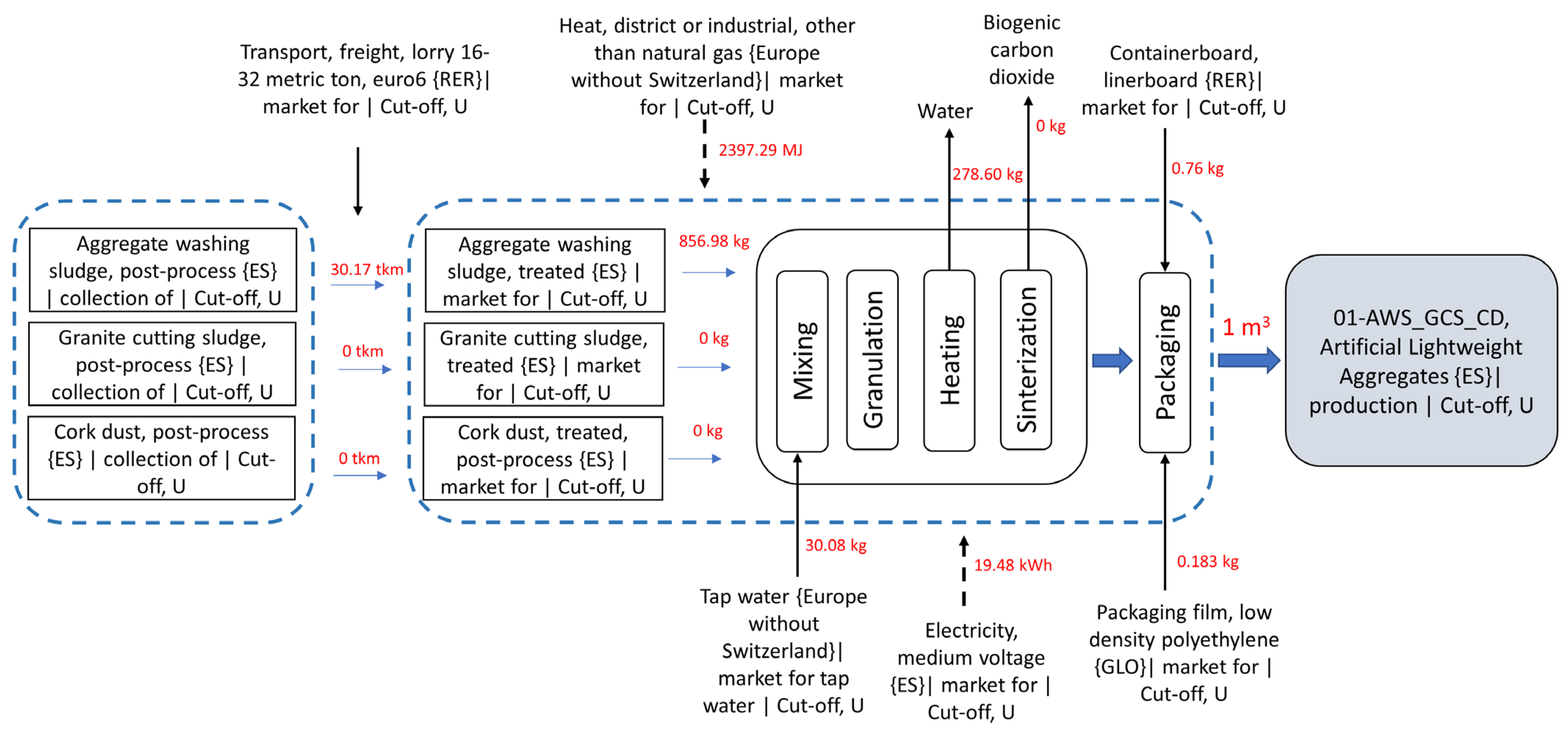
As an example, Figure 2 shows the inventory data for producing 1 m3 of ALAs from the mixture 01-AWS_GCS_CD, which is composed of 100% AWS, 0% GCS, and 0% CD. This same methodological procedure was replicated for all 78 analyzed formulations, whose inventory data are available in the Supplementary Materials (Tables S1–S6).

3. Results and Discussion

This section presents the environmental impact results associated with the production of 1 m3 of ALAs, under a cradle-to-gate approach. The impacts were calculated from the detailed inventory (Tables S1–S6), which integrates waste transport, the manufacturing process (pelletizing and sintering), energy consumption, direct emissions from thermal treatment, and final product conditioning.
Expressing the results per functional unit allows for a direct comparison between the different formulations, capturing the variations derived from the bulk density of the ALAs and the stoichiometry of the mixtures. In total, 78 aggregate variants were evaluated, categorized into two main series according to the predominant mineral waste:
  • GCS Series: Mixtures composed of aggregate washing sludge (AWS), granite cutting sludge (GCS), and organic waste (OW).
  • SCS Series: Mixtures composed of aggregate washing sludge (AWS), slate cutting sludge (SCS), and organic waste (OW).
Within each series, 13 different mineral dosages were analyzed, each of which was evaluated in triplicate by alternating the type of OW used as a pore-forming agent (CD, CG, or OP). This test matrix allows for the identification of not only the effect of the mineral matrix but also the specific influence of the organic precursor on the environmental profile of the final product.
  • 01-13_AWS + GCS + CD
  • 01-13_AWS + GCS + CG
  • 01-13_AWS + GCS + OP
  • 01-13_AWS + SCS + CD
  • 01-13_AWS + SCS + CG
  • 01-13_AWS + SCS + OP

3.1. Environmental Impact of ALAs (IPCC GWP100)

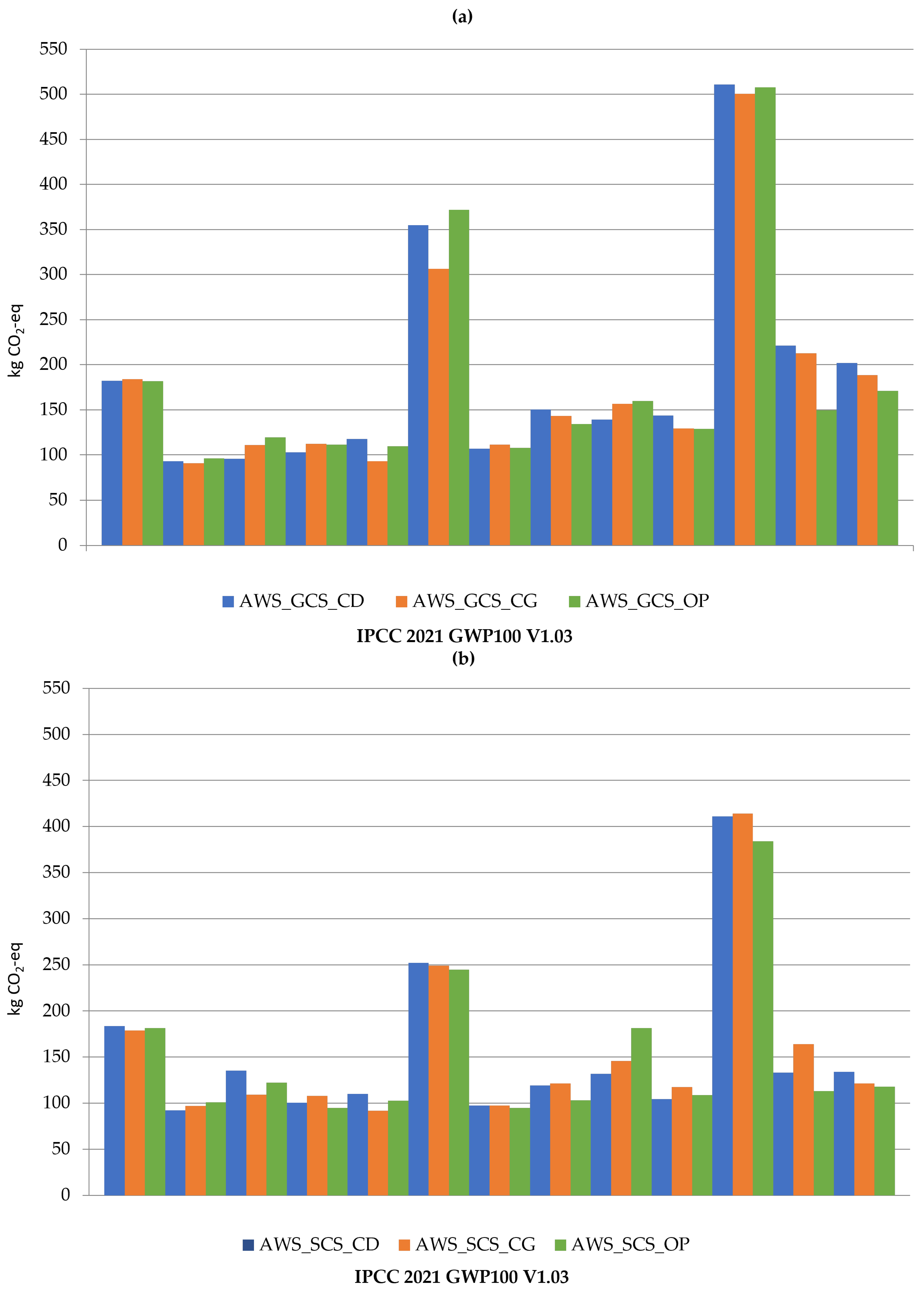
All ALA formulations were evaluated using the IPCC 2021 GWP100 v1.03 method, with the aim of quantifying their contribution to the GWP over a 100-year horizon, expressed in kg CO2 equivalent per functional unit (1 m3). This initial analysis allowed for a direct comparison of the environmental performance of each variant. The results are presented in Figure 3, divided according to the mineral matrix used: mixtures with granite cutting sludge (GCS, Figure 3a) and mixtures with slate cutting sludge (SCS, Figure 3b).
The results show significant variability in impact, with values ranging from a minimum of 91.89 kg CO2 eq (sample 05_AWS_SCS_CG) to a maximum of 511 kg CO2 eq (sample 11_AWS_GCS_CD). This large difference is mainly attributed to differences in the bulk density of the obtained aggregates. A lower density implies that smaller reference flows (waste mass and thermal energy) are required to complete the volume of the functional unit (1 m3), thus optimizing the environmental profile of the product.
In particular, mixtures 06 and 11 (in both the granite and slate series) (Figure 3a,b) present CO2 eq emissions much higher than the rest. This behavior is explained by the absence of organic waste (0% OW, Table 1) in their composition, which prevented the formation of an internal porous structure during sintering [20]. As a consequence, these aggregates reached high densities, with values between 1000 and 1400 kg/m3, compared to the average values of 400–600 kg/m3 (Table 2) for the rest of the samples.
Furthermore, when comparing both series, it is observed that the GCS Series (Figure 3a) generally presents a higher carbon footprint in high-density mixtures (such as mixture 11) compared to the SCS Series (Figure 3b). This difference suggests that the granite mineral matrix requires stricter control of the organic dosage to avoid the collapse of porosity and the consequent increase in environmental impact per cubic meter.
Likewise, the results indicate that, for most mineral dosages, the type of organic waste used (CD, CG, or OP) does not generate critical variations in the total GWP. This grants the process great logistical versatility, as it allows these organic precursors to be interchanged according to their seasonal availability without significantly altering the carbon footprint of the final aggregate.
From an eco-design perspective, the formulations in ranges 02, 05, 07 and 10 represent the optimal manufacturing parameters for producing the lowest-density ALAs (Artificial Lightweight Aggregates) in the study. These mixtures manage to keep the carbon footprint below 100 kg CO2 eq/m3, representing a reduction of up to 80% compared to high-density mixtures, establishing themselves as the most promising alternatives for the production of ALAs with a low carbon footprint.

3.2. Impacts Associated with the Different Stages of the Process (ReCiPe Midpoint)

Based on the results from the previous section, the group 07 mixtures were selected for a more exhaustive analysis. This decision is based on the fact that these formulations achieve a superior technical-environmental balance; they simultaneously incorporate all three types of waste (mineral and organic) and present the lowest impacts of the study. Furthermore, from a functional perspective, the group 07 mixtures yielded aggregates with the lowest bulk densities of the entire experimental series (Table 2), maximizing material efficiency by reducing the mass required to cover the functional unit of 1 m3.
The environmental analysis was further explored by applying the ReCiPe 2016 Hierarchist (H) method exclusively to the group 07 formulations. This approach allowed for the expansion of the assessment to a broader set of midpoint impact categories, providing a more holistic environmental view and enabling the identification of possible environmental trade-offs beyond the Global Warming Potential.
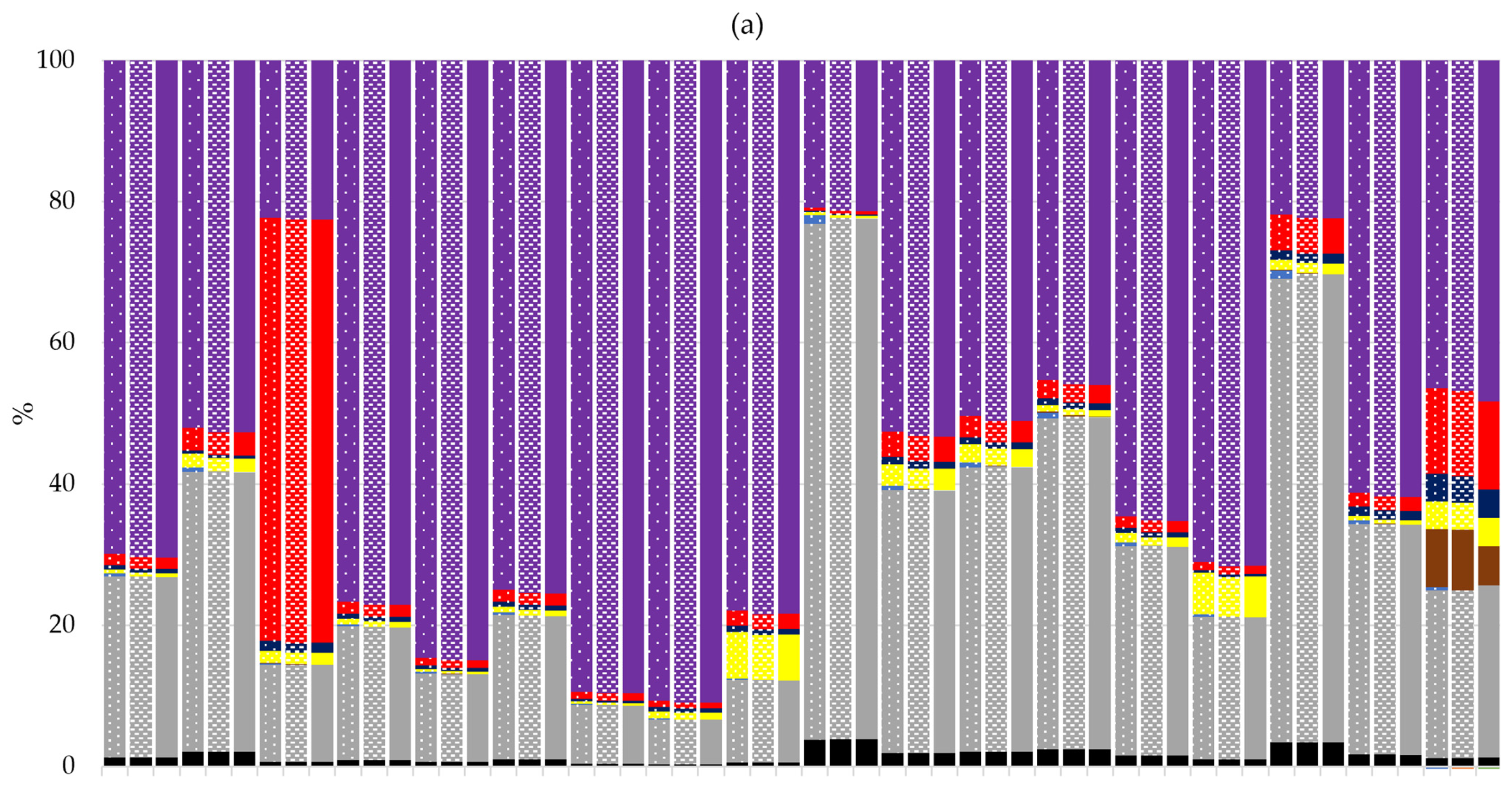
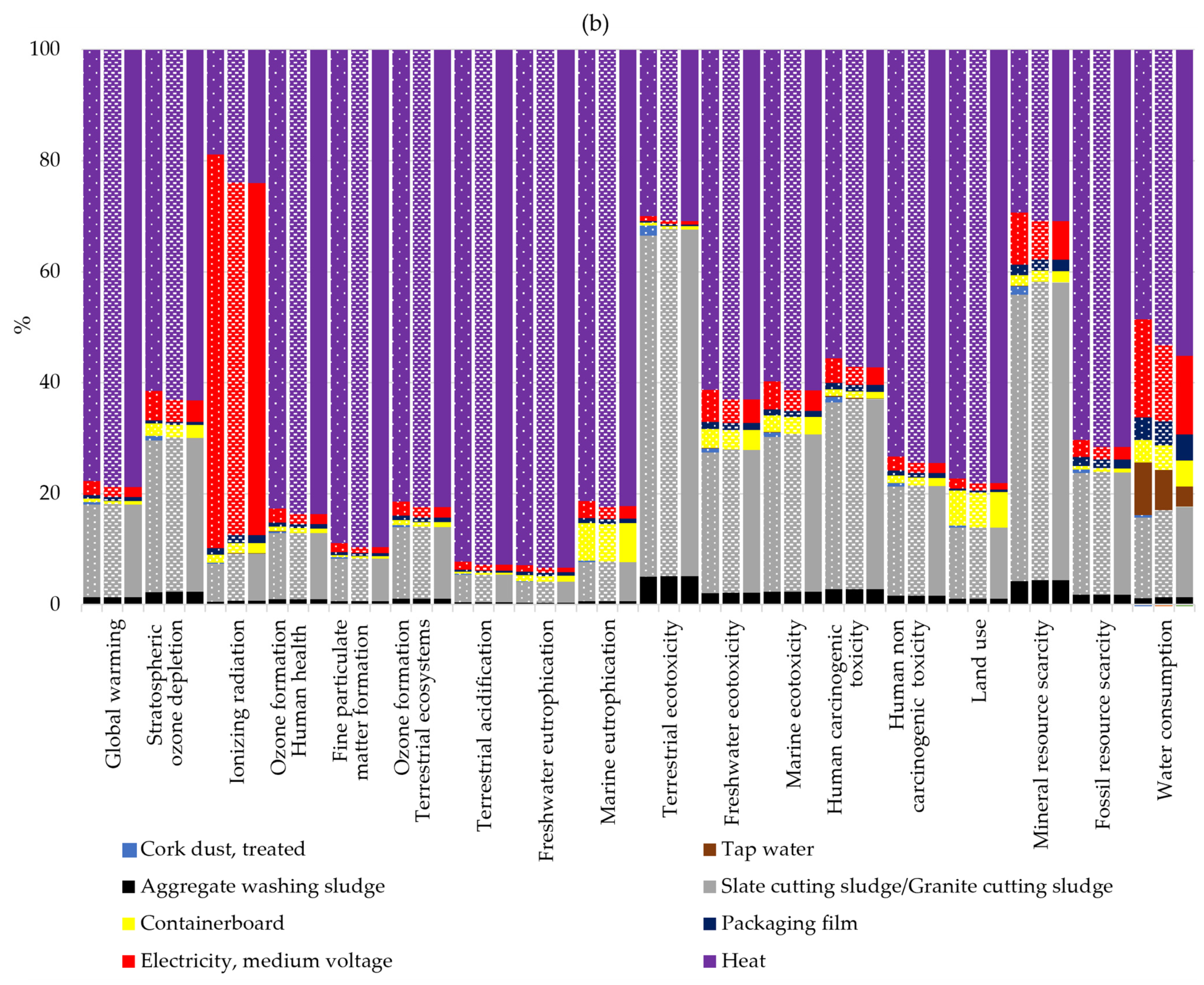
The results, presented in Figure 4, are broken down by impact categories and by the contribution of each process stage within the cradle-to-gate boundaries. Figure 4a and b show, respectively, the impact profiles for the aggregates formulated with GCS and SCS, along with the three organic wastes (CD, CG, and OP).
The data show that the type of OW used does not significantly modify the direct environmental impacts of the system, as its low proportion in the mixture (between 0% and 3% by mass) does not significantly alter the material inventory. However, its indirect influence is decisive as it acts as a pore-forming agent, defining the bulk density and, therefore, the amount of matter and energy required to reach the functional unit of 1 m3. Furthermore, studies, such as that by Pei et al. [27], suggest that these residues not only create porosity but can also contribute energy to the firing process, thereby improving the overall energy efficiency of the life cycle. Consequently, the variability observed in categories such as ecotoxicity or acidification responds more to the physical efficiency achieved during sintering than to the intrinsic impact of the added OW [20].
Conversely, relevant differences are observed in the environmental profile between the use of GCS and SCS as the secondary inorganic component. Although both matrices show a similar trend across all categories evaluated by ReCiPe 2016, the GCS formulations consistently present higher impacts than those with SCS. This difference is not due to the chemical nature of the waste, but rather to logistical efficiency—specifically, the transport distance associated with each residue: approximately 900 km for GCS compared to 450 km for SCS (Figure 1). This factor directly penalizes categories sensitive to road transport, such as climate change, particulate matter formation, terrestrial ecotoxicity, and mineral resource scarcity, due to the higher consumption of fossil fuels and their associated emissions.
With regard to the respective impact at each stage, sintering is identified as the critical point (hotspot) of the system, the thermal energy demand required in the kiln dominates most indicators, being particularly prevalent in categories such as terrestrial acidification and freshwater eutrophication, with levels exceeding 90% of the total impact. This result underscores the process’s dependence on industrial heat sources and the energy intensity required for the ceramic transformation. This finding is to be expected and is consistent with the results of other authors who indicate that the sintering stage accounts for around 70% of the energy consumption of the process [46,47] and is the main source of Global Warming Potential (GWP), contributing approximately 64% of the total impact of lightweight aggregate production [25].
On the other hand, the ionizing radiation category stands out as the only one led by electricity consumption, faithfully reflecting the intensity of the generation sources in the national electricity mix used in the model. Overall, the analysis demonstrates that, once thermal efficiency in the kiln is optimized, the sustainability of these ALAs depends critically on a proximity economy to reduce the weight of the logistical chain in the global environmental profile.

3.3. Comparison with the Reference Material (Expanded Clay)

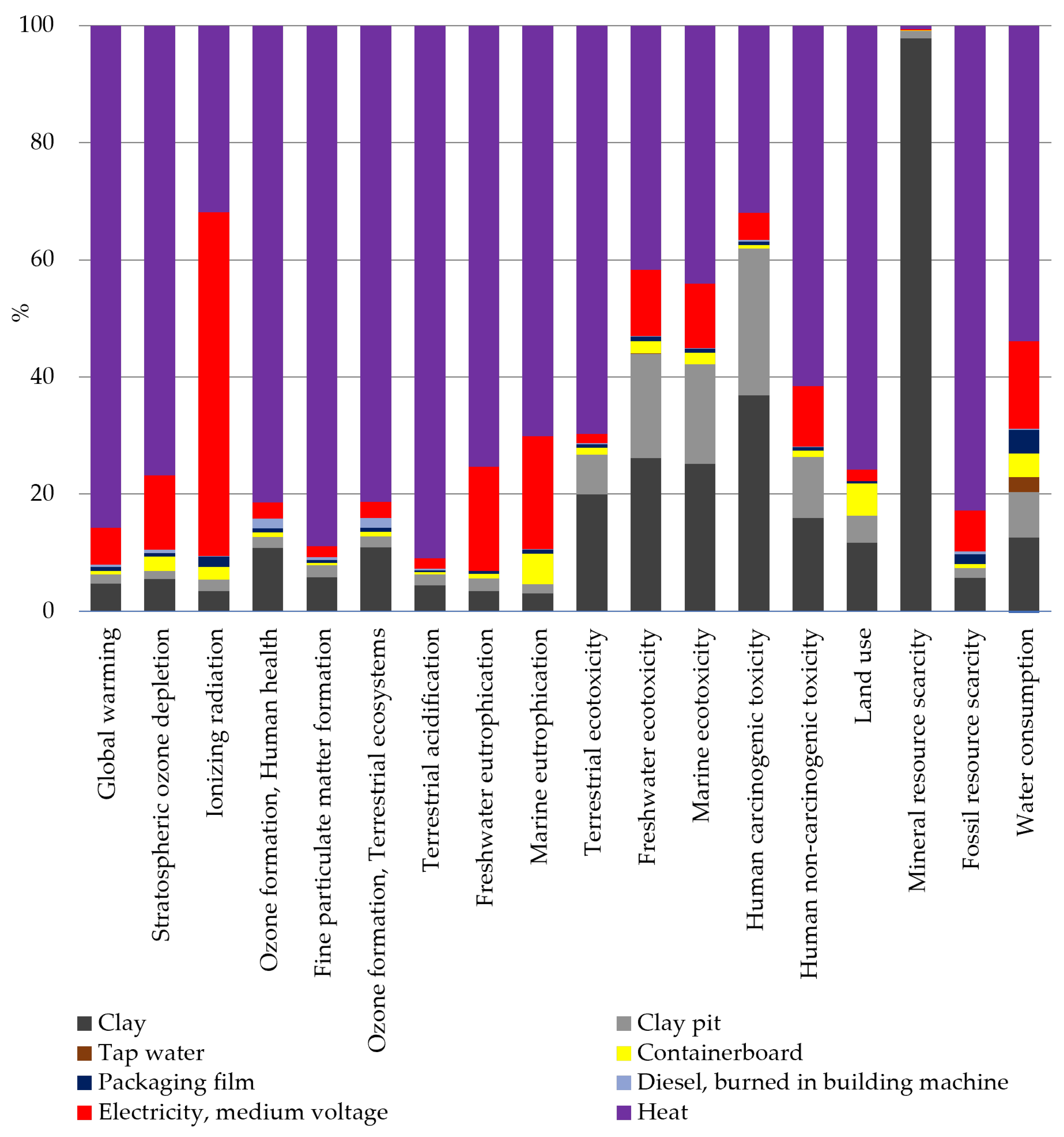
When comparing the environmental profiles obtained with the “expanded clay” reference process from the Ecoinvent v3.10 database (corresponding to an expanded clay aggregate with a density of 380 kg/m3), it is observed that most impact categories show a similar trend (Figure 5). Nonetheless, relevant differences are identified in the categories of terrestrial ecotoxicity and mineral resource scarcity.
In the conventional aggregate, the impact is dominated by the extraction of virgin clay, integrating the burdens of heavy machinery and mining operations; Linares et al. [6] report reductions of up to 70% in specific damage categories, driven mainly by the ‘avoided impacts’ resulting from not extracting virgin raw materials. In contrast, in the ALAs developed in this study, these extraction burdens are eliminated by utilizing waste under the Cut-off approach. However, this environmental benefit is partially offset by logistics: while the traditional expanded clay plant is located at the quarry site, the circular model depends on an external supply chain. This transfer of burdens—from the extraction stage to transport—defines the environmental competitiveness of the new formulations.
The differences observed in the terrestrial ecotoxicity category are primarily explained by waste transport, especially GCS and SCS. The supply distances for these by-products increase the emissions linked to fossil fuel consumption, exceeding the local impact generated by clay extraction at the factory site in the conventional process.
In contrast, in the mineral resource scarcity category, the developed aggregates demonstrate a clear advantage by eliminating the need to extract virgin resources, drastically reducing the pressure on natural deposits.
Finally, regardless of the raw material source (natural clay or valorized waste), the thermal sintering energy is confirmed as the transversal critical point (hotspot). This phase concentrates the largest fraction of impacts in almost all evaluated categories, suggesting that future optimizations in the sector must focus on kiln efficiency and the transition toward decarbonized fuels, beyond the nature of the materials used.

3.4. Influence of Formulation and Physical Properties on Global Warming Potential

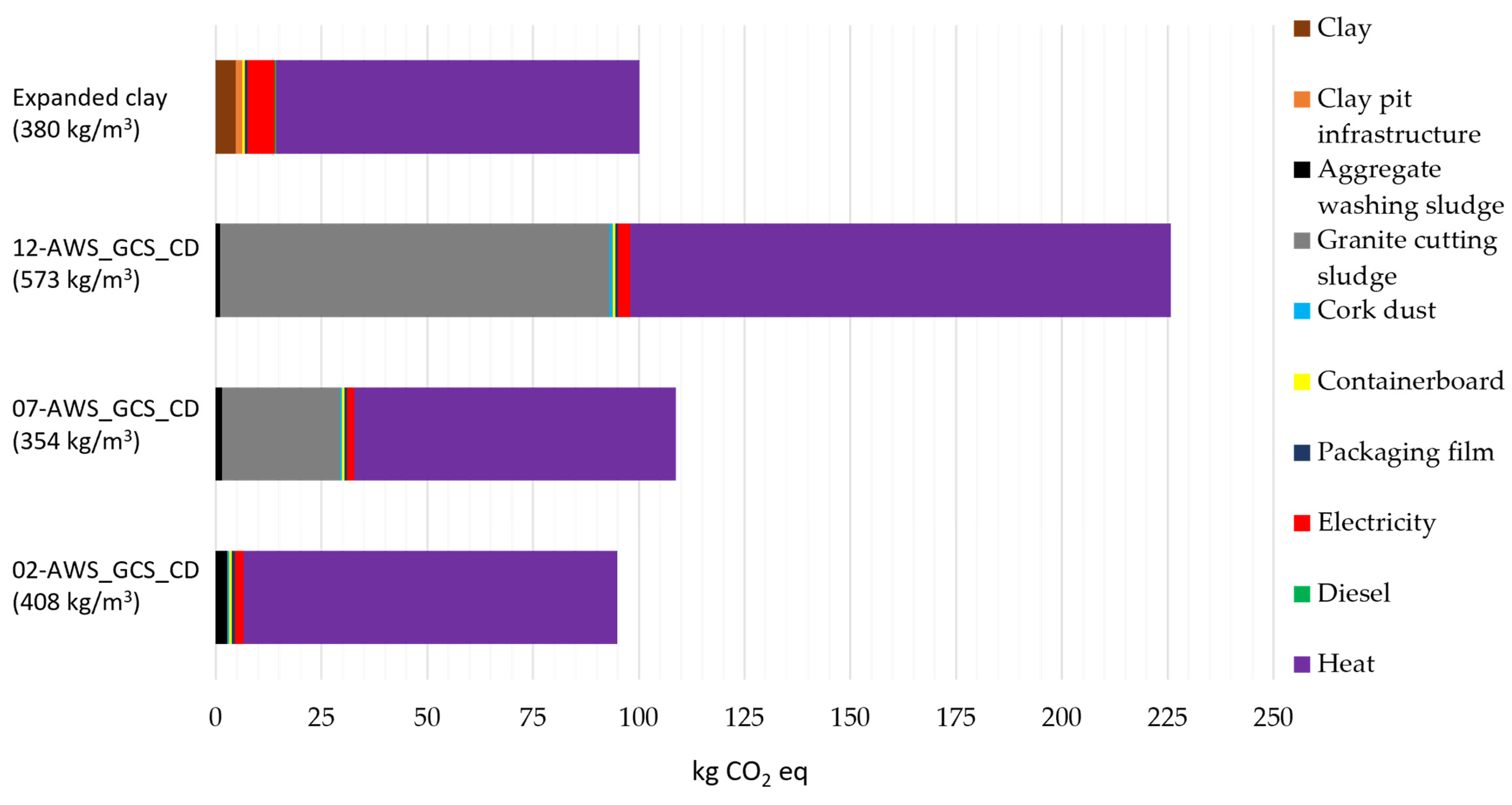
As previously mentioned, both the density of the aggregates and the transport distances of the raw materials exert a significant influence on the environmental impact of the final product. To analyze this effect, Figure 6 compares three representative scenarios from the AWS_GCS_CD series (mixtures 02, 07, and 12). For this analysis, the ReCiPe 2016 Hierarchist (H) method was used, focusing exclusively on the Global Warming category (kg CO2 eq).
These formulations allow for analysis of the effect of the progressive increase in granite sludge (0%, 35%, and 70% GCS) and its correlation with bulk density (408, 354, and 573 kg/m3, respectively). By defining the functional unit in volumetric terms (1 m3), this analysis reveals how efficiency in pore generation can compensate—or fail to compensate—for the logistical burdens associated with distant secondary raw materials (Table 2).
When contextualizing these results with the reference material (expanded clay), considering an average density of 380 kg/m3, it is observed that the developed aggregates are not only competitive in terms of mass but also offer crucial operational advantages, such as
  • Carbon footprint reduction: Mixtures, such as 02-AWS_GCS_CD, achieve reductions of 5.13% compared to the commercial standard. This improvement is accentuated in formulations with “km 0” waste (such as coffee grounds), reaching decreases of 7.53% due to supply chain optimization.
  • Manufacturing energy efficiency: Unlike conventional clay, which requires an intensive grinding stage to adapt the particle size of the virgin mineral, the wastes used in this study already exhibit an adequate fineness at the source. This allows for a 67% reduction in electricity consumption during the manufacturing process, establishing these ALAs as a high energy-efficiency alternative.

3.4.1. Aggregate 02-AWS_GCS_CD

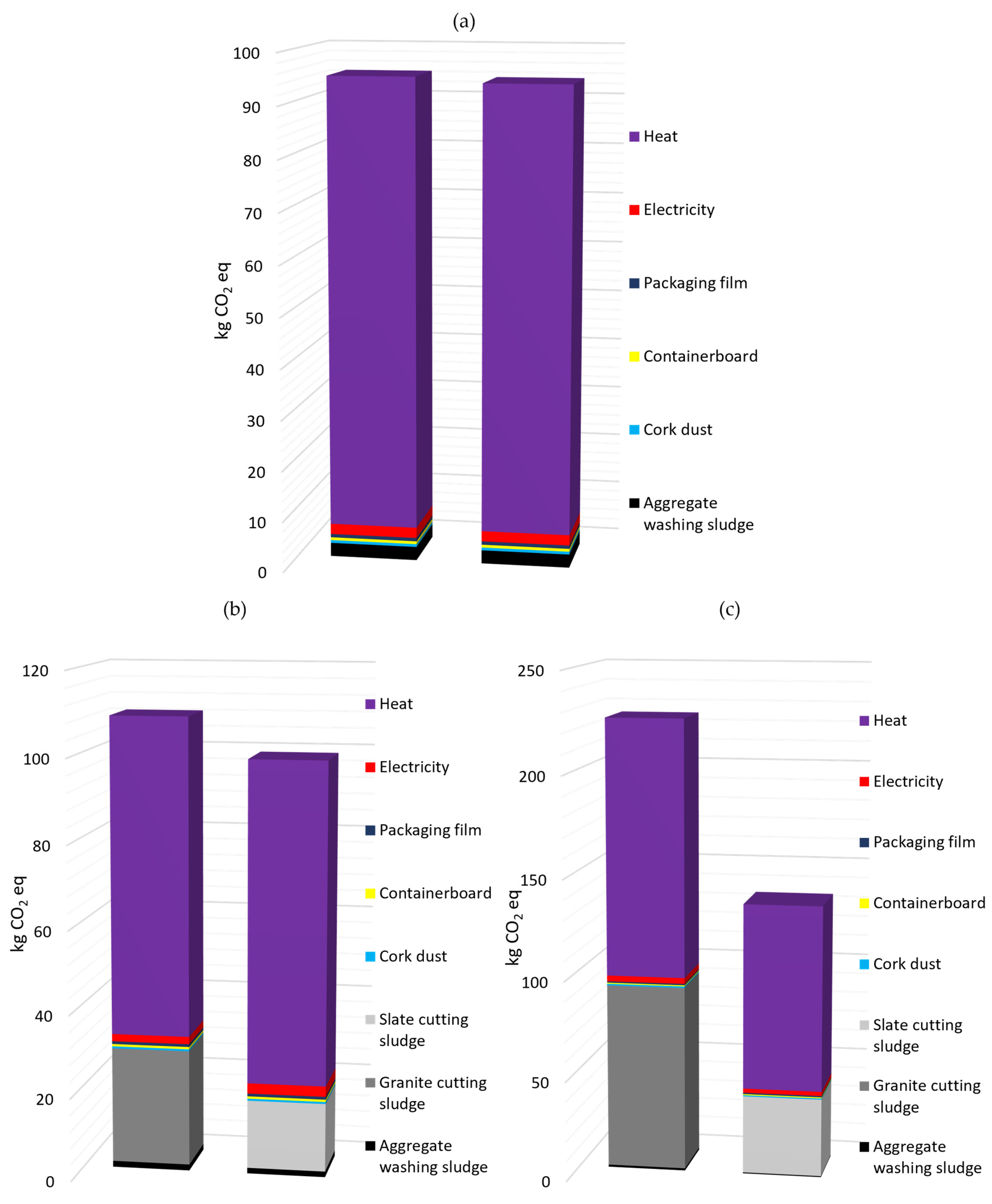
When analyzing the results obtained for the 02-AWS_GCS_CD aggregate, it is observed that the largest contribution to the Global Warming Potential is concentrated in the sintering stage. Specifically, this phase generates 88.37 kg CO2 eq per 1 m3 of aggregate, representing approximately 93% of the total system emissions. This result confirms that high-temperature thermal treatment constitutes the primary critical point (hotspot) of the life cycle.
The remaining 7% of emissions are distributed among the other stages of the system. Among these, the transport of raw materials stands out, especially that associated with the AWS waste, which, being the majority component, generates 2.68 kg CO2 eq. For its part, the transport of the organic waste CD contributes 0.57 kg CO2 eq, while electricity consumption during the manufacturing process contributes 2.08 kg CO2 eq. Finally, the packaging stage of the finished product represents 1.25 kg CO2 eq. This value remains constant for all analyzed aggregates, as well as for the reference material, since in all cases the same amount of packaging material required to pack 1 m3 of aggregates—corresponding to the functional unit of the study—is considered.

3.4.2. Aggregate 07-AWS_GCS_CD

For aggregate 07, the total impact is higher than that recorded in the previous scenario. Initially, a lower impact would be expected, since an aggregate with a lower bulk density was obtained: 354 kg/m3 compared to 408 kg/m3 for mixture 02. When breaking down the results (Table 3), we observe that the impact of the sintering stage is lower, with emissions of 76.03 kg CO2 eq, representing 69.86% of the total. This decrease is consistent with the mass reduction; to fulfill the functional unit of 1 m3, mixture 07 requires the sintering of only 375.12 kg of green aggregate (1040.57 MJ), while mixture 02 requires 441.63 kg (1209.58 MJ) (Table S1).
However, the overall increase in CO2 eq emissions is due, in this case, to the incorporation of the GCS waste. Its addition is favorable from the technical standpoint of the aggregate, as it acts as a flux and reduces density; nevertheless, the high emissions associated solely with its transport represent 25.58% of the total impact and do not compensate for the low density obtained. In this case, the physical optimization does not offset the logistical burden of the mineral waste; in contrast, in mixture 02, the transport of all raw materials (AWS and CD) only accounted for 3.42% of the global impact.

3.4.3. Aggregate 12-AWS_GCS_CD

The aggregate obtained from mixture 12 presents a Global Warming Potential significantly higher than that of the previous aggregates. Specifically, it records emissions of 225.70 kg CO2 eq per functional unit, compared to 108.86 kg CO2 eq for aggregate 07 and 94.96 kg CO2 eq for aggregate 02. This high impact is attributed, on one hand, to the need for a greater mass of raw material to complete the volume of 1 m3, which proportionally increases the energy consumption during sintering. On the other hand, the use of GCS as the majority component of the mixture (70%) implies high emissions associated with its transport, reaching 93.82 kg CO2 eq. As shown in Figure 6, the environmental burden derived exclusively from the transport of this waste is comparable to the total life cycle impact of aggregate 02, demonstrating that a massive replacement of clay with distant mineral wastes can be counterproductive if a drastic reduction in the final bulk density is not achieved.

3.4.4. Benchmarking with Expanded Clay

Finally, the production process of conventional expanded clay was analyzed using data extracted from the Ecoinvent v3.10 database. The results show comparable impacts in the Global Warming category when comparing aggregates with similar densities. Cases were even identified where the ALAs developed in this study present lower emissions despite having slightly higher densities. Specifically, the 02-AWS_GCS_CD aggregate presents emissions of 94.96 kg CO2 eq per functional unit, compared to 100.09 kg CO2 eq for expanded clay, representing a 5.13% reduction. Furthermore, even greater reductions are observed in other aggregates, such as 02-AWS_GCS_CG (Figure 3a), which records emissions of 92.55 kg CO2 eq per functional unit, a reduction of 7.53%. This decrease is mainly due to the properties of the aggregate, which in this case has a bulk density slightly lower than aggregate 02 (397 kg/m3), as well as the use of CG as the organic waste. The transport for CG is lower as it is a “km 0” waste, unlike the CD waste, which must be transported approximately 450 km (Figure 1).
When comparing the manufacturing processes of conventional expanded clay and the aggregates developed in this study—using mixture 02-AWS_GCS_CD as a reference—slight differences in the impacts associated with the various process stages are observed. In both cases, the “heat” stage, corresponding to the sintering of the aggregates, represents the largest contribution to the total impact, at around 90%. This percentage is slightly higher for aggregate 02 due to the need to sinter a larger amount of material as a result of its higher bulk density. However, in the case of aggregate 07, the contribution of the sintering stage is reduced to approximately 76% due to its lower bulk density, which is even lower than that of the aggregate manufactured from expanded clay. The most significant differences between both systems are found in the use of raw materials. In the case of the ALAs developed in this study, only the impacts associated with the transport of the wastes from their point of generation to the manufacturing plant have been considered.
Conversely, the production of conventional expanded clay includes natural resource extraction operations, such as clay mining, as well as the fuel consumption of the machinery used in these operations. For this reason, the impact reduction in this process stage is mainly observed in the aggregates manufactured from AWS and OW, such as mixtures 01, 02, and 03 (Table 1), which contain 100%, 98.5%, and 97% AWS, respectively. By applying the Cut-off approach, these secondary raw materials enter the system free of environmental extraction burdens.
Another process in which a notable reduction was observed is the electricity consumption during manufacturing. Unlike the industrial standard for expanded clay, which requires an intensive grinding stage to adapt the particle size of the virgin mineral, the wastes used in this study already possess the appropriate fineness as a result of their own industrial generation process. This synergy allows for the omission of the grinding stage, achieving—in the specific case of aggregate 02-AWS_GCS_CD—a 67% reduction in electricity consumption associated with the manufacturing process. This energy saving positions the developed ALAs not only as a circular economy solution but also as a high operational efficiency alternative for the construction materials sector.

3.5. Comparative Analysis with the SCS Series

It is important to highlight that, although the detailed analysis has focused on the GCS series to illustrate the impact of long transport distances (900 km), the series based on slate cutting sludge (SCS) follows a similar technical behavior but with a more optimized environmental profile. Because the generation point of SCS is located at a significantly shorter distance (450 km), the logistical “toll” is drastically reduced. Other authors also share this perspective, though Napolano et al. [36] and Silva Neto et al. [24] warn that the environmental benefits may be negated if the distances over which waste is transported are excessive. If we select mixtures 02, 07, and 12 from the GCS series and compare them with the same mixtures from the SCS series (Figure 7), a reduction in the Global Warming Potential can be observed, partly due to the SCS transport stage.
Firstly, mixture 02 (Figure 7a) shows practically the same Global Warming Potential in both cases: 94.96 kg CO2 eq for GCS and 93.88 kg CO2 eq for SCS (Table 3). This mixture actually has the same composition (98.50% AWS, 0% GCS/SCS, and 1.5% CD); therefore, this slight difference is due to the physical properties of the obtained aggregates, which present a bulk density of 408 kg/m3 and 405 kg/m3, respectively.
Secondly, mixture 07—composed of 63.5% AWS, 35% GCS or SCS, and 1.5% CD (Figure 7b)—presents a density of 354 kg/m3 in both cases, regardless of whether GCS or SCS is used in its composition. However, it does show a total reduction in CO2 emissions when SCS is employed, dropping from 108.83 kg CO2 eq to 99.17 kg CO2 eq. This represents a 9% reduction, primarily due to the SCS transport stage, which emits 16.51 kg CO2 eq compared to 27.84 kg CO2 eq in the case of the mixture containing GCS.
Finally, mixture 12—composed of 28.5% AWS, 70% GCS or SCS, and 1.5% CD (Figure 7c)—exhibits the same behavior as mixture 07. In this case, however, the reduction in CO2 emissions per m3 of produced aggregate is more pronounced, reaching 39% due to the higher proportion of SCS in the mixture (70%) and the attainment of an aggregate with a lower bulk density (421 kg/m3). Emissions decrease from a total of 225.70 kg CO2 eq to 137.78 kg CO2 eq. The 50% reduction in transport distance allows the benefit of waste valorization to be positive; this positions the SCS series as the preferred option for immediate industrial implementation in the region, demonstrating that the viability of the circular economy in ALAs is intrinsically linked to the proximity radius of the mineral sludges.

3.6. Sensitivity Analysis of Distances and Energy Consumption

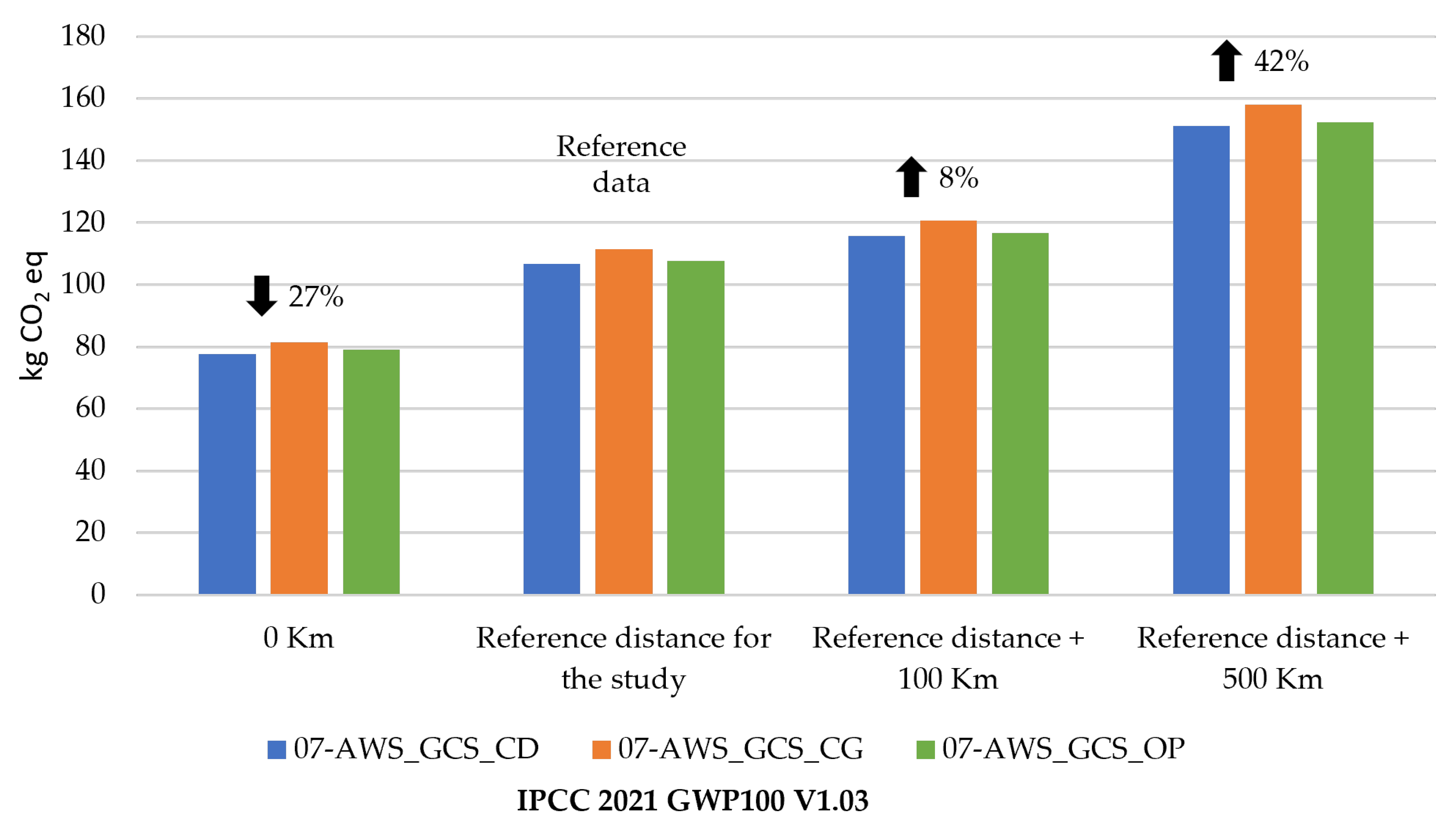
In order to assess the robustness of the results obtained, a sensitivity analysis was carried out focusing on the critical parameters of the system, the transport of raw materials and energy consumption during the sintering stage, which had previously been identified as the main contributors to the environmental impact. Furthermore, the analysis of 78 different formulations acts as an intrinsic sensitivity analysis. The consistency observed in the results across a wide range of compositions indicates that the identified environmental benefits are fundamentally associated with the use of waste as secondary raw materials, and not with specific fluctuations in the inventory data.
With regard to transport (Figure 8), various scenarios were assessed. The results indicate that, in an ideal scenario without transport, the Global Warming Potential (GWP) is reduced by approximately 27%, equivalent to a decrease of 30 kg CO2 eq per m3 of ALAs produced. Conversely, increasing transport distances by 100 km and 500 km leads to GWP increases of 8% and 42%, respectively, highlighting the sensitivity of the system to this parameter.
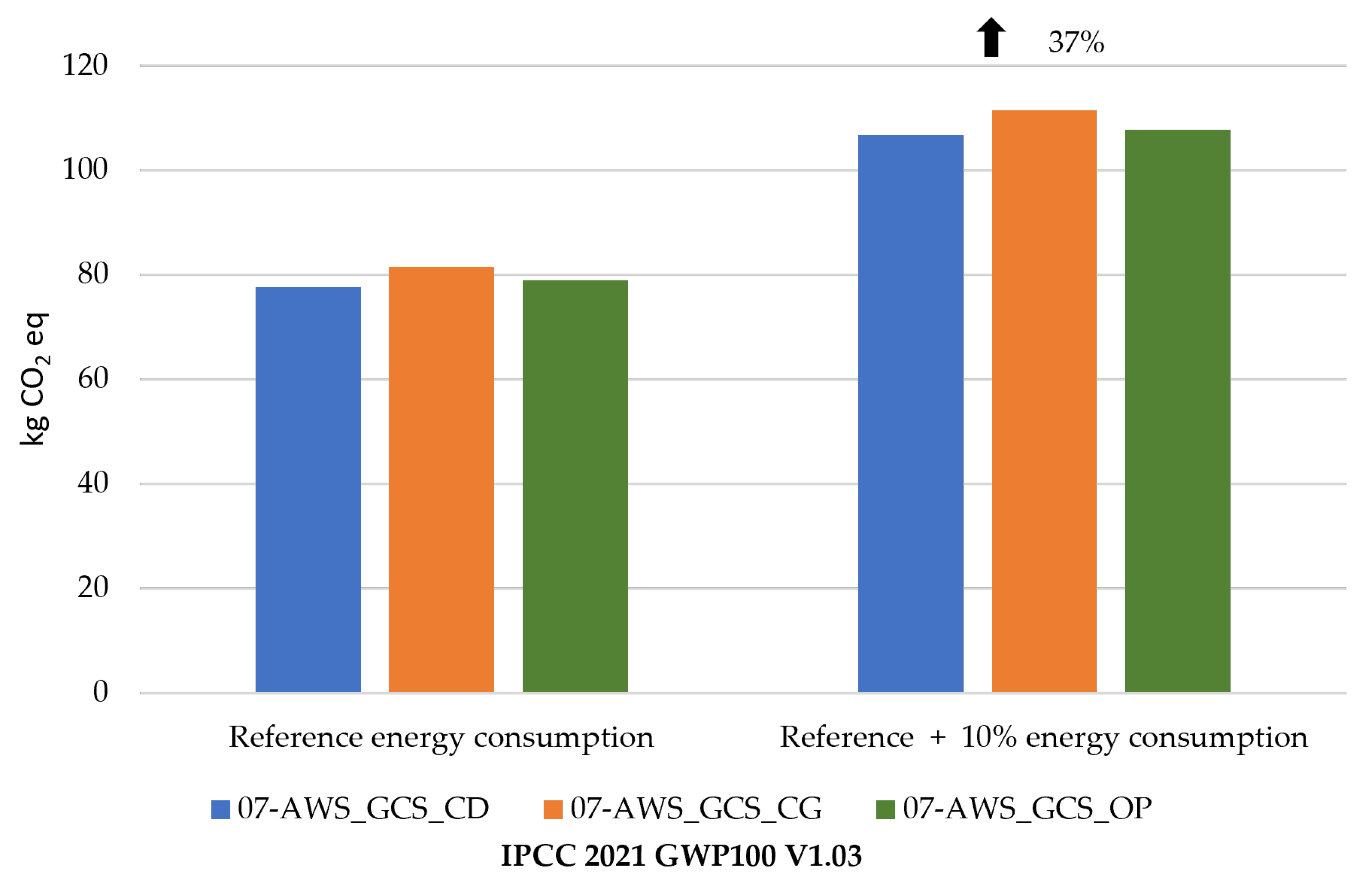
Regarding energy consumption during the sintering stage (Figure 9), a 10% increase in thermal energy demand, associated with potential inefficiencies in the industrial process, results in an average 37% increase in the total carbon footprint. This result confirms the dominant role of this stage in the environmental profile of the system and highlights the need to optimize the thermal process by controlling sintering times and temperatures, as well as incorporating alternative energy sources with a lower environmental impact, such as biomass or solar energy, as noted by Singh et al. [25].

4. Conclusions

This study evaluated the environmental performance of Artificial Lightweight Aggregates (ALAs) manufactured from six industrial mining and organic wastes through a Life Cycle Assessment (LCA) with a cradle-to-gate approach, considering 1 m3 of product at the factory gate as the functional unit. The results demonstrate that the combined incorporation of mineral sludges and organic waste allows for the production of technically viable ALAs with a competitive environmental profile, evidencing their potential within circular economy strategies based on the valorization of secondary raw materials.
  • The study demonstrates the feasibility of producing ALAs solely from waste materials. This not only reduces the pressure on natural resources, but also transforms industrial waste into high-value-added raw materials, achieving the goal of ‘zero waste’.
  • The use of organic waste in small proportions (0–3% by mass) does not present a significant direct impact by itself but is crucial for promoting the expansion of ALAs and reducing their density, which in turn reduces energy consumption and the overall emissions of the process.
  • It was found that the transport distance of mineral waste was the key factor to consider in reducing environmental impact. Mixtures incorporating SCS (slate) achieve reductions of up to 39% in Global Warming Potential (GWP) compared to the GCS (granite) series, thanks to a 50% reduction in transport distance (450 km versus 900 km).
  • In all analyzed scenarios, the sintering stage was identified as the system’s main hotspot, concentrating the largest contribution in impact categories such as Global Warming Potential, terrestrial acidification, and freshwater eutrophication. This behavior is directly related to the high energy demand of the thermal process required for manufacturing ALAs.
  • It has been identified that the aggregate with the lowest density is not always the most sustainable. There is a critical equilibrium point between the lightness of the material and the logistical burden of the additives required to achieve it. Exceeding a 35% content of distant mineral sludges (GCS) nullifies the benefits of mass reduction, suggesting that the design of these materials must integrate geographical criteria from the formulation phase.
  • A comparison with the reference data for conventional expanded clay from the Ecoinvent v3.10 database revealed that several of the aggregates developed from waste have comparable or even lower impacts in the GWP category, when similar densities are taken into account. Specifically, some mixtures achieve reductions of up to 7% in CO2 equivalent emissions per m3 of ALA produced. These improvements are mainly due to the use of waste as secondary raw materials, which avoids the extraction of natural clay.
  • The results indicate that the sustainability of these new materials must prioritize three axes: the minimization of the logistical radius of raw materials, the optimization of porosity to achieve low bulk densities, and the transition toward decarbonized energy sources in the sintering process.
While this study quantifies the environmental impact from a cradle-to-gate perspective, it is important to note that the overall sustainability of these ALAs is also linked to their long-term durability. Although experimental data on durability were not collected in this research, maintaining structural integrity over time would further enhance their environmental benefits. Future studies will therefore focus on long-term performance tests to validate their behavior throughout the entire life cycle. In addition, further research will explore alternative energy scenarios for the sintering process, such as the use of biomass or electrification, in order to assess their potential to reduce the environmental impacts identified as dominant in this stage.

Supplementary Materials

The following supporting information can be downloaded at https://www.mdpi.com/article/10.3390/cleantechnol8030095/s1, Table S1: Reference flow inventory AWS_GCS_CD; Table S2: Reference flow inventory AWS_GCS_CG; Table S3: Reference flow inventory AWS_GCS_OP; Table S4: Reference flow inventory AWS_SCS_CD; Table S5: Reference flow inventory AWS_SCS_CG; Table S6: Reference flow inventory AWS_SCS_OP; Table S7: Inventory of reference flows associated with waste transport; Table S8: Impact associated with the different impact categories contained in the ReCiPe 2016 (H) method. Mixtures composed AWS_GCS and (CD or CG or OP); Table S9: Impact associated with the different impact categories contained in the ReCiPe 2016 (H) method. Mixtures composed AWS_SCS and (CD or CG or OP); Table S10: Transport scenarios for the 07 GCS mixtures; Table S11: Energy consumption scenarios for the rotary kiln of the 07 GCS mixtures.

Author Contributions

Conceptualization: C.J.C.-C., C.M.-G., M.T.C.-P. and A.B.L.; Methodology: C.J.C.-C. and A.B.L.; Formal analysis: C.J.C.-C. and F.J.T.-P.; Investigation: C.J.C.-C., L.M.-M. and F.J.T.-P.; Writing—original draft preparation: C.J.C.-C. and A.B.L.; Writing—review and editing: C.M.-G. and M.T.C.-P.; Funding acquisition: C.M.-G. and M.T.C.-P.; Resources: L.M.-M. and F.J.T.-P.; Supervision: A.B.L.; Project administration: C.M.-G. and M.T.C.-P. All authors have read and agreed to the published version of the manuscript.

Funding

This work was supported by the ‘INGEMATS Project—Ingeniería Circular aplicada a la obtención de materiales sostenibles a partir de residuos. Avanzando hacia la neutralidad climática’ (Grant number ProyExcel_00797), the Andalusian Regional Government, Incentives for Excellence Research Projects, R+D+I Andalusian Plan, call 2021.

Data Availability Statement

The original contributions presented in this study are included in the article/Supplementary Materials. Further inquiries can be directed to the corresponding author.

Conflicts of Interest

The authors declare no conflicts of interest.

Abbreviations

The following abbreviations are used in this manuscript:
LCALife Cycle Assessment
LCILife Cycle Inventory
LOILoss of Ignition
ALAsArtificial Lightweight Aggregates
UUnit Process
FUFunctional Unit
AWSAggregate Washing Sludge
GCSGranite Cutting Sludge
SCSSlate Cutting Sludge
CDCork Dust
CGCoffee Grounds
OPOlive Pits
ECExpanded Clay
OWOrganic Waste
GWPGlobal Warming Potential

References

  1. Colangelo, F.; Farina, I.; Travaglioni, M.; Salzano, C.; Cioffi, R.; Petrillo, A. Innovative materials in Italy for eco-friendly and sustainable buildings. Materials 2021, 14, 2048. [Google Scholar] [CrossRef]
  2. Stempkowska, A.; Gawenda, T. Artificial lightweight aggregate made from alternative and waste raw materials, hardened using the hybrid method. Sci. Rep. 2024, 14, 16880. [Google Scholar] [CrossRef]
  3. Chamorro Bolaños, X. Recycling of Air Pollution Control Residues into Engineered Lightweight Aggregates. Ph.D. Dissertation, University of East London, London, UK, 2025. [Google Scholar] [CrossRef]
  4. Moreno Maroto, J.M. Development of High Performance Ceramic Lightweight Aggregates by Recycling Carbon Fiber, Plastic and Mineral Wastes: Innovations in Materials, Methods and Technological Applications. Ph.D. Dissertation, Universidad de Castilla-La Mancha, Toledo, Spain, 2019. [Google Scholar]
  5. Schnell, A.; Rübner, K.; Seher, J.; Müller, C.; Müller, A.; Liebezeit, S.; Pniok, N. Manufacturing and application of lightweight aggregates from construction and demolition waste. Chem. Ing. Tech. 2024, 96, 969–975. [Google Scholar] [CrossRef]
  6. Linares, R.; López-Uceda, A.; Piccinali, A.; Martínez-Ruedas, C.; Galvín, A.P. LCA applied to comparative environmental evaluation of aggregate production from recycled waste materials and virgin sources. Environ. Sci. Pollut. Res. 2024, 31, 44023–44035. [Google Scholar] [CrossRef]
  7. Shang, X.Y.; Li, J.S. Manufacturing and performance of environment-friendly lightweight aggregates with core-shell structure. J. Clean. Prod. 2020, 276, 123157. [Google Scholar] [CrossRef]
  8. Cotes-Palomino, M.T.; Alonso-Azcárate, J.; Conde-Sánchez, A.; Dubbelman Vizcaíno, A.; López, A.B.; Martínez-García, C.; Martínez-Rodríguez, A.M.; Revelo Rodríguez, A.C.; Troyano Pérez, F.J.; Cobo-Ceacero, C.J. Lightweight artificial aggregates from ornamental rock cutting sludge and aggregate washing sludge: Raw material for sustainable construction and agriculture. Environ. Res. 2025, 285, 122321. [Google Scholar] [CrossRef] [PubMed]
  9. Shang, X.; Fang, Z.; Huang, W.; Chen, Y.; Qu, N.; Zhong, R. Lightweight concrete with low-carbon artificial aggregates recycled from biomass ash and slurry waste. Constr. Build. Mater. 2024, 429, 136368. [Google Scholar] [CrossRef]
  10. Zhuang, S.; Liu, Q.; Sun, K.; Lutter, S.; Chen, R.; Liu, G. Tracking five decades of global sand and gravel stocks and flows in 184 countries. Resour. Conserv. Recycl. 2025, 222, 108460. [Google Scholar] [CrossRef]
  11. Sharma, P.K.; MacLeod, A.J.N.; Aldridge, L.P.; Collins, F.; Gates, W.P. Gravel wash fines with mixed mineralogy as sources of supplementary cementitious material in cement mortars. Constr. Build. Mater. 2025, 496, 143852. [Google Scholar] [CrossRef]
  12. Bouachera, R.; Kasimi, R.; Ibnoussina, M.; El Aoud, M.; Taha, Y.; El Boudour El Idrissi, H.; Hakkou, R. The clayey quarry sludge from a waste to a valuable raw material for red ceramics. J. Mater. Cycles Waste Manag. 2022, 24, 1047–1058. [Google Scholar] [CrossRef]
  13. Yurdakul, M. Natural stone waste generation from the perspective of natural stone processing plants: An industrial-scale case study in the province of Bilecik, Turkey. J. Clean. Prod. 2020, 276, 123339. [Google Scholar] [CrossRef]
  14. Rana, A.; Kalla, P.; Verma, H.K.; Mohnot, J.K. Recycling of dimensional stone waste in concrete: A review. J. Clean. Prod. 2016, 135, 312–331. [Google Scholar] [CrossRef]
  15. Al-Zboon, K.; Tahat, M.; Abu-Hamatteh, Z.S.H.; Al-Harahsheh, M.S. Recycling of stone cutting sludge in formulations of bricks and terrazzo tiles. Waste Manag. Res. 2010, 28, 568–574. [Google Scholar] [CrossRef]
  16. Mussatto, S.I.; Machado, E.M.S.; Martins, S.; Teixeira, J.A. Production, Composition, and Application of Coffee and Its Industrial Residues. Food Bioprocess Technol. 2011, 4, 661–672. [Google Scholar] [CrossRef]
  17. Gil, L. Cork: A strategic material. Front. Chem. 2014, 2, 16. [Google Scholar] [CrossRef] [PubMed]
  18. Food and Agriculture Organization. FAOSTAT Statistical Database: Crops and Livestock Products—Olives. Available online: https://www.fao.org/faostat/ (accessed on 14 January 2026).
  19. Roig, A.; Cayuela, M.L.; Sánchez-Monedero, M.A. An overview on olive mill wastes and their valorisation methods. Waste Manag. 2006, 26, 960–969. [Google Scholar] [CrossRef] [PubMed]
  20. Cobo-Ceacero, C.J.; Moreno-Maroto, J.M.; Guerrero-Martínez, M.; Uceda-Rodríguez, M.; López, A.B.; Martínez García, C.; Cotes-Palomino, T. Effect of the addition of organic wastes (cork powder, nut shell, coffee grounds and paper sludge) in clays to obtain expanded lightweight aggregates. Bol. Soc. Esp. Ceram. Vidr. 2023, 62, 88–105. [Google Scholar] [CrossRef]
  21. Moreno-Maroto, J.M.; Cobo-Ceacero, C.J.; Uceda-Rodríguez, M.; Cotes-Palomino, T.; Martínez García, C.; Alonso-Azcárate, J. Unraveling the expansion mechanism in lightweight aggregates: Demonstrating that bloating barely requires gas. Constr. Build. Mater. 2020, 247, 118583. [Google Scholar] [CrossRef]
  22. Han, R.; Yang, J.; Liu, H.; Luo, H.; Leng, H.; Wu, W.; Zhao, Y.; Song, B. Development of sustainable construction aggregates: Preparation and environmental safety assessment of sintered artificial lightweight aggregates by red mud-coordinated multi-source solid wastes. Environ. Res. 2026, 289, 123334. [Google Scholar] [CrossRef]
  23. Galetakis, M.; Soultana, A. A review on the utilisation of quarry and ornamental stone industry fine by-products in the construction sector. Constr. Build. Mater. 2016, 102, 769–781. [Google Scholar] [CrossRef]
  24. Silva Neto, J.A.; Cavalcante, D.S.L.; Medeiros, C.M.; Anjos, M.A.S.; Dutra, R.P.S.; Souza, M.M.; Pederneiras, C.M.; Silva Mateus, R.F.M. Development of artificial lightweight aggregates with chamotte and eucalyptus firewood ash residues: Life cycle assessment and economic feasibility. Constr. Build. Mater. 2025, 504, 144600. [Google Scholar] [CrossRef]
  25. Singh, B.; Singh, S.B.; Barai, S.V.; Bohra, A. Life cycle assessment of artificial sintered flyash lightweight aggregate produced in India using OFF gas and coal based thermal power. Innov. Infrastruct. Solut. 2025, 10, 113. [Google Scholar] [CrossRef]
  26. Jin, J.; Ying, W.; Jiawei, L.; Ming, W.; Chuanlin, W.; Wei, B. Characterization and mechanism of sintered light aggregate ceramsite with engineering excavated soil. Structures 2024, 70, 107699. [Google Scholar] [CrossRef]
  27. Pei, J.; Pan, X.; Qi, Y.; Yu, H.; Tu, G. Preparation of ultra-lightweight ceramsite from red mud and immobilization of hazardous elements. J. Environ. Chem. Eng. 2022, 10, 108157. [Google Scholar] [CrossRef]
  28. Ardit, M.; Zanelli, C.; Conte, S.; Molinari, C.; Cruciani, G.; Dondi, M. Ceramisation of hazardous elements: Benefits and pitfalls of the inertisation through silicate ceramics. J. Hazard. Mater. 2022, 423, 126851. [Google Scholar] [CrossRef]
  29. Huang, Y.; Wei, Y.; Chen, Z.; Ji, W.; Bian, Z.; Lu, J.X.; Poon, C.S. Thermodynamics-guided design for lightweight aggregate production from waste glass and incinerated sewage sludge ash. J. Environ. Manag. 2025, 383, 125482. [Google Scholar] [CrossRef]
  30. Uceda-Rodríguez, M.; Moreno-Maroto, J.M.; Cobo-Ceacero, C.J.; López-García, A.B.; Cotes-Palomino, T.; Martínez-García, C. Comparative life cycle assessment of lightweight aggregates made from waste—Applying the circular economy. Appl. Sci. 2022, 12, 1917. [Google Scholar] [CrossRef]
  31. European Commission. The European Green Deal (COM(2019)640 Final); European Commission: Brussels, Belgium, 2019; Available online: https://eur-lex.europa.eu/legal-content/EN/TXT/?uri=CELEX:52019DC0640 (accessed on 9 March 2026).
  32. European Commission. A New Circular Economy Action Plan: For a Cleaner and More Competitive Europe (COM(2020) 98 Final); European Commission: Brussels, Belgium, 2020; Available online: https://eur-lex.europa.eu/legal-content/EN/TXT/?uri=CELEX:52020DC0098 (accessed on 9 March 2026).
  33. European Parliament and the Council. Regulation (EU) 2024/3110 Laying Down Harmonised Rules for the Marketing of Construction Products (Revised Construction Products Regulation); Official Journal of the European Union: Luxembourg, 2024. [Google Scholar]
  34. European Parliament and the Council. Directive (EU) 2018/851 Amending Directive 2008/98/EC on Waste; Official Journal of the European Union: Luxembourg, 2018; p. L150. [Google Scholar]
  35. López-García, A.B.; Uceda-Rodríguez, M.; León-Gutiérrez, S.; Cobo-Ceacero, C.J.; Moreno-Maroto, J.M. Eco-efficient transformation of mineral wool wastes into lightweight aggregates at low firing temperature and associated environmental assessment. Constr. Build. Mater. 2022, 345, 128294. [Google Scholar] [CrossRef]
  36. Napolano, L.; Menna, C.; Graziano, S.F.; Asprone, D.; D’Amore, M.; de Gennaro, R.; Dondi, M. Environmental life cycle assessment of lightweight concrete to support recycled materials selection for sustainable design. Constr. Build. Mater. 2016, 119, 370–384. [Google Scholar] [CrossRef]
  37. Zulcão, R.; Calmon, J.L.; Rebello, T.A.; Vieira, D.R. Life cycle assessment of the ornamental stone processing waste use in cement-based building materials. Constr. Build. Mater. 2020, 257, 119523. [Google Scholar] [CrossRef]
  38. López-García, A.B.; Cotes-Palomino, T.; Uceda-Rodríguez, M.; Moreno-Maroto, J.M.; Cobo-Ceacero, C.J.; Fernanda Andreola, N.M.; Martínez-García, C. Application of life cycle assessment in the environmental study of sustainable ceramic bricks made with ‘alperujo’ (Olive pomace). Appl. Sci. 2021, 11, 2278. [Google Scholar] [CrossRef]
  39. Desole, M.P.; Fedele, L.; Gisario, A.; Barletta, M. Life Cycle Assessment (LCA) of ceramic sanitaryware: Focus on the production process and analysis of scenario. Int. J. Environ. Sci. Technol. 2024, 21, 1649–1670. [Google Scholar] [CrossRef]
  40. Lorenção, P.Z.; Campos, A.F.; Silva-Filho, G. Life Cycle Assessment (LCA) Applied to Incorporate Ornamental Rock and Mineral Waste Into the Life Cycle of New Products. Rev. Gest. Soc. Ambient. 2025, 19, e013329. [Google Scholar] [CrossRef]
  41. Aguiar, J.G.C.; de Souza, M.M.; de Farias, E.C. Development of lightweight aggregates from coffee grounds and rice husk ash. Rev. Mater. 2024, 29, 313. [Google Scholar] [CrossRef]
  42. Shang, X.; Li, Z.; Chang, J.; Chen, Y.; Yang, J.; Duan, Z. Production, properties and life cycle assessment of artificial lightweight aggregates produced with corn straw ash (CSA) and concrete slurry waste (CSW). Constr. Build. Mater. 2024, 411, 134274. [Google Scholar] [CrossRef]
  43. ISO 14040:2006; Environmental Management—Life Cycle Assessment—Principles and Framework. International Organization for Standardisation (ISO): Geneva, Switzerland, 2006. Available online: https://www.iso.org/obp/ui/#iso:std:iso:14040:ed-2:v1:en (accessed on 23 February 2026).
  44. ISO 14044:2006; Environmental Management—Life Cycle Assessment—Requirements and Guidelines. International Organization for Standardisation (ISO): Geneva, Switzerland, 2006. Available online: https://www.iso.org/obp/ui/#iso:std:iso:14044:ed-1:v1:en (accessed on 23 February 2026).
  45. Chehreh Chelgani, S.; Fatahi, R.; Pournazari, A.; Nasiri, H. Modeling energy consumption indexes of an industrial cement ball mill for sustainable production. Sci. Rep. 2025, 15, 18514. [Google Scholar] [CrossRef]
  46. Sun, S.; Wang, Z.; Dai, Q.; Yin, D.; Zhao, K.; Zhang, J.; Wang, K. Synergistic valorization of lepidolite slag and fly ash into self-foaming lightweight aggregates. Constr. Build. Mater. 2025, 505, 144766. [Google Scholar] [CrossRef]
  47. Liu, H.; Hu, N.; Li, Q.; Yang, S.; Ye, Y.; Wang, J.; Wang, H. Preparation and application of lightweight and high-strength ceramsite derived from solid waste in lightweight concrete: A review. AIMS Mater. Sci. 2025, 12, 1176–1214. [Google Scholar] [CrossRef]
Figure 2. Reference flow used to manufacture 1 m3 of ALAs from mixture 01-AWS_GCS_CD.
Cleantechnol 08 00095 g002
Figure 3. Global Warming Potential of all varieties of aggregates analyzed. (a) Mixtures composed of AWS, GCS and (CD or CG or OP). (b) Mixtures composed of AWS, SCS and (CD or CG or OP). Method: IPCC 2021 GWP100 V1.03.
Cleantechnol 08 00095 g003
Figure 4. Results of the impact associated with the different impact categories contained in the ReCiPe 2016 Hierarchist (H) method. (a) Mixtures composed of 07_AWS, GCS and (CD or CG or OP). (b) Mixtures composed of 07_AWS, SCS and (CD or CG or OP). CD corresponds to the dotted pattern, CG to the checkered pattern, and OP to the solid pattern.
Cleantechnol 08 00095 g004aCleantechnol 08 00095 g004b
Figure 5. Results of the impact associated with the different impact categories contained in the ReCiPe 2016 Hierarchist (H) method. Expanded clay (380 kg/m3) {ES} | Expanded clay production | Cut-off, U.
Cleantechnol 08 00095 g005
Figure 6. Global Warming Potential of mixtures 02, 07, 12 AWS_GCS_CD and expanded clay reference material. ReCiPe 2016 Hierarchist (H) method.
Cleantechnol 08 00095 g006
Figure 7. Comparative analysis of Global Warming Potential (GWP) between GCS (granite) and SCS (slate) series for selected mixtures. (a) Mixture 02-AWS_GCS/SCS_CD. (b) Mixture 07-AWS_GCS/SCS_CD. (c) Mixture 12-AWS_GCS/SCS_CD.
Cleantechnol 08 00095 g007
Figure 8. Transport scenarios for the 07 GCS mixtures. (i) No transport (0 km), (ii) an increase of 100 km, and (iii) an increase of 500 km compared with the actual distances used in the study.
Cleantechnol 08 00095 g008
Figure 9. Energy consumption scenarios for the rotary kiln of the 07 GCS mixtures.
Cleantechnol 08 00095 g009
Table 1. Design and composition of mixtures.
MixtureAWS
(%)
GCS
(%)
OW *
(%)
MixtureAWS
(%)
SCS
(%)
OW *
(%)
01-AWS_GCS_OW1000001-AWS_SCS_OW10000
02-AWS_GCS_OW98.5001.5002-AWS_SCS_OW98.5001.50
03-AWS_GCS_OW970303-AWS_SCS_OW9703
04-AWS_GCS_OW81.7517.500.7504-AWS_SCS_OW79.25200.75
05-AWS_GCS_OW80.2517.502.2505-AWS_SCS_OW77.75202.25
06-AWS_GCS_OW6535006-AWS_SCS_OW60400
07-AWS_GCS_OW63.5351.507-AWS_SCS_OW58.50401.50
08-AWS_GCS_OW6235308-AWS_SCS_OW57403
09-AWS_GCS_OW46.7552.500.7509-AWS_SCS_OW39.25600.75
10-AWS_GCS_OW45.2552.502.2510-AWS_SCS_OW37.75602.25
11-AWS_GCS_OW3070011-AWS_SCS_OW20800
12-AWS_GCS_OW28.50701.5012-AWS_SCS_OW18.50801.50
13-AWS_GCS_OW2770313-AWS_SCS_OW17803
* This column corresponds to organic waste (OW), three types of waste have been used independently: CD, CG, and OP.
Table 2. Data on the manufacturing conditions and properties of the aggregates studied.
MixtureTemperature
(°C)
LOI *
(%)
Density
(kg/m3)
MixtureTemperature
(°C)
LOI
(%)
Density
(kg/m3)
01-AWS_GCS_CD11955.9180601-AWS_SCS_CD11956.19809
02-AWS_GCS_CD11707.5840802-AWS_SCS_CD11707.33405
03-AWS_GCS_CD11608.9758803-AWS_SCS_CD11609.22586
04-AWS_GCS_CD11805.9439104-AWS_SCS_CD11856.42403
05-AWS_GCS_CD11757.3644105-AWS_SCS_CD11707.85438
06-AWS_GCS_CD12053.94119706-AWS_SCS_CD12204.85932
07-AWS_GCS_CD11855.6635407-AWS_SCS_CD11906.54354
08-AWS_GCS_CD11807.4249108-AWS_SCS_CD11758.08433
09-AWS_GCS_CD11904.0541809-AWS_SCS_CD12005.47452
10-AWS_GCS_CD11955.7342210-AWS_SCS_CD11957.02351
11-AWS_GCS_CD12152.23140011-AWS_SCS_CD12253.961325
12-AWS_GCS_CD12053.9059512-AWS_SCS_CD12105.70421
13-AWS_GCS_CD12055.2853413-AWS_SCS_CD12006.99419
01-AWS_GCS_CG11956.4281001-AWS_SCS_CG11956.27787
02-AWS_GCS_CG11807.6139702-AWS_SCS_CG11807.30426
03-AWS_GCS_CG11658.5648603-AWS_SCS_CG11658.68478
04-AWS_GCS_CG12005.7442204-AWS_SCS_CG12056.33428
05-AWS_GCS_CG11907.1134605-AWS_SCS_CG11857.66364
06-AWS_GCS_CG12104.13104006-AWS_SCS_CG12204.90921
07-AWS_GCS_CG11955.4137007-AWS_SCS_CG12006.49356
08-AWS_GCS_CG11857.3247008-AWS_SCS_CG11857.85443
09-AWS_GCS_CG11954.1746909-AWS_SCS_CG12205.47495
10-AWS_GCS_CG12055.2638110-AWS_SCS_CG12006.69397
11-AWS_GCS_CG12252.01136811-AWS_SCS_CG12303.921332
12-AWS_GCS_CG12103.7057312-AWS_SCS_CG12255.56518
13-AWS_GCS_CG12054.9850313-AWS_SCS_CG12156.93379
01-AWS_GCS_OP12056.2479501-AWS_SCS_OP12054.29810
02-AWS_GCS_OP11857.5341802-AWS_SCS_OP11857.48440
03-AWS_GCS_OP11708.8052103-AWS_SCS_OP11709.44528
04-AWS_GCS_OP12005.7842004-AWS_SCS_OP12156.52373
05-AWS_GCS_OP11857.1241205-AWS_SCS_OP11907.80405
06-AWS_GCS_OP12153.86124906-AWS_SCS_OP12304.94898
07-AWS_GCS_OP12005.5435607-AWS_SCS_OP12056.65344
08-AWS_GCS_OP11907.0244008-AWS_SCS_OP11957.99372
09-AWS_GCS_OP12053.9647809-AWS_SCS_OP12255.63614
10-AWS_GCS_OP12055.3837910-AWS_SCS_OP12106.86365
11-AWS_GCS_OP12252.10138711-AWS_SCS_OP12354.031229
12-AWS_GCS_OP12303.8339812-AWS_SCS_OP12255.76355
13-AWS_GCS_OP12155.3945213-AWS_SCS_OP12157.08368
* LOI (Loss of ignition); this refers to the weight loss of the aggregates during the sintering process in a rotary kiln.
Table 3. Bulk density and Global Warming (kg CO2 eq) of mixtures 02, 07, 12 AWS_GCS_CD and expanded clay reference material. ReCiPe 2016 Hierarchist (H) method.
Clay {RoW} | Market for Clay | Cut-Off, UClay Pit Infrastructure {GLO} | Market for Clay Pit Infrastructure | Cut-Off, UAggregate Washing Sludge, Treated {ES} | Market for | Cut-Off, UGranite Cutting Sludge, Treated {ES} | Market for | Cut-Off, USlate Cutting Sludge, Treated {ES} | Market for | Cut-Off, UCork Dust, Treated, Post-Process {ES} | Market for | Cut-Off, UTap Water {Europe Without Switzerland} | Market for Tap Water | Cut-Off, UContainerboard, Linerboard {RER} | Market for Containerboard, Linerboard | Cut-Off, UPackaging Film, Low Density Polyethylene {GLO} | Market for Packaging Film, Low Density Polyethylene | Cut-Off, U
Electricity, Medium Voltage {ES} | Market for Electricity, Medium Voltage | Cut-Off, UDiesel, Burned in Building Machine {GLO} | Market for Diesel, Burned in Building Machine | Cut-Off, U
Heat, District or Industrial, Other Than Natural Gas {Europe Without Switzerland} | Market for Heat | Cut-Off, U
MixtureBulk
Density
kg CO2 eq
02-AWS_GCS_CD408 kg/m3--2.68--0.570.010.570.682.08-88.37
02-AWS_SCS_CD405 kg/m3--2.65--0.560.010.570.682.06-87.36
07-AWS_GCS_CD354 kg/m3--1.4727.83-0.480.010.570.681.77-76.03
07-AWS_SCS_CD354 kg/m3--1.36-16.510.490.010.570.682.50-77.06
12-AWS_GCS_CD573 kg/m3--1.0991.94-0.800.020.570.682.92-127.68
12-AWS_SCS_CD421 kg/m3--0.51-38.930.580.010.570.682.11-92.40
Expanded clay380 kg/m34.761.55----0.000.570.686.370.3785.79
Disclaimer/Publisher’s Note: The statements, opinions and data contained in all publications are solely those of the individual author(s) and contributor(s) and not of MDPI and/or the editor(s). MDPI and/or the editor(s) disclaim responsibility for any injury to people or property resulting from any ideas, methods, instructions or products referred to in the content.