
Article

Low-Carbon and Bioclimatic Design for a Sustainable Interpretation and Research Center for Ecosystem Conservation in Madre de Dios, Peru


by
Jesica Vilchez Cairo
1,2,*,
Tessa Yazmin Sanchez Grandez
1,
Danai Noelia Hidalgo Cabrera
1,
Luis Fernando Medrano Canchari
1,
Julio Rodrigo Tornero Loayza
1,
Doris Esenarro
1,2,
Carlos Manuel Cavani Grau
3 and
Miguel Ramón Cobeñas Cabrera
1
1
Faculty of Architecture and Urbanism, Ricardo Palma University (URP), Santiago de Surco, Lima 15039, Peru
2
Research Laboratory for Formative Investigation and Architecture Innovation (LABIFIARQ), Ricardo Palma University (URP), Santiago de Surco, Lima 15039, Peru
3
School of Global Marketing and Business Administration, Ricardo Palma University (URP), Santiago de Surco, Lima 15039, Peru
*
Author to whom correspondence should be addressed.
Clean Technol. 2026, 8(2), 37; https://doi.org/10.3390/cleantechnol8020037
Submission received: 28 October 2025 / Revised: 4 January 2026 / Accepted: 6 February 2026 / Published: 10 March 2026
(This article belongs to the Topic Low-Carbon Materials and Green Construction)

Highlights

What are the main findings?
  • The proposed low-carbon and bioclimatic design integrates passive strategies, renewable materials (bamboo and locally sourced wood), and clean technologies adapted to the warm–humid Amazonian climate of Manu National Park.
  • The environmental performance assessment estimates an annual photovoltaic generation of 15,571.8 kWh and a rainwater harvesting capacity of approximately 70,675 L per year, contributing to energy and water self-sufficiency.
What are the implications of the main findings?
  • This study demonstrates that architectural design can function as an active conservation tool, reducing environmental impact while supporting scientific research and environmental education in protected tropical areas.
  • The proposed model provides a replicable low-carbon infrastructure framework for ecologically sensitive regions facing deforestation, biodiversity loss, and climate pressures.

Abstract

The natural resources and local communities of Madre de Dios, Peru, face severe environmental degradation due to illegal mining, deforestation, and the expansion of agricultural activities, threatening one of the most ecologically sensitive regions of the Amazon. This research proposes a low-carbon and bioclimatic architectural design for a Sustainable Interpretation and Research Center dedicated to the conservation of the ecosystems of Manu National Park. The study is based on an analysis of the surrounding environment in terms of flora, fauna, and climate, applying bioclimatic strategies focused on sustainability and supported by specialized digital tools (Revit 2024, Canva, Global Mapper 2024, SketchUp 2024, Photoshop 2022, and Illustrator 2022). The project presents a bioclimatic architectural design that integrates constructive techniques ensuring thermal comfort in a warm-humid climate, while promoting the use of clean technologies such as photovoltaic solar systems generating 15,571.8 kWh per year and a rainwater harvesting system collecting 70,675 L annually. The infrastructure is built with bamboo and locally sourced wood, renewable materials that ensure durability and low environmental impact. In addition, the design includes the reforestation of 17.92% of the total area and 3.46% of public spaces, incorporating native species such as Brazil nut, rosewood, and capirona to reinforce local biodiversity. Overall, this research demonstrates how low-carbon construction, renewable materials, and bioclimatic design can contribute to sustainable development, environmental awareness, and the preservation of natural ecosystems in tropical regions.

1. Introduction

Biomes are large-scale ecological units that describe how life on Earth is organized according to broad environmental patterns. They are primarily defined by climate, which determines the types of vegetation and animal communities that can persist in each region. By grouping ecosystems with similar climatic and biological characteristics, biomes provide a framework for understanding global biodiversity patterns and the fundamental processes that regulate natural systems, such as temperature balance, soil formation, and the water cycle [1].
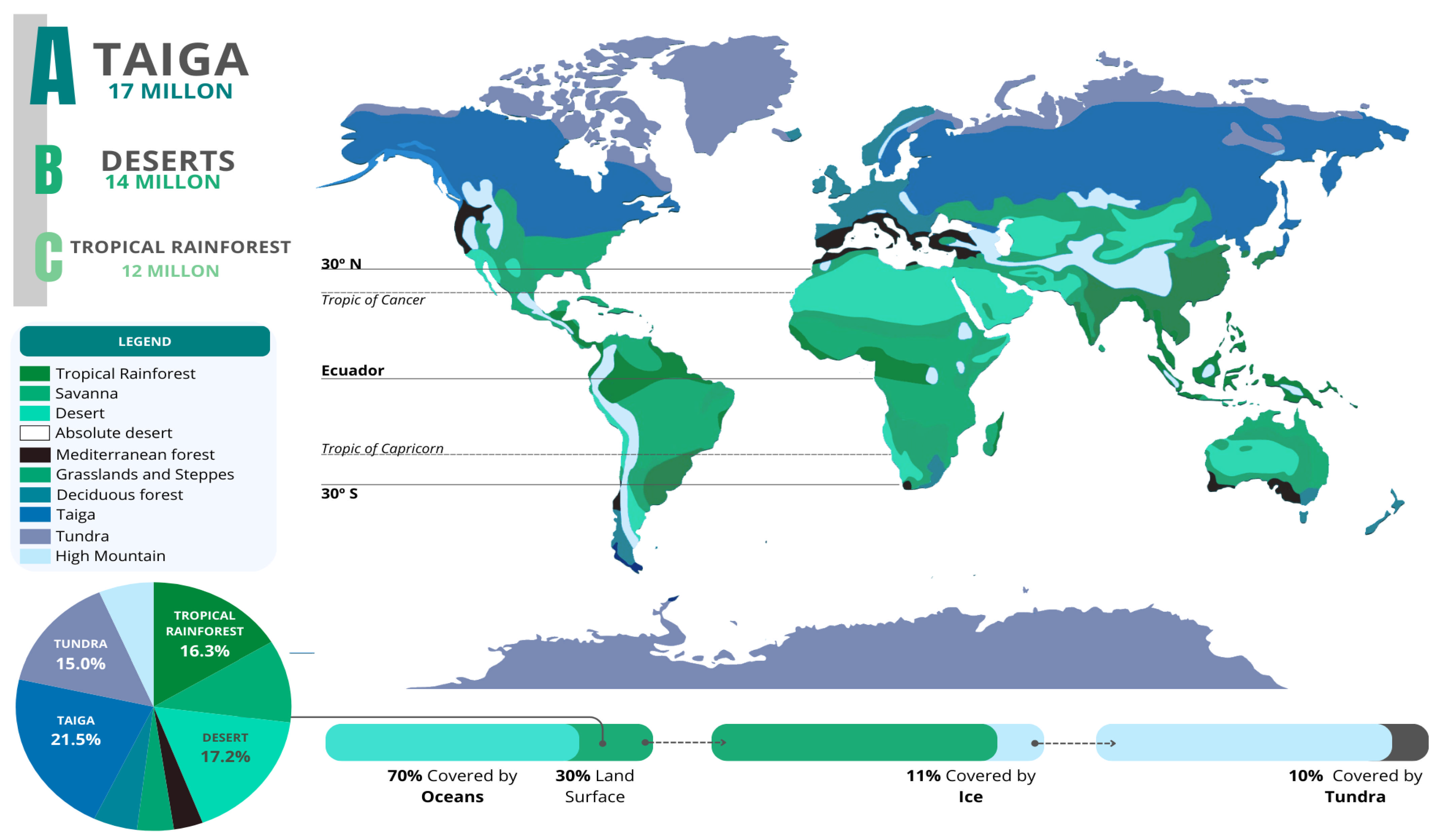
Biomes are generally divided into terrestrial biomes, such as rainforests, savannas, deserts, coniferous and deciduous forests, and tundras, and aquatic biomes, including freshwater and marine systems [2]. Tropical rainforests stand out for their exceptional biodiversity. As illustrated in Figure 1, oceans cover 70% of the Earth’s surface, while land covers 30%. Of this land area, taiga occupies 21.5%, desert 17.2%, rainforest 16.3%, and tundra 15%. Additionally, 11% of the land surface is ice-covered, with tundra accounting for 10% of this area [3].
Deserts occupy about one-seventh of the Earth’s surface and are characterized by vast arid regions, often called “sand seas.” They are mainly distributed between 10° and 30° latitude, including the Sahara, the Arabian Desert, the Kalahari, and the Australian deserts [4].
In contrast, taiga forests restricted to the northern hemisphere form an extensive, continuous belt across North America and Eurasia, displaying remarkable structural and floristic similarity throughout their range [5]. These forests are crucial for carbon storage and for regulating the global climate.
Tropical rainforests represent the most biologically diverse terrestrial biomes, characterized by vertically stratified vegetation and complex ecological interactions. Forest ecosystems currently occupy approximately 30% of the Earth’s terrestrial surface, a significant reduction compared to their historical extent due to long-term land-use change and deforestation processes [6,7]. These ecosystems support a wide range of plant and animal species and play a critical role in global biodiversity conservation and climate regulation [8,9].
An ecosystem is defined as a dynamic system formed by living organisms and their physical environment, interacting through biological, chemical, and physical processes. Ecosystems constitute the functional units of the biosphere and underpin the structure and functioning of biomes at multiple spatial scales [6,10].
The conservation of ecosystems is essential because they sustain the fundamental ecological processes that regulate climate, support biodiversity, and enable the circulation of energy, water, and nutrients at regional and global scales. As core components of biomes, ecosystems underpin the stability and resilience of the Earth system, and their degradation disrupts large-scale ecological functions that are critical for both natural environments and human societies [10].
Maintaining ecological balance is fundamental to sustaining functional biodiversity, as biodiversity loss reduces ecosystem resilience and disrupts key ecological processes that support human societies, including climate regulation, nutrient cycling, and hydrological stability [6].
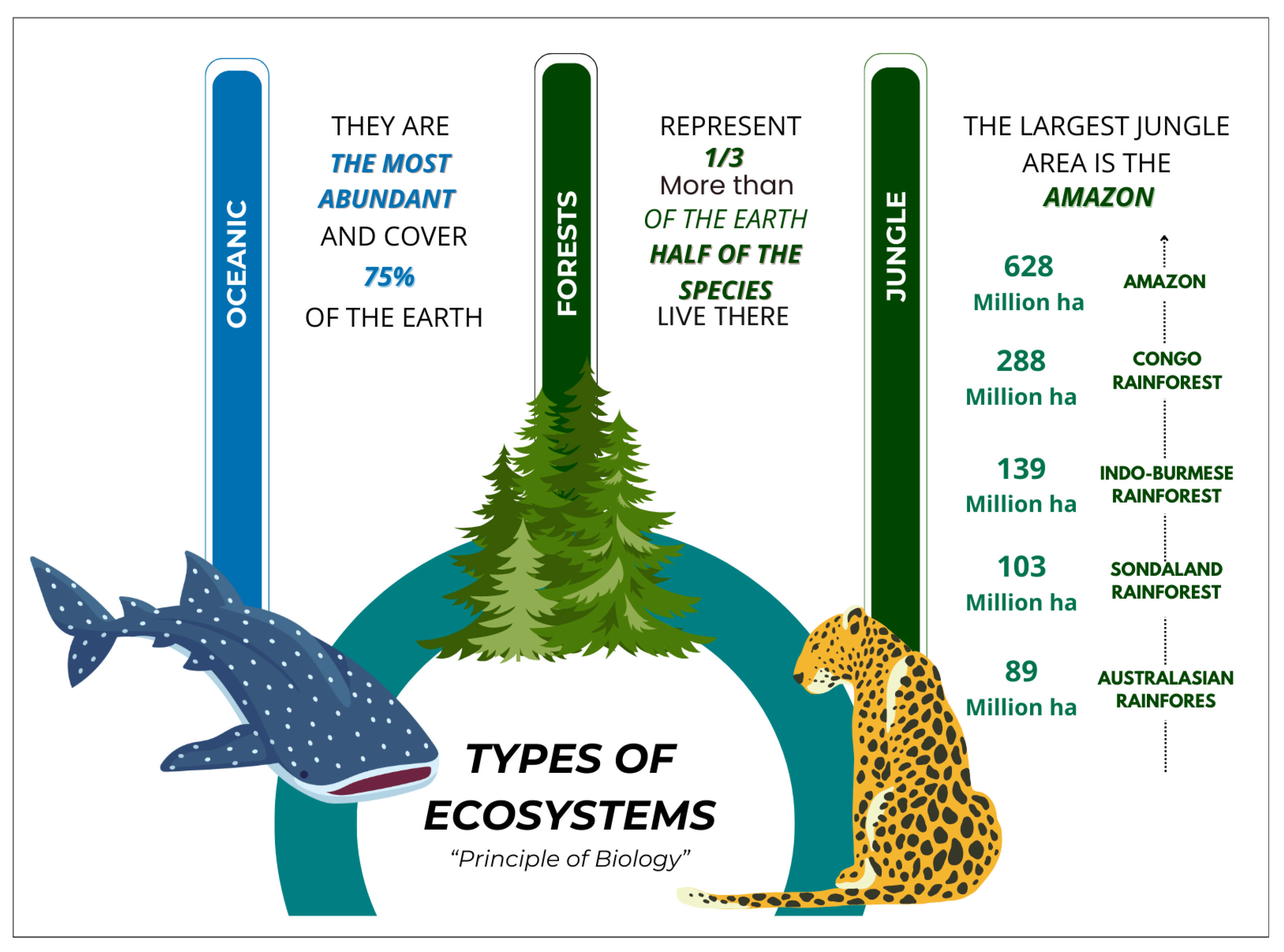
Figure 2 shows that on the global scale, the ocean covers more than two-thirds of the Earth’s surface and plays a fundamental role in the regulation of the climate system, acting as a major heat and carbon sink, and strongly influencing global biogeochemical cycles [11]. Terrestrial forests occupy about one-third of the world’s land surface and harbor a substantial proportion of global biodiversity, making them critical components of the Earth system [7].
Among forest biomes, tropical rainforests are among the most biologically diverse and ecologically complex ecosystems. Although they occupy only about 6–7% of the Earth’s land surface, they support a disproportionately large share of global biodiversity and play a key role in climate regulation and carbon cycling. The Amazon rainforest, the largest continuous tropical forest worldwide, covers approximately 6.7 million km2 and is critical for global biodiversity conservation and climate stability [8,12].
Shelter Rainforest, developed by Marra + Yeh Architects in Sabah, Malaysia, serves as a reference for the integration of architecture, sustainability, and responsible land management. The project was created within a forest concession undergoing continuous reforestation, where a settlement was needed to accommodate workers, researchers, and personnel involved in forest management. In this context, the proposal becomes a model of ecological infrastructure that connects community, landscape, and energy self-sufficiency. The architectural approach is based on the use of local materials and simple construction systems adapted to the limitations of building in a remote environment. Small timber sections and regionally produced plywood panels were used, minimizing environmental impact and facilitating transport and assembly.
Additionally, the project integrates self-sufficiency strategies such as rainwater harvesting, solar energy systems, and basic treatment mechanisms, reducing its dependence on external infrastructure. As a result, Shelter Rainforest not only fulfills its role as housing but also functions as a small community and environmental center that promotes a balanced relationship between human activity and the tropical ecosystem, becoming a relevant example for future ecological study centers in regions of high biodiversity [13].
The Daintree Rainforest Observatory (DRO), developed by James Cook University, is a sustainable research complex designed to function in harmony with one of the most biodiverse ecosystems on Earth. Located in Cape Tribulation, the facility was conceived to minimize ecological disturbance while providing high-quality spaces for scientific study. Its architecture is composed of lightweight, prefabricated modules elevated above the ground, allowing natural water flow, vegetation growth, and wildlife movement to remain uninterrupted. These structures are linked by open-air walkways and positioned to take advantage of prevailing winds, ensuring effective natural ventilation and reducing energy demand in the tropical climate. The observatory includes laboratories, communal areas, and researcher accommodations, all arranged to integrate visually and environmentally with the dense rainforest canopy. Materials such as steel, sustainably sourced timber, and durable cladding were selected for their resilience to humidity and their low maintenance requirements. Overall, the DRO stands as a model for tropical sustainable design, demonstrating how research infrastructure can support scientific activity while preserving and respecting the ecological integrity of the surrounding forest [14].
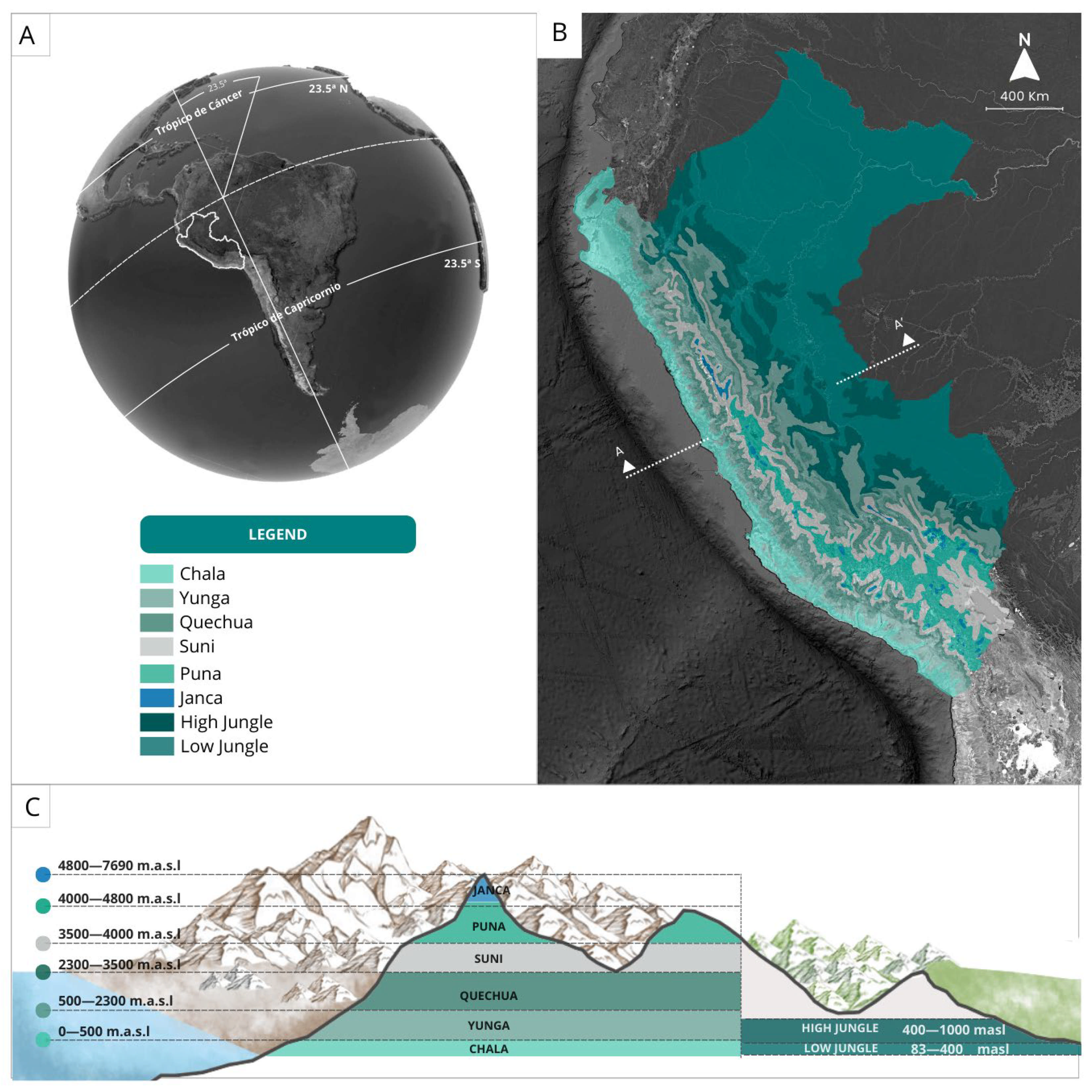
Peru is recognized as one of the most biologically diverse countries in the world due to its wide range of ecosystems and species, many of which are safeguarded within national conservation frameworks [15]. According to the classic geographical classification by Pulgar Vidal, Peru’s territory can be divided into eight natural regions distinguished by altitude, climate, relief, and biological characteristics, offering a useful biogeographical framework to understand the distribution of biodiversity across the country [16].
As can be seen in Figure 3. Its geographic location and environmental variability give rise to seas, deserts, montane steppes, highland moors, mountains, glaciers, rainforests, several woodland types, savannas, and transitional environments, a diversity consistently acknowledged by international classifications [17].
The creation of protected areas seeks to harmonize the well-being of the population with the preservation of resources and the natural environment [18].
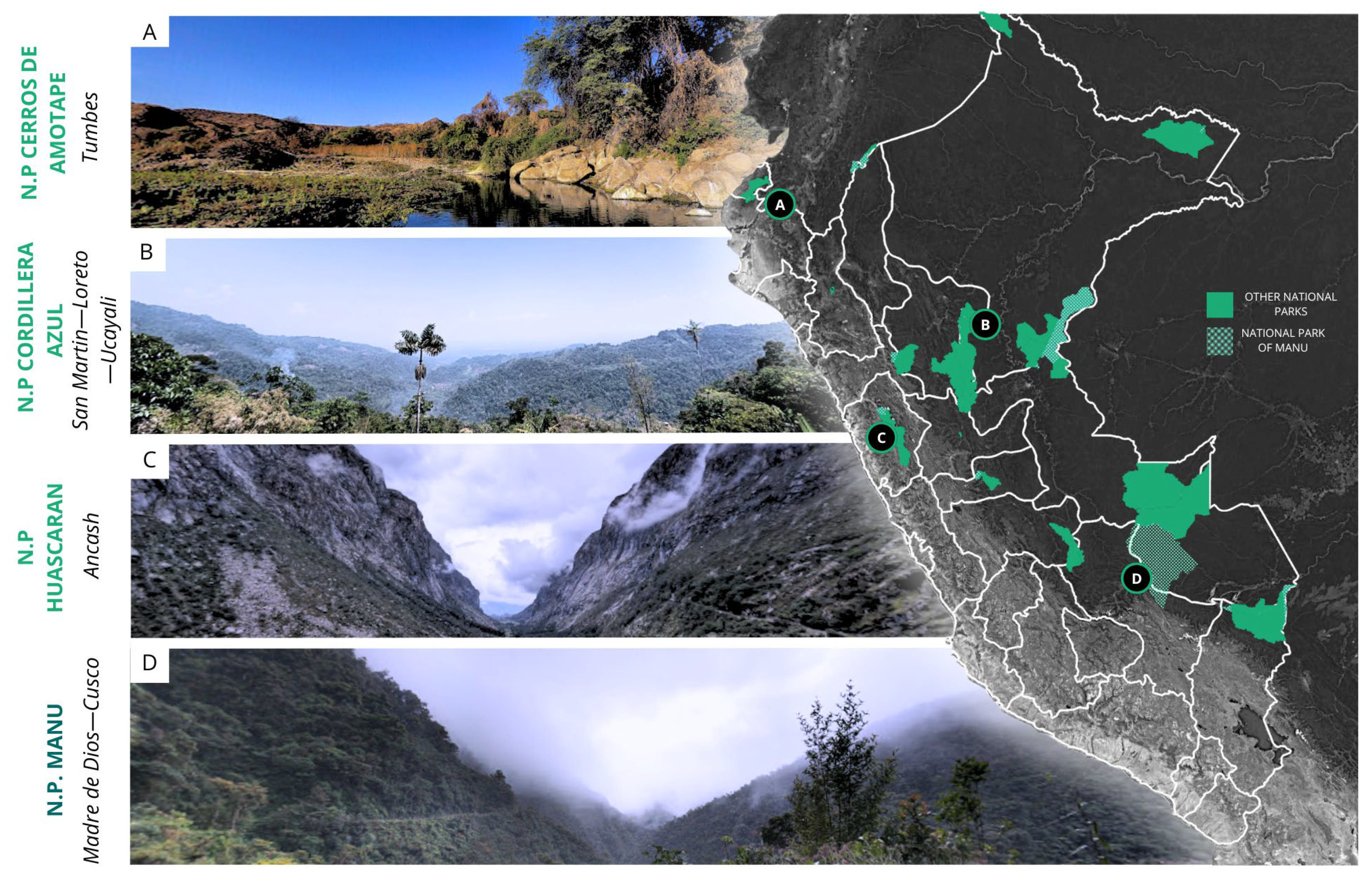
Figure 4 shows that Peru currently has 15 national parks officially established to protect representative ecosystems and safeguard the country’s biological diversity within a national conservation framework [19].
Where scientific research and tourism are permitted, if incompatible activities such as agriculture, forestry, and fishing are restricted [19].
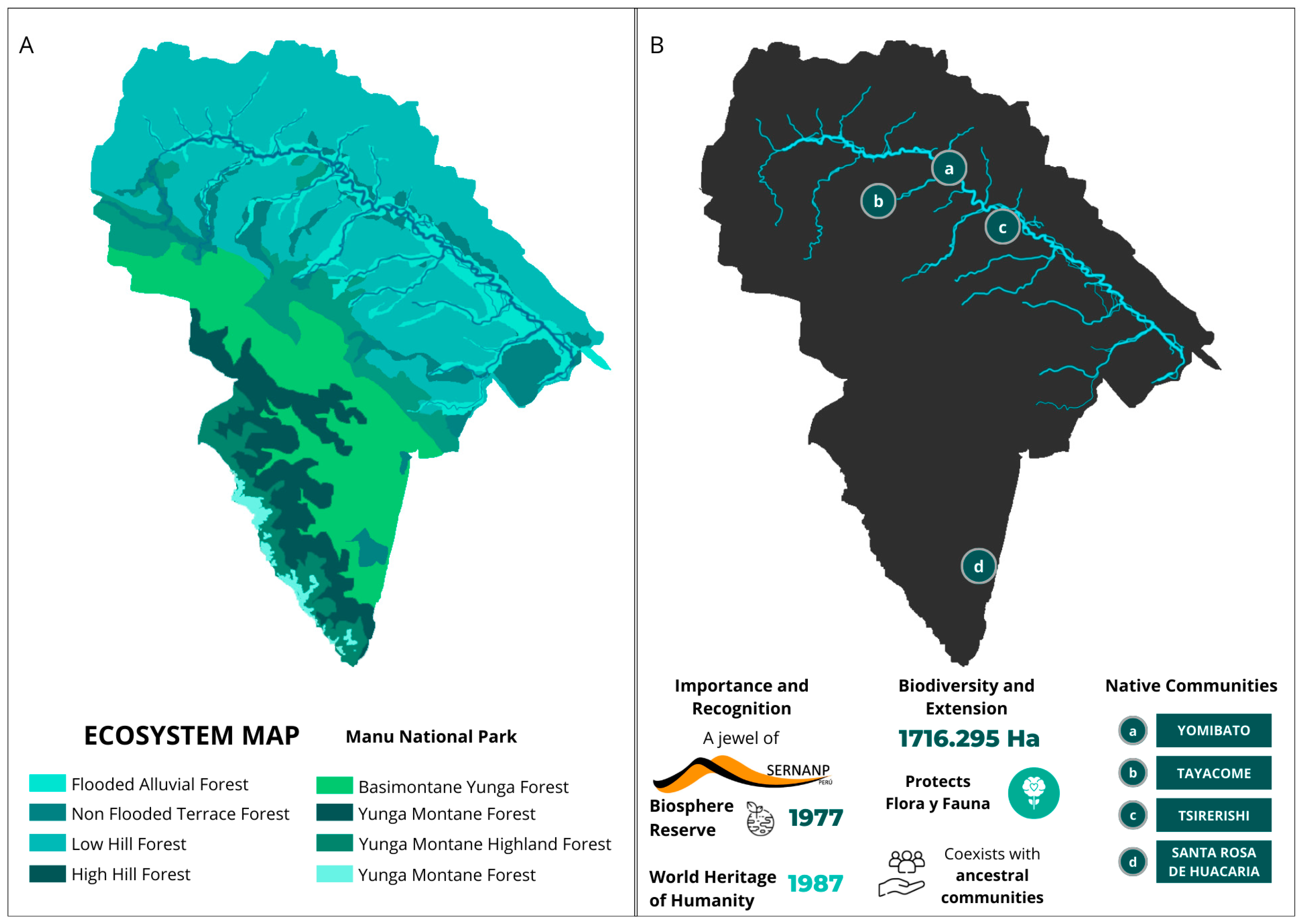
As can be seen in Figure 5A, among these protected territories, Manu National Park stands out as one of Peru’s greatest natural treasures. The park’s 1,716,295 hectares—ranging from Andean highlands above 4000 m a.s.l. to cloud forests and the Amazon plain—harbor exceptional biodiversity and several ancestral communities. These attributes led to its designation as a Biosphere Reserve (1977) and World Natural Heritage Site (1987) by UNESCO [24,25]. Indigenous communities such as Yomibato, Tayacome, Santa Rosa de Huacaria, and Tsirerishi also inhabit the area [25,26]. In addition, Figure 5B illustrates the indigenous communities Yomibato, Tayacome, Santa Rosa de Huacaria, and Tsirerishi, established within its boundaries.
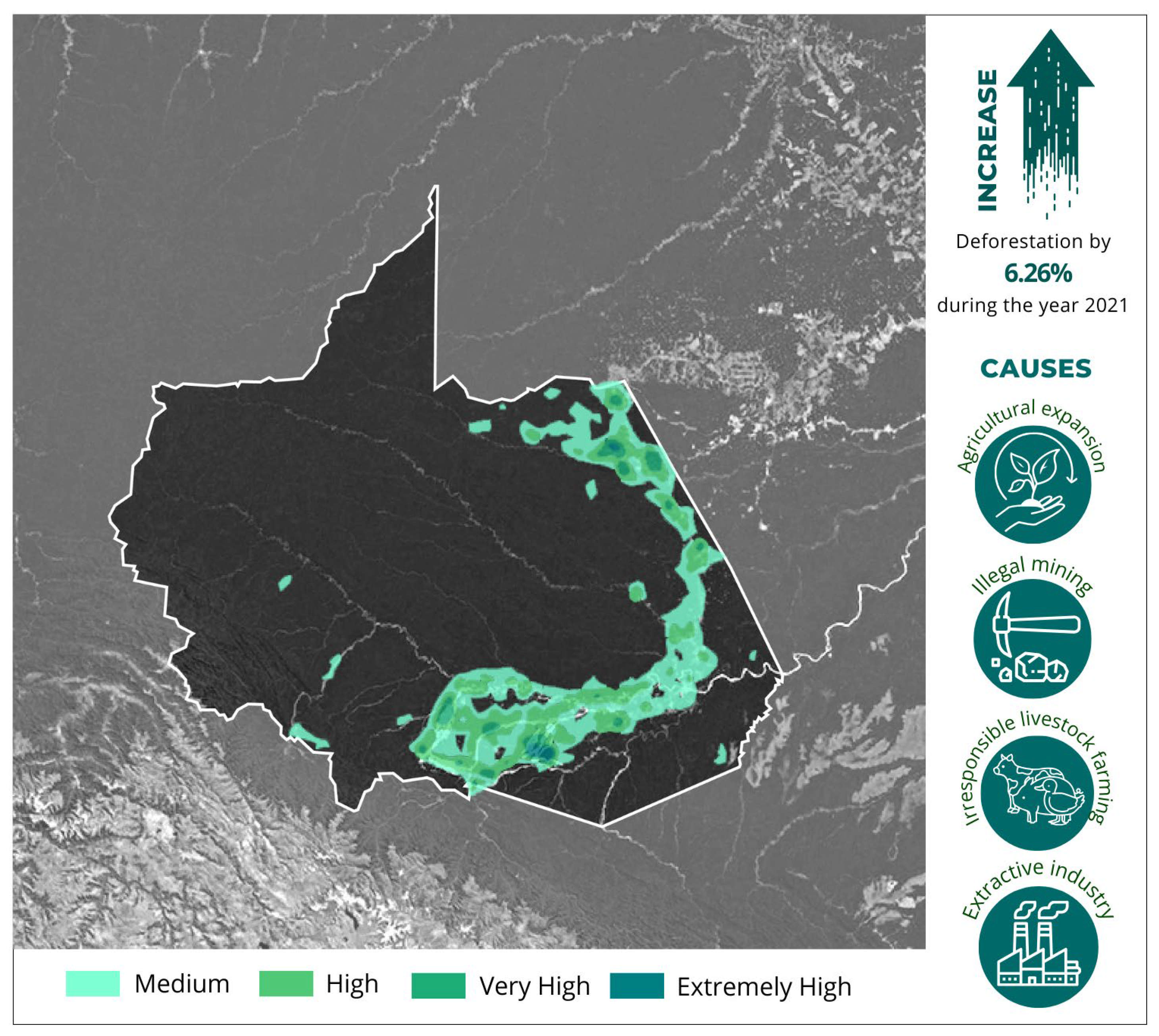
In recent decades, deforestation in Madre de Dios has increased due to agricultural expansion, cattle ranching, gold mining, and other extractive activities. Mining carries specific legal obligations to reduce environmental impacts, yet the most severe threats arise from deficient territorial planning that affects even protected and semi-protected areas [27,28], as shown in Figure 6.
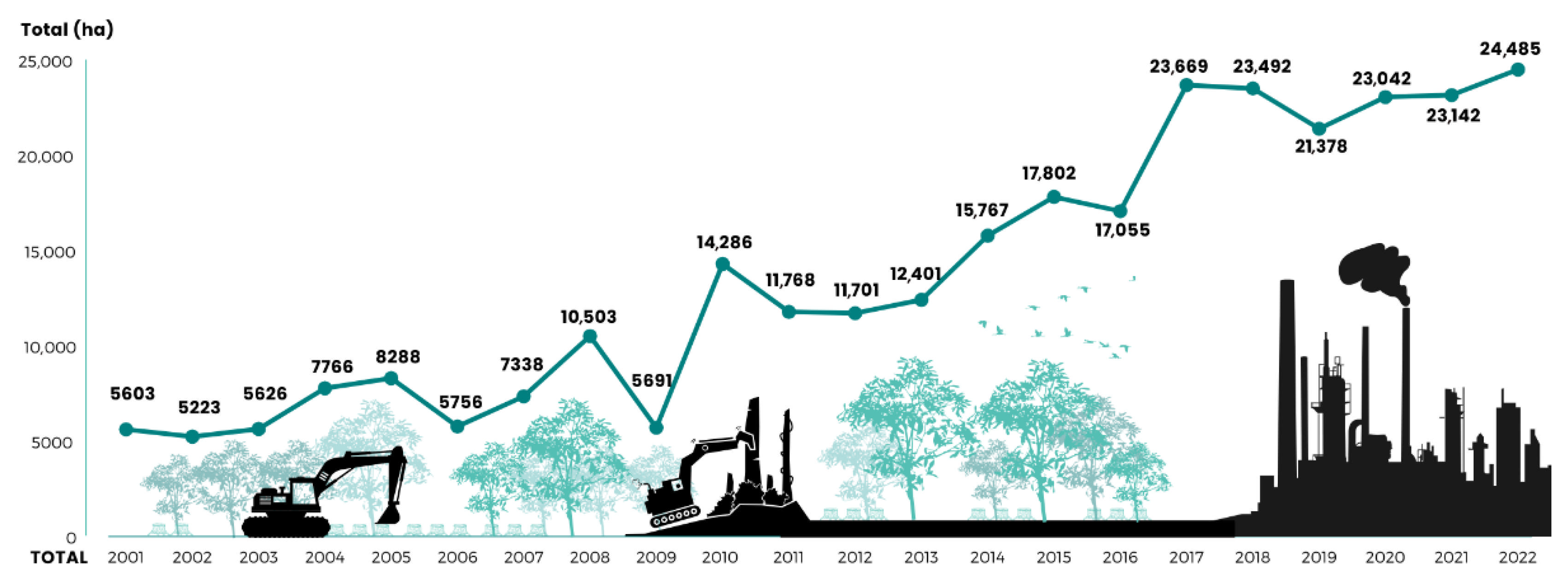
Between 2001 and 2022, the Madre de Dios region experienced a considerable reduction in Amazon Forest cover, as shown in Figure 7. In the most recent year with available data (2022), the loss reached 24,285 hectares, which is equivalent to an increase of 5.24% over previous periods. This increase reflects the growing environmental pressure faced by the area, as well as the urgency of implementing more effective conservation actions.
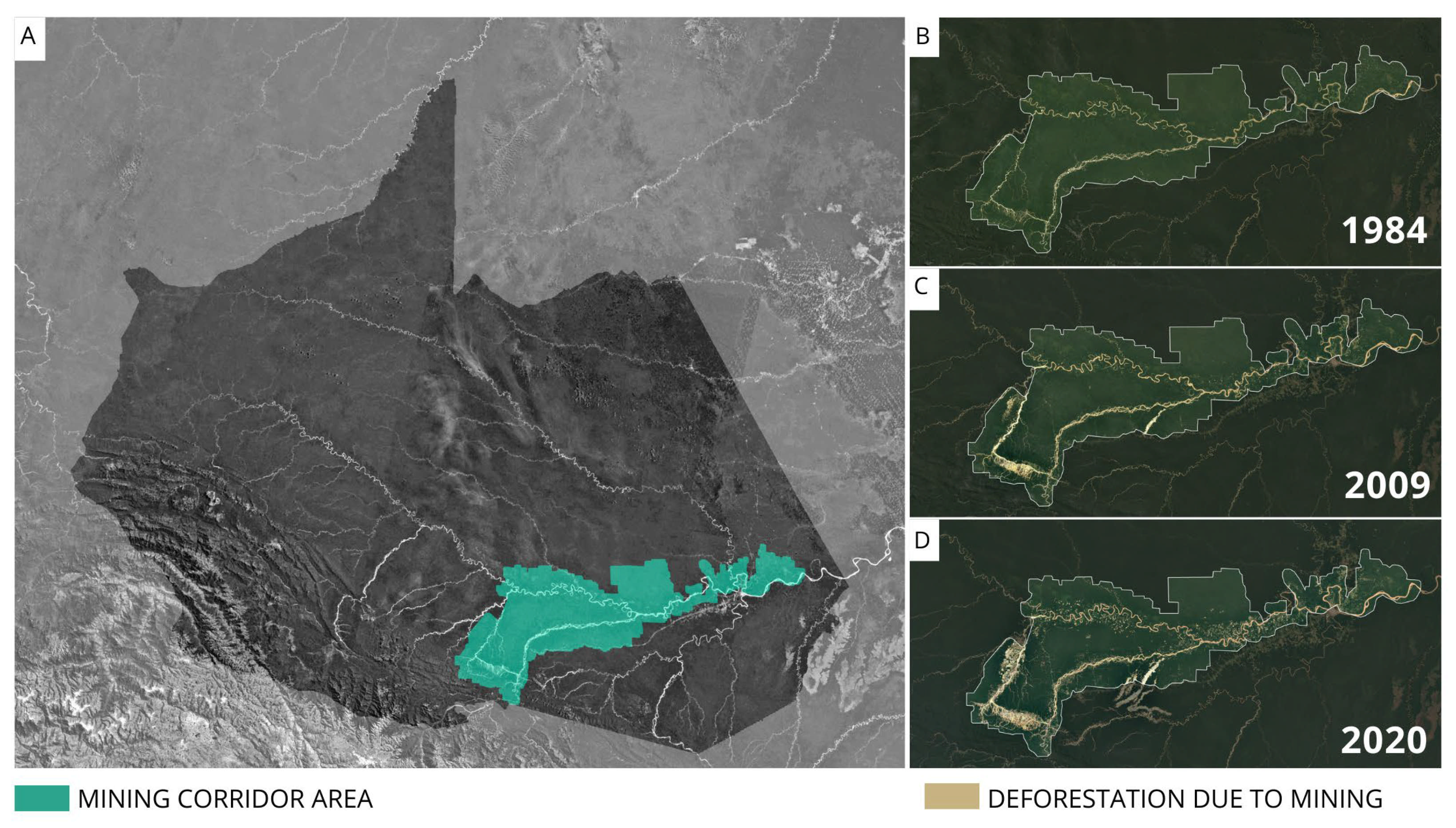
Figure 8A,B shows how the landscape in Madre de Dios has evolved over recent decades. While the region exhibited minimal disturbance in 1982, by 2020, deforestation became highly concentrated in the area known as the “mining corridor”. Remote sensing analyses estimate tens of thousands of hectares of forest loss directly linked to gold mining activities, with deforestation patterns distinguishable from agricultural expansion in recent years [29].
Regions dominated by artisanal and small-scale mining have also been associated with significant carbon emissions resulting from land conversion and mining operations, further emphasizing the environmental cost of mining-driven deforestation [30], as shown in Figure 8C,D.
Historically relatively isolated, the Madre de Dios basin experienced accelerated access and landscape change following infrastructure expansion. Increased road accessibility facilitated the expansion of mining and associated socio-ecological pressures, resulting in reduced wildlife populations, altered forest composition, and impacts on Indigenous and rural communities over the past four decades as [31], shown in Figure 9.
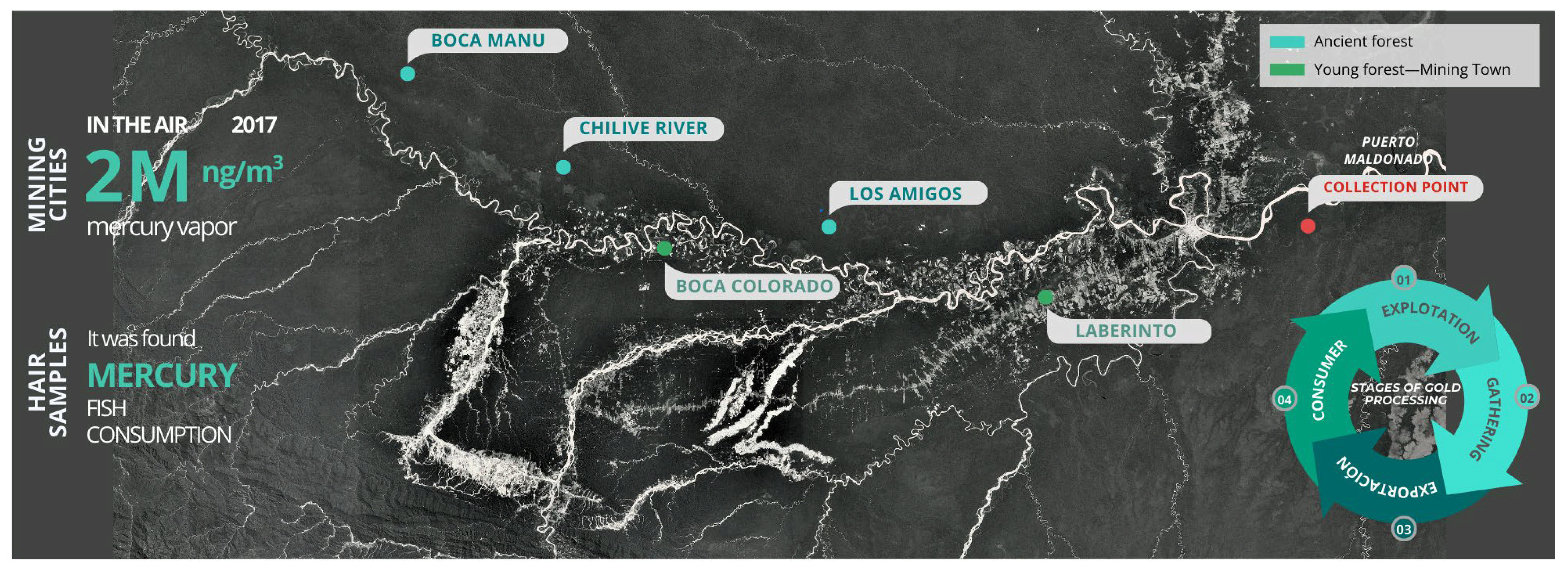
The atmospheric concentration of elemental mercury (Hg0) around artisanal gold shops in Madre de Dios has been measured at extremely high levels, with vapor concentrations exceeding 2,000,000 ng/m3 in front of active gold processing locations where mercury-gold amalgams are heated. These values far surpass both national air quality standards and international limits established under the Minamata Convention, reflecting the severe pollution burden associated with artisanal and small-scale gold mining in the region [32].
Although numerous studies document deforestation, mining impacts, and biodiversity loss in Madre de Dios, very few examine how architectural design can serve as an active instrument for conservation within protected Amazonian territories. Existing literature tends to emphasize ecological monitoring or policy frameworks, leaving a clear gap regarding low-carbon, bioclimatic infrastructure that supports scientific research, environmental education, and community engagement in regions such as Manu National Park.
Academically, this article advances the discussion on sustainable design in ecologically fragile areas by proposing an applied architectural model tailored to Amazonian conservation needs. Unlike previous works, it integrates low-carbon strategies, bioclimatic principles, and research-oriented infrastructure within a single framework. Thus, it contributes to a novel interdisciplinary perspective that connects conservation science with architectural design as a tool for resilience and ecosystem protection.
In this context, the study is guided by the following overarching research question: How can low-carbon and bioclimatic architectural strategies be applied to design a Sustainable Interpretation and Research Center in Manu National Park that simultaneously supports ecosystem conservation and strengthens local community resilience?
To address this question, the research pursues three academic objectives:
(1)
To characterize the climatic, ecological, and socio-environmental conditions of the Manu landscape that are relevant for architectural decision-making.
(2)
To develop a low-carbon eco-architectural proposal for the Sustainable Interpretation and Research Center, integrating passive bioclimatic strategies, photovoltaic energy, and environmentally responsible materials.
(3)
To estimate, through simple analytical models, the potential performance of the proposal in terms of electricity demand, rainwater harvesting, and CO2 sequestration.
These objectives link the environmental diagnosis with the architectural design and its semi-quantitative assessment, providing a clear academic structure for the study.

1.1. State-of-the-Art

1.1.1. Low-Carbon Architecture

Refers to a design and construction approach that seeks to minimize carbon emissions associated with construction materials and processes, complemented by traditional low-impact techniques and materials. This approach emphasizes the use of bio-based, locally available materials, waste reduction, and the adoption of strategies such as design for disassembly and modularity, promoting more sustainable construction aligned with the principles of the circular economy [9].

1.1.2. Eco-Architecture

It is understood as a strand of low-carbon bioclimatic design in which buildings are conceived as components of the rainforest socio-ecological system rather than isolated objects. It draws on eco-architecture frameworks that couple architectural form with environmental performance and ecological development indicators [33]. It also draws on building-integrated bioclimatic strategies, such as solar shading, natural ventilation, daylighting, glazing control, and envelope optimization, as primary means to reduce energy demand and greenhouse-gas emissions [34]. In tropical and humid climates, these principles are reinforced by retrofit and envelope measures that enhance thermal comfort and energy efficiency [35], and by bio-inspired climatic design that takes rainforest canopies and other ecological structures as analogues for creating adaptive, low-carbon architecture [36,37]. Here, the term “tropical rainforest eco-architecture” refers to architectural proposals that integrate these approaches to minimize operational and embodied carbon while supporting the regenerative capacity of forest ecosystems.

1.1.3. Bioclimatic Architecture

It is a design approach that exploits local bioclimatic conditions to benefit both the natural environment and the built environment, combining traditional, vernacular climate-adaptation strategies with contemporary passive and active technologies. Its aim is to create buildings that provide thermal, visual, and environmental comfort while minimizing energy consumption and environmental impact, integrating deep ecological and climatic understanding in each project [38]. Within the context of protected areas such as Manu National Park, bioclimatic architecture becomes a key mechanism for designing low-impact research and interpretation infrastructure.

2. Materials and Methods

2.1. Methodological Scheme

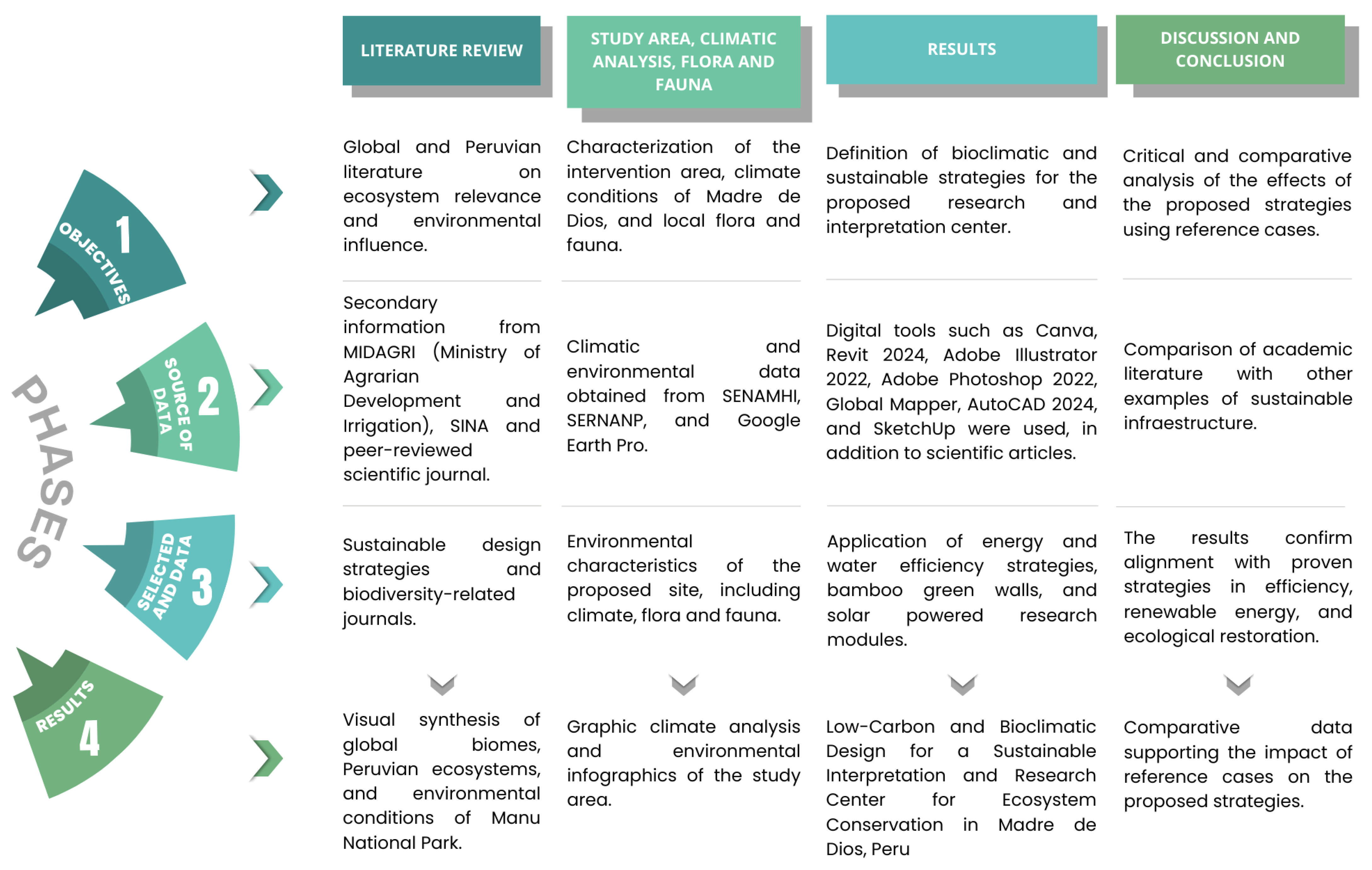
This study was developed under a non-experimental design with a basic research orientation and is classified as correlational. A non-experimental design was selected because the research questions focus on analyzing the existing environmental and social conditions in Manu National Park and on evaluating an architectural and landscape proposal, without manipulating key system variables such as climate, hydrology, vegetation, wildlife, or tourism dynamics; experimental or quasi-experimental designs would therefore not be feasible or ethically acceptable within a protected area. Consequently, the research follows a descriptive, correlational case-study approach that combines document review and analysis of secondary climatic and ecological data with simple environmental models (energy demand and photovoltaic production, rainwater harvesting, and CO2 sequestration) to compare alternative design options and answer the research questions. For the collection of information, specialized sources and relevant publications were consulted, and a bibliographic review was carried out in institutional repositories and indexed journals; the main stages of the process are summarized in Figure 10.
Furthermore, the methodological design follows a sustainability-based approach, emphasizing the integration of environmental, technological, and social dimensions. Each stage of the research was planned to ensure ecological efficiency, the rational use of natural resources, and the minimization of environmental impact in both the analytical and design phases.
This sustainability-oriented structure allows the methodological framework to act as a guide not only for architectural development but also for the application of clean technologies and low-impact construction practices in tropical and ecologically sensitive regions.
This methodological framework not only supports the architectural development of the center but also provides a model for applying clean technologies and bioclimatic strategies in ecologically sensitive regions. The approach emphasizes the efficient use of natural resources, renewable energy integration, and low-impact construction systems, offering a replicable path for sustainable development in similar tropical environments.

2.2. Methodological Process

2.2.1. Literature Review

During the first phase of the study, a bibliographic review was conducted to identify key information on the global relevance of ecosystems and their influence in Peru. This phase established the conceptual foundation needed to understand ecological dynamics and environmental issues relevant to Manu National Park, guiding the subsequent phases of climatic, spatial, and design analysis.
For the development of this review, various academic and scientific sources were consulted, including official documents from the Ministry of the Environment of Peru (MINAM) and the National Service of Natural Protected Areas (SERNANP), as well as publications from international organizations such as the United Nations (UN). These references provided key insights into the conservation and management of protected natural areas, the interaction between local communities and their environment, and sustainable design strategies applicable to highly biodiverse contexts. In addition, specialized bioclimatic literature and environmental reports were examined to identify criteria for passive design, low-carbon construction, and ecosystem-based mitigation strategies—elements that were later incorporated into site analysis and architectural decision-making.
Additionally, case studies of research centers and eco-friendly infrastructure projects that successfully integrate with natural landscapes were analyzed. This made it possible to define architectural design parameters focused on minimizing environmental impact, optimizing resource efficiency, and implementing ecological restoration strategies. These case studies also supported the selection of methodological indicators used in later phases, such as landscape integration, minimal soil disturbance, elevation of structures to protect biodiversity, and reliance on natural ventilation and lighting based on climatic patterns.
The literature review also helped identify critical issues affecting the region, such as deforestation, illegal mining, and agricultural expansion, highlighting the need to promote sustainable development models that balance ecosystem conservation with the needs of local populations.
Overall, the bibliographic study provided a robust theoretical foundation that supports the architectural design decisions, ensuring that the proposed center addresses environmental challenges and actively contributes to the protection, restoration, and research of the biodiversity of Manu National Park. Furthermore, this phase ensured methodological coherence by establishing the conceptual, environmental, and sustainability criteria used in the subsequent stages of data selection, climatic analysis, ecological characterization, and comparative evaluation of reference projects.

2.2.2. Study Area, Climatic Analysis, Fauna and Flora

Site analysis constitutes an essential tool for recognizing the attributes of a given area, as it makes it possible to establish the exact location, latitude, and longitude of the intervention zone, thereby facilitating a better understanding of the natural environment.
Tools such as Google Earth Pro 2024 allow the precise location of Manu National Park, distance and area measurements, and the identification of access routes and surrounding land uses.
Climate analysis is essential for defining building materials, minimizing the need for artificial air conditioning, and favoring the use of natural ventilation and bioclimatic design strategies [36]. The bioclimatic and ecological data also informed design decisions related to orientation, natural lighting, and passive ventilation strategies, thus reinforcing the project’s alignment with clean technology principles. To know the exact climatological parameters, the procedure is as follows:
  • MeteoBlue 2024 weather data collection for the year 2024, both wind (km/h) and precipitation;
  • Compilation of 5 years of climate data from Servicio Nacional de Meteorología e Hidrología del Perú: maximum and minimum temperatures (°C), relative humidity, and precipitation (mm);
  • Comprehensive analysis of collected data;
  • Creating graphs showing data for the parameters described above.
Flora analysis provides valuable information on the environment, where local species can be selected for revegetation, as well as sustainable timber species that can be used in construction without affecting biodiversity.
Wildlife analysis provides information on sensitive areas to prevent infrastructure from disturbing wildlife movements and to guide the creation of interpretive trails and viewing areas that promote education without disturbing animal habitat.
Environmental study: This is a crucial issue, as it involves analyzing the correlation between the climate and the intervention area, strategically chosen for its proximity to the Manu Nature Reserve, considering elements such as geographic location, topography, land use, and pre-existing relationships. This analysis is key because it allows the design of an infrastructure adapted to natural relief without generating significant negative impacts on the ecosystem.
Master plan analysis: The project is organized into different functional zones to balance research, conservation, and education. Reception and administration areas, scientific spaces with laboratories and field work areas, and environmental protection areas for reforestation and biodiversity preservation have been established. In addition, a Master Plan has been developed that includes exploration trails, an amphitheater for environmental awareness, and educational areas that seek to integrate the local community in conservation initiatives.
Energy self-sufficiency analysis: At this stage, a solar energy system is implemented that includes photovoltaic panels located on the roofs of the study center modules. The energy generated will allow the project to be self-sufficient and reduce its carbon footprint, in accordance with the Sustainable Development Goals (SDGs). In addition, a rainwater collection and storage system has been developed to optimize the use of water resources through filters and sedimentation systems.
Materials analysis: Priority has been given to the use of sustainable materials such as bamboo, which, due to its accelerated growth and reduced carbon footprint, provides an eco-efficient response for the infrastructure. This material allows for adequate natural ventilation and contributes to the thermal regulation of spaces. This analysis has incorporated construction techniques that minimize environmental impact, avoiding the excessive use of polluting materials and promoting integration with the natural environment.
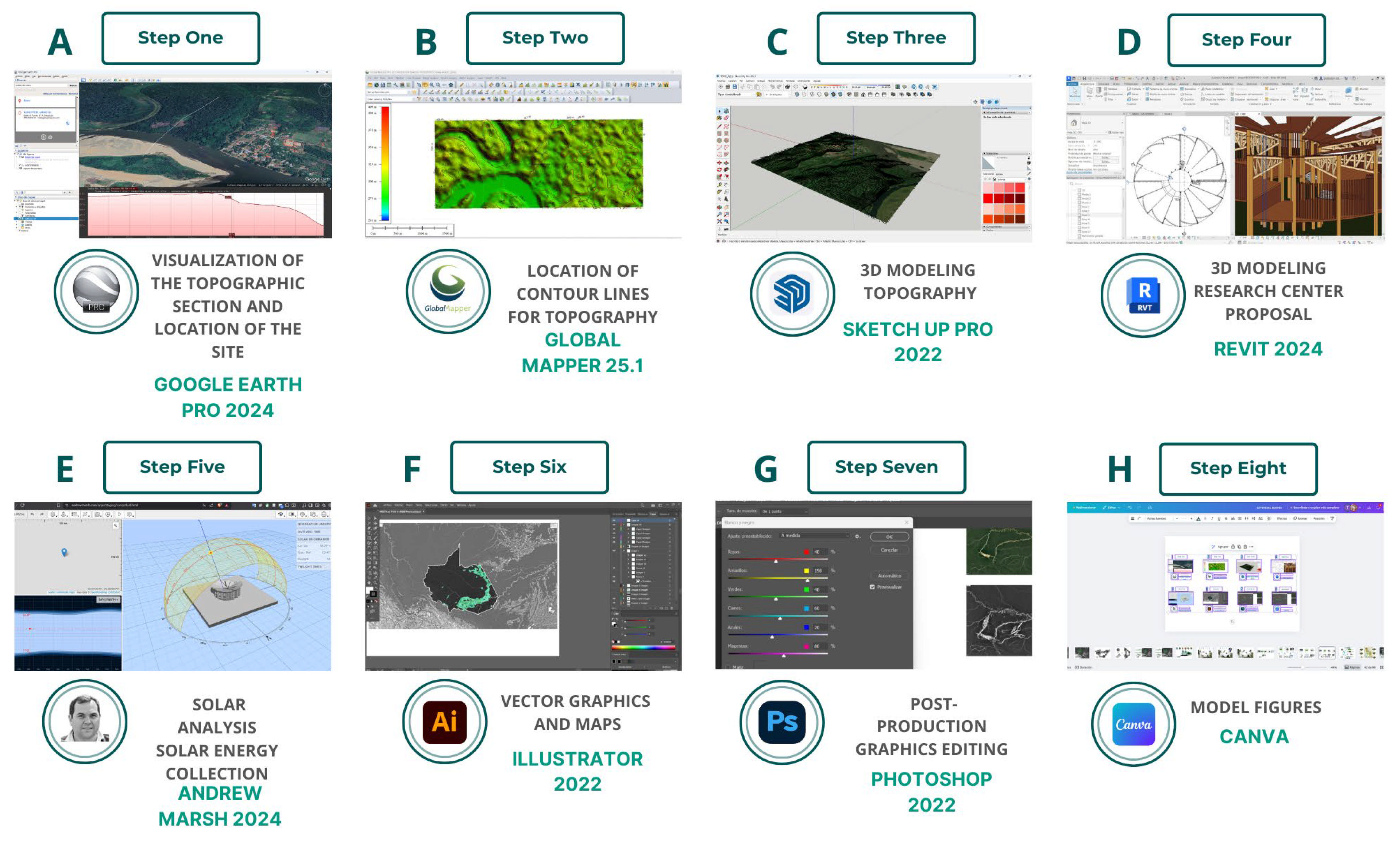
As shown in Figure 11, various digital tools were implemented to ensure the efficiency and development of the project. In the first stage, the boundaries of the intervention area were defined using Google Earth Pro, which allowed for the collection of accurate coordinates and geographic data on the natural environment of Manú National Park. In the second stage, topographic information was collected and organized using Global Mapper 2024, integrating contour lines and terrain features necessary for the development of the project. In the third stage, a three-dimensional model of the terrain and its topography was created using SketchUp Pro 2022, facilitating spatial understanding of the site. Subsequently, Revit 2024 was used to generate the architectural model of the center, incorporating structural and construction aspects. In the fifth stage, a solar analysis was performed using Andrew Marsh—3D Sun-Path 2024, evaluating the impact of solar radiation on the roofs, walls, and exterior spaces of the project. For the presentation stage, diagrams and vector graphics were generated with Adobe Illustrator 2022, followed by a post-production process and visual adjustments in Adobe Photoshop 2022. Finally, the comprehensive presentation of the project was structured using Canva, allowing for clear and effective visual communication of the results obtained.
Finally, in the last stage of the analysis, a comparative review was carried out between the findings of the Conservation Center and the two selected environmental references: the Shelter Rainforest in Sabah, Malaysia, and the Daintree Rainforest Observatory in Australia. These projects illustrate how architectural interventions within tropical ecosystems can achieve a balance between environmental respect, scientific purpose, and minimal ecological disturbance.
These two references informed the sustainability and ecological integration criteria applied in the Conservation Center. Approaches such as elevating structures to protect soil biodiversity, optimizing natural ventilation, prioritizing minimal-impact materials, and incorporating spaces dedicated to scientific observation were adapted to the bioclimatic conditions of the project site. In this way, the discussion positions the proposal as a nature-based architectural strategy that translates global knowledge into a contextualized local framework, strengthening the project’s capacity for environmental protection, research, and long-term ecological resilience.

2.3. Study Area

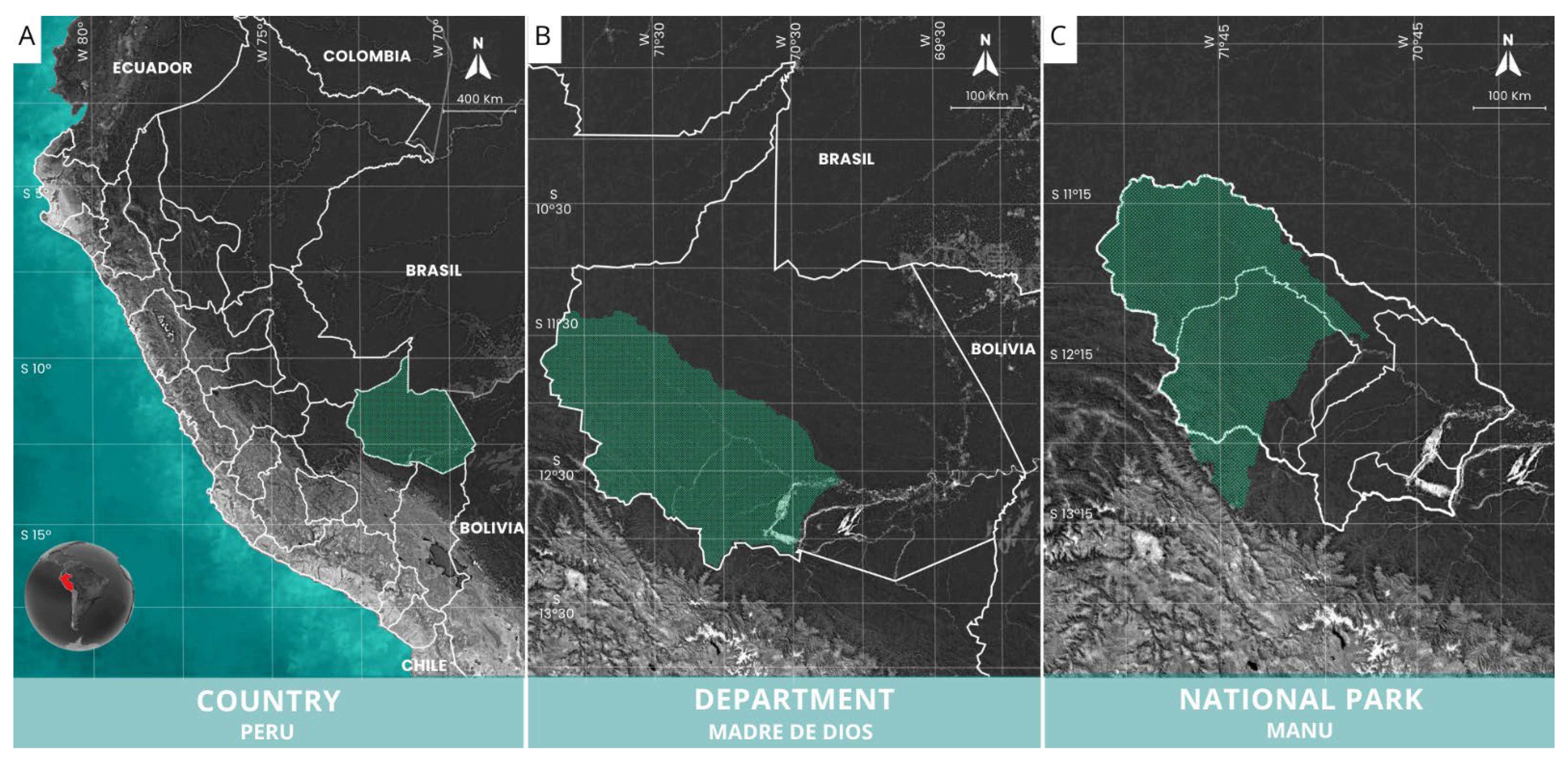
As can be seen in Figure 12A, the location of Peru in South America, highlighting its position relative to neighboring countries, also the intervention site is in the Madre de Dios region, Madre de Dios department, Peru. In Figure 12B, the Madre de Dios Region encompasses a territorial extension of 85,301 km2, which is equivalent to 6.6% of the national territory. Its altitude ranges from 186 m above sea level in the Tambopata district (Tambopata province) to 500 m above sea level in the Fitzcarrald district (Manú province). To the north, it borders the department of Ucayali and the Federative Republic of Brazil; to the east, the Plurinational State of Bolivia; to the south, the department of Puno; and to the west, the department of Cusco [39]. Finally, Figure 12C shows the largest province, Tambopata, accounting for 42.5% of the regional territory. Madre de Dios also shares an international boundary extending 584 km, of which 314 km corresponds to Brazil and 270 km to Bolivia [40,41].

2.4. Environmental Analysis: Flora and Fauna

2.4.1. Habitat

Manu National Park covers 1,884,200 hectares and includes the lowland rainforest, highland rainforest, high Andes, and puna ecoregions, with the lowland rainforest being the largest and characterized by its dense vegetation. By 2038, the National Park of Manu, which is the core zone of the Manu Biosphere Reserve, will conserve approximately 95% of its ecoregions: Pajonal (Humid Puna of the Central Andes), Selva alta (Peruvian Yungas), and Selva baja (Humid Forests of the Southwestern Amazon) in natural conditions. In these ecosystems, both aquatic and terrestrial, native flora and fauna species are preserved, including those in vulnerable situations [42].

2.4.2. Fauna

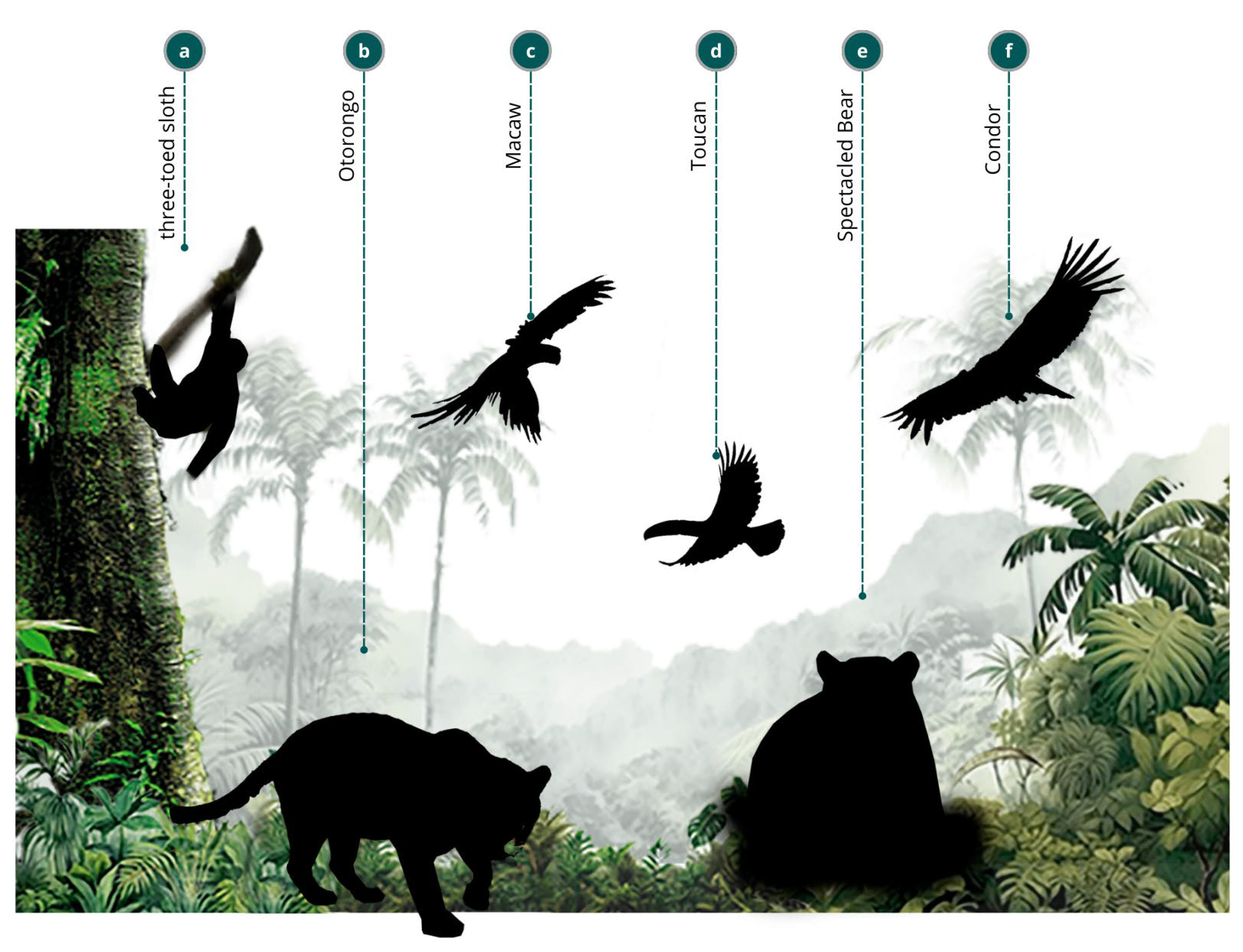
Madre de Dios hosts an exceptional diversity of fauna, particularly large mammals, characteristic of Amazonian ecosystems. Species such as the otorongo or jaguar (Panthera onca), black tiger (Melanosuchus niger), sachavaca or tapir (Tapirus terrestris), huangana (Tayassu pecari), sajino (Pecari tajacu), red deer (Mazama americana), ashy deer (Mazama gouazoubira), river wolf or giant otter (Pteronura brasiliensis), ronsoco or capybara (Hydrochoerus hydrochaeris), coto monkey (Alouatta seniculus), black maquisapa (Ateles chamek), choro monkey (Lagothrix lagotricha), white machin monkey (Cebus albifrons), and black machin monkey (Sapajus apella) are widely documented within the Manu National Park and surrounding protected areas [24,25,42], some of the most representative examples are shown in Figure 13.
The region is also distinguished by an extraordinary diversity of insects, reflecting the ecological complexity of tropical rainforest systems. Biodiversity inventories conducted in Madre de Dios report exceptionally high species richness, including more than 1300 species of butterflies, 136 species of dragonflies, approximately 300 species of ants, over 40 of which may be found in a single tree, and more than 650 species of beetles, placing the area among the most diverse insect-rich regions globally [26,33].

2.4.3. Flora

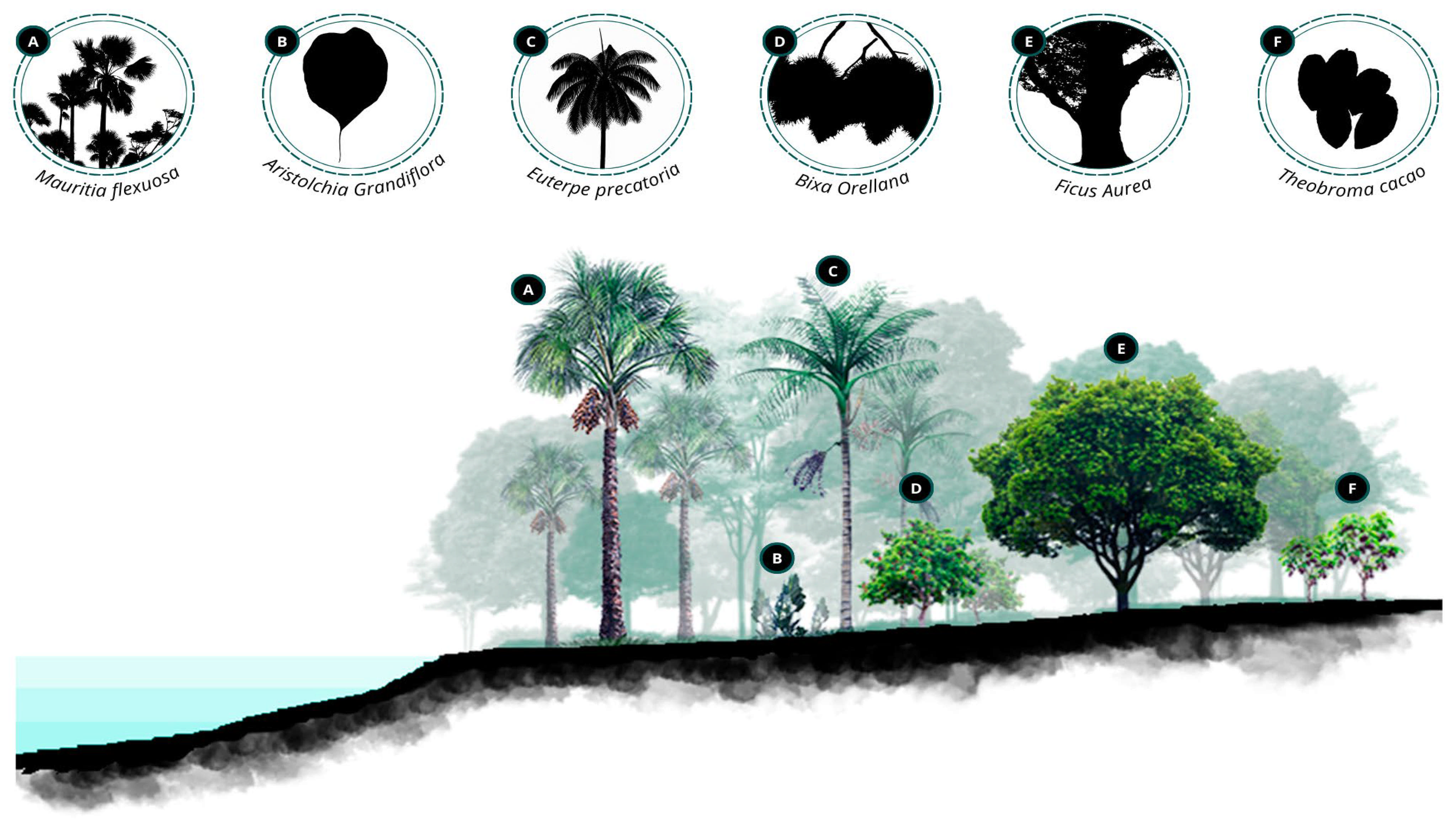
Floral diversity is equally remarkable, with inventories indicating that a single hectare of rainforest may contain more than 250 plant species. Prominent vegetation types include aguajal forests dominated by aguaje palms (Mauritia flexuosa) and asai (Euterpe precatoria), which thrive in seasonally flooded environments through specialized adaptations to low-oxygen and nutrient-poor soils. The region also hosts emblematic plant species such as Dutchman’s pipe (Aristolochia grandiflora), achiote (Bixa orellana), traditionally used as a natural colorant, the white fig tree (Ficus aurea), a keystone species for wildlife and forest regeneration, and cacao (Theobroma cacao), whose seeds are of major economic and cultural importance. These characteristics are illustrated in Figure 14 [24,25,42].
Although these indicators provide a useful environmental baseline, several sources of uncertainty must be acknowledged. The climatic and hydrological data used in this study are based on recent multi-year averages and do not explicitly incorporate long-term climate-change scenarios or extreme events (e.g., El Niño episodes) that may alter rainfall and temperature regimes in Manu. Likewise, the description of flora and fauna focuses on representative species and habitat types and therefore cannot capture the full range of seasonal and inter-annual ecological fluctuations. For this reason, the environmental diagnosis and the design guidelines derived from it should be understood as an adaptable framework that can be refined as new monitoring data and updated climate projections become available.

2.5. Climate Analysis

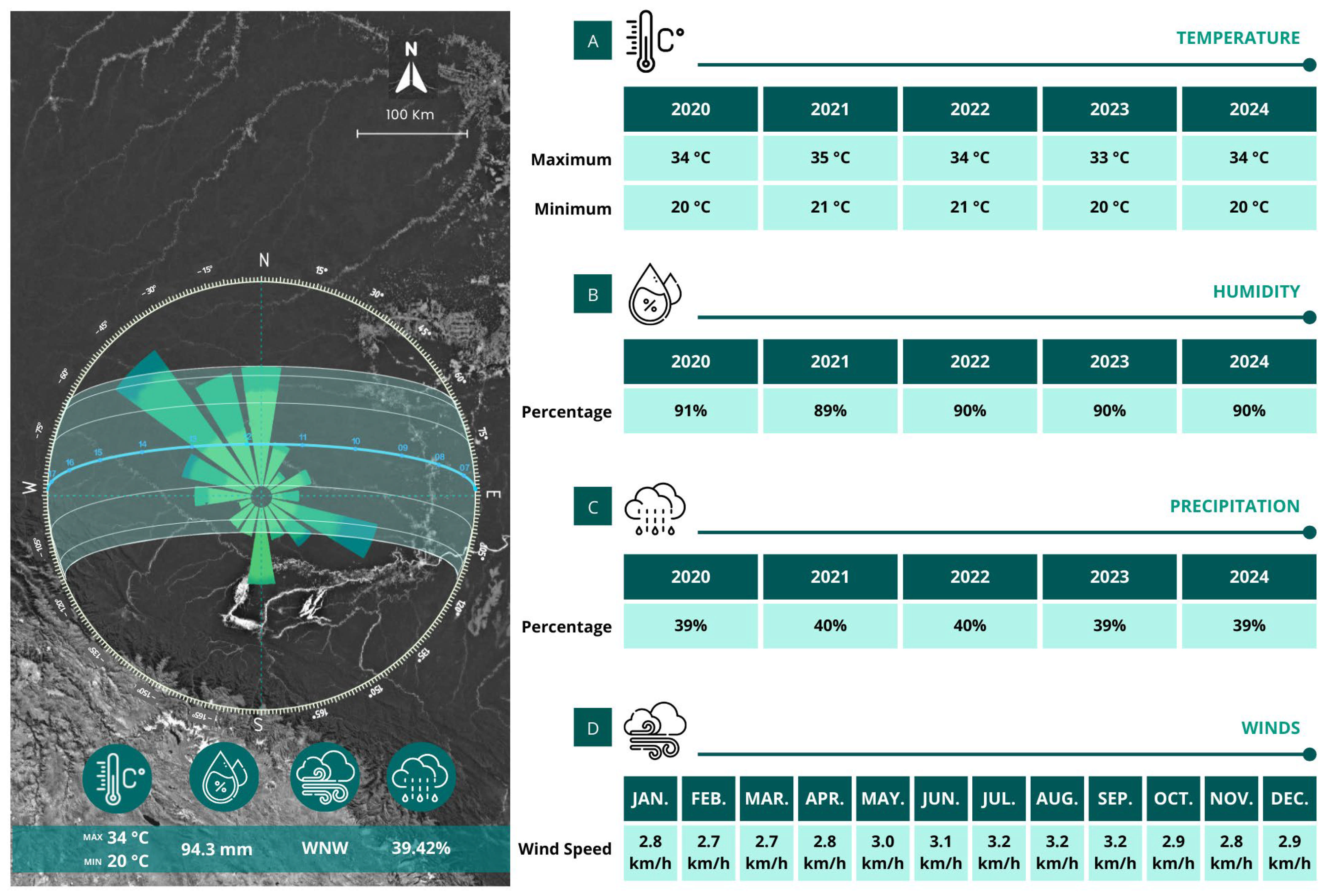
The climatological assessment of Puerto Maldonado, located in the Madre de Dios region, identifies a humid tropical regime, characterized by consistently high thermal values and pronounced seasonal variability in precipitation patterns. Based on the meteorological data presented in Figure 15, days with cloud cover below 20% are classified as clear-sky conditions, those ranging from 20% to 80% as partly cloudy, and those exceeding 80% as overcast conditions [43]. The annual average temperature is 26 °C, with the highest values up to 38 °C occurring between August and September, and the lowest temperatures dropping to 8 °C. In comparison, September is the warmest month, with an average maximum of 32.2 °C, whereas July is the coldest month, with a mean minimum of 16.6 °C. February registers the highest rainfall, reaching 299.3 mm/month [44].
Vegetation is dominated by humid tropical forest, covering nearly the entire territory of the Tambopata and Manu provinces. These conditions sustain high biodiversity and directly influence strategies for environmental conservation and sustainable development in the region.
Relative humidity is generally high throughout the year, with the wettest period occurring between December and March. In contrast, rainfall is scarce from June to August, marking the dry season. This seasonal rainfall pattern plays a decisive role in water resource management and ecosystem dynamics [43].
Wind analysis indicates predominant flows from the southwest (SW) toward the northeast (NE), with notable intensity from the west, which can hinder east–west movement. The monthly distribution of wind speeds reveals seasonal variations, similar in pattern—though not magnitude—to monsoon phenomena in other regions [45].
Solar radiation studies suggest that east–west building orientation is optimal, enabling better control of daylight and solar incidence on openings. The sun is present in the northern sector for seven months of the year and in the southern sector for the remaining five months—conditions favorable for architectural design strategies that optimize natural lighting and energy performance [43].

Givoni Psychrometric Diagram

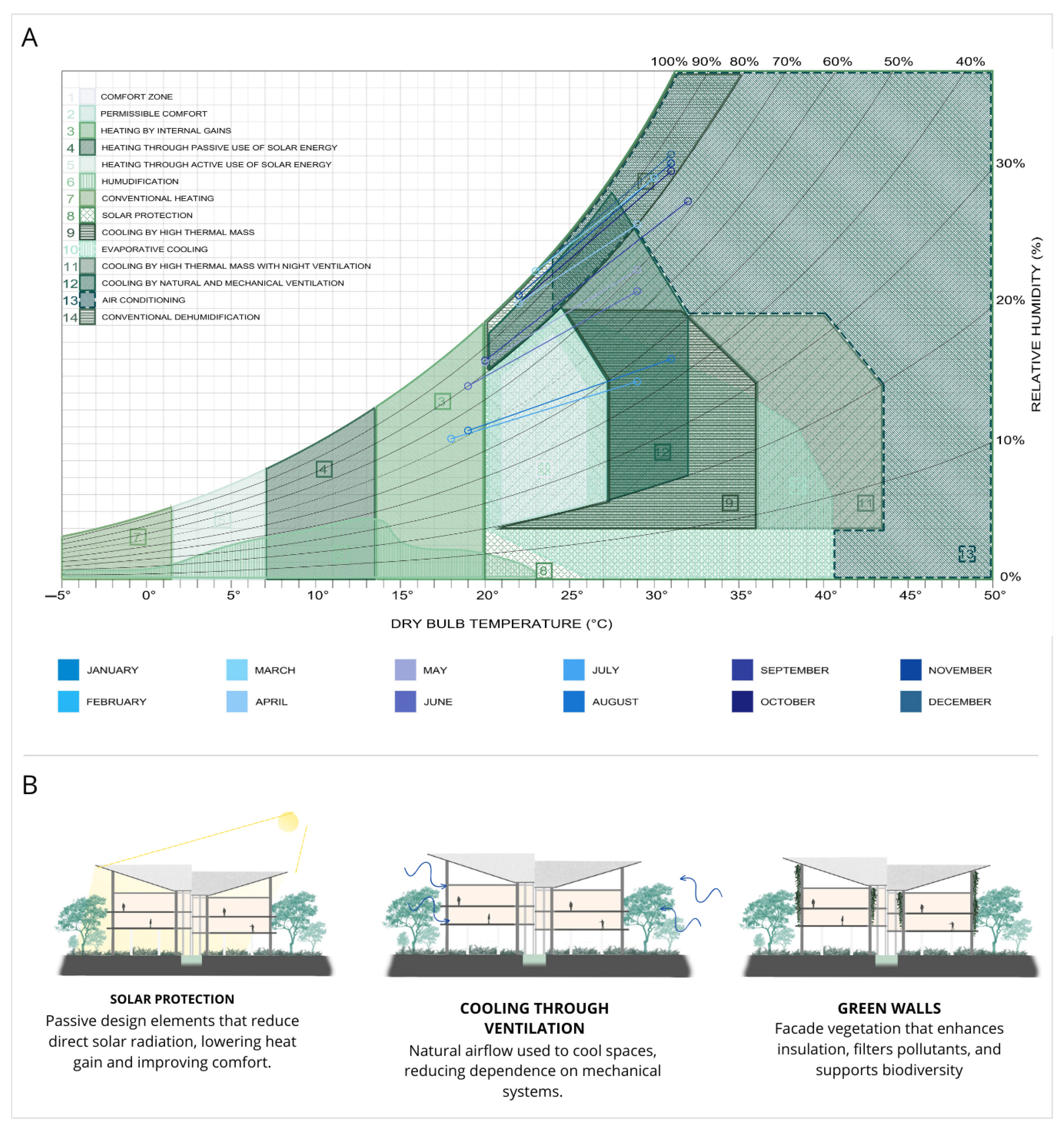
Also referred to as the “Building Bio-Climatic Chart” (BBCC), it is developed from a conventional psychrometric diagram. Within it, the thermal comfort range is defined, and the corrective bioclimatic strategies to be applied are indicated when air temperature and relative humidity conditions fall outside this range [46].
In Figure 16A, the most recommended strategies according to the psychrometric chart are solar protection and cooling through natural ventilation, which can be reinforced with design solutions such as green walls. Solar protection aims to reduce the direct incidence of radiation by means of architectural elements such as overhangs, louvers, latticework, or strategically placed vegetation, thereby decreasing heat gain and protecting exposed surfaces. Natural ventilation, in turn, takes advantage of air currents to renew the indoor environment and promote passive cooling, which can be achieved through cross-ventilation or strategically positioned openings within the building. In this context, green walls operate as a complementary passive strategy that, in addition to providing shade, reduces surface temperatures and improves air quality, contributing to a more comfortable microclimate, as illustrated in Figure 16B. These strategies are applied primarily from October to April, while in May, June, July, August, and September, the thermal conditions are more benign, with several of these months falling within the comfort range, thereby reducing the need for intensive interventions.

3. Results

This section presents the main outcomes of the research. First, the spatial and programmatic configuration of the Sustainable Interpretation and Research Center is summarized through the final master plan, floor plans, sections, and perspective views of the modular units. Second, the semi-quantitative environmental performance of the proposal is reported, including monthly and annual electricity demand and photovoltaic generation, the estimated volumes of rainwater harvested, and the potential CO2 sequestration of the reforested corridor, as shown in the corresponding tables and diagrams. Finally, the results are linked to the expected benefits for visitors and local communities in terms of environmental education and ecotourism.

3.1. Intervention Area and Topography

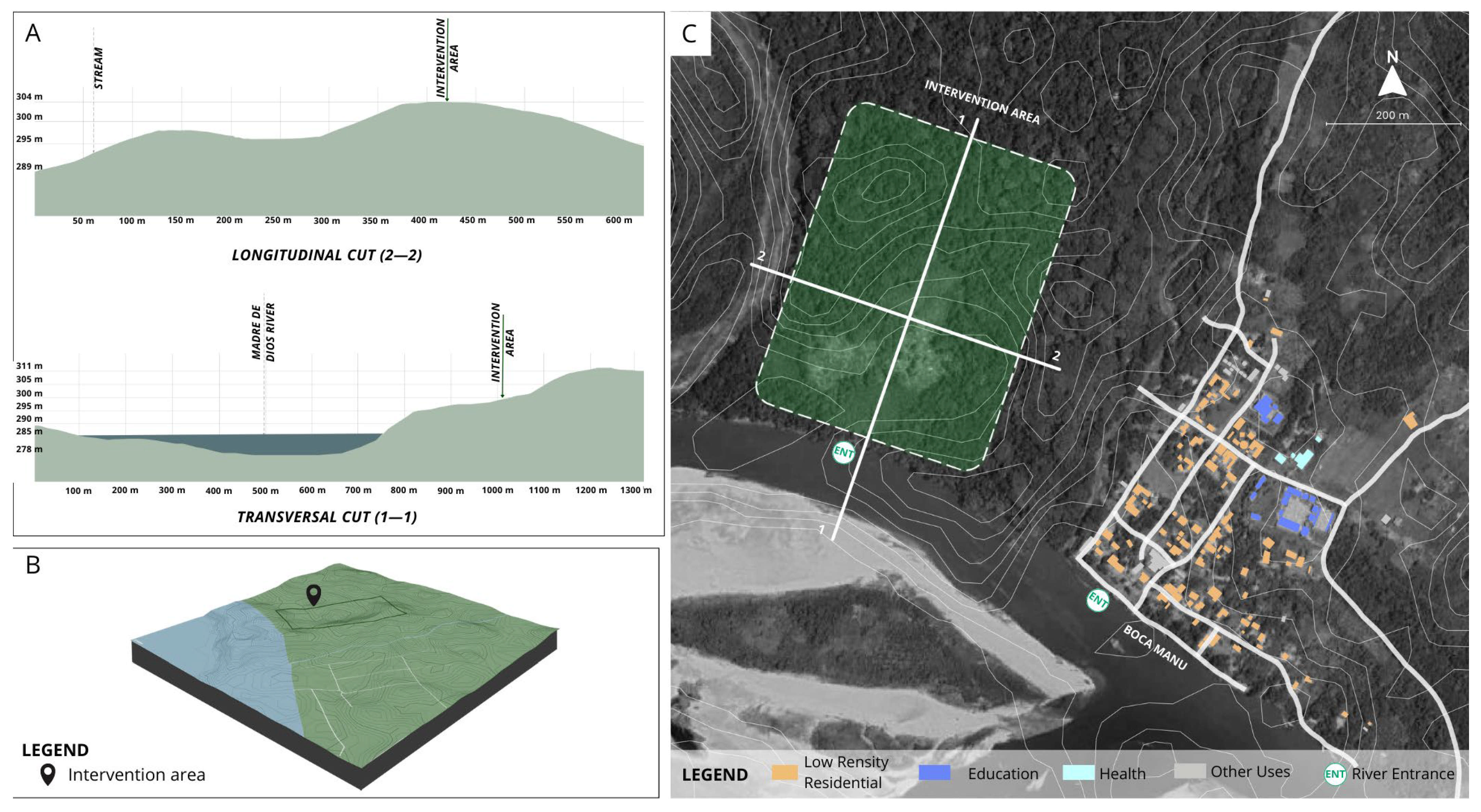
As shown in Figure 17, the site, which covers 15 hectares, was chosen because of its strategic location: it is the only town near the Manu Nature Reserve and sits next to the river, the main access route to the area, making it a key point for intervention without expanding pressure on areas of high biodiversity. However, in the central area, there is evidence of a serious environmental problem derived from indiscriminate logging, which has deteriorated the forest cover and altered the ecological balance. This situation underscores the urgency of acting in this area, as it represents an opportunity to implement measures aimed at restoring and ensuring the sustainable use of natural resources.

3.2. Concept

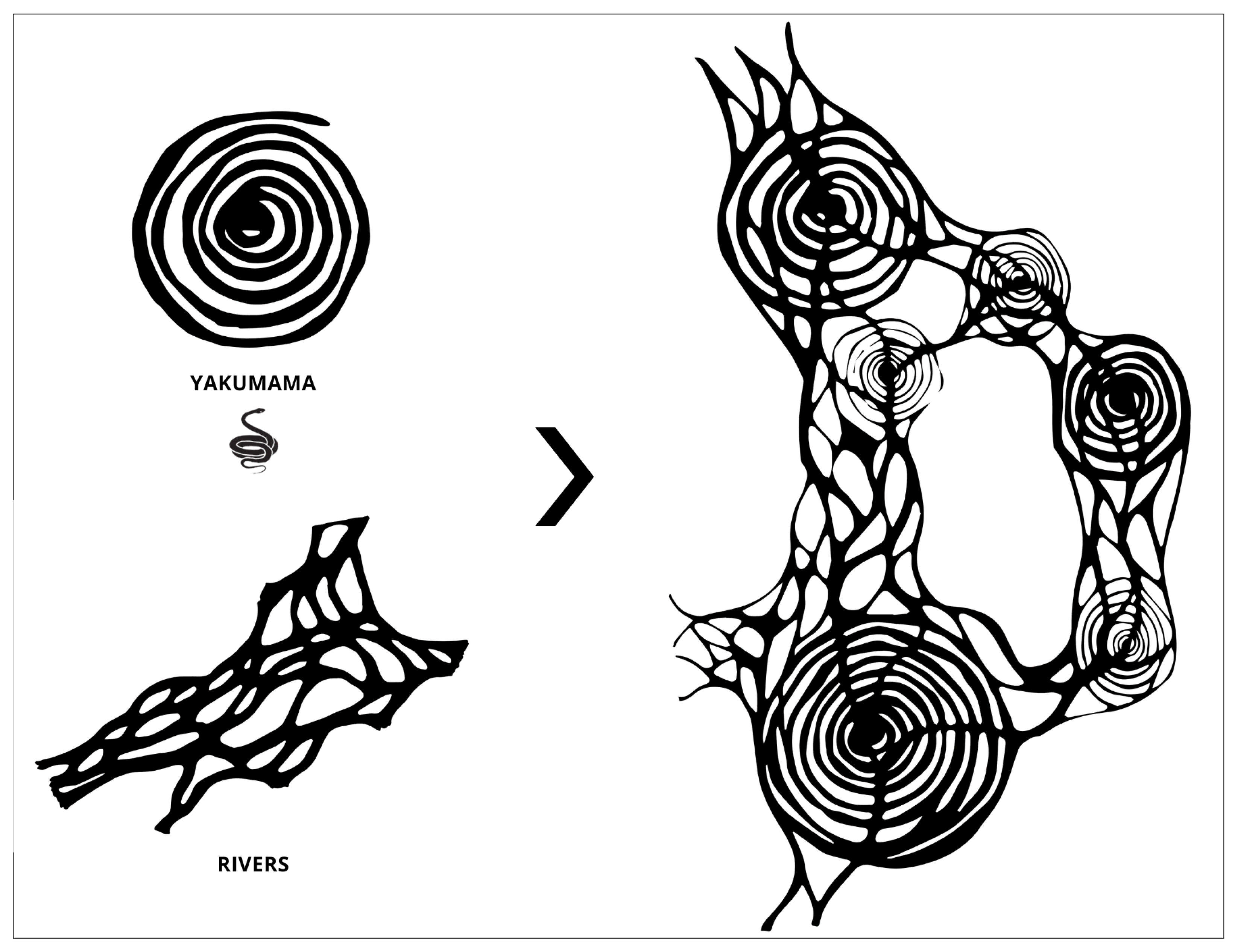
As can be seen in Figure 18, the proposal is inspired by the ancestral figure of the Yakumama, considered the mother of water and protector of water resources. The architectural design alludes to the serpentine form to reflect the fluidity and cyclical nature of nature, incorporating building modules that evoke the shape of the snake and suggest an organic path through space. This layout is integrated with the surroundings by preserving the existing vegetation, creating corridors that facilitate the transit of wildlife and ensure natural ventilation. In this way, it seeks to convey the idea of a continuous balance, in which the Yakumama symbolizes the vitality and fertility of water, while promoting protection and harmony with the Amazonian ecosystem, following the local worldview based on reciprocity with nature.

3.3. Master Plan and Zoning

The design of the proposal aims to balance the demands of research, accommodation, and coexistence with the environment, promoting respect for traditions and knowledge.
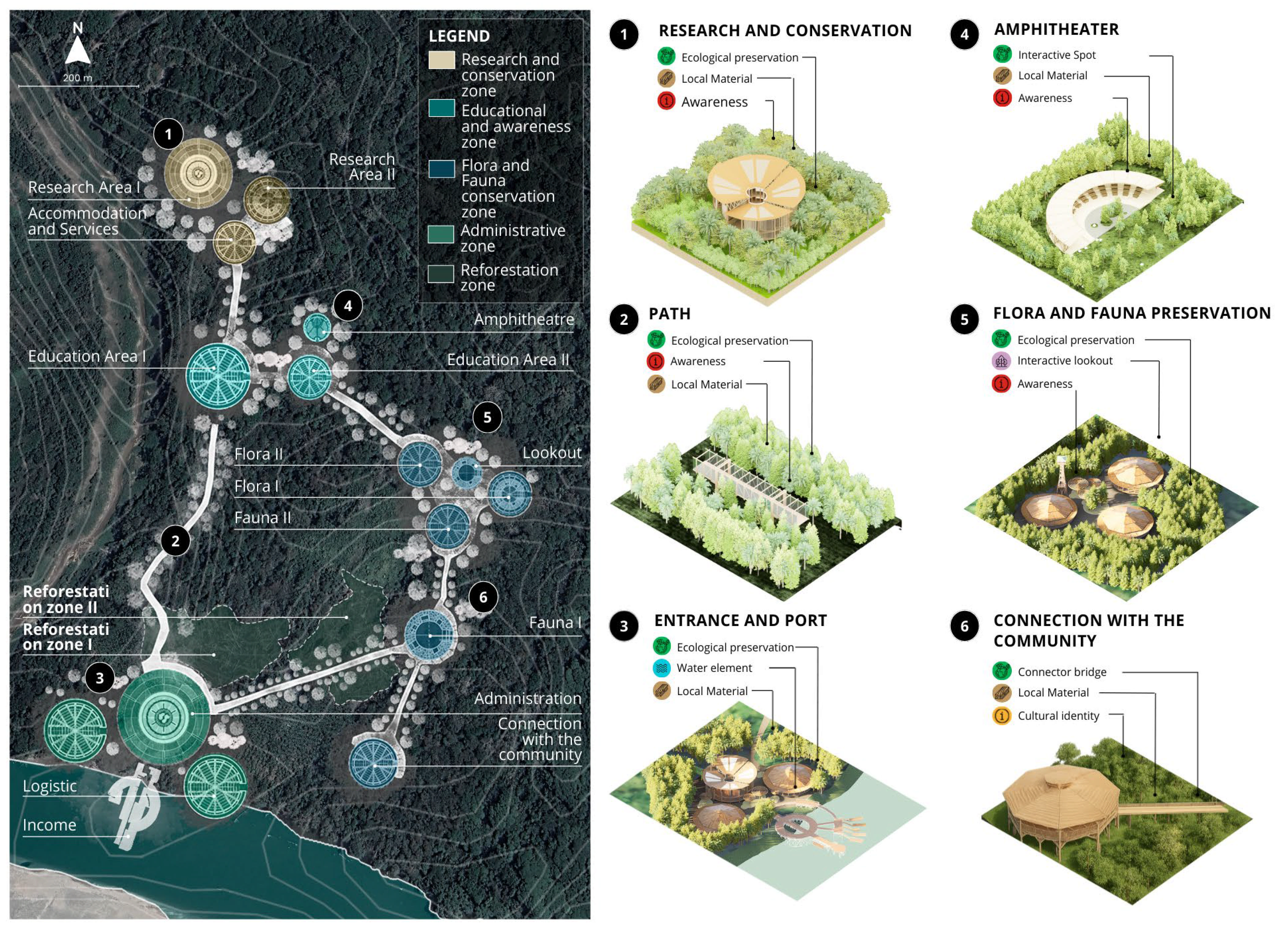
Figure 19 illustrates the strategic structure of the spaces for interaction with native species, with the objective of raising public awareness of their relevance. In addition, as previously mentioned, it is essential to encourage reforestation of the impacted area, where protection and education areas merge to create a safe space. Additionally, a path has been incorporated to facilitate the appreciation of nature by merging with the natural environment. In all volumes, the orientation and layout seek to optimize environmental conditions, balancing the functionality of space and the conservation of ecosystems.

3.4. Flora and Fauna Preservation Zone

Amphitheater-Energy and Water Efficiency

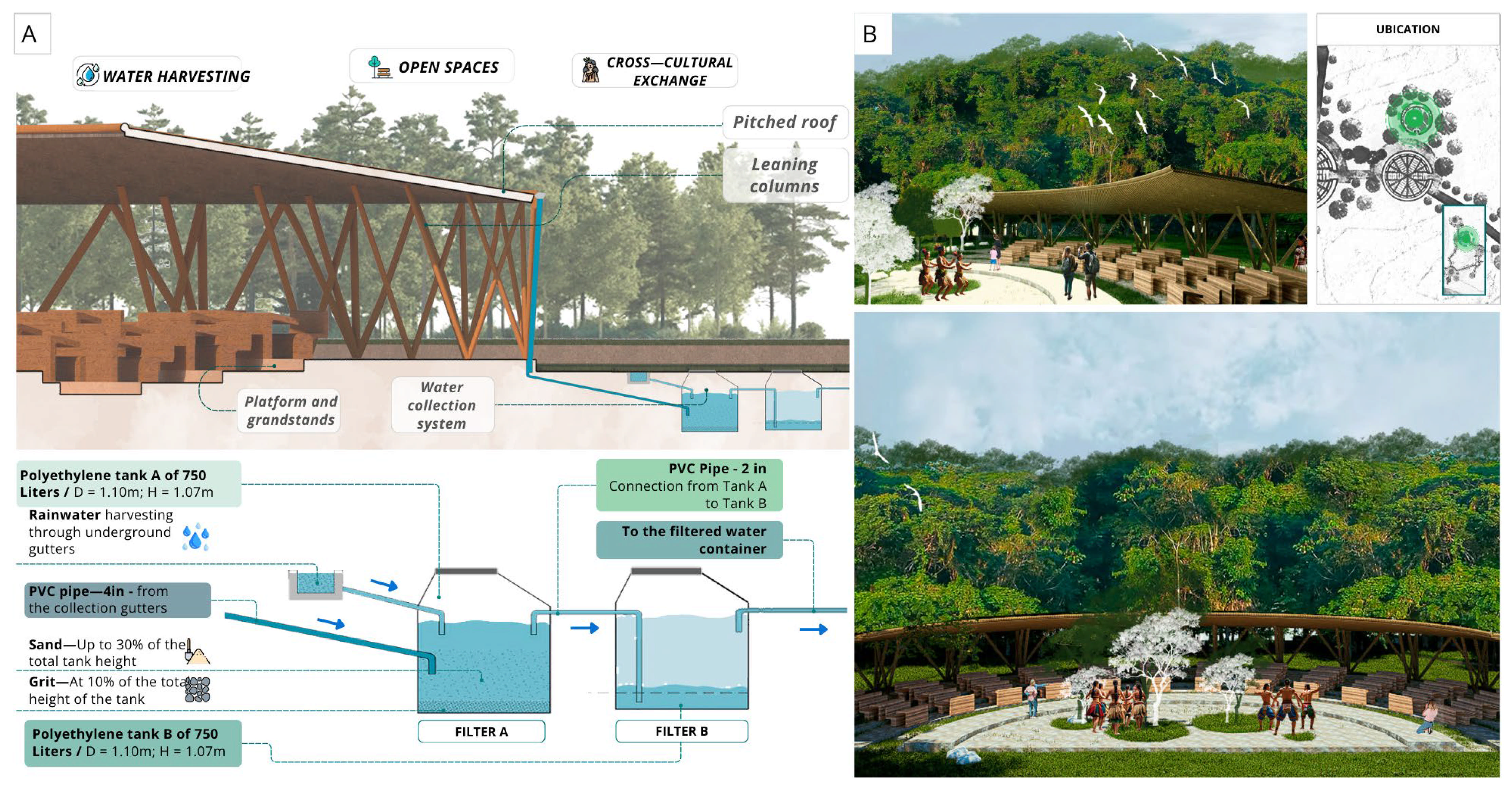
Conceived for the climatic and ecological conditions of Madre de Dios, incorporates sustainable technologies aimed at the harvesting and treatment of rainwater, optimizing the use of the region’s abundant hydrological resources. Water collection is carried out through a sediment downspout system that channels the runoff to ground level, thereby preventing losses through surface drainage and reducing sediment accumulation in storage facilities.
The process begins with the interception of rainfall via gutters integrated into the roofs, which direct the flow toward a 750-L polyethylene Tank A, equipped with a pre-filtration system consisting of sand layers (30% of the tank’s height) and gravel (10% of the height), enabling the retention of solid particles. Subsequently, the water is conveyed through Polyvinyl chloride piping to a second 750-L polyethylene Tank B, where the filtration stage is completed prior to its transfer to the treated water container.
This system integrates stages of screening, sedimentation, separation, and solid filtration [47], ensuring optimal water quality for use while minimizing contamination through waste management. The proposal is consistent with the target of Sustainable Development Goal (SDG) 6: Clean Water and Sanitation, contributing to responsible and safe access to this resource.
From an implementation perspective, the structure adapts to the site’s topography and integrates visually with the Amazonian landscape, as illustrated in Figure 20B. Its open design enhances cross-ventilation while incorporating locally sourced materials, thereby reducing environmental impact and reinforcing the region’s cultural identity. Furthermore, the large-span roof functions simultaneously as a collection surface and as a protective element against solar radiation and rainfall, optimizing the efficiency of the harvesting and filtration system.
To estimate the volume of water that can be collected through a rainwater harvesting system, a formula is applied that considers several key factors. As shown in Equation (1), the mathematical expression is as follows:
Rainwater Harvested (m3) = Catchment Surface Area (m2) × Annual Rainfall (m) × Rainwater Collection Efficiency (%)
Theorem 1. 
The volume of water that can be collected through a rainwater harvesting system.
Catchment Area: This refers to the roof or any other surface used for rainwater collection. It is measured in square meters (m2). The larger this area, the greater the volume of water that can be harvested [48].
Annual Precipitation: This factor represents the amount of rainfall recorded in the area where the collection system is installed. It is expressed in meters (m). For instance, if the annual precipitation is 1000 mm, it is converted to meters by dividing by 1000, resulting in 1 m.
System Efficiency: Not all rainwater reaching the catchment surface can be collected due to losses from evaporation, leakage, and other factors. The system efficiency is expressed as a percentage. For example, if the system operates at 85% efficiency, 0.85 is used in the calculations [49].
To estimate the volume of water that can be collected using a 6-m diameter collection cone, additional information is required, such as the rainfall frequency in the Manu Forest region of Madre de Dios, Peru. This data will be used to calculate the potentially harvestable water volume.
The catchment area essentially corresponds to the base of the cone, which is circular in shape. In this case, it is only necessary to mention that the area was derived from a circular surface with a radius of 3 m.
Where “r” represents the radius of the circle. Given a diameter of 6 m, the surface area was determined directly using the corresponding 3-m radius, resulting in an approximate area of 28.27 square meters.
The Manu Forest in Madre de Dios is a region with high rainfall. According to the National Meteorology and Hydrology Service of Peru (SENAMHI), the average annual precipitation in the area can range between 2000 mm and 3000 mm [50].
To estimate water collection, the catchment area is multiplied by the annual precipitation, as shown in Equation (2). Assuming an average annual rainfall of 2500 mm (2.5 m), the following is established:
Annual Collection = Area × Precipitation
Annual Collection = 28.27 m2 × 2.5 m = 70.675 m3
Considering that 1 cubic meter of water equals 1000 L, the conversion to liters is performed as indicated in Equation (4).
70.675 m3 × 1000 = 70,675 L
The water harvested from a collection cone approximately 6 m in diameter in the Manu Forest region, with an average annual precipitation of 2500 mm, would be approximately 70,675 L per year.
In the specific case of the amphitheater’s experimental harvesting device, with a circular collection area of 28.27 m2 and an average annual rainfall of 2500 mm, the theoretical volume of water that can be recovered is approximately 70,675 L per year. This corresponds to an average of about 194 L per day, which is equivalent to more than thirty 6 L low-flush toilets used per day. Therefore, the system can cover a significant share of the non-potable water demand for sanitary fixtures, cleaning, and landscape irrigation around the amphitheater, reducing pressure on local surface water bodies and existing park infrastructure.

3.5. Educational Awareness Zone

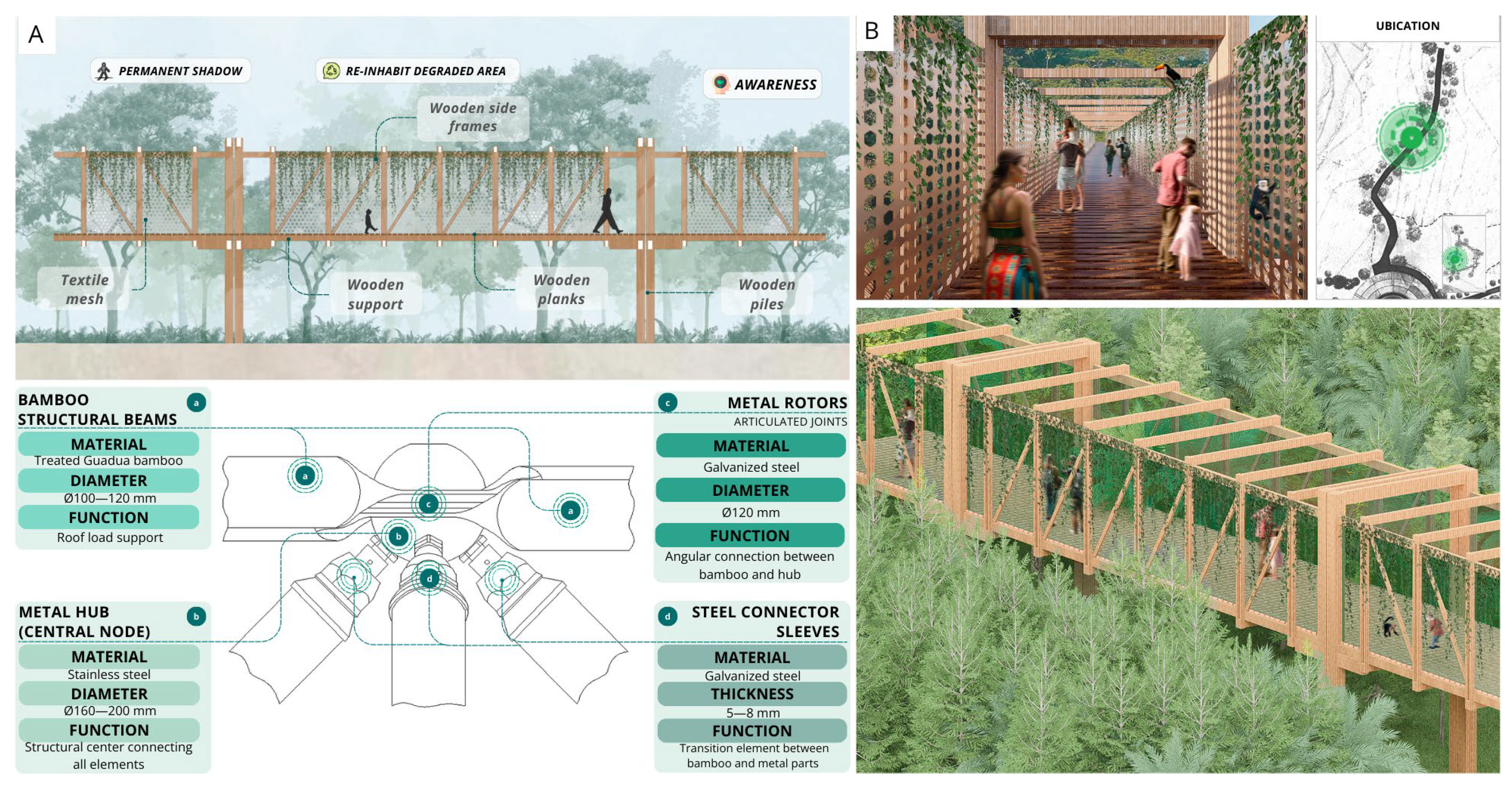
3.5.1. Interconnecting Bridge Between Modules

Figure 21 presents the proposed interconnecting bridge conceived as part of the visitor circulation system. The design incorporates low-impact environmental strategies that prioritize the conservation of the natural surroundings. The pathway benefits from permanent shade provided by the dense canopy of local trees, creating a thermally comfortable environment for walking while maintaining the ecological integrity of the forest. The proposal seeks to minimize disturbance by preventing deforestation and logging activities while simultaneously rehabilitating degraded areas through restoration initiatives that include the planting of native species and the creation of habitats for local fauna. Furthermore, the pathway is envisioned as an educational space that promotes environmental awareness among visitors, encouraging the protection of flora and fauna in alignment with the 2030 Agenda goals related to sustainable communities and the conservation of terrestrial ecosystems.
Figure 21A illustrates the structural detail and construction components of the bamboo bridge. The structural system emphasizes the use of low-impact natural materials, particularly bamboo and wood, selected for their renewable character, sustainability, and favorable mechanical performance. The modular configuration allows for efficient assembly while reducing intervention in the terrain, thereby preserving the natural topography and minimizing soil compaction.
Figure 21B presents perspective views of the bridge integrated into the existing landscape. The structure harmonizes with the surrounding vegetation, reinforcing ecological continuity and visual integration within the forest environment. In addition, the design incorporates small community-use areas along the pathway to promote local participation and knowledge exchange, strengthening the social dimension of sustainability within the project.
Regarding the CO2 absorption capacity of the forests of Manu National Park, Peru, this ecosystem—recognized as one of the most diverse and biologically rich on Earth—plays a crucial role in mitigating climate change by sequestering carbon dioxide [51]. Encompassing an area of approximately 1,716,295 hectares (equivalent to 17,162.95 km2), this protected territory makes a decisive contribution to global climate regulation [52].
The proposal includes the reforestation of 6.25 hectares (62,500 m2) within the intervention area, which had previously been affected by indiscriminate logging. According to studies conducted by the University of Leeds and tropical ecology specialists, humid forests can absorb between 2.5 and 6 metric tons of CO2 per hectare per year. For this study, an average value of 4 metric tons of CO2 per hectare annually is considered as the calculation baseline [53].
To estimate the total annual CO2 sequestration resulting from the reforestation effort, the relationship between the reforested area and the average absorption rate per hectare is applied, as shown in Equation (5).
Total CO2 Sequestration = Intervened Area × Average sequestration per hectare
The numerical calculation is then carried out, as presented in Equation (6).
Total CO2 Sequestration = 6.25 hectares × 4 metric tons of CO2/hectare/year
This results in the final annual sequestration value, as indicated in Equation (7).
Total CO2 Sequestration = 25 metric tons of CO2/year
Theorem 2. 
Calculation of the Total CO2 Sequestration in Manu National Park
The forests within the intervened area have the capacity to sequester approximately 25 metric tons of CO2 per year, as obtained from multiplying the reforested area (6.25 ha) by the conservative average sequestration rate of 4 t CO2 ha−1 year−1. To put this value into context, the annual electricity demand of the modular units is around 15,346 kWh; if this demand were supplied by the Peruvian national grid, it would emit roughly 3.5 t CO2 per year according to typical grid emission factors [54,55]. This means that the restored forest corridor can remove about seven times more CO2 than the energy-related emissions that the research center would generate in operation. This result highlights the importance of preserving and expanding these forests, not only as reservoirs of biodiversity but also as effective carbon sinks that significantly contribute to mitigating the impacts of climate change in the Manu region.

3.5.2. Green Wall System with Bamboo Structures

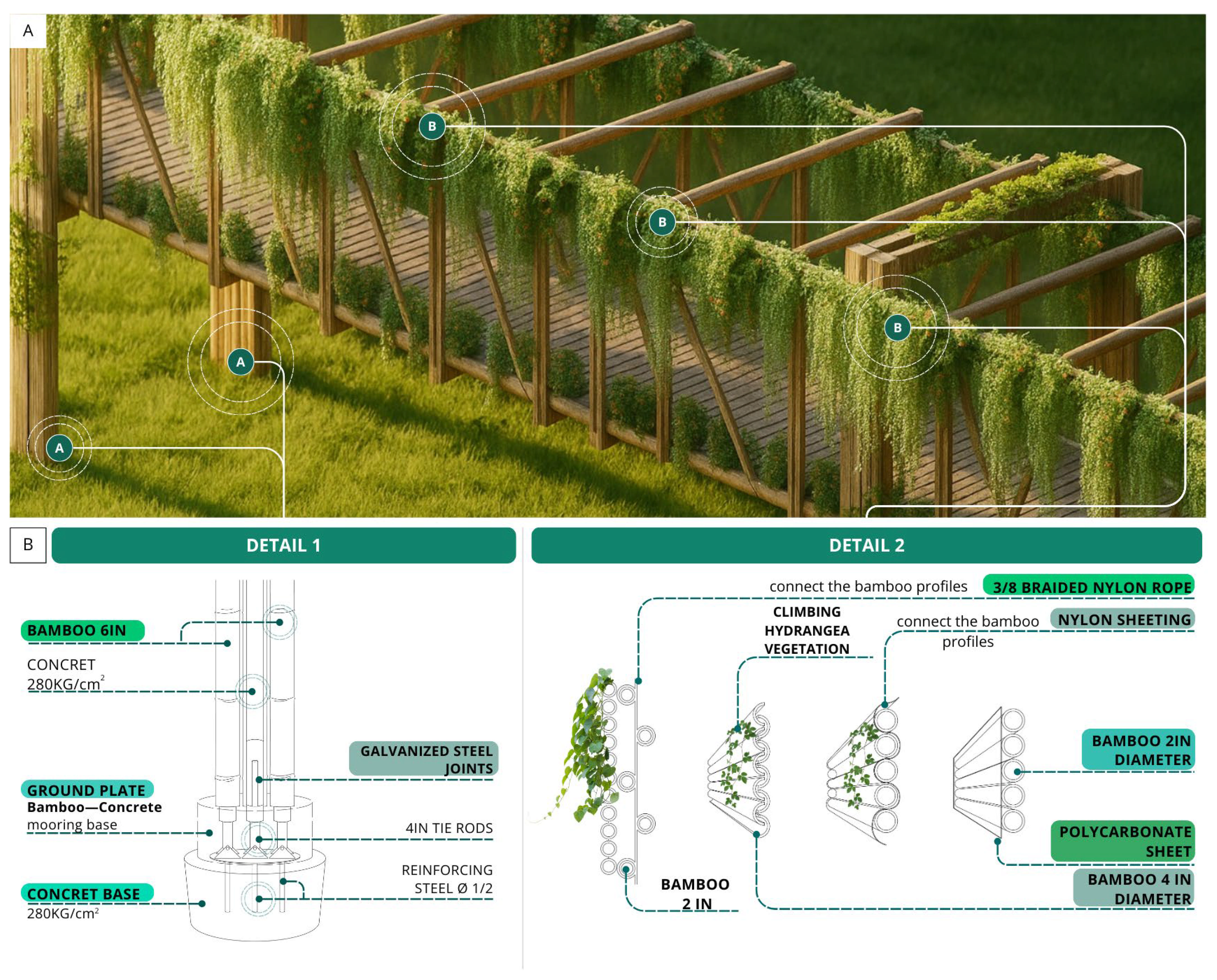
Figure 22A shows the bridge, which integrates a green wall, built with bamboo structures and polycarbonate sheets that provide protection and scalability to the design. This system allows for the incorporation of climbing vegetation, specifically Hydrangea, whose growth progressively envelops the bamboo surface, creating a living system that combines structural performance, sustainability, and landscape value.
Regarding the structural system, Figure 22B details the construction scheme based on a combination of natural and technological elements. The design uses bamboo cane as the main component, anchored to a 280 kg/cm2 concrete base, which includes support plates and reinforcing steel to ensure stability and strength. The 6-inch diameter bamboo poles are assembled using galvanized steel joints and 4-inch tie rods, forming the vertical support. In turn, the 2- and 4-inch bamboo elements are arranged horizontally, joined together with 3/8-inch braided nylon ropes and nylon sheets, thus reinforcing the structure.

3.6. Research and Conservation Zone

3.6.1. Multi-Functional Module

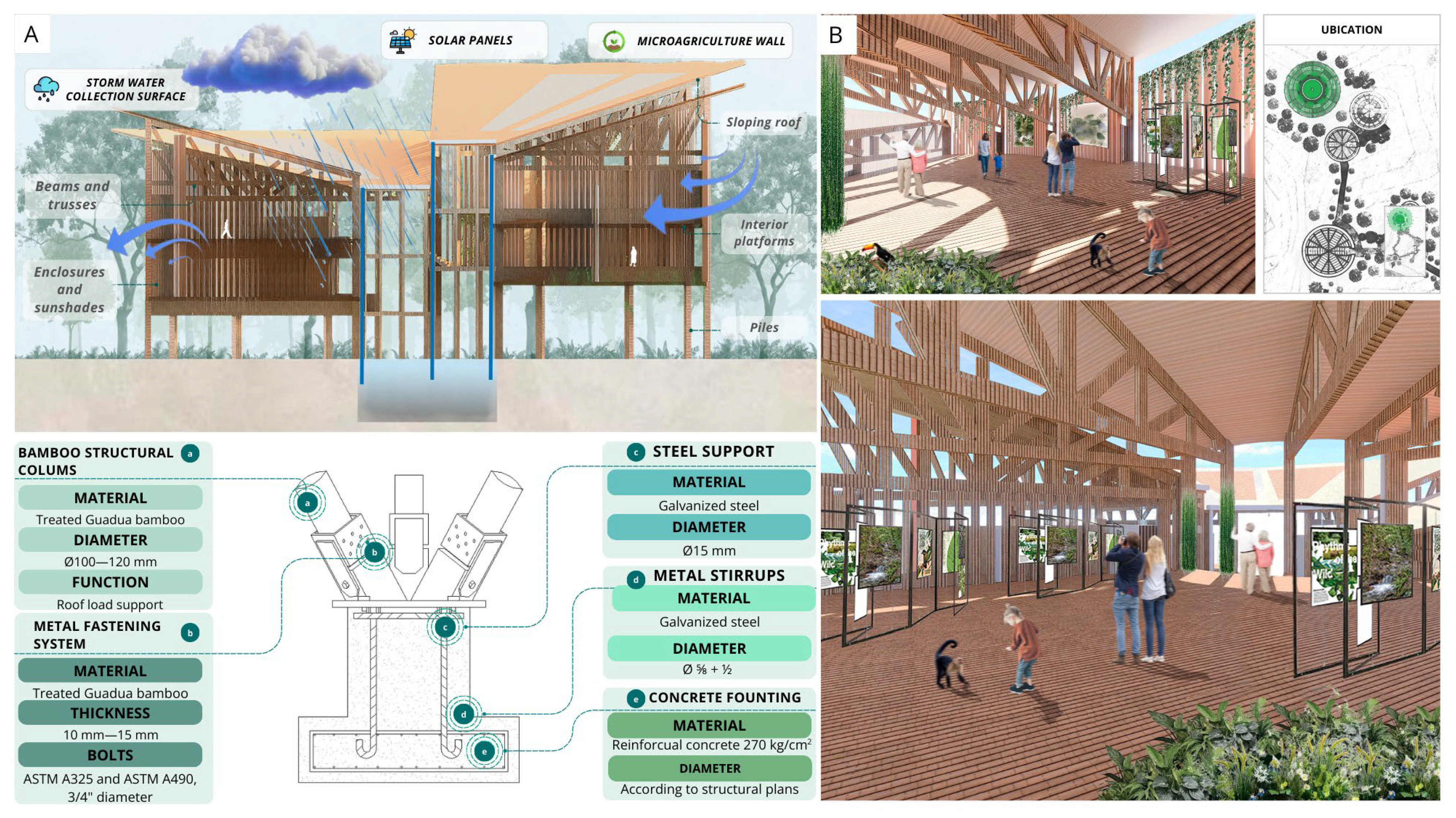
Designed to blend in with the Manu Forest environment, the research center incorporates sustainable technologies and a modular design that allows for climate and ecological adaptation to the site. The structure is built on stilts and uses sloped roofs and solar panels to optimize energy use, while bamboo walls and enclosures facilitate cross ventilation and visual integration with the surrounding landscape.
In Figure 23A, each module has a specific function within the center: the interpretation module, where exhibitions are held for both students and tourists; the research module, where conservation-oriented studies will be conducted, including laboratories and analysis spaces; the education module, dedicated to workshops and cultural demonstrations that strengthen the link between scientific knowledge and local traditions. In total, the center is composed of 13 modules interconnected to ensure a comprehensive experience of learning, research, and connection with the environment.
The modular design includes interior platforms and walkways that allow for the smooth flow of visitors, encouraging interaction with the educational and environmental elements arranged throughout the space.
In addition, the structural system combines treated bamboo columns and beams with reinforced metal assembly and concrete foundations, ensuring the stability and durability of the facility. Walkways and bridges connecting the modules facilitate access and continuity of the educational tour, while solar panels and rainwater collection surfaces optimize the center’s energy efficiency and water management.
Finally, in Figure 23B, the research center offers an inclusive, safe, and environmentally sustainable space, where education on sustainable technologies is complemented by construction strategies that minimize ecological impact and promote responsible interaction with the national park.
The energy strategy for modular units incorporates photovoltaic technology as a sustainable solution to meet electricity demand. Through this approach, a continuous and renewable energy supply is ensured while significantly reducing the project’s environmental footprint. In total, the project features 13 modules, each equipped with 8 solar panels, for a total of 104 panels installed on the bamboo roofs. These panels are strategically arranged around each roof to optimize sunlight capture throughout the day, maximize energy generation, and facilitate easy access for maintenance [56].
Table 1 presents the technical characteristics of a selected module: a 555 W monocrystalline panel manufactured by Canadian Solar, distributed in Peru by Panel Solar Perú, with an efficiency of 21.6%.
Table 2 outlines the estimation of maximum electrical demand, considering different categories of equipment: LED fixtures, emergency lighting, general-purpose outlets, computer stations, and network devices. For each category, the assessment included the number of units, their rated power, and the corresponding diversity factor. Based on this calculation, the total demand reached 3112 W (3.112 kW).
Table 3 provides a summary of projected energy consumption for the camping units. The estimation assumes an average operation of 15 days per month with continuous 24-h usage. Under these assumptions, the monthly consumption amounts to 1278.864 kWh, leading to an annual requirement of 15,346.368 kWh.
Solar generation capacity has been estimated based on an average solar irradiation of 6.0 kWh/m2 per day and a panel efficiency of 21.6%. As indicated in Table 4, a total of 62 photovoltaic modules are required to satisfy this demand. The proposed arrangement distributes nine panels to each of the five smaller camping units and eight panels to each of the two larger ones. This configuration not only meets the expected demand but also generates a modest surplus, enhancing the system’s reliability. Under these conditions, monthly production is approximately 1288 kWh, resulting in an annual output of 15,456 kWh.
Finally, Table 5 compares the estimated energy consumption with the projected photovoltaic generation. The results demonstrate that the installed solar panels fully cover both monthly and annual electricity needs. Moreover, the presence of a slight surplus confirms the efficiency of the proposed system and ensures a stable energy supply throughout the year.
Table 2, Table 3, Table 4 and Table 5 summarize the energy performance of the modular units and the photovoltaic system. The total connected electrical load reaches 3.112 kW and, considering the operating schedule of the camping and research activities (15 days of operation per month and 24 h of use for the installed loads), the resulting electricity demand is about 1121 kWh per month, equivalent to approximately 13.5–15.3 MWh per year. The photovoltaic system, composed of 62 monocrystalline modules, is expected to generate around 1288 kWh per month, or about 15.5 MWh per year, under the average solar resource in Madre de Dios. Thus, the installed solar capacity can supply roughly 100–116% of the annual electricity demand of the modular units, with a slight yearly surplus that provides a safety margin against inter-annual climate variability and storage losses. In terms of long-term performance, the sizing of the photovoltaic system assumes a gradual decrease in module efficiency over its lifetime, together with periodic cleaning and basic preventive maintenance of the panels and electrical components. The design also considers a small storage system that provides short-term autonomy for the most critical loads, so that the slight energy surplus reported in Table 4 and Table 5 can compensate for typical efficiency losses of the modules and storage devices over time. A more detailed techno-economic assessment of degradation curves, maintenance schedules, and storage sizing is identified as an area for future research. If this same annual demand were covered by the Peruvian national grid, using an average emission factor of about 0.23 t CO2/MWh, the center would emit on the order of 3–3.5 t CO2 per year associated with electricity use. By meeting practically all of this demand with on-site photovoltaic generation, the proposal avoids these operational emissions and reinforces the near-net-zero energy character of the modular units. These results are consistent with other Peruvian educational and ecotourism facilities that integrate sustainable design and solar energy, such as the educational center in Carabayllo [35], the green infrastructure proposal for the Ollantaytambo archeological site [56], and the Chili River green corridor in Arequipa [55].
The objective of this approach is to promote sustainable building and energy practices, educate communities and tourists about the relevance of preservation, encourage scientific research and community participation in sustainable development projects, and attract visitors interested in responsible ecotourism, generating income that can be reinvested in the conservation of the park.

3.6.2. Material and Construction Systems of the Multi-Functional Module

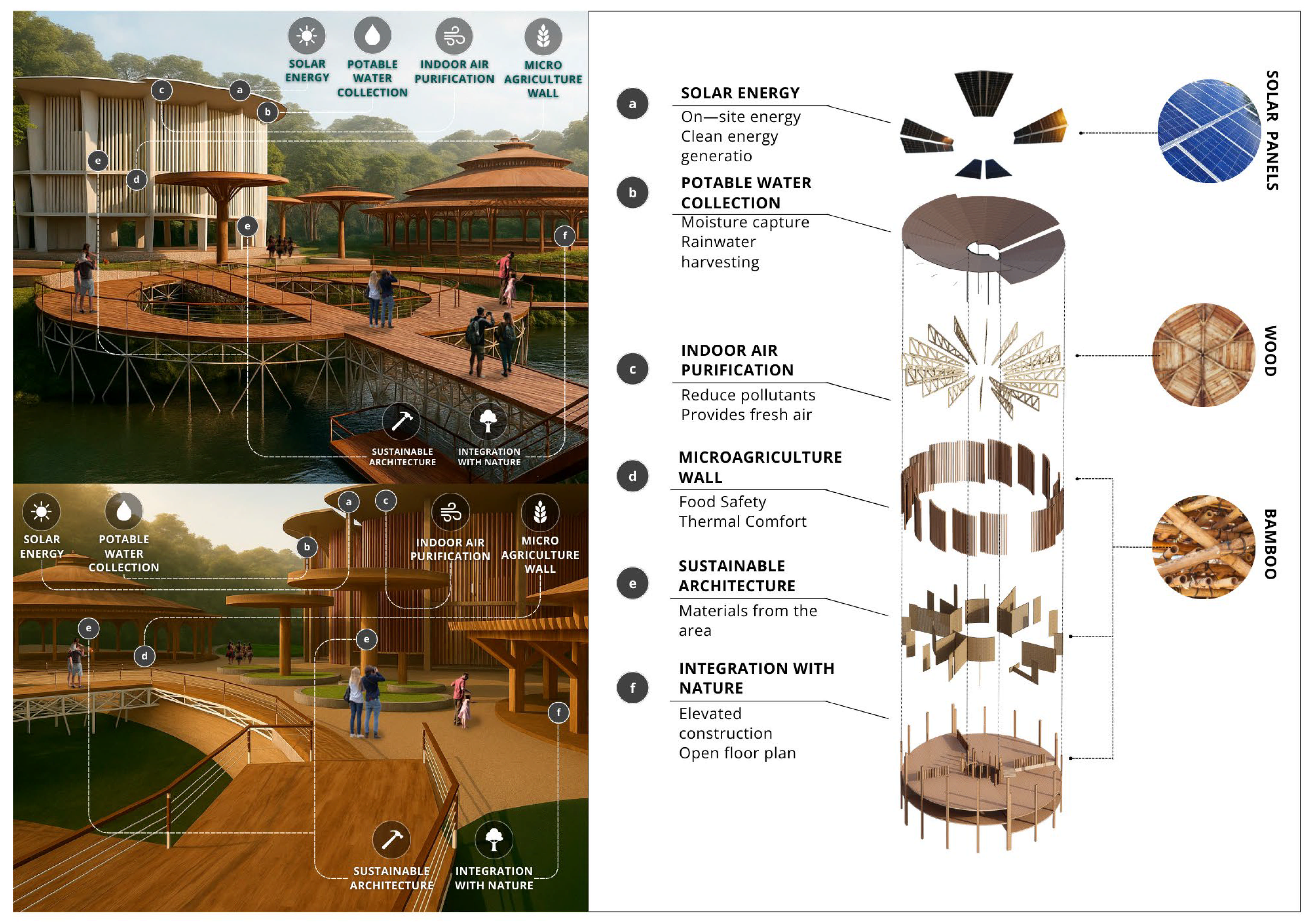
In Figure 24, the infrastructure is made of bamboo as an eco-friendly material that grows quickly and has a low carbon footprint, reducing the need for other, more environmentally damaging building materials [58]. Similar low-impact timber structural systems have been applied in other Peruvian contexts, such as the Surfer Bungalow in Canoas, Tumbes, where wood construction contributes to environmental performance and climate adaptation [58]. Reducing the need for other, more environmentally damaging building materials. The use of bamboo palms purifies the indoor air and regulates the high temperatures present on site. Its use of eaves regulates the entry of the sun, providing shade and protection from the rain. This is the landscape integration of the native vegetation of the site. The use of bamboo is recommended in hot and humid areas; it absorbs the sun’s rays and prevents heat diffusion; in addition, it facilitates proper ventilation due to its light structure characteristics, which guarantee that the internal temperature remains stable and pleasant.
The environmental factors to be considered include sunlight, water, and wind. The maximum height is set at one floor to avoid invading the species’ habitat. The creation of an amphitheater in Manu National Park, dedicated to the exhibition of animal species, can have a significant positive impact on the preservation of the park’s flora and fauna. By promoting environmental education, sustainable tourism, and scientific research, the amphitheater can become a powerful tool for protecting and managing this valuable ecosystem. In addition, by involving the local community and generating additional income, it promotes sustainable economic development that benefits both the people and their natural environment.

4. Discussion

From an academic perspective, this discussion revisits the main objectives stated in the Introduction: (i) to analyze the environmental and socio-territorial context of Manu National Park, (ii) to evaluate the bioclimatic and low-carbon performance of the proposed Interpretation and Research Center, and (iii) to compare this proposal with reference projects in similar ecosystems. Section 3’s results show that the combination of photovoltaic generation, rainwater harvesting, and reforestation allows the center to cover 100–116% of its annual electricity demand, to harvest around 70,675 L of rainwater per year, and to sequester approximately 25 t CO2 annually, while reforesting 17.92% of the site with 265 new trees. The following paragraphs interpret these quantitative findings in relation to Latin-American and international experiences in eco-architectural design for protected areas.
The Manu Research Center for Ecosystem Conservation integrates architectural design, bioclimatic strategies, and ecosystem restoration to enhance conservation and education in tropical rainforest contexts. The project was informed by two international references: the Shelter Rainforest in Sabah, Malaysia, developed by Marra + Yeh Architects, and the Daintree Rainforest Observatory in Australia, developed by James Cook University. These cases provided guidance on modular, low-impact design, passive ventilation, canopy access, and research-oriented facilities, emphasizing minimal disturbance to native flora and fauna and the integration of educational and research infrastructure.
Among these references, two experiences were particularly influential. From the Shelter Rainforest, the project adopted modular bamboo construction, natural ventilation, and elevated platforms to minimize soil compaction and maintain wildlife circulation, ensuring minimal disturbance to the native forest [12]. From the Daintree Rainforest Observatory, strategies for immersive research, canopy access, and integrated educational spaces were adapted, fostering engagement with biodiversity and monitoring of ecosystem services [13]. The combination of both approaches enabled the development of an integrated model that articulates research, education, ecological restoration, and community involvement, aligned with the environmental conditions of Manu.
The project incorporates photovoltaic panels, rainwater harvesting systems, and green roofs, with measurable environmental contributions including an annual carbon sequestration of approximately 25 metric tons of CO2, the collection of around 70,675 L of water per year, and the reforestation of 17.92% of the site with an estimated 265 trees. Sustainable materiality prioritizes locally sourced bamboo and renewable timber, which reduce transportation footprint, provide thermal comfort, and reinforce local cultural identity, in alignment with Sustainable Development Goals 6, 7, 9, and 13. Unlike temperate or semi-arid projects, the Manu center faces high rainfall, dense vegetation, and sensitive biodiversity, which require adaptive strategies such as modular platforms, careful canopy integration, and anti-erosion measures. These solutions constitute an innovative technical framework tailored to a tropical rainforest environment.
However, its implementation requires inter-institutional and community coordination to ensure long-term sustainability, involving the National Service of Protected Natural Areas (SERNANP), local indigenous communities, and research institutions. Economic and technical feasibility depends on establishing a collaborative management model with public, academic, and private support, complemented by monitoring protocols for water quality, biodiversity, and energy performance. This framework enables adaptive management in response to environmental variability, extreme rainfall, or ecosystem disturbances, ensuring the reliability of ecological restoration and research activities.
Overall, the Manu National Park Research Center consolidates an intervention model that integrates green infrastructure, renewable energy, biodiversity restoration, and education under principles of resilience, sustainability, and social inclusion. Its methodological and adaptable nature provides a transferable technical reference for ecological planning in tropical rainforest areas, where future empirical validation can strengthen the scientific and operational foundations of ecosystem-based conservation strategies. Together, these elements demonstrate how the quantitative performance of the proposal directly addresses the academic objectives and responds to the research question on the contribution of low-carbon, bioclimatic architecture to the conservation of Manu National Park.

5. Conclusions

The architectural design of the Sustainable Interpretation and Research Center in Manu National Park integrates principles of conservation, sustainability, and clean technologies by responsibly harnessing the natural resources of the protected area of Madre de Dios. One of the academic objectives of this research was to evaluate the bioclimatic performance and environmental efficiency of the proposed design under the specific climatic conditions of the Manu region, ensuring that each strategy could be measured and validated within an analytical framework. Through an in-depth environmental analysis and the implementation of bioclimatic strategies such as green roofs, rainwater harvesting systems, the use of solar energy, and the reduction of CO2 emissions, the study demonstrates the contribution of these systems to energy savings, water collection capacity, and the reduction in operational carbon footprint. The sustainability indicators obtained support these conclusions: The rainwater harvesting system shows an estimated annual collection potential of approximately 70.675 m3 (70,675 L per year), covering around a significant share of the building’s non-potable water demand. The photovoltaic generation system contributes up to 100–116% of the annual energy requirements, producing approximately 15,571.8 kWh per year through 62 photovoltaic modules. The implementation of passive cooling and green roof insulation reduces heat gain by approximately levels consistent with the cooling effects described in the psychrometric analysis and passive ventilation strategies, contributing to a projected avoidance of 3–3.5 tons of CO2 annually by replacing grid electricity consumption. The project proposes a comprehensive and replicable solution for ecological protection and harmonious coexistence with nature.
Furthermore, the center promotes environmental education and fosters scientific research that directly benefits local communities. Its proximity to the Manu Reserve enhances fieldwork and facilitates knowledge exchange between researchers, local inhabitants, and visitors, strengthening collective environmental awareness. In parallel, it promotes a model of sustainable and low-impact tourism that contributes to the economic development of the region while maintaining its ecological integrity.
Ultimately, this proposal stands as a reference for the sustainable development of ecologically sensitive territories. It demonstrates that integrating architecture, clean technologies, and community participation can lead to self-sufficient spaces that respect biodiversity, support local well-being, and align with global objectives for climate resilience and sustainable development. The semiquantitative results obtained in this study confirm the technical viability of the proposed strategies and reinforce the academic relevance of the research.
Despite these contributions, this study has several limitations. First, the results are based on a non-experimental, scenario-based architectural proposal and on simplified semi-quantitative models for energy demand, photovoltaic generation, rainwater harvesting, and CO2 sequestration; the real performance of the center may differ from these estimates once it is built and operated. Second, the analysis focuses on a single site and climatic dataset for the Manu region, which restricts the direct transferability of the numerical values to other protected areas. Third, economic costs, life-cycle impacts, and users’ perceptions of the proposed interventions were addressed only qualitatively. Future research should therefore include detailed dynamic simulations and post-occupancy monitoring of thermal comfort, energy and water performance; integrate full life-cycle assessment and cost–benefit analysis; and explore the adaptation of this eco-architectural model to other tropical national parks in Peru and Latin America through participatory design processes with park authorities and local communities.

Author Contributions

Conceptualization, J.V.C., T.Y.S.G., D.N.H.C., L.F.M.C. and J.R.T.L.; methodology, J.V.C. and D.E.; software, M.R.C.C.; validation, J.V.C.; formal analysis, C.M.C.G.; investigation, J.V.C., T.Y.S.G., D.N.H.C., L.F.M.C. and J.R.T.L.; resources, C.M.C.G. and M.R.C.C.; data curation, J.V.C.; writing—original draft preparation, J.V.C., T.Y.S.G., D.N.H.C., L.F.M.C. and J.R.T.L.; writing—review and editing, J.V.C., T.Y.S.G., D.N.H.C., L.F.M.C. and J.R.T.L.; visualization, J.V.C., T.Y.S.G., D.N.H.C., L.F.M.C. and J.R.T.L.; supervision, J.V.C. and D.E.; project administration, J.V.C. and D.E.; funding acquisition, C.M.C.G. and M.R.C.C. All authors have read and agreed to the published version of the manuscript.

Funding

This research received no external funding.

Data Availability Statement

The original contributions presented in this study are included in the article. Further inquiries can be directed to the corresponding author.

Acknowledgments

We sincerely thank our colleagues for their collaboration and support in the development of the architectural design proposal for the Low-Carbon and Bioclimatic Design for a Sustainable Interpretation and Research Center for the Conservation of the Ecosystems of Manu National Park, Madre de Dios, Peru.

Conflicts of Interest

The authors declare no conflicts of interest.

References

  1. University of California Museum of Paleontology (UCMP). Why Are Biomes Important? Available online: https://ucmp.berkeley.edu/exhibits/biomes/importance.php (accessed on 20 April 2024).
  2. Todo-Argentina.net. Mapamundi de Biomas de la Biosfera. Available online: https://www.todo-argentina.net/ecologia/biosfera/mapamundi.php?idpagina=1820 (accessed on 20 April 2024).
  3. Bear, R.; Rintoul, D.; Snyder, B.A.; Smith-Caldas, M.; Herren, C.D.; Horne, E. Principles of Biology. 2016. Available online: https://archive.org/details/cnx-org-col11569/page/n125/mode/2up (accessed on 25 April 2024).
  4. Balasubramanian, A. Desert Ecology; Centre for Advanced Studies in Earth Science, University of Mysore: Mysuru, India, 2017; Available online: https://www.researchgate.net/publication/314933544_DESERT_ECOLOGY (accessed on 25 April 2024).
  5. McLaren, J.R.; Turkington, R. Boreal Forest Ecosystems. In Encyclopedia of Biodiversity, 2nd ed.; Levin, S.A., Ed.; Elsevier: Oxford, UK, 2013; pp. 626–635. [Google Scholar]
  6. Millennium Ecosystem Assessment. Ecosystems and Human Well-Being: A Framework for Assessment; Island Press: Washington, DC, USA, 2003; Available online: https://www.millenniumassessment.org/documents/document.356.aspx.pdf (accessed on 25 April 2024).
  7. FAO. The State of the World’s Forests 2020: Forests, Biodiversity and People; Food and Agriculture Organization of the United Nations: Rome, Italy, 2020; Available online: https://www.fao.org/3/ca9825en/ca9825en.pdf (accessed on 25 April 2024).
  8. Solórzano, L.A. Tropical Rain Forests. In Encyclopedia of Biodiversity, 2nd ed.; Levin, S.A., Ed.; Elsevier: Amsterdam, The Netherlands, 2013; pp. 574–588. [Google Scholar]
  9. Silva Junior, C.H.L.; Anderson, L.O.; Silva, A.L.; Almeida, C.T.; Aragão, L.E.O.C. Amazon Forest Degradation and Deforestation: Impacts on Carbon Cycling, Biodiversity and Climate. Climate 2023, 11, 165. [Google Scholar] [CrossRef]
  10. Bastin, J.-F.; Finegold, Y.; Garcia, C.; Mollicone, D.; Rezende, M.; Routh, D.; Zohner, C.M.; Crowther, T.W. The global tree restoration potential. New Phytol. 2019, 223, 1046–1054. [Google Scholar] [CrossRef] [PubMed]
  11. IPCC. Climate Change 2021: The Physical Science Basis. Contribution of Working Group I to the Sixth Assessment Report of the Intergovernmental Panel on Climate Change, Chapter 9: Ocean, Cryosphere and Sea Level Change; Cambridge University Press: Cambridge, UK; New York, NY, USA, 2021; Available online: https://www.ipcc.ch/report/ar6/wg1/chapter/chapter-9/ (accessed on 25 April 2024).
  12. Leal Filho, W.; Dinis, M.A.P.; Canova, M.A.; Cataldi, M.; da Costa, G.A.S.; Enrich-Prast, A.; Symeonakis, E.; Brearley, F.Q. Managing ecosystem services in the Brazilian Amazon: The influence of deforestation and forest degradation in the world’s largest rain forest. Geosci. Lett. 2025, 12, 24. [Google Scholar] [CrossRef]
  13. ArchDaily. Shelter @ Rainforest/Marra + Yeh Architects. 25 July 2012. Available online: https://www.archdaily.com/257002/shelter-rainforest-marra-yeh-architects (accessed on 20 May 2024).
  14. James Cook University. Daintree Rainforest Observatory–Tropical Sustainable Design Case Study. Available online: https://www.jcu.edu.au/TUDLab/research-projects/tropical-sustainable-design-case-studies/all/case-study-james-cook-university-daintree-rainforest-observatory (accessed on 25 April 2024).
  15. Ministerio del Ambiente (MINAM). Diversidad Biológica en el Perú: Informe Nacional 2014; Sistema Nacional de Información Ambiental (SINIA), Ministerio del Ambiente: Lima, Peru, 2014; Available online: https://sinia.minam.gob.pe/sites/default/files/sinia/archivos/public/docs/diversidadbiologica.pdf (accessed on 25 April 2024).
  16. Pulgar Vidal, J. Geografía del Perú: Las Ocho Regiones Naturales. La Regionalización Transversal. La Sabiduría Ecológica Tradicional; PEISA: Lima, Peru, 1996; Available online: https://catalogobiblioteca.ingemmet.gob.pe/bib/14476 (accessed on 25 April 2024).
  17. Ministerio de Desarrollo Agrario y Riego (MIDAGRI). Diversidad de Ecosistemas en el Perú. Available online: https://www.midagri.gob.pe/portal/datero/47-sector-agrario/recurso-biodiversidad/346-diversidad-de-ecosistemas (accessed on 25 April 2024).
  18. Díaz, R.; Miranda, J.J. Áreas Naturales Protegidas en el Perú: Efectos sobre la Deforestación y su Relación con el Bienestar de la Población Amazónica. Informe Final; Instituto de Estudios Peruanos: Lima, Peru, 2012; Available online: https://centroderecursos.cultura.pe/sites/default/files/rb/pdf/areas%20Naturales%20Protegidas%20en%20el%20Peru.pdf (accessed on 25 April 2024).
  19. Servicio Nacional de Áreas Naturales Protegidas por el Estado (SERNANP). Parques Nacionales. Available online: https://www.gob.pe/institucion/sernanp/colecciones/3257-parques-nacionales (accessed on 25 October 2025).
  20. Google Maps. Satellite View of the N.P. Cerros de Amotape, Peru. 2025. Available online: https://maps.app.goo.gl/iv7sP1dD5Tr7nKi87 (accessed on 25 October 2025).
  21. Google Maps. Satellite View of the N.P. Cordillera Azul, Peru. 2025. Available online: https://maps.app.goo.gl/EzTvdx5DURW4kWRH7 (accessed on 25 October 2025).
  22. Google Maps. Satellite View of the N.P. Huascaran, Peru. 2025. Available online: https://maps.app.goo.gl/d1ny5yJF6ix5b3wS7 (accessed on 25 October 2025).
  23. Google Maps. Satellite View of the N.P. of Manu, Peru. 2025. Available online: https://maps.app.goo.gl/VyBoSPoLK9KEJDG97 (accessed on 25 October 2025).
  24. Servicio Nacional de Áreas Naturales Protegidas por el Estado (SERNANP). Parque Nacional del Manu. Available online: https://www.gob.pe/institucion/sernanp/informes-publicaciones/1948163-parque-nacional-del-manu (accessed on 25 April 2024).
  25. Servicio Nacional de Áreas Naturales Protegidas por el Estado (SERNANP). Ecosistemas del Parque Nacional del Manu (PN03); SERNANP: Lima, Peru, 2021; Available online: https://geoportal.sernanp.gob.pe/wp-content/uploads/2021/08/Ecosistemas_PN03.pdf (accessed on 25 April 2024).
  26. Ministerio del Ambiente (MINAM). Áreas Naturales Protegidas en el Perú; Ministerio del Ambiente: Lima, Peru, 2016; Available online: https://www.minam.gob.pe/wp-content/uploads/2016/06/ANP240516.pdf (accessed on 25 April 2024).
  27. Alva-Avila, R.O.; Falcon-Briones, I.D.; Hinsbi-Aguirre, N.A.L.; Ramírez-Vega, C.A.; Saravia-Inocencio, J.F.; Valverde-Ashcalla, S.L.; Malca-Casavilca, N.R.C. Deforestation in Madre de Dios: A Hell for Biodiversity. Rev. Inst. Investig. Fac. Minas Metal. Cienc. Geogr. 2023, 26, e24189. Available online: https://revistasinvestigacion.unmsm.edu.pe/index.php/iigeo/article/view/24189 (accessed on 20 April 2024). [CrossRef]
  28. Ministerio del Ambiente (MINAM). GeoBosques: Monitoreo de la Pérdida de Bosques en el Perú. Available online: https://geobosques.minam.gob.pe/geobosque/view/perdida.php (accessed on 25 April 2024).
  29. MAAP (Monitoring of the Andean Amazon Project). MAAP #171: Deforestation in Mining Corridor of Peruvian Amazon (2021–2022); Amazon Conservation Association & Conservación Amazónica–ACCA: Washington, DC, USA, 2022; Available online: https://www.maapprogram.org/mining-corridor-peru/ (accessed on 25 October 2025).
  30. Saka, U.M.; Pacheco-Hague, K.; Duzgun, S.; Smith, N. An Analysis of the Impact of CO2 Emissions from Deforestation and Mining in Madre de Dios, Peru. Extract. Ind. Soc. 2024, 20, 101526. [Google Scholar] [CrossRef]
  31. Alarcón Aguirre, G.; Canahuire Robles, R.R.; Guevara Duarez, F.M.; Rodríguez Achata, L.; Gallegos Chacón, L.E.; Garate-Quispe, J. Dinámica de la pérdida de bosques en el sureste de la Amazonia peruana: Un estudio de caso en Madre de Dios. Ecosistemas 2021, 30, 2175. [Google Scholar] [CrossRef]
  32. Moody, K.H.; Hasan, K.M.; Aljic, S.; Blakeman, V.M.; Hicks, L.P.; Loving, D.C.; Moore, M.E.; Hammett, B.S.; Silva-González, M.; Seney, C.S.; et al. Mercury Emissions from Peruvian Gold Shops: Potential Ramifications for Minamata Compliance in Artisanal and Small-Scale Gold Mining Communities. Environ. Res. 2020, 182, 109042. [Google Scholar] [CrossRef] [PubMed]
  33. Liao, C.-W.; Lin, J.-H.; Chen, T.-W. Research on a Framework for Sustainable Campus Eco-Architecture Selection: Taking a Taiwan High School as an Example. Sustainability 2022, 14, 6265. [Google Scholar] [CrossRef]
  34. Elaouzy, Y.; El Fadar, A. Sustainability of Building-Integrated Bioclimatic Design Strategies Depending on Energy Affordability. Renew. Sustain. Energy Rev. 2023, 179, 113295. [Google Scholar] [CrossRef]
  35. Cuya, N.; Estrada, P.; Esenarro, D.; Vega, V.; Vilchez Cairo, J.; Mancilla-Bravo, D.C. Comfort for Users of the Educational Center Applying Sustainable Design Strategies, Carabayllo-Peru-2023. Buildings 2024, 14, 2143. [Google Scholar] [CrossRef]
  36. Gamage, A.; Upadhyay, A.; Hyde, R. Exploring Bioinspired Climatic Design Strategies for a Low-Carbon Future: A Case Study of a Hot–Humid Climate in Sri Lanka. Biomimetics 2025, 10, 671. [Google Scholar] [CrossRef] [PubMed]
  37. Cobeñas-Huaman, A.; Esenarro, D.; Vilchez Cairo, J.; Gómez Villanueva, A.; Prado Gómez, M.; Pérez Sosa, A.A.; Raymundo-Martínez, V.O.; Pinedo-García, F.L.; Peña Pacheco, J.D.; Porras Flores, E. Strategies for the Revalorization of the Natural Environment and Landscape Regeneration at La Herradura Beach, Chorrillos, Peru 2024. Urban Sci. 2026, 10, 2. [Google Scholar] [CrossRef]
  38. Widera, B. Bioclimatic Architecture. J. Civ. Eng. Archit. Res. 2015, 2, 567–578. Available online: https://www.researchgate.net/publication/276936877_Bioclimatic_architecture (accessed on 30 November 2025).
  39. Instituto Nacional de Estadística e Informática (INEI). Capítulo 2. Estadísticas Sobre Población y Territorio. Available online: https://proyectos.inei.gob.pe/web/biblioineipub/bancopub/Est/Lib0264/cap2.htm (accessed on 20 April 2024).
  40. Banco Central de Reserva del Perú (BCRP). Madre de Dios: Caracterización Económica y Social; Sucursal Cusco, BCRP: Cusco, Peru, 2024; Available online: https://www.bcrp.gob.pe/docs/Sucursales/Cusco/Madre-de-Dios-Caracterizacion.pdf (accessed on 20 April 2024).
  41. Google Earth. Parque Nacional del Manu, Madre de Dios, Perú (Satellite Image). 2023. Available online: https://earth.google.com/web/search/parque+nacional+manu/@-12.03962499,-71.7231004,635.08560643a,1730.78537798d,35y,0h,0t,0r/data=CjQiJgokCZFgGn1q9ijAEX2WPdq39yjAGfkpBcIbM1PAIVcaeBBNM1PAKgYIARIAGAFCAggBOgMKATBCAggASg0I____________ARAA?authuser=0 (accessed on 20 April 2024).
  42. Servicio Nacional de Áreas Naturales Protegidas por el Estado (SERNANP). Plan Maestro del Parque Nacional del Manu, 2019–2023; SERNANP: Lima, Peru, 2019; Available online: https://peru.fzs.org/wp-content/uploads/2021/08/plan_maestro_pnmanu2019.pdf (accessed on 20 April 2024).
  43. Meteoblue AG. Climate Puerto Maldonado, Peru (History + Climate). Available online: https://www.meteoblue.com/es/tiempo/historyclimate/climatemodelled/puerto-maldonado_per%C3%BA_3931470 (accessed on 25 October 2025).
  44. Servicio Nacional de Meteorología e Hidrología del Perú (SENAMHI). Pronóstico Detallado del Tiempo Para Madre de Dios. Available online: https://www.senamhi.gob.pe/main.php?dp=madre-de-dios&p=pronostico-detalle (accessed on 20 April 2024).
  45. WeatherSpark. Clima Promedio en Puerto Maldonado, Perú, Durante Todo el Año. Available online: https://es.weatherspark.com/y/27091/Clima-promedio-en-Puerto-Maldonado-Per%C3%BA-durante-todo-el-a%C3%B1o (accessed on 20 April 2024).
  46. Vilchez Cairo, J.; Baca Gaspar, A.J. Estrategias Neuroarquitectónicas Aplicadas a un Centro de Educación Básica Especial (CEBE) para la Integración Social de Niños con Trastorno del Espectro Autista (TEA) en Lurín–Perú. Bachelor’s Thesis, Universidad Ricardo Palma, Lima, Peru, 2024. Available online: https://repositorio.urp.edu.pe/entities/publication/f980909a-8858-42c7-baa0-ea500028fb41 (accessed on 20 April 2024).
  47. Esenarro, D.; Palomino Gutierrez, D.; Santa Cruz Peña, K.; Vilchez Cairo, J.; Tafur Anzualdo, V.I.; Veliz Garagatti, M.; Salas Delgado, G.W.; Alfaro Aucca, C. Water Efficiency in the Construction of Water Channels and the Ancestral Constructive Sustainability of Cumbemayo, Peru. Heritage 2025, 8, 345. [Google Scholar] [CrossRef]
  48. CWAS—Centre for Water and Sanitation. Rainwater Harvesting Guidelines. Urban Water Security Planning Toolkit; CEPT University: Ahmedabad, India, 2017; Available online: https://cwas.org.in/resources/file_manager/module_3-3_1_rwh_guidelines.pdf (accessed on 8 May 2024).
  49. Food and Agriculture Organization of the United Nations (FAO). Guía Para la Planificación de la Ordenación Forestal Sostenible; FAO: Rome, Italy, 2013; Available online: https://www.fao.org/4/i3247s/i3247s.pdf (accessed on 27 May 2024).
  50. Conservación Amazónica–ACCA. Estación Biológica Manu. Available online: https://acca.org.pe/conservamos-con-ciencia-y-tecnologia/estaciones-biologicas/manu/ (accessed on 31 August 2024).
  51. Malhi, Y.; Aragão, L.E.O.C.; Galbraith, D.; Huntingford, C.; Fisher, R.; Zelazowski, P.; Sitch, S.; McSweeney, C.; Meir, P. Exploring the likelihood and mechanism of a climate-change-induced dieback of the Amazon rainforest. Proc. Natl. Acad. Sci. USA 2009, 106, 20610–20615. [Google Scholar] [CrossRef] [PubMed]
  52. Servicio Nacional de Áreas Naturales Protegidas por el Estado (SERNANP). Servicio Nacional de Áreas Naturales Protegidas por el Estado (SERNANP). Available online: https://www.gob.pe/sernanp (accessed on 31 August 2024).
  53. Lewis, S.L.; Lopez-Gonzalez, G.; Sonké, B.; Affum-Baffoe, K.; Baker, T.R.; Ojo, L.O.; Phillips, O.L.; Reitsma, J.M.; White, L.; Comiskey, J.A.; et al. Increasing carbon storage in intact African tropical forests. Nature 2009, 457, 1003–1006. [Google Scholar] [CrossRef] [PubMed]
  54. Tafur Anzualdo, V.I.; Aguirre Chavez, F.; Vega-Guevara, M.; Esenarro, D.; Vilchez Cairo, J. Causes and Effects of Climate Change 2001 to 2021, Peru. Sustainability 2024, 16, 2863. [Google Scholar] [CrossRef]
  55. Esenarro, D.; Montenegro, L.K.; Medina, C.; Vilchez Cairo, J.; Legua Terry, A.I.; Veliz Garagatti, M.; Salas Delgado, G.W.; Escate Lira, M.M. Green Corridor Along the Chili River as an Ecosystem-Based Strategy for Social Connectivity and Ecological Resilience in Arequipa, Arequipa, Peru, 2025. Urban Sci. 2025, 9, 488. [Google Scholar] [CrossRef]
  56. Vilchez Cairo, J.; Rodriguez Chumpitaz, A.N.; Esenarro, D.; Ruiz Huaman, C.; Alfaro Aucca, C.; Ruiz Reyes, R.; Veliz, M. Green Infrastructure and the Growth of Ecotourism at the Ollantaytambo Archeological Site, Urubamba Province, Peru, 2024. Urban Sci. 2025, 9, 317. [Google Scholar] [CrossRef]
  57. LM8 Solar. Módulo Solar Canadian Solar HiKu6 CS6W-555MS, 555 W Monocristalino. Available online: https://lm8solar.com/es/paneles-solares/25-hiku6.html (accessed on 25 April 2024).
  58. Vargas, D.E.; Vega, D.J.A.; Cairo, J.V.; Mavila, M.F.V.; Martinez, V.O.R.; Medina, A.G.S. Structural System in Wood and Its Impact on Environmental Design in the Surfer Bungalow in Canoas, Tumbes, Peru. In Proceedings of the 8th ASRES International Conference on Intelligent Technologies (ICIT 2023); Tripathi, V.K., Arya, K.V., Rodriguez, C., Eds.; Lecture Notes in Networks and Systems; Springer: Singapore, 2025; Volume 1031, Available online: https://link.springer.com/chapter/10.1007/978-981-97-3859-5_34 (accessed on 25 April 2025). [CrossRef]
Figure 1. World biome map. Figure created by the authors using Adobe Illustrator 2022. Canva and Adobe Photoshop 2022.
Cleantechnol 08 00037 g001
Figure 2. Most widespread ecosystems. Figure created by the authors using Canva and Adobe Photoshop 2022.
Cleantechnol 08 00037 g002
Figure 3. (A) Location of Peru in Relation to the Tropics; (B) Altitudinal Regions of Peru Based on the Ecological Gradient; and (C) Cross-Section of Peru’s Altitudinal Profile and Ecological Zones (Cross-Section A-A′). Figure created by the authors using Adobe Illustrator 2022, Canva, and Adobe Photoshop 2022.
Cleantechnol 08 00037 g003
Figure 4. Map of the Main National Parks in Peru; (A) N.P, Cerro de Amotape, image source: Google Maps © Google, 2025 [20]; (B) N.P, Cordillera Azul, image source: Google Maps © Google, 2025 [21]; (C) N.P, Huascaran, image source: Google Maps © Google, 2025 [22]; and (D) N.P, of Manu, image source: Google Maps © Google, 2025 [23]. Figure created by the authors using Adobe Illustrator 2022, Canva, and Adobe Photoshop 2022.
Cleantechnol 08 00037 g004
Figure 5. (A) Manu National Park Ecosystem Map and (B) Manu National Park Native Communities. Figure created by the authors using Adobe Illustrator 2022 and Canva.
Cleantechnol 08 00037 g005
Figure 6. Observation of the coverage and disappearance of Amazonian forests in the Madre de Dios region during 2020. Figure created by the authors using Adobe Illustrator 2022, Canva, and Adobe Photoshop 2022.
Cleantechnol 08 00037 g006
Figure 7. The loss of the Amazon rainforest in Madre de Dios from 2001 to 2022. Figure created by the authors using Adobe Photoshop 2022.
Cleantechnol 08 00037 g007
Figure 8. Destruction of the Amazon rainforest in Madre de Dios. (A) Mining corridor area; (B) satellite map of the Manu mining region in 1984; (C) map of the Manu mining region in 2000; and (D) satellite map of the Manu mining region in 2020. Figure created by the authors using Canva and Adobe Photoshop 2022.
Cleantechnol 08 00037 g008
Figure 9. Map of forests affected by mercury in Madre de Dios and gold processing. Figure created by the authors using Canva and Adobe Photoshop 2022.
Cleantechnol 08 00037 g009
Figure 10. Methodology used in the research study. Figure created by the authors using Adobe Illustrator 2022, Canva, and Adobe Photoshop 2022.
Cleantechnol 08 00037 g010
Figure 11. Steps for implementing the proposal with digital tools. (A) Google Earth Pro 2024; (B) Global Mapper 2024; (C) SketchUp Pro 2022; (D) Revit 2024; (E) Andrew Marsh 2024; (F) Illustrator 2022; (G) Photoshop 2022; and (H) Canva. Figure created by the authors using Canva.
Cleantechnol 08 00037 g011
Figure 12. (A) Map of Peru; (B) Map of Madre de Dios; and (C) Location of Manu Park. Figure created by the authors using Adobe Illustrator 2022, Canva, and Adobe Photoshop 2022.
Cleantechnol 08 00037 g012
Figure 13. Fauna of Manu National Park. (a) Alouatta seniculus, Coto Monkey; (b) Panthera onca, Otorongo; (c) Amazona aestiva, Macaw; (d) Ramphastos toco, Toucan; (e) Tremarctos ornatus, Spectacled bear; and (f) Vultur gryphus, Condor. Figure created by the authors using Adobe Illustrator 2022, Canva, and Adobe Photoshop 2022.
Cleantechnol 08 00037 g013
Figure 14. (A) Mauritia flexuosa, Aguaje, (B) Aristolochia Grandiflora, Pipa del Holandes; (C) Euterpe precatoria, Asai; (D) Bixa Orellana, Achiote; (E) Ficus Aurea, Higuera Blanca; and (F) Theobroma cacao, Cacao. Figure created by the authors using Adobe Illustrator 2022, Canva, and Adobe Photoshop 2022.
Cleantechnol 08 00037 g014
Figure 15. Climate analysis of Madre de Dios. (A) Temperatures; (B) Humidity; (C) Precipitation; and (D) Winds. Figure created by the authors using Adobe Illustrator 2022, Canva, and Adobe Photoshop 2022.
Cleantechnol 08 00037 g015
Figure 16. (A) Givoni’s Psychrometric Chart for Madre de Dios and (B) bioclimatic strategies. Figure created by the authors using Canva and Adobe Photoshop 2022.
Cleantechnol 08 00037 g016
Figure 17. (A) Topographic section 1–1, 2–2; (B) 3D topography; and (C) location of the intervention area and land use in the upper areas, respectively. Figure created by the authors using Adobe Illustrator 2022, Canva, Adobe Photoshop 2022, and Global Mapper 2024.
Cleantechnol 08 00037 g017
Figure 18. Cyclical and network representation of the Yakumama. Figure created by the authors using Adobe Illustrator 2022.
Cleantechnol 08 00037 g018
Figure 19. Master Plan. Figure created by the authors using Adobe Illustrator 2022, SketchUp 2024, Revit 2024, Canva, and Adobe Photoshop 2022.
Cleantechnol 08 00037 g019
Figure 20. Amphitheater. (A) Rainwater Harvesting and Filtration System Diagram and (B) Amphitheater Perspective Views. Figure created by the authors using SketchUp 2024, Canva, and Adobe Photoshop 2022.
Cleantechnol 08 00037 g020
Figure 21. Connecting bridge. (A) Structural detail and construction components of the bamboo bridge and (B) bridge views. Figure created by the authors using Revit 2024, Canva, and Adobe Photoshop 2022.
Cleantechnol 08 00037 g021
Figure 22. (A) Green Wall System with Bamboo Structures and (B) Detail of Foundations and Green Wall System.
Cleantechnol 08 00037 g022
Figure 23. Multipurpose module prototype. (A) Structural detail and construction components of the bamboo bridge and (B) bridge views. Figure created by the authors using Revit 2024, Canva, and Adobe Photoshop 2022.
Cleantechnol 08 00037 g023
Figure 24. Functional architectural infrastructure prototype. (a) Solar energy; (b) potable water energy; (c) indoor air purification; (d) micro agriculture wall; (e) sustainable architecture; and (f) integration with nature. Figure created by the authors using Revit 2024, Canva, and Adobe Photoshop 2022.
Cleantechnol 08 00037 g024
Table 1. Specifications of the Solar Panel Module [57].
ProducerTownNationSupplierMeasurements (mm)Maximum Output (W)Performance (%)
Canadian Solar CS6W-555MS MonocrystallineGuelphCanadaPanel Solar
Perú
2278 × 1134 × 3055521.6
Table 2. Estimation of peak electrical demand.
EquipmentAmountDemand (W)Rated Power (W)Utilization Factor (D.F)Max. Requirement (W)
LED Lighting24184321432
Emergency Lamps6848148
General Outlets1215018000.81440
Computer Stations818014400.81152
Network Equipment225500.840
Table 3. Power consumption in modular units.
Total (W)Total (kW)Days per MonthHours per DayMonthly Energy (kWh)Annual Energy (kWh)
31123.11215241121.2813,444.36
Table 4. Photovoltaic energy generation within the modular units.
Power per Panel (kW)Daily Solar Radiation (kWh/m2/Day)Efficiency (%)PanelsDays per MonthMonthly Production (kWh)Annual Production (kWh)
0.555621.665301297.6515,571.8
Table 5. Monthly and annual energy generation by source for the modular units.
SourceMonthly
Energy (kWh)
Annual
Energy (kWh)
Electrical Grid1121.2813,455.36
Solar Panels 1297.6515,571.8
Disclaimer/Publisher’s Note: The statements, opinions and data contained in all publications are solely those of the individual author(s) and contributor(s) and not of MDPI and/or the editor(s). MDPI and/or the editor(s) disclaim responsibility for any injury to people or property resulting from any ideas, methods, instructions or products referred to in the content.