Skip to Content
Clean Technol.Clean Technologies
  • Article
  • Open Access

5 December 2025

The Potential of Barista Coffee Waste to Adsorb Copper and Zinc from Aqueous Solutions

,
and
1
Department of Chemical Engineering, Loughborough University, Loughborough LE11 3TU, UK
2
Geography and Environment, Loughborough University, Loughborough LE11 3TU, UK
*
Authors to whom correspondence should be addressed.

Abstract

This study investigates the removal of copper and zinc at environmentally relevant concentrations from aqueous solutions using barista coffee waste in both standalone and blended forms (with rice husk biochar). A fixed-bed horizontal column adsorption study was conducted to determine the effects of contact time, adsorbent type, and initial metal concentration on the removal efficiency. As far as we are aware, this study is the first to focus on eliminating low concentrations in accordance with World Health Organization (WHO) guideline levels, employing a horizontal fixed-bed column setup. Adsorption equilibrium was achieved around six hours after initiation and resulted in a high percentage of metal removal (up to 96.71%). Ground coffee waste performed better for lower initial metal concentrations (2.5 ppm copper and 10 ppm zinc), although a mixture of coffee waste and biochar performed better at concentrations greater than 5 ppm for copper and 25 ppm for zinc. Experimental results were applied to the Thomas model to determine the efficiency of the adsorbents. Results indicated it was linear with a good correlation coefficient (R2 = 0.94). The experimental data also fitted the pseudo-first-order reaction kinetic with a higher correlation coefficient (R2 = 0.93) than the second-order reaction kinetics. The experimental and calculated values were very similar for the first-order reaction kinetic. The metal adsorption was affected by both external mass transfer and intra-particle diffusion mechanisms. This study developed an engineered solution to remove heavy metals from wastewater using widely available ground coffee waste as an effective adsorbent.

1. Introduction

Although copper and zinc are two essential metals for the growth of the human body, excess levels may have adverse impacts on people’s health and natural ecosystem [1]. Consequently, removing them from environmental sources (e.g., rivers or lake water) has become a key research challenge in recent years [2,3]. Some of the most widely applied techniques to remove heavy metals from aqueous solutions include adsorption, ion exchange, chemical precipitation, solvent extraction, and reverse osmosis [4]. Among these techniques, adsorption is a widely used physicochemical technique for removing low concentrations and diluting solutions of metals from water in a variety of settings. Activated carbon is a particularly effective absorbent due to its greater surface area and surface reactivity compared to other adsorbents [5,6]. However, its utilisation as an adsorbent has been limited because of the different surface modification techniques required and the cost of the adsorbent material [7] compared to other popular adsorbents such as chitosan, zeolite, and clay [8]. Thus, different studies have examined various low cost, readily available, and effective materials from various agricultural to industrial waste products for the adsorption of metals from wastewater [9,10].
Adsorption offers a cost effective and energy efficient approach for removing low concentrations of heavy metals from wastewater [11]. Compared to conventional methods like membrane filtration or advanced oxidation [12], it requires fewer chemicals, is easier to operate, and is particularly suited for decentralised or resource-limited applications [13]. Its advantages also include selective removal and adsorbent regeneration, making it a practical solution for diluting metal-contaminated effluents [14].
The coffee industry has experienced continuous growth in recent years because of its popularity around the globe. A large amount of coffee grounds is generated globally every year (around 6 million tons) from cafeterias in the form of solid residue coffee grains after passing through coffee machines [15]. However, very few studies have investigated the use of coffee waste as an adsorbent for removing metals from aqueous solutions despite being widely available at a low cost [9,16,17,18,19,20,21]. In addition, no current study has investigated the use of coffee grounds for the removal of specific concentrations of metals (2.5 ppm and 5 ppm copper, 10 ppm and 25 ppm zinc) from wastewater, which may be especially harmful to aquatic organisms and the aquatic environment. Ground coffee waste has the potential to remove cations from aqueous solutions such as copper, zinc, lead, Chromium, Nickel, and Cadmium [22,23]. It has the ability to chelate as a result of the presence of carbonyl, carboxyl, and sulfhydryl functional groups, while the presence of sodium and calcium ions contributes to its cation exchange capacity [18]. Used coffee grounds are cheaper than most other low-cost adsorbent materials, which, when combined with their high availability, means there is great potential for them to be used as an adsorbent more widely.
Coffee grounds waste displays potential compliance with environmental, economic, and social pillars of sustainability, has excellent adsorbent properties, and could serve as an important material before its final disposal [8]. This study aimed to assess the potential of treated coffee residues (TCR) and a blend of coffee waste and rice husk biochar for use as adsorbents for removing harmful metallic ions (e.g., copper and zinc) from water in environmental remediation processes. This study examined key parameters such as contact time, type of adsorbent, and initial metal concentration in a fixed-bed horizontal column adsorption study. Experimental results were subsequently applied to the Thomas model to determine the efficiency of adsorbents. First and second-order adsorption kinetics were also calculated to determine the adsorption mechanism.

2. Materials and Methods

2.1. Adsorbent

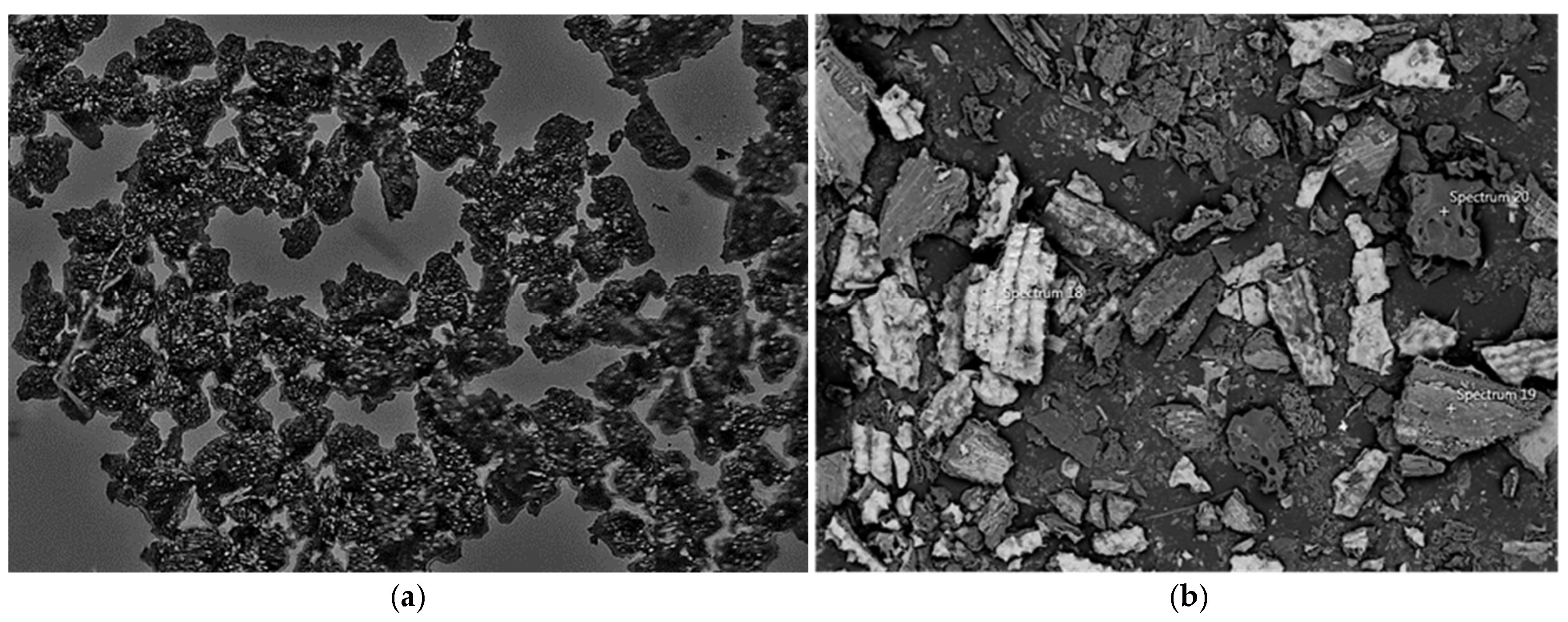
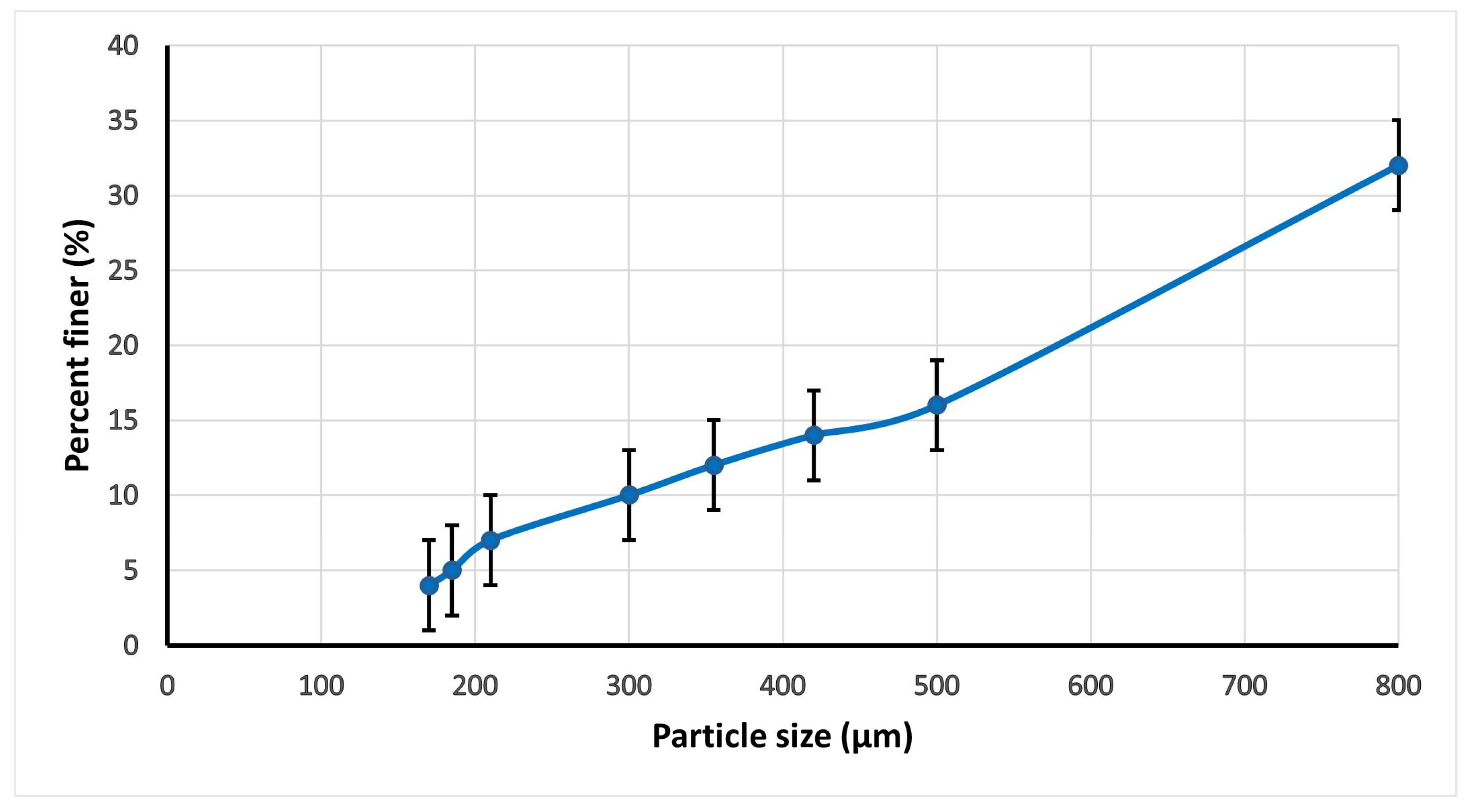
Coffee grounds waste was collected from a commercial espresso machine in the Edward Herbert Building cafeteria of Loughborough University (Figure 1), consisting primarily of Arabica coffee blends, which were then used as the adsorbent for carrying out all fixed-bed horizontal column adsorption studies reported herein. The chemical composition of the coffee grounds characterised by EDX (Energy Dispersive X-ray) analysis is presented in Table 1. The chemical composition of a material can help determine its physical and chemical properties and, thereby, its way of reacting with other materials. The particle size of the coffee grounds was obtained by sieve analysis in a mechanical shaker. The average particle size was 643.6 µm, ranging from 420 µm to 800 µm (Figure 2).
Figure 1. Optical microscopy image of coffee grounds (a) and coffee waste and rice husk mixture (b).
Table 1. Chemical composition of the coffee grounds and rice husk biochar by EDX analysis.
Figure 2. Cumulative particle size distribution curve for the coffee grounds.

2.2. Adsorbent Preparation

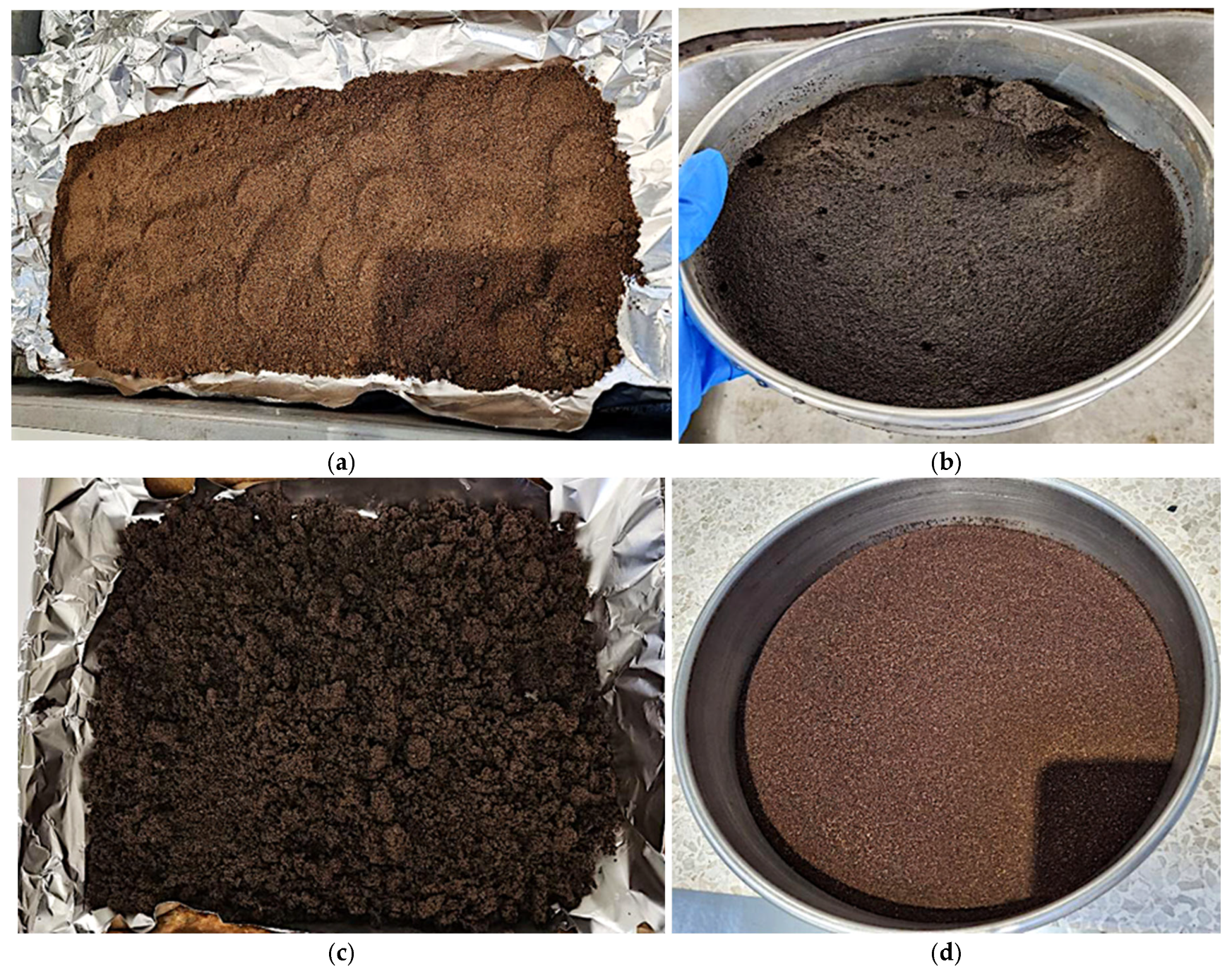
Two adsorbents were prepared, including TCR and a 50/50 mixture of treated coffee waste with a standard biochar (rice husk), to assess the effect of different particle surface areas on the adsorbed chemicals. Rice husk biochar was selected because it is an agricultural by-product widely used as a porous, carbon-rich material. Its complementary surface chemistry provides a comparison with coffee waste. The chemical composition of the rice husk biochar by EDX analysis is presented in Table 1. It was thoroughly rinsed using distilled water to remove impurities; heated in the range of 350–500 °C for drying purposes for one to two hours in a muffle furnace; and sieved (420–800 μm). The treated coffee waste (Figure 3a) was also rinsed using distilled water to remove impurities and colour (Figure 3b), dehydrated by heating at 105 °C for five hours in a convection oven (Figure 3c), and sieved (420–800 μm) (Figure 3d). The rice husk was mixed with treated coffee waste to obtain a 50/50 mixture.
Figure 3. Collected coffee waste (a), washed coffee waste (b), dried coffee waste at 105 °C (c), and sieved coffee waste at 420–800 μm (d).
The novelty of this study lies in the combination of two waste-derived materials, coffee waste and rice husk biochar, into a composite adsorbent applied in a fixed-bed column for the efficient removal of low concentrations of heavy metals. Both materials possess complementary physicochemical properties: rice husk biochar provides a high surface area and structural stability, while coffee waste contributes abundant functional groups that enhance metal ion binding. Although previous studies [11,22,23] have examined these materials individually, most have focused on batch systems or relatively high contaminant concentrations. Consequently, there remains a critical gap in understanding their performance under environmentally relevant conditions, where heavy metals are often present at low concentrations and continuous treatment systems are more applicable. By combining these two waste-derived materials, the study contributes to the valorisation of agricultural by-products and advances sustainable approaches for treating low-concentration heavy metal effluents, thereby tackling challenges related to both environmental remediation and waste management.

2.3. Column Adsorption Procedure

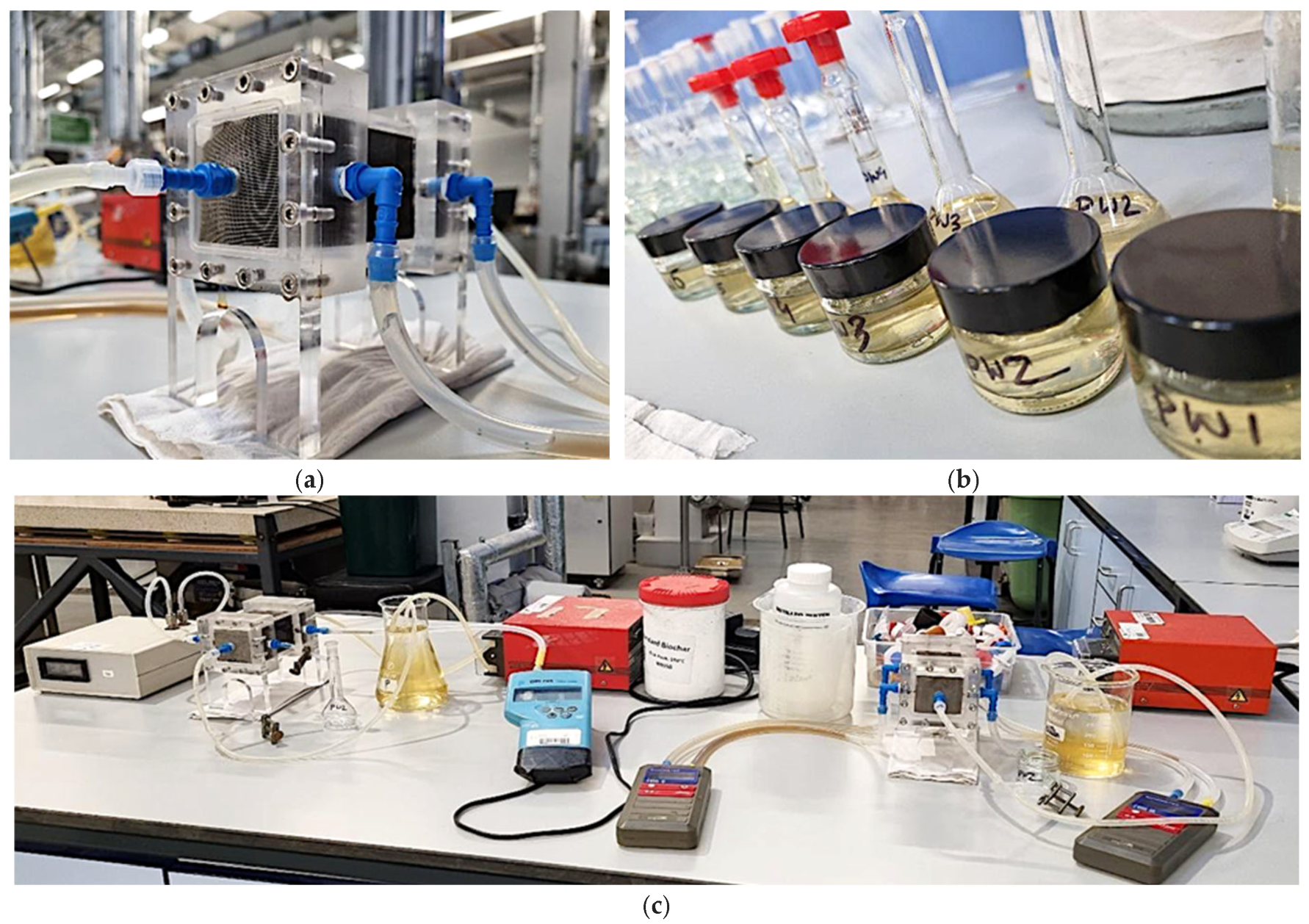
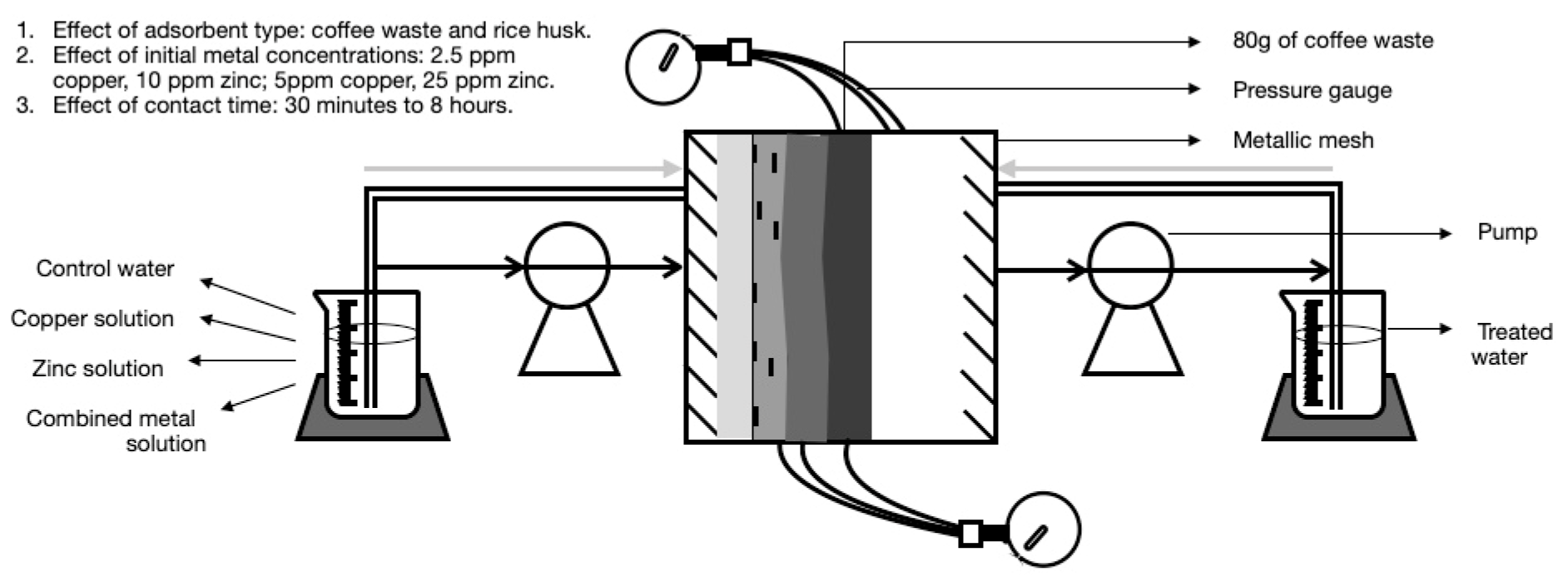
A fixed-bed horizontal column study was conducted to evaluate the adsorption behaviour of copper and zinc on coffee waste. A 200 cm3 glass column was packed with 80 g of adsorbent with a particle size of >420 µm (Figure 4a and Figure 5). A total of 200 mL solution was passed through the adsorbent bed at a constant flow rate of 25 mL/m via a peristaltic pump (Figure 4b and Figure 5). A Reynolds number (Re) of 10.44 was obtained for this system. Two pressure gauges (Huba Control AG, Wurenlos, Switzerland), were used to monitor the pressure at both sides of the horizontal column system constantly. Approximately 1000 ppm copper standard in 1 M nitric acid and 1000 ppm zinc standard in 1 M nitric acid were used as stock solutions. The horizontal configuration was selected for laboratory convenience and uniform flow distribution in preliminary trials, while we acknowledge that vertical configurations are standard in the industry and would recommend this for up-scaling in the future.
Figure 4. An approximately 200 cm3 glass column packed with 80 g of adsorbent (a), prepared samples for UV-Vis analysis (b), and experimental setup (c).
Figure 5. Schematic diagram of 200 cm3 glass column for the adsorption experiment for studying different effects.
The experiments were conducted with treated coffee waste for control water, copper solution, zinc solution, and a combined copper and zinc solution for specific concentrations of each metal (Figure 4c). The experiments were repeated with the mixtures of adsorbent materials (50% treated coffee waste + 50% rice husk) for the control water, copper solution, zinc solution, and a combined copper and zinc solution for the same set of concentrations.
In this study, the effects of different contact times (e.g., 0.5 h, 1 h, 2 h, 3 h, 4 h, 6 h, and 8 h), different metal concentrations (2.5 ppm and 5 ppm copper, 10 ppm and 25 ppm zinc), and different adsorbent types (e.g., treated coffee waste and a 50/50 mixture of coffee waste and rice husk biochar) were examined to help understand the copper and zinc removal efficiency from water. The specific initial metal concentrations were selected based on the WHO guideline values for drinking water [24]. The concentration of copper and zinc (before and after going through the adsorbent) was then determined using a UV-Vis spectrophotometer (Agilent Technologies LDA UK Limited, Cheshire, UK).

2.4. Description of Batch and Column Adsorption Model

2.4.1. Batch Adsorption

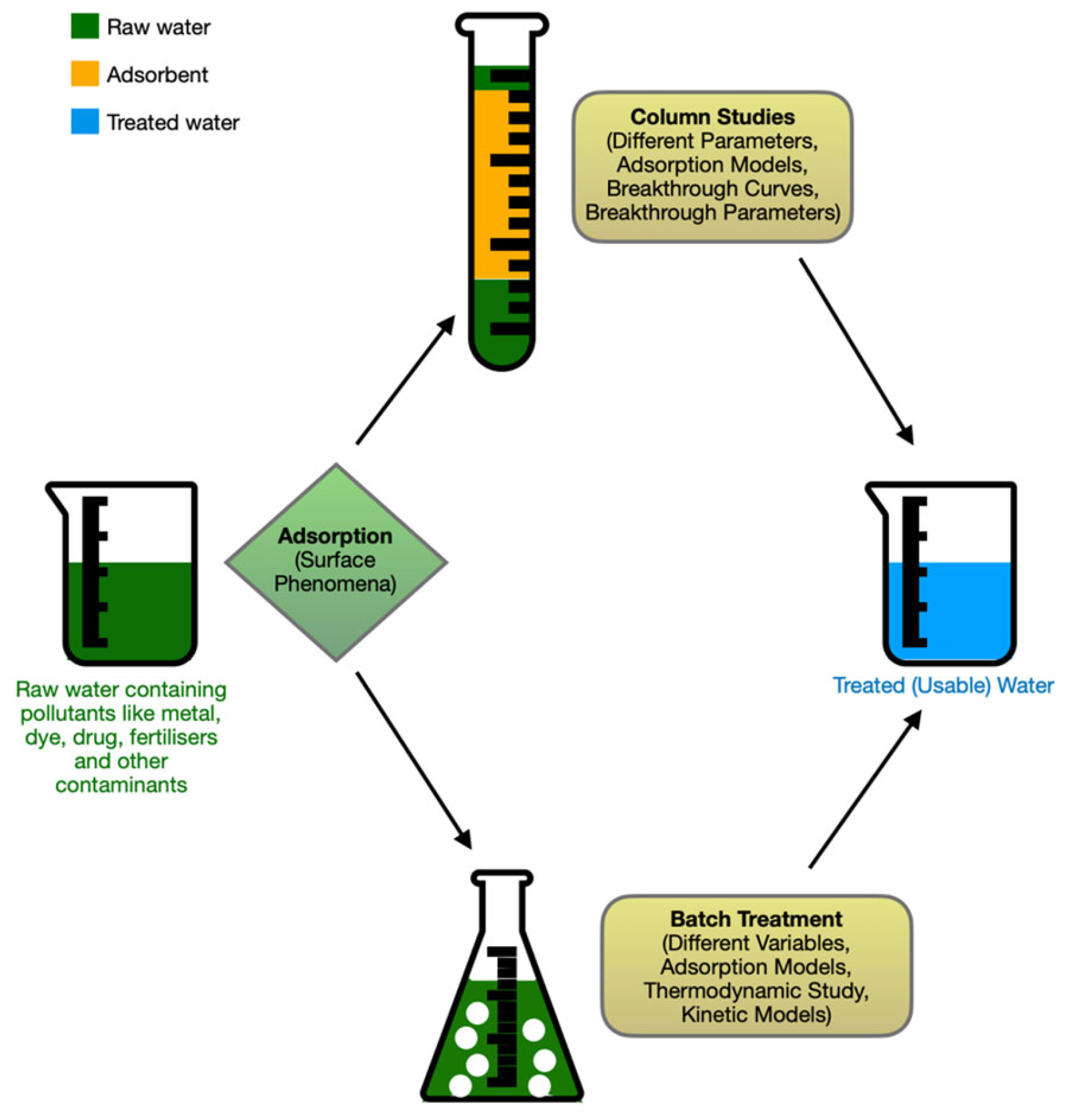
Batch adsorption is a conventional and efficient technique for removing different pollutants from both real and synthetic contaminated water [25]. It is particularly suitable for small amounts of effluent with a low pollution load. The process involves using a specialised container, reactor, or tank, where different key operational parameters, including stirring speed, pH, concentration of the adsorbate, dosage of the adsorbent, temperature, duration of contact, and particle size, are systematically regulated (Figure 6) [25]. The adsorbent is removed from the water once it reaches equilibrium. Batch adsorption has various advantages over other techniques: it is simple, easy, and inexpensive, making it a popular choice for researchers to evaluate the feasibility of adsorbent–adsorbate systems [25]. However, its major drawback is that it is only practical for small-scale applications due to the limited amount of adsorbate used, making it less suitable for industrial purposes [26].
Figure 6. Difference between batch and column adsorption studies.

2.4.2. Column Adsorption

Column adsorption, also known as a fixed-bed or continuous packed-bed, is an adsorption method where the adsorbate solution continuously flows through a column at a specific flow rate containing the adsorbent, providing continuous contact between the adsorbate and the adsorbent [25]. This process is effective for treating larger volumes of contaminated water with high pollution loads. To determine the column performance, key parameters such as flow rate, adsorbate concentration, bed height (adsorbent concentration), breakthrough parameters, pH, and particle size are derived (Figure 6) [26]. The ability to adsorb large amounts of adsorbate makes it suitable for industrial applications, which is one of the primary advantages of this method [25]. However, it also has drawbacks, such as adsorbent exhaustion, inlet channelling, and uncontrollable feed flow of adsorbent particles [27].

2.5. Adsorption Models

The adsorption efficiency (adsorption %) was determined using the following equation:
adsorption   %   =   C o     C e C o   ×   100 %
where Co is the initial metal concentration (mg/L), and Ce is the equilibrium metal concentration (mg/L).
The amount of metal adsorbed q (mg/g) was determined using the following equation:
q   =   C o     C e V m
where V is the volume of the solutions (L), and m is the amount of adsorbent (g).
All the experiments were conducted in duplicate to confirm reproducibility.

2.6. Analytical Techniques

UV-Vis spectrophotometer (Cary 500 UV-Vis-NIR Spectrophotometer from Agilent Technologies LDA UK Limited (Cheshire, UK)) was used for the copper and zinc concentration analyses in the 200–800 nm wavelength region. All zero baseline corrected values were used for the analysis. SEM (Scanning Electron Microscopy) (JEOL, Tokyo, Japan) and EDX analysis (JEOL, Tokyo, Japan) were carried out for the chemical composition of the material, and sieve analysis was carried out to obtain the cumulative particle size distribution curve. The surface area of the adsorbent was determined using a Micromeritics T-flex surface area analyser (Micrometrics, Gloucestershire, UK), employing the Brunauer–Emmett–Teller (BET) method with ultra-pure nitrogen. The BET measurements were conducted using liquid nitrogen at −196 °C under controlled laboratory conditions at an ambient temperature of 22 °C.
Ultraviolet visible spectroscopy was used to analyse the samples based on electronic transitions in atoms and molecules [28]. A Cary 500 UV-Vis-NIR spectrophotometer (Agilent Technologies LDA UK Limited, Cheshire, UK) scanned wavelengths from 200 to 800 nm [28]. The instrument used two light sources (UV and visible) and a modulator to split the beam into sample (Cu and Zn) and reference (distilled water) paths [28]. Absorbance was calculated from the intensity ratio of the sample and reference beams, providing a measure of light absorbed at each wavelength [28].

2.7. Adsorption Model for Fixed-Bed Column Adsorption

Adsorption models were studied for different initial metal concentrations (2.5 ppm and 5 ppm copper, 10 ppm and 25 ppm zinc) and contact times (e.g., 0.5 h, 1 h, 2 h, 3 h, 4 h, 6 h, and 8 h), where 80 g of adsorbent was added to 200 mL metal solution. The breakthrough curve was obtained for both Cu and Zn, and the Thomas model was fitted to determine the adsorption parameters.

2.8. Adsorption Kinetics

Adsorption kinetics were determined for 200 mL samples of 2.5 ppm and 5 ppm copper, 10 ppm and 25 ppm zinc solutions mixed with 80 g of adsorbent particles >420 µm in size to study pseudo-first-order and pseudo-second-order kinetics in order to determine the adsorption mechanism and the best fit of the data.

3. Results and Discussion

3.1. SEM and EDX Analysis

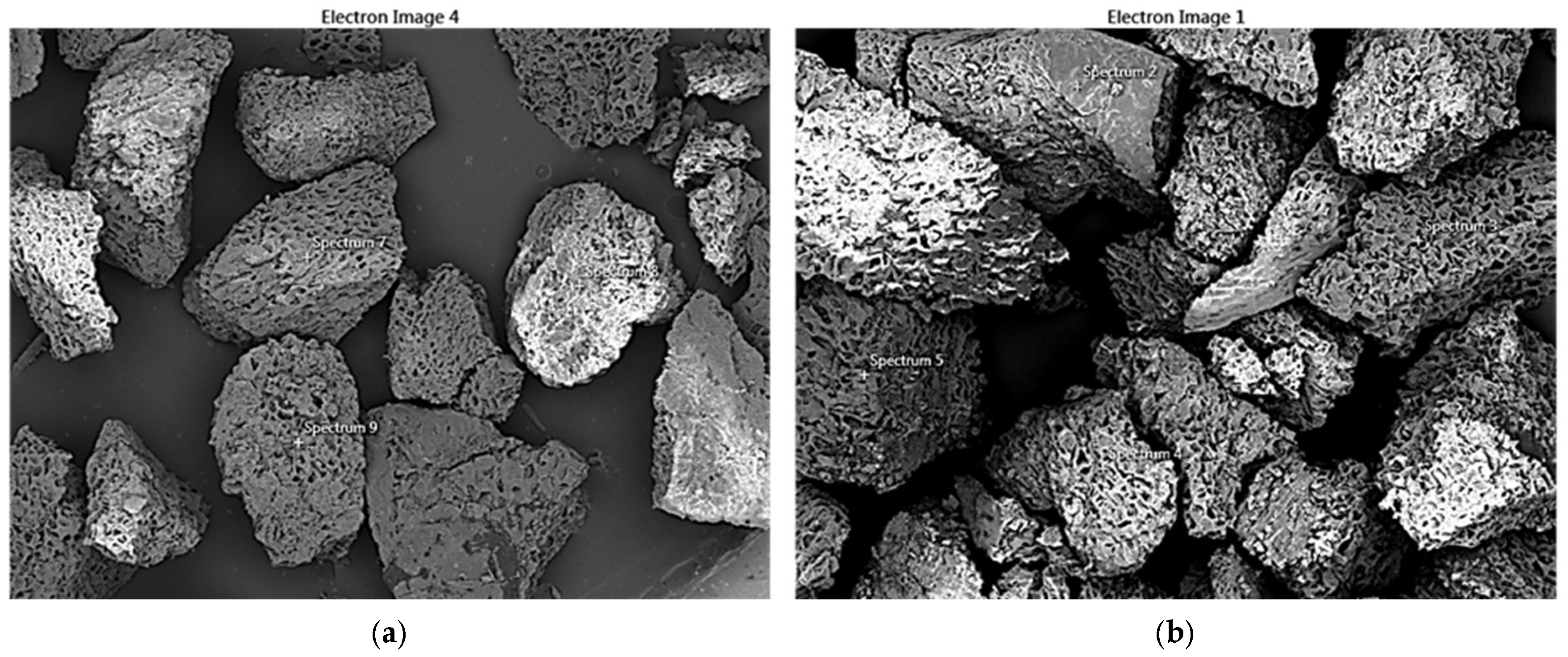
The adsorbent properties, texture, pore space, and surface porosity were studied using SEM. This technique characterises the elemental compositions along with the amount present (% weight). Figure 7a,b illustrate the coffee grounds’ surface structure before and after metal adsorption. They clearly show coarse, irregular particles of coffee grounds with many pores, providing potentially large surface areas for metals to be adsorbed onto. Pore morphology, such as their size, shape, and interconnectivity, plays a crucial role in the efficiency of adsorption. Based on their dimensions, pores are generally classified as micropores (less than 2 nm), mesopores (2–50 nm), and macropores (greater than 50 nm). Each category affects how adsorbates interact with the material, influencing surface area availability, access to adsorption sites, and the overall adsorption mechanism.
Figure 7. SEM image of coffee grounds before metal adsorption (a) and after metal adsorption (b).
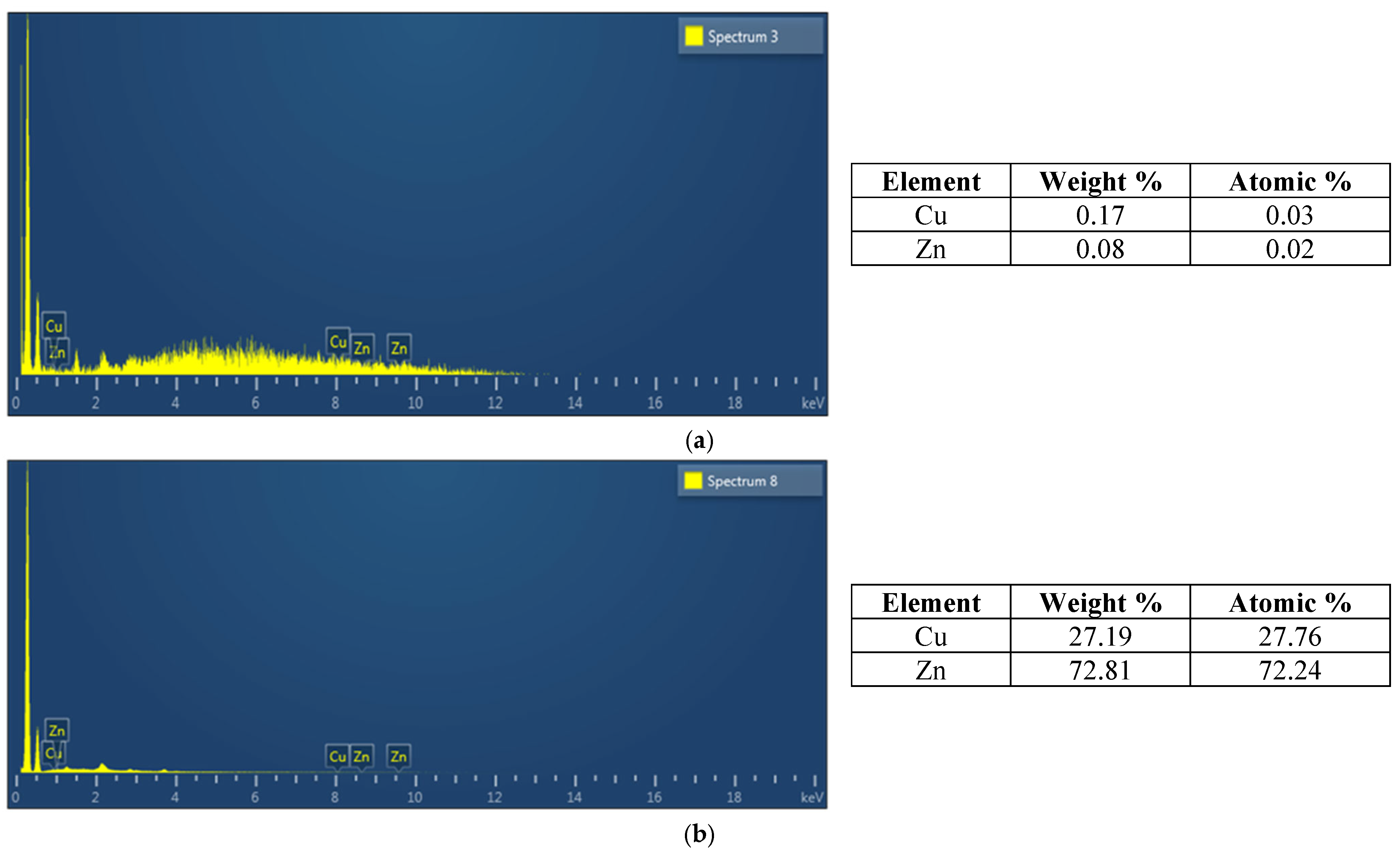
EDX analysis was performed on the surface of coffee ground particles before and after the adsorption study (Figure 8a,b). The results confirmed the presence of adsorbed metals with a percentage of 27.19 wt% for Cu and 72.81 wt% for Zn (Figure 9b), supporting the efficient removal of metals by the coffee grounds. Comparable results for coffee grounds have been recorded in previous research [9,29,30], where the surface morphology and particle size were similar to the current study.
Figure 8. EDX analysis of coffee grounds before metal adsorption (a) and after metal adsorption (b).
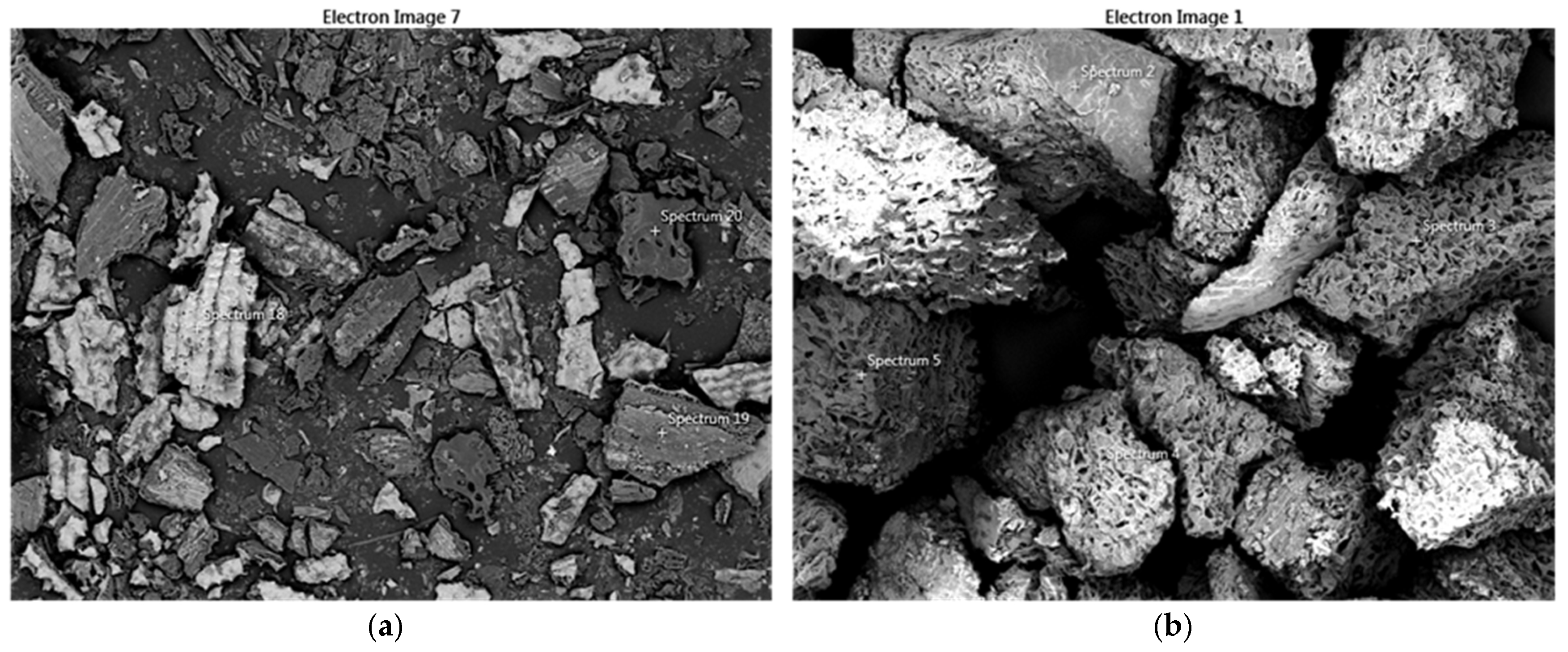
Figure 9. SEM image of coffee waste and rice husk mixture before metal adsorption (a) and after metal adsorption (b).
Figure 9a,b illustrate the mixture’s surface structure (coffee waste and rice husk) before and after metal adsorption. It indicates some fine and coarse irregular particles with many pores, potentially providing a large surface area for the metal adsorption.
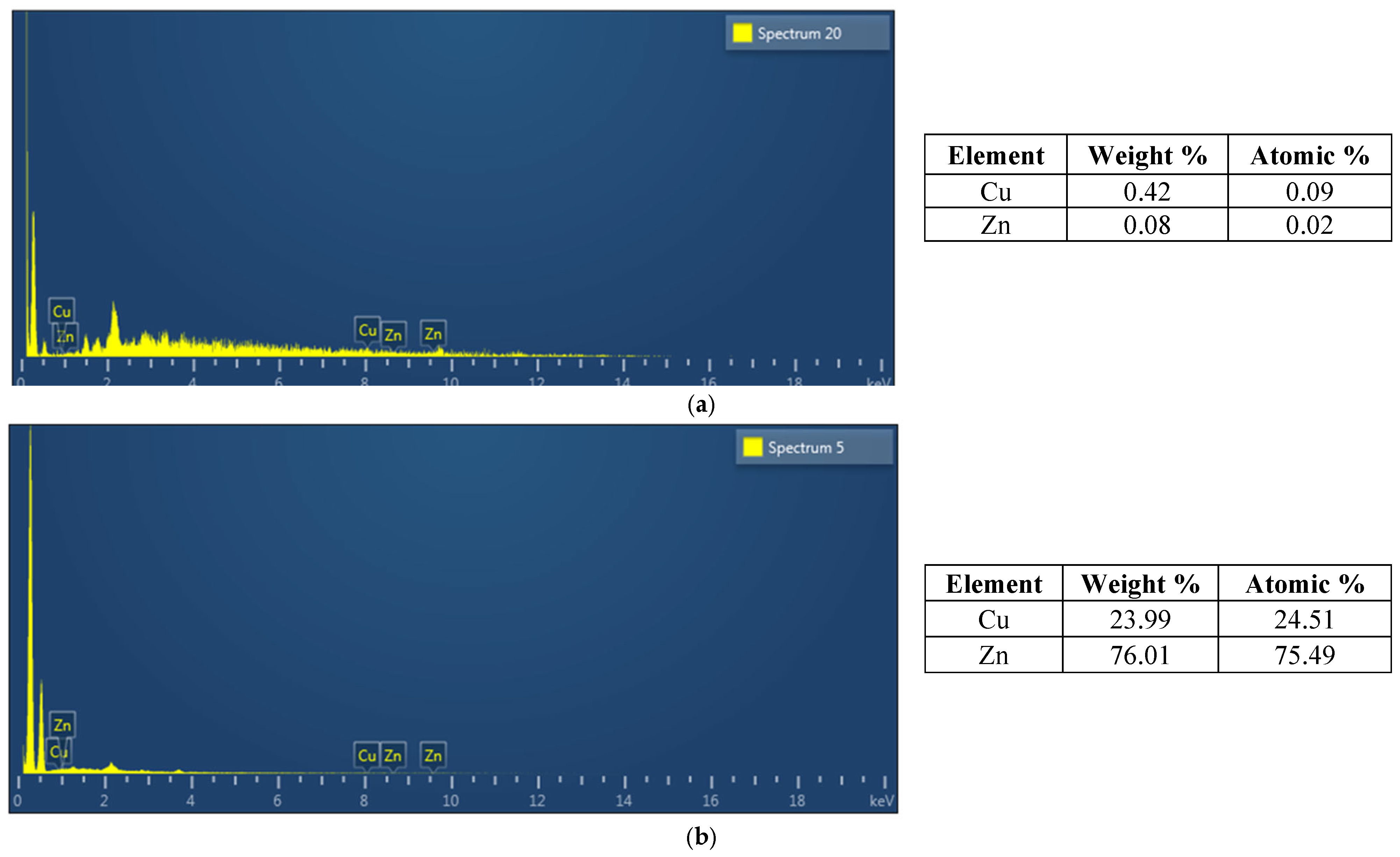
EDX analysis was performed on the mixture (50/50 coffee waste and rice husk) before and after the adsorption study (Figure 10a,b). The results confirmed the presence of adsorbed metals with 23.99 wt% for Cu and 76.01 wt% for Zn (Figure 10b), which validates the removal of metals by the mixture. These results support findings from previous research [8,29,30], using material with similar surface morphology and elemental composition.
Figure 10. EDX analysis of coffee waste and rice husk mixture before metal adsorption (a) and after metal adsorption (b).
Zn adsorption was higher than Cu because Zn generally exhibits greater adsorption capacity compared to Cu, influenced by several factors, including its lower hydration energy, stronger affinity for oxygen-based functional groups, and its relatively straightforward complexation behaviour. These characteristics enhance the mobility and reactivity of Zn toward adsorbent surfaces.

3.2. BET Surface Area and Porosity Characteristics

Adsorption is a multi-step complex phenomenon affected by multiple factors. Pore structure and surface chemistry are key factors influencing the adsorption process [31]. Two mechanisms are typically involved in the adsorption process: one involves the diffusion of metal ions into the coffee grounds, and the other involves the physical and chemical attachment of metal ions within the coffee grounds [32]. BET analysis was completed to determine the adsorbent surface area. Table 2 demonstrates the pore volume and surface area of the coffee grounds and mixture before and after passing through the horizontal column. The total pore volume was higher for both the coffee grounds (0.2497%) and 50/50 mixture (0.2424%) before the adsorption process and lower for both the coffee grounds (0.1495%) and 50/50 mixture (0.1795%) after the adsorption process. The total surface area was also higher for both coffee grounds (30.2%) and the mixture (29.04%) before the adsorption process and lower for both coffee grounds (1.81%) and the mixture (9.31%) after the adsorption process. This clearly demonstrated that the pores of coffee grounds and the 50/50 mixture can capture metal ions and can be used as effective adsorbents.
Table 2. Pore diameter and surface area of coffee grounds.

3.3. Adsorption Parameters

3.3.1. Effect of Contact Time

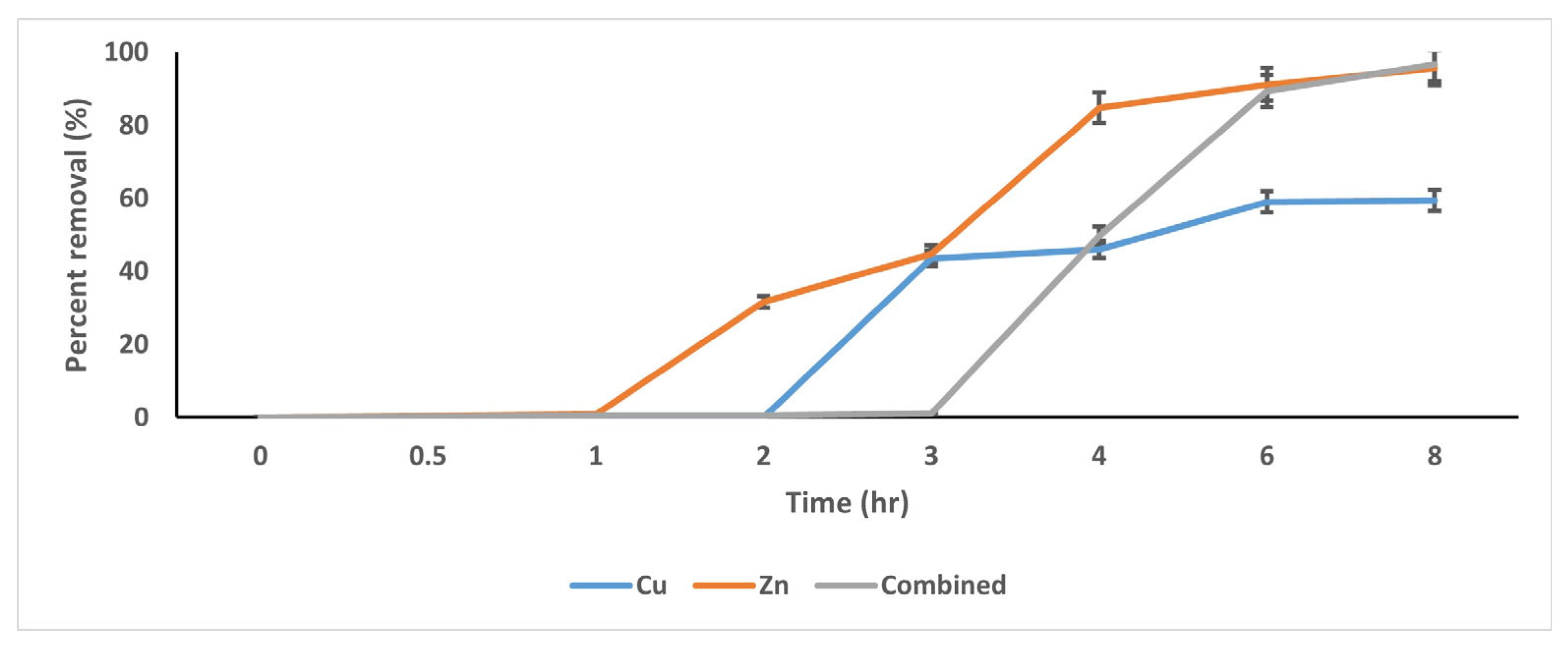
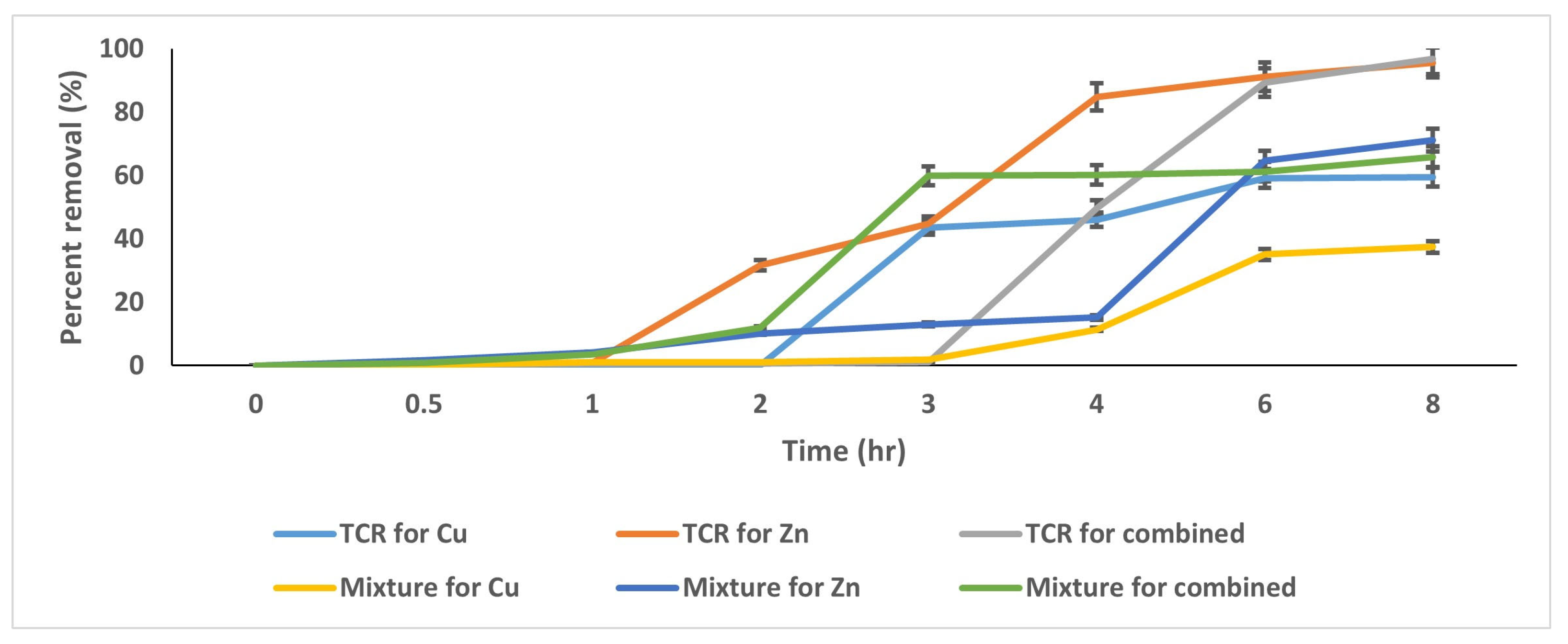
The effect of adsorption contact time (0.5 h, 1 h, 2 h, 3 h, 4 h, 6 h, and 8 h) on the removal efficiency of metals from an aqueous solution by different adsorbents are presented in Figure 11. A series of experiments were conducted to determine the equilibrium time for the effective removal of the copper and zinc metal solutions using TCR. Column adsorption studies were conducted at specific time intervals with two adsorbent types (TCR and mixture) and selected initial metal concentrations (2.5 ppm and 5 ppm copper, 10 ppm and 25 ppm zinc). Equilibrium or a steady rate of adsorption was achieved around 6 h with the greatest removal of Cu (2.5 ppm) at 8 h (59.33%). For Zn (10 ppm), equilibrium was reached around 4 h, with the highest removal at 8 h (95.61%). For combined Cu and Zn, equilibrium was achieved around 6 h, with the highest removal at 8 h (96.71%). This bell-shaped curve shows a gradual increase in percent removal over time as expected as a result of the growing number of vacant active sites on the adsorbent. This plot can be described in three different regions: (1) 0 to 1 h indicate a slow adsorption of ions; (2) 1 to 3 h indicate a gradual equilibrium; and (3) 3 to 8 h indicate reaching the equilibrium state due to diffusion and surface adsorption. The results are similar to those of Flórez & Oakley [30], where Copper removal was achieved using coffee waste as the adsorbent, and the equilibrium was achieved after 7.5 h. Delil et al. [33] studied the adsorption of Cadmium (Cd) from aqueous solution by Turkish coffee grounds, where the equilibrium was reported after 60 min.
Figure 11. Effect of contact time on the removal of Cu, Zn, and combined Cu and Zn concentrations (80 g/200 mL of metal solution, initial concentration 2.5 ppm of Cu and 10 ppm of Zn, TCR).
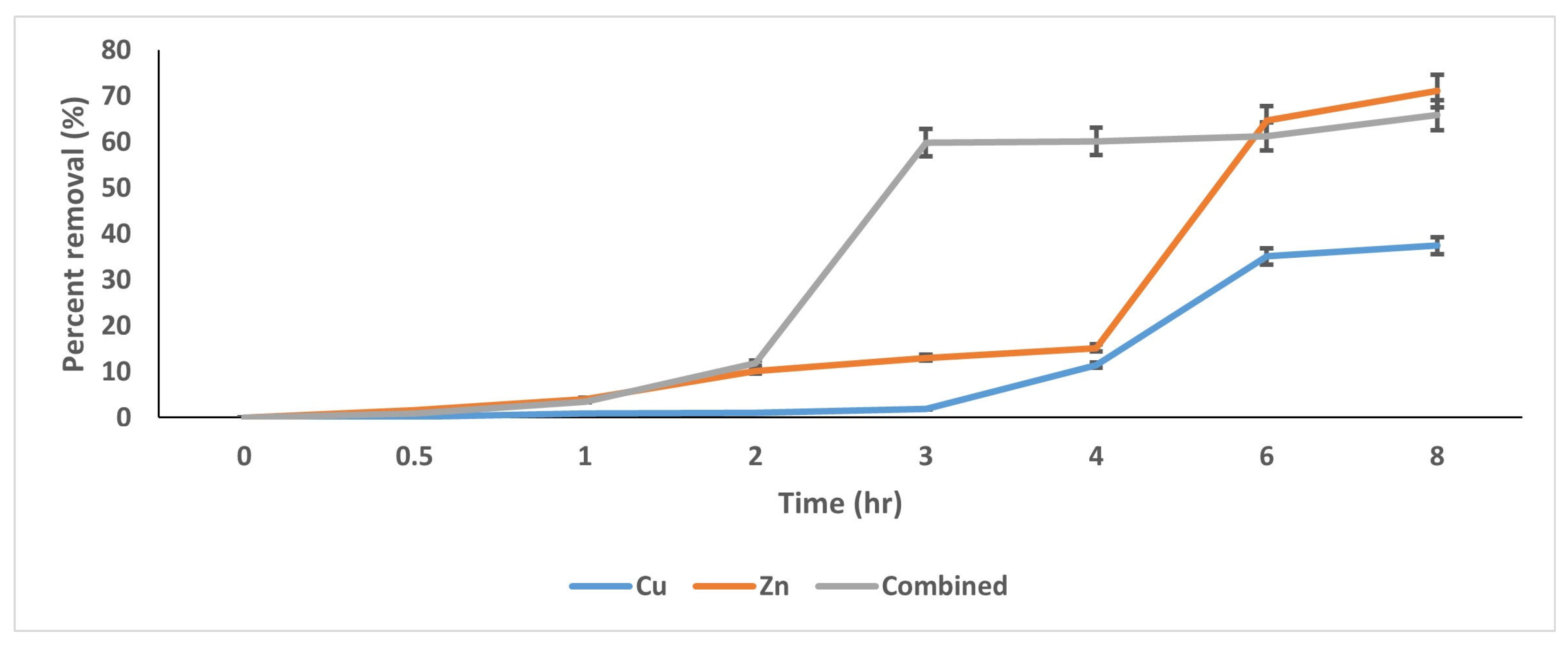
The results of the experiments to determine the equilibrium time for the effective removal of metals using the 50/50 TCR and rice husk mixture are presented in Figure 12. The equilibrium was achieved around 6 h, with the highest removal of 37.39% Cu (5 ppm) at 8 h. For Zn (25 ppm), the equilibrium was achieved around 6 h, with the highest removal of 71.06% at 8 h. For combined Cu and Zn, the equilibrium was reached around 3 h, with the highest removal of 65.79% at 8 h. The results also plot as a bell-shaped curve, indicating a gradual increase in the percent removal over time, as expected due to the vacant active sites on the adsorbent. This plot can be described in three different regions: (1) 0 to 1 h, where it shows a slow adsorption of ions; (2) 1 to 3 h, where it displays a gradual equilibrium; and (3) 3 to 8 h, where it reaches the equilibrium state due to external diffusion and surface adsorption. Azouaou et al. [20] investigated the effect of coffee waste and orange peel mixture on adsorbing lead from an aqueous solution, where the equilibrium was achieved in 30 min. Vo et al. [21] investigated the effect of coffee ground and bamboo powder mixture on removing the industrial dye rhodamine B, where the equilibrium was achieved in 230 min. However, these results were dissimilar to the current study because of the difference in the mixture of materials and pollutants removed.
Figure 12. Effect of contact time on the removal of Cu, Zn, and combined Cu and Zn concentrations (80 g/200 mL of metal solution, initial concentration 5 mg/L of Cu and 25 mg/L of Zn, mixture).

3.3.2. Effect of Adsorbent Type

The effect of adsorbent types (including TCR and mixture) on the removal efficiency of metals from an aqueous solution were studied. The results are presented in Figure 13, where a series of experiments were conducted to determine the equilibrium time for the effective removal of metals using both adsorbents. Column adsorption studies were conducted for varying adsorbent types by fixing the contact time (0.5 h, 1 h, 2 h, 3 h, 4 h, 6 h, and 8 h) and initial metal concentrations (2.5 ppm and 5 ppm copper, 10 ppm and 25 ppm zinc). TCR worked better than the mixture because it could remove 59.33% Cu, with an equilibrium achieved in around six hours. Approximately 95.61% Zn and 96.72% combined Cu and Zn were also removed by TCR, with an equilibrium achieved around 4 h and 6 h, respectively. At the same time, the mixture could only remove 37.39% Cu, 71.07% Zn, and 65.79% combined Cu and Zn, with an equilibrium achieved around 6 h, 6 h, and 3 h, respectively. The results recorded also reflect the higher total pore volume and total surface area of TCR compared to the mixture.
Figure 13. Effect of adsorbent type on the removal of Cu, Zn, and combined Cu and Zn concentrations (80 g/200 mL of metal solution, initial concentration 2.5 and 5 ppm of Cu; 10 and 25 ppm of Zn, contact time 8 h).

3.3.3. Effect of Initial Metal Concentrations

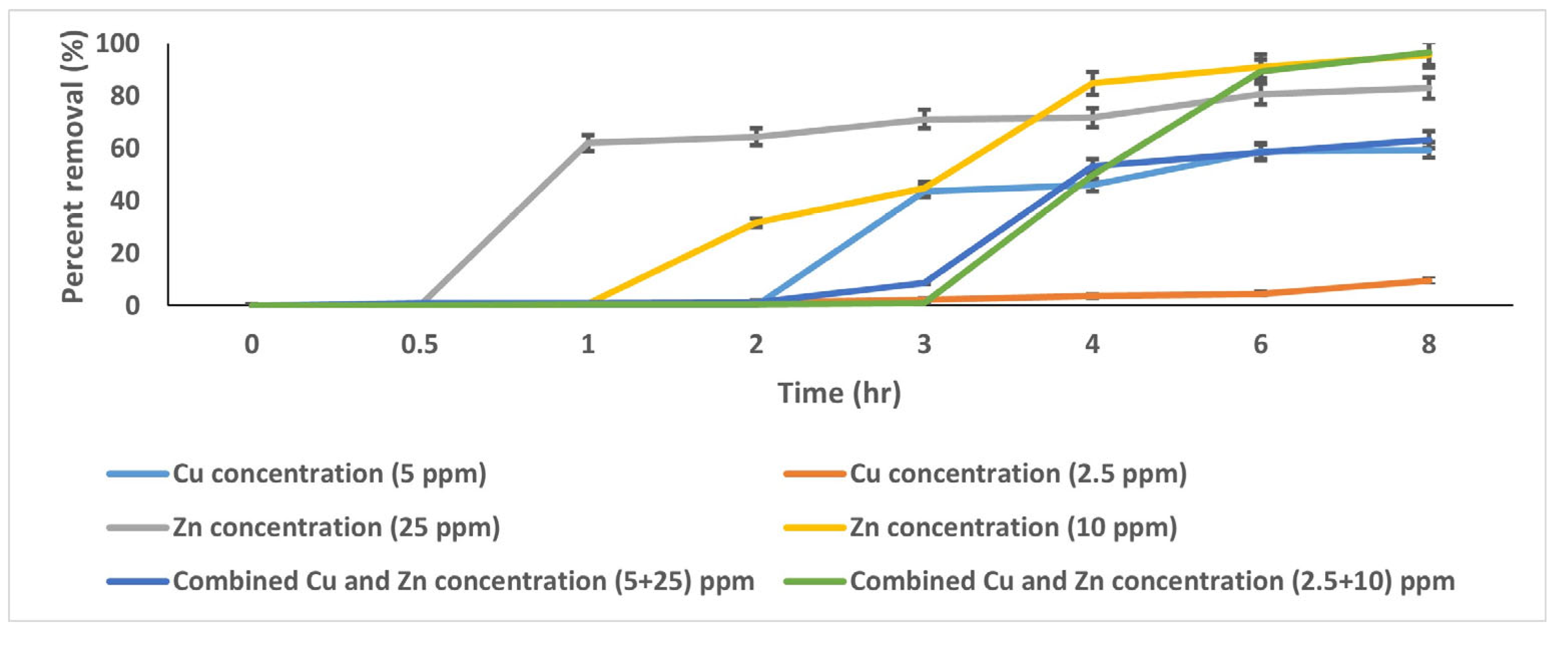
The effect of initial metal concentrations (2.5 ppm and 5 ppm copper, 10 ppm and 25 ppm zinc) on the removal efficiency of metals from an aqueous solution was studied. Experiments were performed to establish the equilibrium time for efficient metal removal by both adsorbents (Figure 14). Column adsorption studies were conducted at varying metal concentrations by fixing the contact time (0.5 h, 1 h, 2 h, 3 h, 4 h, 6 h, and 8 h) and adsorbent type (TCR and mixture). TCR worked more effectively at lower initial metal concentrations (2.5 ppm copper, 10 ppm zinc), with the highest removal of 9.61% Cu, 95.61% Zn, and 96.71% combined, respectively. The mixture of coffee waste and rice husk biochar worked better for higher initial metal concentrations (5 ppm copper, 25 ppm zinc), with the highest removal of 59.33% Cu, 82.99% Zn, and 63.32% combined, respectively. In this instance, 9.61% refers to removal at 2.5 ppm Cu using TCR, whereas 59.33% refers to removal at 5 ppm Cu using the mixture (rice husk biochar and coffee waste). Sadok et al. [34] investigated 50–400 ppm of the initial metal concentration for Cu removal from aqueous solutions using coffee waste, where the highest adsorption was achieved at 100 ppm. Flórez & Oakley [30] investigated Cu removal by coffee waste, where 70.42% adsorption was achieved with a mixed solution of Cu and lead (Pb) at a 1 ppm initial metal concentration. However, these results were not directly comparable to the current study because of the differences in the range of initial metal concentrations used.
Figure 14. Effect of initial metal concentrations on the removal of Cu, Zn, and combined Cu and Zn concentrations (80 g/200 mL of metal solution, TCR, contact time 8 h).

3.3.4. Influence of pH on Metal Adsorption

pH displayed a significant influence on adsorption. Changes in solution pH not only affect the speciation of metal ions but also alter the surface chemistry of the material itself. The pH value of the studied system was 5. At this pH level, the surface of the coffee waste is more likely to be protonated. This protonation leads to an increase in the positive surface charge, which can attract negatively charged metal species or facilitate the adsorption of neutral metal species through electrostatic interactions [34]. Moreover, the pH of the solution affects the speciation of metal ions. Many metal ions are in a form that is more readily adsorbed onto the surface of the coffee waste. For example, metals like copper (Cu2+) and zinc (Zn2+) are more likely to be in their ionic form, which can interact with the functional groups on the coffee waste [24]. In addition, coffee waste contains various functional groups such as carboxyl, hydroxyl, and phenolic groups [8]. These groups can interact with metal ions through hydrogen bonding, van der Waals forces, and other non-covalent interactions, promoting physical adsorption [8]. Overall, this combination of factors enhances the physical adsorption of metals onto coffee waste at this pH level. Although the experiments were carried out at pH 5, it is anticipated that adsorption efficiency may improve slightly at a neutral pH (~7) due to enhanced negative surface charge and increased availability of functional groups. However, at alkaline pH levels (>7–8), adsorption performance may decline, as metal ions tend to form hydroxide precipitates, interfering with accurate adsorption measurements.
The structure–property relationship between the two adsorbents indicates that TCR (treated coffee residues) consistently exhibited higher metal removal efficiency than the rice husk biochar mixture due to its unique structural and chemical characteristics. TCR’s larger surface area and well-developed pore structure create more active sites for physical adsorption. In contrast, the mixture’s lower surface area, fewer functional groups, and less porous structure restrict ion accessibility and reduce adsorption capacity [35,36,37]. TCR displayed a better adsorption performance than the mixture, not just due to its surface area but also its chemical composition and functional group distribution. Although a larger surface area provides more adsorption sites, metal ion adsorption relies heavily on specific chemical interactions. TCR contains abundant oxygen containing functional groups—hydroxyl (–OH), carboxyl (–COOH), and carbonyl (C=O)—that facilitate metal binding through complexation, ion exchange, and electrostatic attraction. Therefore, the combined effects of TCR’s microstructural features, such as its surface area and pore distribution and its chemical functionalities, including active binding groups, are directly responsible for its enhanced adsorption capacity, demonstrating a clear structure–property relationship.

3.4. Adsorption Model for Fixed-Bed Column Adsorption

To investigate the adsorption behaviour of the metals, the breakthrough curve was plotted and fitted using the Thomas model for the adsorption capacity associated with the coffee grounds and rice husk biochar.

3.4.1. Breakthrough Curve

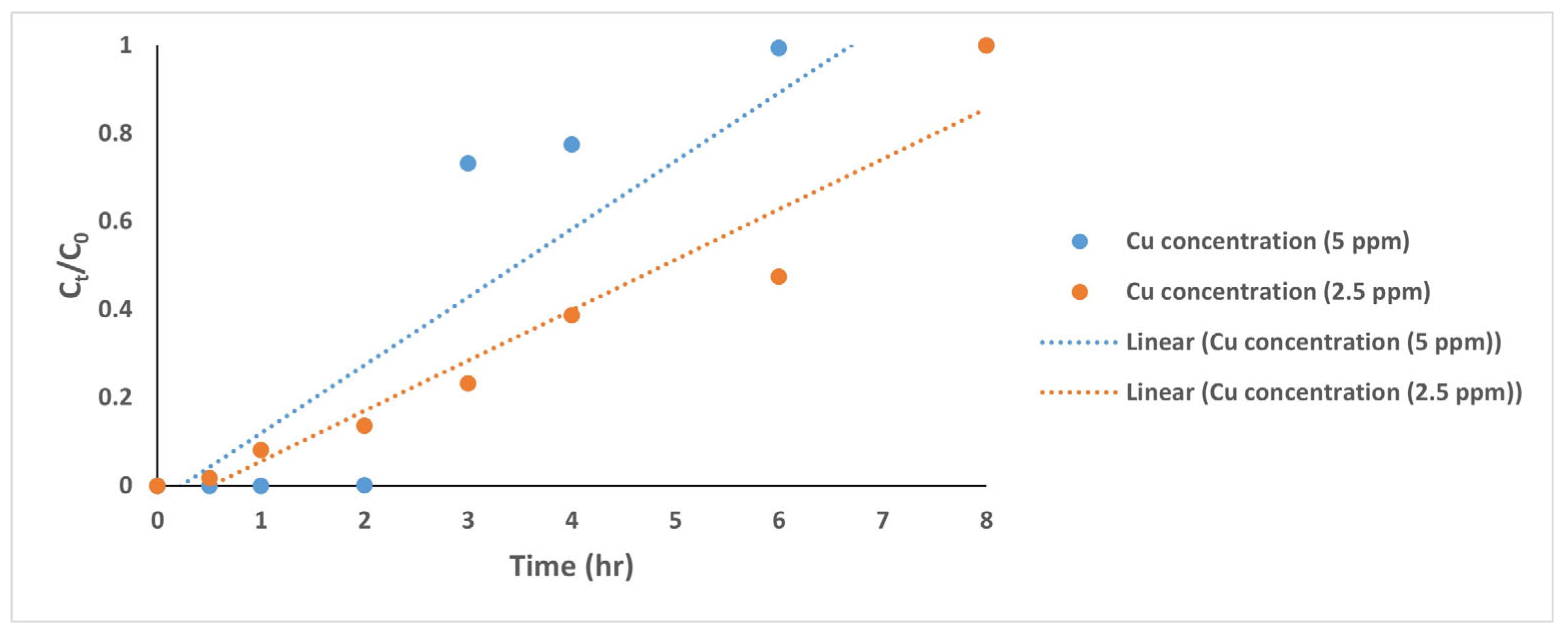
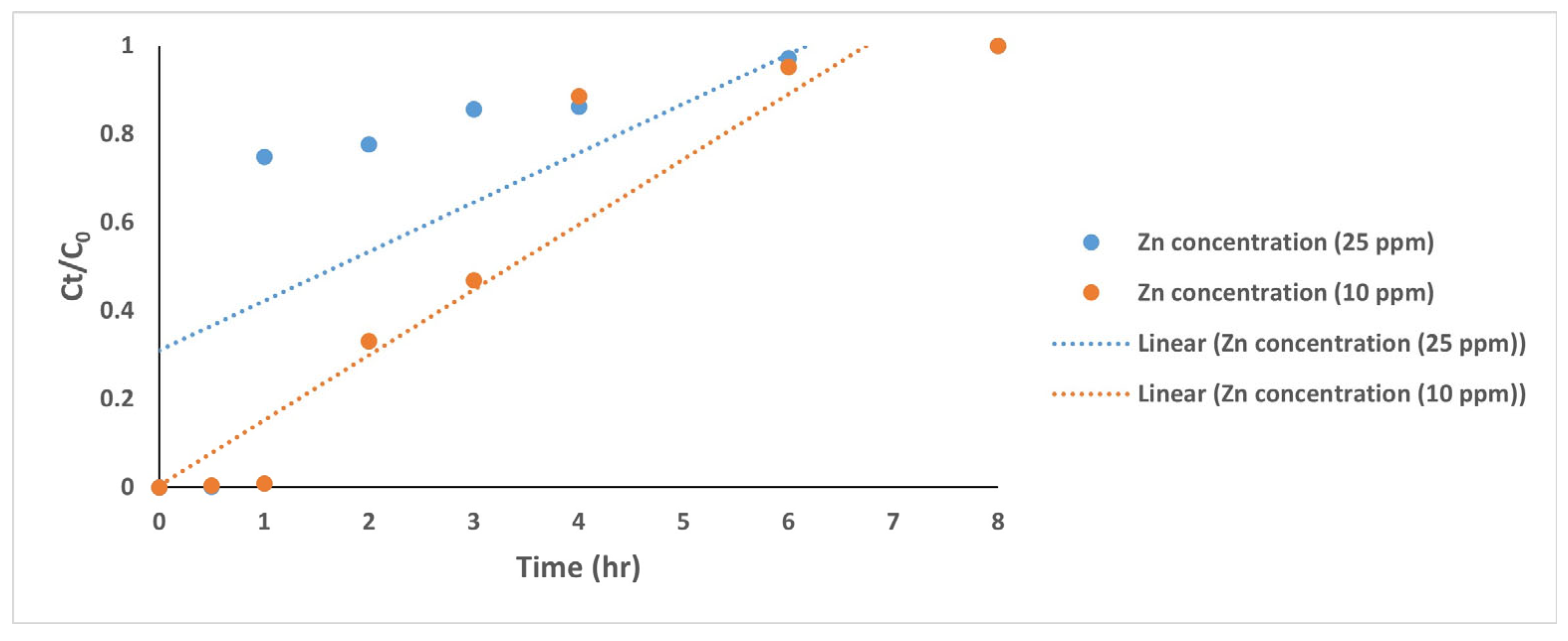
A breakthrough curve was obtained for both Cu (Figure 15) and Zn (Figure 16) by plotting Ct/C0 as a function of time. A certain metal concentration enters the horizontal column via the inlet, is adsorbed onto the adsorption sites, and exits via the outlet at a different concentration. The outlet concentration gradually decreases with time since it keeps getting adsorbed onto the adsorption site. Over time, all available adsorption sites become fully occupied, resulting in the outlet concentration matching that of the inlet concentration. The breakthrough curve shows the point at which all the adoption has taken place. It was generated for the various influent solutions used for both Cu (Figure 15) and Zn (Figure 16). These curves indicate that metal concentrations in the effluent increased over time.
Figure 15. Breakthrough curve for Cu in a fixed-bed column adsorption.
Figure 16. Breakthrough curve for Zn in a fixed-bed column adsorption.

3.4.2. Thomas Model

The Thomas model suggests that adsorption occurs immediately [38]. It assumes that the adsorption process follows pseudo-second-order kinetics, with insignificant influence from electrostatic interactions and axial dispersion [38]. The model can be described by the following equation:
ln   ( C 0 C t 1 ) =   K Th C 0 t   +   K T h q m a x m ν
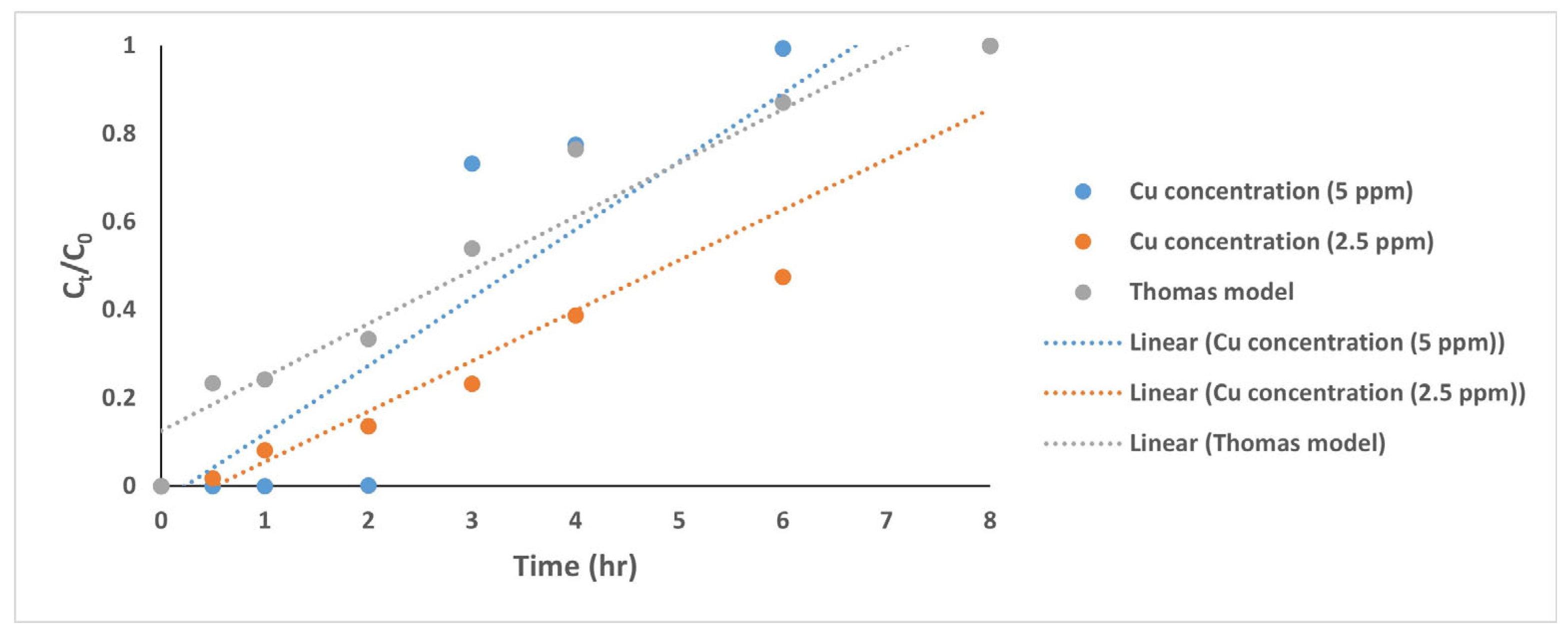
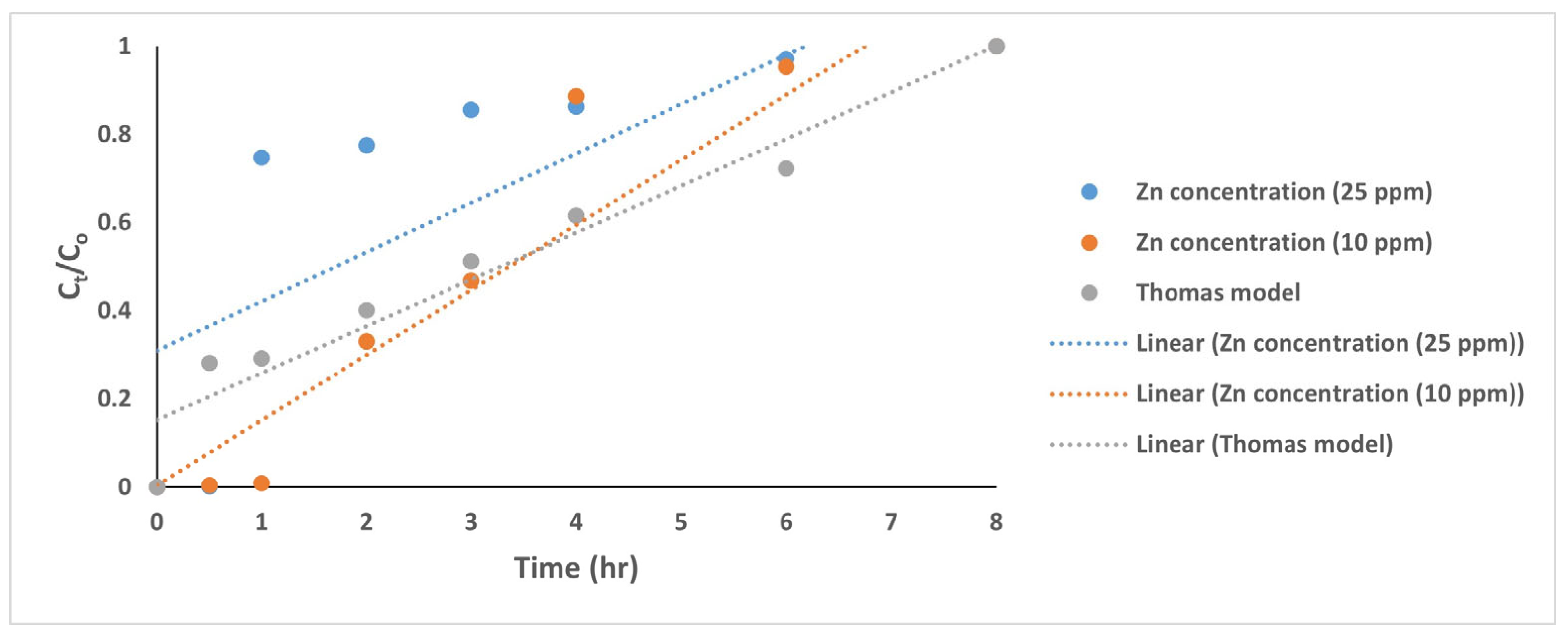
where KTh represents the rate constant (L/(min·mg)), qmax denotes the maximum solid-phase adsorption concentration (mg/g), m indicates the adsorbent mass, and ν refers to the volumetric flow rate (L/min). The Thomas model was employed to analyse the experimental data and to determine key adsorption parameters for the column study, as demonstrated in Figure 17 and Figure 18, with the obtained parameters (such as kinetic constant (KTh) and maximum adsorption concentration (qmax)) presented in Table 3. The results revealed that Zn had the highest qmax and R2 value, supporting the experimental findings, which indicated that Zn exhibited the greatest adsorption capacity.
Figure 17. Thomas model for Cu in a fixed-bed column adsorption.
Figure 18. Thomas model for Zn in a fixed-bed column adsorption.
Table 3. Thomas model parameters for fixed-bed column adsorption.
The Thomas model parameters are summarised in Table 3. The correlation coefficients (R2) were very high for both Cu and Zn removal. Based on these values, it can be concluded that Thomas models can effectively describe metal removal by the mixture of rice husk biochar and coffee grounds. The results also suggest that the mechanism can be both homogeneous and heterogeneous in terms of metal uptake by the adsorbent, and the metal adsorption was influenced by external mass transfer and intra-particle diffusion. The Thomas model showed the maximum adsorption concentration (qmax) of Cu and Zn as 1.61 mg/g and 4.52 mg/g, respectively. It should be noted that the adsorption capacities were higher than those reported by Abdallah et al. [38] and lower than those reported by Patel [39]. The performance can be related to the material’s porous structure and numerous binding sites, confirmed by BET analysis. Its synthesis from low cost, renewable sources also makes it a sustainable and practical option.
Although commonly applied to predict breakthrough behaviour in fixed-bed adsorption systems, the Thomas model has limitations. It assumes instant adsorption, overlooking external film diffusion and intraparticle (pore) diffusion. This simplification can lead to inaccuracies, particularly where mass transfer resistance is significant, often causing deviations between predicted and observed results, especially during initial adsorption or near the breakthrough point.

3.5. Kinetics of Adsorption

Kinetic models were used to understand the metal adsorption mechanism and investigate different adsorbent performances for metal removal. The most commonly used kinetic models are Lagergren’s pseudo-first-order and pseudo-second-order kinetic models [40]. The first and second-order reaction kinetics were used in addition to the Thomas model, because they provide additional information regarding the rate of retention or release of the metal from the aqueous environment to the solid–liquid interface at a given time and adsorbent dose [41]. In addition, they provide information regarding the adsorption behaviour (the interaction between adsorbate and adsorbent) and the adsorption capacity of the adsorbent [41]. The use of both models therefore provided a more comprehensive interpretation of the adsorption behaviour and facilitated the optimisation of operational conditions for effective metal removal.

3.5.1. Pseudo-First-Order Reaction Kinetic

The following equation can express the first-order reaction kinetic:
log   ( q e   q t )   =   log   q e     K 1 2.303 t
where qe represents the amount of solute adsorbed at equilibrium, qt is the amount adsorbed at time t, and K1 is the pseudo-first-order constant rate.
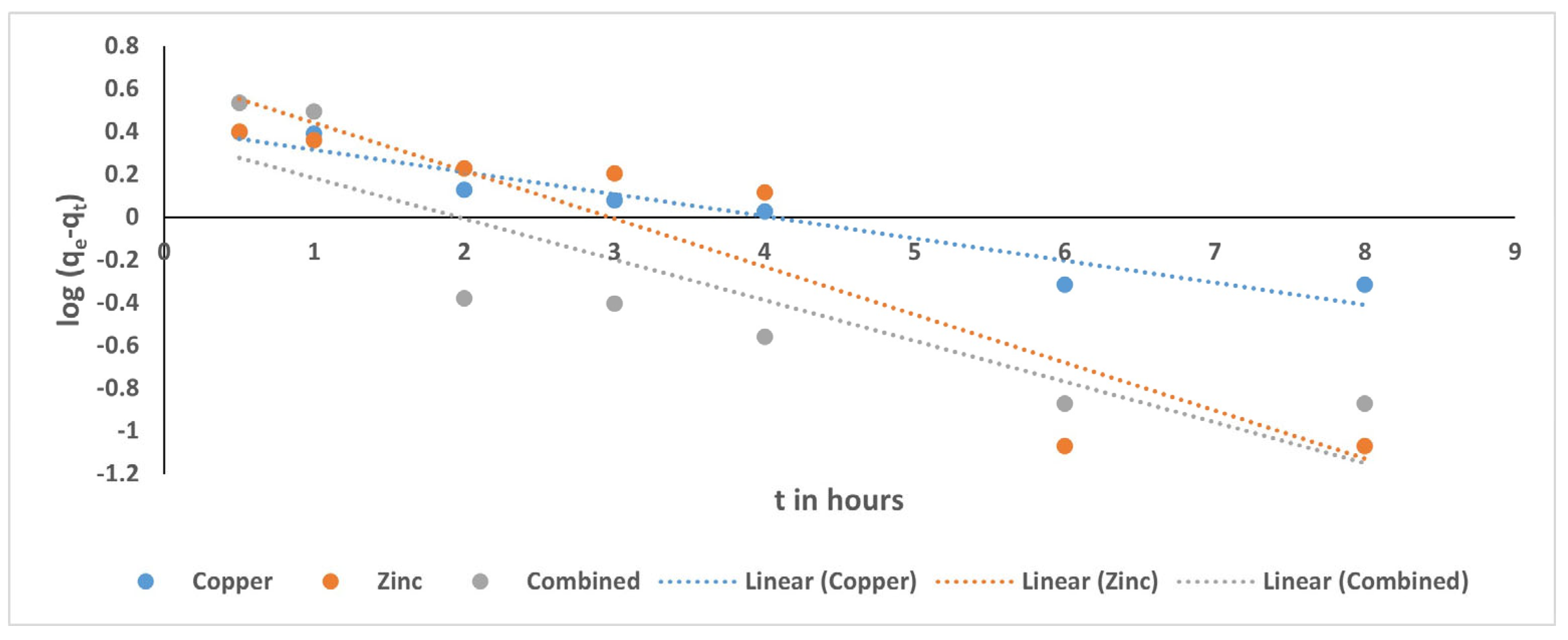
The first-order reaction kinetics were applied to determine the adsorption rate constants for copper, zinc, and combined metal removal. The results obtained are presented in Table 4. Figure 19 presents the pseudo-first-order kinetic model fits. The plots of log (qe − qt) versus time exhibited linearity for each metal, indicating conformity with the pseudo-first-order model. The values of K1 and qe were determined from the slopes and intercepts of these plots, as shown in Table 4.
Table 4. Pseudo-first-order and pseudo-second-order kinetic parameters.
Figure 19. Pseudo-first-order reaction kinetics for the adsorption of copper, zinc, and combined mixture.

3.5.2. Pseudo-Second-Order Reaction Kinetic

The following equation expresses the second-order reaction kinetic:
t q t =   1 K 2 q e 2 +   1 q e
where qe represents the amount of solute adsorbed at equilibrium, qt is the amount adsorbed at time t, and K2 denotes the pseudo-second-order constant rate.
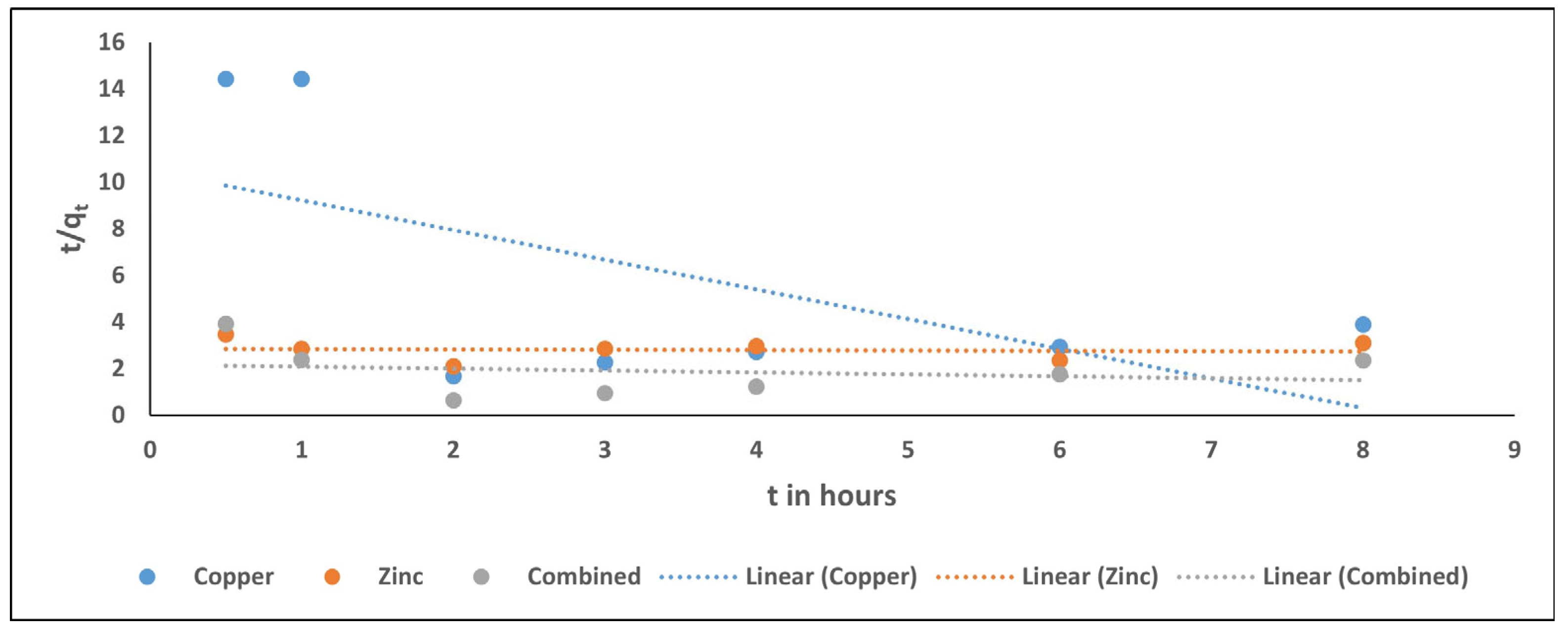
The second-order reaction kinetic was also applied to determine the experimental data for copper, zinc, and combined metal removal. As illustrated in Figure 20, linear plots of t/qt against time were obtained for all metals. The values of K2 and qe were derived from the slopes and intercepts of these curves, respectively, and are presented in Table 4.
Figure 20. Pseudo-second-order reaction kinetics for the adsorption of copper, zinc, and combined on mixture.
The pseudo-first-order and second-order kinetic parameters are presented in Table 4. The difference between experimental and calculated values suggests that copper, zinc, and combined metal removal with the mixture is better explained by the pseudo-first-order reaction kinetic. All the correlation coefficient (R2) values were higher for the first-order reaction kinetic than the second-order reaction kinetic. Based on these values, it can be concluded that the first-order reaction kinetic very effectively describes metal removal by the mixture of rice husk biochar and coffee grounds. The R2 values obtained were comparable to those reported by Kyzas [8]. Although R2 values are widely used to evaluate kinetic model fit, it should not be the sole basis for interpretation. In this study, the pseudo-first-order model matched the experimental data better than the pseudo-second-order model, indicating that physical adsorption—likely driven by van der Waals forces or electrostatic interactions —dominates over chemisorption.

4. Conclusions

This study employed ground coffee waste and a composite of rice husk biochar and coffee waste as adsorbents for the removal of copper and zinc ions from wastewater. The apparatus developed for the fixed-bed horizontal column study helped determine that it takes around six hours to achieve equilibrium for removing the highest percentage of copper, zinc, and combined metal ions removal. TCR worked better than the mixture because it could remove 59.33% Cu, 95.61% Zn, and 96.72% combined Cu and Zn, whereas the mixture could only remove 37.39% Cu, 71.07% Zn, and 65.79% combined Cu and Zn. The maximum removal efficiency of 96.72% corresponds to combined Cu and Zn removal at lower initial metal concentrations (2.5 ppm copper, 10 ppm zinc) using TCR, under 8 h contact time. The adsorption process was described by fitting the experimental data to the Thomas model. The model was linear, with good correlation coefficient values for both copper (R2 = 0.93) and zinc (R2 = 0.94). The adsorption mechanism was investigated using first and second-order reaction kinetics. The first-order reaction kinetic provided a better fit where the experimental and calculated values were very close. The correlation coefficient (R2 = 0.93) values were also higher than the second-order reaction kinetics. Thus, it can be concluded that coffee grounds have the potential to be used as an effective, low-cost, and abundantly available adsorbent for remediating wastewater with copper, zinc, and other potentially toxic metals as part of wider environmental management operations.
The practical challenges in scaling these processes for real-world wastewater treatment applications include adsorbent regeneration, column clogging, and variability in waste feedstock composition. The regeneration and reuse potential of coffee waste-based adsorbents are key to their viability in sustainable water treatment. Studies show that coffee-derived biochar can maintain a good adsorption performance over several cycles with mild chemical or thermal treatments. However, factors like structural stability, desorption efficiency, and cost-benefit analysis are not yet fully understood. Future research should focus on optimising regeneration methods and testing long-term performance in fixed-bed systems under real wastewater conditions.
Overall, this study highlights the potential of a coffee waste-based adsorbent for effective heavy metal removal under acidic conditions (pH 5), where adsorption is enhanced by minimal interference from hydrolysed species. While promising results were obtained, further research is required to assess performance across a broader range of metals and in real wastewater environments, which often present varying pH levels and complex contaminant mixtures that may hinder adsorption through competitive adsorption and surface fouling. To advance practical applications, key factors such as adsorbent regeneration, metal recovery, and long-term stability must be systematically evaluated. Despite these challenges, the approach offers a sustainable and low-cost alternative to conventional treatment methods, particularly in resource-constrained settings. However, its scalability and competitiveness depend on demonstrating consistent performance, operational reliability, and economic feasibility under realistic treatment conditions.

Author Contributions

B.B.: conceptualization, methodology, software, validation, formal analysis, investigation, data curation, writing—original draft preparation, writing—review and editing, visualisation. P.J.W.: conceptualization, methodology, writing—review and editing, supervision. D.B.D.: conceptualization, methodology, resources, writing—review and editing, supervision, project administration. All authors have read and agreed to the published version of the manuscript.

Funding

This research received no external funding.

Data Availability Statement

The original contributions presented in this study are included in the article. Further inquiries can be directed to the corresponding authors.

Acknowledgments

The analytical work has included many Loughborough University staff, with significant contributions from Graham Moody, Kim Robertshaw and Sean Creedon. We would like to express our sincere gratitude to the cafeteria staff of Edward Herbert Building of Loughborough University for allowing access to the coffee grounds.

Conflicts of Interest

The authors declare no conflicts of interest.

Abbreviations

The following abbreviations are used in this manuscript:
TCRTreated Coffee Residues
EDXEnergy Dispersive X-ray
SEMScanning Electron Microscopy
BETBrunauer, Emmett and Teller

References

  1. Kazemipour, M.; Ansari, M.; Tajrobehkar, S.; Majdzadeh, M.; Kermani, H.R. Removal of Lead, Cadmium, Zinc, and Copper from Industrial Wastewater by Carbon Developed from Walnut, Hazelnut, Almond, Pistachio Shell, and Apricot Stone. J. Hazard. Mater. 2008, 150, 322–327. [Google Scholar] [CrossRef]
  2. Ngah, W.S.W.; Teong, L.C.; Toh, R.H.; Hanafiah, M.A.K.M. Comparative Study on Adsorption Desorption of Cu (II) Ions by Three Types of Chitosan–Zeolite Composites. Chem. Eng. J. 2013, 223, 231–238. [Google Scholar] [CrossRef]
  3. Qasem, N.A.A.; Mohammed, R.H.; Lawal, D.U. Removal of heavy metal ions from wastewater: A comprehensive and critical review. Npj Clean Water 2021, 4, 36. [Google Scholar] [CrossRef]
  4. Singh, A.; Prasad, S.M. Remediation of heavy metal contaminated ecosystem: An overview on technology advancement. Int. J. Environ. Sci. Technol. 2015, 12, 353–366. [Google Scholar] [CrossRef]
  5. Galiatsatou, P.; Metaxas, M.; Kasselouri-Rigopoulou, V. Adsorption of Zinc by Activated Carbons Prepared from Solvent Extracted Olive Pulp. J. Hazard. Mater. 2002, B91, 187–203. [Google Scholar] [CrossRef]
  6. Gomez, V.; Larrechi, M.S.; Callao, M.P. Kinetic and Adsorption Study of Acid Dye Removal Using Activated Carbon. Chemosphere 2007, 69, 1151–1158. [Google Scholar] [CrossRef] [PubMed]
  7. Demiral, İ.; Samdan, C.; Demiral, H. Enrichment of the surface functional groups of activated carbon by modification method. Surf. Interfaces 2021, 22, 100873. [Google Scholar] [CrossRef]
  8. Kyzas, G. Commercial Coffee Wastes as Materials for Adsorption of Heavy Metals from Aqueous Solutions. Materials 2012, 5, 1826–1840. [Google Scholar] [CrossRef]
  9. Hasar, H. Adsorption of Nickel (II) from Aqueous Solution onto Activated Carbon Prepared from Almond Husk. J. Hazard. Mater. 2003, B97, 49–57. [Google Scholar] [CrossRef]
  10. Zhang, J.; Shi, Q.Q.; Zhang, C.L.; Xu, J.T.; Zhai, B.; Zhang, B. Adsorption of Neutral Red onto Mn-Impregnated Activated Carbons Prepared from Typha orientalis. Bioresour. Technol. 2008, 99, 8974–8980. [Google Scholar] [CrossRef]
  11. Huang, Z.; Wang, Q.; Zhang, Y.; Du, B.; Zhou, J.; Ji, D. Effects of Pyrolysis Temperatures and Modified Methods on Rice Husk-Derived Biochar Characteristics and Heavy Metal Adsorption. Molecules 2025, 30, 3616. [Google Scholar] [CrossRef] [PubMed]
  12. Gupta, T.; Iyer, S.; Mangrule, M.K.; Dhokpande, S. Removal of heavy metals from wastewater by adsorption: A review. Int. J. Pharm. Res. Appl. 2022, 7, 1619–1624. [Google Scholar]
  13. Rashid, R.; Shafiq, I.; Akhter, P.; Iqbal, M.; Hussain, M. A state-of-the-art review on wastewater treatment techniques: The effectiveness of adsorption method. Environ. Sci. Pollut. Res. 2021, 28, 9050–9066. [Google Scholar] [CrossRef] [PubMed]
  14. Fu, F.; Wang, Q. Removal of heavy metal ions from wastewaters: A review. J. Environ. Manag. 2011, 92, 407–418. [Google Scholar] [CrossRef] [PubMed]
  15. Mussatto, S.I.; Machado, E.M.S.; Martins, S.; Teixeira, J.A. Production, composition, and application of coffee and its industrial residues. Food Bioprocess Technol. 2011, 4, 661–672. [Google Scholar] [CrossRef]
  16. Azouaou, N.; Sadaoui, Z.; Djaafri, A.; Mokaddem, H. Adsorption of cadmium from aqueous solution onto untreated coffee grounds: Equilibrium, kinetics and thermodynamics. J. Hazard. Mater. 2010, 184, 126–134. [Google Scholar] [CrossRef]
  17. Chou, W.L.; Wang, C.T.; Huang, K.Y.; Chang, Y.C.; Shu, C.M. Investigation of indium ions removal from aqueous solutions using spent coffee grounds. Int. J. Phys. Sci. 2012, 7, 2445–2454. [Google Scholar] [CrossRef]
  18. Pujol, D.; Bartrolí, M.; Torre, N.; Villaescusa, I.; Poch, J. Modelling synergistic sorption of Cr (VI), Cu(II) and Ni(II) onto exhausted coffee wastes from binary mixtures Cr(VI)–Cu(II) and Cr(VI)–Ni(II). Chem. Eng. J. 2013, 230, 396–405. [Google Scholar] [CrossRef]
  19. Lafi, R.; Hafiane, A. Removal of methyl orange (MO) from aqueous solution using cationic surfactants modified coffee waste (MCWs). J. Taiwan Inst. Chem. Eng. 2016, 58, 424–433. [Google Scholar] [CrossRef]
  20. Azouaou, N.; Mokaddem, H.; Allalou, O.; Boudechiche, N.; Sadaoui, Z. Synergistic effect of cafeterias and domestic wastes for the removal of lead from aqueous solution. React. Kinet. Mech. Catal. 2022, 135, 403–424. [Google Scholar] [CrossRef]
  21. Vo, T.S.; Hossain, M.M.; Kim, K. Natural bamboo powder and coffee ground as low-cost green adsorbents for the removal of rhodamine B and their recycling performance. Sci. Rep. 2023, 13, 21487. [Google Scholar] [CrossRef]
  22. Oliveira, W.E.; Franca, A.S.; Oliveira, L.S.; Rocha, S.D. Untreated coffee husks as biosorbents for the removal of heavy metals from aqueous solutions. J. Hazard. Mater. 2008, 152, 1073–1081. [Google Scholar] [CrossRef]
  23. Utomo, H.D.; Hunter, K. Adsorption of divalent copper, zinc, cadmium and lead ions from aqueous solution by waste tea and coffee adsorbents. Environ. Technol. 2006, 27, 25–32. [Google Scholar] [CrossRef]
  24. WHO. Guidelines for Drinking Water Quality, 4th ed.; WHO: Geneva, Switzerland, 2017; ISBN 978-92-4-154995-0. [Google Scholar]
  25. Patel, H. Comparison of batch and fixed bed column adsorption: A critical review. Int. J. Environ. Sci. Technol. 2022, 19, 10409–10426. [Google Scholar] [CrossRef]
  26. Patel, H. Fixed-bed column adsorption study: A comprehensive review. Appl. Water Sci. 2019, 9, 45. [Google Scholar] [CrossRef]
  27. Patel, H.; Vashi, R. Characterization and column adsorptive treatment for cod and color removal using activated neem leaf powder from textile wastewater. J. Urban Environ. Eng. 2015, 9, 45–53. [Google Scholar] [CrossRef]
  28. UV-Vis Spectroscopy: Principle, Strengths and Limitations and Applications. Available online: https://www.technologynetworks.com/analysis/articles/uv-vis-spectroscopy-principle-strengths-and-limitations-and-applications-349865 (accessed on 16 May 2024).
  29. Gora, E.H.; Saldana, S.G.; Casper, L.M.; Sijercic, V.C.; Giza, O.A.; Sanders, R.L. Effect of Exhausted Coffee Ground Particle Size on Metal Ion Adsorption Rates and Capacities. ACS Omega 2022, 7, 38600–38612. [Google Scholar] [CrossRef] [PubMed]
  30. Flórez, C.E.; Oakley, S.M. Coffee pulp characterization and treatment as adsorbent material for heavy metal removal from landfill leachates. Int. J. Environ. Sci. Technol. 2023, 20, 8241–8260. [Google Scholar] [CrossRef]
  31. Ali, R.M.; Hamad, H.A.; Hussein, M.M.; Malash, G.F. Potential of using green adsorbent of heavy metal removal from aqueous solutions: Adsorption kinetics, isotherm, thermodynamic, mechanism and economic analysis. Ecol. Eng. 2016, 91, 317–332. [Google Scholar] [CrossRef]
  32. Malash, G.F.; El-Khaiary, M.I. Methylene blue adsorption by the waste of Abu-Tartour phosphate rock. J. Colloid Interface Sci. 2010, 348, 537–545. [Google Scholar] [CrossRef]
  33. Delil, A.D.; Gülçiçek, O.; Gören, N. Optimization of Adsorption for the Removal of Cadmium from Aqueous Solution Using Turkish Coffee Grounds. Int. J. Environ. Res. 2019, 13, 861–878. [Google Scholar] [CrossRef]
  34. Sadok, H.; Wali, A.; Mseddi, S.; Zouari, N. Adsorption of Cu (II) ions from aqueous solutions on waste coffee residues: Sorption kinetics, equilibrium isotherms, and thermodynamic parameters. Arab. J. Geosci. 2019, 12, 808. [Google Scholar] [CrossRef]
  35. Haris, M.; Amjad, Z.; Usman, M.; Saleem, A.; Dyussenova, A.; Mahmood, Z.; Dina, K.; Guo, J.; Wang, W. A review of crop residue-based biochar as an efficient adsorbent to remove trace elements from aquatic systems. Biochar 2024, 6, 47. [Google Scholar] [CrossRef]
  36. Agwaramgbo, L.O.E.; Zulpo, S.; Lira, S.O. Competitive Adsorption of Cu(II) and Zn(II) from Binary Heavy Metal Solutions by Coffee Waste. Curr. J. Appl. Sci. Technol. 2017, 19, 1–9. [Google Scholar] [CrossRef]
  37. Salatein, N.M.; Shaaban, M.; Fahim, I.S. Comparing low-cost activated carbon made from coffee waste and bagasse to remove heavy metals and methylene blue dye. Results Chem. 2025, 13, 102020. [Google Scholar] [CrossRef]
  38. Abdallah, M.; Ahmad, M.; Walker, G.; Leahy, J.; Kwapinski, W. Batch and Continuous Systems for Zn, Cu, and Pb Metal Ions Adsorption on Spent Mushroom Compost Biochar. Ind. Eng. Chem. Res. 2019, 58, 7296–7307. [Google Scholar] [CrossRef]
  39. Patel, H. Batch and continuous fixed bed adsorption of heavy metals removal using activated charcoal from neem (Azadirachta indica) leaf powder. Sci. Rep. 2020, 10, 16895. [Google Scholar] [CrossRef]
  40. Kumar, V.; Daman Parihar, R.; Sharma, A.; Bakshi, P.; Preet Singh Sidhu, G.; Shreeya Bali, S.; Karaouzas, I.; Bhardwaj, R.; Kumar Thukral, A.; Gyasi-Agyei, Y.; et al. Global evaluation of heavy metal content in surface water bodies: A meta-analysis using heavy metal pollution indices and multivariate statistical analyses. Chemosphere 2019, 236, 124364. [Google Scholar] [CrossRef]
  41. Musah, M.; Azeh, Y.; Mathew, J.T.; Umar, M.T.; Abdulhamid, Z.; Muhammad, A.I. Adsorption Kinetics and Isotherm Models: A Review. Caliphate J. Sci. Technol. 2022, 4, 20–26. [Google Scholar] [CrossRef]
Disclaimer/Publisher’s Note: The statements, opinions and data contained in all publications are solely those of the individual author(s) and contributor(s) and not of MDPI and/or the editor(s). MDPI and/or the editor(s) disclaim responsibility for any injury to people or property resulting from any ideas, methods, instructions or products referred to in the content.

Article Metrics

Citations

Article Access Statistics

Multiple requests from the same IP address are counted as one view.