Article

Accumulation of Soil Metal(loids) in Fast-Growing Woody Plants of the Post-Mining Area of Freiberg, Germany


1
Institute of Bio- and Geosciences, Agrosphere (IBG-3), Forschungszentrum Jülich, GmbH, 52425 Jülich, Germany
2
Laboratory of Forestry and Forest Management, Dnipro State Agrarian and Economic University, 49600 Dnipro, Ukraine
3
Faculty of Natural and Environmental Sciences, Zittau/Görlitz University of Applied Sciences, Külzufer 2, 02763 Zittau, Germany
4
Institute of Biosciences, Technische Universität Bergakademie, Leipziger Str. 29, 09599 Freiberg, Germany
*
Author to whom correspondence should be addressed.
Soil Syst. 2025, 9(2), 56; https://doi.org/10.3390/soilsystems9020056

Submission received: 28 March 2025 / Revised: 26 April 2025 / Accepted: 21 May 2025 / Published: 23 May 2025

Abstract

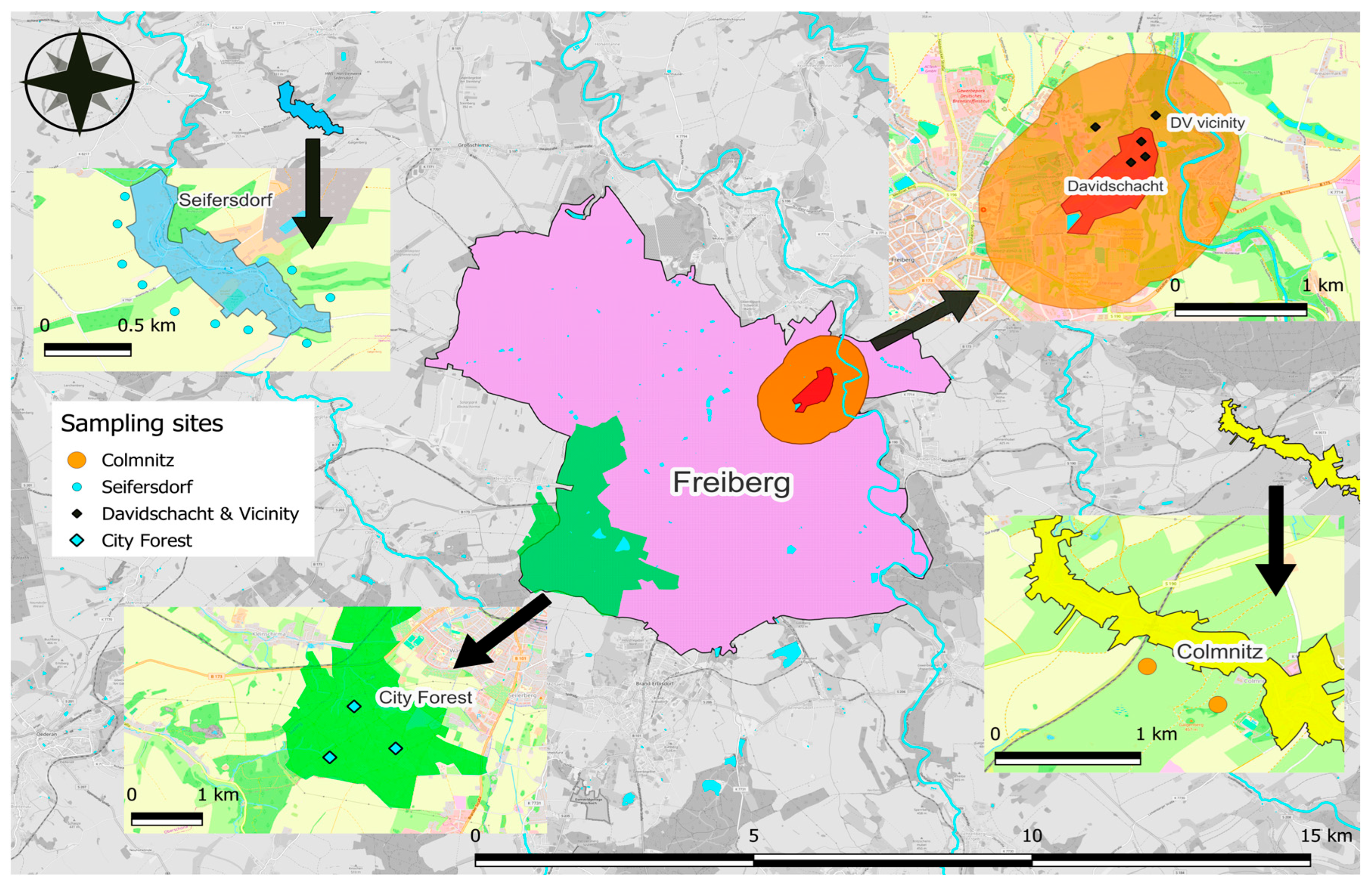
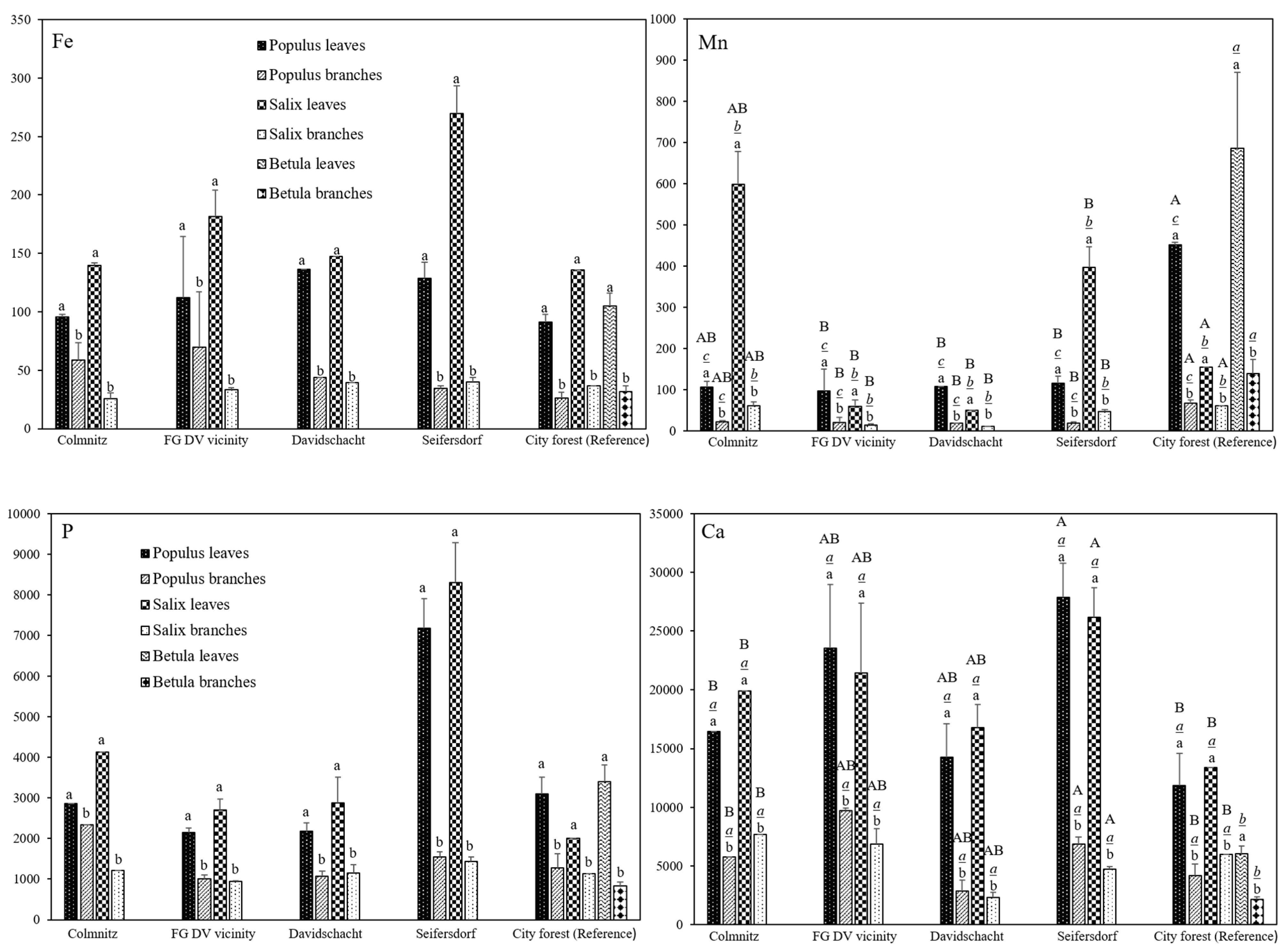
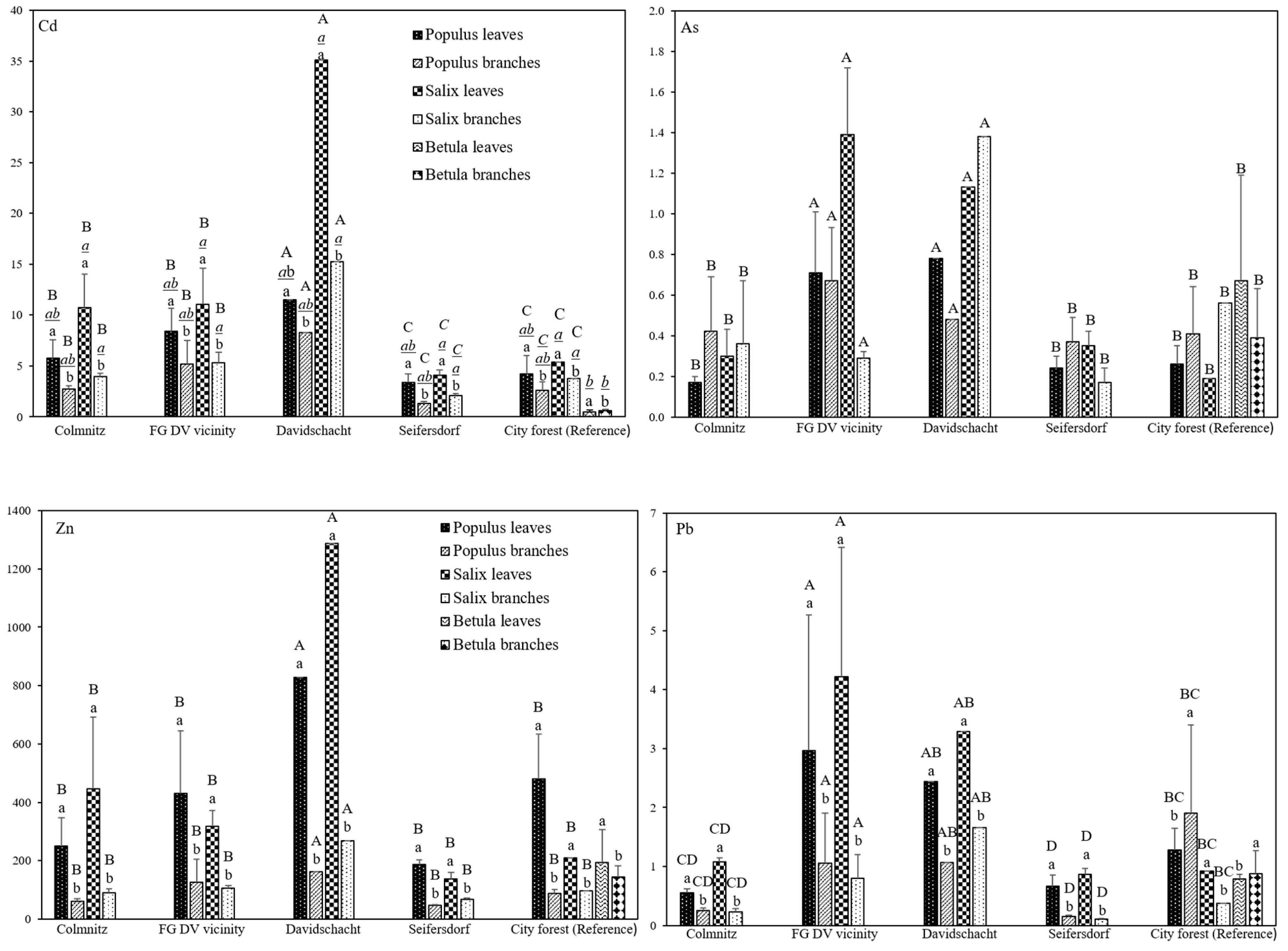
Soil pollution is a global threat that seriously affects biodiversity in (agro)ecosystems and may compromise water and food quality. Therefore, the ability of tree species (Populus tremula, Salix caprea, and Betula pendula) to accumulate and phytoextract specific toxic heavy metals from soil was investigated. The study was conducted in and near relict mining areas of Freiberg (Germany) and sampling sites selected according to their spatial location relative to potential sources of metal(loid)s. The concentrations of geogenic (P, Fe, Mn, Ca) and pollutant (Pb, Cd, Zn, As) elements in soil and the present trees were measured using ICP-MS. The highest total soil concentrations of As (8978 µg g−1) were found within the Davidschaft mining area, and for soil Pb, both in the Davidschaft vicinity (328 µg g−1) and mining area (302 µg g−1). Unexpectedly, the highest soil Zn (0.64 mg g−1) and Cd (3.5 mg g−1) concentrations were found in Freiberg city Forest. The lowest soil concentrations of pollutants (As, Cd, Pb, and Zn) were recorded for Seifersdorf. Total soil P was highest in Colmnitz, but Ca, Mn, and Fe concentrations were very similar across all sites. The available concentration of all measured toxic elements in the soil generally decreased in the order Davidschaft > Davidschaft vicinity, Colmnitz > Seifersdorf = Freiberg city forest. All studied tree species had higher concentrations of the essential elements in leaves than in branches. Generally, higher values of bioaccumulation coefficients (especially for Cd) were found for Salix caprea compared with Populus tremula and Betula pendula.
Keywords: contaminated soil; heavy metals; trees compartment; phytoremediation; bioaccumulation contaminated soil; heavy metals; trees compartment; phytoremediation; bioaccumulation