Next Article in Journal
Soil Physical Properties, Root Distribution, and “Ponkan” Tangerine Yield Across Different Rootstocks in a Deep Tillage Ultisol
Previous Article in Journal
No-Till and Crop Rotation Are Promising Practices to Enhance Soil Health in Cotton-Producing Semiarid Regions: Insights from Citizen Science
 
 
Correction published on 28 October 2025, see Soil Syst. 2025, 9(4), 117.
Article

Processing Municipal Waste for Phytostabilization of Heavy Metal Contaminated Soils

by
Shohnazar Hazratqulov
1,2,*,
Georgina von Ahlefeldt
1,
Rui Liu
1,
Holger Bessler
1,
Hernán Almuina-Villar
3,
Alba Dieguez-Alonso
4 and
Christof Engels
1
1
Section Plant Nutrition and Fertilization, Albrecht Daniel Thaer-Institute for Agricultural and Horticultural Science, Humboldt-Universität zu Berlin, Albrecht-Thaer Weg 4, 14195 Berlin, Germany
2
Department of Agrochemistry and Plant Protection, Institute of Agrobiotechnology and Food Security, Samarkand State University named after Sharof Rashidov, University Boulevard 15, Samarkand 140104, Uzbekistan
3
Chair of Energy Process Engineering and Conversion Technologies for Renewable Energies, Technische Universität Berlin, Straße des 17. Juni 135, 10623 Berlin, Germany
4
Laboratory of Transport Processes, Faculty of Biochemical and Chemical Engineering, TU Dortmund University, Emil-Figge-Straße 68, 44227 Dortmund, Germany
*
Author to whom correspondence should be addressed.
Soil Syst. 2024, 8(4), 109; https://doi.org/10.3390/soilsystems8040109

Submission received: 5 September 2024 / Revised: 16 October 2024 / Accepted: 17 October 2024 / Published: 24 October 2024 / Corrected: 28 October 2025

Abstract

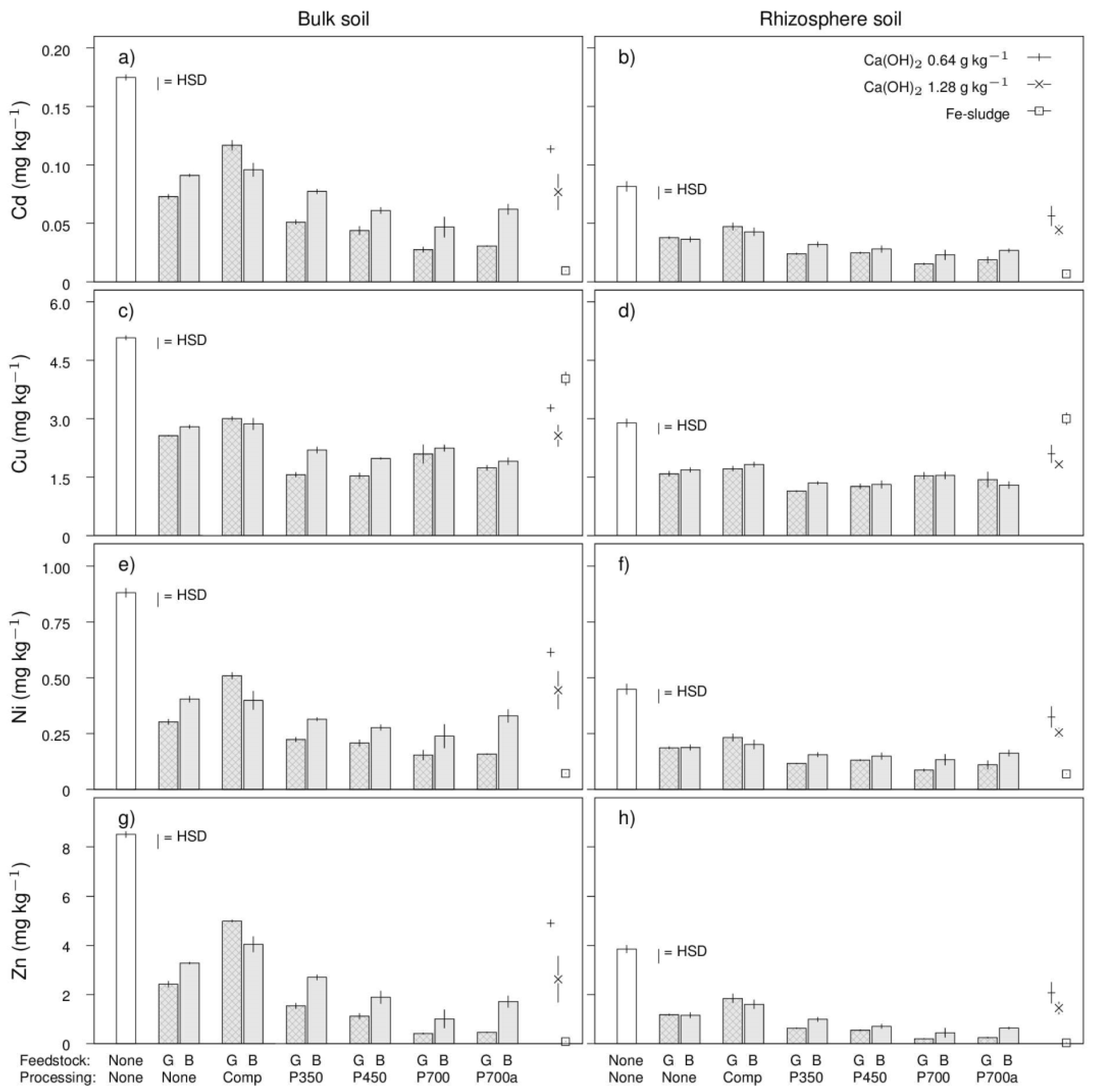
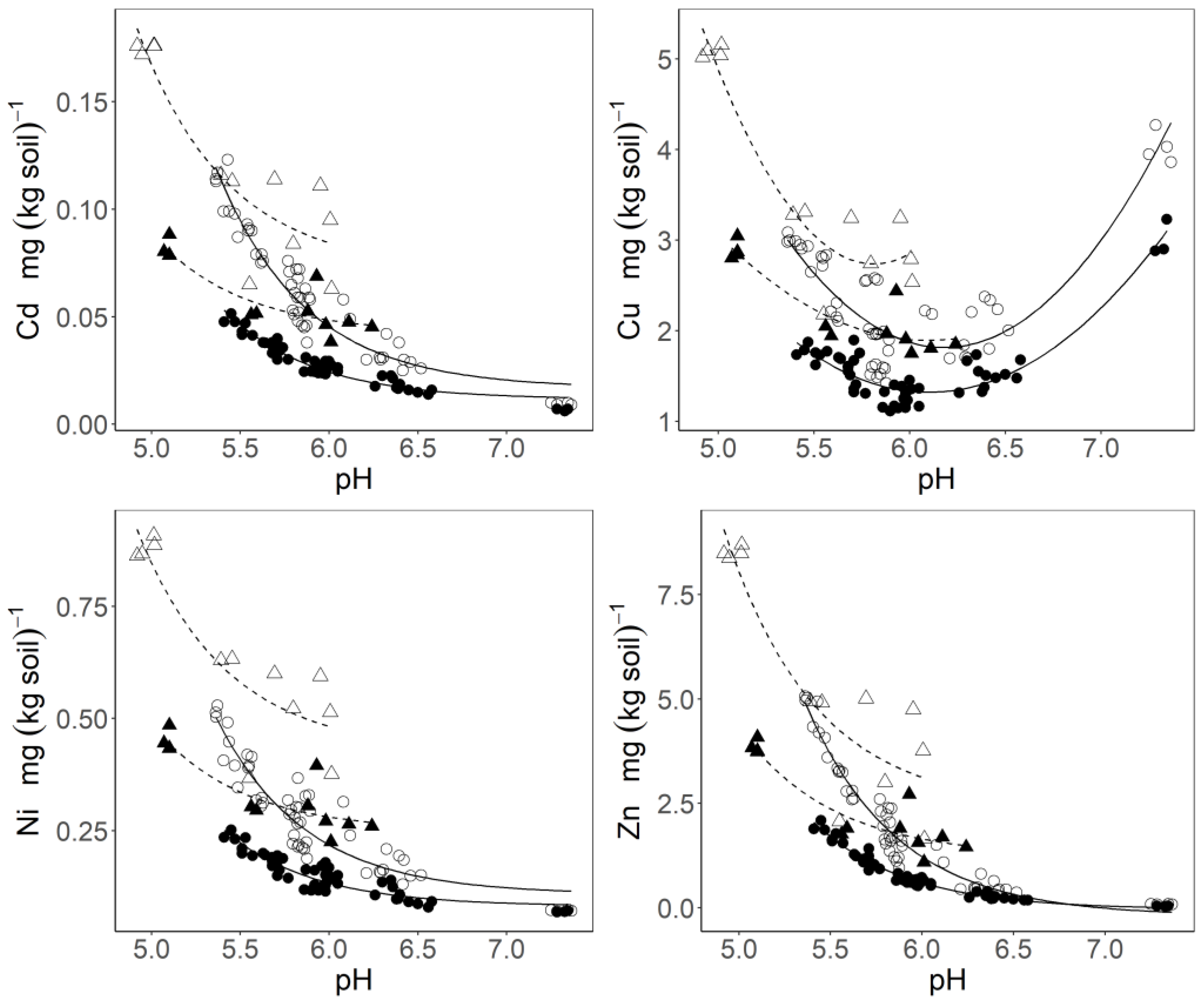
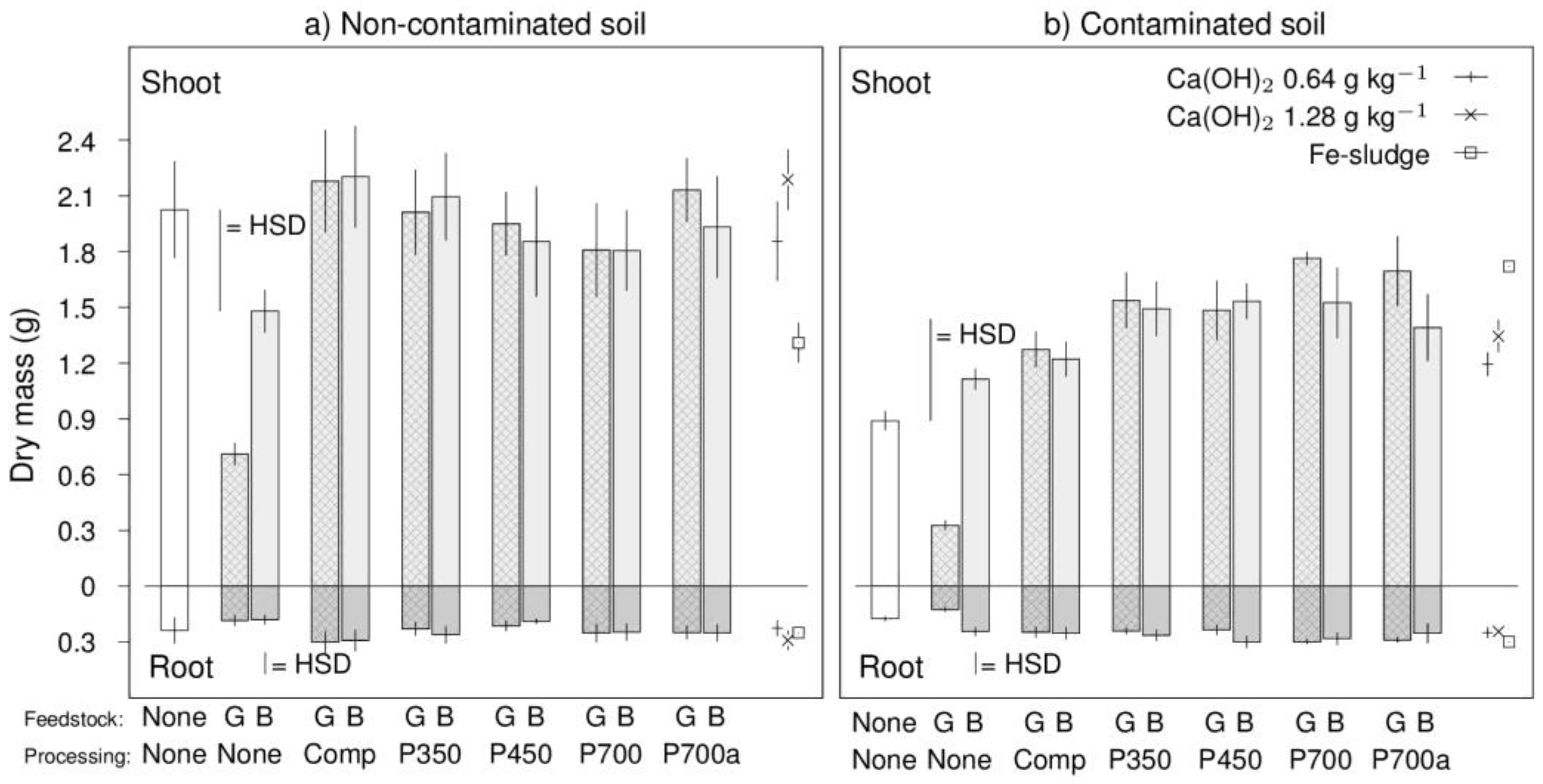
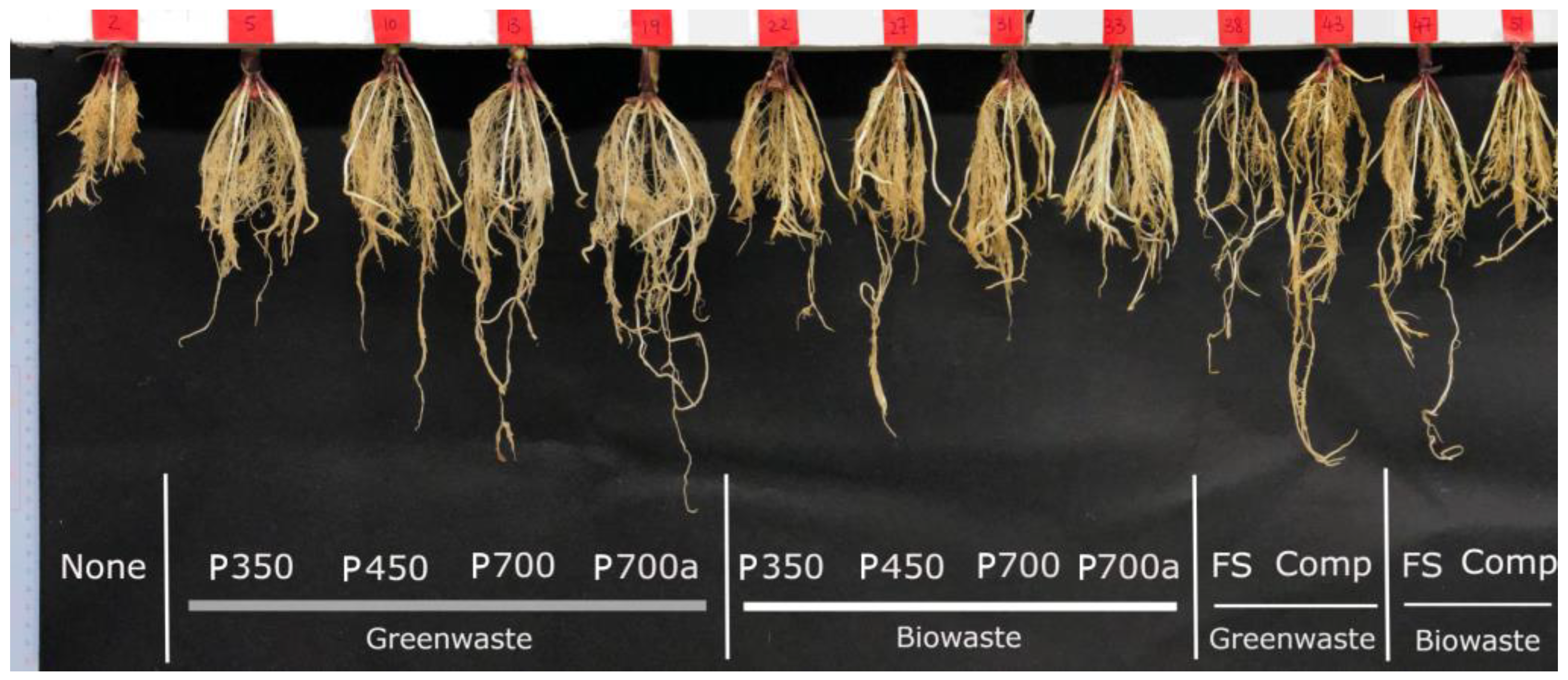
Background: Organic amendments are often used for the phytostabilization of heavy metal-contaminated soils. This study investigated the suitability of different municipal waste processing methods for phytostabilization. Methods: The two feedstocks, biowaste, and green waste, were tested without pretreatment after composting or after pyrolysis at different temperatures and atmosphere compositions. The suitability of the differently pretreated amendments for phytostabilization was tested on sewage farm soil contaminated with Cd, Cu, Ni, and Zn by measurement of maize growth, mineral content, and mobile heavy metal concentrations in the bulk and rhizosphere soil. Results: In contaminated soils, shoot and root growth increased markedly due to the soil amendments. Shoot concentrations of all four heavy metals were significantly higher in contaminated than non-contaminated soil, whereas Fe concentrations were lower in contaminated soil. The amendments increased shoot Cd concentrations and did not significantly affect the other elements. In contaminated soil, concentrations of heavy metals were generally lower in the rhizosphere than in the bulk soil. The soil amendments markedly lowered soil heavy metal concentrations, whereby the decrease was significantly influenced by feedstock and pretreatment. The differences in the amendments’ ability to reduce the soil mobile heavy metals were primarily, but not exclusively, determined by their effect on soil pH. Conclusion: The feedstock processing conditions significantly influenced the phytostabilization performance of green waste and biowaste. Optimal processing for phytostabilization depends on the heavy metal most important in the contamination of a specific site.
Keywords: biowaste; green waste; biochar; phytoremediation; sewage farm; rhizosphere biowaste; green waste; biochar; phytoremediation; sewage farm; rhizosphere