


Abstract
The growing need for biomass waste recycling has led to increased interest in hydrothermal carbonization, which produces hydrochar as a by-product. This carbonaceous material can be applied in agriculture; however, its role in soil health is still not fully understood. Data on the effects of hydrochar on enzymatic activity, one of the key indicators of biological soil health, remain limited and contradictory. This study demonstrates the effects of hydrochars derived from alder wood chips, produced at three temperatures (180, 200, and 220 °C) and residence times (30, 60, and 90 min), on soil enzyme activity and the early seedling response of winter wheat (Triticum aestivum). Dehydrogenase and urease activities increased by 29–45% and 70–169% (p < 0.05), respectively, in hydrochar-amended soil compared with control soil. Hydrochars had no effect on catalase activity and, conversely, negatively affected invertase activity, reducing it by 19–47% relative to the control. Phosphatase activity showed an ambiguous response. It was found that hydrochars H180_90, H200_90, and H220_90 increased the geometric mean of enzyme activities by 17%, 22%, and 18%, respectively, which apparently indicates the advantages of these production conditions in terms of achieving the most positive effects on enzymatic activity. These findings highlight the importance of hydrothermal carbonization conditions in determining the enzyme-specific effects of hydrochar on soil biochemical functioning.
1. Introduction
Soil degradation and the progressive decline in soil fertility represent one of the most pressing global environmental challenges of the 21st century [1]. These processes are driven by the combined effects of climate change, intensive agricultural practices, and increasing anthropogenic pressure on terrestrial ecosystems [2,3]. Soil degradation has a direct impact on nutrient loss, salinisation, acidification and desertification of the soil cover. Indirectly, it affects the country’s food security by reducing the agricultural productivity of the soil [4]. Addressing soil degradation and ensuring long-term soil functionality have therefore become central objectives in both environmental science and sustainable land management. Extensive research efforts worldwide have been devoted to understanding the mechanisms of soil degradation and identifying effective strategies for soil restoration and resilience enhancement [5,6,7]. Current soil improvement strategies predominantly focus on increasing soil organic matter content, improving soil structure, and enhancing nutrient availability and fertility [8]. Such strategies include, for example, the application of manure, plant residues and agro-industrial waste, minerals, the inoculation of microbial consortia, phytoremediation, zero tillage and others [9,10]. Given that soil is a largely non-renewable resource on human timescales, the development of sustainable approaches for restoring and maintaining soil quality is of critical importance.
Among the proposed strategies, the incorporation of carbon-based amendments has been widely recognized as an effective approach for improving soil physicochemical and biological properties [11]. In particular, hydrochar—a carbon-rich material produced via hydrothermal carbonization in subcritical water conditions, usually from 180 to 260 °C—has attracted increasing attention due to its distinctive chemical composition, characterized by a carbon content of 40–70% and an abundance of hydroxyl, carbonyl, carboxyl functional groups, relatively high atomic ratios of hydrogen to carbon (0.5–1.5) and oxygen to carbon (0.2–0.4), and a pH of 3–7 [12]. In contrast, biochar is produced by pyrolysis of biomass at a temperature of 300–700 °C in the absence of oxygen. The carbon content of biochar varies from 60 to 85%; it is rich in aromatic C=C, carboxyl and phenol functional groups, with an H/C molar ratio < 0.4, an O/C molar ratio < 0.2 and a pH > 7 [13]. These properties differentiate hydrochar from conventional biochar and influence its interactions with soil systems. Agriculture represents one of the most promising application domains for hydrochar [14]. Previous studies have demonstrated that hydrochar can enhance plant growth through the gradual release of nutrients, improve soil porosity, reduce bulk density, and stimulate soil microbial activity, thereby contributing to overall soil functionality and fertility [15,16,17]. Soil pH is a master variable governing the composition and activity of the soil microbial community, and even moderate shifts in pH can restructure bacterial and fungal populations, with cascading effects on the enzymes they produce. Alkaline biochars typically raise the pH of acidic soils through a liming effect, thereby altering microbial community structure and function. Hydrochars, by contrast, are generally acidic, so their influence on soil pH and the associated microbial and enzymatic response depends strongly on the application rate and the buffering capacity of the receiving soil, and acts alongside the direct input of labile carbon and nutrients.
Soil health can be assessed through the abundance of microorganisms and the level of enzymatic activity [18,19,20]. Soil enzymes serve as sensitive indicators of soil biochemical processes and play a crucial role in the transformation of organic matter and the cycling of essential nutrients. Enzymatic activities reflect the soil redox potential, as represented by dehydrogenases and catalase, and are integral components of major biogeochemical cycles, including carbon (invertase), nitrogen (urease), and phosphorus (phosphatase). Therefore, investigating the activity of these enzymes is of high importance for evaluating soil functionality and overall soil health.
Enzymes are involved in all biochemical processes occurring in soil. Each enzyme is assigned a four-component Enzyme Commission (EC) number, which defines its position within the IUBMB enzyme classification system based on the type of reaction it catalyzes [21]. Catalase (EC 1.11.1.6) is an antioxidant enzyme present in almost all living cells that catalyses the decomposition of H2O2 into H2O and O2; by doing so, it protects the soil biota from oxidative stress, and because its activity is positively associated with aerobic microbial abundance and organic matter, it serves as an indicator of aerobic metabolic activity and soil fertility. Dehydrogenases (EC 1.1.1) occur only within living cells and are central to the respiratory electron-transport chain, oxidising organic compounds through dehydrogenation reactions; their activity therefore directly depends on microbial abundance and is one of the most reliable proxies for total oxidative microbial activity and living biomass, responding rapidly to soil amendments and serving as a sensitive early indicator of soil biological status. Invertases (EC 3.2.1.26), which can occur both intracellularly and extracellularly, hydrolyse sucrose into glucose and fructose via a β-fructofuranosidic bond; as a key enzyme of the soil carbon cycle, invertase makes readily available carbon and energy accessible to microorganisms, regulating the early steps of organic-carbon turnover, and its activity reflects the intensity of C mineralisation and the availability of labile substrates. Urease (EC 3.5.1.5) catalyses the hydrolysis of urea into ammonia and carbon dioxide in both intracellular and extracellular forms and governs a rate-limiting step of the nitrogen cycle by supplying plant-available ammonium; while essential for nitrogen (N) supply, excessive urease activity can accelerate ammonia volatilisation and N loss, making it an important indicator of N transformation and fertiliser-N use efficiency. Phosphatase (EC 3.1.3.1–2) catalyses the hydrolysis of phosphate esters to inorganic phosphorus, with microorganisms as the primary source; central to the phosphorus cycle, it mineralises organic phosphorus into inorganic phosphate available to plants and microorganisms, and because its synthesis by both roots and microbes is up-regulated under P limitation, phosphatase activity is a sensitive indicator of soil P availability and biological P demand.
The application of hydrochars and biochars affects soil enzymatic activity in different ways. Feng et al. [22] reported that 60 days after the start of the experiment, inhibition of soil urease and acid phosphatase was an average of 59.4% and 20.3%, respectively, which are associated with nitrogen and phosphorus cycling following the application of 1.5% hydrochars derived from pig manure and cattle manure at temperatures of 180 °C, 220 °C and 260 °C for 1 h. Jafari Tarf et al. [23] reported that hydrochars produced from sewage sludge, poultry manure, and olive oil solid waste (220 °C for 120 min) at concentrations of 1%, 2% and 4% exerted mixed effects on soil enzymatic activity; however, they showed a greater positive impact on biological properties (activities of enzymes such as urease, alkaline phosphatase, and β-glucosidase) compared to biochars 120 days after application. Watson et al. [24] reported that doses of 2.5 and 5% hydrochar derived from maize biogas digestate feedstock (220 °C for 60 and 360 min) promote changes in soil chemical properties and provide labile carbon after 28 days, which increased microbial respiration by more than twofold and microbial biomass in contaminated soil. Changes in microbial activity may occur as a result of indirect alterations in soil properties, such as pH. However, data on the effects of hydrochars on soil enzymatic activity remain limited. Most studies do not cover the full range of enzymes involved in the cycling of major biogenic elements, do not focus on the sensitivity of individual enzymes, and do not perform deeper analyses of the relationships between soil properties and hydrochar-induced effects [23,25].
The aim of this study was to assess the effects of hydrochars derived from woody biomass on the enzymatic activity of Haplic Chernozem. A model experiment was conducted to test nine hydrochar variants produced at different temperatures and residence times. The phytotoxicity of the hydrochars and early seedling response were evaluated, and optimal hydrothermal reaction conditions were identified that produced the most favorable effects on soil biological activity.
2. Materials and Methods
2.1. Hydrochar Production and Characterization
Alder wood biomass was used as the feedstock for hydrochar production. Alder is a fast-growing tree species widely used in furniture manufacturing, construction, and urban landscaping. To enhance the economic value of the wood and maintain tree health, pruning practices are commonly applied [26,27]. The pruned alder branches were crushed into wood chips with a particle size of 5–7 mm using FCF/CJF series equipment manufactured by Zhengzhou KeDa Machinery. Hydrochar was produced using the Bench Top Reactor 4520 (Parr Instrument Company, Moline, IL, USA). HTC conditions, including temperatures of 180, 200 and 220 °C, a residence time of 30, 60 and 90 min, and a water-to-biomass ratio of 1:10 (w/w), were selected based on studies by Congsomjit & Areeprasert [28] and Heidari et al. [29], highlighting their significant impact on hydrochar properties. After processing, the solid material was washed three times with distilled water, filtered, and dried in an oven at 105 °C until completely dry [30].
The pH values of the hydrochar were measured using a potentiometric method. For this purpose, the hydrochar sample was mixed with deionized water at a ratio of 1:5. The suspension was then shaken for 60 min at 180 rpm and allowed to settle for 5 min before pH measurement.
Specific surface area (SSA) and key porosity parameters, such as pore diameter (Dp) of the hydrochar samples were determined using a volumetric analyzer ‘ASAP—Accelerated Surface Area and Porosimetry, 2020’ by the method of low-temperature nitrogen adsorption. Before measurements, hydrochar samples were activated at 110 °C for 12 h under dynamic vacuum conditions according to Polyakov et al. [31]. The surface area and porosity parameters were calculated using the Brunauer–Emmett–Teller (BET) method with N2 in the equilibrium range of P/P0 = 0.05–0.33. The pore size distribution was calculated using the non-local density functional theory (NLDFT) method [32].
The elemental composition of the hydrochar samples (C, H, N) was determined by dry combustion using a CHN elemental analyzer (TOC-L CPN Shimadzu, Kyoto, Japan). The total ash content was measured by burning the samples in a muffle furnace at 900 °C for 3 h.
2.2. Soil Collection and Characterization
The soil used in the incubation experiment was collected from an arable site within the Botanical Garden of the Rostov Region, southern Russia (47.234178, 39.648669), at a depth of 0–20 cm. The soil is classified as ordinary carbonate chernozem soil (Haplic Chernozem) according to the World Reference Base for Soil Resources [33] and is characterized by 52.1 ± 2.7% clay, 25.2 ± 1.5% silt, CaCO3 content of 0.5 ± 0.1%, a cation exchange capacity of 41.1 ± 2.2 cmolc/kg and soil density of 1.1 g/cm3. The soil was air-dried and sieved through a 1 mm mesh prior to analysis. The physicochemical properties of the soil included the determination of soil texture, total organic carbon, active carbon (Cact), and pH. Soil texture was determined by the pipette method (using the pyrophosphate procedure of soil preparation) [34]. Total organic carbon was determined by dry combustion using a high-frequency furnace SES-702 (SiChuan Syens Instrument Co., Ltd., Deyang, China). For pH determination, soil samples were mixed with deionized water at a ratio of 1:2.5, shaken for 60 min at 180 rpm, and allowed to settle for 5 min prior to pH measurement. Active carbon was determined using a modified Blair method [35], based on the oxidation of carbon with a potassium permanganate solution.
2.3. Enzyme Activity
Enzymatic activity was determined using standard methods. Two classes of enzymes were investigated: oxidoreductases (catalase and dehydrogenases) and hydrolases (invertase, urease, and phosphatase) involved in biogenic cycles. Catalase activity was measured using the gas-volumetric method [36]. A sample (1 g) of soil is introduced into one of the compartments of the double flask. A total of 5 mL of a 3% solution of hydrogen peroxide is poured into another compartment of the flask. The flask is tightly closed with a rubber stopper with a glass tube, which is connected to the measuring burette using a rubber hose. Catalase activity is expressed as milliliters of O2 released per 1 min from 1 g of soil (mL O2 g−1 min−1). Dehydrogenase activity was analyzed via the reduction of the 2,3,5-triphenyltetrazolium chloride (TTC) to a red-colored 2,3,5-triphenyl formazan (TPF) with 1 mL 0.1 M glucose solution added as a source of organic carbon. After an incubation period of 24 h at 30 °C, we extracted TPF with ethanol and measured the optical density of the solution at 540 nm. Dehydrogenase activity is expressed as milligrams of TPF per 10 g of soil over 24 h (mg TPF/10 g/24 h) [36]. 5 mL of a 3% sucrose solution and a drop or two of toluene are added to 1 g of soil. The flasks are sealed with stoppers and incubated at 30 °C for 24 h. After incubation, 25 mL of distilled water is added to the flasks, shaken and filtered. 5 mL of filtrate is taken with a pipette and mixed with 5 mL of Fehling reagent. The bright blue solution is heated in a boiling water bath for 10 min. The cooled tubes are centrifuged for 1–3 min at 1500–3000 rpm. Colorimetric measurements were performed at a wavelength of 630 nm. Invertase activity is expressed as milligrams of glucose per 1 g of soil over 24 h (mg glucose g−1 24 h−1). The method for determining urease activity is based on the procedure proposed by Galstyan [36], but modified by using the Nessler reagent to quantify ammonium nitrogen in soil. 5 mL of 3% urea and 1–2 drops of toluene are added to the sample (1 g) of soil. The flasks are sealed with stoppers, shaken and placed in a thermostat at 30 °C for 24 h. At the end of incubation, 15 mL of 0.05 n NaCl solution is added to the flask and shaken steadily for 5 min to expel ammonia from the soil. The contents of the flask are filtered through a folded filter. Take 0.2–10 mL of filtrate with a pipette (depending on the ammonia content; for chernozems, it is about 0.5 mL, as was taken in this study), and pour 25 mL of distilled water. Pour 2 mL of 30% ferruginous salt solution. Then 2 mL of Nessler’s reagent is added and mixed. The resulting solution is diluted with water up to 50 mL. Colorimetry is carried out on a photocolorimeter in cuvettes with a diameter of 10 mm at a wavelength of 400 nm. Urease activity is expressed as milligrams of N–NH4 per 10 g of soil per day (mg N–NH4/10 g 24 h−1). 5 mL of distilled water and 1 mL of 0.1% sodium p-nitrophenyl phosphate solution are added to 1 g of soil. The flasks are sealed with stoppers and incubated for 1 h at 37 °C. After incubation, 1 mL of CaCl2 (0.5 M) and 5 mL of NaOH (0.5 M) are added to the suspension, then filtered. The filtrate color intensity is measured on a photocolorimeter (wavelength 400 nm). Phosphatase activity was determined using a modified method of Tabatabai and Bremner [37], with sodium p-nitrophenyl phosphate used as the substrate. Soil enzyme activities were measured in aqueous solutions without buffers, as recommended for biodiagnostics [38,39].
2.4. Experimental Design—Incubation Study
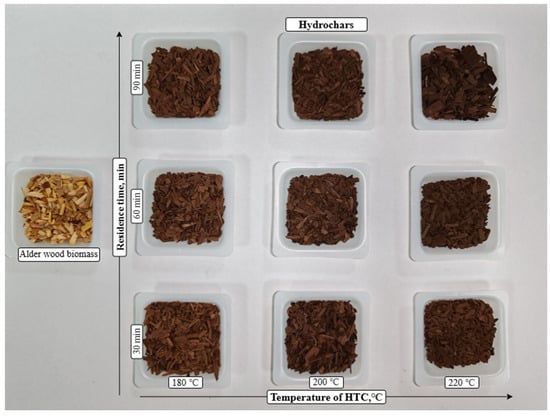
In the model experiment, 200 g of soil was placed into 350 mL containers. Dry hydrochar was added to the soil at a rate of 1% of the soil dry mass (16.5 t/ha when applied to a 15 cm soil layer) [40,41]. Prior to application, the hydrochar was ground and sieved through a 1 mm mesh to ensure better mixing with the soil. In total, nine hydrochar variants were tested. Soil moisture was controlled gravimetrically and maintained at 40%. The containers were covered with lids containing four holes to reduce evaporation and allow gas exchange (Figure S1, Supplementary Materials). Figure 1 shows the investigated hydrochars.
Figure 1.
Raw biomass and produced hydrochars.
Soil incubation with hydrochars lasted 30 days, after which a portion of the soil was sampled for analysis. Winter wheat grains (Triticum aestivum) of the cultivar “Alekseich” (family Poaceae) were then sown into the remaining soil at a rate of 10 seeds per container and grown under laboratory conditions at a controlled room temperature (25 ± 2 °C) and under phytolamp illumination (light/dark cycle 16/8 h). Ten days after seed emergence, germination rate, root length, shoot length, and biomass of the test culture were measured. The experiment was conducted in triplicate. The total number of containers was 30. The experimental design is presented in Table 1.
Table 1.
Experimental design.
In addition to the incubation experiment, the phytotoxicity of the hydrochar water extract was assessed. The phytotoxicity of hydrochar was evaluated based on the biological effect of its aqueous extract [42] on radish seeds (Raphanus sativus). Seed germination tests using aqueous extracts to assess the phytotoxicity of carbonaceous materials have been widely applied in previous studies [43,44]. The analysis of the hydrochar aqueous extract allows the intrinsic phytotoxicity to be evaluated in the absence of soil. In this study, hydrochar was mixed with distilled water at a ratio of 1:10 and kept in a flask at room temperature for 24 h. The suspension was then filtered. Filter paper discs placed in sterilized Petri dishes were moistened with 5 mL of the obtained hydrochar aqueous extract. Twenty-five radish seeds, previously tested for viability, were placed in each dish. Germination was determined after 7 days.
2.5. Assessment of Soil Enzyme Activity
Based on the obtained enzymatic activity results, the geometric mean of enzyme activities (GMea) was calculated [45]:
where represents the activity of an individual enzyme and is the number of enzymes included.
This GMea calculation approach was modified in the present study: enzyme activities were expressed in relative units, with control values set to 100%.
2.6. Statistical Analysis
All results were statistically analyzed using the STATISTICA 10 (StatSoft, Tulsa, OK, USA) software package. Statistical analysis was performed using analysis of variance (ANOVA). Each treatment was carried out in three independent biological replicates (separate containers). From each container, two (phosphatase, invertase, urease, catalase) and three (dehydrogenases) analytical measurements (technical replicates) were carried out to determine the activity of each enzyme and each physicochemical parameter. These technical replicates were included in the ANOVA analysis as individual data points, rather than being averaged prior to analysis, to account for analytical variability. Thus, the total number of observations in the ANOVA analysis reflects the combined number of biological and technical replicates. One-way ANOVA followed by Tukey’s honestly significant difference post hoc test was used to compare all experimental groups (including control) and to identify significant differences between individual treatments. Two-way ANOVA was applied to evaluate the main effects of temperature, residence time, and their interaction on enzyme activity. In all cases, differences were considered statistically significant at p < 0.05. Data are presented as mean ± standard deviation (SD). The overall response of soil variables to hydrochar application was analyzed using principal component analysis (PCA). The PCA included eight variables: pH, C_act, total organic carbon (TOC), dehydrogenase activity (DEH), catalase activity (CAT), urease activity (URE), phosphatase activity (PPH), and invertase activity (INV). In the resulting plot, the scores of each of 30 samples and loadings of soil variables (dark vectors) were shown along the Principal Components (PC; axes 1 and 2). The further away these vectors were from a PC origin, the more influence they had on PC. The Pearson correlation coefficient () is used to determine the strength of the relationship between two variables. The relationship is linear in nature. The values of range from −1 to 1. The closer the values are to −1 or + 1, the stronger the relationship between the variables [46]. There is a scale for assessing the correlation coefficient, where the absolute values of are characterized as follows: > 0.9—very high correlation; 0.7–0.89 high correlation; 0.4–0.69 moderate correlation; 0.1–0.39 weak correlation; 0–0.1—negligible correlation [47]. All figures were prepared using OriginPro 2021 software (OriginLab Corp., Northampton, MA, USA).
3. Results and Discussion
3.1. Properties of Hydrochars Produced Under Different HTC Conditions
The results of elemental analysis showed that the fixed carbon content increased with both increasing temperature and residence time. The highest carbon content was observed for the hydrochar produced at 220 °C with a residence time of 30 min; however, with further increases in temperature and residence time, the carbon content began to decrease. A similar trend was observed for nitrogen. Since the initial alder biomass contains a low amount of ash-forming elements, the ash content of the hydrochars was also low. With increasing temperature and residence time, a decrease in pH toward more acidic conditions was observed (from 5.58 for alder chips to 4.41 for hydrochar). The lowest pH values (4.21) were recorded for hydrochars produced at 220 °C for 90 min.
Mäkelä et al. [48] reported that the fixed carbon content increases with increasing temperature and residence time. In the study by Wang et al. [49], an increase in temperature from 150 to 240 °C led to higher fixed carbon content, accompanied by an increase in pH. However, other studies have reported that due to the formation of acidic functional groups, the pH of hydrochars shifts toward acidic values [50]. Woody biomass is composed of hemicelluloses (which begin to decompose at around 180 °C), cellulose (≈220 °C), and lignin (>250 °C) [51]. During the hydrothermal reaction, starting at approximately 180 °C, wood begins to decompose with the formation of large amounts of organic acids, while at higher temperatures (>250 °C) phenolic compounds are formed [52].
No clear relationships were identified between temperature, residence time, and the porosity parameters of the hydrochars. Surprisingly, the hydrochar produced at the lowest temperature and shortest residence time exhibited the highest specific surface area. The largest pore diameters were observed for hydrochars produced at 220 °C with residence times of 30 and 90 min. Zhu et al. [53] reported that increasing the hydrothermal carbonization temperature up to 300 °C led to a decrease in the specific surface area and total pore volume of hydrochar derived from Salix psammophila by 35% and 37%, respectively. Thunshirn et al. [54] reported that both HTC temperature and residence time have a direct influence on the specific surface area. In contrast, Kambo and Dutta [55] observed an opposite trend, showing that increasing temperature promotes the release of organic substances and, consequently, an increase in SSA and average Dp. However, at temperatures above 260 °C, devolatilization and condensation of volatile organic compounds occur, leading to pore blockage and a decrease in SSA and Dp. Longer residence times promote more complete decomposition of woody biomass, resulting in higher porosity and surface area. Gao et al. [56] found that increasing the residence time from 30 min to 24 h led to an increase in SSA and Dp (Table 2).
Table 2.
Properties of hydrochars produced from alder wood chips under different HTC conditions.
3.2. Soil Property Responses to Hydrochar Application
Table 3 provides a summary of the changes in soil properties following hydrochar incorporation. As for the pH of the soil, which could have been expected to decrease, given the low pH of hydrochar, the results showed the opposite trend.
Table 3.
Effects of hydrochars on soil characteristics.
Despite the acidic nature of the applied hydrochars, their addition to the near-neutral, strongly buffered soil did not acidify it; instead, a slight but statistically significant increase in pH of 0.2–0.3 units was observed in several treatments (H180_30, H200_30, H200_90, H220_90; p < 0.05), while the soil remained near-neutral. The high buffering capacity of the carbonate chernozem (CaCO3, CEC = 41.1 cmolc/kg) neutralised the limited acidity introduced with the 1% amendment, and mineralisation of labile hydrochar-derived carbon during incubation, releasing basic cations and consuming protons, likely contributed to the slight alkalisation. Similar observations were reported by Jafari Tarf et al. [23], who found that hydrochars derived from sewage sludge and poultry manure, applied at rates of 1, 2, and 4%, did not cause statistically significant changes in soil pH. Likewise, Azimzadeh et al. [57] reported no significant pH alteration in soils amended with hydrochars produced from apple wood chips. Overall, the effect of hydrochar on soil pH is strongly influenced by application rate, soil buffering capacity, and the initial soil pH [58].
Total organic carbon (TOC) increased in the treatments amended with hydrochars. Khosravi et al. [59] also reported that the increase in soil organic matter is primarily associated with its direct input via hydrochar application. Active carbon increased as well; however, a statistically significant difference was observed only in the treatment amended with hydrochar H220_90 (p < 0.05). Active carbon represents the fraction of labile carbon readily available to plants and microorganisms. In the study by Watson et al. [24], an increase in microbial biomass following the application of hydrochars derived from maize digestate was attributed to the input of labile carbon.
3.3. Soil Enzymatic Activity
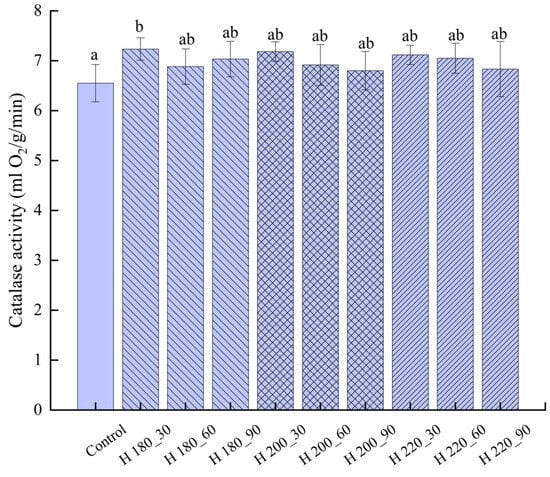
The results of soil enzymes on the 30th day of the model experiment demonstrated different responses to the introduction of hydrochar. Catalase activity is shown in Figure 2. Catalase proved to be an enzyme with low sensitivity to hydrochar amendment. A statistically significant difference from the control was observed only for the treatment with hydrochar H180_30, where catalase activity increased by 10.4%. In the other treatments, catalase activity also increased by 3.8–9.7%; however, these differences were not significant compared with the control (p > 0.05). According to a two-factor analysis of variance, the interaction between temperature and residence time did not reach statistical significance (F(4, 45) = 0.54, p = 0.706), which indicates an independent effect of these factors on catalase activity. The main effect of residence time was significant (F(2, 45) = 3.45, p = 0.041), while the main effect of temperature was not statistically significant (F(2, 45)= 0.26, p = 0.771). This allows us to conclude that in the studied temperature range (180–220 °C), a temperature change does not affect catalase activity, whereas an increase in residence time leads to a significant change in it.
Figure 2.
Catalase activity. Error bars represent the standard deviation (SD). Means that do not share the same letter are significantly different (p < 0.05).
Wojewódzki et al. [60] reported that biochar derived from municipal sewage sludge increased catalase activity, whereas the addition of biochars produced from mellow compost and various woody wastes resulted in a decrease in catalase activity. Catalase activity varied depending on the type of hydrochar applied: it increased with hydrochars derived from thistle and decreased following treatment with sorbents produced from wastewater [61]. Taheri et al. [62] reported that biochar derived from sunflower stalks increased catalase activity by 13%. Wang et al. [63] found that low application rates of wheat straw biochar significantly reduced catalase activity by 33%, whereas application rates above 1% increased catalase activity by up to 2.5 times. Czimczik and Masiello [64] explained the positive effects of biochar by increases in soil organic matter content and improvements in soil porosity and aeration, which in turn create more favorable conditions for microbial growth and activity, ultimately enhancing catalase activity.
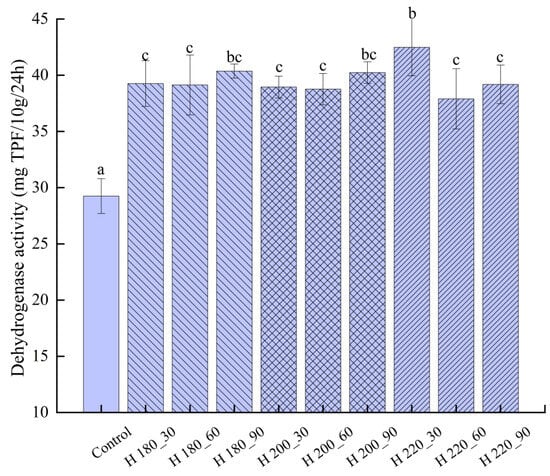
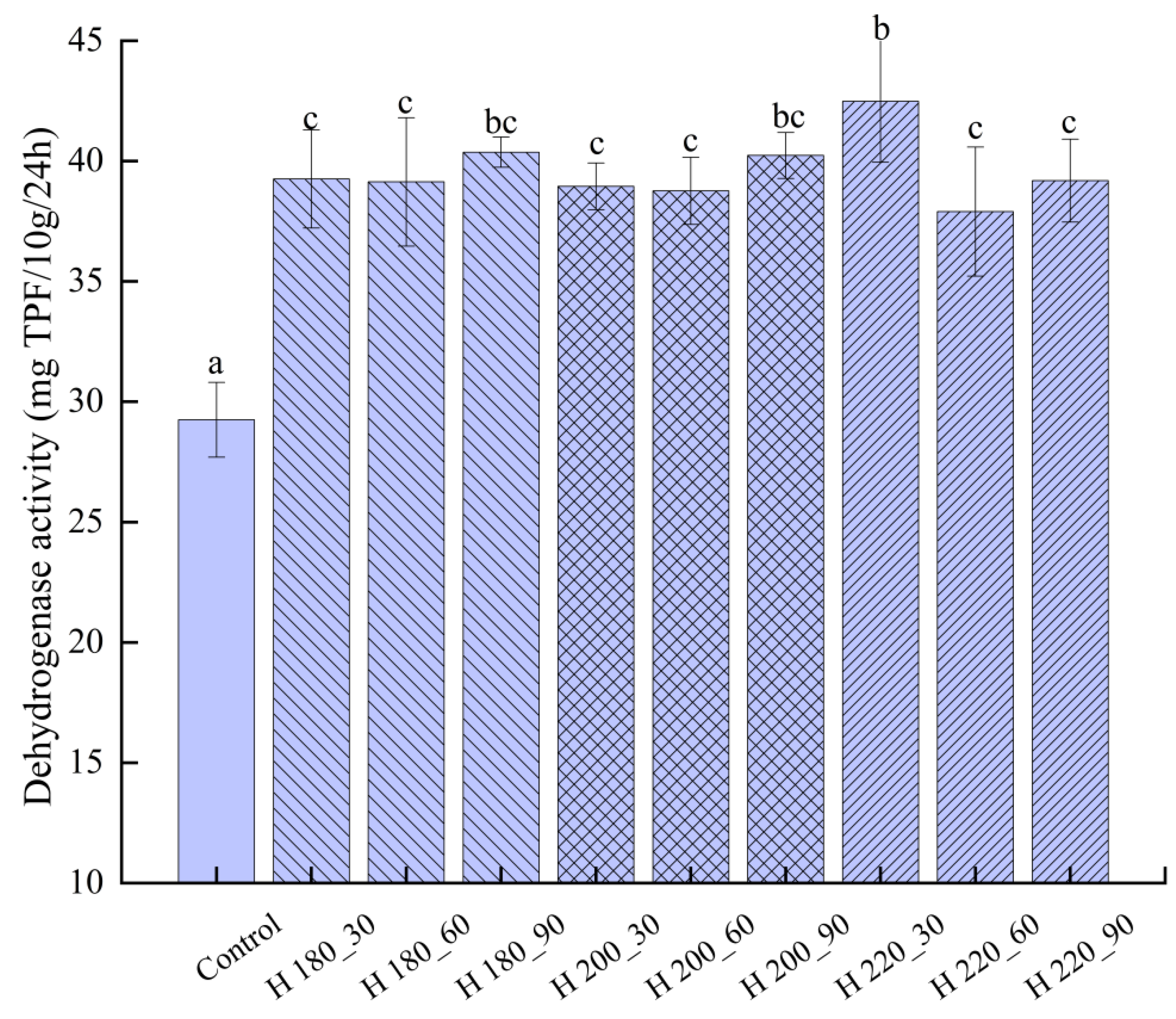
Among oxidoreductases, dehydrogenases are considered one of the most sensitive enzymes to various types of environmental changes [65]. The addition of hydrochars to soil stimulated dehydrogenase activity, as shown in Figure 3. A statistically significant increase in dehydrogenase activity of 29.6–45.3% was observed. The highest activity was recorded for the H220_30 hydrochar treatment, where soil dehydrogenase activity reached 42.5 mg TPF/10 g soil/24 h, compared with 29.3 mg TPF/10 g soil/24 h in the control. For dehydrogenases, two-way ANOVA revealed a highly significant interaction between temperature and residence time (F(4, 70) = 5.43, p < 0.001), indicating that the effect of temperature on enzyme activity is strongly dependent on the duration of hydrothermal reaction. The main effect of time was also significant (F(2, 70) = 5.55, p = 0.006), while the main effect of temperature did not reach statistical significance (F(2, 70) = 0.53, p = 0.594). Cárdenas-Aguiar et al. [66] reported an increase in dehydrogenase activity following soil amendment with manure-derived hydrochars due to the presence of oxidizable carbon (Cox) in the sorbents. The addition of labile carbon to soil enhances dehydrogenase activity and generally increases soil respiration [67]. In the study by Taheri et al. [62], biochar derived from plant residues increased dehydrogenase activity by 38%. In the study by Wang et al. [63], the application of wheat straw biochar at rates of 2, 4, and 10% increased soil dehydrogenase activity by 24%, 27%, and 73%, respectively. Palansooriya et al. [68] attributed the increase in enzyme activity to enhanced microbial biomass resulting from the addition of readily available carbon and nutrients supplied by biochar.
Figure 3.
Dehydrogenase activity. Means that do not share the same letter are significantly different (p < 0.05).
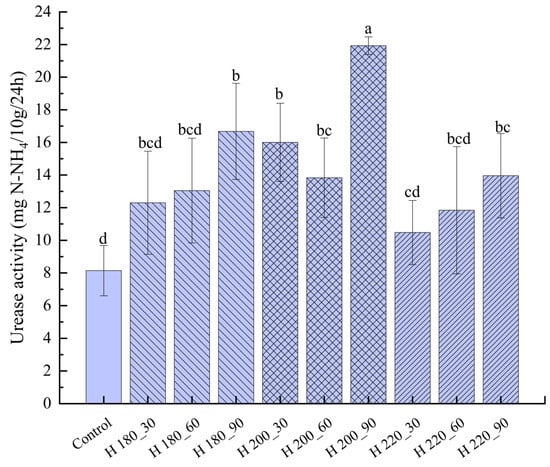
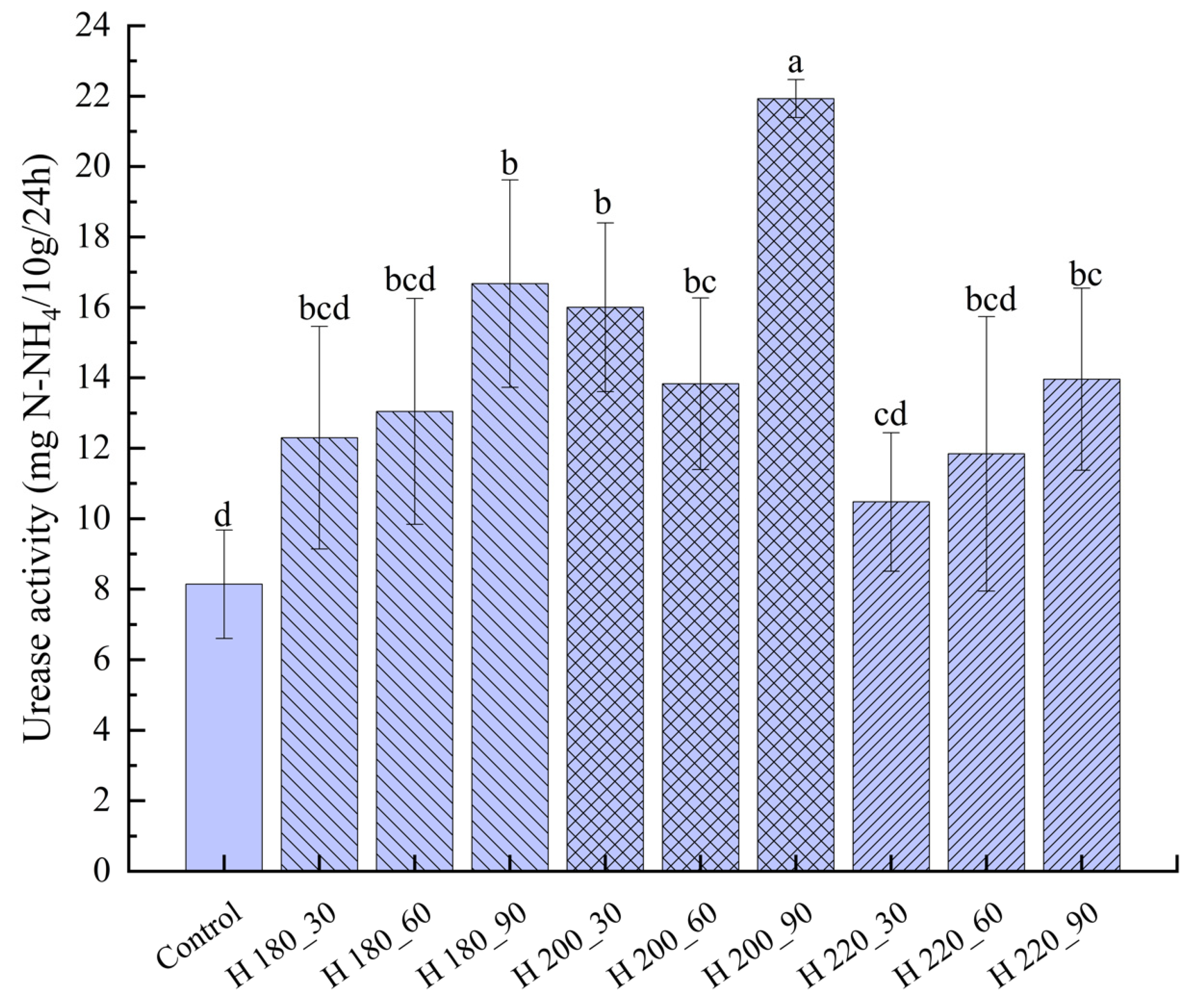
The strongest stimulation of enzymatic activity was observed for urease, which belongs to the hydrolase class. A statistically significant increase in urease activity was recorded for the following treatments: H180_90, H200_30, H200_60, H200_90, and H220_90, with increases of 105%, 97%, 70%, 169%, and 71%, respectively (Figure 4). The H200_90 treatment exhibited the highest urease activity, reaching 21.9 mg N–NH4/10 g/24 h, compared with the control value of 8.1 mg N–NH4/10 g/24 h. For urease activity, two-way ANOVA revealed highly significant main effects of both temperature (F(2, 45) = 16.55, p < 0.0001) and residence time (F(2, 45) = 17.18, p < 0.0001). The interaction between temperature and residence time was not significant (F(4, 45) = 1.99, p = 0.112), indicating that the effects of these two factors are additive and independent. This suggests that increasing either temperature or residence time leads to a significant change in urease activity, and the effect of one factor does not depend on the level of the other. Urease activity may increase due to the addition of an extra source of carbon and nutrients, which enhances soil microbial biomass and, consequently, urease activity [69]. Increased urease activity has also been associated with the input of nitrogenous compounds that serve as substrates for the enzyme [70]. In contrast, Jafari Tarf et al. [23] reported inhibition of urease activity as a result of the direct phytotoxicity of hydrochars derived from various organic wastes or due to nitrogen immobilization. A meta-analysis by Bai et al. [71] showed that urease activity increases in soils amended with hydrochars derived from crop residues or wood that are characterized by a low specific surface area. Conversely, Feng et al. [22] reported a decrease in urease activity following the application of manure-derived hydrochars. This negative effect may be attributed to the presence of carboxylate radicals (–COO−), alcohol groups (C–OH), and persistent free radicals in these hydrochars [72]. Rahmanian & Khadem [25] identified a negative correlation between urease activity and the pyrolysis temperature of the applied biochars. The application of high doses (10%) of wheat straw biochar reduced urease activity by 10%, whereas lower application rates (1, 2, and 4%) increased urease activity by 9–58% [63]. The increase in urease activity may be attributed to biochar acting as a source of nitrogen and serving as a substrate that supports urease-mediated enzymatic activity [73].
Figure 4.
Urease activity. Means that do not share the same letter are significantly different (p < 0.05).
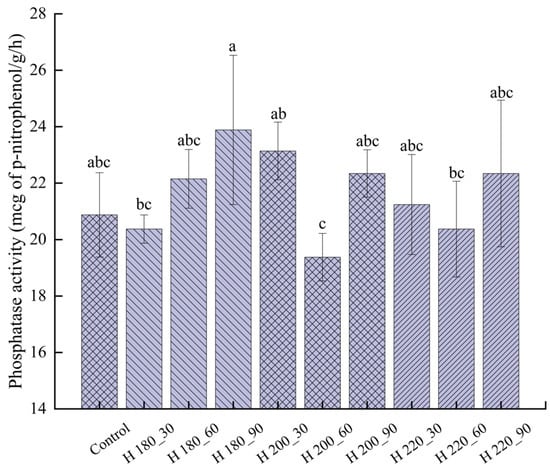
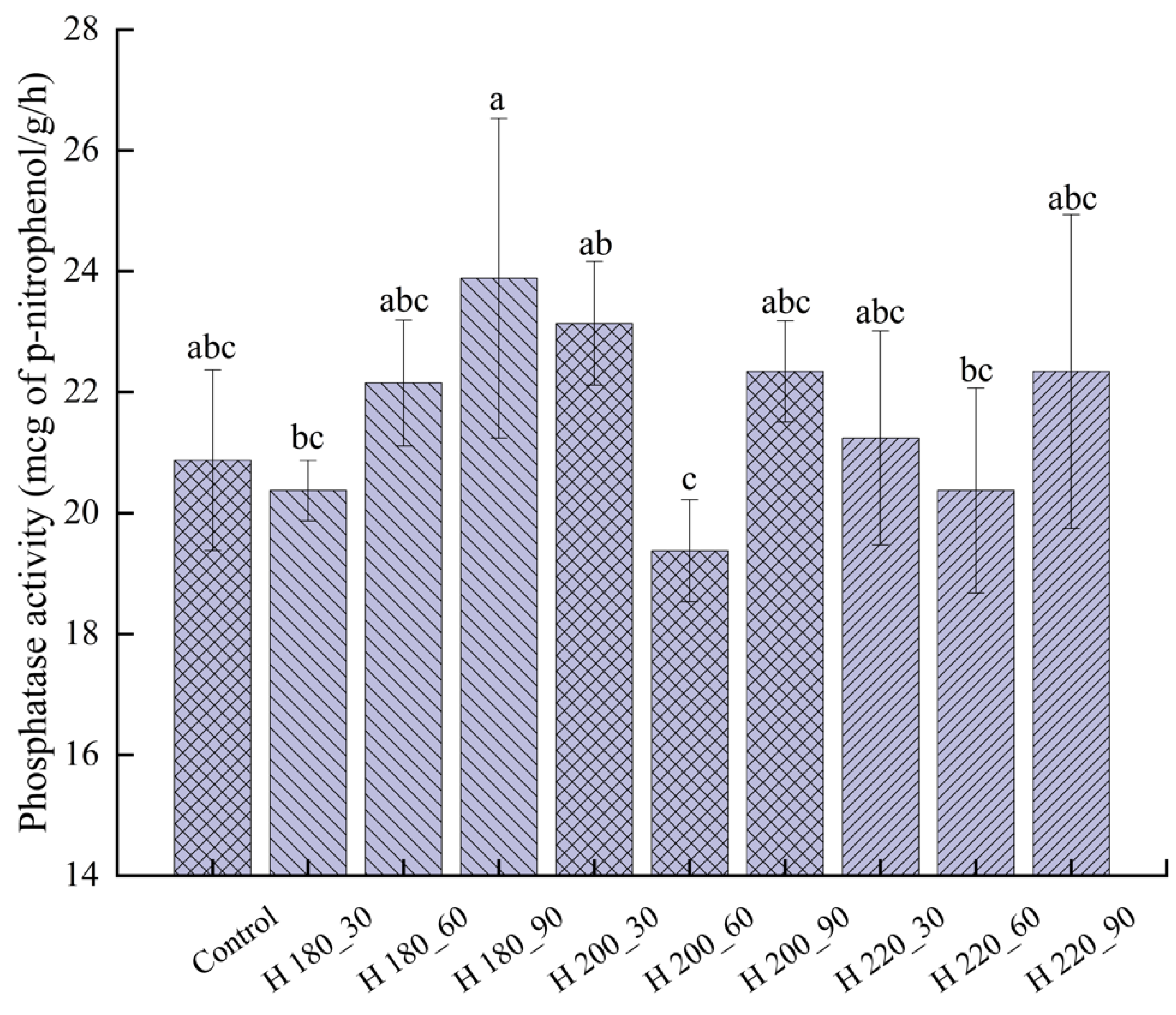
Phosphatase activity did not differ significantly from the control in most treatments (p > 0.05), as shown in Figure 5. A statistically significant decrease in enzymatic activity was observed only in the H200_60 treatment. Phosphatase activity decreased by 7.2% (19.4 mg p-nitrophenol g−1 h−1) compared with the control (20.9 mg p-nitrophenol g−1 h−1). For phosphatase activity, two-way ANOVA revealed a significant interaction between temperature and residence time (F(4, 44) = 4.70, p = 0.003), indicating that the effect of temperature on phosphatase activity depends on the duration of hydrothermal reaction. The main effect of time was also highly significant (F(2, 44) = 8.21, p < 0.001), while the main effect of temperature did not reach statistical significance (F(2, 44) = 1.12, p = 0.335). A negative effect of manure-derived hydrochars on phosphatase activity was also reported by Feng et al. [22] and Hinojosa et al. [45]. This effect may be associated with the presence of oxygen-containing radicals on the hydrochar surface [74]. In contrast to the current results, Garbuz et al. [75] reported stimulation of phosphatase activity due to the addition of plant-available phosphorus with biochars. Increased phosphatase activity was also observed in the study by Di Santo et al. [61].
Figure 5.
Phosphatase activity. Means that do not share the same letter are significantly different (p < 0.05).
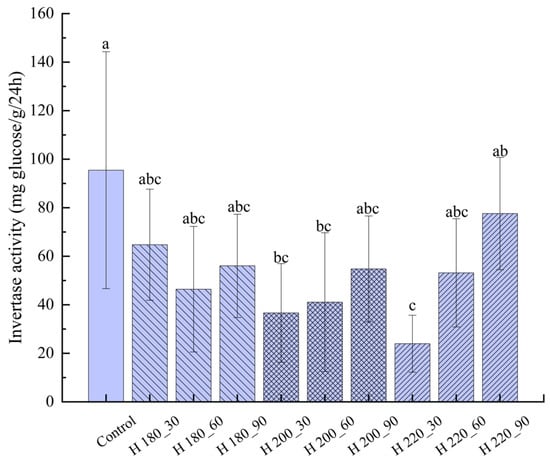
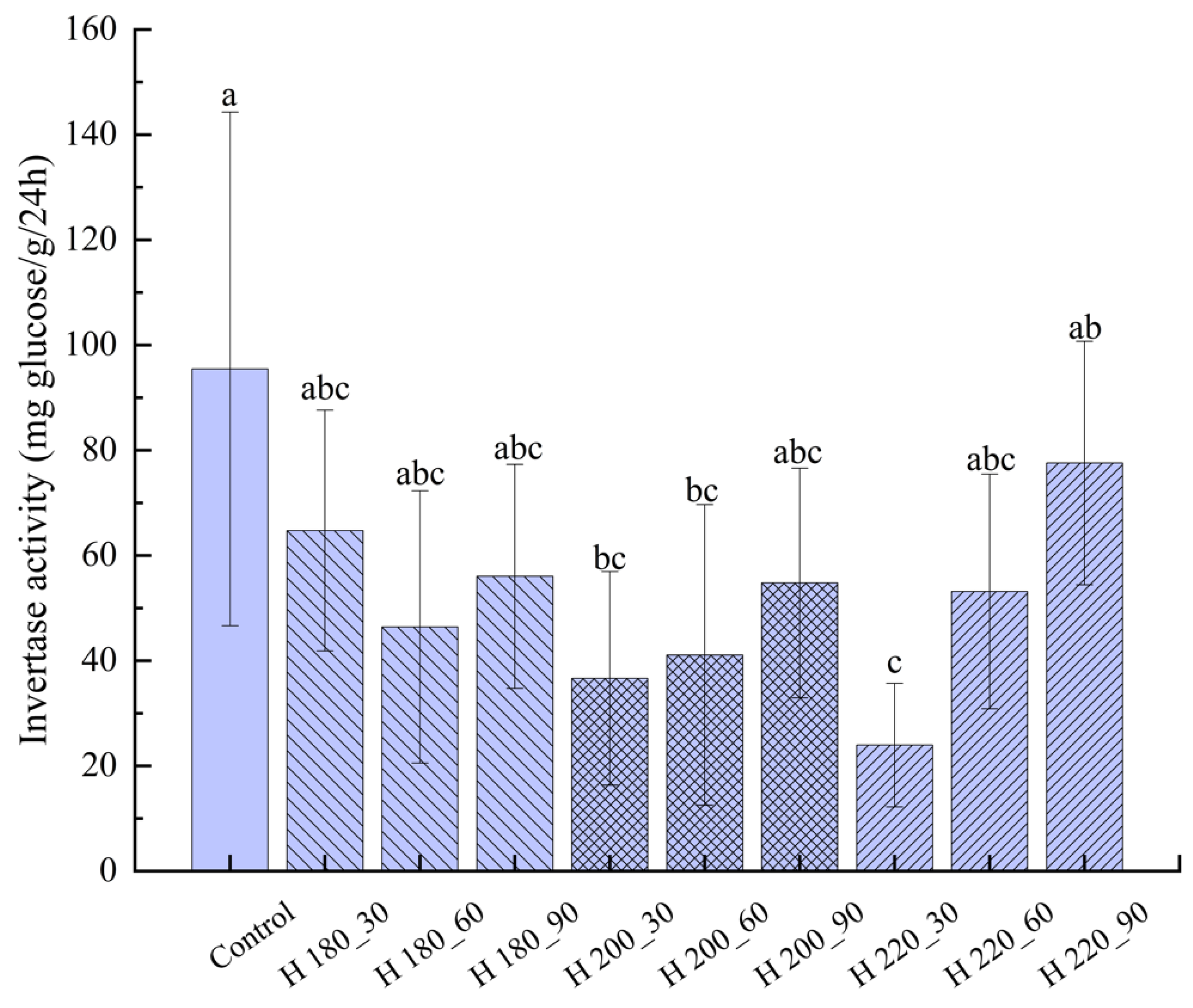
Invertase activity, as an important enzyme for assessing the carbon cycle in soils, showed inhibition following hydrochar application, as shown in Figure 6. Invertase activity decreased by 15.1–60.4%. The strongest inhibition of invertase activity was observed in the H220_30 treatment, reaching 41 mg glucose g−1 24 h−1, compared with 103.5 mg glucose g−1 24 h−1 in the control. A statistically significant decrease in enzymatic activity was also observed in the H200_30 and H200_60 treatments, where invertase activity was lower by 49.7% and 45.9%, respectively, compared with the control. Two-factor analysis of variance showed a significant interaction between temperature and residence time (F(4, 45) = 3.19, p = 0.022), indicating that the effect of temperature on invertase activity depends on the duration of treatment. The main effect of residence time was also significant (F(2, 45) = 4.30, p = 0.020), while the main effect of temperature did not reach statistical significance (F(2, 45) = 1.23, p = 0.303). This means that a change in temperature leads to different effects depending on the residence time, and vice versa.
Figure 6.
Invertase activity. Means that do not share the same letter are significantly different (p < 0.05).
The application of sorbents often leads to changes in soil physicochemical properties, which in turn affect enzymatic activity [76]. When sorbents are added to soil, parameters such as SSA and pore size play an important role. Biochar exhibits a high adsorption capacity, including for enzymes. Sorbents can alter the conformation of the enzyme active site or bind the substrate on their surface, resulting in reduced enzyme activity [77]. However, hydrochar derived from Sesbania cannabina has been reported to increase invertase activity [78]. The authors attributed this effect to the input of nutrients and labile carbon with the hydrochar, as well as to improvements in soil physicochemical properties [79]. In addition, due to its high porosity and large specific surface area, hydrochar can serve as a refuge for microorganisms, promoting their growth and, consequently, enhancing enzymatic activity [80]. Enzyme activity may decrease as a result of enzyme adsorption onto biochar. For example, Zeng et al. [81] found that the addition of biochar derived from woody biomass and wheat straw can either increase or decrease enzyme adsorption, depending on the relative affinity of enzymes for soil versus biochar surfaces. Correlation analysis revealed the significance of factors such as enzyme size, the porosity of the biochar surface structure, and surface chemical functional groups. The stimulation of these enzymes is beneficial for soil functioning. The observed increase in dehydrogenase activity reflects an enhanced soil redox potential and greater overall oxidative activity of the microbial community, since dehydrogenases are central to microbial respiration, the tricarboxylic acid cycle and intracellular electron transport; their rise therefore indicates more intense organic-matter turnover and a biologically more active soil. Likewise, the increase in urease activity accelerates the mineralisation of organic nitrogen to plant-available ammonium, improving soil nitrogen supply, while the higher phosphatase activity recorded in several treatments promotes the release of plant-available phosphorus from organic phosphorus compounds. Together, these shifts point to more efficient nutrient cycling and greater nutrient availability for plant growth following hydrochar application.
3.4. Plant Morphometric Parameters
The phytotoxicity assessment of hydrochar aqueous extracts on Raphanus sativus revealed substantial variation in their effects on seed germination, root length, and shoot length (Table S1 and Figure S2). According to the established toxicity classification, the majority of hydrochar samples exhibited moderate (Class III) to low (Class IV) toxicity. Only the H-180_90 treatment was classified as normal (Class V). These findings indicate that the intrinsic phytotoxicity of hydrochars is strongly influenced by hydrothermal carbonization parameters.
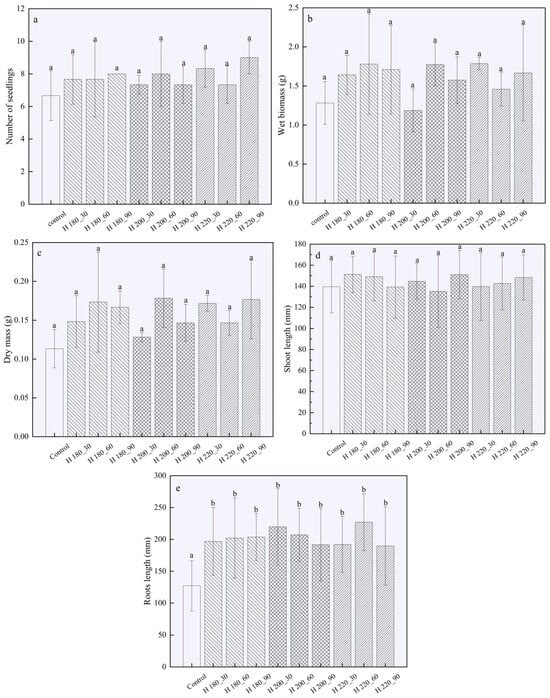
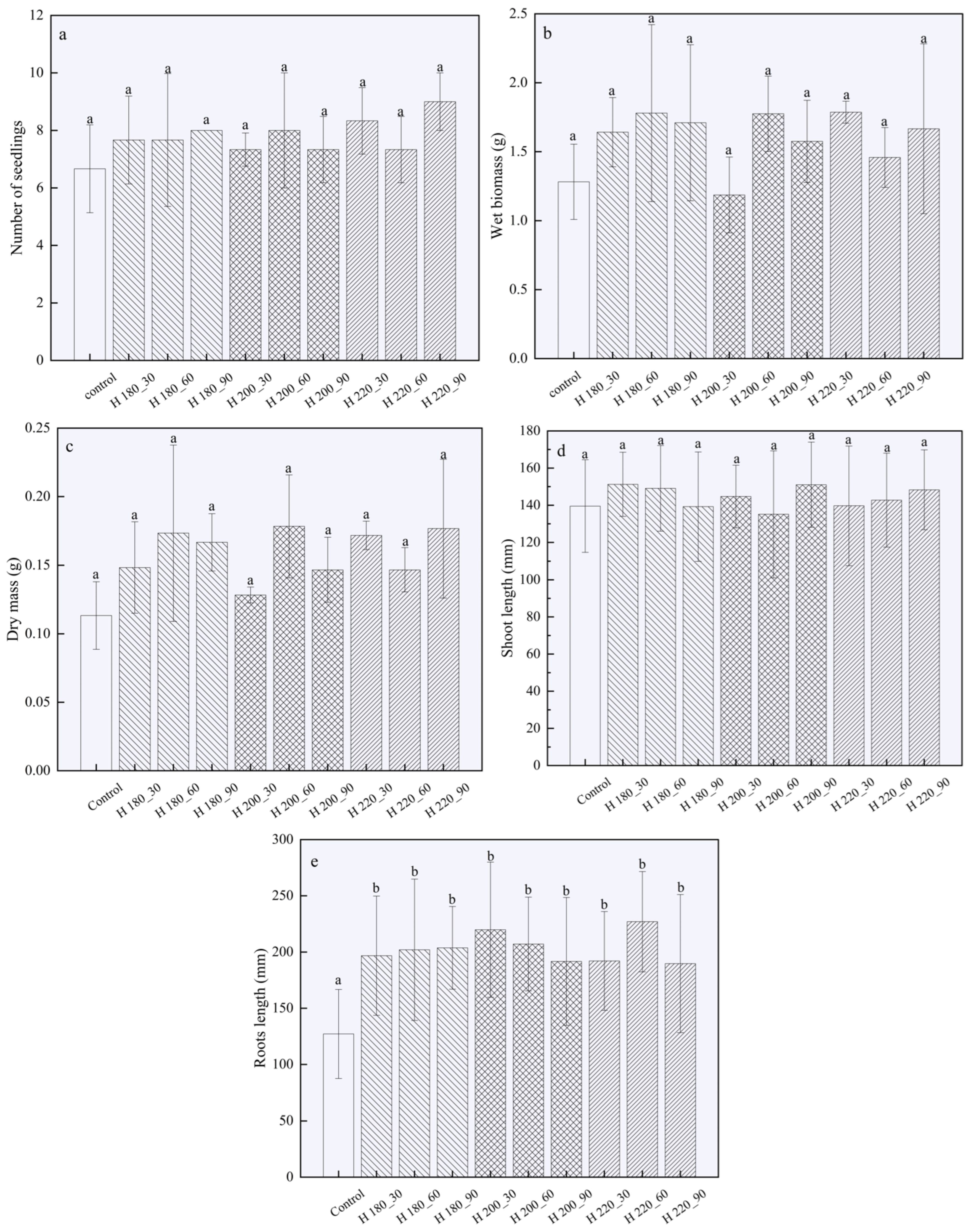
The analysis of plant morphometric characteristics revealed no statistically significant differences for most parameters of winter wheat seedlings (Figure 7a). Hydrochar application did not significantly affect germination; however, the highest germination rate was observed in the H220_90 treatment. Treatments H180_60, H180_90, H200_60, H220_30, and H220_90 showed higher, though not statistically significant, values of fresh and dry biomass (1.67–1.79 g and 0.167–0.179 g, respectively) compared with the control seedlings (1.28 g and 0.113 g) (Figure 7b,c). Soil amendment with hydrochars also did not affect the aboveground biomass of winter wheat seedlings (Figure 7d).
Figure 7.
Morphometric characteristics of winter wheat: (a)—number of seedlings; (b)—wet biomass; (c)—dry mass; (d)—shoot length; (e)—root length. Means that do not share the same letter are significantly different (p < 0.05).
In contrast, measurements of belowground biomass revealed a statistically significant increase in root length in all treatments (Figure 7e). Root length increased by 49–79% relative to the control. The strongest positive effects on root growth were observed for the H220_60 and H200_30 hydrochar treatments. These results are consistent with the findings of de Jager and Giani [82], who also reported no effect of hydrochars on the germination and biomass production of Chinese cabbage. Germination is largely determined by the presence of reserve nutrients in seeds and their ability to be mobilized during germination [83]. However, phytotoxic effects have been reported by Puccini et al. [84] and Roehrdanz et al. [85], who attributed them to the presence of volatile compounds, phenols, and tannins. A meta-analysis conducted by Luutu et al. [86] showed that application rates > 16 t ha−1 of hydrochars derived from various feedstocks, except woody biomass, reduced seed germination, while the same dose of hydrochars from any biomass source reduced shoot biomass. In contrast, Suarez et al. [87] reported that the addition of freshly produced hydrochars from food waste increased tomato seed germination by 10% and also enhanced fresh biomass. Washed hydrochars derived from the same waste reduced fresh biomass production, which was attributed to the leaching of nutrients and organic acids capable of stimulating plant growth. Soil amendment with pine-derived biochar [88] and wheat straw biochar [89] increased root biomass growth. Improved root growth is associated with reduced soil bulk density, increased porosity, and enhanced water-holding capacity [90,91].
3.5. GMea Index
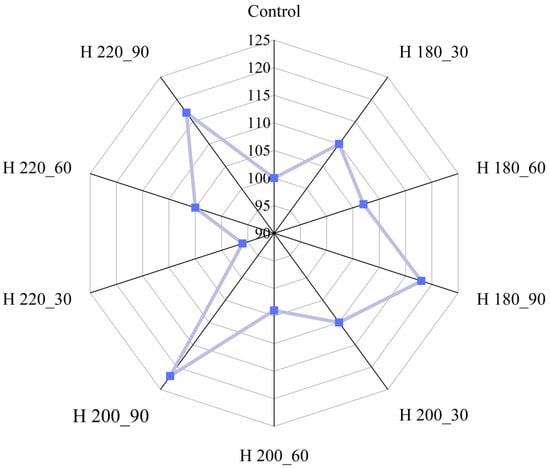
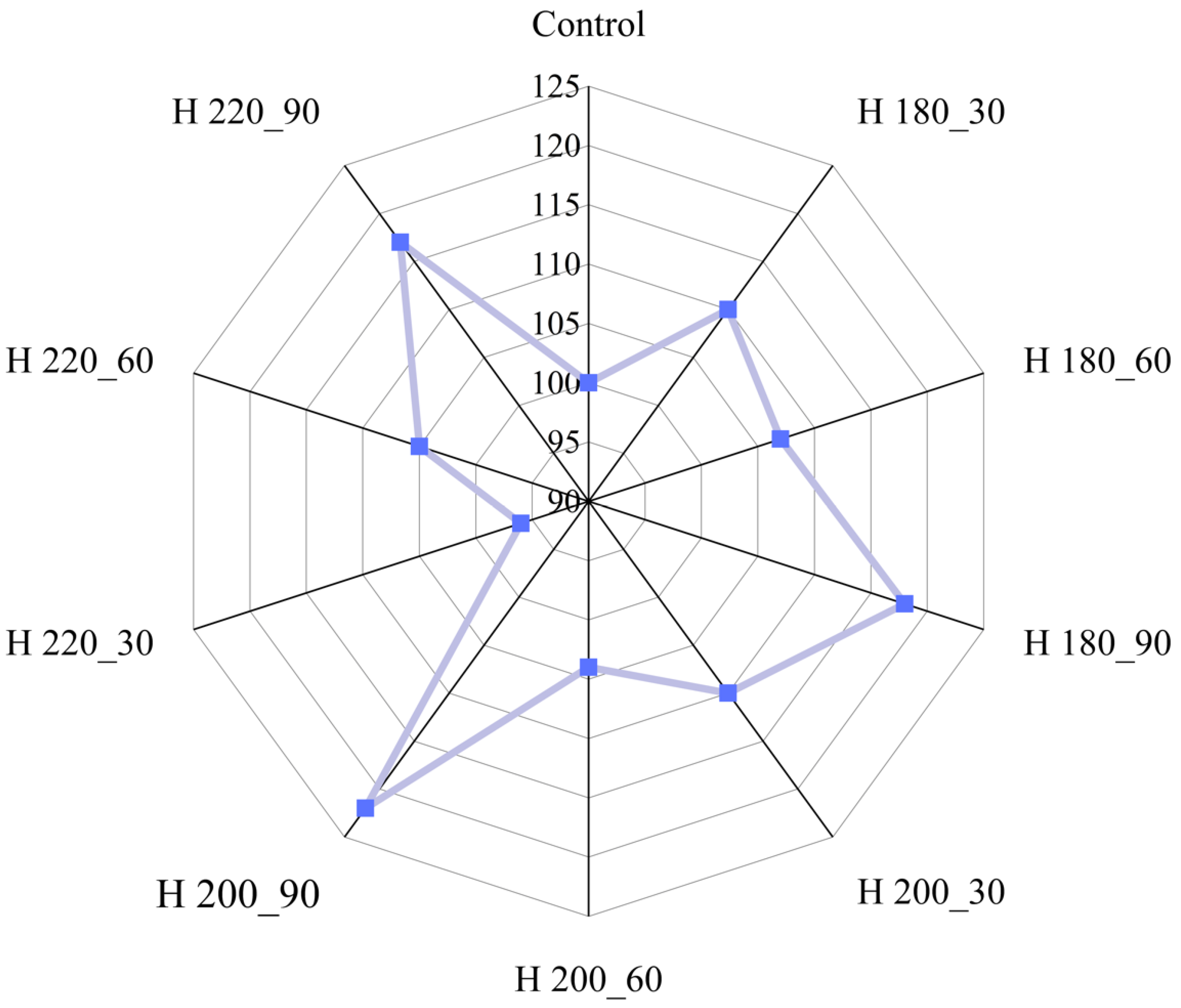
To identify the hydrochar variants that exerted the most pronounced positive effects on soil enzymatic activity, the GMea index was applied. The results showed that hydrochars H180_90, H200_90, and H220_90 increased the GMea index by 18%, 22%, and 17%, respectively, indicating that these production conditions are likely the most favorable for enhancing soil enzymatic activity. Only one treatment, H200_30, showed a decrease in the GMea index by 4% compared with the control (Figure 8).
Figure 8.
GMea index (%) of control and hydrochar variants produced at different temperatures and residence times.
This index is widely used as a useful tool for assessing the effects of sorbents on soil enzymatic activity [92]. Moreover, the calculation of GMea compensates for the variability of individual enzymatic activity indicators [93]. An increase in the GMea index in soils amended with biochars derived from various wastes was also reported by Wojewódzki et al. [60]. Similarly, Cárdenas-Aguiar et al. [66] reported an increase in the GMea index in soils treated with manure-derived hydrochars.
3.6. PCA and Correlation Analysis
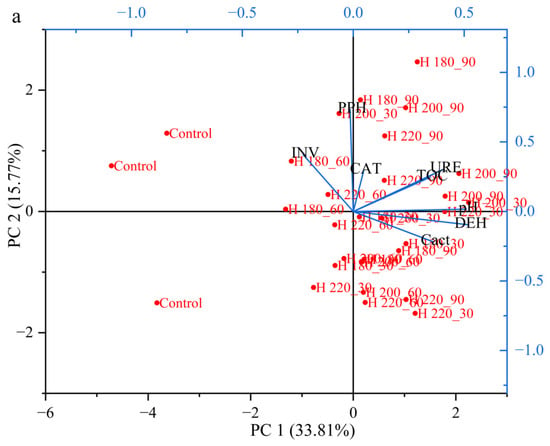
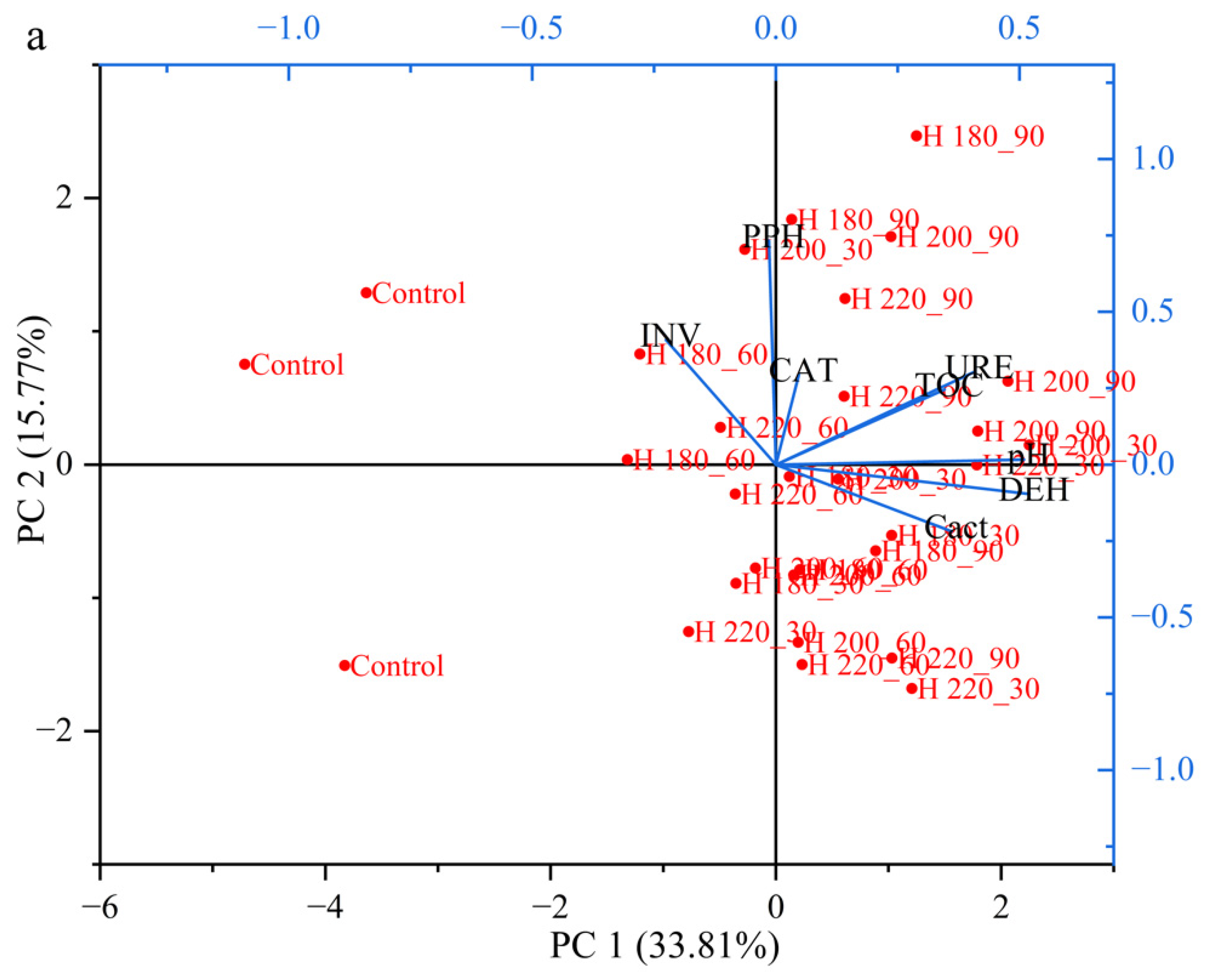
Figure 9a presents the principal component analysis (PCA). The first two principal components (PC1 and PC2) explained 54.06% of the total variance (33.81% for PC1 and 15.77% for PC2; Figure 9). Each point represents a sample analyzed in triplicate. PC1 clearly separates the control from the amended samples, as the control is located far from the experimental treatments. PC2 appears to further distinguish the experimental treatments according to their properties. Most experimental samples are clustered near the center, indicating intermediate characteristics. The variables contributing most strongly to PC1 are pH and dehydrogenase activity (DEH). In contrast, PC2 shows the strongest positive associations with phosphatase activity. The investigated enzymes are grouped along PC1, which can generally be associated with the effect of hydrochar amendment on soil enzymatic activity.
Figure 9.
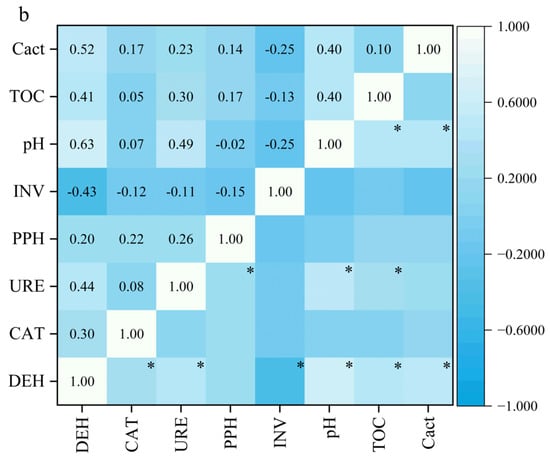
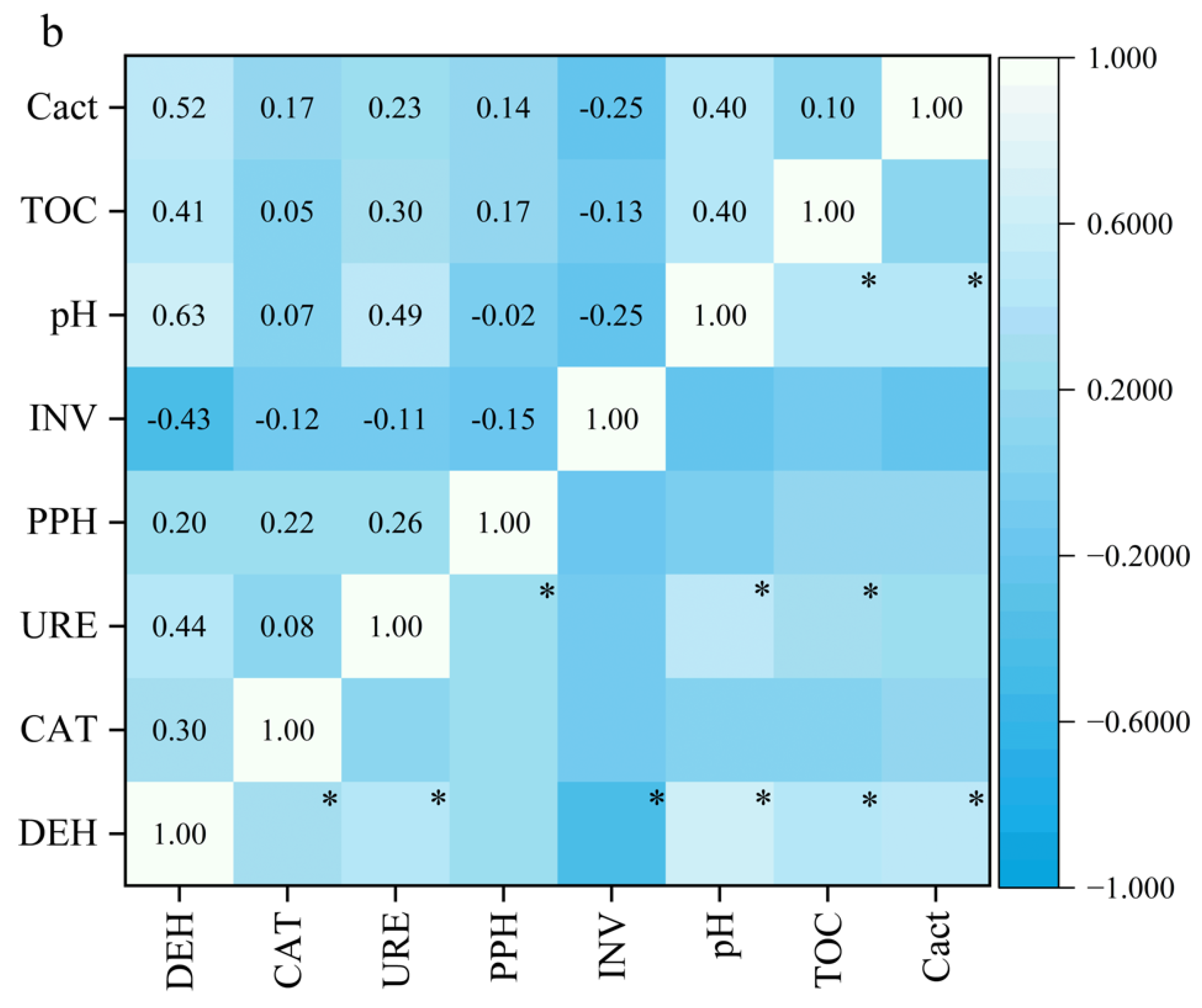
Principal component analysis and correlation analysis: (a)—Principal component analysis (PCA) plot based on a matrix consisting of 8 variables (blue) and 30 treatments (red); (b)—Pearson correlation matrix. * Correlations are significant at the 0.05 level (p < 0.05).
Figure 9b shows the correlation matrix. Significant positive correlations were found between pH and DEH, UR, TOC, and Cact (0.4 < r < 0.63). Dehydrogenase activity was also positively correlated with CAT, UR, TOC, and Cact (0.3 < r < 0.81) and negatively correlated with invertase activity (r = −0.43); therefore, only the pH–DEH pair comes close to the category of a strong positive correlation (r = 0.63). Di Santo et al. [61] reported that pH and soil organic carbon are key properties influencing microbiological indicators. Kompała-Bąba et al. [94] reported a significant positive correlation between pH and dehydrogenase activity. In contrast, Taheri et al. [62] did not observe a strong correlation between pH and dehydrogenase activity; moreover, the correlation was negative.
The overall value of hydrochar does not rest on short-term seedling growth alone, but on a combination of benefits. HTC valorises woody pruning waste into a stable, carbon-rich material, returning carbon to the soil (TOC +15–30%, active carbon +8–22%) in line with circular-bioeconomy principles. The best-performing hydrochars significantly enhanced key biological indicators—dehydrogenase and urease activities and the integrated GMea index (up to +22%)—despite the inhibition of individual enzymes. The marked stimulation of root growth (49–79%) is agronomically relevant, improving water and nutrient acquisition and typically preceding aboveground responses, while the absence of phytotoxicity confirms the material’s safety. Importantly, this study identifies the HTC conditions that maximise these effects; longer-term field trials are needed to confirm whether they translate into aboveground productivity gains.
4. Conclusions
This study provides a comprehensive assessment of how hydrothermal carbonization conditions influence hydrochar properties and their subsequent effects on soil biochemical functioning and plant response. The results highlight the importance of production parameters in determining both the beneficial and inhibitory impacts of hydrochars on soil health indicators.
HTC temperature and residence time significantly affected hydrochar properties, particularly pH and elemental composition. The application of hydrochars increased total organic carbon content by 15–30% and the proportion of active carbon by 8–22%, primarily due to the direct input of carbon-rich material. Owing to the high buffering capacity of the soil, the addition of acidic hydrochars caused only a slight (0.2–0.3 units), though statistically significant, increase in soil pH in several treatments, with the soil remaining near-neutral.
Hydrolytic enzymes were more sensitive to hydrochar amendment than oxidoreductases, exhibiting both stimulatory and inhibitory responses depending on the production conditions. Urease activity increased by 1.2–2.6 times, while invertase activity decreased by 15–60%. Phosphatase activity showed a variable response, decreasing by 7–8% or increasing by 1–16% depending on the hydrochar variant. Among oxidoreductases, dehydrogenase activity was the most responsive, increasing by 1.3–1.5 times. The stimulation of enzymatic activity is attributed to the supply of available carbon and nutrients with hydrochar addition, whereas enzyme inhibition may result from substrate binding or enzyme adsorption on the hydrochar surface or within its pore structure. The five enzyme activities examined in this study exhibited markedly distinct responses to hydrothermal carbonization conditions. Urease activity was independently and strongly affected by both temperature and residence time (p < 0.0001 for both), indicating additive effects of these parameters. In contrast, dehydrogenases, invertase and phosphatase displayed significant Temperature × Time interactions (p = 0.001, p = 0.003, and p < 0.022, respectively), suggesting that the combined action of these factors is critical for these enzymes. Only catalase responded exclusively to residence time (p = 0.041). These differences in reactions highlight the complexity of the biochemical response to the introduction of hydrochar and the need to optimize the parameters of hydrothermal carbonization, taking into account the specifics of the enzymes.
Hydrochar application also had a significant positive effect on plant development, increasing root length by 49–79% without inducing early seedling responses. GMea indicated that the H200_90 hydrochar exerted the strongest overall stimulatory effect on soil enzymatic activity.
Overall, the findings demonstrate the critical role of feedstock selection and HTC conditions in producing hydrochars with favorable effects on soil biochemical properties. Practically, converting alder-wood residues into a stable, carbon-rich amendment links waste valorisation with soil-carbon sequestration and improved soil health, supporting the circular-bioeconomy framing of this study. Future research should focus on identifying optimal application rates that avoid negative impacts on enzymatic activity and plant growth, as well as evaluating hydrochar effects across soils of different textures and on various crop species. In particular, subsequent work should establish dose–response relationships to identify the threshold at which enzyme inhibition (notably of invertase) emerges; validate the best-performing variant (H200_90) in multi-season field trials that measure crop yield; extend testing to contrasting soils—especially sandy, acidic and low-organic soils, where high buffering would not mask pH and nutrient effects; clarify the inhibition mechanism through sorption analysis on the hydrochar surface and pores; and pair these data with a life-cycle and techno-economic assessment at field-relevant rates.
Supplementary Materials
The following supporting information can be downloaded at: https://www.mdpi.com/article/10.3390/soilsystems10080092/s1, Figure S1: General view of the containers with the incubation mixture; Figure S2: Assessment of the phytotoxicity of aqueous extracts of different hydrochar variants on radish (Raphanus sativus) seeds; Table S1: Effect of hydrochar on morphometric indicators of radish seed. Reference [95] is cited in the Supplementary Materials.
Author Contributions
All authors contributed to the study conception and design: D.P., E.K., K.K., T.M., M.G., Z.Y., V.B. and O.C.T. Material preparation and data collection were performed by D.P. and M.G. Data analysis was performed by D.P. and K.K. The first draft of the manuscript was written by D.P. and E.K. All authors have read and agreed to the published version of the manuscript.
Funding
The study was supported by the ‘Priority 2030’ program of the Southern Federal University, Russia. The study was carried out on the equipment of the Center for Collective Use “Bioengineering of Soils” of the Southern Federal University (No. 075-15-2025-667).
Institutional Review Board Statement
No ethical approval was necessary for this study.
Informed Consent Statement
All participants in this study consent to participation.
Data Availability Statement
Some or all data, models, or code that support the findings of this study are available from the corresponding author upon reasonable request.
Acknowledgments
We thank the members of Southern Federal University for their assistance with soil sample collection.
Conflicts of Interest
The authors declare no conflicts of interest.
References
- Adão, F.; Pádua, L.; Sousa, J.J. Evaluating Soil Degradation in Agricultural Soil with Ground-Penetrating Radar: A Systematic Review of Applications and Challenges. Agriculture 2025, 15, 852. [Google Scholar] [CrossRef] [Scilit]
- Romero, F.; Labouyrie, M.; Orgiazzi, A.; Ballabio, C.; Panagos, P.; Jones, A.; Tedersoo, L.; Bahram, M.; Guerra, C.A.; Eisenhauer, N.; et al. Soil Health Is Associated with Higher Primary Productivity across Europe. Nat. Ecol. Evol. 2024, 8, 1847–1855. [Google Scholar] [CrossRef] [Scilit] [PubMed]
- Xu, J.; Ren, C.; Zhang, X.; Wang, C.; Wang, S.; Ma, B.; He, Y.; Hu, L.; Liu, X.; Zhang, F.; et al. Soil Health Contributes to Variations in Crop Production and Nitrogen Use Efficiency. Nat. Food 2025, 6, 597–609. [Google Scholar] [CrossRef] [Scilit] [PubMed]
- Hossain, A.; Krupnik, T.J.; Timsina, J.; Mahboob, M.G.; Chaki, A.K.; Farooq, M.; Bhatt, R.; Fahad, S.; Hasanuzzaman, M. Agricultural Land Degradation: Processes and Problems Undermining Future Food Security. In Environment, Climate, Plant and Vegetation Growth; Fahad, S., Hasanuzzaman, M., Alam, M., Ullah, H., Saeed, M., Ali Khan, I., Adnan, M., Eds.; Springer International Publishing: Cham, Switzerland, 2020; pp. 17–61. [Google Scholar]
- Chalise, D.; Kumar, L.; Kristiansen, P. Land Degradation by Soil Erosion in Nepal: A Review. Soil Syst. 2019, 3, 12. [Google Scholar] [CrossRef] [Scilit]
- Gomiero, T. Soil Degradation, Land Scarcity and Food Security: Reviewing a Complex Challenge. Sustainability 2016, 8, 281. [Google Scholar] [CrossRef] [Scilit]
- Xiong, J.; Wu, H.; Wang, X.; Ma, R.; Lin, C. Response of Soil Fertility to Soil Erosion on a Regional Scale: A Case Study of Northeast China. J. Clean. Prod. 2024, 434, 140360. [Google Scholar] [CrossRef] [Scilit]
- Lal, R. Restoring Soil Quality to Mitigate Soil Degradation. Sustainability 2015, 7, 5875–5895. [Google Scholar] [CrossRef] [Scilit]
- Raupp, P.; Carrillo, Y.; Nielsen, U.N. Soil Health to Enhance Ecological Restoration and Conservation. J. Sustain. Agric. Environ. 2024, 3, e70022. [Google Scholar] [CrossRef] [Scilit]
- Shahane, A.A.; Shivay, Y.S. Soil Health and Its Improvement Through Novel Agronomic and Innovative Approaches. Front. Agron. 2021, 3, 680456. [Google Scholar] [CrossRef] [Scilit]
- Wang, X.; Duo, J.; Jin, Z.; Yang, F.; Lai, T.; Collins, E. Effects of Hydrothermal Carbonization Conditions on the Characteristics of Hydrochar and Its Application as a Soil Amendment: A Review. Agronomy 2025, 15, 327. [Google Scholar] [CrossRef] [Scilit]
- Kravchenko, E.; Yan, W.H.; Privizentseva, D.; Minkina, T.; Sushkova, S.; Kazeev, K.; Bauer, T.; Wong, M.H. Hydrochar as an Adsorbent for Heavy Metals in Soil: A Meta-Analysis. Sustain. Mater. Technol. 2024, 41, e01057. [Google Scholar] [CrossRef] [Scilit]
- Buentello-Montoya, D.A.A.; Robledo-Hernández, I.; Larrea-Cedeño, A.S.; García-García, C.E.; Coronado-Apodaca, K.G. Biochar and Hydrochar from Agro Wastes: Technological Pathways, Characteristics, and Advances in Soil Amendment. Front. Environ. Sci. 2026, 14, 1804984. [Google Scholar] [CrossRef] [Scilit]
- Masoumi, S.; Borugadda, V.B.; Nanda, S.; Dalai, A.K. Hydrochar: A Review on Its Production Technologies and Applications. Catalysts 2021, 11, 939. [Google Scholar] [CrossRef] [Scilit]
- Iqbal, W.; Khan, A.; Jamal, A.; Radicetti, E.; Elsadek, M.F.; Ali, M.A.; Mancinelli, R. Optimizing Maize Productivity and Soil Fertility: Insights from Tillage, Nitrogen Management, and Hydrochar Applications. Land 2024, 13, 1329. [Google Scholar] [CrossRef] [Scilit]
- Islam, M.A.; Limon, M.S.H.; Romić, M.; Islam, M.A. Hydrochar-Based Soil Amendments for Agriculture: A Review of Recent Progress. Arab. J. Geosci. 2021, 14, 102. [Google Scholar] [CrossRef] [Scilit]
- Kravchenko, E.; Dela Cruz, T.L.; Chen, X.W.; Wong, M.H. Ecological Consequences of Biochar and Hydrochar Amendments in Soil: Assessing Environmental Impacts and Influences. Environ. Sci. Pollut. Res. 2024, 31, 42614–42639. [Google Scholar] [CrossRef] [Scilit] [PubMed]
- Kolesnikov, S.; Nevedomaya, E.; Kuzina, A.; Gaivoronskiy, V.; Minnikova, T.; Kazeev, K.; Minkina, T.; Ranjan, A.; Sushkova, S.; Shuvaev, E.; et al. Limits of Resistance of Chernozems to Petrol Pollution: Comparative Assessment of Different Subtypes. Appl. Soil Ecol. 2024, 203, 105670. [Google Scholar] [CrossRef] [Scilit]
- Kozun, Y.S.; Kazeev, K.S.; Kolesnikov, S. Climatic Gradients of Biological Properties of Zonal Soils of Natural Lands. Geoderma 2022, 425, 116031. [Google Scholar] [CrossRef] [Scilit]
- Vilkova, V.V.; Kazeev, K.S.; Nizhelskiy, M.S.; Privizentseva, D.A.; Fedorenko, A.N.; Kolesnikov, S.I.; Shkhapatsev, A.K. Influence of Fires on the Enzymatic Activity of Cinnamonic Soils and Burozems in the Western Caucasus. Eurasian Soil Sci. 2024, 57, 266–274. [Google Scholar] [CrossRef] [Scilit]
- McDonald, A.G.; Tipton, K.F. Enzyme Nomenclature and Classification: The State of the Art. FEBS J. 2023, 290, 2214–2231. [Google Scholar] [CrossRef] [Scilit] [PubMed]
- Feng, Y.; Wang, N.; Fu, H.; Xie, H.; Xue, L.; Feng, Y.; Poinern, G.E.J.; Chen, D. Manure-Derived Hydrochar Superior to Manure: Reducing Non-Point Pollution Risk by Altering Nitrogen and Phosphorus Fugacity in the Soil–Water System. Waste Manag. 2023, 168, 440–451. [Google Scholar] [CrossRef] [Scilit] [PubMed]
- Jafari Tarf, O.; Akça, M.O.; Donar, Y.O.; Bilge, S.; Turgay, O.C.; Sınağ, A. The Short-Term Effects of Pyro-and Hydrochars Derived from Different Organic Wastes on Some Soil Properties. Biomass Convers. Biorefin. 2022, 12, 129–139. [Google Scholar] [CrossRef] [Scilit]
- Watson, C.; Schlösser, C.; Vögerl, J.; Wichern, F. Hydrochar, Digestate, and Process Water Impacts on a Soil’s Microbial Community, Processes, and Metal Bioavailability. Soil Sci. Soc. Am. J. 2021, 85, 717–731. [Google Scholar] [CrossRef] [Scilit]
- Rahmanian, M.; Khadem, A. The Effects of Biochar on Soil Extra and Intracellular Enzymes Activity. Biomass Convers. Biorefin. 2024, 14, 21993–22005. [Google Scholar] [CrossRef] [Scilit]
- Lund, A.; Levinsson, A.; Ostberg, J.; Wiström, B. Pruning Revisited -Effect of Pruning Season on Wood Discoloration and Occlusion in Four Temperate Broadleaved Tree Species. For. Int. J. For. Res. 2023, 96, 605–617. [Google Scholar] [CrossRef] [Scilit]
- Stener, L.-G.; Rytter, L.; Jansson, G. Effects of Pruning on Wood Properties of Planted Silver Birch in Southern Sweden. Silva Fenn. 2017, 51, 1713. [Google Scholar] [CrossRef] [Scilit]
- Congsomjit, D.; Areeprasert, C. Hydrochar-Derived Activated Carbon from Sugar Cane Bagasse Employing Hydrothermal Carbonization and Steam Activation for Syrup Decolorization. Biomass Convers. Biorefin. 2021, 11, 2569–2584. [Google Scholar] [CrossRef] [Scilit]
- Heidari, M.; Salaudeen, S.; Dutta, A.; Acharya, B. Effects of Process Water Recycling and Particle Sizes on Hydrothermal Carbonization of Biomass. Energy Fuels 2018, 32, 11576–11586. [Google Scholar] [CrossRef] [Scilit]
- Lin, Y.; Xu, H.; Gao, Y.; Zhang, X. Preparation and Characterization of Hydrochar-Derived Activated Carbon from Glucose by Hydrothermal Carbonization. Biomass Convers. Biorefin. 2023, 13, 3785–3796. [Google Scholar] [CrossRef] [Scilit]
- Polyakov, V.; Bauer, T.; Kirichkov, M.; Butova, V.; Gritsai, M.; Minkina, T.; Soldatov, A.; Kravchenko, E. MOF-Biochar Nanocomposite for Sustainable Remediation of Contaminated Soil. Environ. Sci. Pollut. Res. 2025, 32, 5533–5550. [Google Scholar] [CrossRef] [Scilit] [PubMed]
- Landers, J.; Gor, G.Y.; Neimark, A.V. Density Functional Theory Methods for Characterization of Porous Materials. Colloids Surf. Physicochem. Eng. Asp. 2013, 437, 3–32. [Google Scholar] [CrossRef] [Scilit]
- World Reference Base for Soil Resources. International Soil Classification System for Naming Soils and Creating Legends for Soil Maps; International Union of Soil Sciences (IUSS): Vienna, Austria, 2022; 234p. [Google Scholar]
- Svensson, D.N.; Messing, I.; Barron, J. An Investigation in Laser Diffraction Soil Particle Size Distribution Analysis to Obtain Compatible Results with Sieve and Pipette Method. Soil Tillage Res. 2022, 223, 105450. [Google Scholar] [CrossRef] [Scilit]
- Islam, K.R.; Stine, M.A.; Gruver, J.B.; Samson Liebig, S.E.; Weil, R.R. Estimating active carbon for soil quality assessment: A simplified method for laboratory and field use. Am. J. Altern. Agric. 2003, 18, 3–17. [Google Scholar] [CrossRef] [Scilit]
- Unification of methods for studying the activity of soil enzymes. Eurasian Soil Sci. 1978, 2, 107–113. (In Russian)
- Tabatabai, M.A.; Bremner, J.M. Use of P-Nitrophenyl Phosphate for Assay of Soil Phosphatase Activity. Soil Biol. Biochem. 1969, 1, 301–307. [Google Scholar] [CrossRef] [Scilit]
- German, D.; Weintraub, M.; Grandy, S.; Lauber, C.; Rinkes, Z.; Allison, S. Optimization of Hydrolytic and Oxidative Enzyme Methods for Ecosystem Studies. Soil Biol. Biochem. 2011, 43, 1387–1397. [Google Scholar] [CrossRef] [Scilit]
- Kazeev, K.S.; Kolesnikov, S.I.; Akimenko, Y.V.; Dadenko, E.V. Methods for Diagnosing Terrestrial Ecosystems; Izd. Yuzhn. Fed. Univ.: Rostov-on-Don, Russia, 2016. (In Russian) [Google Scholar]
- Suarez, E.; Tobajas, M.; Mohedano, A.F.; Reguera, M.; Esteban, E. Evaluation of Green Waste Biochar and Hydrochar Application as Soil Amendment. 2022. Available online: http://generalchemistry.chemeng.ntua.gr/uest/corfu2022/proceedings/III/1430_Suarez_Paper.pdf (accessed on 5 June 2026).
- Mau, V.; Arye, G.; Gross, A. Poultry Litter Hydrochar as an Amendment for Sandy Soils. J. Environ. Manag. 2020, 271, 110959. [Google Scholar] [CrossRef] [Scilit] [PubMed]
- Kalderis, D.; Papameletiou, G.; Kayan, B. Assessment of Orange Peel Hydrochar as a Soil Amendment: Impact on Clay Soil Physical Properties and Potential Phytotoxicity. Waste Biomass Valorization 2019, 10, 3471–3484. [Google Scholar] [CrossRef] [Scilit]
- Al-Swadi, H.A.; Al-Farraj, A.S.; Al-Wabel, M.I.; Ahmad, M.; Usman, A.R.A.; Ahmad, J.; Mousa, M.A.; Rafique, M.I. Impacts of Kaolinite Enrichment on Biochar and Hydrochar Characterization, Stability, Toxicity, and Maize Germination and Growth. Sci. Rep. 2024, 14, 1259. [Google Scholar] [CrossRef] [Scilit] [PubMed]
- Fregolente, L.G.; dos Santos, J.V.; Mazzati, F.S.; Miguel, T.B.A.R.; de C. Miguel, E.; Moreira, A.B.; Ferreira, O.P.; Bisinoti, M.C. Hydrochar from Sugarcane Industry By-Products: Assessment of Its Potential Use as a Soil Conditioner by Germination and Growth of Maize. Chem. Biol. Technol. Agric. 2021, 8, 16. [Google Scholar] [CrossRef] [Scilit]
- Hinojosa, M.B.; García-Ruiz, R.; Viñegla, B.; Carreira, J. Microbial Rates and Enzyme Activities as Indicators of Functionality in Soils Affected by the Aznalcóllar Toxic Spill. Soil Biol. Biochem. 2004, 36, 1637–1644. [Google Scholar] [CrossRef] [Scilit]
- Potnuri, R.; Rao, C.S.; Surya, D.V.; Kumar, A.; Basak, T. Utilizing Support Vector Regression Modeling to Predict Pyro Product Yields from Microwave-Assisted Catalytic Co-Pyrolysis of Biomass and Waste Plastics. Energy Convers. Manag. 2023, 292, 117387. [Google Scholar] [CrossRef] [Scilit]
- Schober, P.; Boer, C.; Schwarte, L.A. Correlation Coefficients: Appropriate Use and Interpretation. Anesth. Analg. 2018, 126, 1763–1768. [Google Scholar] [CrossRef] [Scilit] [PubMed]
- Mäkelä, M.; Benavente, V.; Fullana, A. Hydrothermal Carbonization of Lignocellulosic Biomass: Effect of Process Conditions on Hydrochar Properties. Appl. Energy 2015, 155, 576–584. [Google Scholar] [CrossRef] [Scilit]
- Wang, K.; Xu, J.; Chen, P.; Liao, L.; Fan, J.; Wang, H.; Sleutel, S. Balancing Energy Inputs and Carbon Outcomes in Hydrochar Applications: Temperature-Dependent Effects on Soil Carbon Sequestration. Biomass Bioenergy 2026, 204, 108382. [Google Scholar] [CrossRef] [Scilit]
- Saha, N.; Saba, A.; Reza, M.T. Effect of Hydrothermal Carbonization Temperature on pH, Dissociation Constants, and Acidic Functional Groups on Hydrochar from Cellulose and Wood. J. Anal. Appl. Pyrolysis 2019, 137, 138–145. [Google Scholar] [CrossRef] [Scilit]
- Hoekman, S.K.; Broch, A.; Robbins, C. Hydrothermal Carbonization (HTC) of Lignocellulosic Biomass. Energy Fuels 2011, 25, 1802–1810. [Google Scholar] [CrossRef] [Scilit]
- Fang, Z.; Sato, T.; Smith, R.L.; Inomata, H.; Arai, K.; Kozinski, J.A. Reaction Chemistry and Phase Behavior of Lignin in High-Temperature and Supercritical Water. Bioresour. Technol. 2008, 99, 3424–3430. [Google Scholar] [CrossRef] [Scilit] [PubMed]
- Zhu, X.; Liu, Y.; Qian, F.; Zhou, C.; Zhang, S.; Chen, J. Role of Hydrochar Properties on the Porosity of Hydrochar-Based Porous Carbon for Their Sustainable Application. ACS Sustain. Chem. Eng. 2015, 3, 833–840. [Google Scholar] [CrossRef] [Scilit]
- Thunshirn, P.; Wenzel, W.W.; Pfeifer, C. Pore Characteristics of Hydrochars and Their Role as a Vector for Soil Bacteria: A Critical Review of Engineering Options. Crit. Rev. Environ. Sci. Technol. 2022, 52, 4147–4171. [Google Scholar] [CrossRef] [Scilit]
- Kambo, H.S.; Dutta, A. A Comparative Review of Biochar and Hydrochar in Terms of Production, Physico-Chemical Properties and Applications. Renew. Sustain. Energy Rev. 2015, 45, 359–378. [Google Scholar] [CrossRef] [Scilit]
- Gao, Y.; Wang, X.; Wang, J.; Li, X.; Cheng, J.; Yang, H.; Chen, H. Effect of Residence Time on Chemical and Structural Properties of Hydrochar Obtained by Hydrothermal Carbonization of Water Hyacinth. Energy 2013, 58, 376–383. [Google Scholar] [CrossRef] [Scilit]
- Azimzadeh, Y.; Najafi, N.; Reyhanitabar, A.; Oustan, S.; Khataee, A. Effects of Phosphate Loaded LDH-Biochar/Hydrochar on Maize Dry Matter and P Uptake in a Calcareous Soil. Arch. Agron. Soil Sci. 2021, 67, 1649–1664. [Google Scholar] [CrossRef] [Scilit]
- Zhao, X.; Li, D.; Kong, J.; Lin, Q. Does Biochar Addition Influence the Change Points of Soil Phosphorus Leaching? J. Integr. Agric. 2014, 13, 499–506. [Google Scholar] [CrossRef] [Scilit]
- Khosravi, A.; Zheng, H.; Liu, Q.; Hashemi, M.; Tang, Y.; Xing, B. Production and Characterization of Hydrochars and Their Application in Soil Improvement and Environmental Remediation. Chem. Eng. J. 2022, 430, 133142. [Google Scholar] [CrossRef] [Scilit]
- Wojewódzki, P.; Lemanowicz, J.; Debska, B.; Haddad, S. Soil Enzyme Activity Response under the Amendment of Different Types of Biochar. Agronomy 2022, 12, 569. [Google Scholar] [CrossRef] [Scilit]
- Di Santo, T.; Marzaioli, R.; Coppola, E.; Zaccariello, L.; Battaglia, D.; Castaldi, S.; D’Ascoli, R.; Papa, S.; Strumia, S.; Battipaglia, G.; et al. Enhancing Soil Health with Hydrochar: Improvements in Chemical and Biological Properties. J. Environ. Manag. 2025, 385, 125659. [Google Scholar] [CrossRef] [Scilit] [PubMed]
- Taheri, M.A.R.; Astaraei, A.R.; Lakzian, A.; Emami, H. The Role of Biochar and Sulfur-Modified Biochar on Soil Water Content, Biochemical Properties and Millet Crop under Saline-Sodic and Calcareous Soil. Plant Soil 2024, 499, 221–236. [Google Scholar] [CrossRef] [Scilit]
- Wang, Y.; Ai, Y.; Zhou, J.; Xu, X.; Zhang, C.; Li, X.; Zhou, S. Effects of Biochar on Heavy Metal Speciation and Microbial Activity in Red Soil at a Mining Area. Int. J. Environ. Sci. Technol. 2023, 20, 13491–13502. [Google Scholar] [CrossRef] [Scilit]
- Czimczik, C.I.; Masiello, C.A. Controls on Black Carbon Storage in Soils. Glob. Biogeochem. Cycles 2007, 21, GB3005. [Google Scholar] [CrossRef] [Scilit]
- Bandyopadhyay, S.; Maiti, S.K. Different Soil Factors Influencing Dehydrogenase Activity in Mine Degraded Lands—State-of-Art Review. Water Air Soil Pollut. 2021, 232, 360. [Google Scholar] [CrossRef] [Scilit]
- Cárdenas-Aguiar, E.; Ruiz, B.; Fuente, E.; Gascó, G.; Méndez, A. Improving Mining Soil Phytoremediation with Sinapis Alba by Addition of Hydrochars and Biochar from Manure Wastes. Waste Biomass Valorization 2020, 11, 5197–5210. [Google Scholar] [CrossRef] [Scilit]
- Paz-Ferreiro, J.; Gasco, G.; Gutiérrez, B.; Mendez, A. Soil Biochemical Activities and the Geometric Mean of Enzyme Activities after Application of Sewage Sludge and Sewage Sludge Biochar to Soil. Biol. Fertil. Soils 2012, 48, 511–517. [Google Scholar] [CrossRef] [Scilit]
- Palansooriya, K.N.; Wong, J.T.F.; Hashimoto, Y.; Huang, L.; Rinklebe, J.; Chang, S.X.; Bolan, N.; Wang, H.; Ok, Y.S. Response of Microbial Communities to Biochar-Amended Soils: A Critical Review. Biochar 2019, 1, 3–22. [Google Scholar] [CrossRef] [Scilit]
- Khadem, A.; Raiesi, F. Influence of Biochar on Potential Enzyme Activities in Two Calcareous Soils of Contrasting Texture. Geoderma 2017, 308, 149–158. [Google Scholar] [CrossRef] [Scilit]
- Jain, S.; Mishra, D.; Khare, P.; Yadav, V.; Deshmukh, Y.; Meena, A. Impact of Biochar Amendment on Enzymatic Resilience Properties of Mine Spoils. Sci. Total Environ. 2016, 544, 410–421. [Google Scholar] [CrossRef] [Scilit] [PubMed]
- Bai, J.; De Almeida Moreira, B.R.; Bai, Y.; Nadar, C.G.; Feng, Y.; Yadav, S. Assessing Biochar’s Impact on Greenhouse Gas Emissions, Microbial Biomass, and Enzyme Activities in Agricultural Soils through Meta-Analysis and Machine Learning. Sci. Total Environ. 2025, 963, 178541. [Google Scholar] [CrossRef] [Scilit] [PubMed]
- Fu, H.; Wang, B.; Wang, H.; Liu, H.; Xie, H.; Han, L.; Wang, N.; Sun, X.; Feng, Y.; Xue, L. Assessment of Livestock Manure-Derived Hydrochar as Cleaner Products: Insights into Basic Properties, Nutrient Composition, and Heavy Metal Content. J. Clean. Prod. 2022, 330, 129820. [Google Scholar] [CrossRef] [Scilit]
- Berglund, L.M.; DeLuca, T.H.; Zackrisson, O. Activated Carbon Amendments to Soil Alters Nitrification Rates in Scots Pine Forests. Soil Biol. Biochem. 2004, 36, 2067–2073. [Google Scholar] [CrossRef] [Scilit]
- Wang, B.; Li, Q.; Lv, Y.; Fu, H.; Liu, D.; Feng, Y.; Xie, H.; Qu, H. Insights into the Mechanism of Peroxydisulfate Activated by Magnetic Spinel CuFe2O4/SBC as a Heterogeneous Catalyst for Bisphenol S Degradation. Chem. Eng. J. 2021, 416, 129162. [Google Scholar] [CrossRef] [Scilit]
- Garbuz, S.; Mackay, A.; Camps-Arbestain, M.; DeVantier, B.; Minor, M. Biochar Amendment Improves Soil Physico-Chemical Properties and Alters Root Biomass and the Soil Food Web in Grazed Pastures. Agric. Ecosyst. Environ. 2021, 319, 107517. [Google Scholar] [CrossRef] [Scilit]
- Wang, X.; Song, D.; Liang, G.; Zhang, Q.; Ai, C.; Zhou, W. Maize Biochar Addition Rate Influences Soil Enzyme Activity and Microbial Community Composition in a Fluvo-Aquic Soil. Appl. Soil Ecol. 2015, 96, 265–272. [Google Scholar] [CrossRef] [Scilit]
- Foster, E.; Fogle, E.; Cotrufo, M.F. Sorption to Biochar Impacts β-Glucosidase and Phosphatase Enzyme Activities. Agriculture 2018, 8, 158. [Google Scholar] [CrossRef] [Scilit]
- Yao, H.; Cheng, Y.; Kong, Q.; Wang, X.; Rong, Z.; Quan, Y.; You, X.; Zheng, H.; Li, Y. Variation in Microbial Communities and Network Ecological Clusters Driven by Soil Organic Carbon in an Inshore Saline Soil Amended with Hydrochar in Yellow River Delta, China. Environ. Res. 2025, 264, 120369. [Google Scholar] [CrossRef] [Scilit] [PubMed]
- de Jager, M.; Röhrdanz, M.; Giani, L. The Influence of Hydrochar from Biogas Digestate on Soil Improvement and Plant Growth Aspects. Biochar 2020, 2, 177–194. [Google Scholar] [CrossRef] [Scilit]
- Ren, J.; Wang, F.; Zhai, Y.; Zhu, Y.; Peng, C.; Wang, T.; Li, C.; Zeng, G. Effect of Sewage Sludge Hydrochar on Soil Properties and Cd Immobilization in a Contaminated Soil. Chemosphere 2017, 189, 627–633. [Google Scholar] [CrossRef] [Scilit] [PubMed]
- Zeng, L.; Zimmerman, A.R.; Huang, R. Adsorption of Extracellular Enzymes by Biochar: Impacts of Enzyme and Biochar Properties. Geoderma 2024, 451, 117082. [Google Scholar] [CrossRef] [Scilit]
- de Jager, M.; Giani, L. An Investigation of the Effects of Hydrochar Application Rate on Soil Amelioration and Plant Growth in Three Diverse Soils. Biochar 2021, 3, 349–365. [Google Scholar] [CrossRef] [Scilit]
- Alencar, N.L.; Innecco, R.; Gomes-Filho, E.; Gallão, M.I.; Alvarez-Pizarro, J.C.; Prisco, J.T.; Oliveira, A.B.D. Seed Reserve Composition and Mobilization during Germination and Early Seedling Establishment of Cereus jamacaru DC ssp. jamacaru (Cactaceae). An. Acad. Bras. Ciênc. 2012, 84, 823–832. [Google Scholar] [CrossRef] [Scilit] [PubMed]
- Puccini, M.; Ceccarini, L.; Antichi, D.; Seggiani, M.; Tavarini, S.; Hernandez Latorre, M.; Vitolo, S. Hydrothermal Carbonization of Municipal Woody and Herbaceous Prunings: Hydrochar Valorisation as Soil Amendment and Growth Medium for Horticulture. Sustainability 2018, 10, 846. [Google Scholar] [CrossRef] [Scilit]
- Roehrdanz, M.; Greve, T.; de Jager, M.; Buchwald, R.; Wark, M. Co-Composted Hydrochar Substrates as Growing Media for Horticultural Crops. Sci. Hortic. 2019, 252, 96–103. [Google Scholar] [CrossRef] [Scilit]
- Luutu, H.; Rose, M.T.; McIntosh, S.; Van Zwieten, L.; Rose, T. Plant Growth Responses to Soil-Applied Hydrothermally-Carbonised Waste Amendments: A Meta-Analysis. Plant Soil 2022, 472, 1–15. [Google Scholar] [CrossRef] [Scilit]
- Suarez, E.; Martinez-Sanchez, L.; de la Rubia, M.A.; Reguera, M.; Esteban, E.; Mohedano, A.F.; Tobajas, M. Assessment of Food Waste Hydrochar as a Soil Amendment: Effects on Soil Properties, Plant Growth and Stress Response. Waste Manag. 2025, 204, 114901. [Google Scholar] [CrossRef] [Scilit] [PubMed]
- Chang, Y.; Rossi, L.; Zotarelli, L.; Gao, B.; Shahid, M.A.; Sarkhosh, A. Biochar Improves Soil Physical Characteristics and Strengthens Root Architecture in Muscadine Grape (Vitis rotundifolia L.). Chem. Biol. Technol. Agric. 2021, 8, 7. [Google Scholar] [CrossRef] [Scilit]
- Niu, M.; Chen, X.; Pan, Y.; Wang, S.; Xue, L.; Duan, Y.; Ahmad, S.; Zhou, Y.; Zhao, K.; Peng, D. Biochar Effectively Promoted Growth of Ardisia Crenata by Affecting the Soil Physicochemical Properties. Plants 2024, 13, 1736. [Google Scholar] [CrossRef] [Scilit] [PubMed]
- Blanco-Canqui, H. Biochar and Soil Physical Properties. Soil Sci. Soc. Am. J. 2017, 81, 687–711. [Google Scholar] [CrossRef] [Scilit]
- Petersen, C.T.; Hansen, E.; Larsen, H.H.; Hansen, L.V.; Ahrenfeldt, J.; Hauggaard-Nielsen, H. Pore-size Distribution and Compressibility of Coarse Sandy Subsoil with Added Biochar. Eur. J. Soil Sci. 2016, 67, 726–736. [Google Scholar] [CrossRef] [Scilit]
- Jing, Y.; Zhang, Y.; Han, I.; Wang, P.; Mei, Q.; Huang, Y. Effects of Different Straw Biochars on Soil Organic Carbon, Nitrogen, Available Phosphorus, and Enzyme Activity in Paddy Soil. Sci. Rep. 2020, 10, 8837. [Google Scholar] [CrossRef] [Scilit] [PubMed]
- Paz-Ferreiro, J.; Fu, S.; Méndez, A.; Gascó, G. Interactive Effects of Biochar and the Earthworm Pontoscolex Corethrurus on Plant Productivity and Soil Enzyme Activities. J. Soils Sediments 2014, 14, 483–494. [Google Scholar] [CrossRef] [Scilit]
- Kompała-Bąba, A.; Bierza, W.; Sierka, E.; Błońska, A.; Besenyei, L.; Woźniak, G. The Role of Plants and Soil Properties in the Enzyme Activities of Substrates on Hard Coal Mine Spoil Heaps. Sci. Rep. 2021, 11, 5155. [Google Scholar] [CrossRef] [Scilit] [PubMed]
- Volkova, I.N.; Kondakova, G.V. Ecological Soil Science; Yaroslavl State University: Yaroslavl, Russia, 2002. (In Russian) [Google Scholar]

Disclaimer/Publisher’s Note: The statements, opinions and data contained in all publications are solely those of the individual author(s) and contributor(s) and not of MDPI and/or the editor(s). MDPI and/or the editor(s) disclaim responsibility for any injury to people or property resulting from any ideas, methods, instructions or products referred to in the content. |
© 2026 by the authors. Licensee MDPI, Basel, Switzerland. This article is an open access article distributed under the terms and conditions of the Creative Commons Attribution (CC BY) license.