1. Introduction
Climate change has intensified abiotic stressors globally, leading to significant crop losses, with drought being one of the most severe constraints, particularly in arid and semi-arid regions [
1]. According to the Drought Early Warning System (DEWS) 2025, nearly 18.5% of India’s geographical area is affected by drought. Since water constitutes 80–95% of plant fresh biomass and is essential for growth, metabolism, and physiological processes, drought is considered a major environmental stress. Water deficit disrupts photosynthesis, nutrient uptake, osmotic balance, and enzyme activity and induces reactive oxygen species (ROS), leading to oxidative damage and reduced yield [
2]. Although breeding approaches have been used to develop drought-tolerant crops, they are expensive, prompting interest in sustainable alternatives such as beneficial microorganisms. Among these, arbuscular mycorrhizal fungi (AMF) form the most widespread symbiotic association, occurring in nearly 80% of terrestrial plants, and play a key role in alleviating drought stress [
3].
Arbuscular mycorrhizal (AM) fungi are soil microorganisms belonging to the phylum
Glomeromycota and form symbiotic associations with nearly 80% of vascular and 90% of agricultural plants [
3]. In this mutualistic relationship, AM fungi receive about 20% of plant photosynthates and lipids and enhance host uptake of water and mineral nutrients [
4]. AM symbiosis significantly improves plant growth, nutrient acquisition, and stress tolerance [
5,
6]. Under drought stress, AM fungi enhance plant performance through improved water and nutrient absorption, increased photosynthesis and stomatal conductance, antioxidant defense, osmotic adjustment, and soil aggregation via glomalin production [
7,
8].
Bradyrhizobium alleviates drought stress in legumes by enhancing biological nitrogen fixation, root development, and water-use efficiency under moisture-deficit conditions. It promotes the accumulation of osmolytes and activates antioxidant defense systems, thereby reducing oxidative damage caused by drought stress. In addition,
Bradyrhizobium improves nutrient uptake and maintains plant physiological processes, leading to enhanced drought tolerance and yield stability [
9].
The tripartite symbiosis among plants,
Rhizobium, and AM fungi is one of the most important ecological mutualisms [
10]. Most legumes form symbiotic associations with both P-mobilizing AM fungi and N-fixing rhizobia in a tripartite relationship. Both AM fungi and rhizobia benefit from photo-assimilates from the plant, and the plant benefits from necessary N through rhizobial symbiosis and P through AM fungi symbiosis by hyphal-mediated nutrient and water uptake from soil [
11].
Mung bean (
Vigna radiata L.) is an important pulse crop cultivated widely in India due to its high nutritional value and adaptability to diverse agro-climatic conditions. The seeds contain approximately 23% protein and low levels of oligosaccharides, making it an important dietary component [
12]. India is both the largest producer and consumer of mung bean, with a cultivation area of 4.58 million hectares and production of 2.50 million tons [
13]. However, mung bean productivity is severely affected by drought stress, particularly in rainfed regions where water availability is a major limiting factor. In India, nearly 68% of the net sown area is vulnerable to drought conditions. Previous studies have reported that AM fungi and rhizobial inoculation can improve vegetative growth, nutrient uptake, and yield of legumes under drought stress conditions [
14,
15,
16]. However, limited information is available regarding the synergistic interaction between efficient AM fungal isolates and
Bradyrhizobium sp. in improving drought resilience and productivity of mung bean under varying soil moisture regimes.
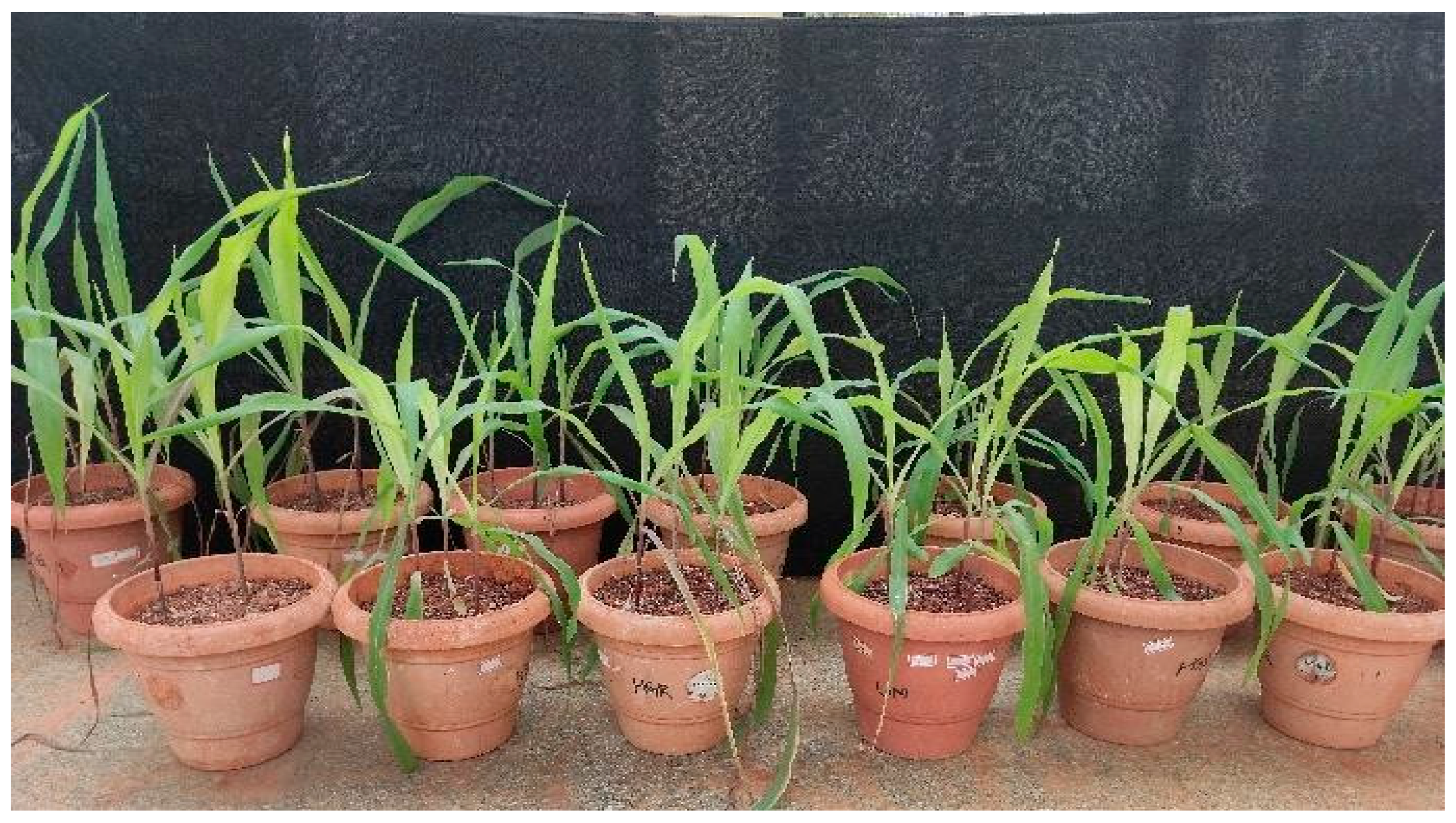
Therefore, the present study was undertaken to study the individual and combined effects of arbuscular mycorrhizal fungi (Acaulospora scrobiculata and Claroideoglomus etunicatum) and Bradyrhizobium sp. on growth, mycorrhizal colonization, nutrient uptake, biomass accumulation, and yield of mung bean under different levels of field capacity. It was hypothesized that co-inoculation of AM fungi and Bradyrhizobium sp. would exert a synergistic effect and significantly enhance drought tolerance, nutrient acquisition, and productivity of mung bean compared to single inoculation or uninoculated plants under water-deficit conditions.
4. Discussions
The present investigation demonstrated that inoculation with arbuscular mycorrhizal fungi (AMF) and
Bradyrhizobium sp. significantly improved the growth and biomass accumulation of mung bean under varying levels of field capacity. The enhanced plant performance observed in inoculated treatments can be attributed to the beneficial effects of microbial symbiosis on water and nutrient acquisition under drought stress conditions. Plant growth improvement was mainly associated with enhanced mycorrhizal colonization, which increased the uptake of water and essential nutrients through extensive extraradical hyphal networks [
27]. Since plant height is an important determinant of ecological fitness and carbon acquisition, improved vegetative growth in inoculated plants indicates better physiological adaptation to moisture stress conditions.
Co-inoculation of AM fungi with
Bradyrhizobium sp. produced greater enhancement in plant growth and biomass than single inoculations, indicating a strong synergistic interaction between the microorganisms. In this tripartite association, AM fungi improved phosphorus uptake and water absorption through hyphal extension into the soil, while
Bradyrhizobium contributed biologically fixed nitrogen to the host plant [
28]. This complementary interaction improved nutrient balance, photosynthetic efficiency, and overall metabolic activity, ultimately enhancing plant growth under drought stress. Similar synergistic effects of AMF–rhizobia interactions on plant growth have previously been reported by [
29,
30].
The positive influence of AM fungi on shoot, root, and total dry biomass observed in the present study agrees with earlier reports demonstrating improved biomass accumulation in mycorrhizal plants under water-deficit conditions. AM-inoculated plants generally exhibit greater tolerance to drought stress due to improved water uptake, enhanced root development, and better nutrient absorption. Previous studies have reported substantial increases in root, shoot, and total dry biomass in AM-associated plants under stress conditions [
31]. Similarly, Ref. [
32] observed significant enhancement in the shoot and root dry weights of pea following AM fungal inoculation under moisture stress. These findings support the present investigation and confirm the important role of AM fungi in maintaining plant growth under limited water availability.
The reduction in total biomass under severe drought stress may be associated with lower mycorrhizal colonization and restricted nutrient transport under moisture-deficit conditions. However, inoculated plants maintained a comparatively higher biomass even under stress, suggesting that AM fungi contributed to drought mitigation through several adaptive mechanisms, including improved root architecture, enhanced nutrient and water uptake, and maintenance of physiological activity [
33]. Similar observations were reported by [
34] in trifoliate orange (
Poncirus trifoliata), in which greater biomass accumulation was associated with higher mycorrhizal colonization under well-watered conditions. The beneficial role of AM fungi in enhancing plant growth and stress tolerance has also been extensively documented across several crop species [
35,
36].
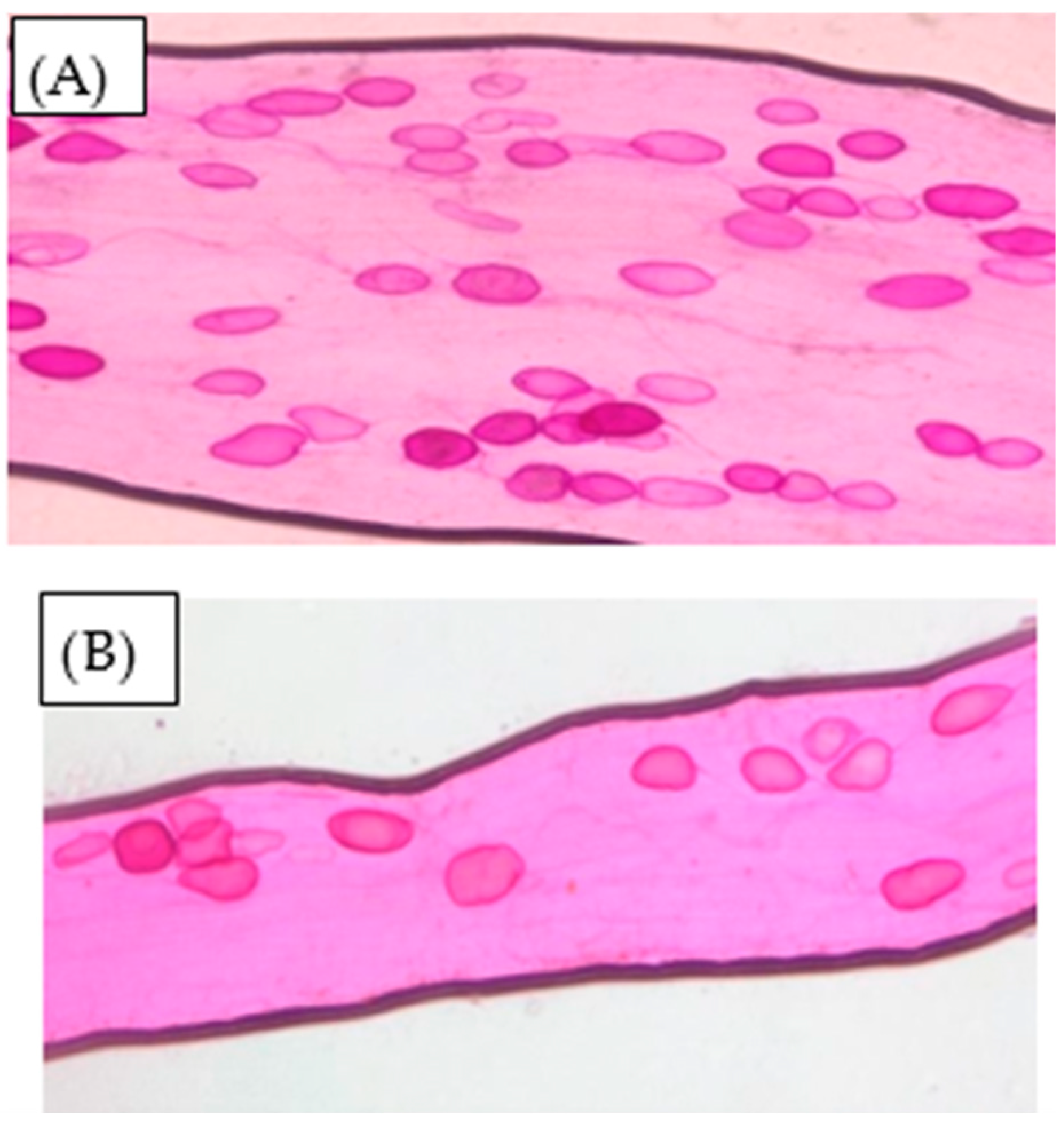
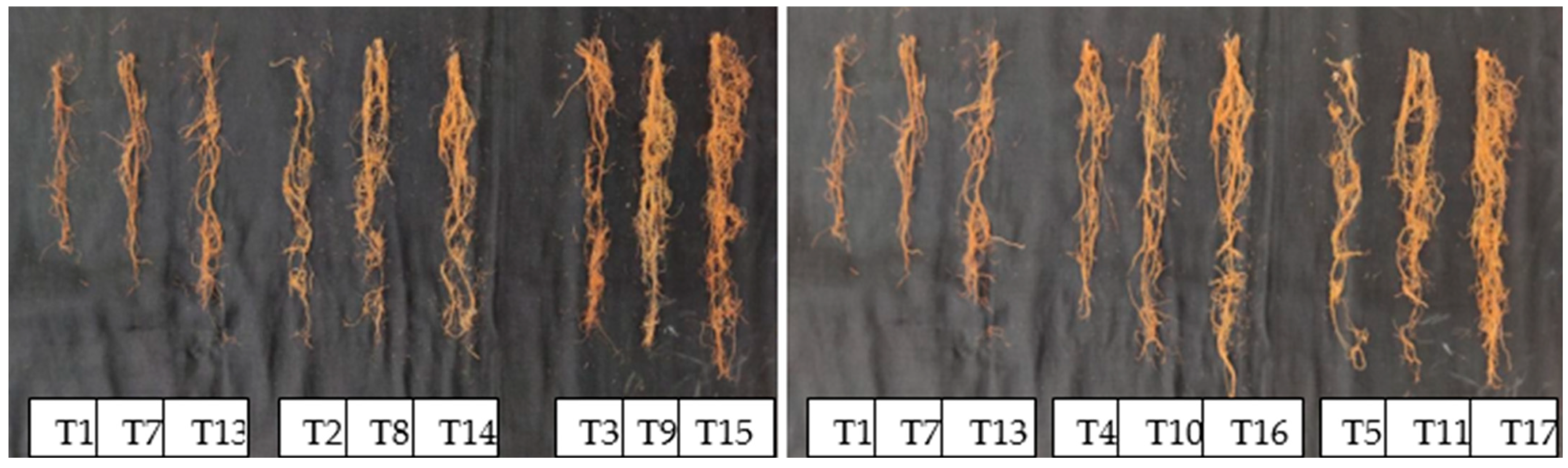
Arbuscular mycorrhizal (AM) fungi were able to colonize mung bean roots even under water-deficit conditions, indicating their important role in stress mitigation and plant adaptation to drought. However, the extent of colonization was strongly influenced by soil moisture availability, with reduced colonization observed under severe drought stress. This reduction may be attributed to the direct inhibitory effects of drought on the AM fungal developmental cycle, including impaired spore germination, restricted hyphal elongation, reduced sporulation, and lower colonization efficiency [
37,
38]. Similar findings were reported by [
39] in
Poncirus trifoliata, in which increasing drought severity significantly reduced AM fungal colonization. Nevertheless, the persistence of AM colonization under stress conditions suggests the adaptive potential of AM fungi in maintaining symbiotic functioning even under limited moisture availability.
The reduction in colonization observed at the harvest stage may be associated with the reduced physiological activity of plants during later growth stages, which limits the carbon allocation and nutrient exchange required for maintaining active fungal symbiosis [
40]. Similar observations regarding the dependence of AM fungal functioning on plant physiological activity and carbon allocation were also reported in tomato by [
39]. In addition, bacterial inoculation further enhanced AM fungal colonization, likely through synergistic interactions between rhizobacteria and AM fungi. Plant growth-promoting rhizobacteria can stimulate root growth, improve nutrient availability, and produce signaling compounds that facilitate AM fungal establishment and symbiotic development [
41]. Similar enhancement of AM colonization following bacterial inoculation was also reported by [
42].
The higher mycorrhizal dependency observed under drought stress conditions indicates that mung bean plants relied more heavily on AM symbiosis to overcome the adverse effects of moisture stress. AM fungi help plants tolerate drought through improved water and nutrient uptake, enhanced root development, and better osmotic adjustment [
43]. Under stress conditions, plants become increasingly dependent on mycorrhizal associations for maintaining physiological and metabolic activities. Similar results on increased mycorrhizal dependency under drought conditions were reported by [
44] in
Lallemantia iberica and
Lallemantia royleana, supporting the findings of the present investigation.
Nitrogen and phosphorus are essential nutrients required for plant growth, metabolism, and productivity, particularly under drought stress conditions in which nutrient uptake and translocation are severely restricted. Drought stress reduces nitrogen uptake and transport by decreasing the transpiration rate, membrane permeability, and water availability required for nitrate and ammonium movement within plants [
45]. In the present study, co-inoculation of AM fungi and
Bradyrhizobium resulted in higher nitrogen uptake under all levels of field capacity, indicating the beneficial role of microbial symbiosis in maintaining nutrient acquisition under moisture stress.
Bradyrhizobium contributes through biological nitrogen fixation, which supports photosynthesis and assimilate production, while AM fungi facilitate ammonium transport to plants through specialized transporters such as AMT2 present in fungal hyphae and the periarbuscular membrane [
46]. The synergistic interaction between AM fungi and rhizobacteria therefore improved nitrogen metabolism and nutrient availability under drought conditions. Similar enhancement in the shoot nitrogen content following combined inoculation of AM fungi and bradyrhizobia was also reported by [
47].
Phosphorus acquisition was also significantly improved in inoculated treatments, highlighting the important role of AM fungi in enhancing the uptake of diffusion-limited nutrients under water-deficit conditions [
48]. Phosphorus plays a crucial role in several physiological and metabolic processes, including energy transfer, photosynthesis, membrane stability, and biomass production. Under drought stress, phosphorus becomes less available due to reduced mobility in soil, making AM fungal-mediated uptake particularly important [
49]. The enhanced phosphorus uptake observed in co-inoculated plants may be attributed to the extensive extraradical hyphal network of AM fungi, which increases the absorptive surface area beyond the root depletion zone. Previous studies have also demonstrated the overexpression of phosphate transporter genes such as PT4 under drought stress in
Lotus japonicus,
Medicago truncatula, and
Lycium barbarum, emphasizing the importance of mycorrhizal phosphorus transport pathways during stress conditions [
50]. Phosphate absorbed by fungal transporters is assimilated into polyphosphate and translocated to the plant through fungal hyphae with the involvement of fungal aquaporins [
51].
The greater phosphorus uptake in co-inoculated treatments further indicates a synergistic interaction between AM fungi and rhizobacteria in phosphorus mobilization and acquisition. AM fungi can absorb only soluble inorganic phosphate, whereas phosphate-solubilizing bacteria associated with AM fungal hyphae help mobilize unavailable phosphorus forms in the rhizosphere. These bacteria utilize carbon compounds released by AM fungal hyphae in the hyphosphere and in turn enhance phosphorus availability and uptake efficiency. Similarly, [
52] reported that AM fungal hyphae release sugars and carbon compounds that support beneficial bacteria capable of mobilizing soil phosphorus, thereby improving plant phosphorus acquisition. Comparable results were reported by [
53], who observed the maximum phosphorus content and uptake in maize and pigeon pea following combined inoculation of AM fungi with
Bacillus megaterium and
Penicillium sp., supporting the findings of the present investigation.
Mycorrhizal inoculation improved mung bean yield under drought stress by enhancing root colonization, water uptake, and nutrient acquisition, particularly phosphorus, through extraradical hyphal networks [
39]. The improved physiological and nutritional status of inoculated plants contributed to better biomass production and yield under moisture stress. Similar increases in the yield of mycorrhizal plants under drought conditions were reported in tomato, cowpea, maize, flax, and damask rose [
54,
55,
56,
57,
58], while recent studies also confirmed the role of AM fungi in improving drought tolerance and productivity [
59,
60]. Co-inoculation with
Bradyrhizobium further enhanced yield through the synergistic improvement in nutrient uptake and nitrogen fixation [
43,
61].
5. Conclusions
The present study clearly demonstrated that inoculation with Bradyrhizobium sp. and arbuscular mycorrhizal fungi (AMF) significantly improved the growth, nutrient acquisition, and yield of mung bean under drought stress conditions. Drought stress markedly reduced the plant height, biomass, nutrient uptake, mycorrhizal colonization, and yield in uninoculated plants; however, these adverse effects were substantially mitigated by microbial inoculation. Among the treatments, co-inoculation with Acaulospora scrobiculata or Claroideoglomus etunicatum with Bradyrhizobium sp. consistently outperformed single inoculations across all field capacity levels (50, 75, and 100% FC). The synergistic interaction between AMF and Bradyrhizobium enhanced the plant height, shoot and root dry matter, total biomass, nitrogen and phosphorus content and uptake, and yield attributes, particularly under severe and moderate drought stress. Improved performance was closely associated with higher mycorrhizal root colonization and greater mycorrhizal dependency under water-limited conditions, highlighting the critical role of AM symbiosis in drought resilience. The results confirm that drought-stressed mung bean plants rely more strongly on mycorrhizal associations for optimal growth and productivity, as evidenced by increased mycorrhizal dependency at lower field capacities. Enhanced nutrient uptake, especially nitrogen through biological fixation and phosphorus via AM fungal hyphal transport, appears to be a key mechanism underlying improved drought tolerance and yield stability.
Overall, the tripartite symbiosis among mung bean, AMF, and Bradyrhizobium represents an effective, eco-friendly, and sustainable strategy to alleviate drought stress in legume production. The combined application of AM fungi and Bradyrhizobium sp. can be recommended as a promising bio-inoculant approach for improving mung bean productivity in arid and semi-arid regions under changing climatic conditions.






 ,
,