Article

Sustainable Use of Aquaculture Effluent in Prickly Pear Cactus Production: Effects of Dilutions on Soil Chemical Changes


by
Talita Dantas Pedrosa
1,
Rafael Oliveira Batista
1,
Solange Aparecida Goularte Dombroski
1,
José Francismar de Medeiros
2,
Stefeson Bezerra de Melo
3 and
Rafael Rodolfo de Melo
2,*
1
Department of Engineering and Environmental Sciences, Federal University of the Semi-Arid Region—UFERSA, Francisco Mota, 572, Costa e Silva, Mossoró 59625-900, Brazil
2
Department of Agronomic and Forestry Sciences, Federal University of the Semi-Arid Region—UFERSA, Francisco Mota, 572, Costa e Silva, Mossoró 59625-900, Brazil
3
Department of Exact Sciences and Information Technology, Federal Rural University of the Semi-Arid Region—UFERSA, Gamaliel Martins Bezerra, 587, Alto da Alegria, Mossoró 59625-900, Brazil
*
Author to whom correspondence should be addressed.
Soil Syst. 2026, 10(5), 50; https://doi.org/10.3390/soilsystems10050050
Submission received: 6 November 2025 / Revised: 14 April 2026 / Accepted: 16 April 2026 / Published: 22 April 2026

Abstract

Aquaculture effluent appears as an alternative for reuse, given its significant generation. However, its use must be reasonable to avoid damage to the environmental quality of the soil. In this context, the objective was to evaluate the chemical changes in Ultisol cultivated with small prickly pear cactus and irrigated with different dilutions of aquaculture effluent in the supply water. The experiment was conducted at the Water Reuse Experimental Unit, located in the Brazilian semi-arid region, Mossoró, RN, Brazil. Planting was carried out in a randomized block design with five treatments and five replications. A small prickly pear cactus was irrigated weekly for 365 days, with the gross water depth determined based on the crop’s evapotranspiration. During the experimental period, the physical-chemical characterization of the effluent dilutions was conducted every 60 days, with initial and final descriptions of the soil in the 0.0–0.20 m and 0.20–0.40 m layers. Additionally, cation exchange capacity and the exchangeable sodium percentage were determined. Multivariate statistical analysis was applied to understand chemical changes in the soil. The dilutions containing a higher proportion of aquaculture effluent in the supply water, primarily consisting of 100% effluent, exhibited the chemical changes in the soil. Using a dilution containing 25% aquaculture effluent in 75% supply water may be the most viable alternative for water supply in prickly pear cactus irrigation, with non-relevant changes in soil chemical characteristics.

1. Introduction

Excessive demand for freshwater in the face of a low available supply is characterized as water scarcity, which, in practical terms, can be caused by an increase in human activities, pollution of water bodies, climate change, and population growth [1,2,3].
In the Brazilian semi-arid region, the issue of water scarcity is closely tied to climate variability and the limited availability of freshwater [2,4]. Associated with this, the spatial distribution of water itself ultimately contributes to episodes of drought in the region. Thus, the reuse of wastewater in agriculture significantly reduces production costs, especially in arid and semi-arid regions, by increasing water availability and supporting the socio-economic sustainability of local water resource management [4].
Faced with the scenario of water scarcity in Brazil’s semi-arid regions, the use of wastewater in agriculture has intensified, aiming to alleviate problems related to low water availability [5]. Ventura et al. [6] state that irrigated agriculture in arid and semi-arid regions consumes around 70% of the freshwater collected, making the practice infeasible in areas facing water conflicts.
Al-Hazmi et al. [7] reported that worldwide, land irrigated with wastewater, whether treated or not, now exceeds 20 million hectares. In this context, the exploitation of low-quality water is increasing, as a means to meet the water demands of irrigated agriculture and sustain agricultural production [3,8].
The effluent generated by aquaculture activities constitutes an alternative to be explored [9,10], as its generation is due to the high water consumption, in addition to having a high chemical and biochemical oxygen demand and high contents of protein, nitrogen, and phosphorus [11,12]. However, its use must be carried out with discretion and requires monitoring of soil quality, as the use of untreated wastewater can harm it, leading to the contamination of agricultural land and the incorporation of chemical pollutants, heavy metals, and salts [7].
Agricultural production is influenced by the presence of heavy metals, salts, and toxic substances in the soil, which impact various soil properties, including cation exchange capacity (CEC), pH, texture, and nutritional status [13,14].
The use of lower quality water can favor the accumulation of nutrients in the soil, with increased salinity, especially in perennial crops [15], as the presence of salts of sodium (Na+), calcium (Ca2+), magnesium (Mg2+), chloride (Cl), sulfate (SO42–) and carbonate (CO3) can stress the plant, either by decreasing the osmotic potential of the soil solution or by the response to toxicity [16,17].
Through the 2030 Agenda for the promotion of sustainable development, the United Nations (UN), in an attempt to achieve the Sustainable Development Goals (SDGs) on a planetary scale, has been putting pressure on leaders around the world to adhere to the practice of water reuse, through the implementation of SDG nº 6, which aims to “Ensure the availability and sustainable management of water and sanitation for all”, as well as SDG nº 14, which aims to “Conserve and use sustainably the oceans, seas and marine resources for sustainable development” [18]. The present study aligns with the two SDGs mentioned, as irrigation was performed using reused water, thereby avoiding the improper disposal of effluents into freshwater or saltwater bodies.
The objective of this study was to evaluate chemical changes in an Ultisol cultivated with prickly pear cactus (Nopalea cochenillifera (L.) Salm-Dyck) and irrigated using dilutions of aquaculture effluent. This study hypothesizes that applying aquaculture wastewater directly to soil without prior dilution increases soil sodicity and reduces productivity.

2. Materials and Methods

2.1. Location of the Experimental Area

The Water Reuse Experimental Unit (WREU) was the location chosen to conduct this study, in the Brazilian semi-arid region, Mossoró, RN, Brazil, geographic coordinates 5°12′31.25″ South latitude and 37°19′08.78″ West longitude (Figure 1). WREU is located in a region with a BSh-type climate, characterized by hot and dry conditions with irregular rainfall, an annual average of 794 mm, and an average air temperature of 26 °C [19,20]. According to the guidelines of the Soil Taxonomy, the soil in the experimental area was classified as Ultisol [21].
The area used to distribute the experimental plots occupied 62.36 m2 within WREU, measuring 8.26 m in length by 7.55 m in width. Twenty-five experimental plots with individual dimensions of 1.0 × 1.0 m (1.0 m2) and spaced 0.80 m apart were randomly distributed. Circulation corridors were delimited with a width of 0.70 m. Additionally, to protect the cladodes (flattened, green, and succulent stems, typical of cacti) planted in the center of the plots from animal and insect attacks, a border was installed 0.80 m away from the plots.
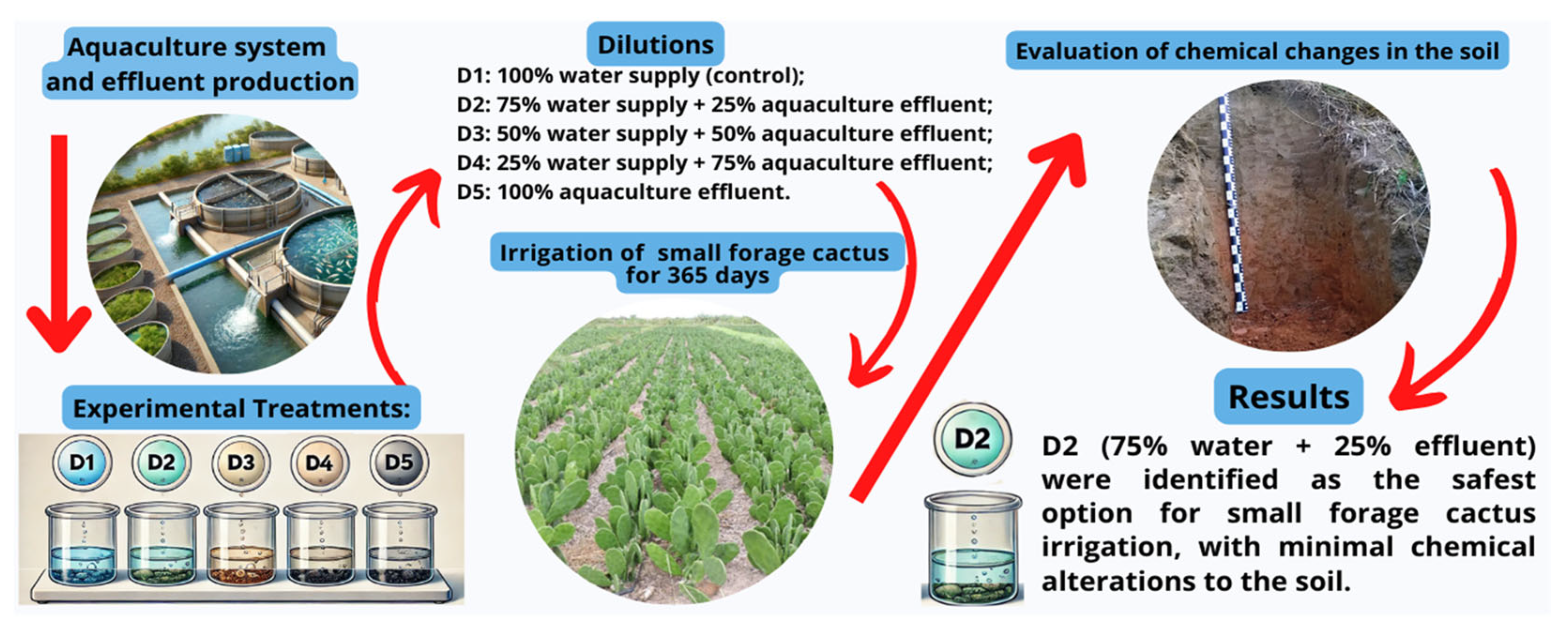
Small prickly pear cactus of the species Nopalea cochenillifera (L.) Salm-Dyck was cultivated at a spacing of 1.7 × 0.2 m and, for this configuration, the planting density was equivalent to approximately 29,412 plants ha−1. The procedures for setting up the experimental area and applying dilutions of aquaculture effluent to the supply water. In the experimental design, five different concentrations of aquaculture effluent were evaluated (D1—0%, D2—25%, D3—50%, D4—75%, and D5—100%), as shown in Figure 2. The quantities and dilution levels used were defined based on preliminary studies, taking into account the tolerance limits for the region’s soils.

2.2. Physical and Chemical Characterization of the Soil Before Setting Up the Experiment

To characterize the soil physically and chemically, single samples were collected at five different points in October 2021 and then homogenized to obtain composite soil samples at both depths, 0–0.20 m and 0.20–0.40 m.
The evaluated parameters were determined before applying the aquaculture effluent dilutions. A Dutch-type auger was used for collection, and to facilitate this in the second layer (0.20–0.40 m), the soil was moistened 24 h before the scheduled collection time.
All analyses were conducted at the Soil, Water, and Plant Analysis Laboratory (LASAP) and at the Soil, Water, and Plant Analysis Laboratory of the Semi-arid Region (LASAPSA), both located within the Universidade Federal Rural do Semi-Árido, UFERSA, Mossoró, RN.
The chemical parameters determined before setting up the experiment were: pH (water), electrical conductivity of the saturated extract (ECse), organic matter (OM), calcium (Ca2+), magnesium (Mg2+), potassium (K+), sodium (Na+), phosphorus (P), manganese (Mn), iron (Fe) and zinc (Zn). Additionally, the cation exchange capacity (CEC), the exchangeable sodium percentage (ESP), and biochemical oxygen demand (BOD) were calculated. The physical parameters of the soil were also determined before setting up the experiment, characterizing it in terms of sand, silt and clay contents (particle-size composition), bulk density and its textural classification. The physical and chemical analyses of the soil were conducted according to Embrapa’s methodological recommendations [22].

2.3. Irrigation Management and Application of Aquaculture Effluent Dilutions

Irrigation was performed every seven days, alternating between supply water and aquaculture effluent dilutions. Thus, one week the plants received supply water, and the next week they were irrigated with aquaculture effluent dilutions. Within the last 24 h preceding irrigation, if rainfall exceeding 20 mm was recorded, irrigation was not carried out, either with the application of supply water or with the application of dilutions of aquaculture effluent in the supply water.
The aquaculture effluent used for irrigation was collected at the Aquaculture Sector of the East Campus of UFERSA in Mossoró, RN, where the following aquatic animals are cultivated: Oreochromis urolepis hornorum, Oreochromis niloticus, Piaractus brachypomus, Colossoma macropomum, and Litopenaeus vannamei. The effluent from the Aquaculture Sector of UFERSA results from the mixture of feed residues and excrement from fish (Oreochromis urolepis hornorum, Oreochromis niloticus, Piaractus brachypomus, Colossoma macropomum) and shrimp (Litopenaeus vannamei), and the presence of substances used in tank cleaning such as lime, caustic soda, and chlorine. It is important to note that no medications are used in the daily activities of this sector. In detail, the fish feed has the following composition: ground whole corn; soybean meal; wheat bran; rice bran; viscera meal; fish meal; meat meal; blood meal; refined fish oil; calcium carbonate; sodium chloride; antioxidant (Ethoxyquin); antifungal (Calcium Propionate); vitamin C; vitamin A; vitamin D; vitamin E; vitamin K; vitamin B1 (Thiamine); vitamin B2 (Riboflavin); vitamin B6 (Pyridoxine); vitamin B12; Niacin; Calcium Pantothenate; Biotin; Folic acid; Iron Sulfate; Manganese Sulfate; Copper Sulfate; zinc oxide; Potassium Iodate and Sodium selenite. The shrimp ration is composed of the following ingredients: soybean meal; Wheat bran; Rice bran; Broken rice; Meat and bone meal; Fish meal; Blood meal; Refined fish oil; Soy lecithin; Sodium chloride; Monocalcium phosphate; Magnesium sulfate; vitamin A; vitamin D3; vitamin E; vitamin C; vitamin K3; Thiamine (B1); Riboflavin (B2); Pyridoxine (B6); vitamin (B12); Folic acid; Biotin; Niacin; Calcium Pantothenate; Cobalt Sulfate; Copper Sulfate; Iron Sulfate; Calcium Iodate; Manganese Monoxide; Sodium selenite; zinc oxide; organic chromium; enzymatic additive; prebiotic additive; Schizochytrium sp. algae meal; propionic acid; urea formaldehyde; BHA (Butylated hydroxyanisole); BHT (Butylated hydroxytoluene); and propyl gallate. The supply water used to dilute the effluent came from deep wells installed in the municipality of Mossoró, RN, managed by the Companhia de Água e Esgoto do Rio Grande do Norte (CAERN). The water supply application, which commenced on 20 October 2021, utilized a localized irrigation system featuring drip tape.
The plant’s water demand was obtained using adjustment coefficients on the reference evapotranspiration (ETo), in mm d−1. A fixed crop coefficient (Kc) value of 0.70 was used for field experiments, as recommended by Lima et al. [23]. Gross irrigation depth was calculated using a water balance approach, where the water input is irrigation and the output is crop evapotranspiration (ETc), expressed in millimeters per day (mm d−1). In the calculation, the method proposed by Doorenbos and Pruitt [24] was used to estimate crop evapotranspiration (ETc).
Reference evapotranspiration (ETo) was estimated throughout the experimental period using the Penman–Monteith Equation [25]. Irrigation time (Tirrigation) for the drip system and the volume of water (Vol.water) applied manually through dilutions of the effluent were calculated. The volume of effluent diluted in the supply water that was applied manually was also calculated.
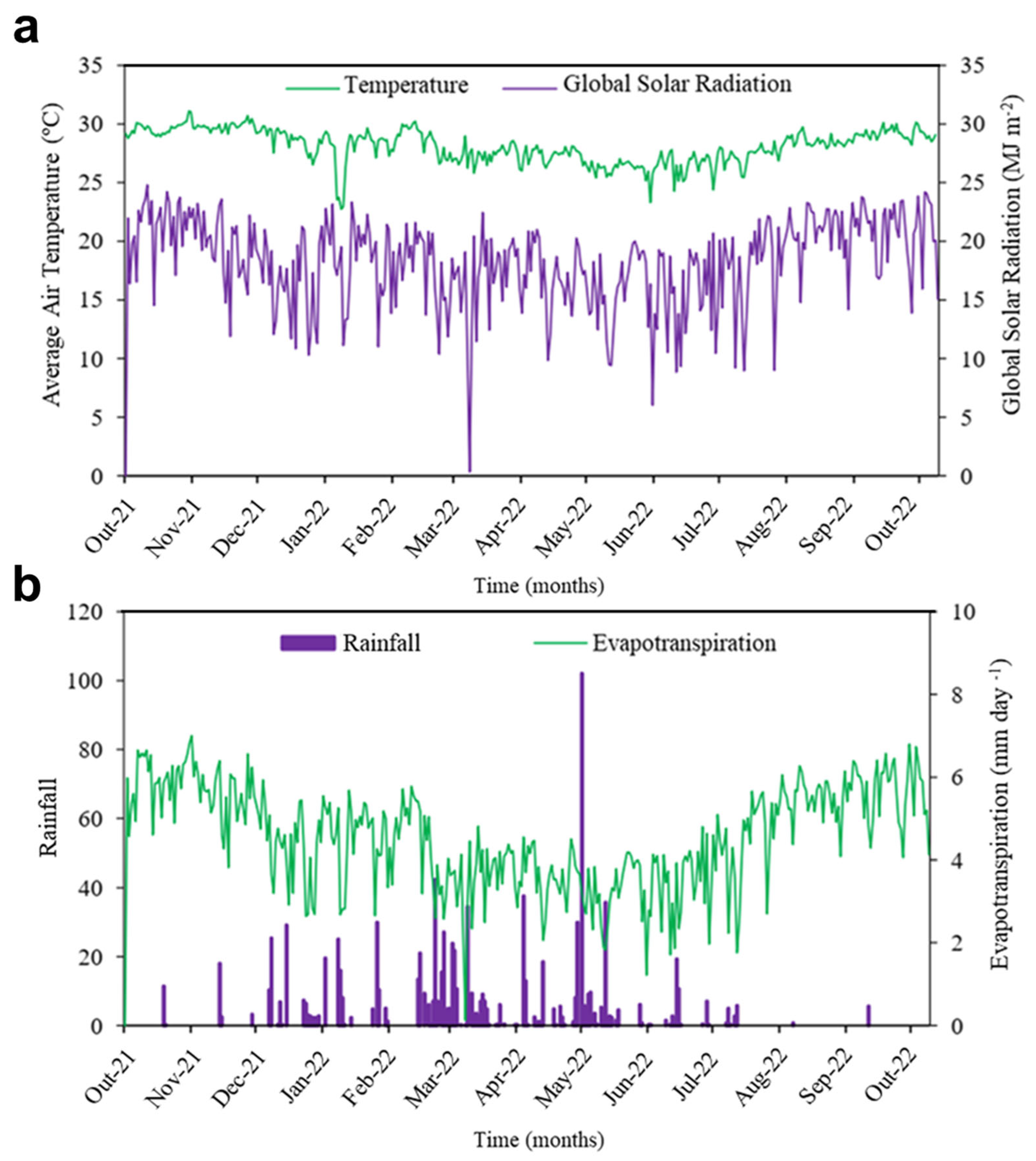
Meteorological data were obtained using the Campbell automatic meteorological station, installed 935.43 m away from WREU on the UFERSA Mossoró, which enabled the recording of accumulated rainfall of 947 mm during the experimental period.
Figure 3 presents some important climatological variables in determining the level of water applied to the soil to meet the water demand of plants.
To assess the uniformity of water distribution in the drip irrigation system installed in the experimental unit, the water distribution uniformity coefficient (DUC) was calculated every two months throughout the experimental period. For this, the flow rate of 16 emitters distributed in four equidistant lateral lines was determined by collecting the volume of water applied by each emitter over a three-minute period, measured in a 100 mL graduated cylinder, as recommended by NBR ISO 9261 [26]. The flow rate, Q, was calculated and used to calculate DUC and CUD, which indicate the uniformity of water application throughout the system.
Five irrigation treatments were established, defined by different proportions of supply water (SW) and aquaculture effluent (AE), applied throughout the entire palm cultivation period, to mitigate the effects of salinization. In all treatments, the irrigation depth using only supply water from the irrigation system was 108.44 mm, while the total depth applied was 177.66 mm. Treatment D1 corresponded to the exclusive application of supply water, with 69.22 mm of SW and 0.00 mm of AE. In treatment D2, 51.92 mm of SW and 17.30 mm of AE were applied, corresponding to a dilution of 75% SW and 25% AE. Treatment D3 consisted of 34.61 mm of SW and 34.61 mm of AE, representing a proportion of 50% SW and 50% AE. In treatment D4, 17.30 mm of AA and 51.92 mm of EA were applied, equivalent to 25% AA and 75% EA. Finally, treatment D5 received exclusively aquaculture effluent, with 0.00 mm of AA and 69.22 mm of EA, corresponding to 100% EA.

2.4. Analysis of Dilutions of Aquaculture Effluent in Supply Water

Every two months, samples of five dilutions of aquaculture effluent in supply water were collected to characterize the physical-chemical attributes that could interfere with plant production and development, as well as cause chemical changes in the soil. These samples were evaluated, and the results of the analyses are shown in Table 1.
At LASAP/UFERSA and the Sanitation Laboratory (LASAN), the values of hydrogen potential (pH), electrical conductivity (EC), potassium (K+), sodium (Na+), calcium (Ca2+), magnesium (Mg2+), carbonate (CO32–), bicarbonate (HCO3–), iron (Fe), manganese (Mn), zinc (Zn), copper (Cu), Kjeldahl total nitrogen (KTN), phosphorus (P), and biochemical oxygen demand (BOD) were determined using the methodologies proposed by Embrapa [29] and Standard Methods for the Examination of Water and Wastewater [30], as presented in Table 1.
With the values of Na+, Ca2+, Mg2+, CO32– and HCO3, the sodium adsorption ratio (SAR) and residual sodium carbonate (RSC) were determined, as proposed by Richards [31] and Eaton [32].

2.5. Experimental Design, Collection and Cultivation of Prickly Pear Cactus

The experiment was set up in a randomized block design, with five treatments and five replications. The treatments were represented by dilutions of aquaculture effluent (AE) in supply water (SW) following the recommendations of Costa et al. [33]: (a) D1—100% supply water (control); (b) D2—75% supply water and 25% aquaculture effluent; (c) D3—50% supply water and 50% aquaculture effluent; (d) D4—25% supply water and 75% aquaculture effluent; and (e) D5—100% aquaculture effluent.
The cladodes used in the experiment were donated by the Agricultural Research Company of the state of Rio Grande do Norte (Emparn), located in Apodi, RN, and were selected free of pathologies or pest infection, and sent to the Environmental Quality Laboratory (EQL) of the Water, Soil and Plant Analysis Laboratory of the Semi-arid Region (LASAPSA) located on the East campus of Mossoró, RN. The cladodes were planted on 20 October 2021, and cultivated for a period of 365 days, presenting average fresh phytomass productivities of 55.01, 56.67, 46.62, 46.59, and 45.83 Mg ha−1 for treatments D1, D2, D3, D4 and D5, respectively [12].

2.6. Sample Collection and Chemical Characterization of the Soil at the End of the Experiment

After 12 months of planting and irrigating prickly pear cactus with dilutions of aquaculture effluent, the experiment was dismantled (15 October 2022). After removing the plants, soil preparation began with the manual application of normal water 24 h before the scheduled time for collecting soil samples. This was done using a 13 L watering can to moisten the soil and facilitate the collection of samples at two depths. Soil samples were collected on 22 October 2022, from 0.0 to 0.20 and 0.20 to 0.40 m deep layers using a Dutch-type auger.
In each experimental plot, two single samples were taken from the 0.0 to 0.20 m layer and two from the 0.20 to 0.40 m layer rootzone upper depth of pear cactus. Then, the single samples from the same depth were homogenized in plastic trays to form a composite sample that represented each depth. Subsequently, they were placed in plastic bags, previously identified by their collection depth, treatment, and experimental block. After packaging in plastic bags, the samples were transported to LQA/UFERSA for temporary storage in aluminum trays with a capacity of approximately 500 g. Then, the trays were taken to a protected/controlled cultivation greenhouse, where they remained on the bench for 48 h to evaporate the moisture.
The samples were air-dried and sent to the sample preparation and storage room at LASAPSA/UFERSA, where they were crushed and passed through a 2 mm mesh sieve, to obtain air-dried fine earth—ADFE, and subsequently stored in plastic bags containing the identification of samples by treatment, experimental block and depth.
The following parameters were determined for both sampling depths: soil pH in water was measured using a combined electrode in a 1:2.5 soil-to-water suspension; the electrical conductivity of the saturation extract (ECSe) was determined using ADFE samples, to which deionized water was gradually added until a saturated paste was obtained; after equilibration, the saturation extract was collected by vacuum filtration and its electrical conductivity was measured with a previously calibrated conductivity meter DR6000 (Hach Lange GmbH, Berlin/Düsseldorf, Germany). Soil organic matter (OM) was estimated from soil organic carbon (SOC), determined by wet oxidation with potassium dichromate in sulfuric medium under heating, using the conversion factor OM = SOC × 1.724. Exchangeable calcium (Ca2+) and magnesium (Mg2+) were extracted with 1 mol L−1 KCl at a soil-to-extractant ratio of 1:10; in the extract, Ca2+ + Mg2+ and Ca2+ were determined by EDTA complexometric titration, and Mg2+ was obtained by difference. Exchangeable potassium (K+) and sodium (Na+) were extracted with Mehlich-1 solution at a soil-to-extractant ratio of 1:10, under shaking for 5 min followed by overnight settling, and were determined in the supernatant by flame photometry. Available phosphorus (P) was extracted with Mehlich-1 solution, under shaking for 5 min followed by overnight decantation; an aliquot of the extract was then reacted with acid ammonium molybdate and ascorbic acid, and the reading was performed at 660 nm using a UV–Vis spectrophotometer (DIGIMED, São Paulo, Brazil). Finally, Mehlich-1-extractable manganese (Mn), iron (Fe), and zinc (Zn) were extracted at a soil-to-extractant ratio of 1:5, under shaking for 5 min followed by immediate filtration, and their concentrations were determined by flame atomic absorption spectrometry. Additionally, cation exchange capacity (CEC) and exchangeable sodium percentage (ESP) were calculated. All soil chemical analyses were performed according to Embrapa’s methodological recommendations [22].

2.7. Statistical Analysis

Initially, the effect of applying different dilutions of aquaculture effluent to the supply water on the chemical characteristics of the soil was evaluated after the experiment was dismantled. For this, the data were subjected to multivariate statistical analysis, which included the construction of a Pearson correlation matrix and principal component analysis (PCA) using the Kaiser criterion to determine the optimal number of components for the study. Cluster analysis and factor analysis were then performed in Statistica 7 software.
A total of fourteen variables were evaluated at both depths studied. In the factor analysis, the varimax method was used to rotate the axes and eigenvalues ≥ 1 were considered when extracting factors, as well as factor loadings ≥ 0.70.

3. Results

3.1. Physicochemical Characterization of the Soil Before Installing the Experiment

According to the averages presented for the sand, silt, and clay fractions that determine the particle-size composition of the soil, sand was the most abundant fraction, with an average value of 825.74 g kg−1 of soil; silt had an average value of 102.16 g kg−1, and clay had an average value of 72.11 g kg−1. Both the sand fraction and the silt fraction decreased from the most superficial to the deepest layer. In contrast, the clay fraction exhibited the opposite behavior, with its highest concentration found in the 0.20–0.40 m deep layer, as shown in Table 2.

3.2. Assessment of Changes in Soil Chemical Characteristics After 12 Months of Cultivation

The main chemical changes in the soil used in the experiment were evaluated at two depths, 0–0.20 and 0.20–0.40 m. Multivariate statistical analysis tests were used, firstly, to check whether there were important changes in the chemical characteristics of the soil, given that dilutions of aquaculture effluent in supply water were applied every two weeks and, secondly, to propose alternatives to the management of reuse of aquaculture effluent that minimizes these changes, considering that the soil is the primary receiving medium, so salinization and sodicity processes can be established over time, making the soil unproductive, either due to the high concentration of soluble salts or even due to the dispersion of clays that will certainly reduce soil permeability to water.
Below, the average values of the soil chemical variables are presented in Table 3, which were obtained from soil samples collected at two depths after the experiment was dismantled, compared with standards established both in national and international literature, serving as a basis for understanding the maintenance, gain or loss of soil quality, due to the chemical changes suffered.

3.3. Principal Component Analysis of Soil Chemical Variables

Principal component analysis (PCA) was performed on soil samples collected at two depths: 0–0.20 m and 0.20–0.40 m. PCA reduced the total number of variables evaluated to a smaller set, presenting only the principal components of the study, defined according to the Kaiser criterion, which suggests retaining only components with eigenvalues greater than or equal to one.
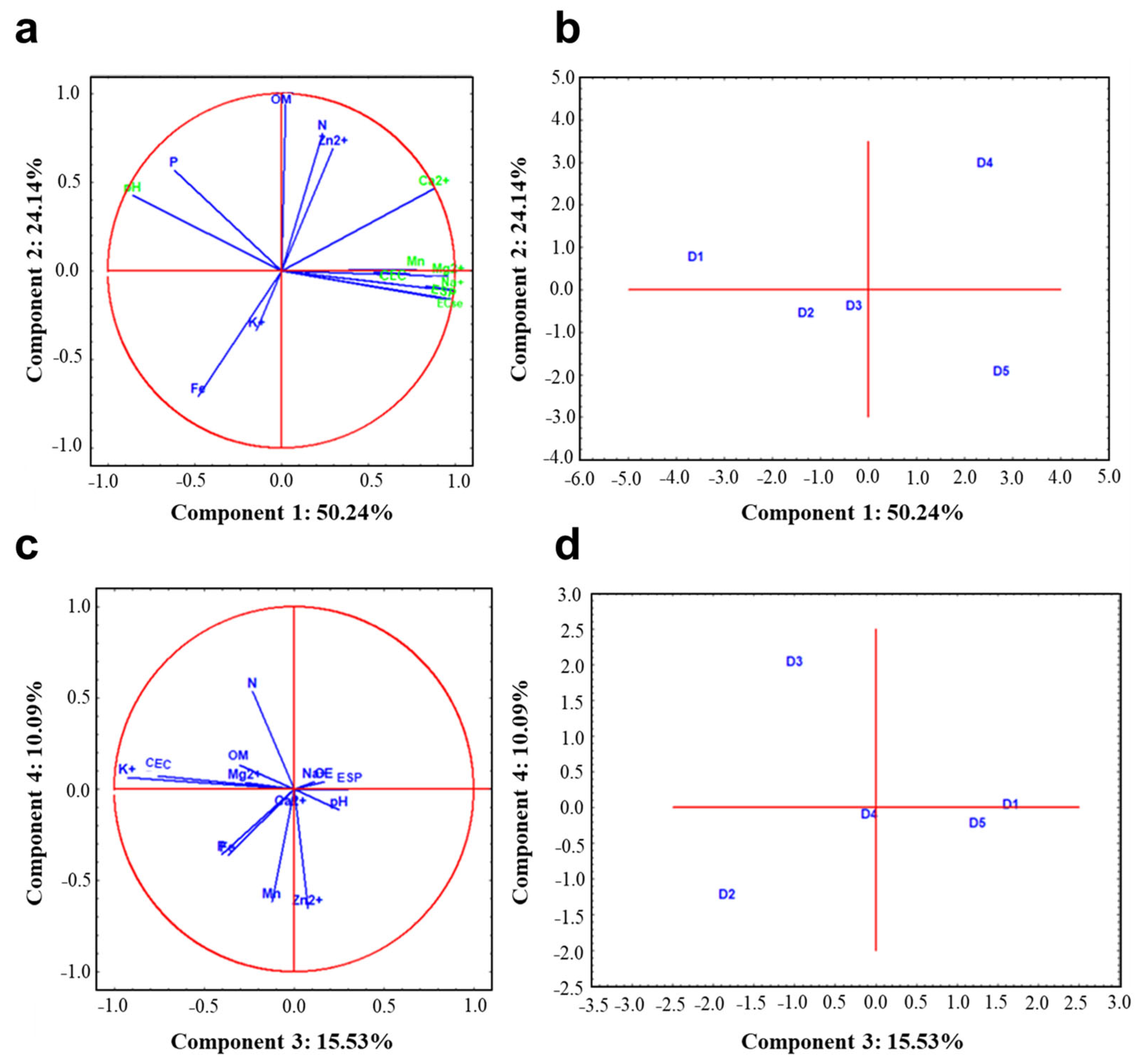
Figure 4a–d show the projections of variables and treatments (dilutions) in the plane of factors (components) at depths ranging from 0.0 to 0.20 m.
In the principal component analysis, it was possible to observe three components with eigenvalues equal to or greater than one, which is why a correlation was carried out between factor 1 and factor 2 and then between factors 1 and 3, as presented above.
Figure 4a illustrates the circle of correlations between factors 1 and 2, highlighting the importance of variables related to soil salinization and sodicity, as the variables closest to the edge of the circle of correlations are considered in the analysis. In this case specifically, the variables Ca2+, Mg2+, ECse, Na+, ESP, CEC, Mn, P and K+ are closer to the horizontal vector, represented by component 1. Although pH belongs to the same component, the variable was in the circle of correlations in the opposite direction to the other variables mentioned above. In the case of the variables P and K+, although both belong to component 1, they were not as important in the study as the others, as they are not as close to the edge of the circle. In the vertical direction (component 2), the highlighted variables were Zn and KTN, due to their greater proximity to the edge of the circle. Fe and OM also belong to component 2, but they were not important and are closer to the center.
In Figure 4b, it is observed that dilution D5 (100% AE) has the same direction and sense as practically all the most important variables presented in Figure 4a, except for pH, which has the opposite direction. In comparison, D4 (75% AE in 25% SW) and D3 (50% AE in 50% SW) were the dilutions that had the same direction and sense as Zn, KTN and Fe, indicating that these are the dilutions that most alter the chemical characteristics of the soil.
In the analysis of Figure 4c,d, the distribution of both variables and dilutions on the factor plane, showing the correlation between factor 1 and factor 3, is in line with the behavior observed in Figure 4a,b, reaffirming that the variables related to salinity and sodicity are in fact the most important and that, therefore, they belong to component 1, and that dilution D5, as it contains the largest fraction of AE, showed the same behavior for this correlation observed in Figure 4b, with the same direction and sense as the most important variables.
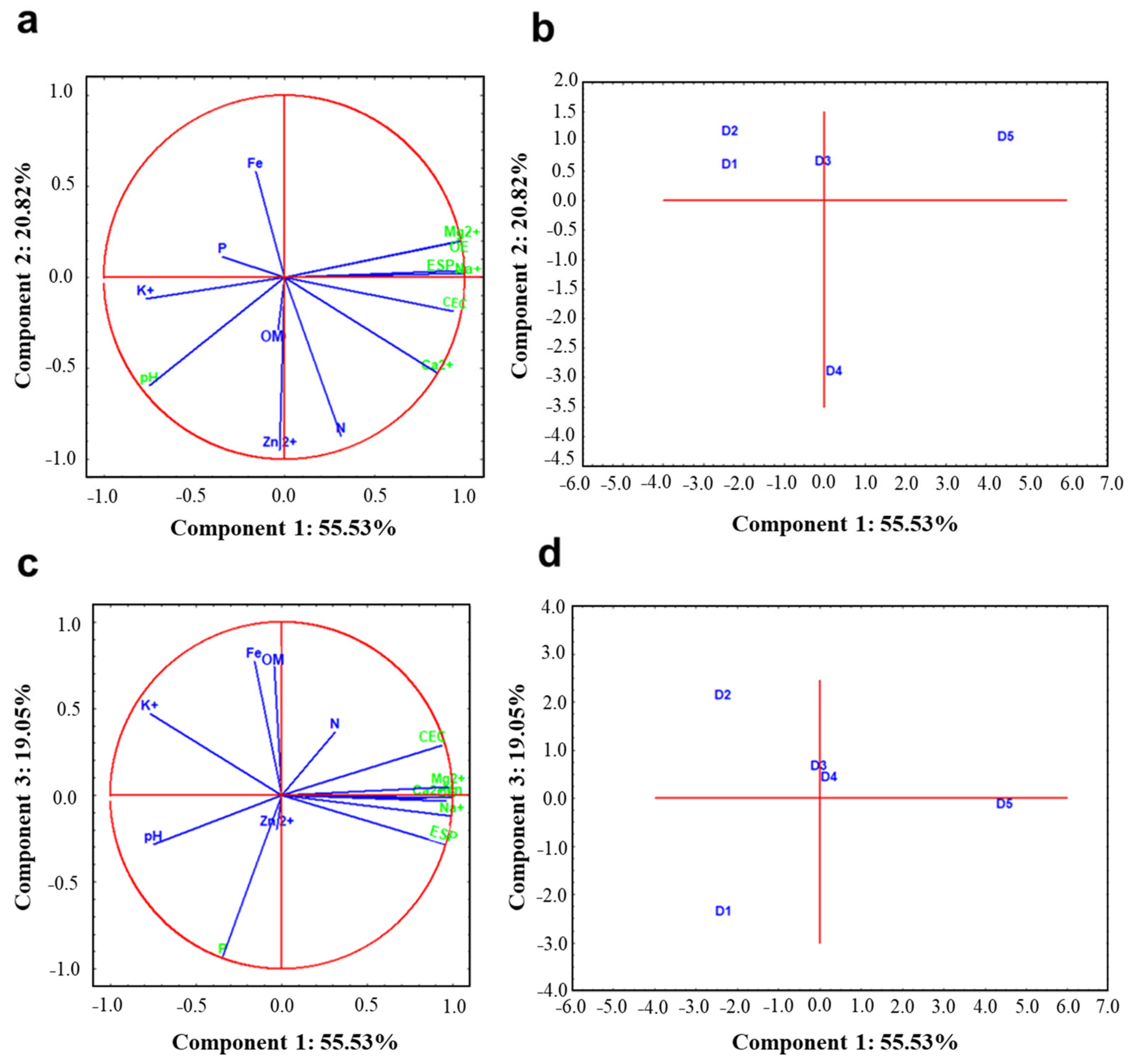
In the 0.20–0.40 m layer, it is possible to observe the projection of variables and treatments (dilutions) in the plane of factors (components) (Figure 5). The results obtained indicated four principal components with eigenvalues equal to or greater than one, according to Kaiser’s criterion. It can be observed that the behavior that occurred in the 0.0–0.20 m soil layer is repeated in the 0.20–0.40 m layer, where the same variables (Ca2+, Mg2+, ECse, Na+, ESP, CEC and Mn) were also the most important in the second soil layer, even belonging to the same factor (1).
The variables closest to the edge of the correlation circle are strongly influenced by the dilutions containing a higher proportion of AE in SW, as dilution D5 had the same direction and sense as the variables close to the edge, except pH, which had a different direction.
The D4 dilution (75% AE in 25% SW), in turn, correlates with component 2, just as the variables OM, KTN and Zn have a vector in the vertical direction and the same sense within the circle of correlations, indicating that the variables above tend to increase their concentrations in the soil irrigated with the D4 dilution. The variables Fe and K+, which also correlate with component 2, have the same direction as D4, but in the opposite sense, meaning that the concentration of these elements in the soil irrigated with D4 decreases. However, K+ does not belong to either factor 1 or factor 2.
In turn, pH was more affected by dilutions D1 (100% SW) and D5 (100% AE), and the soil showed a more alkaline pH when irrigated with D1 and a more acidic pH when irrigated with D5; the sense and direction of the vectors clearly show this trend in pH behavior in the soil.
In Figure 5b, it is clear that the D3 dilution (50% AE in 50% SW) correlates with component 2, as well as the Fe variable, as observed in Figure 5a, as it has the same direction and sense, with an increase in the concentration of the element in the soil due to the use of D3.
Figure 5c,d show the distribution of variables and dilutions in the factor 3 × factor 4 correlation, respectively. K+ and CEC were the most significant variables, correlating with component 3, although this component had a representation quality of only 15.53%. In the case of the configuration presented by the distribution of variables and dilutions with the correlation between factor 3 and factor 4, K+ and CEC increase with the use of D2, D3 and D4 and decrease with the use of D1 and D5, contributing once again to increasing their concentration in the soil when using dilutions that contain smaller proportions of effluent and greater proportions of supply water.
The Ca2+ and Mg2+ levels found in the soil at the beginning of the experiment, as shown in Table 2, were well available for use by crops, with the application of dilutions of AE in SW, especially dilution D5, which promoted an increase in the average values of these nutrients, corroborating the pattern found by Sandri and Rosa [35], who evaluated the chemical attributes of the soil in layers from 0.0 to 0.20 m and 0.20 to 0.40 m, varying the irrigation method and the type of water used, and found an increase in Ca2+ and Mg2+ contents in the soil when compared to the initial levels.
Chemical changes in soils are expected, particularly when irrigation is managed with wastewater and application rates vary. Changes that could compromise the quality and functionality of the soil deserve attention, as they compromise fertility and agricultural yield.
The electrical conductivity of the soil evaluated at the end of the experiment also showed an increase, especially in soil samples irrigated with dilutions containing a higher proportion of AE in SW. It is natural that greater proportions of effluent supplied to the soil during irrigation deposit greater concentrations of soluble ions, increasing its capacity to conduct electricity.

3.4. Factor Analysis of Soil Chemical Variables

The factor analysis presented in Table 4 and Table 5 was conducted using data on the chemical characteristics of the soil initially evaluated in the 0.0–0.20 m and 0.20–0.40 m layers, respectively. The normalized varimax rotation method was used to extract the maximum from the eigenvalues, as well as the percentage of variance and accumulated variance for each of the factor loadings.
According to the results in Table 4, the formation of three eigenvalues greater than or equal to 1 is evident, allowing for the identification of three factors, each with a percentage of variance of 55.52%, 20.82%, and 19.05%, respectively. The accumulated variance of the factors was 55.52, 76.35 and 95.39%, respectively. Thus, the three factors formed can explain 95.39% of the total variance of the analyzed variables.
According to the method used, it is known that the factor with the highest percentage of variance is the most important and representative in factor analysis, which typically culminates in factor 1. In this study, fourteen soil quality variables were evaluated in the 0.0–0.20 m soil layer, of which nine belonged to factor 1, exhibiting factor loadings of at least 0.7.
However, the variables that belonged to factor 1 and stood out the most were ECse (0.97), Mg2+ (0.98), ESP (0.98), Na+ (0.99), and Mn (0.99), as their factor loadings were greater than 0.9. The other elements evaluated, such as pH, Ca2+, CEC, and K+, also belong to the same factor and had factor loadings of −0.77, 0.79, 0.89, and −0.82, in that order.
A strong correlation is observed between the variables ECse, Ca2+, Mg2+, CEC, ESP, Na+, and Mn2+, as their factor loadings are positive, indicating that an increase in the concentration of any of these variables in the soil necessarily implies an increase in the others.
As for factor 2, KTN, Zn, and Fe are the variables that belong to this factor, with factor loadings of 0.73, 0.96, and −0.81, respectively. This suggests that an increase in the concentrations of N and Zn causes a reduction in Fe content. For factor 3, the variables that belong to this factor are OM and P, with factor loadings of 0.81 and −0.95, respectively. This indicates that an increase in organic matter levels implies a reduction in P content in the soil.
Regarding the results presented in Table 5, evaluated for the 0.20–0.40 m soil layer, it can also be seen that four eigenvalues ≥ 1 were formed, enabling the formation of four factors, which individually accounted for variance percentages of 50.24%, 24.14%, 15.53%, and 10.10%. The accumulated variance of the factors was 50.24, 74.38, 89.91 and 100%, respectively. Thus, the four factors formed can explain 100.00% of the total variance of the analyzed variables.
The variables that belonged to factor 1 and stood out the most were pH (−0.91), ECse (0.99), ESP (0.97), and Na+ (0.98), as their factor loadings were greater than 0.9. The other elements evaluated, such as Mg2+ and P, also belong to the same factor and have factor loadings of 0.88 and −0.85, respectively. The strong correlation between ECse, Mg2+, ESP, and Na+ is due to the presence of positive factor loadings, which contribute to an upward or downward modification in the concentrations of these variables simultaneously. In turn, the factor loadings of pH and P were negative, indicating that the increase in the other variables mentioned above caused reductions in these elements in the soil.
When analyzing the variables associated with factor 2, it is evident that KTN, OM, and Fe are strongly related to this factor with loadings of 0.99, 0.90, and −0.80, respectively. Therefore, an increase in the concentrations of KTN and OM causes a reduction in Fe levels in the soil.
For factor 3, the variables that belong to this factor are CEC and K+, showing positive factor loadings of 0.81 and 0.96, respectively. In the case of factor 4, the variables belonging to this factor were Zn and Mn, with positive factor loadings equal to 0.94 and 0.75, respectively. The water used in irrigation, which consisted of dilutions of aquaculture effluent, contained considerable concentrations of Ca2+ and Mg2+, resulting in an increase in the concentrations of these elements in the soil, primarily due to the continued use of the dilution containing 100% of AE. Naturally, the use of water in irrigation, as well as fertilizers and soil conditioners containing levels of various chemical elements, causes an increase in their concentrations in the soil over time, especially when use is continuous.

4. Discussion

4.1. Physicochemical Characterization of the Soil Before Installing the Experiment

Regarding bulk density, it was observed that the average for the two depths was 1.53 g cm−3, which can be explained based on the soil particle-size fractions, especially due to the sand content in the soil, which was the most abundant fraction found, given that, according to Marcolin and Klein [36], sandy soils typically have a higher bulk density than clay soils.
Regarding pH analysis, it was observed that the pH in the most superficial layer was slightly more acidic than in the deeper layer, with values ranging from 6.19 to 6.55 and an average pH of 6.37. According to the technical recommendations of the Soil Fertility Commission of the State of Minas Gerais (CFSEMG), the average soil pH, as determined chemically, classifies it as a soil with weak acidity, as the average value ranged from 6.1 to 6.9 [34]. The ECse ranged from 0.12 to 0.09 dS m−1 from the 0.0 to 0.2 m layer to the 0.2–0.4 m layer, expressing the low amount of salts in the soil solution.
The OM concentration varied substantially from the superficial to the deeper layer, with a reduction from 8.0 to 4.2 g kg−1. Alvarez et al. [34] and Sobral et al. [37] present standards, and the OM concentration falls within a range considered low according to the soil fertility interpretation classes, indicating a need for soil fertilization to provide better conditions for crop development.
The Ca2+ and Mg2+ contents showed averages of 2.92 and 1.57 cmolc dm−3, respectively. From the perspective of soil fertility, this suggests that both Ca2+ and Mg2+ were initially available to the crop in sufficient quantities [34]. The average effective CEC found in the soil before starting the experiment was 4.80 cmolc dm−3, which, according to Alvarez et al. [34] and Sobral et al. [37], indicates that the soil has a good capacity for cation exchange.

4.2. Assessment of Changes in Soil Chemical Characteristics After 12 Months of Cultivation

From the point of view of exchangeable sodium, the ESP was 0.00%, given that the Na+ concentrations at the two depths studied were absent or very low (0.95 mg dm−3), and the soil’s CEC was high. Pedrotti et al. [38] emphasized that the types of exchangeable cations influence some physical properties of the soil, such as aggregate stability, permeability and infiltration. Therefore, increased Na+ has the potential to make the soil denser and more compact under dry conditions, dispersed and sticky under wet conditions [39].
Regarding the concentration of Na+ in the soil, the element was not detected in the 0.0–0.20 m layer. Even in the 0.20–0.40 m layer, the concentration was low, at approximately 1.90 mg dm−3. The values found have a positive impact on the physical and chemical characteristics of the soil, as the presence of sodium in the soil, depending on its concentration and the type of crop intended for cultivation, can be a limiting factor for agricultural production.
The P contents found showed average values of 153.45 and 204.86 mg dm−3 from the most superficial to the deepest layer. The average between the two layers of P in the soil was 179.10 mg dm−3. In the case of soils containing 0 to 15% clay in their particle-size composition, such as the one used in this study, when the P is within the range of 120 to 180 mg dm−3, the content is considered adequate. It indicates good availability of the macronutrient to the crop [34,37].
The average concentration of Mn2+ was 57.65 mg dm−3, and Fe showed an average of 14.65 mg dm−3. According to the classes of interpretation of the availability of micronutrients in the soil, since in this study the average Mn2+ was higher than 12.0 mg dm−3, the availability of the nutrient in the soil was classified as high; on the other hand, in the case of Fe, the availability was low, since its average value remained below 18.0 mg dm−3 [34]. As for Zn, the average concentration was 1.57 mg dm−3, which, according to the classification of micronutrient availability in the soil, was classified as medium, since the average concentration of this micronutrient in the soil remained between 1.0 and 1.5 mg dm−3 [34].

4.3. Principal Component Analysis of Soil Chemical Variables

In Table 1, it can be seen that from the D3 dilution the EC of the irrigation water exceeds the standard of 3.0 dS m−1 established by Coema Resolution nº 2/2017 [27], referring to the criteria for external reuse of non-sanitary effluents for agricultural and forestry purposes, because ECse values of irrigation water greater than 3.0 dS m−1 increase problems with salinity, affecting the availability of water to plants. In this context, it is recommended that the use of dilutions containing a proportionally higher concentration of AE than SW in irrigation be carried out cautiously, as the risk of soil salinization must be considered [40].
The cation exchange capacity, as well as the other parameters evaluated, also increased at the end of the experiment and was more influenced by the D5 dilution. This treatment had the highest concentration of soluble bases. Similar behavior was found by Nascimento and Fideles Filho [41] when evaluating chemical changes in soil under cotton irrigated with treated wastewater.
Caovilla et al. [42] state that CEC is evaluated to understand the soil’s potential to maintain cations present in the exchange complex adsorbed on soil colloids, also facilitating an understanding of their leaching potential. These authors evaluated the chemical characteristics of a soil cultivated with soybeans and irrigated with wastewater from pig farming. They obtained a higher CEC for the soil treated with the highest dose of wastewater.
As for the Na+ content and ESP in the soil, the observed trend was also increasing. At the beginning of the experiment, the soil had an average Na+ concentration in the 0.0–0.20 m layer of 0.95 mg dm−3 and an ESP of 0.0%, as shown in Table 2. According to Figure 4a,c, and Figure 5a,c, it is clear that the variables above were influenced, with a consequent increase in their concentrations, by the dilution containing 100% AE in SW (D5).
Freitas et al. [43], when evaluating the production potential of yellow passion fruit irrigated with treated domestic wastewater, observed an increase in Na+ and, consequently, ESP in the soil in all layers evaluated. Similar results were found by Santos et al. [44], using the same water source for irrigation.
The primary risk of using water with high Na+ concentrations in irrigation is the potential to disperse soil clays, leading to pore clogging and, consequently, reduced permeability [40,41].
However, the dilutions used in this study showed a degree of restriction for use in irrigation ranging from none (D2, D3, D4 and D5) to slight and moderate (D1), according to the classification proposed by Ayers and Westcot [45]. Although dilutions containing a higher proportion of AE in SW have a higher concentration of Na+ and are considered moderately sodic waters, they also have a higher EC, which, when evaluated together with SAR, does not represent restrictions for use in irrigation. In turn, in dilution D1 (100% SW), the restriction is slight to moderate, given that it is a moderately sodic water with a low electrical conductivity (ECse).
It is believed that the adverse effects of excess Na+ in the soil caused by the application of D1 dilution can be minimized because when there is an increase in Na+, there is also an increase in Ca2+ and Mg2+, which results in competition between the cations in the exchange complex [40]. This fact can be explained by evaluating the ESP values of the soil in the 0.0–0.20 m layer, as they remained acceptable, varying from 7.34 to 10.66% in soils irrigated with D1 and D5, respectively, and from 3.98 to 6.60% in the 0.20–0.40 m layer, under the same dilutions.
Regarding the increase in Mg2+ in the soil due to the use of a more concentrated dilution of AE in SW, Sandri et al. [46] found similar results when evaluating the chemical changes in the soil under sprinkler and subsurface and surface drip irrigation with wastewater during the first cycle of lettuce cultivation.
As for pH, the trend in both soil layers evaluated was a reduction in the concentration of H+ ions for soils irrigated with dilutions that contain a higher fraction of AE in SW, as observed in Figure 4a and Figure 5a, since the pH has opposite sense to the other variables and the D5 dilution, indicating its reduction in the soil while the other elements evaluated increase with the use of dilutions more concentrated in AE.
The trend of reduction, accompanied by an increasing proportion of AE in SW and an increase with depth, indicates possible leaching of bases from the most superficial to the deepest layer, resulting in a consequent reduction in soil acidity. It is known that soil pH can change for several reasons and that the composition and volume of wastewater are strongly influenced by this parameter [39,47].
Andrade Filho et al. [48] observed that pH behaved differently from that observed in this study when varying wastewater application rates and evaluating the chemical attributes of a fertigated soil in the Brazilian semi-arid region. Costa et al. [49] also obtained a different result from that of this study, when cultivating sunflowers with treated and diluted produced water, observing a reduction in pH throughout the evaluated soil profile.

4.4. Factor Analysis of Soil Chemical Variables

Holanda et al. [50] observed that areas treated with gypsum showed increased concentrations of Ca2+ and Mg2+ and a reduced pH when evaluating the effect of conditioners and subsoiling on certain chemical characteristics of a saline-sodic alluvial soil.
The results obtained by these authors corroborate those found in this study, as a reduction in pH was observed due to the use of the D5 dilution, which contained the highest proportion of Ca2+ and Mg2+. However, over time, the soil pH went from being slightly acidic at the beginning of the experiment to alkaline (>7) at the end of the experiment, which, from an agronomic point of view, is classified as inadequate [34].
ECse and CEC were relevant to the study and remained within acceptable soil fertility standards, with no chemical changes observed due to the continuous use of diluted aquaculture effluent in the supply water over 12 months of application. According to Alvarez et al. [34], the CEC values obtained in this work are characterized as medium, although an increase in cation concentration was observed due to the use of dilutions. Similar results were reported by Souza et al. [51], who found that soil CEC did not vary when dairy effluent was applied at different doses. In contrast, Leonel et al. [52] observed an increase in soil CEC at the end of the experiment, using another type of effluent, compared to soil irrigated with non-saline water.
It was observed that K+ decreased in the most superficial layer of the soil due to the increase in the proportion of AE in SW, where cations, mainly Na+, prevailed. On the other hand, in the deeper layer, the reduction occurs as the organic matter increases.
Due to the increase in sodium saturation in the 0.0–0.20 m layer of the soil, it is believed that the high concentration of sodium, especially in the D5 dilution, contributed to this result. The presence of excess Na+ may have favored the desorption of K+. Liang et al. [53], when investigating the effects of irrigation from treated winery wastewater on soil structural stability, found that K+ increased at a vineyard test site in Barossa Valley, Australia, after application of this liquid wastewater.
Bezerra et al. [54], when evaluating the effects of cassava wastewater on the chemical attributes of soil cultivated with Brachiaria brizantha cv. Marandu concluded in their study that increasing effluent doses led to an increase in K+ concentration in the soil. The result differs from that found in this study, in which a reduction in K+ was observed at the end of the experiment. It is believed that this reduction is due to the crop’s high demand for potassium [55].
P was an important variable in the 0.20–0.40 m layer, although it was present in smaller quantities, which is justified by the low mobility of the ion. The reduction in P, due to the increase in ECse, Mg2+, ESP and Na+, may be attributed in part to P desorption [56]. P concentrations at both depths varied from medium to low [34], making supplementation in mineral form necessary. Souza et al. [51] observed a reduction in P content at the end of the experiment when evaluating the chemical variation in soil irrigated with different doses of dairy effluent.
At the end of the experiment, an increase in the concentration of Mn2+ was observed in the soil, primarily in the 0.0–0.20 m layer. It is believed that this increase is due to natural origins, such as the weathering of rocks and soil parent material [57], given that the effluent used in irrigation is poor in Mn2+, as seen in Table 1, which does not explain the increase in the content of this metal in the soil due to the use of dilutions. A similar result was found by Khaskhoussy et al. [58], who observed an increase in Co, Cu2+, Mn2+, Fe, Zn, Pb, Ni, and Cd in both soils studied.
Due to its correlation with OM [59], the Mn2+ in the soil was possibly adsorbed to organic matter added by dilutions of AE in SW. Therefore, the high adsorption capacity results in the element becoming unavailable to plants [58], as the Mn2+ levels in soil irrigated with the D5 dilution exceeded 4000 mg dm−3 and there were no plant losses throughout the experiment due to toxicity [60]. On the other hand, the application of dilutions of treated domestic sewage in freshwater in Cambisol in the municipality of Apodi-RN resulted in a slight increase in Mn2+ in the 0.40 to 0.60 m layer [61].
In a study evaluating the impact of irrigation with treated effluent on the physical-chemical characteristics of two types of soil, Khaskhoussy et al. [58] observed a 12% increase in the concentration of Mn2+ in the soil. However, in the present study, the levels of Mn2+ found in the soil exceed the maximum acceptable values for soil fertility, as recommended by the Soil Fertility Commission of the State of Minas Gerais [34].

5. Conclusions

The use of higher dilutions of aquaculture effluent in supply water modified the soil chemically; a reduction in P and K+ content was observed compared to the initial levels of both elements in the soil.
There was an increase in soil pH at the end of the experiment, which was classified as slightly alkaline for soil samples irrigated with aquaculture effluents; the soil did not become saline or sodic at the end of the experiment.
The levels of Zn, Fe and Mn found in the soil at the end of the experiment exceed the soil quality limits in accordance with the standards proposed by the Soil Fertility Commission of the State of Minas Gerais, for both depths evaluated.
The use of dilution, representing 25% of aquaculture effluent in the supply water, can be considered safer for irrigating prickly pear cacti, with minimal chemical changes in the soil. While this treatment minimized changes, the final concentrations of some micronutrients were still supra-optimal. The implications for long-term use and the need for monitoring of these elements must be explicitly stated.

Author Contributions

T.D.P.: Conceptualization, Investigation, Data curation, Methodology, Visualization, Validation, Writing—original draft. R.O.B.: Supervision, Project administration, Resources, Writing—review and editing. S.A.G.D.: Investigation, Methodology, Writing—review and editing. J.F.d.M.: Investigation, Validation, Writing—review and editing. S.B.d.M.: Formal analysis, Validation, Writing—review and editing. R.R.d.M.: Investigation, Data curation, Formal analysis, Writing—review and editing. All authors have read and agreed to the published version of the manuscript.

Funding

There was financial support from the financier of studies and projects (FINEP) and the National Council for Scientific and Technological Development (CNPq): 307732/2018-5.

Institutional Review Board Statement

Not applicable.

Informed Consent Statement

Not applicable.

Data Availability Statement

The data that support our result were extracted from the Doctoral Thesis of the first author (Talita Dantas Pedrosa) from the Postgraduate Program in Soil and Water Management (PPGMSA) at the Universidade Federal Rural do Semi-Árido (UFERSA), Mossoró-RN, Brazil. Derived data supporting the findings of this study are available from the corresponding author upon request.

Acknowledgments

To the Brazilian National Council for Scientific and Technological Development (CNPq) for granting researcher scholarships. To the Federal University of the Semiarid Region (UFERSA) for providing the study’s human resources, materials, and infrastructure.

Conflicts of Interest

The corresponding author confirms on behalf of all authors that there have been no involvements that might raise the question of bias in the work reported or in the conclusions, implications, or opinions stated.

References

  1. Bhering, A.P.; Antunes, I.M.H.R.; Marques, E.A.G.; Paula, R.S. Geological and hydrogeological review of a semi-arid region with conflicts to water availability (southeastern Brazil). Environ. Res. 2021, 202, 111756. [Google Scholar] [CrossRef]
  2. López-Lambraño, A.A.; Martínez-Acosta, L.; Gámez-Balmaceda, E.; Medrano-Barboza, J.P.; López, J.F.R.; Lópes-Ramos, A.L. Supply and demand analysis of water resources. Case study: Irrigation water demand in a semi-arid zone in Mexico. Agriculture 2020, 10, 333. [Google Scholar] [CrossRef]
  3. Chaganti, V.N.; Ganjegunte, G.; Niu, G.; Ulery, A.; Flynn, R.; Enciso, J.M.; Iniry, J.R. Effects of treated urban wastewater irrigation on bioenergy sorghum and soil quality. Agric. Water Manag. 2020, 228, 105894. [Google Scholar] [CrossRef]
  4. Marangon, B.B.; Silva, T.A.; Calijuri, M.L.; Alves, S.C.; Santos, V.J.; Oliveira, A.P.S. Reuse of treated municipal wastewater in productive activities in Brazil’s semi-arid regions. J. Water Process Eng. 2020, 37, 101483. [Google Scholar] [CrossRef]
  5. Teixeira, A.D.d.S.; Batista, R.O.; de Paiva, L.A.L.; Filho, R.A.R.; da Silva, S.S.; Reges, L.B.L.; Bandeira, P.M.d.C.; de Lavôr, W.K.B. Performance of drip tapes applying reverse osmosis reject from the Carnaúba wax industry. Rev. Caatinga 2024, 37, e12327. [Google Scholar] [CrossRef]
  6. Ventura, D.; Consoli, S.; Barbagallo, S.; Marzo, A.; Varella, D.; Licciardello, F.; Cirelli, G. How to overcome barriers for wastewater agricultural reuse in Sicily (Italy)? Water 2019, 11, 335. [Google Scholar] [CrossRef]
  7. Al-Hazmi, H.E.; Mohammadi, A.; Hejna, A.; Majtacz, J.; Esmeraldi, A.; Habibzadeh, S.; Saeb, M.R.; Badawi, M.; Lima, E.C.; Makinia, J. Wastewater reuse in agriculture: Prospects and challenges. Environ. Res. 2023, 236, 116711. [Google Scholar] [CrossRef] [PubMed]
  8. Ofori, S.; Puškáčová, A.; Růžičková, I.; Wanner, J. Treated wastewater reuse for irrigation: Pros and cons. Sci. Total Environ. 2021, 760, 144026. [Google Scholar] [CrossRef]
  9. De Paiva, L.A.L.; Batista, R.O.; da Silva, R.R.; Moniz, T.D.d.C.; Augusto, F.I.S.; da Cunha, W.A.; Filho, R.A.R.; de Melo, S.B.; da Costa, L.R.; de Medeiros, J.F.; et al. Canonical correlation between clogging agents and performance of drippers operating with aquaculture effluents. Rev. Bras. Eng. Agríc. Ambient. 2024, 28, e274127. [Google Scholar] [CrossRef]
  10. De Paiva, L.A.L.; da Cunha, V.T.; Batista, R.O.; Farias, P.K.P.; de Oliveira, P.V.C.; da Silva, R.R.; Moniz, T.D.d.C.; Augusto, F.I.S.; da Costa, L.R.; de Melo, S.B.; et al. Scanning electron microscopy and multivariate analysis between dripper performance and quality attributes of aquaculture effluent diluted in well water. Water Air Soil Pollut. 2024, 235, 356. [Google Scholar] [CrossRef]
  11. Kurniawan, S.B.; Abdullah, S.R.S.; Imron, M.F.; Ahmad, A.; Said, N.S.M.; Rahim, N.F.M.; Alnawajha, M.M.; Abu Hasan, H.; Othman, A.R.; Purwanti, I.F. Potential of valuable materials recovery from aquaculture wastewater: An introduction to resource reclamation. Aquac. Res. 2021, 52, 2954–2962. [Google Scholar] [CrossRef]
  12. Pedrosa, T.D.; Batista, R.O.; Dombroski, S.A.G.; de Medeiros, J.F.; de Oliveira, P.V.C.; de Melo, R.R.; Portela, J.C. Use of aquaculture wastewater in the cultivation of cactus pear as an alternative for semi-arid regions. Discov. Appl. Sci. 2024, 6, 249. [Google Scholar] [CrossRef]
  13. Gondim, J.E.F.; de Souza, T.A.F.; Portela, J.C.; Santos, D.; Batista, R.O.; Nascimento, G.d.S.; da Silva, L.J.R.; Laurindo, L.K.; Dias, P.M.S. Land uses shifts the abundance and structure of soil biota and soil chemical traits in tropical ecosystem, Apodi Plateau, Brazil. Trop. Ecol. 2024, 65, 179–190. [Google Scholar] [CrossRef]
  14. Singh, G.; Nagora, P.R.; Haksar, P.; Rani, A. Biomass allocation and productivity of tree seedlings in responses to soil chemical changes under treated wastewater irrigation in Indian desert. Water Air Soil Pollut. 2022, 233, 219. [Google Scholar] [CrossRef]
  15. Phogat, V.; Mallants, D.; Cox, J.W.; Šimůnek, J.; Oliver, D.P.; Awad, J. Management of soil salinity associated with irrigation of protected crops. Agric. Water Manag. 2020, 227, 105845. [Google Scholar] [CrossRef]
  16. Dos Santos, D.B.; Medeiros, S.d.S.; Rocha, T.A.L.C.G.; Batista, R.O.; Júnior, J.A.S.; Mesquita, F.d.O.; Macedo, R.S.; de Vasconcelos, E.S.A.G.; de Bakker, A.P. Chemical characteristics of a bean-cultivated acrisol irrigated with saline water. Agric. Water Manag. 2022, 263, 107397. [Google Scholar] [CrossRef]
  17. Yasuor, H.; Yermiyahu, U.; Ben-Gal, A. Consequences of irrigation and fertigation of vegetable crops with variable quality water: Israel as a case study. Agric. Water Manag. 2020, 242, 106362. [Google Scholar] [CrossRef]
  18. United Nations—UN. General Assembly Resolution 70/1: Transforming Our World: The 2030 Agenda for Sustainable Development. 21 October 2015. Available online: https://undocs.org/en/A/RES/70/1 (accessed on 25 June 2023).
  19. Alvares, C.A.; Stape, J.L.; Sentelhas, P.C.; Gonçalves, J.L.M.; Sparovek, G. Köppen’s climate classification map for Brazil. Meteorol. Z. 2013, 22, 711–728. [Google Scholar] [CrossRef]
  20. Dubreuil, V.; Fante, P.K.; Planchon, O.; Sant’anna Neto, J.L. Os tipos de climas anuais no Brasil: Uma aplicação da classificação de Köppen de 1961 a 2015. Rev. Fr.-Bras. Geogr. 2018, 37, 1–20. [Google Scholar] [CrossRef]
  21. Soil Survey Staff. Keys to Soil Taxonomy, 13th ed.; Natural Resource Conservation Service, US Department of Agriculture Taxonomy: Washington, DC, USA, 2022. Available online: https://www.nrcs.usda.gov/sites/default/files/2022-09/Keys-to-Soil-Taxonomy.pdf (accessed on 7 July 2025).
  22. Teixeira, P.C.; Donagemma, G.K.; Fontana, A.; Teixeira, W.G. Manual de Métodos de Análise de Solo; Embrapa Solos: Rio de Janeiro, Brazil, 2017. [Google Scholar]
  23. Lima, A.S.; Silva, P.F.; Matos, R.M.; Dantas Neto, J.; Almeida, H.A.; Saboya, L.M.F. Consumo hídrico e exigência térmica da palma forrageira em ambiente semiárido. Irriga 2021, 1, 110–128. [Google Scholar] [CrossRef]
  24. Doorenbos, J.; Pruitt, W.O. Guidelines for Predicting: Crop Water Requirements; FAO: Rome, Italy, 1977. [Google Scholar]
  25. Allen, R.G.; Pereira, L.S.; Smith, M. Evapotranspiración del Cultivo: Guías para la Determinación de los Requerimientos de Agua de los Cultivos; FAO: Rome, Italy, 2006. [Google Scholar]
  26. NBR ISO 9261; Equipamentos de Irrigação Agrícola: Emissores e Tubos Emissores: Especificações e Métodos de Ensaio. ABNT: Rio de Janeiro, Brazi, 2006.
  27. Ceará. Resolução Coema nº 2/2017. Dispõe Sobre Padrões e Condições para Lançamento de Efluentes Líquidos Gerados por Fontes Poluidoras. Revoga as Portarias Semace nº 154. de 22 de Julho de 2002 e nº 111. de 05 de Abril de 2011. e Altera a Portaria Semace nº 151. de 25 de Novembro de 2002. Diário Oficial do Estado do Ceará. Fortaleza, 21 de Fevereiro de 2017. Available online: https://www.semace.ce.gov.br/wp-content/uploads/sites/46/2019/09/COEMA-02-2017.pdf (accessed on 7 January 2024).
  28. Almeida, O.A. Qualidade da Água de Irrigação; Embrapa Mandioca e Fruticultura: Cruz das Almas, Brazil, 2010. [Google Scholar]
  29. Parron, L.M.; Muniz, D.H.F.; Pereira, C.M. Manual de Procedimentos de Amostragem e Análise Físico-Química de Água; Embrapa Florestas: Colombo, Brazil, 2011. [Google Scholar]
  30. Baird, R.B.; Eaton, A.D.; Rice, E.W. Standard Methods for the Examination of Water and Wastewater; APHA: Weybridge, UK; AWWA: Denver, CO, USA; WPCR: Plymouth, UK, 2017. [Google Scholar]
  31. Richards, L.A. Diagnosis Improvements of Saline and Alkaline Soils; USDA: Washington, DC, USA, 1954.
  32. Eaton, F.M. Significance of carbonates in irrigation waters. Soil Sci. 1950, 69, 123–134. [Google Scholar] [CrossRef]
  33. Costa, D.O.; Vale, H.S.M.; Batista, R.O.; Travassos, K.D.; Portela, J.C. Chemical characteristics of soil irrigated with produced water treatment and underground water. Dyna 2019, 86, 143–149. [Google Scholar] [CrossRef]
  34. Alvarez, V.V.H.; Barros, N.F.; Cantarutti, R.B.; Lopes, A.S. Interpretação dos resultados das análises de solos. In Recomendação para Uso de Corretivos e Fertilizantes em Minas Gerais, 5th ed.; Ribeiro, A.C., Guimarães, P.T.G., Alvarez, V.H., Eds.; Comissão de Fertilidade do Solo do estado de Minas Gerais: Viçosa, Brazil, 1999; pp. 25–32. [Google Scholar]
  35. Sandri, D.; Rosa, R.R.B. Atributos químicos do solo irrigado com efluente de esgoto tratado. Fertirrigação convencional e água de poço. Irriga 2017, 22, 18–33. [Google Scholar] [CrossRef]
  36. Marcolin, C.D.; Klein, V.A. Determinação da densidade relativa do solo por uma função de pedotransferência para a densidade do solo máxima. Acta Sci. Agron. 2011, 33, 349–354. [Google Scholar] [CrossRef]
  37. Sobral, L.F.; Barreto, M.C.V.; Silva, A.J.; Anjos, J.L. Guia Prático para Interpretação de Resultados de Análises de Solos; Embrapa Tabuleiros Costeiros: Aracaju, Brazil, 2015. [Google Scholar]
  38. Pedrotti, A.; Chagas, R.M.; Ramos, V.C.; Prata, A.P.N.; Lucas, A.A.T.; Santos, P.B. Causas e consequências do processo de salinização dos solos. Rev. Eletrôica Gestão Educ. Tecnol. Ambient. 2015, 19, 1308–1324. [Google Scholar]
  39. Dias, N.S.; Blanco, F.F. Efeitos dos sais no solo e na planta. In Manejo da Salinidade na Agricultura: Estudos Básicos e Aplicados, 1st ed.; Gheyi, H.R., Dias, N.S., Lacerda, C.F., Eds.; INCTSal: Fortaleza, Brazil, 2010; pp. 129–140. [Google Scholar]
  40. Bonini, M.A.; Sato, L.M.; Bastos, R.G.; Souza, C.F. Alterações nos atributos químico e físicos de um Latossolo Vermelho irrigado com água residuária e vinhaça. Rev. Biociênc. 2014, 20, 78–85. [Google Scholar]
  41. Nascimento, J.S.; Fideles Filho, J. Crescimento, produção e alterações químicas do solo em algodão irrigado com água de esgotos sanitários tratados. Rev. Caatinga 2015, 28, 36–45. [Google Scholar]
  42. Caovilla, F.A.; Sampaio, S.C.; Smanhotto, A.; Nóbrega, L.H.P.; Queiroz, M.M.F.; Gomes, B.M. Características químicas de solo cultivado com soja e irrigado com água residuária da suinocultura. Rev. Bras. Eng. Agríc. Ambient. 2010, 14, 692–697. [Google Scholar] [CrossRef]
  43. Freitas, C.A.; Lima, J.C., Jr.; Bezerra, F.M.L.; Oliveira, F.F.; Saraiva, K.R.; Carvalho, C.M. Productive potential of yellow passion fruit irrigated with wastewater. Res. Soc. Dev. 2020, 9, e757997712. [Google Scholar] [CrossRef]
  44. Santos, P.R.; Matos, A.T.; Kondo, M.K.; Araújo, E.D. Changes in soil chemical properties promoted by fertigation with treated sanitary wastewater. Eng. Agríc. 2017, 37, 343–352. [Google Scholar] [CrossRef]
  45. Ayers, R.S.; Westcot, D.W. Water Quality for Agriculture; FAO: Rome, Italy, 1994. [Google Scholar]
  46. Sandri, D.; Matsura, E.E.; Testezlaf, R. Teores de nutrientes na alface irrigada com água residuária aplicada por sistemas de irrigação. Eng. Agríc. 2006, 26, 45–57. [Google Scholar] [CrossRef]
  47. Barros, A.C.; Medeiros, P.H.A.; Melo, R.F.; Lopes, C.A., Jr.; Dias, C.T.S. Entupimento de gotejadores em função da aplicação de superfosfato simples e ácido nítrico. Eng. Agríc. 2009, 29, 62–71. [Google Scholar] [CrossRef]
  48. Andrade Filho, J.; Sousa Neto, O.N.; Dias, N.S.; Nascimento, I.B.; Medeiros, J.F.; Cosme, C.R. Atributos químicos de solo fertirrigado com água residuária no semiárido brasileiro. Irriga 2013, 18, 661–674. [Google Scholar] [CrossRef]
  49. Costa, F.G.B.; Batista, R.O.; Pereira, J.O.; Ferreira Neto, M.; Alves, S.M.C.; Simões, W.L.; Souza, L.; Pordeus, R.V. Productive and morphogenetic characteristics of sunflower irrigated with domestic treated wastewater on northeast semiarid area. Aust. J. Crop Sci. 2018, 12, 1184–1190. [Google Scholar] [CrossRef]
  50. Holanda, J.S.; Vitti, G.C.; Salviano, A.A.C.; Medeiros, J.D.F.; Amorim, J.R.A. Alterações nas propriedades químicas de um solo aluvial salino-sódico decorrentes da subsolagem e do uso de condicionadores. Rev. Bras. Ciênc. Solo 1998, 22, 387–394. [Google Scholar] [CrossRef]
  51. Souza, J.A.R.; Moreira, D.A.; Silva, E.L.; Thomazini, S.C.N.; Pereira, E.S.; Rodio, E.; Rezende, D.C.V.; Ferreira, N.D. Chemical variation in soil fertirrigated with effluent. Rev. Gestão Soc. Ambient. 2023, 17, e03208. [Google Scholar] [CrossRef]
  52. Leonel, L.P.; Bize, A.; Mariadassou, M.; Midoux, C.; Schneider, J.; Tonetti, A.L. Impacts of disinfected wastewater irrigation on soil characteristics. microbial community composition. and crop yield. Blue-Green Syst. 2022, 4, 247–271. [Google Scholar] [CrossRef]
  53. Liang, X.; Rengasamy, P.; Smernik, R.; Mosley, L.M. Does the high potassium content in recycled winery wastewater used for irrigation pose risks to soil structural stability? Agric. Water Manag. 2021, 243, 106422. [Google Scholar] [CrossRef]
  54. Bezerra, M.G.S.; Silva, G.G.C.; Fifante, G.S.; Emerenciano Neto, J.V.; Oliveira, E.M.M.; Morais, E.G. Chemical attributes of soil under cassava wastewater application in Marandugrass cultivation. Rev. Bras. Eng. Agríc. Ambient. 2019, 23, 579–585. [Google Scholar] [CrossRef]
  55. Silva, J.A.; Bonomo, P.; Donato, S.L.R.; Pires, A.J.V.; Rosa, R.C.C.; Donato, P.E.R. Composição mineral em cladódios de palma forrageira sob diferentes espaçamentos e adubações química. Rev. Bras. Ciênc. Agrár. 2012, 7, 866–875. [Google Scholar] [CrossRef]
  56. Erthal, V.J.T.; Ferreira, P.A.; Matos, A.T.; Pereira, O.G. Alterações físicas e químicas de um Argissolo pela aplicação de água residuária de bovinocultura. Rev. Bras. Eng. Agríc. Ambient. 2010, 14, 467–477. [Google Scholar] [CrossRef]
  57. Dong, B.; Zhang, R.; Gan, Y.; Cai, L.; Freidenreich, A.; Wang, K.; Guo, T.; Wang, H. Multiple methods for the identification of heavy metal sources in cropland soils from a resource-based region. Sci. Total Environ. 2019, 651, 3127–3138. [Google Scholar] [CrossRef]
  58. Khaskhoussy, K.; Kahlaoui, B.; Misle, E.; Hachicha, M. Impact of irrigation with treated wastewater on physical-chemical properties of two soil types and corn plant (Zea mays). J. Soil Sci. Plant Nutr. 2022, 22, 1377–1393. [Google Scholar] [CrossRef]
  59. Motta, A.C.V.; Reeves, D.W.; Touchton, J.T. Tillage intensity effects on chemical indicators of soil quality in two coastal plain soils. Commun. Soil Sci. Plant Anal. 2002, 33, 913–932. [Google Scholar] [CrossRef]
  60. Moreira, S.G.; Prochnow, L.I.; Kiehl, J.C.; Martin Neto, L.; Pauletti, V. Formas químicas. disponibilidade de manganês e produtividade de soja em solos sob semeadura direta. Rev. Bras. Ciênc. Solo 2006, 30, 121–136. [Google Scholar] [CrossRef]
  61. Oliveira, A.D.F.M.; Fernandes, F.G.B.C.; Batista, R.O.; Souza, L.D.; Gurgel, M.T. Teores de metais pesados em cambissolo irrigado com água residuária doméstica e água de poço. Rev. Ambient. Água 2014, 9, 302–312. [Google Scholar] [CrossRef]
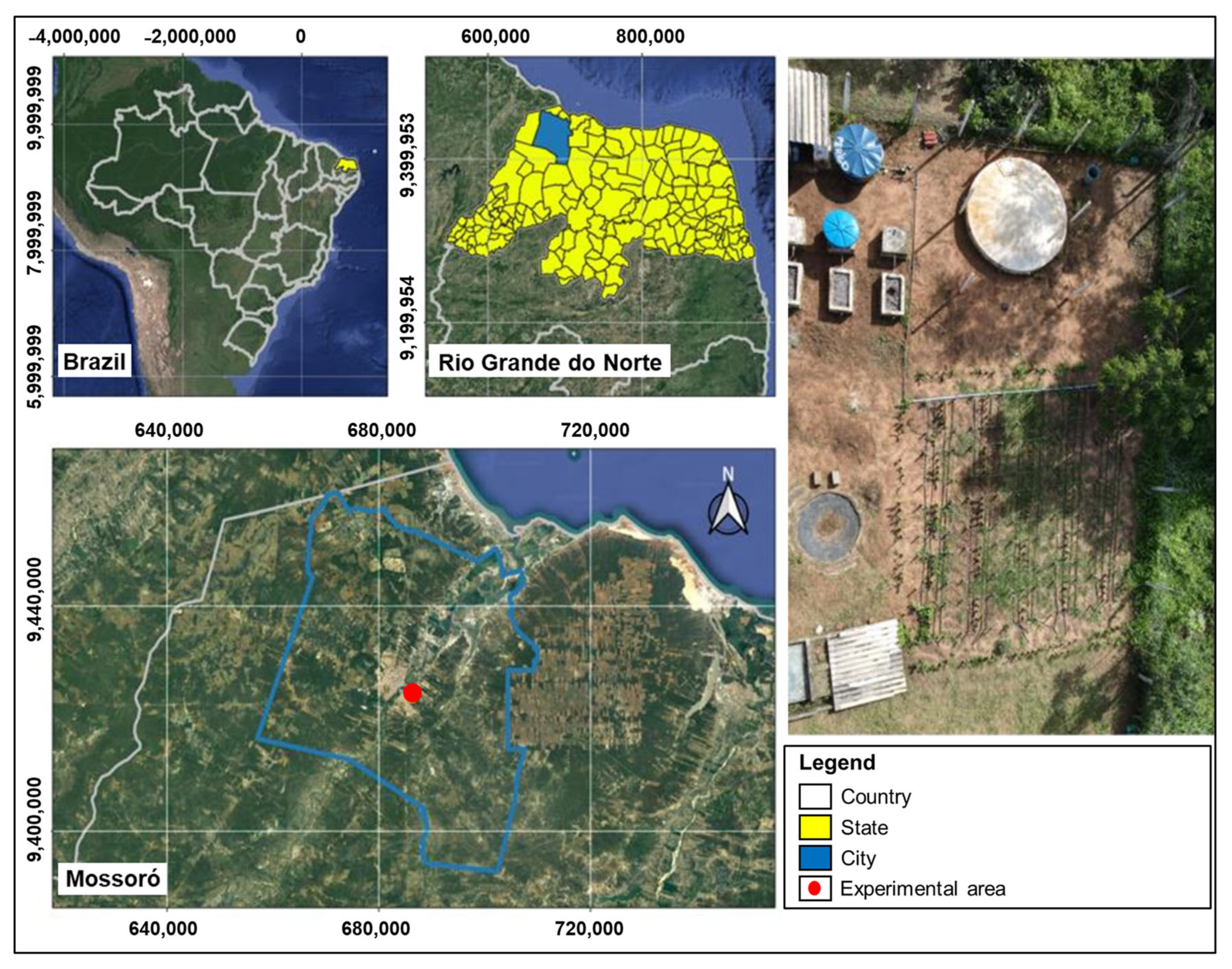
Figure 1. Location of the Water Reuse Experimental Unit (WREU), in the Brazilian semi-arid region, Mossoró, RN, Brazil.
Soilsystems 10 00050 g001
Figure 2. Experimental design with different concentrations of aquaculture effluent applied to the cultivation of pear cactus (Nopalea cochenillifera).
Soilsystems 10 00050 g002
Figure 3. Monitoring of average air temperature and global solar radiation from October 2021 to October 2022 (a); monitoring of rainfall and reference evapotranspiration in the same period mentioned (b).
Soilsystems 10 00050 g003
Figure 4. Projection of variables on the factor plane, correlating factor 1 × factor 2 (a) and factor 1 × factor 3 (c) of soil samples in the 0.0–0.20 m layer; projection of dilutions of aquaculture effluent in supply water on the factor plane, correlating factor 1 × factor 2 (b) and factor 1 × factor 3 (d). Elements in green were the most relevant for analysis.
Soilsystems 10 00050 g004
Figure 5. Projection of variables on the factor plane, correlating factor 1 × factor 2 (a) and factor 3 × factor 4 (c) of soil samples in the 0.20–0.40 m layer; projection of dilutions of aquaculture effluent in supply water on the factor plane, correlating factor 1 × factor 2 (b) and factor 3 × factor 4 (d). Elements in green were the most relevant for analysis.
Soilsystems 10 00050 g005
Table 1. Physicochemical and biochemical parameters of dilutions of aquaculture effluent in supply water and standard values established by environmental legislation and literature.
ParametersMean and Standard Deviation of DilutionsStandard
D1D2D3D4D5
BOD (mg L−1)6.00 ± 3.565.00 ± 8.0414.75 ± 8.1025.25 ± 12.1837.50 ± 5.74<200.00 (1)
pH8.00 ± 0.577.98 ± 0.397.94 ± 0.487.97 ± 0.497.98 ± 0.485.0–9.0 (1)
Ca2+ (mmolc L−1)0.72 ± 0.125.31 ± 1.499.24 ± 2.4013.26 ± 2.7517.07 ± 5.300–20 (2)
Mg2+ (mmolc L−1)1.39 ± 2.177.14 ± 3.7512.87 ± 9.5016.93 ± 13.7324.17 ± 14.070–5.0 (2)
CO3−2 (mmolc L−1)0.71 ± 0.540.59 ± 0.57 0.64 ± 0.550.51 ± 0.390.76 ± 0.930–0.1 (2)
HCO3 (mmolc L−1)3.99 ± 2.523.78 ± 1.683.80 ± 1.873.81 ± 1.943.51 ± 1.930–10 (2)
KTN (mg L−1)0.33 ± 0.401.38 ± 0.832.69 ± 1.642.96 ± 1.694.99 ± 3.57-
P (mg L−1)LDT0.11 ± 0.070.41 ± 0.200.73 ± 0.181.14 ± 0.280–2.0 (2)
K+ (mmolc L−1)0.13 ± 0.190.20 ± 0.280.74 ± 0.471.11 ± 0.371.40 ± 0.490–2.0 (2)
EC (dS m−1)0.60 ± 0.022.38 ± 0.643.94 ± 1.225.38 ± 1.686.94 ± 2.333.0 (1)
Na+ (mmolc L−1)7.11 ± 6.0815.18 ± 7.1027.85 ± 13.4340.00 ± 21.0157.18 ± 35.140–40 (2)
Mn (mg L−1)LDT0.01 ± 0.01LDT0.01 ± 0.010.03 ± 0.020.2 (2)
Cu (mg L−1)0.01 ± 0.010.01 ± 0.01LDT0.02 ± 0.010.02 ± 0.010.2 (2)
Zn (mg L−1)0.02 ± 0.010.01 ±0.030.03 ± 0.020.03 ± 0.040.04 ± 0.042.0 (2)
Cr (mg L−1)LDTLDTLDTLDT0.01 ± 0.010.1 (2)
Cd (mg L−1)LDT0.01 ± 0.010.01 ± 0.010.02 ± 0.030.03 ± 0.040.01 (2)
Ni (mg L−1)0.02 ± 0.020.02 ± 0.01LDT0.02 ± 0.020.02 ± 0.010.2 (2)
Pb (mg L−1)0.01 ± 0.010.02 ± 0.020.03 ± 0.020.06 ± 0.060.07 ± 0.045.0 (2)
RSC (mmolc L−1)2.59 ± 4.27−8.09 ± 6.15−17.67 ± 11.39−25.87 ± 15.17−36.96 ± 19.95<1.25 (recommended)
1.25–2.5 (little recomm.)
>2.5 (not recomm.) (2)
SAR (mmolc L−1)0.512.73 ± 11.77 8.52 ± 3.2311.79 ± 4.7614.33 ± 5.7817.81 ± 10.420–15 (1)
Legend: D1—100% SW; D2—75% SW plus 25% AE; D3—50% SW plus 50% AE; D4—25% SW plus 75% AE; D5—100% AE; BOD–Biochemical oxygen demand; pH—Hydrogen potential; Ca2+—Calcium; Mg2+—Magnesium; CO32–—Carbonate; HCO3–—Bicarbonate; RSC—Residual sodium carbonate; KTN—Kjeldahl Total Nitrogen; P—Phosphorus; K+—Potassium; EC—Electrical conductivity; SAR—Sodium adsorption ratio; Na+—Sodium; Fe—Iron; Mn2+—Manganese; Cu—Copper; Zn—Zinc; Cr—Chromium; Cd—Cadmium; Ni—Nickel; Pb—Lead. LDT—Less than detection limit. (1) Coema Resolution No. 2/2017, referring to the criteria for external reuse of non-sanitary effluents for agricultural and forestry purposes [27]; (2) Almeida [28], referring to the quality of national irrigation water and parameters of interest for water use for irrigation purposes.
Table 2. Physical and chemical characterization of the soil was carried out before initiating the experiment.
Depth
(m)
Physical Attributes
Total Sand (g kg−1)Silt (g kg−1)Clay (g kg−1)Density (g cm−3)Textural Classification
0.0–0.20840110501.63
0.20–0.4081294941.43Loamy Sand
Mean
(0.00–0.40)
826102721.53
St. Deviation
(0.00–0.40)
148220.10
Depth
(m)
Chemical Attributes
pHECseOMESPCECCa2+Mg2+K+Na+PMnFeZn
H2OdS m−1g kg−1%cmolc dm−3mg dm−3
0.0–0.206.190.128.00.005.073.171.550.350.00153.4068.9013.102.04
0.20–0.406.550.094.20.004.532.661.580.291.90204.8046.4016.201.09
Mean
(0.00–0.40)
6.370.116.100.004.802.921.570.320.95179.1057.6514.651.57
St. Deviation
(0.00–0.40)
0.250.022.690.000.380.360.020.041.3436.3515.912.190.67
Note: pH—Hydrogen potential; ECse—Electrical conductivity of the saturated extract; OM—Organic matter; Ca2+—Calcium; Mg2+—Magnesium; K+—Potassium; CEC—Cation exchange capacity; ESP—Exchangeable sodium percentage; Na+—Sodium; P—Phosphorus; Mn—Manganese; Fe—Iron; and Zn—Zinc.
Table 3. Average concentrations of soil chemical parameters and standard values established in the national and international literature of soil quality parameters of interest.
ParametersMean of DilutionsStandard
0.0–0.20 m Depth
D1D2D3D4D5
pH8.067.837.808.087.495.5–6.0 (1)
ECse (dS m−1)0.900.900.120.120.29<4.0 (2)
KTN (g kg−1)0.290.320.320.410.34-
OM (g kg−1)22.1423.5124.1923.8522.6940.1–70.0 (1)
Ca2+ (mg dm−3)76987426843810,26010,394482.9–801.6 (1)
Mg2+ (mg dm−3)29082984312230783688110.65–182.4 (1)
K+ (mg dm−3)58.0663.5455.8859.2053.8071.0–120.0 (1)
CEC (cmolc dm−3)3.703.974.144.324.64>15.0 (1)
ESP (%)7.345.948.077.9010.66<15% (2)
Na+ (cmolc dm−3)0.270.240.330.340.49-
P (mg dm−3)38.2220.4625.0623.3223.6230.1–45.0 (1)
Fe (mg dm−3)1774.002398.002010.001764.002000.0031.0–45.0 (1)
Mn (mg dm−3)3352.003336.003716.003742.004476.009.0–12.0 (1)
Zn (mg dm−3)3162.002880.002810.003776.002954.001.6–2.2 (1)
ParametersMean of DilutionsStandard
0.20–0.40 m Depth
D1D2D3D4D5
pH8.097.847.777.817.645.5–6.0 (1)
ECse0.040.060.080.120.15<4.0 (2)
KTN (g kg−1)0.250.240.290.300.23-
OM (g kg−1)22.2222.1222.4824.0620.6840.1–70.0 (1)
Ca2+ (mg dm−3)8314.008746.008790.0010,204.009370.00482.9–801.6 (1)
Mg2+ (mg dm−3)2312.002502.002542.002632.002626.00110.65–182.4 (1)
K+ (mg dm−3)73.7091.9488.4276.6076.8271.0–120.0 (1)
CEC (cmolc dm−3)3.544.074.074.053.96>15.0 (1)
ESP (%)3.984.224.755.706.60<15% (2)
Na+ (cmolc dm−3)0.130.160.190.230.26-
P (mg dm−3)22.6024.2418.4621.7613.7230.1–45.0 (1)
Fe (mg dm−3)2848.003624.002792.002006.002890.0031.0–45.0 (1)
Mn (mg dm−3)3028.003402.003060.003490.003496.009.0–12.0 (1)
Zn (mg dm−3)2472.002584.001950.003070.002400.001.6–2.2 (1)
Legend: D1—100% SW; D2—75% SW plus 25% SWE; D3—50% SW plus 50% SWE; D4—25% SW plus 75% SWE; D5—100% AE; pH—Hydrogen potential; OM—Organic matter (g kg−1); Ca2+—Calcium; Mg2+—Magnesium; KTN—Kjeldahl Total Nitrogen; P—Phosphorus; K+—Potassium; ECse—Electrical conductivity of the saturated extract; Na+—Sodium; CEC—cation exchange capacity; ESP—Exchangeable sodium percentage; Fe—Iron; Mn—Manganese; Zn—Zinc. (1) Alvarez [34], referring to the interpretation of soil analysis results issued by the Minas Gerais Interlaboratory Soil Analysis Quality Control Program, linked to CFSEMG, (2) Richards [31], referring to the classification of the soil in terms of salt and sodium contents.
Table 4. Factor loadings extracted from soil chemical variables in the 0.0–0.20 m layer irrigated with dilutions of aquaculture effluent in the supply water.
VariablesFactor Loadings
Factor 1Factor 2Factor 3
pH−0.770.61−0.17
ECse0.97−0.120.02
KTN0.200.730.65
OM−0.140.110.81
Ca2+0.790.550.24
Mg2+0.98−0.150.09
CEC0.890.140.44
ESP0.980.11−0.17
Na+0.990.090.00
K+−0.82−0.080.39
P−0.250.17−0.95
Zn−0.090.960.10
Fe−0.18−0.810.53
Mn0.990.040.09
Eigenvectors7.772.912.67
% Variance55.5220.8219.05
Accumulated variance (%)55.5276.3595.39
Note: Factor axes rotated by the normalized varimax method; factor loadings ≥ 0.7 were considered significant for interpretation purposes. Legend: pH—Hydrogen potential; ECse—Electrical conductivity of the saturated extract (dS m−1); KTN—Kjeldahl Total Nitrogen (g kg−1); OM—Organic matter (g kg−1); Ca2+—Calcium (cmolc dm−3); Mg2+—Magnesium (cmolc dm−3); CEC—cation exchange capacity (cmolc dm−3); ESP—Exchangeable sodium percentage (%); Na+—Sodium (mg dm−3); K+—Potassium (mg dm−3); P—Phosphorus (mg dm−3); Zn—Zinc (mg dm−3); Fe—Iron (mg dm−3); Mn—Manganese (mg dm−3).
Table 5. Factor loadings extracted from soil chemical variables in the 0.20–0.40 m layer irrigated with dilutions of aquaculture effluent in the supply water.
VariablesFactor Loadings
Factor 1Factor 2Factor 3Factor 4
pH−0.910.09−0.400.03
ECse0.990.05−0.050.14
KTN0.040.990.08−0.03
OM−0.260.900.090.34
Ca2+0.680.50−0.010.54
Mg2+0.880.220.350.23
CEC0.530.220.810.14
ESP0.970.00−0.180.15
Na+0.980.10−0.010.17
K+−0.16−0.120.96−0.16
P−0.850.230.220.43
Zn0.010.28−0.200.94
Fe−0.35−0.800.47−0.10
Mn0.63−0.130.170.75
Eigenvectors7.033.372.171.41
% Variance50.2424.1415.5310.10
Accumulated variance (%)50.2474.3889.91100.00
Note: Factor axes rotated by the normalized varimax method; factor loadings ≥ 0.7 were considered significant for interpretation purposes. Legend: pH—Hydrogen potential; ECse—Electrical conductivity of the saturated extract (dS m−1); KTN—Kjeldahl Total Nitrogen (g kg−1); OM—Organic matter (g kg−1); Ca2+—Calcium (cmolc dm−3); Mg2+—Magnesium (cmolc dm−3); CEC—cation exchange capacity (cmolc dm−3); ESP—Exchangeable sodium percentage (%); Na+—Sodium (mg dm−3); K+—Potassium (mg dm−3); P—Phosphorus (mg dm−3); Zn—Zinc (mg dm−3); Fe—Iron (mg dm−3); Mn—Manganese (mg dm−3).
Disclaimer/Publisher’s Note: The statements, opinions and data contained in all publications are solely those of the individual author(s) and contributor(s) and not of MDPI and/or the editor(s). MDPI and/or the editor(s) disclaim responsibility for any injury to people or property resulting from any ideas, methods, instructions or products referred to in the content.