
Review

Aridity and Soil Erosion in the Southeast of the Iberian Peninsula: A Review

by
Miguel Ángel Sánchez-Sánchez
1,2 and
Alfonso Albacete
2,3,*
1
Department of Geography, University of Murcia, 30001 Murcia, Spain
2
Center for Geography and Territorial Planning Studies, Universidade de Coimbra, 3000-548 Coimbra, Portugal
3
Institute for Agroenvironmental Research and Development of Murcia, 30150 Murcia, Spain
*
Author to whom correspondence should be addressed.
Soil Syst. 2026, 10(3), 44; https://doi.org/10.3390/soilsystems10030044
Submission received: 3 December 2025 / Revised: 9 March 2026 / Accepted: 11 March 2026 / Published: 18 March 2026

Abstract

Climate change brings about changes in precipitation and temperatures, significantly increasing aridity in many areas. The southeast of the Iberian Peninsula is affected by climate change and increased aridity, which, together with anthropogenic factors, has increased the area affected by erosion. It is interesting to learn about aspects of aridity, desertification, and erosion in the southeast of the Iberian Peninsula. A literature review was conducted on issues related to climate change, aridity, desertification, and erosion, focusing on the southeast of the peninsula. In addition, field visits were made to verify some of the situations described in the literature. The results highlight the relationships among climate change, aridity, desertification, and erosion, and illustrate their impacts on the landscape and territory of the southeastern Iberian Peninsula. Furthermore, the results indicated a clear anthropogenic influence on the aridity–desertification–erosion loop. There has been a notable and rapid increase in erosion and aridification. Aridity is closely linked to erosion, and its harmful effects on soils in the southeastern Iberian Peninsula have intensified significantly.

1. Introduction

Global warming is creating a new climate scenario that has reached Europe with particular intensity [1]. Climate change as a result of global warming is leading to more frequent and intense adverse weather events. Droughts are increasing in frequency and intensity, particularly in the Mediterranean area, leading to greater aridity. Desertification will have an impact on natural systems that could further aggravate this scenario [2]. Extreme rainfall is rising worldwide [1]. To clarify concepts, it is useful to define some of the terms mentioned, such as aridity and desertification, the former being understood as a climatic phenomenon characterized by water scarcity [3], with arid conditions being considered when evapotranspiration is greater than precipitation [4], thus provoking permanent pluviometric deficit and dryness [1], and desertification as the degradation of land in arid, semi-arid, and dry sub-humid areas resulting from various factors, such as climate variations and human activities [5]. A phenomenon related both to aridity and desertification is drought, generated as a result of a temporal pluviometric deficit with respect to normal precipitation [1].
The climatic conditions have an important influence on the territory, giving rise to the concept of “morphoclimatic system”, which considers the relationship between the climatic system and the relief and the land morphology, and thus, their capacity to contribute to the erosion [2].
Among the significant environmental changes and alterations affecting the landscapes of arid, semi-arid, and dry sub-humid lands, desertification poses a serious threat due to its territorial, environmental, ecological, and socio-economic impact, affecting large areas of Mediterranean lands. Desertification can be considered the paradigm of the environmental state of extensive Mediterranean regions, while climate change can exacerbate the problem [6].
Climate impacts on ecosystems in Europe will lead to their fragmentation and alteration, with a significant impact on poor soils that are highly sensitive to climate change [7]. Furthermore, the soil is a finite resource, and natural restoration of a few centimeters could take a thousand years [3].
Land areas at risk of desertification cover 40% of Earth’s surface. In Spain, the Canary Islands and the Mediterranean region are the areas with the highest risk of desertification [8]. Desertification is particularly severe in regions with a Mediterranean climate [9]. The Autonomous Community of the Region of Murcia, in the southeast of the Iberian Peninsula, is one of the most arid areas of peninsular Spain, and much of it is at medium to very high risk of desertification [10] (Figure 1).
Climate change, deforestation, and overgrazing will increase the vulnerability of semi-arid and arid systems to desertification and soil degradation. With increasing aridity, vegetation cover loses its spatial homogeneity, which can lead to soil denudation [11]. Soil degradation will lead to the loss of current or potential usefulness, making it unable to perform the functions expected of it [12]. Deforestation and excessive development of agriculture and livestock farming on marginal lands, together with other global and more specific phenomena such as urban, industrial, and tourist expansion, and forest fires, are the main human causes of increasing soil desertification [9].
In arid and semi-arid regions, soil degradation and erosion, and water scarcity are the most important environmental problems [13]. Erosion is the predominant soil degradation in arid and semiarid climatic systems [4]. Soil erosion after forest fires is greatly influenced by climatic conditions, among other factors such as the intensity of the fire and post-fire management [14]. The severity of erosion depends, above all, on the amount of material detached and the capacity of the erosive agents to transport it [15]. The factors that control erosion are the aggressiveness of the erosive agents, rainfall, and wind; the erodibility of the soil, understood as its resistance to detachment and transport processes; the slope of the terrain; and the nature of the vegetation cover [16]. Water and wind can be considered the main agents of soil erosion [9].
In natural ecosystems, the intensity of erosion is normally low and close to the rate of soil formation. In agroforestry environments, erosion is favoured by the reduction in vegetation cover as a result of deforestation, urbanization, climate change, and intensive agricultural practices [5]. In Europe, soil erosion is a serious threat, especially in the Mediterranean basin, due to its particular climatic conditions and soil characteristics [4].
Deterioration, degradation, or removal of existing vegetation cover on the soil indirectly or directly leads to the onset of desertification and/or desertization processes and the consequent erosion of the soil, with the loss of vegetation being one of the most decisive factors, among others [17,18,19].
Vegetation is the best factor for controlling erosion, regardless of soil resistance or slope, and is also the best factor for explaining soil erosion intensity, beyond rainfall intensity or soil slope [20]. Vegetation cover, whether spontaneous or artificial (reforestation, crops, etc.), plays an essential role in protecting soils from erosion [21]. Soil protection through vegetation cover is effective when coverage is 70%, although lower percentages (40%) are also relevant in terms of soil erosion [16].
Various studies report the progressive loss of forest mass and the corresponding increase in soil erosion. As early as Roman times, land clearing and the resulting deforestation led to serious soil loss as a result of erosion [22]. In Spain, with its millennia-old agricultural tradition, only high mountain areas are spared from agricultural activity, revealing the sequence: deforestation-agricultural use-abandoned land. Deforestation is not only the result of the expansion of crop and pasture areas, but is also linked to the phenomenon of atmospheric pollution [23].
The areas where erosion has the greatest impact on the characterization and organization of the landscape tend to be concentrated in southeastern Spain, especially in the Valencian Community, the Region of Murcia, and the easternmost part of Andalusia (Granada and Almería) [24], as well as some areas of Albacete (Castile-La Mancha), Alicante (Valencian Community), and Jaén (Andalusia) (Figure 1).
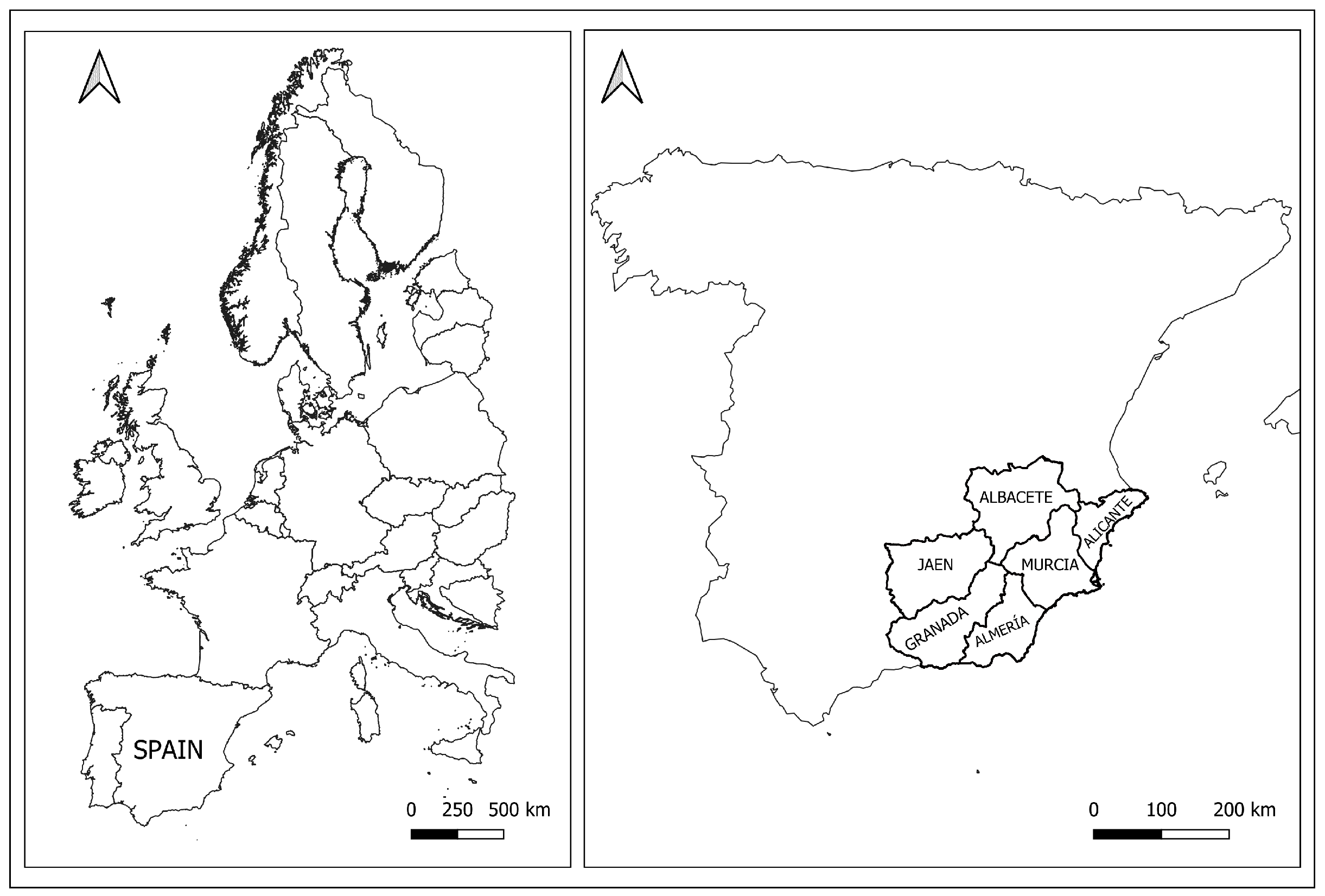
Arid climatic conditions, accelerated by anthropogenic actions, lead to soil desertification [9]. The area covered by this study includes the provinces of Albacete, Alicante, Almería, Granada, and Jaén (Figure 2).

2. Climate Change Influencing Torrential Rainfall

Although climate change is a global phenomenon, it has had a particularly intense impact on the Mediterranean region. Spain and the Mediterranean area have experienced an increase in extreme weather events such as torrential rainfall, among others, even though this is a characteristic feature of the Mediterranean climate [26]. Absolute maximum rainfall is expected to become more intense in the Mediterranean region [27]. Annual rainfall in the Mediterranean basin will decrease, but extreme rainfall will increase, accounting for a higher percentage, up to 30% in the driest areas of the Mediterranean area, reaching 200–500 mm of average annual rainfall, as is the case in much of southeastern Spain [28]. Current changes in the Mediterranean hydroclimatic system make the area highly vulnerable and susceptible to natural hazards, such as flooding as a result of torrential rainfall [29]. Some studies in the Iberian Peninsula show a general shift towards a reduction in average rainfall, as well as an increase in variations, pointing towards more torrential rainfall [30]. There is strong evidence that climate change has caused a decrease in rainfall, along with an increase in the frequency, intensity, and magnitude of high-intensity storms in the Iberian Peninsula. These phenomena have been particularly recurrent on the Spanish Mediterranean coast in recent years [31]. Given expected climate change, intense rain events and flooding are likely to increase [6].

3. Evolution Towards Aridity in the Semi-Arid Southeast of the Iberian Peninsula and Its Relationship with Erosion

As shown in pollen studies, climate change is important for the onset and speed of landscape transformations, although these are conditioned to a greater or lesser extent by human action on the territory [32]. The loss of forest in southeastern Spain will gradually lead to deforestation, contributing to increased aridity. Forest deterioration began earlier in the lowlands than in mountainous and continental areas. Around 4000 cal BP, there were signs of a significant transformation of wild vegetation, with an increase in sclerophyllous species to the detriment of mesophyllous species. At the same time, open landscapes became increasingly prevalent [33]. The western coasts of the Mediterranean have been steadily desertifying for at least 2000 years, with desert areas now quite close to the sea [34].
In one of the territories that make up the southeastern peninsula, the Guadalentín River valley in the Region of Murcia, a process of ecological degradation has been observed, causing the regression and extinction of tree species and affecting the vegetation landscape of the nearby plains and mountains [32].
Extreme storm events, exacerbated by current climate change, appear to be the most intense factors reshaping the landscape in certain situations where the soil is unprotected, while heavy flooding caused by torrential rains generates, in a short period of time, abundant destabilizing energy, leading to significant erosion processes [35]. Torrential rains falling on treeless slopes increase erosion [34]. The destabilizing energy causes weak points to form in some riverbeds, especially towards the mouth, dragging large volumes of weathered material along the river course [35]. This situation is exacerbated by situations such as that detected in the Tabernas Basin (Almería), where a greater presence of vegetation was observed in the watershed areas and highlands than in the lowlands [36].
As a consequence of their lithologic and topographic characteristics, in some areas of southeastern Spain, the soils have scarce edaphogenesis, reduced plant cover, low levels of organic matter, high evaporation, little biological activity, and high erosive potential, posing a serious threat to the sustainability of the agrosystems [7].
More than 7000 km2 are now completely arid in Spain, representing a 2000% increase over the previous decade. Almost a third of the land in Murcia and Almería has become arid in the last ten years [37]. Between 2000 and 2010, Spain had only 307 km2 of arid land, in Tabernas (Almería), which has now reached 3025 km2. Between 2010 and 2020, aridity has spread to the Region of Murcia, where it covers 2983 km2, almost a third of its surface area (11,303 km2), and to the Valencian Community. Updates, based on meteorological data from the Spanish State Meteorological Agency (AEMET), show how aridity has increased over the last decade in 84% of the territory [38].
The majority of the area of southeastern Spain receives a mean rainfall of 370 mm/year, and a potential evapotranspiration of 700 mm [8], with a range of insolation between 3000 and 3300 h/year and a yearly temperature mean of 14–18 °C [9]. Therefore, the study area can be defined as semiarid [10]. The orography, with important reliefs such as the Betic Systems, provokes a pluviometic shadow that makes it difficult for precipitation coming from the west to reach this area, thus contributing to a permanent water deficit [11].

4. Erosion Throughout History in Spain

The pressure of human activity on the environment has led to the loss of vegetation cover in some areas since the Neolithic period. Geoarchaeological, palynological, and sedimentological studies have focused in some way on erosion, and it has been noted that the dismantling of slopes by erosion has varied in intensity depending on the historical moment. Given this situation, it is interesting to try to determine whether it has sometimes been the result of climate change or human action [39]. Recent studies on erosion and denudation surfaces during the Cenozoic era in the UNESCO Las Loras Global Geopark, in the Cantabrian mountain range (Burgos-Palencia, Spain), attest to erosion processes in the Iberian Peninsula without human intervention [40]. Other authors indicate how international markets generate erosion due to the demand for agricultural products that expand into steep slopes, where wild vegetation is removed in order to reduce competition, causing, especially in the Spanish Mediterranean, significant erosion processes associated with the stormy climate of the area [41]. It should be noted that soil erosion rates in response to historical changes in land use in the agrosystems of southern Spain show a certain resilience, with no significant variation in cumulative erosion at the regional level. Although this may be due to various circumstances, it can mainly be attributed to the fact that a small fraction of the total area (20%) accounts for the majority of erosion (67%) [42]. Compared to the tolerable limit of soil loss due to erosion, 5 t/ha per year, we find losses of 90 t/ha per year in provinces such as Barcelona and Málaga, while others, such as Girona, Castellón, Granada, Jaén, and Córdoba, show losses of between 40 and 50 t/ha per year. Therefore, soil erosion is the biggest environmental problem facing the Iberian Peninsula [37].
Due to the relationship between aridity and desertification, the areas more susceptible of suffering desertification are the arid, semiarid, and dry subhumid areas, which are areas where the ratio precipitation/evapotranspiration ranges between 0.05 and 0.65 [1].

5. Forests, Scrubland, Forest Fires, Agriculture, and Soil Erosion

In response to the long-term effects of agricultural and livestock activity, from Roman crop rotations to the present day, conservation agriculture (CA) practices have emerged that improve soil structure, generating beneficial effects such as greater protection against erosion, among others. These improvements in soil structure, due to CA practices, promote other beneficial effects on the soil, such as higher infiltration rates, greater protection against erosion, greater water retention capacity, better habitats to support microbial activity, etc. [43]. The presence of forests on the slopes of different reliefs will help prevent soil erosion [44].
Replacing shrub cover with tree cover does not always lead to a reduction in erosion. In the Mula River watershed, it was found that, in soils covered by well-developed material, erosion rates are of the same order as those found under tree cover [13]. Other authors claim that in semi-arid environments, scrubland can play a protective role that is as effective as or more effective than forest, since it is not only the density of vegetation cover that reduces erosion, but also its structure. With regard to the effects of forest fires, the severity of their consequences will be related to the speed at which plant recolonization occurs. The faster the speed, the lower the erosion rates, which will be similar to the pre-fire state [20].
The scarce plant cover of southeastern Spain favours the detachment of lithic materials due to the impact of raindrops. As a consequence of the impact, soil particles can be transported, thus further facilitating soil erosion [12]. Furthermore, the runoff is the most important erosive agent [13].
The hydric and eolic erosion are the most important in the world. In Spain, the majority of the erosion is provoked by water, but eolic erosion also has some importance in arid and semiarid regions. Nevertheless, the most transcendent erosive agent is the combination of hydric and anthropic action [14].

6. Government Agencies, Desertification, and Soil Erosion

Spain is going to ratify the United Nations Convention to Combat Desertification, which commits it to preparing a National Program as a central element in the fight against desertification. Following the UN Conference on Desertification that took place in Nairobi in 1977), Spain launched the Project to Combat Desertification in the Mediterranean (LUCDEME Project). Subsequently, the National Action Program against Desertification was created. The proposed actions of this program are: (a) the identification of areas at risk of desertification, (b) the definition of measures to combat desertification, (c) the coordination of policies, and (d) the development of specific lines of action to combat desertification. The implementation of initiatives encounters the difficulty of covering the scientific knowledge to be used by the territory managers and end-users [10].
The Autonomous Community of the Region of Murcia, within the framework of the Rural Development Program (PDR-FEADER), applies specific measures such as aid to conserve agricultural soils and combat erosion, and subsidies to mitigate desertification and prevent forest fires on private land [45]. One of the most recent initiatives is the Plan to Combat the Erosion in the Mar Menor Basin, which is in its initial phase [15].

7. Discussion

The reduction in vegetation on steep slopes will promote erosion. Climate change will reduce the availability of water for plants due to decreased rainfall. This situation will lead to a trend towards the disappearance of vegetation. This will result in bare soil, which can be more easily attacked by weathering, promoting erosion. In this context of nature’s action on the environment, factors such as lithological composition, geomorphology relief, and soil type will also influence erosion processes, which, combined with the action of agents such as water, wind, and gravity, can cause the system to increase its levels of aridity. In addition to these erosive agents, anthropogenic action promotes soil loss, reduces the growing medium that sustains plants, reduces the persistence of vegetation and contributes to the increase in aridity in the south-east of the Iberian Peninsula. Together with erosion, they form a cycle that gives rise to a landscape typical of much of the south-east of the Iberian Peninsula.

8. Conclusions

The reduction in vegetation on steep slopes will promote erosion. Climate change will reduce the availability of water for plants due to decreased rainfall, leading to the disappearance of vegetation and leaving the soil bare, which can be more easily affected by weathering, promoting erosion. In this context of nature’s action on the environment, factors such as lithological composition, geomorphology relief, and soil type will also influence erosion processes, which, combined with the action of agents such as water, wind, and gravity, can cause the system to increase its levels of aridity. These erosive agents are compounded by anthropogenic action, which promotes soil loss, reduces vegetation persistence, and contributes to increased aridity in the southeast of the Iberian Peninsula. This, forming a loop with erosion, will give rise to an arid landscape typical of much of the southeast of the peninsula.
Nature itself, due to changes in the climate system, will lead to an increase in the aridity of the territory, favouring erosion processes. The process may be reversible, as evidenced by historical changes in the natural system. The southeast of the Iberian Peninsula is one of those places where changes in aridity and erosion have been evident, as can be seen in its landscape and territory. However, in addition to this natural situation, there are other contributing factors, as mentioned before.

9. Future Directions

The political agreement between the European Commission and the Council of the European Union, aimed at healthier soils in Europe, includes the following key elements: establishing a framework of monitoring measures for soil health; supporting soil managers to improve soil health and resilience; mitigating the impacts of land use; and identifying and managing potentially contaminated land, all in collaboration with the Member States of the European Union [16].
The Spanish National Plan for Priority Actions in Hydrological-Forestry Restoration, Erosion Control, and Defense Against Desertification establishes the general framework for developing restoration, conservation, and improvement work on protective vegetation cover. This plan aims to maintain and enhance the protective function of forests on soil and water resources, and to control erosion through reforestation, reforestation of agricultural land, silvicultural treatments, and the improvement or establishment of scrubland and pastures.

Author Contributions

Conceptualization, M.Á.S.-S. and A.A.; methodology, M.Á.S.-S. and A.A.; formal analysis, M.Á.S.-S. and A.A.; investigation, A.A.; resources, A.A.; writing—original draft preparation, A.A.; writing—review and editing, M.Á.S.-S. and A.A. All authors have read and agreed to the published version of the manuscript.

Funding

This research received no external funding.

Institutional Review Board Statement

Not applicable.

Informed Consent Statement

Not applicable.

Data Availability Statement

All data are included in the article.

Acknowledgments

The authors acknowledge José Antonio Domínguez for technical support.

Conflicts of Interest

The authors declare no conflicts of interest.

References

  1. Pérez Murcia, M.D. Desertificación/Material Docente; EPSO-Universidad Miguel Hernández: Alicante, Spain, 2025. [Google Scholar]
  2. Anguita Virella, F.; Moreno Serrano, F. Procesos Geológicos Externos y Geología Ambiental; Editorial Rueda: Madrid, Spain, 1993. [Google Scholar]
  3. FAO. Detengamos la Erosión del Suelo para Garantizar la Seguridad Alimentaria en el Futuro. Available online: https://www.fao.org/newsroom/story/let-s-stopsoilerosion-to-ensure-a-food-secure-future/es (accessed on 11 November 2025).
  4. Pérez Murcia, M.D. Erosión/Material Docente; EPSO-Universidad Miguel Hernández: Alicante, Spain, 2025. [Google Scholar]
  5. Calero, J.A.G. Erosión y Forestación: Una Concisa Visión Integral. In Restauración de los Paisajes en el Semiárido Ibérico Mediterráneo; Namesny, A., Ruíz de Elvira, A., Papasseit, P., Eds.; SPE3, S.L.: Valencia, Spain, 2025; Volume 1, pp. 60–73. [Google Scholar]
  6. Paredes Gil, C. El Cambio Climático y Sus Impactos a Corto y Medio Plazo/Material Docente; EPSO-Universidad Miguel Hernández: Alicante, Spain, 2025. [Google Scholar]
  7. Pérez Murcia, M.D. Procesos de Degradación del Suelo/Material Docente; EPSO-Universidad Miguel Hernández: Alicante, Spain, 2025. [Google Scholar]
  8. Marco Físico. Available online: https://www.chsegura.es/es/cuenca/caracterizacion/marco-fisico/index.html (accessed on 30 November 2025).
  9. CREM—Datos Básicos de la Región de Murcia (Actualización Continua)—8. Evolución de Las Precipitaciones y Horas de Sol. Available online: https://econet.carm.es/inicio/-/crem/sicrem/pu_datosbasicos/sec7.html?utm_source=chatgpt.com (accessed on 30 November 2025).
  10. Salinas Zavala, C.A.; Lluch Belda, D.; Hernández Vázquez, S.; Lluch Cota, D.B. La aridez en el noreste de México. Un análisis de su variabilidad espacial y temporal. Atmósfera 1998, 11, 29–44. Available online: https://www.redalyc.org/pdf/565/56511103.pdf (accessed on 30 November 2025).
  11. Van Den Berg, E. Clima Extremo. National Geographic, April 2025; pp. 5–29. [Google Scholar]
  12. Cerdá, A.; Bodi, M. Erosión Hídrica Del Suelo En El Territorio Valenciano. In Erosión y Degración del Suelo Agrícola en España; Universitat de Valencia: Valencia, Spain, 2009. [Google Scholar]
  13. Morgan, R.P.C. Erosión y Conservación Del Suelo; Mundi-Prensa: Madrid, Spain, 1997. [Google Scholar]
  14. Porta Casanellas, J.; López-Acevedo Reguerín, M.; Roquedo de Laburu, C. Edafología Para La Agricultura y El Medio Ambiente, 3rd ed.; Mundi-Prensa: Madrid, Spain, 2003. [Google Scholar]
  15. CARM. Es—El Gobierno Regional Realizará Dos Proyectos Para Frenar La Erosión y Mejorar El Drenaje En La Cuenca Vertiente Del Mar Menor. Available online: https://www.carm.es/web/pagina?IDCONTENIDO=122853&IDTIPO=10&RASTRO=c$m122,70 (accessed on 28 January 2026).
  16. Hacia unos Suelos más Sanos en Europa. Available online: https://ec.europa.eu/commission/presscorner/detail/es/ip_25_1034 (accessed on 1 December 2025).
  17. Plan Nacional de Actuaciones Prioritarias en Materia de Restauración Hidrológico-Forestal, Control de la Erosión y Defensa Contra la Desertificación. Available online: https://www.miteco.gob.es/es/biodiversidad/temas/desertificacion-restauracion/restauracion-hidrologico-forestal/rhf_plan_restauracion.html (accessed on 1 December 2025).
  18. IPCC. Resumen para Responsables de Políticas. En: El Cambio Climático y la Tierra: Informe Especial del IPCC Sobre el Cambio Climático, la Desertificación, la Degradación de las Tierras, la Gestión Sostenible de las Tierras, la Seguridad Alimentaria y los Flujos de Gases de Efecto Invernadero en los Ecosistemas Terrestres [Internet]. 2021. Available online: https://www.ipcc.ch/report/ar6/wg1/downloads/report/IPCC_AR6_WG1_SPM_Spanish.pdf (accessed on 7 June 2025).
  19. ONU-ESCWA; United Nations Publication. Glossary of Shared Water Resources Technical, Socioeconomic and Legal Terminology. 2012. Available online: https://www.unescwa.org/sites/default/files/pubs/pdf/glossary-shared-water-resources-english.pdf (accessed on 10 August 2025).
  20. Joint Research Centre; European Commission. World Atlas of Desertification. 2019. Available online: https://wad.jrc.ec.europa.eu/patternsaridity?utm (accessed on 10 August 2025).
  21. Tribunal de Cuentas Europeo. Informe Especial 33. La Lucha Contra la Desertificación en la UE: Una Amenaza Creciente Contra la que se debe Actuar más Intensamente [Internet]. Bruselas. 2018. Available online: https://op.europa.eu/webpub/eca/special-reports/desertification-33-2018/es/ (accessed on 10 August 2025).
  22. López Bermúdez, F. El riesgo de desertificación. In Agricultura y Desertificación; Ediciones Mundi-Prensa: Madrid/Barcelona, Spain, 2001; pp. 17–38. [Google Scholar]
  23. Balairon Ruíz, L. El cambio climático como contexto de la desertificación. In Agricultura y Desertificación; Ediciones Mundi-Prensa: Madrid/Barcelona, Spain, 2001; pp. 41–67. [Google Scholar]
  24. Van Den Berg, E. Spain’s Advancing Desert; [Internet]; National Geographic: Madrid, Spain, 2020; pp. 1–8. Available online: https://www.nationalgeographic.com.es/naturaleza/grandes-reportajes/espana-desierto-que-avanza_11448 (accessed on 22 January 2025).
  25. de la Rosa, D. Degradación de suelos. In Evaluación Agro-Ecológica de Suelos para un Desarrollo Rural Sostenible; Ediciones Mundi-Prensa: Madrid/Barcelona, Spain, 2008; pp. 117–131. [Google Scholar]
  26. MITECO-España. La Desertificación en España [Internet]. Valsain. 2025. Available online: https://www.miteco.gob.es/es/biodiversidad/temas/desertificacion-restauracion/lucha-contra-la-desertificacion/lch_espana.html (accessed on 7 June 2025).
  27. Pinto-Ramos, D.; Clerc, M.G.; Makhoute, A.; Tlidi, M. Vegetation Clustering and Self-Organization in Inhomogeneous Environments. arXiv 2024, arXiv:2406.12581. [Google Scholar] [CrossRef]
  28. Porta Casanellas, J.; López-Acevedo Reguerín, M.; Poch Claret, R.M. Calidad del suelo. Procesos de degradación y bases para su control. In Introducción a la Edafología Uso y Protección del Suelo; Ediciones Mundi-Prensa: Madrid/Barcelona, Spain, 2008; pp. 363–394. [Google Scholar]
  29. Belmonte Serrato, F. La interceptación de la precipitación por las cubiertas vegetales y sus efectos sobre el suelo y los recursos hídricos. In Restauración de los Paisajes en el Semiárido Ibérico Mediterráneo; Namesny, A., Ruíz de Elvira, A., Papasseit, P., Eds.; SPE3: Valencia, Spain, 2025; pp. 33–59. [Google Scholar]
  30. Cerdá, A.; Lasanta, T. Revisión bibliográfica de las pérdidas de suelo tras los incendios forestales en España. El efecto del clima. In Control de la Erosión y Degradación del Suelo; Bienes, R., Marqués, M.J., Eds.; Instituto Madrileño de Investigación Agraria y Alimentaria: Madrid, Spain, 2003; pp. 163–166. [Google Scholar]
  31. Urbano Terrón, P.; Urbano López de Meneses, J.d.M. Procesos y mecanismos erosivos. In Erosión y Conservación de Suelos; Ediciones Mundi-Prensa: Madrid/Barcelona, Spain, 1997; pp. 35–68. [Google Scholar]
  32. Urbano Terrón, P.; Urbano López de Meneses, J.d.M. Factores erosivos. In Erosión y Conservación del Suelo; Ediciones Mundi-Prensa: Madrid/Barcelona, Spain, 1997; pp. 69–93. [Google Scholar]
  33. Albaladejo, J.; Martinez-Mena, M.; Roldan, A.; Castillo, V. Soil degradation and desertification induced by vegetation removal in a semiarid environment. Soil Use Manag. 2007, 14, 1–5. [Google Scholar] [CrossRef]
  34. Nicholson, S.E.; Tucket, C.J.; Ba, M.B. Desertification, Drought, and Surface Vegetation: An Example the West African Sahel. Bull. Am. Meteorol. Soc. 1998, 79, 815–830. [Google Scholar] [CrossRef]
  35. García Ruíz, J.M.; López Bermúdez, F. Relaciones entre vegetación y erosión. In La erosión del suelo en España; Sociedad Española de Geomorfología (SEG), Ed.; Sociedad Española de Geomorfología (SEG): Zaragoza, Spain, 2009; pp. 133–164. [Google Scholar]
  36. García Ruíz, J.M.; López Bermúdez, F. La erosión del suelo en España: Un problema crónico y una preocupación temprana. In La Erosión del Suelo en España, 1st ed.; Sociedad Española de Geomorfología (SEG), Ed.; Sociedad Española de Geomorfología (SEG): Zaragoza, Spain, 2009; pp. 99–112. [Google Scholar]
  37. de la Rosa, D. Cambio global. In Evaluación Agro-Ecológica de Suelos para un Desarrollo Rural Sostenible; Mundi-Prensa: Madrid/Barcelona, Spain, 2008; pp. 91–102. [Google Scholar]
  38. García Ruíz, J.M.; López Bermúdez, F. Los factores de la erosión del suelo en España. In La Erosión del Suelo en España; Sociedad Española de Geomorfología (SEG), Ed.; Sociedad Española de Geomorfología (SEG): Zaragoza, Spain, 2009; pp. 17–38. [Google Scholar]
  39. CNIG-España. Centro Nacional de Información Geográfica (CNIG-España) [Internet]. 2025. Available online: https://centrodedescargas.cnig.es/CentroDescargas/home (accessed on 7 June 2025).
  40. Estrela Navarro, M.J. España, entre olas de calor, noches sin tregua y lluvias extremas: La cuenta atrás climática. In Restauración de los Paisajes en el Semiárido Ibérico Mediterráneo; Namenesny, A., Ruíz de Elvira, A., Papasseit, P., Eds.; SPE3: Valencia, Spain, 2025; pp. 142–153. [Google Scholar]
  41. Lazoglou, G.; Papadopoulos-Zachos, A.; Georgiades, P.; Zittis, G.; Velikou, K.; Manios, E.M.; Anagnostopoulou, C. Identification of climate change hotspots in the Mediterranean. Sci. Rep. 2024, 14, 29817. [Google Scholar] [CrossRef] [PubMed]
  42. Zittis, G.; Bruggeman, A.; Lelieveld, J. Revisiting future extreme precipitation trends in the Mediterranean. Weather. Clim. Extrem. 2021, 34, 100380. [Google Scholar] [PubMed]
  43. Nastos, P.; Saaroni, H. Living in Mediterranean cities in the context of climate change: A review. Int. J. Climatol. 2024, 44, 3169–3190. [Google Scholar] [CrossRef]
  44. Del Jesús, M.; Díez-Sierra, J. Climate change effects on sub-daily precipitation in Spain. Hydrol. Sci. J. 2023, 68, 1065–1077. [Google Scholar] [CrossRef]
  45. Senent-Aparicio, J.; López-Ballesteros, A.; Jimeno-Sáez, P.; Pérez-Sánchez, J. Recent precipitation trends in Peninsular Spain and implications for water infrastructure design. J. Hydrol. Reg. Stud. 2023, 45, 101308. Available online: https://www.sciencedirect.com/science/article/pii/S2214581822003214 (accessed on 5 August 2025). [CrossRef]
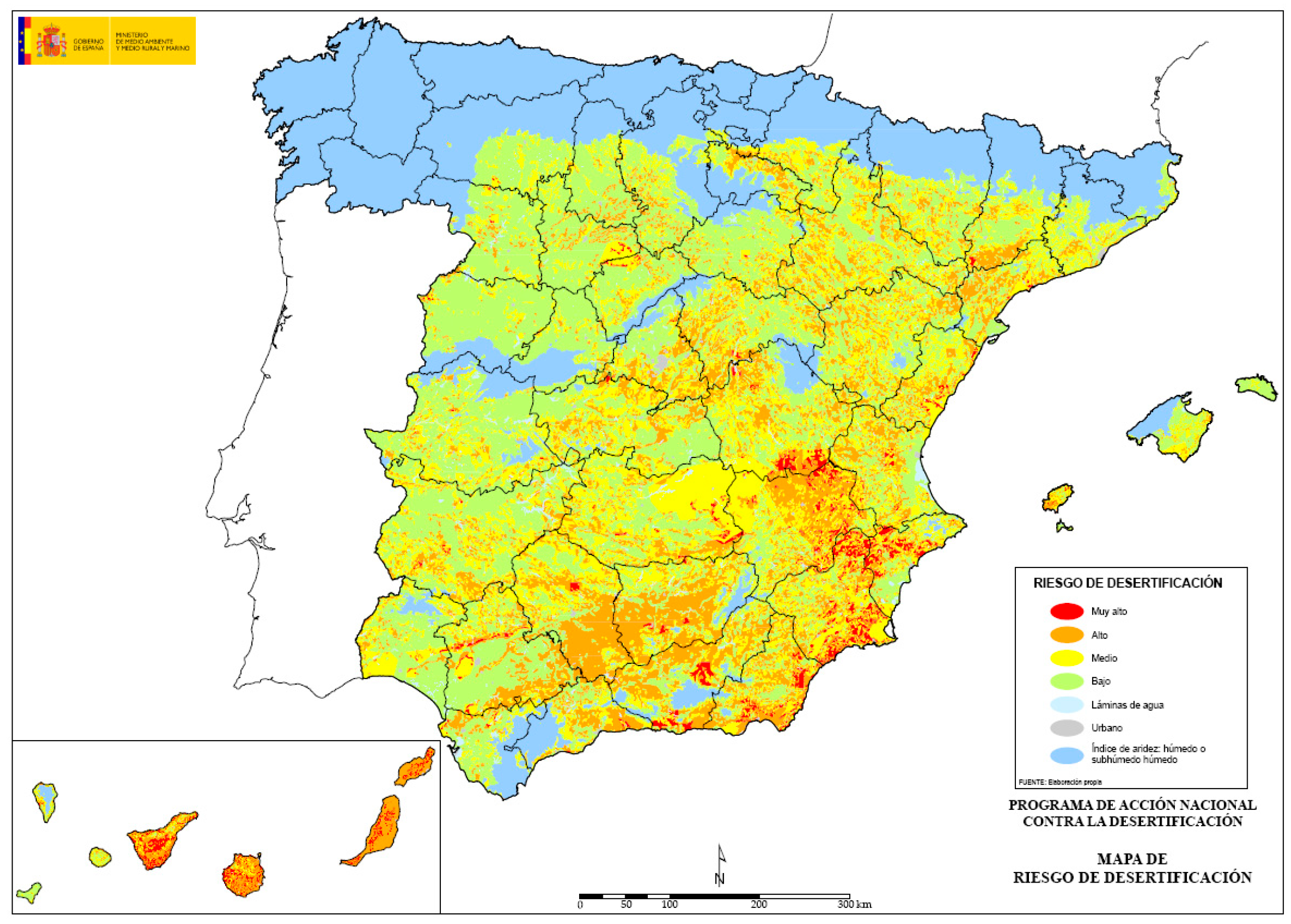
Figure 1. Map of the desertification intensity in Spain. Source: [10].
Soilsystems 10 00044 g001
Figure 2. Study area. Source: [25].
Soilsystems 10 00044 g002
Disclaimer/Publisher’s Note: The statements, opinions and data contained in all publications are solely those of the individual author(s) and contributor(s) and not of MDPI and/or the editor(s). MDPI and/or the editor(s) disclaim responsibility for any injury to people or property resulting from any ideas, methods, instructions or products referred to in the content.