
Article

Aboveground and Belowground Interactions of Botanical Species, Historical and Modern Cultivars of Barley (Hordeum vulgare L.) Supported by Mineral or Organic Fertilizers
1
Institute for Environmental Studies, Charles University in Prague, Benátská 2, CZ-12801 Prague, Czech Republic
2
Institute of Soil Biology and Biogeochemistry, Biology Centre of the Czech Academy of Sciences, Na Sádkách 7, CZ-37005 České Budějovice, Czech Republic
3
Key Laboratory of Vegetation Restoration and Management of Degraded Ecosystems, South China Botanical Garden, Chinese Academy of Sciences, Guangzhou 510650, China
4
Czech Agrifood Research Center (CARC), Drnovská 507/73, Ruzyně, CZ-16100 Prague, Czech Republic
*
Author to whom correspondence should be addressed.
Soil Syst. 2026, 10(2), 28; https://doi.org/10.3390/soilsystems10020028

Submission received: 29 November 2025 / Revised: 22 January 2026 / Accepted: 9 February 2026 / Published: 11 February 2026

Abstract

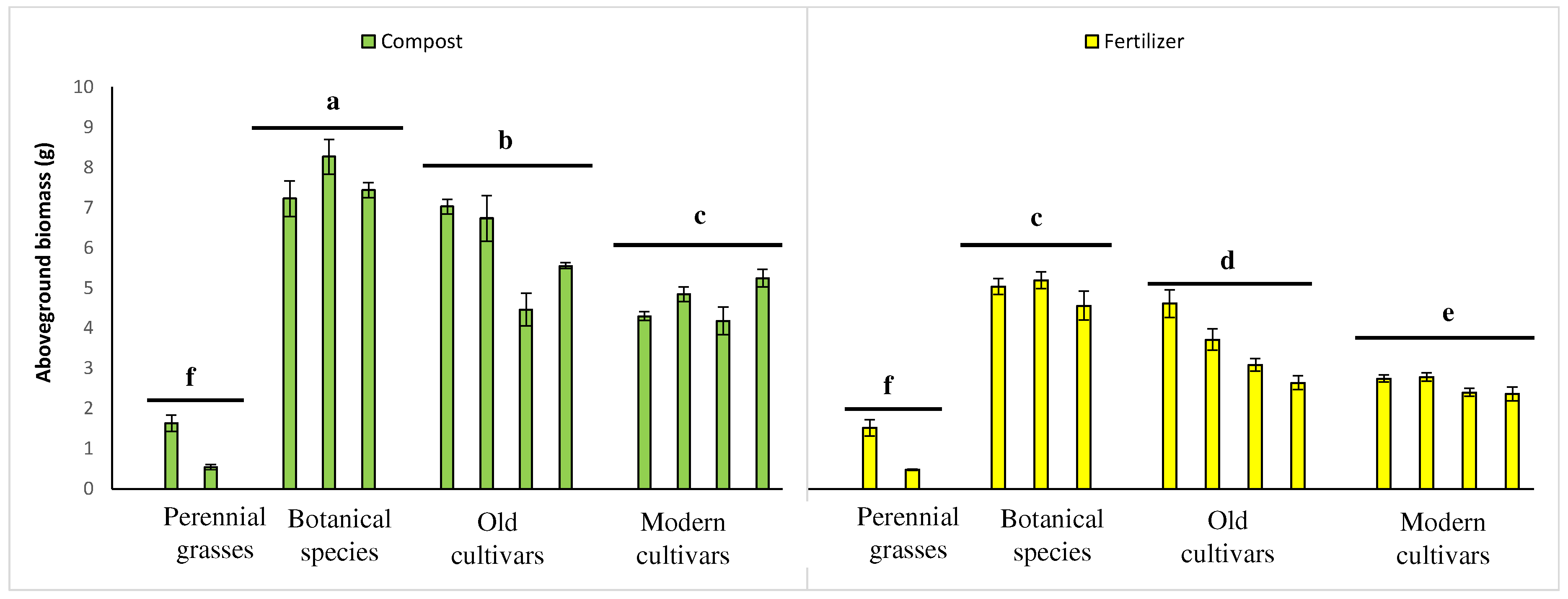
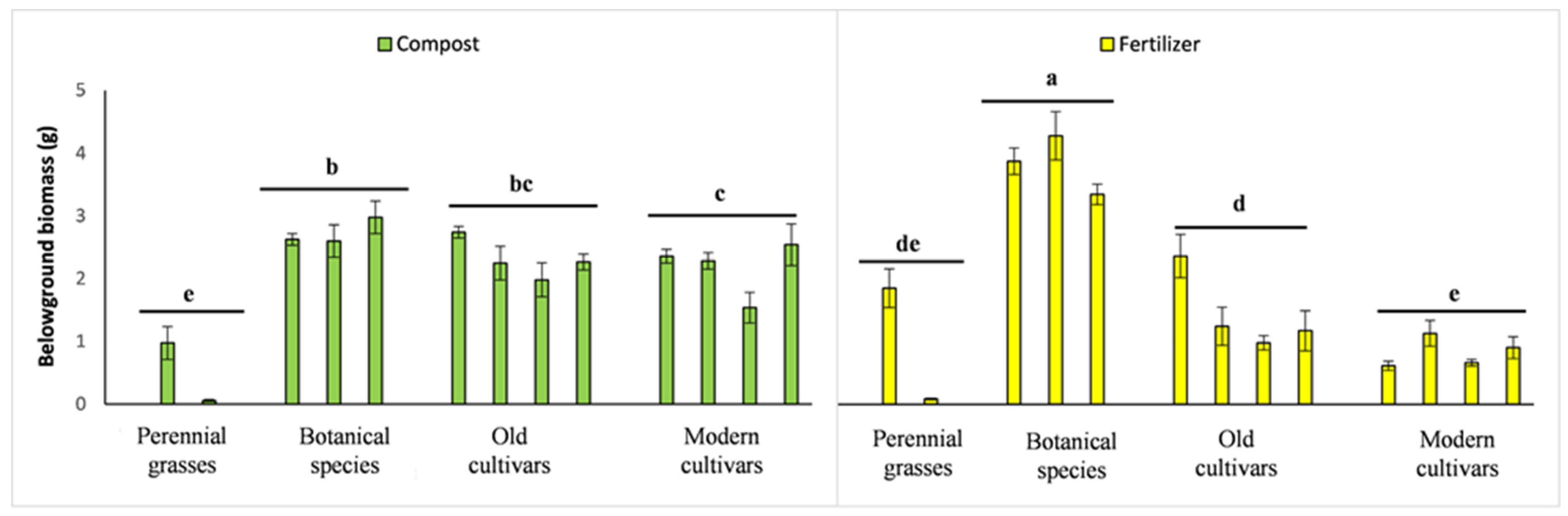
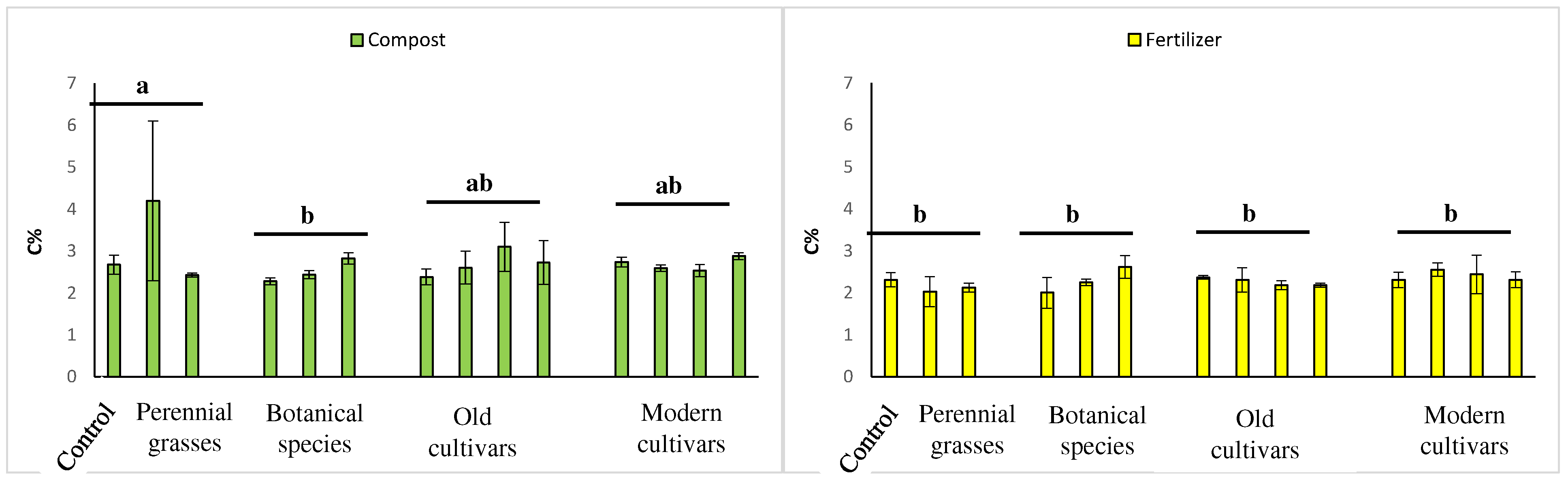
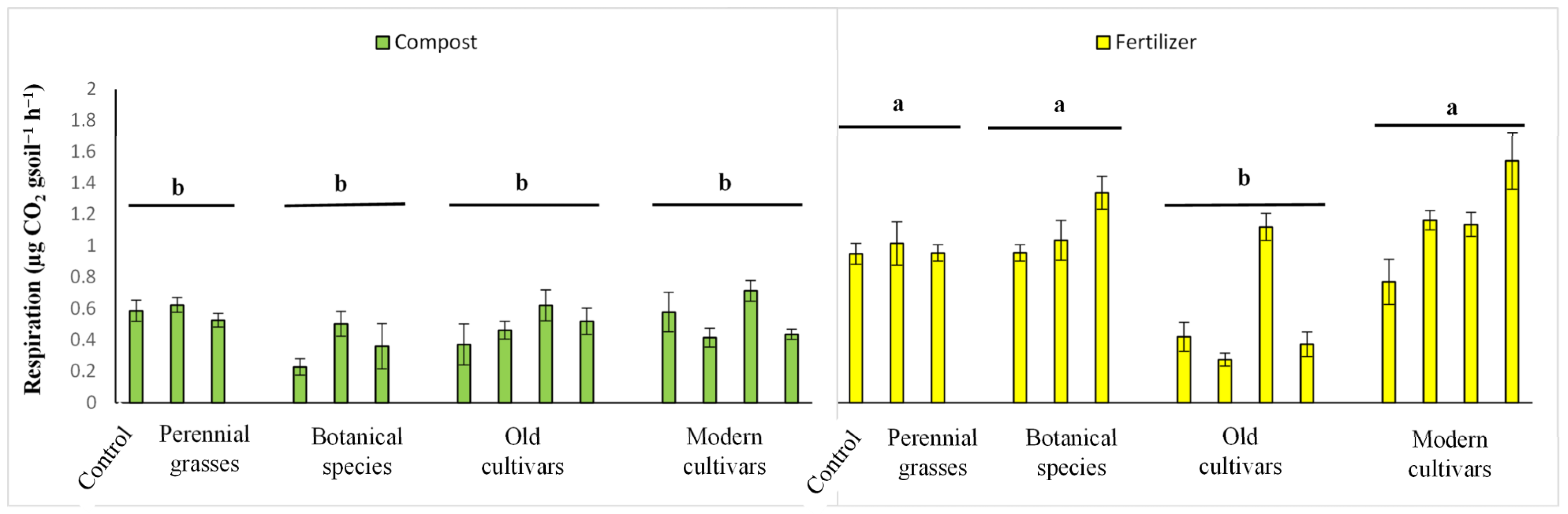
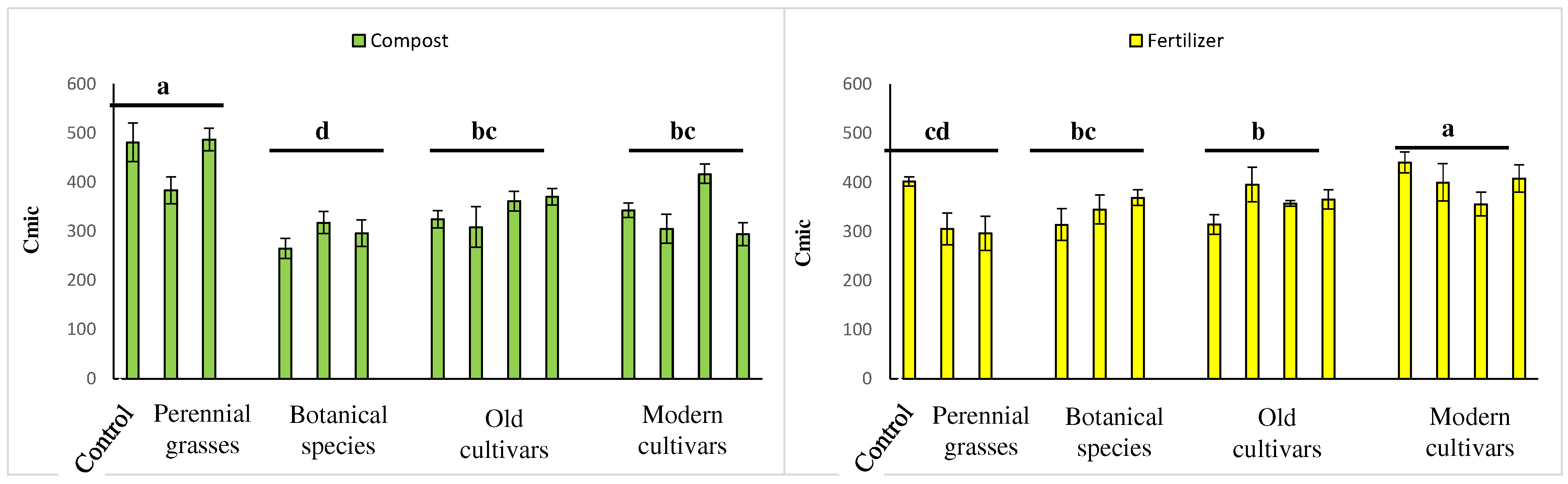
While the effect of domestication on various aspects of plant ecophysiology has been studied, less is known about its effect on plant–soil interaction. Here, we studied three botanical species of barley in comparison with four old cultivars and four contemporary cultivars with bare soils and two perennial grasses. Aboveground and belowground biomass decreased from botanical species to old cultivars and contemporary cultivars. Aboveground biomass of all barley cultivars was about one third lower in mineral fertilizer compared to the organic one, and this difference was similar in all barley cultivars. Biomass of perennial grasses was up to one third of barley biomass, but grass biomass did not differ significantly between fertilization treatments. Belowground biomass of botanical barley is significantly higher than that of modern cultivars; this discrepancy is even more pronounced under mineral fertilizer where belowground biomass of botanical barley significantly increased, and that of modern cultivars significantly decreased in comparison with organic fertilizer treatment, which means that modern barley cultivar in combination with mineral fertilizers provides less belowground litter to soil. This in the long term can potentially, together with other factors, contribute to the depletion of cultivated soil for organic matter. Microbial respiration in soil did not differ between treatments supplied by organic fertilizer, while in mineral fertilizer treatments old cultivars had lower respiration than other treatments. Microbial biomass did not differ between treatments supplied by mineral fertilizer, but in treatments supported by organic fertilizer, perennial grasses supported more microbial biomass than all barley treatments. The same pattern was observed in C content in soil. Carbon distribution in individual soil fractions did not differ between perennial grasses and barley treatments. In general, when hotspots of organic matter were provided, plants transferred this organic matter to soil, and this activity was more pronounced in perennial grasses than in barley treatments.
Keywords: barley cultivar; biomass; fertilization; microbial community; nitrogen addition; plant–soil interactions barley cultivar; biomass; fertilization; microbial community; nitrogen addition; plant–soil interactions