Article

Wheat Yield Responses to NPK Fertilizers and Nutrient Omissions for QUEFTS Model Validation in Tigray, North Ethiopia


by
Shimbahri Mesfin
1,2,
Mitiku Haile
1,
Girmay Gebresamuel
1,
Amanuel Zenebe
1,
Abera Gebre
3,
Okubay Giday Adhanom
1,
Lars Olav Eik
2 and
Bal Ram Singh
4,*
1
Department of Land Resource Management and Environmental Protection, Mekelle University, Mekelle P.O. Box 231, Ethiopia
2
Department of International Environment and Development Studies (Noragric), Norwegian University of Life Sciences, N-1432 Ås, Norway
3
Department of Soil Resources and Watershed Management, Aksum University, Shire P.O. Box 113, Ethiopia
4
Faculty of Environmental Sciences and Natural Resource Management, Norwegian University of Life Sciences, N-1432 Ås, Norway
*
Author to whom correspondence should be addressed.
Soil Syst. 2026, 10(2), 27; https://doi.org/10.3390/soilsystems10020027

Submission received: 1 December 2025 / Revised: 30 January 2026 / Accepted: 2 February 2026 / Published: 10 February 2026

Abstract

Improving crop productivity largely depends on understanding soil fertility constraints and the effects of nutrient management on yield performance. Accurate determination of existing soil nutrient status and targeted application of limiting nutrients are essential for enhancing wheat (Triticum spp.) productivity. However, the specific effects of omitting one of the macronutrients such as nitrogen (N), phosphorus (P), or potassium (K) on wheat yield have not been investigated in the target area. This study employed the Quantitative Evaluation of the Fertility of Tropical Soils (QUEFTS) model to estimate the N, P, and K fertilizer requirements needed to achieve a predefined wheat yield target. The objectives were to: (i) evaluate yield responses to complete versus nutrient omission (N, P, or K) fertilization treatments, and (ii) analyze corresponding nutrient uptake and use efficiency dynamics. The experimental treatments included: (1) full NPK fertilization, (2) NP only (K omitted), (3) NK only (P omitted), (4) PK only (N omitted), and (5) an unfertilized control. Topsoil samples were analyzed and used as inputs for the QUEFTS model. Yield and agronomic data, as well as nutrient uptake and use efficiency, were measured. Model performance was validated using standard statistical metrics. Results showed that full NPK application significantly (p < 0.05) improved yield, yield components, and nutrient uptake compared to omission treatments and the control. The strong agreement between QUEFTS-predicted and observed yields highlights the model’s potential as a reliable, cost-effective decision-support tool for optimizing site-specific fertilizer recommendations. These findings demonstrate that balanced NPK fertilization markedly boosts wheat yield and nutrient uptake, while the QUEFTS model provides a powerful, reliable tool for tailoring fertilizer management to local soil conditions.

1. Introduction

As global demand for food continues to rise, many Sub-Saharan countries, particularly northern Ethiopia, remain severely constrained by low soil fertility relative to crop potential, posing a major threat to sustainable crop production [1,2]. This issue is a critical factor influencing wheat yield and regional food security [3,4]. The challenges of soil nutrient management in Ethiopia are further exacerbated by limited nutrient replacement practices, leading to consistently low yields compared to crop yield potential [5]. The use of organic fertilizers, such as crop residues, farmyard manure, and compost remains very limited in many smallholder farming systems [1,2]. This is primarily due to competing uses of these organic materials within rural households [3]. Crop residues, for instance, are often completely removed from fields to serve as feed for livestock, leaving little or no organic matter to be returned to the soil practice that diminishes soil organic carbon, accelerates nutrient depletion, and undermines long-term soil fertility and agricultural sustainability in smallholder mixed crop–livestock systems [6]. Similarly, across many rural areas of Sub-Saharan Africa, animal manure that could otherwise improve soil fertility is commonly diverted for household fuel due to limited access to modern energy sources, directly undermining soil nutrient management and agricultural productivity [7]. These practices significantly reduce the availability of organic inputs for soil fertility management, thereby jeopardizing the long-term sustainability of farming systems by diminishing organic matter inputs, accelerating nutrient depletion, and weakening nutrient cycling processes essential for soil health and productivity [8,9]. Low retention of crop residues and manure reduces nutrient recycling [10] in the soil, decreasing nutrient availability for subsequent crops [11]. Continuous removal of these organic materials without adequate return causes long-term declines in soil organic matter and nutrient stocks, including key macronutrients (N, P, K), ultimately undermining soil fertility and function [12,13]. The reduced incorporation of organic matter also affects soil structure, moisture retention, and nutrient cycling, ultimately lowering fertilizer use efficiency and crop productivity [14]. To address these challenges and enhance soil fertility, Ethiopia has been advocating the use of inorganic fertilizers; however, the national fertilizer recommendations have historically been broad “blanket” rates that do not account for spatial variability in soil type, climate, or crop needs, often leading to inefficient use and weak crop responses [15]. Furthermore, these blanket recommendations are frequently unaffordable for smallholder farmers due to high fertilizer prices and low purchasing power, which exacerbates low adoption and limits fertilizer use on many farms [16,17,18].
Conventional and imbalanced fertilizer applications are major causes of low fertilizer use efficiency. Therefore, determining the soil’s capacity to supply nitrogen (N), phosphorus (P), and potassium (K) is a prerequisite for increasing wheat yield and improving fertilizer use efficiency. Site specific soil nutrient management is essential for optimizing yield, as it requires understanding both soil nutrient supply and crop nutrient demand. Consequently, the use of models to predict yield based on soil nutrient supply and to recommend NPK fertilizer rates is important. The Quantitative Evaluation of the Fertility of Tropical Soils (QUEFTS) model is one of the most effective tools for predicting yield from a given soil nutrient supply and fertilizer application [19]. The QUEFTS model integrates chemical soil test values, potential NPK supply from soil and fertilizers, actual NPK uptake, and resulting yield. It has been successfully used to develop site-specific NPK fertilizer recommendations for several crops.
The ability to accurately identify crop responses to fertilizer application, the soil’s indigenous nutrient supply capability, and the maintenance of soil fertility over time are crucial for developing improved nutrient management practices. Various experiments have been conducted to test the effects of fertilization on yield; however, omission trials also allow for quantifying potential nutrient supply and uptake, which can then be used to refine the QUEFTS rules for calculating soil nutrient supply. Omission trials were established to assess the most yield limiting macronutrient. While numerous studies have explored wheat productivity, there has been limited focus on understanding the yield and nutrient use efficiencies of wheat when one of the macronutrients (N, P, or K) is omitted under varying conditions and soil fertility levels. The QUEFTS model has previously been calibrated at experimental sites.
Purpose and Hypothesis:
Purpose: To assess the usefulness of the QUEFTS model in optimizing wheat (Triticum spp.) fertilization under specific soil conditions through: (i) assessing wheat yield responses to full and omitted NPK fertilizers, and (ii) analyzing nutrient uptake and use efficiencies in response to full and omitted fertilizers.
Alternative hypothesis: Using precise nutrient dosing based on the QUEFTS model will enable higher fertilizer use efficiency compared to standard methods.

2. Methods

2.1. Description of the Study Area

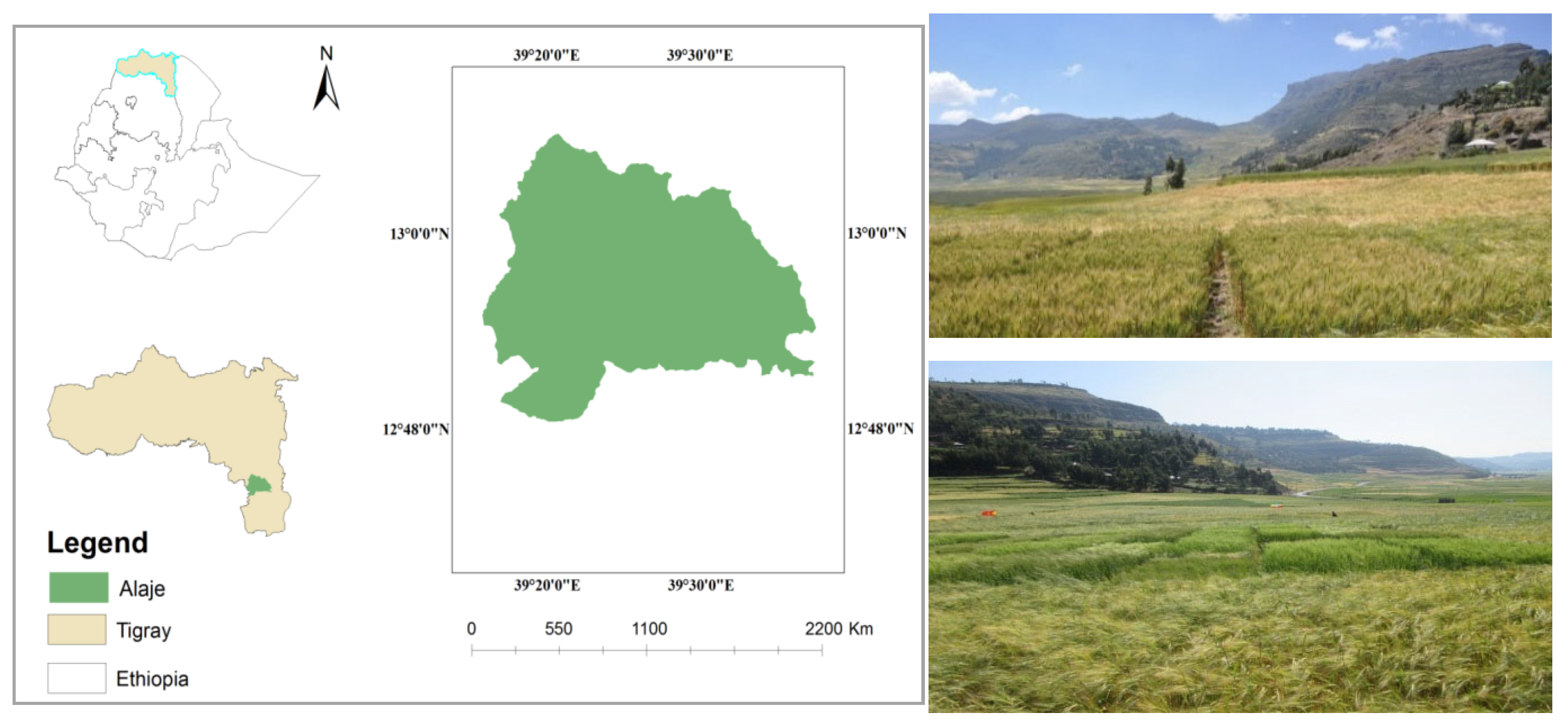
The study was conducted in the Alaje district, located in the northern highlands of Ethiopia, between 39°25′52″ to 39°44′50″ E and 12°15′28″ to 12°59′21″ N (Figure 1), at an altitude of 2824 m above sea level.
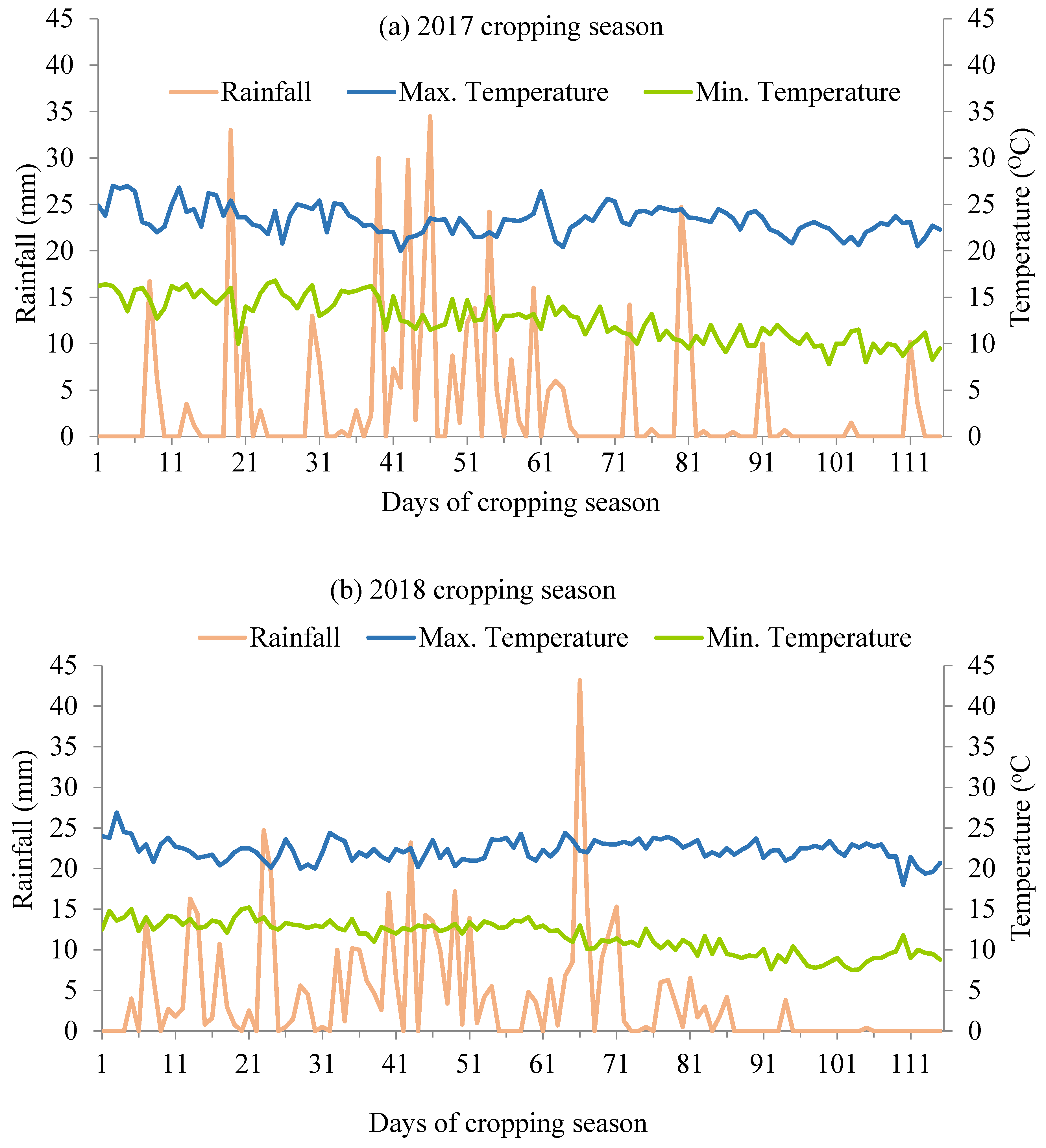
The total annual rainfall recorded during the two experimental seasons (2017 and 2018) was 417 mm and 479 mm, respectively (Figure 2a). Recorded daily minimum and maximum temperatures averaged 8 °C and 27 °C during both cropping seasons at the experimental sites [17], (Figure 2b).
Alaje falls within a cold, sub-moist highland agro-ecological zone characterized by a mixed farming system in which crop production and livestock rearing are closely integrated. Although cow dung is often used as fuel, livestock play a vital role in nutrient recycling by providing manure, which contributes to soil fertility and improved crop yields [20]. Livestock also support land management activities such as plowing and traction, while benefiting from crop residues as a primary feed source. The dominant crop in the area is wheat (Triticum spp.), followed by barley (Hordeum spp.), faba bean (Vicia spp.), and field pea (Pisum spp.).

2.2. QUEFTS Model Description

The QUEFTS model, initially developed by Janssen et al. [21] was proposed as a tool for evaluating soil nutrient supply by combining assessments of tropical soil fertility with the calculation of fertilizer requirements. Although originally developed in 1990, the QUEFTS model remains highly relevant due to its conceptual simplicity, universality, and strong physiological basis linking soil nutrient supply, crop uptake, and yield. Its parameters have been extensively validated and successfully applied across diverse agro-ecological zones, particularly in tropical and nutrient-impoverished soils where data scarcity limits the use of more complex models. Moreover, QUEFTS relies on robust, well-established nutrient use efficiency relationships rather than time-sensitive assumptions, making it a reliable and cost-effective decision-support tool for site-specific fertilizer recommendation even under current farming conditions [22]. The maximum attainable yield estimated by the QUEFTS model for the study area is 8500 kg ha−1, primarily as a function of N, P, and K nutrients supplied by the soil and fertilizers. The model describes the relationship between grain yield and nutrient uptake from soil and applied fertilizers, as well as the associations between grain yield, nutrient uptake, and soil nutrient supply, and between soil nutrient supply and measured soil nutrient contents.

2.3. Soil Characterization and Nutrient Supply

The geology of Alaje is dominated by trap volcanic rocks consisting of thick Tertiary basalt flows that are deeply weathered and form dissected plateaus in the highlands [22]. The area is characterized by strongly dissected terrain with steep slopes, medium slopes, and valleys. The diversity of landforms, combined with climatic factors, has resulted in a wide range of soil types. The steep mountainous areas of Alaje are dominated by shallow Leptosols and Regosols, while Cambisols are commonly found on sloping land and in dissected plains and medium gradient valley landforms. Vertisols, developed from basalt or basalt-derived alluvium, occur mainly at the valley bottoms [23]. Soil formation in the study area is primarily influenced by landscape position and parent material. The typical soil catena developed on trap ‘volcanic rock-alluvium’ lithology consists of Leptosols and Regosols on steep slopes, Cambisols in the valleys of dissected plateaus, and Vertisols and Fluvisols on plains and flatter landscapes. These variations in soil properties along the landscape are mainly attributed to differences in runoff, erosion and deposition processes that influence soil genesis. This soil catena represents a sequence of soils developed from the same parent material, extending from a higher to lower landscape positions [23]. The experiments were conducted in the valleys of dissected plateaus. According to the World Reference Base for Soil Resources, soils at experimental sites were classified as Cambisols [24]. These soils are characterized by a cambic (Bw) horizon showing initial color and structural development but limited clay accumulation. Cambisols form from a wide range of parent materials, occur across many climatic zones, and are commonly found on slopes or recent deposits. They generally have moderate fertility, good drainage, and favorable rooting conditions, making them well suited for agricultural production.
Two weeks prior to planting, composite soil samples were collected from each experimental plot at each site from a depth of 0–20 cm. At each sampling point, surface organic litter was removed, and five subsamples were collected using a manual auger: one from each of the corners of the plot and one from the center. These subsamples were thoroughly mixed to obtain one composite sample per plot. Soil chemical properties, including pH, electrical conductivity (EC), organic carbon (OC), total nitrogen (TN), available phosphorus (Av. P), and exchangeable potassium (exch. K) were analyzed. Soil pH was measured using pH meter at 1:2.5 soil-to-water ratio [25]; EC was determined using EC meter at the same ratio. Organic carbon was analyzed using the Walkley and Black method [26], TN using the Kjeldahl method [27], available phosphorus using the Olsen method [28], and exchangeable potassium using a flame photometer [29]. The laboratory-analyzed soil chemical properties were used as input parameters for the model. The Capacity Building for Scaling up of Evidence Based Best Practices in Ethiopia (CASCAPE) project previously calibrated QUEFT model for fertilizer recommendation in the study area [20]. The QUEFTS model was calibrated by the CASCAPE project to determine nutrient accumulation and dilution values of what at the study site. The average aboveground nutrient accumulation values were of 35 kg grain kg−1 N, 145 kg grain kg−1 P, and 44 kg grain kg−1 K. The average maximum dilution values were 57 kg grain kg−1 for N, 189 kg grain kg−1 for P, and 65 kg grain kg−1 for K.
The sampling sites used for model validation followed the on-farm demonstration and trial sites implemented by the CASCAPE project in the area, and the soil properties of the experimental sites are presented in Table 1.
The soil analysis showed that soil pH values ranged from 6.0 to 6.3, indicating near-neutral conditions that are generally favorable for wheat cultivation and optimal nutrient availability (Table 1). Electrical conductivity (EC) values were low across all experimental fields, confirming the absence of salinity stress. Organic carbon and total nitrogen (N) contents were low, indicating the need for soil fertility improvement. Available phosphorus (P) levels were moderate but potentially limiting, while exchangeable potassium (K) concentrations were within the adequate range. In general, the soil nutrient status reflects typical conditions of cultivated soils under continuous cereal production.

2.4. Experimental Setup

This nutrient omission trial was conducted over two consecutive cropping seasons on six farmlands’ fields in the Alaje district. Based on the dominant cropping patterns in the area, wheat was selected as the test crop for validating the QUEFTS model as calibrated by the CASCAPE project. The selected fields had comparable management histories, including similar previous cropping practices, and none had received manure or compost in the preceding season. Key agronomic practices—such as plowing, weeding, and harvesting—were uniformly applied across all plots during both seasons to ensure consistency. In each of the six farmers’ fields, the experiment was arranged in a randomized complete block design (RCBD) with five treatments and three replications. The experimental set up at the field level is described in Table 2 below. The yield response to the full NPK treatment, relative to the yield obtained in each nutrient omission plot, reflects the yield gap attributable to the omitted nutrient. Correspondingly, the uptake of the omitted nutrient represents the potential supply of that nutrient from the soil.
The plot size for each replicate was 9 m2 (3 × 3 m). Plots were arranged with 0.5 m spacing between experimental units and 1 m between blocks. A 0.5 m border was maintained on all sides of each block to protect the plots and facilitate management. All plots were manually plowed, leveled, and well prepared prior to sowing. No major weed, pest, or disease infestations were observed during the growing seasons across all treatments, likely due to thorough land preparation and consistent mechanical weed control. All agronomic practices other than fertilizer application were kept uniform across treatments. These included land preparation (with five rounds of traditional oxen plowing), seed rate, sowing method, type and frequency of weeding, and harvesting and threshing techniques.
In this QUEFTS model, a target yield of 4800 kg ha−1 is set to estimate nutrient requirements and validate the model by checking how well QUEFTS predictions match observed data for wheat under specific soil and management conditions. The complete NPK fertilizer rates applied were 145.5 kg N ha−1, 60 kg P ha−1, and 50 kg K ha−1, based on wheat nutrient requirements predicted using the QUEFTS model to achieve the target yield of 4800 kg ha−1. The fertilizers used as sources of N, P, and K were urea (46% N), triple superphosphate (TSP, 35% P2O5), and potassium chloride (KCl, 60% K2O). Triple superphosphate and potassium chloride were broadcast and incorporated into the soil as a basal dose at sowing. Urea was applied in two splits: one-third at sowing and the remaining two-thirds 30 days after sowing, during the early germination stage. Planting was carried out in the first week of July in both cropping seasons. During the growing period, all plots received adequate rainfall, weeds were removed manually twice, and harvesting was conducted in November using sickle mowers in both seasons.

2.5. Data Collection

Five sample plants were randomly selected from the middle rows of each plot at physiological maturity to record plant height, count effective tillers, measure spike length, and determine the number of seeds per spike. Grain and biomass yields were recorded at harvest using a 1 m × 1 m quadrat taken from the center of each plot. Yield and biomass data were collected from 1 m2 micro-plots within each 9 m2 experimental plot to minimize border and edge effects and to ensure uniform crop representation. The use of micro-plots also facilitated precise hand harvesting and allowed a larger number of replicates, thereby improving measurement accuracy while maintaining the integrity of treatment comparisons. All quadrants were manually harvested, and biomass bundles were air-dried for three days to determine dry matter yield. Grain yield was measured after manual threshing and winnowing. Subsamples of grain and straw were collected and taken to the laboratory for analysis of nitrogen (N), phosphorus (P), and potassium (K) concentrations, following the procedures described by Chuan et al. [34] Both grain and straw samples were ground for nutrient analysis: N content was determined using the Kjeldahl method, while P and K were measured after wet digestion using flame photometry. Nutrient uptake (N, P, and K) in each treatment was calculated by multiplying grain and straw yields (kg ha−1) by their respective nutrient concentrations. Total nutrient uptake was obtained by summing the grain and straw uptake values. Nutrient uptake and yield are expressed in kg ha−1 (1 ha = 10,000 m2).

2.6. Nutrient Use Efficiency

Apparent Fertilizer Nutrient Recovery (ANR) was calculated as the ratio of the difference in nutrient uptake between the fertilized and control plots to the amount of nutrient applied [35]. Agronomic Nutrient Use Efficiency (ANUE) was determined as the ratio of the increase in grain yield between the fertilized and control plots to the quantity of nutrient applied. Physiological Nutrient Use Efficiency (PNUE) was computed as the ratio of grain yield to total nutrient uptake. Additional efficiency indicators included the Physiological Efficiency Index of Nutrients (PEIN), calculated as the ratio of grain yield to total nutrient uptake from both soil and fertilizer sources [36], and the Nutrient Harvest Index (NHI), defined as the proportion of grain nutrient uptake to total biomass nutrient uptake.
The respective formulas are as follows:
ANR = (Nu in treatment plot − Nu in control)/Nu applied
ANUE = (Grain yield in treatment plot − Grain yield in control)/Nu applied
PNUE = Grain yield in plot/Nutrient uptake in plot
where GY = grain yield, and Nu = nutrient uptake (N, P, or K).

2.7. Validation of QUEFTS Model Performance

Model Performance was evaluated using statistical metrics such as root mean square error (RMSE), coefficient of determination (R2), index of agreement (d) and percent bias (PBIAS). RMSE is an error index with its lower value that shows better model accuracy [37], (Equation (1)). Coefficient of determination (R2) computes the combined dispersion against each dispersion of the actual and simulated series [38], (Equation (2)). The index of agreement (d) shows the ratio of mean square error to the potential error. The d is described like R2, and it has the capability to overcome low sensitivity of R2 to the differences between observed and predicted values [39], (Equation (3)). The absolute error is used to indicate bias with positive and negative values of PBIAS, indicate model underestimation bias, and overestimation bias, respectively [40], (Equation (4)).
RMSE   = i = 1 n ( Y i o b s Y i P r e ) n 2
R 2 = ( i = 1 n i = 1 n ( Y i o b s Y ¯ o b s ) ( Y i   P r e Y ¯   P r e ) i = 1 n ( Y i o b s Y ¯ o b s ) 2 i = 1 n ( Y i P r e Y ¯ P r e ) 2 ) 2  
d   = i = 1 n i = 1 n ( Y i o b s Y i P r e ) 2 i = 1 n ( | Y i P r e Y ¯ o b s | + | Y i o b s Y ¯ o b s | ) 2
PBIAS = i = 1 n i = 1 n ( Y i o b s Y i P r e ) × ( 100 ) i = 1 n Y i o b s
where Y i o b s = ith grain yield observed, Y ¯ o b s = mean of the observed grain yield, Y i P r e = ith grain yield predicted by the QUEFTS model, and Y ¯ P r e = mean of the predicted grain yield and n = number of observations.
Statistical analysis was conducted using GenStat (16th edition) to assess the significance of differences among treatments. Prior to analysis, data were tested for normality and homogeneity of variances to ensure the validity of subsequent tests. A one-way analysis of variance (ANOVA) was conducted to evaluate treatment effects, and mean separation was performed using the Least Significant Difference (LSD) test at a 5% significance level (p ≤ 0.05). All results are presented as mean values across two consecutive cropping seasons.

3. Results

3.1. Soil Nutrient Supply

Model simulations estimated the indigenous soil nutrient supply at approximately 80 kg ha−1 of N, 9 kg ha−1 of P, and 53 kg ha−1 of K. These values represent the soil’s inherent capacity to provide essential nutrients without external input and serve as a critical baseline for designing precise, site-specific nutrient management strategies. The pre-sowing soil assessment further confirmed that the chemical properties of the soils were broadly conducive to wheat cultivation. However, achieving the target yield of 4800 kg ha−1 under optimized agronomic conditions will necessitate targeted nutrient supplementation, particularly nitrogen, followed by phosphorus, to compensate for the gap between indigenous nutrient supply and crop demand. The implication is that without these strategic nutrient additions, yield potential will remain physiologically constrained, limiting the system’s productivity and reducing the efficiency of other agronomic inputs.

3.2. Effects of Balanced and Omission Fertilization on Wheat Productivity

The application of different fertilization treatments had a significant effect on wheat grain yield and its yield components. Among all treatments, the fully fertilized (NPK) plots produced the highest grain yield (6141 kg ha−1), demonstrating the combined effectiveness of balanced nutrient application. This was followed by the potassium (K) omission plots, which yielded 5664 kg ha−1, indicating that K deficiency caused a moderate reduction in yield reduction. In contrast, the lowest grain yield was obtained in the control plots (2749 kg ha−1), followed by the nitrogen (N) omission plots (3825 kg ha−1) (Table 3). The pronounced yield reduction in the N omission plots relative to the NPK treatment highlights that nitrogen was the most limiting nutrient for wheat production in the study area.
The differences in grain yield between the NPK treatment and all omission or control treatments were statistically significant (p < 0.05), confirming the essential role of balanced nutrient supply in achieving high productivity. Similarly, biomass yield and all major yield components (such as spike length, number of grains per spike, and thousand-grain weight) were significantly higher (p < 0.05) in the NPK plots compared to both the omission and control plots (Table 3 and Table 4).
However, non-significant differences (p > 0.05) in grain yield were observed between the NPK and NP treatments, suggesting that the omission of potassium had a relatively small effect under the existing soil K levels. Similarly, grain yield between the NP and NK treatments and biomass yield between the NP and NK treatments were not significantly different (p > 0.05) during both seasons (Table 3), indicating a partial compensatory effect when either nitrogen or phosphorus was adequately supplied. The harvest index remained statistically similar among all treatments (p > 0.05), indicating that fertilization mainly influenced total biomass accumulation rather than the proportion of assimilates allocated to grain formation.

3.3. Nutrient Concentration and Plant Uptake in Response to Fertilization Treatments

The results showed marked differences in plant nutrient concentration and uptake among the fertilization treatments. The highest mean nitrogen (N) concentration (3.6%), phosphorus (P) concentration (5558 ppm), N uptake (221 kg ha−1), and P uptake (34.53 kg ha−1) were recorded in the fully fertilized (NPK) plots (Table 5). These findings clearly demonstrate the synergistic effect of a balanced nutrient supply in enhancing plant nutrient accumulation.
Findings from the nutrient omission trials further indicated that N concentration and uptake in both the NPK and NP treatments, as well as P concentration and uptake in the NPK and NP plots, were significantly higher (p < 0.05) than in the other omission and control treatments. This highlights the strong interdependence between nitrogen and phosphorus availability in promoting nutrient absorption and utilization efficiency in wheat. In contrast, potassium (K) concentration did not vary significantly (p > 0.05) across the omission treatments, suggesting that the soils possessed an adequate inherent K-supplying capacity sufficient to meet the crop’s requirements under the prevailing conditions. This emphasizes the critical importance of balanced N and P fertilization in improving both nutrient uptake and plant nutritional status, which ultimately contributes to higher wheat productivity.

3.4. Nutrient Use Efficiency Indices as Influenced by Fertilization Treatments

Significant variations were observed among treatments for all nutrient use efficiency indices (Table 6). The fully fertilized (NPK) plots exhibited the highest values for key efficiency parameters, including ANR (96.2%), ANUE (8.68 kg grain kg−1 nutrient applied), PNUE (0.13), PEIN (0.27), and NHI (0.55). These results indicate that balanced N, P, and K application substantially enhanced nutrient uptake, conversion efficiency, and translocation of absorbed nutrients into the grain.
The ANR in the NPK plots was significantly higher (p < 0.05) than in the omission and control treatments, indicating more effective utilization of applied nutrients under balanced fertilization. In contrast, both ANUE and PNUE were significantly lower (p < 0.05) in the nitrogen-omission plots compared to the nitrogen-fertilized treatments, highlighting the pivotal role of N in driving overall nutrient efficiency and yield response (Table 6). Although the NPK treatment consistently achieved the highest efficiency indices, no significant differences (p > 0.05) in ANUE, PNUE, or PEIN were observed among the NPK, NP, and NK plots, suggesting a compensatory interaction among nutrients when one element was partially limited. Similarly, NHI did not differ significantly (p > 0.05) between the NPK and NP treatments (Table 6), indicating that the partitioning of nitrogen between grain and vegetative tissues remained relatively stable across treatments with adequate N supply. Overall, these findings highlight that balanced nutrient management maximizes nutrient recovery and utilization efficiency, particularly for nitrogen, thereby enhancing both agronomic performance and the sustainability of wheat production systems.

3.5. Model Validation: Comparison Between Observed and QUEFTS-Predicted Wheat Yields

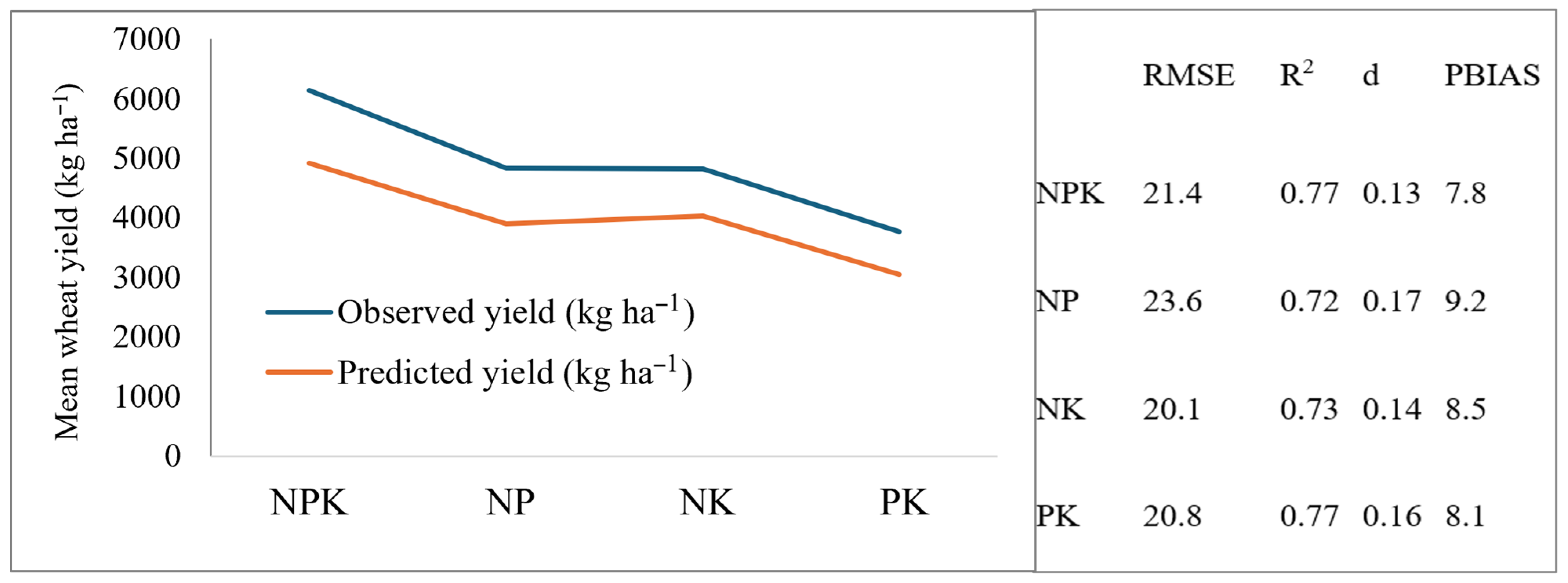
Figure 3 presents the comparison between observed and QUEFTS model-predicted wheat yields across both fully fertilized and nutrient omission treatments. Statistical indicators were used to evaluate the model’s performance and predictive reliability. The root mean square error (RMSE) values ranged from 20.1 to 23.6, a relatively low average deviation between observed and simulated yields. The coefficient of determination (R2) ranged from 0.72 to 0.77, demonstrating a strong positive relationship and suggesting that the model explained a substantial proportion of the observed yield variability.
The index of agreement (d), which reflects the degree of model accuracy in replicating observed trends, ranged between 0.13 and 0.17, while the percent bias (PBIAS) values ranged from 7.8 to 9.2, indicating a slight but consistent overestimation of yields by the model. Collectively, these statistical measures confirm that the QUEFTS model exhibited satisfactory predictive performance, providing a reliable approximation of wheat yields under different nutrient management conditions. The relatively high R2 values and low RMSE further support the model’s suitability for site-specific fertilizer recommendations and yield prediction within the study area.

4. Discussion

The results showed that wheat yield and components progressively increased from control to fully fertilized treatments in the order of C < PK < NK < NP < NPK (Table 3). This indicates that soil K supply was the least deficient, followed by P and N. The highest grain yield in the NPK treatment occurred because balanced NPK fertilization enhanced nutrient uptake of the nutrients which in turn increased yield and the yield components. This aligns with Mengistu and Abera [41] who reported significant interactions in grain yield between P and N fertilization rates. The yield differences among fully fertilized treatment and omission plots were attributable to N, P, or K omissions. Therefore, the balanced application of the three major macronutrients resulted in the highest wheat yield and yield components. This is consistent with Ghosh et al. [42,43,44], who reported that interactions among N, P, and K affect crop yields, nutrient uptake, and use efficiency. The plant nutrients rarely work in isolation and interactions among nutrients are important because the deficiency of one nutrient can restrict the uptake of others. The lowest yield observed in the omission plots was in the N-omission plot, indicating that N is the most limiting nutrient in the study area.
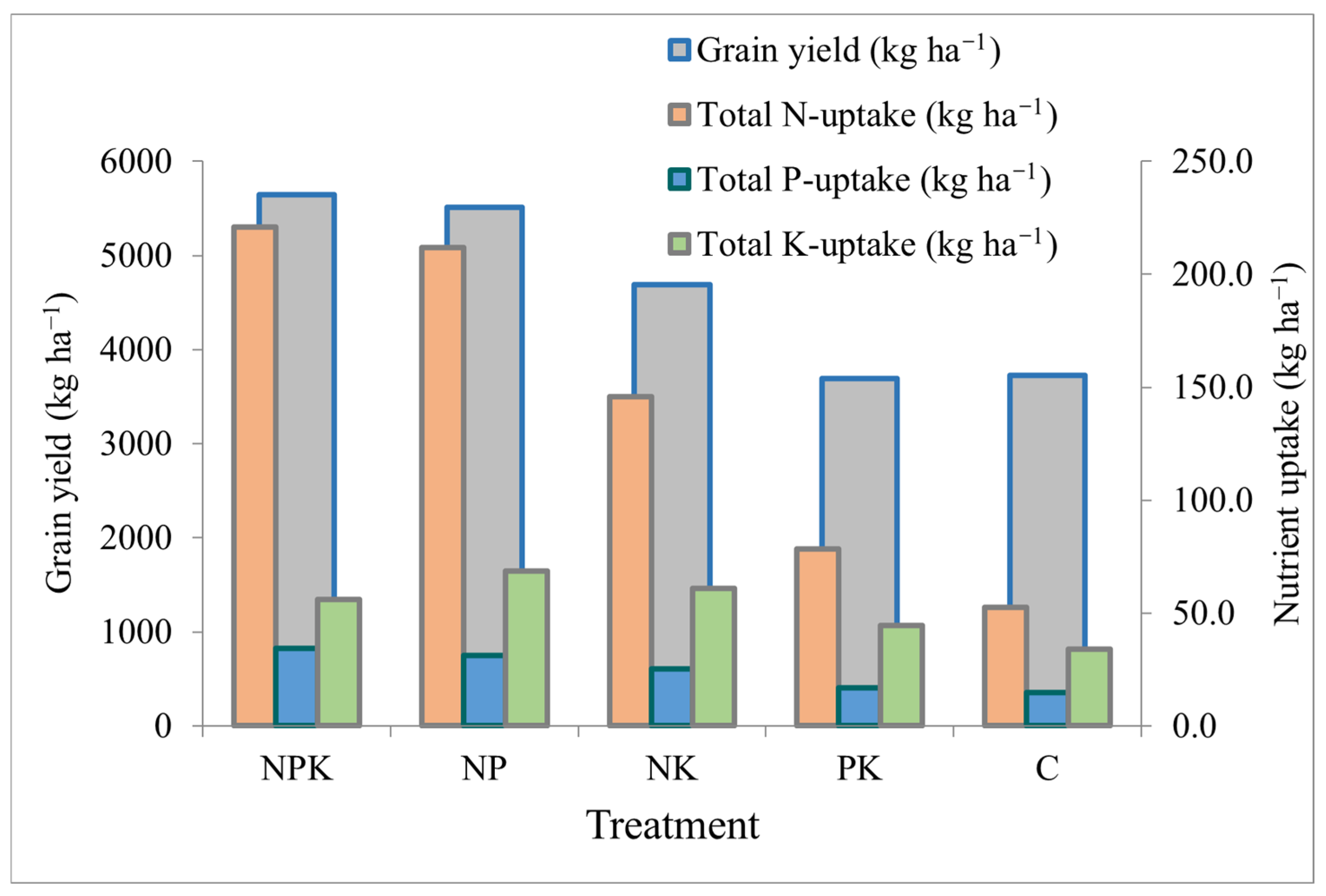
The higher N and P uptakes recorded in the NPK plots were due to the application of balanced N, P, and K fertilizers based on crop nutrient demand. This significantly improved N and P availability in soil solution and in turn resulted in higher wheat yield. In contrast, in the omission trials, crop nutrient concentration and uptake decreased especially in the N-omission trial, due to unbalanced fertilizer application and low soil N, which subsequently reduced wheat yield. This implies that crop nutrient uptake is directly related to nutrient supply from the soil and fertilizer. However, nutrient uptake of the omission plots was lower compared to that in the fully fertilized plots. This demonstrates that the integrated application of NPK nutrients increases nutrient uptake compared to separate fertilizer applications, because the uptake of one nutrient is influenced by the presence of the others. This also confirms that when adequate N, P, and K nutrients that fill the soil nutrient gaps are applied, plant nutrient concentration and uptake increase, which in turn enhances crop yield (Figure 4). Integrated and balanced N, P, and K nutrient applications that address soil nutrient limitations improve both nutrient uptake and yield. This agrees with Mesfin et al. [5] and Sheoran et al. [45], who reported that N, P, and K uptake was higher in a soil fertilized with balanced N, P, and K containing fertilizers. Lower nutrient uptake is also observed when one of the N, P, and K nutrients is deficient in the soil [46].
The highest ANR efficiency observed in this study is attributed to the plant’s ability to convert nutrients acquired from fertilizer into grain yield. This occurs because the soil supplies very limited N, which results in a stronger crop response to applied N containing fertilizer. The highest PNUE obtained in the fully fertilized plot is because the plant physiologically enhances its ability to capacity to convert more nutrients into grain yield when the most limited nutrient (N containing fertilizer) is applied. This finding is consistent with the result of Gauer et al. [47], who reported that higher PNUE is achieved when fertilizer application is based on the most limited soil nutrient. Sheoran et al. [45] also suggested that increasing fertilizer rates decrease nutrient use efficiency. Similarly, Xu et al. [48] Haile et al. [49] found a decline in nutrient utilization efficiency with increasing fertilizer application rates. Higher nutrient losses in the study area therefore limit the efficiency of model-based fertilizer application. This agrees with the findings of Tittonell et al. [50], who suggested that the promotion of inorganic fertilizer use should be accompanied by nutrient use efficiency measures, such as manure application and soil conservation practices. Therefore, improving nutrient use efficiency through model-based and full (NPK) fertilizer application is recommended to increase yield, nutrient uptake, and to promote sustainable agriculture [3,5,51].
These results demonstrated good agreement between QUEFTS model-predicted and observed yields, with moderately low RMSE and d values and a relatively high R2 (Figure 3). However, the model showed a slightly underestimation bias, with PBIAS values ranging from 7.8 to 9.2 for fully fertilized and omission trials. The close agreement between observed and predicted wheat yields in the fully (NPK) fertilized plots, omission trials, and the control provide a reliable reference for profitability analysis. This indicates that the QUEFTS model is adequate for estimating balanced crop nutrient requirements and site-specific fertilizer recommendations to improve wheat yield in northern Ethiopia. Although the applicability of QUEFTS modeling for crop yield prediction at the farm level is multifaceted, the QUEFTS model effectively supports yield prediction based on existing soil nutrient supply potential and fertilizer recommendations. This confirms that QUEFTS is capable of predicting wheat yield with a reasonable degree of precision. These results are consistent with findings by Chuan et al. [34], who validated the QUEFTS model and reported an RMSE value of 22.4 kg ha−1, and Mesfin et al. [5], who validated the QUEFTS model for barley with an RMSE value of 20.2 and a PBIAS of 8.6.

5. Conclusions

This study establishes that balanced NPK fertilization is crucial for increasing crop yield. In Tigray, northern Ethiopia, soil nitrogen supply is highly limited, followed by phosphorus, for maximizing wheat yield and key agronomic traits, whereas the soil’s inherent potassium supply is adequate under current conditions. Consequently, additional potassium application is not required at the study site under the current conditions, whereas nitrogen emerged as the most limiting nutrient, followed by phosphorus, and their omission drastically reduced wheat growth and yield, underscoring the pivotal role of balanced nutrient management in achieving optimal productivity. The strong concordance between QUEFTS-predicted and observed yields demonstrates that the QUEFTS model is a robust and practical decision-support tool, enabling farmers and advisors to implement site-specific fertilization strategies, enhance nutrient use efficiency, and close yield gaps under local conditions. Nevertheless, this study was conducted within a limited agro-ecological scope; future research should validate the model across diverse soils, wheat varieties, and multi-season trials to improve its predictive accuracy and broader applicability. Collectively, these findings highlight the significance of evidence-based, model-driven nutrient management for sustainable wheat intensification in northern Ethiopia and comparable agro-ecologies.

Author Contributions

S.M.: Conceived and designed the experiments, performed the experiments, analyzed and interpreted the data, analyzed the analysis tools or data and wrote the paper. M.H., G.G. and A.Z.: Conceived and designed the experiments, contributed reagents, materials, supervised the work and reviewed the paper. O.G.A.: Reviewed the paper. A.G.: Performed experiments, analysis tools or data and reviewed the paper. B.R.S. and L.O.E.: Reviewed the paper. All authors have read and agreed to the published version of the manuscript.

Funding

This research was funded by ACCAI project grant number OR2014-18350 for data collection and analysis.

Data Availability Statement

The data presented in this study are available upon request from the corresponding author.

Acknowledgments

Authors thank Mekelle University for material and transport facility for data collection. Special thank also goes to the Tigray Agricultural Research Institute soil laboratory research center for soil laboratory analysis. We thank local farmers, Alaje office of Agriculture and development agents of the study sites for their time and cooperation during data collection.

Conflicts of Interest

The authors declare no conflicts of interest.

References

  1. Rusha, B.W. Impacts of climate change on crop production and food security in Ethiopia. Discov. Sustain. 2025, 6, 158–170. [Google Scholar] [CrossRef]
  2. Sattari, S.Z.; van Ittersum, M.K.; Bouwman, A.F.; Smit, A.L.; Janssen, B.H. Crop yield response to soil fertility and N, P, K inputs in different environments: Testing and improving the QUEFTS model. Field Crops Res. 2014, 157, 35–46. [Google Scholar] [CrossRef]
  3. Mesfin, S.; Haile, M.; Gebresamuel, G.; Zenebe, A.; Gebre, A.; van Beek, C. Nutrient uptake and yield response of wheat (Triticum spp.) to different fertilizer applications in Ethiopia. S. Afr. J. Plant Soil 2023, 40, 187–196. [Google Scholar] [CrossRef]
  4. Abegaz, A. Indigenous soil nutrient supply and effects of fertilizer application on yield, N, P and K uptake, recovery and use efficiency of barley in three soils of Teghane, the Northern Highlands of Ethiopia. Afr. J. Agric. Res. 2008, 3, 688–699. [Google Scholar]
  5. Mesfin, S.; Haile, M.; Gebresamuel, G.; Zenebe, A.; Gebre, A. Establishment and validation of site-specific fertilizer recommendation for increased barley (Hordeum spp.) yield, northern Ethiopia. Heliyon 2021, 7, e07758. [Google Scholar] [CrossRef]
  6. Duncan, A.J.; Bachewe, F.; Mekonnen, K.; Valbuena, D.; Rachier, G.; Lule, D.; Bahta, M.; Erenstein, O. Crop residue allocation to livestock feed, soil improvement and other uses along a productivity gradient in Eastern Africa. Agric. Ecosyst. Environ. 2016, 228, 101–110. [Google Scholar] [CrossRef]
  7. Sibanda, T.; Uzabakiriho, J.D. Animal Manure as an Alternative Bioenergy Resource in Rural Sub-Saharan Africa: Present Insights, Challenges, and Prospects for Future Advancements. Energies 2024, 17, 1839. [Google Scholar] [CrossRef]
  8. Gebrehana, Z.G.; Mesfin, T.; Chernet, M.; Gebremikael, M.T.; Ebrahim, M.; Tibebe, D.; Abera, W.; Tamene, L. Valorizing agricultural wastes through composting vermicomposting and anaerobic digestion for sustainable soil fertility management in Ethiopian smallholder systems. Discov. Sustain. 2025, 6, 1026–1047. [Google Scholar] [CrossRef]
  9. Motsi, H.; Phiri, E.E.; Mothapo, P.N. Manure utilisation under smallholder farmers in Sub–Saharan Africa. A systematic review and meta-analysis. Nutr. Cycl. Agroecosyst. 2025, 131, 613–634. [Google Scholar] [CrossRef]
  10. Mesfin, S.; Gebresamuel, G.; Haile, M.; Zenebe, A. Modelling spatial and temporal soil organic carbon dynamics under climate and land management change scenarios, northern Ethiopia. Eur. J. Soil Sci. 2021, 72, 1298–1311. [Google Scholar] [CrossRef]
  11. Mesfin, S.; Gebresamuel, G.; Haile, M.; Zenebe, A. Potentials of legumes rotation on yield and nitrogen uptake of subsequent wheat crop in northern Ethiopia. Heliyon 2023, 9, e16126. [Google Scholar] [CrossRef] [PubMed]
  12. Mesfin, S.; Gebresamuel, G.; Zenebe, A.; Haile, M. Nutrient balances in smallholder farms in northern Ethiopia. Soil Use Manag. 2020, 37, 468–478. [Google Scholar] [CrossRef]
  13. Mirzaei, M.; Gorji Anari, M.; Razavy-Toosi, E.; Asadi, H.; Moghiseh, E.; Saronjic, N.; Rodrigo-Comino, J. Preliminary Effects of Crop Residue Management on Soil Quality and Crop Production under Different Soil Management Regimes in Corn-Wheat Rotation Systems. Agronomy 2021, 11, 302. [Google Scholar] [CrossRef]
  14. Namatsheve, T.; Martinsen, V.; Obia, A.; Mulder, J. Grain yield and nitrogen cycling under conservation agriculture and biochar amendment in agroecosystems of sub-Saharan Africa. A meta-analysis. Agric. Ecosyst. Environ. 2024, 376, 109243. [Google Scholar] [CrossRef]
  15. Agegnehu, G.; Bird, M.I. Influence of integrated soil fertility management in wheat and tef productivity and soil chemical properties in the highland tropical environment. J. Soil Sci. Plant Nutr. 2014, 14, 532–545. [Google Scholar] [CrossRef]
  16. Abera, W.; Tamene, L.; Tesfaye, K.; Jiménez, D.; Dorado, H.; Erkossa, K.; Kihara, J.; Ahmed, J.S.; Amede, T.; Ramirez-Villegas, J. A data-mining approach for developing site-specific fertilizer response functions across the wheat-growing environments in Ethiopia. Exp. Agric. 2022, 58, e9. [Google Scholar] [CrossRef]
  17. Mesfin, S.; Gebresamuel, G.; Haile, M.; Zenebe, A.; Desta, G. Mineral Fertilizer Demand for Optimum Biological Nitrogen Fixation and Yield Potentials of Legumes in Northern Ethiopia. Sustainability 2020, 12, 6449–6461. [Google Scholar] [CrossRef]
  18. Abdeta, A. Soil Test Based Fertilizer Recommendation for Wheat Production in Ethiopia: Review. Res. Dev. 2021, 2, 50–53. [Google Scholar] [CrossRef]
  19. Assefa, T.W.; Berhane, G.; Abate, G.T.; Abay, K.A. Fertilizer demand and profitability amid global fuel-food-fertilizer crisis: Evidence from Ethiopia. Food Policy 2025, 133, 102785. [Google Scholar] [CrossRef]
  20. van Beek, C.L.; Elias, E.; Yihenew, G.S.; Heesmans, H.; Tsegaye, A.; Feyisa, H.; Tolla, M.; Melmuye, M.; Gebremeskel, Y.; Mengi, S. Soil nutrient balances under diverse agro-ecological settings in Ethiopia. Nutr. Cycl. Agroecosyst. 2016, 106, 257–274. [Google Scholar] [CrossRef]
  21. Janssen, B.; Guiking, F.; Van der Eijk, D.; Smaling, E.; Wolf, J.; Van Reuler, H. A system for quantitative evaluation of the fertility of tropical soils (QUEFTS). Geoderma 1990, 46, 299–318. [Google Scholar] [CrossRef]
  22. CASCAPE. Characterization of Agricultural Soils in CASCAPE intervention woredas in Southern Tigray, Ethiopia. Record nr. 2259410. Available online: https://library.wur.nl/WebQuery/isric (accessed on 1 December 2025).
  23. Seifu, W.; Elias, E.; Gebresamuel, G.; Khanal, S. Impact of land use type and altitudinal gradient on topsoil organic carbon and nitrogen stocks in the semi-arid watershed of northern Ethiopia. Heliyon 2021, 7, e06770. [Google Scholar] [CrossRef] [PubMed]
  24. IUSS Working Group WRB. World Reference Base for Soil Resources: International Soil Classification System for Naming Soils and Creating Legends for Soil Maps, 4th ed.; International Union of Soil Sciences (IUSS): Rome, Italy, 2022. [Google Scholar]
  25. Peech, M. Hydrogen ion activity. In Methods of Soil Analysis, Part 2; Black, C.A., Ed.; American Society of Agronomy: Madison, WI, USA, 1965; pp. 914–926. [Google Scholar]
  26. Mohammad, B.; Hasan, T. A Modified Walkley-Black Method Based on Spectrophotometric Procedure, Communications in Soil Science and Plant Analysis. Commun. Soil Sci. Plant Anal. 2016, 47, 213–220. [Google Scholar] [CrossRef]
  27. Bremmer, J.; Mulvaney, C.S. Methods of soil analysis, part 2: Chemical and microbiological properties. ASA Monogr. 1982, 9, 595–624. [Google Scholar]
  28. Koralage, I.S.A.; Weerasinghe, P.; Silva, N.R.N.; De Silva, C.S. The Determination of Available Phosphorus in Soil: A Quick and Simple Method. OUSL J. 2015, 8, 1–17. [Google Scholar] [CrossRef]
  29. Jackson, M.L. Soil chemical Analyses; Enllewood Cliffs: Bergen, New Jersey, USA, 1958. [Google Scholar]
  30. Tekalign, T. Soil, Plant, Water, Fertilizer, Animal Manure and Compost Analysis; Working Document No. 13; International Livestock Research Center for Africa: Addis Ababa, Ethiopia, 1991. [Google Scholar]
  31. Landon, J.R. Booker Tropical Soil Manual: A Handbook for Soil Survey and Agricultural Land Evaluation in the Tropics and Subtropics; Routledge: London, UK, 2014; p. 530. [Google Scholar] [CrossRef]
  32. Gimenez, D.; Heckman, J.; Muldowney, L.; Murphy, S. Soil Organic Matter Level and Interpretation; Fact Sheet FS1136; The State University of New Jersey: New Brunswick, NJ, USA, 2012. [Google Scholar]
  33. Food and Agriculture Organization (FAO). Plant Nutrition for Food Security: A Guide for Integrated Nutrient Management; FAO, Fertilizer and Plant Nutrition Bulletin 16; FAO: Rome, Italy, 2006; p. 16. [Google Scholar]
  34. Chuan, L.; He, P.; Jin, J.; Li, S.; Grant, C.; Xu, X.; Zhou, W. Estimating nutrient uptake requirements for wheat in China. Field Crops Res. 2013, 146, 96–104. [Google Scholar] [CrossRef]
  35. Fageria, N.; Baligar, V.; Li, Y. The role of nutrient efficient plants in improving crop yields in the twenty first century. J. Plant Nutr. 2008, 31, 1121–1157. [Google Scholar] [CrossRef]
  36. Tittonell, P.; Vanlauwe, B.; Corbeels, M.; Giller, K.E. Yield gaps, nutrient use efficiencies and response to fertilizers by maize across heterogeneous smallholder farms of western Kenya. Plant Soil 2008, 313, 19–37. [Google Scholar] [CrossRef]
  37. Moriasi, D.N.; Arnold, J.G.; Van Liew, M.W.; Binger, R.L.; Harmel, R.D.; Veith, T.L. Model evaluation guidelines for systematic quantification of accuracy in watershed simulations. Trans. ASABE 2007, 50, 885–900. [Google Scholar] [CrossRef]
  38. Krause, P.; Boyle, D.P.; Bäse, F. Comparison of Different Efficiency Criteria for Hydrological Model Assessment. Adv. Geosci. 2005, 5, 89–97. [Google Scholar] [CrossRef]
  39. Legates, D.R.; McCabe, G.J. Evaluating the use of “goodness-of-fit” measures in hydrologic and hydroclimatic model validation. Water Resour. Res. 1999, 35, 233–241. [Google Scholar] [CrossRef]
  40. Gupta, H.V.; Sorooshian, S.; Yapo, P.O. Status of automatic calibration of hydrological models: Comparison with multilevel expert calibration. J. Hydrol. Eng. 1999, 4, 135–143. [Google Scholar] [CrossRef]
  41. Mengistu, D.K.; Abera, F.A. Growth and yield of barley (Hordeum vulgare L.) as affected by nitrogen and phosphorus fertilization and water regimes in Tigray. Ethiopia. Momona Ethiop. J. Sci. 2014, 6, 45–57. [Google Scholar] [CrossRef]
  42. Dai, X.; Ouyang, Z.; Li, Y.; Wang, H. Variation in yield gap induced by nitrogen, phosphorus and potassium fertilizer in wheat-based cropping systems. PLoS ONE 2013, 8, e82147. [Google Scholar] [CrossRef] [PubMed]
  43. Belete, F.; Dechassa, N.; Molla, A.; Tana, T. Effect of nitrogen fertilizer rates on grain yield and nitrogen uptake and use efficiency of bread wheat (Triticum aestivum L.) varieties on the Vertisols of central highlands of Ethiopia. Agric. Food Sec. 2018, 7, 78. [Google Scholar] [CrossRef]
  44. Akamine, H.; Hossain, A.; Ishimine, Y.; Yogi, K.; Hokama, K.; Iraha, Y.; Aniya, Y. Effects of Application of N, P And K Alone or in Combination on Growth, Yield and Curcumin Content of Turmeric (Curcuma longa L.). Plant Prod. Sci. 2007, 10, 151–154. [Google Scholar] [CrossRef]
  45. Sheoran, S.; Raj, D.; Antil, R.S.; Mor, V.S.; Dahiya, D.S. Productivity, Seed Quality and Nutrient Use Efficiency of Wheat (Triticum aestivum) under Organic, Inorganic and Integrated Nutrient Management Practices after Twenty Years of Fertilization. Cereal Res. Commun. 2017, 45, 315–325. [Google Scholar] [CrossRef]
  46. Setiyono, T.D.; Walters, D.T.; Cassman, K.G.; Witt, C.; Dobermann, A. Estimating maize nutrient uptake requirements. Field Crops Res. 2010, 118, 158–168. [Google Scholar] [CrossRef]
  47. Gauer, L.E.; Grant, C.A.; Gehl, D.T.; Bailey, L.D. Effects of nitrogen fertilization on grain protein content, nitrogen uptake, and nitrogen use efficiency of six spring wheat (Triticum aestivum L.) cultivars, in relation to estimated moisture supply. Can. J. Plant Sci. 1992, 72, 235–241. [Google Scholar] [CrossRef]
  48. Xu, A.; Chen, Y.; Wei, X.; Effah, Z.; Li, L.; Xie, J.; Liu, C.; Anwar, S. Does Nitrogen Fertilization Improve Nitrogen-Use Efficiency in Spring Wheat? Agronomy 2024, 14, 2049. [Google Scholar] [CrossRef]
  49. Haile, D.; Nigussie, D.; Ayana, A. Nitrogen use efficiency of bread wheat: Effects of nitrogen rate and time of application. J. Soil Sci. Plant Nutr. 2012, 12, 389–409. [Google Scholar] [CrossRef]
  50. Tittonell, P.; Vanlauwe, B.; de Ridder, N.; Giller, K.E. Heterogeneity of crop productivity and resource use efficiency within smallholder Kenyan farms: Soil fertility gradients or management intensity gradients. Agric. Syst. 2008, 94, 376–390. [Google Scholar] [CrossRef]
  51. Xu, X.; He, P.; Qiu, S.; Pampolino, M.F.; Zhao, S.; Johnston, A.M.; Zhou, W. Estimating a new approach of fertilizer recommendation across smallholder farms in China. Field Crops Res. 2014, 163, 10–17. [Google Scholar] [CrossRef]
Figure 1. Location maps of the study area and layout of the experiment.
Soilsystems 10 00027 g001
Figure 2. Daily rainfall and temperature at Alaje, northern Ethiopia, during July to mid-October of (a) the 2017 cropping season and (b) the 2018 cropping season. The metrological data were collected by the authors and co-authors of this manuscript and are cited in the above weather description because they were previously used in another study conducted at the same site.
Soilsystems 10 00027 g002
Figure 3. Mean observed and predicted wheat yields and values of model validating statistical tools. RMSE: root mean square error (kg ha−1); R2: coefficient of determination; d: index of agreement; PBIAS: percent bias (%).
Soilsystems 10 00027 g003
Figure 4. Grain yield versus nutrient uptake in omission trials.
Soilsystems 10 00027 g004
Table 1. Key soil properties of the study areas, northern Ethiopia.
Soil PropertiesValuesRatingReference
pH6.21 (6.0–6.3)NeutralTekalign [30]
EC (mS/cm)0.14 (0.12–0.19)LowLandon [31]
SOC (g kg−1)14.42 (13.1–15.2)LowGimenez et al. [32]
TN (g kg−1)1.14 (0.9–1.39)LowTekalign [30]
C/N12.65
P-Olsen (mg kg−1)14.2 (12.1–15.3)MediumTekalign [30]
Exch. K (mmol kg−1)2.5 (2.0–2.9)High FAO [33]
Bulk density (g cm−3)1.27 (1.1–1.4)
Sand (%)60.9
Silt (%)7.4
Clay (%)31.7
Textural classSandy clay loam
Table 2. Description of the experimental treatments (2017–2018) at Alaje, northern Ethiopia.
TreatmentDescription of the TreatmentsPurpose of Treatment
NPKFull fertilization (145.5 kg N ha−1, 60 kg P ha−1, 50 kg K ha−1),To determine target wheat yield of 4800 kg ha−1 with full NPK nutrient application based on QUEFTS recommendations
NPN and P applied without KTo determine the indigenous K supply ensuring that no N and P are non-limiting
NKN and K applied without PTo determine the indigenous P supply ensuring that no N and K are non-limiting
PKP and K applied without NTo determine the indigenous N supply ensuring that no P and K are non-limiting
CControl (no fertilizer application)To determine the indigenous NPK supply, with all nutrients potentially limiting
Table 3. Average grain and biomass yields (mean ± SD) of wheat in the NPK fertilizer application and omission trials of the two cropping seasons.
Treat20172018
Grain Yield
(kg ha−1)
Biomass Yield
(kg ha−1)
Grain Yield (kg ha−1)Biomass Yield (kg ha−1)
NPK6067 ± 1270 a11,547 ± 2654 a6214 ± 1301 a12,331 ± 2233 a
NP5448 ± 1182 ab10,139 ± 2221 b5878 ± 1171 ab11,011 ± 2282 b
NK4693 ± 1037 b9923 ± 2013 b5098 ± 1085 b10,551 ± 2088 b
PK3816 ± 978 c6963 ± 1753 c3733 ± 866 c7513 ± 1767 c
C2640 ± 765 d5138 ± 1167 d2857 ± 797 d5388 ± 1178 d
LSD8529878661012
CV12.813.111.712.3
F<0.001<0.001<0.001<0.001
Different letters have shown significant difference at p ≤ 0.05 and the interaction effect of the two seasons is insignificant.
Table 4. Average yield components of wheat in the NPK fertilizer application and omission trials of the two cropping seasons (2017 and 2018), north Ethiopia.
TreatHIPlant
Height (cm)
No of TillersSpike
Length (cm)
No. of Seeds/
Spike
NPK0.53 a102.1 a7.9 a8.9 a53.1 a
NP0.54 a96.1 b6.2 b7.2 b45.6 b
NK0.49 a88.9 c4.3 c7.0 b41.5 bc
PK0.54 a87.9 c2.6 d6.9 b36.7 cd
C0.55 a68.2 d2.0 d6.3 c32.9 d
LSD0.085.80.90.94.517
CV19.27.47.17.512.1
F0.19<0.001<0.001<0.001<0.001
Different letters indicate a significant difference among treatments.
Table 5. Average N, P, and K nutrient concentration and uptake of the omission trial across two cropping seasons, northern Ethiopia.
Nutrient Concentration
(% for N and ppm for P and K)
Treatments
NPKNPNKPKCLSDCV (%)p
N2.34 a2.32 a1.73 b0.85 c0.87 c0.312.3<0.001
GrainP3351 a2781 b2759 b2018 c1935 c3077.9<0.001
K3838 a3737 a3668 a3393 a2183 b679.313.4<0.001
N1.26 a1.15 ab1.15 ab1.01 b0.47 c0.1812.1<0.001
StrawP2207 a2172 a2188 a2102 a1742 b321.310.2<0.039
K5290 b6443 ab7714 a6251 ab6116 ab2148.922.40.25
N3.60 a3.47 a2.87 b1.86 c1.33 d0.317.8<0.001
TotalP5558 a4952 b4947 b4038 c3760 c486.46.9<0.001
K8683 b10,281 ab11,382 a9983 ab8299 b2211.815.10.06
Nutrient uptake
(kg ha1)
N132.2 a127.7 a79.0 b31.4 c32.8 c21.417.6<0.001
GrainP19.0 a15.3 b12.9 b7.6 c7.1 c3.317.9<0.001
K19.1 a21.3 a17.2 ab13.8 b8.3 c5.121.2<0.001
N88.6 a84.2 ab65.8 bc47.1 c19.6 d20.822.6<0.001
StrawP15.5 a15.9 a12.5 ab9.9 bc7.3 c3.820.5<0.001
K36.8 ab47.4 a43.8 ab30.7 ab25.7 b18.633.60.13
N220.8 a211.9 a145.8 b78.6 c52.4 c27.813<0.001
TotalP34.5 a31.2 a25.4 b17.0 c14.9 c5.414.6<0.001
K55.9 ab68.6 a62.0 ab44.4 bc34.1 c18.623.4<0.01
Different letters in the same row indicate significant differences among treatments.
Table 6. Nutrient use efficiencies indices for wheat as the test crop, northern Ethiopia.
TreatANRANUEPENUEPEINNHI
NPK96.20 a8.68 a0.13 a0.27 a0.55 a
NP79.80 b8.33 a0.10 a0.27 a0.53 a
NK70.81 b6.50 a0.09 a0.25 ab0.47 b
PK67.80 b0.61 b0.02 b0.24 b0.38 c
C---0.24 b0.48 b
LSD14.074.5720.050.0230.04
CV13.5019.512.809.5017.8
F<0.001<0.001<0.0010.06<0.01
Different letters in the same column indicate significant differences among treatments.
Disclaimer/Publisher’s Note: The statements, opinions and data contained in all publications are solely those of the individual author(s) and contributor(s) and not of MDPI and/or the editor(s). MDPI and/or the editor(s) disclaim responsibility for any injury to people or property resulting from any ideas, methods, instructions or products referred to in the content.