


Abstract
The application of forest byproducts to cropland provides significant benefits, mitigating soil degradation, supplying essential nutrients, and increasing yields. Their impact is well known in the first years, but few studies have examined the effects several years after an application. A field study was initiated in Québec, QC, Canada, to assess the effects of wood ash (10 and 20 Mg dry wt. ha−1), pine biochar (10 Mg dry wt. ha−1), paper mill sludge (PS) (12 Mg dry wt. ha−1), and a combination of wood ash and PS, relative to an untreated control and a mineral treatment, on crop yield and soil properties three to seven years after application in a temperate circumneutral loamy soil. The site was cropped to a maize (Zea mays L.)–soybean [Glycine max (L.) Merr.]–spring wheat (Triticum aestivum L.) rotation. Each crop received supplemental N and P from mineral fertilizers, when needed, according to local agronomic recommendations. Applying wood ash increased wheat yield by 0.25–0.44 Mg ha−1 three years after the addition, but no effect was detected in other cases and for the other amendments. Wood ash also resulted in the largest increases (p < 0.05) in soil pH and Mehlich-3 P, K, Ca, Mg, Zn, and Cd, alone or in combination with PS. Pine biochar promoted soil C sequestration after seven years, but did not affect other soil properties owing to its high stability and low nutrient content. This study revealed that wood ash was more advantageous than pine biochar for improving soil quality and crop productivity.
1. Introduction
The forest industry generates large amounts of residues from timber mill processing and pulp and paper production, such as paper mill sludge (PS) and wood ash, which can be successfully used in agriculture to improve crop yield and soil properties [1,2,3]. It was estimated that the dry sludge generation rate is between 5 and 15% for the production of 400 Mt of paper and paperboard worldwide [4]. Annual production of ash from forest industry was estimated at 3–5 Mt in the USA [5] and >0.75 Mt in Canada, including 0.42 Mt in pulp and paper mills [1,6]. On the other hand, biochar, a carbon-rich product obtained through pyrolysis, can be made from low-value woody forest residues and has ecological benefits by mitigating climate change due to its long-term persistence in soil and enriching the soil with nutrients and organic C [7,8,9]. Recycling this wood biomass on farms could be more efficient and less expensive than simply disposing of it in landfills [2,10]. This offers an interesting economic and environmental alternative to overcome the limited capacity of existing landfills and the difficulty of opening new sites, while helping to reduce greenhouse gas emissions and the leaking of hazardous substances [4,11,12].
The effects of PS are most often monitored during the first year of application and occasionally during the following residual year, but rarely afterward [13,14]. Repeated application of PS for nine years (10 to 29 Mg dry ha−1 yr−1) had a positive effect on field crops 3–5 yr after their cessation [15], while it continued to improve the soil properties, notably total C and Mehlich-3 P and Zn, for even more years [16]. In the same order, the application of PS for 5 years at a rate up to 25 Mg dry ha−1 yr−1 increased soil NO3-N, Olsen-P, and organic matter [17]. However, there is a lack of information on the impact of a single application of PS over such a long period on crop yield and soil properties.
The benefits of using wood biomass residues have been widely studied in temperate agricultural soils over the past few decades [18,19], but few of these studies have looked at a period longer than four years. Arshad et al. [20] reported an increase in soil pH and available P and in grain yields of barley (Hordeum vulgare L.), canola (Brassica rapa L.), and pea (Pisum sativum L.) up to four years after application of 8 Mg wood ash ha−1 on an acidic clay loam. Benefits on barley and canola yields were also seen three years after the application of 6 to 25 Mg wood ash ha−1 on an acid-to-neutral loam [21]. In their study, Ferreiro et al. [22] found a temporary increase in soil available P and K, while increases in soil pH and available Ca and Mg persisted for at least four years after the application of wood ash at 12 Mg ha−1 to a mixed pasture. Gagnon and Ziadi [16] observed an increase in Mehlich-3 K three years after cessation of wood ash applied annually at 2.2 Mg ha−1 for nine years, while the benefits on soil pH and Mehlich-3 Ca lasted longer. Studies analyzing longer periods could provide further information on the duration of the observed benefits of wood ash on agricultural soils.
On the other hand, biochar was reported to have a long-term effect in increasing crop yield, which was positively correlated with the application rate and enhancement of soil organic C [23]. However, this meta-analysis also indicated that biochar derived from wood and that produced at a high pyrolysis temperature had limited performance. Using pinewood biochar, Backer at al. [24] did not observe any improvements in maize (Zea mays L.) or soybean [Glycine max (L.) Merr.] yields three years after application of 20 Mg ha−1, but there was an increase in organic C in the sandy clay loam. With a similar material, Abagandura et al. [25] observed no effect relative to the control on yield, soil pH, and soil P and K availability three to four years following the addition of 10 Mg ha−1 to a maize–soybean rotation, but an increase in soil organic C was found both at eroded (sandy loam) and depositional (clay loam) landscape positions. To this level, Quilliam et al. [26] emphasized the transient nature of wood biochar benefits on temperate agricultural soil, but they did not question the C sequestration strategy.
The high stability of wood biochar could induce positive agronomic effects on soil properties in the long term [27]. Once applied to the soil, biochar undergoes a series of transformations called aging that change its physico-chemical properties and cause the initial effects manifested by intrinsic material attributes to dissipate with time as they are progressively replaced by newly formed attributes [28]. During this period, exposure to wet–dry and freeze–thaw cycles, disturbance through tillage, and microbial and root activities can further fragment and oxidize biochar particles and lead to mineral dissolution [29]. This may affect, to varying degrees, several biochar properties by increasing specific surface area, surface acidity, and O-rich functional groups and reducing average pore diameter, pH, and total C compared with fresh biochar [30,31,32,33], which can alter the performance of biochar in the field. However, biochars produced from wood and at high pyrolysis temperatures are more resistant to oxidation [34]. Despite the many experiments conducted to document biochar aging in soil, few of them have looked at crop yields and soil properties several years after biochar application, especially in temperate soil conditions. It would be advisable to know whether a biochar derived from feedstock like pinewood, which has a limited impact within the first few years following its application [24,25], exhibits changes in its properties in the long term.
In this study, three materials all coming from forest resources but with different characteristics and mechanisms of action were compared after a single application to agricultural soil. The first two years of amendment addition have been previously reported [35,36]. Here, the objective of the present study was to evaluate the residual effects of PS, wood ash, and pine biochar on crop yield and the main physico-chemical properties of soil in a long-term (years 3 to 7) experiment involving temperate systems. This area of research represents a gap that needs addressing in future studies [37,38]. The hypothesis was that each amendment will continue to promote certain soil properties such as pH and total C, N, P, and K availability and ultimately increase crop yield in the long term.
2. Materials and Methods
2.1. Site and Treatments
This study was conducted at the Saint-Augustin-de-Desmaures Research Farm of Agriculture and Agri-Food Canada, near the city of Québec, QC, Canada (46°44′ N, 71°31′ W), on a rain-fed flat, imperfectly drained Chaloupe loam (fine, mixed, frigid Typic Humaquept, according to U.S. soil classification; 162 g clay, 485 g silt, and 353 g sand kg−1 dry soil). Initially, the soil had 11 g total C, 24 mg Mehlich-3 P, and 85 mg Mehlich-3 K kg−1 dry soil, and a pHwater of 6.9 in the 0–15 cm surface layer. The site was classified as poor in P (<27 mg Mehlich-3 P kg−1 or <2.5% P/Al Mehlich-3) and medium in K (67–89 mg Mehlich-3 K kg−1), according to local soil test guidelines [39].
The experiment consisted of a one-time application followed by six residual years. In 22 May 2018, the plots received eight treatments (Table 1) that were manually applied to the bare soil and incorporated at a 10 cm depth by rototilling. The wood ash consisted of fly ash collected from a steam-powered boiler that burned mostly softwood residues (900–950 °C) (Phénix, Boralex Énergie S.E.C., Senneterre, QC, Canada). The PS comprised a combined sludge from a local plant (Les Entreprises Rolland inc., Lévis, QC, Canada) equipped with primary and secondary (biological) treatments of paper de-inking wastewater. The biochar consisted of pine chips (Pinus strobus L.) slowly pyrolyzed between 700 °C and 750 °C with a residence time of less than 1 min before passing through a second reactor that held the carbonized material for 10 to 15 min at 400–550 °C (Biochar Engineering, Golden, CO, USA). The experimental layout was a randomized complete block design with four replicates and a plot size per replicate of 3 m × 5 m.
Table 1.
Description of treatment combinations initially applied.
The characteristics of the materials are summarized in Table 2. Briefly, the wood ash was alkaline (pH of 11.7) with a high ash and total cation content. In contrast, the pine biochar was low in ash and cations but contained large quantities of total, organic, and fixed C. With an O/Corg < 0.2 and a H/Corg < 0.4, it should have high C stability in soil [41]. The PS was an important source of organic matter and total Ca but had a low mineralization potential in the year of application [42], which may positively affect the residual years.
Table 2.
Main chemical characteristics of amendments applied (mean ± standard deviation, dry matter basis, except for moisture).
2.2. Cropping Practices
We evaluated the residual effects for years 3 to 7 after material application (2020–2024). In these years, the plots did not receive any other soil amendments except mineral fertilization when needed. Except in the untreated control, full fertilizer N as Ca-NO3NH4, inorganic P as triple superphosphate, and inorganic K as potassium muriate were supplemented based on each crop’s requirements and soil P and K status at that time (Table 3) [39]. Since we expected a residual response to amendment addition from factors other than soil pH, this factor was found to be less dominant in neutral pH conditions [43].
Table 3.
Management of field crops from years 3 to 7 after application of amendments.
Field crops consisted of a grain maize–soybean–spring wheat (Triticum aestivum L.) rotation beginning at the time of amendment application. Each spring, the site was roto-tilled to prepare the seedbed for the crop. The main field operations during growing season are detailed in Table 3. Grain maize (cv. Elite E49A12R [2325 maize heat units]) and soybean (cv. Elite Podaga [2400 maize heat units]) were sown using a modified mechanical two-row maize planter (Nodet-Gougis), with 0.76 m inter-row spacing at 88,300 plants ha−1 for maize and 0.38 m inter-row spacing at 381,000 plants ha−1 for soybean. Bread spring wheat (cv. AAC Synox) was sown using a conventional seed drill with inter-row spacing of 19 cm and target population achieved at 4.25 million plants ha−1. To control weeds each year, N-(phosphonomethyl)glycine at 1.67 L ha−1 was applied to maize and soybean crops and 3,5-dibromo-4-hydroxybenzonitrile/2-methyl-4-chlorophenoxyacetic acid at 1 L ha−1 was applied to wheat crops.
Grain yield was determined at maturity by manually harvesting the following sections in the middle of each plot: one 4 m long inner row for maize, two 1 m long inner rows for soybean, and a 3 m long × 0.19 m wide section for wheat. Except for maize, the complete harvested section was dried at 55 °C in a forced-draft oven until a constant weight was reached. Then, the grain and straw were mechanically separated, cleaned, and weighed. Maize ears were dried at 55 °C and mechanically shelled afterwards. Maize stover from the harvested section was mechanically chopped and a subsample was dried at 55 °C. Grain yields were adjusted to a moisture content of 155 g kg−1 for maize, 140 g kg−1 for wheat, and 130 g kg−1 for soybean [44].
2.3. Plant Sampling and Analysis
Evaluation of in-season plant N and P nutrition status was conducted each year at the maize tasseling, soybean beginning bloom, or wheat heading stages. To this end, whole plants were cut at ground level using pruning scissors from a 1 m section of a row within each plot and dried at 55 °C in a forced-draft oven until reaching constant weight for dry matter (DM) determination and laboratory analyses.
Samples of plant tissue and grain for each crop were ground to 1 mm and 0.25 mm, respectively. Subsamples of 0.1 g were wet acid-digested in the presence of 1.5 mL H2SO4-H2SeO3 and 2.0 mL H2O2 at 380–400 °C for 40 min [45]. The concentrations of N and P in acid digestion were measured by colorimetry with an automated continuous-flow injection analyzer (QuickChem 8000 FIA+, Lachat Instruments, Loveland, CO, USA) using the salicylate-nitroprusside procedure for total N (method 13-107-06-2-E) and the vanadomolybdate reaction for total P (method 15-301-3). Concentrations of K were determined using an inductively coupled plasma optical emission spectrometer (ICP-OES, Perkin Elmer Optima 4300DV, Shelton, CT, USA).
The in-season nitrogen nutrition index (NNI) was calculated using the equations of critical N of maize and wheat validated in Canada [46] and critical N of soybean [47]:
where N is the whole-plant N concentration in g kg−1 DM, and W is the shoot biomass in Mg DM ha−1.
NNI = N/(30.7 × W−0.40) [maize]
NNI = N/(37.0 × W−0.08) [soybean]
NNI = N/(41.4 × W−0.51) [wheat]
The in-season phosphorus nutrition index (PNI) was only calculated for maize and wheat, using the equation developed in eastern Canada [48,49] under non-limiting N conditions:
where P and N are whole-plant P and N concentrations expressed in g kg−1 DM. A value of the NNI (or PNI) ≥ 1.0 indicates that N (or P) is not limiting growth, whereas a value of <1.0 indicates N (or P) deficiency [50]. The in-season plant P nutrition status of soybean was determined using critical sufficient concentration ranges reported in Stammer and Mallarino [51] at the V5–V6 stage (3.3–4.1 g kg−1) because no PNI equation is developed for soybean.
PNI = P/(0.82 + 0.097 × N) [maize]
PNI = P/(0.94 + 0.107 × N) [wheat]
2.4. Soil Sampling and Analysis
Soils were sampled at crop harvest each year and consisted of four cores (0–15 cm layer) taken at random from each plot using a Dutch soil sampler probe. Field-moist soil (2.5 g) for NO3-N content was extracted in 20 mL 2 mol L−1 KCl for 30 min on a reciprocal shaker before filtering. Concentrations in soil extracts were determined using the continuous-flow injection auto-analyzer with the Cd-Cu reduction procedure [52]. A subsample of soil was air-dried, crushed, and sieved through a <2 mm mesh. This enabled us to measure pH with a glass electrode in a soil-to-water ratio of 1:2 and to determine the Mehlich-3 extractable elements using a soil-to-solution ratio of 1:10 and an extraction time of 5 min before filtering (P, Al, K, Ca, Mg, Cu, Zn, Cd) [53]. Soil P concentrations were determined by colorimetry (Beckman Coulter DU720, Mississauga, ON, Canada) using the ascorbic acid–molybdate reaction [54], whereas concentrations of cations were determined using the ICP-OES. Total C was analyzed through dry combustion (LECO TruSpec CN, St.Joseph, MI, USA) of soil samples finely ground to 0.20 mm.
2.5. Statistical Analysis
All data were subjected to Bartlett’s test to check for homogeneity of variances and log-transformed for soil Zn. Data were also tested for normality using the Shapiro–Wilk test in the SAS univariate procedure (SAS Studio 9.4 v.3.82). Soil pH, P, K, Mg, Zn, and Cd did not follow a normal distribution for all years, so these data did not meet the analysis of variance (ANOVA) assumptions; as a result, nonparametric statistical analysis was used. The NPAR1WAY procedure with the Dwass, Steel, Critchlow–Fligner (DSCF) multiple comparison analysis option was employed because of the eight-treatment comparison. The results of the Wilcoxon Z scores and the empirical distribution function (EDF) statistics, which include the Kolmogorov–Smirnov and Cramér–von Mises tests, indicated no difference (p = 0.05) between the treatment class levels for asymptotic distribution. Therefore, these data can be assumed to be normally distributed and were processed in the same way as the others.
Data analysis after variance homogeneity and normality tests was performed using the SAS MIXED procedure (v.3.82). A one-way ANOVA was conducted for soil, with treatments and years as fixed effects and replications as random effects. When a treatment × year interaction was significant for a parameter, data were analyzed separately by year and the means reported. Statistical analysis for plant attributes was performed by crop because of different compositions and DM production. The main treatment effects were compared using linear contrasts for wood ash rate and wood ash rate × PS and single degree-of-freedom contrasts otherwise (mineral NP fertilizers vs. untreated, PS vs. untreated, pine biochar vs. untreated, wood ash vs. wood ash × PS, and wood ash vs. pine biochar for the 10 Mg ha−1 rate). A difference in the p-value of the contrast compared to the positive mineral NP fertilizer control can be interpreted as a difference in the response of the amendment. Statistical significance was defined as p ≤ 0.05.
3. Results and Discussion
3.1. Crop Yield and Nutritional Status
The maize, soybean, and spring wheat yields in the residual years were near the regional average (8.0 Mg ha−1 for maize, 2.8 Mg ha−1 for soybean, and 2.5 Mg ha−1 for wheat) [55], except in 2020 when the low rainfall in May and June (50% lower than the 30-year average, Table 4) negatively affected early wheat plant development. Globally, the maize and wheat yields were significantly affected by treatments, whereas soybean yields were not (Table 5). The main effect was attributed to the supplemental fertilizer N added to meet the crop N requirement (Table 3), to which maize and wheat were particularly responsive.
Table 4.
Monthly temperatures and rainfall during the growing season for the 7-year study and the 30-year average (1991–2020).
Table 5.
Effect of forest byproducts on the grain yield of a maize-soybean-spring wheat rotation (years 3 to 7 after application).
Among amendments, wood ash induced an additional residual effect, especially in the third year after application (2020), on wheat growth (Table 5). In that year, wood ash significantly increased yield by 0.44 Mg ha−1 when applied alone and by 0.25 Mg ha−1 when combined with PS (trend) relative to the unamended control. In the preceding soybean crop, better growth was achieved, which could be attributable to the increased biological N2 fixation induced by the soil K availability from the wood ash application [35]. We cannot claim that the previously observed increase in soybean was responsible for the same increase in wheat yield, but a close relationship was established between wheat grain yield and soil Mehlich-3 K (r2 = 0.51, p = 0.048). The positive effect of a single application of wood ash was still found on small cereals after three years [20,21]. Conversely, pine biochar and PS did not produce any effect on crop yield in residual years. Based on its poor nutrient content and high recalcitrance (Table 2) [10], the attributes of the biochar studied did not translate into a yield increase a few years after application, which is consistent with results reported elsewhere for softwood biochars [25,56,57]. Therefore, the aging of pine biochar did not increase crop yield in this long-term study.
As for yield, grain N concentration in wheat was increased by supplemental N fertilization (from 25.0 g N kg−1 in the untreated control to 29.3 g N kg−1 in all other treatments). This was also observed in maize but only from wood ash added alone (+1.1 g N kg−1 relative to the untreated control). One possible explanation is that wood ash may stimulate mineralization of N from soil organic matter through microbial processes [58], as this material contained little N (Table 2). Similarly, soybean grain P was increased by NP fertilizer, pine biochar, and PS treatments (+0.36 g P kg−1), with all of these plots previously receiving the largest amounts of inorganic P fertilizer (Table 3) [36]. At the opposite, maize grain P decreased from 3.8 g P kg−1 in the untreated control to 3.3 g P kg−1 in all fertilized treatments, a situation already noted in the first two years of the experiment [35], which was caused by a dilution effect as very large increases in maize yield were achieved in the fertilized plots (Table 5). Finally, the grain K concentration was unaffected by residual treatments in all crops (Table 6).
Table 6.
Effect of forest byproducts on the grain K concentrations (g kg−1) of maize, soybean, and spring wheat growth in rotation (years 3 to 7 after application).
The NNI and PNI measured at the maize tasseling, soybean beginning bloom, and wheat heading stages give a direct indication of the plant nutrition status at this period of the season as related to soil fertility. These indices are successfully used in the prediction of crop yield and quality [59]. Except in the untreated, unfertilized control of maize and wheat, the NNI values were close to 1.0 in all cases (Table 7), meaning balanced N nutrition [60]. The maize NNI was closely related to grain yield in both years (r2 > 0.90). For its part, the wheat NNI was more closely related to grain N (r2 ≥ 0.83) than to grain yield (0.38 < r2 < 0.56). In this regard, Walsh et al. [61] reported that an N application in spring wheat was more effective at increasing grain protein than improving yield. Conversely, the soybean NNI was not affected by treatments, which is not surprising since this crop derives 50% to 60% of its total N from biological N2 fixation [62].
Table 7.
Effect of forest byproducts on the nitrogen nutrition index (NNI) and phosphorus nutrition index (PNI) of maize, soybean, and spring wheat growth in rotation (years 3 to 7 after application).
The PNI of fertilized maize and wheat ranged between 0.89 and 1.08 (Table 7), which indicates good P nutrition status. It was lower than in the untreated control, meaning that the plants accumulated P in their tissues in the absence of a N supply [63]. Concentrations of soybean tissue P were 3.3–3.8 g kg−1, indicative of good P nutrition according to critical ranges reported by Stammer and Mallarino [51]. They were higher in NP fertilizer, pine biochar, and PS treated plots and decreased with the addition of wood ash. These treatments were regularly given additional P fertilizer for the duration of the experiment (NP fertilizer and pine biochar) or part of the study (PS). The PNI of maize and soybean was closely related to grain P (r2 ≥ 0.74), but none of those that included wheat were positively linked to crop yield.
3.2. Soil pH
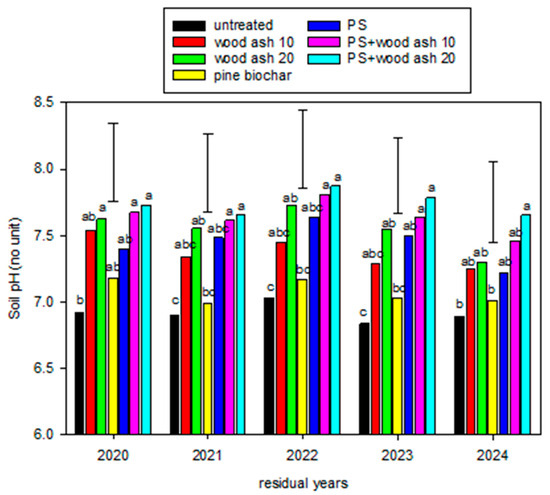
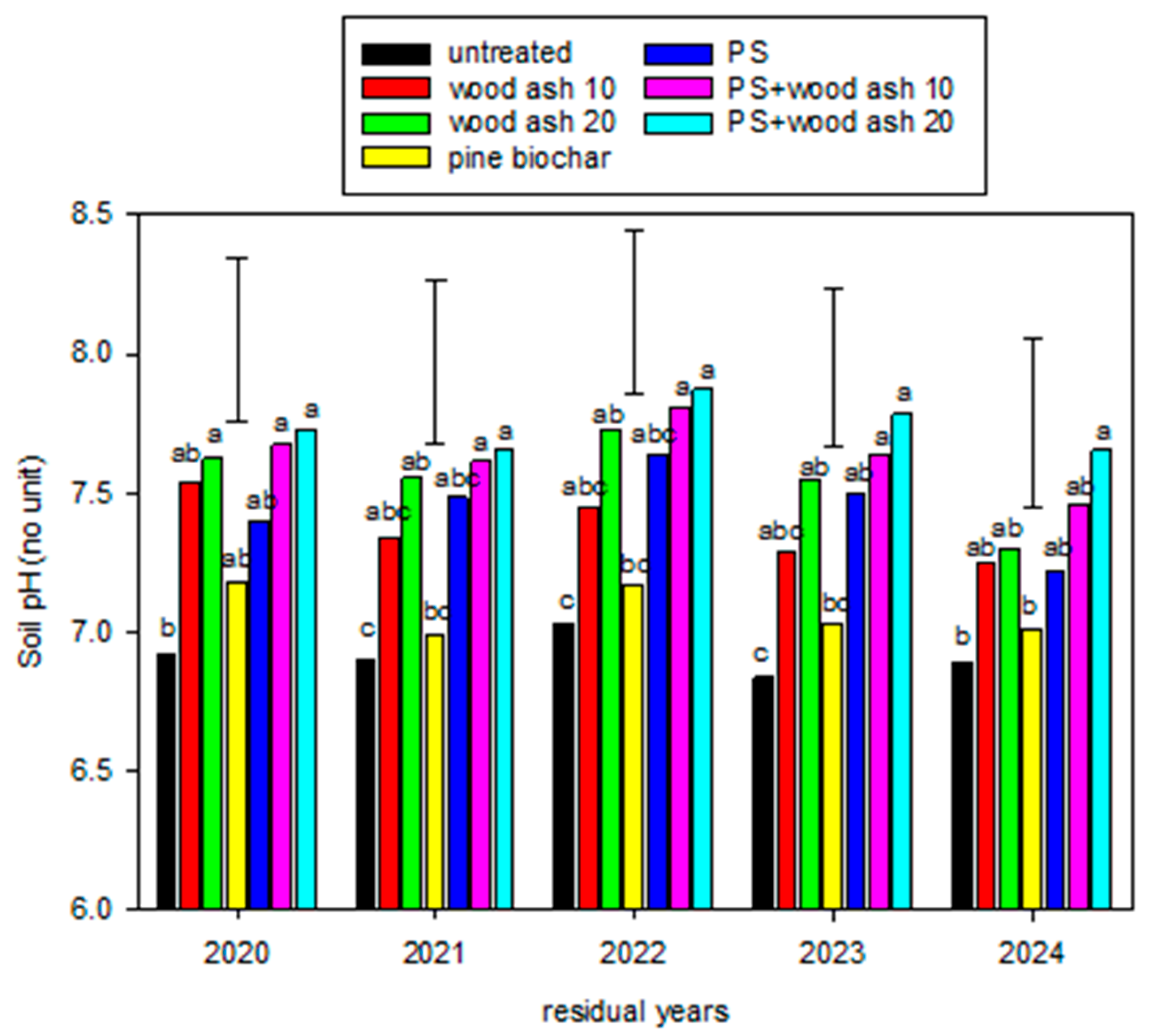
Soil pH increased the most (0.7–0.8 unit) with the combined application of wood ash at both rates with PS in the residual years (Figure 1). These treatments maintained their liming effect throughout the seven years, whereas the pH in the soils amended with wood ash alone slightly declined with time. The unique application of PS also had a significant effect on soil pH (0.6 unit) that lasted six years after its addition to cropland, which can be attributed to the material gradual decomposition [64]. For its part, the liming effect of pine biochar disappeared after three years, after a low 0.3 unit increase in the first few years [36]. Pine biochar’s low acid-neutralizing capacity, which was also reported in other studies [25,65], can be attributed to the material low ash content and alkalinity (Table 2) [66,67]. Moreover, Sorrenti et al. [33] indicated that the liming potential of wood biochar appeared limited to a few years after its application. In a controlled laboratory incubation, the pine biochar applied at a calcium carbonate equivalence–based rate to two temperate acidic soils failed to increase soil pH after 40 weeks [68].
Figure 1.
Effect of forest byproducts on soil pH at crop harvest three to seven years after amendment application (2020–2024). PS, paper mill sludge. Vertical bars represent the LSD (0.05) for mean separation at each date. Different letters within a year indicate differences at p = 0.05.
3.3. Soil Total Carbon
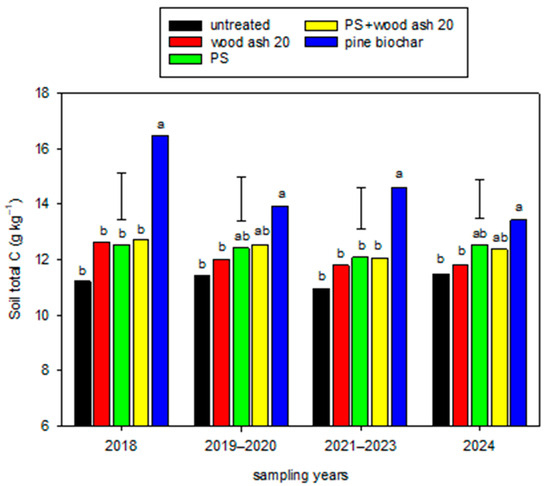
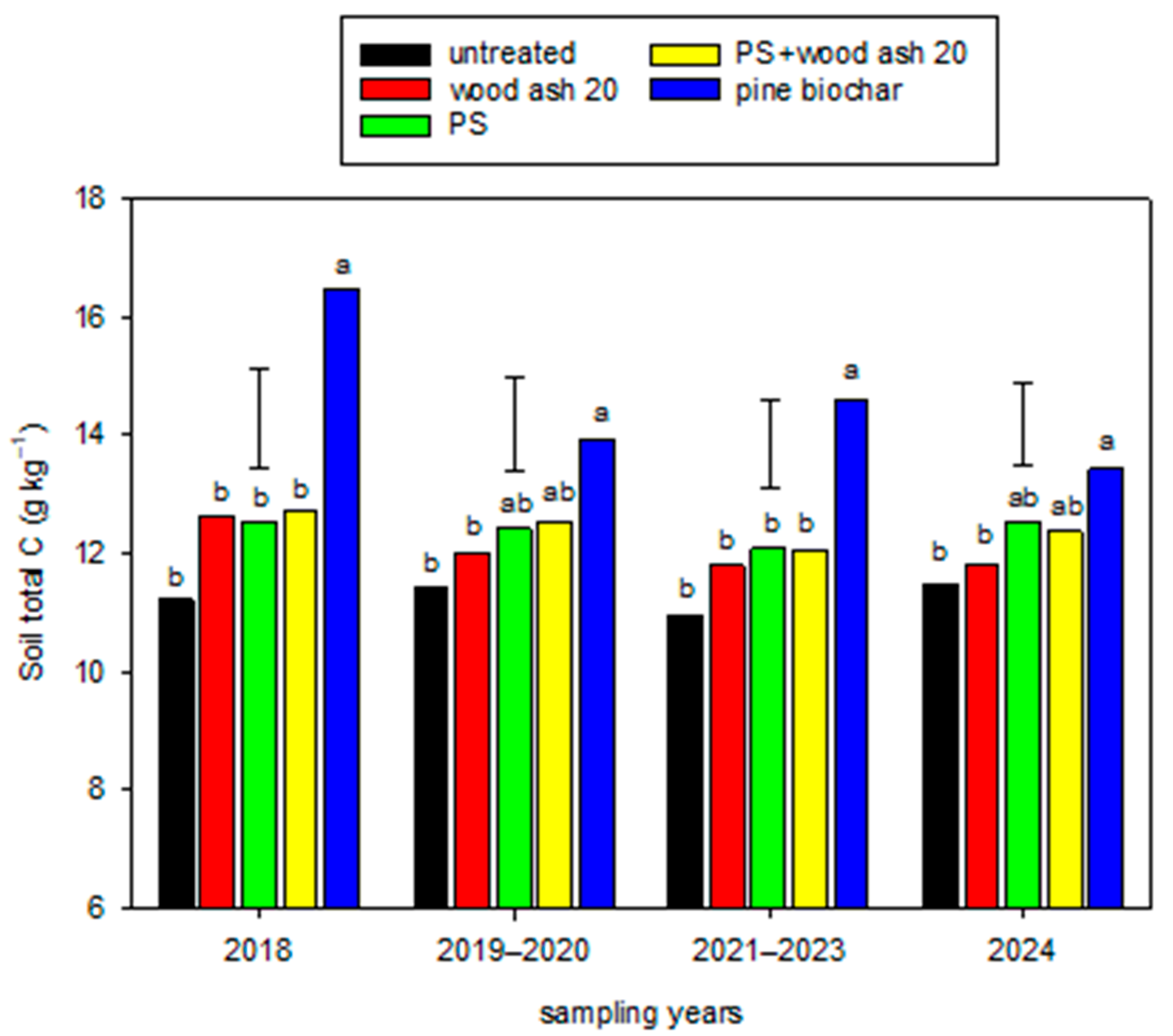
Soil total C increased throughout the study only in the pine biochar amended plots (Figure 2). Because it was formed at a high pyrolysis temperature (700 °C), pine biochar contained large amounts of total and fixed C (>764 g kg−1) with a small H/Corg ratio (0.121), indicative of high biochar stability and a high potential for C sequestration [65,66,69,70]. It was reported that among all feedstock sources, wood has the largest positive response in soil organic C and the extent of enhancement increases with pyrolysis temperature [71]. The soil total C increase in biochar-treated plots varied by year, accounting for 69% and 33% of organic C added in the year of application and the following year, respectively [36], peaking again at ~47% four to six years after application, and then declining to 25% in the last sampling. Similar to other amendments, the biochar C release usually has a decay pattern with two separate phases: an initial rapid decomposition of the labile C followed by a slower decomposition rate for the recalcitrant C [72,73,74]. The temporary increase in the middle of the study may be due to an increase in aryl and phenolic recalcitrant C and a shift in microbial communities more conducive to C sequestration [75]. In addition, loss of soil total C in time could also be explained by a downward movement of finer biochar particles facilitated by rainfall events [73].
Figure 2.
Effect of forest byproducts on soil total C content in the year of application (2018) and in the residual years (2019–2024). Residual years were grouped according to level similarity in the treatment effects. Vertical bars represent the LSD (0.05) for mean separation at each group of years. Different letters within a group of years indicate differences at p = 0.05. The amounts of organic C applied on May 2018 corresponded to 2.8 Mg ha−1 for wood ash, 1.8 Mg ha−1 for the paper mill sludge (PS), 4.6 Mg ha−1 for the combined application of PS and wood ash, and 7.6 Mg ha−1 for the pine biochar.
3.4. Soil Phosphorus
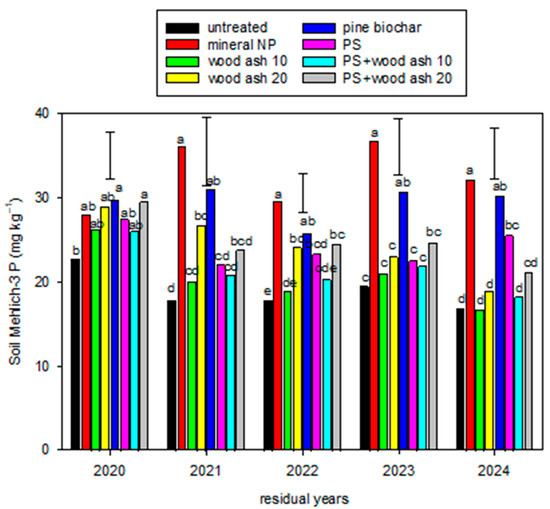
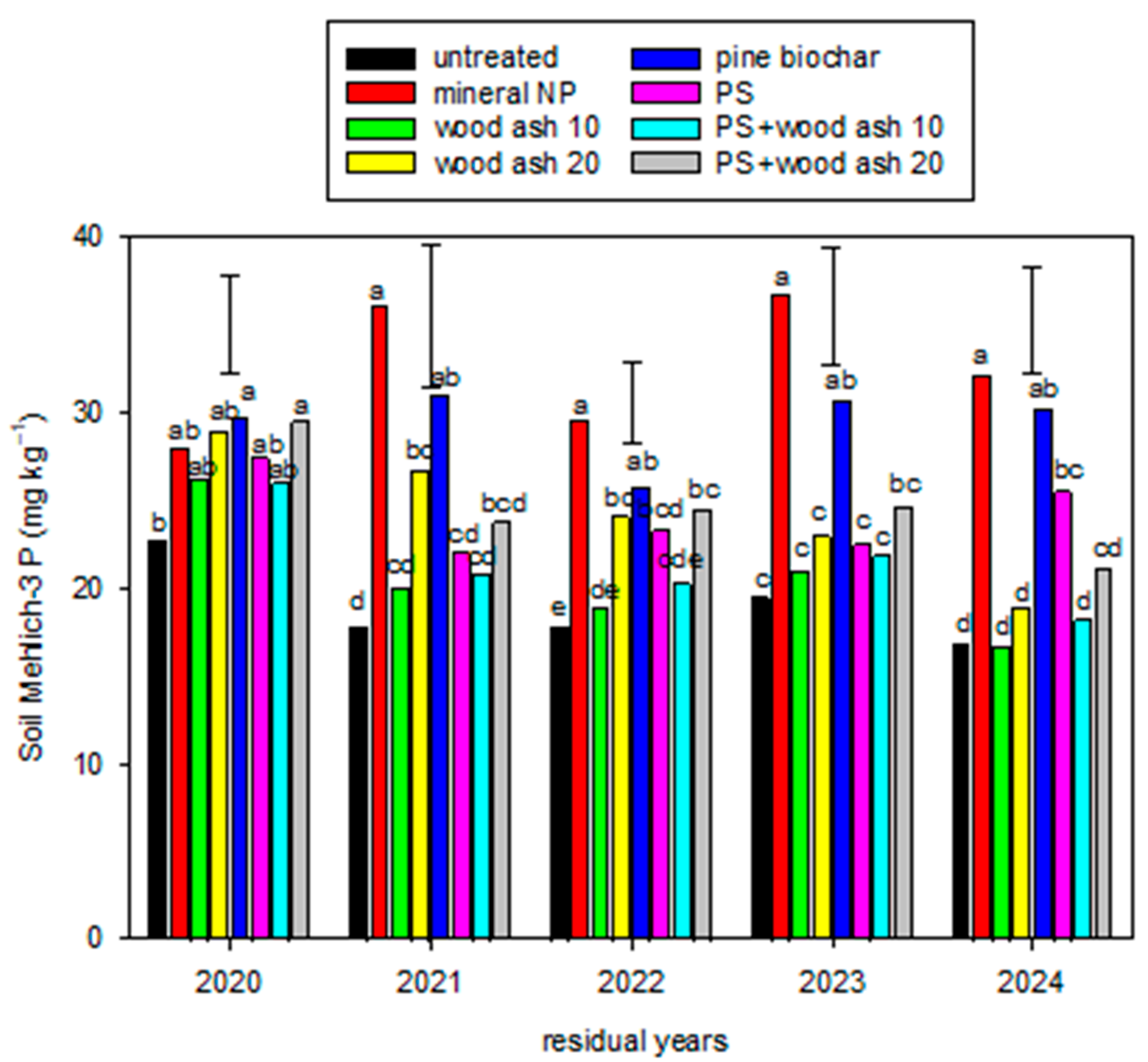
Soil Mehlich-3 P in residual years was the most increased by NP fertilizer and pine biochar treatments (Figure 3). This was expected since these treatments were the only ones (with PS in 2024) that received a full rate of fertilizer P throughout. The application of wood ash rapidly promoted an increase in soil available P due to its P content and direct supply [35]. However, after the third year, there was a large decline in P concentrations, with a reduction of 8 to 10 mg kg−1 in the last four years. The same was observed to a lesser extent with PS. This reduction in soil P when no supplemental fertilizer P was added can be partly attributed to plant P uptake, especially P exported by grain, in relation to the P initially supply by the amendments (Table 8). However, this decrease in soil Mehlich-3 P at this stage of the study had a limited agronomic impact on crop yield and P accumulation when taking into account the P budget and the net exported P in percentage of total P added by these treatments, but it could become more meaningful and detrimental to plants with additional years of cropping without external P input.
Figure 3.
Effect of forest byproducts on soil Mehlich-3 P concentrations at crop harvest three to seven years after amendment application (2020–2024). PS, combined paper mill sludge. Vertical bars represent the LSD (0.05) for mean separation at each date. Different letters within a year indicate differences at p = 0.05.
Table 8.
The effect of forest byproducts on the P and K budget for the complete 7-year study of the maize–soybean–spring wheat rotation.
3.5. Soil Cations
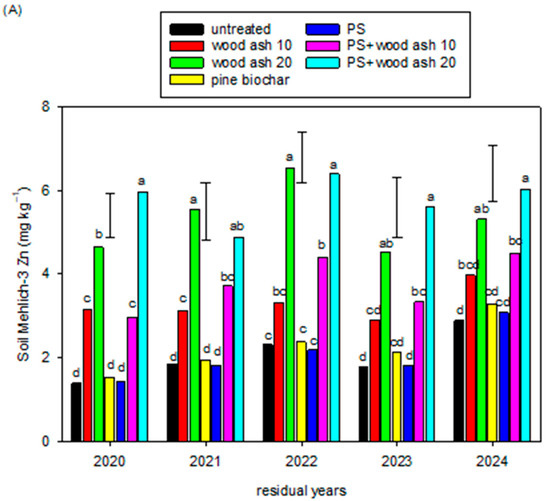
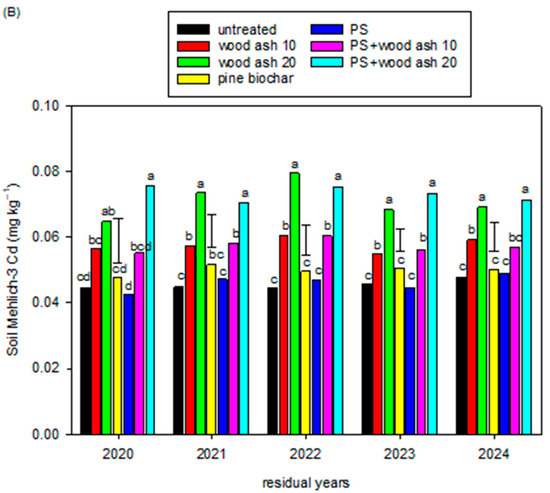
Wood ash significantly increased soil base (K, Ca, Mg) and metal (Zn, Cd) cations. This was expected due to the content of these elements in wood ash (Table 2), and this lasted several years after application. However, the effects tended to diminish over the years, especially at the 10 Mg ha−1 application rate. In addition, significant treatment × year interactions were noted for Mehlich-3 Ca, Mg, and Zn, indicating a different pattern of change over the years depending on treatments.
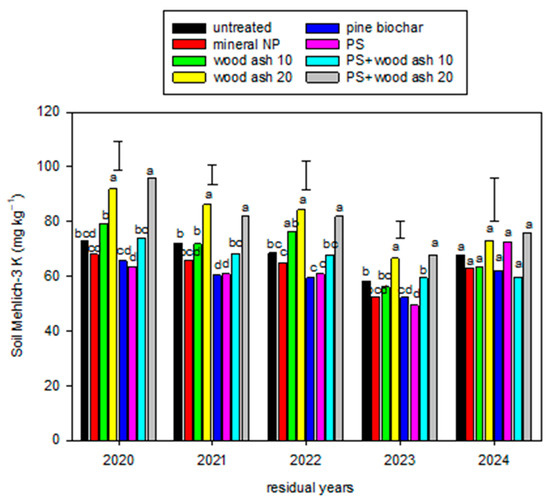
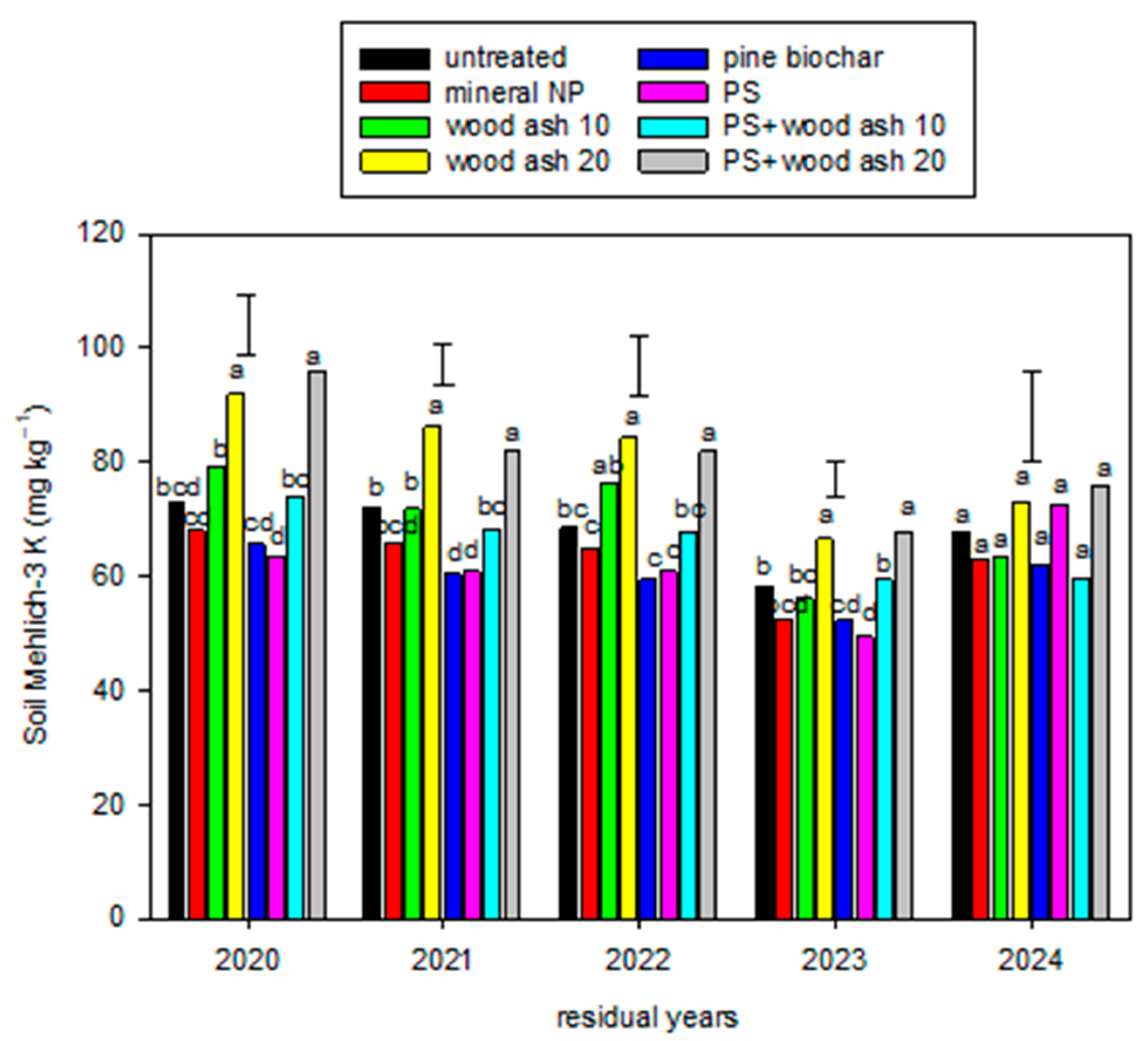
For most of the residual years, wood ash increased soil Mehlich-3 K (Figure 4). In contrast, pine biochar and PS globally lowered soil available K concentrations compared to the untreated control. This can be attributed to the lack of fertilizer K supplementation during the study due to the export of K by grains and the low material K contribution (Table 2 and Table 8) [25]. Despite the absence of a significant interaction by year, the results indicate no difference between treatments seven years after the amendment application. In fact, during the residual years (2019–2024), soil Mehlich-3 K content decreased by 26–34% in the plots receiving wood ash, alone or in combination with PS, whereas the decrease was 7% on average in the other plots [36], suggesting soil leaching [76].
Figure 4.
Effect of forest byproducts on soil Mehlich-3 K concentrations at crop harvest 3 to 7 years after amendment application (2020–2024). PS, combined paper mill sludge. Vertical bars represent the LSD (0.05) for mean separation at each date. Different letters within a year indicate differences at p = 0.05.
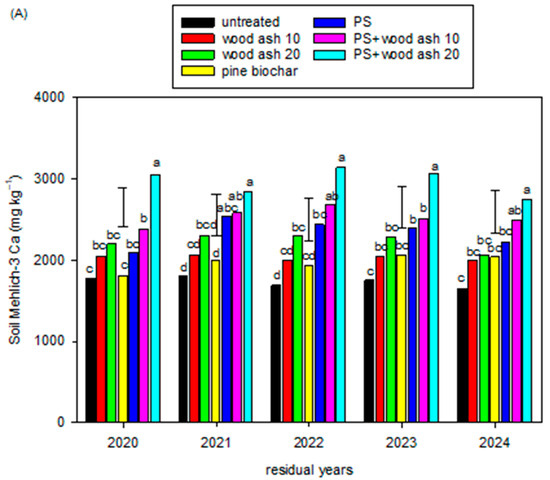
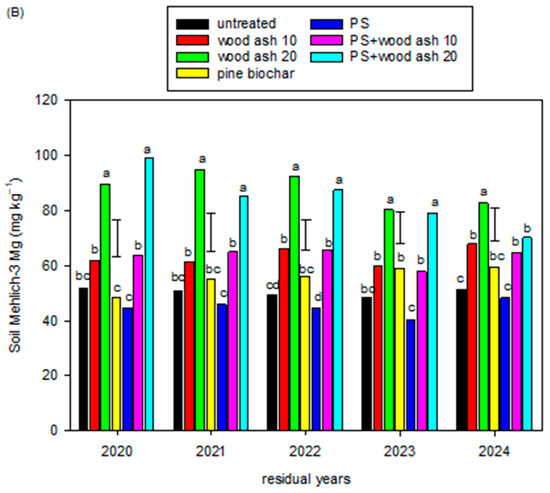
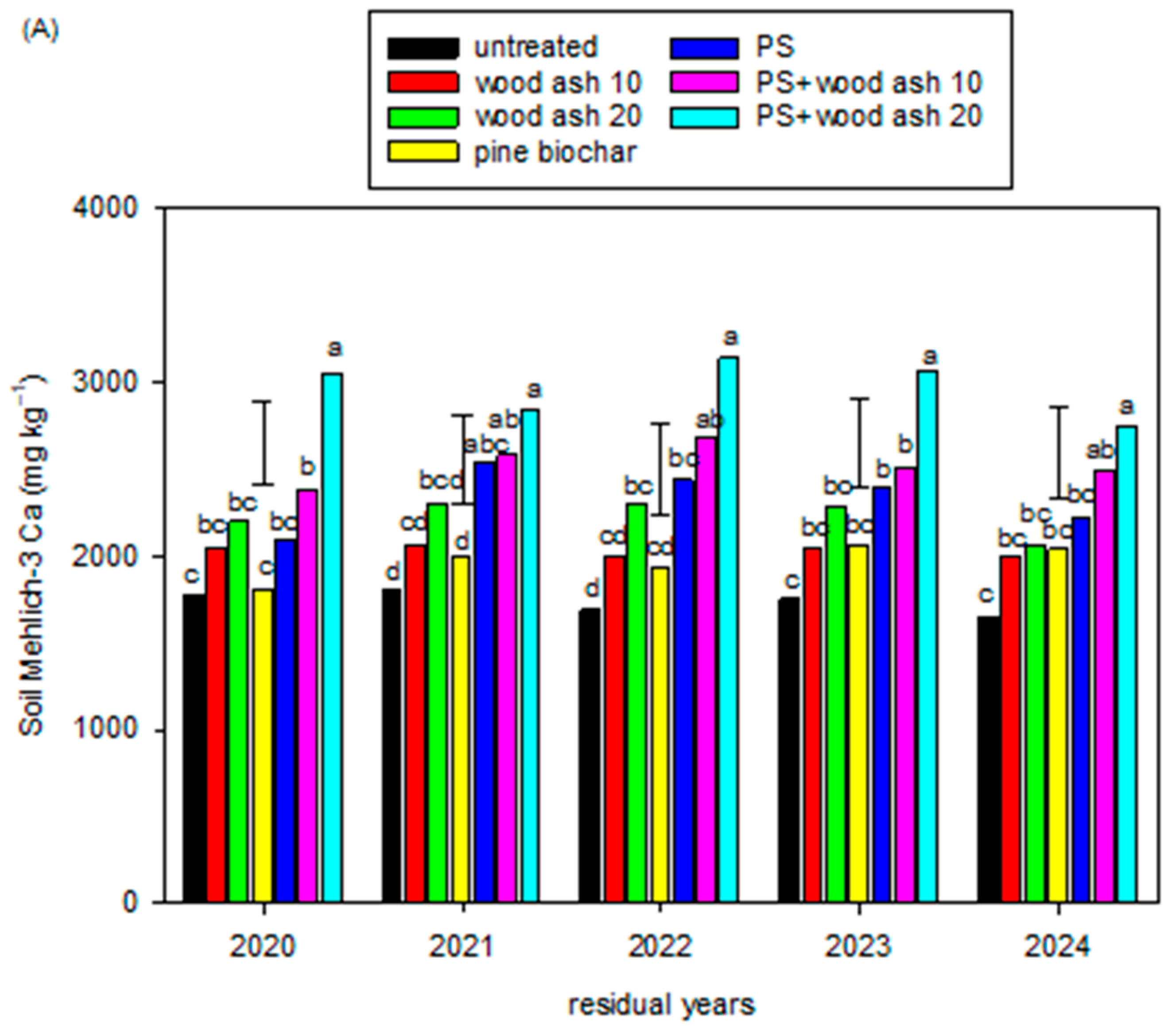
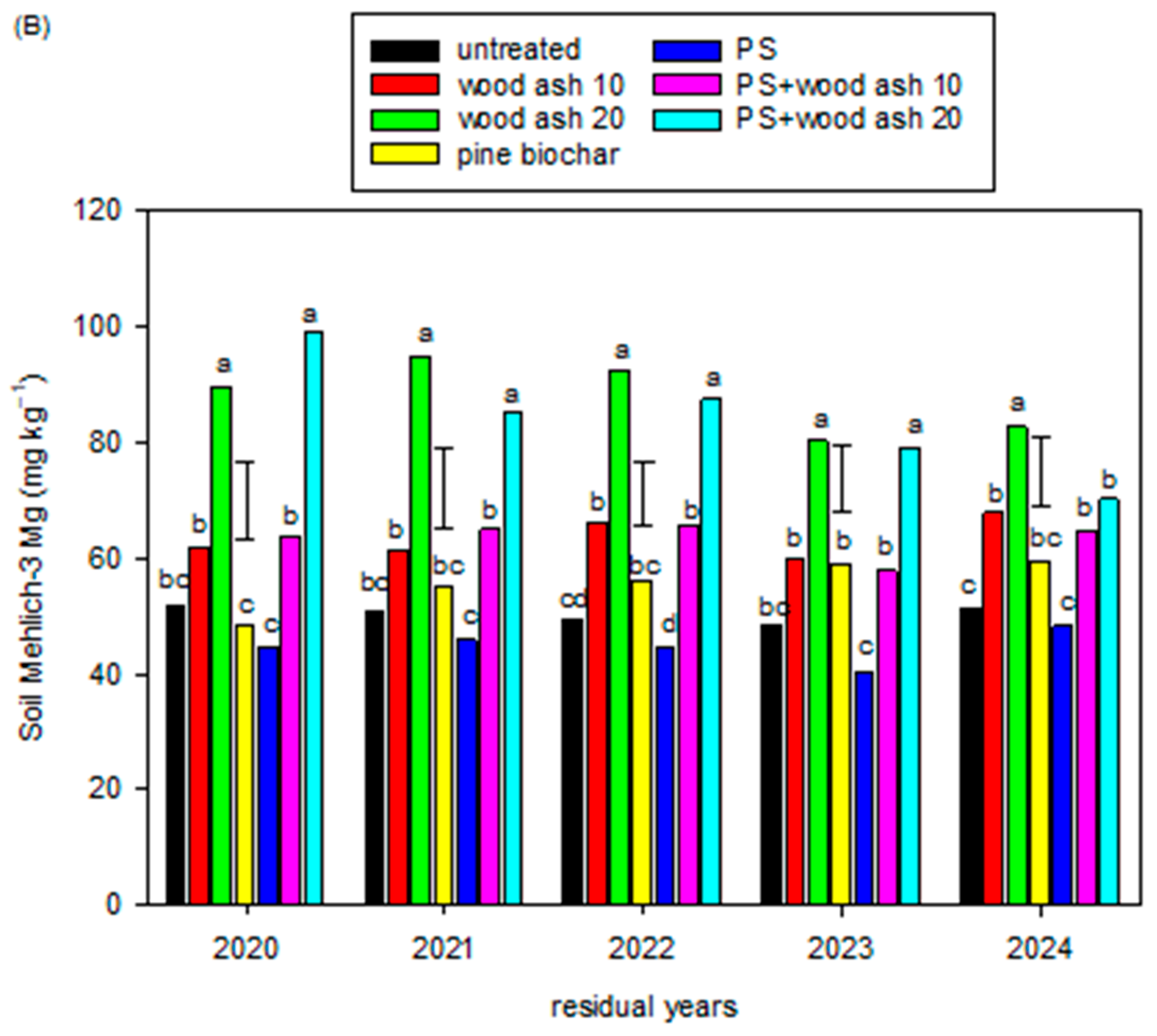
Paper mill sludge increased soil Mehlich-3 Ca three to six years after application (2021–2023), while combined PS and wood ash had a synergetic effect for the entire duration of the study (Figure 5A). For that period, the available Ca concentrations in soil were closely related to soil pH each year (0.84 ≤ r2 ≤ 0.93). Wood ash increased soil Mehlich-3 Mg in all residual years, regardless of whether it was applied alone or with PS (Figure 5B). Longer soil persistence of available Ca and Mg relative to K following a single wood ash application has been already reported elsewhere [16,22].
Figure 5.
Effect of forest byproducts on soil (A) Mehlich-3 Ca and (B) Mehlich-3 Mg concentrations at crop harvest three to seven years after amendment application (2020–2024). PS, combined paper mill sludge. Vertical bars represent the LSD (0.05) for mean separation at each date. Different letters within a year indicate differences at p = 0.05.
Another important aspect of the long-term effect of wood ash and biochar application in soil is the accumulation of metal and its transfer to the crop. Cadmium can persist for a long time in soil due to its minimal microbial or chemical loss [77]. Owing to combustion and pyrolysis, this concentrates elements in the materials due to mass loss [78,79,80]. In this study, wood ash had a high total Zn content (Table 2), not exceeding the regulatory maximum for unrestricted application (700 mg kg−1), but the total Cd content exceeded the 3.0 mg kg−1 threshold, which could limit its application in cropland [18]. A previous study indicated that wood ash increased soil Mehlich-3 Zn and Cd in the first two years after its application, with no accumulation detected in maize and soybean grains [36]. Therefore, no attempt was made to evaluate metal concentrations in crop grains in the present study. Nevertheless, the effects on soil Mehlich-3 persisted over the seven years but to a slightly lesser extent (Figure 6A,B). Johansen et al. [58] reported that despite their wood ash having a rather high Zn and Cd content (924 and 16.3 mg kg−1, respectively), it did not result in significant increases in plant uptake of Zn and Cd when applied at a rate < 11 Mg ha−1. Yuan et al. [81] concluded that soil pH is the most important factor influencing changes in metal bioavailability in biochar-amended soils, followed by soil texture and aging time.
Figure 6.
Effect of forest byproducts on soil (A) Mehlich-3 Zn and (B) Mehlich-3 Cd concentrations at crop harvest three to seven years after amendment application (2020–2024). PS, combined paper mill sludge. Vertical bars represent the LSD (0.05) for mean separation at each date. Different letters within a year indicate differences at p = 0.05.
4. Conclusions
The objective of this study was to determine the annual residual effects of a single application of selected forest byproducts (wood biochar, pine biochar, paper mill sludge) on yield and the physico-chemical properties of soil in a maize–soybean–spring wheat rotation three to seven years after their incorporation into a temperate neutral loamy soil. As determined by the NNI and PNI values, all treatments (except the control) provided adequate nutrition to these crops, including, if necessary, additional N-P-K mineral fertilizers.
The results of this study reveal that maize, soybean, and spring wheat yields were little affected by the different amendments during the residual years. Only wood ash increased the grain yield of spring wheat three years after its application on the same plots that produced an increase in soybean yield the preceding year. For their part, previous applications of pine biochar and PS alone did not produce any significant effects on yield for the whole residual period.
Wood ash improved soil properties, but with a smaller magnitude after its initial benefits. The significant effects lasted for the entire seven years for Mehlich-3 Ca, Mg, Zn, and Cd, but ended after five years for Mehlich-3 P and six years for Mehlich-3 K. The liming effect of wood ash still appeared in residual years, but only the combination with PS increased soil pH compared to the control at seven years after their application. The addition of pine biochar to this loamy soil had a long-lasting effect on soil total C, with an increase relative to the control close to 50% in organic C added in years 4–6 that decreased to 25% at year 7.
In this study, considering the response of crops and soil for the year of application and residual years, wood ash represents the most promising avenue for using forest byproducts from agronomic, environmental, and economic perspectives. In a single application not exceeding 20 Mg dry ha−1, which complies with provincial limits for industrial and municipal residuals (the threshold for the concentration of metals in the residues and the amount of residues applied over a given period) [82], wood ash benefited crops over a long period while reducing costs for P and K fertilization and liming. It would be an excellent option for producers. Conversely, producing biochar from low-value pine residues, such as those found after a beetle infestation, is an environmentally friendly approach. Unfortunately, this study did not provide evidence of the beneficial effects of material aging on crop yields and soil properties, except for the sequestration of carbon in the soil during the study. It appears that the pine biochar tested was very stable over time and highly recalcitrant to degradation following contact with the soil and exposure to environmental conditions. Finally, applying PS just once at a realistic agronomic rate (10–15 Mg dry ha−1) had limited effects on yield and soil properties. Therefore, PS should have been reapplied to the same plots a few times during the study to achieve further and more lasting improvements in soil properties and nutrient availability.
Author Contributions
Conceptualization and design of the experiment: N.Z.; methodology, data acquisition, and validation: B.G.; writing—original draft preparation: B.G.; writing—review and editing: N.Z.; funding acquisition: N.Z. All authors have read and agreed to the published version of the manuscript.
Funding
This work was supported by the Agriculture and Agri-Food Canada A-base program.
Data Availability Statement
The data are available upon request.
Acknowledgments
The authors thank Sylvie Côté, Gabriel Lévesque, and Annie Robichaud for their technical assistance with the laboratory analysis, and Maxime Boucher and the staff of the St-Augustin farm for their help with the field operations.
Conflicts of Interest
The authors declare no conflicts of interest.
References
- Hannam, K.D.; Venier, L.; Allen, D.; Deschamps, C.; Hope, E.; Jull, M.; Kwiaton, M.; McKenney, D.; Rutherford, P.M.; Hazlett, P.W. Wood ash as a soil amendment in Canadian forests: What are the barriers to utilization? Can. J. For. Res. 2018, 48, 442–450. [Google Scholar] [CrossRef] [Scilit]
- Silva, F.C.; Cruz, N.C.; Tarelho, L.A.C.; Rodrigues, S.M. Use of biomass ash-based materials as soil fertilisers: Critical review of the existing regulatory framework. J. Clean. Prod. 2019, 214, 112–124. [Google Scholar] [CrossRef] [Scilit]
- Turner, T.; Wheeler, R.; Oliver, I.W. Evaluating land application of pulp and paper mill sludge: A review. J. Environ. Manag. 2022, 317, 115439. [Google Scholar] [CrossRef] [Scilit]
- Faubert, P.; Barnabé, S.; Bouchard, S.; Côté, R.; Villeneuve, C. Pulp and paper mill sludge management practices: What are the challenges to assess the impacts on greenhouse gas emissions? Resour. Conserv. Recycl. 2016, 108, 107–133. [Google Scholar] [CrossRef] [Scilit]
- Vance, E.D. Land application of wood-fired and combination boiler ashes: An overview. J. Environ. Qual. 1996, 25, 937–944. [Google Scholar] [CrossRef] [Scilit]
- Elliott, A.; Mahmood, T. Generation and Management of Solid Residues by Canadian Pulp and Paper Mills in 2013; Confidential Report Prepared for FPInnovations; Pointe-Claire, QC, Canada, 2015. [Google Scholar]
- Ghosh, D.; Page-Dumroese, D.; Han, H.-S.; Anderson, N. Role of biochar made from low-value woody forest residues in ecological sustainability and carbon neutrality. Soil Sci. Soc. Am. J. 2025, 89, e20793. [Google Scholar] [CrossRef] [Scilit]
- Oni, B.A.; Oziegbe, O.; Olawole, O.O. Significance of biochar application to the environment and economy. Ann. Agric. Sci. 2019, 64, 222–236. [Google Scholar] [CrossRef] [Scilit]
- Sessions, J.; Smith, D.; Trippe, K.M.; Fried, J.S.; Bailey, J.D.; Petitmermet, J.H.; Hollamon, W.; Phillips, C.L.; Campbell, J.D. Can biochar link forest restoration with commercial agriculture? Biomass Bioenergy 2019, 123, 175–185. [Google Scholar] [CrossRef] [Scilit]
- Elliott, A.; Mahmood, T.; Kamal, A. Boiler ash utilization in the Canadian pulp and paper industry. J. Environ. Manag. 2022, 319, 115728. [Google Scholar] [CrossRef] [Scilit]
- Monte, M.C.; Fuente, E.; Blanco, A.; Negro, C. Waste management from pulp and paper production in the European Union. Waste Manag. 2009, 29, 293–308. [Google Scholar] [CrossRef] [Scilit] [PubMed]
- Pervaiz, M.; Sain, M. Recycling of paper mill biosolids: A review on current practices and emerging biorefinery initiatives. Clean Soil Air Water 2015, 43, 919–926. [Google Scholar]
- N’Dayegamiye, A. Soil properties and crop yields in response to mixed paper mill sludges, dairy cattle manure, and inorganic fertilizer application. Agron. J. 2009, 101, 826–835. [Google Scholar] [CrossRef] [Scilit]
- Vagstad, N.; Broch-Due, A.; Lyngstad, I. Direct and residual effects of pulp and paper mill sludge on crop yield and soil mineral N. Soil Use Manag. 2001, 17, 173–178. [Google Scholar]
- Gagnon, B.; Ziadi, N. Residual effects of papermill biosolids and forest-derived alkaline materials on crop yield and plant metal accumulation. Can. J. Soil Sci. 2021, 101, 248–260. [Google Scholar] [CrossRef] [Scilit]
- Gagnon, B.; Ziadi, N. Paper mill biosolids and forest-derived liming materials applied on cropland: Residual effects on soil properties and metal availability. Soil Syst. 2023, 7, 40. [Google Scholar] [CrossRef] [Scilit]
- Curnoe, W.E.; Irving, D.C.; Dow, C.B.; Velema, G.; Unc, A. Effect of spring application of a paper mill soil conditioner on corn yield. Agron. J. 2006, 98, 423–429. [Google Scholar] [CrossRef] [Scilit]
- Camberato, J.J.; Gagnon, B.; Angers, D.A.; Chantigny, M.H.; Pan, W.L. Pulp and paper mill by-products as soil amendments and plant nutrient sources. Can. J. Soil Sci. 2006, 86, 641–653, Erratum in Can. J. Soil Sci. 2007, 87, 118. [Google Scholar] [CrossRef] [Scilit]
- Lévesque, V.; Oelbermann, M.; Ziadi, N. Biochar in temperate soils: Opportunities and challenges. Can. J. Soil Sci. 2022, 102, 1–26. [Google Scholar] [CrossRef] [Scilit]
- Arshad, M.A.; Soon, Y.K.; Azooz, R.H.; Lupwayi, N.Z.; Chang, S.X. Soil and crop response to wood ash and lime application in acidic soils. Agron. J. 2012, 104, 715–721. [Google Scholar] [CrossRef] [Scilit]
- Patterson, S.J.; Acharya, S.N.; Thomas, J.E.; Bertschi, A.B.; Rothwell, R.L. Barley biomass and grain yield and canola seed yield response to land application of wood ash. Agron. J. 2004, 96, 971–977. [Google Scholar] [CrossRef] [Scilit]
- Ferreiro, A.; Merino, A.; Díaz, N.; Piñeiro, J. Improving the effectiveness of wood-ash fertilization in mixed mountain pastures. Grass Forage Sci. 2011, 66, 337–350. [Google Scholar] [CrossRef] [Scilit]
- Jiang, Y.; Li, T.; Xu, X.; Sun, J.; Pan, G.; Cheng, K. A global assessment of the long-term effects of biochar application on crop yield. Curr. Res. Environ. Sustain. 2024, 7, 100247. [Google Scholar] [CrossRef] [Scilit]
- Backer, R.G.M.; Schwinghamer, T.D.; Whalen, J.K.; Seguin, P.; Smith, D.L. Crop yield and SOC responses to biochar application were dependent on soil texture and crop type in southern Quebec, Canada. J. Plant Nutr. Soil Sci. 2016, 179, 399–408. [Google Scholar] [CrossRef] [Scilit]
- Abagandura, G.O.; Bansal, S.; Karsteter, A.; Kumar, S. Soil greenhouse gas emissions, organic carbon and crop yield following pinewood biochar and biochar–manure applications at eroded and depositional landscape positions: A field trial in South Dakota, USA. Soil Use Manag. 2022, 38, 487–502. [Google Scholar] [CrossRef] [Scilit]
- Quilliam, R.S.; Marsden, K.A.; Gertler, C.; Rousk, J.; DeLuca, T.H.; Jones, D.L. Nutrient dynamics, microbial growth and weed emergence in biochar amended soil are influenced by time since application and reapplication rate. Agric. Ecosyst. Environ. 2012, 158, 192–199. [Google Scholar] [CrossRef] [Scilit]
- Enders, A.; Hanley, K.; Whitman, T.; Joseph, S.; Lehmann, J. Characterization of biochars to evaluate recalcitrance and agronomic performance. Bioresour. Technol. 2012, 114, 644–653. [Google Scholar] [CrossRef] [Scilit]
- Mia, S.; Dijkstra, F.A.; Singh, B. Long-term aging of biochar: A molecular understanding with agricultural and environmental implications. Adv. Agron. 2017, 141, 1–51. [Google Scholar]
- Wang, L.; O’Connor, D.; Rinklebe, J.; Ok, Y.S.; Tsang, D.C.W.; Shen, Z.; Hou, D. Biochar aging: Mechanisms, physicochemical changes, assessment, and implications for field applications. Environ. Sci.Technol. 2020, 54, 14797–14814. [Google Scholar] [CrossRef] [Scilit]
- de la Rosa, J.M.; Rosado, M.; Paneque, M.; Miller, A.Z.; Knicker, H. Effects of aging under field conditions on biochar structure and composition: Implications for biochar stability in soils. Sci. Total Environ. 2018, 613–614, 969–976. [Google Scholar] [CrossRef] [Scilit]
- Dong, X.; Li, G.; Lin, Q.; Zhao, X. Quantity and quality changes of biochar aged for 5 years in soil under field conditions. Catena 2017, 159, 136–143. [Google Scholar] [CrossRef] [Scilit]
- Heitkötter, J.; Marschner, B. Interactive effects of biochar ageing in soils related to feedstock, pyrolysis temperature, and historic charcoal production. Geoderma 2015, 245–246, 56–64. [Google Scholar] [CrossRef] [Scilit]
- Sorrenti, G.; Masiello, C.A.; Dugan, B.; Toselli, M. Biochar physico-chemical properties as affected by environmental exposure. Sci. Total Environ. 2016, 563–564, 237–246. [Google Scholar] [PubMed]
- Nguyen, B.T.; Lehmann, J.; Hockaday, W.C.; Joseph, S.; Masiello, C.A. Temperature sensitivity of black carbon decomposition and oxidation. Environ. Sci. Technol. 2010, 44, 3324–3331. [Google Scholar] [CrossRef] [Scilit]
- Gagnon, B.; Ziadi, N.; Manirakiza, E. Co-application of wood biochar and paper mill biosolids affects yield and short-term nitrogen and phosphorus availability in temperate loamy soils. Can. J. Soil Sci. 2022, 102, 131–146. [Google Scholar] [CrossRef] [Scilit]
- Manirakiza, E.; Gagnon, B.; Ziadi, N. Soil and plant cations as affected by application of wood ash, biochar, and papermill biosolids. Agron. J. 2025, 117, e21714. [Google Scholar]
- Chaplot, V.; Baveye, P.; Guénon, R.; Le Guyader, E.; Minasny, B.; Srivastava, A.K. Biochars improve agricultural production: The evidence base is limited. Pedosphere 2025, 35, 295–298. [Google Scholar]
- Singh, H.; Northup, B.K.; Rice, C.W.; Prasad, P.V.V. Biochar applications influence soil physical and chemical properties, microbial diversity, and crop productivity: A meta-analysis. Biochar 2022, 4, 8. [Google Scholar] [CrossRef] [Scilit]
- CRAAQ. Guide de Référence en Fertilisation, 2nd ed.; Centre de Référence en Agriculture et Agroalimentaire du Québec: Québec, QC, Canada, 2013; pp. 1–473. [Google Scholar]
- CRAAQ. Chapitre 10: Les engrais de ferme et les matières résiduelles fertilisantes organiques. In Guide de Référence en Fertilisation, 2nd ed.; Actualisée; Centre de Référence en Agriculture et Agroalimentaire du Québec: Québec, QC, Canada, 2013; pp. 289–340. [Google Scholar]
- Ippolito, J.A.; Cui, L.; Kammann, C.; Wrage-Mönnig, N.; Estavillo, J.M.; Fuertes-Mendizabal, T.; Cayuela, M.L.; Sigua, G.; Novak, J.; Spokas, K.; et al. Feedstock choice, pyrolysis temperature and type influence biochar characteristics: A comprehensive meta-data analysis review. Biochar 2020, 2, 421–438. [Google Scholar] [CrossRef]
- Joseph, C.-A.; Khiari, L.; Gallichand, J.; Bouslama, S. Classification and assessment models of first year byproducts nitrogen plant-availability from literature data. Sci. Total Environ. 2017, 586, 976–984. [Google Scholar] [CrossRef] [Scilit]
- Gao, S.; DeLuca, T.H. Biochar alters nitrogen and phosphorus dynamics in a western rangeland ecosystem. Soil Biol. Biochem. 2020, 148, 107868. [Google Scholar] [CrossRef] [Scilit]
- OMAFRA. Agronomy Guide for Field Crops; Pub. 811; Ontario Ministry of Agriculture, Food and Rural Affairs: Toronto, ON, Canada, 2022; pp. 1–450.
- Isaac, R.A.; Johnson, W.C. Determination of total nitrogen in plant tissue, using a block digestor. J. Assoc. Off. Anal. Chem. 1976, 59, 98–100. [Google Scholar] [CrossRef] [Scilit]
- Jégo, G.; Sansoulet, J.; Pattey, E.; Beaudoin, N.; Bélanger, G.; Ziadi, N.; Tremblay, N.; Grant, C.; Tremblay, G.; O’Donovan, J.; et al. Determination of nitrogen dilution curves of corn, canola, and spring wheat in Canada using classical and Bayesian approaches. Eur. J. Agron. 2022, 135, 126481. [Google Scholar] [CrossRef] [Scilit]
- Divito, G.A.; Echeverría, H.E.; Andrade, F.H.; Sadras, V.O. Soybean shows an attenuated nitrogen dilution curve irrespective of maturity group and sowing date. Field Crops Res. 2016, 186, 1–9. [Google Scholar]
- Gagnon, B.; Ziadi, N.; Bélanger, G.; Parent, G. Validation and use of critical phosphorus concentration in maize. Eur. J. Agron. 2020, 120, 126147. [Google Scholar] [CrossRef] [Scilit]
- Ziadi, N.; Bélanger, G.; Cambouris, A.N.; Tremblay, N.; Nolin, M.C.; Claessens, A. Relationship between phosphorus and nitrogen concentrations in spring wheat. Agron. J. 2008, 100, 80–86. [Google Scholar] [CrossRef] [Scilit]
- Sadras, V.O.; Lemaire, G. Quantifying crop nitrogen status for comparisons of agronomic practices and genotypes. Field Crops Res. 2014, 164, 54–64. [Google Scholar]
- Stammer, A.J.; Mallarino, A.P. Plant tissue analysis to assess phosphorus and potassium nutritional status of corn and soybean. Soil Sci. Soc. Am. J. 2018, 82, 260–270. [Google Scholar] [CrossRef] [Scilit]
- Maynard, D.G.; Kalra, Y.P.; Crumbaugh, J.A. Nitrate and exchangeable ammonium nitrogen. In Soil Sampling and Methods of Analysis, 2nd ed.; Carter, M.R., Gregorich, E.G., Eds.; CRC Press: Boca Raton, FL, USA, 2008; pp. 71–80. [Google Scholar]
- Mehlich, A. Mehlich-3 soil test extractant: A modification of Mehlich-2 extractant. Commun. Soil Sci. Plant Anal. 1984, 15, 1409–1416. [Google Scholar] [CrossRef] [Scilit]
- Murphy, J.; Riley, J.P. A modified single solution method for the determination of phosphate in natural waters. Anal. Chim. Acta 1962, 27, 31–36. [Google Scholar] [CrossRef] [Scilit]
- La Financière Agricole du Québec. Assurance Récolte-Rendements de Référence; La Financière Agricole du Québec: Lévis, QC, Canada, 2024. [Google Scholar]
- Haider, G.; Steffens, D.; Moser, G.; Müller, C.; Kammann, C.I. Biochar reduced nitrate leaching and improved soil moisture content without yield improvements in a four-year field study. Agric. Ecosyst. Environ. 2017, 237, 80–94. [Google Scholar] [CrossRef] [Scilit]
- Tammeorg, P.; Simojoki, A.; Mäkelä, P.; Stoddard, F.L.; Alakukku, L.; Helenius, J. Biochar application to a fertile sandy clay loam in boreal conditions: Effects on soil properties and yield formation of wheat, turnip rape and faba bean. Plant Soil 2014, 374, 89–107. [Google Scholar]
- Johansen, J.L.; Nielsen, M.L.; Vestergård, M.; Mortensen, L.H.; Cruz-Paredes, C.; Rønn, R.; Kjøller, R.; Hovmand, M.; Christensen, S.; Ekelund, F. The complexity of wood ash fertilization disentangled: Effects on soil pH, nutrient status, plant growth and cadmium accumulation. Environ. Exp. Bot. 2021, 185, 104424. [Google Scholar] [CrossRef] [Scilit]
- Lemaire, G.; Tang, L.; Bélanger, G.; Zhu, Y.; Jeuffroy, M.-H. Forward new paradigms for crop mineral nutrition and fertilization towards sustainable agriculture. Eur. J. Agron. 2021, 125, 126248. [Google Scholar] [CrossRef] [Scilit]
- Gastal, F.; Lemaire, G.; Durand, J.-L.; Louarn, G. Quantifying crop responses to nitrogen and avenues to improve nitrogen-use efficiency. In Crop Physiology: Applications for Genetic Improvement and Agronomy, 2nd ed.; Sadras, V.O., Calderini, D.F., Eds.; Academic Press: London, UK, 2015; pp. 161–206. [Google Scholar]
- Walsh, O.S.; Marshall, J.; Nambi, E.; Shafian, S.; Jayawardena, D.; Jackson, C.; Lamichhane, R.; Owusu Ansah, E.; McClintick-Chess, J. Spring wheat yield and grain quality response to nitrogen rate. Agron. J. 2022, 114, 2562–2572. [Google Scholar] [CrossRef] [Scilit]
- Salvagiotti, F.; Cassman, K.G.; Specht, J.E.; Walters, D.T.; Weiss, A.; Dobermann, A. Nitrogen uptake, fixation and response to fertilizer N in soybeans: A review. Field Crops Res. 2008, 108, 1–13. [Google Scholar]
- Lemaire, G.; Sinclair, T.; Sadras, V.; Bélanger, G. Allometric approach to crop nutrition and implications for crop diagnosis and phenotyping: A review. Agron. Sustain. Dev. 2019, 39, 27. [Google Scholar] [PubMed]
- Khiari, L.; Karam, A.; Parent, L.E.; Gagné, G. Determination of effective calcium carbonate equivalence of primary de-inking paper sludges. In Proceedings of the Third Symposium on Agricultural and Agroindustrial Waste Management, Sao Pedro, SP, Brazil, 12–14 March 2013. [Google Scholar]
- Gonzaga, M.I.S.; Mackowiak, C.; de Almeida, A.Q.; de Carvahlo, J.I., Jr.; Andrade, K.R. Positive and negative effects of biochar from coconut husks, orange bagasse and pine wood chips on maize (Zea mays L.) growth and nutrition. Catena 2018, 162, 414–420. [Google Scholar] [CrossRef] [Scilit]
- Domingues, R.R.; Trugilho, P.F.; Silva, C.A.; de Melo, I.C.N.A.; Melo, L.C.A.; Magriotis, Z.M.; Sánchez-Monedero, M.A. Properties of biochar derived from wood and high-nutrient biomasses with the aim of agronomic and environmental benefits. PLoS ONE 2017, 12, e0176884. [Google Scholar]
- Yuan, J.H.; Xu, R.K. The amelioration effects of low temperature biochar generated from nine crop residues on an acidic Ultisol. Soil Use Manag. 2011, 27, 110–115. [Google Scholar] [CrossRef] [Scilit]
- Gagnon, B.; Ziadi, N. Forest-derived liming by-products: Potential benefits to remediate soil acidity and increase soil fertility. Agron. J. 2020, 112, 4788–4798. [Google Scholar]
- Li, L.; Long, A.; Fossum, B.; Kaiser, M. Effects of pyrolysis temperature and feedstock type on biochar characteristics pertinent to soil carbon and soil health: A meta-analyis. Soil Use Manag. 2023, 39, 43–52. [Google Scholar]
- Wei, S.; Zhu, M.; Fan, X.; Song, J.; Peng, P.; Li, K.; Jia, W.; Song, H. Influence of pyrolysis temperature and feedstock on carbon fractions of biochar produced from pyrolysis of rice straw, pine wood, pig manure and sewage sludge. Chemosphere 2019, 218, 624–631. [Google Scholar] [CrossRef] [Scilit] [PubMed]
- Liu, S.; Zhang, Y.; Zong, Y.; Hu, Z.; Wu, S.; Zhou, J.; Jin, Y.; Zou, J. Response of soil carbon dioxide fluxes, soil organic carbon and microbial biomass carbon to biochar amendment: A meta-analysis. Glob. Change Biol. Bioenergy 2016, 8, 392–406. [Google Scholar] [CrossRef] [Scilit]
- Singh, B.P.; Cowie, A.L. Long-term influence of biochar on native organic carbon mineralisation in a low-carbon clayey soil. Sci. Rep. 2014, 4, 3687. [Google Scholar] [CrossRef] [Scilit]
- Singh, B.P.; Fang, Y.; Boersma, M.; Collins, D.; Van Zwieten, L.; Macdonald, L.M. In situ persistence and migration of biochar carbon and its impact on native carbon emission in contrasting soils under managed temperate pastures. PLoS ONE 2015, 10, e0141560. [Google Scholar]
- Wang, J.; Xiong, Z.; Kuzyakov, Y. Biochar stability in soil: Meta-analysis of decomposition and priming effects. Glob. Change Biol. Bioenergy 2016, 8, 512–523. [Google Scholar]
- Zheng, H.; Liu, D.; Liao, X.; Miao, Y.; Li, Y.; Li, J.; Yuan, J.; Chen, Z.; Ding, W. Field-aged biochar enhances soil organic carbon by increasing recalcitrant organic carbon fractions and making microbial communities more conducive to carbon sequestration. Agric. Ecosyst. Environ. 2022, 340, 108177. [Google Scholar] [CrossRef] [Scilit]
- Goulding, K.; Murrell, T.S.; Mikkelsen, R.L.; Rosolem, C.; Johnston, J.; Wang, H.; Alfaro, M.A. Outputs: Potassium losses from agricultural systems. In Improving Potassium Recommendations for Agricultural Crops; Murrell, T.S., Mikkelsen, R.L., Sulewski, G., Norton, R., Thompson, M.L., Eds.; Springer: Cham, Switzerland, 2021; pp. 75–97. [Google Scholar]
- Hamid, Y.; Tang, L.; Sohail, M.I.; Cao, X.; Hussain, B.; Aziz, M.Z.; Usman, M.; He, Z.; Yang, X. An explanation of soil amendments to reduce cadmium phytoavailability and transfer to food chain. Sci. Total Environ. 2019, 660, 80–96. [Google Scholar]
- Ingerslev, M.; Skov, S.; Sevel, L.; Pedersen, L.B. Element budgets of forest biomass combustion and ash fertilisation—A Danish case-study. Biomass Bioenergy 2011, 35, 2697–2704. [Google Scholar]
- Zhang, H.; Chen, C.; Gray, E.M.; Boyd, S.E. Effect of feedstock and pyrolysis temperature on properties of biochar governing end use efficacy. Biomass Bioenergy 2017, 105, 136–146. [Google Scholar]
- Zornoza, R.; Moreno-Barriga, F.; Acosta, J.A.; Muñoz, M.A.; Faz, A. Stability, nutrient availability and hydrophobicity of biochars derived from manure, crop residues, and municipal solid waste for their use as soil amendments. Chemosphere 2016, 144, 122–130. [Google Scholar] [CrossRef] [Scilit] [PubMed]
- Yuan, C.; Gao, B.; Peng, Y.; Gao, X.; Fan, B.; Chen, Q. A meta-analysis of heavy metal bioavailability response to biochar aging: Importance of soil and biochar properties. Sci. Total Environ. 2021, 756, 144058. [Google Scholar] [PubMed]
- Québec MDDEP. Guide sur le recyclage des matières résiduelles fertilisantes. In Critères de Référence et Normes Réglementaires; Québec Ministère du Développement Durable, de l’Environnement et des Parcs: Québec, QC, Canada, 2012; pp. 1–160. [Google Scholar]

Disclaimer/Publisher’s Note: The statements, opinions and data contained in all publications are solely those of the individual author(s) and contributor(s) and not of MDPI and/or the editor(s). MDPI and/or the editor(s) disclaim responsibility for any injury to people or property resulting from any ideas, methods, instructions or products referred to in the content. |
© 2026 by the authors. Licensee MDPI, Basel, Switzerland. This article is an open access article distributed under the terms and conditions of the Creative Commons Attribution (CC BY) license.