Article

Soil Carbon Content in Areas with Different Land Uses and Vegetation Cover in the Cerrado–Amazon Transition, Mato Grosso, Brazil


by
Marco Aurélio Barbosa Alves
1,
Daniela Roberta Borella
2,
Frederico Terra de Almeida
2,3,
Adilson Pacheco de Souza
2,4 and
Daniel Fonseca de Carvalho
1,5,*
1
Postgraduate Program in Agronomy-Soil Sciences, Federal Rural University of Rio de Janeiro, Seropédica 23987-970, RJ, Brazil
2
Postgraduate Program in Environmental Sciences, Federal University of Mato Grosso, Sinop 78550-728, MT, Brazil
3
Institute of Agrarian and Environmental Sciences, Federal University of Mato Grosso, Sinop 78550-728, MT, Brazil
4
Department of Soil Science and Rural Engineering, Faculty of Agronomy and Animal Science, Federal University of Mato Grosso, Cuiabá 78060-900, MT, Brazil
5
Department of Engineering, Institute of Technology, Federal Rural University of Rio de Janeiro, Seropédica 23987-970, RJ, Brazil
*
Author to whom correspondence should be addressed.
Soil Syst. 2026, 10(1), 19; https://doi.org/10.3390/soilsystems10010019
Submission received: 19 September 2025 / Revised: 22 December 2025 / Accepted: 15 January 2026 / Published: 21 January 2026
(This article belongs to the Special Issue Land Use and Management on Soil Properties and Processes: 2nd Edition)

Abstract

The conversion of native forests into agricultural areas without conservation practices can expose tons of soil organic carbon (SOC) to the atmosphere. This study aimed to evaluate the effect of land use and cover (LULC) on C in regions of the Caiabi (SBC) and Renato (SBR) River sub-basins, located in the Brazilian Cerrado–Amazon transition. Data on physical attributes and SOC were obtained by region (upper, middle, and lower), LULC (cropland, pasture, and native forest), and depth (0–10, 10–20, and 20–40 cm), with five replicates for each variable. The highest SOC values were found in areas with higher clay contents or in areas of native forest or crop residues. In the SBC, there was a negative correlation of SOC with sand and particle density (PD) and a positive correlation with silt. In the SBR, there was a positive correlation between SOC and microporosity and total porosity, and a negative correlation with sand, soil bulk density, and PD. The highest SOC values were found in the SBC upper region, in native forest (107 Mg ha−1), cropland (69 Mg ha−1), and pasture (49 Mg ha−1). In the SBR upper region, the values were highest in pasture and cropland (93 and 58 Mg ha−1), and in the lower region, the values were highest in native forest (48 Mg ha−1). SOC varied in relation to the SBC and SBR regions, the LULC, depth, and physical attributes, especially soil texture.

1. Introduction

Soils play many essential regulatory roles in the global carbon cycle, acting as a large reservoir that stores more carbon than the atmosphere and terrestrial vegetation combined [1]. In this sense, studying this phenomenon in diverse ecosystems is vital for mitigating global climate change in its different phases: sequestration, storage, and release. However, for this to be possible, soils need to be in balance in their physical, chemical, and biological conditions, which requires highly sustainable management [2]. On the other hand, the conversion of native forests into pasture and cropland without proper management can compromise soil carbon stocks, which can be a key factor in climate change, as it contributes to the release of greenhouse gases and consequently accelerates global warming [3,4].
Soil carbon is an important natural resource associated with numerous ecosystem services essential for both macro- and microscopic life [5,6]. However, because of the conversion of natural ecosystems into agricultural land, particularly in the last 200 years, billions of tons of carbon have been mineralized or lost through erosion [7,8,9,10,11].
In Brazil, the removal of vegetation cover combined with soil disturbance exposes a large amount of stored carbon to the atmosphere, making it susceptible to mineralization and decomposition by organisms, which leads to the release of CO2 [2,11,12,13,14,15]. Along with deforestation, in addition to losing carbon from the living part of the vegetation, millions of organisms that are also part of its cycle in the soil are eliminated due to the change in their habitat configuration. This compromises the soil’s ecosystem services related to its carbon storage capacity [16].
The northern region of Mato Grosso, a state located at the transition between the Cerrado and Amazon biomes, is characterized by recent and intense conversion of native forests into cropland and pastureland and is considered one of the largest agricultural frontiers in the world. Although it greatly contributes to Gross Domestic Product (GDP) growth through exports of agricultural commodities (such as beef, soybeans, cotton, and corn) [13], this ecosystem change compromises environmental resources and impacts the hydrological cycle of the Teles Pires River basin, which is an important regional water source for agriculture, livestock, and hydroelectric power generation [17]. In addition to water contamination, soil depletion, and a decrease in local biodiversity of fauna and flora, the commercialization of agricultural products from this region may be limited by the environmental demands of the foreign market [11,14,18].
To prevent this scenario of carbon loss and soil depletion, some conservation practices of vegetative, edaphic, and mechanical nature are recommended [19,20,21,22], such as minimal soil disturbance, use of management systems that provide maximum vegetation cover throughout the year, acidity correction, soil fertility restoration, revegetation to increase and restore natural soil fertility, and constructing barriers at the appropriate level to minimize and/or prevent erosion processes [10,12,14]. The latter is considered one of the most important because, according to Borrelli et al. [18], erosion is a leading cause of reduced soil carbon stocks, especially in agricultural frontier areas, due to ongoing deforestation combined with loss of vegetation cover.
Some soil attributes, such as clay and silt content, porosity, and soil bulk density, can serve as indicators of carbon storage. Therefore, it is advisable to include the measurement of these attributes alongside carbon assessment to enhance understanding of the results across various land management and use systems [23,24,25,26]. Implementing soil management practices that boost carbon storage is crucial from economic, social, and, most importantly, environmental perspectives, as it helps reduce greenhouse gas emissions and their direct connection to global warming [2,9,10,11,14,15,18].
Given this, since it is a transition region between the Amazon Rainforest and the Cerrado, with hydrographic sub-basins of peculiar characteristics, with higher clay content in the headwater regions and a decrease as they move towards the mouth, it is believed that carbon stocks, in relation to texture, are also located in the headwaters. We hypothesize that different LULC and regions of a watershed affect the soil attributes and SOC of the Amazon. This study aimed to assess whether land use and land cover affect carbon storage across different regions of two sub-watersheds (the Caiabi and Renato Rivers) and to determine if soil physical attributes influence carbon concentrations in the transition between the Cerrado and Brazilian Amazon biomes.

2. Materials and Methods

2.1. Study Area

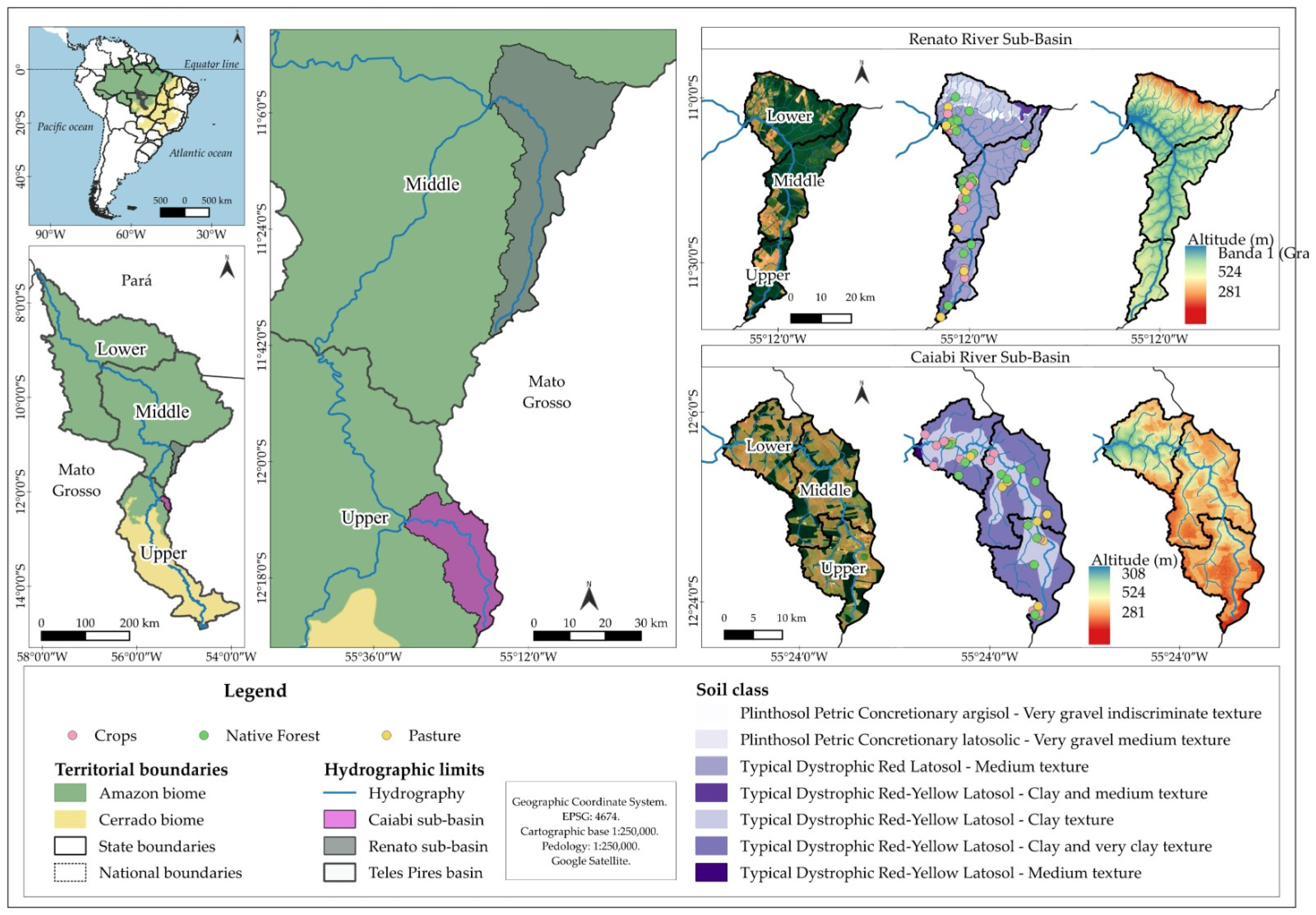
The study was conducted in two hydrographic sub-basins, tributaries of the right bank of the Teles Pires River (Figure 1). The Teles Pires River basin is situated between latitudes 07°16′47″ and 14°55′17″ S and longitudes 53°49′46″ and 58°7′58″ W, spanning the states of Mato Grosso and Pará, Brazil. The basin belongs to the larger Amazon basin and features predominant vegetation of the Cerrado (upper Teles Pires) and Amazon (middle and lower Teles Pires) biomes.
The predominant climate in the study region is Aw, A—very humid; w—summer rains, considered a Tropical Savanna Climate (hot and humid tropical) with average monthly temperatures between 24 and 27 °C and two well-defined water seasons: dry occurs in autumn/winter (May to September) and rainy occurs in spring/summer (October to April), with annual rainfall between 1800 and 2200 mm [27].
Figure 1. Location of the Teles Pires River basin and the sub-basins of the Renato and Caiabi Rivers, in the Cerrado–Amazon transition. The colored circles show the sampling points for land uses in each sub-basin. Data source: IBGE [28].
Soilsystems 10 00019 g001
According to the Brazilian Institute of Geography and Statistics, the most common soil classes in the upper Teles Pires are Inceptisols, Oxisols, and Quartzipsamments [28,29], formed from metasedimentary rocks belonging to the Cuiabá Group, as well as Raizama and Araras Formations—Alto Paraguai Group [30]. In contrast, the middle Teles Pires has a pedological profile that includes Ultisols, Oxisols, Lithic Orthents, Quartzipsamments, and Plinthosols [28,29], formed from granitic and rhyolitic rocks of the Juruena Magmatic Arc, sandstones, and siltstones that make up the Dardanelos Formation and the Beneficente Group [30]. In the upper, middle, and lower regions of the sub-basins of the Caiabi and Renato Rivers, where sampling for this study was conducted, the predominant soil classes are Oxisols [29,30,31,32].
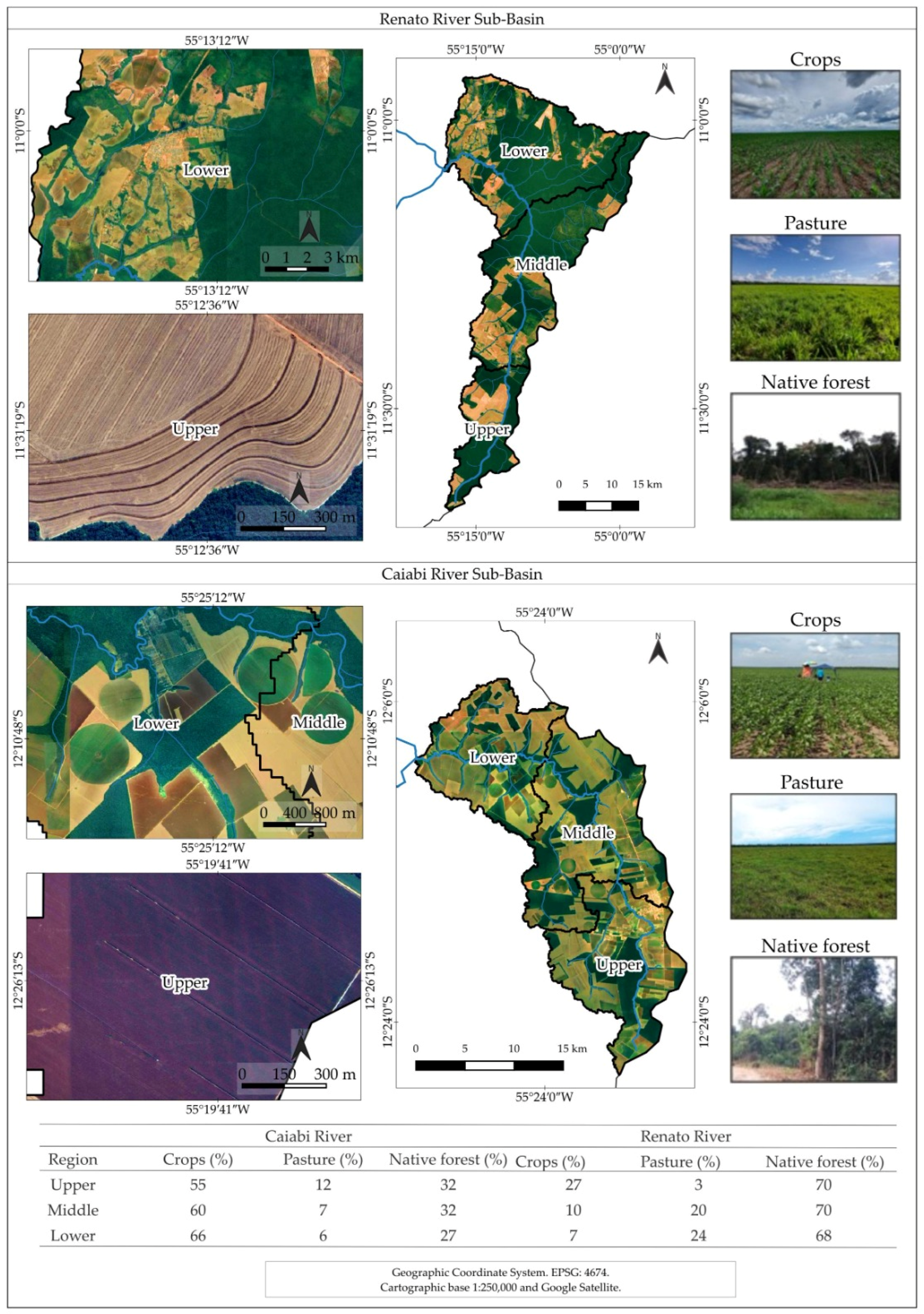
The Caiabi River sub-basin has a drainage area of approximately 493 km2 and a mean flow of 9.4 m3 s−1, covered with 31% natural Cerrado–Amazon transition vegetation, 60% monoculture (soybean-corn succession) and 8% pasture. The Renato River sub-basin has a drainage area of approximately 1336 km2 and a mean flow of 16.3 m3 s−1, which is occupied by 69% Amazon Forest subject to forest management and with significant areas converted for pasture (19%) and crops (11.4%) [33] (Figure 2).
The study region is within Mato Grosso’s agribusiness hub. The expansion of agriculture and livestock farming in these study regions has occurred since the early 1980s. This has led to a modification of the natural soil cover, where native forests have been replaced by corn, soybean, cotton, and bean plantations, and by intensive livestock farming [34]. Approximately 40 years after the opening of this agricultural frontier, the adoption of conservation practices is also observed on the properties where soil samples were collected, such as mulch cover, contour farming, crop rotation, fallow periods, and, in the case of livestock farming, rotational grazing. It is worth noting that the areas evaluated in this study have more than 20 years of cropland and 10 years of pasture in both sub-basins. Areas within the Caiabi River sub-basin are already consolidated and have not undergone any new changes in land use in the last 10 years, while in the Renato River areas, there is still a significant increase in agriculture, resulting from the conversion of forest areas to pastures and degraded pastures to crops.
In dryland farming, soybeans and corn are cultivated in succession (harvest and second harvest) across the three regions of the two sub-watersheds. Soybean is planted and harvested between early October and mid-February (depending on the cultivar), followed by corn from February to June. Under irrigated conditions, in addition to sequential cultivation, a third crop, such as beans, pulses, or special grains, is introduced. In pasture areas, Brachiaria grasses, averaging 50 cm in height, well-formed and intensively grazed, are predominantly cultivated in all regions of the two sub-watersheds. The native vegetation in the Caiabi River sub-basin consists of Cerrado and Amazon rainforest plants, ranging from small plants with twisted stems to tall, upright species. The native vegetation in the Renato River sub-basin is characterized as tropical forest, composed of dense, large plants, with notable species such as chestnut trees, ipês, and sumaúmas trees that stand out in the forest canopy.

2.2. Soil Sample Collections and Laboratory Analysis

To evaluate the effects of land use and land cover on soil carbon stocks and their relationship with physical properties, 36 and 42 trenches were excavated in the Caiabi and Renato River sub-basins, respectively (points shown by the colored circles in Figure 1), being distributed as follows: (i) Caiabi sub-basin: 11, 12 and 13 trenches in the headwaters, middle and mouth regions, respectively; of these, 3 trenches were opened in pasture areas and 4 trenches in cropland areas (regardless of the region), and, in native forest areas, at least 5 trenches were opened in each region of each hydrographic sub-basin; (ii) Renato sub-basin: 12, 15 and 15 trenches in the headwaters, middle and mouth regions, respectively; of these, 3 trenches were opened in pasture areas in the headwaters and 4 trenches in the other regions; 4 trenches in cropland areas in the headwaters and 5 trenches in the other regions; and, in native forest areas, at least 5 trenches were opened in each region of each hydrographic sub-basin. In these cases, to avoid topo-sequence effects, the trenches for sampling were always opened in the median positions of the slopes. Each trench measured 0.40 × 0.40 × 0.50 m to collect both disturbed and undisturbed soil samples from the 0.0–0.10, 0.10–0.20, and 0.20–0.40 m layers. A total of 234 disturbed samples (approximately 2.0 kg per layer) and 2340 undisturbed samples were collected. In each layer, five volumetric rings (5.0 cm in diameter and 5.0 cm in height) were collected to determine soil bulk density and porosity, and five volumetric rings with 8.0 cm in diameter and 8.0 cm in height were collected to determine saturated hydraulic conductivity. Samples were collected in areas covered with native forest (reference), pasture, and temporary crops. In the Caiabi River sub-basin, crop areas were occupied by soybean crops on second-crop corn straw (November/December), while in the Renato River sub-basin, crop areas were occupied by second-crop corn (February/March) (Figure 2).
The physical attributes of the evaluated soils included granulometry (total sand, silt, and clay), microporosity (micro), macroporosity (macro), total porosity (TP), particle density (PD), bulk density (BD), and hydraulic conductivity (K0), as well as an analysis of soil organic carbon concentrations (SOC). Granulometry was measured using the pipette method with a 1 M NaOH solution and mechanical stirring for 16 h, based on the principle of Stokes’ law [29]. Microporosity was determined by the tension table method, and particle density by the volumetric flask method [35]. BD was assessed using the cylinder method with undisturbed samples that were oven-dried at 105 °C and then weighed [36]. TP was calculated as the ratio of PD to BD, while macroporosity was derived by subtracting microporosity from TP. K0 was measured using the constant-head permeameter method [35].
To quantify total soil organic carbon, disturbed soil samples (air-dried fine soil—ADFS) were prepared for each layer, collection site, land use, and sub-watershed. These ADFS samples were sieved and separated from organic matter, such as roots and insects. They were then finely ground in an agate mortar with a pestle and stored in 3 mL Eppendorf microtubes. Subsequently, 0.05 g ± 0.001 g samples were weighed in triplicate on a microbalance with a precision of 0.0001 mg, sealed in tin capsules, and stored in the CHN elemental analyzer (Sundy SDCHN636 Elemental Analyzer, Bekasi, Indonesia). This equipment quantifies soil organic carbon through complete combustion and detection of released gases, offering high accuracy and speed. The analytical method was performed according to the ISO 10694 soil quality standard, including sample preparation, calibration and quality control, blank, memory effect control, repeatability and precision [36]. This method is considered a reference in soil carbon studies, especially in research on carbon sequestration, agricultural management and global carbon balance.
Total soil organic carbon and carbon stocks were calculated for each land use and land cover, by soil layer and sub-basin regions; to determine the totals for each sub-basin across the different land uses, grouping the layers and regions. Soil organic carbon stocks (SOCS) were calculated using Equation (1) [37,38].
S O C S = S O C B D T 10
where S O C S = soil organic carbon stock at depth (Mg ha−1); S O C = soil organic carbon content at the sampled depth (g kg−1); B D = soil bulk density at depth (g cm−3); T = thickness of the soil layer considered (cm); and 10 = it is a conversion factor to the standard unit in Mg C ha−1.

2.3. Statistical Analysis

For both sub-basins, the statistical arrangement of carbon contents and stocks at a depth of 0.0–0.40 m was organized in a 3 × 3 design, with three land uses (crop, pasture, and native forest) and three regions (upper, middle, and lower), with five replicates for each treatment. The variables were analyzed using the Kruskal–Wallis test at a 5% significance level (nonparametric test) with the Statistica software, version 14.0, as described by Moratelli et al. [39]. To examine the relationship between soil physical attributes and carbon contents, the data were subjected to Spearman’s correlation analysis at a 5% significance level and multivariate principal component analysis (PCA). The use of PCA helps to identify the relationships between soil physical attributes and determine which factors most influence the variability of the results. The selection of this multivariate technique was based on the findings reported by Moratelli et al. and Hair et al. [39,40].

3. Results

3.1. Soil Physical Attributes

The Caiabi River sub-basin is characterized by high clay contents in the upper and middle regions, while total sand predominates at the mouth at all depths (Table 1). In the cropped areas of the Caiabi River source, the clay contents in the 0–10, 10–20, and 20–40 cm layers were 33.54, 37.12, and 39.08%, respectively. In the pasture areas, in the same layers and region, the contents were 20.51, 26.79, and 37.95%, while in the native forest, the contents were 37.83, 42.62, and 45.34%. In the lower region, the highest clay content (24.88%) was observed in the 0.20–0.40 m layer in the cropped area. The middle region presented intermediate clay values and a predominance of the sand fraction (>40%) in practically all land uses and in all sampled layers.
In the Renato River sub-basin, sand predominates over clay in all regions (Table 2), unlike the Caiabi River sub-basin. In the 0.0–0.10 m layer, in the cropped areas of the three regions, total sand values were 70.54% (upper), 85.62% (middle), and 79.04% (lower). In the pasture areas, total sand values were above 60% in all regions and layers. The 0.20–0.40 m layer in the upper region, with native forest, has the lowest sand content (60.55%), and the other layers by regions (upper, middle, lower) follow the same trend of sand predominance.
The physical characteristics of the soils highlight the differences in soil physical attributes between the sub-basins. Although they are located in distinct biomes, sand particles predominate at the lower level of both sub-basins. In contrast, clay predominates in the upper regions, especially in the Caiabi River sub-basin, requiring the implementation of surface drainage systems for agricultural production (Figure 2).
The predominant macroporosity in native forest areas, compared to croplands and pastures, in the 0.0–0.10 and 0.10–0.20 m layers across both sub-basins, may be linked to the thickness, volume, and depth of native vegetation roots and the activity of soil fauna, which facilitate the formation of soil galleries in the surface layers. This also accounts for the higher hydraulic conductivity in these areas, associated with lower soil density (Table 1 and Table 2). Unlike what is seen in cropland and pasture areas, native forest soils are not subjected to repeated management practices (such as plowing, harrowing, and the use of planting machinery, sprayers, and harvesters in agricultural zones, as well as animal trampling in livestock areas) that lead to compaction.

3.2. Soil Organic Carbon (SOC)

The average carbon concentrations at a depth of 0.0–0.40 m in the upper region of the Caiabi River sub-basin were 17.97 g kg−1 (crops), 16.18 g kg−1 (pasture), and 32.28 g kg−1 (native forest) (Table 3). In the middle Caiabi, the concentrations were 16.03, 12.96, and 17.77 g kg−1; and at the lower region, 8.88, 9.21 and 7.92 g kg−1, respectively. In the Renato River sub-basin, the average carbon concentrations at a depth of 0.0–0.40 m in the upper region for crops, pasture, and native forest were 22.24, 24.63, and 13.97 g kg−1; in the middle 7.32, 9.21, and 7.92 g kg−1; and at the lower 7.76, 8.50 and 11.55 g kg−1, respectively.
The highest soil carbon concentrations were found in the 0–10 cm layer, followed by the 0.10–0.20 m layer across all land uses and regions of the two sub-basins, except for cropland in the upper part of the Renato River (Table 3). The highest soil carbon concentration (32.28 g kg−1) was found in native forest areas in the upper part of the Caiabi River sub-basin, which was expected due to the greater accumulation of organic matter in these natural environments without or with reduced anthropogenic action. However, the same behavior was not observed in the Renato River sub-basin, since cropland (22.24 g kg−1) and pasture (24.63 g kg−1) represented higher carbon concentrations than native forest (13.97 g kg−1).

3.3. Soil Organic Carbon Stock (SOCS)

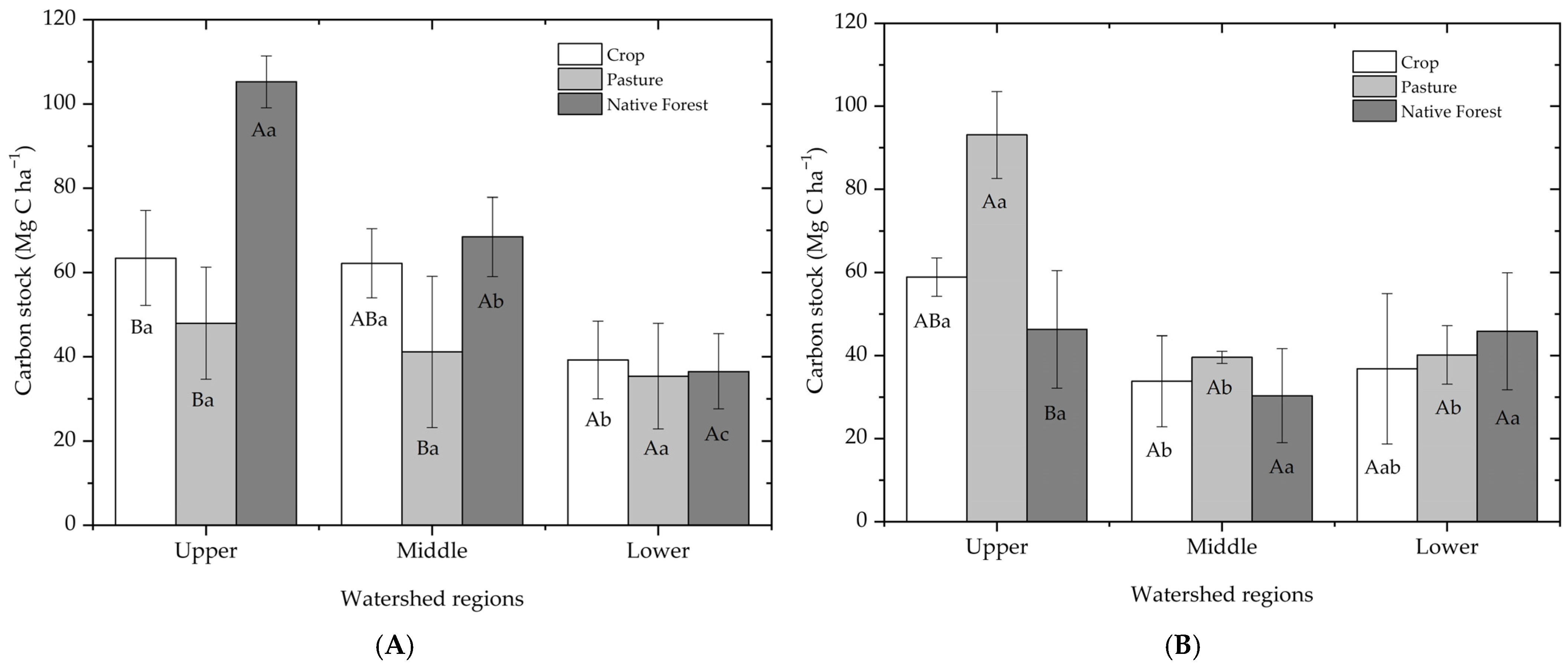
Total carbon stocks in the 0.0–0.40 m layer of the Caiabi River sub-basin’s headwaters were 63, 49 and 107 Mg ha−1 in areas covered by crops, pasture, and native forest, respectively (Figure 3A). For the same land uses and cover types, in the central region of the sub-basin, carbon stocks were 60, 40 and 65 Mg ha−1, while in the Caiabi River mouth region, they were 40, 33 and 35 Mg ha−1, respectively.
In the Renato River sub-basin, total carbon stocks in the 0–40 cm layer in covered by crops, pasture, and native forest were 58, 93 e 44 Mg ha−1, for the Upper; 35, 40 and 30 Mg ha−1, in the central region of the sub-basin; and 38, 42 and 48 Mg ha−1 in the region of the mouth of the Renato River (Figure 3B).

3.4. Spearman Correlation

In the Spearman correlation analysis of soil physical attributes and soil carbon concentrations in the Caiabi River sub-basin, stronger negative correlations between carbon and total sand, bulk density, and particle density were observed, along with a positive correlation with silt (Table 4). Meanwhile, in the Renato River sub-basin, there were negative correlations of carbon with bulk density and particle density, and a positive correlation with microporosity and total porosity (Table 4).

3.5. Principal Components Analysis (PCA)

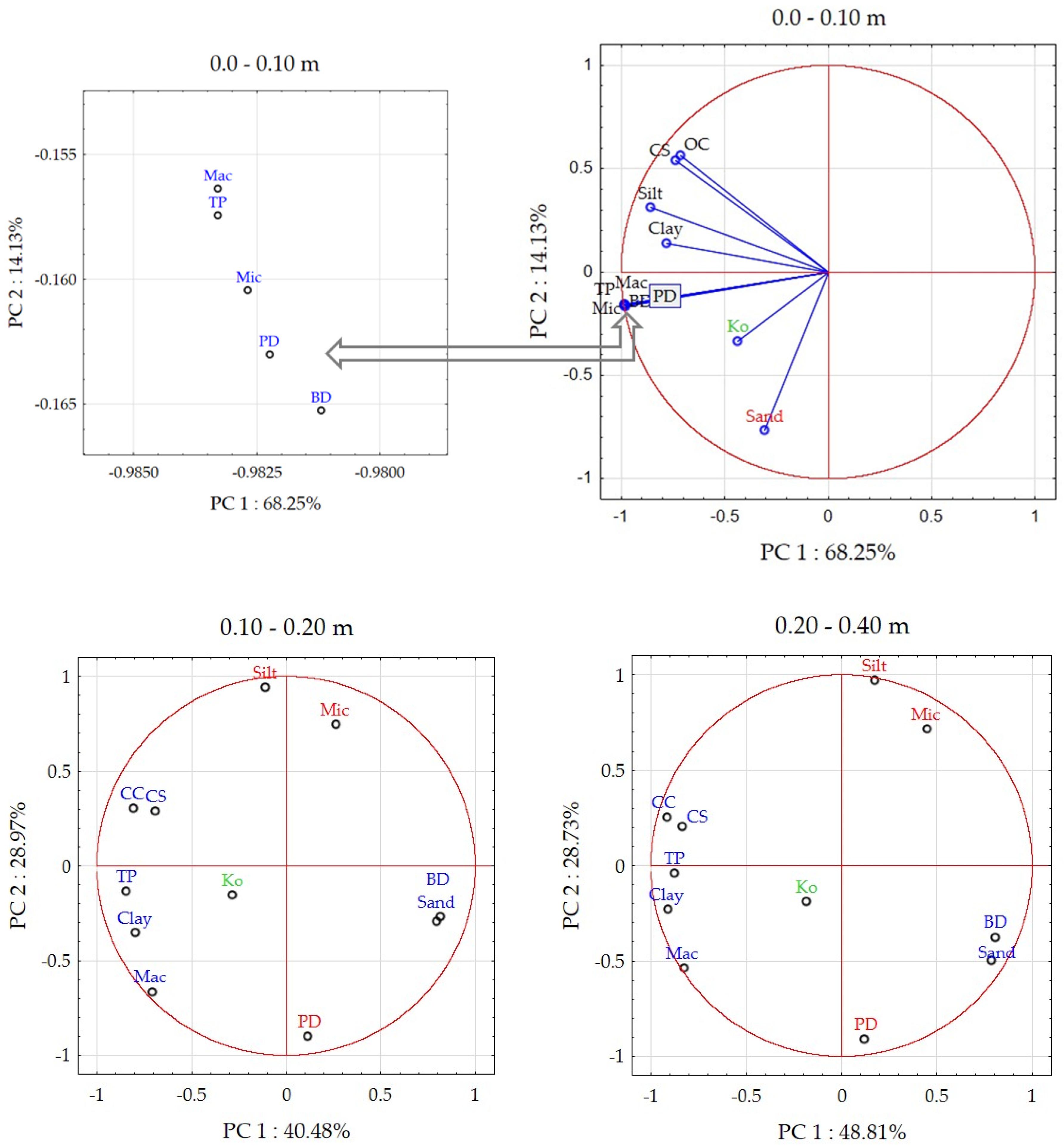
Principal component analysis (PCA) effectively represented the average grouping of 11 physical attributes comprehensively for the three soil layers in the two sub-basins evaluated. For the Caiabi River sub-basin, the principal component PC1 represents at least seven physical soil attributes, regardless of soil depth, and the PC2 component represents up to three variables (Table 5 and Figure 4); in turn, the PC3 component grouped the soil’s saturated hydraulic conductivity (K0), including in the 0.0 to 0.10 m layer, in which PC3 presented an Eigenvalue of 1.0688 and a total variance of 9.72%, with a correlation of −0.6577 with K0.
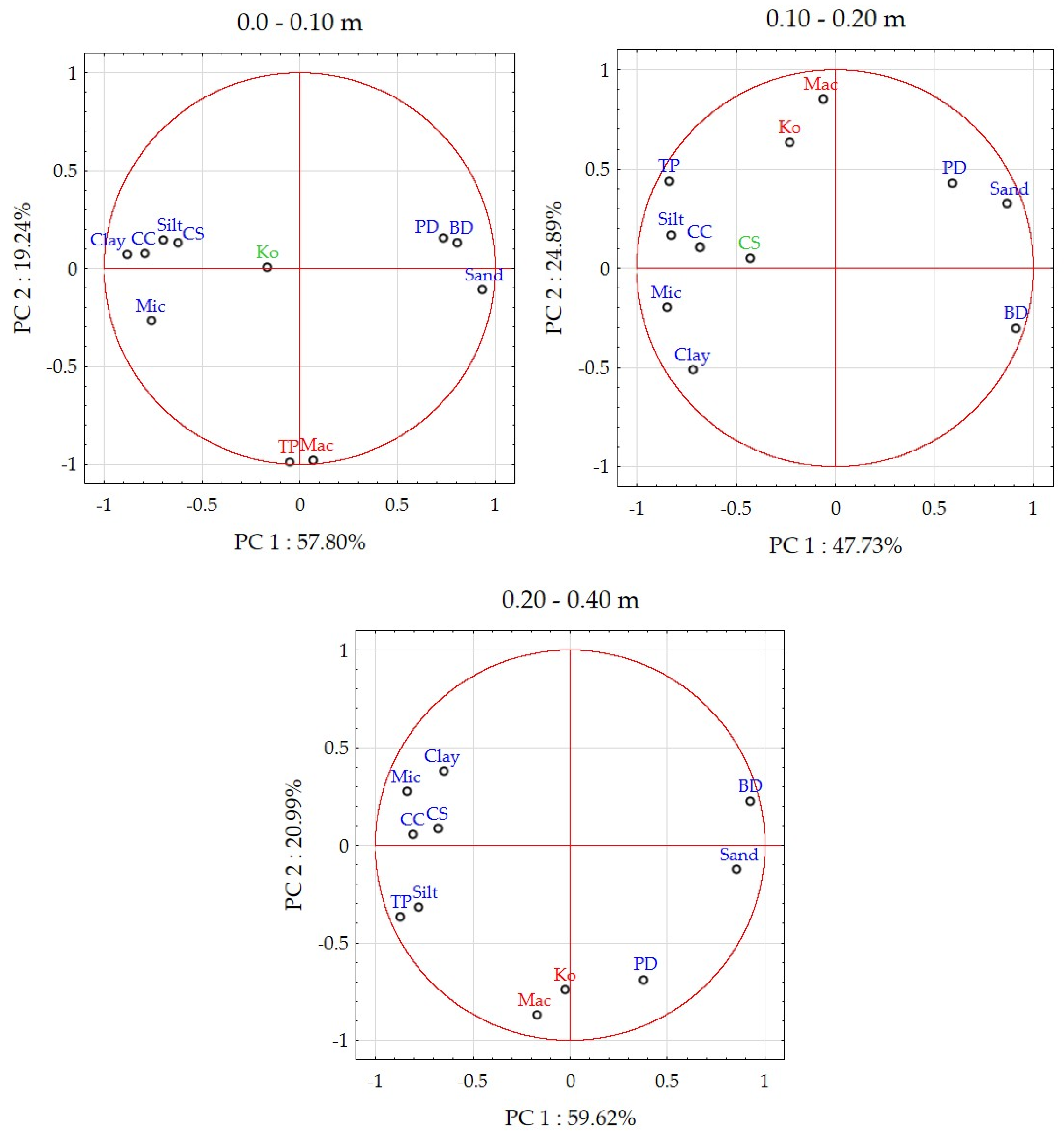
Considering the total variances, the composition generated by PC1 and PC2 represents 82.38, 69.45, and 77.54%, at the three depths of 0–10, 10–20, and 20–40 cm, respectively, thus allowing the establishment of biplots to evaluate the groupings of variables (Figure 3). PC1 grouped with negative correlation the variables clay, porosity (Macro and TP), and carbon (SOC and SOCS); in addition, BD presented a negative correlation in the surface soil layer (0.0–0.10 m) and positive correlations in the other layers evaluated. The greatest changes in groupings were observed for total sand, silt, microporosity, and PD, with variations between interactions with PC1 and PC2 in the different soil layers.
In the Renato River sub-basin, at least seven soil attributes are grouped in PC1, and their joint analyses with PC2 accounted for 77.04%, 72.62%, and 80.61%, respectively (Figure 5 and Table 6). The lower clay percentages in the different regions of this sub-basin allowed greater stability in the representation of texture, microporosity, BD, and carbon content (SOC and SOCS) attributes by PC1, regardless of the depth evaluated. Similarly, saturated soil hydraulic conductivity was distinct from the other attributes, being represented by PC3 (0.0–0.10 m) and PC2 (other depths). In this case, in the surface layer, PC3 has an Eigenvalue of 1.2067 and a total variance of 10.97%, directly accounting for K0, with a correlation of −0.9102. The correlations for the two attributes associated with carbon (SOC and SOCS) were not well defined between the different soil layers, with the correlations of SOC with PC1 and PC3 being very close in the 0.10–0.20 m soil layer; this reductionist variation represented by the principal components can be evidenced by the distances between the points of each variable, when Figure 4 and Figure 5 are observed together.

4. Discussion

4.1. Soil Organic Carbon Stock (SOCS)

The results presented highlight significant differences in soil carbon stocks among the three land uses evaluated (native forest, pasture, and cropland), especially in the Caiabi River sub-basin, reinforcing the importance of management and vegetation cover in determining soil quality. The pattern shows a higher carbon content in native forest compared to other management systems due to high biomass production, continuous input of organic residues, and less physical disturbance to the soil. However, other management systems can also stand out, highlighting the importance of integrated conservation practices.
In the upper and middle regions of the Caiabi River sub-basin, the largest SOCS were found in native forest areas, as expected, since these are regions with heavy deposition and higher root concentrations in the soil. However, in the Renato River sub-basin, the highest amount of stored carbon was found in the upper part of the pastureland. In this context, the carbon stocks observed in native forest areas cannot be seen as the maximum limits for soil carbon storage. After implementing other production systems, under similar soil physical conditions within the same sub-basin, influences from cultural management and land use also affect soil carbon, allowing larger carbon stocks in soils occupied by crops or pasture [8,14].
Braz et al. [23] report that both well-managed and compacted pastures can store significant amounts of carbon; in the former, root development without physical barriers evenly distributes carbon throughout the soil profile, while in the latter, the accumulation of fasciculate roots at the surface results from physical limitations caused by compaction. Additionally, Sanaei et al. [41] highlight that intensive livestock farming can negatively affect plant diversity and soil carbon storage, leading to potential regional losses in biodiversity and aboveground carbon stocks in pastures.
When evaluating carbon stocks in pasture and native forest areas in the Brazilian Cerrado, Braz et al. [23] concluded that management combined with knowledge of texture is essential for maintaining soil carbon. Morais et al. and Zeferino et al. [24,42] also observed high correlations between carbon stocks and sand, silt, and clay fractions in Cerrado areas, reinforcing the correlations observed in the present study. A study by Bernadin et al. [15] in the Cerrado–Amazon ecotone, a region near the current study, shows that converting native vegetation significantly decreases soil organic carbon stocks. Soil carbon losses reached 4.9, 2.5 and 9.8 Mg ha−1 year−1 in the Cerrado, ecotone, and Amazon, respectively. The authors also highlight that, in addition to the loss of functional organic matter, there is a decrease in the soil’s cation exchange capacity; and, as a recommendation, they emphasize the need for sustainable land management to mitigate carbon losses and preserve ecosystem functions [15].
The high carbon stock values in pasture areas at the upper part of the Renato River sub-basin highlight the importance of vegetation cover in sandy areas, as they contribute to increasing soil moisture, attracting beneficial microbial communities, and increasing soil loads, which are lower in sandy soils. In this sense, studies emphasize the importance of tillage mulch as part of the low-carbon agriculture plan in Brazil [43,44]. In a study on soil carbon in pasture, cropland, and native forest in the Brazilian Cerrado [43] concluded that planting under mulch, combined with minimal soil cultivation, enhances the soil’s capacity to store carbon.
Other factors can influence the amount of carbon stored in the soil, such as texture, which significantly impacts soil water retention and, consequently, carbon stocks [3,45]. When assessing carbon stocks in different land uses in Brazil, Oliveira et al. [44] concluded that the lower amounts of carbon stored in agricultural soils are related to inadequate management. Furthermore, carbon stocks present spatial variability that is influenced by soil class, depth, soil density, available water, climate, and relief [14,41,46,47].
Specifically in the headwater regions of the Renato River, soils occupied by pastures presented carbon concentrations higher than those found in soils covered by native forests. However, it is emphasized that converting native forest areas to sequester carbon in the soil is not recommended, since, in addition to storing carbon in the soil, native vegetation is a carbon storer in its woody biomass, with a greater potential than crops and pastures [3,48,49]. Furthermore, variations in soil densities were observed between native vegetation and agricultural production systems, which may have affected the carbon stocks found. Therefore, for future work, we recommend the use of soil mass correction to minimize the effect of soil density on land uses, as carried out by Braz et al. [23] when studying carbon stocks in compacted pastures.
Again, the importance of planting crops on corn straw and/or pastures is highlighted [42,43,44,50]. For land management, given the findings of this study, it is understood that rural soybean, corn, and livestock producers, as well as the government, through rural and environmental extension, must strive to provide and expand the soil’s carbon storage capacity, as this is an important ecosystem service that, once compromised, affects several natural cycles. To this end, two important points must be considered: the first concerns soil cover, to protect carbon from rapid mineralization and erosion processes; and the second concerns monitoring the attributes that indicate soil carbon concentrations and, consequently, the stock.
Bernoux et al. [51] showed that there are several uncertainties in carbon stock estimates, and for Brazil, the differences between estimates of soil bulk density for Oxisoils (Latossolos) can vary by up to 66% depending on soil cover; these same authors found carbon stock values for different Brazilian biomes ranging from 1.5 to 41.8 kg C m−2, considering the 0–0.30 m depth layer, and based on the spatial distribution obtained by these authors, in the region of the two sub-basins evaluated, values ranging between 3.0 and 5.0 kg C m−2 are expected. Consequently, the stock data found are consistent when compared with data from other regional [52], national [51,53] and global research [54], even considering the uncertainty factors in the estimates and in the generation of spatial and temporal distributions [55].

4.2. Practical Applications in the Context of River Basins

In general, the highest carbon concentrations in the surface layer (0.0–0.10 m) result from the accumulation of organic matter deposited by crops and native forests (Table 3). The decrease in carbon concentrations with increasing depth is evident; this is due to the deposition of plants on the soil surface, the greater presence of roots in the surface layers, microbial activity, increased activity of soil microorganisms, and the presence of soil fauna [15,55,56]. Furthermore, infiltration and the consequent initial wetting of the surface layers of the soil profile activate enzymes and organisms that act to immobilize carbon [56]. At depth, all of these conditions and actions are reduced, primarily due to limited oxygen uptake.
The higher concentration of carbon in the soil may be related to several factors; among them, two important factors stand out that may have contributed to the results found in this study. In the Caiabi River sub-basin, these factors are related to the higher clay content and the presence of straw cover in the soil. Clays have charges, mainly negative ones, and form aggregates in the soil, physically and chemically protecting carbon from access by decomposing and transporting organisms [24,57]. On the other hand, areas with a greater presence of sand, such as the mouth of the Caiabi River and, especially, the middle and mouth regions of the Renato River, have lower carbon concentrations and stocks (Table 3 and Figure 5). The influence of soil texture on carbon stocks is evident. Surface straw, both in crops and pasture, promotes soil carbon accumulation and creates a microenvironment for nutrient cycling [58], as observed in crop and pasture uses in the headwaters of the Renato River.
Sheshnitsan et al. [3] evaluated the impact of soil texture on carbon stocks in deciduous and coniferous tree stands in a temperate forest-steppe ecotone and identified a strong positive correlation between soil carbon stocks and tree biomass, as well as fine soil particles (silt and clay contents), highlighting the importance of soil properties in increasing the carbon sequestration potential of forest ecosystems. The different soil carbon stocks of native forests found in the Caiabi and Renato Rivers sub-basins in this study are related to soil texture and forest type. In the Caiabi River sub-basin, there are more clayey soils and deciduous trees, generating greater organic matter deposition and, consequently, carbon accumulation in the forest soil. In the Renato River sub-basin, sandier soils and evergreen trees predominate, resulting in larger carbon stocks in tree biomass.
Among the physical attributes assessed, macroporosity, soil bulk density, and, consequently, hydraulic conductivity respond most quickly to the impacts of soil management. Therefore, they are used as indicators of soil physical quality and can support decision-making for efficient and systemic soil management in agriculture and livestock. There was little variation in particle density, since the predominant soil class in both sub-basins is the same (Oxisols) [29,31,32].
Among crop and pasture uses in the three regions of the two sub-basins, there is similar dry matter deposition in pasture areas, and greater dry matter deposition in soybean crop areas in the Caiabi River sub-basin, compared to corn crop areas in the Renato River sub-basin [59]. It is noteworthy that these areas have different cultivation periods, as the agricultural areas in the Caiabi River sub-basin are older than the agricultural areas in the Renato River sub-basin. Therefore, the cultivated soils of the Caiabi River have a more consolidated history of agricultural management practices, resulting from the greater deposition of straw over soybean crops.
In this study, we determined the percentages of land use and land cover by region of each River sub-basin (Figure 2). In the three regions of the Caiabi River sub-basin, the soils are predominantly occupied by crops (60%), followed by native forest (30%) and pasture (8%); in contrast, in the three regions of the Renato River sub-basin, there is a predominance of native forest (70%), followed by pasture (16%) in the middle and lower regions, and crops (15%) in the headwater region [60]. The inverse proportion of crop and pasture uses is evident in the three regions of the two sub-basins. In the Caiabi River sub-basin, a Cerrado–Amazon transition region, cropland is well established regardless of the basin region. While in the Renato River sub-basin, an Amazon rainforest region, agriculture is constantly expanding throughout the sub-basin, where pastureland is being converted to cropland, particularly in the middle and lower reaches of the sub-basin (Figure 2).
Given the discussions on the dynamics of soil carbon stocks and plant biomass, whether in trees, crops, or pastures, future research is recommended to explore the relationship between different soil types, forest and agricultural vegetation types, and soil carbon stocks and plant biomass in the Cerrado–Amazon transition region within the context of watersheds.
In both sub-basins, particularly in the headwater region, good management practices have been recorded that, in addition to contributing to soil and water conservation, allow for soil carbon accumulation. In the Caiabi River headwaters region, surface drains were used in crop areas under no-tillage systems (soybean over corn stover) (Figure 2). This explains the influence of low soil water drainage on reducing organic matter decomposition in surface layers, favoring soil carbon accumulation in the 0–10 cm layer. This is associated with the low hydraulic conductivity of the cultivated soil in the Caiabi River headwaters region (Table 1).
In contrast, in the Renato River headwaters region, contour lines were observed in crop areas under no-tillage systems (corn over pasture) (Figure 2). In this case, 40 days after corn planting, grass (Brachiaria sp.) is broadcast. However, due to water and light limitations, grass growth is controlled, and during the corn maturation and harvest stage, the grass prevails, thus maintaining soil cover. Deep-sea grass root growth favors increased microporosity (Table 2) and soil carbon accumulation, as evidenced in the 20- to 40-cm layer (Table 3).
A study by Hunag et al. [9] contributes to the understanding of sustainable agricultural practices by evaluating the impact of different crop and cover crop management systems on soybean yield, soil organic carbon, and total soil nitrogen stocks. The authors report that the no-tillage system improved soil carbon and nitrogen sequestration without compromising productivity, indicating the sustainability of the no-tillage system for soybeans grown with agricultural residues. The implementation of agrosilvopastoral systems can also be adopted to increase carbon sequestration in the soil and standing biomass [60,61,62]. These conservation practices are being applied in some productive areas in the study region of this article.
However, it is important to highlight that this article presents some limitations that need to be considered and that can be addressed in future research, such as: (i) the absence of an assessment of the influences of chemical and biological variables on soil carbon dynamics; (ii) soil mass corrections were not applied to minimize the effect of soil density on carbon stocks, especially in compacted pastures, which may lead to inaccuracies in comparing carbon stocks in different land uses and management systems; (iii) although the study evaluated the physical attributes of the soil and their relationship with carbon, the specific impacts of mulch and integrated crop-livestock systems on soil carbon accumulation in different regions and soil types were not evaluated—these production systems should be investigated further to optimize conservation practices.
Finally, we highlight the need for broader and more multidisciplinary carbon studies, given the uncertainties in carbon stock estimates, particularly regarding spatial and temporal distributions, which makes it difficult to accurately quantify carbon changes over time and across different landscapes. Current research, generally focused and short-term, may not fully capture the complexity of carbon dynamics and effective strategies for mitigating soil carbon loss, as they are considered good temporal snapshots; this essentially demands that assessments be continuous and long-term, especially in regions of agricultural expansion.

4.3. Conservation Policies for Soil Carbon Storage

Brazil is a country of continental dimensions and of great importance in the global agricultural and livestock sector. It stands out in the production of grains such as soybeans and corn, as well as in the production of cotton fiber and livestock, exporting beef, pork, and poultry. On the other hand, agricultural production is not always accompanied by protective soil conservation practices. As a result, soils gradually lose their capacity to provide ecosystem services, such as nutrient retention and cycling, water infiltration to supply groundwater, temperature regulation, and carbon storage.
When soil loses its carbon storage capacity through erosion, compaction, pollution, acidification, or aggressive conventional management methods such as plowing and harrowing, one of the soil’s ecosystem services for sustaining life on Earth is compromised. When carbon is exposed to the soil surface, it can follow two paths. The first is being carried away by floodwaters and, by gravity, driven to the lowest points of the landscape, causing pollution of rivers and lakes. The second is the formation of greenhouse gases, responsible for global warming, rising temperatures, acidifying rainfall, and triggering catastrophes.
Given this, it is clear that carbon studies must be broad and multidisciplinary, as must actions to mitigate soil carbon losses. In this sense, the need to adopt conservation practices in agricultural areas is clear, such as soil cover with straw, crop rotation, pasture soil management, respect for the carrying capacity in grazing areas, minimum disturbance and soil fallow in agricultural and livestock areas for chemical and biological restoration [9,11,14,15,61,62,63,64]. And in native forest areas, laws are increasingly strict to combat illegal deforestation and maintain permanent preservation areas, especially along riverbanks, such as the Renato and Caiabi Rivers, which are located in areas of significant agricultural expansion.
Furthermore, studies of carbon content and stocks need to be interconnected with other soil attributes, such as clay content, soil density, and porosity, to better understand and facilitate decision-making, whether by producers or public agencies. Public policies must also reach small, medium, and large producers, ensuring that conservation effects are collective and systemic, promoting sustainability in the economic activities carried out by different agribusiness sectors on a global scale.
Carbon projects and other payment mechanisms for environmental services have established themselves as fundamental tools for mitigating climate change and promoting sustainable development. The National Bank for Economic and Social Development (BNDES) and the World Bank are important federal public institutions for investments in all segments of the Brazilian economy, especially the agribusiness sector. Strengthening public policies is recommended to enable the expansion of voluntary carbon markets and the advancement of renewable energy projects, reinforcing the need for clear regulatory frameworks and accessible financing mechanisms. Other programs and strategies that aim to promote adaptation to climate change and control GHG emissions in Brazilian agriculture, increasing the efficiency and resilience of production systems and considering integrated landscape management, include the “Plan for Adaptation and Low Carbon Emissions in Agriculture (2020–2030)—ABC+,” a national strategic agenda of the Brazilian government that continues the sectoral policy to address climate change in the agricultural sector [65].
The ABC+ Plan, an improved successor to the ABC Plan, was developed to support Brazil’s climate commitments and align with other federal government planning instruments. Its regulations are part of the National Policy on Climate Change (PNMC), established by Law No. 12187/2009, complemented by the creation of the National Fund on Climate Change (Law No. 12114/2009). Several decrees structure its implementation: the normative consolidation of the Fund and the PNMC (Decree No. 9578/2018), the creation of the National Executive Committee of the Sectoral Plan for Low-Carbon Agriculture (Decree No. 10431/2020), the Integrated Information System and the Technical Monitoring Committee (Decree No. 10606/2021), and the Interministerial Committee on Climate Change (Decree No. 11550/2023) [65].
Protecting and encouraging the increase of carbon stocks in agricultural areas and forest ecosystems are essential to achieving the Sustainable Development Goals (SDGs). Forests and soil are significant carbon sinks that contribute to several SDGs, including those related to climate action, life on land, and sustainable cities, as they help reduce atmospheric CO2 levels and promote ecosystem services. Increasing carbon stocks has contributed to the achievement of many SDGs, especially SDG 1—no poverty, SDG 2—zero hunger and sustainable agriculture, SDG 3—good health and well-being, SDG 6—clean water and sanitation, SDG 7—affordable and clean energy, SDG 11—sustainable cities and communities, SDG 12—sustainable consumption and production, SDG 13—climate action, and SDG 15—life on land [4,66].

5. Conclusions

This comparative study between areas of native forest, pasture, and cropland in different regions of the Cerrado–Amazon transition zone in the state of Mato Grosso demonstrates that land use and management directly influence the dynamics of soil carbon content.
The results of this study reinforce the importance of conserving natural ecosystems and adopting sustainable agricultural practices, such as no-till farming, crop rotation, and the recovery of degraded pastures, to increase carbon sequestration and reduce emissions associated with land use, and consequently reduce the global impacts caused by the greenhouse effect.
It is understood that the proper management of productive areas, whether agricultural or livestock, combined with the preservation of native vegetation, is fundamental to mitigating climate change and promoting the sustainability of management systems.

Author Contributions

Data collection, laboratory analysis, writing, methodology, formal analysis, and figures—M.A.B.A.; data collection, laboratory analysis, D.R.B.; data collection, review, editing, supervision, and financial support—A.P.d.S. and F.T.d.A.; supervision, writing, review, editing, supervision, and financial support—D.F.d.C. All authors have read and agreed to the published version of the manuscript.

Funding

This study was financed by the Coordenação de Aperfeiçoamento de Pessoal de Nível Superior—Brasil (CAPES) and the Agência Nacional de Águas e Saneamento Básico (ANA), Finance Code—001 and Process 88887.144957/2017-00. The authors wish to thank the Conselho Nacional de Desenvolvimento Científico e Tecnológico (CNPq) for their support with scientific initiation grants and a productivity grant.

Institutional Review Board Statement

Not applicable.

Informed Consent Statement

Not applicable.

Data Availability Statement

Study data can be obtained upon request to the corresponding author or the second author via e-mail. The data are not available on the website, as the research project is still under development.

Acknowledgments

The authors also thank all the students of the Tecnologia em Recursos Hídricos no Centro-Oeste” research group (http://dgp.cnpq.br/dgp/espelhogrupo/2399343537529589, accessed on 10 December 2023). The authors would also like to thank the owners of the farms that allowed and supported the collection of samples, with the following highlights: (i) in Vera-MT: Fazenda Vó Maria, Agropecuária Taguá, Fazenda São José and Fazenda Jaboticabal; (ii) in Claúdia-MT: Fazenda Continental, Fazenda Aremisa III and Agropecuária Bedin.

Conflicts of Interest

The funders had no role in the study’s design, data collection, analysis, or interpretation, manuscript writing, or decision to publish the results.

References

  1. Oishy, M.N.; Shemonty, N.A.; Fatema, S.I.; Mahbud, S.; Mim, E.L.; Raisa, M.B.H.; Anik, A.H. Unravelling the effects of climate change on the soil-plant-atmosphere interactions: A critical review. Soil Environ. Health 2025, 3, 100130. [Google Scholar] [CrossRef]
  2. Rodrigues, C.I.D.; Brito, L.M.; Nunes, L.J.R. Soil carbon sequestration in the context of climate change mitigation: A review. Soil Syst. 2023, 7, 64. [Google Scholar] [CrossRef]
  3. Sheshnitsan, S.; Odnoralov, G.; Tikhonova, E.; Gorbunova, N.; Sheshnitsan, T.; Murariu, O.C.; Caruso, G. Influence of Soil Texture on Carbon Stocks in Deciduous and Coniferous Forest Biomass in the Forest-Steppe Zone of Oka–Don Plain. Soil Syst. 2024, 8, 118. [Google Scholar] [CrossRef]
  4. Li, C.; Wu, J.; Zhang, F.; Huang, X. Forest Carbon Sinks in Chinese Provinces and Their Impact on Sustainable Development Goals. Forests 2025, 16, 83. [Google Scholar] [CrossRef]
  5. Smith, P.; Cotrufo, M.F.; Rumpel, C.; Paustian, K.; Kuikman, P.J.; Elliott, J.A.; McDowell, R.; Griffiths, R.I.; Asakawa, S.; Bustamante, M.; et al. Biogeochemical cycles and biodiversity as key drivers of ecosystem services provided by soils. Soil 2015, 1, 665–685. [Google Scholar] [CrossRef]
  6. Cotrufo, M.F.; Lavallee, J.M. Formation, persistence and functioning of soil organic matter: A synthesis of current understanding to inform its conservation and regeneration. Adv. Agron. 2022, 172, 1–66. [Google Scholar] [CrossRef]
  7. Sanderman, J.; Hengl, T.; Fiske, G.J. Soil carbon debt from 12,000 years of human land use. Proc. Natl. Acad. Sci. USA 2017, 114, 9575–9580. [Google Scholar] [CrossRef]
  8. Jian, J.; Du, X.; Reiter, M.S.; Stewart, R.D. A meta-analysis of global cropland soil carbon changes due to cover cropping. Soil Biol. Biochem. 2020, 143, e107735. [Google Scholar] [CrossRef]
  9. Hunag, Q.; Gong, Y.; Li, P.; Dewi, R.K.; Komatsuzaki, M. The Effects of Tillage Systems and Cover Crops on Soil Quality and Soybean Yield. Agriculture 2024, 14, 2119. [Google Scholar] [CrossRef]
  10. Silva, L.F.d.S.; Pessoa, L.G.M.; Silva, E.M.d.; Freire, M.B.G.d.S.; de Souza, E.S.; Oresca, D.; Silva, J.O.N.d.; Júnior, G.B.; Bezerra, A.C.; Santos, E.S.d. Changes in Soil C, N, and P Concentrations and Stocks after Caatinga Natural Regeneration of Degraded Pasture Areas in the Brazilian Semiarid Region. Sustainability 2024, 16, 8737. [Google Scholar] [CrossRef]
  11. Soares, S.; Souza, W.; Homem, B.; Ramalho, I.; Borré, J.; Pereira, M.; Pinheiro, É.; Marchao, R.; Alves, B.; Boddey, R.; et al. The Use of Integrated Crop–Livestock Systems as a Strategy to Improve Soil Organic Matter in the Brazilian Cerrado. Agronomy 2024, 14, 2547. [Google Scholar] [CrossRef]
  12. Medeiros, A.S.; Maia, S.M.F.; Santos, T.C.d.; Araújo Gomes, T.C.d. Soil carbon losses in conventional farming systems due to land-use change in the Brazilian semi-arid region. Agric. Ecosyst. Environ. 2020, 287, e106690. [Google Scholar] [CrossRef]
  13. Di Raimo, L.A.D.L.; Amorim, R.S.; Couto, E.G.; Hunter, M.O.; Torres, G.N.; Bocuti, E.D.; Silva, L.D. Natural erosion potential in the Mato Grosso state, Brazil. Rev. Bras. Eng. Agrícola Ambient. 2022, 26, 655–661. [Google Scholar] [CrossRef]
  14. Francaviglia, R.; Almagro, M.; Vicente-Vicente, J.L. Conservation agriculture and soil organic carbon: Principles, processes, practices and policy options. Soil Syst. 2023, 7, 17. [Google Scholar] [CrossRef]
  15. Bernadin, R.; Freddi, O.S.; Soares, M.B.; Rodrigues, D.J.; Marimon Junior, B.H.; Lima, L.B.; Petter, F.A. Soil organic carbon dynamics in the Cerrado–Amazon ecotone: Effects of land-use change on organic carbon sequestration and losses. Catena 2025, 259, 109366. [Google Scholar] [CrossRef]
  16. Dominati, E.; Patterson, M.; Mackay, A. A framework for classifying and quantifying the natural capital and ecosystem services of soils. Ecol. Econ. 2010, 69, 1858–1868. [Google Scholar] [CrossRef]
  17. Wenzel, D.A.; Uliana, E.M.; Almeida, F.T.; Souza, A.P.; Mendes, M.A.D.S.A.; Silva, S.L.G. Physiographic characteristics of the medium and upper Teles Pires River sub-basins, Mato Grosso, Brazil. Rev. Ciências Agroambientais 2018, 15, 123–131. [Google Scholar] [CrossRef]
  18. Borrelli, P.; Robinson, D.A.; Fleischer, L.R.; Lugato, E.; Ballabio, C.; Alewell, C.; Bagarello, V. An assessment of the global impact of 21st century land use change on soil erosion. Nat. Commun. 2017, 8, e2013. [Google Scholar] [CrossRef] [PubMed]
  19. Marchão, R.L.; Becquer, T.; Brunet, D.; Balbino, L.C.; Vilela, L.; Brossard, M. Carbon and nitrogen stocks in a Brazilian clayey Oxisol: 13-year effects of integrated crop-livestock management systems. Soil Tillage Res. 2009, 103, 442–450. [Google Scholar] [CrossRef]
  20. Groppo, J.D.; Lins, S.R.M.; Camargo, P.B.D.; Assad, E.D.; Pinto, H.S.; Martins, S.C.; Martinelli, L.A. Changes in soil carbon, nitrogen, and phosphorus due to land-use changes in Brazil. Biogeosciences 2015, 12, 4765–4780. [Google Scholar] [CrossRef]
  21. Didoné, E.J.; Minella, J.P.G.; Evrard, O. Measuring and modelling soil erosion and sediment yields in a large cultivated catchment under no-till of Southern Brazil. Soil Tillage Res. 2017, 174, 24–33. [Google Scholar] [CrossRef]
  22. Alves, L.A.; Oliveira Denardin, L.G.; Martins, A.P.; Bayer, C.; Veloso, M.G.; Bremm, C.; Tiecher, T. The effect of crop rotation and sheep grazing management on plant production and soil C and N stocks in a long-term integrated crop-livestock system in Southern Brazil. Soil Tillage Res. 2020, 203, e104678. [Google Scholar] [CrossRef]
  23. Braz, S.P.; Urquiaga, S.; Alves, B.J.; Jantalia, C.P.; Guimarães, A.P.; Dos Santos, C.A.; Santos, S.C.; Pinheiro, E.F.M.; Boddey, R.M. Soil carbon stocks under productive and degraded Brachiaria pastures in the Brazilian Cerrado. Soil Sci. Soc. Am. J. 2013, 77, 914–928. [Google Scholar] [CrossRef]
  24. Morais, V.A.; Ferreira, G.W.D.; Mello, J.M.d.; Silva, C.A.; Mello, C.R.d.; Araújo, E.J.G.; David, H.C.; Silva, A.C.; Scolforo, J.R.S. Spatial distribution of soil carbon stocks in the Cerrado biome of Minas Gerais, Brazil. CATENA 2020, 185, e104285. [Google Scholar] [CrossRef]
  25. Simon, C.d.P.; Vitória, E.L.d.; Lacerda, E.d.G.; Avancini, Y.S.; Rodrigues, T.F.; Simon, C.A. CO2 emission, physical attributes and total organic carbon in different soil preparation systems. Nativa 2019, 7, 494–499. [Google Scholar] [CrossRef]
  26. Delarmelina, W.M.; Caldeira, M.V.W.; Gomes Junior, D.; Godinho, T.D.O.; Caliman, J.P.; Gonçalves, E.d.O.; Kunz, S.H.; Pereira, M.G.; Silva, C.S.d. Soil attributes and spatial variability of soil organic carbon stock under the Atlantic Forest, Brazil. Ciência Florest. 2022, 32, 1528–1551. [Google Scholar] [CrossRef]
  27. Souza, A.P.; Lima, L.; Zamadei, T.; Martim, C.C.; Almeida, F.T.; Paulino, J. Climate classification and climatic water balance in Mato Grosso State, Brazil. Nativa 2013, 1, 34–43. [Google Scholar] [CrossRef]
  28. IBGE—Brazilian Institute of Geography and Statistics. State of Mato Grosso: Pedology (Exploratory Soil Map). 2009; 1p. Available online: https://mapas.ibge.gov.br/tematicos/solos (accessed on 10 July 2024).
  29. United States Department of Agriculture. Keys to Soil Taxonomy; United States Department of Agriculture, Natural Resources Conservation Service: Washington, DC, USA, 2014; 372p.
  30. EPE—Energy Research Company. Integrated Environmental Assessment of the Teles Pires River Basin. 2009; 67p. Available online: http://www.epe.gov.br/sites-pt/publicacoes-dados-abertos/ (accessed on 15 July 2024).
  31. IBGE—Brazilian Institute of Geography and Statistics. Continuous Cartographic Bases [Database], Scale 1:250,000. 2021; 1p. Available online: https://www.ibge.gov.br/geociencias/downloads-geociencias.html (accessed on 10 July 2024).
  32. Alves, M.A.B.; Borella, D.R.; Luz, C.C.S.; Castagna, D.; Silva, W.C.; Silva, A.P.; Almeida, F.T.; Souza, A.P. Soil classes in the Caiabi and Renato River basins, tributaries of the Teles Pires River in the south of the Amazon. Nativa 2022, 10, 431–448. [Google Scholar] [CrossRef]
  33. Borella, D.R.; de Souza, A.P.; de Almeida, F.T.; de Abreu, D.C.; Hoshide, A.K.; Carvalho, G.A.; Pereira, R.R.; da Silva, A.F. Dynamics of Sediment Transport in the Teles Pires River Basin in the Cerrado-Amazon, Brazil. Sustainability 2022, 14, 16050. [Google Scholar] [CrossRef]
  34. Heck, C.R. Agricultural productive expansion in the state of Mato Grosso and its funderial and environmental impacts from 2000. Inf. GEPEC 2021, 25, 62–84. [Google Scholar] [CrossRef]
  35. Teixeira, P.C.; Donagemma, G.K.; Fontana, A.; Teixeira, W.G. Soil Analysis Methods Manual, 3rd ed.; Embrapa Solos: Rio de Janeiro, Brazil, 2017; 573p, Available online: https://www.infoteca.cnptia.embrapa.br/handle/doc/1085209 (accessed on 18 September 2025).
  36. Analytical Methods Committee. Evaluation of analytical instrumentation. Part XIX CHNS elemental analysers. Accredit. Qual. Assur. 2006, 11, 569–576. [Google Scholar] [CrossRef]
  37. Grossman, R.B.; Reinsch, T.G. The solid phase. In Methods of Soil Analysis; Dane, J.H., Topp, G.C., Eds.; Part 4, Physical Methods; Soil Science Society of America: Madison, WI, USA, 2002; pp. 201–414. [Google Scholar]
  38. Veldkamp, E. Organic Carbon Turnover in Three Tropical Soils under Pasture after Deforestation. Soil Sci. Soc. Am. J. 1994, 58, 175–180. [Google Scholar] [CrossRef]
  39. Moratelli, F.A.; Alves, M.A.B.; Borella, D.R.; Kraeski, A.; Almeida, F.T.D.; Zolin, C.A.; Hoshide, A.K.; Souza, A.P. Effects of Land Use of Soil Physical-Hydric Attributes in Two Watersheds in the Southern Amazon, Brazil. Soil Syst. 2023, 7, 103. [Google Scholar] [CrossRef]
  40. Hair, J.F., Jr.; Babin, B.J.; Anderson, R.E.; Black, W.C. Multivariate Data Analysis, 8th ed.; Cengage: New Delhi, India, 2018; pp. 1–609. [Google Scholar]
  41. Sanaei, A.; Sayer, E.J.; Yuan, Z.; Saiz, H.; Delgado-Baquerizo, M.; Sadeghinia, M.; Ashouri, P.; Ghafari, S.; Kaboli, H.; Kargar, M.; et al. Grazing intensity alters the plant diversity–ecosystem carbon storage relationship in rangelands across topographic and climatic gradients. Funct. Ecol. 2023, 37, 703–718. [Google Scholar] [CrossRef]
  42. Zeferino, L.B.; Lustosa Filho, J.F.; Santos, A.C.d.; Cerri, C.E.P.; Oliveira, T.S.d. Simulation of changes in C and N stocks with land use and cover in Amazon Forest-Cerrado transition environment. Geoderma 2021, 404, e115388. [Google Scholar] [CrossRef]
  43. Sant-Anna, S.A.; Jantalia, C.P.; Sa, J.M.; Sá, J.M.; Vilela, L.; Marchão, R.L.; Alves, B.J.; Urquiaga, S.; Boddey, R.M. Changes in soil organic carbon during 22 years of pastures, cropping or integrated crop/livestock systems in the Brazilian Cerrado. Nutr. Cycl. Agroecosyst. 2017, 108, 101–120. [Google Scholar] [CrossRef]
  44. Oliveira, D.M.D.S.; Tavares, R.L.M.; Loss, A.; Madari, B.E.; Cerri, C.E.P.; Alves, B.J.R.; Pereira, M.G.; Cherubin, M.R. Climate-smart agriculture and soil C sequestration in Brazilian Cerrado: A systematic review. Rev. Bras. Ciência Solo 2023, 47, e0220055. [Google Scholar] [CrossRef]
  45. Pan, Y.X.; Wang, X.P.; Zhang, Y.F.; Hu, R. Spatio-temporal variability of root zone soil moisture in artificially revegetated and natural ecosystems at an arid desert area, NW China. Ecol. Eng. 2015, 79, 100–112. [Google Scholar] [CrossRef]
  46. Román-Sánchez, A.; Vanwalleghem, T.; Peña, A.; Laguna, A.; Giráldez, J.V. Controls on soil carbon storage from topography and vegetation in a rocky, semi-arid landscape. Geoderma 2018, 311, 159–166. [Google Scholar] [CrossRef]
  47. Teng, M.; Zeng, L.; Xiao, W.; Huang, Z.; Zhou, Z.; Yan, Z.; Wang, P. Spatial variability of soil organic carbon in Three Gorges Reservoir area, China. Sci. Total Environ. 2017, 599, 1308–1316. [Google Scholar] [CrossRef]
  48. Sist, P.; Mazzei, L.; Blanc, L.; Rutishauser, E. Large trees as key elements of carbon storage and dynamics after selective logging in the Eastern Amazon. For. Ecol. Manag. 2014, 318, 103–109. [Google Scholar] [CrossRef]
  49. Terra, M.C.; Nunes, M.H.; Souza, C.R.; Ferreira, G.W.; Prado-Junior, J.A.d.; Rezende, V.L.; Maciel, R.; Mantovani, V.; Rodrigues, A.; Morais, V.A.; et al. The inverted forest: Aboveground and notably large belowground carbon stocks and their drivers in Brazilian savannas. Sci. Total Environ. 2023, 867, e161320. [Google Scholar] [CrossRef]
  50. Lal, R. Digging deeper: A holistic perspective of factors affecting soil organic carbon sequestration in agroecosystems. Glob. Change Biol. 2018, 24, 3285–3301. [Google Scholar] [CrossRef]
  51. Bernoux, M.; Carvalho, M.C.S.; Volkoff, B.; Cerri, C.C. Brazil’s Soil Carbon Stocks. Soil Sci. Soc. Am. J. 2002, 66, 888–896. [Google Scholar] [CrossRef]
  52. Nwaogu, C.; Diagi, B.E.; Ekweogu, C.V.; Ajeyomi, A.S.; Ejiogu, C.C.; Emereibeole, E.I.; Eneche, P.S.U.; Okeke, O.J.; Edokpa, D.O.; Chike, E.; et al. Soil organic carbon stocks as driven by land use in Mato Gross State: The Brazilian Cerrado agricultural frontier. Discov. Sustain. 2024, 5, 382. [Google Scholar] [CrossRef]
  53. Gomes, L.C.; Faria, R.M.; Souza, E.; Veloso, G.V.; Schaefer, C.E.G.R.; Fernandes Filhos, E.I. Modelling and mapping soil organic carbon stocks in Brazil. Geoderma 2019, 340, 337–350. [Google Scholar] [CrossRef]
  54. Beillouin, D.; Corbeels, M.; Demenois, J.; Berre, D.; Boyer, A.; Fallot, A.; Feder, F.; Cardinael, R. A global meta-analysis of soil organic carbon in the Anthropocene. Nat. Commun. 2023, 14, 3700. [Google Scholar] [CrossRef] [PubMed]
  55. Antunes, M.C.; Campos, T.M.P.; Araruna Júnior, J.T. Soil carbon storage and retention: A critical synthesis on concepts, research opportunities and sustainable application in environmental engineering. Rev. Bras. Ciências Ambient. 2025, 60, e2704. [Google Scholar] [CrossRef]
  56. Medeiros, A.S.; Santos, T.C.d.; Maia, S.M.F. Effect of long-term and soil depth on soil organic carbon stocks after conversion from native vegetation to conventional tillage systems in Brazil. Soil Tillage Res. 2022, 219, e105336. [Google Scholar] [CrossRef]
  57. Monroe, P.H.M.; Barreto-Garcia, P.A.B.; Barros, W.T.; Oliveira, F.G.R.B.d.; Pereira, M.G. Physical protection of soil organic carbon through aggregates in different land use systems in the semi-arid region of Brazil. J. Arid Environ. 2021, 186, e104427. [Google Scholar] [CrossRef]
  58. Briedis, C.; Moraes Sá, J.C.d.; Lal, R.; Ferreira, A.d.O.; Franchini, J.C.; Milori, D.M.B.P. Preservation of labile organic compounds is the pathway for carbon storage in a 23-year continuous no-till system on a Ferralsol in southern Brazil. Geoderma Reg. 2023, 33, e00643. [Google Scholar] [CrossRef]
  59. Alves, M.A.B.; Borella, D.R.; Paulista, R.S.D.; Almeida, F.T.d.; Souza, A.P.d.; Carvalho, D.F.d. Water Infiltration in Different Soil Covers and Management in the Cerrado–Amazon Ecotone, Brazil. Soil Syst. 2024, 8, 31. [Google Scholar] [CrossRef]
  60. MapBiomas. Project MapBiomas—Mapping the Water Surface in Brazil: The Dynamics of the Water Surface in the Brazilian Territory (Collection 1). 2021. Available online: https://mapbiomas.org/o-projeto (accessed on 7 May 2022).
  61. Alvarez-Castellanos, M.P.; Escudero-Campos, L.; Mongil-Manso, J.; San Jose, F.J.; Jiménez-Sánchez, A.; Jiménez-Ballesta, R. Organic Carbon Storage in Waterlogging Soils in Ávila, Spain: A Traditional Agrosilvopastoral Region. Land 2024, 13, 1630. [Google Scholar] [CrossRef]
  62. Nobre, M.M.; Oliveira, I.R. (Eds.) Low Carbon Agriculture: Technologies and Implementation Strategies; Embrapa: Brasília, Brazil, 2018; 194p, Available online: https://www.infoteca.cnptia.embrapa.br/infoteca/handle/doc/1101744 (accessed on 15 August 2025).
  63. Ceccon, G. (Ed.) Corn-Brachiaria Consortium; Embrapa: Brasília, Brazil, 2013; 175p, Available online: https://www.infoteca.cnptia.embrapa.br/infoteca/handle/doc/982597 (accessed on 15 August 2025).
  64. Puche, N.J.B.; Kirschbaum, M.U.F.; Viovy, N.; Chabbi, A. Potential impacts of climate change on the productivity and soil carbon stocks of managed grasslands. PLoS ONE 2023, 18, e0283370. [Google Scholar] [CrossRef]
  65. Ministério da Agricultura e Pecuária—MAPA. 2023. Available online: https://www.gov.br/agricultura/pt-br/assuntos/sustentabilidade/planoabc-abcmais/abc/programas-e-estrategias (accessed on 20 August 2025).
  66. Nyarko, I.; Nwaogu, C.; Diagi, B.E.; Hájek, M. The Dynamics and Potential of Carbon Stocks as an Indicator of Sustainable Development for Forest Bioeconomy in Ghana. Forests 2024, 15, 256. [Google Scholar] [CrossRef]
Figure 2. Land use/cover of the sub-basins of the Renato and Caiabi Rivers in the Cerrado–Amazon transition. Data source: IBGE [31].
Soilsystems 10 00019 g002
Figure 3. Total soil organic carbon stock at 0–40 cm depth in the Caiabi River (A) and Renato River (B) sub-basins. Means followed by the same capital letters do not differ significantly between uses in the same region, and means followed by the same lowercase letters do not differ significantly between the same land in different regions, according to the Kruskal–Wallis test at 5% probability.
Soilsystems 10 00019 g003
Figure 4. Biplot representation of the PCA between the soil attributes in the Caiabi River watershed, at different soil depths. The acronyms of the variables are presented in Table 5, and their colors (blue, red and green) represent the significant correlations with PC1, PC2 and PC3, respectively.
Soilsystems 10 00019 g004
Figure 5. Biplot representation of the PCA between the soil attributes in the Renato River watershed, at different depths. The acronyms of the variables are presented in Table 6, and their colors (blue, red and green) represent the significant correlations with PC1, PC2 and PC3, respectively.
Soilsystems 10 00019 g005
Table 1. Physical attributes of the soil in different regions, land uses and depths, in the Caiabi sub-basin.
Sub-Basin
Region
SandSiltClayMicroMacroTPBDPDK0
%m3 m−3g cm−3cm h−1
Crops (0.0–0.10 m)
Upper46.6019.8733.540.290.270.551.08 B2.427.01 b
Middle57.6020.2822.120.180.320.501.23 AB2.583.27 b
Lower68.719.6121.690.170.220.421.51 A2.636.64 b
Pasture (0.0–0.10 m)
Upper46.52 B32.97 A20.51 A0.200.330.531.152.452.26 b
Middle44.54 B23.59 A31.87 A0.190.290.481.282.514.77 b
Lower84.51 A6.70 B8.79 B0.130.270.401.562.635.24 b
Native forest (0.0–0.10 m)
Upper44.97 C17.2037.830.340.250.600.96 B2.5451.91 a
Middle51.34 B15.5233.140.320.240.571.05 AB2.6446.31 a
Lower81.19 A5.5313.290.280.210.491.24 A2.6451.85 a
Crops (0.10–0.20 m)
Upper42.3820.5037.120.200.260.461.33 a2.487.96 b
Middle54.3814.8830.740.160.280.441.43 a2.626.14 b
Lower68.819.4021.780.170.210.431.502.679.17 b
Pasture (0.10–0.20 m)
Upper48.46 B24.75 A26.79 A0.170.350.521.23 ab2.554.89 b
Middle41.72 B21.43 A36.85 A0.210.270.481.35 ab2.624.66 b
Lower83.33 A7.42 B9.25 B0.180.230.411.522.677.73 b
Native forest (0.10–0.20 m)
Upper40.64 C16.7442.62 A0.280.280.581.04 Bb2.5844.32 a
Middle49.73 B15.7834.49 B0.300.240.561.15 ABb2.6743.79 a
Lower80.64 A5.8013.56 C0.270.220.501.28 A2.6152.29 a
Crops (0.20–0.40 m)
Upper38.24 B22.6839.080.200.260.471.32 a2.477.43 b
Middle51.38 AB11.9836.640.170.290.461.372.656.81 b
Lower65.05 A10.0724.880.190.210.461.432.7110.15 b
Pasture (0.20–0.40 m)
Upper42.52 B19.5337.95 AB0.170.350.521.18 Bab2.607.19 b
Middle38.67 B20.7640.56 A0.230.260.501.28 AB2.5910.11 b
Lower81.37 A7.5711.06 B0.190.220.411.54 A2.6912.18 b
Native forest (0.20–0.40 m)
Upper37.86 C16.8145.34 A0.250.300.581.06 Bb2.6142.31 a
Middle49.23 B16.0434.72 AB0.280.260.551.17 AB2.6639.95 a
Lower77.79 A6.2715.94 B0.270.220.491.32 A2.6655.38 a
Micro = microporosity, Macro = macroporosity, TP = total porosity, BD = bulk density, PD = particle density, K0 = hydraulic conductivity. Different uppercase letters in a column (when analyzed in different sub-basin regions for the same land use and soil depth) differ significantly from each other in the non-parametric Kruskal–Wallis test (p < 0.05). Different lowercase letters in a row (when analyzed in different land uses in the same region and soil depth) differ significantly from each other in the non-parametric Kruskal–Wallis test (p < 0.05). Mean values that do not contain letters do not differ from each other.
Table 2. Physical attributes of the soil in different regions, land uses and depths, in the Renato sub-basin.
Sub-Basin
Region
SandSiltClayMicroMacroTPBDPDK0
%m3 m−3g cm−3cm h−1
Crops (0.0–0.10 m)
Upper70.549.8819.570.390.110.501.27 B2.5910.26 b
Middle85.624.809.580.240.180.441.48 ABa2.717.47 b
Lower79.046.8314.130.290.130.421.60 A2.704.92 b
Pasture (0.0–0.10 m)
Upper66.499.0324.480.360.140.491.292.582.57 b
Middle89.194.056.760.300.140.441.46 ab2.634.27 b
Lower80.727.8811.400.310.110.421.582.683.53 b
Native forest (0.0–0.10 m)
Upper68.898.9322.180.320.220.561.072.5650.10 a
Middle82.595.9811.420.270.250.531.23 b2.6544.82 a
Lower75.046.4218.550.341.011.141.262.6754.39 a
Crops (0.10–0.20 m)
Upper70.868.5720.570.400.100.481.352.654.98 b
Middle83.465.8610.690.230.160.401.582.708.53 b
Lower74.797.0718.140.270.150.441.532.686.44 b
Pasture (0.10–0.20 m)
Upper67.8610.1522.000.350.130.481.332.635.92 b
Middle86.904.808.300.260.170.441.492.665.87 b
Lower79.056.8014.150.280.140.431.592.662.74 b
Native forest (0.10–0.20 m)
Upper67.7510.4821.770.330.190.551.162.5848.52 a
Middle80.865.8113.330.230.250.491.332.6730.78 a
Lower73.255.9520.800.340.150.501.402.6829.32 a
Crops (0.20–0.40 m)
Upper68.689.8321.490.400.120.481.352.642.98 b
Middle80.666.8212.530.250.180.421.542.687.80 b
Lower73.737.8418.420.270.160.451.502.689.23 b
Pasture (0.20–0.40 m)
Upper65.4410.7323.830.300.200.511.262.612.44 b
Middle81.327.1911.490.260.170.431.492.6410.32 b
Lower75.966.0917.950.290.180.461.522.749.00 b
Native forest (0.20–0.40 m)
Upper60.5511.4328.020.370.150.531.212.6636.38 a
Middle78.857.2813.870.260.230.501.332.6741.08 a
Lower67.498.1524.370.320.160.511.382.7343.28 a
Micro = microporosity, Macro = macroporosity, TP = total porosity, BD = bulk density, PD = particle density, K0 = hydraulic conductivity. Different uppercase letters in a column (when analyzed in different sub-basin regions for the same land use and soil depth) differ significantly from each other in the non-parametric Kruskal–Wallis test (p < 0.05). Different lowercase letters in a row (when analyzed in different land uses in the same region and soil depth) differ significantly from each other in the non-parametric Kruskal–Wallis test (p < 0.05). Mean values that do not contain letters do not differ from each other.
Table 3. Soil organic carbon concentration (g kg−1) at a depth of 0.0–0.40 m in the soil in the hydrographic sub-basins of the Caiabi and Renato Rivers.
Layer (m)UpperMiddleLower
CropsPastureNative ForestCropsPastureNative ForestCropsPastureNative Forest
Caiabi River sub-basin
0.0–0.1028.0819.9256.4323.0516.4027.8912.6511.299.48
0.10–0.2015.3717.1825.6714.7012.4814.298.629.047.86
0.20–0.4010.4511.4514.7410.3310.0011.125.387.296.41
Mean17.97 Ba16.18 Ba32.28 Aa16.03 Aa12.96 Aab17.77 Ab8.88 Ab9.21 Ab7.92 Ac
Renato River sub-basin
0.0–0.1011.5727.1918.749.1012.0810.8811.2911.5315.12
0.10–0.2030.4324.5613.916.828.416.936.608.1810.35
0.20–0.4024.7222.129.266.046.385.765.395.809.19
Mean22.24 Aa24.63 Aa13.97 Ba7.32 Ab8.96 Ab7.86 Aa7.76 Ab8.50 Ab11.55 Aa
Means followed by the same capital letters on the same line do not differ significantly in the same region, and means followed by the same lowercase letters on the same line do not differ significantly between the same coverage in different regions by the Kruskal–Wallis test at 5% probability.
Table 4. Spearman correlation between physical attributes and total soil organic carbon in the hydrographic sub-basins of the Caiabi and Renato Rivers.
SandSiltClayMicroMacroTPPDBDK0SOC
Sand1.00−0.60 **−0.80 **0.03−0.33−0.57 *0.63 **0.17−0.07−0.44 *
Silt−0.50 *1.000.080.40 *−0.320.07−0.40 *−0.50 *−0.40 *0.46 *
Clay−0.91 **0.161.00−0.310.68 **0.73 **−0.57 *0.170.40 *0.30
Micro−0.44 *0.150.48 *1.00−0.77 **0.02−0.27−0.370.06−0.02
Macro0.180.28−0.28−0.39 *1.000.60 **−0.310.250.330.33
TP−0.310.260.290.36 *0.67 **1.00−0.85 **0.160.63 **0.30
PD0.40 *−0.37 *−0.36 *−0.31−0.58 *−0.90 **1.000.21−0.40 *−0.51 *
BD0.31−0.06−0.35 *−0.46 *0.23−0.060.251.000.39 *−0.61 **
K0−0.100.130.08−0.080.66 **0.63 **−0.55 *0.331.00−0.16
SOC−0.210.270.160.46 *0.030.38 *−0.45 *−0.38 *0.171.00
Micro = microporosity, Macro = macroporosity, TP = total porosity, BD = bulk density, PD = particle density, K0 = hydraulic conductivity, SOC = carbon concentration; * and ** = Spearman correlation significant at 5% and 1% probability, respectively; orange color: Caiabi; green color: Renato.
Table 5. Summary of the principal components for soil physical attributes under different land uses and occupations in the Caiabi River watershed.
Principal Component0.00 to 0.10 m0.10 to 0.20 m0.20 to 0.40 m
PC 1PC 2PC 1PC 2PC 3PC 1PC 2PC 3
Eigenvalue7.511.564.453.191.955.373.171.67
Variation %68.2514.1340.4828.9717.7348.8128.7315.16
AttributeCorrelation
Sand−0.3083−0.7673 *0.7942 *−0.29370.14310.7884 *−0.49950.129
Silt−0.8594 *0.3101−0.11080.9389 *−0.15850.17290.9705 *−0.1128
Clay−0.7790 *0.1367−0.7955 *−0.3528−0.0435−0.9124 *−0.2299−0.0674
Micro−0.9829 *−0.16040.26220.7449 *0.57750.44890.7167 *0.4981
Macro−0.9833 *−0.1564−0.7085 *−0.6642−0.1686−0.8249 *−0.5375−0.0987
TP−0.9832 *−0.1574−0.8459 *−0.13400.4780−0.8763 *−0.03770.4538
BD−0.9812 *−0.16530.8181 *−0.2675−0.44590.8041 *−0.3755−0.3946
PD−0.9822 *−0.16300.1149−0.8998 *0.05960.1186−0.9092 *0.10992
K0−0.4361−0.3362−0.2825−0.15560.8873 *−0.1859−0.19070.9257 *
SOC−0.7137 *0.5646−0.8058 *0.3029−0.2947−0.9175 *0.2556−0.1175
SOCS−0.7351 *0.5385−0.6933 *0.2886−0.4870−0.8359 *0.2068−0.3565
Micro = microporosity, Macro = macroporosity, TP = total porosity, BD = bulk density, PD = particle density, K0 = hydraulic conductivity, SOC = soil organic carbon, SOCS = soil organic carbon stock; * indicates a significant correlation in the principal component analysis.
Table 6. Summary of the principal components for soil physical attributes under different land uses and occupations in the Renato River watershed.
Principal Component0.00 to 0.10 m0.10 to 0.20 m0.20 to 0.40 m
PC 1PC 2PC 1PC 2PC 3PC 1PC 2
Eigenvalue6.352.125.252.741.806.562.31
Variation %57.8019.2447.7324.8916.3959.6220.99
AttributeCorrelation
Sand0.9333 *−0.10880.8678 *0.32410.28660.8563 *−0.1243
Silt−0.76964 *0.1427−0.8281 *0.1669−0.0387−0.7761 *−0.3194
Clay−0.8817 *0.0699−0.7166 *−0.5138−0.3581−0.6479 *0.3767
Micro−0.7576 *−0.2683−0.8443 *−0.19760.2281−0.8345 *0.2718
Macro0.0672−0.9805 *−0.06070.8515 *−0.3385−0.1675−0.8688 *
TP−0.0477−0.9913 *−0.8376 *0.4392−0.0341−0.8705 *−0.3680
BD0.8078 *0.12830.9084 *−0.30410.15000.9260 *0.2237
PD0.7353 *0.15620.5928 *0.42750.40360.3765−0.6891 *
K0−0.16240.0052−0.22660.6330 *−0.2561−0.0231−0.7420 *
SOC−0.7928 *0.07379−0.6843 *0.10310.6838−0.8069 *0.0559
SOCS−0.6222 *0.1307−0.42830.05070.8392 *−0.6783 *0.0828
Micro = microporosity, Macro = macroporosity, TP = total porosity, BD = bulk density, PD = particle density, K0 = hydraulic conductivity, * indicates a significant correlation in the principal component analysis.
Disclaimer/Publisher’s Note: The statements, opinions and data contained in all publications are solely those of the individual author(s) and contributor(s) and not of MDPI and/or the editor(s). MDPI and/or the editor(s) disclaim responsibility for any injury to people or property resulting from any ideas, methods, instructions or products referred to in the content.