

High-Precision Cross-Sections for Galactic Cosmic Rays: Highlights from XSCRC2024 and Follow-Up Actions


Abstract
1. Introduction
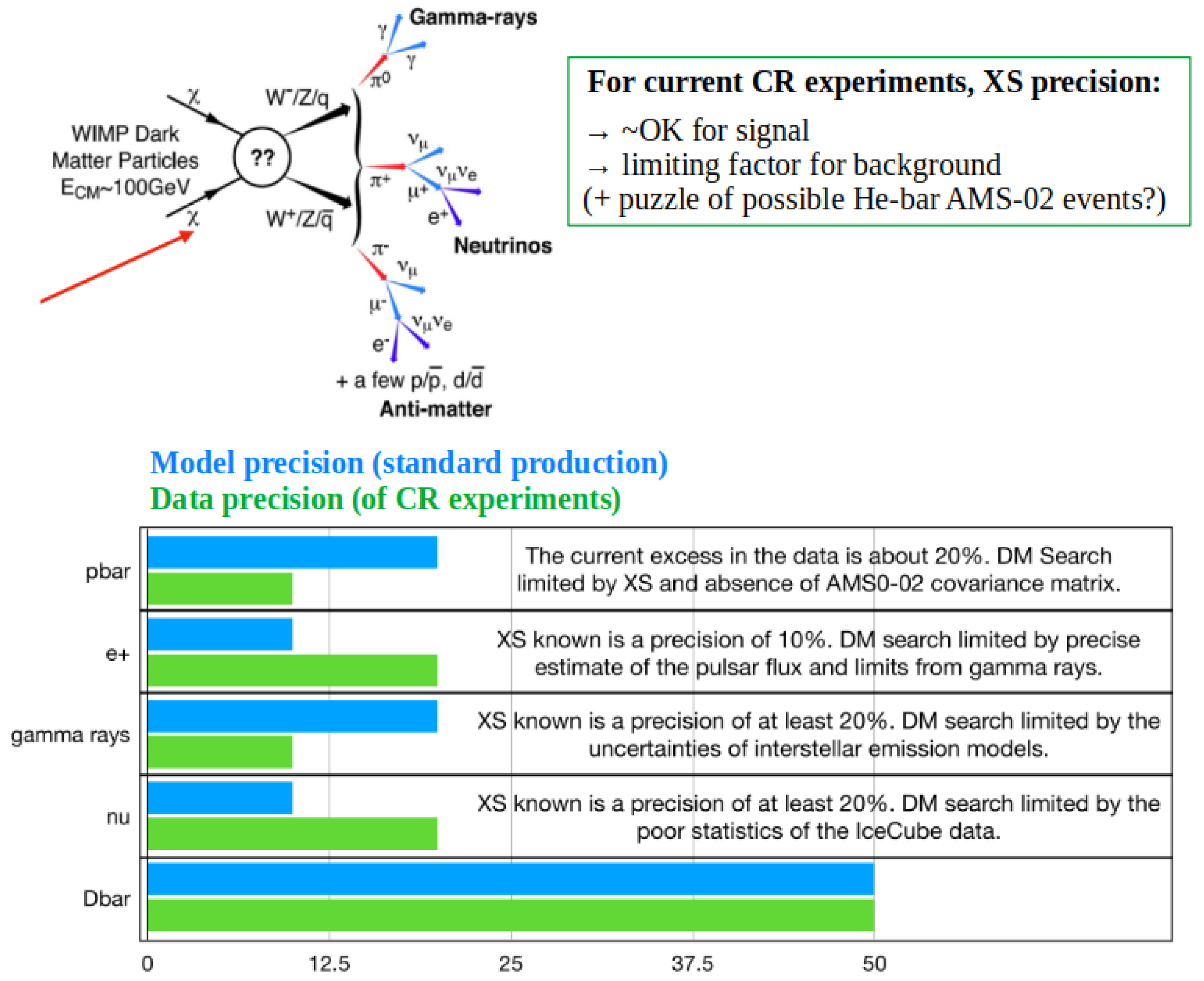
2. GCR Challenges and XS Limitations
2.1. Astrophysical Challenges
2.2. New Physics Challenges
3. XSCRC2024 Highlights
3.1. Recent Results from Direct Detection CR Experiments
3.2. Production XS for Nuclei and Facilities
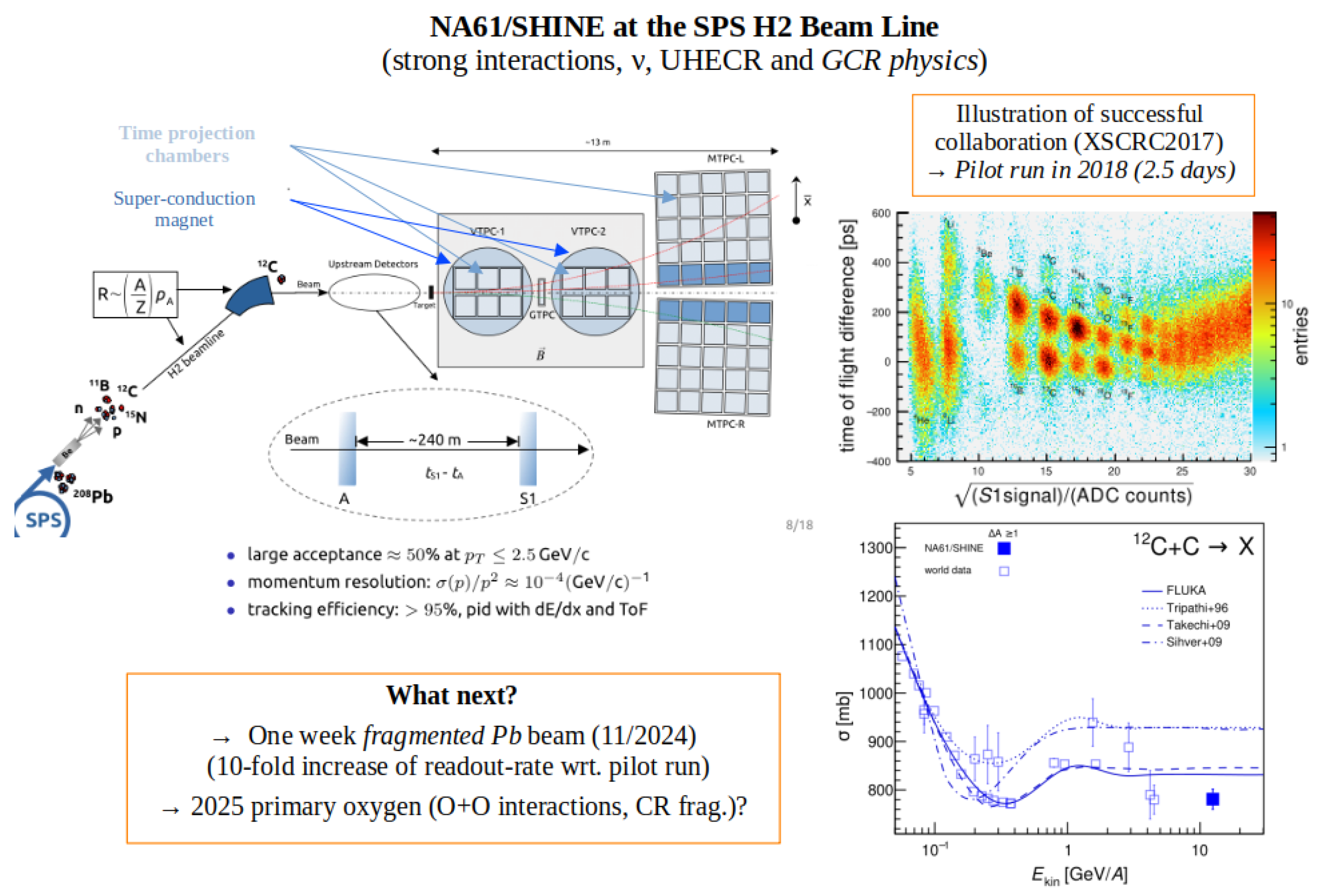
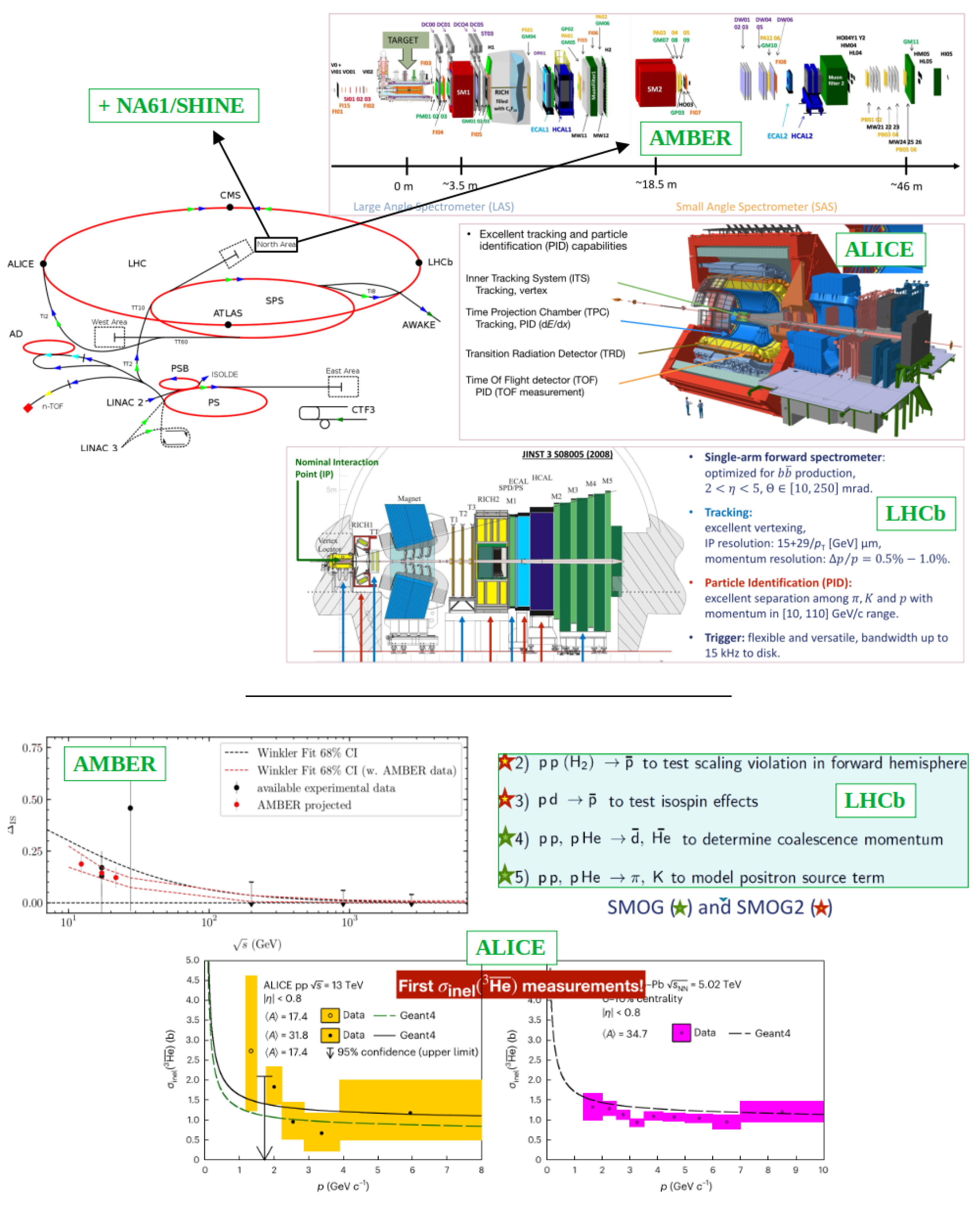
- NA61/SHINE at CERN SPS: This detector was designed for strong interaction, , and ultra-high-energy CR physics, but a proposal for measuring the highly ranked XS for GCRs was made as a follow-up of XSCRC2017. A successful pilot run took place in 2018 (for 2.5 days), demonstrating its capability for GCR physics [12]: its high-performance superconducting magnet and high-resolution time projection chamber enables the separation of all the fragments of the reactions needed for GCRs. The measurement were made at ∼10 GeV/n. A second run (one week) was planned (at the time of the conference) for late 2024, with a 10-fold increase in the readout rate. There could also be plans for primary oxygen beams in 2025 for CR fragmentation studies. This is illustrated in Figure 3.
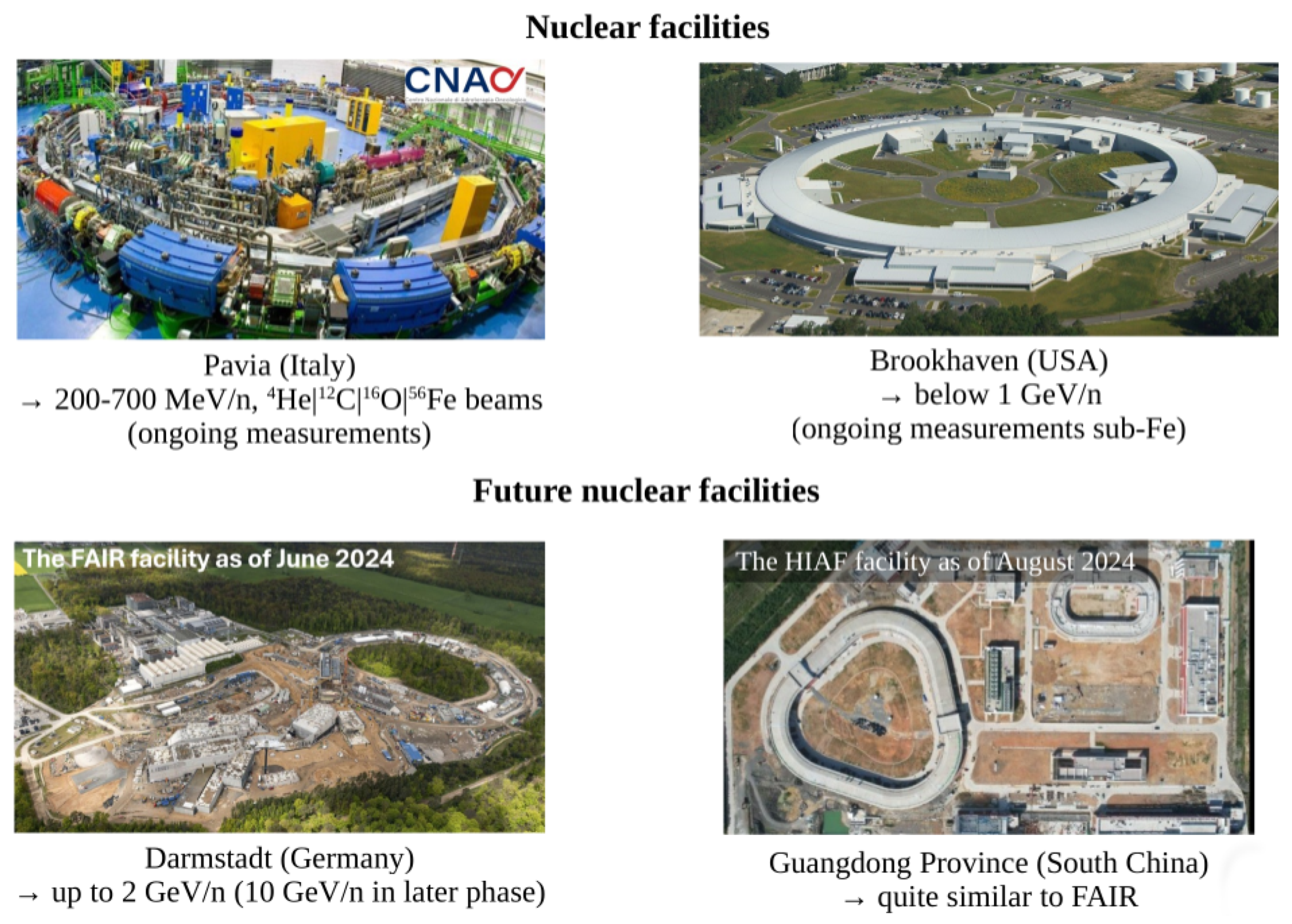
- CNAO (Italy): This facility [13] is dedicated to hadron-therapy studies, that is, the use of beams of protons or heavier ions (like carbon) to precisely target and destroy cancerous tumours. Some measurements in these fields overlap with those for GCRs and space radiation protection, and ongoing measurements with 4He, 12C, 16O, 56Fe beams are carried out at 200–700 MeV/n by the FOOT collaboration [14]. These measurements are of great interest for the GCR community.
- Brookhaven (USA): This facility has been used in the last 30 years to perform sub-GeV/n production XS measurements. In the context of forthcoming high-precision sub-Fe fluxes in GCRs, some measurements are ongoing to improve the precision of existing XS.
3.3. XS for Anti-Nuclei and CERN Experiments
- Experiments using the SPS beam [20] (secondary fragmentation beams from 10 to 158 GeV/n): AMBER will measure the level of isospin asymmetry in the antiproton production, while NA61/SHINE [21], in addition to the production of nuclei, is measuring antiprotons and the coalescence mechanisms, via pp, pC, and heavy species collisions.
- Experiments at LHC (collisions of p, Pb, and lighter ions up to 13.6 TeV): ALICE [22] has measured antiproton production in pp, pPb, PbPb, and XeXe collisions at several collision energies and particle multiplicities. It has also performed the first measurement of the inelastic XS of 3 [23], which is another important ingredient for their transport in the Galaxy. LHCb [24], thanks to the SMOG device [25] (injection of gas in a cell on the beam passage), has already performed pHe antiproton production measurements, and demonstrated the feasibility to constrain anti-deuteron production in the same system. The SMOG2 upgrade [26] will allow testing the scaling violation in the forward hemisphere of the antiproton XS, as well as to test isospin effects, other than to repeat and improve the antiproton production measurements in pp, pD, and pHe collisions. Finally, LHCf [27] has acquired pp data for high-precision measurements on forward , production, as well as the first ever measurement of production in the forward region; these data will be useful to improve the -ray flux modelling.
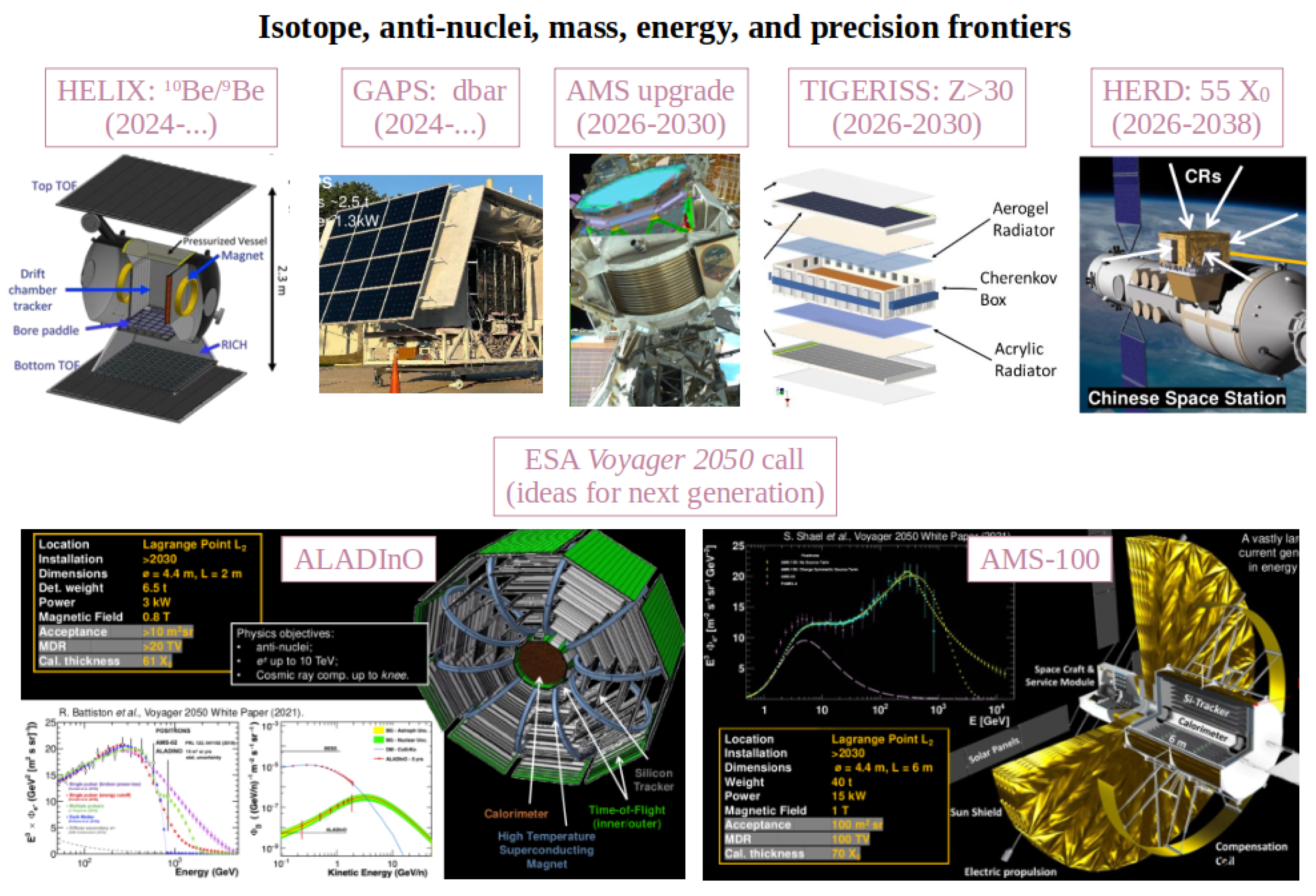
3.4. Forthcoming GCR Experiments
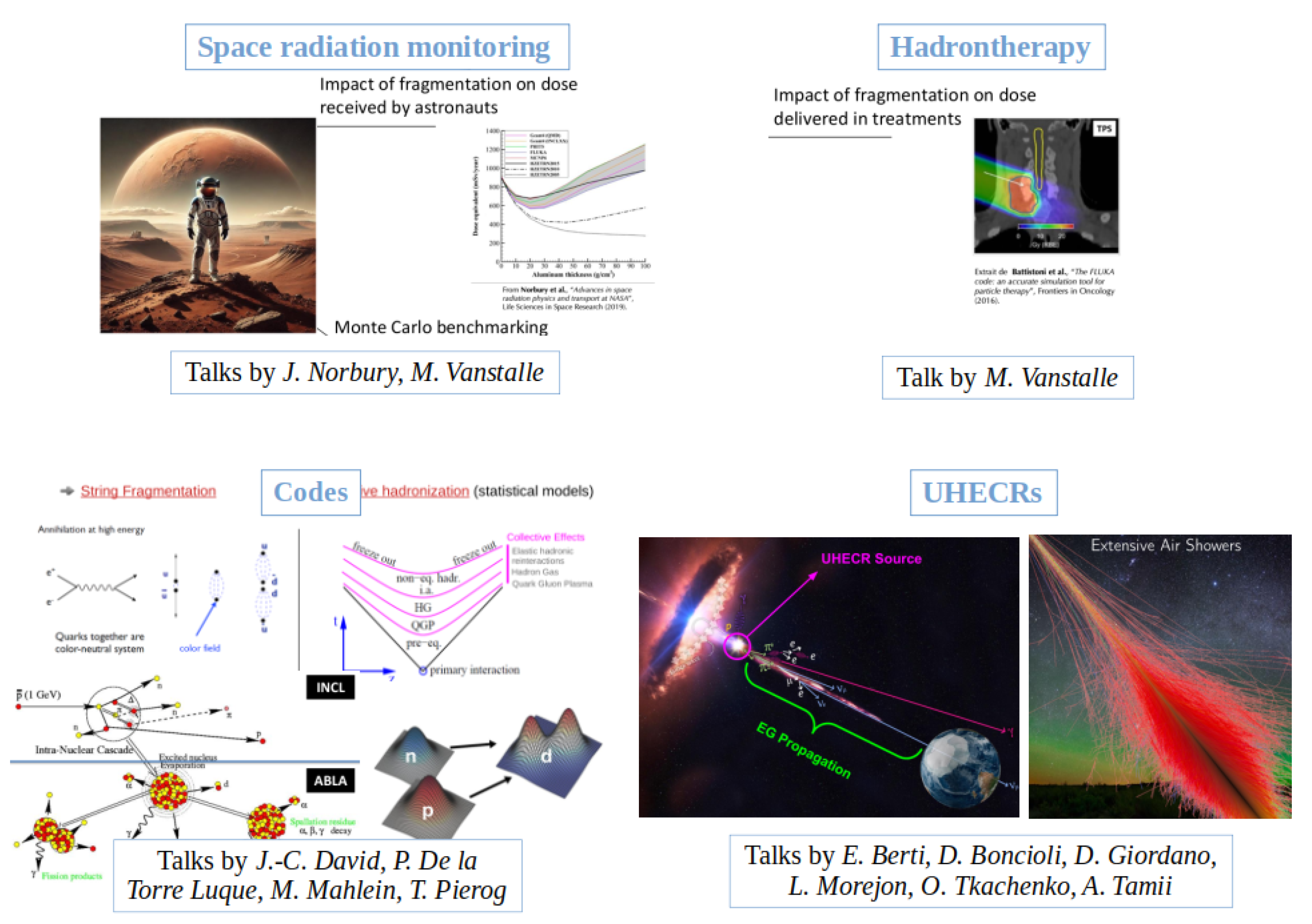
3.5. Overlapping Interests, Codes, and Other Synergies
3.5.1. Space Radiation Protection, Hadron-Therapy, and Cosmogenic Studies
3.5.2. XS Codes
3.5.3. Ultra-High Energy CRs (UHECR)
4. Summary, Outcomes, and Next Steps
4.1. XSCRC2024 and Next Edition
4.2. Beyond XSCRC: Ensuring XS Measurements
- Our community turned the envisioned white paper into a comprehensive review paper for Physics Report: Precision cross-sections for advancing cosmic-ray physics and other applications: a comprehensive programme for the next decade [44].
- An abridged version, more focused on CERN experiments, was submitted as a contribution of the CR community to the ESPPU (European Strategy for Particle Physics Update): Precision cross-sections for advancing cosmic-ray physics. Input to the 2026 ESPPU from the XSCRC community [45].
- In response to CERN’s latest call for proposals for experiments at the AD (Antiproton Decelerator) and at ELENA (Extra Low Energy Antiproton ring), a LoI (Letter of Intent) was written to construct a new experiment for investigating antiproton and anti-deuteron interactions over a broad range of energies: Precision Measurement of the Cross-Sections for Inelastic Interactions of Antiprotons and Antideuterons with Nuclei for Cosmic-Ray Research [46].
Author Contributions
Funding
Data Availability Statement
Acknowledgments
Conflicts of Interest
References
- Cirelli, M.; Strumia, A.; Zupan, J. Dark Matter. arXiv 2024, arXiv:2406.01705. [Google Scholar] [CrossRef]
- Bertucci, B.; Donato, F.; Giudice, G.; Passaleva, G.; Serpico, P.D. XSCRC2017: Cross Sections for Cosmic Rays @ CERN. 2017. Available online: https://indico.cern.ch/event/563277/ (accessed on 11 December 2025).
- Bertucci, B.; Donato, F.; Kopp, J.; Maurin, D.; Unger, M. XSCRC2019: Cross Sections for Cosmic Rays @ CERN. 2019. Available online: https://indico.cern.ch/event/820869/ (accessed on 11 December 2025).
- Donato, F.; Mariani, S.; Maurin, D. XSCRC2024: Cross Sections for Cosmic Rays @ CERN. 2024. Available online: https://indico.cern.ch/event/1377509/ (accessed on 11 December 2025).
- Aguilar, M.; Cavasonza, L.A.; Ambrosi, G.; Arruda, L.; Attig, N.; Barao, F.; Barrin, L.; Bartoloni, A.; Başeğmez-du Pree, S.; Bates, J.; et al. The Alpha Magnetic Spectrometer on the international space station: Part II—Results from the first seven years. Phys. Rep. 2021, 894, 1–116. [Google Scholar] [CrossRef]
- Torii, S. Calorimetric electron telescope mission. Search for dark matter and nearby sources. Nucl. Instrum. Methods Phys. Res. Sect. A 2011, 630, 55–57. [Google Scholar] [CrossRef]
- Chang, J.; Ambrosi, G.; An, Q.; Asf iyarov, R.; Azzarello, P.; Bernardini, P.A.; Bertucci, B.; Cai, M.S.; Caragiulo, M.; Chen, D.Y.; et al. The DArk Matter Particle Explorer mission. Astropart. Phys. 2017, 95, 6–24. [Google Scholar] [CrossRef]
- Yan, Q.; Choutko, V.; Oliva, A.; Paniccia, M. Measurements of nuclear interaction cross sections with the Alpha Magnetic Spectrometer on the International Space Station. Nucl. Phys. A 2020, 996, 121712. [Google Scholar] [CrossRef]
- Alemanno, F.; An, Q.; Azzarello, P.; Barbato, F.C.T.; Bernardini, P.; Bi, X.J.; Cagnoli, I.; Cai, M.S.; Casilli, E.; Catanzani, E.; et al. Hadronic cross section measurements with the DAMPE space mission using 20 GeV-10 TeV cosmic-ray protons and 4He. Phys. Rev. D 2025, 111, 012002. [Google Scholar] [CrossRef]
- Génolini, Y.; Maurin, D.; Moskalenko, I.V.; Unger, M. Current status and desired precision of the isotopic production cross sections relevant to astrophysics of cosmic rays. II. Fluorine to silicon and updated results for Li, Be, and B. Phys. Rev. C 2024, 109, 064914. [Google Scholar] [CrossRef]
- Rauch, B.F.; Zober, W.V.; Borda, R.F.; Bose, R.G.; Braun, D.L.; Buckley, J.; Calderon, J.; Cannady, N.W.; Caputo, R.; Coutu, S.; et al. The Trans-Iron Galactic Element Recorder for the International Space Station (TIGERISS). In Proceedings of the 38th ICRC, Nagoya, Japan, 26 July–3 August 2023; p. 171. [Google Scholar] [CrossRef]
- NA61/SHINE Collaboration. Measurement of the mass-changing, charge-changing and production cross sections of 11C, 11B and 10B nuclei in 12C+p interactions at 13.5 GeV/c per nucleon. arXiv 2024, arXiv:2410.18273. [Google Scholar]
- Rossi, S. The National Centre for Oncological Hadrontherapy (CNAO): Status and perspectives. Phys. Medica 2015, 31, 333–351. [Google Scholar] [CrossRef]
- Battistoni, G.; Toppi, M.; Patera, V.; The FOOT Collaboration. Measuring the impact of Nuclear Interaction in Particle Therapy and in Radio Protection in Space: The FOOT experiment. Front. Phys. 2021, 8, 555. [Google Scholar] [CrossRef]
- Stoecker, H. FAIR at GSI. In Challenges and Goals for Accelerators in the XXI Century; Kester, O., Spiller, P., Eds.; World Scientific Publishing Co., Pte. Ltd.: Singapore, 2016; Chapter 32; pp. 611–622. [Google Scholar] [CrossRef]
- Zhou, X.; Yang, J. Status of the high-intensity heavy-ion accelerator facility in China. AAPPS Bull. 2022, 32, 35. [Google Scholar] [CrossRef]
- Korsmeier, M.; Donato, F.; Di Mauro, M. Production cross sections of cosmic antiprotons in the light of new data from the NA61 and LHCb experiments. Phys. Rev. D 2018, 97, 103019. [Google Scholar] [CrossRef]
- Winkler, M.W. Cosmic Ray Antiprotons at High Energies. J. Cosmol. Astropart. Phys. 2017, 2, 048. [Google Scholar] [CrossRef]
- Aramaki, T.; Hailey, C.J.; Boggs, S.E.; Von Doetinchem, P.; Fuke, H.; Mognet, S.I.; Ong, R.A.; Perez, K.; Zweerink, J. Antideuteron sensitivity for the GAPS experiment. Astropart. Phys. 2016, 74, 6–13. [Google Scholar] [CrossRef]
- Buenerd, M.; Efthymiopoulos, I. A High Energy Secondary Beam of Ion Fragments for Instrumental Tests at CERN. Technical Report CERN-AB-2003-052-ATB, CERN, 2003. Available online: https://cds.cern.ch/record/622246 (accessed on 11 December 2025).
- Abgrall, N.; Andreeva, O.; Aduszkiewicz, A.; Ali, Y.; Anticic, T.; Antoniou, N.; Baatar, B.; Bay, F.; Blondel, A.; Blumer, J.; et al. NA61/SHINE facility at the CERN SPS: Beams and detector system. J. Instrum. 2014, 9, 6005P. [Google Scholar] [CrossRef]
- Aamodt, K.; Quintana, A.A.; Achenbach, R.; Acounis, S.; Adamová, D.; Adler, C.; Aggarwal, M.; Agnese, F.; Rinella, G.A.; Ahammed, Z.; et al. The ALICE experiment at the CERN LHC. J. Instrum. 2008, 3, S08002. [Google Scholar] [CrossRef]
- ALICE Collaboration. Measurement of anti-3He nuclei absorption in matter and impact on their propagation in the Galaxy. Nat. Phys. 2023, 19, 61–71. [Google Scholar] [CrossRef]
- Alves, A.A., Jr.; Andrade Filho, L.M.; Barbosa, A.F.; Bediaga, I.; Cernicchiaro, G.; Guerrer, G.; Lima, H.P., Jr.; Machado, A.A.; Magnin, J.; Marujo, F.; et al. The LHCb detector at the LHC. J. Instrum. 2008, 3, S08005. [Google Scholar] [CrossRef]
- Barschel, C. Precision Luminosity Measurement at LHCb with Beam-Gas Imaging. Ph.D. Thesis, RWTH Aachen University, Aachen, Germany, 5 March 2014. [Google Scholar]
- Garcia, O.B.; Bregliozzi, G.; Calegari, D.; Carassiti, V.; Ciullo, G.; Coco, V.; Collins, P.; Pinto, P.C.; De Angelis, C.; Di Nezza, P.; et al. High-density gas target at the LHCb experiment. Phys. Rev. Accel. Beams 2024, 27, 111001. [Google Scholar] [CrossRef]
- Adriani, O.; Bonechi, L.; Bongi, M.; Castellini, G.; D’Alessandro, R.; Faus, D.A.; Fukui, K.; Grandi, M.; Haguenauer, M.; Itow, Y.; et al. The LHCf detector at the CERN Large Hadron Collider. J. Instrum. 2008, 3, S08006. [Google Scholar] [CrossRef]
- Coutu, S.; Allison, P.S.; Baiocchi, M.; Beatty, J.J.; Beaufore, L.; Calderón, D.H.; Castano, A.G.; Chen, Y.; Green, N.; Hanna, D.; et al. The High Energy Light Isotope eXperiment program of direct cosmic-ray studies. J. Instrum. 2024, 19, C01025. [Google Scholar] [CrossRef]
- Stoessl, A.; Aramaki, T.; Boezio, M.; Boggs, S.E.; Bonvicini, V.; Bridges, G.; Campana, D.; Craig, W.W.; von Doetinchem, P.; Everson, E.; et al. The GAPS experiment—A search for light cosmic ray antinuclei. In Proceedings of the 38th ICRC, Nagoya, Japan, 26 July–3 August 2023; p. 1440. [Google Scholar] [CrossRef]
- Kounine, A.; On behalf of the AMS Collaboration. Understanding the Origin of Cosmic-Ray Electrons. In Proceedings of the 38th ICRC, Nagoya, Japan, 26 July–3 August 2023; p. 65. [Google Scholar] [CrossRef]
- Kyratzis, D. Overview of the HERD space mission. Phys. Scr. 2022, 97, 054010. [Google Scholar] [CrossRef]
- Battiston, R.; Bertucci, B.; Adriani, O.; Ambrosi, G.; Baudouy, B.; Blasi, P.; Boezio, M.; Campana, D.; Derome, L.; De Mitri, I.; et al. High precision particle astrophysics as a new window on the universe with an Antimatter Large Acceptance Detector in Orbit (ALADInO). Exp. Astron. 2021, 51, 1299–1330. [Google Scholar] [CrossRef]
- Schael, S.; Atanasyan, A.; Berdugo, J.; Bretz, T.; Czupalla, M.; Dachwald, B.; von Doetinchem, P.; Duranti, M.; Gast, H.; Karpinski, W.; et al. AMS-100: The next generation magnetic spectrometer in space–An international science platform for physics and astrophysics at Lagrange point 2. Nucl. Instrum. Methods Phys. Res. A 2019, 944, 162561. [Google Scholar] [CrossRef] [PubMed]
- Norbury, J.W.; Miller, J.; Adamczyk, A.M.; Heilbronn, L.H.; Townsend, L.W.; Blattnig, S.R.; Norman, R.B.; Guetersloh, S.B.; Zeitlin, C.J. Nuclear data for space radiation. Radiat. Meas. 2012, 47, 315–363. [Google Scholar] [CrossRef]
- Luehr, A.; Hansen, D.C.; Teiwes, R.; Sobolevsky, N.; Jaekel, O.; Bassler, N. The impact of modeling nuclear fragmentation on delivered dose and radiobiology in ion therapy. Phys. Med. Biol. 2012, 57, 5169. [Google Scholar] [CrossRef]
- David, J.C.; Leya, I. Spallation, cosmic rays, meteorites, and planetology. Prog. Part. Nucl. Phys. 2019, 109, 103711. [Google Scholar] [CrossRef]
- Boudard, A.; Cugnon, J.; David, J.C.; Leray, S.; Mancusi, D. New potentialities of the Liège intranuclear cascade model for reactions induced by nucleons and light charged particles. Phys. Rev. C 2013, 87, 014606. [Google Scholar] [CrossRef]
- De la Torre Luque, P.; Mazziotta, M.N.; Ferrari, A.; Loparco, F.; Sala, P.; Serini, D. FLUKA cross sections for cosmic-ray interactions with the DRAGON2 code. J. Cosmol. Astropart. Phys. 2022, 7, 008. [Google Scholar] [CrossRef]
- Pierog, T.; Karpenko, I.; Katzy, J.M.; Yatsenko, E.; Werner, K. EPOS LHC: Test of collective hadronization with data measured at the CERN Large Hadron Collider. Phys. Rev. C 2015, 92, 034906. [Google Scholar] [CrossRef]
- Mahlein, M.; Pinto, C.; Fabbietti, L. ToMCCA: A Toy Monte Carlo Coalescence Afterburner. Eur. Phys. J. C 2024, 84, 1136. [Google Scholar] [CrossRef] [PubMed]
- Arina, C.; Di Mauro, M.; Fornengo, N.; Heisig, J.; Jueid, A.; Ruiz de Austri, R. CosmiXs: Cosmic messenger spectra for indirect dark matter searches. J. Cosmol. Astropart. Phys. 2024, 2024, 035. [Google Scholar] [CrossRef]
- Boncioli, D.; Fedynitch, A.; Winter, W. Nuclear Physics Meets the Sources of the Ultra-High Energy Cosmic Rays. Sci. Rep. 2017, 7, 4882. [Google Scholar] [CrossRef] [PubMed]
- Tamii, A.; Pellegri, L.; Söderström, P.-A.; Allard, D.; Goriely, S.; Inakura, T.; Khan, E.; Kido, E.; Kimura, M.; Litvinova, E.; et al. PANDORA Project for the study of photonuclear reactions below A = 60. Eur. Phys. J. A 2023, 59, 208. [Google Scholar] [CrossRef]
- Maurin, D.; Audouin, L.; Berti, E.; Coppin, P.; Di Mauro, M.; von Doetinchem, P.; Donato, F.; Evoli, C.; Génolini, Y.; Ghosh, P.; et al. Precision cross-sections for advancing cosmic-ray physics and other applications: A comprehensive programme for the next decade. arXiv 2025, arXiv:2503.16173. [Google Scholar] [CrossRef]
- Mariani, S.; Audouin, L.; Berti, E.; Coppin, P.; Di Mauro, M.; von Doetinchem, P.; Donato, F.; Evoli, C.; Génolini, Y.; Ghosh, P.; et al. Precision cross-sections for advancing cosmic-ray physics. Input to the 2026 ESPPU from the XSCRC community. arXiv 2025, arXiv:2503.22783. [Google Scholar] [CrossRef]
- Losekamm, M.J.; Poeschl, T.; Aramaki, T.; Audouin, L.; Chiosso, M.; D’Angelo, F.; De la Torre Luque, P.; von Doetinchem, P.; Donato, F.; Doshita, N.; et al. Precision Measurement of the Cross-Sections for Inelastic Interactions of Antiprotons and Antideuterons with Nuclei for Cosmic-Ray Research. 2025. Available online: https://cds.cern.ch/record/2931063 (accessed on 11 December 2025).


Disclaimer/Publisher’s Note: The statements, opinions and data contained in all publications are solely those of the individual author(s) and contributor(s) and not of MDPI and/or the editor(s). MDPI and/or the editor(s) disclaim responsibility for any injury to people or property resulting from any ideas, methods, instructions or products referred to in the content. |
© 2026 by the authors. Licensee MDPI, Basel, Switzerland. This article is an open access article distributed under the terms and conditions of the Creative Commons Attribution (CC BY) license.
Share and Cite
Maurin, D.; Donato, F.; Mariani, S. High-Precision Cross-Sections for Galactic Cosmic Rays: Highlights from XSCRC2024 and Follow-Up Actions. Particles 2026, 9, 9. https://doi.org/10.3390/particles9010009
Maurin D, Donato F, Mariani S. High-Precision Cross-Sections for Galactic Cosmic Rays: Highlights from XSCRC2024 and Follow-Up Actions. Particles. 2026; 9(1):9. https://doi.org/10.3390/particles9010009
Chicago/Turabian StyleMaurin, David, Fiorenza Donato, and Saverio Mariani. 2026. "High-Precision Cross-Sections for Galactic Cosmic Rays: Highlights from XSCRC2024 and Follow-Up Actions" Particles 9, no. 1: 9. https://doi.org/10.3390/particles9010009
APA StyleMaurin, D., Donato, F., & Mariani, S. (2026). High-Precision Cross-Sections for Galactic Cosmic Rays: Highlights from XSCRC2024 and Follow-Up Actions. Particles, 9(1), 9. https://doi.org/10.3390/particles9010009