
Effects of Mixed Air on the Performance and Stiffness of a Viscous Fluid Damper
Abstract
1. Introduction
2. Nonlinear Viscous Fluid Dampers
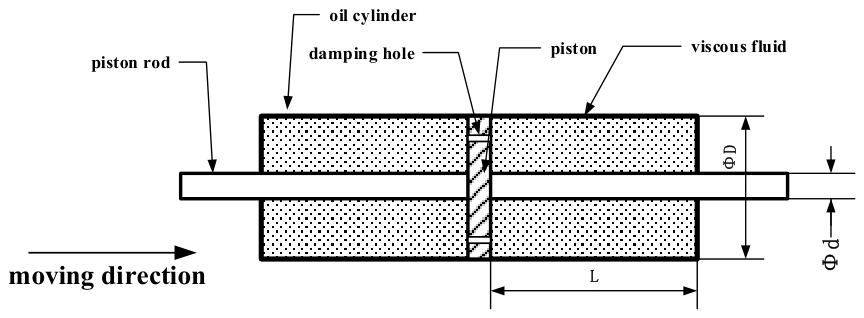
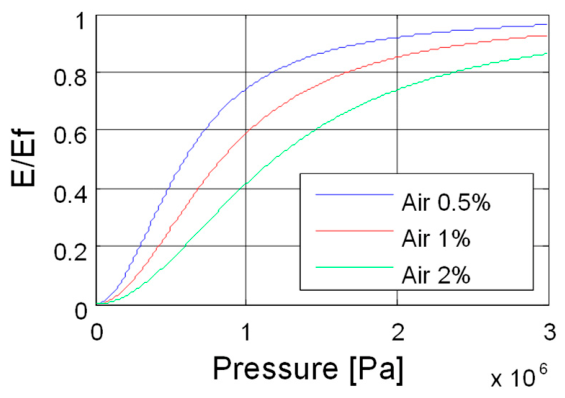
2.1. Theory
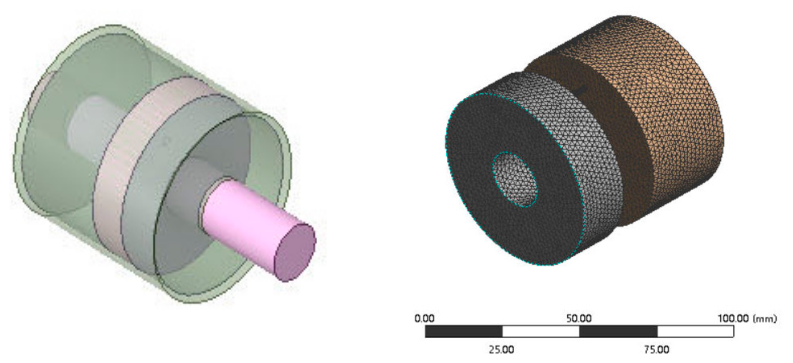
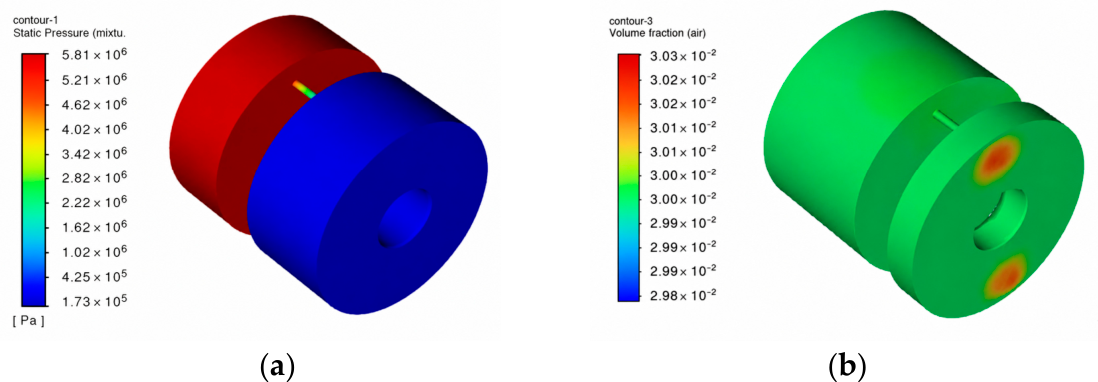
2.2. Finite Element Model
2.3. The Performance Under Dynamic Incentives
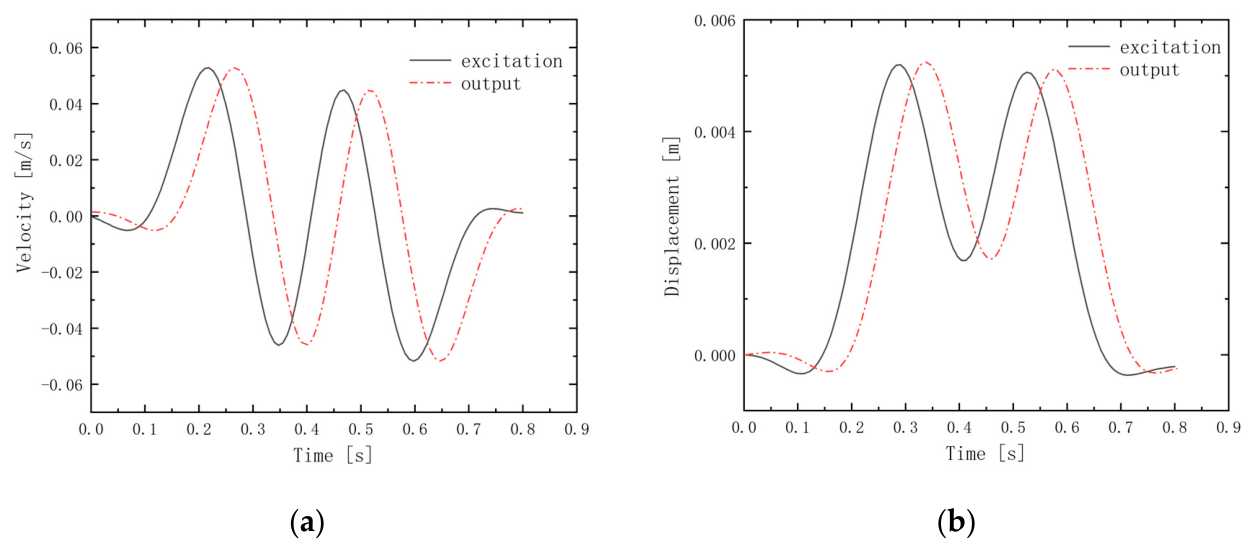
2.3.1. The Performance Under General Incentives
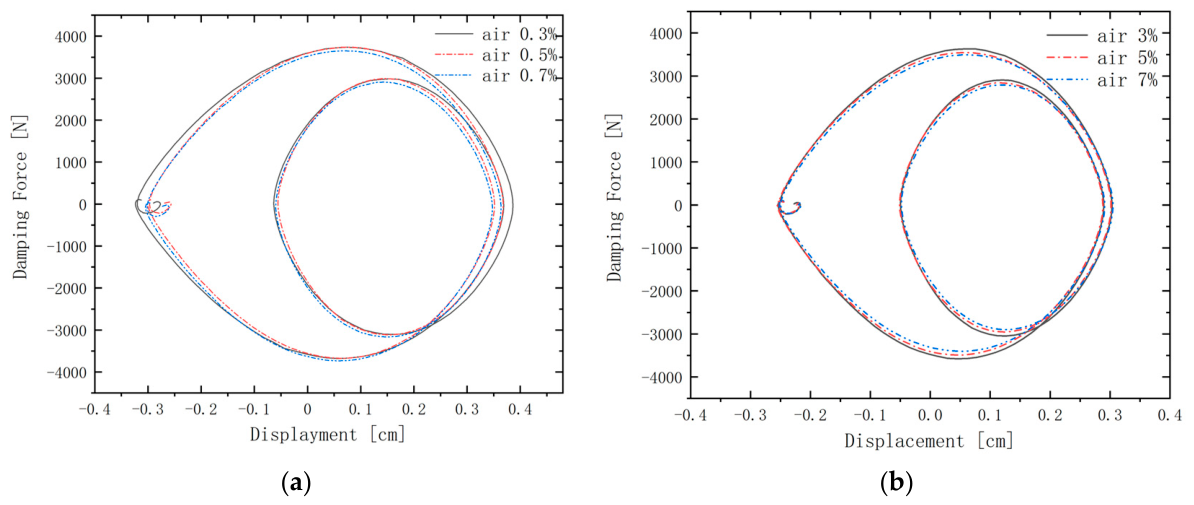
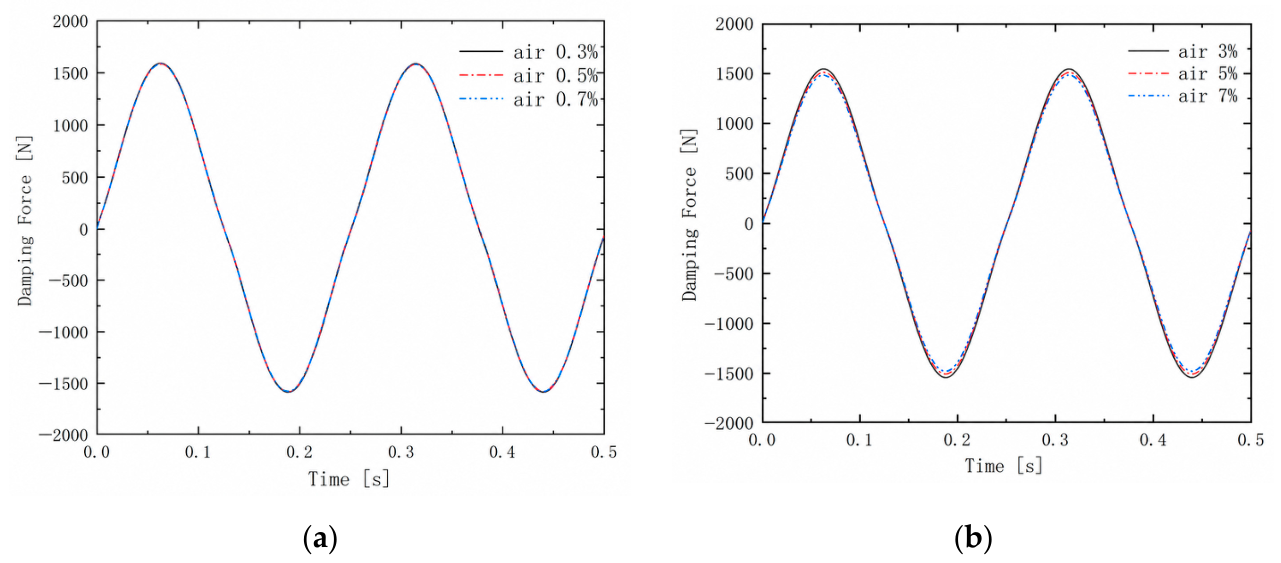
2.3.2. The Performance Under Simple Harmonic Incentives
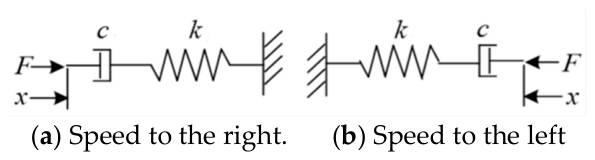
2.4. Dynamic Stiffness in the Nonlinear Series Model
3. Linear Stiffness and Linear Damping
3.1. Numerical Calculation Method
- Set the damping displacement at the initial time is 0, the elastic displacement and damping force are also 0.
- The change of excitation displacement from to is known, the damping force at time, the damping hole flow rate and stiffness are also known. Let the fluid velocity in the damping hole at time be , and the damping force at time be determined by Equation (7):
- Calculate the change of damper displacement :where is the number of damping holes of the same structure, is the area of a single damping hole.
- The stiffness at time is calculated by Formula (4). The elastic displacement change is determined by the damping force at time and calculated according to the following Equation (9):
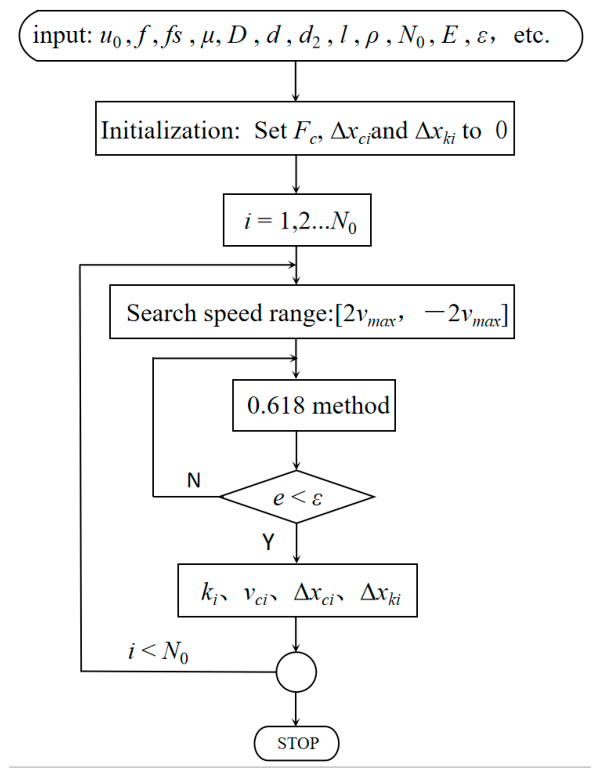
- The convergence condition for judging whether the round calculation is completed is:where is a very small positive number, which is used to control the accuracy of the computer. During the calculation process, we search for the optimal value of the fluid velocity at time between (the maximum flow rate is in the damping hole during not to consider the fluid compression), so that the convergence condition is satisfied, the final solution of and is obtained, and the next round of calculation is completed. Flowchart of the numerical iteration algorithm for solving the nonlinear series model can be seen from Figure 14.
3.2. Equivalent Linearization of the Damping and the Stiffness
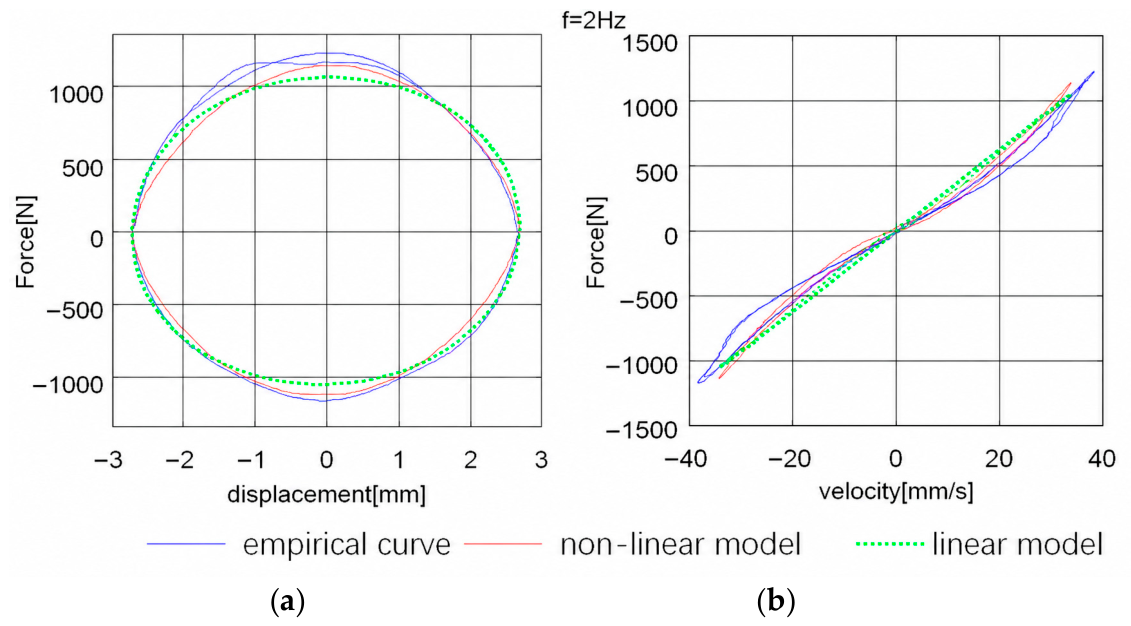
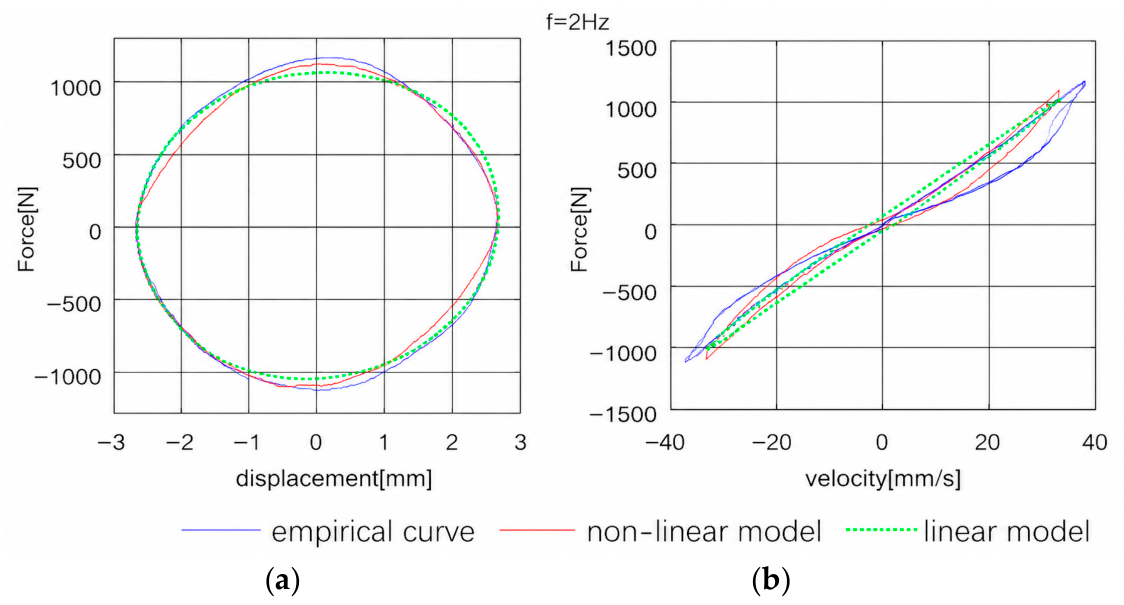
3.3. Validation of Equivalent Linear Models
4. Viscous Fluid Damper Experiment
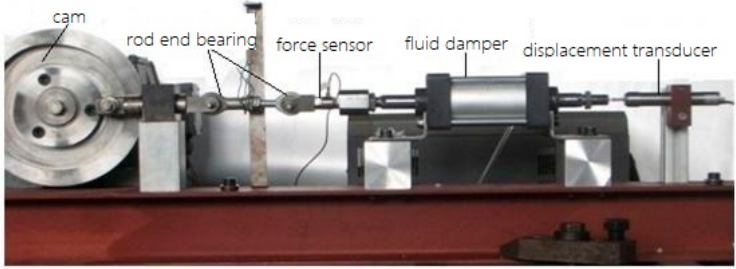
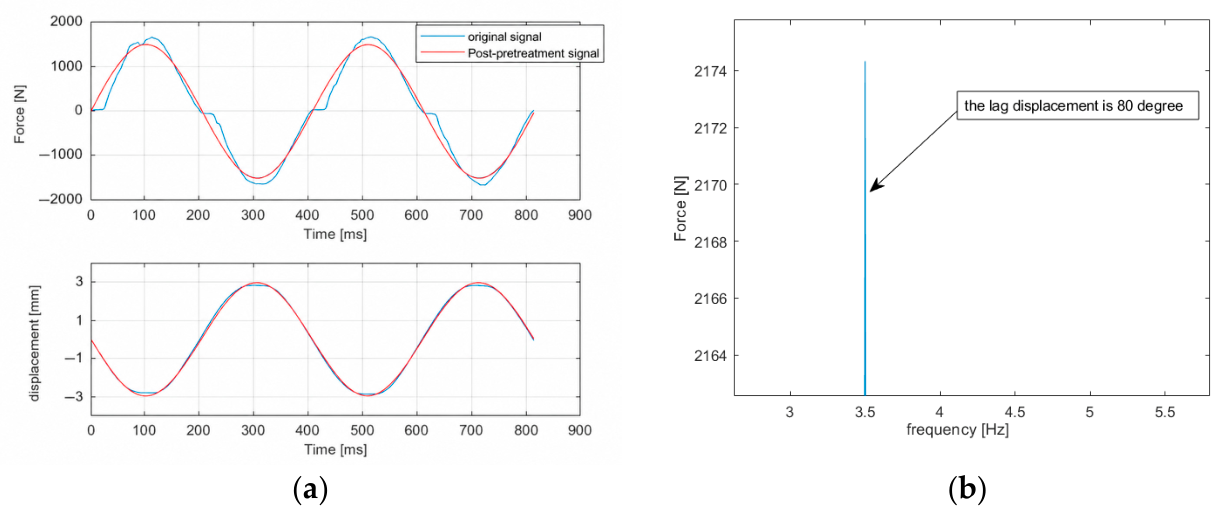
4.1. Experimental Setup and Input Excitation
4.2. Additional Stiffness and Damping at Different Air Content
4.3. Additional Stiffness and Damping at Different Frequencies
5. Conclusions
5.1. Summary of Key Findings
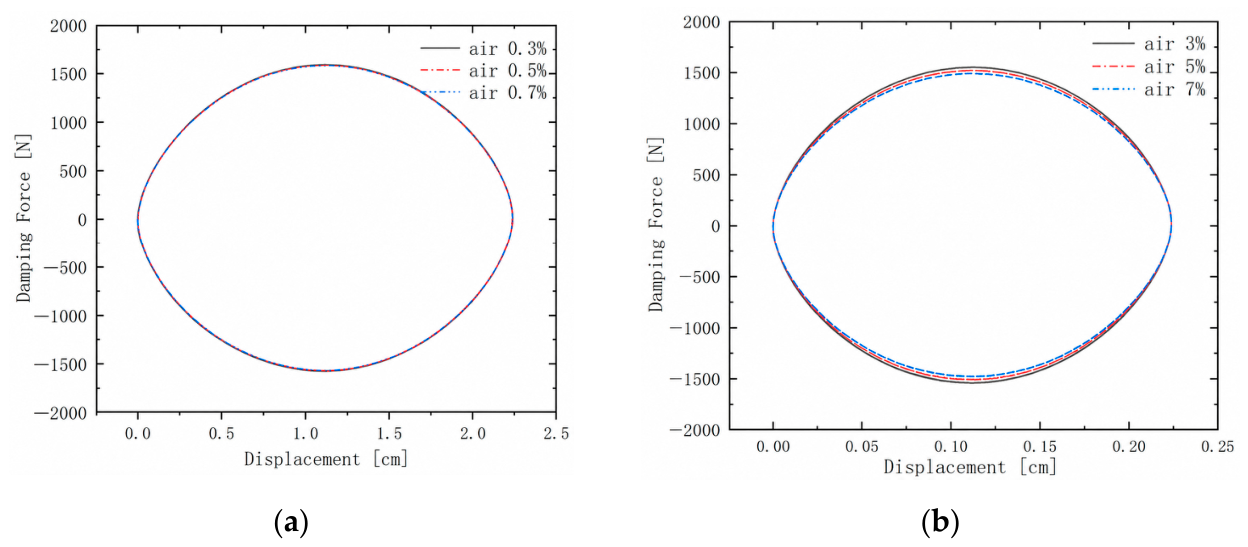
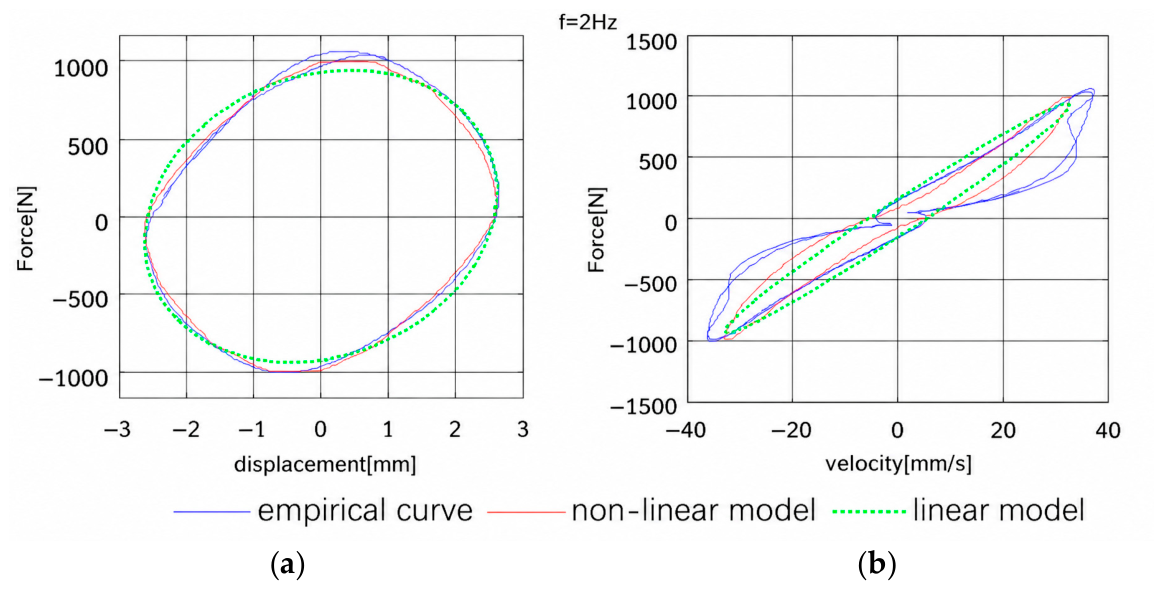
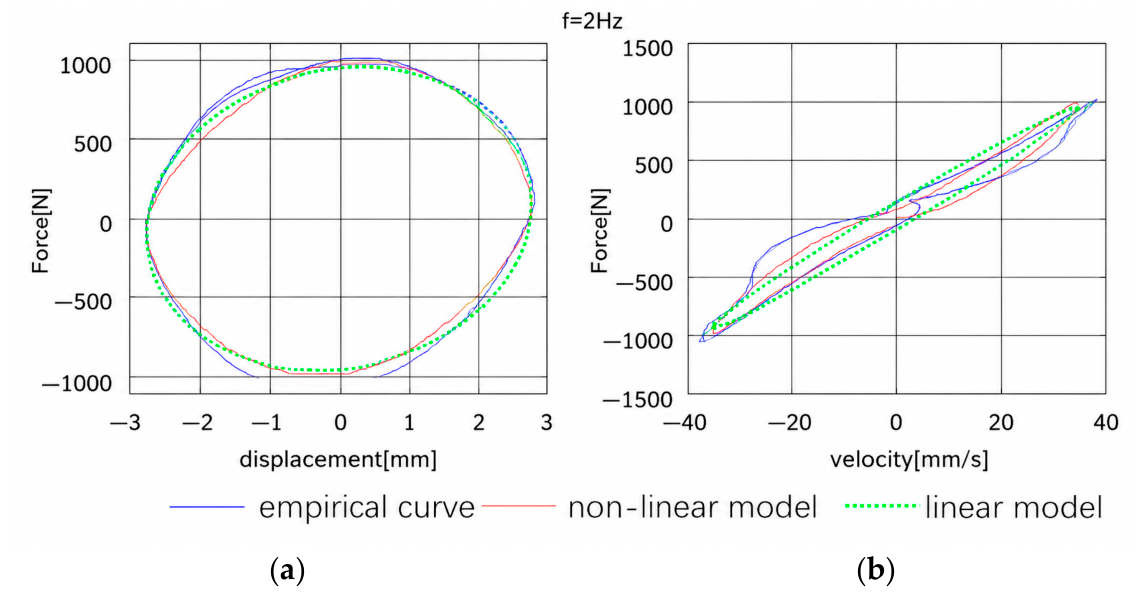
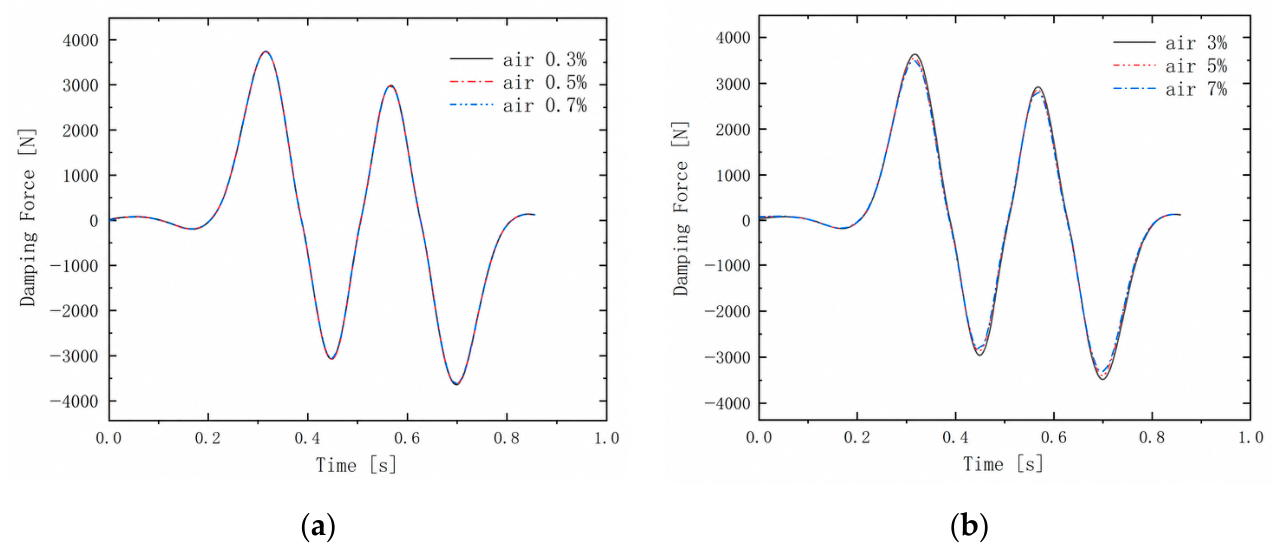
- When the air volume fraction is less than 1%, the entrained air has little effect on the damping force. When the air increase amount exceeds 1%, the damping force decreases noticeably, especially at the peak of dynamic excitation, and the reduction becomes more pronounced with higher air content.
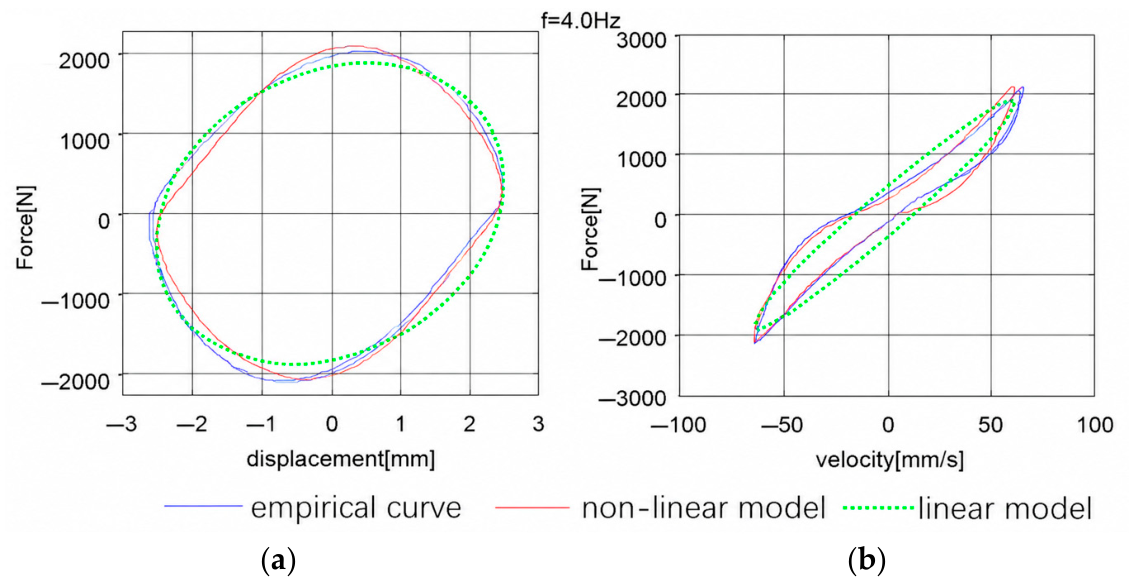
- The energy dissipation capacity of the damper decreases with increasing air content. The hysteresis curve becomes less full and increasingly tilted, and the enclosed area shrinks. The gap in the F-v curve widens with higher air mixture.
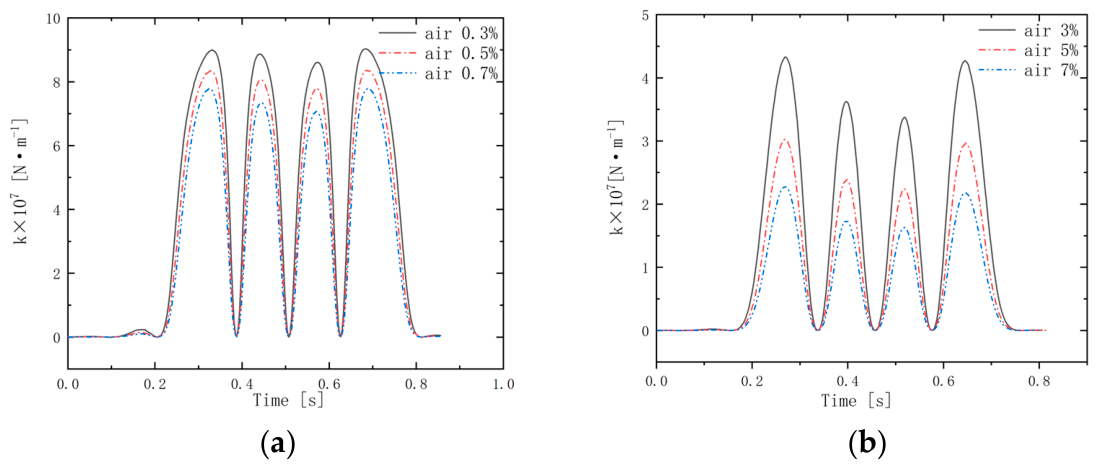
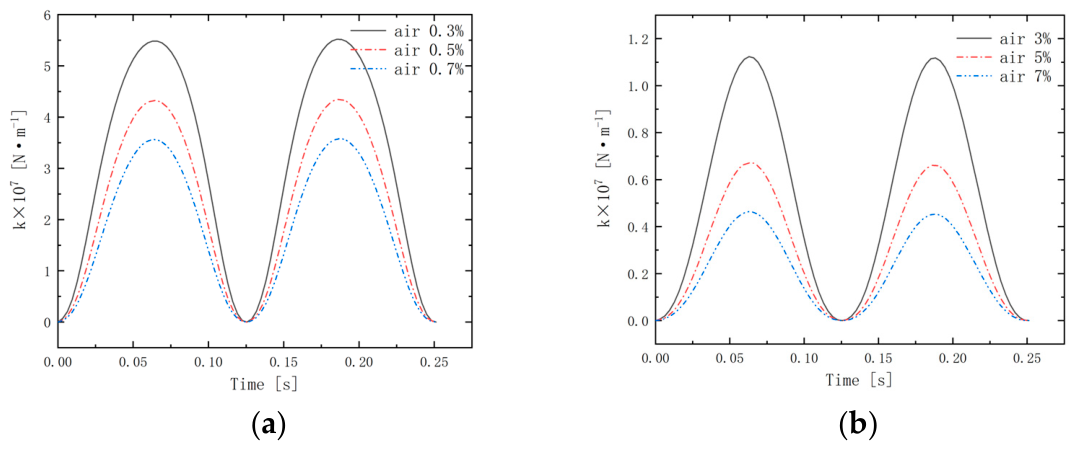
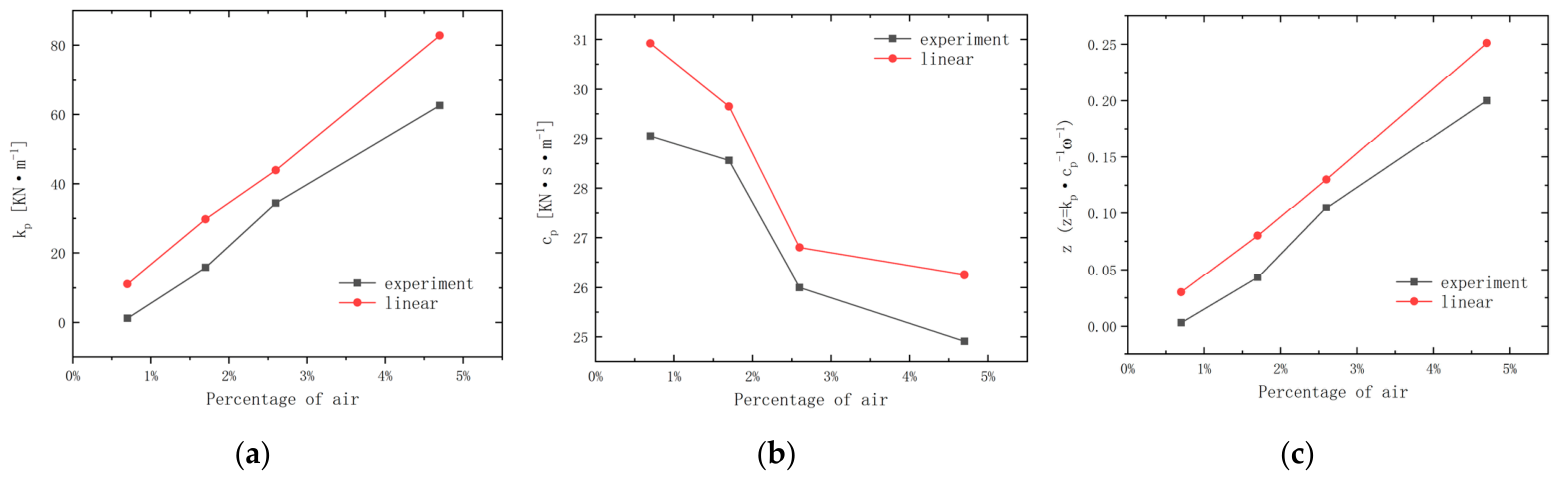
- The physical series stiffness (governed by the bulk modulus E) decreases with air content, while the equivalent parallel additional stiffness (kp) derived from the linearized model increases. This seemingly contradictory behavior is resolved by recognizing that kp represents the in-phase elastic force component that emerges from the compressibility-induced phase shift, rather than a direct physical spring.
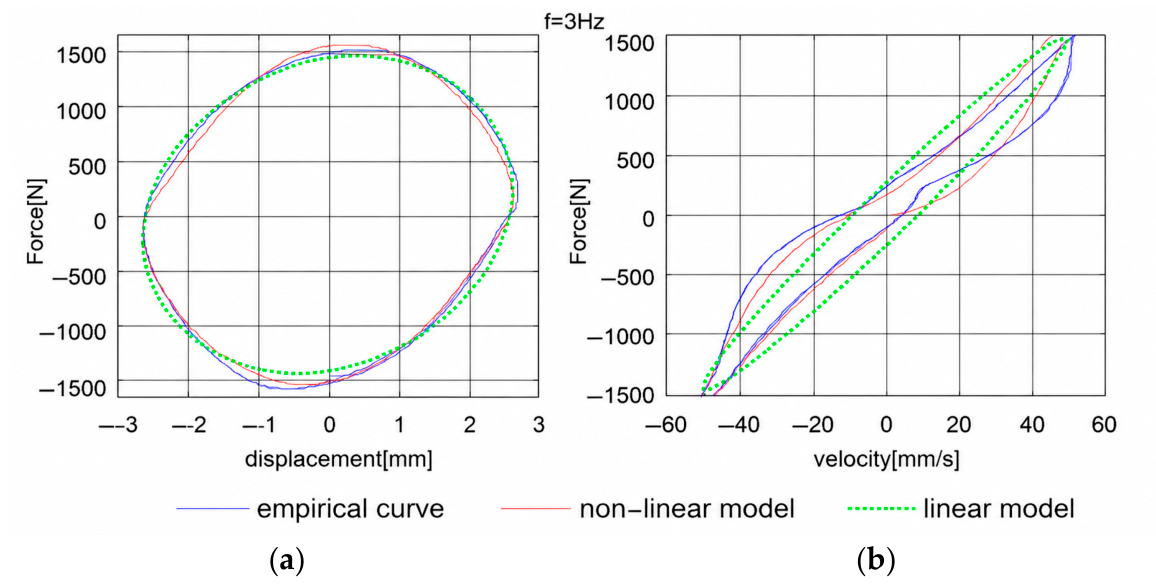
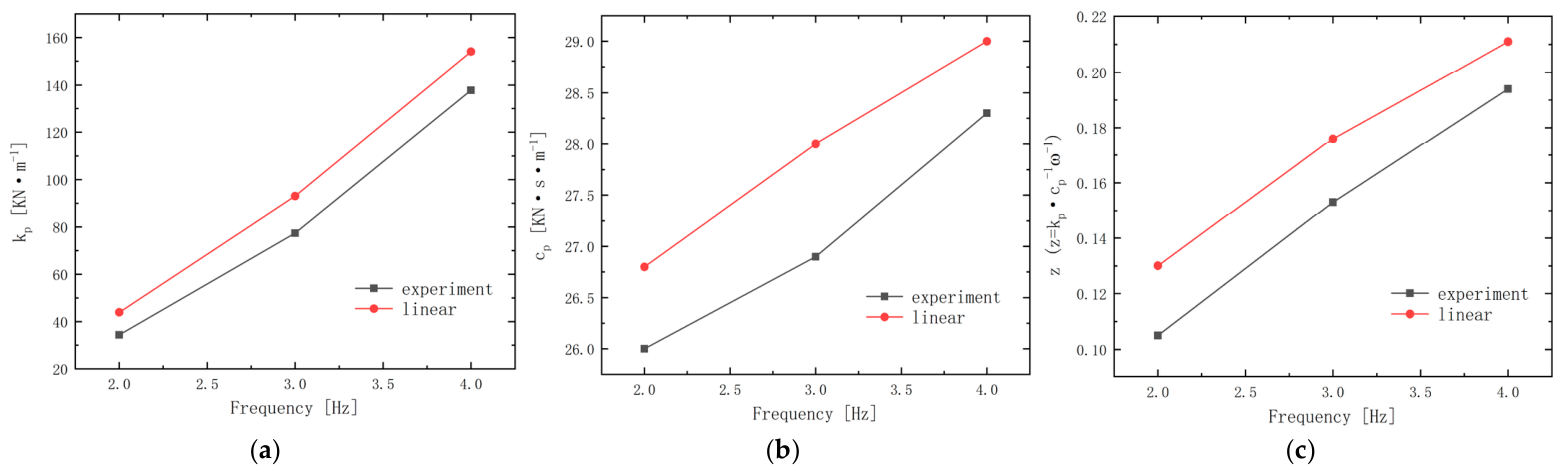
- The additional stiffness kp is highly sensitive to excitation frequency and amplitude, increasing with both. The damping coefficient c_p is much less affected by air content and frequency. The ratio z = kp/(cpω) therefore grows rapidly with air content and frequency, indicating that the elastic force dominates under these conditions.
5.2. Practical Engineering Implications
- The study shows that even a small amount of entrained air (as little as 1–3%) can significantly reduce energy dissipation (by up to 21% at 4.7% air content) and introduce non-negligible additional stiffness. Therefore, degassing procedures during fluid filling should be strictly enforced, and sealed damper designs should be verified for air-tightness to prevent air ingress over time.
- The observed thresholds of 1% and 3% are not universal constants. They depend on damper geometry (e.g., orifice diameter) and excitation conditions (frequency, amplitude). Engineers should conduct parametric analyses using the proposed model to determine the critical air content for their specific applications.
- For dampers subjected to high-frequency vibrations (e.g., machinery isolation, high-speed rail, wind-excited structures), even a 1% air mixture may produce measurable additional stiffness that could alter the natural frequency of the protected structure. In such cases, the model can be used to pre-evaluate the impact of residual air.
- The equivalent linear parallel model provides a simple yet predictive tool for balancing energy dissipation and additional stiffness. For example, reducing orifice diameter increases damping but also amplifies the frequency sensitivity of kp; this trade-off can be quantitatively assessed during the design phase using the proposed method.
5.3. Limitations and Future Research Directions
- The uniform bubble distribution assumption in the FEM and two-phase model may not hold under static or low-velocity conditions, where bubbles tend to coalesce and rise due to buoyancy. This non-uniformity is a source of uncertainty, particularly for kp measurements at low air contents (as reflected in the larger relative errors at 0.7% air content).
- The experimental frequency range was limited to 0.25–5 Hz for sinusoidal excitation and up to ~4 Hz for dynamic tests. The trends at higher frequencies (e.g., >10 Hz) were extrapolated from the model and require experimental validation.
- The model does not account for temperature-dependent viscosity or thermal-pressure coupling, which may become important under long-duration or high-energy loading (e.g., seismic events).
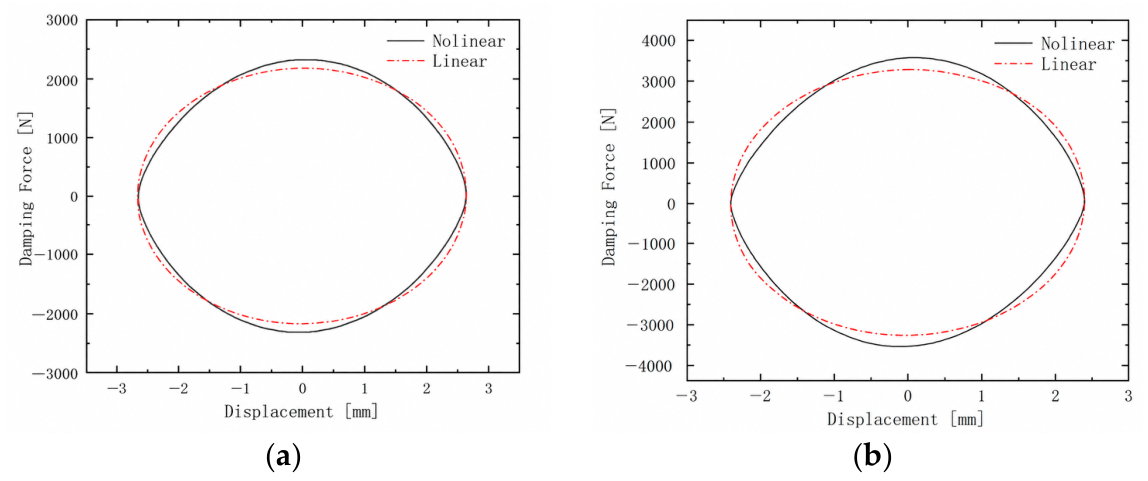
- The equivalent linearization method, while predictive, yields large relative errors for kp at very low air contents (e.g., 856% at 0.7%), because the experimental value approaches the measurement noise floor. At practically significant air contents (≥1.7%), the relative errors for kp range from 32% to 89%, which are larger than those for cp (typically <6%). This reflects the greater sensitivity of stiffness to experimental uncertainties and phase measurement errors.
- Following recent studies (e.g., the temperature-pressure coupling work in Machines, 2024), we plan to extend our model to incorporate temperature-dependent viscosity and thermal expansion, enabling prediction of damper performance under long-duration or cyclic loading.
- Future work will employ more advanced two-phase models (e.g., Eulerian-Eulerian with bubble coalescence and breakup) and experimental techniques (high-speed imaging, ultrasonic probing) to capture non-uniform air distribution and its effect on local compressibility.
- New experiments at higher frequencies (up to 20 Hz or more) and with controlled, independently measured air fractions (e.g., using in-situ pressure-volume-temperature sensors) are needed to further validate the model’s predictive capability for kp in the high-frequency regime.
- The equivalent linear parallel model will be integrated into system-level simulations of damped structures to quantitatively assess how air-induced additional stiffness affects overall dynamic response, particularly for systems with tight frequency tolerances.
Author Contributions
Funding
Data Availability Statement
Conflicts of Interest
Abbreviations
| FVD | Fluid viscous damper |
References
- Hu, R.; Hu, S.; Yang, M.; Zhang, Y. Metallic yielding dampers and fluid viscous dampers for vibration control in civil engineering: A review. Int. J. Struct. Stab. Dyn. 2022, 22, 2230006. [Google Scholar] [CrossRef]
- Hou, C. Fluid Dynamics and Behavior of Nonlinear Viscous Fluid Dampers. J. Struct. Eng. 2008, 134, 56–63. [Google Scholar] [CrossRef]
- Hou, C. Behavior explanation and a new model for nonlinear viscous fluid dampers with a simple annular orifice. Arch. Appl. Mech. 2012, 82, 1–12. [Google Scholar] [CrossRef]
- Narkhede, D.; Sinha, R. Behavior of nonlinear fluid viscous dampers for control of shock vibrations. J. Sound. Vib. 2014, 333, 80–98. [Google Scholar] [CrossRef]
- Chen, F.; Zhong, T.; Wang, W.; Wang, X.X.; Zhu, F. Application research of seismic isolation device in long-span continuous beam bridge. Mat. Sci. Eng. A-Struct. 2018, 439, 042065. [Google Scholar] [CrossRef]
- Liu, J.; Qu, W.; Pi, Y. Active/robust control of longitudinal vibration response of floating-type cable-stayed bridge induced by train braking and vertical moving loads. J. Vib. Control 2010, 16, 801–825. [Google Scholar]
- Zhang, T. Theoretical and Experimental Study of Viscous Damper and Lead Damper. Ph. D. Thesis, Beijing University of Technology, Beijing, China, 2004. [Google Scholar]
- Feng, M.; Kim, J.; Shinozuka, M.; Purasinghe, R. Viscoelastic Dampers at Expansion Joints for Seismic Protection of Bridges. J. Bridge Eng. 2000, 5, 67–74. [Google Scholar] [CrossRef]
- Zhou, Y. Design of Viscous Damping Structure; Wuhan University of Technology: Wuhan, China, 2006. [Google Scholar]
- Tsopelas, P.; Constantinou, M. Experimental and Analytical Study of Systems Consisting of Sliding Bearing, Rubber Restoring Force Devices, and Fluid Dampers; Report No. NCEER-94-0002; National Center for Earthquake Engineering Research: Buffalo, NY, USA, 1994. [Google Scholar]
- Reinhorn, A.; Li, C.; Constantinou, M. Experimental and Analytical Investigation of Seismic Retrofit of Structures with Supplemental Damping: Part 1-Fluid Viscous Damping Devices; Report No. NCEER-95-0001; National Center for Earthquake Engineering Research: Buffalo, NY, USA, 1995. [Google Scholar]
- Constantinou, M.; Symans, M. Experimental and Analytical Investigation of Seismic Response of Structures with Supplemental Fluid Viscous Dampers; National Center for Earthquake Engineering Research Rep. No. NCEER-92-0032; State Univ. of New York at Buffalo: Buffalo, NY, USA, 1992. [Google Scholar]
- Hou, C.; Hsu, D.; Lee, Y.; Chen, H.; Lee, J. Shear-thinning effects in annular-orifice viscous fluid dampers. J. Chin. Inst. Eng. 2007, 30, 275–287. [Google Scholar] [CrossRef]
- Sheng, L.; Lee, D. Performance of Viscous Damper and Its Acceptance Criteria. In Proceedings of the Sixth U.S. Conference and Workshop on Lifeline Earthquake Engineering, ASCE, Long Beach, CA, USA, 10–13 August 2003; pp. 1031–1039. [Google Scholar]
- Chen, H. Physical Properties of Fluid Dampers. Ph.D. Thesis, National Cheng Kung University, Taiwan, China, 2001. (In Chinese) [Google Scholar]
- He, X.; Wu, T.; Wang, Y. Model and performance study of porous viscous fluid damper mixed with air. J. Vib. Shock. 2014, 33, 95–100. [Google Scholar]
- Taylor, D. Fluid dampers for applications of seismic energy dissipation and seismic isolation. In Proceedings of the 11th World Conference on Earthquake Engineering, Acapulco, Mexico, 24–29 June 1996. [Google Scholar]
- Zhang, Y.; Xu, W.; Wang, S.; Du, D.; Geng, Y. Mechanical Modeling of Viscous Fluid Damper with Temperature and Pressure Coupling Effects. Machines 2024, 12, 366. [Google Scholar] [CrossRef]
- Zoccolini, L.; Bruschi, E.; Cattaneo, S.; Quaglini, V. Current Trends in Fluid Viscous Dampers with Semi-Active and Adaptive Behavior. Appl. Sci. 2023, 13, 10358. [Google Scholar] [CrossRef]
- Mohammed, E.B.A.; Abdelouahab, R.; Karim, H. Study of rheological and geometrical impact on the nonlinear performance of fluid viscous dampers. Progress. Comput. Fluid. Dyn. Int. J. 2025, 25, 289–304. [Google Scholar]
- Jiao, X.; Zhang, J.; Li, W.; Mu, J. A reduced-order model of the three-parameter fluid viscous damper with consideration of fluid compressibility and bellows volume deformation. Nonlinear Dyn. 2023, 111, 7027–7053. [Google Scholar] [CrossRef]
- Shi, W.; Zhou, T.; He, B.; Huang, J.; Liu, M. Dynamic-Bond-Mediated Chain Reptation Enhances Energy Dissipation of Elastomers. Angew. Chem.-Int. Ed. 2024, 63, E202401845. [Google Scholar] [CrossRef] [PubMed]
- Sheng, S. Hydraulic Fluid Mechanics; China Machine Press: Beijing, China, 1981. [Google Scholar]
- Ye, Z. Theoretical, Experimental and Applied Research on Energy Dissipation and Vibration Damping Technology of Viscous Fluid Damper. Ph.D. Thesis, Southeast University, Nanjing, China, 2003. [Google Scholar]
- Li, Z. Handbook of Hydropneumatics and Hydraulic Engineering; Publishing House of Electronics Industry: Beijing, China, 2008; pp. 253–270. [Google Scholar]
- Rittweger, A.; Albus, J.; Homung, E.; Ory, H.; Mourey, H. Passive damping device for aerospace structures. Acta Astronaut. 2002, 50, 597–608. [Google Scholar] [CrossRef]
- Singh, M.; Verm, N.; Moreschi, L. Seismic analysis and design with maxwell dampers. J. Eng. Mech. 2003, 129, 273–282. [Google Scholar] [CrossRef]










| Mixed Air | Variable | Experiment | Linear Model | Error (%) |
|---|---|---|---|---|
| 0.7% | 1.16 | 11.09 | 856% | |
| 29.05 | 30.92 | 6.4% | ||
| 0.003 | 0.03 | 900% | ||
| 1.7% | 15.76 | 29.78 | 89% | |
| 28.56 | 29.65 | 3.8% | ||
| 0.043 | 0.080 | 86% | ||
| 4.7% | 62.65 | 82.79 | 32% | |
| 24.91 | 26.25 | 5.4% | ||
| 0.2 | 0.251 | 26% |
| Frequency | Variable | Experimental Results | Linear Model | Error (%) |
|---|---|---|---|---|
| 2 Hz | 34.4 | 43.9 | 31.4% | |
| 26.0 | 26.8 | 3.1% | ||
| 0.105 | 0.130 | 23.8% | ||
| 3 Hz | 77.4 | 93.0 | 20.2% | |
| 26.9 | 28.0 | 4.1% | ||
| 0.153 | 0.176 | 15.0% | ||
| 4 Hz | 137.8 | 154.0 | 11.8% | |
| 28.3 | 29.0 | 2.5% | ||
| 0.194 | 0.211 | 8.8% |
Disclaimer/Publisher’s Note: The statements, opinions and data contained in all publications are solely those of the individual author(s) and contributor(s) and not of MDPI and/or the editor(s). MDPI and/or the editor(s) disclaim responsibility for any injury to people or property resulting from any ideas, methods, instructions or products referred to in the content. |
© 2026 by the authors. Licensee MDPI, Basel, Switzerland. This article is an open access article distributed under the terms and conditions of the Creative Commons Attribution (CC BY) license.
Share and Cite
Wei, J.; Wang, Y.; Wang, Y.; Luo, Q. Effects of Mixed Air on the Performance and Stiffness of a Viscous Fluid Damper. Vibration 2026, 9, 33. https://doi.org/10.3390/vibration9020033
Wei J, Wang Y, Wang Y, Luo Q. Effects of Mixed Air on the Performance and Stiffness of a Viscous Fluid Damper. Vibration. 2026; 9(2):33. https://doi.org/10.3390/vibration9020033
Chicago/Turabian StyleWei, Junwen, Yurong Wang, Yi Wang, and Qiangsheng Luo. 2026. "Effects of Mixed Air on the Performance and Stiffness of a Viscous Fluid Damper" Vibration 9, no. 2: 33. https://doi.org/10.3390/vibration9020033
APA StyleWei, J., Wang, Y., Wang, Y., & Luo, Q. (2026). Effects of Mixed Air on the Performance and Stiffness of a Viscous Fluid Damper. Vibration, 9(2), 33. https://doi.org/10.3390/vibration9020033