
Article

Excitation and Transmission of Train-Induced Ground and Building Vibrations—Measurements, Analysis, and Prediction


Federal Institute of Material Research and Testing (BAM), 12200 Berlin, Germany
*
Author to whom correspondence should be addressed.
Vibration 2026, 9(1), 21; https://doi.org/10.3390/vibration9010021
Submission received: 28 January 2026 / Revised: 10 March 2026 / Accepted: 11 March 2026 / Published: 18 March 2026
(This article belongs to the Special Issue Railway Dynamics and Ground-Borne Vibrations)

Abstract

Measurement results of train-induced vibrations are evaluated for characteristic frequencies, amplitudes and spectra, leading to a prediction which is based on transfer functions of the vehicle–track–soil system, the soil, and the building–soil system. The characteristic frequencies of train-induced vibrations are discussed following the propagation of vibrations from the source to the receiver: out-of-roundness frequencies of the wheels, the sleeper passage frequency, the vehicle–track eigenfrequency, the car-length frequency and multiples, axle-distance frequencies, bridge eigenfrequencies, the building–soil eigenfrequency, and floor eigenfrequencies. Amplitudes and spectra are compared for different train and track types, for different train speeds, and for different soft and stiff soils, where high frequencies are typically found for stiff soil and low frequencies for soft soil. The ground vibration is between the cut-on frequency due to the layering and the cut-off frequency due to the material damping of the soil, but the dominant frequency range also changes with distance from the track. The frequency band of the axle impulses due to the passing static loads obtains a signature from the axle sequence. The high amplitudes between the zeros of the axle-sequence spectrum are measured at the track, the bridge, and also in the ground vibrations, which are even dominant in the far field. A prediction software is presented, which includes all three parts: the excitation by the vehicle–track interaction, the wave transmission through the soil, and the transfer into a building.

1. Introduction

Trains pass over tracks, and the irregularities of the wheel and the track yield dynamic loads on the track and the soil. Waves are generated and propagate through the soil. The ground vibration excites buildings in the vicinity and can disturb people who live or work inside them. The severity of the problem is increasing as buildings with (even expensive) apartments are built close to railway lines because of limited space in cities and where the vibration would often exceed standards for human comfort. These problems are usually addressed by consultancy firms with engineering experience. Research on railway-induced vibrations has intensified due to high-speed traffic.
The Federal Institute of Material Research and Testing (BAM) has measured vibrations of the vehicle, track, bridge, and soil during several research projects for the German government (for example, [1,2,3,4]), the German and Swiss Railways (for example, [5]) and for the European Community [6]. Several measurement campaigns have been performed on a high-speed line section near Würzburg where the test runs of the ICE were measured to check if special phenomena, for example, a ground vibration boom, could be problematic [1]. A special vibration component has been found for high-speed runs, and the objective of the research project [5] was to look through all BAM measurements to assure the existence of the “axle-distance frequency”. The vibrations of a test train, a track, and soil have been measured simultaneously at a surface, a bridge, and a tunnel section at the same line to find the relation between the vibrations of different railway components and to come to a better physical understanding of the “axle-distance component” and other vibration components [3]. Many building examples with many floors have been measured during consultancy projects. The experimental results and their theoretical understanding have been used to develop a prediction method for the emission, transmission, and immission of train-induced vibrations [4]. The objective was to build a user-friendly prediction software that is simple to handle with only a few input parameters and fast in calculation to give a quick answer.
Several detailed models have been developed to analyse train-induced vibrations and have been compared with measurements at a single site for their verification [7,8,9,10,11,12,13,14,15,16], where some useful experimental results about the propagation of train-induced ground vibrations can be found. Larger measurement campaigns at several sites are reported in [17,18,19,20]. A special mid-frequency ground vibration component appeared in several measurements of high-speed trains [6,19,21,22,23], whereas a low-frequency Rayleigh-train effect has been specifically measured at a very soft soil in Sweden [24]. The prediction of train-induced vibrations by simplified models and databases has been addressed in [4,23,25]. The prediction of train-induced building vibration can be found mainly in singular cases [13,26,27,28] based on a few measurements [29] or for more or less simplified models [30,31]. The deficiencies in the existing literature are that measurement campaigns are restricted to one part of the problem and system, the ground or the building, the soil or the vehicle, and that the prediction is performed by time-consuming detailed calculations or by non-physical methods such as hybrid methods or artificial intelligence [32,33,34,35] without understanding the rules.
The present article, which is an extended version of the conference contribution [36], wants to close this gap. It analyses many vibration measurements at different soils and buildings. The structure is as follows: The first part presents the observed frequencies at the vehicle, track, bridge, soil, and building. In the second part, the amplitudes and spectra of the ground vibrations are analysed for the influence of different tracks, trains, and train speeds, and some results for buildings near metro lines are also shown. The third part demonstrates how the prediction of train-induced ground and building vibrations is derived with simplified models and transfer functions. Some formulas and details of the prediction are given in the Appendix B. Numerical analyses behind the prediction are given as references. The originality of the article is the use of many measurements to achieve an understanding and a prediction for all three parts, emission, transmission, and immission of train-induced vibrations, the detection of the scattered axle impulse component yet not known in the railway community, and the concept of a user-friendly and accurate prediction method.

2. Observation of Characteristic Frequencies

2.1. Frequencies of the Vehicle–Track Interaction

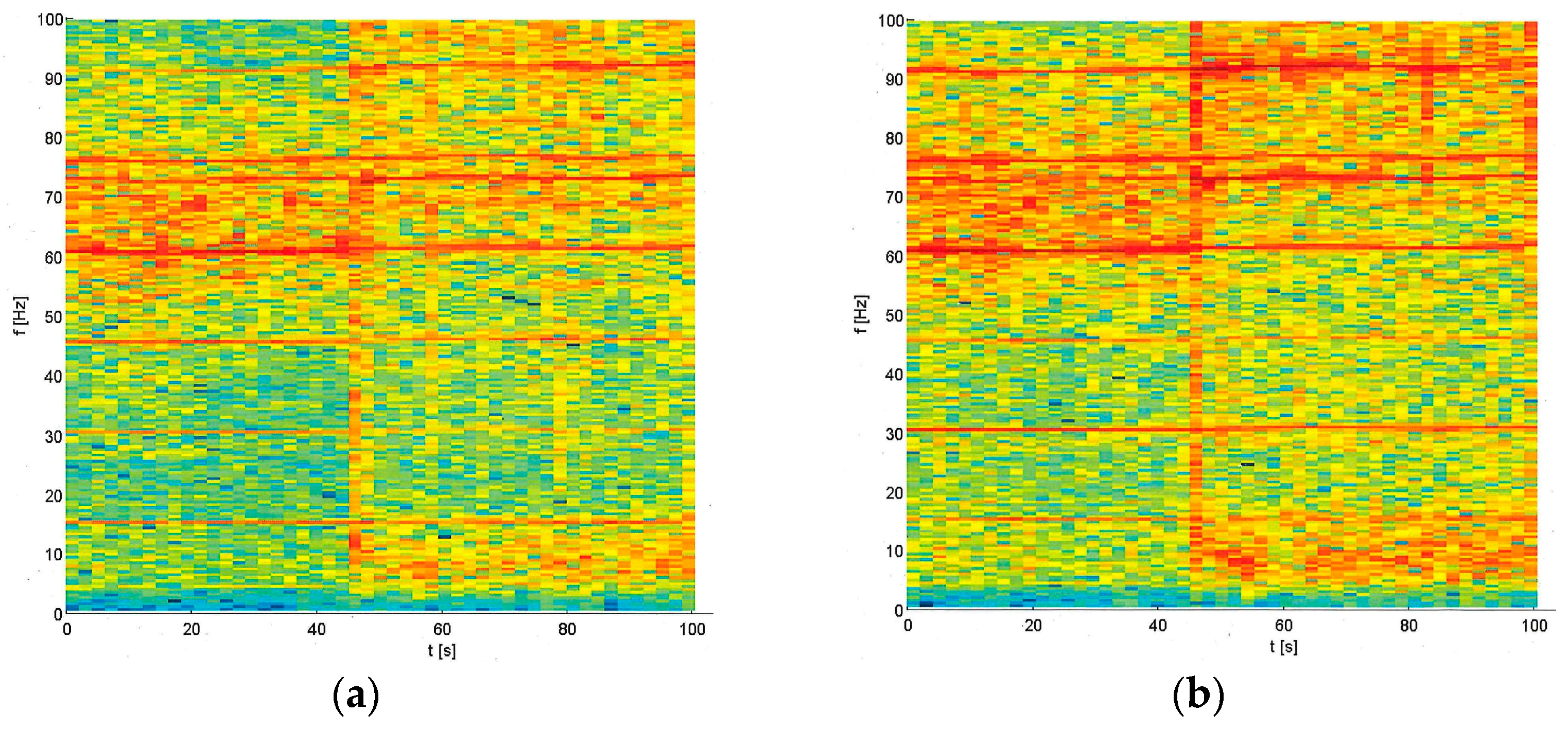
The excitation by the vehicle can be found in the axle box accelerations which are shown in Figure 1 as a spectrogram for a 3 km-long line section near Würzburg with a slab track of up to 45 s and a ballast track later on. The horizontal lines are constant frequencies for the constant train speed of 160 km/h. These lines are in a regular distance at f ≈ 15, 30, 45, 60, 75, and 90 Hz. Below the first out-of-roundness, there are some track alignment irregularities mainly for the ballast track.
A second track component can be clearly found below the fifth out-of-roundness for both track types, the sleeper-distance excitation due to the different track stiffness on and between the sleepers. From the measurements with different train speeds, it is observed that all these excitation frequencies are strictly speed dependent, they increase proportionally with train speed. Another vibration component can be found between 60 and 75 Hz for the slab track and between 75 and 90 Hz for the ballast track. This speed-independent frequency range of amplified amplitudes is due to the resonance of the wheelset on the compliant track, the vehicle–track or so-called P2 resonance. Frequencies above this resonance are reduced, as can be seen for the slab track.
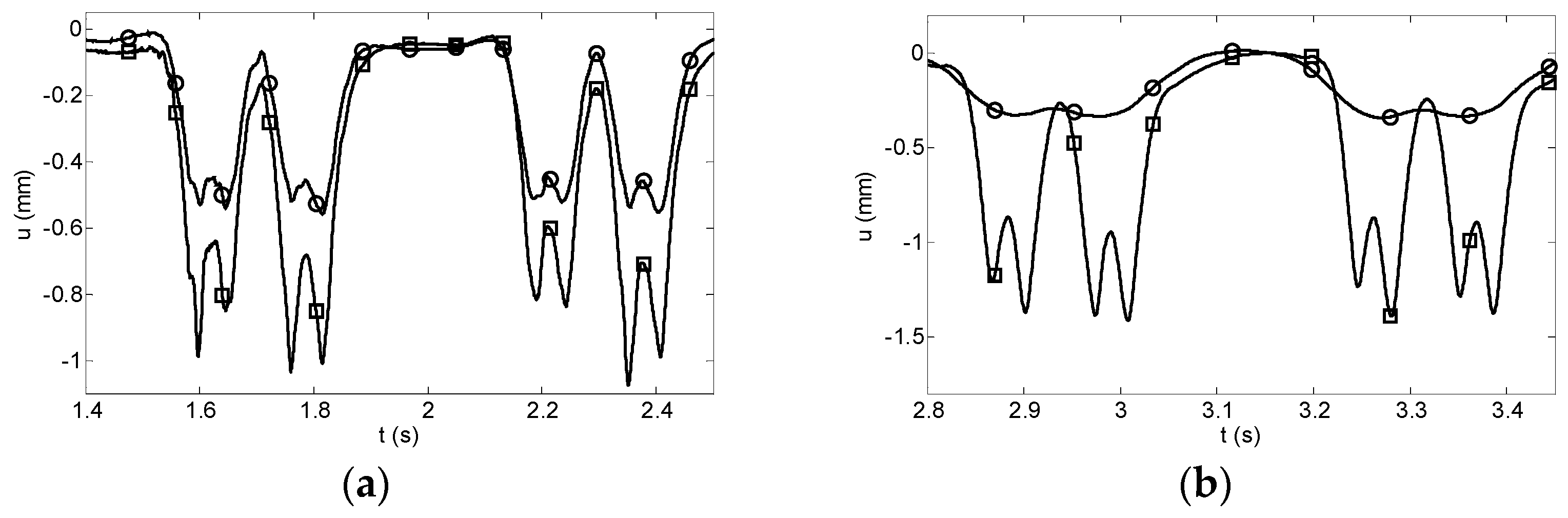
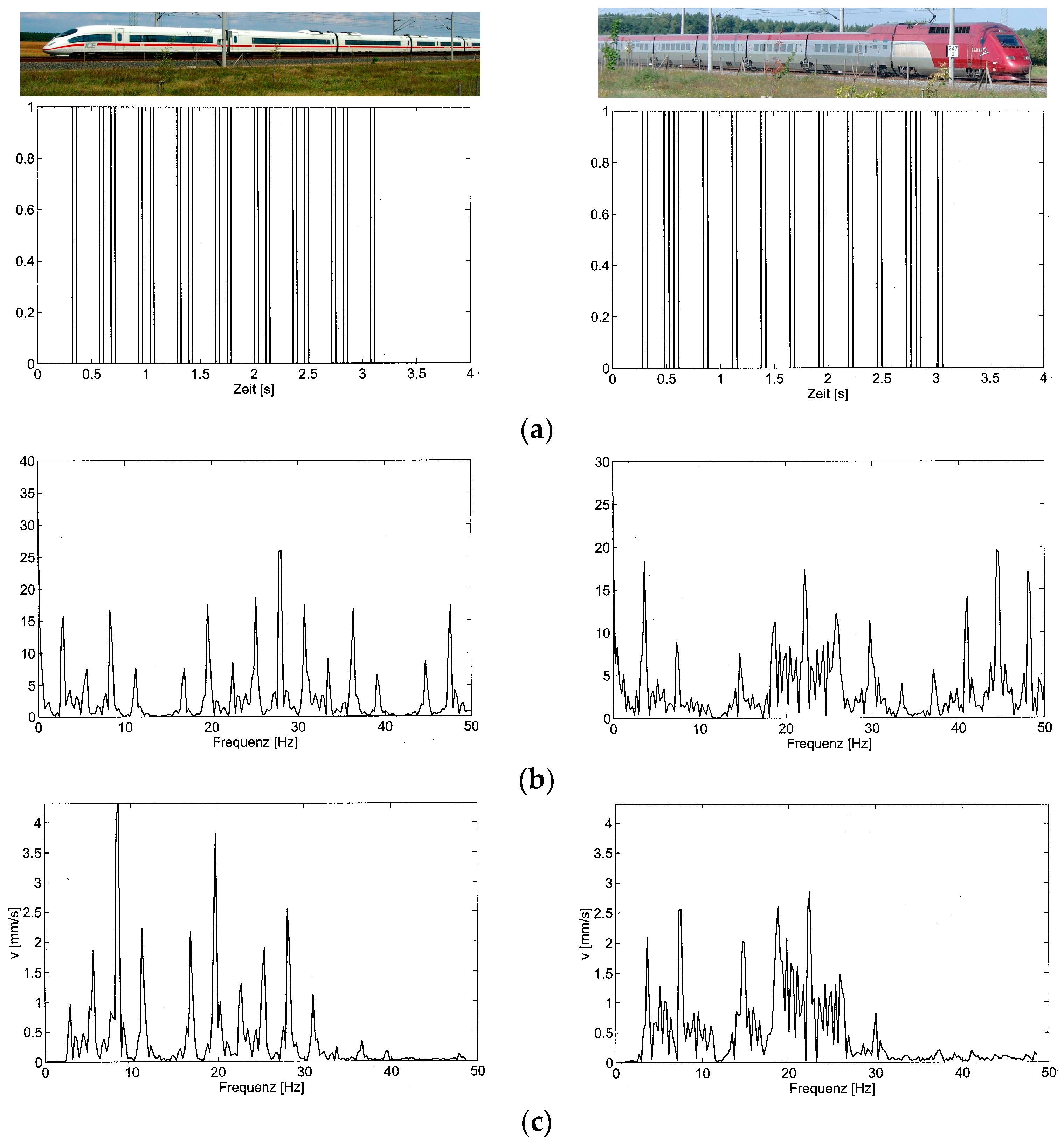
The vibration response of the track is dominated by the impulses of the passing static axle loads which is shown in Figure 2 for a slab and a ballast track. The axle impulses are strongest for the rail, weaker for the sleeper, and much weaker for the track slab. The impulses on the soil are much smoother for the slab track with lower amplitudes and with longer impulse times. For each train, a typical axle-sequence spectrum with characteristic peaks and zeros can be observed in the track measurements (Figure 3). The car length together with the train speed results in a car-length frequency and the multiples give a regular series of peaks in the spectrum, at 3, 6… Hz for the longer ICE3 car and at 4, 8… Hz for the shorter Thalys car. The 3rd, 7th, and 10th peaks are higher due to the bogie distance of the ICE3, and the Thalys has wider bands due to different cars. The distance of the axles in the bogie of 2.5 m (ICE3) or 3 m (Thalys) yields two characteristic zeros and in between a characteristic region of higher amplitudes around 28 and 23 Hz, respectively. These axle-sequence frequencies are speed-dependent and lower for normal passenger trains. The frequency range around the axle distance in a bogie is the important part for the ground vibrations and it is typical for all conventional and articulated trains.

2.2. Bridge Frequencies

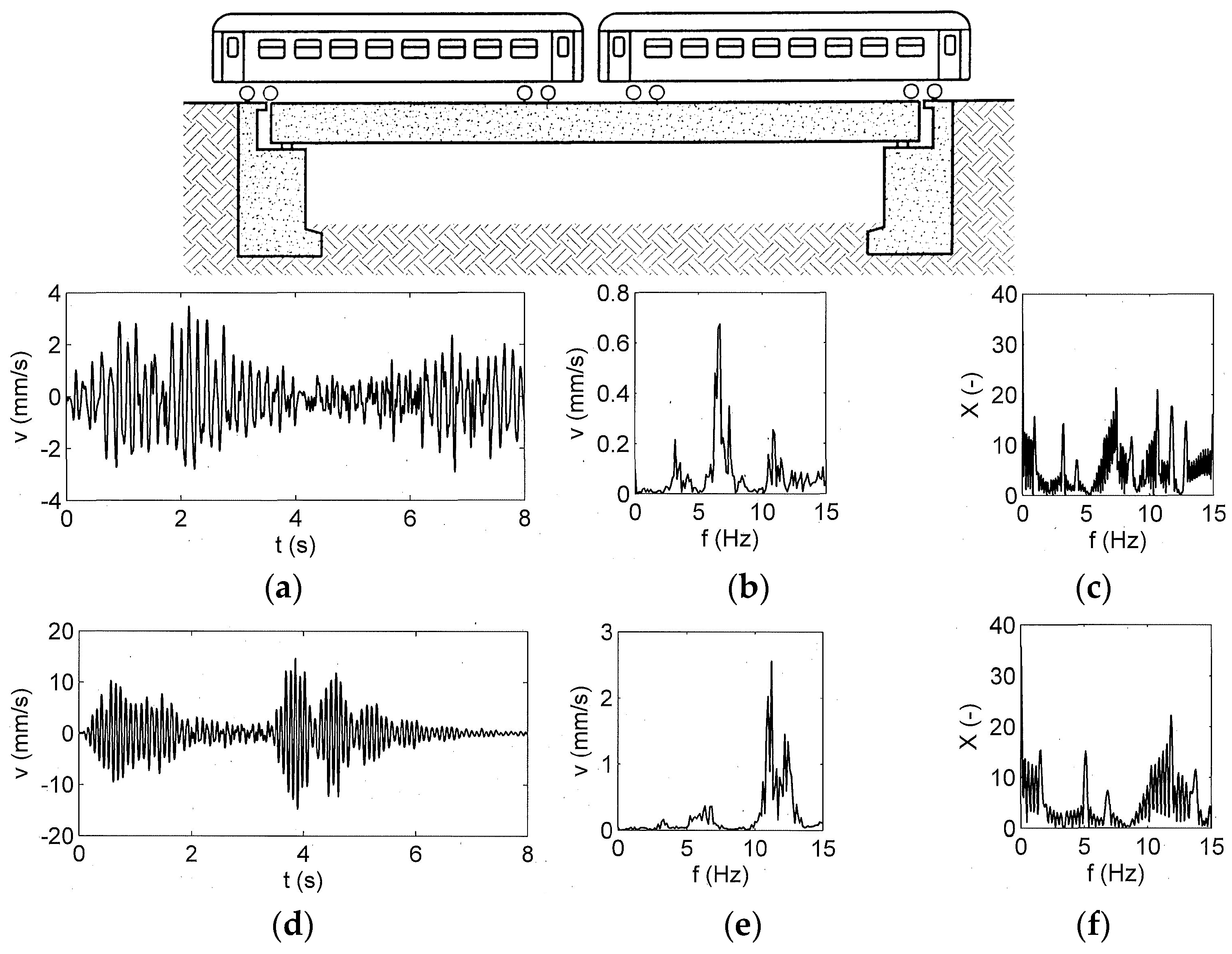
Bridges show clear eigenfrequencies in the low frequency range. The 45 m-long concrete box girder bridge has its first bending frequencies at 3.5 and 11 Hz and its first torsional eigenfrequencies at 7 and 13 Hz. When the test train with locomotive, five passenger cars and another locomotive passes over this bridge with different speeds, amplifications and cancellations of the different eigenfrequencies were measured (Figure 4). For the train speed of 100 km/h, the first torsion mode lies in the maximum region of the axle-sequence spectrum, and the second bending mode is in the second minimum. For the train speed of 160 km/h, the first torsion mode is at the first minimum, and the second bending mode lies in the maximum region. In general, the bridge response to the passing static loads is determined by three spectra: the axle-sequence spectrum, the modal force or mode shape spectrum, and the transfer function of the bridge [37]. The axle-sequence and the modal force spectra are speed-dependent, and the peaks of the car-length frequencies can fall into a high- or low-frequency region of the mode shape spectrum, yielding amplification or cancellation. These effects are typical for high-speed trains on short bridges [37], whereas the present example shows the strong influence of the axle distance part of the axle-sequence spectrum.

2.3. Soil Frequencies

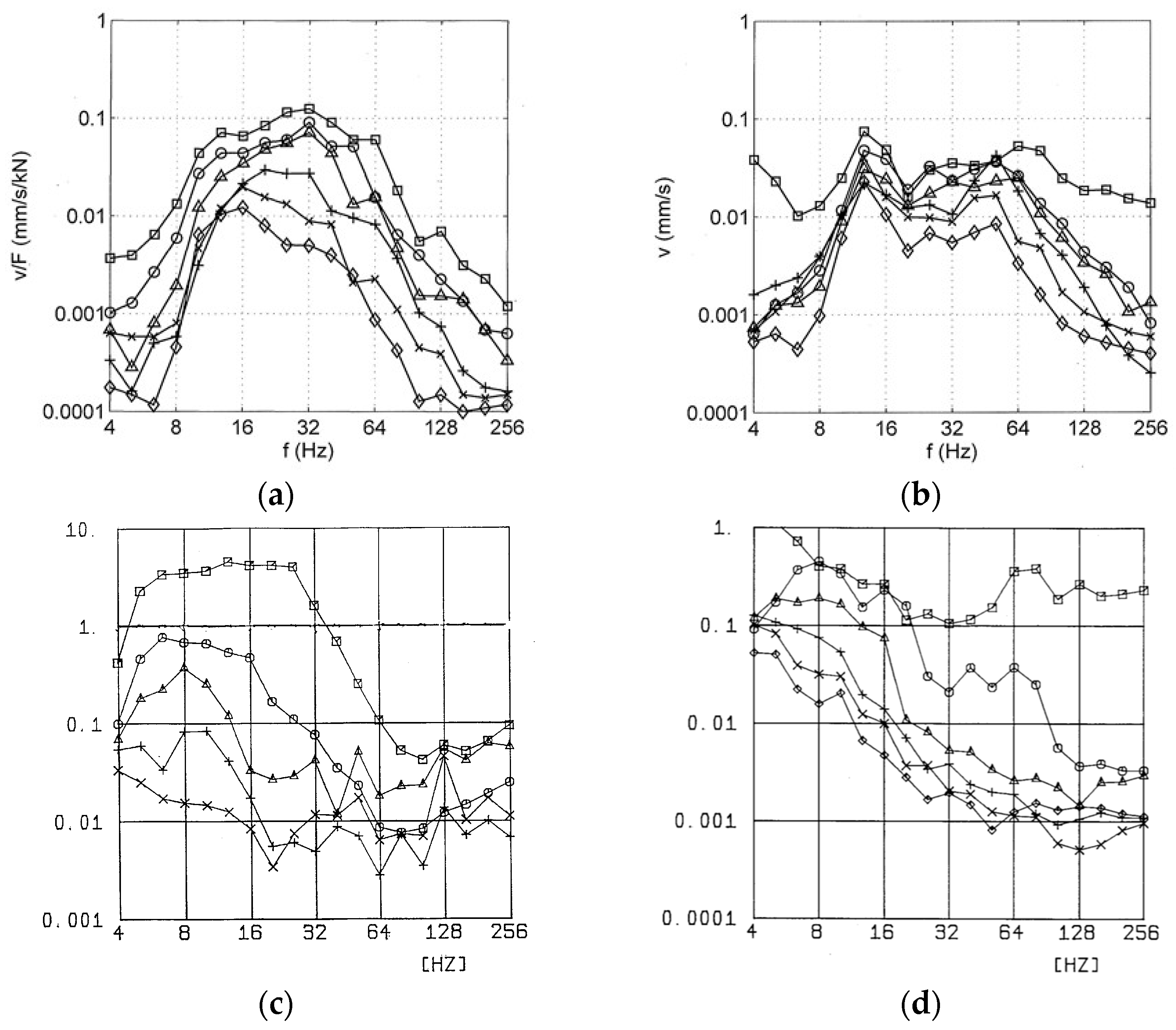
The ground vibrations from a surface line are characterised by the cut-on frequency of the layering and the cut-off frequency of the material damping of the soil. The main frequency content of the ground vibration lies between these frequencies. It is at high frequencies for a stiff soil, whereas it is at low frequencies for soft soils. These characteristics can be found in the transfer functions measured by hammer impacts and in the response to the train excitation (Figure 5). The train-induced ground vibration shows two increased frequency regions. At three thirds around 12 Hz, the axle impulses from the passing static loads are dominant, and they show the characteristic minima of the axle sequence at 8 and 20 Hz (Figure 5b for 125 km/h). The sleeper passage component can be found at 64 Hz. Completely different characteristics have been measured for very soft soil (Figure 5c,d). Frequencies below 16 Hz are dominating, and a strong decrease with higher frequencies follows because of the strong effect of the damping. The high amplitudes between the zeros of the axle-sequence spectrum are often measured in the train-induced ground vibrations; see, for example, [19,20,21,22,23].

2.4. Building Frequencies

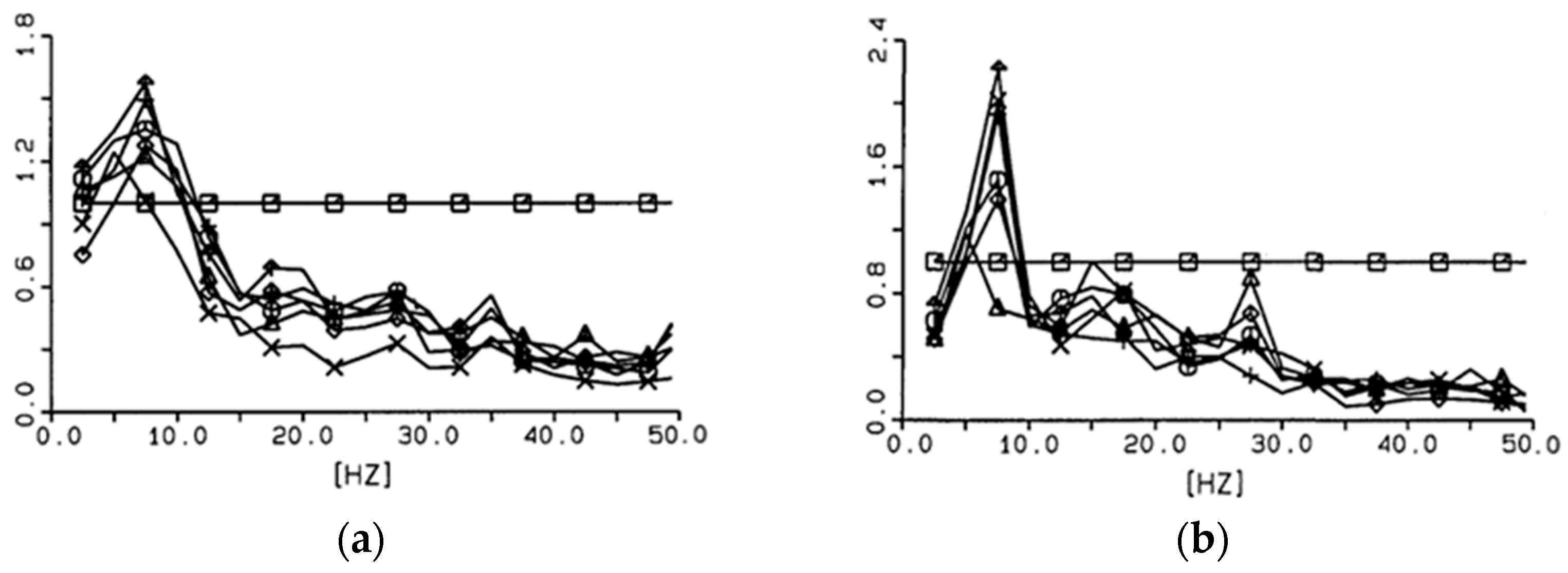
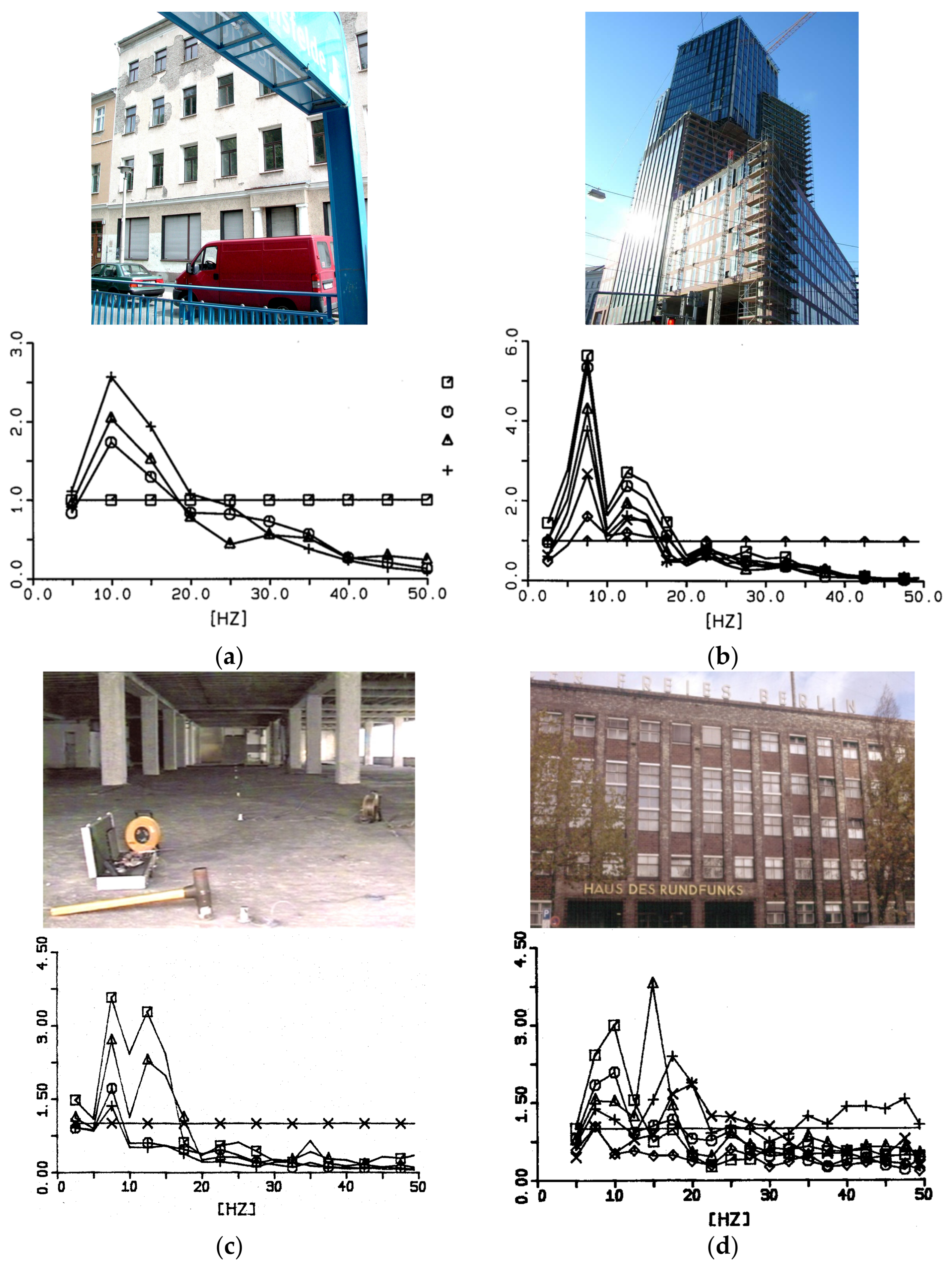
Buildings near railway lines are excited by the ground vibrations. The transfer functions between building and free field of the soil show a fundamental building–soil eigenfrequency typically below 10 Hz (Figure 6a,b). The disturbance of people is often influenced by the floor eigenfrequencies, which are low for the wooden floors at the first storey (20 Hz in Figure 6c and 12.5 Hz in Figure 6d) and higher for the concrete floors at the ground floor (Figure 6c,d). Higher buildings have a flexible wall or column mode (at 10 Hz in Figure 7a, at 7.5 Hz in Figure 7b,c, at 10 Hz in Figure 7d where the amplitudes increase with the height in the building (Figure 7). In Figure 7b–d, the floor resonance can also be observed at 14, 12.5, and 15–20 Hz.

3. Analysis of Amplitudes and Spectra

For quantitative results, the measurements are evaluated as broad-band, usually as one-third octave band spectra. In this rather smooth presentation, results for different measurements, different parts, and different distances can be compared. Moreover, the low-frequency part of the axle-sequence spectra up to the second zero are well represented in one-third octave band spectra.

3.1. Vehicle–Track Interaction

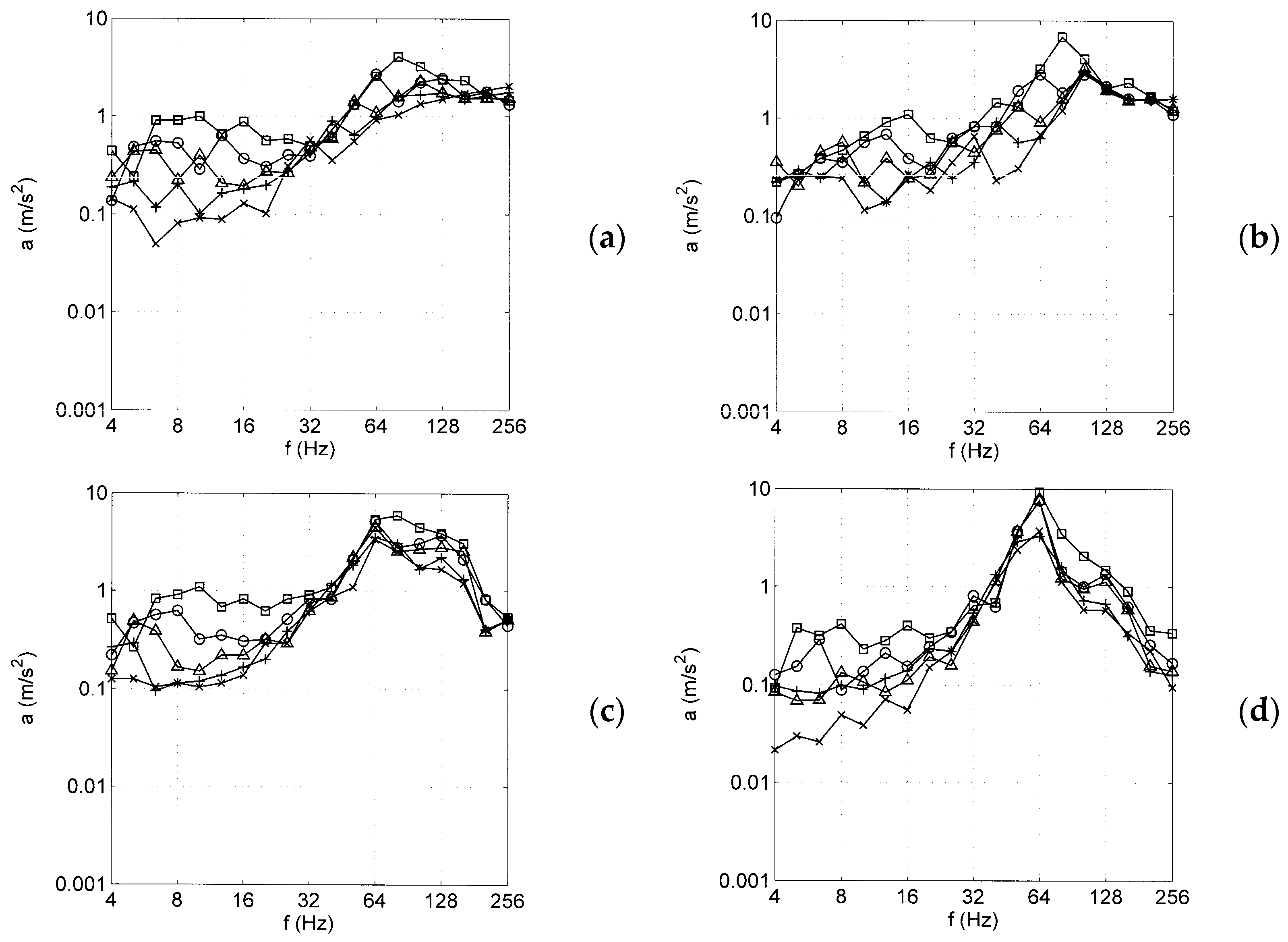
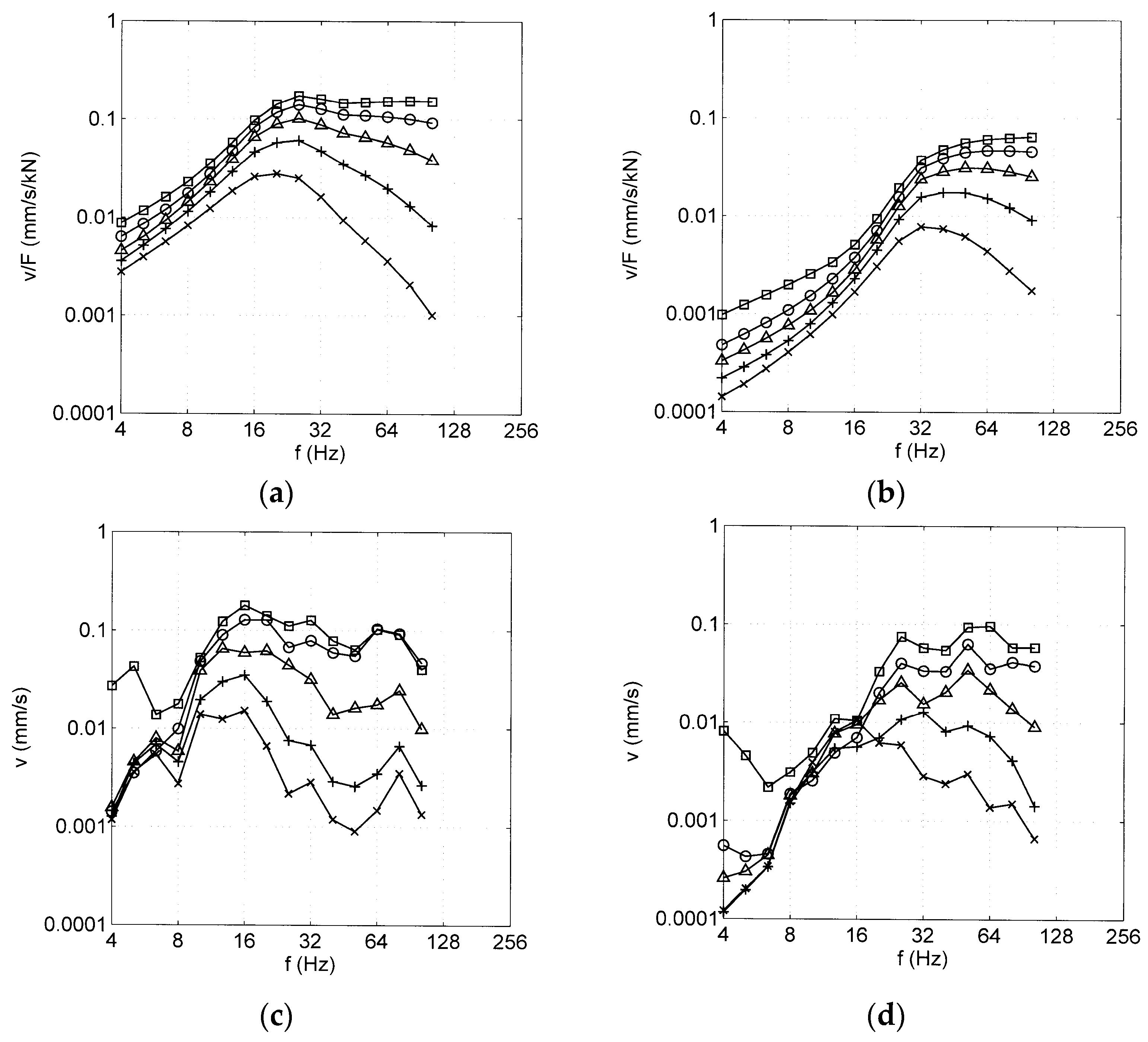
Figure 8 shows the axle box accelerations of the simultaneous measurement campaign with different track sections and different train speeds [3]. The axle box accelerations are mainly the result of irregularities of the track and the vehicle. The low-frequency accelerations directly represent the irregularities.
Figure 8a shows the results for a ballast track on the soil. The low- and mid-frequency amplitudes increase strongly with train speed. The characteristic frequencies shift with the train speed, e.g., the sleeper passage frequency from 32 to 40, 50, 64 and 80 Hz for speeds from 63 to 160 km/h, or the first out-of-roundness of the wheel with peaks between 8 and 16 Hz. The speed-independent vehicle–track resonance frequency at about 100 Hz is highly damped by the radiation damping of the soil.
The axle box accelerations on a bridge (Figure 8b) show the same features, but the sleeper passage peaks are stronger, and the low-frequency amplitudes (the track irregularities) are lower. Both effects are due to the stiffer support of the ballast track on the bridge.
A slab track (in a tunnel) with soft rail pads (Figure 8d) shows less low-frequency amplitudes (a better track quality), a stronger vehicle–track resonance at 64 Hz independent of the train speed, and a stronger reduction at higher frequencies (less radiation damping) compared to the ballast track (Figure 8a,c).

3.2. Influence of Vehicle, Track, and Speed on the Ground Vibration

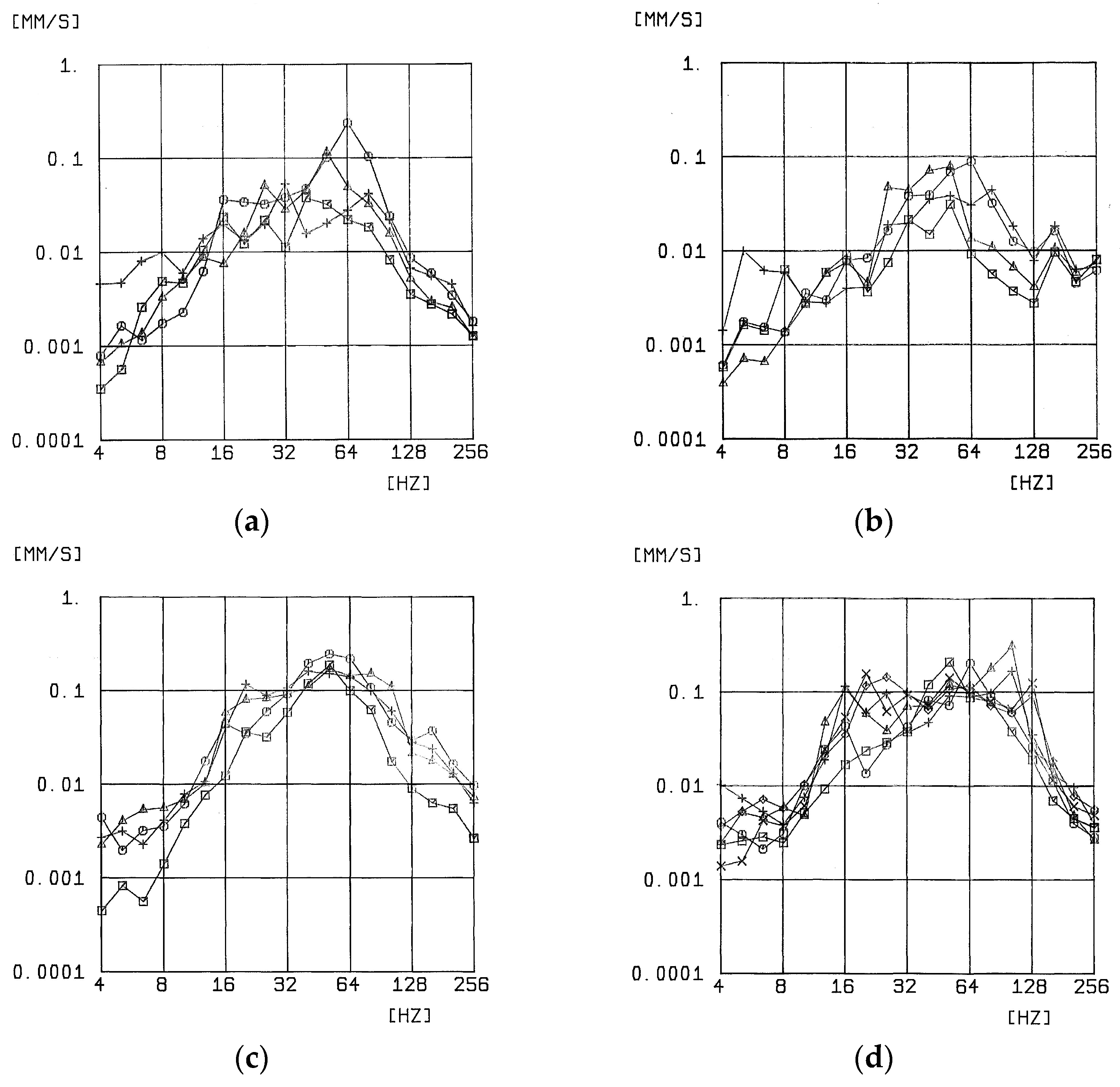
Near Dachau, two nearby track sections with a conventional ballasted track and a slab track have been measured for different trains. The soil is rather stiff gravel with shear wave velocities of about 400 m/s. The one-third octave band spectra of the ground vibration at 10 m distance in Figure 9 are small at low frequencies and show an increasing trend up to 64 Hz. The different trains with different speeds show different frequency ranges of higher amplitudes. For frequencies below 10 Hz, the freight train with 70 km/h has the highest amplitudes of all the trains. All the trains show a maximum at the sleeper-distance frequency, which is at 32 Hz for the freight train, at 50 Hz for the urban train with 100 km/h, and at 64 Hz for the intercity train with 130 km/h. The frequency range just below this characteristic frequency has higher amplitudes for the slab track. On the other hand, the ballast track has higher amplitudes between 10 and 25 Hz.
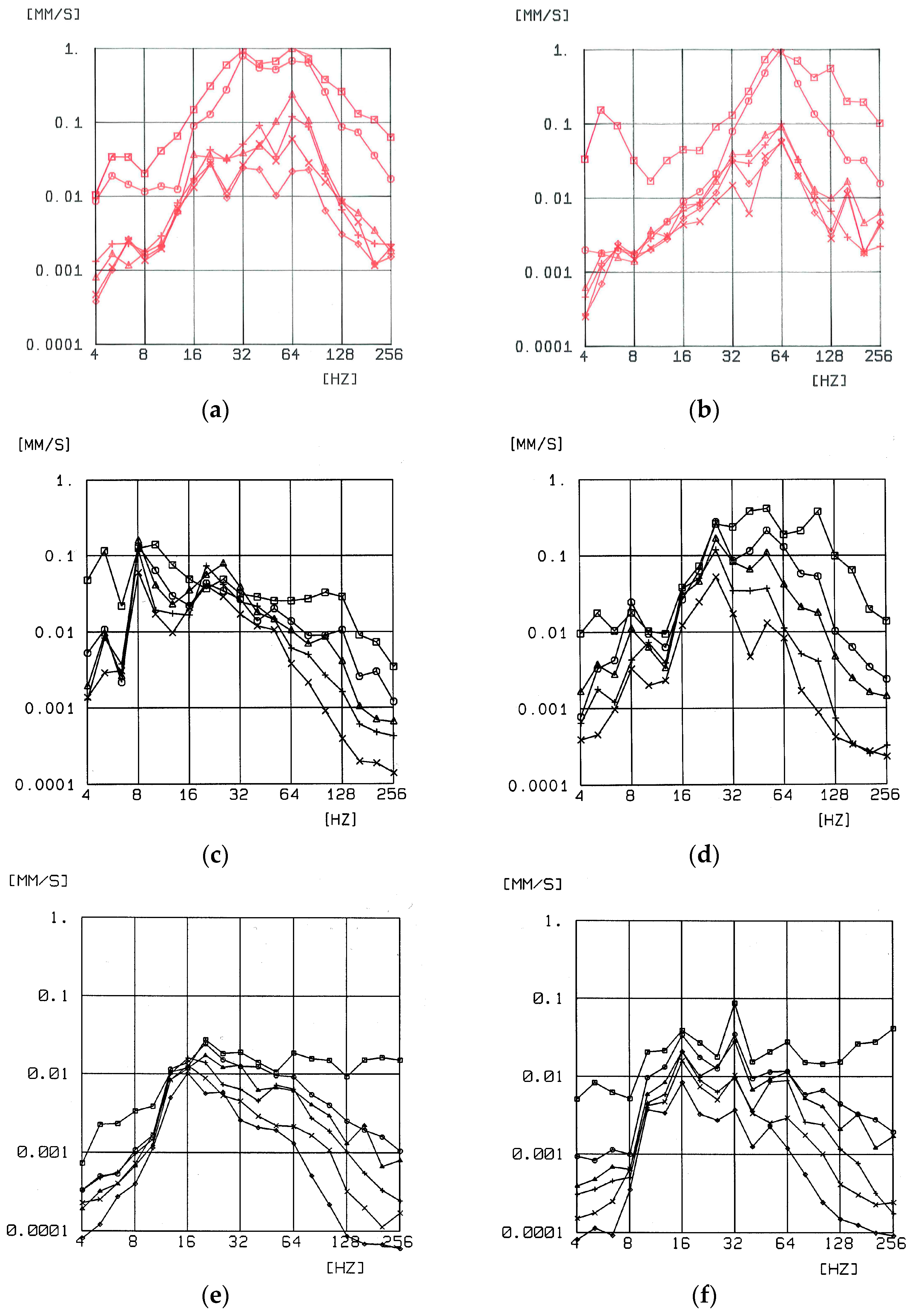
At the Wiesenfeld site near Würzburg (with a wave velocity of 270 m/s for the top layer), two different trains have been measured for different train speeds, the test train Intercity Experimental in good condition and a conventional passenger train which had some clear out-of-roundness and wheel flats. Therefore, the ground vibration spectra at 10 m distance (Figure 9c) show higher amplitudes between 40 and 80 Hz for the conventional train. The Intercity Experimental, on the contrary, has higher amplitudes at a lower frequency range between 12 and 32 Hz and at a higher frequency range around 100 Hz (Figure 9d). This can be explained by the strong influence of the heavier engine cars of the short five-car ICE. It is concluded that the low- and the high-frequency components are determined by the static axle load. The low-frequency component are the axle impulses on the track (which are scattered by irregular soil [38]), and the high-frequency component is the sleeper passage component (which is generated by the different deflection on and between the sleepers under the static axle load [39]). The frequencies and amplitudes of the low- and the high-frequency peaks can be studied for the different train speeds of the ICE (Figure 9d and Figure 10a–e). The high-frequency peak is shifted from 50 to 128 Hz for the train speeds of 100 to 280 km/h, and the highest amplitude of 0.4 mm/s (compared to 0.15, 0.3, 0.2, 0.2 mm/s for the other train speeds) is found for 200 km/h where the sleeper passage coincides with the vehicle–track resonance. The low-frequency peaks shift from 16 to 25 Hz for the higher train speeds of 200 to 280 km/h, and the amplitudes are nearly constant at 0.1 to 0.15 mm/s. The proportions of the ground vibration components change at the far field where the high frequencies are strongly reduced due to the material damping of the soil.
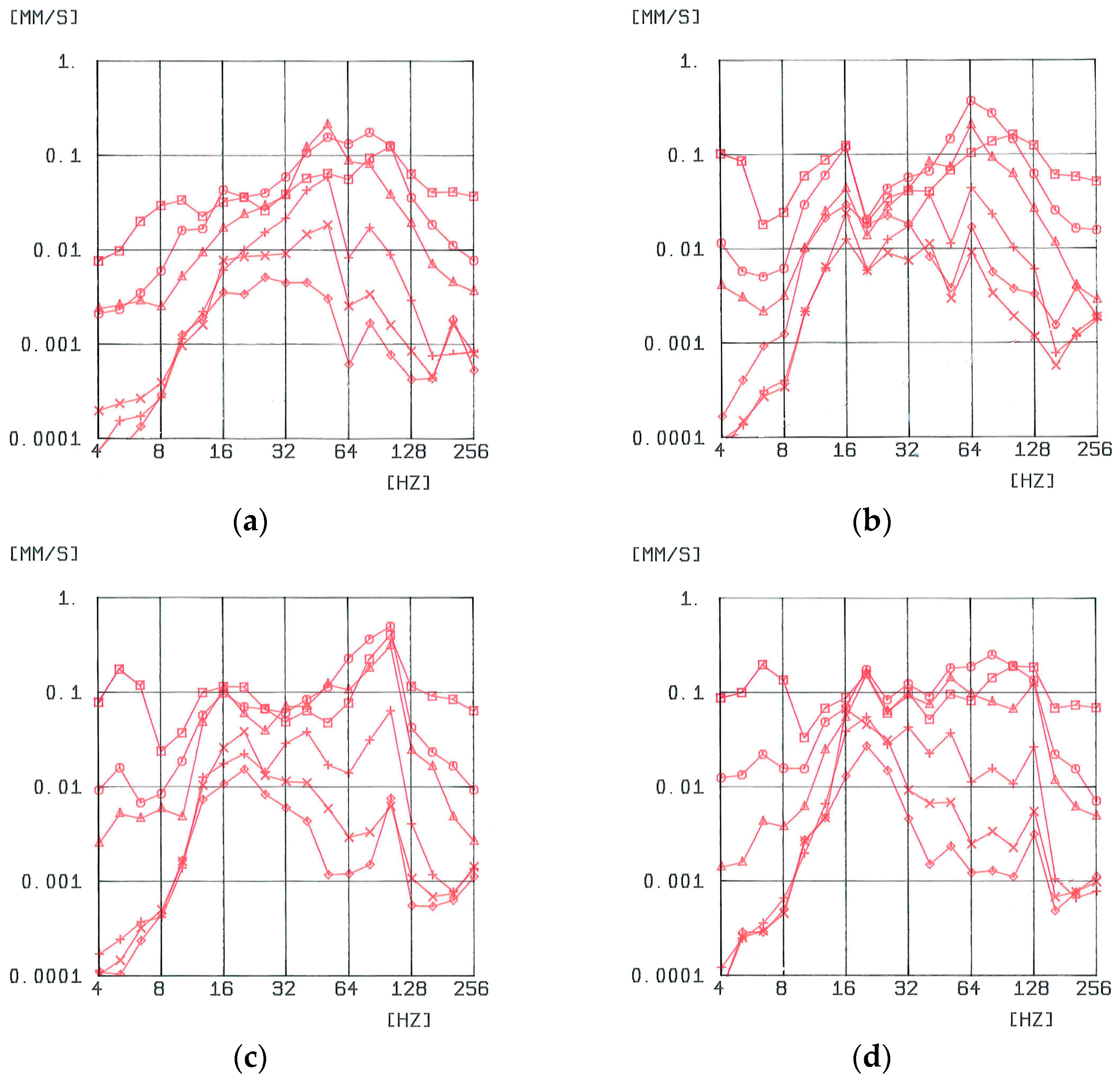
In addition to the ground vibration at 10 m distance in Figure 9, some examples of the whole wave field with distances between 3 and 50 m are shown in Figure 10 and Figure 11. The low-frequency axle impulse component with its frequency shift from 10–16 Hz for 150 km/h (Figure 10b) to 20–32 Hz for 300 km/h (Figure 10e) is the dominant part of the far-field ground vibration. The sleeper passage peak is dominant in the near field and strongly attenuated in the far field by the damping of the soil. At the nearest point, the quasi-static component can be found at 4, 5, 6 and 8 Hz (Figure 10b–e).
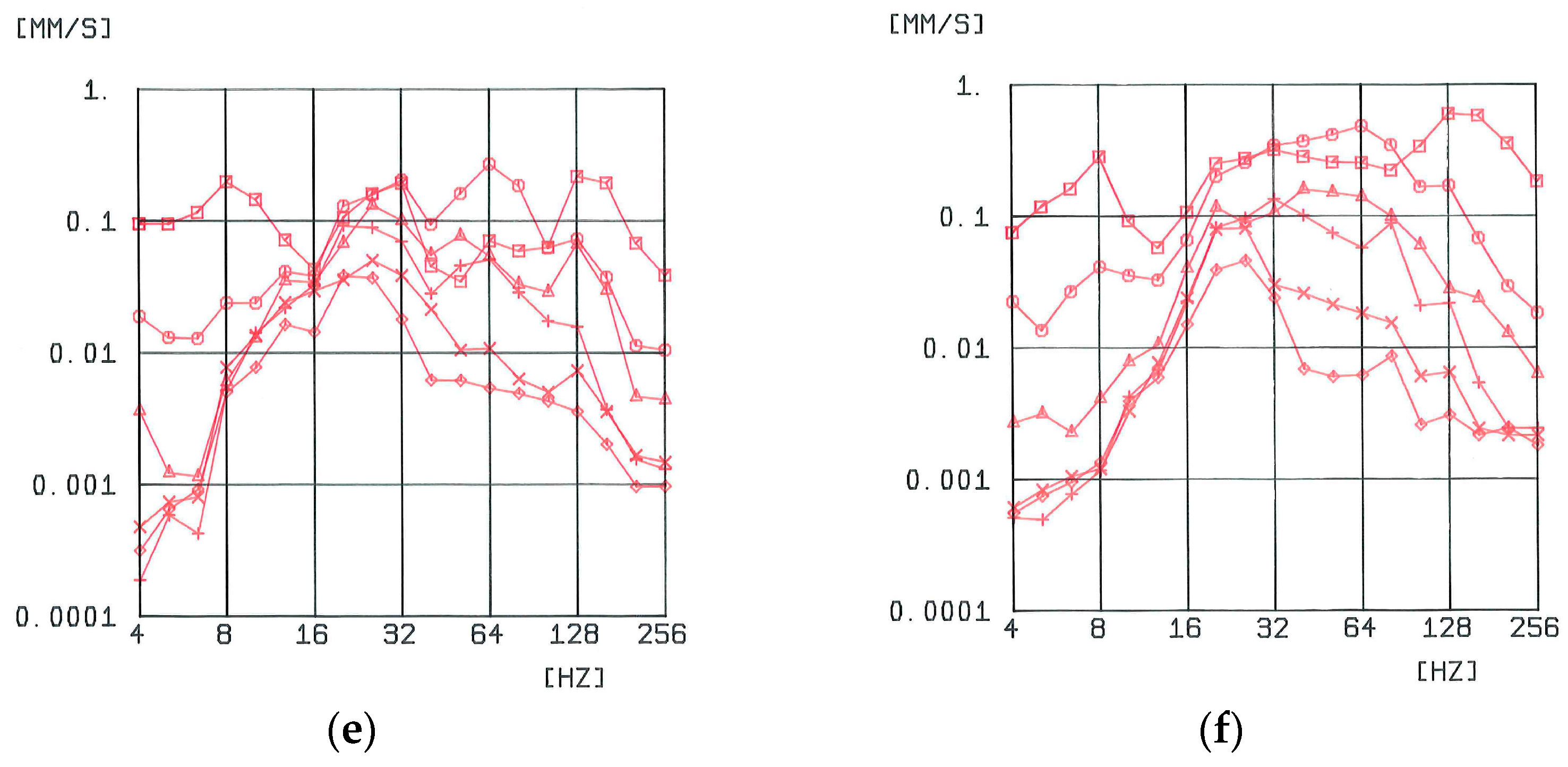
The higher amplitudes due to the wheel flats of the conventional passenger train in Figure 10f can be compared with the spectra of the Intercity Experimental with the same speed (Figure 10d), indicating that the bad vehicle condition can be dominant over the axle impulse component. In Figure 11, the reduction in the low frequencies due to the slab track can be found for the Dachau site (Figure 11a,b) and it is even stronger for the Gardelegen site (Figure 11c,d). Possible reasons include a better track quality or the reduced axle impulses at the slab track. At the Gardelegen site, the high-frequency amplification by the slab track is also strong (Figure 11d), which might be due to the softer rail pads and the less damped P2 resonance. The maximum amplitudes at the slab track are 0.3 mm/s at 50 Hz compared to 0.03 mm/s at the ballast track which means an amplification by a factor of 10. The maximum amplitudes at the ballast track at 8 Hz are 0.1 mm/s, whereas the amplitudes at the slab track are reduced by a factor of 10 to 0.01 mm/s. Finally, Figure 10e,f show the strong influence of the static axle loads when the passage of the locomotive and of the passenger car are analysed separately. The sleeper passage component at 32 Hz (for the train speed of 60 km/h) and the axle impulse component at 10 Hz are clearly stronger for the locomotive. This is in agreement with the theory where these components should be proportional to the static load.

3.3. Building Vibrations at Different Construction Stages

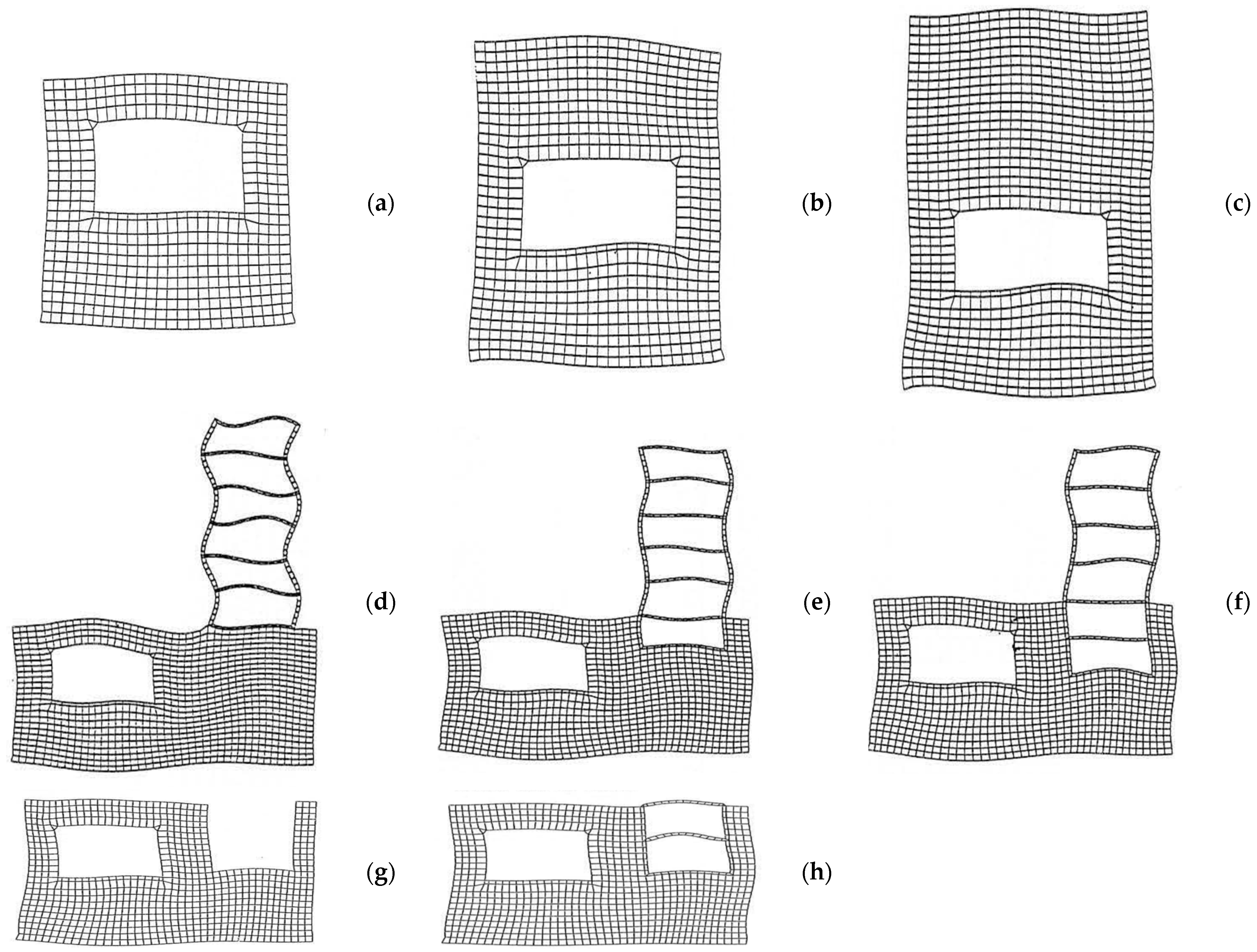
The immission of tunnel-excited ground vibration in buildings has been studied in research project [2] by measurements and by thin-layer finite element models. Some examples are presented in Figure 12 where the depth of the tunnel and the building have been investigated.
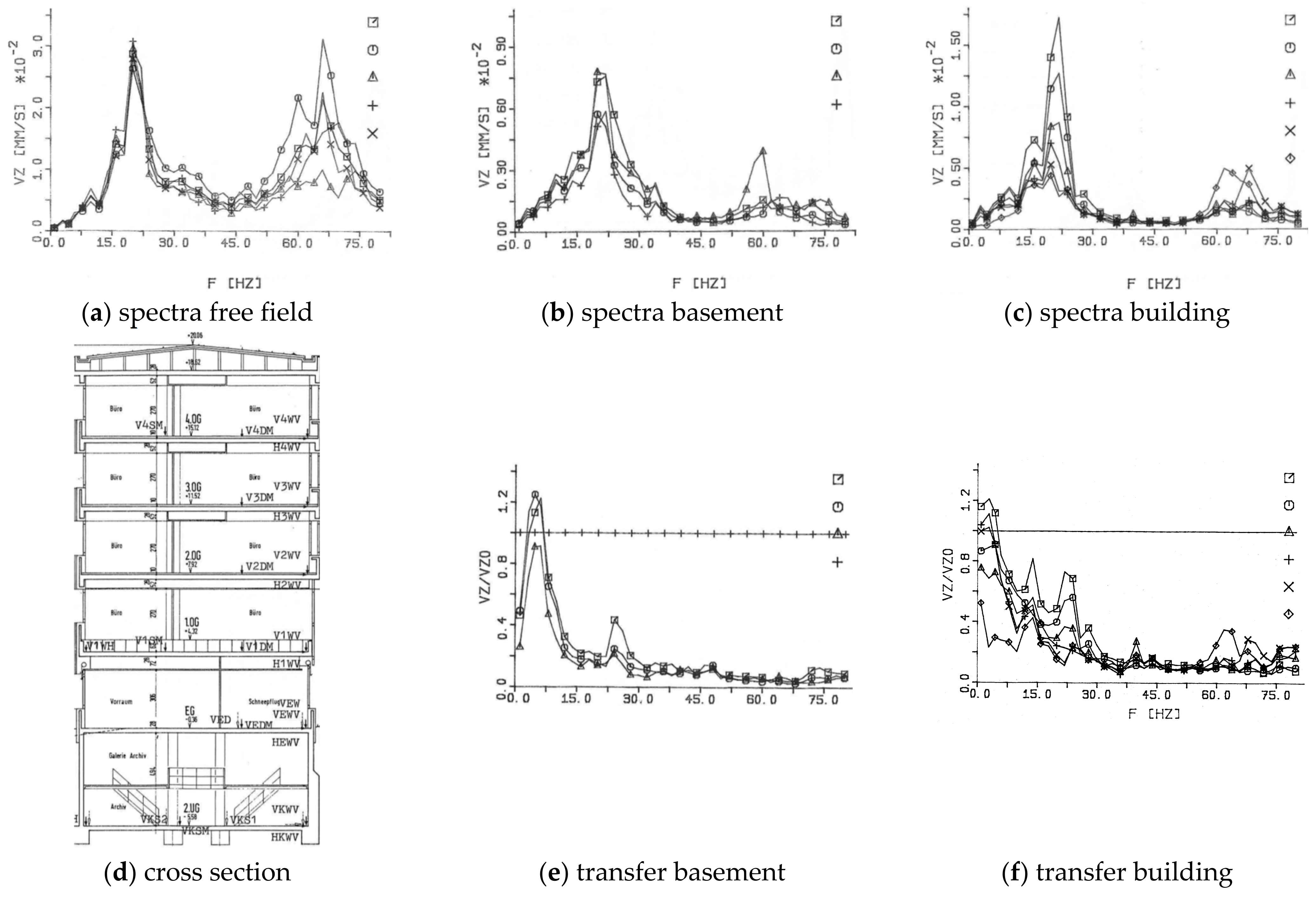
Different stages of the construction have been analysed by calculation and by measurements (Figure 13). The free-field ground vibration is reduced down to values of 0.1 above 30 Hz by the two basement storeys (probably due to the bending stiffness of the basement slab [40] and the shear stiffness of the basement walls [41]), and the additional storeys of the completed building give no further reduction. On the contrary, an amplification increasing with higher position in the building has been found at around 20 Hz where the fundamental building resonance is estimated. At higher frequencies, the upper building masses are dynamically decoupled from the basement and not effective for reducing ground vibration. In addition, the resonances of the floors are between 15 and 20 Hz, the first bending mode of the wall sections are around 50 Hz, and the second and third bending modes of the floors are between 50 and 100 Hz, the frequency range where secondary noise is usually the main problem of metro vibrations.

4. Method and Software for the Prediction of Train-Induced Ground and Building Vibrations

The experimental experience and the theoretical analysis have been integrated in a prediction software for train-induced vibrations [4]. Simple models have been developed, which are fast in calculation while presenting detailed calculation results. The prediction is divided into the following modules: “emission” by the vehicle–track–soil interaction, “transmission” through the soil, and “immission” into the building.
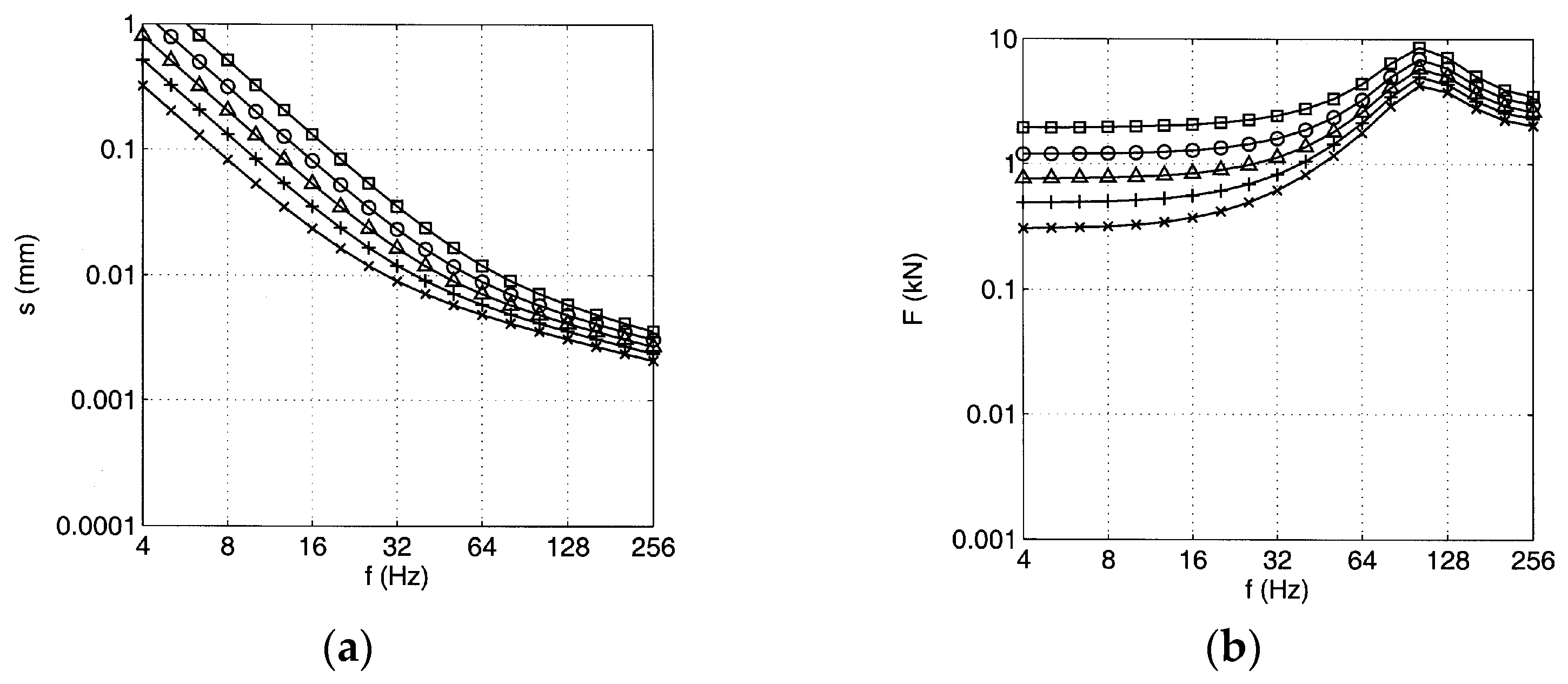
The starting point of the emission are the irregularities of the vehicle and the track (Figure 14a). The frequency-dependent transfer function between the irregularities and the dynamic axle loads are calculated by a beam-on-elastic-support model. It is proportional to the unsprung mass of the vehicle (usually the wheelset) up to the vehicle–track frequency, and it is dominated by the dynamic stiffness of the track at higher frequencies. The irregularities decrease with increasing frequency, whereas the transfer function increases with frequency so that the dynamic axle loads are nearly constant (Figure 14b). The increasing train speeds yield strongly increasing force amplitudes at low frequencies and a weaker increase at high frequencies in good agreement with the axle box measurements in Figure 8.
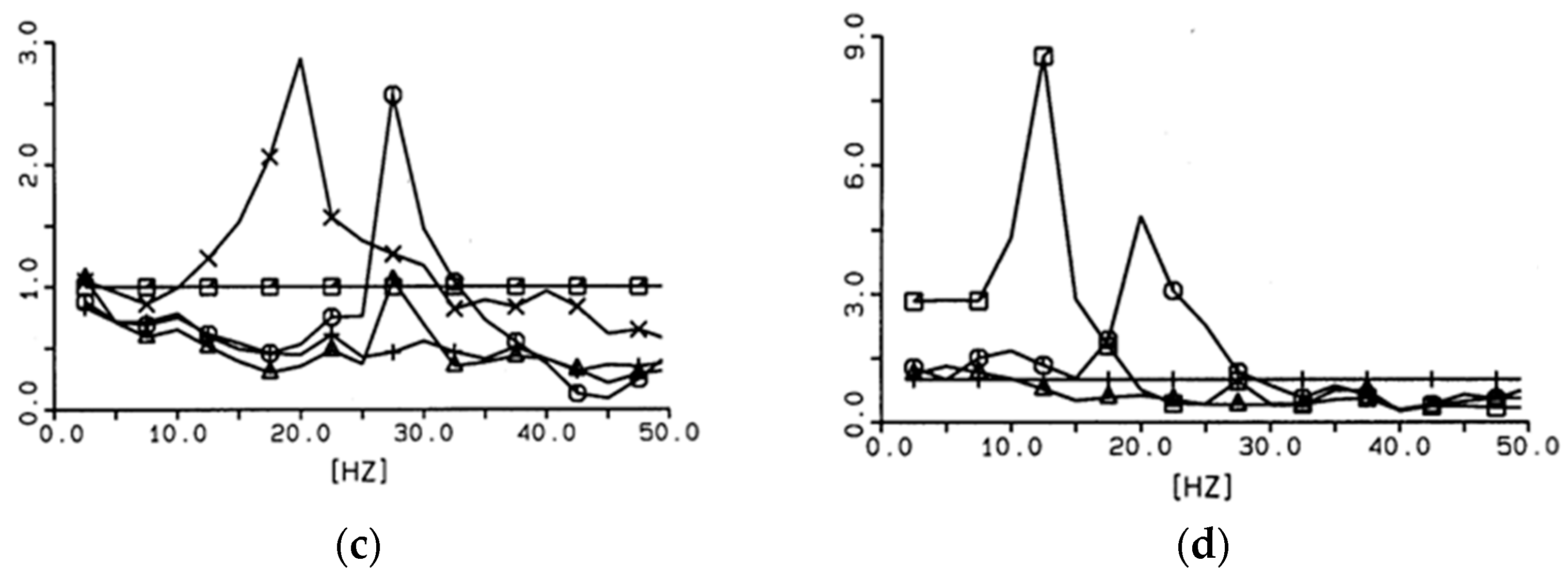
The transmission module starts with the dynamic axle loads from the emission module. The load distribution along and across the track is included approximately and yields the specific attenuation of train-induced ground vibrations with distance. The response of the soil is calculated by a “frequency-dependent half-space model” where the explicit solution of the homogeneous half-space is evaluated for different wave velocities at different frequencies following the dispersion of the layered soil. The transfer functions between the train load and the ground vibrations (Figure 15a,b) represent the measured characteristics of soft and stiff layered soils well (Figure 15c,d).
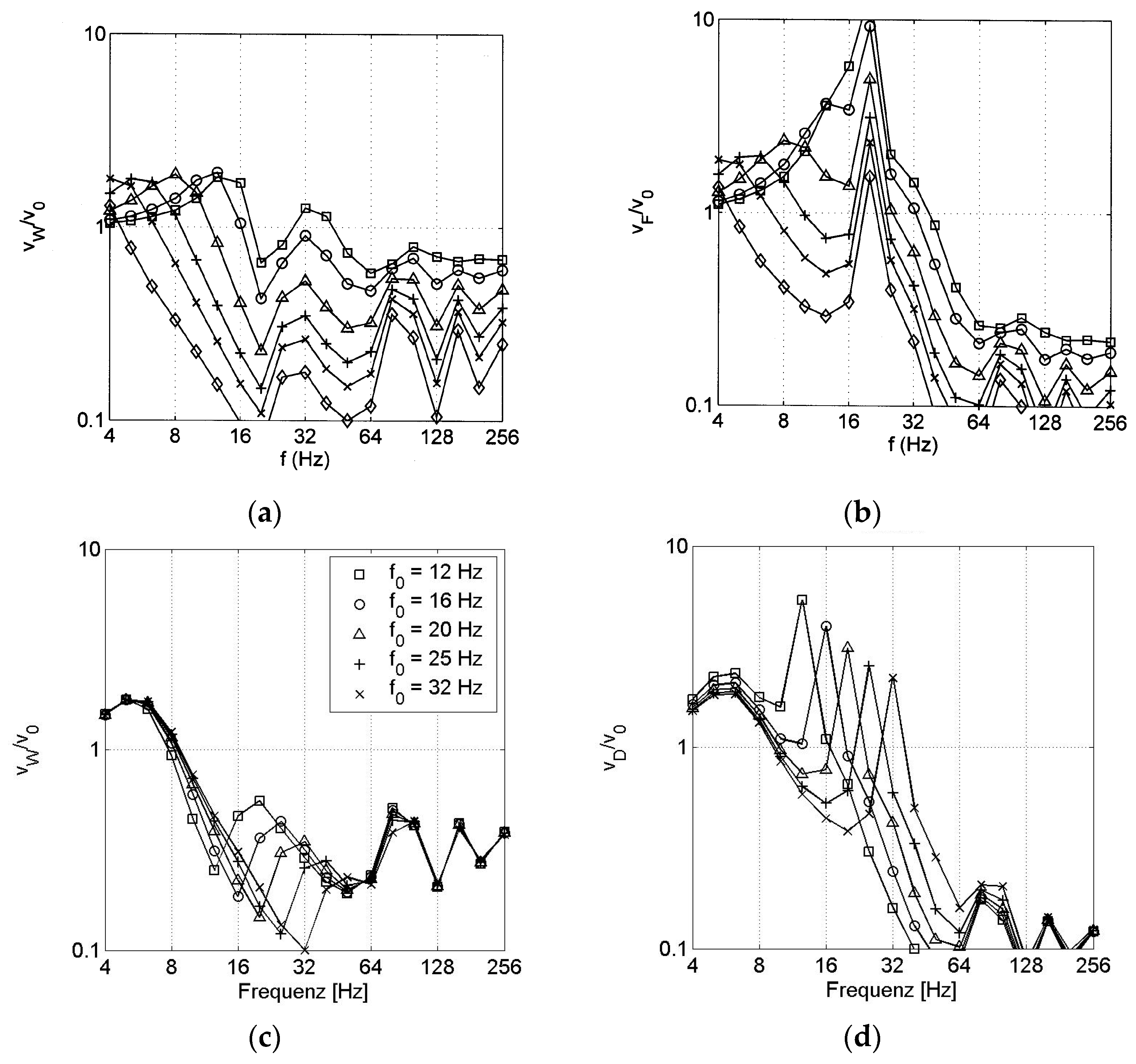
The immission part calculates the transfer from the free-field ground vibration (at the foundation point under consideration) to the different building parts by a one-dimensional soil–wall–floor model [42], which has been compared with three-dimensional finite element models of wall- and column-type concrete buildings of 2 to 20 storeys and with measurements, for example, the concrete and steel column buildings in Figure 7. Some example results are shown for different soils and for different floors in Figure 16. The soil amplitudes are amplified at the building–soil eigenfrequency and reduced at higher frequencies due to the mass and the dynamic stiffness of the building. At mid-frequencies, the resonance of the floors usually results in the highest amplitudes in the building (Figure 16b,d).
Specific components of railway vibrations can be added as (equivalent) irregularities, for example, the first out-of-roundness of the wheels and the sleeper-distance component, or as equivalent forces (around the axle-distance frequency) for the scattered axle impulse component or empirically as in [23]. These specific components are often found in the measurements (for example, in Figure 15c,d) in comparison with the smooth regular transfer functions (Figure 15a,b).

5. Conclusions

Characteristic frequencies of train-induced vibrations have been shown in the experimental results. The excitation by the train and the track has speed-dependent frequencies, at the wheel out-of-roundness and the sleeper passage component or frequency ranges for the track alignment errors and for the impulses of the passing static axle loads. The excitation is amplified at certain eigenfrequencies such as the vehicle–track eigenfrequency, the bridge eigenfrequencies and the dominant soil frequencies between the cut-on and cut-off frequencies. The building response is amplified at the building–soil, the floor, and the acoustic room resonance. A special role has been found for the axle-sequence spectrum and its car-length frequencies and axle-distance frequencies. The axle-sequence spectrum is clearly found in the track vibration; the excitation of a bridge resonance is strongly influenced by the axle-sequence spectrum, and it can also often be found in the ground vibration indicating the scattered part of the axle impulses. This ground vibration part is dominant at the far field, and it falls typically in the frequency range of floor resonances in buildings, underlining its practical importance.
The influence of the type of the train and the track, the static axle loads, and the speed of the train on the amplitudes of the one-third octave band spectra has been analysed. The influence of different parts of the building has been analysed by measurements and calculations of different construction stages. Specific effects have been found for locomotives, freight trains, slab tracks, tunnel and bridge lines in comparison to passenger trains on a ballast track at a surface line. For the speed dependency, a strong increase for the low-frequency track alignment errors, a limited increase for the sleeper passage component, and constant amplitudes for the axle impulse component have been observed.
The theoretical and experimental experiences have been integrated in a prediction software with simple and fast vehicle, track, soil and building models, which give the transfer functions between irregularities, dynamic axle loads, ground and building vibrations. The excitation by a broad-band irregularity spectrum must be complemented with a higher sleeper passage peak and with the axle impulse component in a certain low-frequency range.

Author Contributions

Conceptualisation, methodology, software, validation, formal analysis, and investigation, L.A., S.S. and W.R.; writing, L.A.; supervision and project administration, W.R. All authors have read and agreed to the published version of the manuscript.

Funding

This research received no external funding.

Data Availability Statement

The data are available on request from the author.

Acknowledgments

Thanks to W. Schmid, W. Wuttke F. Ziegler, C. Meinhardt et al. for the good cooperation on the measurements and to U. Gerstberger and H. Hebener for their contributions to the software.

Conflicts of Interest

The authors declare no conflicts of interest.

Appendix A. Details of the Measurements

Measurement equipment:
The track, soil, bridge, and building vibrations are measured with robust velocity transducers (geophones), a 72-channel measurement system for filtering, amplifying, and digitising, usually 2 kHz sampling and one-third filter frequency. Vehicle measurements with accelerometers BK 4375 on four axle boxes of a bogie. Four train runs with 16, 25, 40, 63, 80, 100, 125, 140, and 160 km/h. Velocity signals from the tracks are transformed to displacements.
Track configurations:
Ballast track at Wiesenfeld with UIC60 rails, stiff rail pads 300 kN/m2, concrete sleepers in 0.6 m distance, ballast of 0.35 m height.
Slab track near Wiesenfeld with UIC60 rails, medium soft rail pads 60 kN/m2, concrete sleepers in 0.65 m distance, track slab of 0.2 m height.
Track measurement site in Dachau with five different track configurations in a straight line, standard ballast track and ballast track are presented here.
Soil parameters:
Standard values for mass density 2 × 10³ kg/m3, Poisson’s ratio 0.33, which have little influence, and material damping D = 2.5% is used in calculation. The shear or Rayleigh wave velocity and the damping are most important and are measured at each site. The damping is important for high frequencies, whereas the layer height is important for low frequencies in case of a layered soil.
Wiesenfeld vS1 = 270 m/s, vS2 = 1000 m/s, D = 5%, h = 10 m.
Prien v = 30 m/s, D = 5%.
Dachau v = 400 m/s, D = 2.5%.
Gardelegen v = 200 m/s, D = 1-3%
Selzach vS1 = 150 m/s, vS2 = 250 m/s, D = 2%, h = 3.5 m
Hindelbank vS1 = 325 m/s, vS2 = 850 m/s, D = 2.5%, h = 5 m.

Appendix B. Details and Formulas of the Prediction Methods

The aim of the methods presented in [4,42] is to provide a user-friendly and accurate prediction of the emission, transmission and immission of train-induced vibrations. Therefore, the input must be simple with only a few parameters, and the calculation must be fast. The challenge was finding simple physical models and rules for the parameters so that the results of detailed models can be presented well. The following models and basic equations have been found.
  • Emission
The main part of the vehicle for the excitation of ground vibration is the wheelset and the corresponding dynamic stiffness of the vehicle:
K V = m W ω 2
The track is modelled as a (multi-)beam-on-support system. For the ballast track with only one beam, the explicit formula
K T = 2 2 E I 1 / 4 k 3 / 4
can be used with bending stiffness EI of the rails and the dynamic stiffness k of the support by rail pads, the sleepers, the ballast, and the soil.
The direct coupling of the vehicle with its dynamic stiffness KV and the track with KT yields the transfer function between the irregularities s and the force on the ground FS:
F S = K V K T K V + K T s
  • Transmission
The core model for the wave propagation through the soil is the homogeneous half-space with its asymptotes
v F r , f = f ( 1 ν ) G r exp D r * 1                             f o r     r * r 0 * r / r 0 *         f o r     r * > r 0 *   w i t h     r * = 2 π f r v S
for the particle velocities of a soil with the parameters G shear modulus, ν Poisson’s ratio, damping D, and shear wave velocity vS, in the distance r of a force F. Depending on the parameter r*, we obtain the low-frequency near field or the high-frequency far field. This solution can be used to represent a layered soil. The frequency-dependent wave velocity (the dispersion) of the layered soil is calculated first by approximate formulas, and for each frequency, the soil parameters according to the wave velocity at this frequency are inserted into the formula. This procedure yields reasonable results for a stiffness continuously varying with depth. Some modifications have been found in the case of a clear layering, a resonance function, the near field of a soft layer, and the far field of a stiff layer [42]. The distribution of the dynamic load across the track is included by a reduction factor. Finally, the response to a passing train is obtained by the superposition of several wheel loads.
  • Immission
The response vW of the building to the free field v0 is calculated by a one-dimensional soil–wall–floor model. The explicit solution for the soil–wall model is
v W v 0 = cos ω x / v L cos ω H / v L 1 1 + i Z W Z S tan ω H / v L
with the height H of the building, the position/level in the building, the wave velocity vL of the wall, ZW the impedance of the wall and ZS the impedance of the soil. The frequency-dependent behaviour of the floors can be included in the mass of the wall, and the explicit formula still holds but with frequency-dependent and complex parameters.
  • Comments
The present prediction holds for a straight line, for different passenger trains with different constant speeds, for surface line on the ground, for different track forms/configurations, for horizontally layered sites with different types of soil, for a single (usually the nearest) building with different number of storeys, with different materials (wood, concrete, masonry, steel), different surface foundations (rigid single footings, strip foundations and plates) on different soils, and floors with different support conditions (point or line support, clamped or hinged). Mitigation measures at the track and at the building are possible but not presented here.
The models have been calibrated against detailed models. Some parameters and some details had to be modified to obtain similar results. When comparing the prediction with the measurements, errors certainly occur. The error levels are different for different frequency ranges and for the different parts of prediction. The emission part can be checked by axle box measurements showing exactly the low-frequency irregularities and (with more uncertainty) the dynamic axle loads at high frequencies. The transmission part typically has stronger high-frequency errors due to the shorter wavelengths and uncertainties about the damping. The immission is the part with the highest uncertainties, as not all of the many parameters of the building are known. To conclude, if the total error of the full chain is considered, the high precision of a single item cannot ensure an overall accuracy.
The prediction models have been compared to all BAM measurements which are available for 50 sites (8 soft sites with v < 150 m/s, 30 medium soft sites, 12 stiff sites with v > 250 m/s), 40 buildings (20 low-rise buildings with less than four storeys, 18 medium-rise buildings with four to eight storeys, 12 high-rise buildings with more than eight storeys), and 30 tracks (19 ballast tracks, 11 slab tracks). It has been checked that all relevant phenomena are represented sufficiently.

References

  1. Auersch, L. Zur Entstehung und Ausbreitung von Schienenverkehrserschütterungen: Theoretische Untersuchungen und Messungen am Hochgeschwindigkeitszug Intercity Experimental; Research Report 155; BAM: Berlin, Germany, 1988. [Google Scholar]
  2. Said, S.; Rücker, W. Erschütterungsübertragung Zwischen U-Bahn-Tunneln und Dicht Benachbarten Gebäuden; Research Report 199; BAM: Berlin, Germany, 1994. [Google Scholar]
  3. Auersch, L.; Said, S.; Rücker, W. Das Fahrzeug-Fahrweg-Verhalten und die Umgebungserschütterungen bei Eisenbahnen; Research Report 243; BAM: Berlin, Germany, 2001. [Google Scholar]
  4. Auersch, L.; Gerstberger, U.; Meinhardt, C.; Rücker, W. Praxisgerechtes Prognoseverfahren für Schienenverkehrserschütterungen; Final Report BMBF-Nr. 19U0039B; BAM: Berlin, Germany, 2006. [Google Scholar]
  5. Said, S.; Auersch, L.; Rücker, W. Auswertung von Erschütterungsmessungen der BAM während der ICE-Streckenversuche und Weiterer Messungen Innerhalb des Rad/Schiene-Forschungsprogramms; Research Report for BZA München; BAM: Berlin, Germany, 1991. [Google Scholar]
  6. RIVAS “Railway Induced Vibration Abatement Solutions”, Research Project in European Union Seventh Framework Programme Under Grant Agreement no 265754, 2011–2014. Available online: https://uic.org/projects-99/article/rivas (accessed on 10 March 2026).
  7. Van den Broeck, P. A Prediction Model for Ground-Borne Vibrations Due to Railway Traffic. Ph.D. Thesis, KU Leuven, Leuven, Belgium, 2001. [Google Scholar]
  8. Degrande, G.; Schillemanns, L. Free field vibrations during the passage of a Thalys high-speed train at variable speed. J. Sound Vib. 2001, 247, 131–144. [Google Scholar] [CrossRef]
  9. Galvin, P. Analisis Numerico y Experimental de las Vibraciones Ocasionadas por el Paso de Trenes de Alta Velocidad en el Suelo y en Structuras Cercana a la Via. Ph.D. Thesis, University of Sevilla, Seville, Spain, 2007. [Google Scholar]
  10. Ju, S.; Lin, H. Experimentally investigating finite element accuracy for ground vibrations induced by high-speed trains. Eng. Struct. 2008, 30, 733–746. [Google Scholar] [CrossRef]
  11. Kouroussis, G. Modélisation des Effets Vibratoirs du Traffic Ferroviaire sur L’environnement. Thèse de doctorat, Université de Mons, Mons, Belgium, 2009. [Google Scholar]
  12. Alves Costa, P. Vibrações do Sistema Via-Maciço Induzidas por Tráfego Ferroviário—Modelação Numérica e Validação Experimental. Ph.D. Thesis, University of Porto, Porto, Portugal, 2011. [Google Scholar]
  13. Romero, A. Predicción, Medida Experimental y Evaluación de las Vibraciones Producidas por el Tráfico Ferroviario. Ph.D. Thesis, University of Sevilla, Seville, Spain, 2012. [Google Scholar]
  14. Triepaischajonsak, N. The Influence of Various Excitation Mechanisms on Ground Vibration from Trains. Ph.D. Thesis, University Southampton, Southampton, UK, 2012. [Google Scholar]
  15. Connolly, D. Ground Borne Vibrations from High-Speed Trains. Ph.D. Thesis, University of Edinburgh, Edinburgh, UK, 2013. [Google Scholar]
  16. Zhai, W.; Wei, K.; Song, X.; Shao, M. Experimental investigation into ground vibrations induced by very high speed trains on a non-ballasted track. Soil Dyn. Earthq. Eng. 2015, 72, 24–36. [Google Scholar] [CrossRef]
  17. Arbeitsgemeinschaft Schwingungsausbreitung. Schwingungsausbreitung an Schienenverkehrswegen; Research Report; IGI: Westheim, Germany; LGA: Nürnberg, Germany; Müller-BBM: Planegg, Germany, 1981. [Google Scholar]
  18. Saurenman, H. High speed rail ground-borne vibration test results. In Proceedings of the APTA Track, Noise & Vibration Meeting; American Public Transportation Association (APTA): Washington, DC, USA, 1996. [Google Scholar]
  19. Yoshioka, O. Basic characteristics of Shinkansen-induced ground vibration and its reduction measures. In Proceedings of the Wave 2000, Bochum, Germany, 13–15 December 2000; Balkema: Rotterdam, The Netherlands, 2000; pp. 219–237. [Google Scholar]
  20. Connolly, D.; Alves Costa, P.; Kouroussis, G.; Galvin, P.; Woodward, P.; Laghrouche, O. Large scale international testing of railway ground vibrations across Europe. Soil Dyn. Earthq. Eng. 2015, 71, 1–12. [Google Scholar] [CrossRef]
  21. Huber, G. Erschütterungsausbreitung Beim Rad/Schiene-System. Ph.D. Thesis, University Karlsruhe, Karlsruhe, Germany, 1988. [Google Scholar]
  22. Heckl, M.; Hauck, G.; Wettschurek, R. Structure-borne sound and vibration from rail traffic. J. Sound Vib. 1996, 193, 175–184. [Google Scholar] [CrossRef]
  23. Jurdic, V.; Bewes, O.; Greer, R.; Marshall, T. Developing prediction model for ground-borne noise and vibration from high speed trains running at speeds in excess of 300 km/h. In Proceedings of the 21st ICSV, Beijing, China, 13–17 July 2014; pp. 1–9. [Google Scholar]
  24. Bengtsson, P. High Speed Lines on Soft Ground—Measurements from the West Coast Line at Ledsgard; Banverket Report; Banverket: Borlänge, Sweden, 1999. [Google Scholar]
  25. SILVARSTAR GA 101015442 “Soil Vibration and Auralisation Software Tools for Application in Railways”, Research Project in H2020-S2RJU-2020 (Shift2Rail). Available online: https://cordis.europa.eu/project/id/101015442 (accessed on 10 March 2026).
  26. Pyl, L. Traffic Induced Vibrations in Buildings. Ph.D. Thesis, KU Leuven, Leuven, Belgium, 2004. [Google Scholar]
  27. Arnst, M. Three-Dimensional Modelling of Free Field and Structural Vibration due to Harmonic and Transient Loading in a Tunnel. Master’s Thesis, KU Leuven, Leuven, Belgium, 2003. [Google Scholar]
  28. Ropars, P. Modélisation des Vibrations D’origine Ferroviaire Transmises Aux Batiment par le Sol. Ph.D. Thesis, Université Paris-Est, Paris, France, 2011. [Google Scholar]
  29. Nelson, J.; Saurenman, H. A prediction procedure for rail transportation groundbourne noise and vibration. Transp. Res. Rec. 1987, 1143, 26–35. [Google Scholar]
  30. Zou, C.; Moore, J.; Sanayei, M.; Wang, Y. Impedance model for estimating train-induced building vibrations. Eng. Struct. 2018, 172, 739–750. [Google Scholar] [CrossRef]
  31. Clot, A.; Arcos, R.; Romeu, J. Efficient Three-Dimensional Building-Soil Model for the Prediction of Ground-Borne Vibrations in Buildings. J. Struct. Eng. 2017, 143, 04017098. [Google Scholar]
  32. Galvin, P.; Lopez-Mendoza, D.; Connolly, D.; Degrande, G.; Lombaert, G.; Romero, A. Scoping assessment of free-field vibrations due to railway traffic. Soil Dyn. Earthq. Eng. 2018, 114, 598–614. [Google Scholar] [CrossRef]
  33. Colaço, A.; Castanheira-Pinto, A.; Alves Costa, P.; Fernández Ruiz, J. Combination of experimental measurements and numerical modelling for prediction of ground-borne vibrations induced by railway traffic. Constr. Build. Mater. 2022, 343, 127928. [Google Scholar] [CrossRef]
  34. Reumers, P.; Degrande, G.; Lombaert, G.; Thompson, D.J.; Ntotsios, E.; Bouvet, P.; Nélain, B.; Nuber, A. Integration of a hybrid vibration prediction model for railways into noise mapping software: Methodology, assumptions and demonstration. Railw. Eng. Sci. 2025, 33, 1–26. [Google Scholar] [CrossRef]
  35. Li, X.; Zheng, B.; Chen, Y.; Zou, C. A hybrid methodology for estimating train-induced rigid foundation building vibrations. Constr. Build. Mater. 2025, 460, 139852. [Google Scholar] [CrossRef]
  36. Auersch, L. Characteristic frequencies of train-induced bridge, track, ground and building vibrations—Excitation and mitigation. In Proceedings of the EVACES, Porto, Portugal, 2–3 July 2025. [Google Scholar]
  37. Auersch, L. Resonances of railway bridges analysed in frequency domain by the modal-force-excitation, bridge-transfer and axle-sequence spectra. Eng. Struct. 2021, 249, 113282. [Google Scholar] [CrossRef]
  38. Auersch, L. Train-induced ground vibration due to the irregularities of the soil. Soil Dyn. Earthq. Eng. 2021, 140, 106438. [Google Scholar] [CrossRef]
  39. Auersch, L. The excitation of ground vibration by rail traffic: Theory of vehicle-track-soil interaction and measurements on high-speed lines. J. Sound Vib. 2005, 284, 103–132. [Google Scholar] [CrossRef]
  40. Auersch, L. Response to harmonic wave excitation of finite or infinite elastic plates on a homogeneous or layered half-space. Comput. Geotech. 2013, 51, 50–59. [Google Scholar] [CrossRef]
  41. Auersch, L.; Schmid, G. A simple boundary element formulation and its application to wavefield excited soil-structure interaction. Earthq. Eng. Struct. Dyn. 1990, 19, 931–947. [Google Scholar] [CrossRef]
  42. Auersch, L. Simple and fast prediction of train-induced track forces, ground and building vibrations. Railw. Eng. Sci. 2020, 28, 232–250. [Google Scholar] [CrossRef]
Figure 1. Spectrogram of the axle box accelerations of two consecutive wheelsets (a,b) during a test run with 160 km/h over a slab track (before 45 s) and a ballast track (after 45 s).
Vibration 09 00021 g001
Figure 2. Displacements of (a) a ballast and (b) a slab track during the passage of four bogies, ☐ rail, and ⭘ sleeper.
Vibration 09 00021 g002
Figure 3. Axle sequence of the ICE3 and the Thalys train in (a) time (b) and frequency, and (c) spectra of the measured sleeper velocities for 250 km/h.
Vibration 09 00021 g003
Figure 4. Passage of the test train (lok, 5 cars, lok) over a 45 m-long concrete box girder bridge with (ac) 100 km/h, (df) 160 km/h, (a,d) time histories, (b,e) spectra, and (c,f) axle-sequence spectra.
Vibration 09 00021 g004
Figure 5. One-third octave spectra of the ground vibrations (a,b) at Wiesenfeld, a stiff soil (v = 270 m/s over rock), distance ☐ 3, ⭘ 5, △ 10, + 20, ✕ 30, ◇ 50 m, and (c,d) at Prien, a very soft soil (v = 30 m/s), distance ☐ 3, ⭘ 10, △ 20, + 30, ✕ 50 m (✕ 40, ◇ 50 m in (d)) (a,c) hammer impacts, (b,d) train passages.
Vibration 09 00021 g005
Figure 6. Soil–building transfer function of four small 3-storey residential buildings: (a,b) foundation points, (c,d) wall (+, △), wooden (✕, ☐), and concrete (⭘) floor points.
Vibration 09 00021 g006aVibration 09 00021 g006b
Figure 7. Soil–building transfer function of (a) wall points of ⭘ 1st, △ 3rd and + 5th storey in an old 5-storey masonry building, ☐ soil, (b) floor points of the ☐ 24th, ⭘ 21st, △ 18th, + 15th, ✕ 12th, ◇ 6th storey in a new 24-storey office tower, (c) first and third floor △, ☐ and column +, ⭘ of a 3-storey concrete frame office building, ✕ soil, and (d) ☐ 5th, ⭘ 4th, △ 3rd, + 2nd, ✕ 1st, ◇ ground floor of the 5-storey steel-frame office building.
Vibration 09 00021 g007
Figure 8. Axle box accelerations for (ad) different train speeds ☐ 160, ⭘ 125, △ 100, + 80, ✕ 63 km/h: (a) wheel 1, surface line; (b) wheel 1, bridge line; (c) wheel 2, surface line; and (d) wheel 2, tunnel line.
Vibration 09 00021 g008
Figure 9. Ground vibration at a distance of 10 m (a,b) at Dachau (soil with v ≈ 400 m/s), ☐ passenger train, ⭘ intercity train (with 130 km/h), △ urban train (with 100 km/h), + freight train (with 70 km/h), (a) ballast track, (b) slab track; (c,d) at Wiesenfeld (soil with v = 270 m/s) (c) passenger train with ☐ 100, ⭘ 150, △ 200, + 250 km/h, (d) Intercity Experimental with ☐ 100, ⭘ 160, △ 200, + 230, ✕ 250, ◇ 280 km/h.
Vibration 09 00021 g009
Figure 10. Ground vibrations at Wiesenfeld (soil with v = 270 m/s) at distances ☐ 3, ⭘ 5, △ 10, + 20, ✕ 30, ◇ 50 m; Intercity Experimental with (a) 100, (b) 160, (c) 200, (d) 250, (e) 300 km/h, (f) passenger train with 250 km/h.
Vibration 09 00021 g010aVibration 09 00021 g010b
Figure 11. Ground vibrations at different distances, (a,b) at Dachau (soil with v ≈ 400 m/s) intercity train with 130 km/h, ☐ 3, ⭘ 5, △ 10, + 20, ✕ 30, ◇ 50 m, (a) ballast track, (b) slab track, (c,d) at Gardelegen (soil with v ≈ 200 m/s) intercity express with 250 km/h, ☐ 4, ⭘ 8, △ 16, + 32, ✕ 64 m, (c) ballast track, (d) slab track, (e,f) at Wiesenfeld (soil with v = 270 m/s), (a) m, (e) passenger car, (f) locomotive with 60 km/h.
Vibration 09 00021 g011
Figure 12. Finite element models for the tunnel–soil–building interaction: variation in (ac) the depth of tunnel, (df) the depth of the building, (g,h) the construction stages, excitation at the right track of the tunnel with 20 Hz.
Vibration 09 00021 g012
Figure 13. Measurement of the immission from a metro line, (ac) vertical velocity spectra, (e,f) transfer functions, at different stages of the construction, (a) free field after excavation, (b,e) basement after its construction, (c,f) 7-storey building ☐ 4th, ⭘ 3rd, △ 2nd, + 1st, ✕ ground floor, ◇ basement, (d) cross section of the building.
Vibration 09 00021 g013
Figure 14. Prediction of the emission: irregularities of the track and the vehicle (a) and resulting dynamic axle loads (b) for different train speeds ☐ 160, ⭘ 125, △ 100, + 80, ✕ 63 km/h.
Vibration 09 00021 g014
Figure 15. Prediction of the transmission: transfer function between a standard train load and the ground vibrations at ☐ 4, ⭘ 8, △ 16, + 32, ✕ 64 m: (a) soft layered soil vS1 = 150 m/s, vS2 = 250 m/s, h = 3.5 m), (b) stiff layered soil (vS1 = 325 m/s, vS2 = 850 m/s, h = 5 m), (c,d) comparison with measurements at Selzach and Hindelbank (Switzerland).
Vibration 09 00021 g015
Figure 16. Prediction of building vibrations: Averaged soil–wall (a,c) and soil–floor (b,d) transfer functions of a 6-storey apartment building (a,b) on different soils with vs. = ◇ 100, ✕ 150, + 200, △ 300, ⭘ 500, ☐ 700 m/s, (c,d) with different floor eigenfrequencies ☐ 12, ⭘ 16, △ 20, + 25, ✕ 32 Hz.
Vibration 09 00021 g016
Disclaimer/Publisher’s Note: The statements, opinions and data contained in all publications are solely those of the individual author(s) and contributor(s) and not of MDPI and/or the editor(s). MDPI and/or the editor(s) disclaim responsibility for any injury to people or property resulting from any ideas, methods, instructions or products referred to in the content.