
Article

Experimental Investigation of Ring-Type Resonator Dynamics

1
Department of Mechanical and Materials Engineering, The University of Western Ontario, London, ON N6A 5B9, Canada
2
Department of Mechanical Engineering, Benghazi University, Benghazi P.O. Box 1308, Libya
3
NetNow Inc., Toronto, ON M5C 1P1, Canada
4
Stantec Canada, Toronto, ON L5N 0B3, Canada
5
Department of Mechanical Engineering, Azzaytuna University, Tarhuna P.O. Box 5338, Libya
*
Author to whom correspondence should be addressed.
Vibration 2025, 8(4), 67; https://doi.org/10.3390/vibration8040067
Submission received: 7 August 2025 / Revised: 2 October 2025 / Accepted: 22 October 2025 / Published: 28 October 2025

Abstract

One of the challenges in inertia sensor applications is the need for a class of devices that operate at one of the ring resonant frequencies to achieve large amplitudes of vibration. However, large amplitudes tend to produce undesirable nonlinear effects due to geometrical nonlinearities. Hence, a rigorous experimental dynamic analysis of rotating thin circular ring-type structures is considered important to gain a deeper understanding of the device’s nonlinear behavior as well as the potential performance improvements. This study aims to experimentally investigate the nonlinear dynamic behavior of rotating thin circular rings and the effects of angular rate as well as mass mismatch variations on the system natural frequency. A prototype made of a macroscale thin cylindrical structure is employed to study the nonlinear dynamic behavior of rotating thin circular rings. Using a precision rate table equipped with a slip ring as well as non-contact sensors/actuators, experiments that closely represent the actual physical operating conditions of angular rate sensors are developed. Natural frequency variations due to the input angular rate changes are measured in time and frequency domains. Useful experimental observations on the frequency split and mass mismatch effects have been performed. Typical nonlinear behavior, such as jump phenomena of a rotating thin circular cylinder, is noted. The nonlinear dynamic behavior of a ring-type resonator system, which is subjected to external excitations, is experimentally investigated. Results from the present experimental study on the mechanics of the ring structure are expected to provide further insight into the design and operation of ring-type resonators for angular rate sensing applications.

1. Introduction

Axisymmetric Shell Resonator Gyroscope (ASRG), which belongs to a larger class of gyroscopes known as Coriolis Vibratory Gyroscope, emerged as an expensive option with high precision suitable for applications that demand high-grade devices. Such devices consist of three primary functional components: the resonator, which is typically hemispherical or cylindrical, the exciter, and the pickoff. For experimental characterization, ring-type resonators are often used to simulate the hemispherical or cylindrical resonator, as the focus is on the resonator where the maximum deflection occurs. In recent decades, vibratory angular rate sensors have gained significant attention due to rapid advancements in inertial measurement technology. These devices use the Coriolis effect to measure angular velocity, with resonator dynamics playing a crucial role in performance. However, practical challenges, including unavoidable mass mismatches and environmental disturbances, impact the stability and accuracy of ring-type gyroscopes. This work focuses on the experimental characterization of nonlinear dynamic behavior in ring-type resonators subjected to varying angular rates and mass mismatch. Using a precision rate table and non-contact sensors/actuators, we aim to provide critical insights into how these factors influence natural frequency and overall device performance. The central objective is to develop a reliable experimental framework for assessing and improving ring-type resonator dynamics in angular rate sensing applications.
Several studies on the nonlinear and linear dynamic behavior of rotating rings have been conducted recently. An early experimental investigation of nonlinear vibration in rings was conducted by Evensen [1]. Focusing on the in-plane vibrations of a thin circular ring, Evensen derived the nonlinear equations of motion, incorporating geometric nonlinearities arising from the nonlinear strain-displacement relationships under large amplitude vibrations. The presence of softening-type nonlinearity and the coupling between two bending modes of the ring were established by means of both theoretical investigation and experimental validation. Additionally, one of the earliest experimental studies on rotating ring-type structures was carried out by Endo et al. [2]. Natural frequency variation of the rotating ring was observed, and based on their experiment, they suggested an improved equation for calculating the natural frequencies of rotating rings. However, these theoretical and experimental studies have been performed only on stationary rings. The earliest developments of micron-scale ring-type gyroscopes can be traced back to Delco Electronics Corporation and British Aerospace Systems. Their design featured a batch-fabricated silicon ring suspended by eight spider-leg springs, a concept first detailed by Maluf and Williams [3]. This class of gyroscopes became popular due to their low drift under temperature variations and their high rotational sensitivity. In addition, ring-type—and more broadly, vibrating shell—gyroscopes show more substantial resistance to environmental vibrations compared to tuning-fork designs, primarily due to their weaker coupling with the supporting structure, as noted by Asokanthan et al. [4] and Lawrence [5]. Cetin et al. [6] explored the coupling between drive and sense systems in vibratory gyroscopes through both analytical and numerical methods, demonstrating that Coriolis and centrifugal forces cause resonant frequency shifts as well as split as the rotation rate increases. They found that while these effects are minor in low-Q systems, they can introduce significant nonlinearity in high-Q linear, torsional, and especially ring-type gyroscopes, establishing a fundamental limitation on their linear performance. To further this development, the dynamics and stability of rotating ring structures have been of interest in the recent past. The in-plane motion of vibrating rings, considering the effects of both centrifugal and Coriolis forces on the dynamic response, has been investigated by Huang and Soedel [7]. Moreover, Eley et al. [8] investigated the coupling between the in-plane and out-of-plane vibratory motion of rotating rings. With an emphasis on system stability, Kammer and Schlack [9] introduced a method to analyze the stability of linear gyroscopic systems using a rotating beam model. Parker et al. [10] studied the inextensible vibration of rotating elastic rings with space-fixed discrete stiffnesses. They derived natural frequencies for axisymmetric rings and applied Galerkin’s method to systems with discrete stiffnesses. The study found that the inextensible model is inaccurate at high speeds and fails to predict vibration modes with significant strain energy in the discrete stiffnesses, highlighting the need for more comprehensive models to achieve accurate practical predictions. Asokanthan et al. [11] investigated the stability of a micron-scale ring-based angular rate sensor when subjected to harmonic perturbation in angular rate via the averaging method. Asokanthan and Wang [12] investigated how angular rate perturbations influence mass–spring systems, applying the second-moment stability criterion in combination with the method of averaging. Pan et al. [13] fabricated a low internal friction and high isotropy fused silica cylindrical resonator, which was demonstrated to exhibit a high-quality factor. Post-fabrication treatment was employed to improve the resonator performance, and experimental non-contact procedures were used. In a related study, Pan et al. [14] investigated fused silica cylindrical shell resonators used in Cylindrical Vibration Gyroscopes (CVGs). They highlighted that post-fabrication processes are typically applied to improve performance, particularly the quality factor (Q). Their results showed that annealing effectively reduced residual stresses and internal friction, leading to an increase in the Q factor of up to 498.3%. Luo et al. [15] experimentally and theoretically investigated the vibratory characteristics of a fused silica cylindrical resonator employing a Laser Doppler Vibrometer. The effect of mass mismatch on the frequency split was also reduced via chemical trimming. It was found that the frequency split increases with the increase in the input angular velocity. In a study by Xiao et al. [16], which investigated how electrostatic forces influence the resonant frequency, frequency imbalance, decay time, and asymmetry in the quality factor of a cylindrical shell resonator. The paper investigated the change in the dynamic behavior of the resonator due to the capacitive gap and the applied voltage. It was found that optimizing the capacitive gap and applied voltage are crucial in improving the sensor performance. Luo et al. [17] introduced a method to predict the frequency splitting of rotating cylindrical resonators under varying input angular velocities. Their experiments showed that the magnitude of the frequency split increases as the input angular velocity rises. Hu et al. [18] used a method of trimming holes into the resonator to reduce the frequency split. It was found that the hole depth is more significant than the diameter, and this approach resulted in significant frequency split reduction. In a study presented by Vakhlyarskya et al. [19], a method was developed to calculate frequency split in Coriolis Vibrating Gyroscopes (CVGs) caused by meridional defect distributions. By modeling frequency split as a linear function of the defect’s harmonic components, the approach enables efficient sensitivity analysis and optimization of balancing parameters, with results validated against FEM simulations for cylindrical and hemispherical resonators. Several numerical studies on the nonlinear dynamics of the resonator gyroscope have been reported [20,21,22,23]. Zeng et al. [24] studied the effect of the variation of surface roughness on the dynamic performance of the cylindrical resonators using an experimental approach. Shi et al. [25] investigated frequency splitting in cylindrical resonator gyroscopes (CRGs), highlighting that in sixth-antinode resonators, the sixth-harmonic component of the density distribution has the most significant effect. Through a combination of finite-element simulations and experimental tuning, they successfully reduced the frequency split of a processed sixth-antinode cylindrical resonator from 9.535 Hz to 0.369 Hz, thereby enhancing mode stability and overall performance.
Considering the above research performed in the area of manufacture and mechanics of ring-type gyroscopes in the micro as well as macro scales, it was identified that an experimental platform to characterize the dynamic behavior during actual operation had not yet been reported. To address this gap, a macro-scale experimental setup was developed to quantify energy transfer between coupled mode shape configurations and to investigate the effect of angular rotation on the ring natural frequencies. The study further focused on the natural frequency variations and amplitude ratios for the ring-based resonators, while also assessing the effects of ring circumferential mass anomaly associated and fluctuations in input angular rate on overall system behavior.

2. Working Principle of ASRG and Experimental Setup

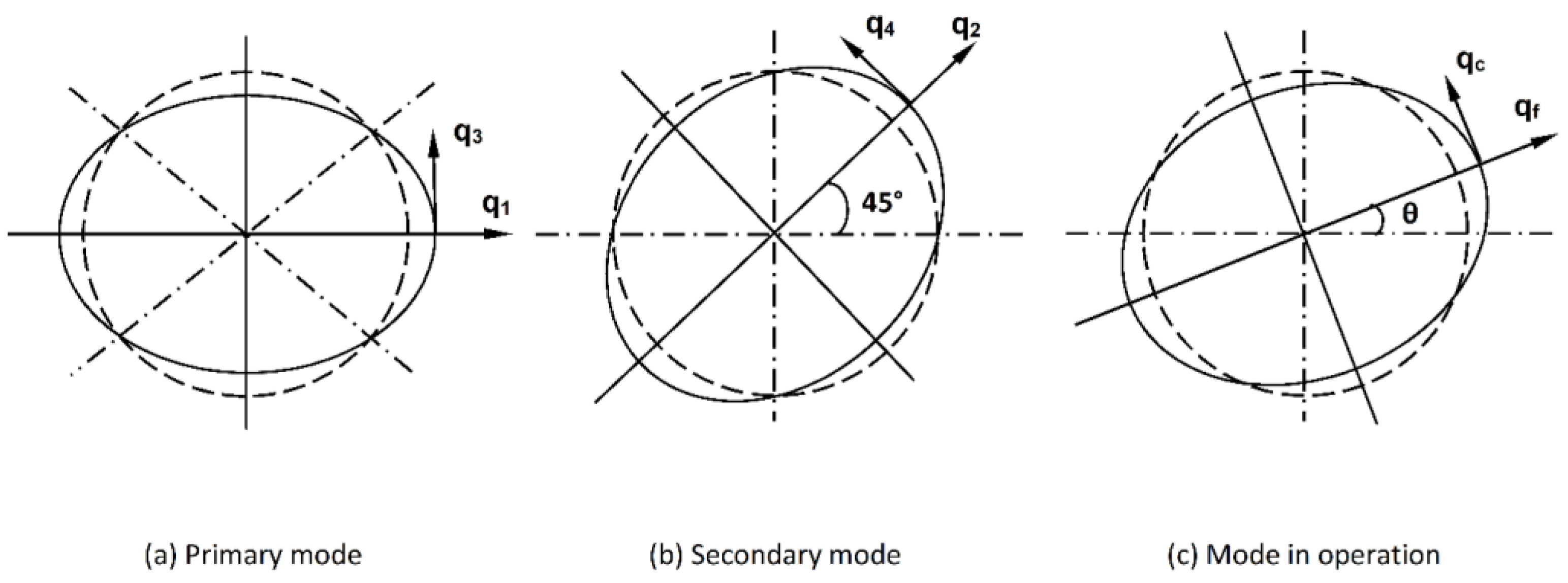
Although shell resonators can be designed with different materials and structures, they have the same working principle. In a report by Yi et al. [26], according to the elastic thin-shell theory, the resonator produces a large deformation under the action of acceleration, causing the resonator to change its original position relative to the initial position. A ring-type angular rate sensor typically consists of a thin, lightweight ring, an excitation mechanism, and a sensing element. A certain vibratory mode is excited in the ring using an exciter. Ideally, a ring resonator has two orthogonal modal configurations known as degenerate mode shapes, have equal frequencies and are separated by an angle of 45° as shown in Figure 1a,b. When an external angular velocity is applied to the resonator, the vibration mode will have a precession angle relative to the initial position called the vibration mode angle. This characteristic is exploited for the design of an angular rate sensor as demonstrated by Kempe [27]. Energy transfer and the resulting angular shift between these degenerate configurations as a result of an input angular rate, when quantified, can be used as an effective identifier for the measurement of input angular velocity. When an external angular velocity is applied to the resonator, the vibration mode will have a separation angle θ relative to the initial position. For a rigid body rotating in free space, the angular velocity is directly tied to the angle θ through a proportional relationship. As shown in Figure 1a,b, the radial coordinate q1 represents the excitation or the driving coordinate of the gyro, while the radial coordinate q2 represents the angular measurement or the sensing coordinate. The coordinates q3 and q4 denote the circumferential counterparts, which are dependent, respectively, on q1 and q2. Figure 1c shows the resonant mode during operation in which qf and qc, respectively, represent the corresponding radial and circumferential coordinates.
A shell fabricated by spot-welding the edges of a steel plate to form a cylindrical shape was used for the purposes of experimentation. The spot-welding process generates slight variations in mass, damping, and stiffness, which mimics the mass mismatch typically found in real ring-type resonators. A long, macro-scale cylinder was chosen for the experiments because its dynamic behavior is similar to that of a non-rotating ring structure [28]. The cylinder’s thickness of 0.1016 mm and carefully selected dimensions ensure a small thickness-to-radius ratio, allowing nonlinear flexural vibrations to occur at large amplitudes. The blue-tempered C1095 steel plate was manufactured by the McMaster-Carr Supply Company, and has the following properties as shown in Table 1.
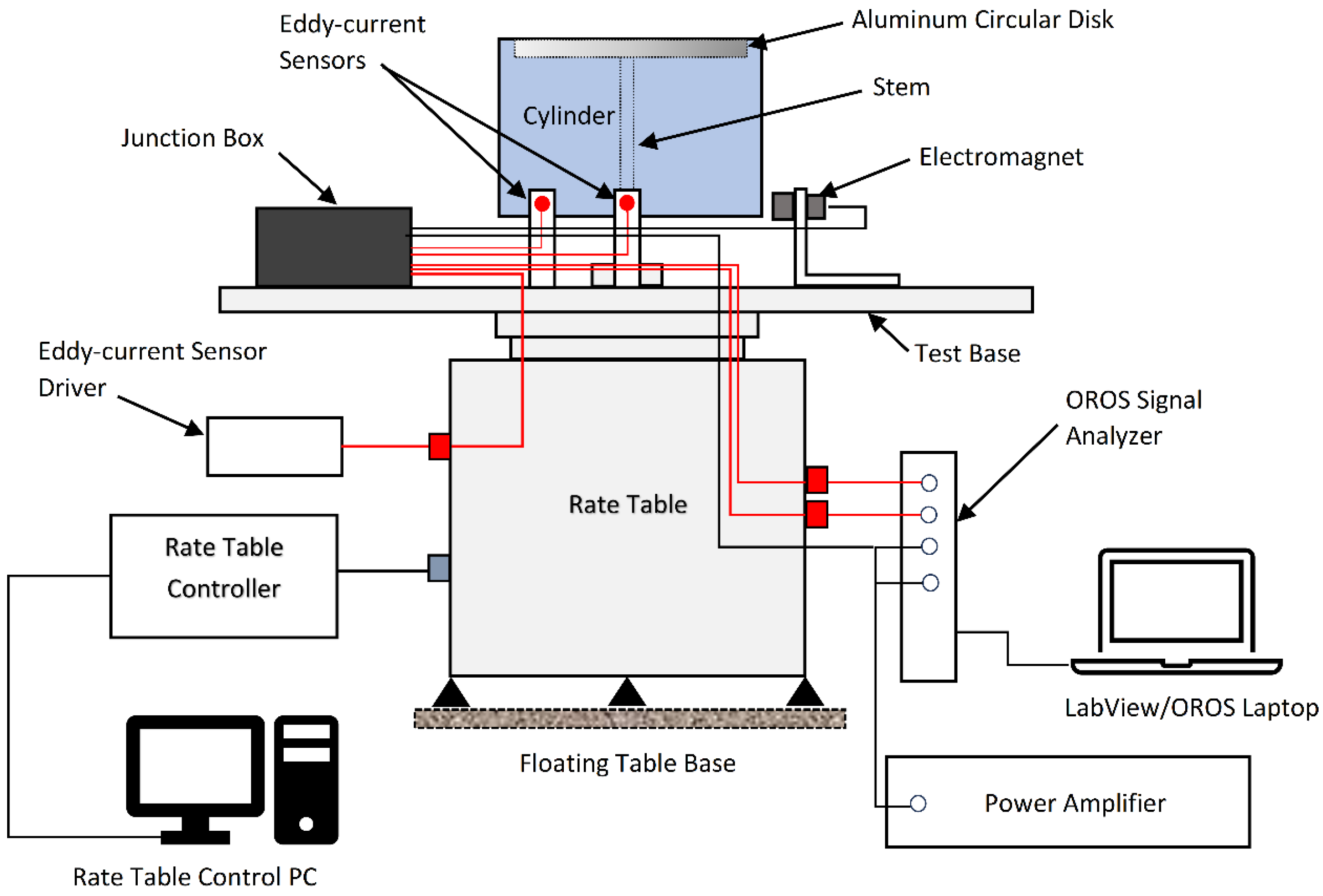
This setup utilizes an Ideal Aerosmith 1291BR Precision Single-Axis Rate Table, which offers highly accurate, constant-speed rotation and features a slip ring for signal transfer between the rotating cylinder and the stationary measurement devices. This table is used to mount the cylinder, using an aluminum disk that is fixed to the table’s axis via an aluminum stem. Such a setup allows the bottom of the cylinder to move freely, closely resembling a thin, free-standing ring. The cylinder was made long enough to minimize changes in mode shapes caused by the mounting tapes.
Excitation and displacement were provided, respectively, by a set of APW EM075-12-122 electromagnetic actuators and two Lion Precision Eddy-Current probes whose connections are shown in red. This contactless system allows precise control over the excitation signals, which were generated using a Stanford Research Systems DS345. For the detection of natural frequency, the DS345 was used to produce low-frequency sinusoids and linear frequency sweeps. The signal was amplified with a Crown CE1000 amplifier to remove undesired noise, while a Lion Precision ECL134 dual-channel driver enabled simultaneous monitoring of the two probes. Data was recorded through a National Instruments DAQ system and analyzed using LabView version 14.0 and OROS OR35 with version 2.2 of the NVGate software. The schematic diagram in Figure 2 provides an overview of the experimental setup. It is also important to note that all sensors in this setup were factory calibrated prior to experimentation.
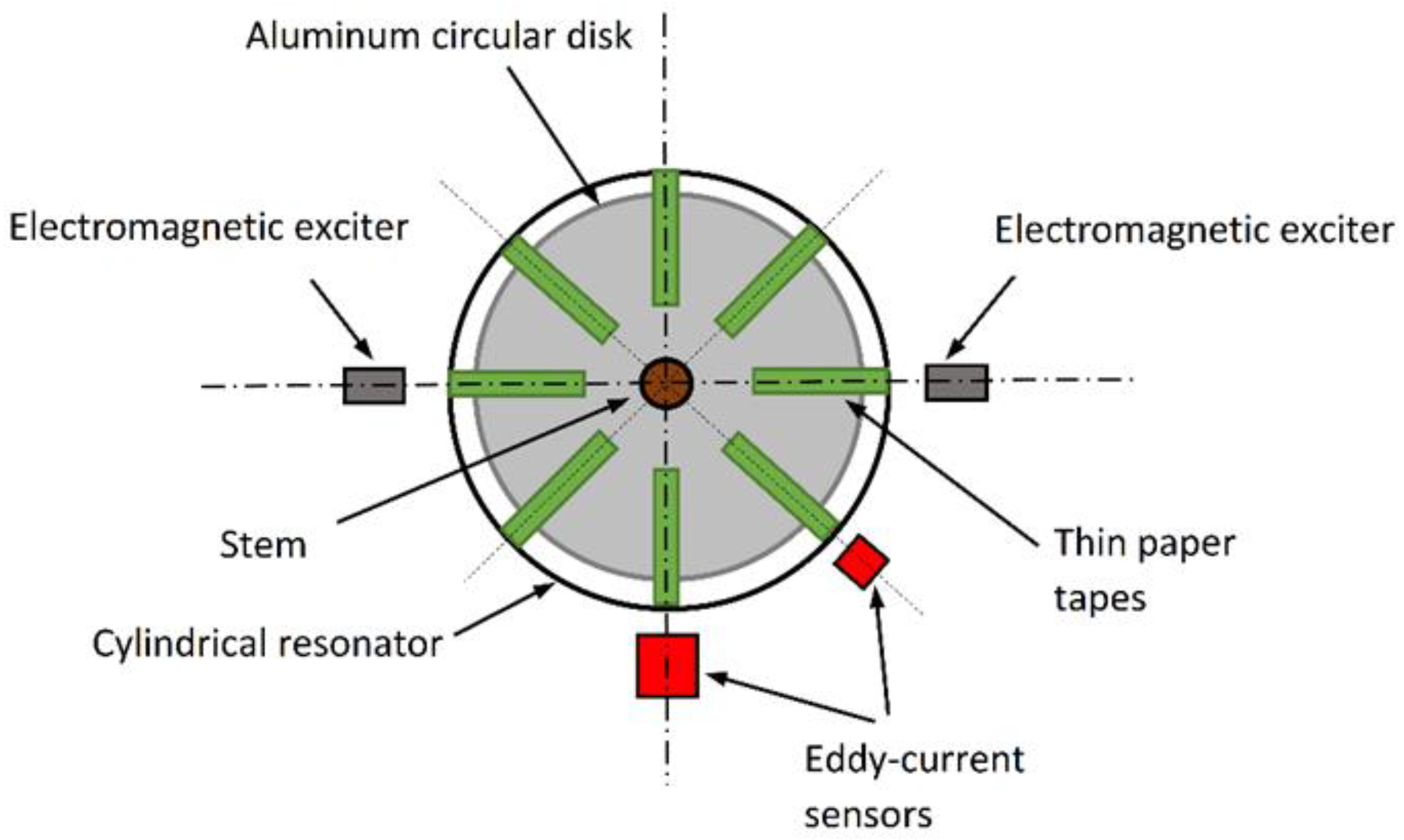
Eddy-current sensors enable non-contact measurement of displacement within low-frequency ranges, which minimizes the need for additional mechanical constraints on the cylinder. To study the system, the upper end of the cylinder was fixed to an aluminum circular disk using eight evenly spaced thin paper tapes, as shown in Figure 3. The exciters and probes were first arranged without applying angular rate to identify the natural frequencies of the flexural modes and examine possible nonlinear behavior. Figure 3 also provides a schematic of sensor and exciter placement relative to the nodal and anti-nodal lines of the ring mode shape, where the antinode axes are represented with dotted lines. Since eddy-current probes detect ferromagnetic material by sensing variations in an induced magnetic field, they are susceptible to displacements near nodal regions. For this reason, optimizing sensor placement was necessary to prevent interference with the vibrating shell and to ensure accurate detection of small-amplitude motions at critical locations.
To excite the structure effectively, the electromagnetic actuators were mounted symmetrically across the cylinder’s diameter, targeting the anti-nodal regions where vibration amplitudes are most significant. The system’s response was then monitored using eddy-current sensors, which were positioned at both a nodal and an anti-nodal location. Throughout the discussion, these placements are referred to as the nodal and anti-nodal measurement points, corresponding to the first configuration of the second flexural mode. Sensor positioning required careful consideration: when placed too close to the shell, large-amplitude oscillations risked striking the probes, whereas placing them too far away reduced accuracy because eddy-current devices rely on detecting displacement through changes in the surrounding magnetic field. Even near nodal points, residual motion could still affect the readings, so adjustments were made to achieve a balance between measurement reliability and mechanical safety. This arrangement ultimately ensured dependable data collection while minimizing interference and avoiding damage during the experiments.
The experimental setup was utilized to study how the ring’s natural frequency changes with angular velocity, to assess the nonlinear aspects of its dynamic response, and to evaluate the influence of uneven mass distribution. A detailed discussion of the measurements and the corresponding analysis is provided in the next section.

3. Results

This section may be divided into subheadings. It should present a concise and precise account of the experimental results, their interpretation, and the conclusions derived from the study.

3.1. Experimental Natural Frequency Variation Due to Input Angular Rate

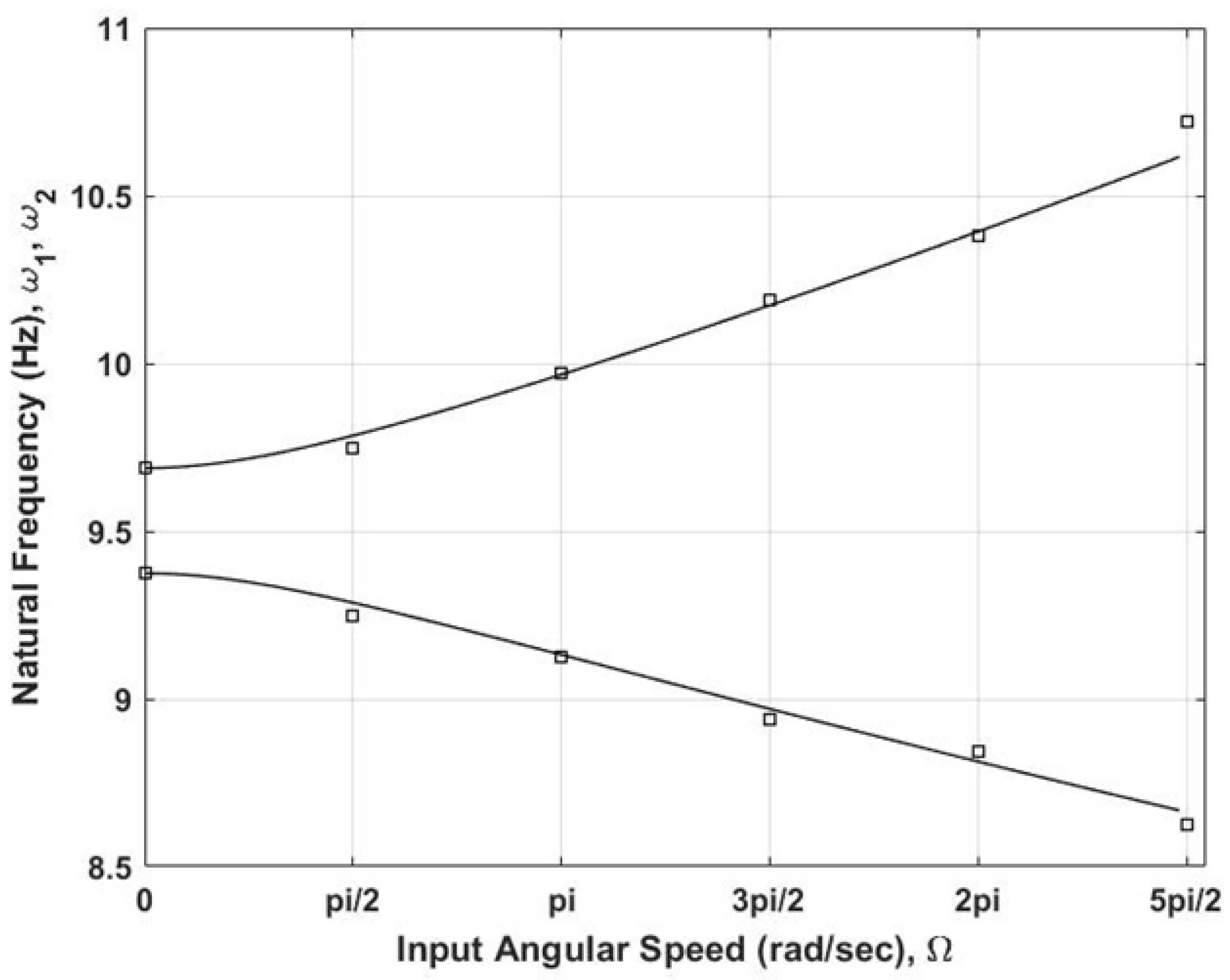
Both the angular rotation rate and the level of mass imbalance in the ring influence the natural frequencies of the two second-flexural mode configurations. To examine these influences, frequency response measurements were taken at an anti-nodal location under varying angular rates. The outcomes, which illustrate how the cylinder’s natural frequency shifts during rotation, are presented in Figure 4. The square points shown in the figure represent the experimentally determined frequencies, which clearly illustrate the frequency-split behavior of rotating axisymmetric shell resonators. It may be noted that these values match closely with the theoretical predictions for the present experimental structure as demonstrated in [28], indicating very good agreement. It should be noted that to capture the variations of natural frequencies and compare the theoretical and experimental results, the theoretical non-rotating ring natural frequency is matched with the non-rotating ring natural frequency obtained from experiments. Owing to the presence of mass mismatch, which may be attributed to the fabrication process, as expected in the absence of rotation, a difference between the two normal mode natural frequencies is observed: ω1 = 9.38 Hz and ω2 = 9.66 Hz. This difference between these two normal mode frequencies, which is often termed frequency split, is found to increase as the input angular rate increases. It may be noted that the higher and lower of the two natural frequencies are, respectively, denoted by ω2 and ω1. It is essential to highlight that the primary distinction between the theoretical and experimental work lies in the inclusion of the elastic foundation parameter in the theoretical analysis, while the stiffness is considered to be zero in the experimental investigation.

3.2. Nonlinear Frequency Response Experiments

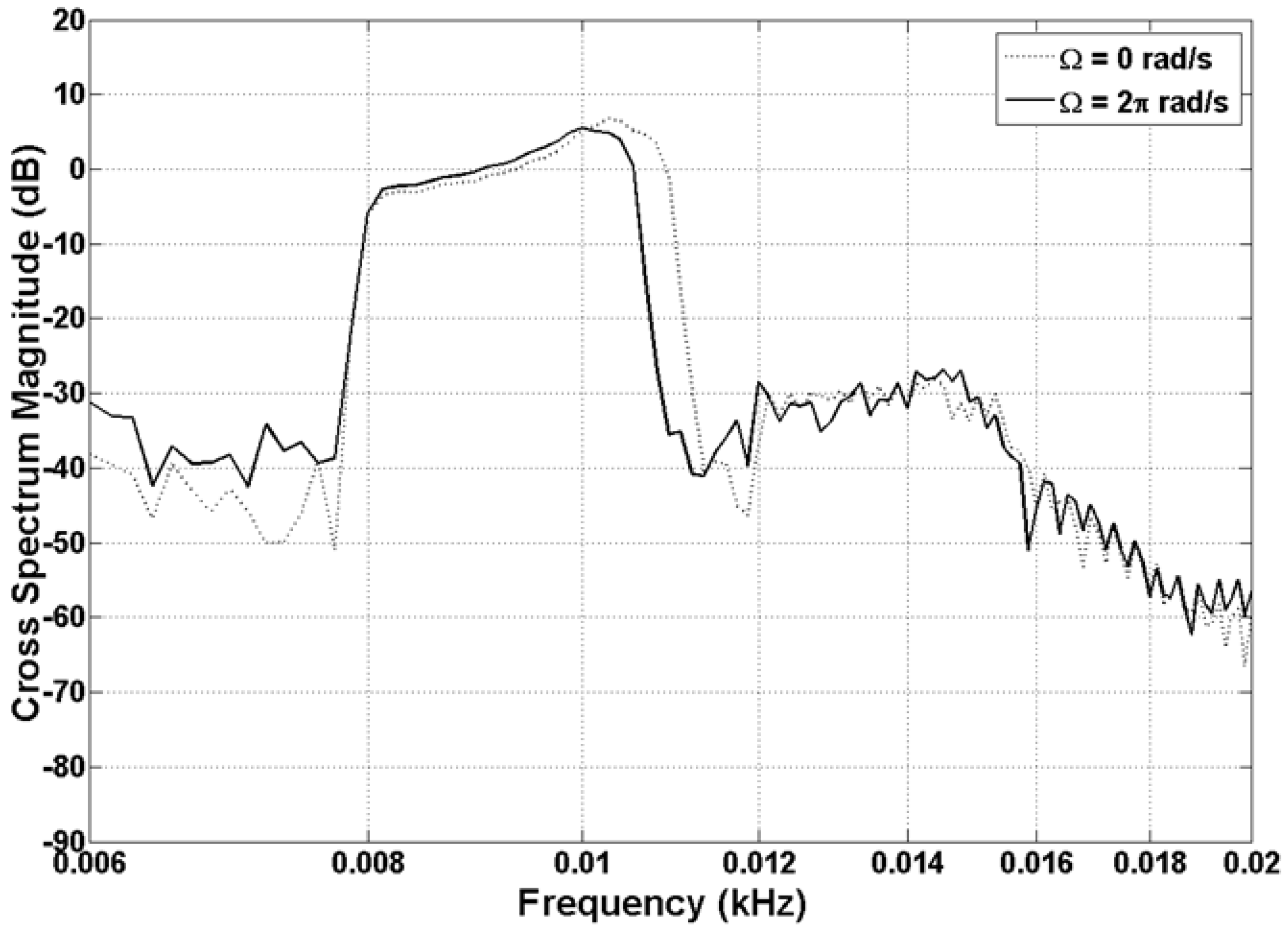
The initial experiments focused on examining the bifurcation behavior of the two flexural configurations by exciting the ring with a linear sinusoidal frequency sweep and comparing the resulting response to the input signal. Figure 5 shows the peak corresponding to the natural frequency of the ring in its first flexural configuration, which shifts lower (to the left) when the ring is rotating compared to its stationary state. At the low angular velocities typical for gyroscope operation, the two natural frequencies of the second flexural mode remain closely spaced. Nonetheless, the second configuration experiences an upward frequency shift, which produces a bifurcation of the mode, even though this is not directly shown in the figure. Detecting this splitting can be further complicated by the influence of additional mode shapes not included in the present analysis.
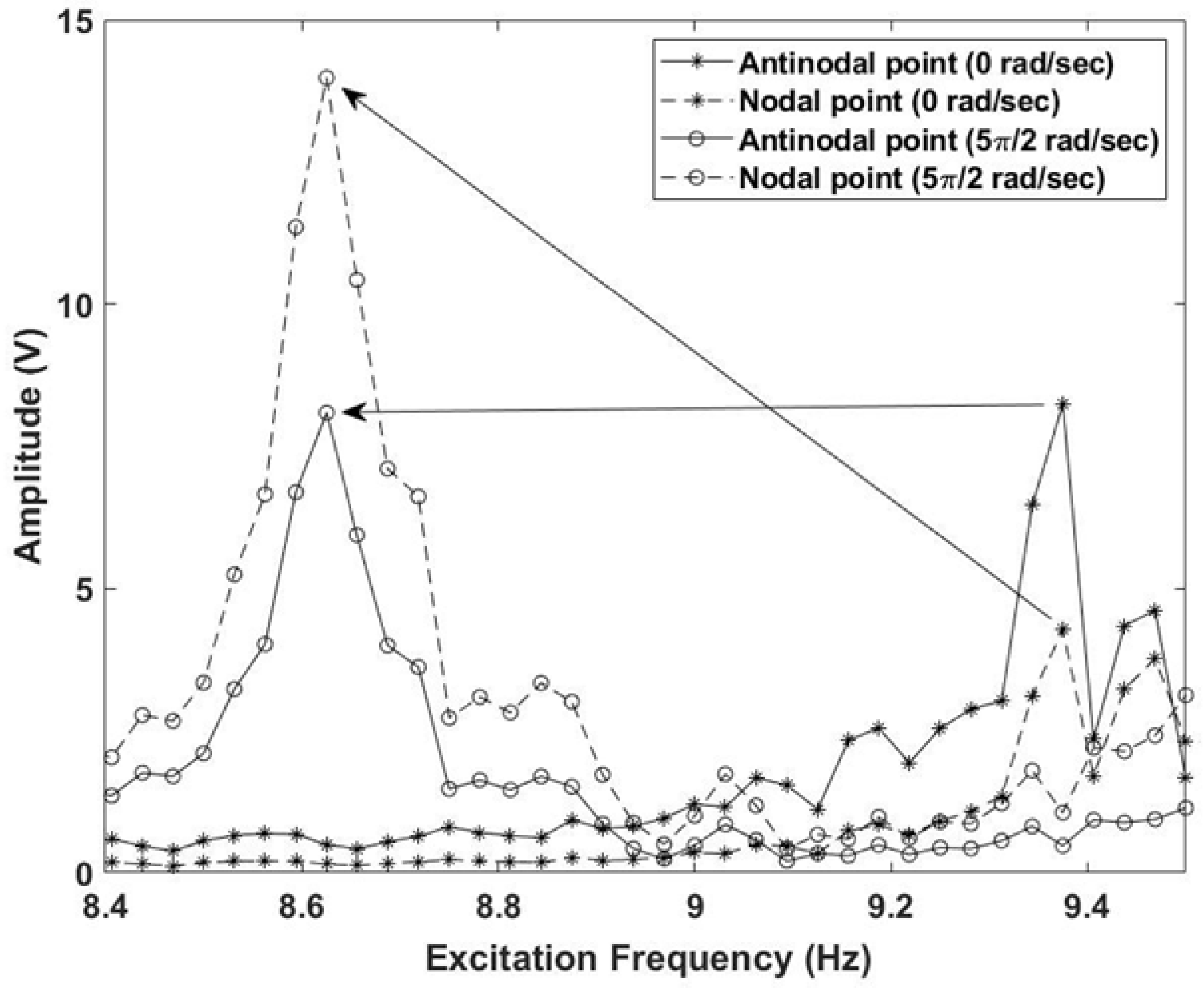
In Figure 6, the behavior of the normal mode shift from the primary flexural mode to the secondary flexural mode of rotating rings, which is typically utilized for sensor applications, is illustrated via experiments. When the ring is driven at its primary mode natural frequency under an applied angular rate, the Coriolis effect transfers part of the vibrational energy into the secondary mode. This interaction excites the secondary mode and highlights the coupling between the two configurations, a key mechanism in ring-based angular rate sensing. Consequently, the detection amplitude builds at nodal points (i.e., sensing points) as the input angular rate increases. This phenomenon is illustrated in this figure with the angled solid arrow from the right peak (Ω = 0 rad/s) to the left (Ω = 5π/2 rad/s), which indicates an increase in the nodal amplitude. On the other hand, the amplitude changes are seen to be not significant at anti-nodal points, as indicated by the almost horizontal arrow going from the right (Ω = 0 rad/s) to the left (Ω = 5π/2 rad/s).
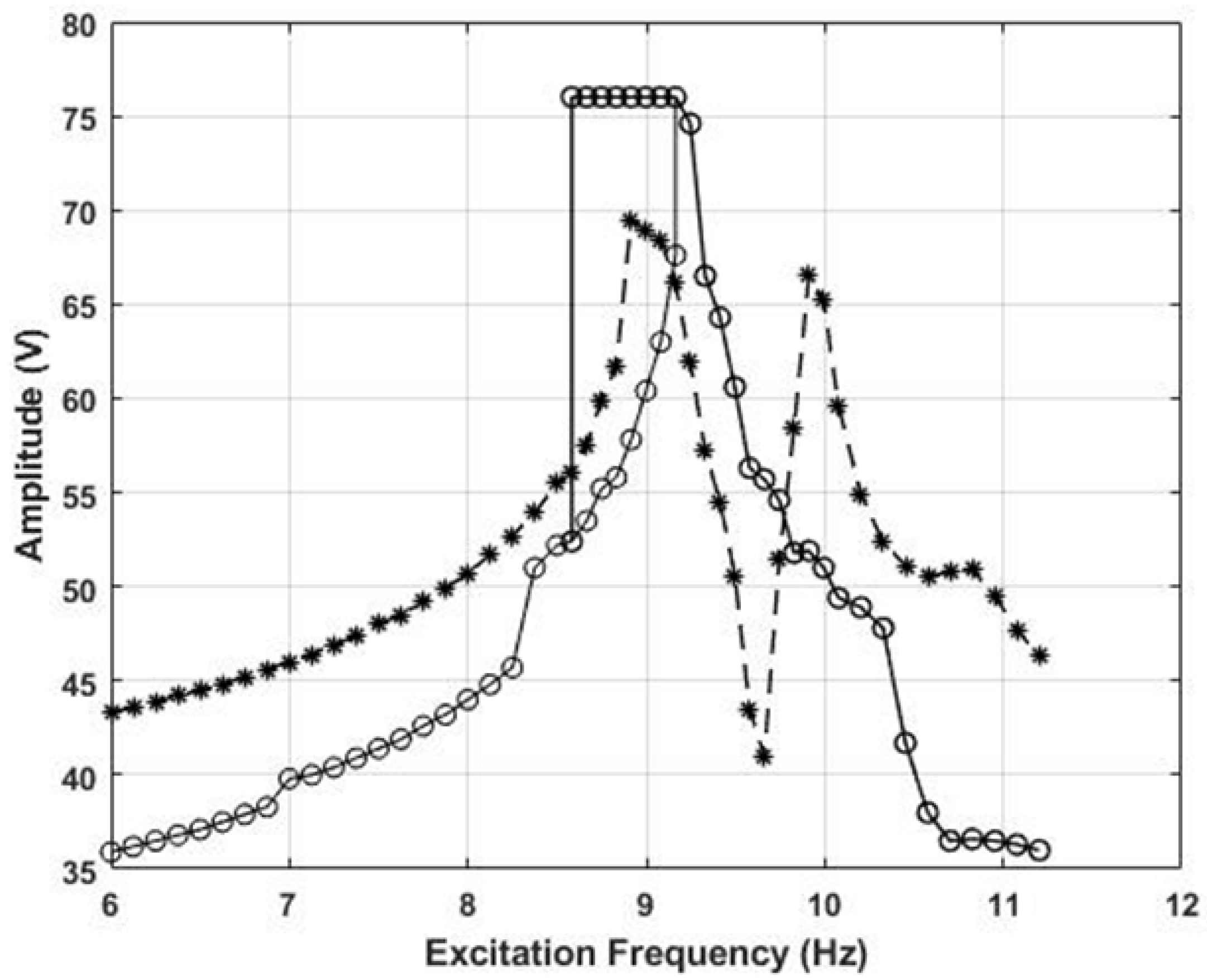
The frequency response curves associated with the second flexural modes at an anti-nodal point are obtained next. By varying the external excitation frequency, the amplitudes of responses of the cylinder-end are recorded for two different input angular rates (Ω = 0 rad/s and Ω = π rad/s), and the results are illustrated in Figure 7. The jump phenomenon and the presence of softening-type nonlinearity are observed in experimental results. It may be noted that the frequency split is observable for an angular speed of π rad/s. However, the split for a non-rotating structure was found to be much lower. To demonstrate the jump phenomenon, higher input voltages were used, and jumps were found for the non-rotating cylinder-end in the frequency range from 8.58 Hz to 9.16 Hz during the experiment. In this range of jumps, the amplitudes are all equal since the displacement of the free cylinder-end is so large that the free cylinder-end starts to hit the displacement sensors, and as a result, in the figure, the displacements picked by the sensors appear to be the same. This hard limit in displacement sensors cannot be avoided since the locations of the sensors and exciters from the cylinder-end must be selected such that a certain driving range is maintained to achieve adequate performance.
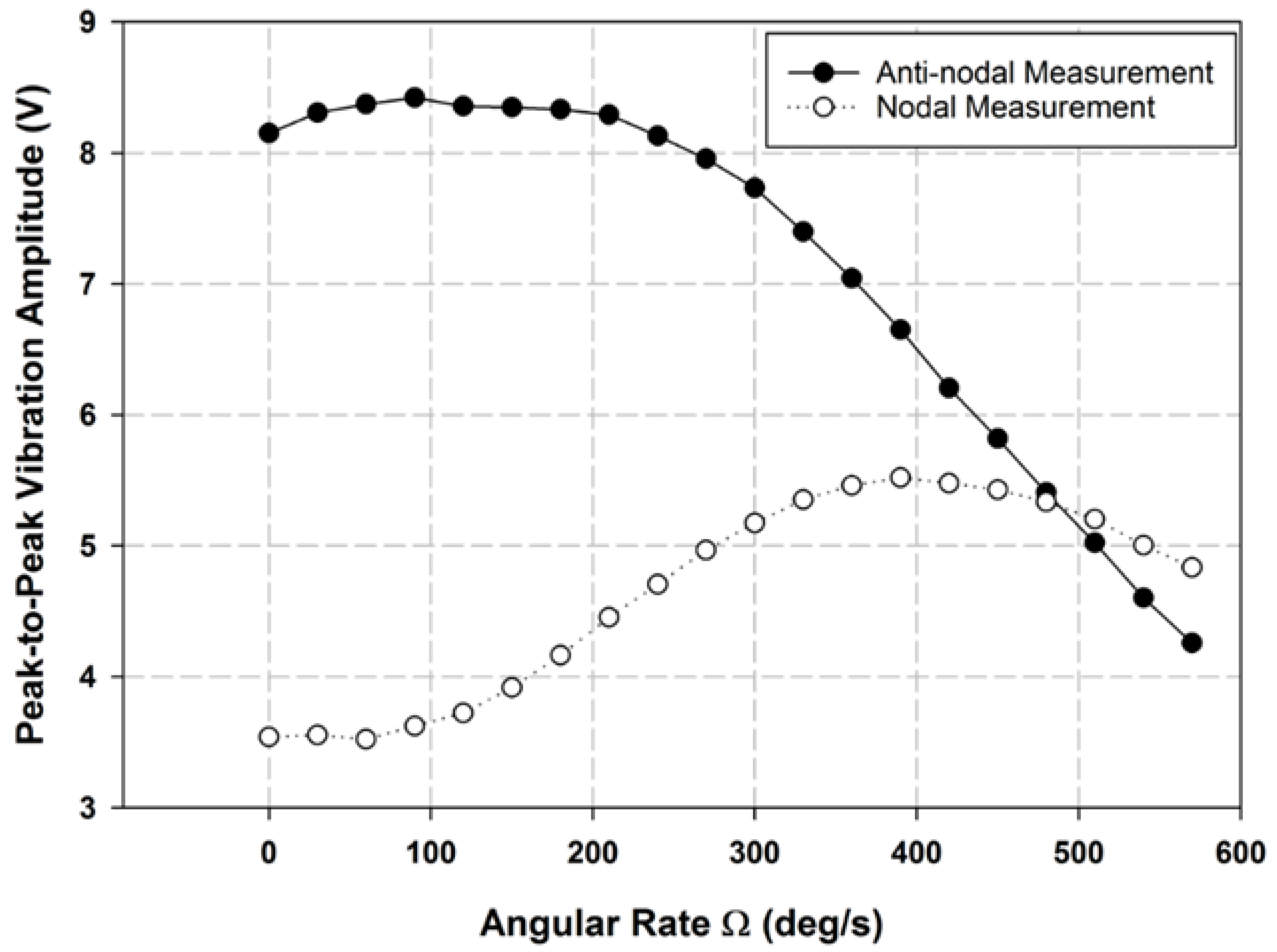
The nonlinear behavior of the sensor response was examined by tracking how Coriolis forces transfer energy between the two second flexural mode configurations. To capture this effect, vibration amplitudes were measured at both a nodal point and an anti-nodal point, with excitation applied at the lower natural frequency of the ring to promote large oscillations. Figure 8 shows how the amplitudes at these locations vary with angular rate under excitation at the stationary resonance frequency. At low angular velocities, the vibration amplitudes display no clear trend; however, energy transfer to the second configuration becomes evident at the anti-nodal point when the input rate reaches approximately 210–240°/s. Interestingly, increased vibration at the nodal point is detected much earlier, around 90°/s. While anti-nodal measurements remain nearly linear up to 500°/s, nodal responses show strong nonlinear behavior beyond 300°/s. As expected, the device’s linearity is highly dependent on the excitation frequency. The nonlinearity observed here is largely attributed to the combination of large vibration amplitudes and the relatively low natural frequency of the device (10.4 Hz), which produces a high angular rate-to-frequency ratio compared with MEMS sensors, typically designed with kHz-range natural frequencies and detection rates of 0–2π rad/s. Additional challenges arise from the use of eddy-current sensors, since their magnetic-field–based measurement principle makes them sensitive to nearby vibrations, complicating signal accuracy at nodal points. Further details of this nonlinear behavior of the system have been studied in a theoretical/numerical framework and presented in [29].

3.3. Natural Frequency Variation Due to Mass Mismatch

Manufacturing defects can significantly influence the nonlinear behavior and frequency response of ring structures. Variations in mass distribution, in particular, may cause bifurcations and shifts in the system’s natural frequencies. Although precise manufacturing and machining can reduce such imperfections, they cannot eliminate them. Consequently, understanding their impact on performance is essential. In this study, controlled mass anomalies were deliberately introduced to the ring, and the peak-to-peak amplitude of the sensor output was measured over a range of excitation frequencies to determine the natural frequency of the first flexural mode. This method offers a systematic way to assess how changes in mass distribution affect the ring’s sensitivity.
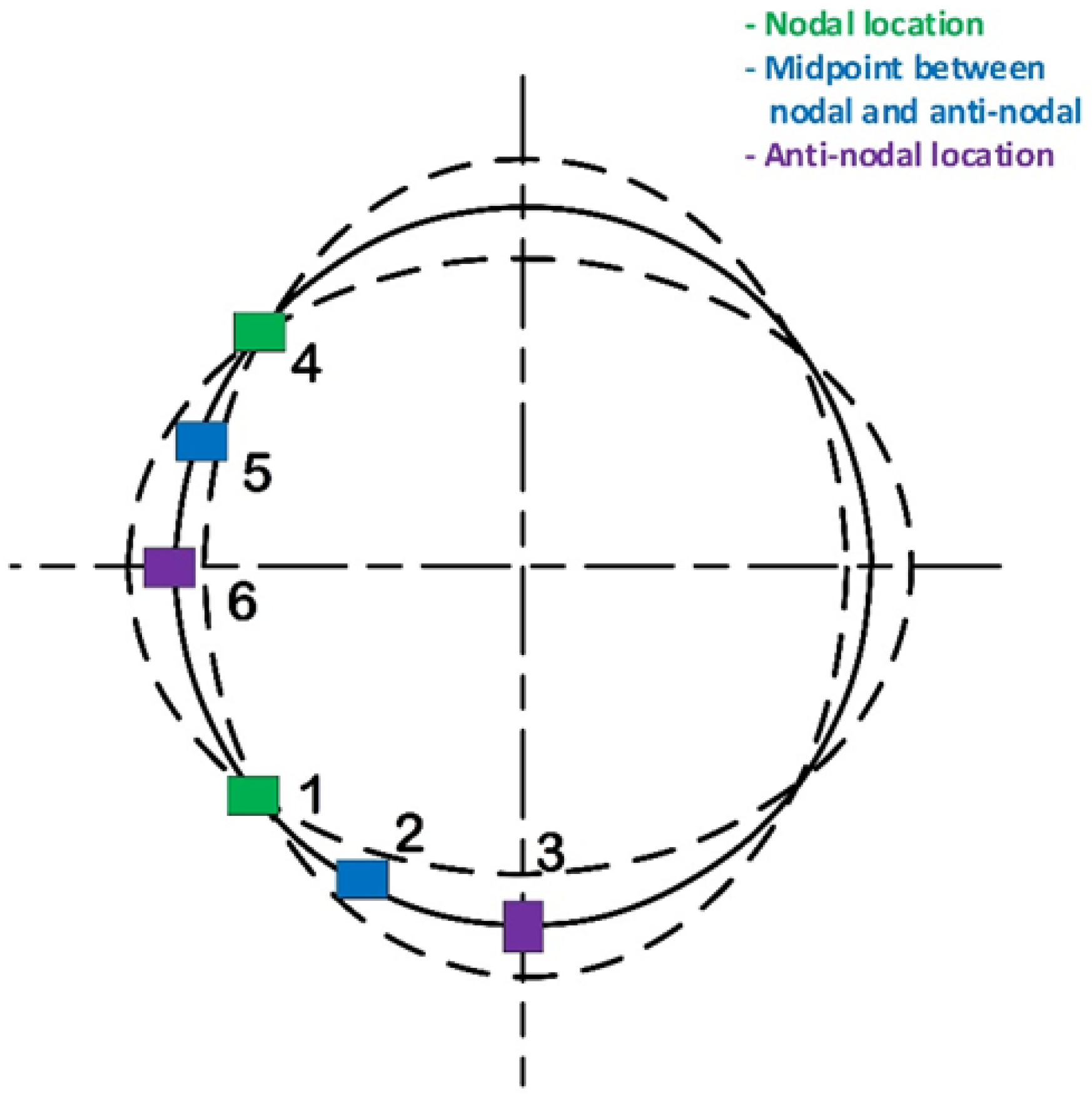
Beyond the magnitude of the mass anomaly, its circumferential position relative to the second flexural mode shape was also investigated under a non-rotating configuration. Figure 9 illustrates the selected locations, including two nodal points (1, 4), two anti-nodal points (3, 6), and two arbitrary points (2, 5) positioned approximately midway between nodes and anti-nodes. The primary points of measurement are chosen based on the node and antinode points, which are confirmed through the second flexural mode resonance observed experimentally. The midpoint is then identified using a standard flexible measuring tape with the lowest measure of 1 mm. The purpose of this additional measurement is to get a perspective of the response behavior at a general location between the nodal and anti-nodal points. Once these points are identified, mass anomalies are affixed to the structure using adhesive tape. Initial tests showed minimal differences in natural frequency across corresponding nodal and anti-nodal points in symmetrical quadrants. Therefore, one quarter of the ring surface was considered representative. Nevertheless, measurements from an additional quadrant were included to demonstrate the effects of placing mass anomalies at geometrically symmetric positions.
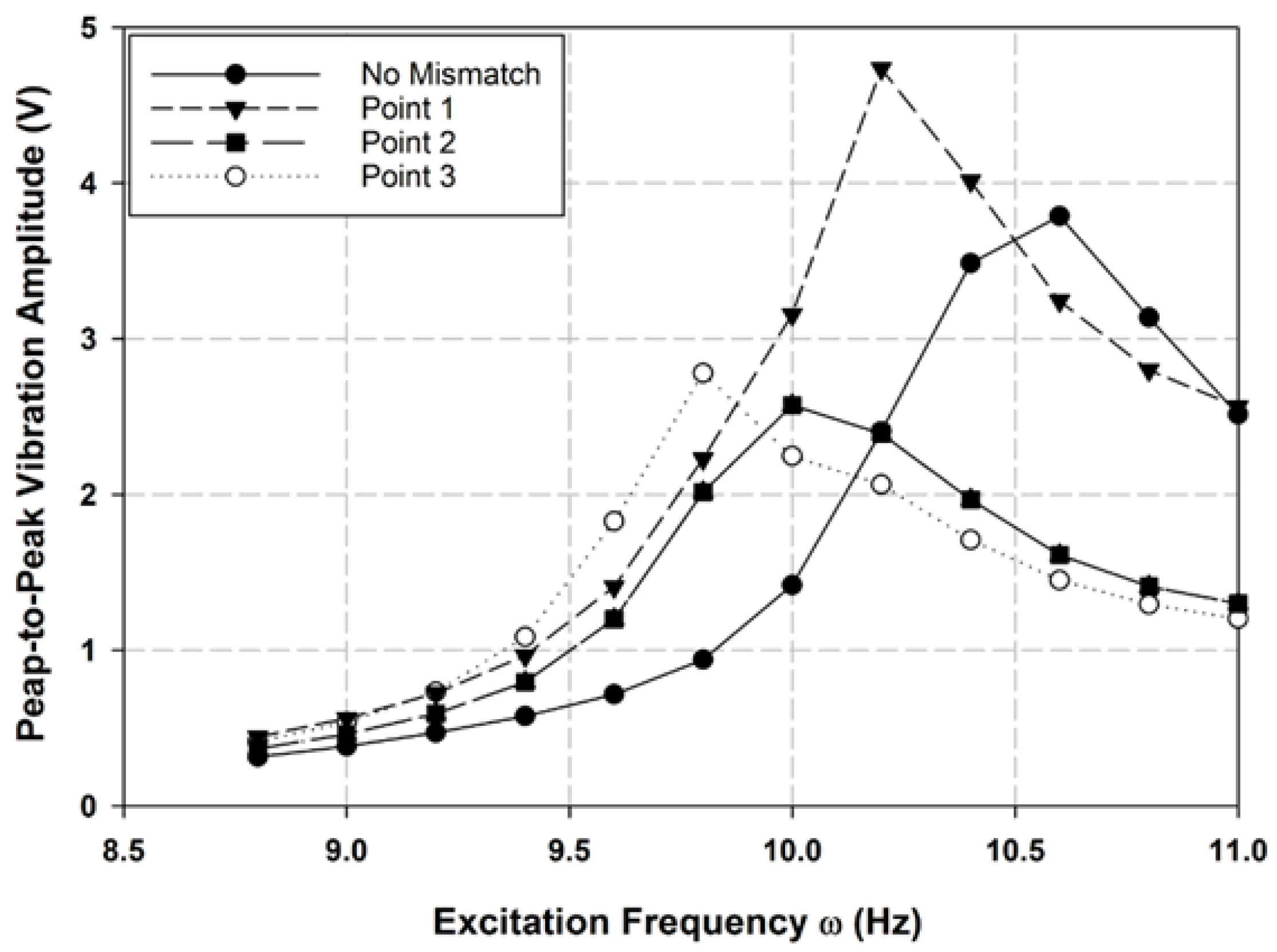
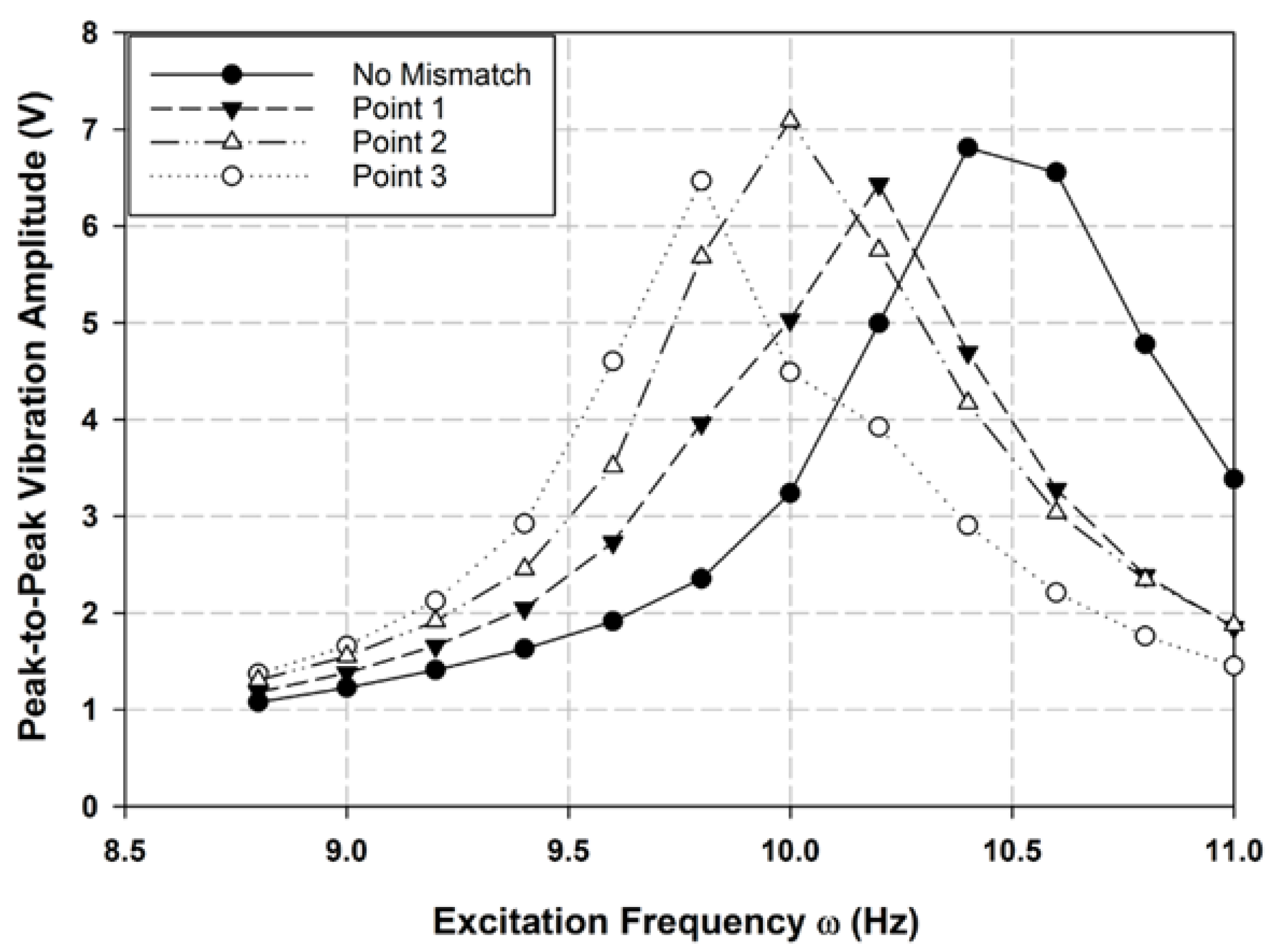
Figure 10 shows the peak-to-peak vibration amplitudes for a 2.5% mass anomaly, expressed as a fraction of the total ring mass, at positions 1, 2, and 3 along the ring circumference, measured at the anti-nodal point. The results demonstrate that increasing mass non-uniformity reduces the first natural frequency of the second flexural mode. Analysis further indicates that the location of the mass anomaly plays a significant role in this frequency shift. For the non-rotating ring, positioning the 2.5% mass at the nodal point lowers the first natural frequency from 10.6 Hz to 10.2 Hz.
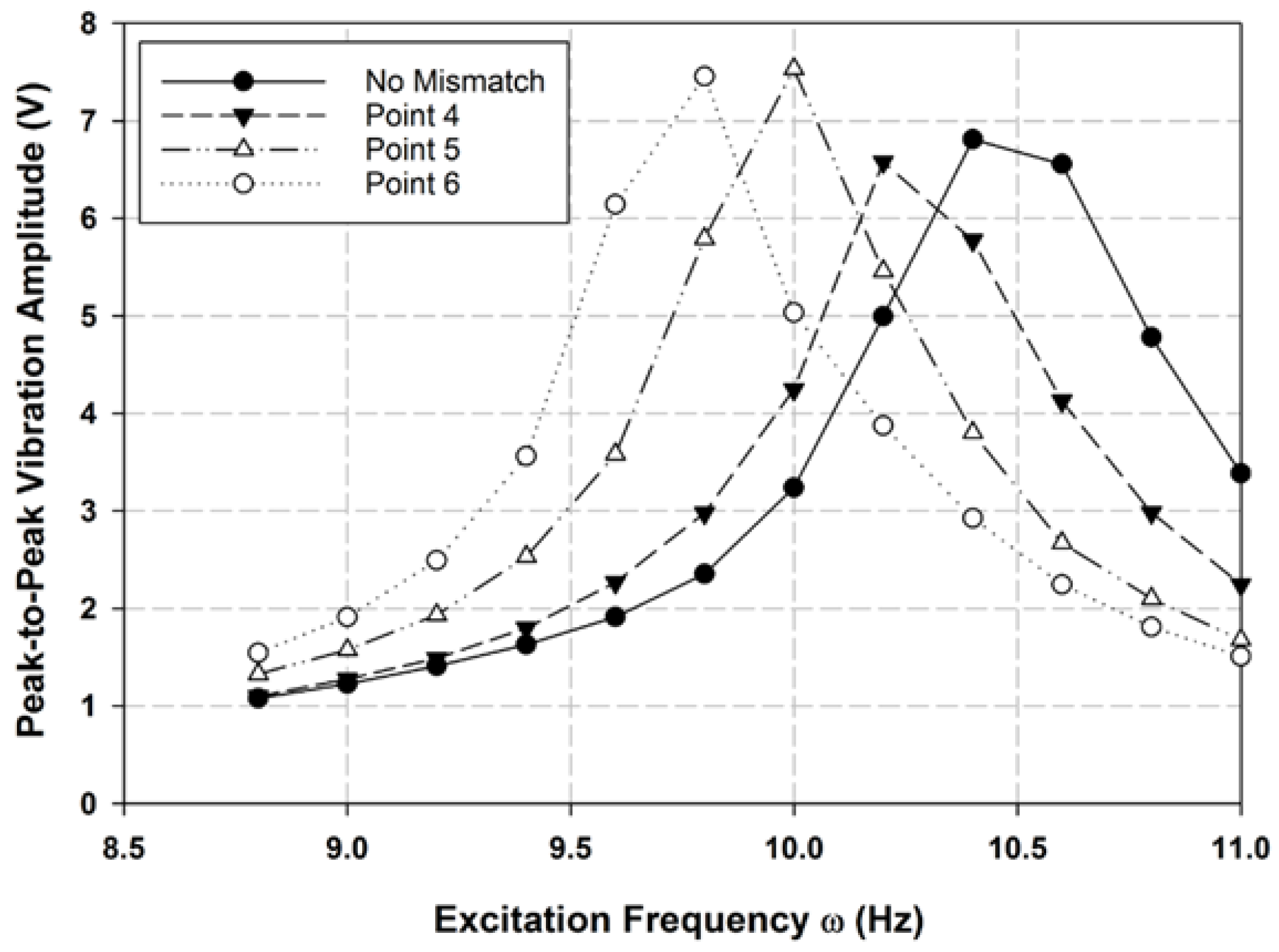
The natural frequency further decreases as the mass anomaly moves from the nodal point toward the anti-nodal points. The lowest observed frequency, 9.8 Hz, occurs when the mass is positioned directly at an antinode. Symmetrical positions corresponding to points 1, 2, and 3 exhibit similar frequency reductions, confirming the structural symmetry. Additional peak-to-peak measurements at the anti-nodal points for mass locations 4, 5, and 6 are presented in Figure 11, further illustrating the influence of mass placement on the dynamic response.
To analyze the effects of mass mismatch, anti-nodal measurements were chosen for subsequent evaluations, as they offer larger peak-to-peak amplitudes and help reduce uncertainties. These uncertainties—stemming from nearby vibrations, high-frequency noise, and averaging errors—were observed to cause only minor discrepancies between nodal and anti-nodal readings. Figure 12 presents the first natural frequency measured at the nodal point for several locations of a 2.5% mass anomaly, illustrating that the two measurement approaches yield nearly identical results.
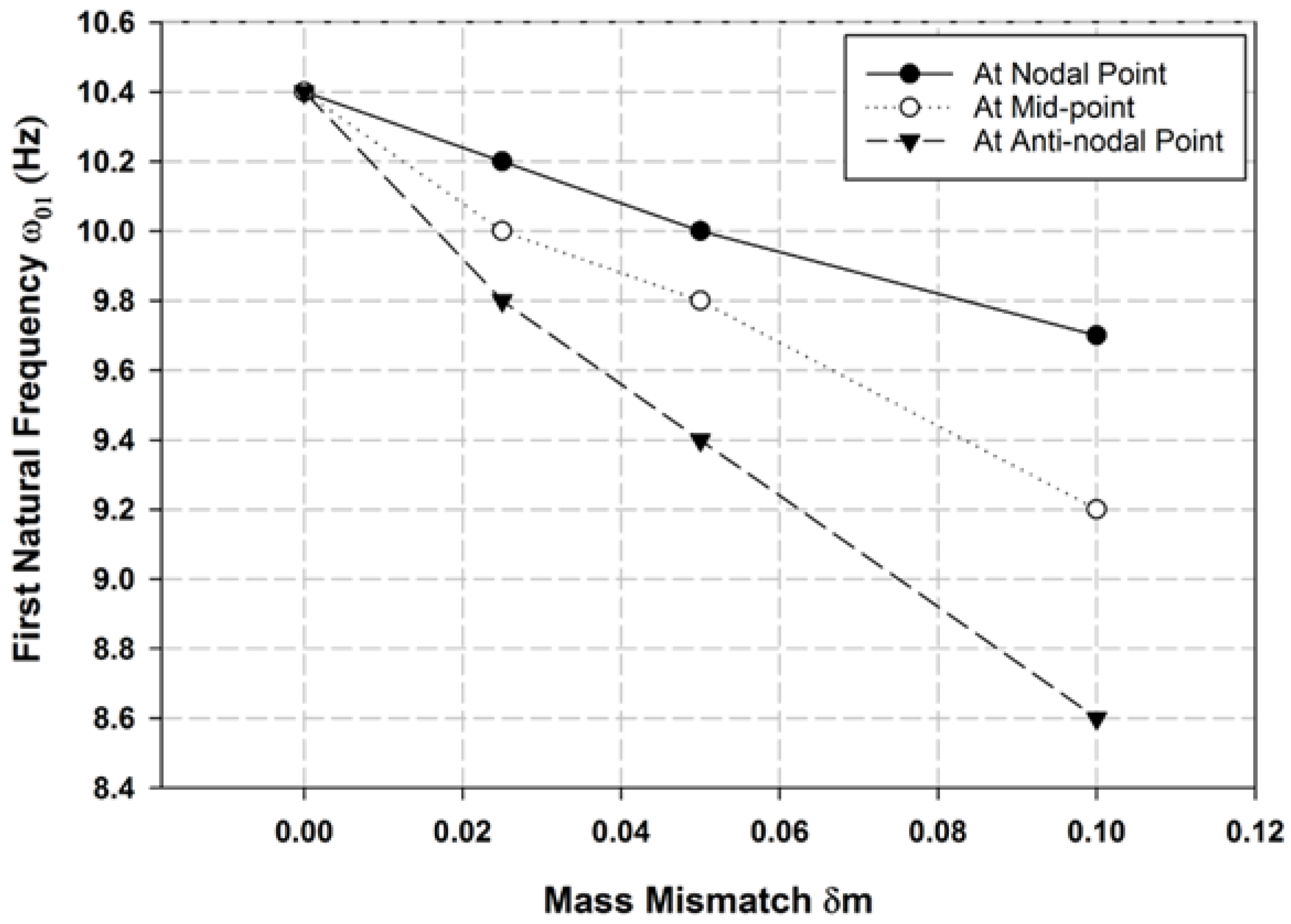
Experiments with localized mass anomalies of 2.5%, 5%, and 10% of the total ring mass were carried out to examine how added mass influences the natural frequency of the first configuration of the second flexural mode. The results, summarized in Figure 13 through peak-to-peak amplitude versus excitation frequency plots, show a clear trend: as the added mass increases, the natural frequency decreases. This reduction is far more pronounced when the anomaly is positioned near an anti-nodal point. For example, a 10% anomaly results in a frequency drop of about 0.7 Hz at a nodal point, compared to 1.8 Hz at an anti-nodal point, emphasizing the strong dependence of dynamic behavior on mass placement.

4. Conclusions

An experimental setup is built for examining the nonlinear dynamic behavior of a rotating axisymmetric structure, which represents the dynamics of a vibratory ring-type angular rate sensor. Employing a precision rate table that is fitted with a slip ring and non-contact sensors/actuators, an experiment that closely represents the actual physical operating condition is developed. Natural frequency variations due to the input angular rate changes are observed in the time and frequency domains. The amplitude variation at a nodal point, which is employed for angular rate sensor applications, together with the typical nonlinear phenomena, such as jump phenomena, is observed experimentally. Experimental results show that the system’s natural frequency decreases with the increase of input angular rate and mass mismatch. Furthermore, the effects of increasing mass non-uniformity along the ring circumference were examined. Results showed that greater mass mismatch leads to a reduction in the system’s natural frequency, consistent with analytical predictions. Moreover, results show a dependency of the frequency shift on mass mismatch based on the location of the mismatch along the cylinder circumference. The experiments demonstrated that increasing localized mass anomalies reduces the natural frequency of the second flexural mode, with the effect being more pronounced at anti-nodal points than at nodal points. In particular, a concentrated mass equal to 10% of the total ring mass caused up to a 1.8 Hz reduction in natural frequency when placed at an anti-nodal location. Results from the present study on ring-type resonator structures are envisaged to provide further insight into the design and operation of this class of devices.

Author Contributions

J.C., S.A., A.F.A., M.B., I.F.G. designed, built, and assembled the apparatus as well as the associated actuator/sensing systems and DAQ hardware and software under the guidance of S.F.A., J.C., S.A., A.F.A., I.F.G., M.B., S.F.A. analyzed the results and wrote the manuscript. All authors have read and agreed to the published version of the manuscript.

Funding

This research was funded by the Natural Sciences and Engineering Research Council (NSERC) of Canada (Discovery Grant #RGPIN/250432) and a scholarship #294/2013 awarded to the first author by the Ministry of Education and Scientific Research and Benghazi University, Libya.

Data Availability Statement

The raw data supporting the conclusions of this article will be made available by the authors on request.

Acknowledgments

The Natural Science and Engineering Research Council (NSERC) of Canada discovery grant and the Canada Foundation for Innovation (CFI). Scholarship awarded to the first, fourth, and fifth authors by the Ministry of Higher Education and Scientific Research, Libya.

Conflicts of Interest

Soroush Arghavan and Jihyun Cho are employees of NetNow Inc. and Stantec Canada, respectively. The paper reflects the views of the scientists, not those of the companies. The remaining authors declare that the research was conducted in the absence of any commercial or financial relationships that could be construed as a potential conflict of interest. The authors declare no conflict of interest. Funding sponsors had no role in the design of the study; in the collection, analyses, or interpretation of data; in the writing of the manuscript; or in the decision to publish the results.

References

  1. Evensen, D.A. Nonlinear flexural vibrations of thin circular rings. J. Appl. Mech. 1966, 33, 553–560. [Google Scholar] [CrossRef]
  2. Endo, M.; Sakata, K.; Taniguchi, O. Flexural vibration of a thin rotating ring. J. Sound Vib. 1984, 92, 261–272. [Google Scholar] [CrossRef]
  3. Maluf, N.; Williams, K. An Introduction to Microelectromechanical Systems Engineering; Artech House: London, UK, 2004. [Google Scholar]
  4. Asokanthan, S.; Cho, J. Dynamic stability of ring-based angular rate sensors. J. Sound Vib. 2006, 295, 571–583. [Google Scholar] [CrossRef]
  5. Lawrence, A. Modern Inertial Technology—Navigation, Guidance, and Control; NASA STI/Recon Technical Report A; NASA: Washington, DC, USA, 1993; Volume 93, p. 39795. [Google Scholar]
  6. Cetin, H.; Yaralioglu, G.G. Analysis of Vibratory Gyroscopes: Drive and Sense Mode Resonance Shift by Coriolis Force. IEEE Sens. J. 2017, 17, 347–358. [Google Scholar] [CrossRef]
  7. Huang, S.; Soedel, W. Effects of Coriolis acceleration on the free and forced in-plane vibrations of rotating rings on elastic foundation. J. Sound Vib. 1987, 115, 253–274. [Google Scholar] [CrossRef]
  8. Eley, R.; Fox, C.; McWilliam, S. Coriolis coupling effects on the vibration of rotating rings. J. Sound Vib. 2000, 238, 459–480. [Google Scholar] [CrossRef]
  9. Kammer, C.; Schlack, A., Jr. Effects of nonconstant spin rate on the vibration of a rotating beam. J. Appl. Mech. 1987, 54, 305–310. [Google Scholar] [CrossRef]
  10. Cooley, C.G.; Parker, R.G. Limitations of an inextensible model for the vibration of high-speed rotating elastic rings with attached space-fixed discrete stiffnesses. Eur. J. Mech.-A/Solids 2015, 54, 187. [Google Scholar] [CrossRef]
  11. Asokanthan, S.; Ariaratnam, S.; Cho, J.; Wang, T. MEMS vibratory angular rate sensors: Stability considerations for design. Struct. Control Health Monit. 2006, 13, 76–90. [Google Scholar] [CrossRef]
  12. Asokanthan, S.; Wang, T. Instabilities in a MEMS gyroscope subjected to angular rate fluctuations. J. Vib. Control 2009, 15, 299–320. [Google Scholar] [CrossRef]
  13. Pan, Y.; Wang, D.; Wang, Y.; Liu, J.; Wu, S.; Qu, T.; Yang, K.; Luo, H. Monolithic Cylindrical Fused Silica Resonators with High Q Factors. Sensors 2016, 16, 1185. [Google Scholar] [CrossRef]
  14. Luo, Y.; Pan, Y.; Zhou, G.; Qu, T.; Luo, H.; Zhang, B. Annealing Experiments on the Quality Factor of Fused Silica Cylindrical Shell Resonator. In Proceedings of the IEEE International Symposium on Inertial Sensors and Systems (INERTIAL), Naples, FL, USA, 1–5 April 2019; pp. 1–2. [Google Scholar] [CrossRef]
  15. Luo, Y.; Gebrel, I.; Bognash, M.; Pan, Y.; Liu, F.; Asokanthan, S.; Luo, H.; Qu, T. Dynamic Response and Frequency Split Predictions for Cylindrical Fused Silica Resonators. IEEE Sens. J. 2020, 20, 3460–3468. [Google Scholar] [CrossRef]
  16. Xiao, P.; Qiu, Z.; Pan, Y.; Li, S.; Qu, T.; Tan, Z.; Liu, J.; Yang, K.; Zhao, W.; Luo, H.; et al. Influence of Electrostatic Forces on the Vibrational Characteristics of Resonators for Coriolis Vibratory Gyroscopes. Sensors 2020, 20, 295. [Google Scholar] [CrossRef]
  17. Luo, Y.; Pan, Y.; Qiu, Z.; Fan, Z.; Xiao, G.; Yu, X.; Luo, H.; Asokanthan, S. Observation and Prediction for Frequency Split of Cylindrical Resonator Gyroscopes Subject to Varying Angular Velocity. In Proceedings of the IEEE International Symposium on Inertial Sensors and Systems (INERTIAL), Hiroshima, Japan, 23–26 March 2020; pp. 1–4. [Google Scholar] [CrossRef]
  18. Hu, Y.; Zhong, H.; Lu, Y.; Duan, J.; Sun, X. Laser Trimming Method for Reducing Frequency Split of Cylindrical Vibrating Gyroscope. IOP Conf. Ser. Mater. Sci. Eng. 2020, 793, 12027. [Google Scholar] [CrossRef]
  19. Vakhlyarsky, D.; Sorokin, F.; Gouskov, A.; Basarab, M.; Lunin, B. Approximation Method For Frequency Split Calculation of Coriolis Vibrating Gyroscope Resonator. J. Sound Vib. 2022, 526, 116733. [Google Scholar] [CrossRef]
  20. Basarab, M.; Lunin, B.; Vakhlyarskiy, D.; Chumankin, E. Investigation of Nonlinear High-Intensity Dynamic Processes in a Non-ideal Solid-State Wave Gyroscope Resonator. In Proceedings of the 27th Saint Petersburg International Conference on Integrated Navigation Systems (ICINS), St. Petersburg, Russia, 25–27 May 2020; pp. 1–4. [Google Scholar] [CrossRef]
  21. Lin, Z.; Fu, M.; Deng, Z.; Liu, N.; Liu, H. Frequency Split Elimination Method for a Solid-State Vibratory Angular Rate Gyro with an Imperfect Axisymmetric-Shell Resonator. Sensors 2015, 15, 3204–3223. [Google Scholar] [CrossRef] [PubMed]
  22. Zeng, K.; Hu, Y.; Deng, G.; Sun, X.; Su, W.; Lu, Y.; Duan, J. Investigation on Eigenfrequency of a Cylindrical Shell Resonator under Resonator-Top Trimming Methods. Sensors 2017, 17, 2011. [Google Scholar] [CrossRef]
  23. Basarab, M.A.; Lunin, B.S.; Matveev, V.A. Static balancing of metal resonators of cylindrical resonator gyroscopes. Gyroscopy Navig. 2014, 5, 213–218. [Google Scholar] [CrossRef]
  24. Zeng, L.; Tao, Y.; Pan, Y.; Liu, J.; Yang, K.; Luo, H. Experimental Study on Variation of Surface Roughness and Q Factors of Fused Silica Cylindrical Res onators with Different Grinding Speeds. Micromachines 2021, 12, 1052. [Google Scholar] [CrossRef]
  25. Shi, Y.; Chen, Y.; Cai, Q.; Zhang, T.; Shen, C.; Cao, H. Research on Frequency Splitting Analysis and Tuning Methods of Six-Antinode Cylindrical Resonator Gyroscope. IEEE Sens. J. 2024, 24, 2568–2576. [Google Scholar] [CrossRef]
  26. Yi, G.; Xie, Y.; Qi, Z.; Xi, B. Modeling of acceleration influence on hemispherical resonator gyro forcing system. Math. Probl. Eng. 2015, 2015, 104041. [Google Scholar] [CrossRef]
  27. Kempe, V. Inertial MEMS: Principles and Practice; Cambridge University Press: Cambridge, UK, 2011. [Google Scholar]
  28. Cho, J. Nonlinear Instabilities in Ring-Based Vibratory Angular Rate Sensors. Ph.D. Thesis, The University of Western Ontario, London, ON, Canada, 2009. [Google Scholar]
  29. Arghavan, S. Stochastic Stability and Uncertainty Quantification of Ring-Based Vibratory Gyroscopes. Master’s Thesis, The University of Western Ontario, London, ON, Canada, 2015. [Google Scholar]
Figure 1. Visualization of the second flexural mode of a vibratory ring resonator.
Vibration 08 00067 g001
Figure 2. Schematic representation of the experimental setup.
Vibration 08 00067 g002
Figure 3. Top view of the cylindrical resonator mounted on the rate table base.
Vibration 08 00067 g003
Figure 4. Frequency variations due to the input angular speed: —theoretical predictions; □ experimental results.
Vibration 08 00067 g004
Figure 5. Natural frequency shift in the Cross-Spectrum Magnitude diagram due to angular rotation.
Vibration 08 00067 g005
Figure 6. Amplitude variations at nodal and anti-nodal points.
Vibration 08 00067 g006
Figure 7. Experimental results of the frequency response for different input angular rates; –◦–, Ω = 0 rad/s; –∗–, Ω = π rad/s.
Vibration 08 00067 g007
Figure 8. Linearity of nodal and anti-nodal measurements.
Vibration 08 00067 g008
Figure 9. Suggested locations for mass anomaly.
Vibration 08 00067 g009
Figure 10. Anti-nodal response measurements for 2.5% mass mismatch located at points 1 to 3.
Vibration 08 00067 g010
Figure 11. Anti-nodal response measurements for 2.5% mass mismatch located at points 4 to 6.
Vibration 08 00067 g011
Figure 12. Nodal response measurements for 2.5% mass mismatch located at points 1 to 3.
Vibration 08 00067 g012
Figure 13. Variation of natural frequency with mass mismatch.
Vibration 08 00067 g013
Table 1. Physical properties of the experimental cylindrical structure.
PropertyValue
Density, ⍴7833.41 kg/m3
Young’s modulus, E206.84 × 109 N/m2
Mean radius, r92.5 mm
Radial thickness, h0.1016 mm
Thickness-to-Radius Ratio, h/r0.001
Axial Length, L150 mm
Disclaimer/Publisher’s Note: The statements, opinions and data contained in all publications are solely those of the individual author(s) and contributor(s) and not of MDPI and/or the editor(s). MDPI and/or the editor(s) disclaim responsibility for any injury to people or property resulting from any ideas, methods, instructions or products referred to in the content.