1. Introduction
Sliding mode controllers (SMCs) are advanced control methods that are widely used in uncertain systems with external disturbances that satisfy a matching condition [
1]. As a variable structure control method, SMCs utilize a discontinuous control law that enables the closed-loop system to converge in a finite time. SMCs have gained significant attention from researchers because of their robustness to parameter variations and external perturbations [
2,
3], which makes them an attractive scheme for controlling different kinds of systems [
4]. It has been used in different research fields such as power electronics [
5], power systems [
6], electromechanical systems [
3,
7], biological economics [
8], the space industry [
9], robotics [
10], and drilling systems [
11,
12]. Despite the successful use of SMCs, it has some drawbacks [
2]. In fact, prior knowledge of the upper bounds of the uncertainties and external disturbances is necessary for designing a sliding mode (SM) controller. These upper bounds are poorly known; generally, their values are overestimated in order to compensate for their effects. However, overestimation of these bounds can lead to excessive gains. In contrast, frequent switching of the control gain can lead to the chattering phenomenon, especially for first-order SMCs because of the discontinuous switching law. This harmful phenomenon is undesirable because it causes energy losses and damage to the system’s components, and reduces its lifetime. Various methods have been studied to address the issue of chattering. Several artificial intelligence-based techniques have been applied to the SM technique [
13,
14], such as fuzzy rule-based algorithms that result in smooth dynamics when the system is near the switching region. Other techniques include the use of high-order SM controllers to reduce chattering. The authors of [
15] proposed a second-order SMC for the control of robot manipulators that showed good tracking performance with minimal chattering. However, prior awareness of the upper limits of the uncertainties was necessary for implementing the proposed controller and it also needed information about the successive derivatives of the sliding surface. In [
16], the authors implemented a super-twisting algorithm for controlling a four-rotor helicopter. The studied control algorithm managed to reduce the chattering phenomenon taking into account modelling imprecisions and external factors. The authors in [
17] combined the fractional-order nonsingular SMC, the super-twisting SMC, and a double-loop fuzzy neural network algorithm for controlling a micro-gyroscope with unknown uncertainties. The proposed controller had the advantage of the fractional order controller, which improved the flexibility of the control and the super-twisting algorithm, and, thus, effectively solved the chattering problem. In [
18], the authors presented a sliding mode control (SMC) method that utilizes a double-hidden-layer recurrent neural network with fuzzy logic to regulate a single-phase active power filter. The proposed algorithm guaranteed the control of the active power filter with great precision. However, the definition of the fuzzy rules was very complex, and the controller’s performance depended directly on the number of fuzzy rules implemented. An experimental investigation of a recurrent neural network fractional-order SMC applied on an active power filter was provided in [
19]. The experimental outcomes confirmed the efficiency of the proposed control algorithm regarding the robustness and compensation performance compared with the standard neural SMC. However, the main disadvantage of the proposed algorithm was that it required much more data than traditional machine learning algorithms. With the exception of the super-twisting algorithm, higher-order sliding mode (SM) algorithms are only suitable for systems with a relative degree above one. One way to effectively reduce chattering and eliminate the need for a priori knowledge of uncertainty bounds is by defining dynamic SM controller gains with respect to the sliding surface.
Different adaptive SMC schemes have been proposed in the literature. To address the issue of chattering, the authors in [
20] developed an adaptive SMC strategy for controlling a micro-AUV in the presence of water currents and parametric uncertainties. In [
21], the authors designed an embedded flight controller based on the adaptive SM technique. Both of these previous studies investigated similar algorithms for adaptive gains based on index-reaching laws. Depending on the sliding surface, the dynamic gain was defined either by a constant that set the minimal value of the gain or by an expression containing the sign function of the sliding variable multiplied by the rate of adaptation. Both control strategies demonstrated the ability to effectively track the desired velocity within an acceptable time frame. Nevertheless, the proposed controllers lacked experimental validation to confirm their efficacy. The authors of [
22] proposed an adaptive form of the controller proposed in [
18]. The proposed adaptive sliding mode control demonstrated superior compensation performance and tracking accuracy when compared to the basic SMC. The authors introduced two first-order adaptive sliding mode controllers that employ constant reaching laws. The gain dynamics of the first controller included a low-pass filter to obtain the average of the sign function when the sliding region had been reached, and a constant reaching law to ensure convergence to the SM. If this filter is not properly adjusted, it may distort the signal, for example, through loss of information by attenuating magnitude. However, a phase shift is inevitable with a low-pass filter. To avoid the use of such a filter, the second control law is defined by a dynamic gain involving the sliding surface’s absolute value. The authors of [
23] used an adaptive gain similar to [
1]. However, the discontinuous control law included the sliding surface term without any functions, including the sign function. The authors of [
24] proposed a second-order SM controller in which the gain gradually increased until the SM had been reached. However, the gain of the proposed algorithm never decreases, which can result in an overestimation of the gain and more chattering. The authors of [
25] proposed a higher-order adaptive SM controller. This approach featured a unique dual-layer structure that relied on the application of equivalent injection principles and necessitated the existence of the first and second derivatives of the uncertainty. In [
26], the authors investigated an adaptive SMC based on an exponential-reaching law. A simple adaptation scheme based on a single adaptive gain was used as an adaptive law for the controller gain. The controller showed great robustness to parameter uncertainties and external disturbances. Yet, a considerable amount of fluctuation remained at the bit velocity when applied with measurement noise.
It is important to note that inadequate estimation of either the uncertainties or the external disturbances results in more chattering and minimizes the robustness of the controller. For complex systems, such as drill strings, the uncertainties and external perturbations are significantly hard to predict since they are directly related to several factors such as the operating mode and condition. However, adapting the SM controller gains makes it possible to ensure a SM that is independent of these upper bounds. In this paper, a new adaptive SMC design is proposed to tackle the uncertainties and disturbances in a system that needs to be controlled, without prior knowledge. Various simulations were carried out to test its ability to reduce torsional vibrations while maintaining good tracking performance, and also to test its robustness regarding some parametric uncertainties. We also evaluated its performance under different operating conditions and external perturbations. The novel adaptation law proposed in this paper is distinguished by the utilization of two dynamically adapted gains that are inversely proportional to the sliding variables. The new adaptive scheme can make the system converge rapidly in a finite time and can reduce the chattering phenomenon in the traditional SMC. The proposed reaching law guarantees that the control constraints on the system will be minimal since both gains decrease once the SM has been reached. However, the proposed controller can be effectively implemented, ensuring good performance even in the presence of external perturbations and across diverse operating conditions.
This paper makes the following contributions to the literature:
Design of a novel adaptive SMC with first-order dynamics, without requiring advance information of the uncertainties and external perturbations’ upper bounds, thus significantly decreasing the chattering phenomenon while enhancing the controller component’s lifespan;
Application of the proposed controller to a drill string system under various operating regimes.
Comparative study of the first-order SM adaptive and proposed controllers. It includes a data analysis and a discussion to evaluate the performance of the proposed controller in comparison to the ones presented in the literature.
The structure of this paper can be summarized as follows.
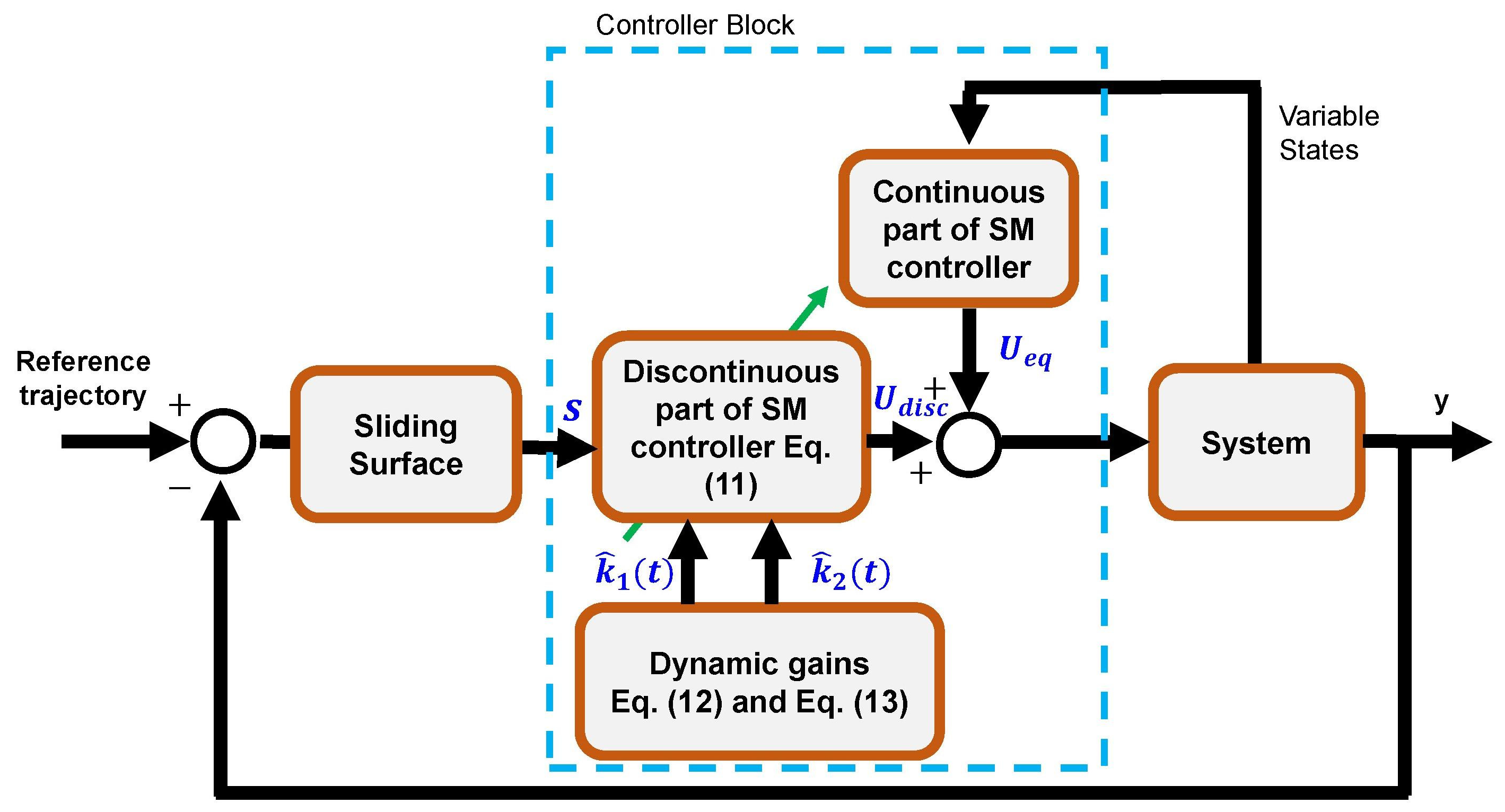
Section 2 provides the design strategy of the proposed controller along with a demonstration of its finite-time convergence via Lyapunov’s direct method.
Section 3 describes the application of the proposed controller to a drill string system. In
Section 4, the simulation results and an evaluation of the closed-loop system’s performance are discussed. Finally, the conclusions are presented in
Section 5.
3. Drill String Application
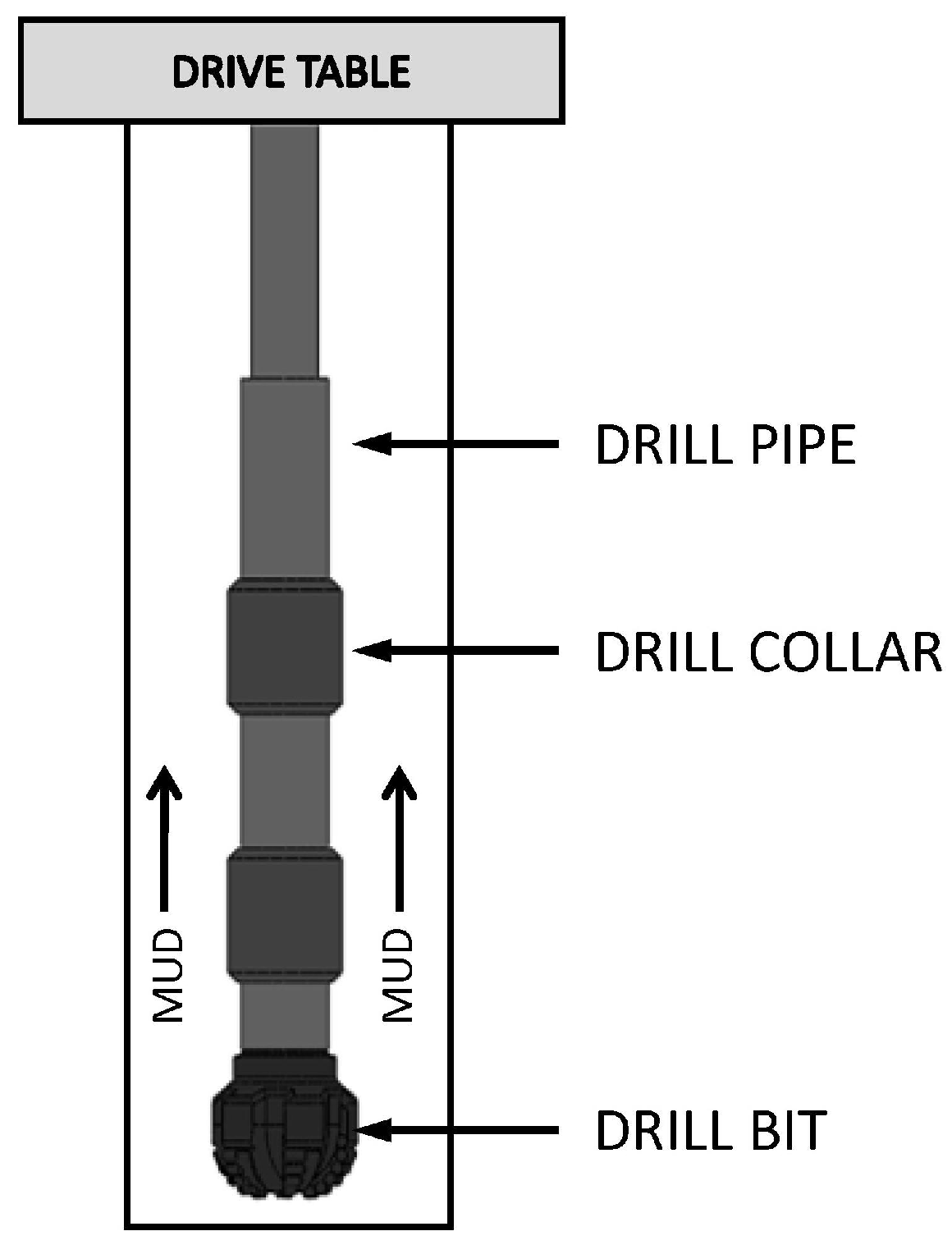
A drill string system is composed of various components including a rotary table, drill pipes, drill collars, and a drill bit (see
Figure 2). The rotary table generates the driving torque, which is then transmitted through the drill pipes to the drill bit for rock-cutting purposes [
27]. To understand the structure of a drill string system, it can be divided into three parts: the surface, middle, and bottom [
12]. The surface part includes the rotary table that is controlled by a regulator to maintain precise and robust drilling speed. The middle section contains the drill collars and drill pipes, which can span over several hundred meters to several kilometers. The bottom section consists of the drill bit that is tasked with overcoming the complicated and nonlinear bit-rock interaction, which can sometimes involve time delays.
The rotary motion generated by the rotary table is transmitted to the drill bit through the drill string. In addition to transmitting the rotary motion, drill strings also provide the necessary weight on bit (WOB), which aids in the drilling process [
28]. The system’s interaction with the borehole results in various unwanted oscillations, including the stick–slip phenomenon, which is a severe form of torsional vibration that causes the drill string to stop rotating and then periodically rotate freely [
29]. The main cause of this particular vibration is the highly nonlinear torque applied on the bit. This nonuniform rotation can reduce the drilling efficiency or even damage the drill string components [
27]. Moreover, drill strings’ parameters vary depending on the operating modes and conditions [
30]. For example, it is very challenging to know the correct stiffness and damping of the drill pipes. Moreover, the WOB varies, depending on the type of rock being cut. This always makes the drill string system susceptible to external perturbations [
12]. The objective of this study is to evaluate and confirm the effectiveness of the controller in eliminating the stick–slip occurrence, regardless of any external disturbances or uncertainties in the system’s parameters.
3.1. Mathematical Model of the Drill String
There are various modeling techniques available to simulate the behavior of a drill string system numerically, such as those discussed in [
31,
32]. For pure torsional studies in particular, lumped parameter modeling has been widely used in the literature to assess stick–slip behavior [
33,
34]. In this study, a model with four degrees of freedom (4DOF) has been considered that includes the four subsystems described in
Figure 2 [
35]. The model used in this study is based on three main assumptions: (i) Only torsional vibrations are taken into account, (ii) the drill string is assumed to be vertical, and (iii) all drill pipes have the same inertia.
The dynamics of the torsional vibrations are described by the following equation [
35]:
where
,
,
, and
are the moments of inertia of the top drive, drill pipes, drill collars, and drill bit;
,
,
, and
are the angular positions of the top drive, drill pipes, drill collars, and drill bit;
,
, and
are the torsional stiffness of the drill pipes, drill collars, and drill bit; and
,
, and
represent the torsional damping of the drill pipes, drill collars, and drill bits. We can now define a state vector
as follows:
Using Equation (
27), the system can be written in the following form [
34]:
The system presented in Equation (
28) can be expressed in state space form as follows [
34]:
Here, the matrices
A,
B,
C, and
D have dimensions of
,
,
, and
, respectively. The matrices can be expressed as follows:
The torque on the bit must accurately reproduce the reaction of the borehole to the bit. The well-known models of Stribeck and Karnopp [
36,
37] are generally used for presenting bit–rock interactions. Both models have shown good results, but Karnopp’s model has an advantage in reproducing friction at the bit level due to its continuity at zero velocity, unlike Stribeck’s friction model. The Karnopp’s friction model can be expressed as follows:
The maximum friction torque is denoted as , and the sliding friction torque is represented by . The parameter is used as a threshold value between static and sliding friction, while denotes the rate of decline in friction torque.
In the field, drill strings are generally driven by motors with a nominal velocity () that can reach 1500 RPM. However, the maximal velocity of the drill bit () is generally limited to 200 RPM; . We can conclude that the actuator’s dynamics do not significantly interfere with the drill string’s dynamics. In many systems, disturbances and uncertainness can significantly reduce the controller’s performance. However, the SM technique has proven to be one of the most robust control techniques because it can estimate parameter variations and external disturbances that satisfy a matching condition (the disturbances are applied to the system through the same channels as the input signals, without affecting the order of the system). For the drill string system under study, the disturbances under investigation are those that act directly on the axial motion of the drill string (variation of the WOB) and directly affect the control input. It should be noted that in cases where disturbances cannot be calculated directly, they can be estimated based on the available measurements. However, a suitable control strategy needs to be developed either using these estimations or based on the measurements of the sensors to effectively counteract the perturbations.
3.2. Proof of Closed Loop Stability
The primary goal of the proposed control strategy is to regulate the bit velocity. To accomplish this, a sliding function is defined as per [
37]:
In the proposed control strategy, the desired drill string velocity is denoted by
. As the system reaches the sliding region
, it reaches the desired equilibrium point where the bit velocity approaches the desired velocity. The first-order derivative of the variable defined in the above equation can be given as follows:
Replacing
in the previous equation results in the following equation:
In our case,
is a positive constant defined as follows:
For this particular case,
is restricted to a single constant value, and the function
can be expressed as follows:
The values of
,
, and
are uncertain and can be expressed as follows:
It is also assumed that
,
, and
are bounded as follows:
The parameters
,
, and
represent the upper limits of
,
, and
, respectively. Although these upper limits exist, their values are unknown. As a result, we can derive the following inequality:
Since
is a positive constant equal
,
can be replaced with
and this could not affect the convergence proof. Substituting Equation (
37) into Equation (
19) gives the following:
Adding and substituting the term
gives the following:
After simplification, this gives the following:
Let us define a positive constant
; in this case:
If we consider these two assumptions, then the time derivative of
, denoted as
, will be negative.
Therefore, following the same steps as the general convergence section, the closed-loop convergence can be proved. The equivalent control is defined as the solution of
, which can be expressed as follows:
In Equation (
30), the sliding surface depends on the velocities of both the drill bit and the rotary table following a desired reference velocity. Generally, the drill string can be driven with various reference velocities depending on the length and diameter of the drill string and the type of rock of the borehole. These velocities are chosen in order to have an adequate rate of penetration, providing fast drilling while maintaining the integrity of the drilling components. All variables existing in the control command are supposed to be bounded as follows:
The desired velocity
is bounded as well. This implies that both
and
are limited signals, which ensures that the control input
u is a bounded signal with the following:
4. Validation and Results
To evaluate the effectiveness of the suggested control approach, simulations were carried out using a drill string system. The aim of the controller was to follow a desired reference velocity and to counteract external disturbances in various operational conditions and with varying parametric uncertainties. The proposed controller (Proposed) was compared with various other controllers, including classic first-order SMC (CSMC), modified first-order SMC (MSMC), and the well-known adaptive SMC (ASMC). The switching law of CSMC, as described in [
34], is as follows:
According to [
21], the MSMC is described as an exponent reaching law as follows:
The well-known adaptive controller proposed in [
38] is described by the following switching law and gain dynamics:
where the dynamics of the controller gain are as follows:
where
is large enough to counteract the external perturbations,
and
are positive constants, and
and
are very small.
Table 1 gives the different parameter values for each controller with optimal adjustments.
The values of the parameters were selected to achieve optimal performance while maintaining a balance between the overshoot and settling time of the controllers, based on a given reference velocity and WOB.
4.1. Performance Criteria
To assess the performance of the various controllers, several performance metrics were used. The first measure was the integral square error (ISE), which evaluates the energy associated with the error by integrating the square of the error over time, and it emphasizes large errors. The ISE can be expressed as follows:
where:
The integral absolute error (IAE) measures the integral of the absolute error over time and provides an idea of the cumulative errors. It is useful for evaluating the performance of a controller in terms of the overall deviation from the desired trajectory. The IAE can be defined as follows:
In order to evaluate the steady-state error, the root mean square error (RMSE) was employed by calculating the square root of the average of squared errors over a specified time period, the RMSE provides an effective measure of the discrepancy between desired and actual values, taking into account the entire sample set. This metric assumes a Gaussian distribution of errors and is widely adopted as a reliable method for quantifying the accuracy of a system’s response.
where
n is the number of samples over time. The energy consumption of each controller can be quantified by the root mean square deviation (RMSD), which is defined as follows:
where
T is the torque input of the drive table. This criterion is very important since a controller with minimal energy consumption is greatly desired in order to save money in terms of energy, maintenance, etc. Overshoot (O%) and settling time (ST) criteria were also used to evaluate the controllers. These are calculated as follows:
The variable “ST” signifies the time required to achieve and sustain stability within a defined range, typically set at 5% of the final value. This measure captures the duration it takes for the system’s response to settle and remain within an acceptable margin of variation.
4.2. Simulation Results
Multiple experiments were performed using the MATLAB/Simulink platform, employing a sampling frequency of
kHz. These tests aimed to evaluate the resilience of each controller when subjected to diverse operating conditions, including measurement noise and parametric uncertainties related to the stiffness and damping of the drill pipes, as well as the damping of the drive table. The selected parameters listed in
Table 2 were extracted from an actual drill string system documented in [
19]. These parameters were chosen based on their relevance and applicability to the specific drill string system under investigation.
In the remainder of the paper, the results of the various tests mentioned above will be presented alongside an analysis of the results obtained via the evaluation criteria already defined (Equations (50)–(55)).
4.2.1. Robustness to Measurement Noise
The robustness of the measurement noise section was tested to approximate experimental tests as closely as possible. Various sources can be implemented to represent noise. They all share the ability to add random variation to the signal under study. In the simulation studies, random white noise was selected as the noise source. This type of noise has a stochastic nature and is characterized by having equal power across all frequencies, making it suitable for imitating measurement noise [
26]. By studying the behavior of controllers under such conditions, we can gain valuable insights into their robustness and adaptability. The system under control was subjected to a controlled level of white noise with a noise amplitude of
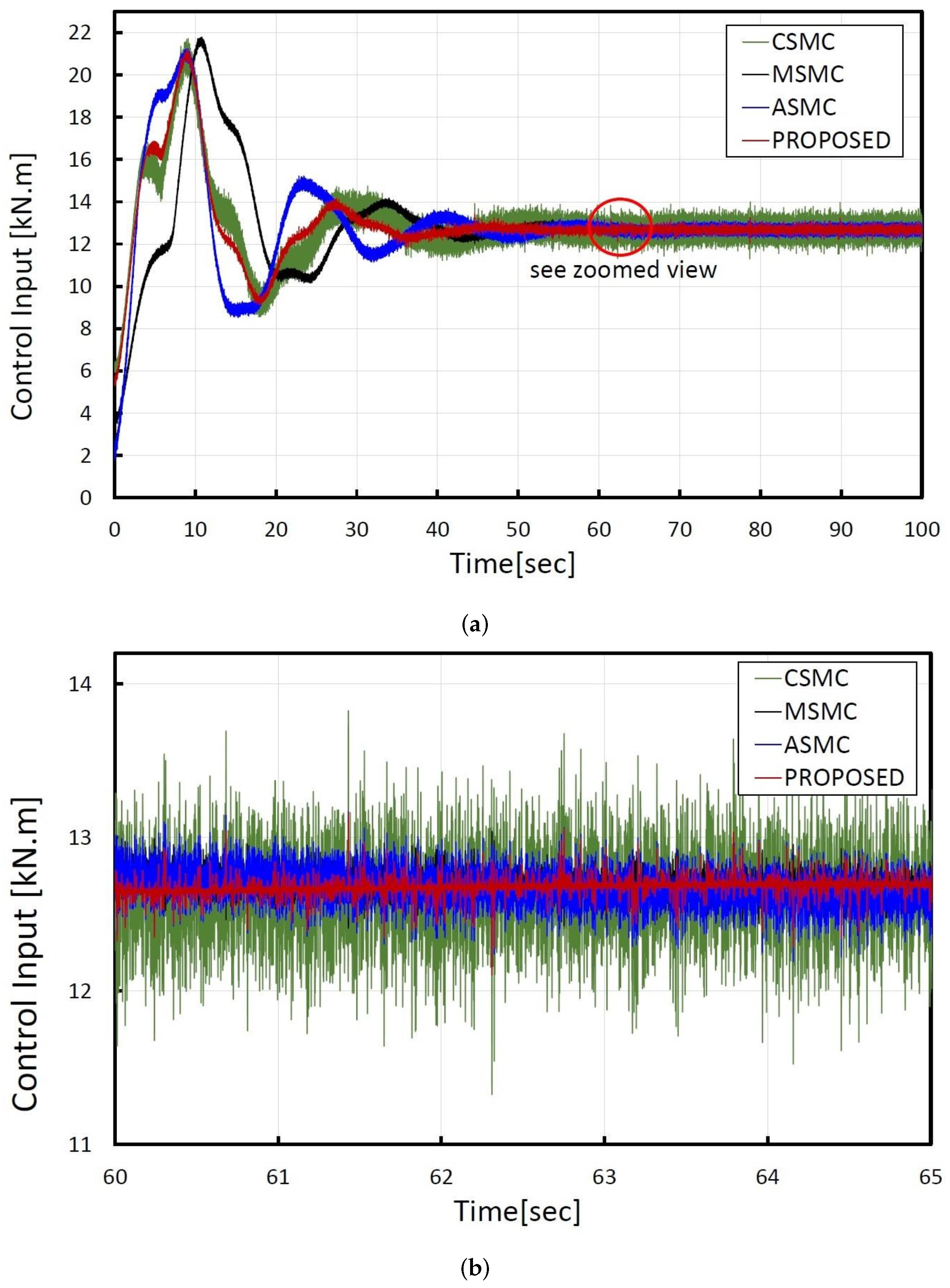
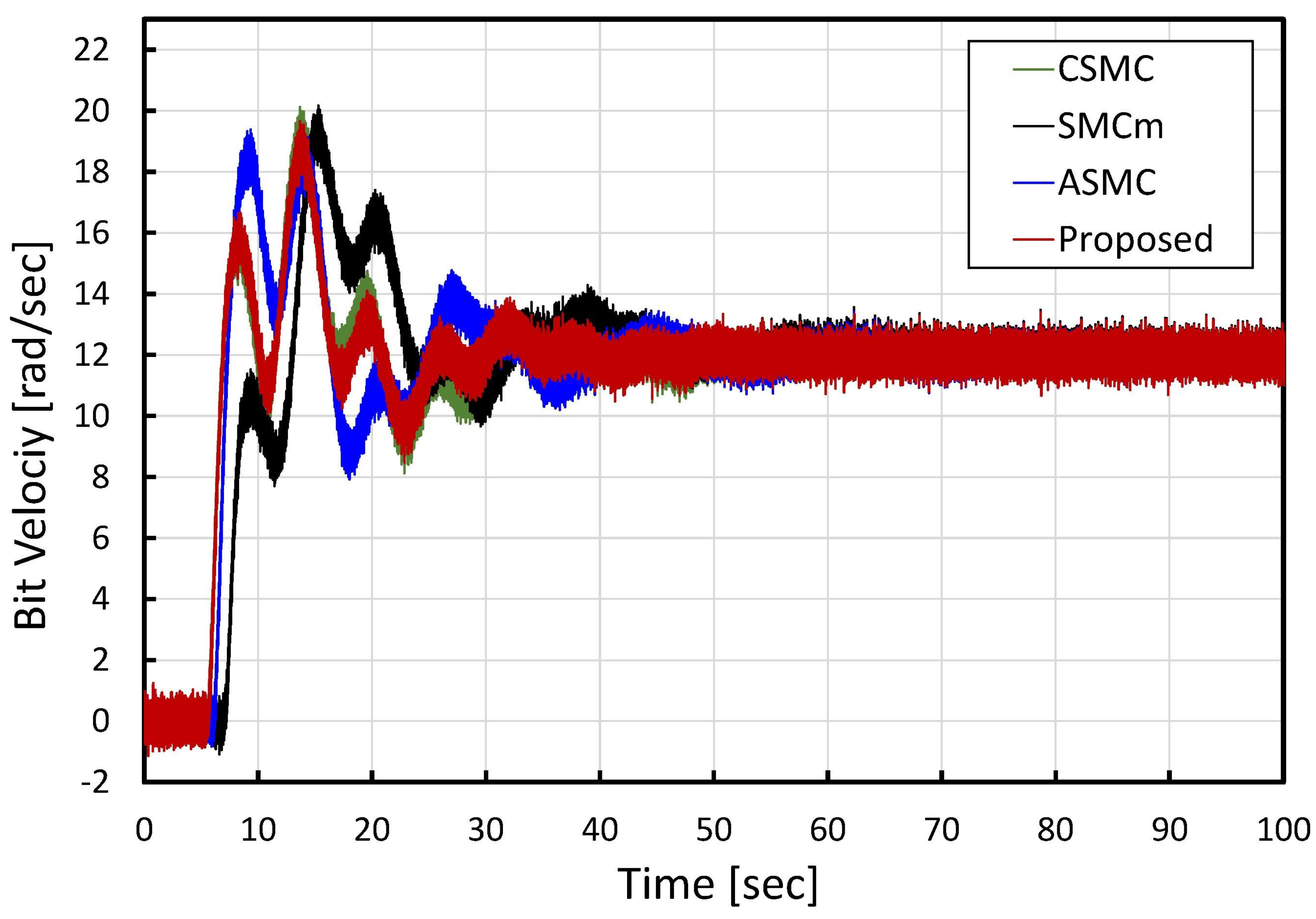
dB. The bit velocities of the controllers were then analyzed, and the outcomes were recorded in
Figure 3. As shown in
Figure 4a,b, the proposed controller exhibited the least response to measurement noise. Quantitative measurements revealed that the proposed controller achieved an average chattering magnitude reduction of 20% compared to the CSMC, 14% compared to the MSMC, and 18% compared to the ASMC. These numbers highlight the substantial advantage of the proposed controller in mitigating chattering.
The proposed controller showed a remarkable reduction in chattering magnitude compared to the other controllers while consuming the least energy. This proves that the proposed controller was the least affected by measurement noise. In addition to its success in chattering reduction, the proposed adaptive methodology has also demonstrated superior performance in terms of energy consumption compared to a previously proposed adaptive sliding mode controller [
26].
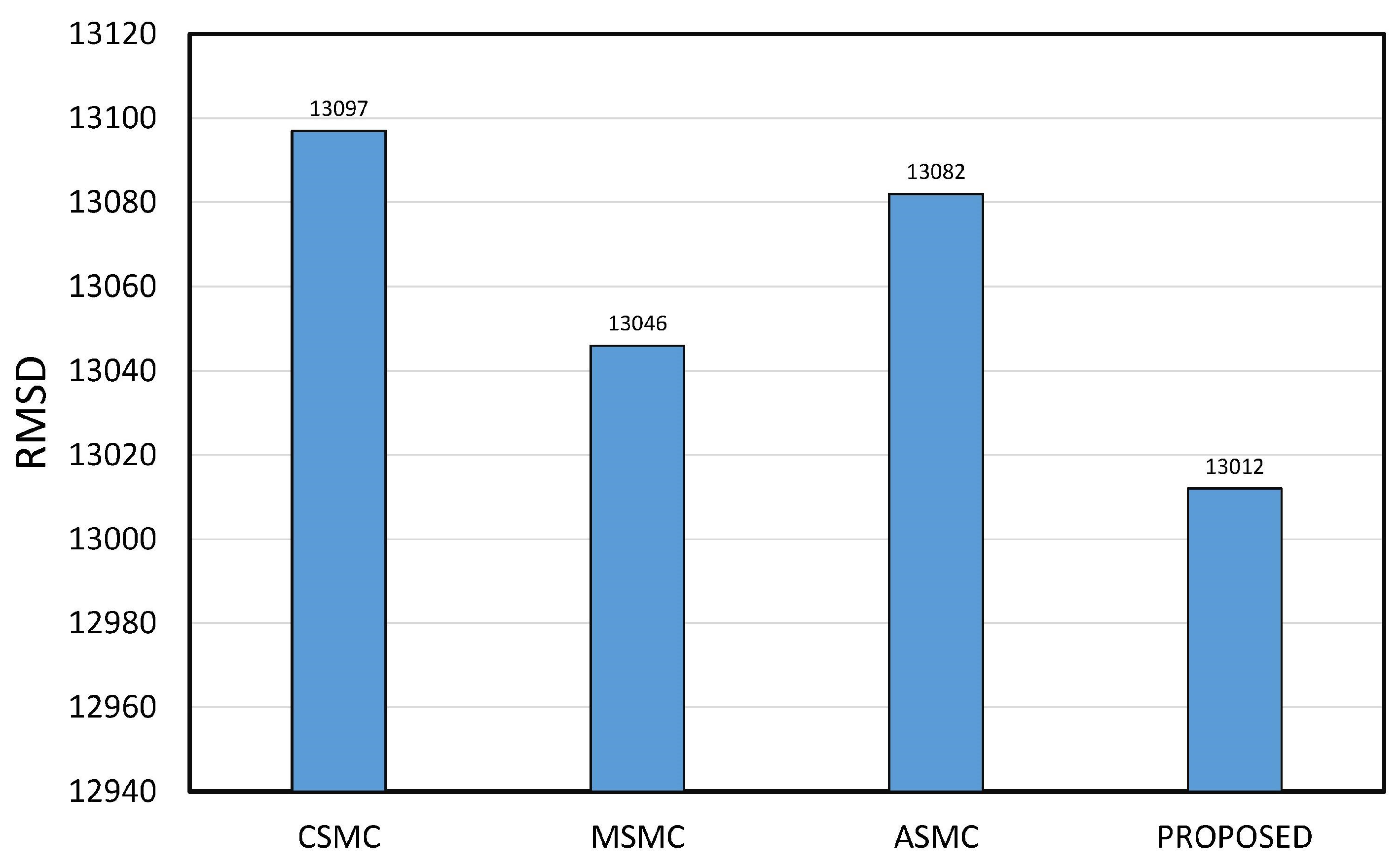
Figure 5 shows the RMSD values of the proposed controller versus CSMS, MSMC, and ASMC controllers. The developed controller in [
26] exhibited an RMSD value of 13,016, indicating a higher level of energy consumption. However, with the introduction of the new proposed controller, an improvement has been achieved, resulting in a smaller RMSD value of 13,012. The reduction signifies a noteworthy enhancement in energy efficiency. The reduction is due to the
term in the proposed gain dynamics, which presents the key parameter that helped decrease the chattering effect. This improvement indicates that the proposed adaptive methodology optimizes the energy consumption of the system, resulting in reduced waste and increased overall energy efficiency.
4.2.2. Robustness to Parametric Uncertainties
In the literature, different stochastic and deterministic approaches have been applied to drill strings to investigate the problem of uncertainties. The research in [
39,
40] presented some examples of stochastic models. The authors in [
41] proposed a stochastic model for the bit-rock interaction torque. This was achieved by introducing uncertain parameters into the dry friction model and subsequently conducting a Monte Carlo simulation. Adaptive techniques for the deterministic approach were also explored, such as the direct adaptive controller proposed in [
42], which proved to be robust against changes in friction characteristics and induced noise. It is worth mentioning that the convergence of the controller can be affected by an inappropriate setup of the adaptive algorithms. In the subsequent simulations, parametric uncertainties were introduced for the drill pipes’ stiffness and damping, as well as the drive table’s damping. According to Equation (
35), the equivalent control incorporating parametric uncertainties can be expressed as follows:
To evaluate the performance of various controllers under diverse operating conditions, an investigation was conducted to analyze the influence of different parametric uncertainties on the system’s performance. The purpose here is to gain insights into the controllers’ effectiveness and assess their robustness in handling varying parametric uncertainties. These uncertainties are categorized into three conditions: condition 1, condition 2, and condition 3. Condition 1 refers to small parametric uncertainties, where the variations in the parameters are relatively minor. Condition 2 corresponds to medium parametric uncertainties, where the variations in the parameters are of moderate magnitude. Finally, condition 3 represents large parametric uncertainties, characterized by significant variations in the parameters. By examining the system’s behavior under these distinct conditions, we aim to assess its robustness and performance across a range of parametric uncertainties, as shown in
Table 3.
To clearly demonstrate the responses of each controller to different variations, separate figures were used.
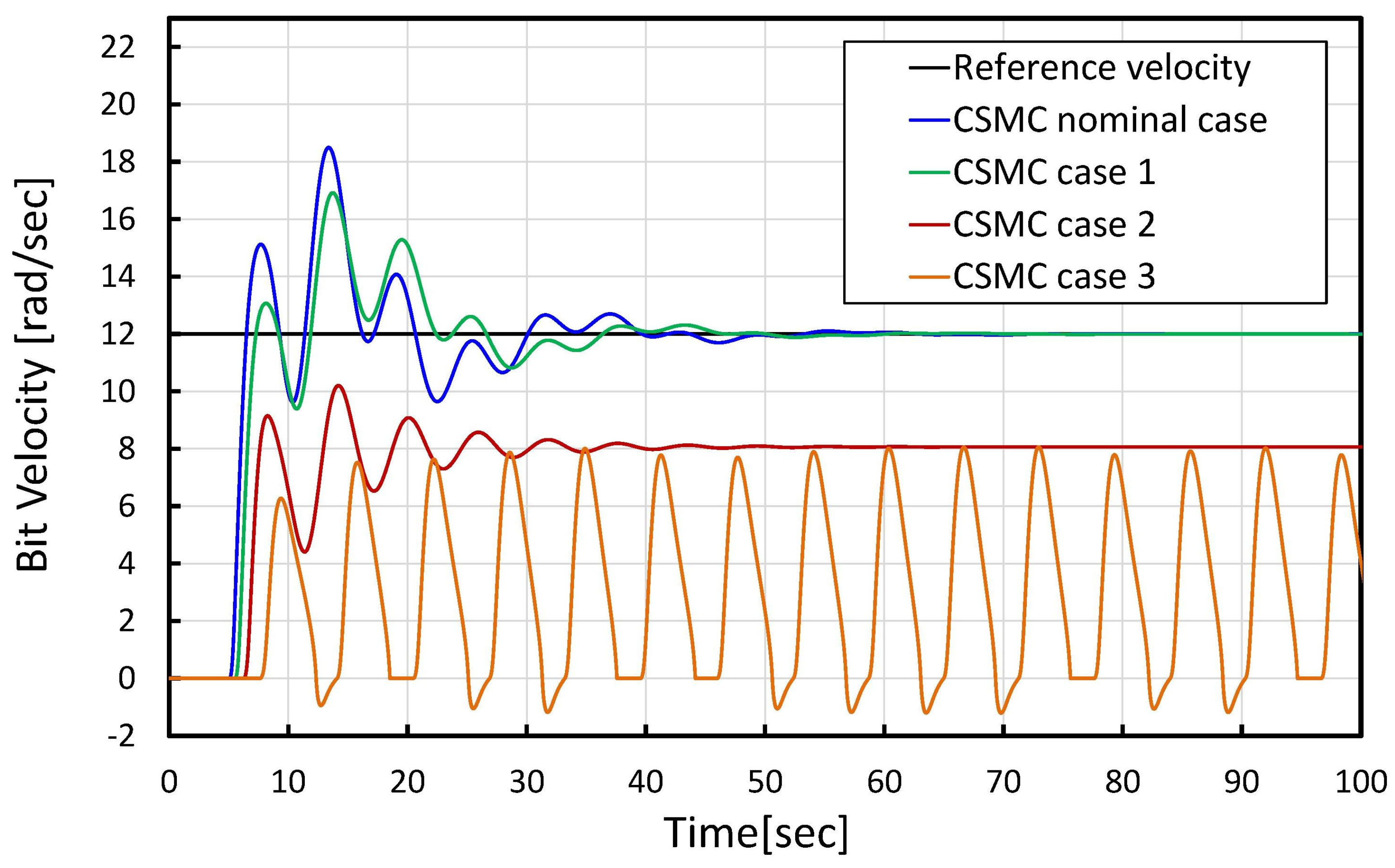
Figure 6 depicts that the CSMC remained robust for small parametric uncertainties. However, when subjected to medium parametric uncertainties, the system exhibited convergence but with a significant static error of 4 rad/s from the desired reference velocity. In addition, the system lost its robustness and experienced the stick–slip phenomenon for large parametric uncertainties. In Condition 1, the controller was robust with a smaller overshoot value, and no parametric adjustment was required. However, for Conditions 2 and 3, the responses became mediocre and asymptotically stable, respectively. The controller’s parameters need to be adjusted in these cases.
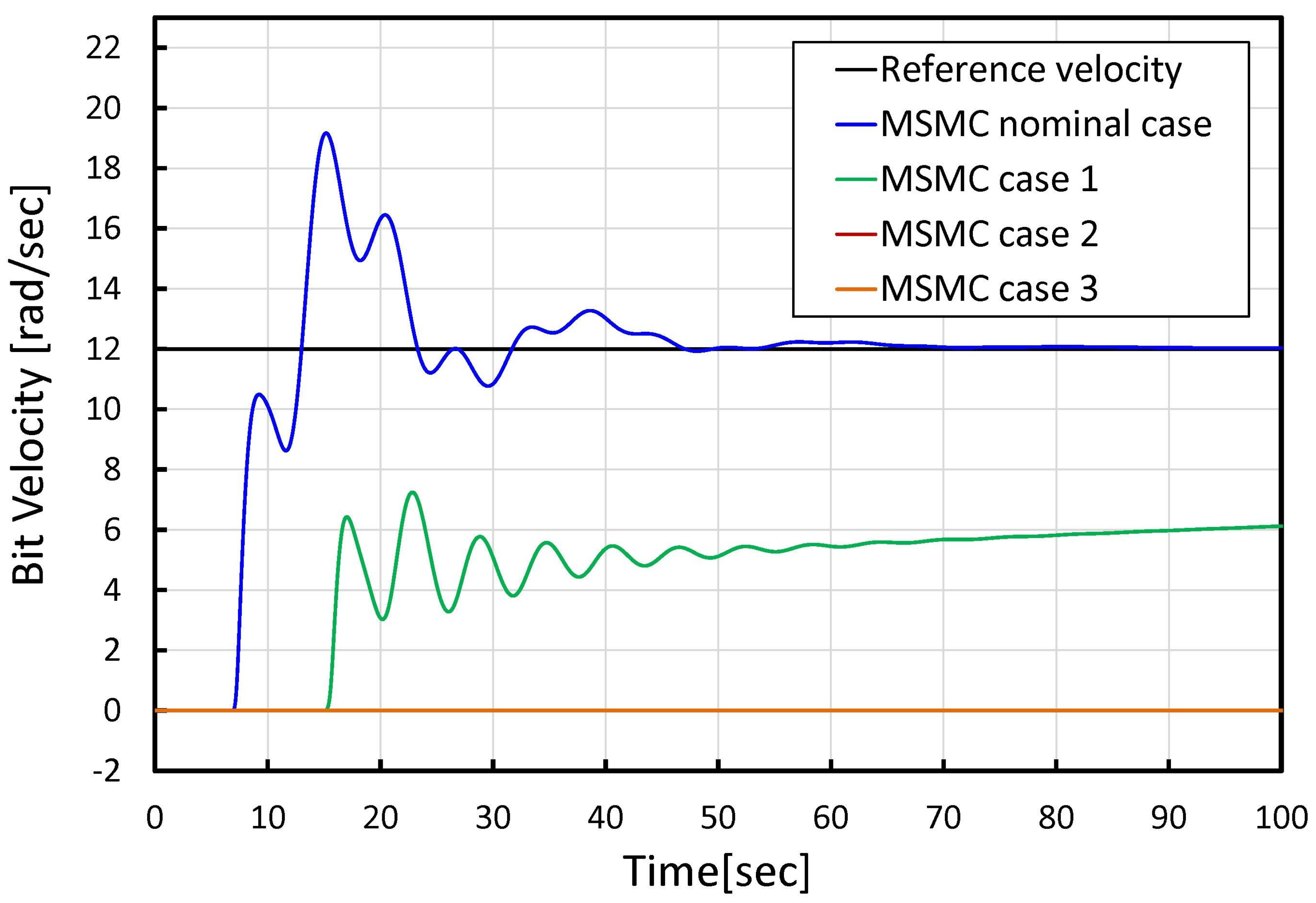
Figure 7 demonstrates that the system response diverges completely, independently from the magnitudes of the parametric uncertainties. Therefore, it can be concluded that the MSMC is not robust even to minimal parametric uncertainties. In order to ensure stability and acceptable performance in the presence of any parametric variation, parametric adjustment is necessary.
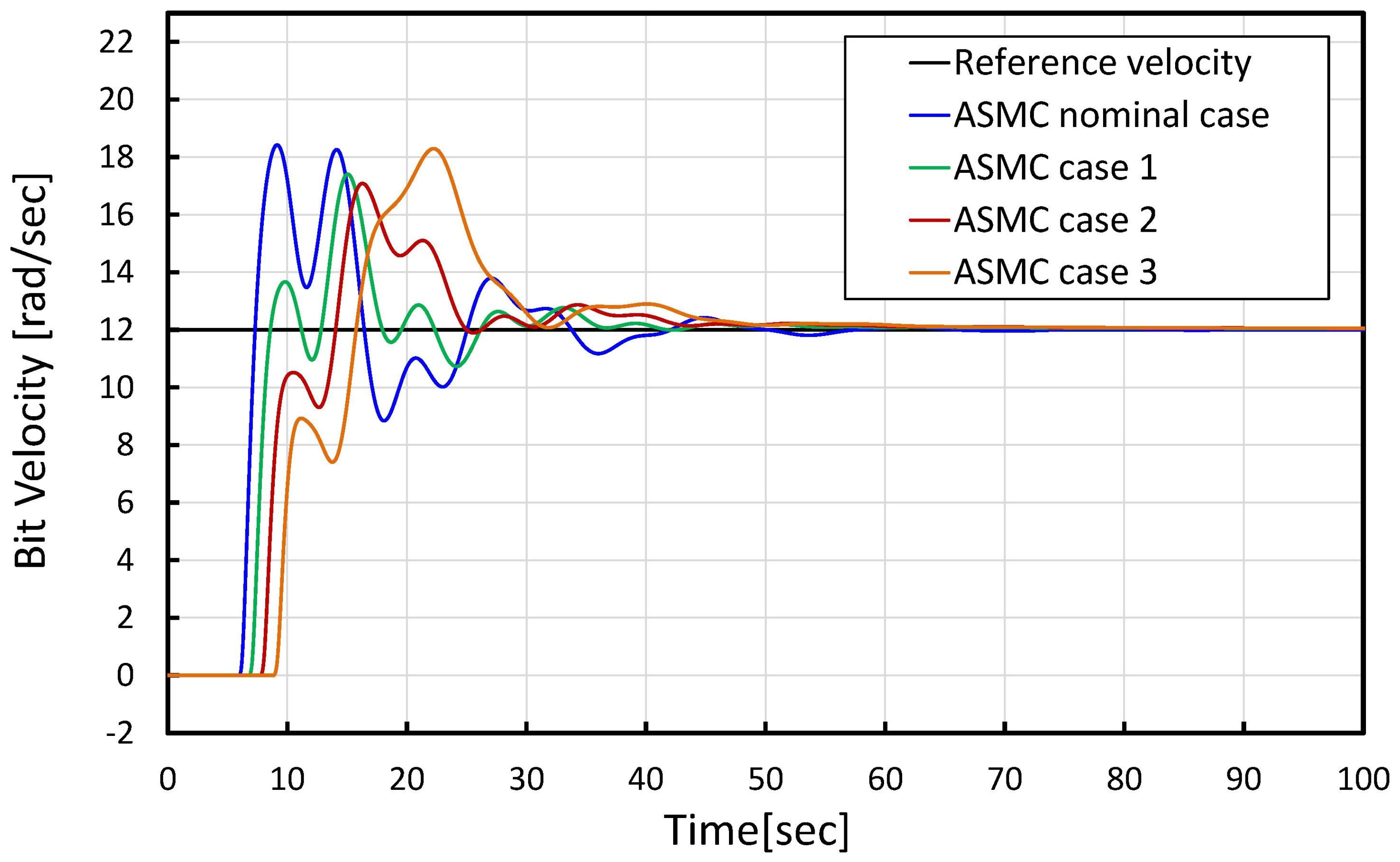
For all cases of parametric uncertainty, the ASMC system’s trajectory converged to the reference velocity (see
Figure 8). It should be noted that the settling time of the system response increases considerably by nearly 20% for large parametric uncertainties.
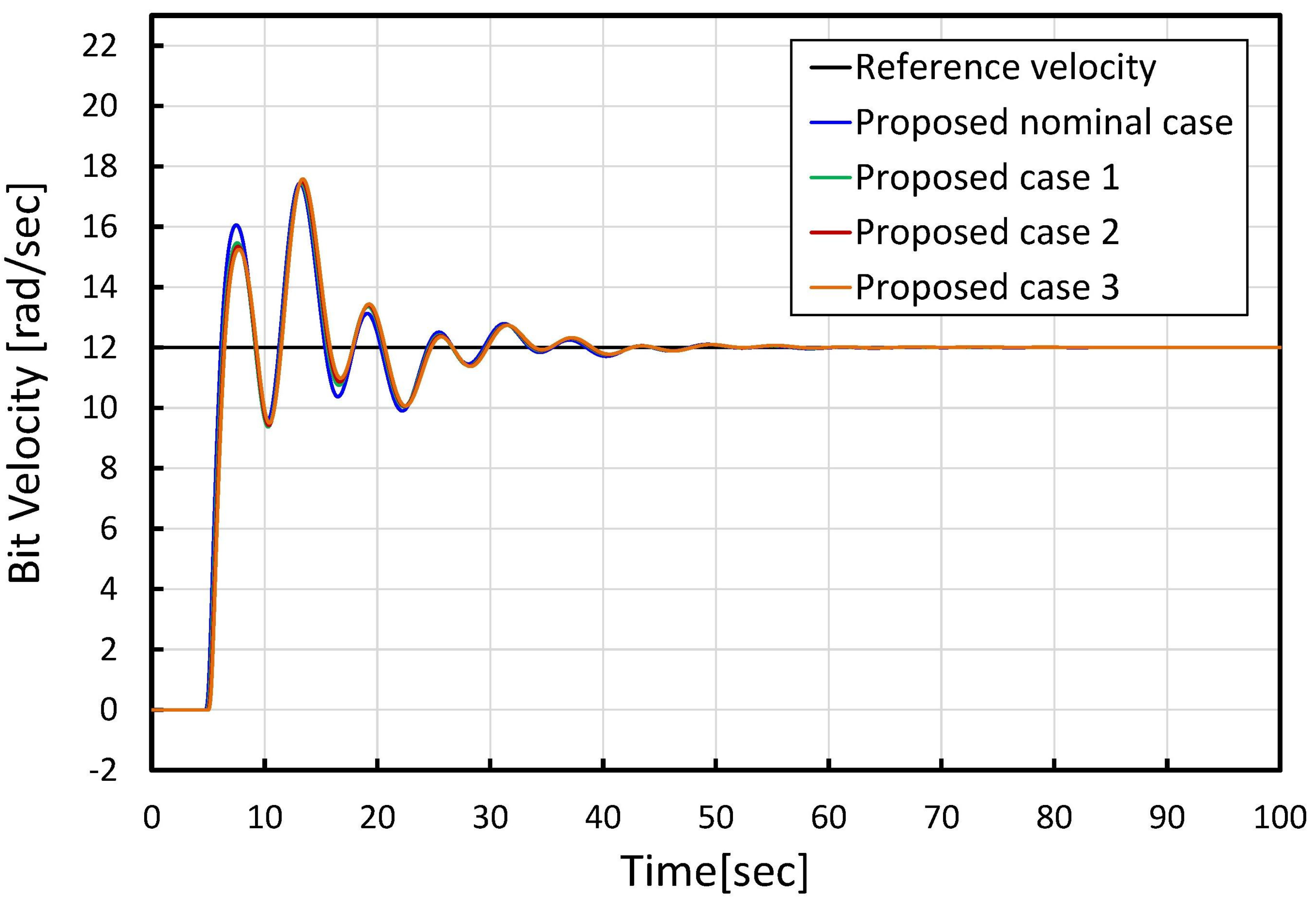
Figure 9 shows that the proposed controller maintains its robustness regardless of variation in the parameters. This proves that the proposed controller does not need any parameter adjustments for any of the cases of parametric uncertainty, which demonstrates the fast adaptability of the gains.
Figure 10,
Figure 11 and
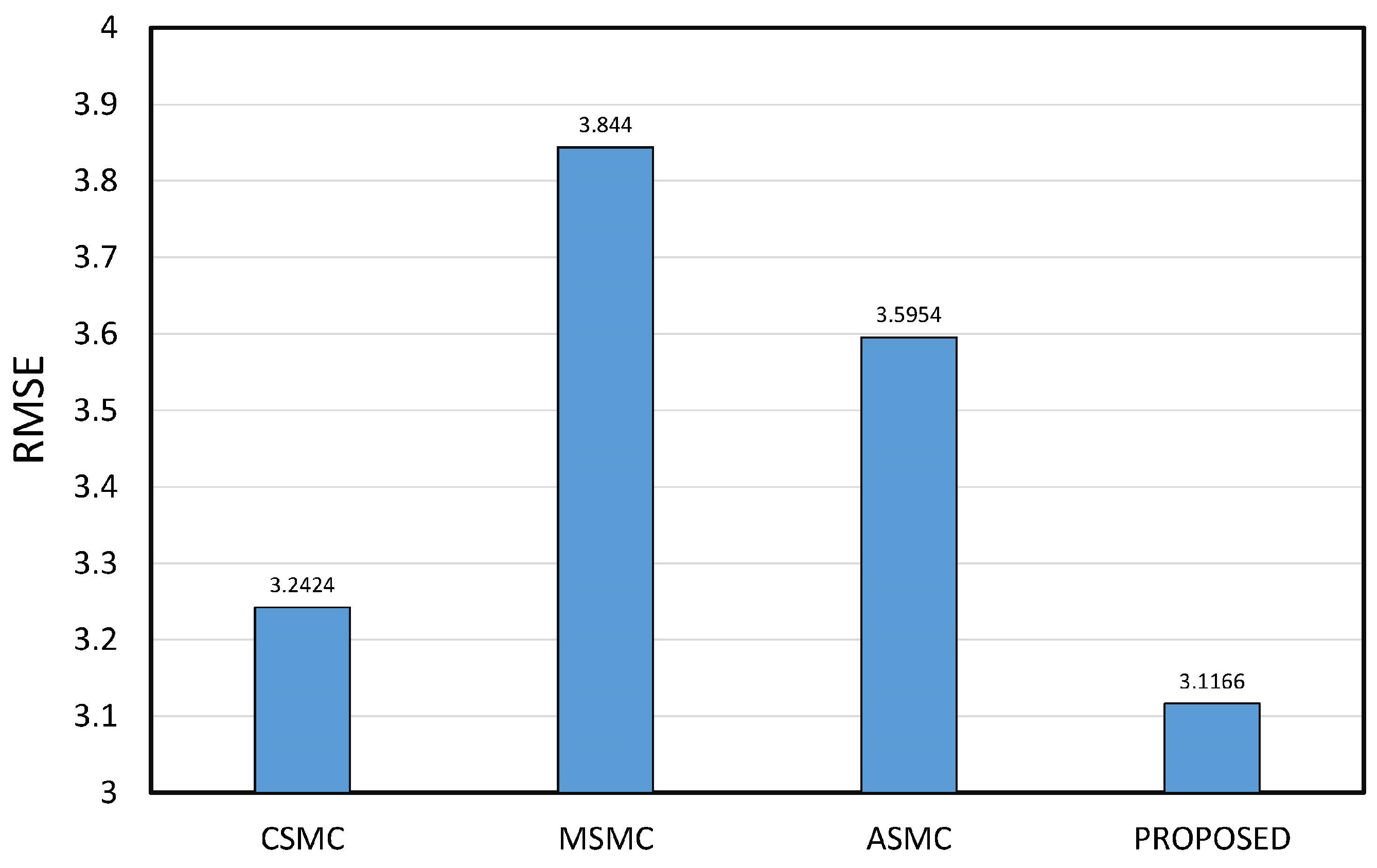
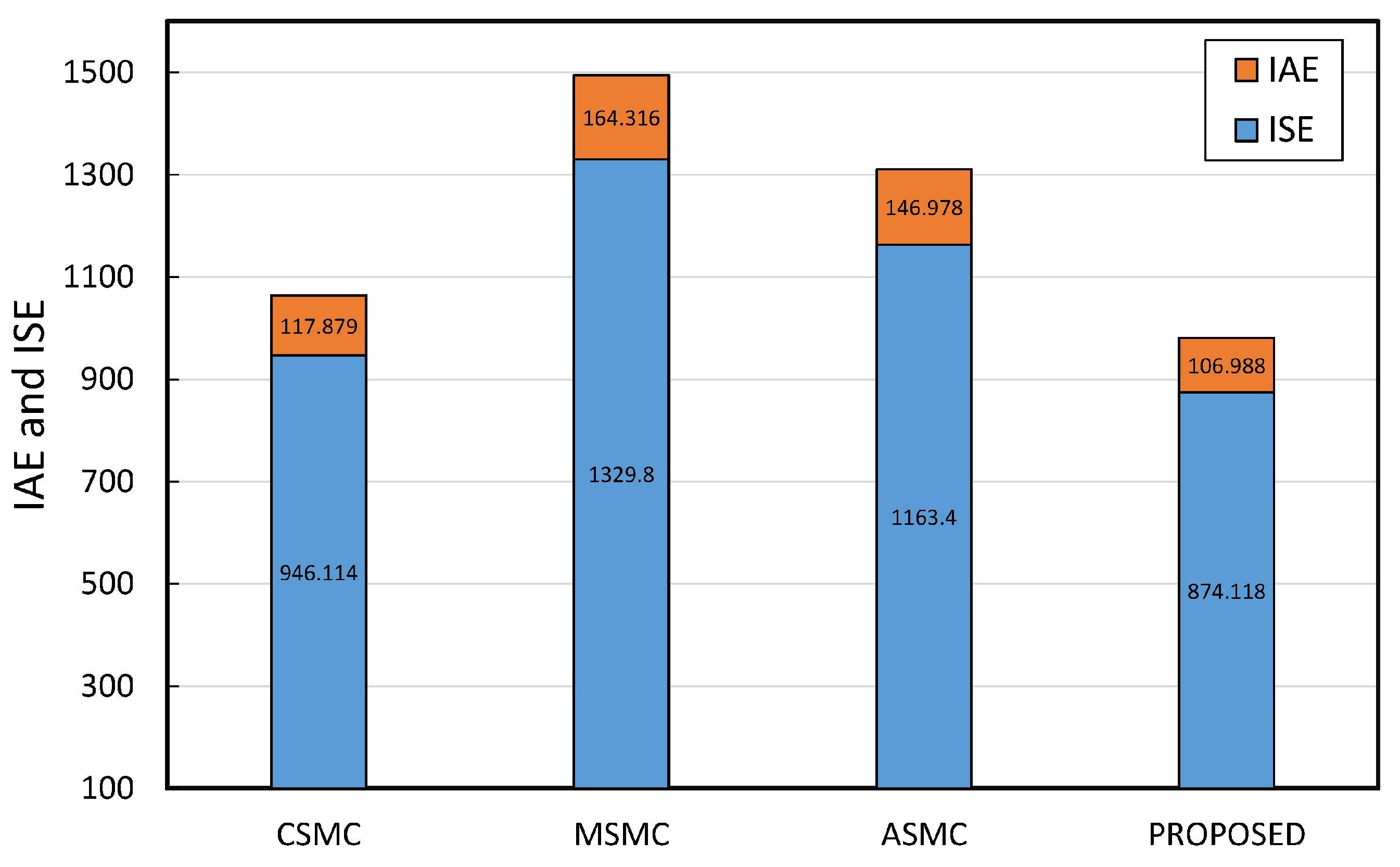
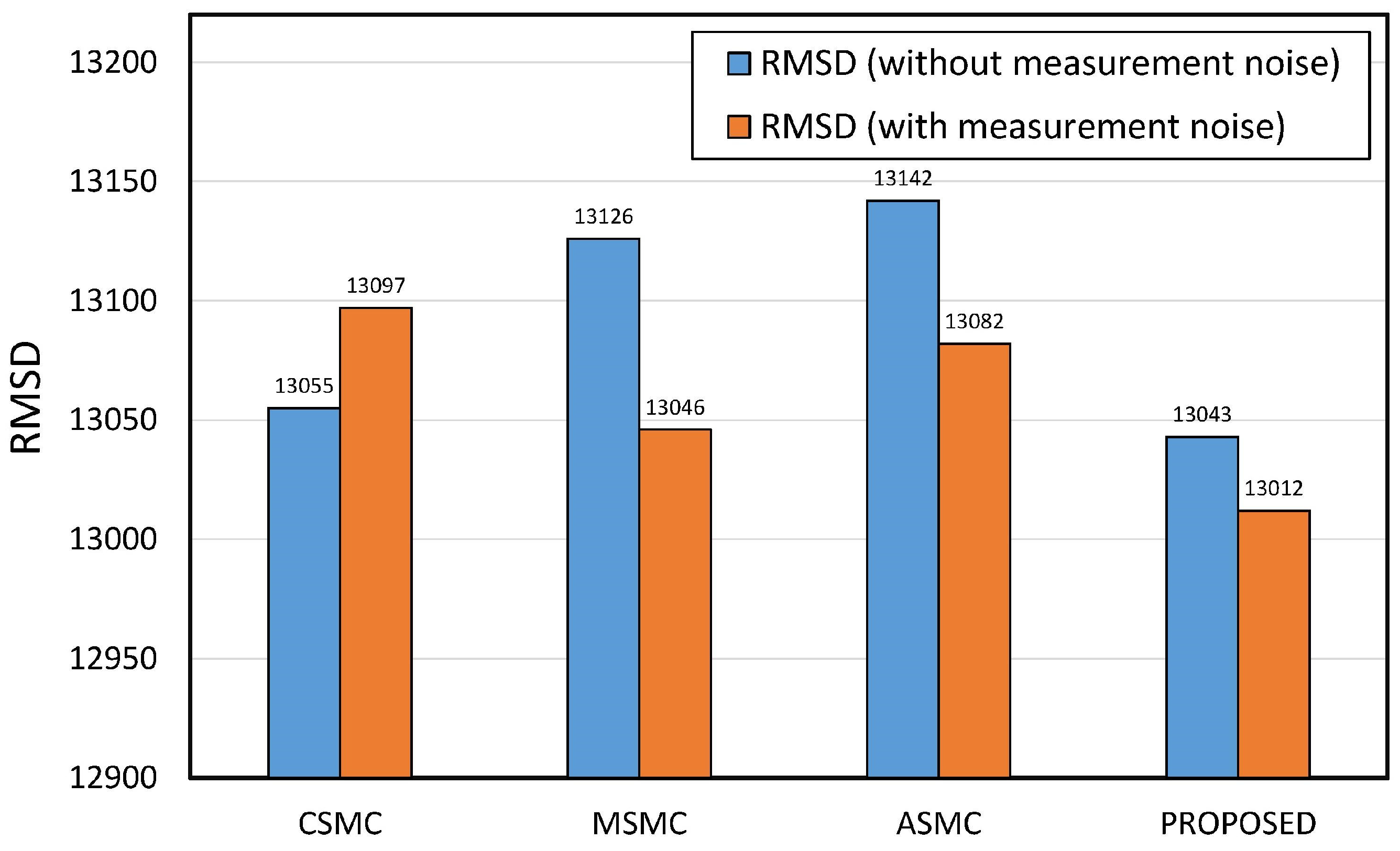
Figure 12 show that the proposed controller had the smallest integral square error whereas the MSMC had the greatest value, with a difference of 35%. This indicates that the proposed algorithm had the least amount of error energy, while the MSMC had the highest amount of errors. The proposed algorithm had a smaller IAE value than the MSMC controller by almost 20%, indicating a closer response to the reference velocity. The RMSD values were used to compare the energy consumption of the different controllers, both with and without added measurement noise. As can be seen, the maximum energy consumption was found for the ASMC, whereas the minimum was found for the proposed controller. This criterion is very important since it affects the lifetime of the component. The proposed controller had the smallest RMSE value, which proves that it had the least steady-state error. This shows the good precision of the regulator and results in good static performance, which is required for such an application.
Table 4 presents a summary of the results comparing four controllers based on several performance metrics. The metrics considered are EC (energy consumption), RPU (robustness to parametric uncertainty), RMN (robustness to measurement noise), and P (static precision). These metrics provide insights into the controllers’ energy efficiency, their ability to handle uncertainties in system parameters and measurement noise, and their resilience to variations in weight on bit and reference velocity. The table offers a comprehensive evaluation of the controllers, facilitating a thorough assessment of their performance in different operational aspects. The controller with the best performance for each category is indicated by the “High” or “Very High” rating, while the worst performance is indicated by the “Low” rating.
Table 4 shows that the proposed controller performed better in terms of precision, convergence time, and overshoot compared with both classical and adaptive SMCs. Given its robustness to parametric uncertainty and measurement noise, the proposed controller guaranteed minimal chattering, resulting in a smooth input signal. It is worth mentioning that a previous article presented an adaptive controller that yielded favorable results [
43]. However, it is important to note that this controller did not undergo tests specifically examining its performance in the presence of measurement noise.