Article

Simple Spread Models for Understory Surface Fires

by
Daniel D. B. Perrakis
1,2,*,
Nicholas J. R. Hebda
1 and
S. W. Taylor
1
1
Pacific Forestry Centre, Natural Resources Canada, Victoria, BC V8Z 1M5, Canada
2
School of Resource and Environmental Management, Simon Fraser University, Burnaby, BC V5A 1S6, Canada
*
Author to whom correspondence should be addressed.
Fire 2026, 9(7), 302; https://doi.org/10.3390/fire9070302
Submission received: 3 April 2026 / Revised: 5 June 2026 / Accepted: 6 July 2026 / Published: 15 July 2026
(This article belongs to the Section Fire Science Models, Remote Sensing, and Data)

Abstract

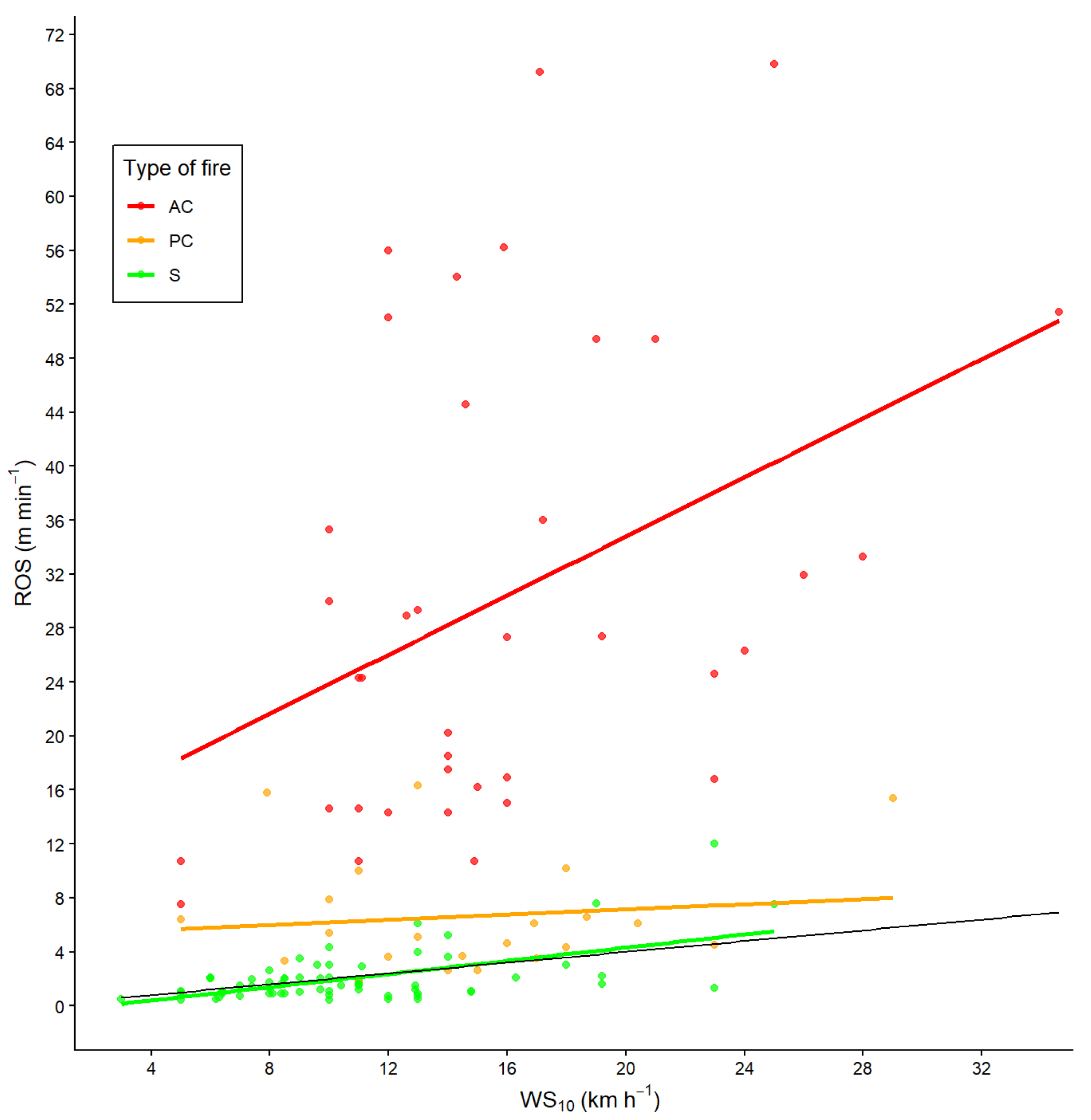
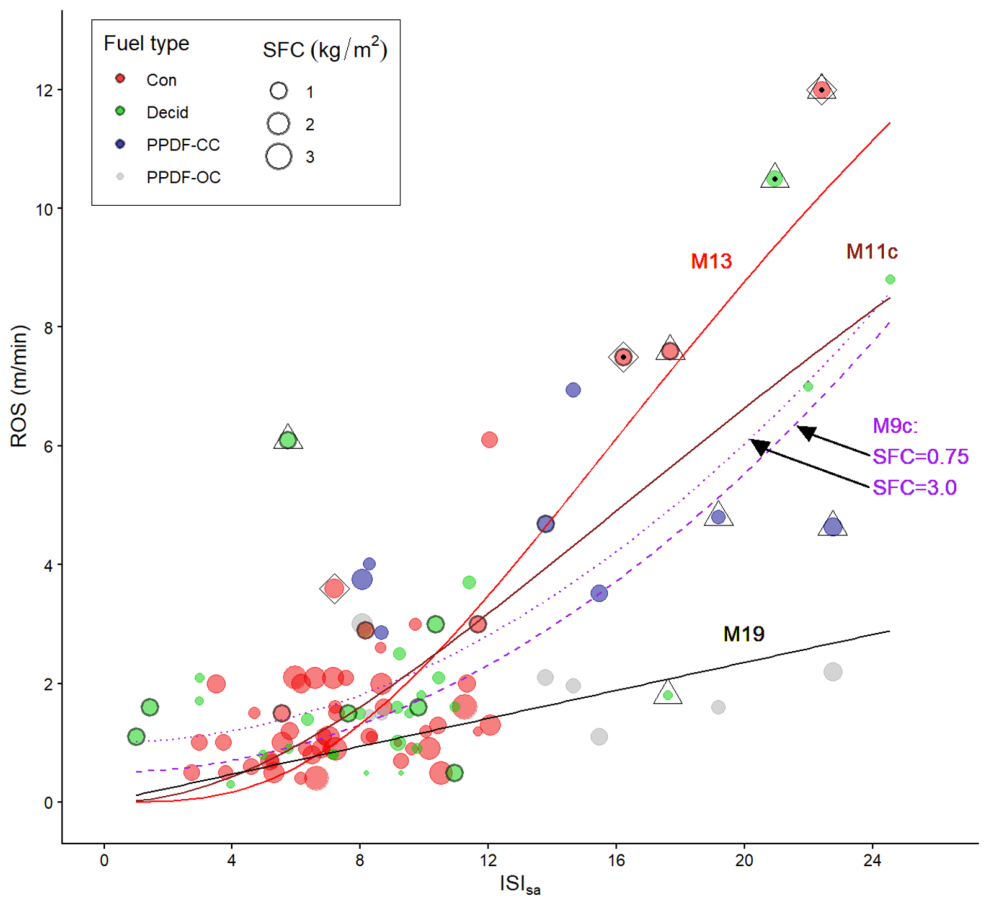
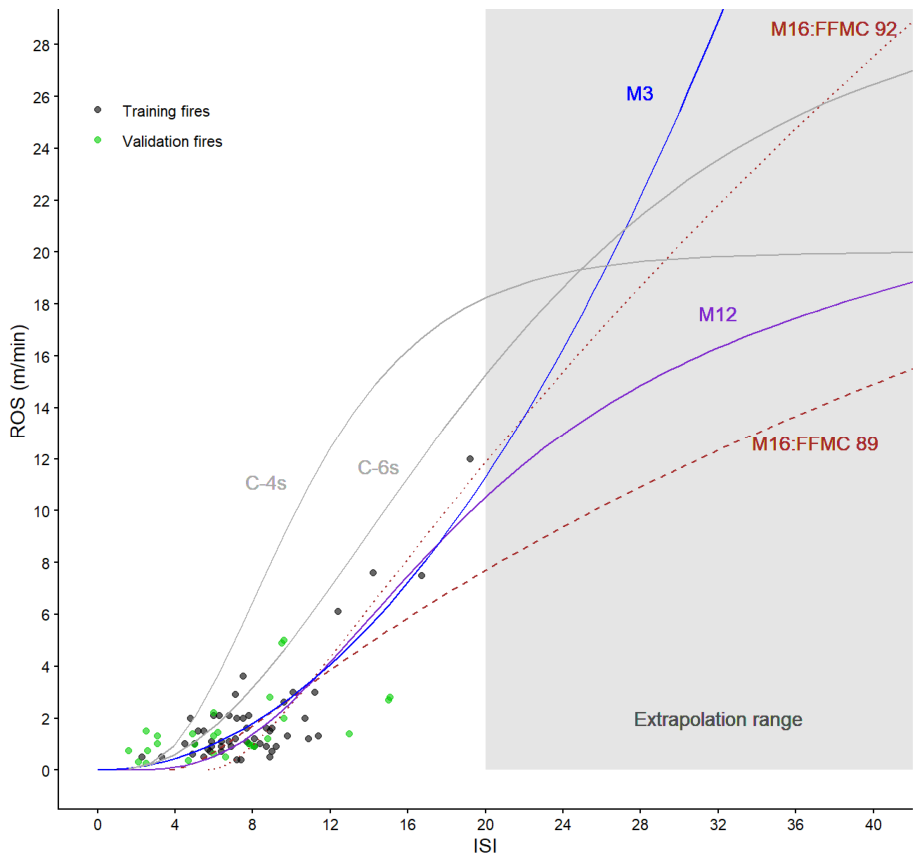
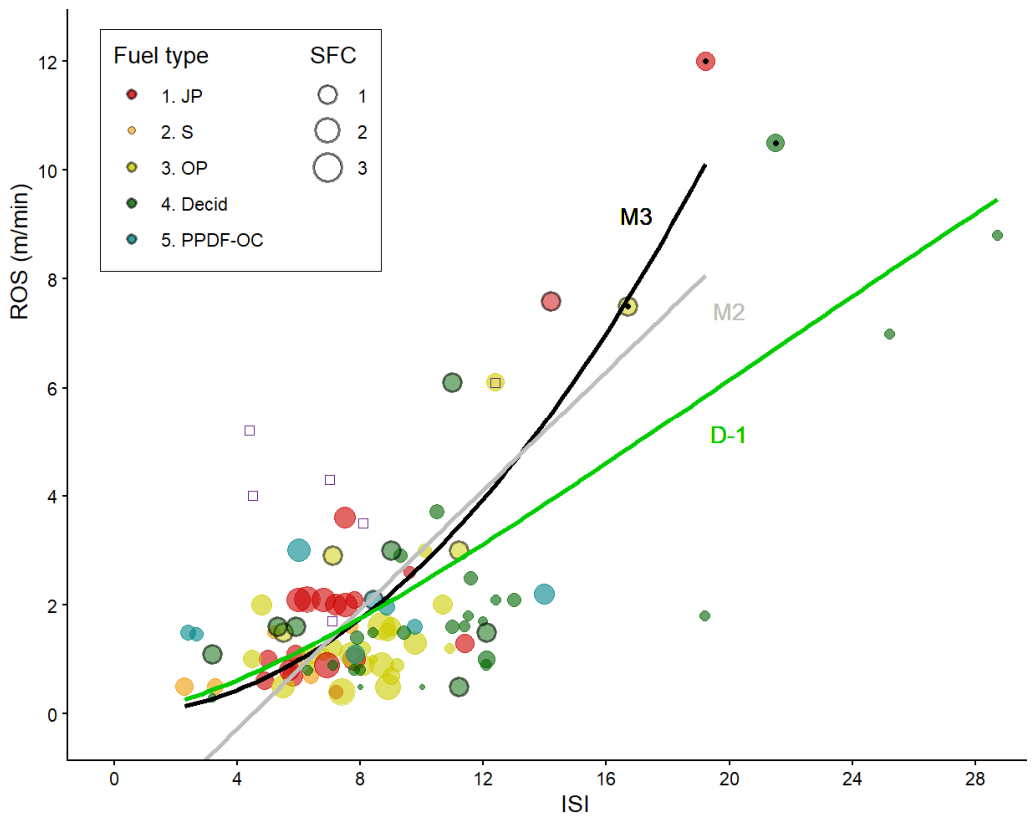
Surface fire frequently occurs beneath the canopy of North American forests under moderate wind speed and moisture-deficit conditions. Surface rate of spread (sROS) models can provide guidance for suppression operations and can be incorporated into fire growth modelling systems and other tools. We used a database of primarily Canadian experimental surface fires in conifer and deciduous stands from multiple sites to fit empirical sROS models for operational use and compare with pre-existing models. Various predictor combinations represented fires in boreal conifer (BOCON), deciduous, and Ponderosa pine-dominated stands, the latter analyzed to estimate grass-curing influence. The main predictors were wind speed (WS10), estimated fuel moisture, and Canadian Fire Weather Index (FWI) System components (original and stand-adjusted). The ensuing fitted models (N = 51–93) were evaluated using standard metrics and tested using an independent conifer dataset (N = 26). The simplest model finds BOCON sROS to be equal to 1.2% of the WS10, 1/7th the speed of crown fire spread under similar conditions; it is easily calculated as 20% of WS10 using a common unit conversion (WS10 in km h−1, sROS in m min−1). The best-performing sROS models displayed nonlinear-sigmoidal responses to wind and litter moisture variables, including the Initial Spread Index (ISI), and improved upon pre-existing models. Estimated accuracy was mostly +/− 2–4 m min−1 within the range of the data in both training and validation datasets. These models reflect a dataset gathered from multiple sites using varying experimental methods. While imprecise, they are suitable for many applications, including operational forecasting and designing hazard reduction treatments.
Keywords: wildfire behaviour; surface fire behavior; boreal forest; fire management; fuel type; consumption; ecological disturbance wildfire behaviour; surface fire behavior; boreal forest; fire management; fuel type; consumption; ecological disturbance