Article

Footwear-Dependent Effects of Fatigue on Ankle Proprioception and Perceived Exertion: A Comparison of Firefighter Boots and Sports Shoes


Department of Home Economics Education, Teachers College, Kyungpook National University, Daegu 41566, Republic of Korea
*
Author to whom correspondence should be addressed.
Current address: Department of Sport and Health Sciences, TUM School of Medicine and Health, Technical University of Munich (TUM), Campus im Olympiapark, 80809 Munich, Germany.
Fire 2026, 9(7), 301; https://doi.org/10.3390/fire9070301
Submission received: 18 May 2026 / Revised: 7 July 2026 / Accepted: 13 July 2026 / Published: 15 July 2026

Abstract

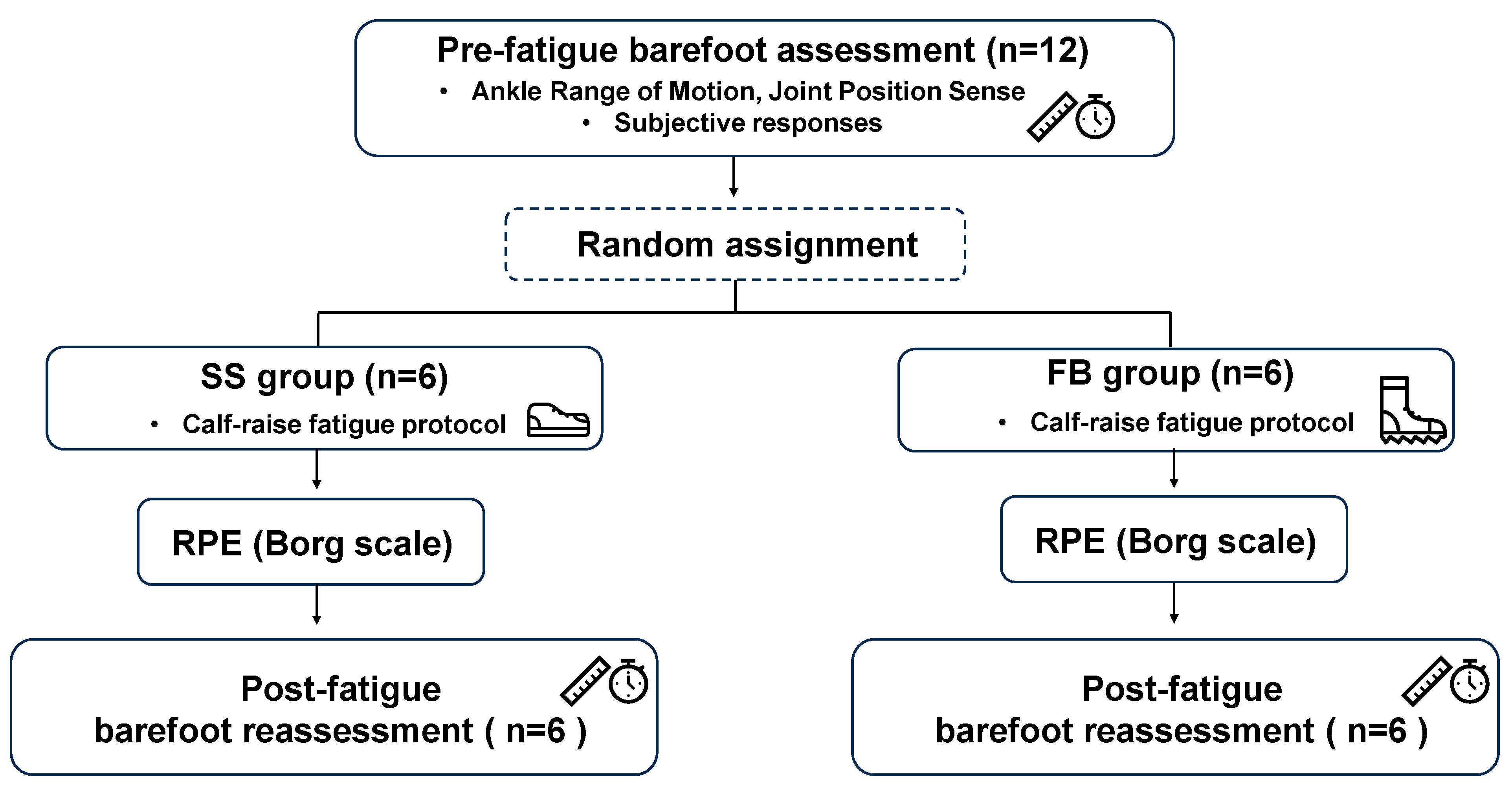
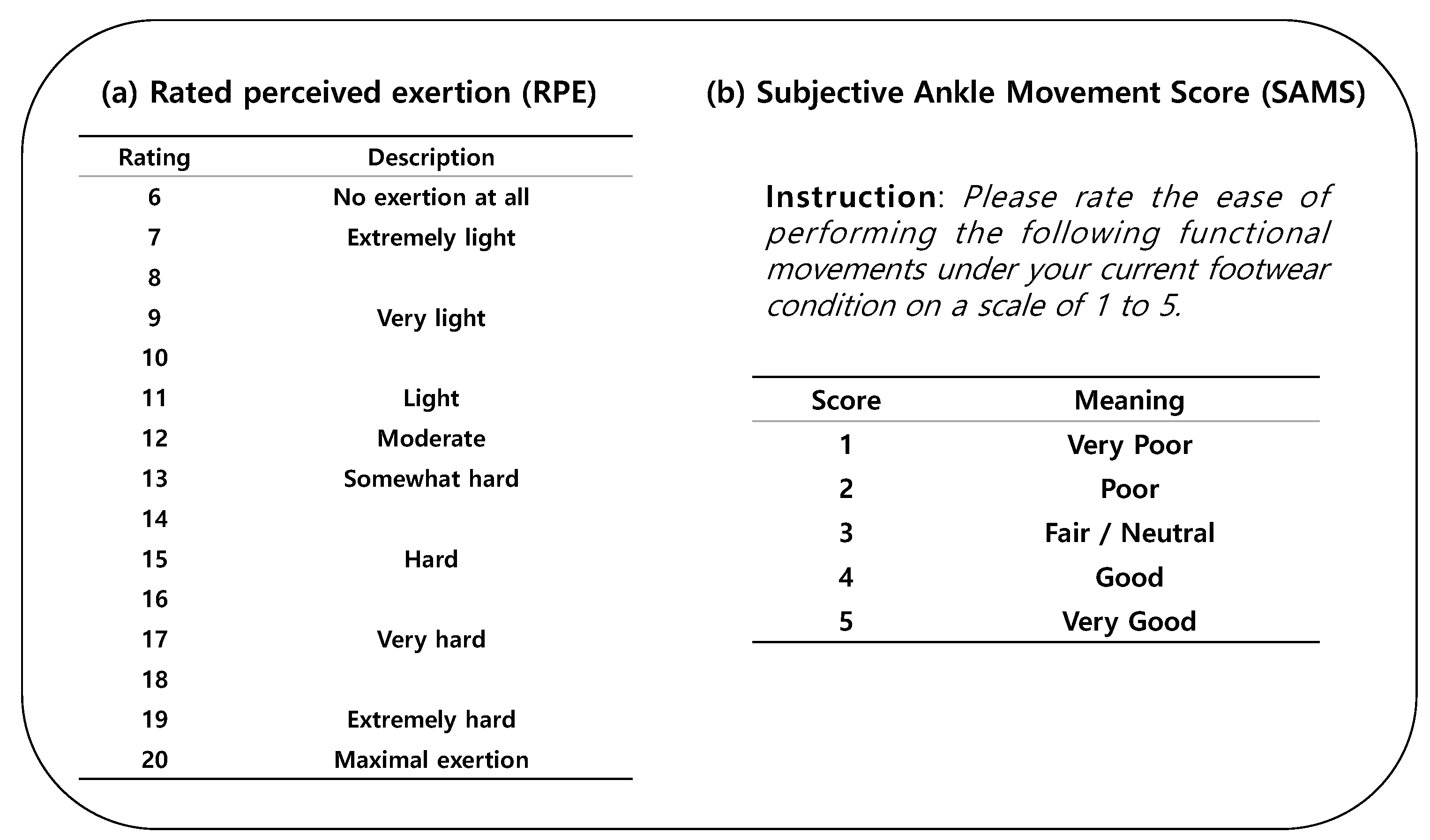
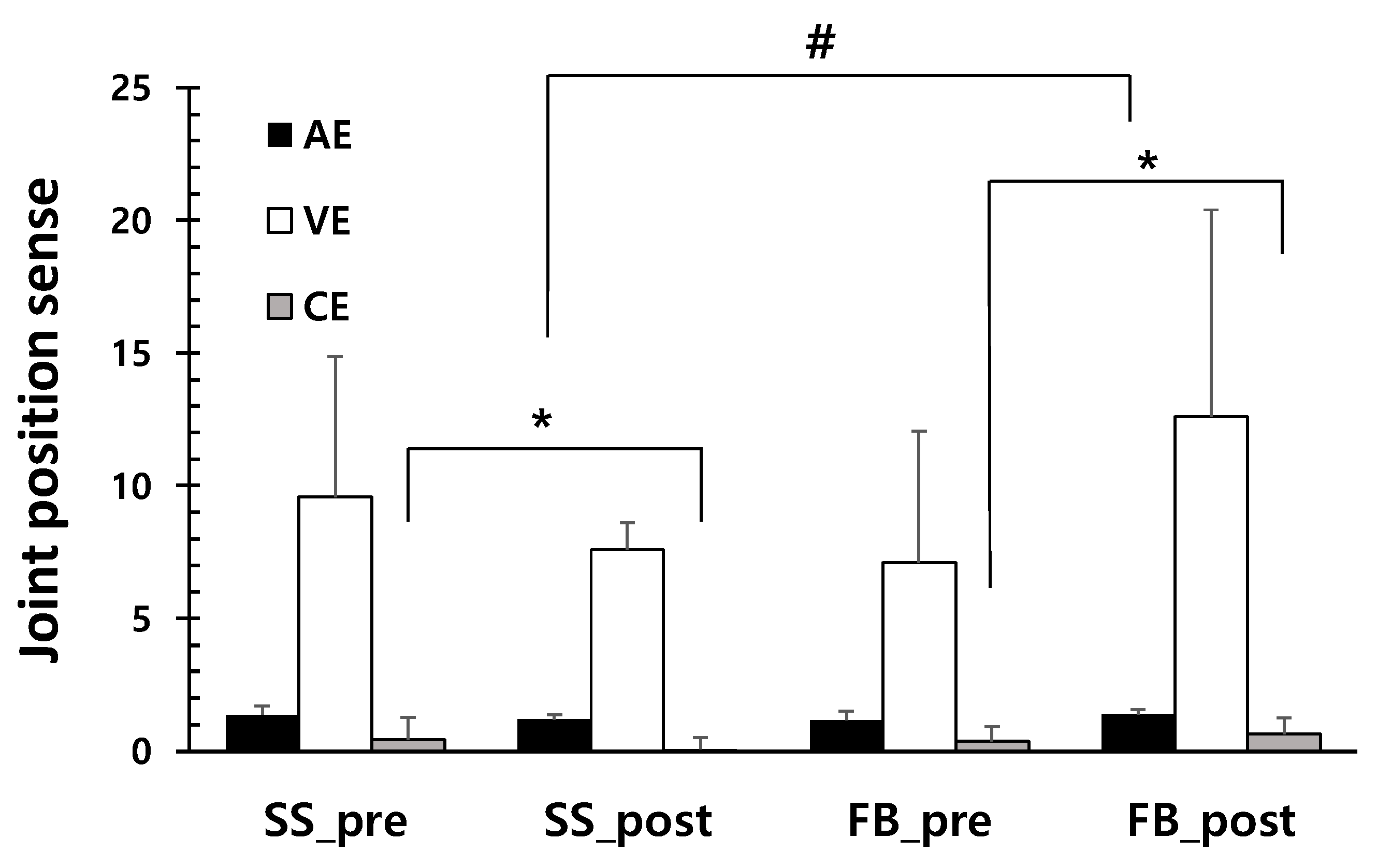
This study investigated how fatigue induced in firefighter boots (FBs) versus sport shoes (SSs) affects ankle joint position sense (JPS), range of motion (ROM), and subjective responses. Twelve healthy males participated in a mixed-design study, performing a calf-raise fatigue protocol in either FB or SS randomly. Ankle JPS, ROM, subjective ankle movement scores (SAMSs), and ratings of perceived exertion (RPEs) were assessed barefoot pre- and post-fatigue. A significant fatigue × footwear × ankle position interaction was observed for JPS constant error (CE) (p = 0.017, ηp2 = 0.183). Follow-up analyses revealed a significant fatigue × ankle position interaction for CE in the SS condition (p = 0.032, ηp2 = 0.299), whereas no significant fatigue-related effects were found in the FB condition. No significant footwear × fatigue × movement direction interaction was observed for ankle ROM (p = 0.561, ηp2 = 0.065), and fatigue-related ROM changes did not differ between footwear conditions. Subjective outcomes differed between footwear conditions after fatigue, with higher SAMS scores in the SS condition (p = 0.016, d = 1.67) and higher RPE scores in the FB condition (p = 0.020, d = 1.66). These findings indicate a dissociation between objective and subjective responses to fatigue, with objective changes limited to a CE interaction pattern in JPS, whereas subjective responses were clearly differentiated by footwear condition.
Keywords: firefighter boots; proprioception; fatigue; joint position sense; range of motion; subjective responses firefighter boots; proprioception; fatigue; joint position sense; range of motion; subjective responses