Brief Report

Impacts of Invasive Vegetation on Fire and Burn-Severity Patterns in Otay Valley Regional Park, San Diego


by
Anahi Méndez Lozano
,
Brittany Barreto Martinez
*,
Dalston J. Karto
and
Alicia M. Kinoshita
Department of Civil, Construction & Environmental Engineering, San Diego State University, San Diego, CA 92182-1326, USA
*
Author to whom correspondence should be addressed.
Fire 2026, 9(7), 298; https://doi.org/10.3390/fire9070298
Submission received: 2 May 2026 / Revised: 29 June 2026 / Accepted: 6 July 2026 / Published: 14 July 2026
(This article belongs to the Section Fire Science Models, Remote Sensing, and Data)

Abstract

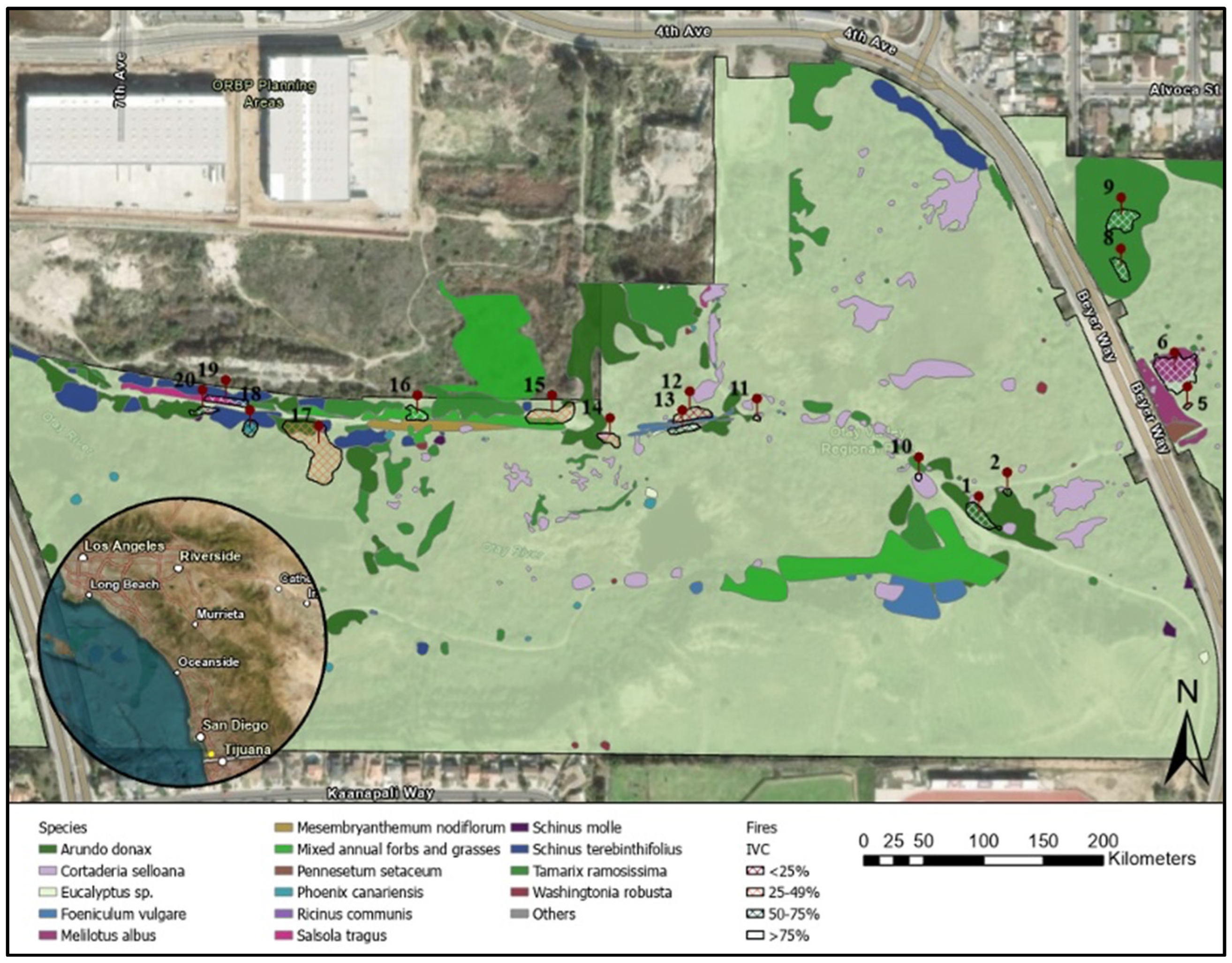
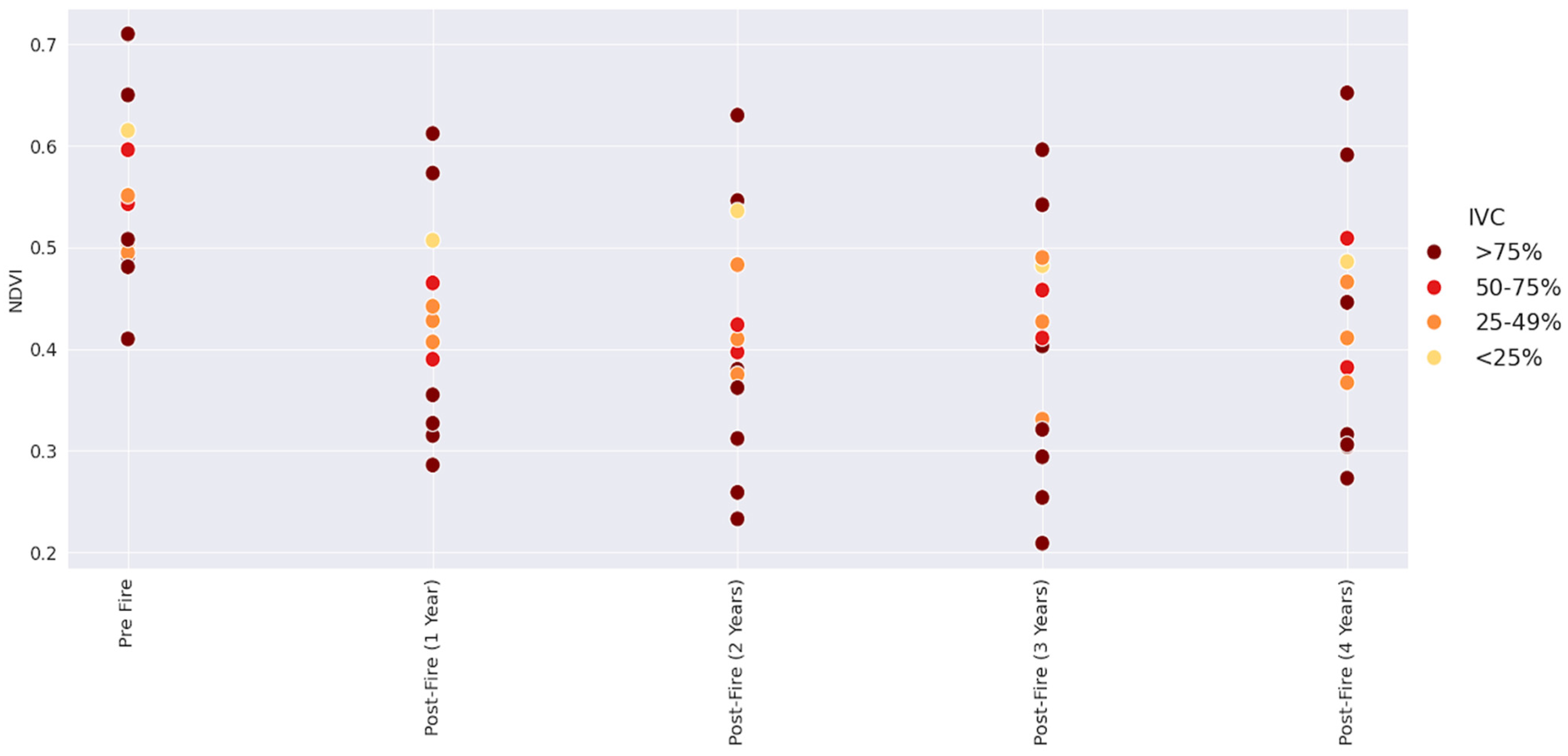
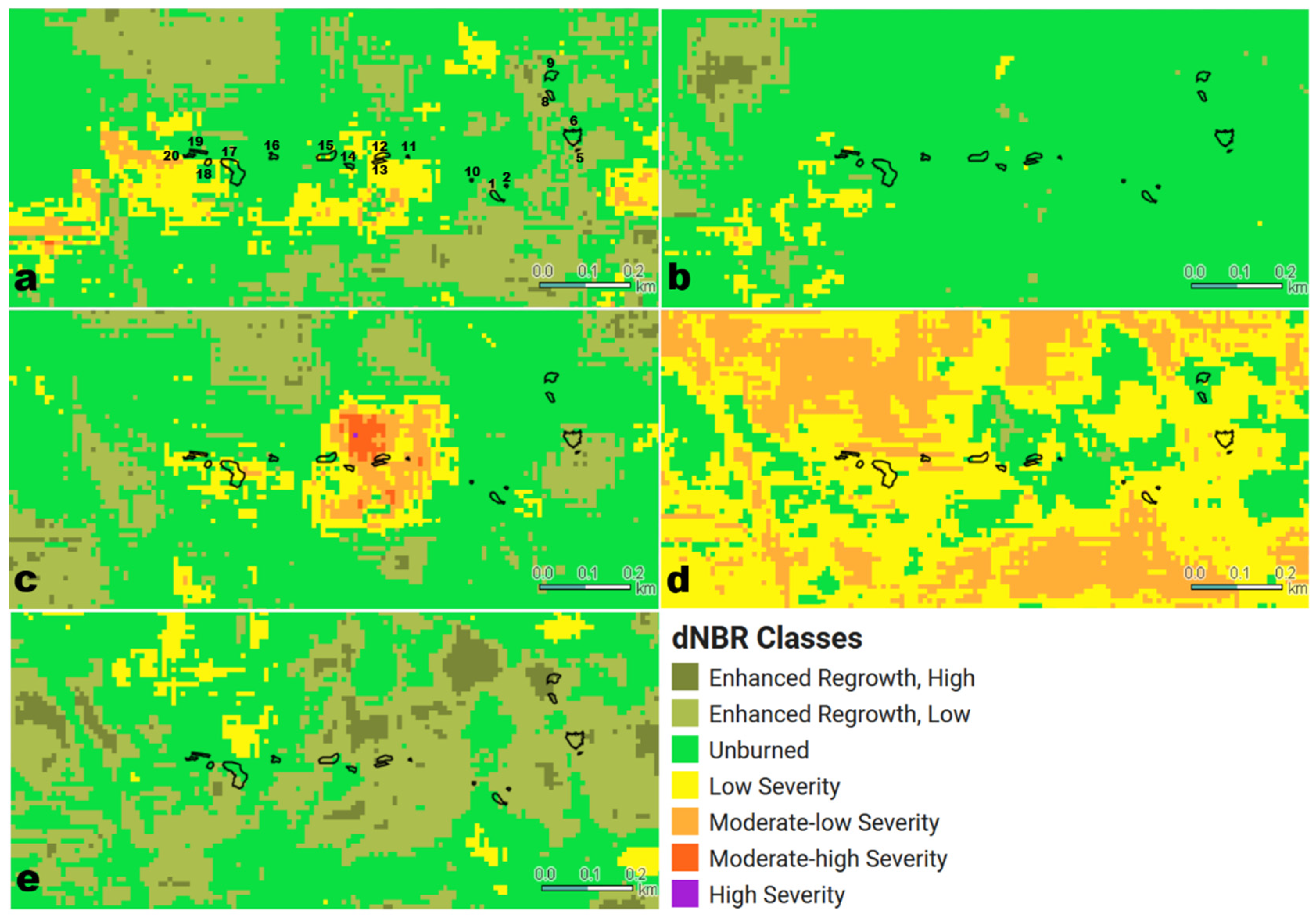
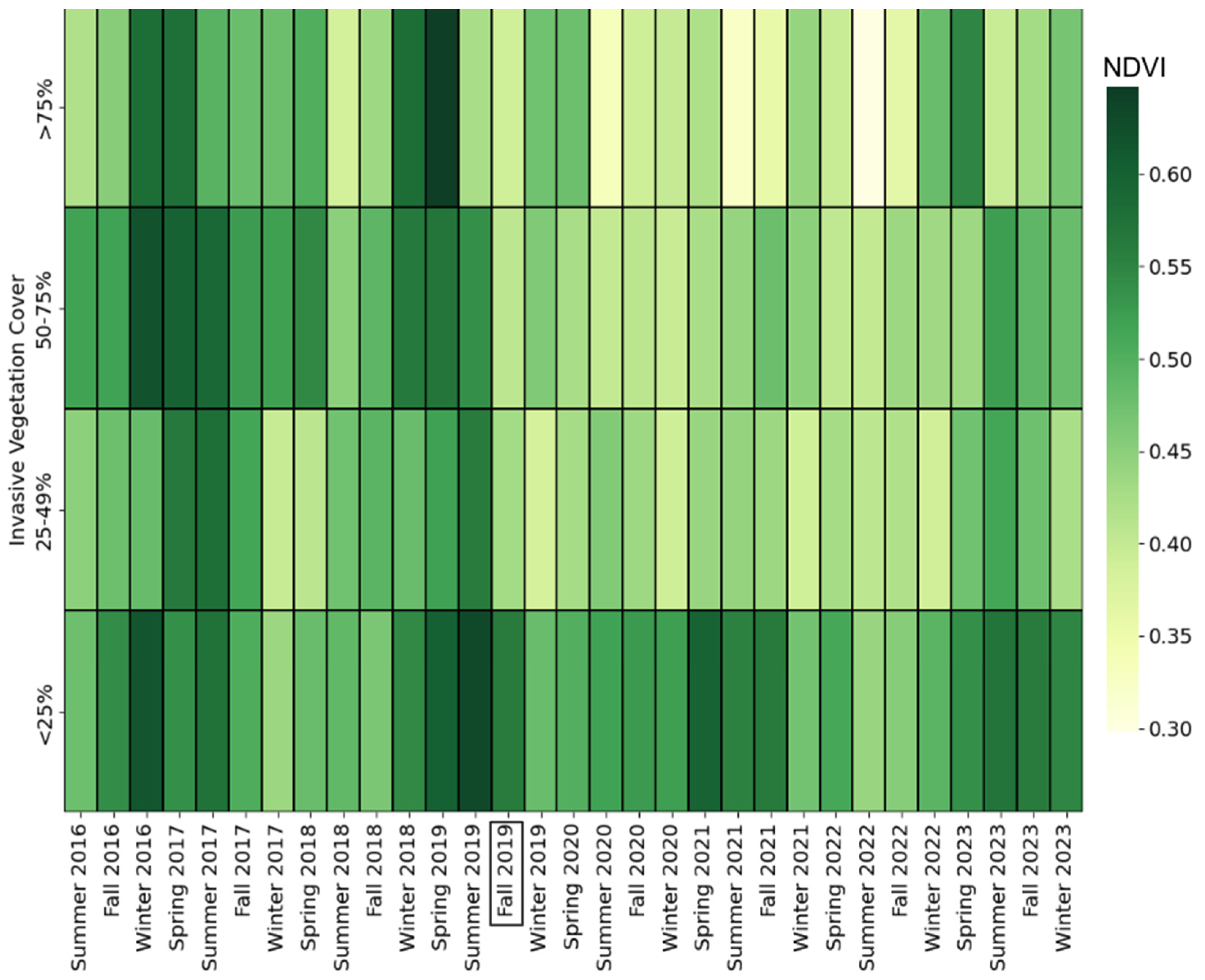
Riparian zones provide vital ecosystem services, including water purification, soil aeration, and recreation. Anthropogenic activities and invasive plant species threaten native vegetation and alter fire patterns. This study investigates the impact of invasive vegetation cover (IVC) on riparian fire patterns in Otay Valley Regional Park, San Diego, California, using Sentinel-2 imagery to analyze 13 fires that occurred in 2019. The impact of IVC on fire patterns was assessed using high-resolution Normalized Difference Vegetation Index (NDVI) and Differenced Normalized Burn Ratio (dNBR) from 2019 to 2023. We found nuanced fire dynamics relationship driven by species-specific traits. Results showed that post-fire NDVI was consistently highest in areas with <25% IVC, suggesting more stable vegetation recovery in native areas. In contrast, areas with >75% IVC had high NDVI variability and greater canopy loss, particularly where species such as Melilotus albus and mixed annual forbs dominated. IVC was evaluated descriptively rather than as an inferential predictor due to the small number of fire counts. Descriptive patterns indicate that post-fire vegetation response varied by dominant invasive species, with resilient taxa such as Arundo donax, Tamarix ramosissima, and Eucalyptus spp. showing evidence of rapid or sustained recovery. These findings highlight the complexity of fire dynamics in invaded riparian systems and the importance of species-specific monitoring. We recommend integrating remote sensing with targeted invasive vegetation species management to improve fire resilience and ecological integrity in urban riparian corridors.
Keywords: remote sensing; invasive vegetation; riparian fires; canopy loss; burn severity remote sensing; invasive vegetation; riparian fires; canopy loss; burn severity