
Article

Analysis of Syngas Inlet Position for Optimization of Flameless Combustion in a Biomass Pyrolyzer


by
Andre Amba Matarru
1,2 and
Donghoon Shin
1,*
1
Department of Mechanical Engineering, Graduate School, Kookmin University, 77 Jeongneungro, Seongbukgu, Seoul 02707, Republic of Korea
2
Department of Mechanical Engineering, Institute Teknologi Kalimantan, Balikpapan 76127, Indonesia
*
Author to whom correspondence should be addressed.
Fire 2026, 9(6), 236; https://doi.org/10.3390/fire9060236
Submission received: 10 April 2026 / Revised: 26 May 2026 / Accepted: 30 May 2026 / Published: 2 June 2026
(This article belongs to the Special Issue Low Carbon Fuel Combustion and Pollutant Control)

Abstract

A new biomass pyrolyzer, named Biochar Oven, has been developed using flameless combustion technology, which provides uniform high temperature in the pyrolysis reactor. A computational fluid dynamics (CFD) model of flameless combustion was developed to analyze how the fuel inlet depth controls the reaction and heat transfer to a vertical biomass pyrolysis reactor. The combustor was modeled using the k–ε turbulence model, the discrete ordinates radiation model, and species transport with the reaction. The fuel nozzle relative depth ratios (RDR) of chamber height and equivalence ratios (ER) were varied to obtain optimal combustion and heat transfer performance. The internal recirculation ratio (Z) was calculated to evaluate the flameless combustion condition, with maximum values generally found at RDR 0.73 for each ER. Increasing depth strengthens the mixing zone closer to the reactor wall. With an ER of 0.9 and RDR of 0.73, the wall heat flux is up to 16.36 kW m−2, the average wall reactor temperature is up to 900 °C, and the heat transfer efficiency is up to 59.79%. These flow patterns and chamber–reactor results indicate that deeper nozzle insertions (RDR 0.73) provide better overall performance by improving recirculation intensity, wall heat flux, and heat transfer efficiency with lower CO emissions.

1. Introduction

The depletion of fossil fuel reserves due to increasing global energy demand has encouraged the search for alternative and sustainable energy sources through research and technological innovation (the oil and gas industry as the cause of the climate crisis with an estimated 15% of total greenhouse gas emissions) [1,2]. In this case, biomass is proposed as an alternative and efficient energy source because it can be carbon-negative and reduce dependence on fossil fuels that contain harmful emissions [2,3]. For example, biomass waste from the agricultural sector reaches approximately 140 billion tons per year as a source of raw materials for value-added products such as biochar and hydrogen using thermochemical conversion technology [4]. Pyrolysis is one of the most effective thermal conversion routes for processing various raw materials, including lignocellulosic biomass and food waste [5]. The use of biomass waste with the potential of 200 million tons of coal equivalent, for example, as biochar, can mitigate up to 2.75 GtCO2/year, making it an effective climate mitigation strategy [6,7]. Direct biomass combustion can produce approximately 1.8 kg of CO2 for every kilogram of dry biomass, which is a disadvantage; thus, thermochemical approaches, such as pyrolysis, are expected to be a more efficient solution for environmental protection [4].
The increasing use of biomass as an energy and fuel source has stimulated research into thermochemical conversion processes. Therefore, pyrolysis processes have been proposed as biomass conversion technologies operating at high temperatures in an oxygen-free environment to provide an alternative and sustainable fuel, as they can operate at a high heating rate and short residence time [8,9,10]. Pyrolysis requires highly efficient heat transfer to achieve high cracking rates [11]. The biomass pyrolysis process can produce a solid product in the form of biochar, amounting to 25–35% of the initial feedstock mass, depending on the biomass characteristics and the design of the pyrolysis conversion technology [4]. Pyrolysis can also efficiently produce three products (solid, liquid, and gas) with high energy density [12,13]. The pyrolysis gas product can be used as fuel to maintain the reactor temperature (self-sustaining). High volatile decomposition rates can affect the production of pyrolysis gas [14]. Pyrolysis gas is explicitly referred to as an on-site clean fuel. Non-condensable pyrolysis gas (H2, CH4, CO, and C2–C4) is a direct energy source that can be used for self-contained pyrolysis [15]. Its calorific value of 15–40 MJ/m3, with an energy density close to natural gas (typically ~38 MJ/m3, but can reach up to 50 MJ/m3 depending on heavier hydrocarbon contents), allows it to be applied to combined heat and power (CHP) systems, gas turbines, boilers, or burners, which can reduce fossil fuel consumption [16].
Conventional pyrolysis systems often face performance limitations regarding heat transfer efficiency for optimal reactor heating. To improve pyrolysis performance, flameless combustion has been proposed to provide benefits by producing high heat transfer rates, thermal uniformity, and operational stability without creating hot spots or visible flames. Furthermore, this combustion regime offers outstanding fuel flexibility, making it highly suitable for use with many fuels, including various gas blends. These performance characteristics are achieved by slowing the combustion reaction rate and vigorous mixing of the reactants with the recirculated flue gas, which has been shown to drastically reduce pollutant emissions. Given the complexity of gas aerodynamics and chemical reactions in this combustion regime, a CFD approach is crucial for accurately predicting the stability, heat transfer behavior, and flow characteristics within the burner [15,17]. Potential applications of this technology are ideal for industrial processes that require high, stable heat but are prone to temperature fluctuations, such as heating burners for pyrolysis reactors. Then, regarding the practical impact of this technology, especially in facing the challenges of modern industry, it plays a role in overcoming the problems of conventional hydrogen combustion by diluting the reactants to prevent very high flame propagation speeds and combustion temperatures that are hotter than natural gas without sacrificing operational stability. It can also impact facility stability by the absence of a centralized flame because the heat flux is evenly transferred through radiation throughout the furnace chamber.
The pyrolysis gas combustion process can be modeled using CFD. The exhaust gas, containing a mixture of CO, H2, CO2, CH4, and inert gases, is then simulated as the input for the CFD boundary conditions [18]. CFD modeling is adapted to combustion operating conditions to observe temperature distribution, chemical species distribution, and reaction zone mixing, which is difficult to measure experimentally [17,19]. The combustion species transport and mixing can also be simulated by visualizing the temperature field and product distribution along with flow patterns [20]. Problems in the combustion of pyrolysis product gas arise from various factors, such as the sensitivity of biomass pyrolysis to temperature and residence time, which involves cracking, reforming, water-gas shift, and tar conversion. Its impacts on combustion include flame extinction, difficult stoichiometry control, and reduced efficiency [21]. Although CFD modeling has been widely applied to both biomass pyrolysis and flameless combustion independently, there is currently a critical lack of an integrated CFD model that simulates flameless combustion coupled with pyrolysis processes.
Therefore, 3D CFD modeling is used to analyze combustion optimization with high computational domain accuracy when simulating reactions in a combustion chamber. The fuel inlet position affects combustion performance with respect to temperature distribution [22]. This study discusses the flameless combustion process with various fuel inlet depths to supply heat to the reactor to address the lack of CFD models addressing the influence of fuel inlet on the design of flameless burners. Thermal behavior, such as heat transfer, combustion zone, and efficiency, must be investigated to obtain reliable operating and design parameters.

2. Research Methods

2.1. Biochar Oven

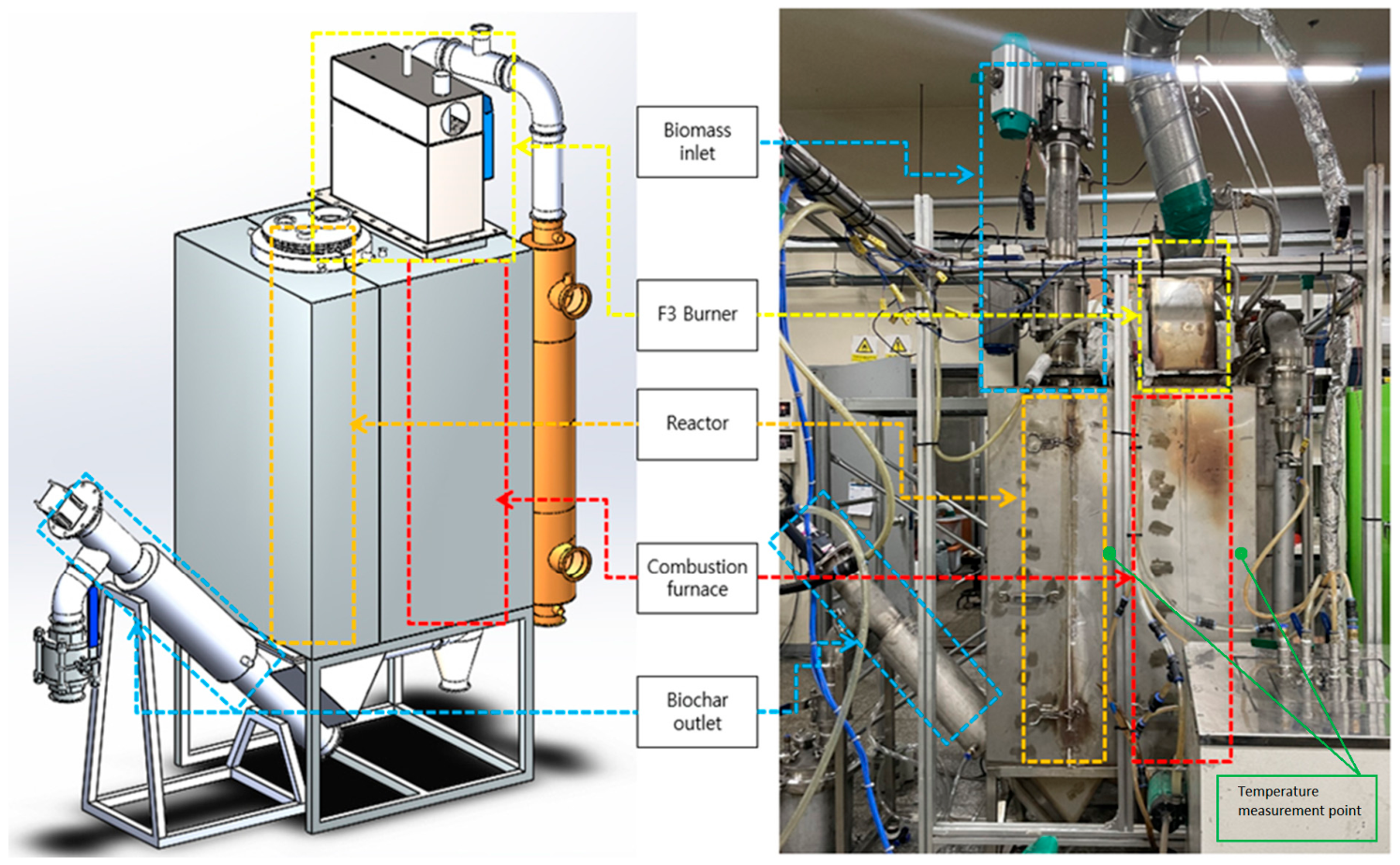
The design of a thermochemical conversion system requires careful consideration of both the fuel characteristics and its chemical energy content [23]. The proposed biochar oven uses flameless combustion technology to achieve a uniform, high-temperature furnace and high heat transfer characteristics. The proposed system for optimization is a continuous feeding biochar oven (50 kg/h). In this experimental setup, a fixed-bed reactor was used because it has advantages such as a relatively low-cost with simple operation, ease of maintenance, high flexibility, and controllability [24]. The configuration of the biochar oven for the pyrolysis process consists of a vertically installed reactor and a combustion chamber, as shown in Figure 1 [25].
This design has the main advantages of continuous biomass feeding [26]. Because thermal behavior is a multicomponent kinetic process, the relative proportions of these biomass constituents significantly influence product distribution. In addition, the physicochemical properties of the feedstock, pyrolysis temperature, particle size, moisture content, and volatile matter play a crucial role in determining the conversion efficiency, drying behavior, and final product yield [2,27,28]. The flameless burner was characterized by one air and fuel nozzle. During the experiment, ignition is performed using a starter burner for initial preheating and flameless combustion.
Wood biomass (small wood pellet) is the raw material used, which has a negative carbon emission factor value with CO2 absorption while growing up and a volatile matter and ash content of at least 2.61% and 0.3%, respectively [29,30,31]. The use of wood pellets is a limitation in this study to ensure stable and reproducible input and prevent fluctuations, as occurred in previous experiments using biomass. Although practical pyrolysis operations prefer raw, unprocessed biomass for economy, raw biomass introduces serious operational heterogeneity due to its variant physical and chemical properties [30,31]. Table 1 shows the experimental conditions for the biochar oven.
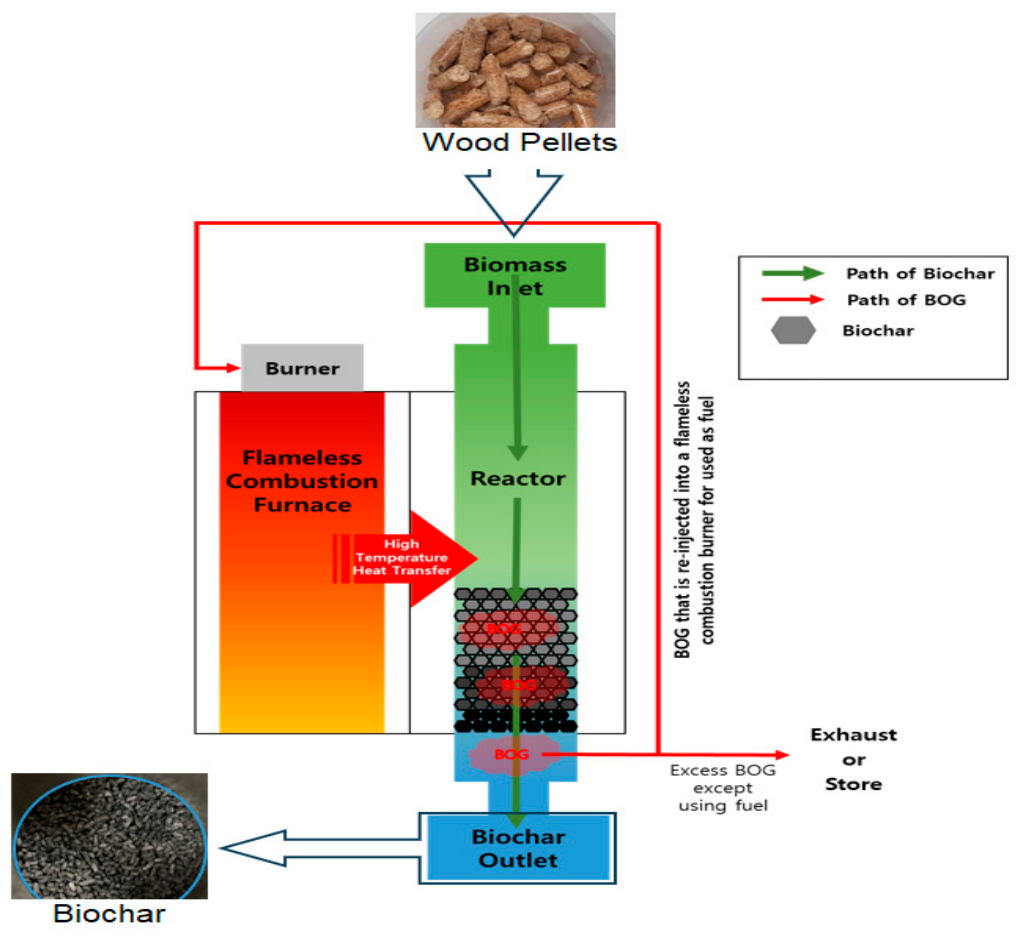
The biochar oven gas (BOG), the syngas produced in the reactor, passes through a two-stage water cooler and a two-stage particulate removal filter before being fed to the flameless combustion furnace via a flow controller. The excess BOG is passed through a flow meter and incinerated. During the experiment, after reaching a steady state with a reactor temperature of 950 °C, data were collected for the boundary conditions of the CFD modeling. The temperatures of the flameless furnace chamber and the reactor surface were measured using K-type thermocouples. BOG was measured directly using an MRU SWG 200-1 (MRU Instruments Inc., NDIR: non-dispersive infrared sensor) reforming gas analyzer, which measures CH4, H2, CO, and CO2 concentrations [32].
During operation, biomass is fed into the reactor continuously and pyrolyzed using the high-temperature heat generated by flameless combustion. The biomass is converted into biochar and BOG simultaneously. The biochar generated in the reactor acts as an adsorbent, decomposing the pyrolysis gas and absorbing carbon, thereby increasing the biochar yield, hydrogen concentration, and calorific value of the product gas. A portion of BOG with a mass fraction of species (Table 2) are used for the flameless combustion, which provides a self-sustaining operation. The excess BOG that is not used for combustion can be stored and sold as fuel or used in other energy devices [33].
The air flow rate was adjusted to maintain the exhaust gas O2 concentration at 3%. A flameless combustion burner, which surrounds the reactor to allow better control of the thermal gradient, supplied the heat for pyrolysis [34,35], as shown in Figure 2.

2.2. CFD Model of the Combustion Chamber

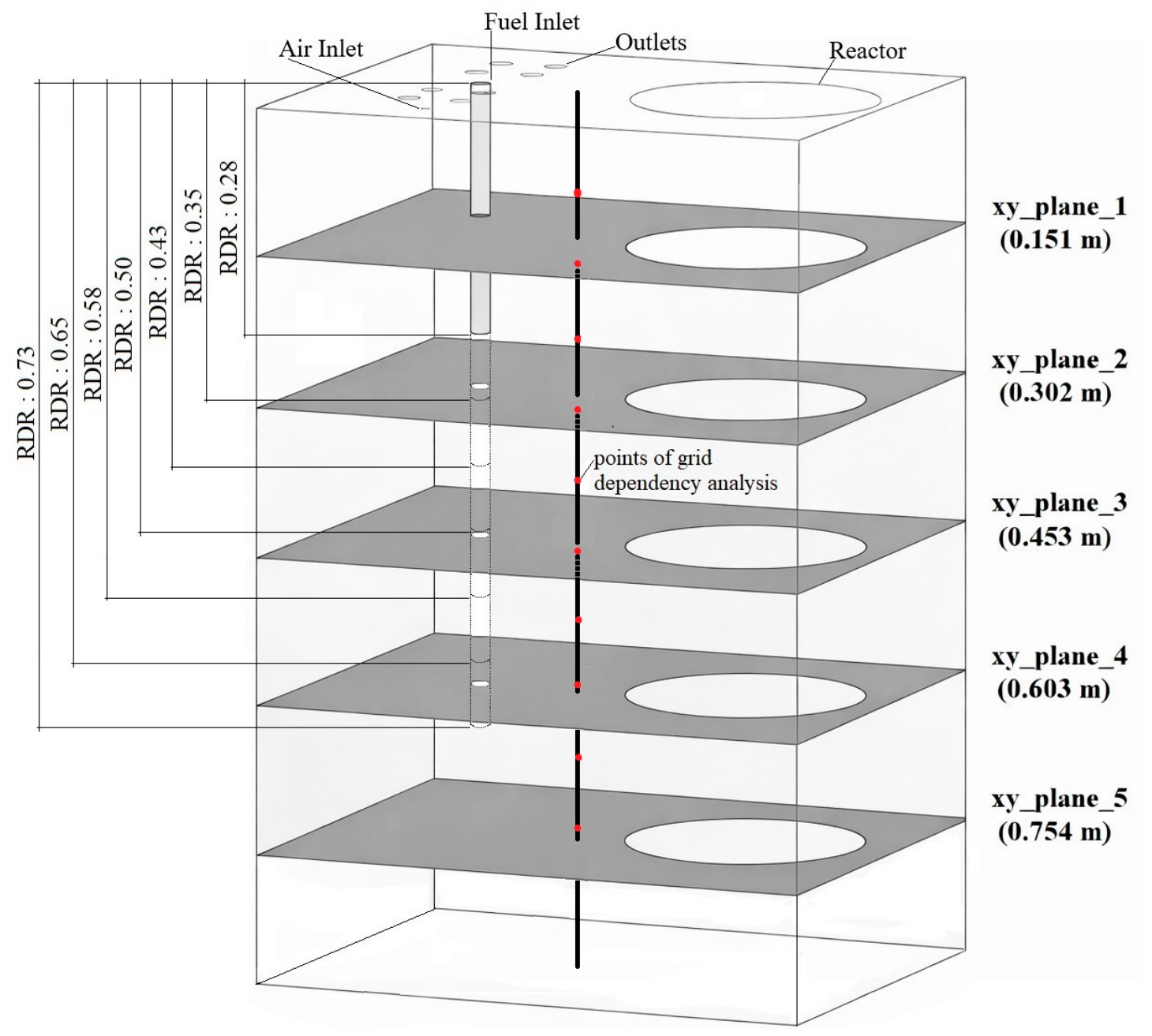
The simulation was conducted under experimental biochar oven conditions to analyze the effect of fuel inlet nozzle variations to optimize the combustion reaction and heat transfer. The variations were based on the relative depth ratio (RDR) of the fuel nozzle (Figure 3), which is the distance ratio between the inlet nozzle position depth and the total chamber height of 905 mm (Table 3).
CFD modeling of the combustion chamber plays a crucial role in understanding the temperature distribution and flow patterns of combustion gases used as heat sources for pyrolysis reactors. Temperature analysis inside the combustion chamber not only provides an overview of combustion performance but also ensures that sufficient heat is generated and properly distributed to achieve the desired pyrolysis operating temperature [36]. The temperature at the reactor wall, which is influenced by the heat transfer mechanisms within the combustion chamber, determines the thermal conditions of the biomass within the reactor, thereby directly affecting the composition of products such as biochar, tar, and gas.
The rapid and efficient transfer of heat from the combustion chamber to the reactor is a decisive factor in determining pyrolysis effectiveness and the resulting product yield [7]. The heat produced is then delivered indirectly to the biomass via the reactor walls, serving as the main source of energy for sustaining pyrolysis. Consequently, the performance and stability of external combustion have a direct impact on the heat source term in the energy balance of the reactor. Efforts to improve reactor performance also heavily depend on the ability of the combustor to provide heat quickly, stably, and uniformly. When heat transfer requirements are met, more intensive operating conditions, such as higher biomass feed rates and increased conversion totals, can be achieved [37].
ANSYS Fluent (2023 R2) was used to study the effects of flameless combustion on the reactor. Table 4 shows the equations used in the CFD simulation. The heat transfer characteristics of flameless combustion were determined using the standard k–ε turbulence model to determine the intensity of air and fuel mixing that corresponds to the operating conditions, as well as species transport to specify the distribution of species in the reaction [38]. The flow in the flameless combustor is modeled as a steady, turbulent, and reacting gas using the Reynolds-averaged Navier–Stokes (RANS) equations for conservation of mass, momentum, and energy. Turbulence coverage is provided by a standard two-equation k–ε model with a wall function for near-wall treatment, so that the eddy viscosity and effective thermal diffusivity represent the effects of turbulent eddies on momentum and heat transfer [39]. The radiative heat transfer between the hot product and the reactor wall is accounted for by the discrete ordinate (DO) radiation model.

2.2.1. Grid Dependency Analysis

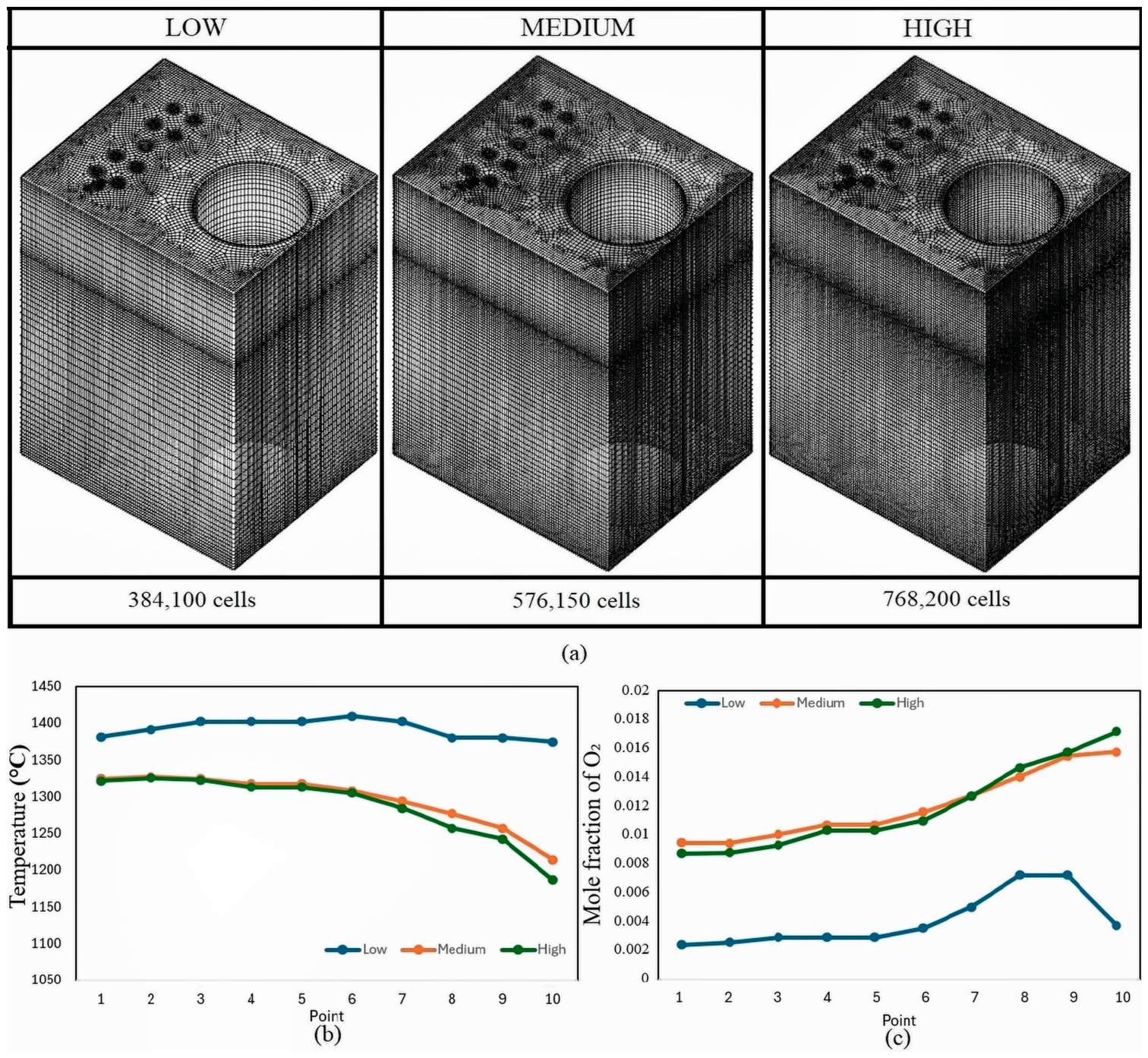
In the CFD simulation, the accuracy of the flameless combustion is explained through grid system analysis by comparing the mesh density to obtain time-efficient simulation results [40]. A numerical investigation was conducted through a grid-dependent study comparing the meshes with high, medium, and low densities (Figure 4a). For a more specific comparison, an analysis was carried out on the results of temperature and O2 mole fraction (Figure 4b,c) with sample data taken from the points on a line located in the mixing zone (Figure 3).
The grid convergence index (GCI) is calculated using Equation (1) with an assumed safety factor (Fs) of 1.25 [41].
G C I = F s | ε | r p 1
The relative error (ε) between f1 and f2 is calculated using Equation (2), where f1 and f2 are the numerical solutions (temperature and mole fraction data).
ε = f 1 f 2   f 1
The grid refinement ratio (r) is determined using Equation (3) with an order of accuracy (p) on two different grids with discrete spacing h1 (fine grid) and h2 (coarse grid).
r = h 2 h 1
The GCI values were 3.60% for temperature and 1.41% for O2 mole fraction, confirming the adequate numerical accuracy of the medium mesh. The average relative error between the medium-high grids is smaller, where it is 0.0072 for temperature and 0.0028 for O2 mole fraction, compared to the low-medium grid with a value of 0.075 for temperature and 0.037 for O2 mole fraction. The comparisons across meshes showed that the medium-density model agreed well with the high-density mesh, with mean absolute percentage deviations (relative to the high-density results) of 0.19% in temperature and 5.42% in O2 mole fraction. The overall mesh density was optimized for computational efficiency, and a medium-density model was selected for subsequent simulations to reduce computational requirements.

2.2.2. Species and Combustion Model

The multicomponent transport of the BOG–air mixture (H2, CO, CO2, CH4, and O2) is solved using a species transport model. The volumetric reaction source terms in the species and energy equations are evaluated from the global finite-rate combustion chemistry specified directly in the species transport model for BOG, yielding local heat release rates and product compositions [42]. The gas mixture is treated as an ideal gas with temperature-dependent thermophysical properties. The gray gas approximation represents the DO model’s radiative properties. The solid portion of the combustor (steel reactor walls and gypsum casing) is modeled as a non-participating medium and enters the energy balance only through its mixed convection-radiation wall boundary conditions.
A reduced global reaction mechanism (Table 5) is used to represent the gas-phase chemistry of BOG [22]. Since the fuel entering the flameless combustion chamber is already a clean gas mixture, only the oxidation of the primary combustible species (CH4, CO, and H2) is explicitly considered, while CO2 acts as an inert diluent. The volumetric reactions are defined in Fluent of CH4 to CO and H2, followed by complete oxidation of CO and H2 to CO2 and H2O. The first reaction (R1) is the partial oxidation of CH4 with a small amount of O2, producing CO and H2. This process corresponds to the initial reforming and gas-phase cracking stages of the pyrolysis gas. The second reaction (R2) describes the subsequent oxidation of CO to CO2, which is the primary exothermic step that contributes to the release of heat in the flameless combustion regime. The third reaction (R3) involves the complete oxidation of H2 to H2O, which rapidly occurs in the high-temperature recirculation zone once sufficient oxygen is available.

2.2.3. Boundary Conditions

All solid surfaces are treated as nonslip walls. The reactor wall zone is modeled as a 6 mm thick steel wall with mixed convective-radiative boundary conditions to represent heat transfer to the installed pyrolysis reactor; an external heat transfer coefficient of 20 W m−2 K−1, a free stream temperature of 300 K, an external emissivity of 0.9, and an external radiation temperature of 900 K are specified [43]. The outer burner casing (wall zone) is defined as a 100 mm thick gypsum wall with mixed convection and radiation to the environment (h = 8 W m−2 K−1, T = 300 K, emissivity = 1, Trad,ext =300 K), which represents external heat loss. The burner air inlet and BOG are set as mass flow inlets, as shown in Table 6, whereas the exhaust is modeled as a pressure outlet. There are 5 variations of air flowrate to fuel (ER) to find the best performance, such as temperature distribution, heat flux, efficiency, and pollution levels.

2.2.4. Performance Parameter

(1)
Heat Transfer Efficiency
The energy input is defined as the chemical energy of the syngas ( m ˙ f u e l , i n , LHVmix), whereas the energy output is restricted to the heat rate successfully transferred through the reactor wall ( Q ˙ w a l l ). The calculation boundary encompasses the combustion chamber, where the interface between the flue gas and the reactor wall serves as the primary boundary for determining the useful energy gain.
η h t = Q ˙ u s e Q ˙ i n = Q ˙ w a l l m ˙ f u e l , i n L H V m i x
(2)
Recirculation Ratio
The internal flue gas recirculation rate representing the flameless combustion performance is determined using Equation (5). This method specifies the performance of extensive reactant rates and dilution, emission values, and hot spot formation, which affect heat transfer and combustion efficiency [44]. The calculation of the recirculation ratio for the five horizontal planes (Figure 3) is based on the CFD results.
Z = m ˙ g a s 2 ( m ˙ f u e l + m ˙ a i r )
In the calculation, m ˙ g a s represents the integrated mass flow across a cross-sectional area and is given in Equation (6), and |vz| is the absolute velocity of the combustion gas along the z-axis direction (m/s).
m ˙ g a s = ρ g a s v z d A

3. Results and Discussion

The optimization of combustion and heat transfer in a biochar oven is based on internal recirculation that induces the mixing of the incoming fluid and the existing fluid (combustion gas) and the process of transferring heat generated by the combustion reaction to the reactor. The flameless combustion phenomenon in the biochar oven is influenced by RDR and ER and is described visually and graphically in the form of velocity magnitude, fuel movement path, distribution and outlet content of pollutant (CO) within the combustion chamber and heat transfer efficiency.

3.1. Thermo-Fluid Phenomena in the Flameless Furnace

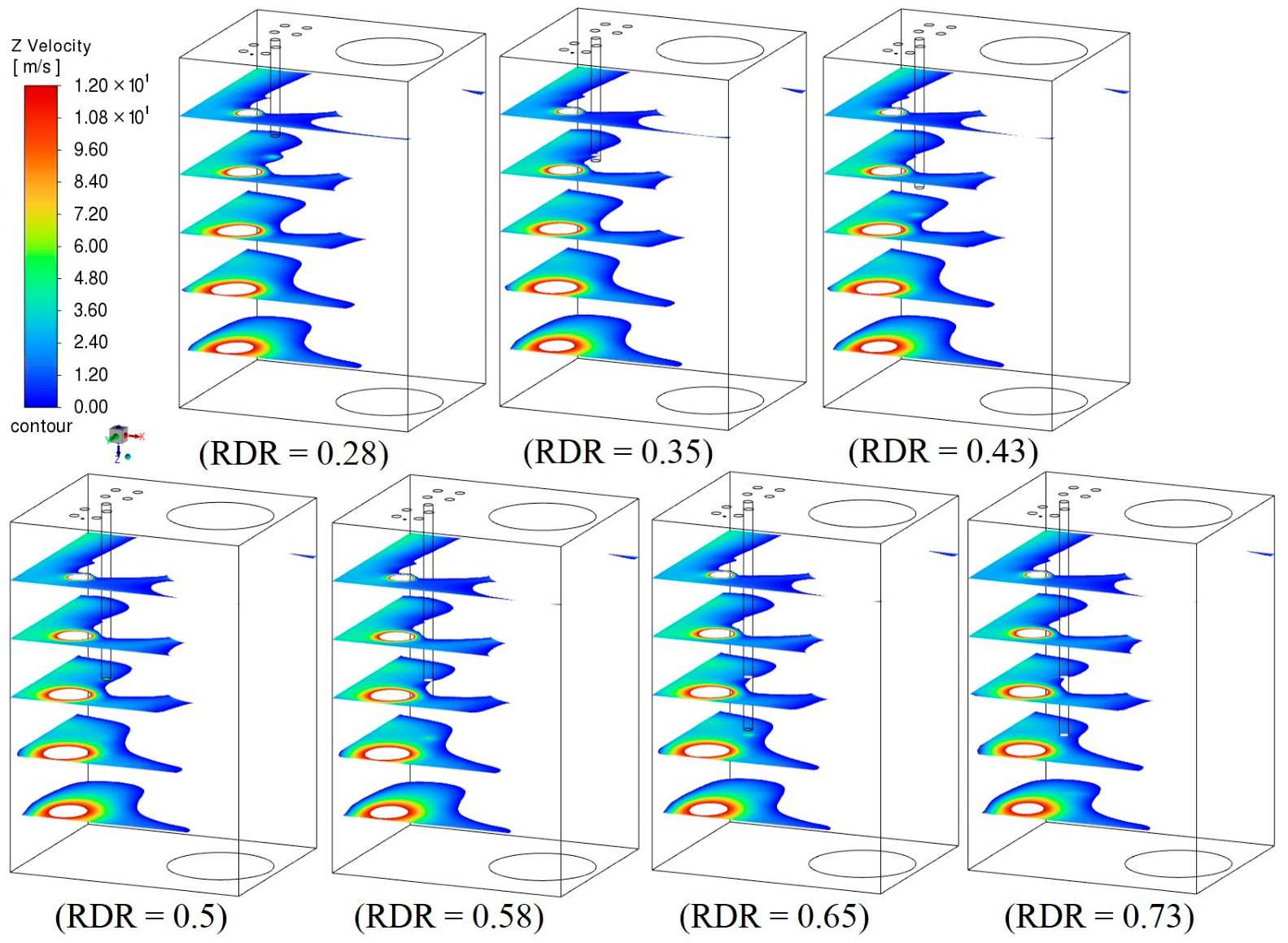
High-speed air jet flow increases the inflow of surrounding combustion gases and forms recirculating turbulence that affects the entire combustion chamber, thereby expanding the reaction zone and occupying a larger volume [45]. Figure 5 shows the downward movement of the space by the air jet. The area below the air inlet shows a high-speed downward flow on the left side of the figure, whereas the empty space shows an upward flow, confirming the internal circulation. Even if the fuel injection position is moved downward by increasing the RDR, it does not significantly affect the overall gas flow because the air injection momentum is relatively large. However, the fuel injection position is expected to affect the combustion zone.
The effect of fuel nozzle depth does not cause overall stoichiometric changes; however, it changes the mixing and reaction structures inside the main combustion chamber [46,47]. As the fuel nozzle is inserted deeper, the fuel jet penetrates further down into the combustion chamber, causing more recirculation and interaction (reaction) with the surrounding combustion gas flow, which significantly affects the flameless combustion process. Shifting the recirculation structure changes the location of the jet entrainment path, causing changes in fuel-air mixing, temperature distribution in the reactor, and overall combustion efficiency [48].
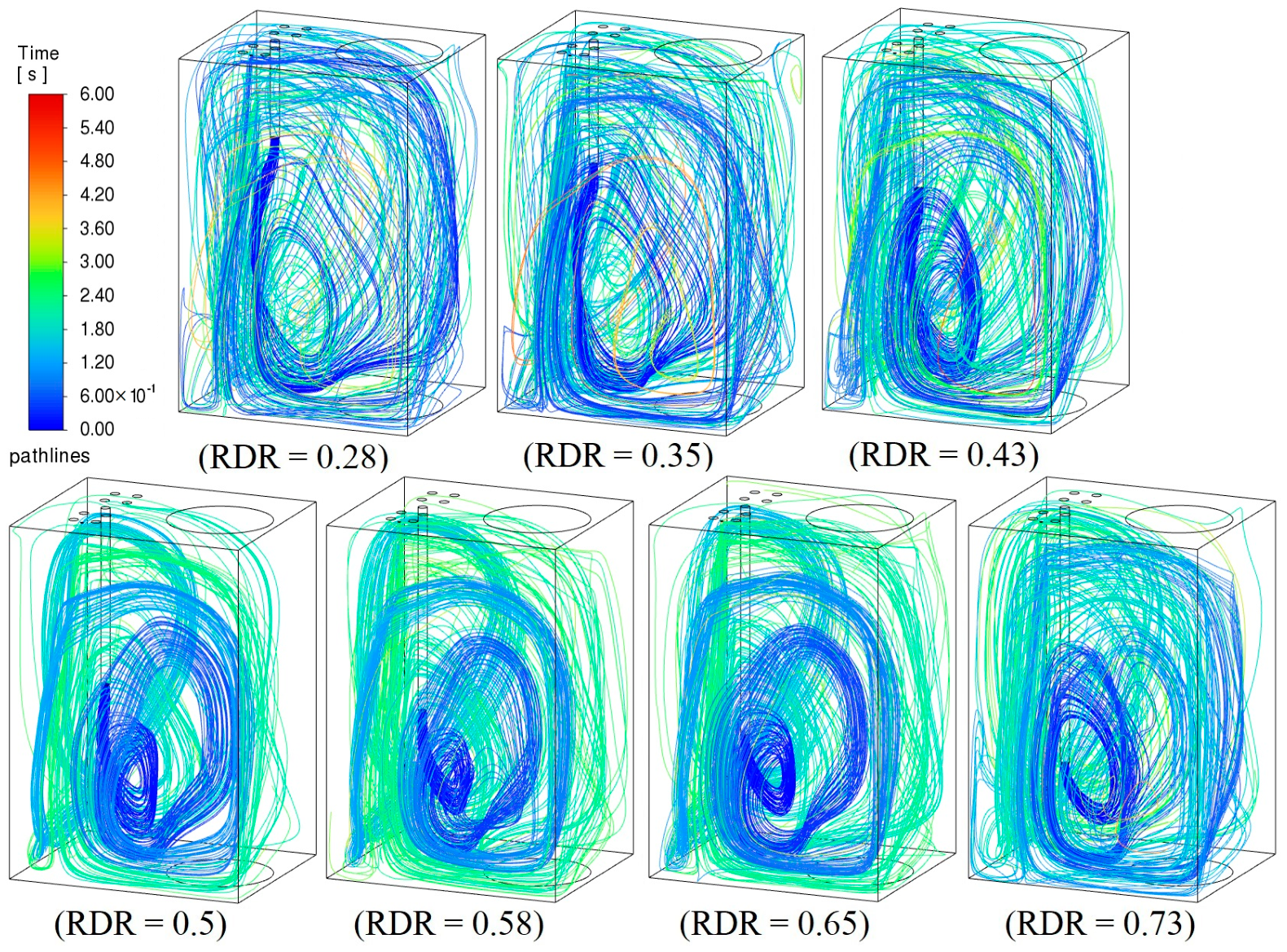
The fuel gas trails colored by residence time in Figure 6 show a flow pattern where, at low RDR, the fuel moves upward (outlet) with a short residence time (blue, ~0.6 s) after one recirculation, indicating that the time spent participating in combustion may be excessively short. The level of the second recirculation trajectory of the fuel gas trails gradually decreases as the RDR increases, and they tend to move upward into the combustion chamber after undergoing a greater number of recirculations. Accordingly, at an RDR of 0.5 or higher, the upper residence time color increases to light green (~2.4 s), indicating that the fuel will be discharged after undergoing sufficient reaction in the combustion chamber. Furthermore, the position of the nozzle actively controls the location of the reaction zone. As the nozzle insertion depth increases (corresponding to a higher RDR), the reaction zone shifts progressively downward. This deeper positioning induces multiple rotations and a longer recirculation flow, which significantly extends the path line of the fuel. Consequently, this extended residence time and prolonged fuel path promote higher mixing uniformity, maximize the extent of the reaction, which facilitates complete combustion [49]. Ultimately, this intensified recirculation maximizes the extent of the reaction by ensuring complete fuel oxidation while simultaneously mitigating the generation of CO through enhanced exhaust gas dilution and the prevention of localized hot spots.
Multiple recirculations occur beneath the combustion chamber, activating reactions with the surrounding gases. In the case of the deepest RDR of 0.73, the trajectory disperses after similar first and second recirculations, showing third and fourth recirculations that generate multiple recirculations; the residence time near the outlet at the combustion chamber’s top was the longest. It is estimated that most of the combustion reaction is completed during the first and second recirculations, whereas the third and fourth recirculations are used to effectively transfer heat to the reactor.
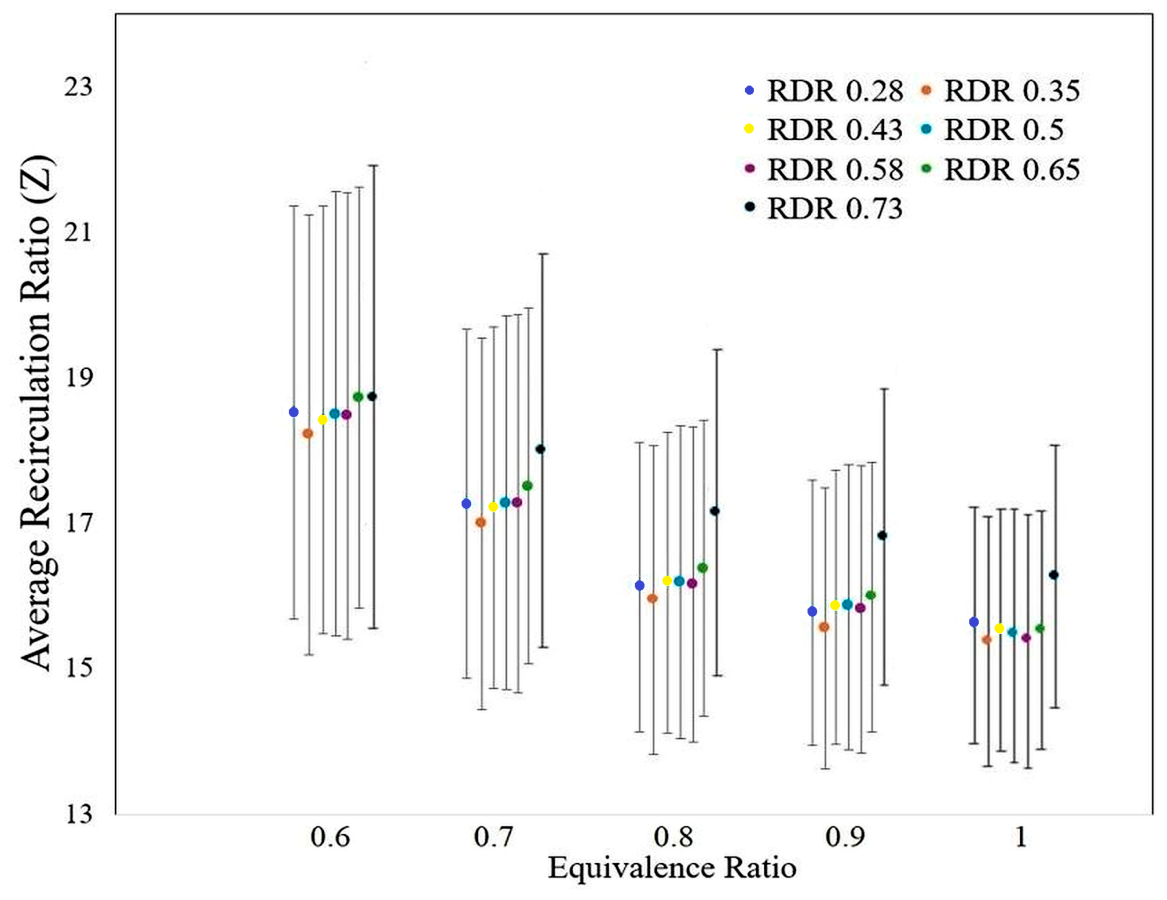
Flameless combustion is typically analyzed using a non-dimensional number known as the recirculation rate. As the entrainment of this recirculation rate increases, it directly increases the convective heat transfer coefficient. Therefore, the resulting enhanced entrainment in the recirculation stages causes strong mixing and further accelerates fuel consumption [50]. The air jet momentum primarily influences the recirculation of combustion gases within the combustion chamber. This causes the flow to form a wider and more even recirculation pattern [44]. Figure 7 shows the results of the CFD analysis performed on the average recirculation ratio within the combustion chamber for each RDR while varying the ER based on the amount of air input and keeping the fuel flow rate constant. Overall, ER appears to have a more significant influence on the combustion gas recirculation ratio than RDR; the recirculation ratio is higher when the ER is lower—that is, when the air input amount is higher and the momentum due to the air velocity is higher. However, when the RDR exceeds 0.65, the combustion zone becomes concentrated in the lower part of the combustion chamber, resulting in high temperatures. Consequently, rapid volumetric expansion occurs, which, along with the buoyancy effect, further amplifies the updraft momentum, increasing the recirculation ratio. Accordingly, the condition of an RDR of 0.73 was found to be the most favorable for the recirculation ratio. In addition to the downward flow generated by the momentum of the air jet, the control of the combustion zone by the position of the fuel nozzle, particularly the formation of a high-temperature zone at the bottom, can affect the recirculation ratio.
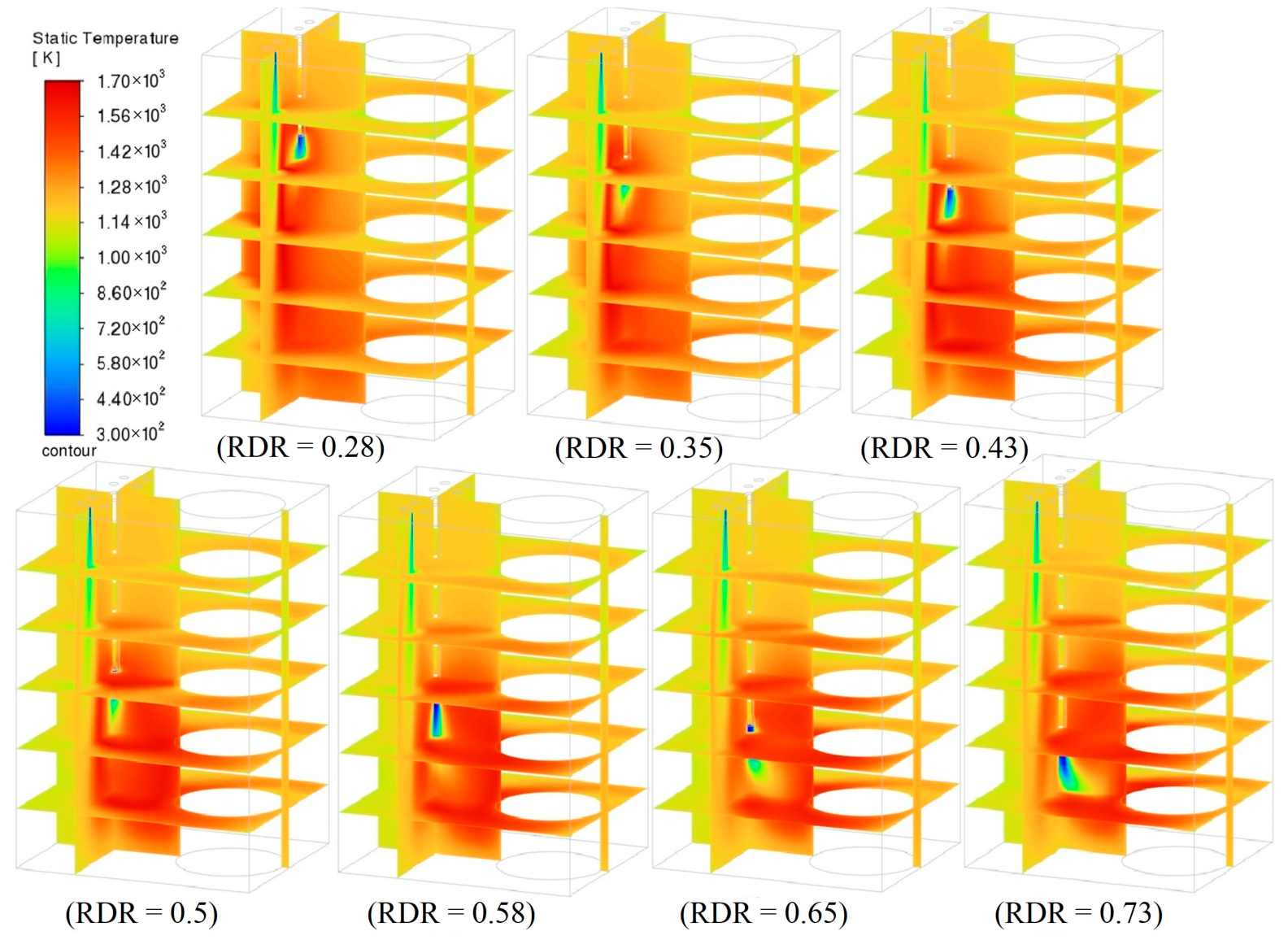
Figure 8 shows the temperature distribution, which clearly demonstrates the influence of the fuel nozzle position. In the case of RDR 0.28, most of the high-temperature region is in the left area of the figure, whereas the area near the reactor shows relatively low temperatures, suggesting a low heat transfer effect. As the RDR increases, it can be observed that the high-temperature region moves downward and closer to the reactor. The shape and extent of this high-temperature core are consistent with a mixing zone generated by the interaction between the fuel jet and internal recirculation, which leads to stronger entrainment [46,47]. Consequently, in the cases of RDR 0.65 and 0.73, the temperature near the reactor is the highest, indicating that lowering the fuel nozzle position enhances the heat transfer effect to the reactor. The total heat transfer that occurs is the sum of the contributions of radiation, gas-wall convection, and wall conduction [51].
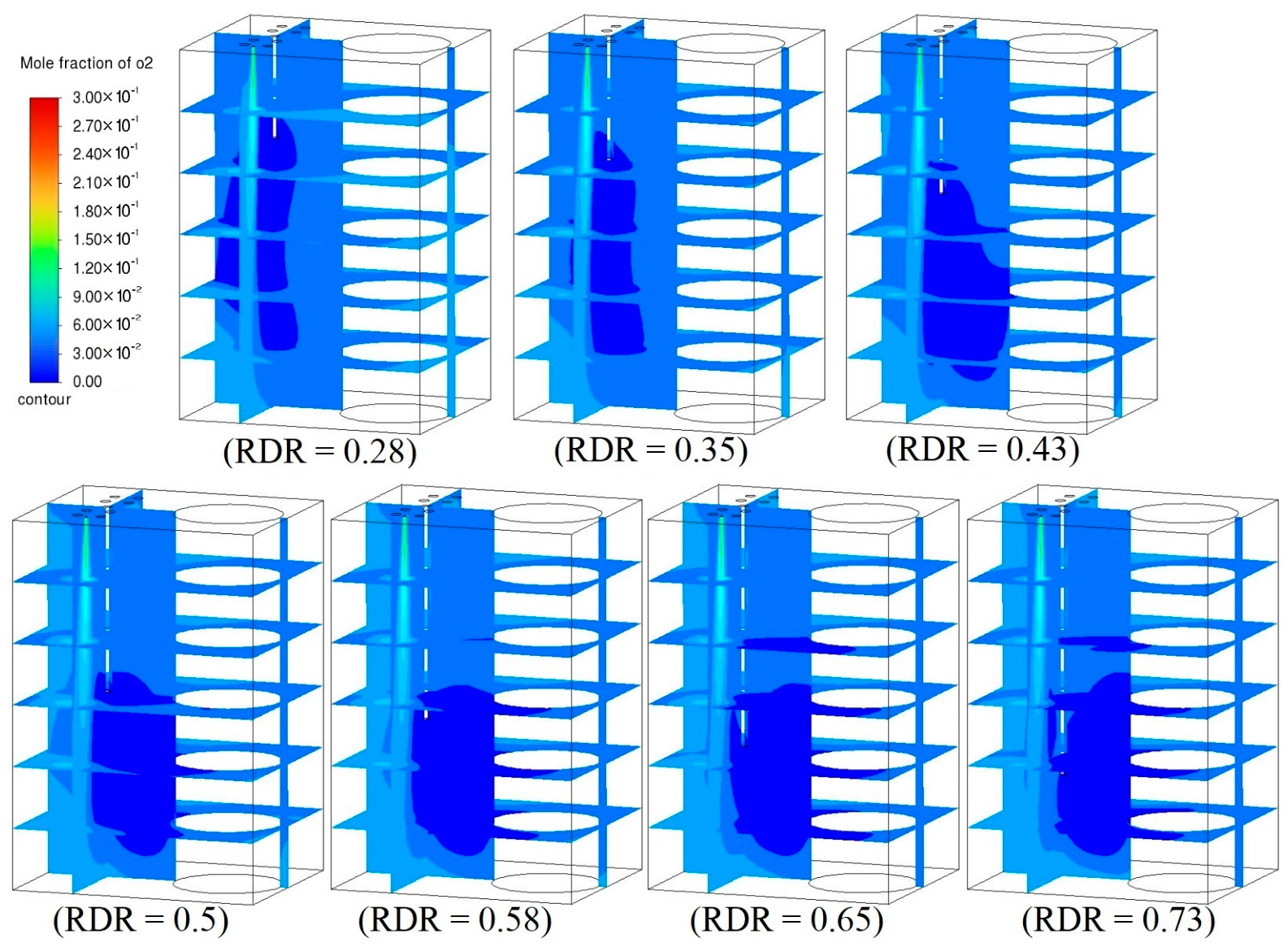
Figure 9, which shows the oxygen concentration distribution, confirms that the region where the combustion reaction is active, as the main combustion region has a low oxygen concentration. Low-oxygen-concentration combustion can be achieved by diluting oxygen in the furnace flue gas as an effective approach for flameless combustion, and the reaction zone tends to expand under such diluted/recirculation-controlled conditions [52]. As previously explained, as RDR increases, the combustion region located in the left region, which is further away from the reactor, gradually moves downward, starting to come into contact with the reactor at RDR 0.43, and it shows that it adheres closely to the surface of the reactor as it increases further. Therefore, the cases of RDR 0.65 and 0.73 show the largest contact area, and the combustion region at RDR 0.73 extends further up the reactor than at 0.65. The best heat transfer efficiency is expected at an RDR of 0.73.
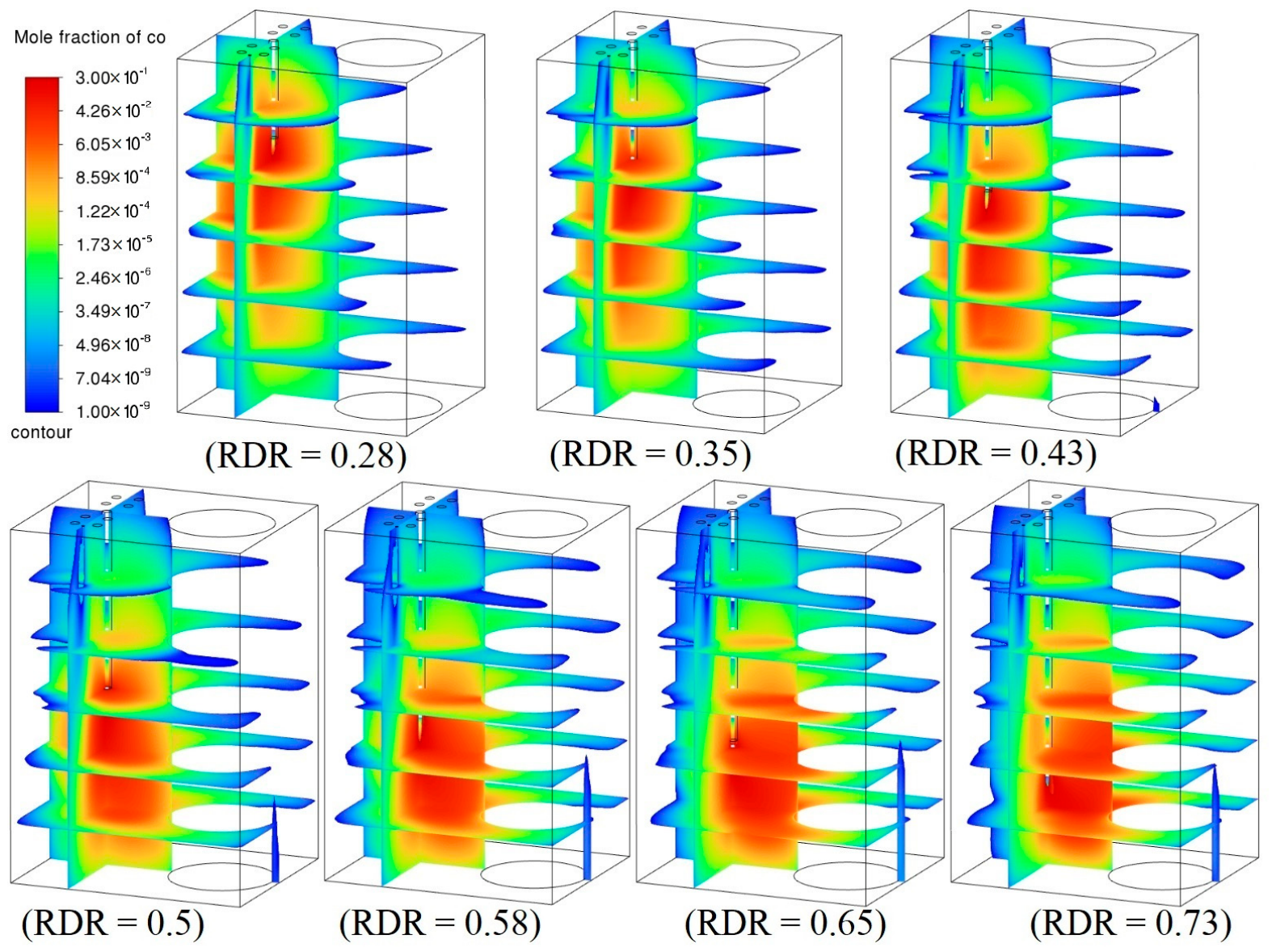
Figure 10, which shows the concentration distribution of CO, an incomplete combustion product, shows an active combustion zone similar to the oxygen concentration distribution in Figure 9. This trend is consistent with the flameless combustion characteristic that achieves very low CO in the exhaust when the reaction zone is distributed and well-diluted rather than localized [53]. Since the incomplete combustion product is easily discharged when located at the top of the combustion chamber, it is desirable to locate it at the bottom, as far away from the outlet as possible. The CO of RDR 0.65 and 0.73 is distributed at the bottom, and its concentration at the top shows a tendency to decrease rapidly, which is considered the most optimal combustion and heat transfer condition.
High-momentum air can force hot combustion products to recirculate back into the primary reaction zone, diluting the reactants and shifting combustion from a thin flame front to a large-volume reaction region, which inherently suppresses pollution formation [54]. The higher pollution at RDR 0.28 is consistent with the more compact and localized reaction zone reported for low RDR, which can sustain stronger local peak-temperature even if overall mixing is not yet fully developed [55,56].

3.2. Heat Transfer to the Pyrolysis Reactor

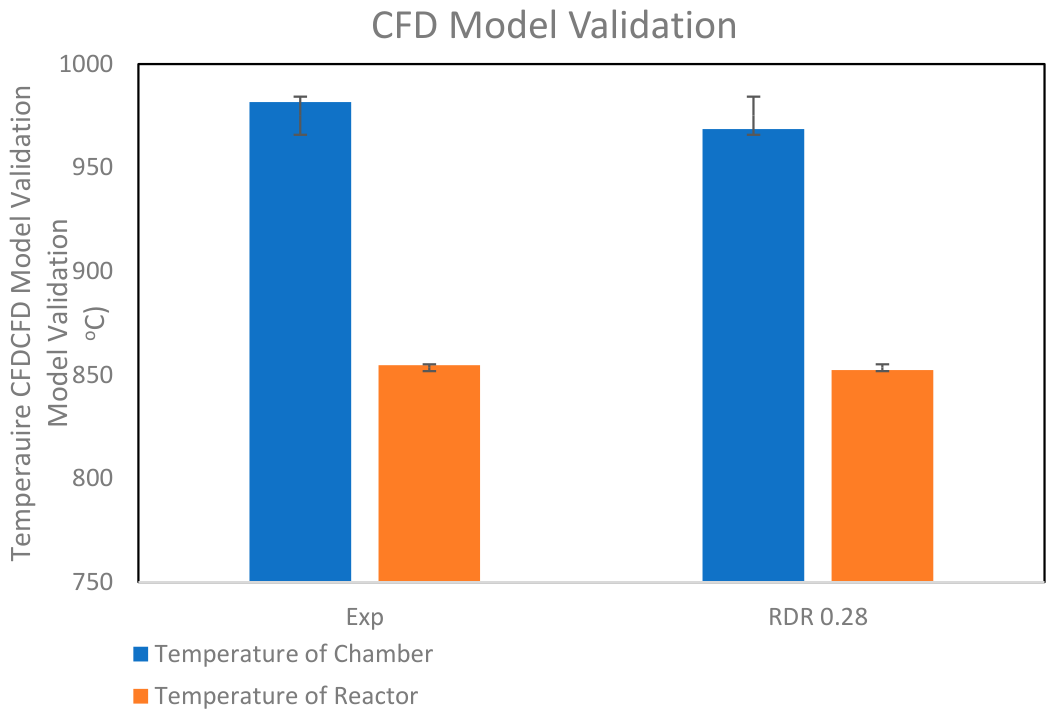
Validation of the experimental data was conducted on the temperature profile of the reactor wall and chamber as a parameter of the accuracy of the turbulence, radiation, or kinetic models used (Figure 11). The simulation data used is ER 0.9 under the optimal condition with a shallow fuel inlet representative of RDR 0.28. The chamber experiment temperature of 981.56 °C is still higher than the simulation results at RDR 0.28 with 968.53 °C, which proves that flameless combustion has been optimized with a more uniform temperature distribution. This is also seen in the reactor temperature with an experimental value of 854.65 °C, slightly higher than the RDR 0.28 value of 852.3 °C, as the heat transfer simulation has been modeled as occurring in the combustion process experiment.
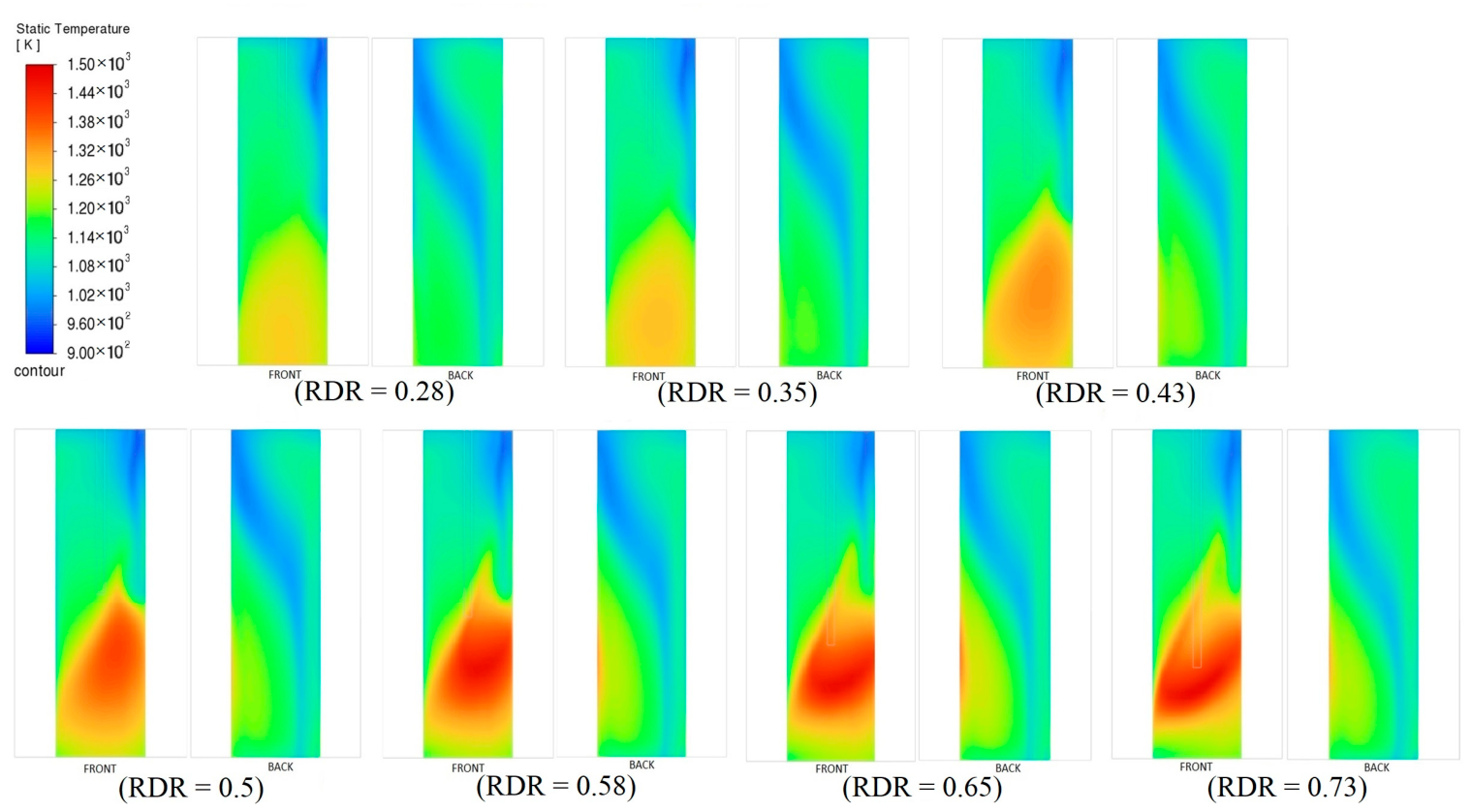
Observations on heat transfer were conducted through the temperature distribution on the reactor surface (Figure 12), which directly influences heat transfer. Simulation of the heat transfer from the combustor to the reactor wall using CFD provides a baseline for thermal validation through the predicted heat-flux pathway [57]. As the nozzle depth increases from RDR 0.28–0.73, the high-temperature region expands upward and shifts toward the reactor wall, indicating a stronger and more spatially extensive gas recirculation pattern. Highly entrained flow patterns, intense turbulent mixing, and uniform temperature distribution result from the mixing zone of more complete reactions [58]. At low RDR values, the reactor surface temperature remains low and does not exceed a maximum of 1300 K; however, the maximum temperature gradually rises as the RDR increases, reaching 1500 K at an RDR of 0.73. Meanwhile, the difference in temperature distribution between the front and rear of the reactor is due to the combustion reaction zone being concentrated in the lower front section, resulting in higher temperatures. The elongated vertical region in blue at 900 K is attributed to fluid flow stagnation in that area. Nevertheless, excluding this region, most of the reactor surface exhibits temperatures above 1100 K, indicating that sufficient heat transfer for the reaction is achievable.
In heat-transfer terms, the shorter gas–solid distance and thicker high-temperature boundary layer increase both the driving temperature difference and the local convective/radiative heat-transfer coefficient, so a larger fraction of the fuel’s chemical energy is transferred to the reactor wall. As the flame core approaches the wall, the local gas temperature and radial temperature gradient rise, enhancing the effective radiative conductivity in the near-wall region, which is consistently captured by the DO radiation model [13]. Air jet-induced recirculation further mixes hot products with fresh reactants, sustaining high and relatively uniform temperatures in the combustion zone and avoiding localized hot spots [59]. As a result, deeper nozzle arrangements bring the reaction zone closer to the reactor wall, strengthen the gas–wall interaction, and improve overall heat-transfer efficiency, provided wall temperatures remain within safe limits [59,60,61].
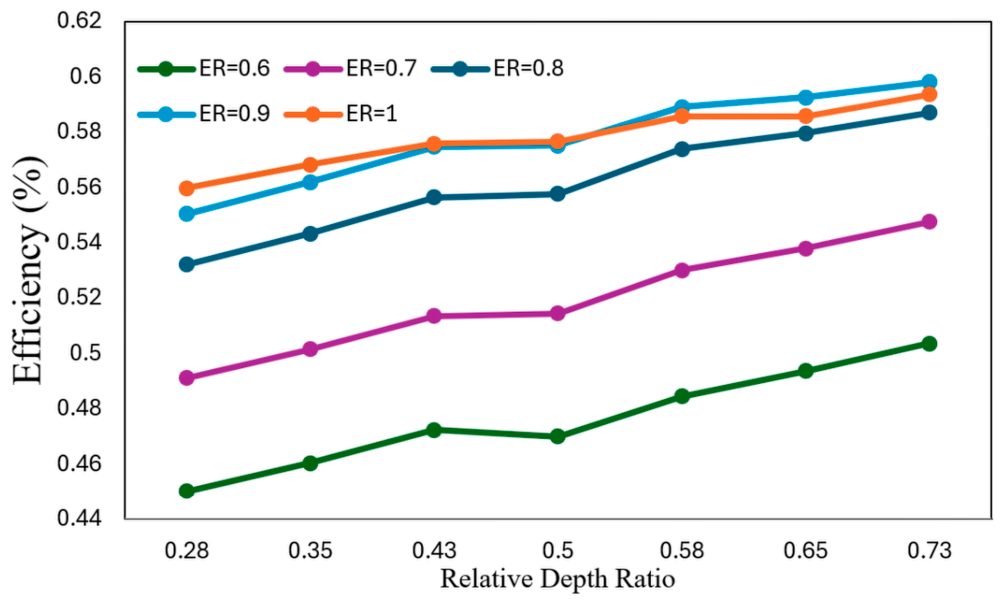
Figure 13, which plots heat transfer efficiency as a function of varying RDR and ER, shows that heat transfer efficiency tends to increase with higher RDR values and increases as ER approaches 1. Since ER is inversely proportional to the air supply, a higher ER corresponds to a higher adiabatic flame temperature, making the increase in heat transfer efficiency a naturally expected outcome. The differences are not substantial when ER is 0.8 or higher; however, as ER drops to 0.7 and 0.6, a significant decrease in heat transfer efficiency is observed. Therefore, the results indicate that operating at an RDR of 0.65 or higher under conditions with an ER of 0.8 or higher represents the optimal operating condition. The highest heat transfer efficiency was 59.79%, recorded at RDR 0.73 and ER 0.9, with a corresponding average heat flux of 16.36 kW/m2. Heat flux from more intense heat transfer occurs at the bottom and middle of the reactor as the RDR increases. This indicates that the combination of increased turbulence intensity, increased oxygen uptake during mixing, and a balanced thermal gradient results in optimal combustion and energy use [58,62].
As the fuel nozzle is inserted deeper, the high-temperature region in the chamber widens and extends to higher axial positions, indicating that a larger gas volume participates in heat transfer toward the reactor wall [47,58]. A deeper injector shifts the fuel jet further into the high-temperature recirculation zone, enhancing the entrainment of surrounding gases and promoting more intense internal circulation. This is also related to Figure 12, where a Z is higher (deeper RDR), hot gas recirculation acts as a diluent and preheater, which shifts combustion from a thin flame front to a volumetric/distributed reaction, so that temperature uniformity also becomes higher. As can be seen in Figure 12, the highest average reactor wall temperature is found at RDR 0.73 from ER 0.9 [63].
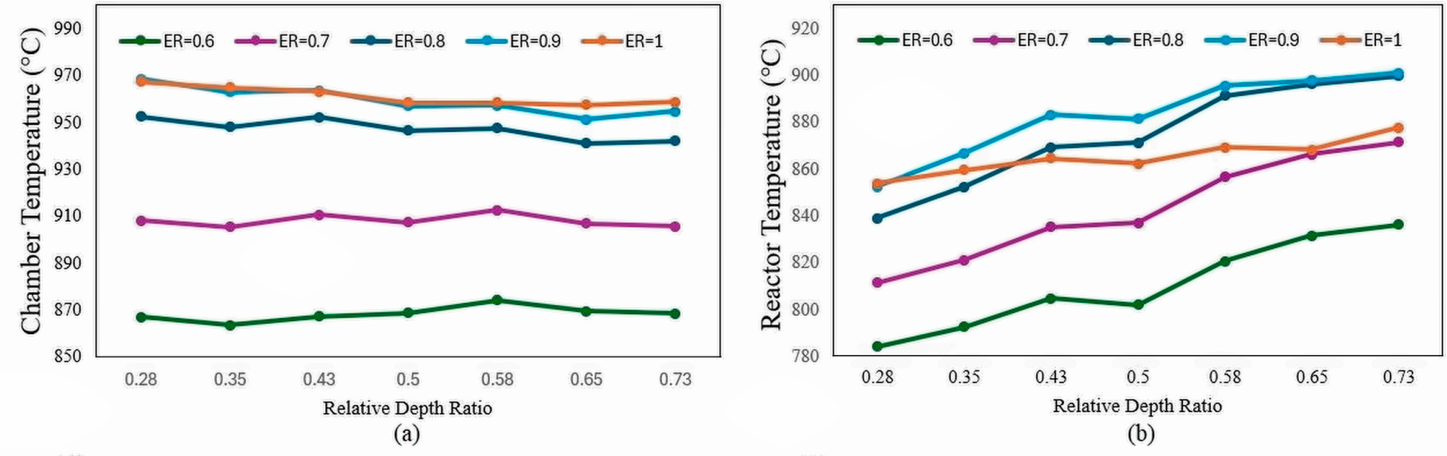
Figure 14 presents the average temperatures of the combustion chamber and reactor surface as functions of RDR and ER. In Figure 14a, the increase in the average combustion chamber temperature with rising ER is attributed to the increase in adiabatic flame temperature; however, the rate of increase diminishes at ER values of 0.8 and above. Additionally, no significant variation with RDR was observed at ER values of 0.6 and 0.7, whereas the average combustion chamber temperature decreased with increasing RDR at ER values of 0.8 and above. This is interpreted as an enhancement of the heat transfer effect with increasing RDR—more heat being transferred results in a lower average temperature. Meanwhile, as shown in Figure 14b, the average reactor surface temperature exhibited an increasing trend with increasing RDR. It rises from 852.30 °C at RDR 0.28 to 900.87 °C at RDR 0.73 at ER values of 0.9. The increase in the average reactor wall temperature with increasing ER is due to the convection-radiation heat flow from the stable combustion zone in the lower core region of the chamber to the overall reactor wall, which remains stable, improving temperature uniformity. The difference in values indicates a progressively less uniform temperature field, consistent with stronger entrainment and recirculation that creates coexisting hot and diluted/cooler zones within the flow [45,46,64].
The influence of RDR was confirmed based on the analysis of the effects of ER and RDR on the biochar oven using CFD, and it was established that optimal heat transfer efficiency is achieved under conditions of ER ≥ 0.8 and RDR ≥ 0.65. The chamber–reactor thermal interaction demonstrates the overall system efficiency, where stable chamber combustion ensures a uniform, high-temperature field on the reactor wall. The combustion performance is fundamentally governed by the coupled interactive effects between RDR and ER. The analysis demonstrates a strong synergistic effect when coupling an ER of 0.9 with an RDR of 0.73. At this specific coupling, the aerodynamic configuration of the deeper nozzle (RDR 0.73) provides sufficient spatial delay to maximize the internal recirculation ratio (Z). When combined with the slightly lean-to-stoichiometric mixture of ER 0.9, this intense recirculation perfectly dilutes the reactants, maintaining the flameless regime while simultaneously shifting the high-temperature mixing zone closer to the reactor wall.

4. Conclusions

In this study, a CFD modeling framework was developed to analyze the effect of BOG fuel inlet depth on flameless combustion and heat supply to a vertical biomass pyrolysis reactor. The flameless burner was simulated using RANS turbulence modeling, the DO radiation model, and species transport equations for a BOG-air mixture [65,66]. Through grid-dependency analysis for evaluating flameless combustion conditions, an appropriate mesh was identified that enables a detailed assessment of recirculation, mixing, and gas-wall interactions. Calculation of the internal recirculation ratio (Z) yielded maximum values at RDR 0.73 for each ER, confirming that this influences the location of the fuel-oxidant mixing zone and thereby affects the overall heat flow behavior.
Implementing operating conditions with seven nozzle depth ratios (RDR) and five air-fuel equivalence ratios (ER) successfully achieved the best optimization performance. The RDR of 0.73 at ER 0.9 was optimal in terms of performance, as this nozzle depth configuration created the best aerodynamic balance, simultaneously optimizing the system’s thermal characteristics, heat transfer efficiency, and emission. Strong hot gas recirculation acts as a diluent and preheater, converting the combustion mode into a widely distributed volumetric reaction to achieve temperature uniformity. The enhanced downward-then-upward flow structure results in a much more intensive mixing process between the reactants and exhaust gas. The fluid mechanics impact is a shorter gas-to-solid transfer distance and a thicker high-temperature boundary layer. This directly increases the local radiative and convective heat transfer coefficients, resulting in a much greater fraction of the fuel’s chemical energy transferred to the reactor. CO emissions are reduced because the combustion reaction is widely distributed and well-diluted, minimizing pollutant emissions.
Under these conditions, the increases in the average reactor wall temperature, the wall heat flux reaching a maximum of 16.36 kW m−2, and the achievement of 59.79% heat transfer efficiency are primarily governed by changes in the flow structure, mixing pattern, and gas-wall coupling induced by the fuel inlet depth. The flow structure and mixing pattern of these output values are further elucidated through velocity vector analysis: a deeper fuel nozzle increases the effective penetration depth and redistributes gas momentum, strengthening the downward-then-upward flow momentum and expanding the recirculation rate (jet). This is evidenced by an increase in the average recirculation ratio (Z), where a higher Z signifies intensive dilution-preheating effects, improved heat transfer efficiency, and reduced emissions. Furthermore, deeper nozzle injection expands the high-temperature core region downward, as confirmed by particle path lines, temperature contours, and wall heat flux distributions. These structural changes broaden the effective reaction zone downward and shift it closer to the reactor wall, increasing the local convective and radiative heat transfer coefficients. As a result, a larger volume of hot gas contributes to heat transfer, which is consistent with the observed increase in thermal efficiency. Meanwhile, the efficiency gain was accompanied by a clear emission reduction benefit, reflecting more complete oxidation (lower CO).
This model will serve as an external heat source providing wall heat flux and temperature for the reactor (it does not discuss the phenomena of heat and mass transfer in the reactor as a limitation of this study), thereby contributing to further refinement of temperature profile predictions, product yields, and long-term operational stability for the biochar oven pyrolysis process.

Author Contributions

Conceptualization, D.S.; methodology, D.S.; software, A.A.M.; validation, A.A.M. and D.S.; formal analysis, A.A.M. and D.S.; investigation, A.A.M. and D.S.; resources, A.A.M.; data curation, A.A.M.; writing—original draft preparation, A.A.M.; writing—review and editing, A.A.M.; visualization, A.A.M.; supervision, D.S.; project administration, D.S.; funding acquisition, D.S. All authors have read and agreed to the published version of the manuscript.

Funding

This research received no external funding.

Data Availability Statement

The data presented in this study are available on request from the corresponding author due to ethical and privacy restrictions. The data are not publicly available to ensure the confidentiality of the participants.

Acknowledgments

The authors acknowledge ANSYS Inc. for providing academic software support through the ANSYS Academic Program.

Conflicts of Interest

The authors declare no conflict of interest.

References

  1. Yan, K.; Yang, X.; Yuan, Q. Biochar for carbon-negative hydrogen production from fossil fuel reservoirs. J. Clean. Prod. 2025, 505, 145463. [Google Scholar] [CrossRef]
  2. Al-Rumaihi, A.; Shahbaz, M.; Mckay, G.; Mackey, H.; Al-Ansari, T. A review of pyrolysis technologies and feedstock: A blending approach for plastic and biomass towards optimum biochar yield. Renew. Sustain. Energy Rev. 2022, 167, 112715. [Google Scholar] [CrossRef]
  3. Giwa, A.S.; Xu, H.; Wu, J.; Li, Y.; Chang, F.; Zhang, X.; Wang, K. Sustainable recycling of residues from the food waste (FW) composting plant via pyrolysis: Thermal characterization and kinetic studies. J. Clean. Prod. 2018, 180, 43–49. [Google Scholar] [CrossRef]
  4. Waqas, M.; Aburiazaiza, A.S.; Miandad, R.; Rehan, M.; Barakat, M.A.; Nizami, A.S. Development of biochar as fuel and catalyst in energy recovery technologies. J. Clean. Prod. 2018, 188, 477–488. [Google Scholar] [CrossRef]
  5. Raček, J.; Chorazy, T.; Miino, M.C.; Vršanská, M.; Brtnický, M.; Mravcová, L.; Hlavínek, P. Biochar production from the pyrolysis of food waste: Characterization and implications for its use. Sustain. Chem. Pharm. 2024, 37, 101387. [Google Scholar] [CrossRef]
  6. Matarru, A.A.; Shin, D. Biochar Production Technology as a Negative Emission Strategy: A Review. Energies 2025, 18, 4898. [Google Scholar] [CrossRef]
  7. Shahbaz, M.; Alherbawi, M.; Okonkwo, E.C.; Al-Ansari, T. Evaluating negative emission technologies in a circular carbon economy: A holistic evaluation of direct air capture, bioenergy carbon capture and storage and biochar. J. Clean. Prod. 2024, 466, 142800. [Google Scholar] [CrossRef]
  8. Maaoui, A.; Trabelsi, A.B.H.; Abdallah, A.B.; Chagtmi, R.; Lopez, G.; Cortazar, M.; Olazar, M. Assessment of pine wood biomass wastes valorization by pyrolysis with focus on fast pyrolysis biochar production. J. Energy Inst. 2023, 108, 101242. [Google Scholar] [CrossRef]
  9. Stagni, A.; Calabria, R.; Frassoldati, A.; Cuoci, A.; Faravelli, T.; Chiariello, F.; Massoli, P. Kinetic modeling of the ignition of droplets of fast pyrolysis bio-oil: Effect of initial diameter and fuel composition. Ind. Eng. Chem. Res. 2021, 60, 6719–6729. [Google Scholar] [CrossRef]
  10. Zou, X.; Debiagi, P.; Amjed, M.A.; Zhai, M.; Faravelli, T. Impact of high-temperature biomass pyrolysis on biochar formation and composition. J. Anal. Appl. Pyrolysis 2024, 179, 106463. [Google Scholar] [CrossRef]
  11. Kaminsky, W. Chemical recycling of plastics by fluidized bed pyrolysis. Fuel Commun. 2021, 8, 100023. [Google Scholar] [CrossRef]
  12. Bouaik, H.; Madihi, S.; El Harfi, M.; Khiraoui, A.; Aboulkas, A.; El Harfi, K. Pyrolysis of Macroalgal Biomass: A Comprehensive Review on Bio-Oil, Biochar, and Bioyngas Production. Sustain. Chem. One World 2025, 5, 100050. [Google Scholar] [CrossRef]
  13. Safavi, A.; Richter, C.; Unnthorsson, R. Revisiting the reaction scheme of slow pyrolysis of woody biomass. Energy 2023, 280, 128123. [Google Scholar] [CrossRef]
  14. Chataigner, V.; Tarlet, D.; Ricoul, F.; Bellettre, J. Experimental and theoretical study of heat and mass transfer in a continuous, vertical and coaxial pyrolysis reactor for high porosity biochar production. Fuel 2023, 351, 128848. [Google Scholar] [CrossRef]
  15. Eom, H.; Jeon, B.; Shin, D. An experimental study on the carbon adsorption performance of biochar for producing carbon-negative turquoise hydrogen. Int. J. Hydrogen Energy 2025, 106, 1322–1331. [Google Scholar] [CrossRef]
  16. Hashemi, M.; Nguyen, K.T.Q.; Robert, D.J.; Zhang, G.K.; Hosseinnejad, T.; Marney, D. Advanced pyrolysis methods for mixed plastic waste management: Enhanced char and gas yields. J. Anal. Appl. Pyrolysis 2026, 193, 107360. [Google Scholar]
  17. Lopez-Ruiz, G.; Blanco, J.M.; Peña, A.; Romero-Anton, N.; Azkorra-Larrinaga, Z. CFD study of flameless combustion in a real industrial reheating furnace considering different H2/NG blends as fuel. Int. J. Hydrogen Energy 2024, 49, 1362–1374. [Google Scholar] [CrossRef]
  18. Gómez, H.O.; Calleja, M.C.; Fernández, L.A.; Kiedrzyńska, A.; Lewtak, R. Application of the CFD simulation to the evaluation of natural gas replacement by syngas in burners of the ceramic sector. Energy 2019, 185, 15–27. [Google Scholar] [CrossRef]
  19. Korpeh, M.; Lotfollahi, A.; Moghimi, M.; Anvari-Moghaddam, A. Combustion optimization of various biomass types to hydrogen-rich syngas: Two-stage pyrolysis modeling, methane addition effects, and environmental impact assessment. Int. J. Hydrogen Energy 2025, 133, 458–471. [Google Scholar] [CrossRef]
  20. Ding, K.; Xiong, Q.; Zhong, Z.; Zhong, D.; Zhang, Y. CFD simulation of combustible solid waste pyrolysis in a fluidized bed reactor. Powder Technol. 2020, 362, 177–187. [Google Scholar] [CrossRef]
  21. Kulkarni, A.; Mishra, G.; Palla, S.; Ramesh, P.; Surya, D.V.; Basak, T. Advances in computational fluid dynamics modeling for biomass pyrolysis: A review. Energies 2023, 16, 7839. [Google Scholar] [CrossRef]
  22. Wang, Y.; Chen, X.; Xu, L.; Ma, M.; Huang, X.; Han, F.; Zhou, Y.; Du, C.; Da, Y.; Deng, L. Computational Particle Fluid Dynamics Simulation on Combustion Characteristics of Blended Fuels of Coal, Biomass, and Oil Sludge in a 130 t h−1 Circulating Fluidized Bed Boiler. Energies 2023, 17, 149. [Google Scholar] [CrossRef]
  23. Zaccariello, L.; Mastellone, M.L. Fluidized-bed gasification of plastic waste, wood, and their blends with coal. Energies 2015, 8, 8052–8068. [Google Scholar] [CrossRef]
  24. Rajpoot, L.; Tagade, A.; Deshpande, G.; Verma, K.; Geed, S.R.; Patle, D.S.; Sawarkar, A.N. An overview of pyrolysis of de-oiled cakes for the production of biochar, bio-oil, and pyro-gas: Current status, challenges, and future perspective. Bioresour. Technol. Rep. 2022, 19, 101205. [Google Scholar] [CrossRef]
  25. Kanthasamy, R.; Almatrafi, E.; Ali, I.; Sait, H.H.; Zwawi, M.; Abnisa, F.; Ayodele, B.V. Bayesian optimized multilayer perceptron neural network modelling of biochar and syngas production from pyrolysis of biomass-derived wastes. Fuel 2023, 350, 128832. [Google Scholar] [CrossRef]
  26. Jerzak, W.; Acha, E.; Li, B. Comprehensive review of biomass pyrolysis: Conventional and advanced technologies, reactor designs, product compositions and yields, and techno-economic analysis. Energies 2024, 17, 5082. [Google Scholar] [CrossRef]
  27. Vimal, V.; Karim, A.A.; Kumar, M.; Ray, A.; Biswas, K.; Maurya, S.; Dhal, N.K. Nutrients enriched biochar production through Co-Pyrolysis of poultry litter with banana peduncle and phosphogypsum waste. Chemosphere 2022, 300, 134512. [Google Scholar] [CrossRef]
  28. Zhu, X.; Labianca, C.; He, M.; Luo, Z.; Wu, C.; You, S.; Tsang, D.C. Life-cycle assessment of pyrolysis processes for sustainable production of biochar from agro-residues. Bioresour. Technol. 2022, 360, 127601. [Google Scholar] [CrossRef] [PubMed]
  29. Kavindi, G.A.G.; Tang, L.; Sasaki, Y. Assessing GHG emission reduction in biomass-derived biochar production via slow pyrolysis: A cradle-to-gate LCA approach. Resour. Conserv. Recycl. 2025, 212, 107900. [Google Scholar] [CrossRef]
  30. Xie, Y.; Wang, L.; Li, H.; Westholm, L.J.; Carvalho, L.; Thorin, E.; Skreiberg, Ø. A critical review on production, modification and utilization of biochar. J. Anal. Appl. Pyrolysis 2022, 161, 105405. [Google Scholar] [CrossRef]
  31. Rajput, N.A.; Laghari, M.; Soothar, R.K. Enhanced phosphorus and potassium recovery through co-pyrolysis of nutrient-rich biomass feedstocks for engineered biochar production. Bioresour. Technol. Rep. 2024, 26, 101818. [Google Scholar] [CrossRef]
  32. Babayiğit, E.; Alper, D.; Çokgör, E.; Okutan, H.C.; Sarıoğlan, A. High temperature pyrolysis of sewage sludge: Synergistic effects of co-pyrolysis with rice straw and composite plastics wastes. Heliyon 2024, 10, e39737. [Google Scholar] [CrossRef] [PubMed]
  33. Fiore, M.; Magi, V.; Viggiano, A. Internal combustion engines powered by syngas: A review. Appl. Energy 2020, 276, 115415. [Google Scholar] [CrossRef]
  34. Luo, G.; Wang, W.; Zhao, Y.; Tao, X.; Xie, W.; Wang, K. Autothermal pyrolysis of lignocellulosic biomass: Experimental, kinetic, and thermodynamic studies. J. Anal. Appl. Pyrolysis 2023, 171, 105972. [Google Scholar] [CrossRef]
  35. Zhao, Y.; Feng, D.; Zhang, Z.; Sun, S.; Zhou, X.; Luan, J.; Wu, J. Experimental study of cyclone pyrolysis–Suspended combustion air gasification of biomass. Bioresour. Technol. 2017, 243, 1241–1246. [Google Scholar] [CrossRef] [PubMed]
  36. Tujjohra, F.; Hoque, E.; Kader, M.A.; Rahman, M.M. Sustainable valorization of textile industry cotton waste through pyrolysis for biochar production. Clean. Chem. Eng. 2025, 11, 100161. [Google Scholar] [CrossRef]
  37. Polin, J.P.; Peterson, C.A.; Whitmer, L.E.; Smith, R.G.; Brown, R.C. Process intensification of biomass fast pyrolysis through autothermal operation of a fluidized bed reactor. Appl. Energy 2019, 249, 276–285. [Google Scholar] [CrossRef]
  38. Qin, L.; Yousefi Rizi, H.A.; Jeon, B.; Shin, D. Swirling Flameless Combustion of Pure Ammonia Fuel. Energies 2025, 18, 3104. [Google Scholar] [CrossRef]
  39. Zahirović, S.; Scharler, R.; Kilpinen, P.; Obernberger, I. Validation of flow simulation and gas combustion sub-models for the CFD-based prediction of NOx formation in biomass grate furnaces. Combust. Theory Model. 2010, 15, 61–87. [Google Scholar] [CrossRef]
  40. Jiang, W.; Zhu, R.; Shin, D. Heat transfer characteristics of tubular heat exchanger using reverse air injection flameless combustion. Appl. Therm. Eng. 2023, 230, 120713. [Google Scholar] [CrossRef]
  41. Mansour, A.; Laurien, E. Numerical error analysis for three-dimensional CFD simulations in the two-room model containment THAI+: Grid-convergence index, wall-treatment error and scalability tests. Nucl. Eng. Des. 2018, 326, 220–233. [Google Scholar]
  42. Shi, J.; Xu, P.; Han, P.; He, Z.; Wang, J. Numerical Study of Hydrogen-Rich Fuel Coherent Jet in Blast Furnace Tuyere. Processes 2024, 12, 2441. [Google Scholar] [CrossRef]
  43. Pannala, S.; Shtern, V.; Chen, L.; West, D. Novel annular jet vortex reactor for high-temperature thermochemical conversion of hydrocarbons to acetylene. ACS Eng. Au 2022, 2, 406–420. [Google Scholar] [CrossRef]
  44. Zhu, R.; Shin, D. Study on flow and heat transfer characteristics of 25 kW flameless combustion in a cylindrical heat exchanger for a reforming processor. Energies 2023, 16, 7160. [Google Scholar] [CrossRef]
  45. Haibel, M.; Mayinger, F. The effect of turbulent structures on the development of mixing and combustion processes in sub- and supersonic H2 flames. Int. J. Heat. Mass. Transf. 1994, 37, 241–253. [Google Scholar] [CrossRef]
  46. Hou, X.; Sun, H.; Wu, X.; Ren, G.; Luo, K.; Zeng, Q.; Tang, Z.; Yao, Y. Effects of air jet position on hydrogen combustion flow and NOX emission characteristics in a jet-trapped vortex combustor. Int. J. Hydrogen Energy 2025, 170, 151087. [Google Scholar] [CrossRef]
  47. Bai, N.; Fan, W.; Zhang, R. Mixing and combustion performance of the mixing-enhanced flame stabilizer with close-coupled gaseous fuel injection. Energy Rep. 2023, 9, 25–33. [Google Scholar] [CrossRef]
  48. Cho, E.S.; Shin, D.; Lu, J.; de Jong, W.; Roekaerts, D.J.E.M. Configuration effects of natural gas fired multi-pair re-generative burners in a flameless oxidation furnace on efficiency and emissions. Appl. Energy 2013, 107, 25–32. [Google Scholar] [CrossRef]
  49. Yang, M.; Zhong, S.; Xu, S.; Xu, L.; Ottosson, P.; Fatehi, H.; Bai, X.S. CFD Simulation of biomass combustion in an industrial circulating fluidized bed furnace. Combust. Sci. Technol. 2023, 195, 3310–3340. [Google Scholar] [CrossRef]
  50. Park, J.; Kim, D.; Lee, Y. Experimental study on flameless combustion and NO emission with hydrogen-containing fuels. Int. J. Energy Res. 2022, 46, 2512–2528. [Google Scholar]
  51. Plengsa-Ard, C.; Kaewbumrung, M. CFD modelling wall heat transfer inside a combustion chamber using ANSYS forte. In IOP Conference Series: Materials Science and Engineering; IOP Publishing: Bristol, UK, 2018; Volume 297, p. 012036. [Google Scholar]
  52. Zhang, Y.; Liu, C.; Huang, Z.; Huang, J.; Zhang, L.; Li, K. Simulation study on effect of nozzle geometry on flameless combustion of non-preheated methane gas. Therm. Sci. 2024, 28, 3029–3038. [Google Scholar] [CrossRef]
  53. Abuelnuor, A.A.A.; Wahid, M.A.; Osman, M. Characterization of a low NOx flameless combustion burner using natural gas. J. Teknol. (Sci. Eng.) 2014, 66, 121–125. [Google Scholar] [CrossRef][Green Version]
  54. Ristic, D.; Schneider, M.; Schuster, A.; Scheffknecht, G.; Wünning, J.G. Investigation of NOx formation for flameless coal combustion. In Proceedings of the 7th High Temperature Air Combustion and Gasification International Symposium, Phuket, Thailand, 13–16 January 2008. [Google Scholar]
  55. Saha, M.; Dally, B.B.; Medwell, P.R.; Cleary, E.M. Moderate or intense low oxygen dilution (MILD) combustion characteristics of pulverized coal in a self-recuperative furnace. Energy Fuels 2014, 28, 6046–6057. [Google Scholar] [CrossRef]
  56. Hong, S.W.; Lee, P.H.; Hwang, S.S. Combustion Characteristics of Flameless Combustion by Reactants Injection Conditions. J. Korean Soc. Combust. 2013, 18, 8–16. [Google Scholar] [CrossRef][Green Version]
  57. Fjellerup, J.; Ahrenfeldt, J.; Henriksen, U.; Gøbel, B. Formation, Decomposition and Cracking of Biomass Tars in Gasification; Technical University of Denmark, Department of Mechanical Engineering: Lyngby, Denmark, 2005. [Google Scholar]
  58. Dadi, V.S.; Veluru, S.; Tanneru, H.K.; Busigari, R.R.; Potnuri, R.; Kulkarni, A.; Mishra, G.; Basak, T. Recent advancements of CFD and heat transfer studies in pyrolysis: A review. J. Anal. Appl. Pyrolysis 2023, 175, 106163. [Google Scholar] [CrossRef]
  59. Khalil, A.E.; Gupta, A.K. Distributed swirl combustion for gas turbine application. Appl. Energy 2011, 88, 4898–4907. [Google Scholar] [CrossRef]
  60. Fooladgar, E.; Brackmann, C.; Mannazhi, M.; Ögren, Y.; Bengtsson, P.E.; Wiinikka, H.; Tóth, P. CFD modeling of pyrolysis oil combustion using finite rate chemistry. Fuel 2021, 299, 120856. [Google Scholar] [CrossRef]
  61. Ma, G.; Sun, M.; Li, F.; Yang, Y.; Huang, Y.; Wang, H. Effect of fuel injection distance and cavity depth on the mixing and combustion characteristics of a scramjet combustor with a rear-wall-expansion cavity. Acta Astronaut. 2021, 182, 432–445. [Google Scholar] [CrossRef]
  62. Myöhänen, K.; Tanskanen, V.; Hyppänen, T.; Kyrki-Rajamäki, R.; Nevalainen, T. CFD Modelling of Fluidized Bed Systems; Lappeenranta University of Technology: Lappeenranta, Finland, 2006; pp. 1–7. [Google Scholar]
  63. Pormehr, F.M.; Targhi, M.Z. Deflector design to improve internal gas recirculation in a MILD combustion laboratory furnace. Fuel 2024, 360, 130542. [Google Scholar] [CrossRef]
  64. Karagozian, A.R. The jet in crossflow. Phys. Fluids 2014, 26, 101303. [Google Scholar] [CrossRef]
  65. Husin, H.; Gani, A.; Mamat, R. Modification of perforated plate in fluidized-bed combustor chamber through computational fluid dynamics simulation. Results Eng. 2023, 19, 101246. [Google Scholar] [CrossRef]
  66. Andersen, J.; Rasmussen, C.L.; Giselsson, T.; Glarborg, P. Global combustion mechanisms for use in CFD modeling under oxy-fuel conditions. Energy Fuels 2009, 23, 1379–1389. [Google Scholar] [CrossRef]
Figure 1. Configuration of the biochar oven.
Fire 09 00236 g001
Figure 2. Concept of biochar oven pyrolysis.
Fire 09 00236 g002
Figure 3. Position of the fuel nozzle (RDR), line for grid dependency check, and planes of the recirculation ratio calculation.
Fire 09 00236 g003
Figure 4. Effect of the mesh density. (a) comparison of meshes with high, medium, and low densities of the grid-dependent analysis; (b) the temperature results of the grid-dependent analysis; (c) the O2 mole fraction results of the grid-dependent analysis.
Fire 09 00236 g004
Figure 5. The velocity magnitude in the chamber.
Fire 09 00236 g005
Figure 6. Path lines of the fuel species in the chamber.
Fire 09 00236 g006
Figure 7. Results of the recirculation ratio calculation.
Fire 09 00236 g007
Figure 8. Temperature distribution of the chamber.
Fire 09 00236 g008
Figure 9. O2 content during the combustion process.
Fire 09 00236 g009
Figure 10. CO concentration during the combustion process.
Fire 09 00236 g010
Figure 11. Validation of the CFD Biomass Pyrolyzer Model.
Fire 09 00236 g011
Figure 12. The reactor temperature distribution (front and back sides of the burner nozzle).
Fire 09 00236 g012
Figure 13. Efficiency of the biochar oven.
Fire 09 00236 g013
Figure 14. Chamber and reactor wall temperature. (a) the average combustion chamber temperature; (b) the average reactor surface temperature.
Fire 09 00236 g014
Table 1. Operating conditions of the biochar oven for CFD simulation.
ParameterValue
Feeding temperature (°C)25
Reactor temperature (°C)950–1000
Feeding Rate (kg/h)50
Table 2. Mass fraction of the BOG species.
BOG SpeciesValue
CH40.089
H20.045
CO0.622
CO20.244
Table 3. Relative depth ratios for combustion optimization.
Depth LevelDepth Length (mm)RDR
Depth 1248.88 mm0.28
Depth 2316.75 mm0.35
Depth 3384.63 mm0.43
Depth 4452.50 mm0.50
Depth 5520.38 mm0.58
Depth 6588.25 mm0.65
Depth 7656.13 mm0.73
Table 4. Equations for CFD modeling.
CFD EquationsRelated Equation
Continuity equation ρ t + · ( ρ u ) = 0
Momentum Conservation ( ρ v ) t + · ρ v v = p + · ( τ ̿ ) + ρ g + F ¯
Turbulent kinetic energy k ( ρ k ) t + ( ρ k u i ) x i = x j ( μ t 1 σ k   k x j ) + 2 μ t E i j E i j ρ ε
Dissipation ε ( ρ ε ) t + ( ρ ε u i ) x i = x j ( μ t 1 σ ε   ε x j ) + C 1 ε ε k 2 μ t E i j E i j C 2 ε ρ ε 2 k
Energy equation t ( ρ H ) + 𝛻 · ( ρ v H ) = 𝛻 · ( k t c p 𝛻 H ) + S h
Discrete Ordinates (DO) Radiation 𝛻 I r , s s + a + σ s I r , s = a n ² σ T 4 π + σ s 4 π 0 4 π I ( r , s ) Φ ( s , s )   d Ω    
Species Transport   t ρ Y i + 𝛻 · ρ v Y i = 𝛻 · J i + R i
Table 5. Kinetic model of the combustion reaction.
Reaction Rate EquationRate EquationReaction Rate (mol m−3 s−1)
CH4 + 0.5 O2 → CO + 2H2R1 = k1 [CH4][O2]0.5k1 = 5.01 × 10¹¹ exp(−3430/T)
CO + 0.5 O2 → CO2R2 = k2 [CO][O2]0.5k2 = 1.0 × 10¹⁰ exp(−15,119/T)
H2 + 0.5 O2 → H2OR3 = k3 [H2][O2]0.5k3 = 1.03 × 10¹⁴ T−1.5 exp(−3430/T)
Table 6. Equivalence Ratio based on the ratio of inlet air to BOG.
ParameterValue
Equivalence ratio0.6; 0.7; 0.8; 0.9; 1
Air Flowrate (kg/s)0.0123; 0.0105; 0.0089; 0.0082; 0.0074;
Fuel (BOG) Flowrate (kg/s)0.0016
Disclaimer/Publisher’s Note: The statements, opinions and data contained in all publications are solely those of the individual author(s) and contributor(s) and not of MDPI and/or the editor(s). MDPI and/or the editor(s) disclaim responsibility for any injury to people or property resulting from any ideas, methods, instructions or products referred to in the content.