
Fire Suppression Performance of a Water Mist System Using Ultrasonic Waves

Abstract
1. Introduction
2. Experimental Basis
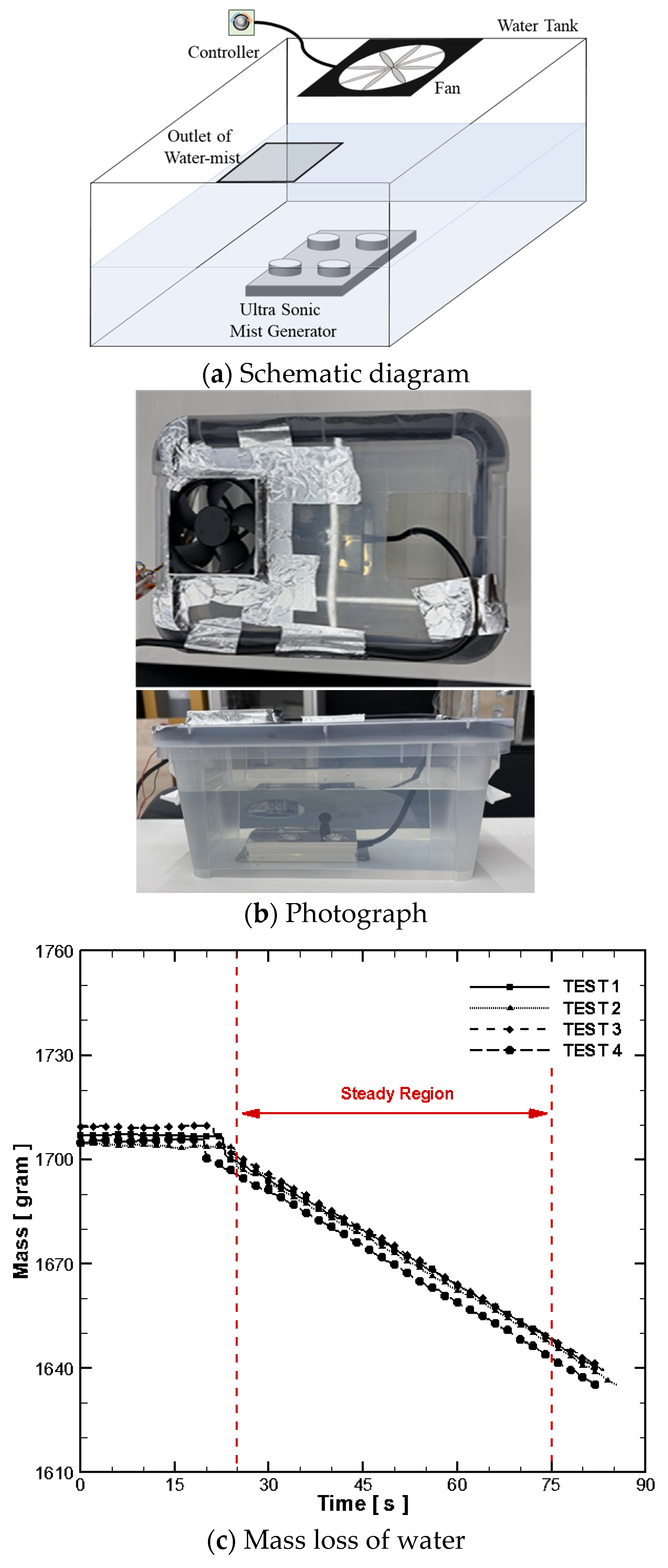
2.1. Water Mist Fire Suppression Systems Using Ultrasonic Waves
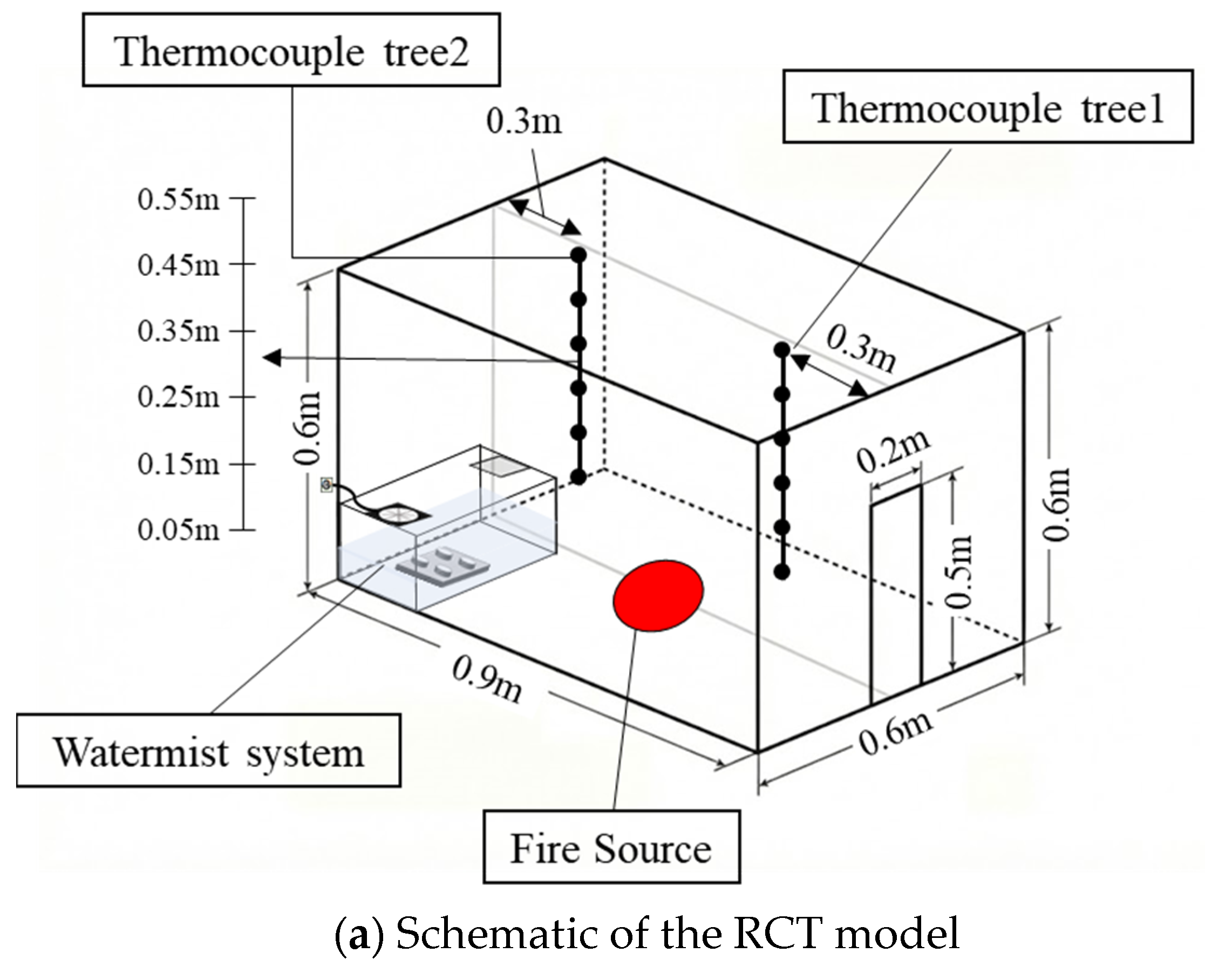
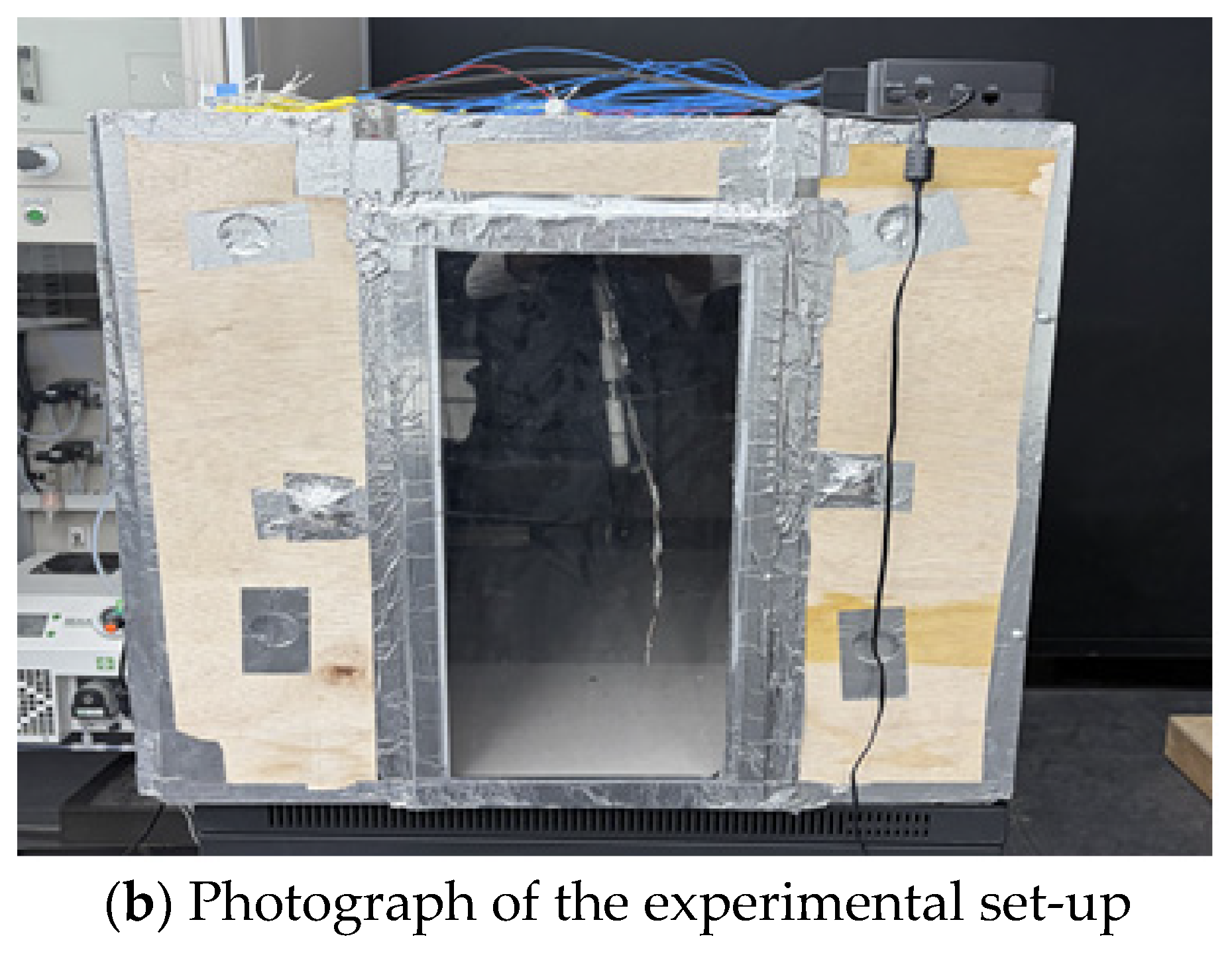
2.2. Room Corner Test (RCT) Model
2.3. Experimental Conditions
3. Results and Discussion
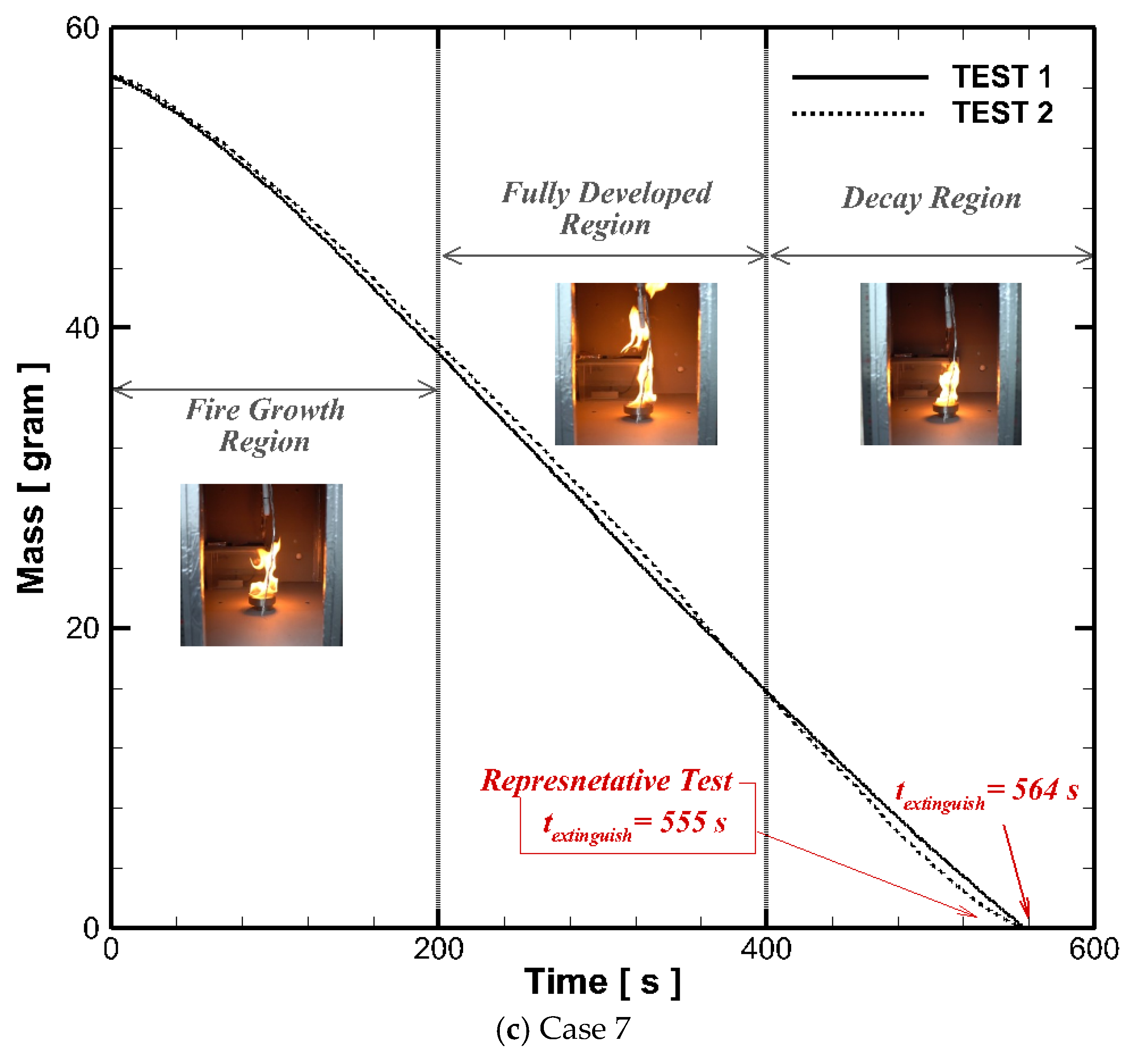
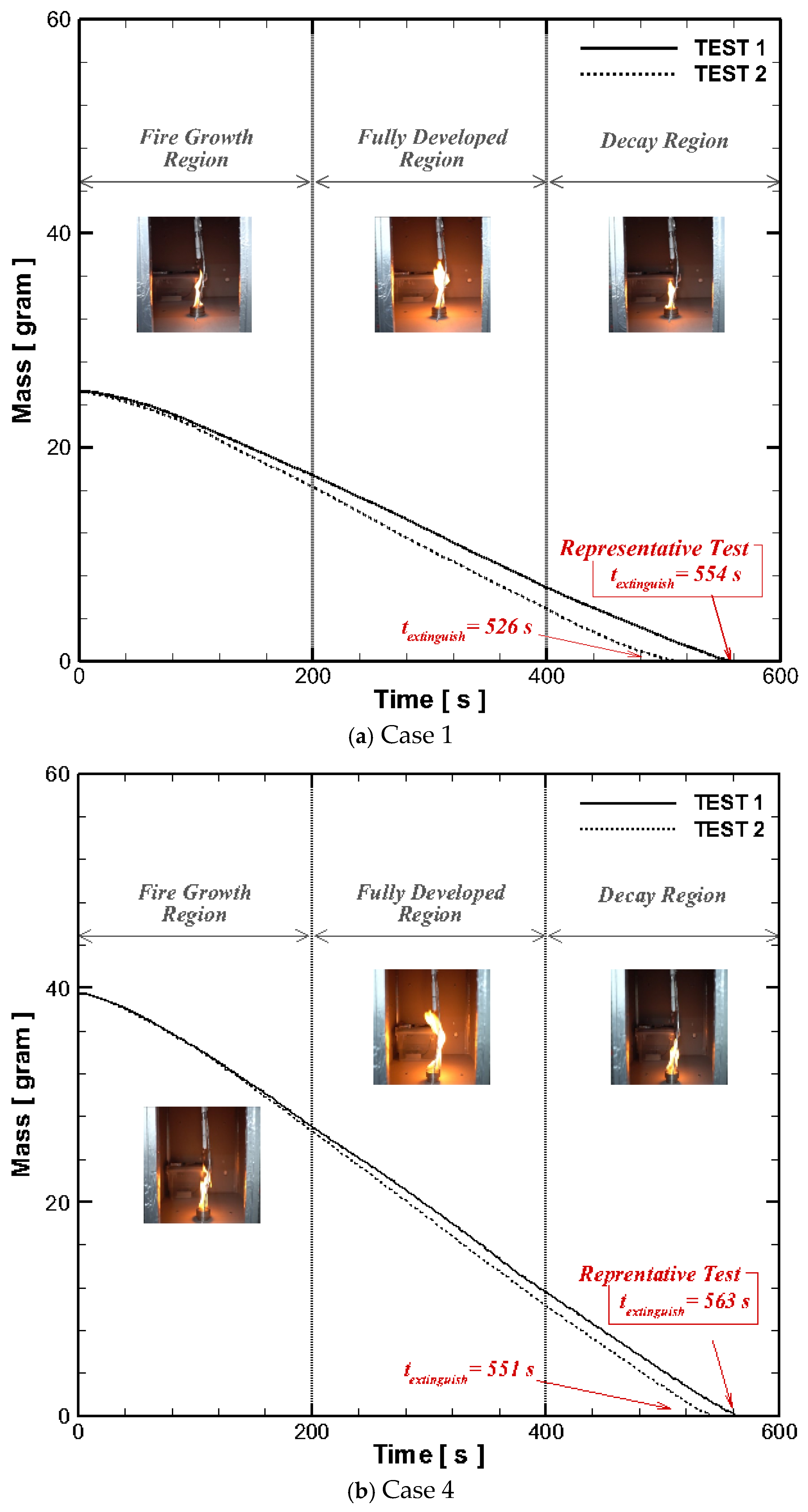
3.1. Heat Release Rate (HRR)
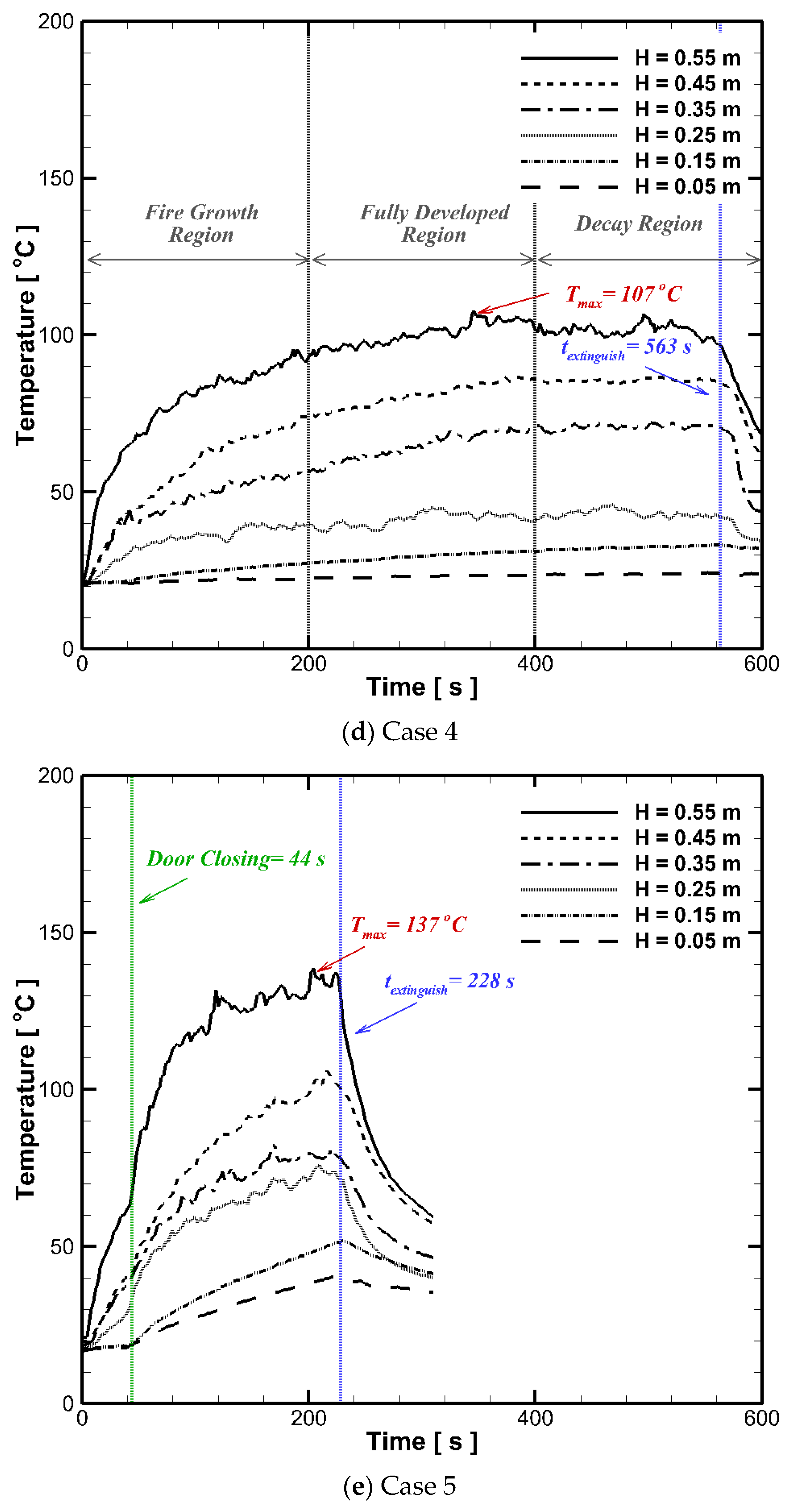
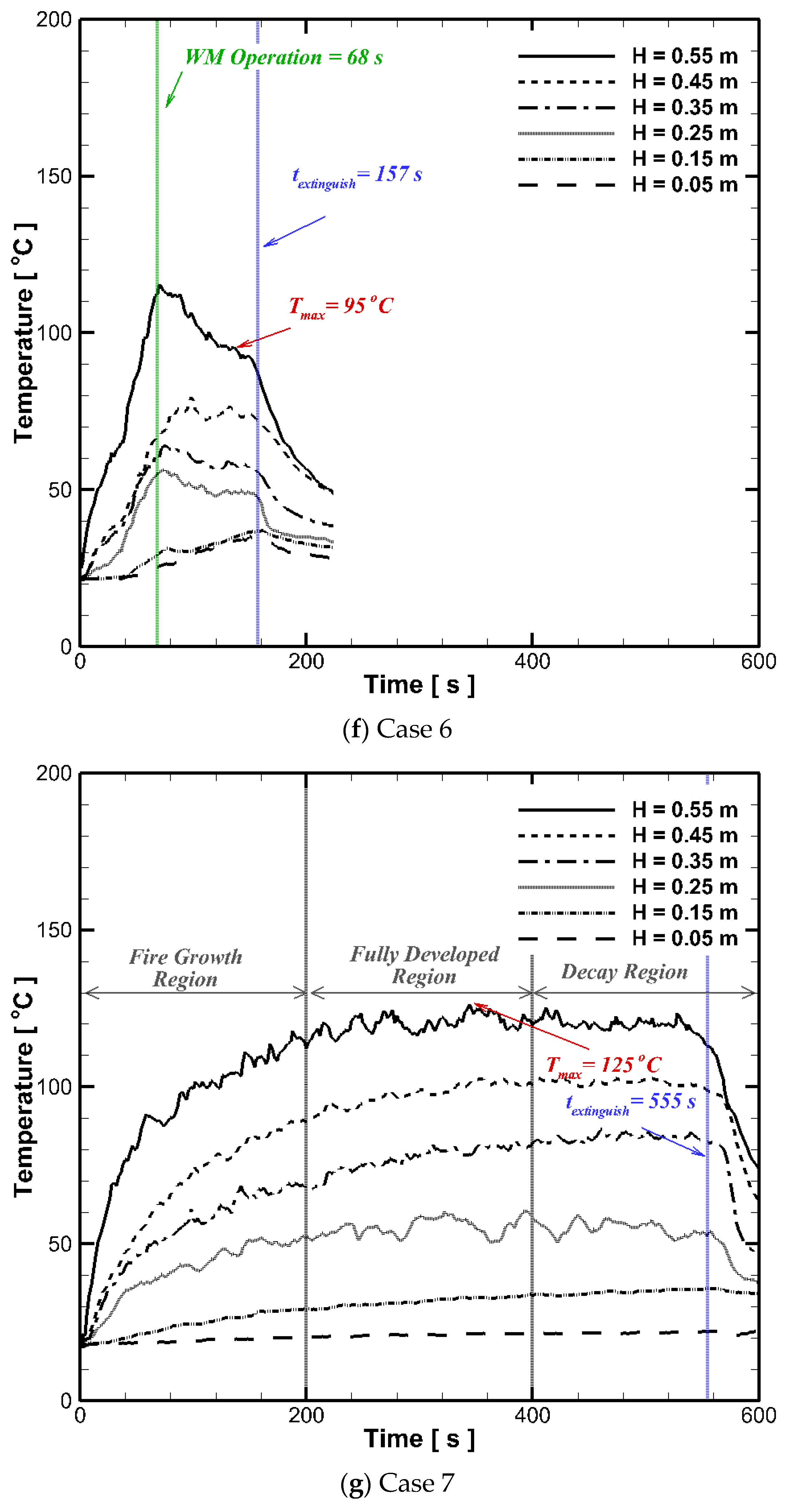
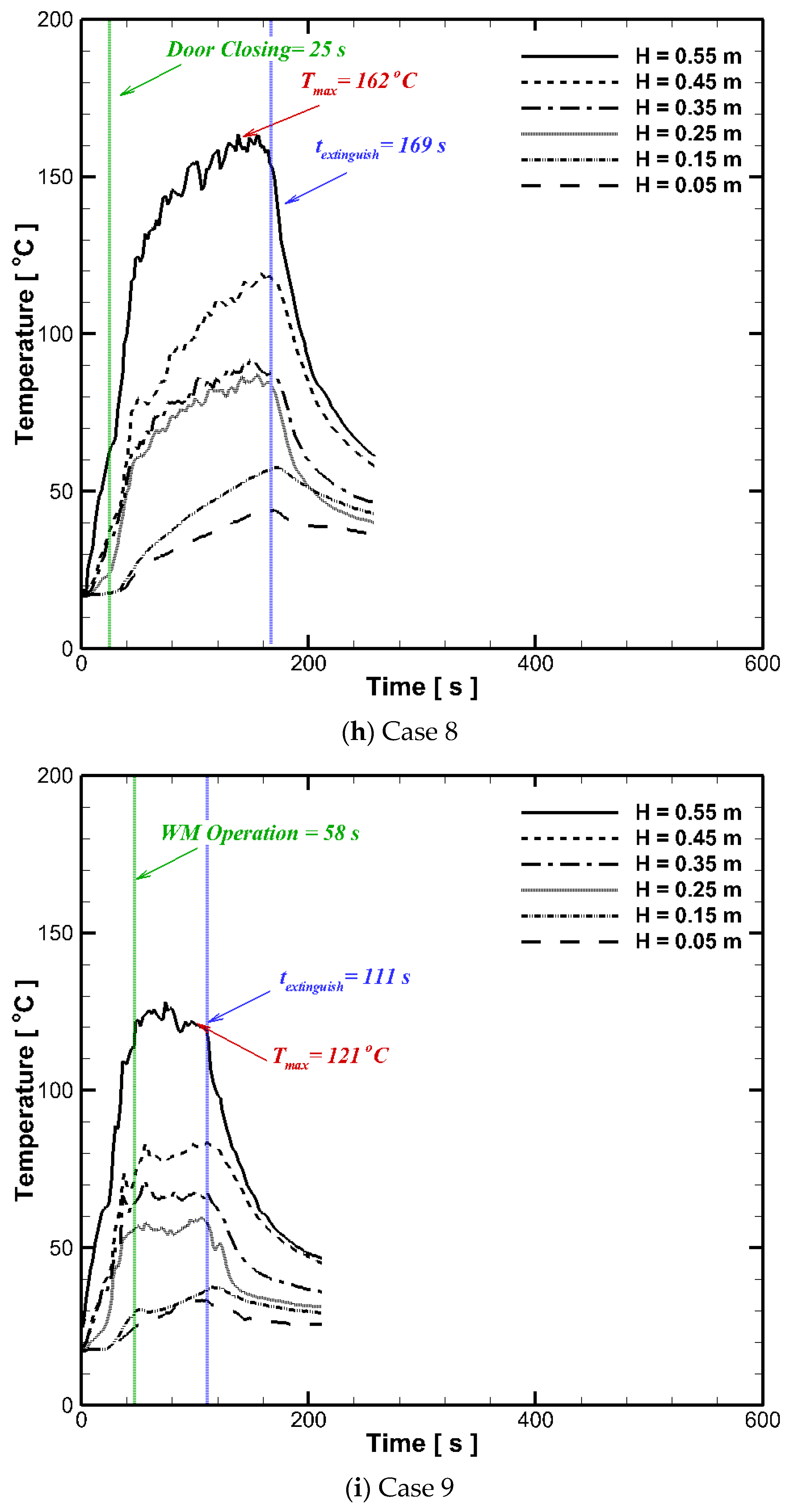
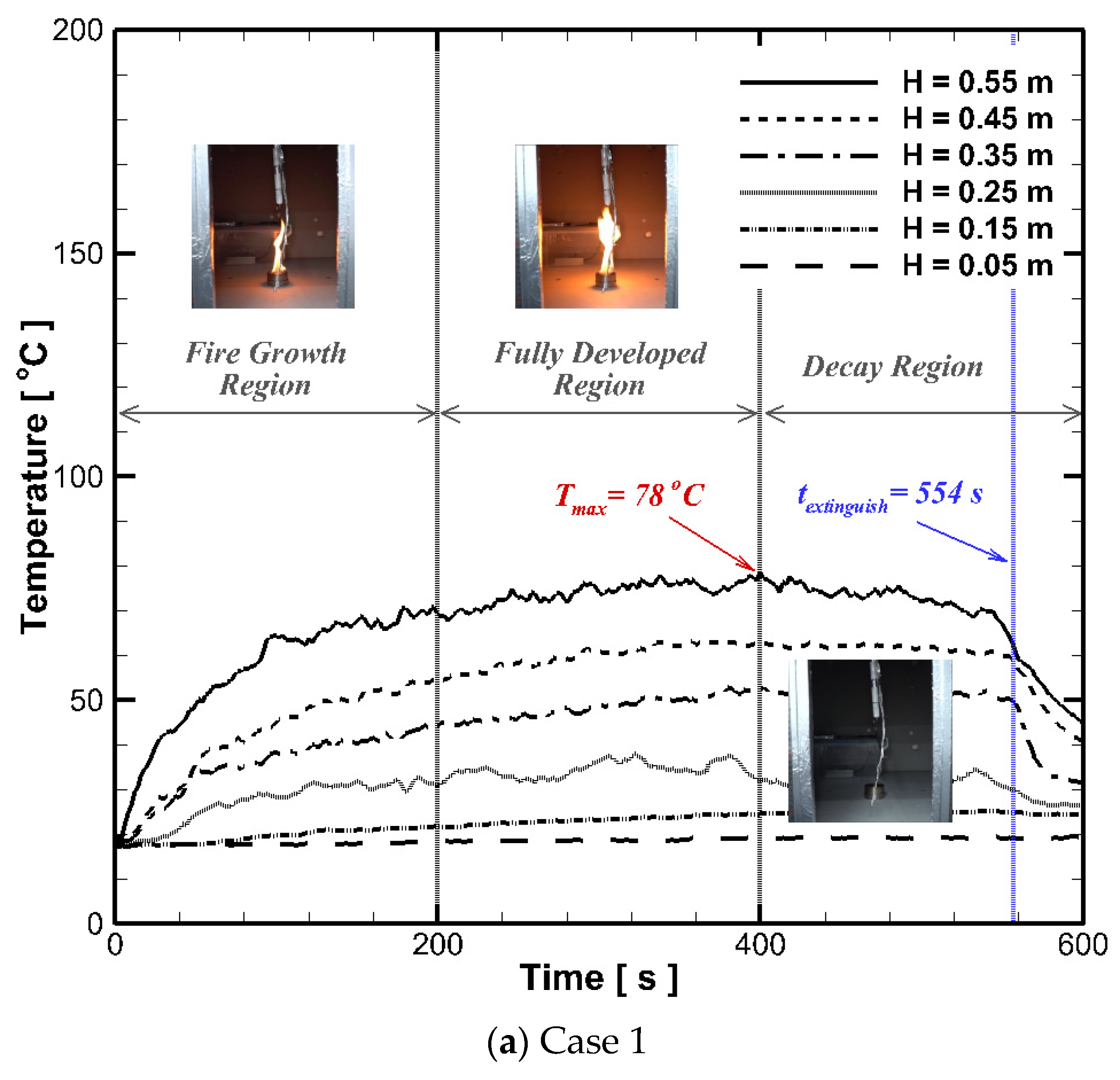
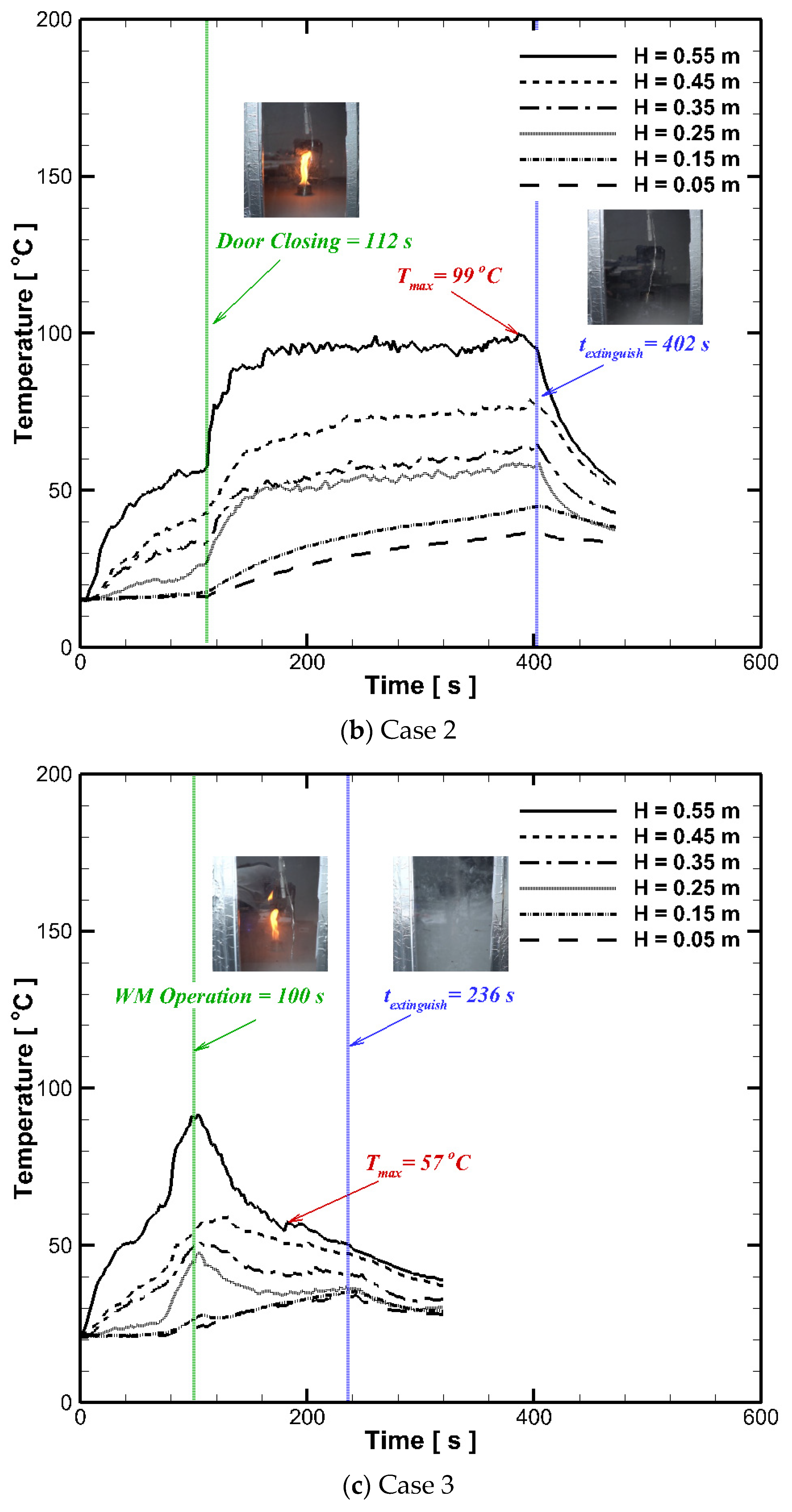
3.2. Temperature Distribution in the RCT Model
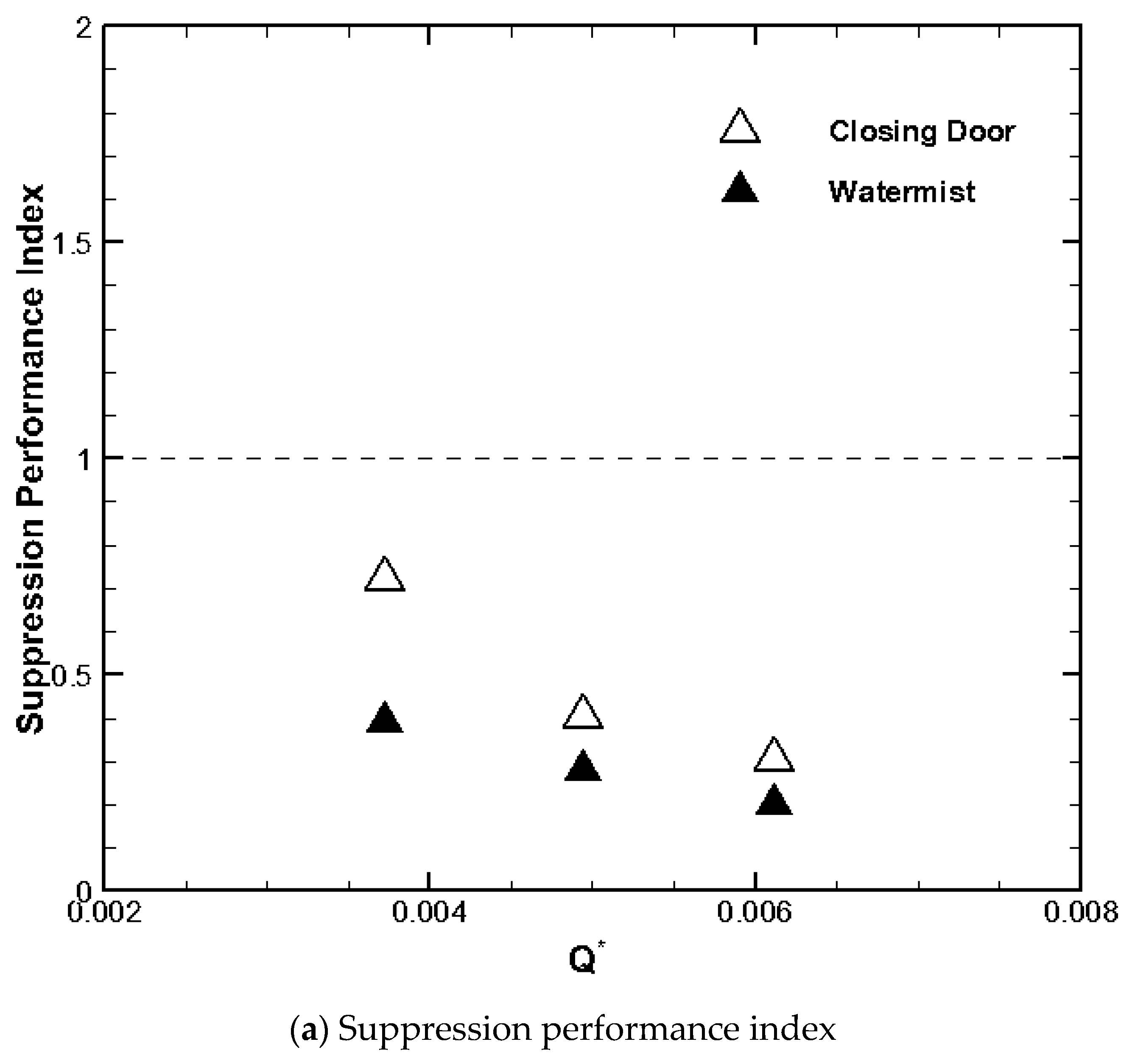
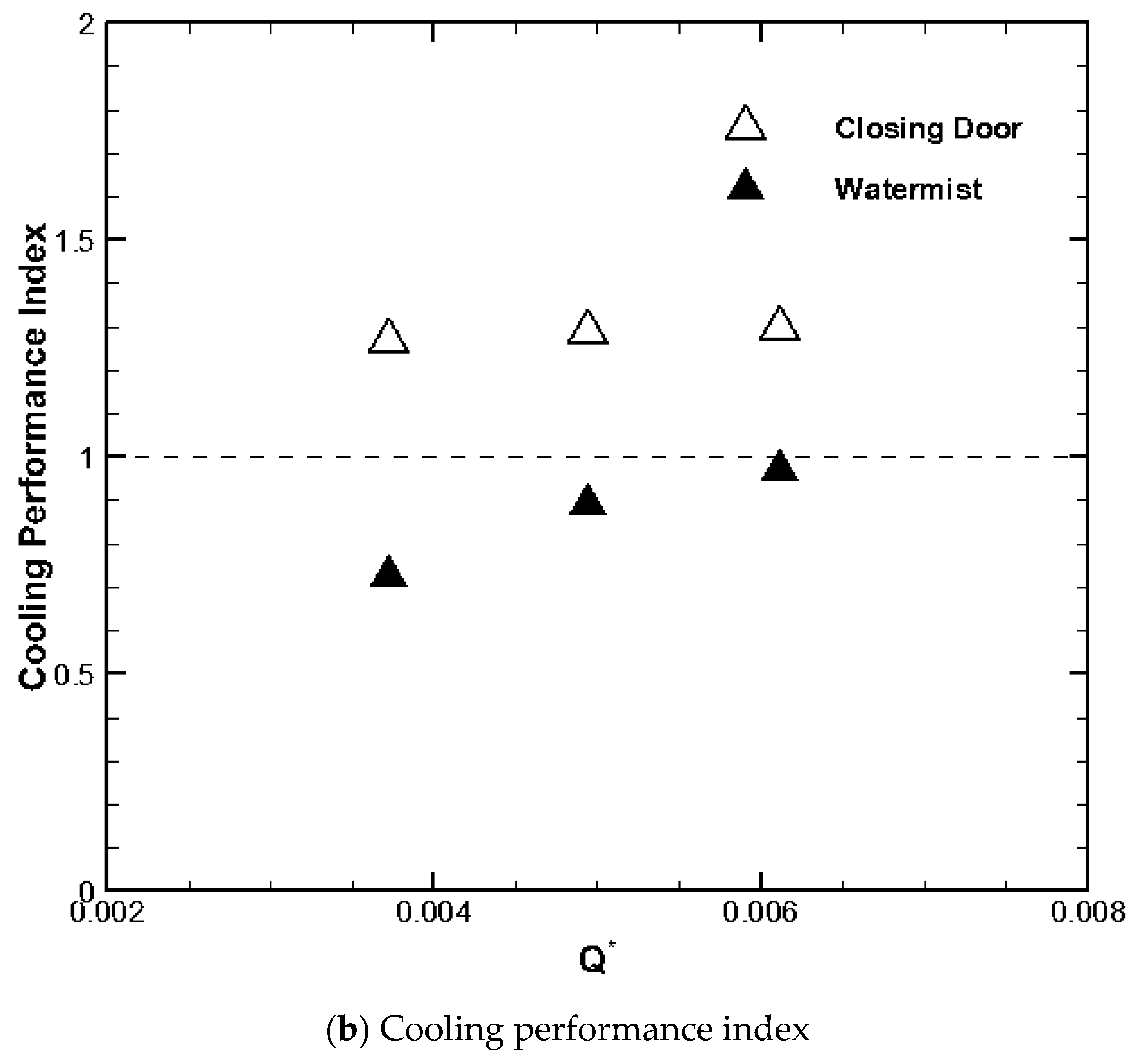
3.3. Performance Indices for Fire Suppression
4. Conclusions
- A suppression performance index based on the fire duration was defined to evaluate the extinguishment effectiveness. Using this index, both the oxygen-blocking suppression and the ultrasonic water mist suppression were quantitatively confirmed to provide effective fire extinguishment.
- A cooling performance index based on the indoor temperature was defined to evaluate the thermal mitigation. According to this index, the ultrasonic water mist suppression significantly enhanced the fire suppression performance by providing effective cooling. In contrast, the oxygen-depletion suppression increased indoor temperature, indicating the potential for secondary thermal damage.
- The performance indices proposed in this study enable a quantitative comparison of the fire suppression performance for different suppression systems. However, since the indices are normalized based on the baseline fire conditions, further studies are required to refine the evaluation criteria.
- Moreover, full-scale experiments should be conducted to apply the ultrasonic water mist systems in real-world conditions. Then, the experimental conditions, such as the droplet size, the flow rate, the consumption of water, and others, could be derived by using these scaled-down experimental data from this study.
Author Contributions
Funding
Data Availability Statement
Acknowledgments
Conflicts of Interest
References
- Djunaidi, Z.; Tuah, N.A.A.; Rafifa, G. Analysis of the Active and Passive Fire Protection Systems in the Government Building, Depok City, Indonesia. KnE Life Sci. 2018, 4, 384–398. [Google Scholar] [CrossRef] [Scilit]
- Wong, L.T.; Chong, H.W.; Chow, W.K. Sprinkler Systems: Code Review in High-rise Buildings Use. Facilities 2002, 20, 374–385. [Google Scholar] [CrossRef] [Scilit]
- Ju, S.W. A Study on Water Leak Defects of Water-Based Fire Extinguishing System-Focused on Apartment Houses. Master’s Thesis, University of Seoul, Seoul, Republic of Korea, 2016. [Google Scholar]
- Jo, H.J. A Comparative Study on Domestic and International Water Mist Fire Suppression Standards. Master’s Thesis, University of Seoul, Seoul, Republic of Korea, 2015. [Google Scholar]
- Lee, J.H. Fire Extinguishing Performance of Water Mist System by Installation Intervals of Nozzles. Master’s Thesis, Chungbuk National University, Cheongju-si, Republic of Korea, 2017. [Google Scholar]
- Grant, G.; Brenton, J.; Drysdale, D. Fire Suppression by Water Sprays. Prog. Energy Combust. Sci. 2000, 26, 79–130. [Google Scholar] [CrossRef] [Scilit]
- Mawhinney, J.R.; Back, G.G., III. Water Mist Fire Suppression Systems; SFPE Handbook of Fire Protection Engineering; Springer: New York, NY, USA, 2016; pp. 1587–1645. [Google Scholar]
- Kim, W.H.; Hwang, C.H. Review of Domestic and Overseas Regulations and Technical Standards for Water Mist Fire Extinguishing Systems. Fire Sci. Eng. 2024, 38, 54–63. [Google Scholar] [CrossRef] [Scilit]
- Lee, C.J. Experimental Study on Fire Suppression Performance of Total Flooding Water Mist System. Master’s Thesis, Chungju National University, Cheongju-si, Republic of Korea, 2006. [Google Scholar]
- NFPA 750; NFPA. Standard on Water Mist Fire Protection Systems. 2019 Edition. National Fire Protection Association: Quincy, MA, USA, 2019.
- Manufacturer, G. Ultrasonic Atomizer Specification; Dongguan RunYang Electronics Co., Ltd.: Dongguan, China, 2025. [Google Scholar]
- ISO 9705-1; Reaction to Fire Tests—Room Corner Test for Wall and Ceiling Lining Products—Part 1: Test Method for a Small Room Configuration. International Organization for Standardization: London, UK, 2016.
- Quintiere, J.G.; Carey, A.C.; Reeves, L.; McCarthy, L.K. Scale Modeling in Fire Reconstruction; National Criminal Justice Reference Service; U.S. Department of Justice: Washington, DC, USA, 2017.
- Roh, J.S.; Yang, S.S.; Ryou, H.S. Tunnel Fires: Experiments on Critical Velocity and Burning Rate in Pool Fire During Longitudinal Ventilation. J. Fire Sci. 2007, 25, 161–176. [Google Scholar] [CrossRef] [Scilit]
- Yu, H.Z.; Zhou, X. Enclosure fire extinguishment with water mist and nitrogen as affected by fire size, obstruction and ventilation. Fire Saf. J. 2024, 142, 104051. [Google Scholar] [CrossRef] [Scilit]
- CEN/TS 14972; European Committee for Standardization (CEN). Fixed Firefighting Systems—Watermist Systems—Design and Installation. CEN: Brussels, Belgium, 2011.
- ISO 5660-1; Reaction-to-Fire Tests—Heat Release, Smoke Production and Mass Loss Rate—Part 1: Heat Release Rate (Cone Calorimeter Method). International Organization for Standardization: Geneva, Switzerland, 2015.
- Budnick, E.K.; Evans, D.D.; Nelson, H.E. Simplified Fire Growth Calculations. In Fire Protection Handbook, 18th ed.; National Fire Protection Association: Quincy, MA, USA, 1997; pp. 97–107. [Google Scholar]
- Liu, Z.G.; Kim, A.K.; Su, J.Z. Examination of Performance of Water Mist Fire Suppression Systems under Ventilation Conditions. J. Fire Prot. Eng. 2001, 11, 164–193. [Google Scholar] [CrossRef] [Scilit]
- Zhou, Y.; Bu, R.; Zhang, X.; Fan, C.; Gong, J. Performance Evaluation of Water Mist Fire Suppression: A Clean and Sustainable Fire-fighting Technique in Mechanically-ventilated Place. J. Clean. Prod. 2019, 209, 1319–1331. [Google Scholar] [CrossRef] [Scilit]
- Alenezi, M.H.; Sadek, H. Fire-suppression Performance of High-pressure Water Mist System Inside Scaled-down Road Tunnel Section. J. Eng. Res. 2023, 11, 100024. [Google Scholar] [CrossRef] [Scilit]





| CASE No. | Fire Condition | Door Condition | Water Mist Condition |
|---|---|---|---|
| CASE 1 | 0.06 m (Acetone, 25.2 g) | Opened | No-Operation |
| CASE 2 | Closed (Toperation = 72 °C) | ||
| CASE 3 | Operation (Toperation = 72 °C) | ||
| CASE 4 | 0.075 m (Acetone, 39.5 g) | Opened | No-Operation |
| CASE 5 | Closed (Toperation = 72 °C) | ||
| CASE 6 | Operate (Toperation = 72 °C) | ||
| CASE 7 | 0.09 m (Acetone, 56.8 g) | Opened | No-Operation |
| CASE 8 | Closed (Toperation = 72 °C) | ||
| CASE 9 | Operate (Toperation = 72 °C) |
| Mass Loss Rate () | Averaged Error | Heat Release Rate () | Dimensionless HRR () | |
|---|---|---|---|---|
| CASE 1 | 0.0544 g/s | ±4.15% | 1.105 kJ/s | 0.003461 |
| CASE 4 | 0.0795 g/s | ±2.66% | 2.052 kJ/s | 0.004773 |
| CASE 7 | 0.1142 g/s | ±1.54% | 2.945 kJ/s | 0.006370 |
Disclaimer/Publisher’s Note: The statements, opinions and data contained in all publications are solely those of the individual author(s) and contributor(s) and not of MDPI and/or the editor(s). MDPI and/or the editor(s) disclaim responsibility for any injury to people or property resulting from any ideas, methods, instructions or products referred to in the content. |
© 2026 by the authors. Licensee MDPI, Basel, Switzerland. This article is an open access article distributed under the terms and conditions of the Creative Commons Attribution (CC BY) license.
Share and Cite
Jeong, S.Y.; Oh, H.-S.; Park, Y.S.; Yang, S.-C.; Bae, S. Fire Suppression Performance of a Water Mist System Using Ultrasonic Waves. Fire 2026, 9, 219. https://doi.org/10.3390/fire9060219
Jeong SY, Oh H-S, Park YS, Yang S-C, Bae S. Fire Suppression Performance of a Water Mist System Using Ultrasonic Waves. Fire. 2026; 9(6):219. https://doi.org/10.3390/fire9060219
Chicago/Turabian StyleJeong, So Yeong, Hoo-Suk Oh, Ye Sung Park, Sung-Cheol Yang, and Sungryong Bae. 2026. "Fire Suppression Performance of a Water Mist System Using Ultrasonic Waves" Fire 9, no. 6: 219. https://doi.org/10.3390/fire9060219
APA StyleJeong, S. Y., Oh, H.-S., Park, Y. S., Yang, S.-C., & Bae, S. (2026). Fire Suppression Performance of a Water Mist System Using Ultrasonic Waves. Fire, 9(6), 219. https://doi.org/10.3390/fire9060219