Article

Thermal Buckling Behaviors of a Fixed-Roof Steel Tank Subjected to Two Adjacent Pool Fires

School of Safety Science and Engineering, Changzhou University, Changzhou 213164, China
*
Author to whom correspondence should be addressed.
Fire 2026, 9(5), 198; https://doi.org/10.3390/fire9050198
Submission received: 2 April 2026 / Revised: 8 May 2026 / Accepted: 9 May 2026 / Published: 11 May 2026

Abstract

In a tank farm, even if the separation distance meets the codes and standards, a pool fire in one tank may spread quickly to another tank. Most destructive and uncontrollable fire accidents are induced with multiple pool fires. In current work, the thermal buckling behaviors of a fixed-roof tank subjected to one (two) neighboring pool fire(s) (burning tanks) are numerically studied. The effects of the number of the pool fires, the separation distance between two pool fires, and the distance between the adjacent tank and pool fires are analyzed. The results indicate that the thermal buckling zone of the target tank subjected to two pool fires is larger than that subjected to one pool fire, and the maximum displacement for two pool fires is almost equal to that for one pool fire. The target tank subjected to one pool fire loses stability and reaches a new stable state faster than that subjected to two pool fires. The thermal buckling zone expands as the distance between the two pool fires increases but decreases with increasing separation distance between the pool fire and the target tank. The findings provide useful guidance for the structural optimization of steel storage tanks against pool fire exposure and offer theoretical support for emergency response and fire rescue in tank farms.

1. Introduction

Fire represents one of the primary hazards for storage tanks in tank farms. During large-scale tank fires, thermal radiation from the burning tank may heat adjacent tanks and promote accident escalation. Such fire events can persist for several days before being fully controlled. Based on previous accident analyses, pool fires are among the most common initiating events leading to domino effects in tank farms [1]. Representative examples include the Buncefield accident in the United Kingdom in 2005 [2], the Sitapura accident in India in 2009 [2], and the Puerto Rico tank farm fire in 2009 (Figure 1) [3]. The Puerto Rico oil refinery accident was the largest fire in the region’s history. The flames spread rapidly and reached heights of approximately 30 m, eventually involving 21 storage tanks and covering nearly 50% of the tank farm area [3].
Storage tanks are thin-walled structures which are prone to buckle due to thermal loadings [4,5]. Thus, it is of great importance to comprehend the fire resistance and thermal buckling behaviors appropriately. Fire resistance data help to enhance the guidance and comprehension of fires and rescue services, which will play a significant role in emergency response and rescue and improve the whole process safety level [6,7]. The thermal buckling behaviors can be used to understand the instabilities given temperatures higher than the critical buckling temperature and estimate the damaged shape and vulnerability [8].
Birk [9,10], Landucci et al. [11,12,13], Manu et al. [14], Heymes et al. [15,16], Scarponi et al. [17,18,19,20] Cirrone et al. [21,22], Iannaccone et al. [23], and Wang et al. [24] carried out experiments or numerical modelling to study the temperature distributions and heat responses of pressure tanks subjected to fire accidents. Then, the researchers established temperature distribution models [25,26] and applied temperature distribution models to finite element simulation to study the thermal responses and critical buckling conditions of the steel tanks. Moreover, the effects of fire diameter [25], liquid filling level [27], wall thickness [3,25,26], tank geometry [25,28,29], fuel type [27], stiffening methods [26,28], and geometric imperfections [28,29,30] were systematically investigated.
Meanwhile, Li et al. [6,31], Jaca et al. [32], Santos et al. [33], Pantousa [34], and Pourkeramat et al. [35] studied influences of separation distance between storage tanks, wind intensity, and direction on the thermal responses and critical buckling conditions of the steel tanks subjected to the heat radiation induced by an adjacent pool fire. The influence of the number of burning tanks was numerically studied by Pantousa [34]. Building on this work, the present study focuses specifically on the thermal buckling behavior of a fixed-roof target tank exposed to one or two adjacent pool fires. In contrast to previous studies that mainly considered heat flux or general fire effects, this study quantitatively compares the resulting temperature field, deformation pattern, stress distribution, maximum displacement, and thermal buckling zone under different fire configurations and separation distances. Therefore, the present work provides a more detailed assessment of the structural instability characteristics of fixed-roof tanks subjected to multiple adjacent pool fire scenarios.
In a tank farm, even when the separation distance complies with relevant codes and standards, a pool fire in one tank may rapidly spread to adjacent tanks [36]. Therefore, a storage tank may be exposed to multiple burning tanks simultaneously. Although previous studies have investigated the thermal response and structural behavior of storage tanks exposed to external fires, the thermal buckling characteristics of fixed-roof steel tanks under different adjacent pool fire scenarios remain insufficiently clarified. In particular, limited information is available on how one and two pool fires influence the temperature field, deformation pattern, stress distribution, maximum displacement, and thermal buckling zone of a target tank. In this study, therefore, the temperature fields of a tank subjected to one (two) adjacent pool fire(s) (burning tanks) are first calculated by the finite element simulation. Then, the thermal buckling behaviors are numerically analyzed. Finally, the influences of the separation distances between two pool fires (l, edge-to-edge) and between the burning tank and adjacent tank (d, edge-to-edge) are analyzed. This study can be applied to the structural optimization design of steel tanks to resist pool fires and provide theoretical guide for the emergency rescue of fire accidents in tank farms.

2. Numerical Modelling

2.1. Finite Element Model

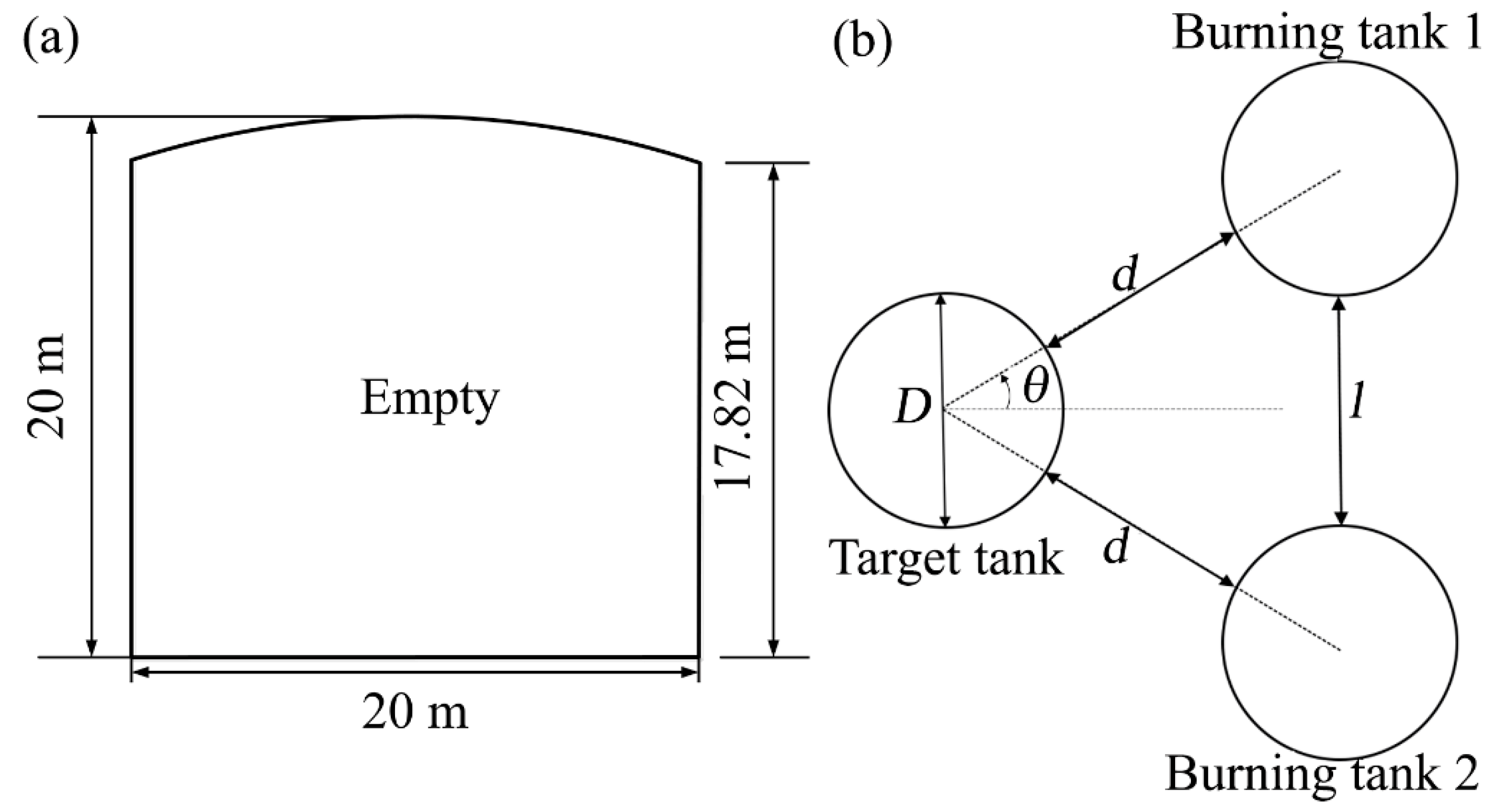
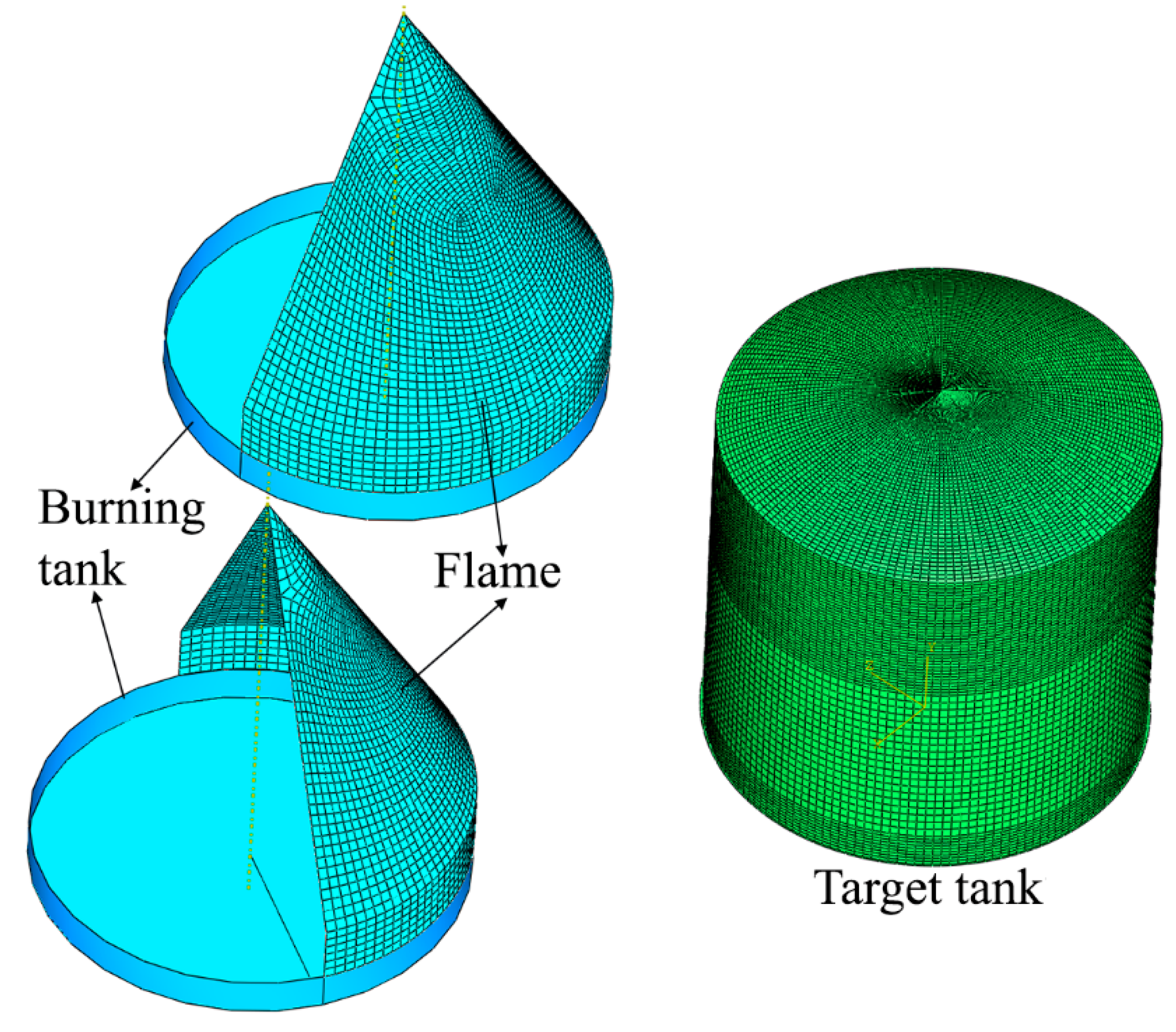
Figure 2 shows the dimensions and layout of the steel tank, with the detailed geometric parameters reported in our previous study [31]. The finite element model (FEM), developed using Abaqus, is presented in Figure 3. The numerical analysis consists of two sequential steps: thermal radiation analysis and thermal buckling analysis. The DS4 element is used for the thermal radiation analysis, while the pool fire model is defined as described in Section 2.2 and Section 2.3. In addition, the heat-transfer open-cavity radiation method is adopted to simulate radiative heat transfer. For the subsequent thermal buckling analysis, the S4R shell element is employed. In the thermal buckling analysis, the tank bottom is fixed at the foundation, and all translational degrees of freedom at the bottom nodes are constrained. The upper shell and roof are not externally constrained, allowing thermal expansion and deformation to develop under fire-induced temperature gradients. Initial geometric imperfections are not considered.
Grid sensitivity analysis was carried out in our previous work [31]. The global element size is 200 mm. The grids near the bottom and dome of the target tank are refined. The refined element size for the 1st and 7th–10th shell courses and the dome is 100 mm. The number of elements for the target tank is approximately 80,000.
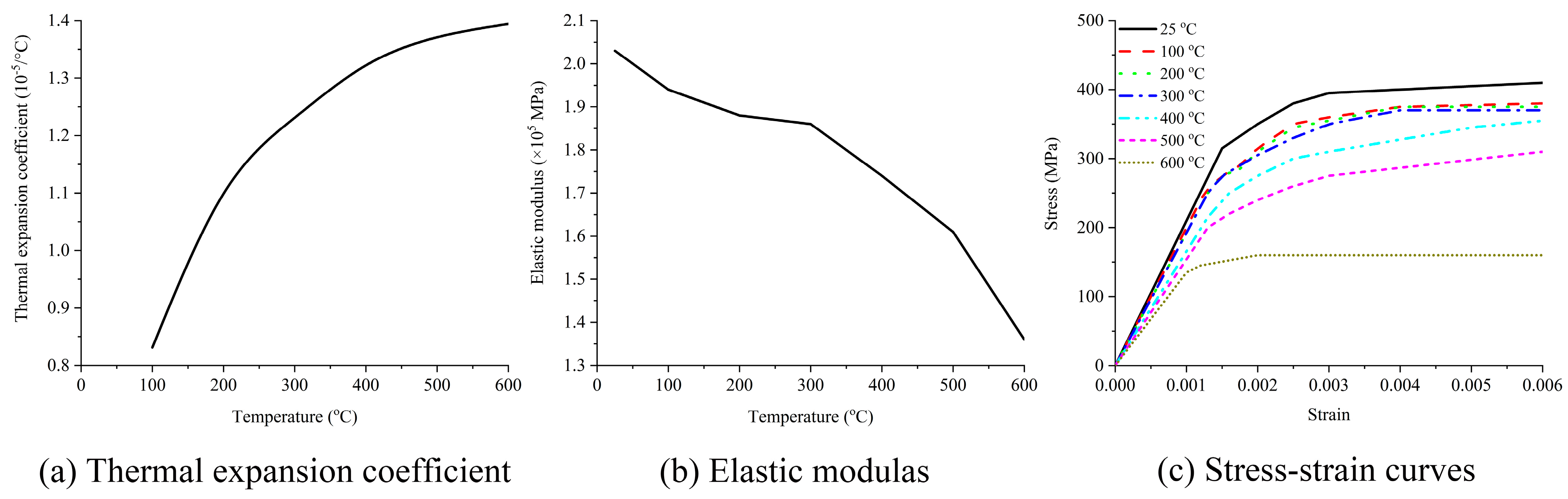
The height of the burning tank, measured from the ground to the upper edge of the cylindrical shell, is denoted as Hf and is equal to 1.78 m. Ethanol is used as the burning fuel in the pool fire. For Q345 steel, the thermal conductivity and specific heat capacity are taken as 44 W/(m·°C) and 460 J/(kg·°C), respectively. The temperature-dependent thermal expansion coefficient, elastic modulus, and stress–strain curves [37] of Q345 steel at elevated temperatures are presented in Figure 4. The mechanical and thermal properties of steel vary significantly with temperature during fire exposure. As temperature increases, the yield strength and Young’s modulus of steel decrease, leading to a reduction in load-bearing capacity and structural stiffness. This degradation accelerates local deformation and increases the susceptibility of the tank shell to thermal buckling. In addition, thermal conductivity, specific heat, and thermal expansion also vary with temperature, affecting the heat transfer process and the resulting non-uniform temperature field. Therefore, temperature-dependent material properties should be considered in thermal buckling simulations to more accurately capture the interaction between thermal gradients, stiffness degradation, and structural instability. In the present study, the temperature-dependent thermal and mechanical properties of Q345 steel are adopted in the numerical model. The reduction in Young’s modulus and yield strength with increasing temperature is included to represent stiffness and strength degradation under fire exposure, while temperature-dependent thermal properties are used in the heat transfer analysis.
The target tank is assumed to be empty in the present analysis. This assumption is adopted to focus on the thermal buckling behavior of the tank shell under external fire radiation without the additional cooling and restraining effects of stored liquid. Since an empty or low-filled tank generally has lower thermal inertia and may be more vulnerable to rapid temperature rise and shell instability, this condition provides a conservative scenario for evaluating fire-induced buckling.

2.2. Flame Height

The flame height of the solid-flame model is represented by the mean flame height, denoted as Lf, which can be calculated using Equation (1) [38].
L f D = 1.02 + 3.7 Q 2 / 5
McCaffrey [38] presented the normalized flame height, L/D, as a function of the Froude number, Q*, where Q*2/5 was used to compress the horizontal scale. The Froude number Q* can be calculated using Equation (2):
Q = R ρ c p T g D D 2
where R is the total heat release rate, calculated from the mass burning rate and heat of combustion. For ethanol, the mass burning rate mf is taken as 0.029 kg/s/m2, and the heat of combustion H is 26.8 MJ/kg. In addition, ρ and T denote the ambient density and ambient temperature, respectively; c p is the specific heat capacity of air at constant pressure; g is the gravitational acceleration; and D is the diameter of the fire source.
The solid-flame model adopted in this study is represented by a cylinder–cone configuration, as shown in Figure 3, which provides an improved description of flame pulsation and smoke effects generated during fuel combustion [39]. In this model, the cylindrical portion represents the continuous flame region, whereas the conical portion describes the intermittent flame region. The continuous flame height, Lc, and the intermittent flame height, Li, are expressed as follows:
L c = L f 2
L i = L f + 2
where Δ denotes the difference between the intermittent flame height and the continuous flame height and can be calculated using Equation (5) [40]:
L f = X 1 X 2 16
where X = C / L f / D , and C ranges from 1.20 to 1.33. This paper takes C to be 1.27 [39].

2.3. Flame Temperature

This study adopts a modified solid-flame model that accounts for the attenuation of radiative heat flux caused by smoke, where χlum represents the percentage of visible flame. This model was used to improve the prediction of pool fire flame behavior. In the modified solid flame model, the average flame emissive power, Eav, is expressed as a function of the flame emissive power, E, and the thermal radiation emitted by smoke, Esoot, which is assumed to be 20 kW/m2, as follows [33]:
E a v = χ l u m E + ( 1 χ l u m ) E s o o t
χlum equals 80% for ethanol [41]. According to the literature [33], Eav equal to 164.93 kW/m2 for ethanol.
A uniform and constant temperature, Tf [33], is assigned to the solid flame cylinder. The flame temperature Tf is expressed as follows:
T f = ε f σ T a 4 + E a v τ ε f σ 4
where, τ is the atmospheric transmissivity, which is determined as a function of the distance between the flame and the target tank, d [33]:
τ = 0.976 d 0.05 ,                 d < 5   m 1.029 d 0.09 ,       5 d 55   m 1.159 d 0.12 ,               d > 55   m
The thermal radiation from the pool fire to the target tank is calculated based on the Stefan–Boltzmann radiation law. The incident radiative heat flux on the tank surface can be expressed as
q r = ε f σ F T f 4 T s 4
where F is the view factor between the flame and the tank surface, Tf is the flame temperature, and Ts is the tank surface temperature. The view factor was used to account for the relative position, separation distance, and exposed area between the burning tank and the target tank. Therefore, the tank wall facing the fire received a higher radiative heat flux, producing a non-uniform temperature distribution around the circumference.

2.4. Validation Studies

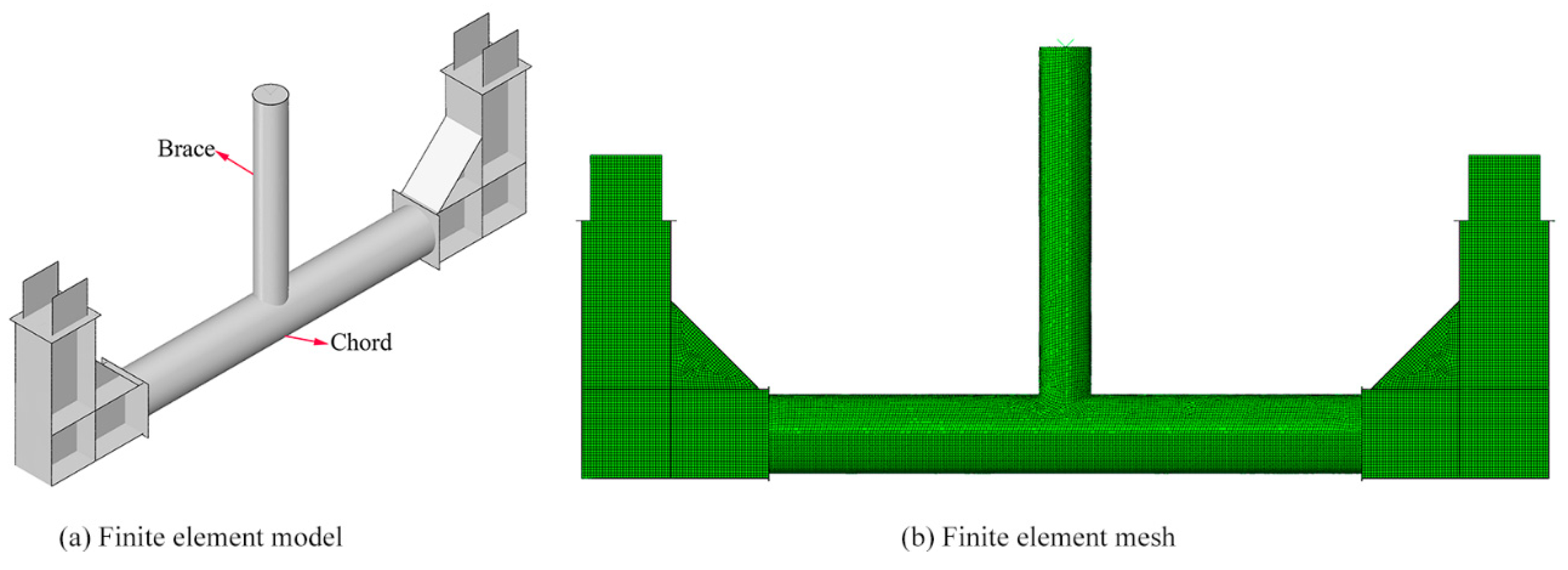
The accuracy and applicability of the FEM and material properties are validated using a steel tubular T-joint subjected to fire exposure under constant mechanical loading. The steel tubular T-joint is made of Q345 steel. Before fire exposure, an initial axial load of 134 kN is applied to the top end plate of the brace, after which the fire is ignited. During the experimental test, the vertical displacement at the upper end of the brace is recorded. Further details of the test can be found in Yu et al. [42]. Figure 5 shows the finite element model and mesh of the steel tubular T-joint.
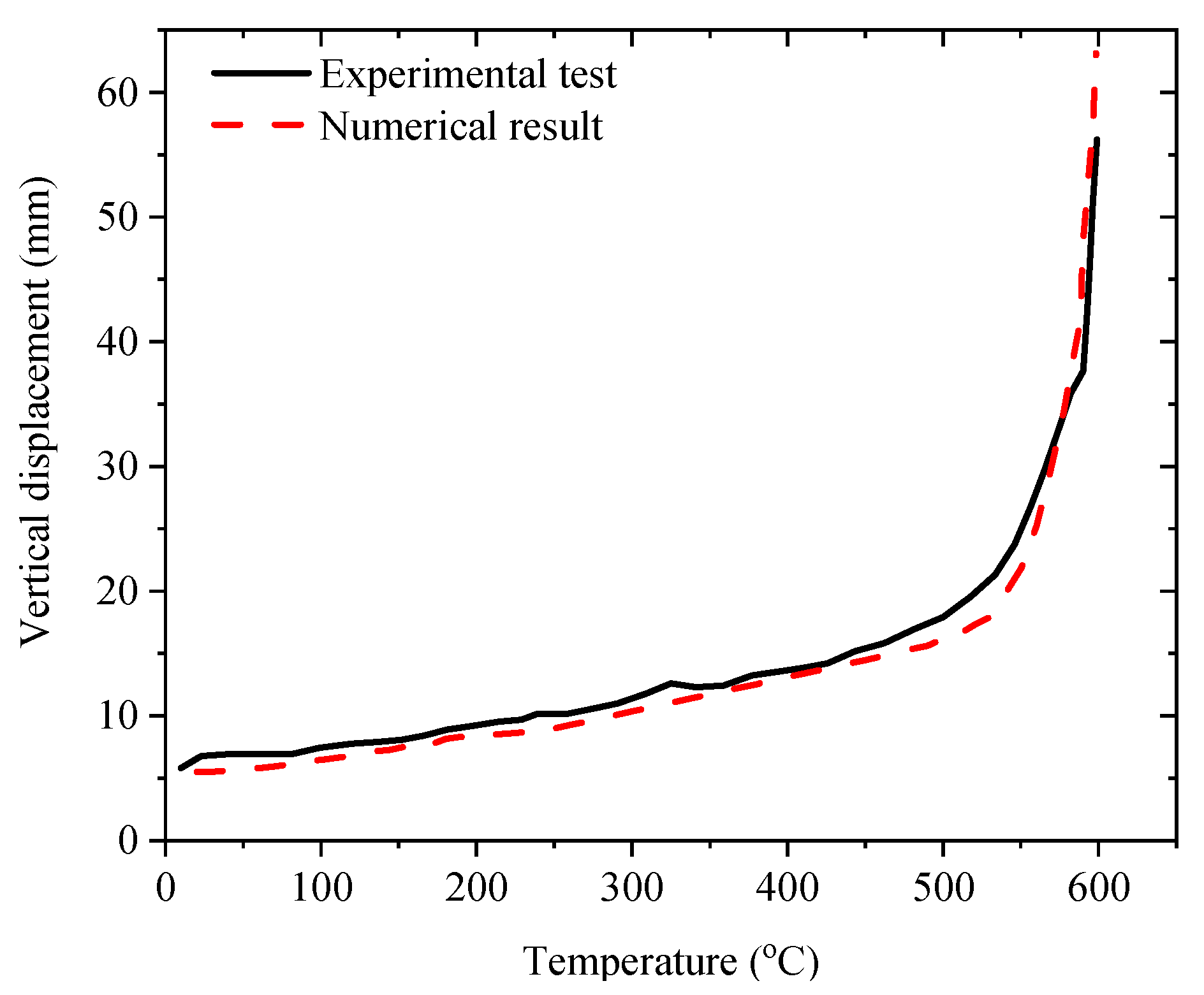
Figure 6 presents a comparison of the vertical displacement-temperature curves obtained from the experimental test and the numerical simulation. Although the FEM predicts slightly smaller vertical displacements than the experiment before approximately 575 °C, the two results show a consistent displacement–temperature trend. Moreover, the critical buckling temperatures determined from the experimental and numerical results are almost identical. Therefore, the FEM and the adopted material properties are considered reliable and suitable for the present analysis.
Although the numerical model is validated using a steel tubular T-joint under fire conditions, it should be noted that this validation mainly verifies the general thermal-mechanical coupling strategy and the ability of the finite element procedure to capture temperature-induced deformation and stress development. The T-joint validation case differs from the present storage tank problem in terms of structural geometry, scale, boundary conditions, shell curvature, and fire exposure pattern. Therefore, the validation cannot fully reproduce the thermal buckling behavior of a large-scale fixed-roof storage tank subjected to pool fire radiation. Nevertheless, the validation provides confidence that the adopted heat-transfer and thermo-mechanical analysis procedures are reasonable for simulating steel structures under fire-induced thermal loading.

3. Results and Discussion

3.1. Comparisons Between One Pool Fire and Two Pool Fires

In this section, the fire resistance and thermal buckling modes of the target tank subjected to one pool fire and two pool fires are investigated. The separation distances between the target tank and the pool fire are 12, 15, and 18 m, while the separation distance between the two pool fires is fixed at 12 m. The angle θ is defined with respect to the line connecting the centers of the pool fire and the target tank. The vertical coordinate z denotes the height measured upward from the ground level.
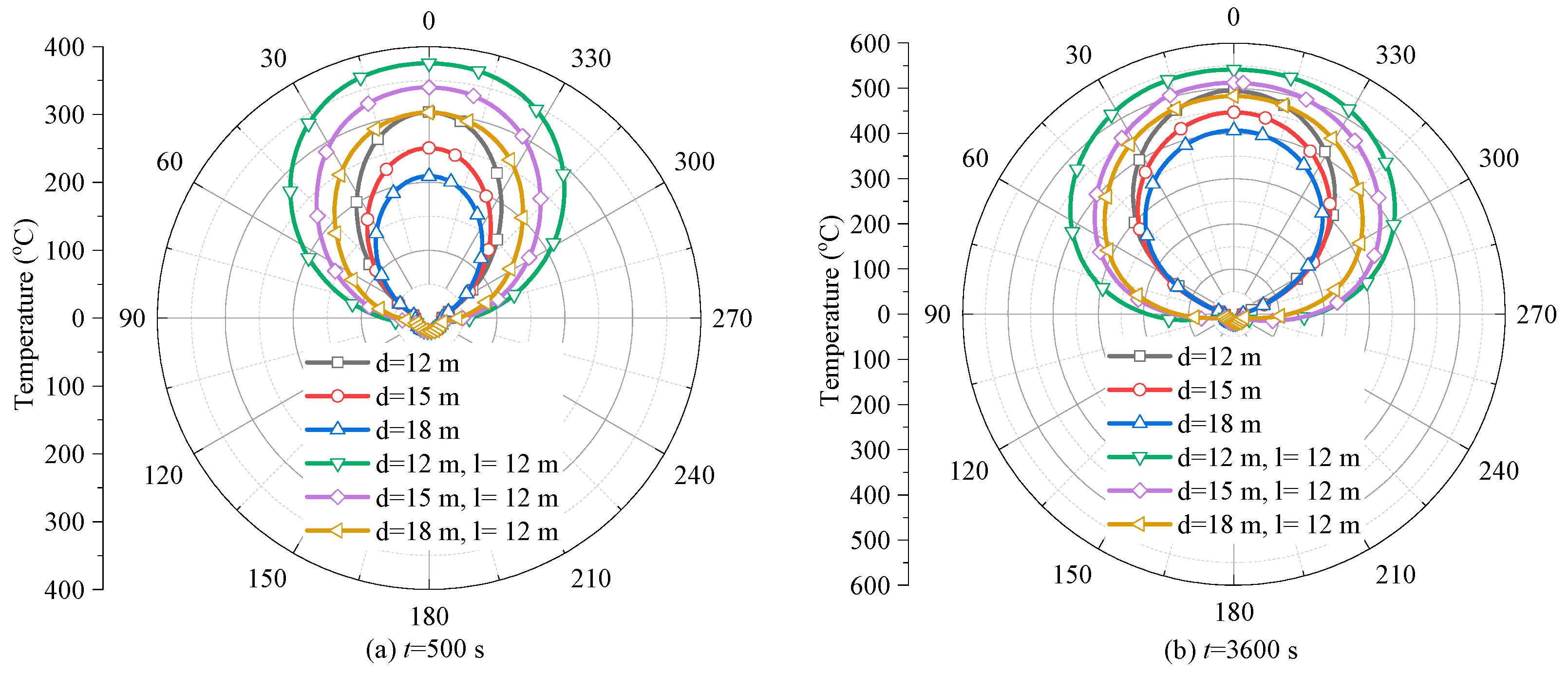
Figure 7 depicts the circumferential temperature along the maximum temperature nodes of the target tank exposed to one pool fire and two pool fires at buckling states and t = 3600 s, respectively. The heated zones and maximum temperatures of the target tank exposed to two pool fires are significantly larger than those of the target tank exposed to one pool fire for the same separation distance between the target tank and pool fire. The heated zones are roughly between θ = 0° and θ = 90° for one pool fire; and the heated zones are roughly between θ = 0° and θ = 110° for two pool fires. The reason is that, compared to one pool fire, the thermal radiation from two pool fires has a superposition effect on the target tank.
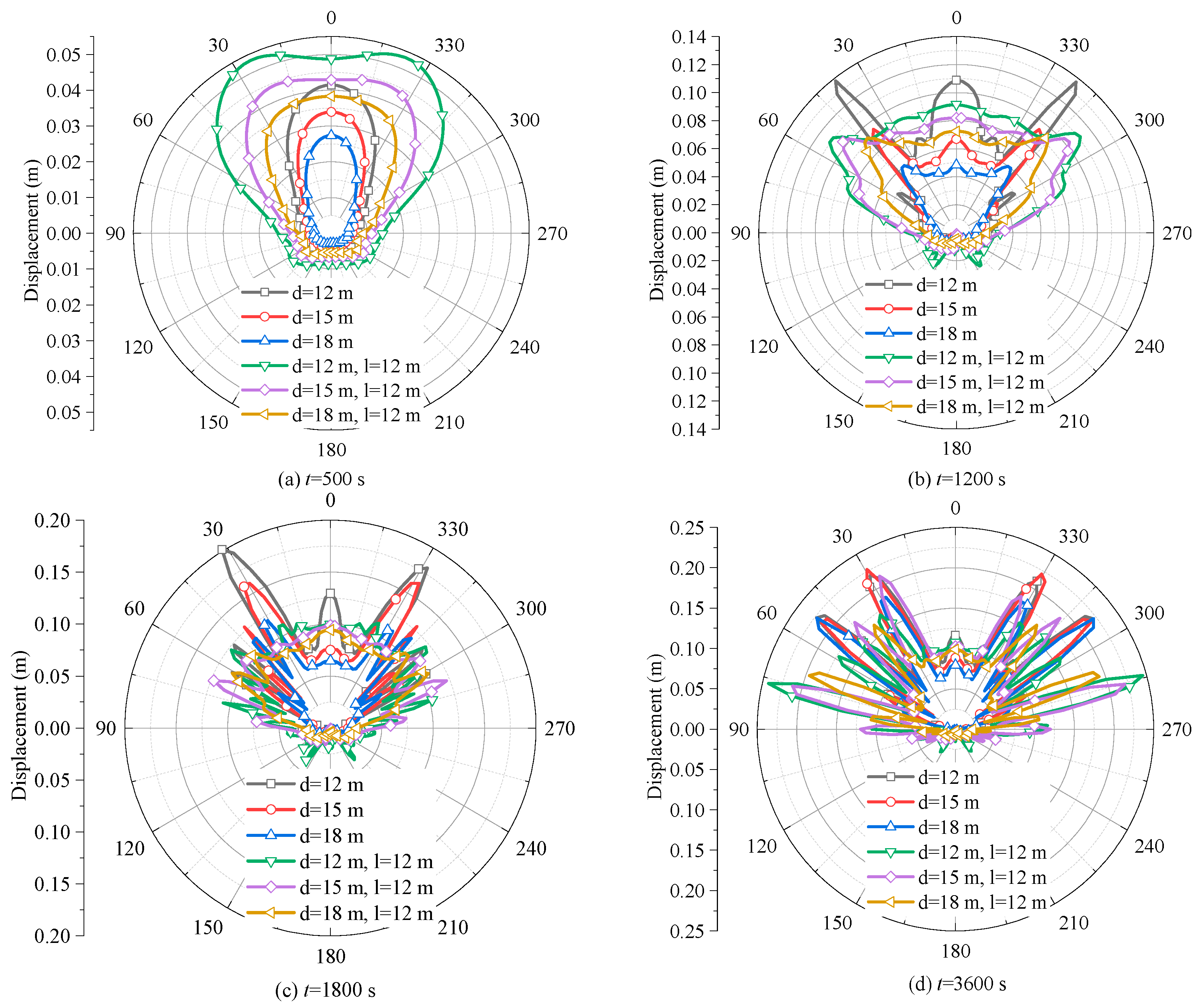
Figure 8 shows the circumferential displacement evolution of the target tank exposed to one pool fire and two pool fires at z = 14 m. As shown in Figure 8a, the cylindrical shell of the target tank undergoes circumferential deformation under the thermal radiation from the pool fire. In the pre-buckling stage, the deformation of the target tank exposed to two pool fires is more severe than that exposed to one pool fire. This is mainly because the temperature induced by two pool fires is higher than that caused by one pool fire. As the thermal expansion coefficient increases with temperature, as shown in Figure 4a, the corresponding thermal expansion stress is greater under two pool fires. Consequently, the thermal expansion deformation of the cylindrical shell exposed to two pool fires becomes more pronounced.
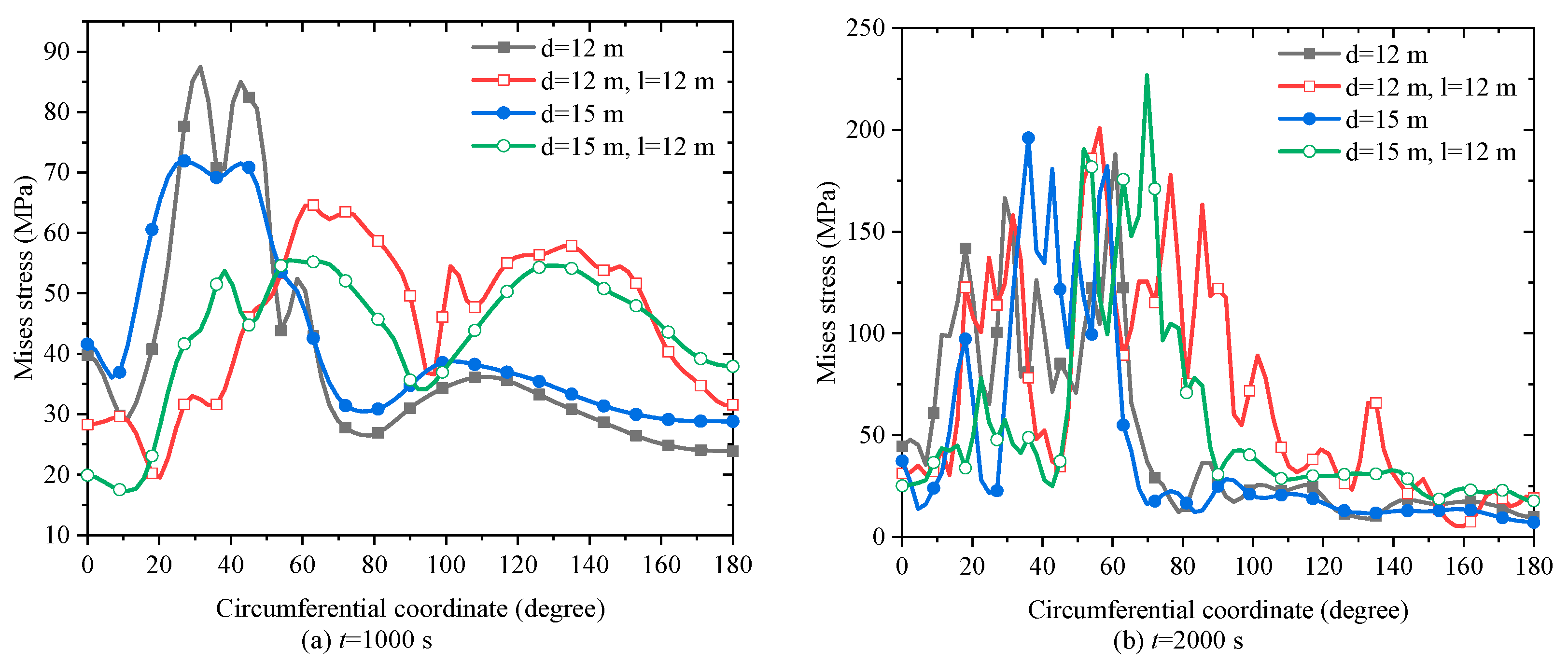
Then, the displacement increases sharply with increasing temperature, indicating the onset of buckling in the target tanks. As shown in Figure 8b, compared with the target tanks exposed to two pool fires, the cylindrical shells subjected to one pool fire exhibit more pronounced peaks and troughs at t = 1200 s. This is because the thermal gradient induced by one pool fire is higher than that caused by two pool fires, as shown in Figure 7. The stronger thermal gradient leads to more severe nonuniform thermal expansion under the one-pool-fire condition. In addition, the von Mises stress caused by nonuniform thermal expansion and the constraint imposed by the tank roof is higher for the target tanks exposed to one pool fire than for those exposed to two pool fires, as shown in Figure 9a. The stress concentration is also more pronounced under the one-pool-fire condition. Consequently, the target tanks exposed to one pool fire become more unstable, resulting in more obvious wrinkling deformation.
When t = 1800 s, target tanks exposed to two pool fires generate obvious peaks and troughs. Wrinkling zones are larger than that for one pool fire. However, the maximum displacements of target tanks for one pool fire are greater than those for two pool fires. The result indicates that target tanks exposed to two pool fires are more unstable with increasing temperature.
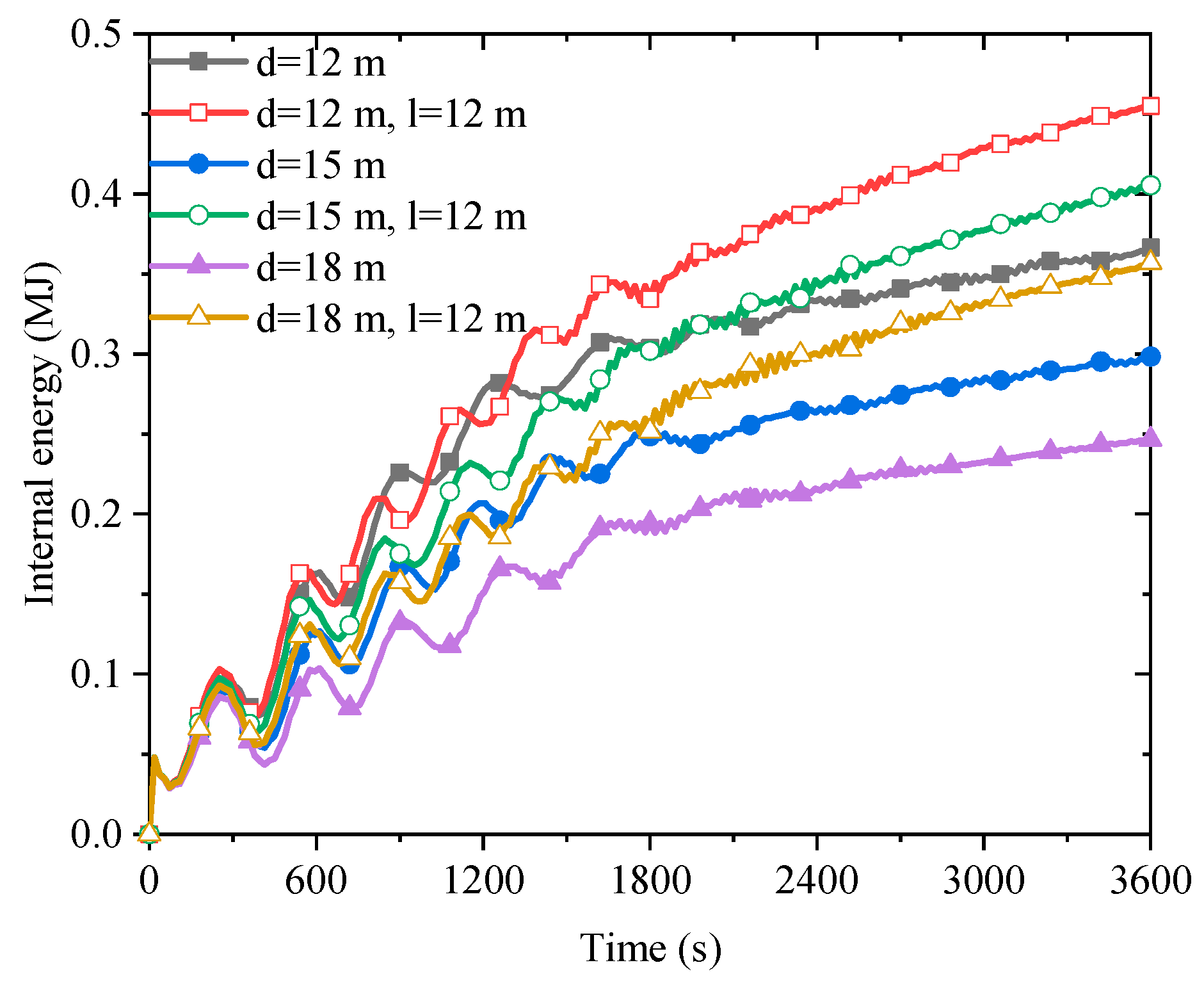
Finally, when t = 3600 s, the maximum displacements of target tanks exposed to two pool fires increase significantly. However, the maximum displacements of the target tank exposed to one pool fire increase little after t = 1800 s. The maximum displacements for two pool fires are approximately equal to that for one pool fire. Wrinkling zones are larger than that for one pool fire. The reason is that the rise rate of temperature of the target tank for one pool fire decreases after t = 1800 s. Moreover, the heated zone spreads little. Von Mises stress concentrates at the thermal buckling zone, which refers to the continuous region of the tank shell where obvious out-of-plane deformation occurs due to non-uniform thermal loading. The stress level in the unbuckled region decreases, as shown in Figure 9b. Therefore, the internal energy induced by thermal stress increases only slightly (Figure 10), and the target tanks exposed to one pool fire gradually reach a new stable state. However, for the two-pool-fire condition, the temperature of the target tank continues to rise after t = 1800 s. In addition, the heated zone further expands toward the colder region. As a result, the internal energy of the target tank exposed to two pool fires increases more rapidly than that of the tank exposed to one pool fire (Figure 10). The von Mises stress under the two-pool-fire condition gradually exceeds that under the one-pool-fire condition after t = 1800 s, as shown in Figure 9b, leading to a dramatic increase in the deformation of the target tank exposed to two pool fires. Moreover, the maximum displacement is mainly controlled by the most severe local thermal gradient and the associated local stress concentration. In the one-pool-fire case, the heated region is narrower, but the circumferential temperature gradient between the fire-facing zone and the cooler shell is sharper. This stronger local non-uniform expansion can generate pronounced local peaks and troughs, leading to a maximum displacement comparable to that in the two-pool-fire case. In contrast, the two-pool-fire condition heats a wider region more uniformly. Therefore, deformation is distributed over a larger shell area rather than being concentrated at a single location.
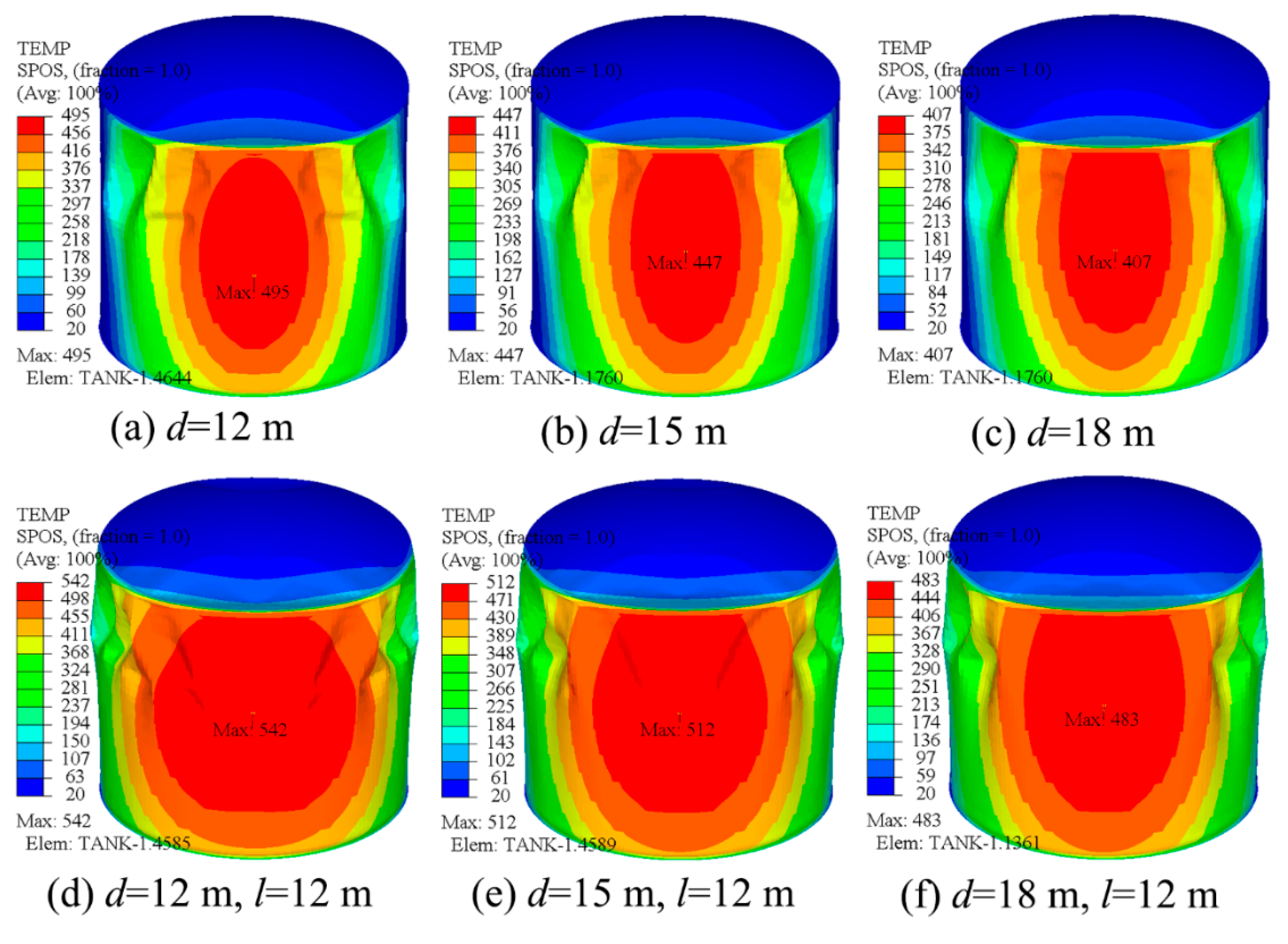
Figure 11 shows the deformation and temperature distributions at t = 3600 s. The thermal buckling area is mainly distributed in the upper part of the target tank. In addition, the wrinkling peaks and troughs triggered by the thermal buckling are mainly distributed in areas with a large temperature gradient. The reason is that the thickness of the upper shell is much lower than that of the bottom shell. Hence, the fire resistance of the upper shell is weaker than that of the bottom shell. In addition, the thermal buckling mode for two pool fires is similar to that for one pool fire due to the similar temperature distribution characteristic.

3.2. Effects of the Separation Distance Between Two Pool Fires

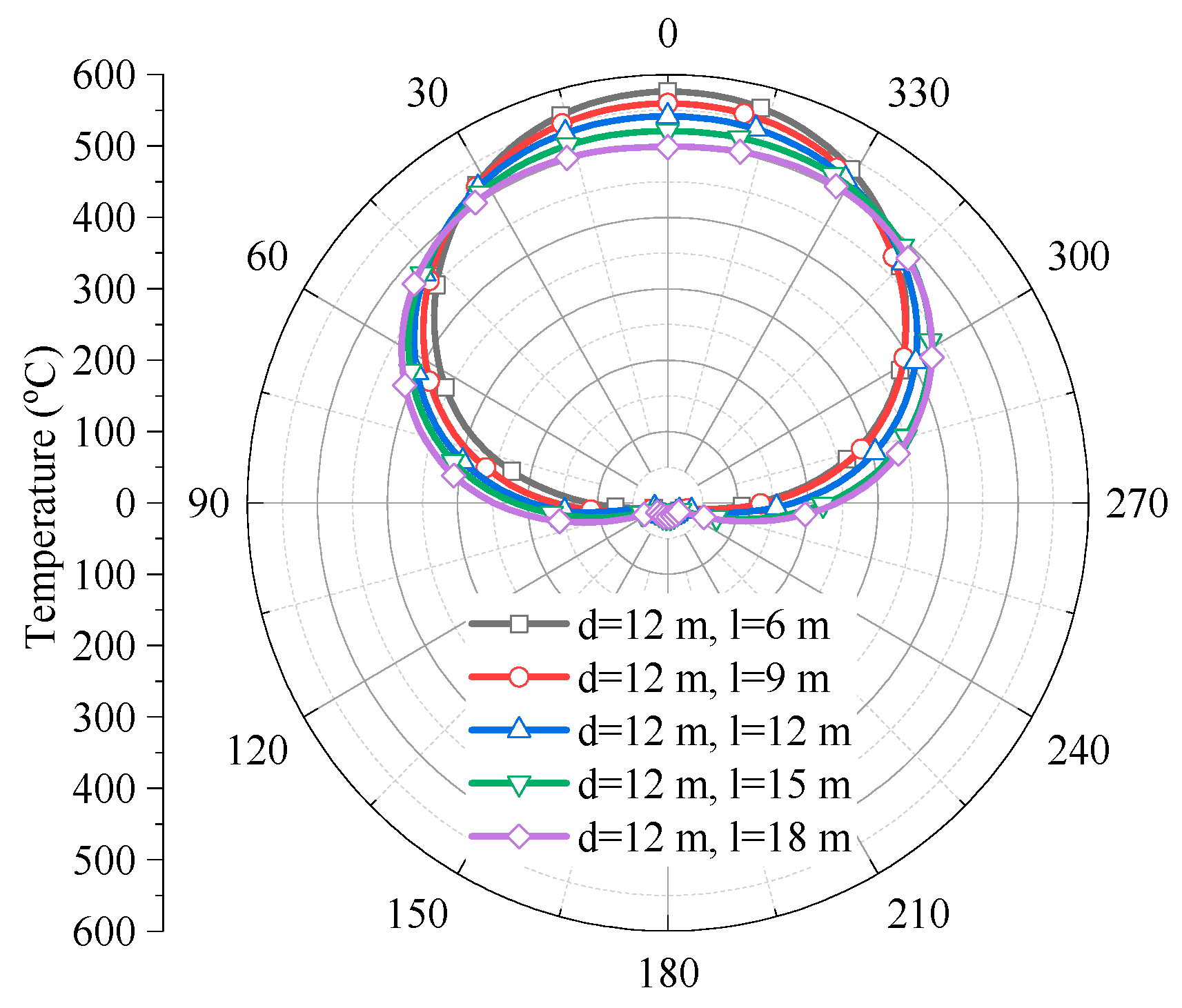
The effects of the separation distance between two pool fires on the fire resistance and thermal buckling behavior of the target tank are investigated in this section. The separation distance between each pool fire and the target tank is fixed at 12 m, while the separation distance between the two pool fires is varied as 6, 9, 12, 15, and 18 m.
Figure 12 shows the circumferential temperature distributions along the maximum temperature nodes at t = 3600 s. The maximum temperature and thermal gradient decrease as the separation distance between two pool fires increases. The heated zone increases with the increase in the separation distance between the two pool fires. Moreover, as the separation distance between two pool fires increases, the maximum temperature nodes are no longer on the meridian θ = 0° (l = 15 and 18 m). The reason is that the superposition effect of thermal radiation decreases with the separation distance between two pool fires increasing.
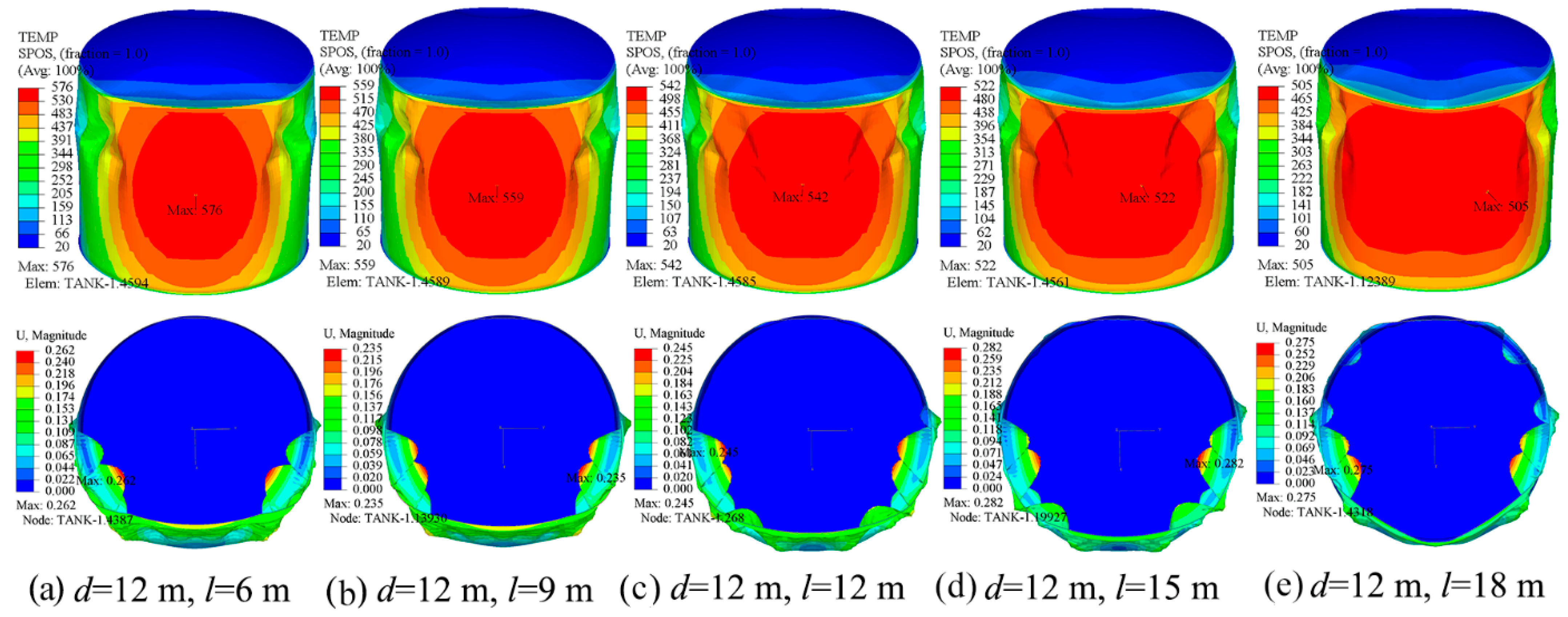
Figure 13 illustrates the deformation shapes (front and vertical views) and temperature distributions at t = 3600 s. The thermal buckling mode and maximum displacement are similar for different separation distances between two pool fires. The thermal buckling zone is larger as the separation distance between two pool fires increases. The whole circumference of the cylindrical shell is almost buckled when the separation distance between two pool fires is 15 and 18 m.
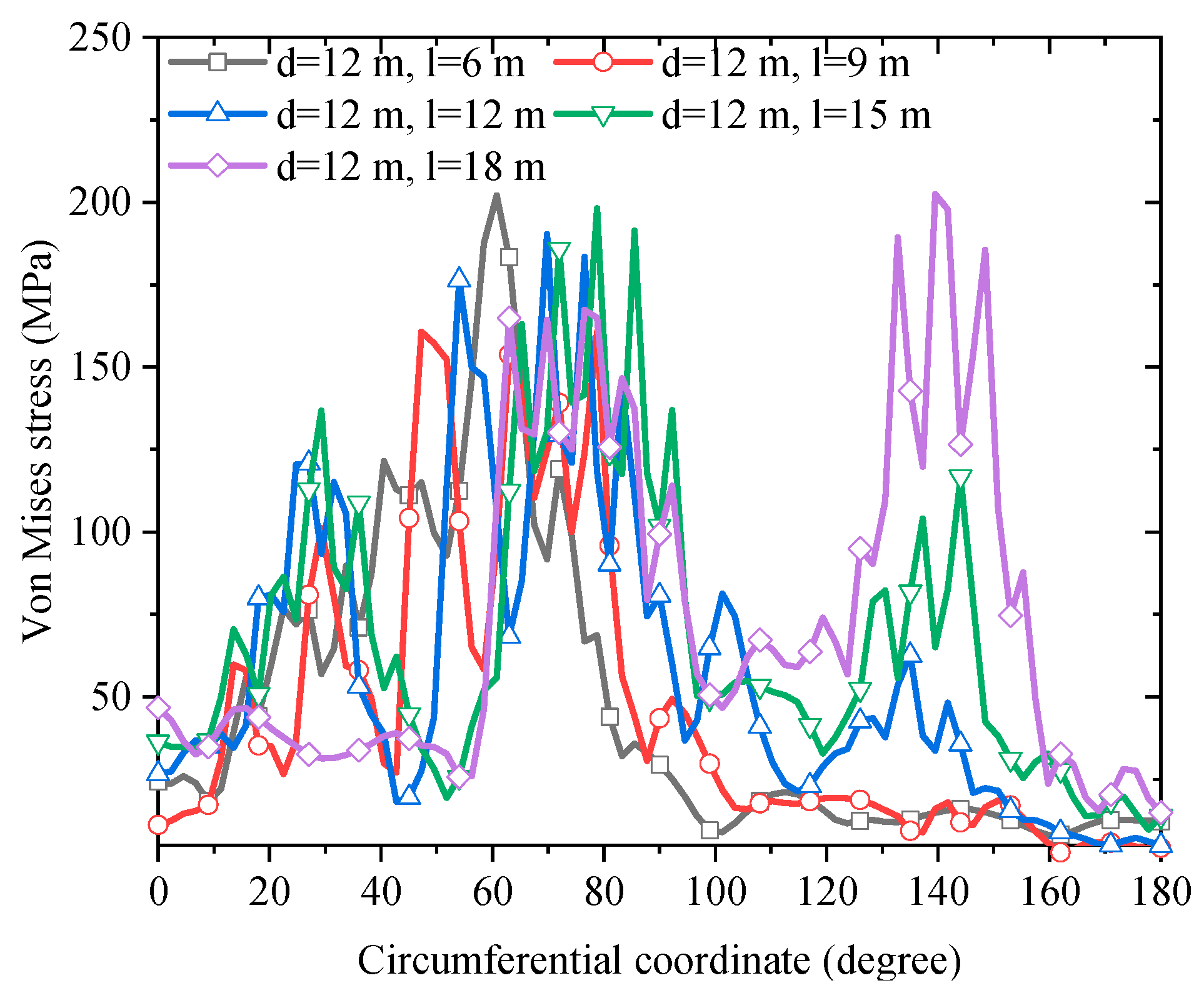
To explain this phenomenon, Figure 14 shows the circumferential distributions of von Mises stress in the cylindrical shell at z = 14 m and t = 1800 s. The stress distribution is consistent with the circumferential deformation pattern shown in the vertical views in Figure 13. The stress level is relatively low within the angular range of 0°–40°. Although this region is located in the most severely heated zone, the temperature gradient is relatively small, resulting in nearly uniform thermal expansion. Consequently, the thermal stress induced by constrained thermal expansion remains low, and only slight wrinkling deformation occurs in this region. The stress level increases markedly within the range of 50°–90°, mainly because a large temperature gradient develops in this region. The resulting nonuniform thermal expansion induces a local bending moment, which increases the thermal stress. As a result, high von Mises stress occurs locally. In addition, plastic hinges may form when the bending moment of the section reaches its ultimate bending capacity. As the separation distance between the two pool fires increases, stress concentration also appears within the angular range of 120°–160° when the separation distance is 15 m and 18 m. This is because the heated zone expands as the separation distance between the two pool fires increases. Under these conditions, the upper circumference of the cylindrical shell tends to lose stability more extensively. To maintain equilibrium, large von Mises stresses are generated by local tensile and compressive actions in this region. Therefore, wrinkling deformation also occurs within this angular range when the separation distance between the two pool fires is 15 m and 18 m.

3.3. Effects of the Separation Distance Between the Pool Fire and Target Tank

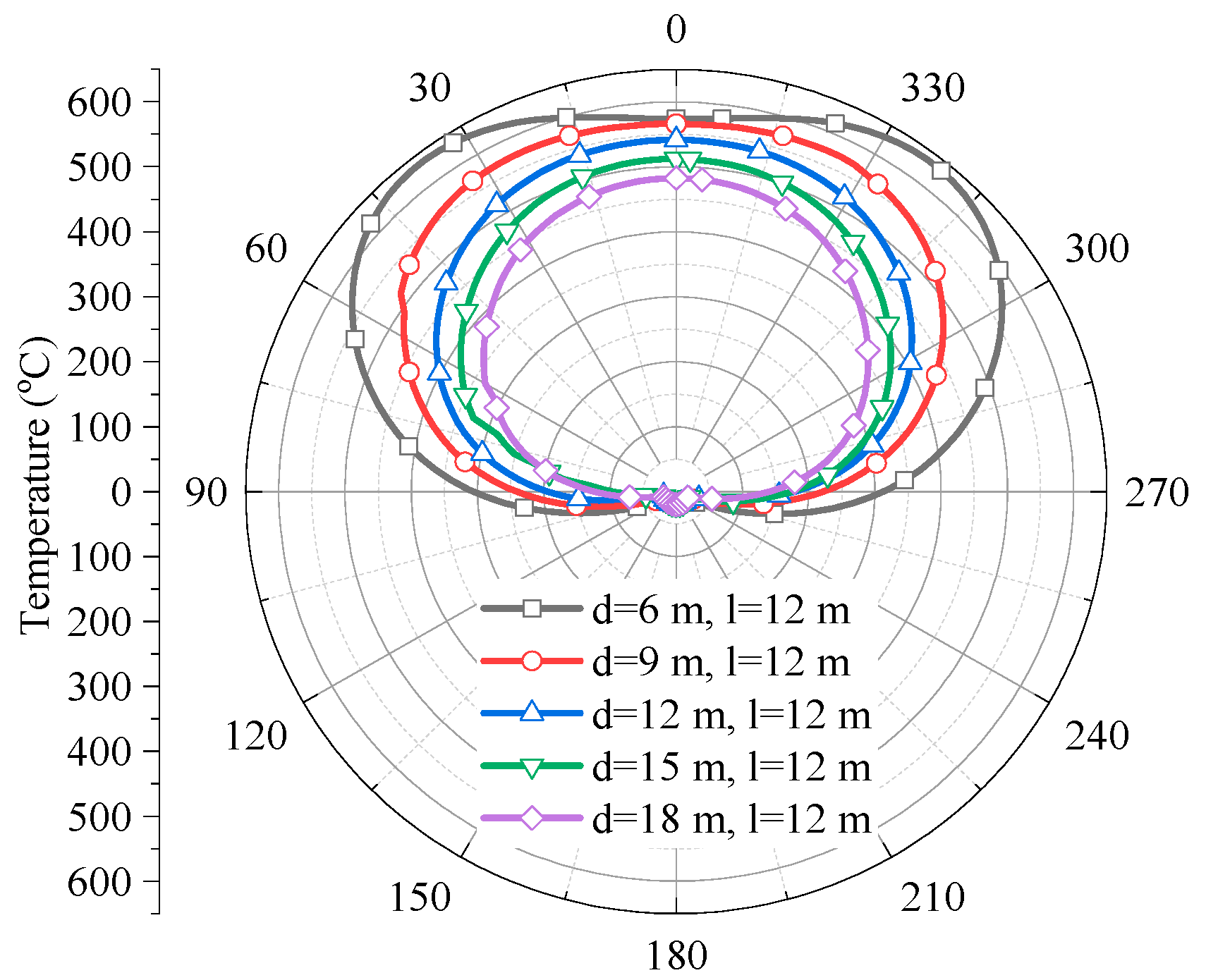
The effects of the separation distance between the pool fire and the target tank on the fire resistance and thermal buckling behavior of the target tank are investigated in this section. The separation distance between the two pool fires is fixed at 12 m, while the separation distance between the pool fire and the target tank is varied as 6, 9, 12, 15, and 18 m.
Figure 15 presents the circumferential temperature distributions of the target tanks along the nodes with the maximum temperature at t = 3600 s. The maximum temperature, temperature gradient, and heated zone decrease as the separation distance between the pool fire and the target tank increases. In addition, when the separation distance is 6 and 9 m, the maximum-temperature nodes are not located at the meridian of θ = 0°. This is because the thermal radiation intensity increases, whereas the superposition effect of thermal radiation decreases, as the separation distance between the pool fire and the target tank decreases.
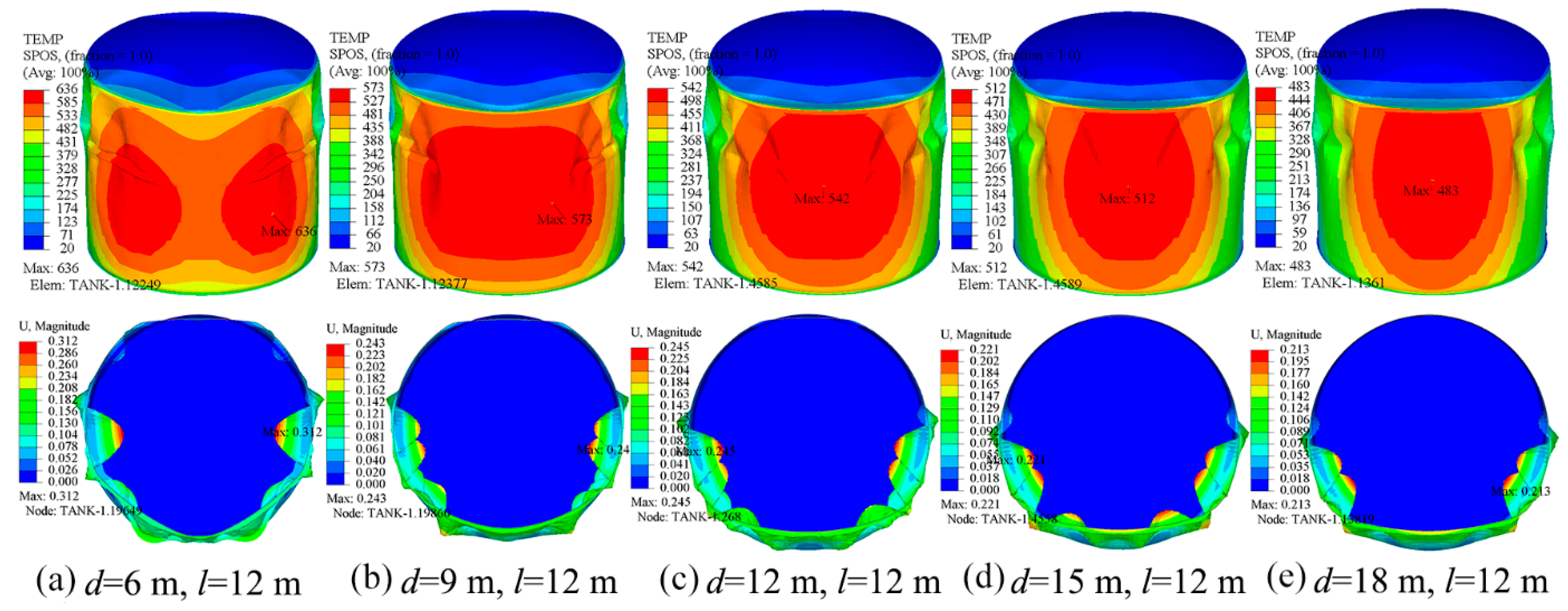
Figure 16 shows the deformation shapes, including front and vertical views, and the temperature distributions at t = 3600 s. The thermal buckling mode depends strongly on the separation distance between the pool fire and the target tank. When the separation distance is 6 m, the thermal buckling mode of the target tank differs from those observed at other separation distances. Moreover, the maximum displacement of the target tank at a separation distance of 6 m is much larger than those in the other cases. The thermal buckling zone decreases as the separation distance between the pool fire and the target tank increases. When the separation distance is 6 and 9 m, almost the entire circumference of the cylindrical shell undergoes buckling.
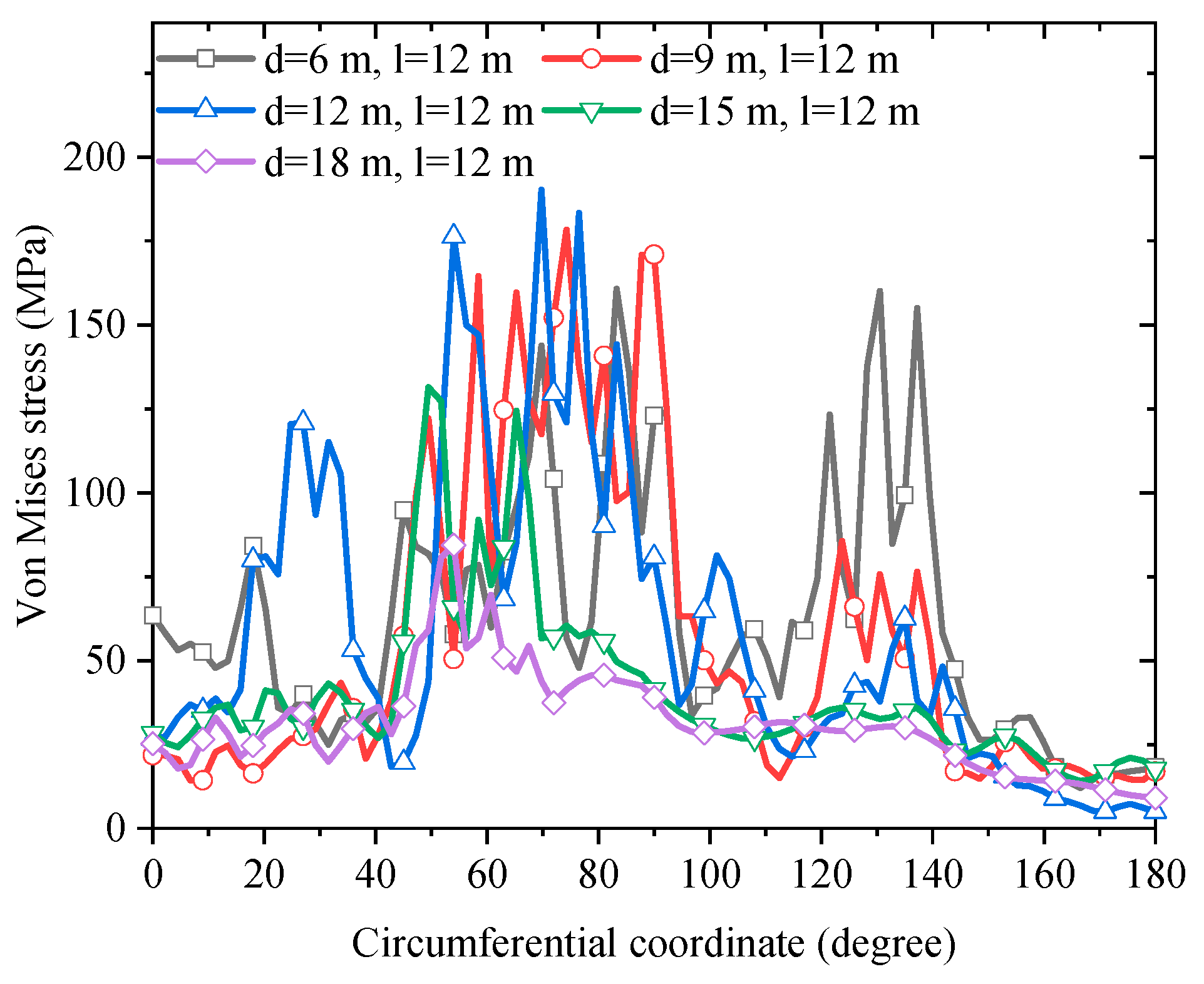
This behavior can be attributed to the increase in the heated zone, temperature gradient, and maximum temperature as the separation distance between the pool fire and the target tank decreases, as shown in Figure 15. Large von Mises stresses are generated due to the tensile and compressive stresses induced by non-uniform thermal expansion. When the separation distance is 6 and 9 m, stress concentration occurs mainly within the ranges of 60 to 90° and 120 to 150°. In contrast, when the separation distance is 12, 15, and 18 m, the von Mises stress is primarily concentrated within the range of 40 to 90°. In addition, the maximum stress decreases as the separation distance increases from 12 to 18 m, as shown in Figure 17. Therefore, the stability of the target tank decreases with decreasing separation distance between the pool fire and the target tank, and the thermal buckling zone expands accordingly.

3.4. Discussions

The numerical results show that the thermal buckling behavior of the target tank is mainly governed by the non-uniform temperature distribution induced by adjacent pool fires. When the tank is exposed to external fire radiation, the fire-facing shell region experiences a much higher temperature rise than the shielded region. This circumferential thermal gradient causes non-uniform thermal expansion of the tank wall. Because the shell is restrained by the bottom support, roof–shell connection, and surrounding cooler regions, the heated part cannot expand freely, resulting in significant compressive thermal stresses. Once these stresses exceed the reduced stiffness capacity of the heated shell, local instability occurs and a thermal buckling zone is formed.
Compared with the one-pool-fire condition, the two-pool-fire condition produces a larger heated area and stronger thermal radiation on the target tank. Consequently, the high-temperature region expands along the circumferential direction, and the deformation becomes more severe. This explains why the maximum displacement and the thermal buckling zone increase under two pool fires. In addition, the reduction in separation distance increases the incident heat flux received by the target tank, thereby accelerating temperature rise, intensifying thermal stress, and enlarging the unstable region. Therefore, the influence of fire-source configuration and tank spacing is physically reflected in the evolution of the temperature field, displacement response, and stress concentration.
These findings are consistent with previous studies showing that external fire exposure can cause significant thermal gradients, stiffness degradation, and local instability in thin-walled steel tanks. Previous research has also indicated that the number and location of burning tanks strongly affect the thermal radiation received by neighboring tanks. However, most existing studies mainly focused on temperature distribution, heat flux assessment, or fire spread risk, while the detailed thermal buckling response of fixed-roof steel tanks under one- and two-pool-fire scenarios has received less attention. The present study extends these works by quantitatively comparing the maximum displacement, stress distribution, deformation mode, and thermal buckling zone of the target tank under different pool fire configurations and separation distances.
From an engineering perspective, the results indicate that tanks exposed to two adjacent pool fires are more vulnerable to local buckling than those exposed to one pool fire. Therefore, in tank farm fire accidents, target tanks located between or near multiple burning tanks should be given priority for emergency cooling and structural safety monitoring. Increasing the separation distance between tanks can effectively reduce the received thermal radiation and mitigate the risk of thermal buckling. In addition, the predicted thermal buckling zone can be used to identify critical regions for inspection, cooling arrangement, and fire-protection design. These results provide useful guidance for improving tank-farm layout, emergency response strategies, and the structural safety assessment of fixed-roof steel tanks subjected to adjacent pool fires.
However, it should be pointed out that the robustness and generalizability of the present results should be interpreted in relation to both the modelling assumptions and the specific tank configuration considered in this study. The numerical predictions may be affected by assumptions related to the simplified flame model, thermal radiation parameters, and elevated-temperature material properties. For example, the flame temperature, emissivity, view factor, surface absorptivity, and temperature-dependent steel properties directly influence the predicted heat-flux distribution, temperature field, thermal stress, deformation, and buckling response. In addition, the absolute values of temperature, displacement, stress, and thermal buckling zone may vary for tanks with different diameters, heights, shell thicknesses, roof types, boundary conditions, and filling levels, because these factors affect heat absorption, shell slenderness, structural restraint, liquid cooling, and thermal inertia. Therefore, the results should not be regarded as universal quantitative predictions for all tank farm configurations. Nevertheless, since all cases are analyzed using the same modelling framework, the comparative trends identified in this study, including the more severe thermal buckling response under two pool fires and the mitigating effect of increased separation distance, are considered physically reasonable for similar fixed-roof steel tanks. Future work should include systematic sensitivity analyses and further validation using tank-scale experiments, accident data, or field observations and should extend the modelling to different tank geometries, sizes, filling levels, and realistic tank farm layouts.

4. Conclusions

This work focuses on the thermal buckling behaviors of a fixed-roof steel tank subjected to heat radiation triggered by one (two) adjacent pool fire(s). The effects of the number of pool fires, the separation distance between two pool fires, and the separation distance between the pool fire and tank on the thermal buckling behaviors are investigated. The following conclusions can be drawn.
First, the heated zone, maximum temperature, rise rate of temperature, and internal energy triggered by thermal stress of the target tank exposed to two pool fires are higher than those of the target tank exposed to one pool fire. Thus, the thermal buckling zone of the target tank subjected to two pool fires is larger than that subjected to one pool fire. However, the maximum displacement for two pool fires is almost equal to that for one pool fire.
Second, the thermal gradient for two pool fires is lower than that for one pool fire. Nonuniform thermal expansion triggered by thermal gradients is more serious for one pool fire. Moreover, the stress concentration is more serious for one pool fire. Therefore, the target tank subjected to one pool fire loses stability and reaches a new stable state faster than that subjected to two pool fires.
Third, although the maximum temperature and thermal gradient decrease as the separation distance between two pool fires increases, the heated zone increases with the increase in the separation distance between two pool fires. The whole circumference of the upper part of the cylindrical shell loses stability. To maintain the balance, large Von Mises stress generates due to tension and compression in the unheated zone. Consequently, the thermal buckling zone is larger as the separation distance between two pool fires increases.
Finally, the heated zone, temperature gradient and maximum temperature increase with the decrease in the separation distance between the pool fire and target tank. Hence, the thermal buckling zone is smaller with the increase in the separation distance between the pool fire and target tank.
The present results have important engineering implications for the fire safety design and emergency management of tank farms. Tanks exposed to two adjacent pool fires exhibit larger deformation and a wider thermal buckling zone than those exposed to one pool fire, indicating that tanks located near multiple burning tanks should be prioritized for emergency cooling and structural monitoring. Increasing the separation distance between tanks can effectively reduce the incident thermal radiation and mitigate the risk of thermal buckling. In addition, the identified thermal buckling zone provides a useful basis for determining critical inspection areas, optimizing water-spray cooling arrangements, and improving fire protection strategies for fixed-roof steel tanks.
Future work should further consider the influence of initial geometric imperfections, liquid filling level, wind conditions, and different roof or support configurations on the thermal buckling behavior.

Author Contributions

Y.L.: Conceptualization, Investigation, Methodology, Software, Validation, Writing—original draft, Writing—review & editing. S.L.: Funding acquisition, Methodology, Investigation, Writing—review & editing. All authors have read and agreed to the published version of the manuscript.

Funding

This research received no external funding.

Data Availability Statement

Dataset available on request from the authors.

Conflicts of Interest

The authors declare that they have no known competing financial interests or personal relationships that could have appeared to influence the work reported in this paper.

References

  1. Hou, S.; Luan, X.; Wang, Z.; Cozzani, V.; Zhang, B. A quantitative risk assessment framework for domino accidents caused by double pool fires. J. Loss Prev. Process Ind. 2022, 79, 104843. [Google Scholar] [CrossRef]
  2. Reniers, G.; Cozzani, V. Domino Effects in the Process Industries; Elsevier: Amsterdam, The Netherlands, 2013. [Google Scholar]
  3. Batista-Abreu, J.C.; Godoy, L.A. Thermal buckling behavior of open cylindrical oil storage tanks under fire. J. Perform. Constr. Facil. 2013, 27, 89–97. [Google Scholar] [CrossRef]
  4. Caprinozzi, S.; Paolacci, F.; Dolšek, M. Seismic risk assessment of liquid overtopping in a steel storage tank equipped with a single deck floating roof. J. Loss Prev. Process Ind. 2020, 67, 104269. [Google Scholar] [CrossRef]
  5. Kwon, K.; Kim, Y.; Kwon, Y.; Koseki, H. Study on accidental fire at a large-scale floating-roof gasoline storage tank. J. Loss Prev. Process Ind. 2021, 73, 104613. [Google Scholar] [CrossRef]
  6. Li, Y.; Jiang, J.; Yu, Y.; Wang, Z.; Xing, Z.; Zhang, Q. Fire resistance of a vertical oil tank exposed to pool-fire heat radiation after high-velocity projectile impact. Process Saf. Environ. Prot. 2021, 156, 231–243. [Google Scholar] [CrossRef]
  7. Faghihi, F.; Numanović, M.; Knobloch, M. The effect of thermal creep on the fire resistance of steel columns. Fire Saf. J. 2023, 137, 103750. [Google Scholar] [CrossRef]
  8. Senthilkumar, R.; Kumar, C.P.A.S.; Saravanakumar, R.; Kumar, D.P. Numerical study on restrained thermal elongation of cold-formed steel Column subjected to non-uniform thermal loading under transient state. Fire Saf. J. 2022, 131, 103608. [Google Scholar]
  9. Birk, A.M. Scale effects with fire exposure of pressure-liquefied gas tanks. J. Loss Prev. Process Ind. 1995, 8, 275–290. [Google Scholar] [CrossRef]
  10. Birk, A.M. Scale considerations for fire testing of pressure vessels used for dangerous goods transportation. J. Loss Prev. Process Ind. 2012, 25, 623–630. [Google Scholar] [CrossRef]
  11. Landucci, G.; Gubinelli, G.; Antonioni, G.; Cozzani, V. The assessment of the damage probability of storage tanks in domino events triggered by fire. Accid. Anal. Prev. 2009, 41, 1206–1215. [Google Scholar] [CrossRef]
  12. Landucci, G.; Molag, M.; Cozzani, V. Modeling the performance of coated LPG tanks engulfed in fires. J. Hazard. Mater. 2009, 172, 447–456. [Google Scholar] [CrossRef]
  13. Landucci, G.; D’Aulisa, A.; Tugnoli, A.; Cozzani, V.; Birk, A.M. Modeling heat transfer and pressure build-up in LPG vessels exposed to fires. Int. J. Therm. Sci. 2016, 104, 228–244. [Google Scholar] [CrossRef]
  14. Manu, C.C.; Birk, A.M.; Kim, I.Y. Stress rupture predictions of pressure vessels exposed to fully engulfing and local impingement accidental fire heat loads. Eng. Fail. Anal. 2009, 16, 1141–1152. [Google Scholar] [CrossRef]
  15. Heymes, F.; Aprin, L.; Birk, A.; Slangen, P.; Jarry, J.; François, H.; Dusserre, G. An experimental study of an LPG tank at low filling level heated by a remote wall fire. J. Loss Prev. Process Ind. 2013, 26, 1484–1491. [Google Scholar]
  16. Heymes, F.; Aprin, L.; Forestier, S.; Slangen, P.; Jarry, J.B.; François, H.; Dusserre, G. Impact of a distant wildland fire on an LPG tank. Fire Saf. J. 2013, 61, 100–107. [Google Scholar] [CrossRef]
  17. Scarponi, G.E.; Landucci, G.; Birk, A.M.; Cozzani, V. LPG vessels exposed to fire: Scale effects on pressure build-up. J. Loss Prev. Process Ind. 2018, 56, 342–358. [Google Scholar]
  18. Scarponi, G.E.; Landucci, G.; Heymes, F.; Cozzani, V. Experimental and numerical study of the behavior of LPG tanks exposed to wildland fires. Process Saf. Environ. Prot. 2018, 114, 251–270. [Google Scholar] [CrossRef]
  19. Scarponi, G.E.; Landucci, G.; Birk, A.M.; Cozzani, V. An innovative three-dimensional approach for the simulation of pressure vessels exposed to fire. J. Loss Prev. Process Ind. 2019, 61, 160–173. [Google Scholar] [CrossRef]
  20. Scarponi, G.E.; Landucci, G.; Birk, A.M.; Cozzani, V. Three dimensional CFD simulation of LPG tanks exposed to partially engulfing pool fires. Process Saf. Environ. Prot. 2021, 150, 385–399. [Google Scholar]
  21. Cirrone, D.M.C.; Makarov, D.; Molkov, V. Thermal radiation from cryogenic hydrogen jet fires. Int. J. Hydrogen Energy 2019, 44, 8874–8885. [Google Scholar] [CrossRef]
  22. Cirrone, D.M.C.; Makarov, D.; Molkov, V. Simulation of thermal hazards from hydrogen under-expanded jet fire. Int. J. Hydrogen Energy 2019, 44, 8886–8892. [Google Scholar] [CrossRef]
  23. Iannaccone, T.; Scarponi, G.E.; Landucci, G.; Cozzani, V. Numerical simulation of LNG tanks exposed to fire. Process Saf. Environ. Prot. 2021, 149, 735–749. [Google Scholar] [CrossRef]
  24. Wang, J.; Wang, M.; Yu, X.; Zong, R.; Lu, S. Experimental and numerical study of the fire behavior of a tank with oil leaking and burning. Process Saf. Environ. Prot. 2022, 159, 1203–1214. [Google Scholar] [CrossRef]
  25. Liu, Y. Thermal Buckling of Metal Oil Tanks Subject to an Adjacent Fire; The University of Edinburgh: Edinburgh, UK, 2011. [Google Scholar]
  26. Godoy, L.A.; Batista-Abreu, J.C. Buckling of fixed-roof aboveground oil storage tanks under heat induced by an external fire. Thin-Walled Struct. 2012, 52, 90–101. [Google Scholar] [CrossRef]
  27. Wang, X.; Zhou, K.; Mebarki, A.; Jiang, J. Numerical Simulation of Thermal Response Behavior of Floating-roof Tanks Exposed to Pool Fire. Appl. Therm. Eng. 2020, 179, 115692. [Google Scholar] [CrossRef]
  28. Pantousa, D.; Tzaros, K.; Kefaki, M.A. Thermal buckling behaviour of unstiffened and stiffened fixed-roof tanks under non-uniform heating. J. Constr. Steel Res. 2018, 143, 162–179. [Google Scholar] [CrossRef]
  29. Pantousa, D.; Godoy, L.A. On the mechanics of thermal buckling of oil storage tanks. Thin-Walled Struct. 2019, 145, 106432. [Google Scholar] [CrossRef]
  30. Wang, M.; Guo, K.; Wei, Y.; Chen, J.; Cao, C.; Tong, Z. Failure analysis of cracking in the thin-walled pressure vessel of electric water heater. Eng. Fail. Anal. 2023, 143, 106913. [Google Scholar] [CrossRef]
  31. Li, Y.; Jiang, J.; Yu, Y.; Wang, Z.; Xing, Z.; Zhang, Q. Thermal buckling of oil-filled fixed-roof tanks subjected to heat radiation by a burning tank. Eng. Fail. Anal. 2022, 138, 106393. [Google Scholar] [CrossRef]
  32. Jaca, R.C.; Godoy, L.A.; Calabró, H.D.; Espinosa, S.N. Thermal post-buckling behavior of oil storage tanks under a nearby fire. Int. J. Press. Vessel. Pip. 2021, 189, 104289. [Google Scholar] [CrossRef]
  33. Santos, F.d.S.; Landesmann, A. Thermal performance-based analysis of minimum safe distances between fuel storage tanks exposed to fire. Fire Saf. J. 2014, 69, 57–68. [Google Scholar] [CrossRef]
  34. Pantousa, D. Numerical study on thermal buckling of empty thin-walled steel tanks under multiple pool-fire scenarios. Thin-Walled Struct. 2018, 131, 577–594. [Google Scholar]
  35. Pourkeramat, A.; Daneshmehr, A.; Jalili, S.; Aminfar, K. Investigation of wind and smoke concentration effects on thermal instability of cylindrical tanks with fixed roof subjected to an adjacent fire. Thin-Walled Struct. 2021, 160, 107384. [Google Scholar] [CrossRef]
  36. Tauseef, S.; Abbasi, T.; Pompapathi, V.; Abbasi, S. Case studies of 28 major accidents of fires/explosions in storage tank farms in the backdrop of available codes/standards/models for safely configuring such tank farms. Process Saf. Environ. Prot. 2018, 120, 331–338. [Google Scholar] [CrossRef]
  37. Yuan, G.; Shu, Q.; Huang, Z.; Li, Q. An experimental investigation of properties of Q345 steel pipe at elevated temperatures. J. Constr. Steel Res. 2016, 118, 41–48. [Google Scholar] [CrossRef]
  38. Hurley, M.J.; Gottuk, D.; Hall, J.R.; Harada, K.; Kuligowski, E.; Puchovsky, M.; Torero, J.; Watts, J.M.; Wieczorek, C. SFPE Handbook of Fire Protection Engineering; Springer: New York, NY, USA, 2016. [Google Scholar]
  39. Shen, G.; Zhou, K.; Wu, F.; Jiang, J.; Dou, Z. A Model Considering the Flame Volume for Prediction of Thermal Radiation from Pool Fire. Fire Technol. 2019, 55, 129–148. [Google Scholar] [CrossRef]
  40. Zukoski, E.E.; Cetegen, B.M.; Kubota, T. Visible structure of buoyant diffusion flames. Symp. (Int.) Combust. 1985, 20, 361–366. [Google Scholar]
  41. Mudan, K.S. Thermal radiation hazards from hydrocarbon pool fires. Prog. Energy Combust. Sci. 1984, 10, 59–80. [Google Scholar] [CrossRef]
  42. Yu, W.; Zhao, J.; Luo, H.; Shi, J.; Zhang, D. Experimental study on mechanical behavior of an impacted steel tubular T-joint in fire. J. Constr. Steel Res. 2011, 67, 1376–1385. [Google Scholar] [CrossRef]
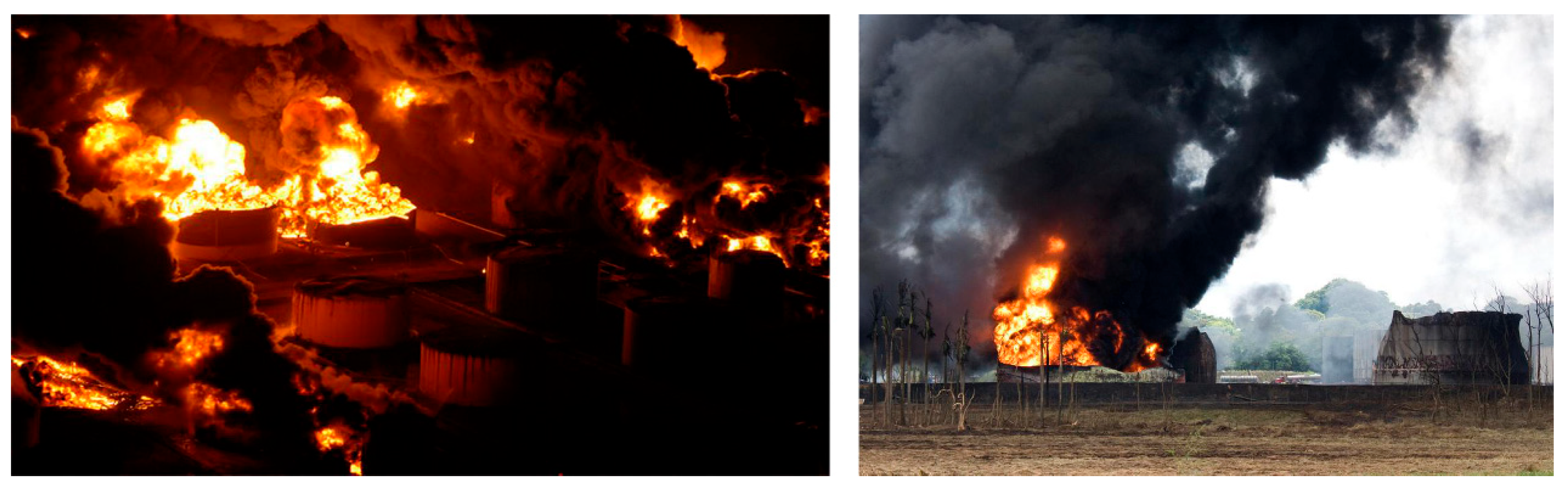
Figure 1. A fire accident of an oil refinery in Puerto Rico.
Fire 09 00198 g001
Figure 2. Schematic of the steel tank: (a) sizes; (b) tank arrangements.
Fire 09 00198 g002
Figure 3. Solid flame model taking account of flame pulsation for finite element model.
Fire 09 00198 g003
Figure 4. Material properties under different temperatures.
Fire 09 00198 g004
Figure 5. Finite element model and mesh of the steel tubular T-joint.
Fire 09 00198 g005
Figure 6. Comparison of the vertical displacement vs. temperature between experimental and numerical results.
Fire 09 00198 g006
Figure 7. Circumferential temperature along the maximum temperature nodes of the target tank subjected to one pool fire and two pool fires, respectively.
Fire 09 00198 g007
Figure 8. Displacement evolutions around the circumference of the cylindrical shell (z = 14 m) of the target tank subjected to one pool fire and two pool fires, respectively.
Fire 09 00198 g008
Figure 9. Mises stress distributions around the circumference of the cylindrical shell (z = 14 m) of the target tank subjected to one pool fire and two pool fires, respectively.
Fire 09 00198 g009
Figure 10. Internal energy vs. time of target tanks of the target tank subjected to one pool fire and two pool fires, respectively.
Fire 09 00198 g010
Figure 11. Deformation and temperature distributions of target tanks subjected to one pool fire and two pool fires, respectively, at t = 3600 s.
Fire 09 00198 g011
Figure 12. Circumferential temperature distributions along the maximum temperature nodes for different separation distances between two pool fires at t = 3600 s.
Fire 09 00198 g012
Figure 13. Deformation shapes (front and vertical views) and temperature distributions of target tanks for different separation distances between two pool fires at t = 3600 s.
Fire 09 00198 g013
Figure 14. Von Mises stress distributions around the circumference of the cylindrical shell (z = 14 m) for different separation distances between two pool fires at t = 1800 s.
Fire 09 00198 g014
Figure 15. Circumferential temperature distributions along the maximum temperature nodes for different separation distances between the pool fire and target tank at t = 3600 s.
Fire 09 00198 g015
Figure 16. Deformation and temperature distributions of the target tanks for different separation distances between the pool fire and target tank at t = 3600 s.
Fire 09 00198 g016
Figure 17. Von Mises stress distributions around the circumference of the cylindrical shell (z = 14 m) for different separation distances between the pool fire and target tank at t = 1800 s.
Fire 09 00198 g017
Disclaimer/Publisher’s Note: The statements, opinions and data contained in all publications are solely those of the individual author(s) and contributor(s) and not of MDPI and/or the editor(s). MDPI and/or the editor(s) disclaim responsibility for any injury to people or property resulting from any ideas, methods, instructions or products referred to in the content.