Article

Millennial-Scale Fire and Vegetation Change from a Rare Mid-Latitude Permafrost Fen (Beartooth Plateau, WY)


Department of Earth Sciences, Montana State University, Bozeman, MT 59717, USA
*
Author to whom correspondence should be addressed.
Fire 2026, 9(3), 103; https://doi.org/10.3390/fire9030103
Submission received: 27 December 2025 / Revised: 14 February 2026 / Accepted: 18 February 2026 / Published: 26 February 2026

Abstract

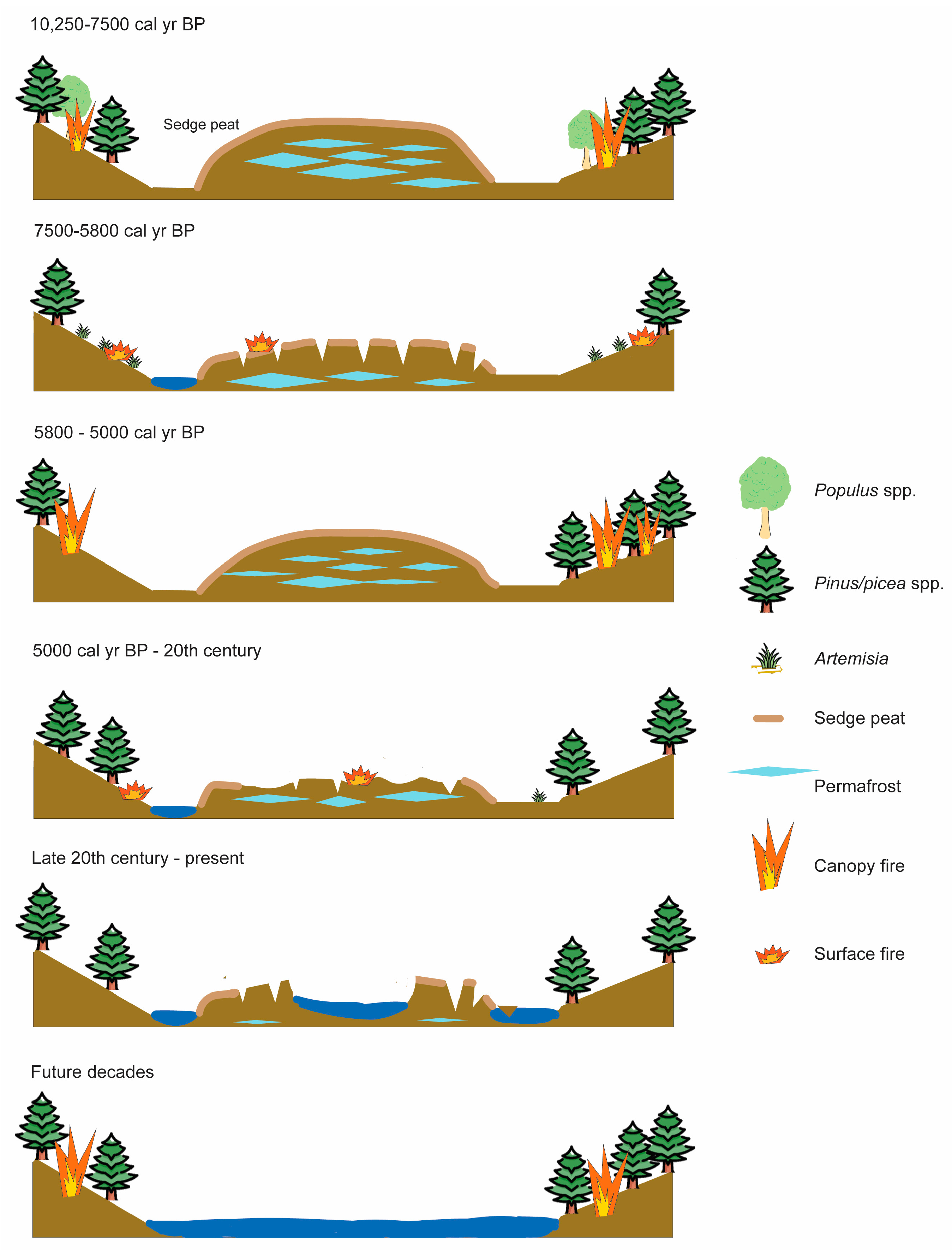
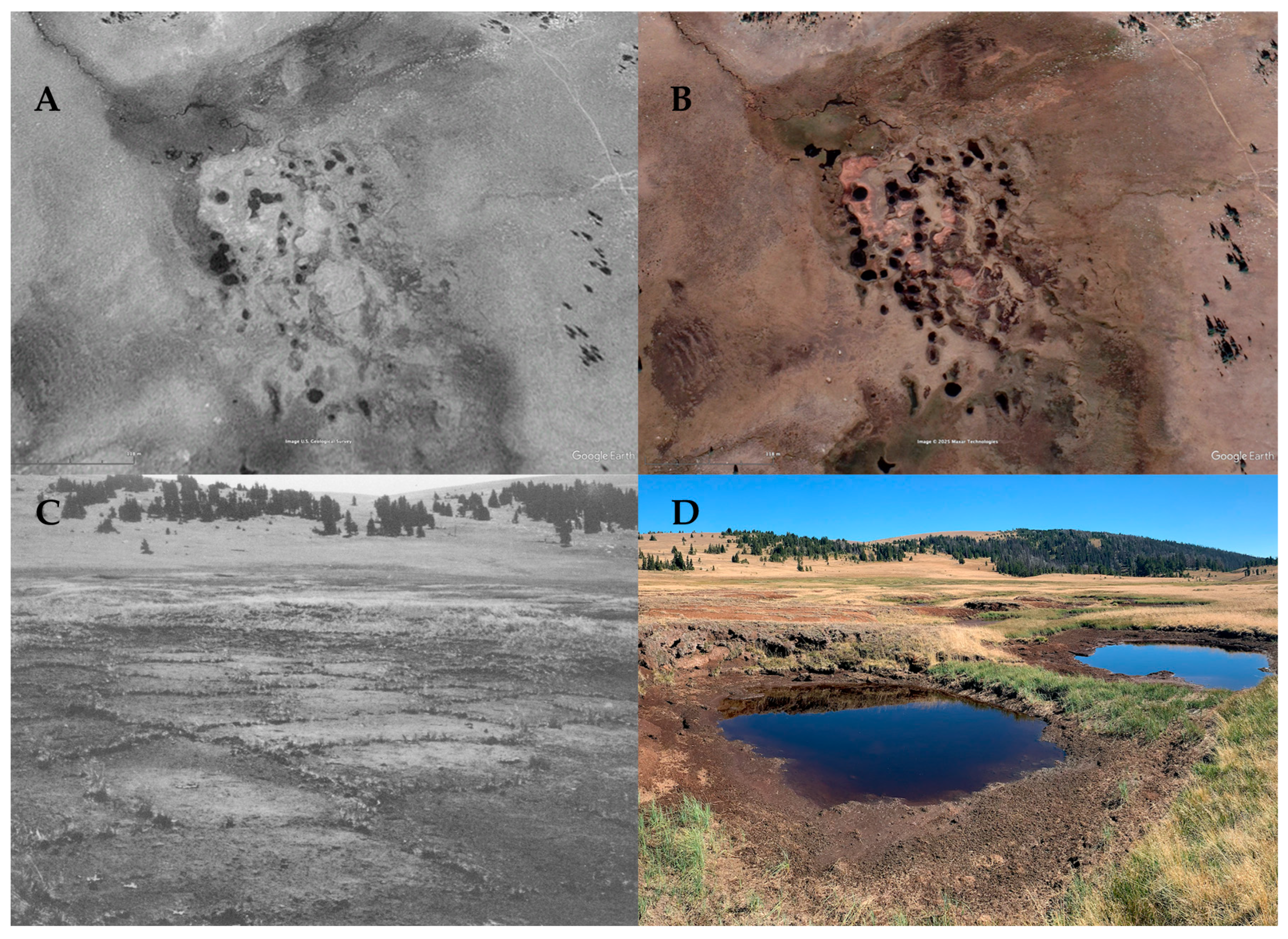
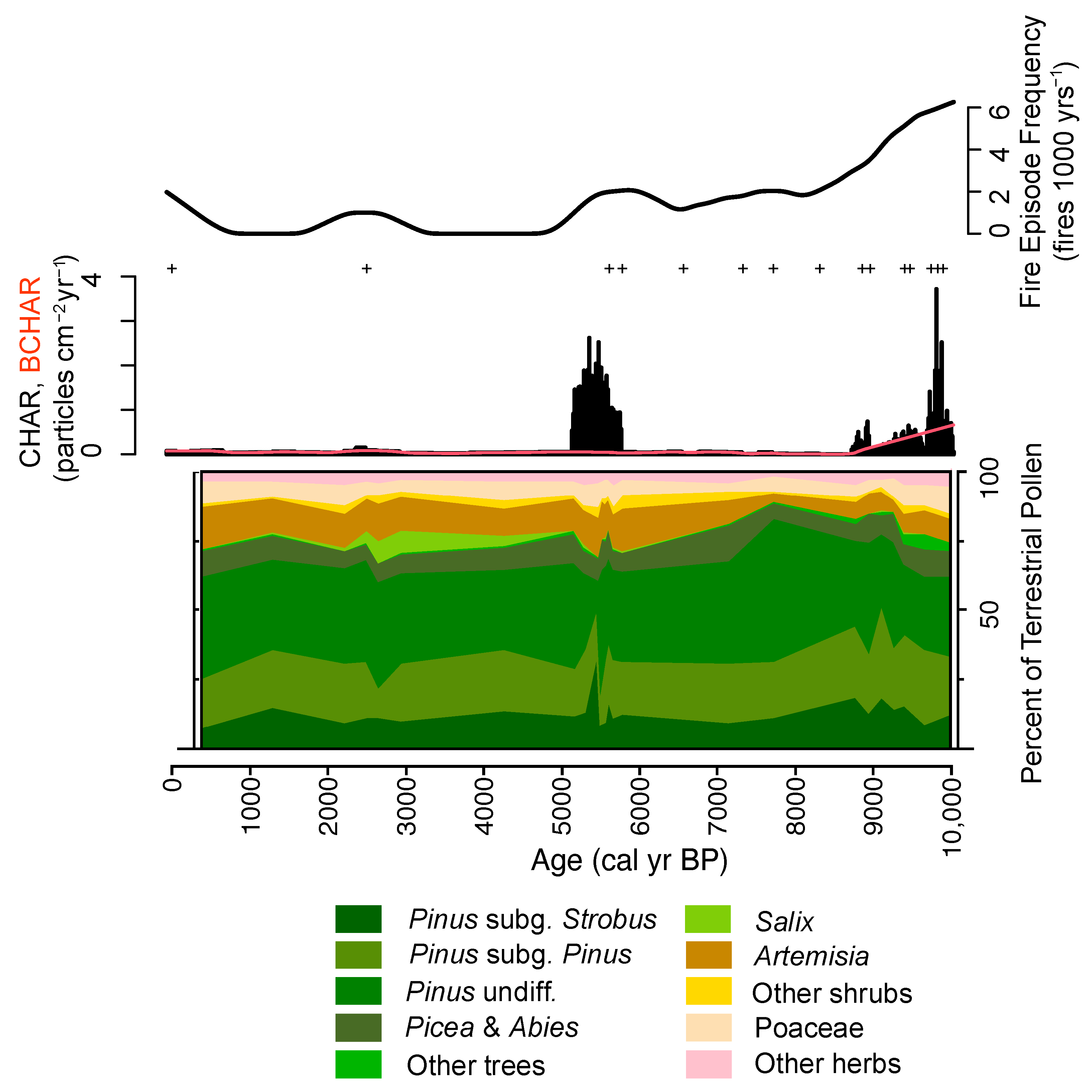
Long-term fire histories are well-documented across most North American temperate forest systems, yet the fire regimes of high-alpine treeline environments remain poorly understood. Here, we present a millennial-scale fire history from the Sawtooth Fen Palsa (SFP), a rare permafrost fen palsa located in the high-alpine treeline ecotone of the Beartooth Plateau, Wyoming, a permafrost system now unraveling due to recent decades of rapid warming. Analysis of paleoenvironmental proxies from peat sediments overlying the permafrost reveals a multi-century peak in fire activity at the beginning of the record, ca. 10,000 cal yr BP, coinciding with the afforestation of newly deglaciated, ice-free sites. This initial surge in high-severity fire activity was followed by a decline when solar-orbitally driven increases in growing-season temperatures likely promoted forest opening and more surface fire activity within the SFP watershed. High-severity fire activity increased again during the mid-Holocene (ca. 5800–5000 cal yr BP), when effective moisture increased, favoring subalpine forest expansion and increased connectivity of woody biomass (sagebrush and forest), enhancing the potential for canopy fire spread. Only two small fire episodes were recorded in recent millennia when a rapid change in the sedimentation rate may indicate a partial loss of the sediment record. Rapid warming in recent decades has triggered the formation of dozens of thermal collapse ponds across the fen palsa. The frequency of these features has more than doubled since 2000 CE, underscoring the degradation of underlying permafrost in response to changing climatic conditions. Continued warming is expected to cause the complete loss of the permafrost lens and alter ecosystem dynamics, disturbance regimes, and carbon and nutrient cycling in alpine systems throughout the Rocky Mountains.
Keywords: fire; palsa; fen palsa; permafrost; US Rocky Mountains; alpine; alpine fires; permafrost degradation fire; palsa; fen palsa; permafrost; US Rocky Mountains; alpine; alpine fires; permafrost degradation