Article

Turbocharging Matching Investigation for High-Altitude Power Recovery in Aviation Hydrogen Internal Combustion Engines


1
School of Mechanics and Aerospace Engineering, Dalian University of Technology, Dalian 116024, China
2
School of Electrical and Information Engineering, Zhengzhou University, Zhengzhou 450001, China
3
Key Laboratory of Automotive Measurement, Control and Safety in Sichuan Province, Chengdu 610039, China
*
Author to whom correspondence should be addressed.
Submission received: 16 December 2025 / Revised: 16 January 2026 / Accepted: 19 January 2026 / Published: 23 January 2026

Abstract

Aviation hydrogen internal combustion engines represent a critical pathway for rapid decarbonization due to their reliability and compatibility with existing aircraft platforms. However, the significant reduction in air density at high altitudes causes severe power degradation in naturally aspirated port-fuel-injected hydrogen internal combustion engines, making turbocharging essential for maintaining propulsion capability. This study utilizes a combined experimental and simulation framework to investigate turbocharger matching for power recovery in a 1.4 L hydrogen engine. A simulation model was constructed and validated against experimental data within a 5% error margin to ensure technical accuracy. Theoretical compressor and turbine operating parameters were derived for altitudes ranging from 4 to 8 km, comparing two boost-pressure control strategies: variable geometry turbine and waste-gate turbine. The results demonstrate that both boosting strategies successfully restore sea-level power at altitudes up to 8 km, increasing high-altitude power output by approximately four-fold to five-fold compared to naturally aspirated conditions. Specifically, the variable of geometry turbine demonstrates superior overall performance, maintaining normalized turbine efficiencies between 78.4% and 96.3% while achieving lower pumping losses and improved brake thermal efficiency. These advantages arise from the variable geometry turbine’s ability to optimize exhaust-energy utilization across varying altitudes. This study establishes a quantitative methodology for turbocharger matching, providing essential guidance for developing efficient, high-altitude hydrogen propulsion systems.

1. Introduction

The international energy sector is experiencing a radical shift necessitated by the dual pressures of the global energy crisis and stringent carbon neutrality mandates. Traditional fossil-fuel propulsion, particularly within aviation, is under intensifying scrutiny due to its substantial carbon footprint and reliance on depleting resources. Hydrogen stands out as a premier zero-carbon energy carrier, characterized by an exceptionally high gravimetric energy density with a lower heating value of approximately 120 MJ/kg [1]. Beyond these systemic benefits, hydrogen possesses distinct physicochemical traits that are ideal for internal combustion. It features an exceptionally high laminar burning velocity and a wide flammability range (4% to 75% by volume), facilitating rapid heat release and stable ignition even under extremely dilute conditions [2,3]. Furthermore, hydrogen combustion is marked by the prolific generation of active radicals, such as H, O, and OH, which drastically accelerate chemical kinetics and flame development [4]. Major global frameworks, such as the IEA Global Hydrogen Review, underscore hydrogen’s vital role in decarbonizing “hard-to-abate” sectors, including high-altitude propulsion [5]. With the expansion of renewable energy and better storage logistics, hydrogen-based aviation is once again a primary focus for sustainable flight.
Hydrogen utilization typically follows two technological paths: fuel cells and hydrogen internal combustion engines (HICEs) [6]. While fuel cells provide high efficiency, their aviation deployment is often restricted by lower power densities, durability issues under high mechanical loads, and the complexity of humidification and thermal control [7]. In contrast, HICEs are distinguished by their high power-to-weight potential, mechanical robustness, rapid load response, and cost-effective manufacturing [8]. Significantly, HICEs can be adapted from existing piston engine architectures with moderate modifications, shortening the development cycle for both manned and unmanned aircraft. Consequently, hydrogen-fueled spark-ignition engines are seen as a pragmatic bridge for near-term decarbonization [9].
HICEs are generally categorized into port fuel injection (PFI) and direct injection (DI) systems [10]. DI systems support higher power densities by avoiding air displacement; however, they require sophisticated high-pressure injection hardware and carry higher risks of pre-ignition due to local fuel stratification [11]. Conversely, PFI configurations offer a more streamlined architecture, lower costs, and more homogeneous mixture formation, which reduces hot-spot tendencies—a critical factor for aviation reliability [12]. The primary drawback of PFI, however, is the “air displacement effect.” Because of hydrogen’s low density, it can occupy nearly 30% of the intake volume even at stoichiometric ratios, severely limiting the trapped air mass [13]. Therefore, highly efficient boosting systems are mandatory for port fuel injection hydrogen engines (PFI-HICEs) to compensate for these volume losses and restore engine output [14].
The necessity for turbocharging is further emphasized by hydrogen’s unique stoichiometry. Hydrogen requires a high stoichiometric air–fuel ratio of approximately 34.25:1—roughly 2.4 times that of gasoline [15]. While their energy density is high, HICEs must typically utilize lean-burn strategies (often with excess air ratios λ between 2.0 and 3.0) to control the high flame speed and prevent abnormal combustion [16]. In aviation, this challenge is compounded by the fact that at an altitude of 5 km, air density is nearly halved and atmospheric pressure drops to approximately 54 kPa, causing a drastic decline in naturally aspirated performance [17]. Consequently, turbochargers for aviation HICEs must provide much higher pressure ratios over a broader operational range.
Despite its importance, turbocharging HICEs involves major engineering hurdles. First, the requirement for high excess-air ratios (λ ≥ 3) demands a massive air mass flow, requiring compressors with high surge margins [18]. Second, lean hydrogen combustion generates significantly lower exhaust temperatures than hydrocarbon fuels, leading to a “turbine energy deficit” where there is insufficient enthalpy to drive the compressor [19]. Standard turbochargers designed for gasoline engines often show poor efficiency in these low-temperature environments, particularly as altitude increases [20]. Third, aviation PFI-HICEs operate across a wide speed range (up to 5000 rpm), requiring turbocharging systems that can maintain high-flow capability without entering choke regions [21].
Recent studies have highlighted the potential for performance gains through boosting. Research has shown that optimized turbocharging can significantly elevate brake power and thermal efficiency by mitigating the air displacement penalty [14,22,23]. Specifically, by optimizing the turbine, the brake power of a 5.13 L PFI-HICE was shown to increase from 93 kW to 128.9 kW (a 38.6% improvement), while the minimum fuel consumption was reduced from 74.21 to 71.73 g/kWh [18]. Furthermore, the lean-burn tolerance of hydrogen allows for higher compression ratios and reduced knock sensitivity compared to gasoline engines [24]. Nevertheless, most of these studies focus on ground-level operation.
For aviation, high-altitude operation introduces severe constraints. Declining air density reduces inlet mass flow and shifts turbocharger operation toward less efficient map regions [24,25]. While high-altitude boosting for traditional fuels has been explored [26,27], the unique airflow and low-temperature exhaust characteristics of hydrogen create a distinct set of requirements. Current literature lacks a comprehensive analysis of matching strategies specifically tailored for hydrogen-based aviation engines.
Therefore, this study performs a systematic evaluation of turbocharging matching for high-altitude power recovery in a PFI-HICE. Using a validated GT-Power framework, we analyze the thermodynamic needs of hydrogen combustion and the altitude-specific behavior of the compressor and turbine. By comparing variable geometry turbine (VGT) and waste-gate turbine (WGT) strategies, this study assesses their impact on efficiency and combustion stability. The results provide a quantitative foundation for designing robust hydrogen propulsion systems for high-altitude flight.

2. Materials and Methods

2.1. Experiment Test System

This experiment test was conducted using a 1.4 L PFI-HICE (self-developed at Dalian University of Technology, Dalian, China), which was modified from a horizontally opposed natural aspirated aviation gasoline engine. It should be noted that the experimental tests were performed under standard ground-level conditions. Due to the stringent laboratory ventilation requirements for hydrogen safety—specifically the need to prevent hydrogen leakage and accumulation to mitigate the risk of safety accidents—an altitude-simulating environmental chamber was not utilized in this study. The principal purpose of these experiments was to provide a validated baseline to ensure the accuracy of the simulation framework. Moreover, high-purity hydrogen (99.99%) was supplied as the test fuel and injected into the intake manifold through BOSCH 13096246 injectors (Robert Bosch GmbH, Gerlingen, Germany), with two injectors assigned to each cylinder. The detailed specifications of the PFI-HICE are listed in Table 1.
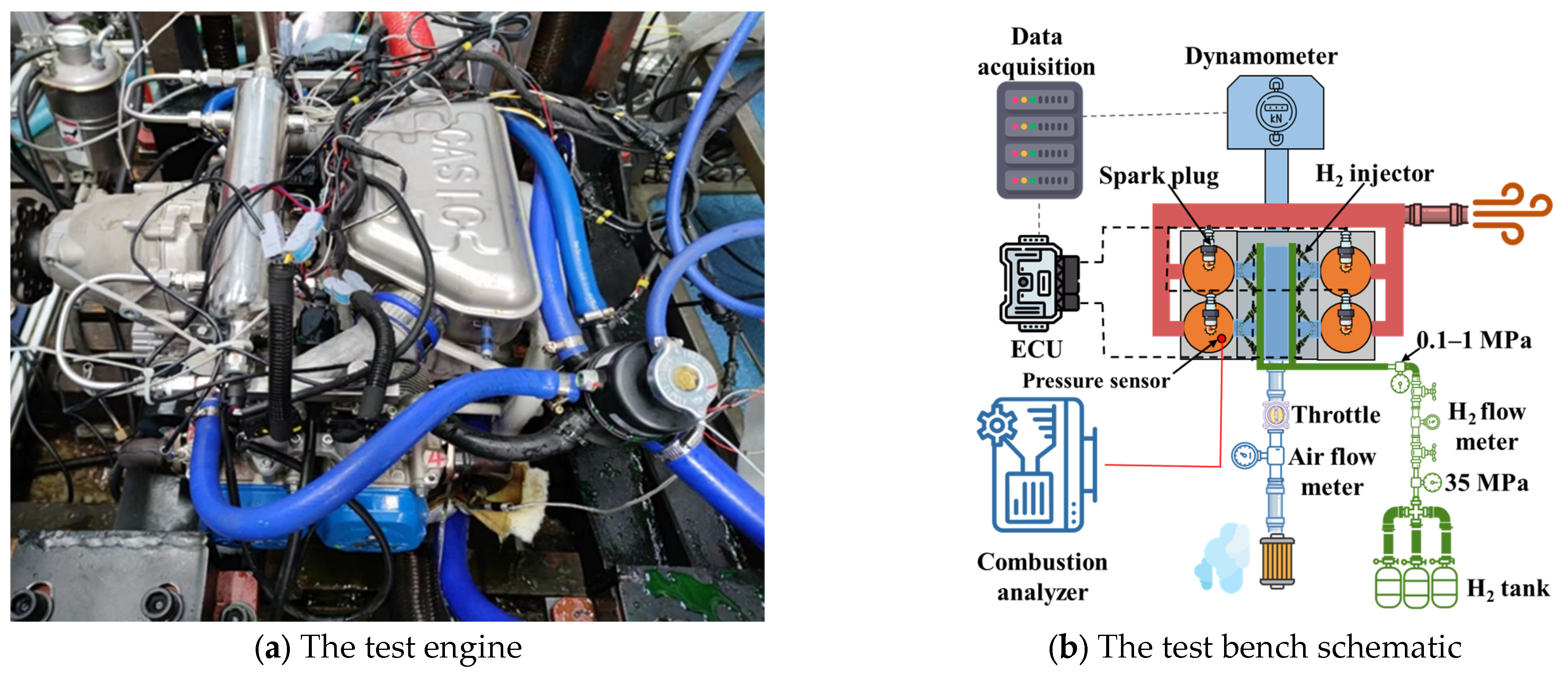
A photograph of the test PFI-HICE and a schematic of the test bench are shown in Figure 1, and the specific parameters of the instruments used in this test are listed in Table 2. The engine speed and torque were tested using the GW250 dynamometer (Hunan Xiangyi Instrument Co., Ltd., Changsha, China), and the in-cylinder combustion pressure was tested using Kistler 6054BR pressure transducers (Kistler Group, Winterthur, Switzerland) and recorded by its corresponding Kibox (Kistler Group, Winterthur, Switzerland). The air mass flow and hydrogen mass flow were tested with a MTR-500 air flowmeter (Dalian Meitian Sanyou Electronic Instrument Co., Ltd., Dalian, China) and a CMF010 H2 flowmeter (Micro Motion Inc., Boulder, CO, USA), respectively. The excess air coefficient (λ) was calculated based on the air mass flow and hydrogen mass flow. The spark plugs and hydrogen injectors were controlled with a self-coded electronic control unit (ECU). For each test condition, high-precision combustion pressure data were recorded and averaged over 221 consecutive engine cycles. The experiment conditions of the PFI-HICE are summarized in Table 3, where the performance of the PFI-HICE under various engine speeds, intake pressures and λ values were tested with an ignition timing of the maximum brake torque.

2.2. Simulation Model and Validation

2.2.1. Simulation Model

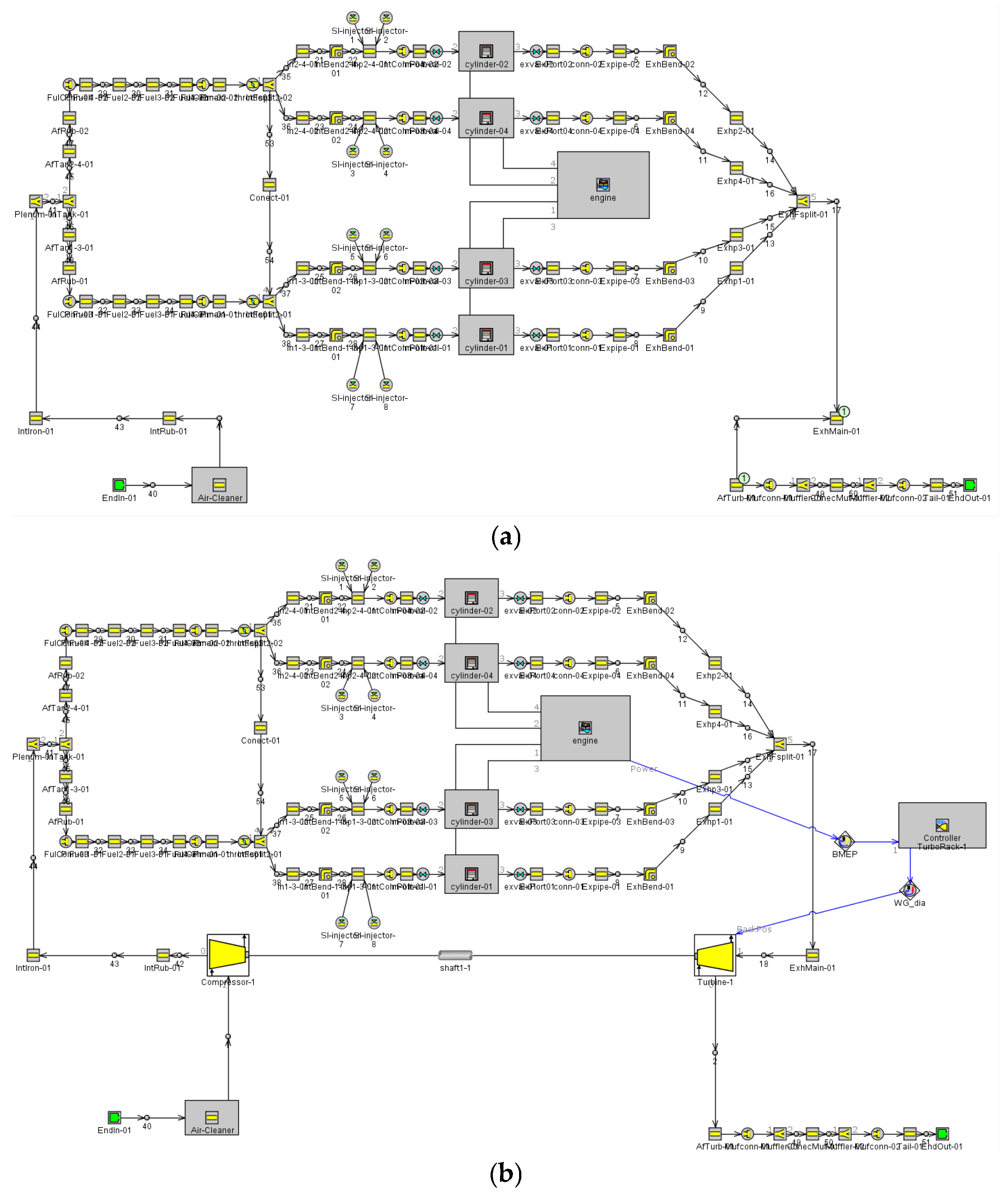
Due to the significant decrease in atmosphere pressure under high-altitude conditions, GT-Power (Version 2016) simulations were employed to perform boost matching for the aviation PFI-HICE to restore the power output for satisfying the propeller speed requirements. Figure 2 shows the simulation model of the PFI-HICE. Four sub-models were mainly included: combustion model, heat transfer model, friction model, and turbocharger model (only for the turbocharged simulation model). Specifically, the Weibe function, Woschni model, ChenFlynn model [28] and the actually tested turbocharger map were selected, as summarized in Table 4.
Due to the significant decrease in atmosphere pressure under high-altitude conditions, GT-Power simulations were employed to perform boost matching for the aviation PFI-HICE. High-altitude environmental conditions (varying pressure and temperature) were simulated by adjusting the intake boundary conditions based on the atmospheric data for altitudes ranging from 0 to 8 km, as summarized in Table 5.

2.2.2. Model Validation

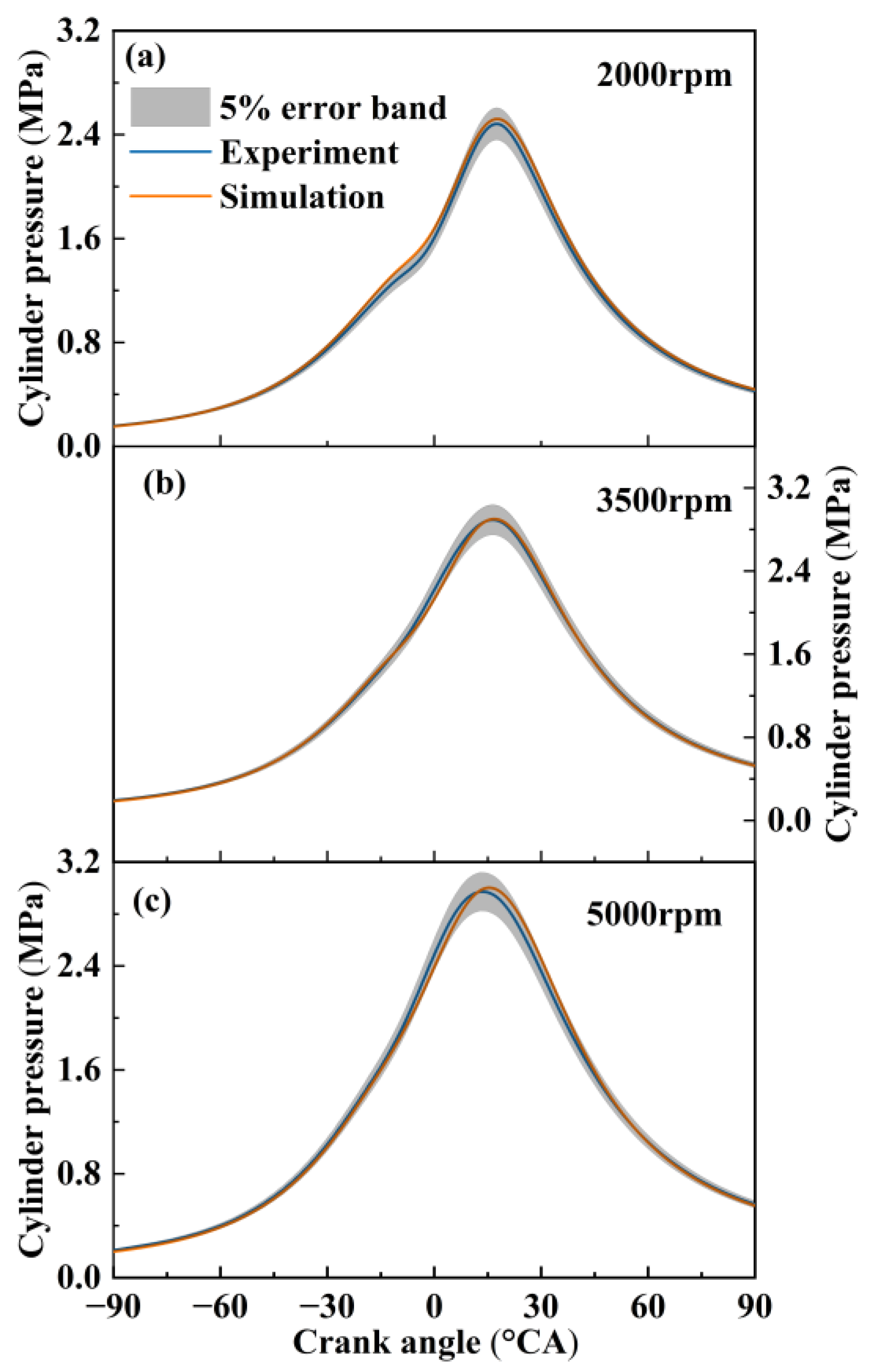
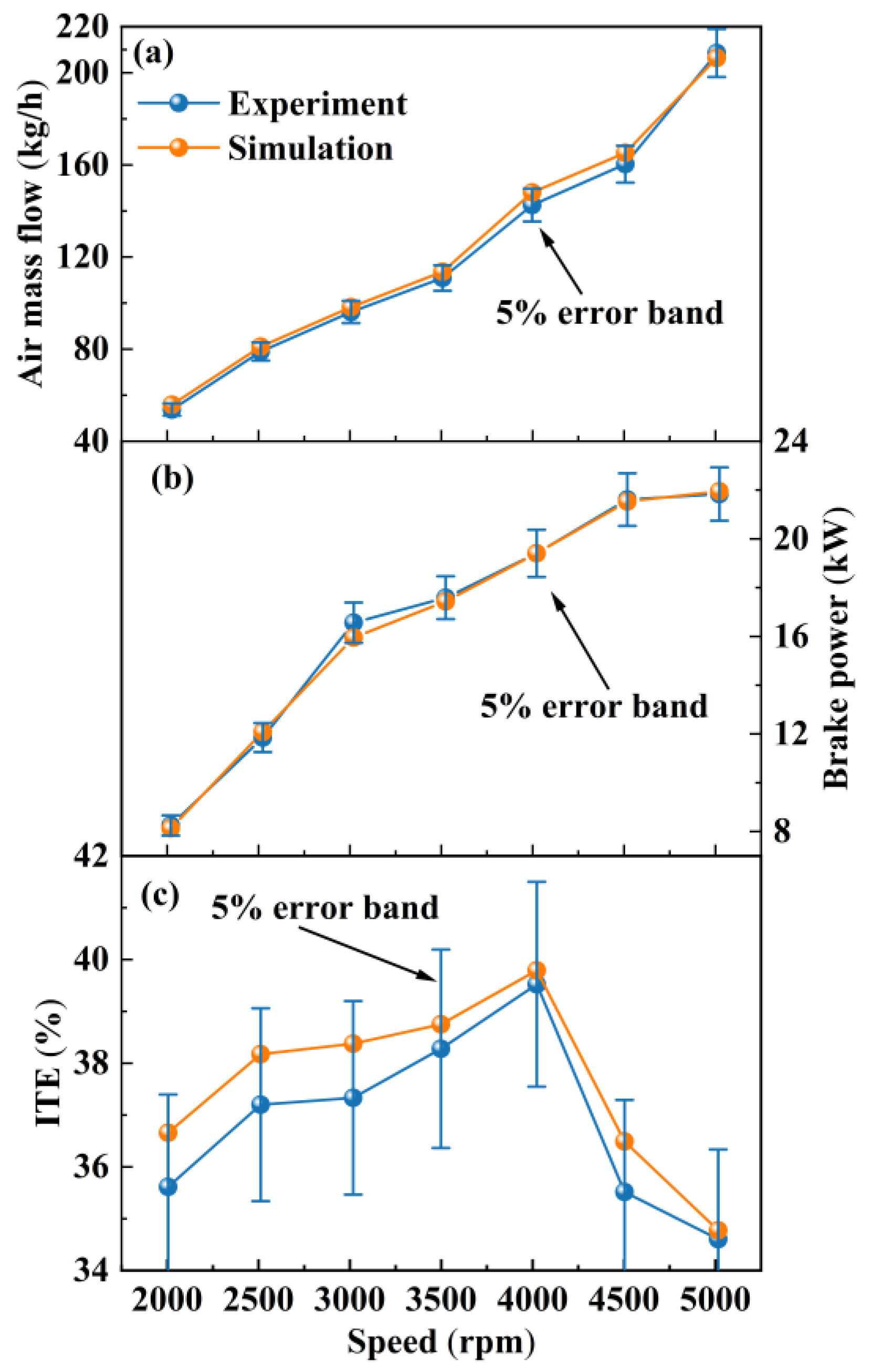
Before conducting the boosted simulation analysis, the naturally aspirated engine simulation model was validated to ensure the reliability and accuracy of the baseline simulation framework. As shown in Figure 3 and Figure 4, the simulated and tested results were compared.
In the Figure 3a–c, the cylinder pressure within the crank angle range of the compression and work stroke between the simulation and experiment were compared with a 5% error band of experimental pressure at engine speeds of 2000 rpm, 3500 rpm, and 5000 rpm.
In Figure 4, the simulated air mass flow, brake power, and indicated thermal efficiency (ITE) with engine speed under wide-open throttle (WOT) conditions were compared with that of the tested result with a 5%error band of the experimental value. As can be observed, for all the compared parameters, the simulated results consistently fall within the 5% error band of the experimental data, indicating a high level of agreement between the simulation model and the actual PFI-HICE. This demonstrates that the model can accurately reproduce the operating behavior of the PFI-HICE and is therefore suitable for subsequent boosted simulation studies and power–recovery analyses.
As for the turbocharged PFI-HICE simulation model, it was constructed on the basis of the already validated naturally aspirated model. Moreover, the turbine and compressor maps that govern the operating characteristics of the turbocharger were provided by the supplier as high-accuracy experimental datasets. Therefore, the turbocharged PFI-HICE simulation model can be considered capable of reliably reproducing the actual operating behavior of the engine and is suitable for the subsequent boosted-performance and power-recovery analyses.

3. Results and Discussion

3.1. The Performance of the PFI-HICE

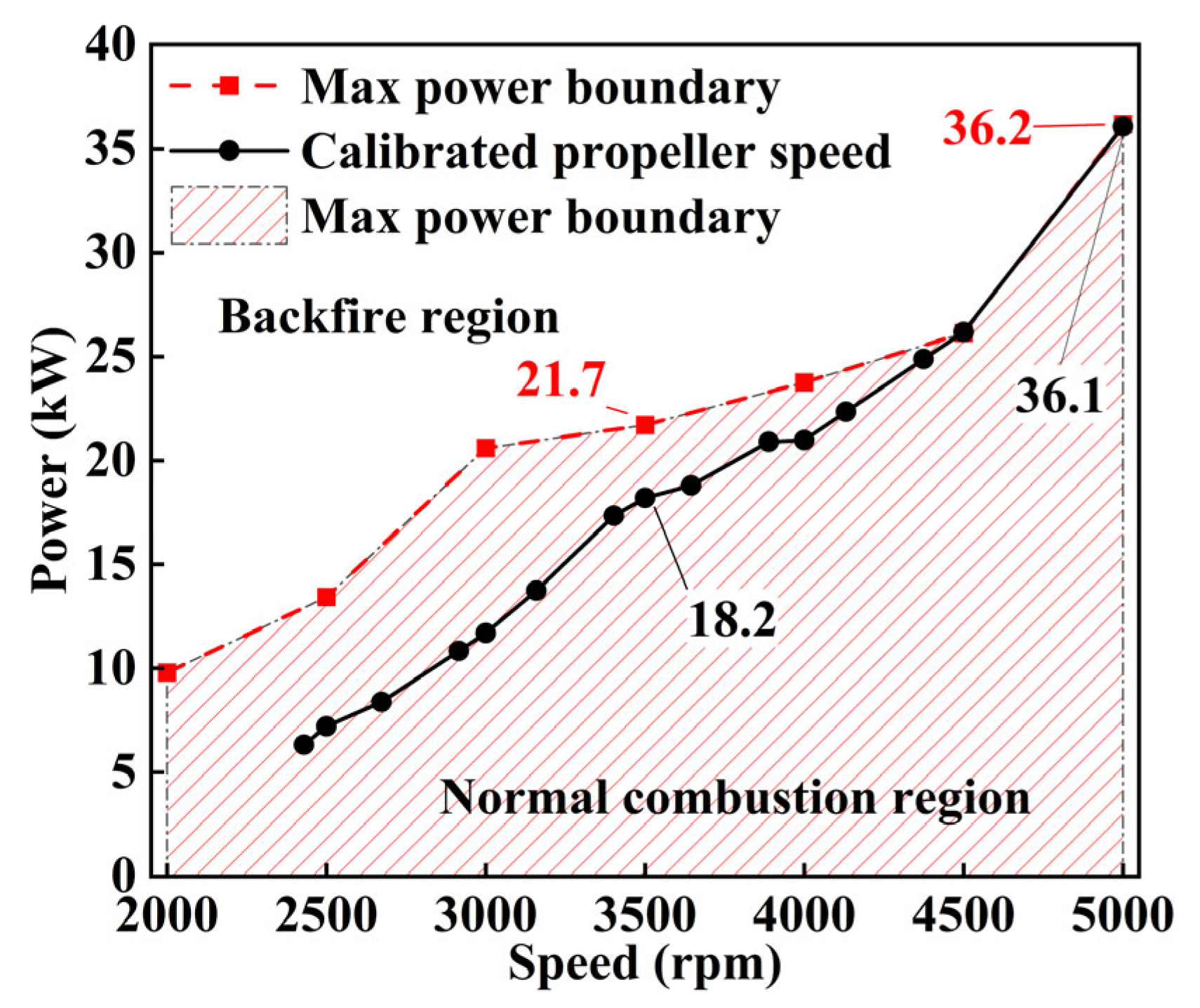
Backfire is an abnormal combustion phenomenon that limits the power output of PFI-HICEs, and its avoidance is essential to ensure stable engine operation. Figure 5 illustrates the power boundary of the naturally aspirated PFI-HICE under backfire-limited conditions at various engine speeds, where the red-shaded area represents the region of stable combustion. As shown, under sea-level naturally aspirated conditions (standard temperature and pressure), the engine achieves a maximum brake power of 36.2 kW at 5000 rpm. It is important to note that this maximum power boundary is primarily defined by the backfire limit of the current PFI-HICE configuration. This boundary could be further extended by implementing measures to suppress backfire, such as optimizing the valve overlap angle to reduce the interaction between residual exhaust gases and the fresh intake charge, or adopting early intake valve closing strategies to improve the volumetric efficiency and thermal management of the intake process. While these structural and control optimizations offer a promising pathway for further increasing the power density of hydrogen engines, they require a comprehensive redesign of the valve train and were beyond the scope of the present study, which focuses on power recovery through turbocharging matching.
As shown in Figure 5, the propeller speed characteristics of the aviation unmanned vehicle were also calibrated within the backfire-limited power boundary, as indicated by the black line in the figure, ensuring stable operation during high-altitude flight. Among these operating points, the calibrated speed of 5000 rpm corresponds to the primary takeoff and acceleration condition, requiring a maximum power of 36.1 kW. In contrast, 3500 rpm corresponds to the cruise condition, where the required power is 18.2 kW, while the naturally aspirated PFI-HICE provides an external characteristic power of 21.7 kW under the same speed.
However, unlike sea-level conditions, the air density decreases significantly with increasing flight altitude. Table 5 presents the atmospheric temperature and pressure at various altitudes. It is well known that the decrease in ambient pressure leads to a substantial reduction in the intake air mass flow under naturally aspirated conditions. Since the backfire boundary of a PFI-HICE is primarily governed by the λ value, the available power output consequently decreases markedly as altitude increases.
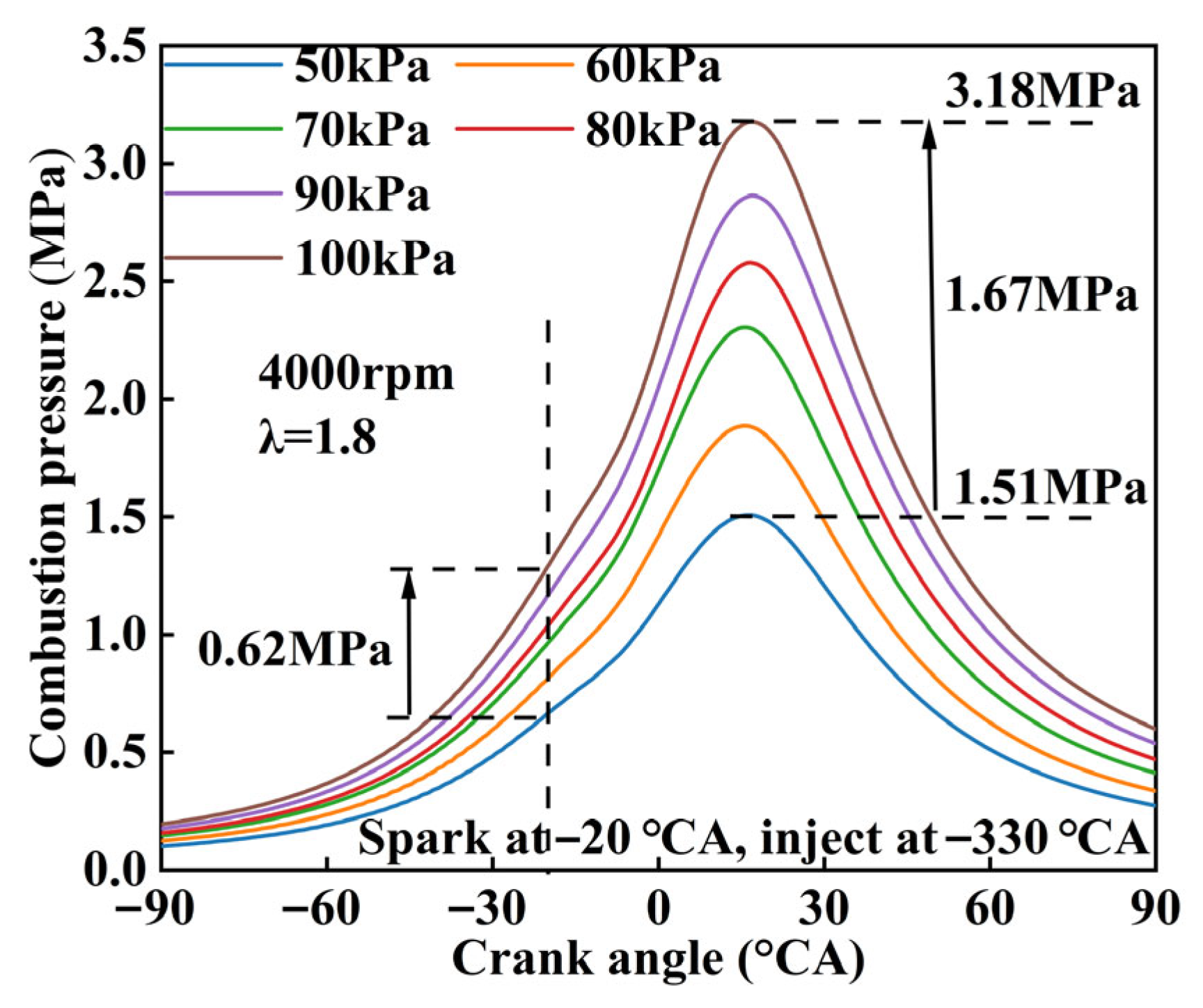
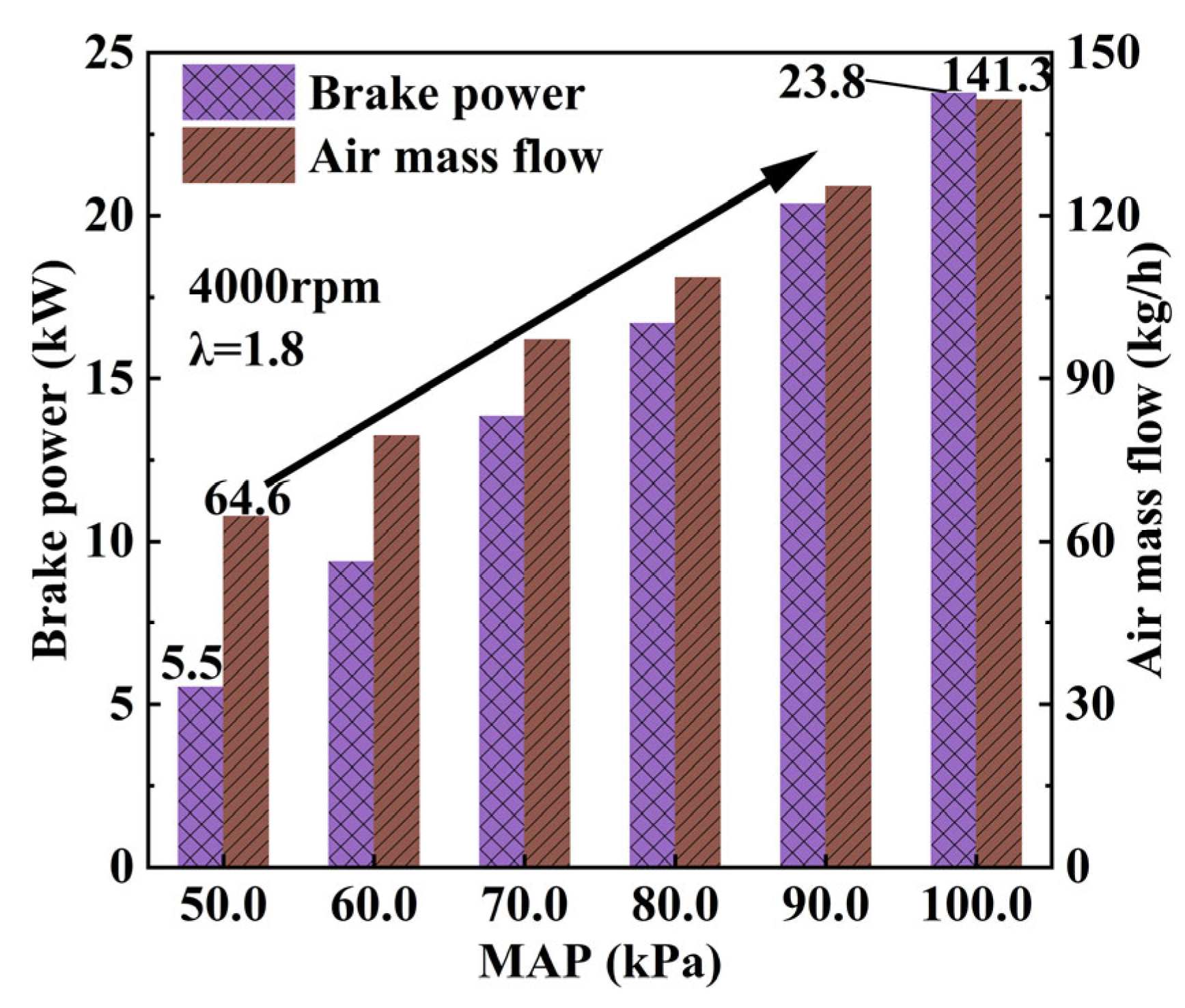
Figure 6 shows the variations in combustion pressure with crank angle at 4000 rpm under an SOI of −330 °CA, an ignition timing of −20 °CA, and an excess air ratio of λ = 1.8 for different MAP conditions. As illustrated, when the manifold absolute pressure (MAP) increases from 50 kPa to 100 kPa, the pressure at the ignition timing rises from 0.67 MPa to 1.29 MPa—an increase of 0.62 MPa (92.4%). Meanwhile, the maximum combustion pressure increases from 1.51 MPa to 3.18 MPa, corresponding to an increment of 1.67 MPa (110.6%). Moreover, as shown in Figure 7, when the MAP is raised from 50 kPa to 100 kPa, the intake air mass flow rate increases from 64.6 kg/h to 141.3 kg/h, an approximately 2.2-fold increase. Since λ is maintained at 1.8 throughout the operating conditions, the brake power accordingly rises from 5.5 kW to 23.8 kW, representing an approximate 4.3-fold enhancement. These results indicate that, to ensure stable high-altitude operation of the unmanned aerial vehicle, the MAP of the PFI-HICE must be increased so that the brake power can be restored to at least the sea-level naturally aspirated level—particularly at high engine speeds, where the calibrated propeller-speed power requirement nearly coincides with the naturally aspirated power boundary. Employing an exhaust turbocharging system provides an effective and feasible approach to increasing the intake charge and achieving the required power recovery.
To further increase the operational ceiling of the engine and enhance its high-altitude performance, an altitude of 8000 m was selected as the target operational ceiling for the hydrogen-fueled aviation piston engine, and boost-matching was carried out accordingly. To ensure that the boosting system can sufficiently cover the cruise power requirements of the unmanned aerial vehicle, a calibrated engine speed of 5000 rpm was chosen as the primary design matching point, while a normal cruise speed of 3500 rpm was used as a reference point. Based on these conditions, the key turbocharger parameters were calculated and matched. The target operating points and specific parameters for single-stage turbocharging of the HICE are listed in Table 6.

3.2. Turbocharging Matching and Power Recovery

3.2.1. Calculation of Compressor Parameters

Considering the combustion characteristics of the PFI-HICE, a theoretical evaluation of the required compressor operating parameters was carried out as the initial step in identifying a suitably matched compressor. The intake air mass flow rate directly determines the engine power output. Therefore, to ensure that the engine meets the designed power requirement, the intake air mass flow must be calculated. The intake mass flow rate can be obtained from the hydrogen consumption rate and the excess air ratio, expressed by:
m ˙ a = m ˙ H 2 λ L 0
where m ˙ a is the intake air mass flow rate (kg/s), m ˙ H 2 is the hydrogen mass flow rate (kg/s), λ is the excess air ratio, and L 0 is the stoichiometric air requirement per unit fuel mass, taken as 34.25 [15].
m ˙ H 2 can be calculated as follows:
m ˙ H 2 = P e η e t H u
where P e is the target brake power, η e t is the brake thermal efficiency, and H u is the low heat value of hydrogen, taken as 1.2 × 10⁵ kJ/kg [15].
The pressure ratio is a key design parameter for the compressor. Since hydrogen is a gaseous fuel that occupies a portion of the cylinder volume, the effect of hydrogen partial pressure must be considered in the intake pressure calculation. Dalton’s law of partial pressures is thus adopted, which assumes that the total pressure exerted by a mixture equals the sum of the partial pressures of each component at the same temperature and volume. Accordingly, the pressure ratio calculation method for hydrogen-fueled engines involves the following steps:
(1)
determine the mass flow rates of both hydrogen and air;
(2)
calculate their respective partial pressures based on the post-compression intercooler outlet temperature Tc;
(3)
obtain the total in-cylinder pressure and compute the corresponding compressor pressure ratio.
The mass of hydrogen and air entering the cylinder per cycle can be expressed as:
m h = 30   m ˙ H 2 τ n
m a = 30   m ˙ a τ n
where n is the engine speed (rpm), and τ is the number of stroke ( τ = 4).
The total in-cylinder pressure is obtained as the sum of the hydrogen and air partial pressures:
P t o t = P H 2 + P a
where P H 2 and P a are the partial pressure of the hydrogen and air, respectively, which can be calculated using the ideal gas law. A pressure loss of Δ p = 5 k Pa is assumed across the intercooler due to flow resistance. Thus, the compressor outlet pressure becomes as follows:
P C = P t o t + Δ P
Finally, the compressor pressure ratio is defined as:
π C = P C P 0
where P 0 is the pressure of compressor inlet.
Since the unmanned aerial vehicle is designed to operate within an altitude range of 4–8 km, compressor matching calculations were conducted at 3500 rpm for the 4 km condition and at 5000 rpm for the 8 km condition to ensure stable engine operation throughout the intended altitude envelope. Based on the data listed in Table 6, the calculated compressor parameters for the target operating points are summarized in Table 7. By comparing the data in Table 6 and Table 7, it can be observed that the calculated air mass flow rates agree well with the flow rates measured on the test bench, indicating the accuracy of the theoretical calculations. Therefore, the computed parameters can be reliably used for compressor matching.

3.2.2. Calculation of Turbine Parameters

Similarly, the turbine operating parameters were calculated for the 3500 rpm condition at an altitude of 4 km and the 5000 rpm condition at an altitude of 8 km, and these results were subsequently used for turbine matching. According to the operating principles of the turbine–compressor system, the power output of the turbine, after accounting for mechanical losses, is equal to the power consumed by the compressor. Therefore, the turbine expansion ratio can be determined using the following expression:
m c κ c κ c 1 R T 0 π C κ c 1 κ c 1 1 η C a d = m T κ T κ T 1 R T T 1 1 π T κ T 1 κ T η T a d η T m
where m c and m T are the mass flow of the compressor and turbine, respectively. κ c is the adiabatic index (specific heat ratio) of the compressor, taken as 1.4; R is the specific gas constant; π C is the compressor pressure ratio; T 0 is the compressor inlet temperature (K); η C a d is the adiabatic efficiency of the compressor, taken as 0.75; κ T is the adiabatic index (specific heat ratio) of the turbine, taken as 1.33; T T is the turbine inlet temperature (K); π T is the turbine expansion ratio; η T a d is the adiabatic efficiency of the turbine, taken as 0.75; η T m is the mechanical efficiency of the turbine, taken as 0.95. Therefore, the calculated results are summarized in Table 8.

3.2.3. Analysis of Boost-Matching and Engine Power Recovery

There are two primary approaches for regulating the boost pressure, namely variable geometry turbine (VGT) vane position control and waste-gate turbine (WGT) bypass valve control. To investigate the influence of different boost-pressure regulation methods on the performance of hydrogen-fueled aviation piston engines, both VGT and WGT turbocharger models were established in this study. Based on these models, the effects of varying VGT vane openings and waste-gate valve openings on the boosting system and overall engine performance were analyzed. The results provide a data foundation for the future design of boost control strategies for hydrogen-fueled aviation piston engines.
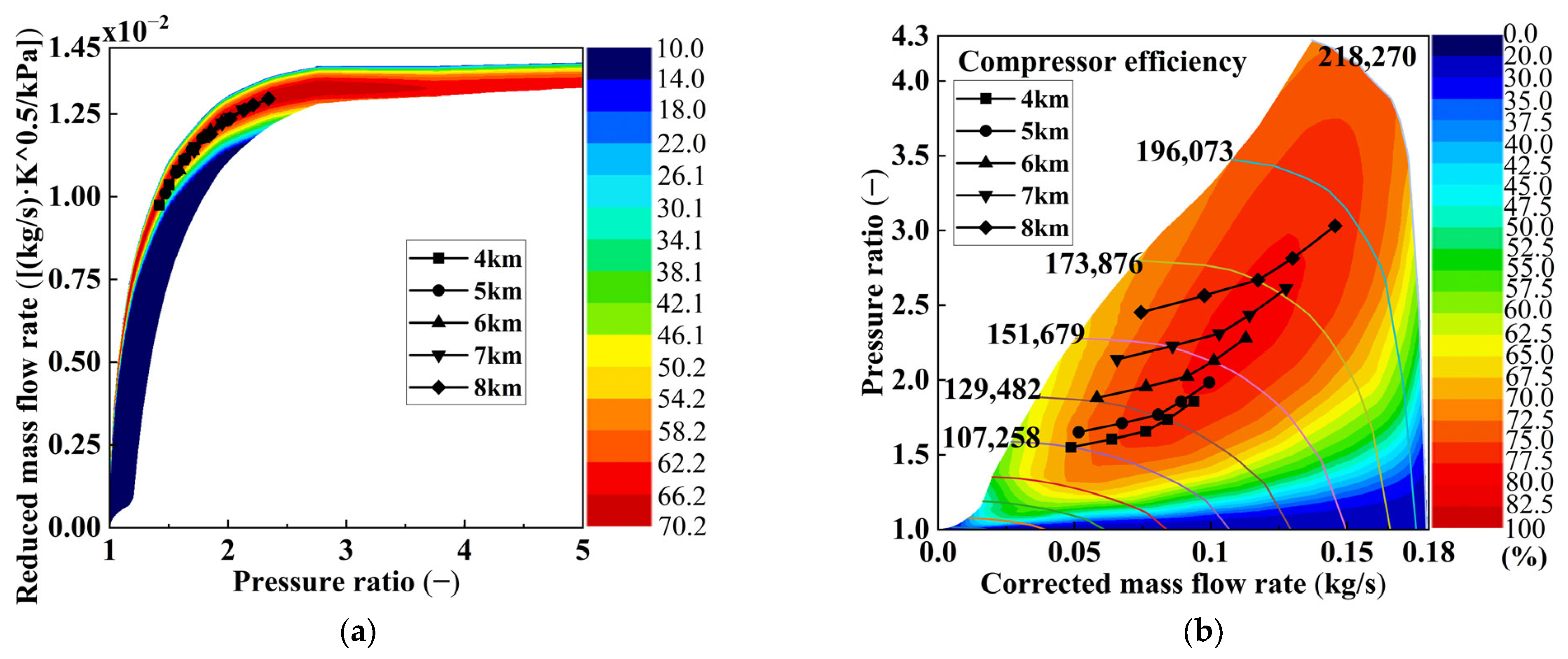
Figure 8a,b show the operating points of the WGT turbine and compressor at various engine speeds under altitudes ranging from 4 km to 8 km. The corresponding PFI-HICE engine speeds increase with mass flow rate and include 3500 rpm, 4000 rpm, 4500 rpm, 4800 rpm, and 5000 rpm. Since the WGT regulates turbine flow by adjusting the waste-gate valve opening, only one turbine map is required for different valve positions. As shown in Figure 8, for all altitudes and engine speeds, the operating points remain well away from both the choking and surge limits of the turbine and compressor maps while maintaining relatively high operating efficiencies. These results demonstrate that the WGT-based turbocharging scheme provides an appropriately matched turbine–compressor pair, thereby enabling stable and reliable operation of the boosting system.
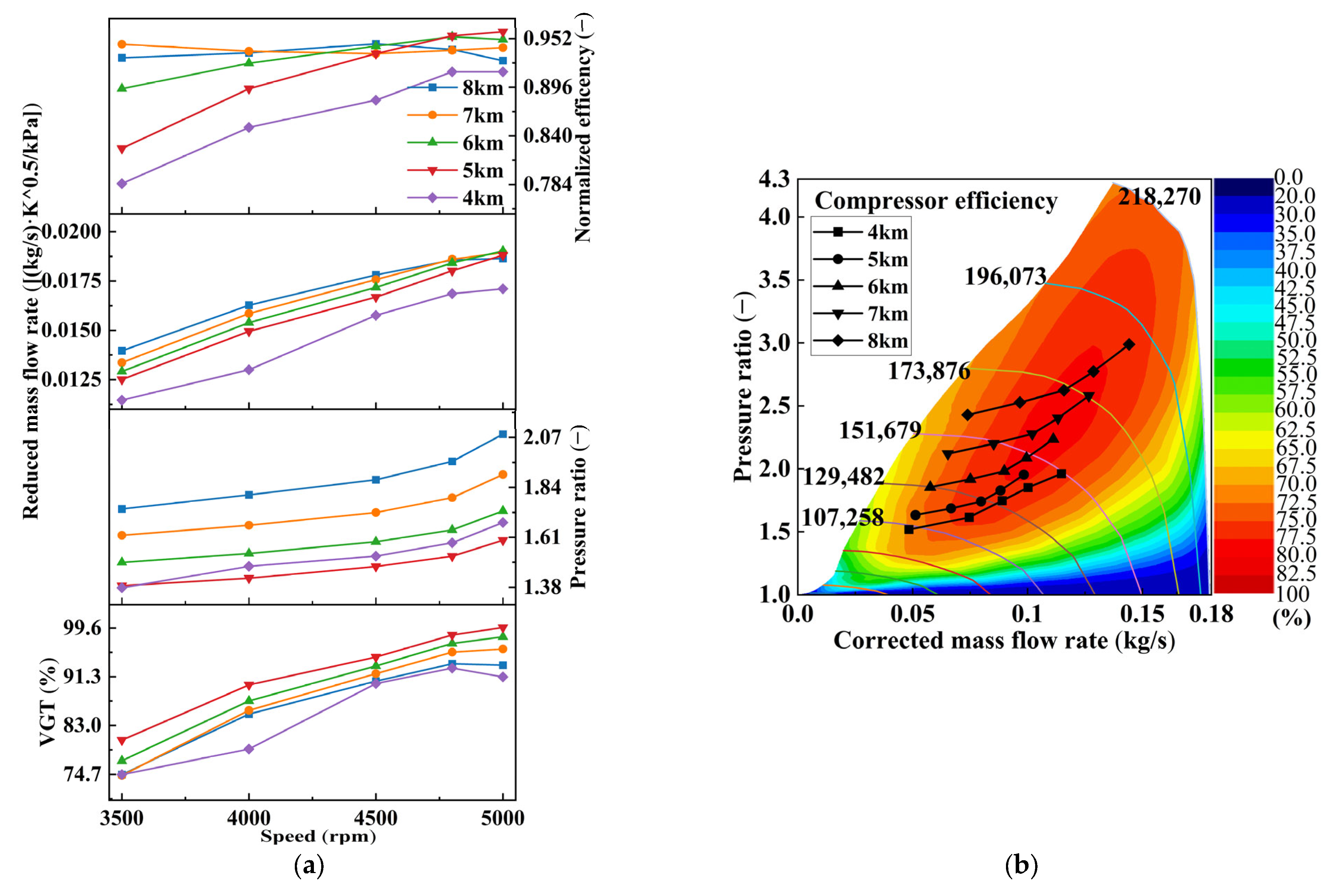
Figure 9a,b show the turbine and compressor matching characteristics under the VGT turbocharging scheme. Unlike the WGT configuration, the VGT system provides a distinct turbine map for each vane opening. To more clearly illustrate the turbine-matching performance, Figure 9a highlights several key operating-point parameters on the turbine maps, including the VGT vane opening, turbine expansion ratio, mass flow rate, and normalized efficiency. Here, the normalized efficiency is defined as the ratio of the turbine efficiency at the operating point to the maximum efficiency corresponding to the same VGT vane position. As shown, with increasing altitude and engine speed, the VGT vane opening varies within a range of 74–99%, while the turbine expansion ratio ranges from 1.38 to 2.07. The normalized efficiency remains between 78.4% and 96.3%. These results indicate that the operating points consistently fall within the high-efficiency region of the turbine maps, demonstrating good matching performance of the VGT turbine.
Furthermore, the same compressor used in the WGT configuration is adopted for the VGT scheme. Driven by the VGT turbine, the compressor operating points remain well away from the choking and surge boundaries and stay within the high-efficiency region. Thus, the VGT turbocharging configuration also achieves favorable matching characteristics.
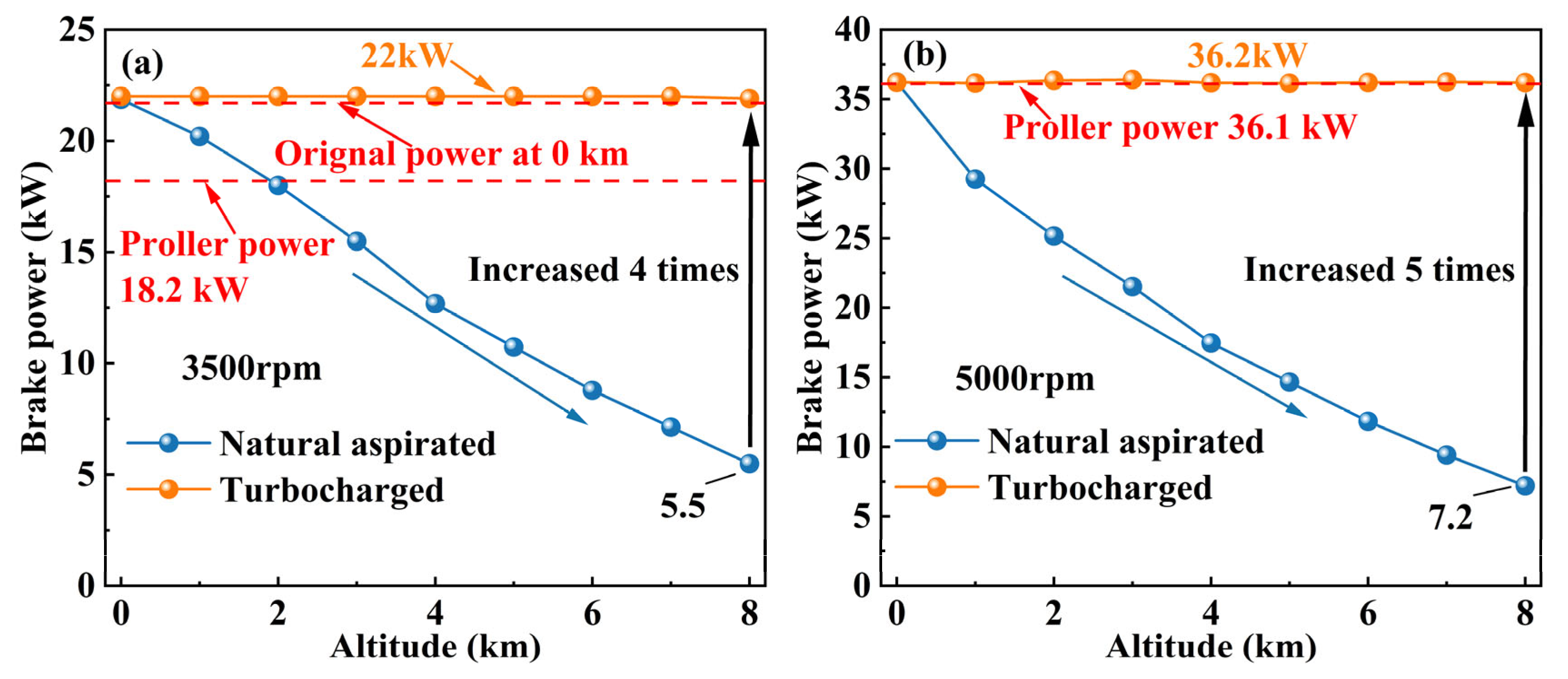
With the aid of the boosting system, the engine power at high altitudes is effectively restored. Figure 10a,b present a comparison of the engine power before and after boost matching at engine speeds of 3500 rpm and 5000 rpm, respectively. As shown, under naturally aspirated conditions, the power output of the PFI-HICE decreases continuously with increasing altitude. At 3500 rpm and 5000 rpm, the power drops from 21.7 kW and 36.2 kW at sea level to 5.5 kW and 7.2 kW at an altitude of 8 km, respectively. After boost matching, the power output of the hydrogen-fueled aviation piston engine increases significantly. At 8 km, the power at 3500 rpm and 5000 rpm increases by approximately four-fold and five-fold, respectively. Across the entire altitude range of 0–8 km, the boosted engine is capable of fully recovering its sea-level power, thereby substantially enhancing the high-altitude performance of the PFI-HICE and meeting the power requirements of the unmanned aerial vehicle propulsion system.

3.3. Comparative Analysis of Two Boost-Pressure Regulation Methods and Their Effects on Turbocharging and Engine Performance

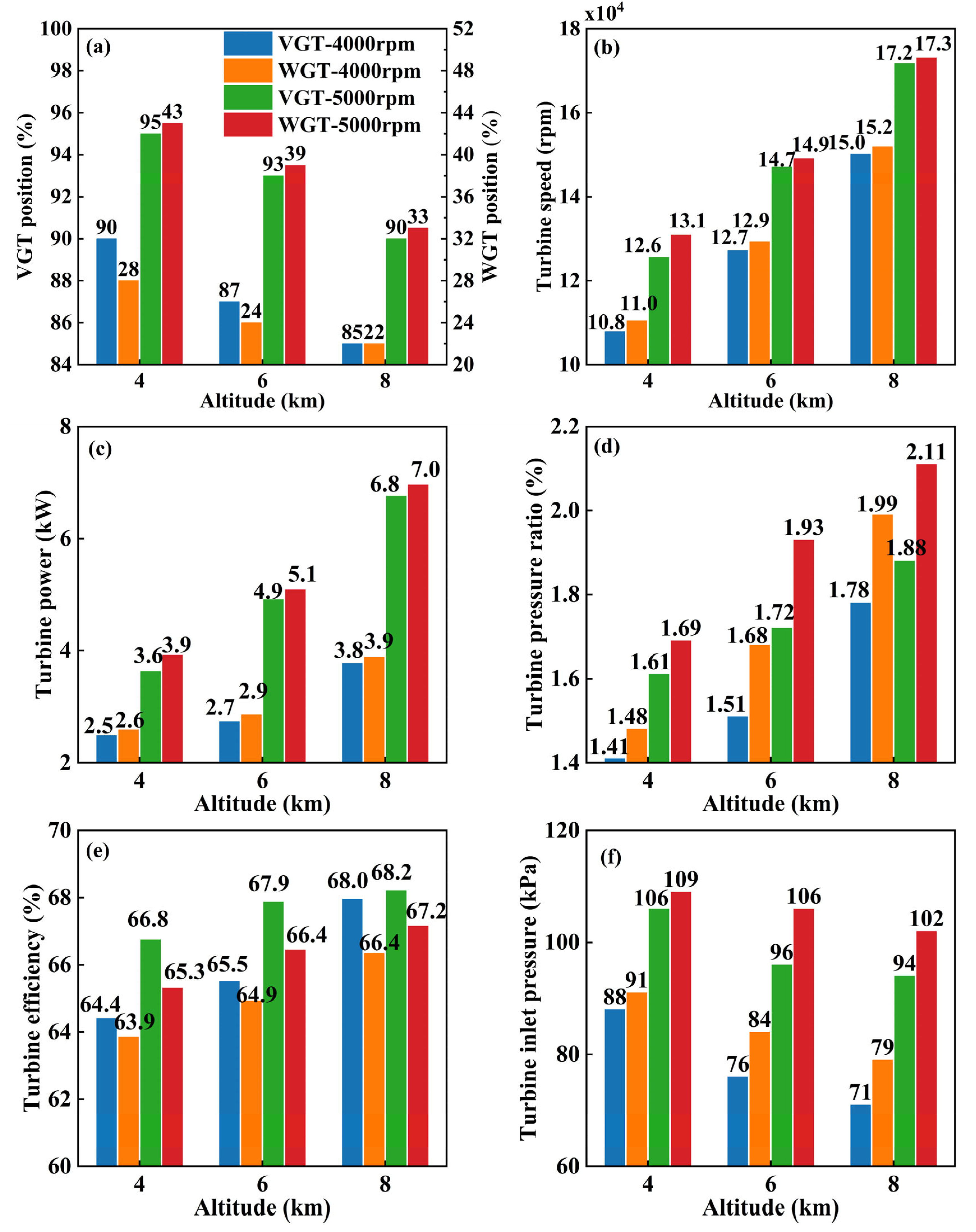
Figure 11 presents a comparison of the boosting-system performance under the two different boost-pressure regulation strategies at various altitudes and engine speeds. At 5000 rpm, the target recovered power is 36.2 kW, while at 4000 rpm, the target recovered power is 26.1 kW.
As shown in Figure 11a, both the VGT vane position and WGT opening decrease with increasing altitude. For instance, at 4000 rpm, the VGT opening decreases from 90% at 4 km to 85% at 8 km, while the WGT opening drops from 28% to 22%. This occurs because the reduced air density at higher altitudes demands a greater degree of turbocharger intervention to restore intake pressure, which is achieved by further closing the VGT vanes or VGT valve. Additionally, both control parameters increase with engine speed due to the higher exhaust energy available at 5000 rpm. At 6 km altitude, the VGT opening rises from 87% to 93% and the WGT opening increases from 24% to 39% as engine speed increases from 4000 rpm to 5000 rpm.
As shown in Figure 11b, the turbine expansion ratio increases continuously with altitude. This trend is driven by the reduction in ambient pressure, which lowers the turbine outlet pressure and exhaust back pressure, allowing greater expansion of the exhaust gas. The need for higher boosting intervention at altitude further elevates the expansion ratio. Moreover, the expansion ratio under VGT control is lower than that under the WGT strategy because the VGT directs all exhaust gas through the turbine. This improves turbine energy utilization and reduces the required expansion ratio compared with the WGT strategy, which bypasses part of the exhaust flow and therefore requires stronger boosting action to reach the same intake pressure.
As shown in Figure 11c, the turbocharger rotational speed increases with altitude for both control strategies. This is a consequence of reduced ambient density, which necessitates additional compression work to restore manifold pressure. For the same target power, the VGT strategy consistently achieves lower turbocharger speeds compared with WGT control. The VGT adjusts the vane angle to maintain optimal turbine inlet flow conditions and minimize exhaust energy losses, enabling effective boosting at lower rotational speeds and thus reducing thermal and mechanical loading on the turbocharger.
As shown in Figure 11d, turbine power increases with engine speed due to the higher exhaust mass flow and energy at 5000 rpm. At the same altitude and speed, turbine power under VGT regulation remains lower than that under the WGT strategy. For example, at 8 km, turbine power for VGT and WGT control is 3.77 kW and 3.88 kW, respectively. The WGT strategy diverts part of the high-energy exhaust flow, reducing turbine efficiency and requiring higher turbine power input to compensate for the energy lost through bypassing.
Turbine inlet pressure is an important parameter that directly affects the engine exhaust back pressure. Excessively high turbine inlet pressure can impede the intake stroke and increase pumping losses; thus, it is closely related to the scavenging performance of the engine. As shown in Figure 11e, turbine inlet pressure decreases with increasing altitude. At 4000 rpm, turbine inlet pressure for VGT control decreases from 88 kPa at 4 km to 71 kPa at 8 km, while the WGT strategy shows a decrease from 91 kPa to 79 kPa. The reduction in inlet pressure results from the increased turbine expansion ratio at high altitude, which lowers exhaust back pressure. At all conditions, the VGT strategy yields lower turbine inlet pressure because adjusting the vane angle effectively increases the turbine flow capacity and reduces flow resistance, thereby improving scavenging performance and avoiding excessive pumping losses.
As shown in Figure 11f, turbine efficiency increases with altitude for both boosting strategies, and the VGT exhibits consistently higher efficiency. When achieving the same target power, the VGT utilizes exhaust energy more effectively due to its ability to modulate turbine geometry and minimize energy losses. As altitude rises, the decreasing VGT vane position or WGT opening enhances the turbine expansion ratio, resulting in more complete exhaust-gas energy extraction and higher turbine efficiency. For instance, at 5000 r/min, turbine efficiency for the VGT and WGT approaches increases from 65.75% and 65.31% at 4 km to 68.21% and 67.15% at 8 km, respectively.
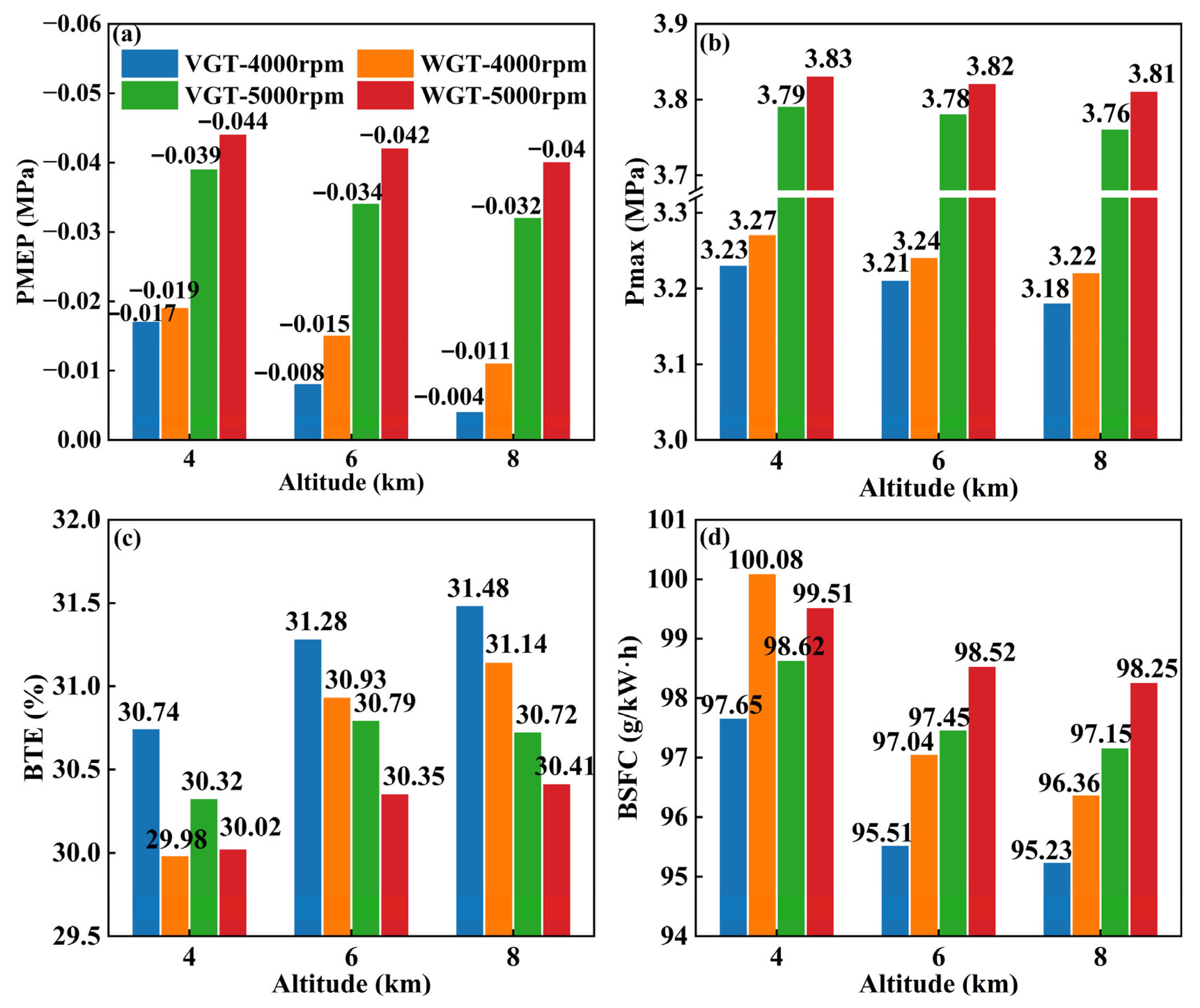
Figure 12 compares the effects of the two boost-pressure regulation strategies on the performance of the PFI-HICE across different altitudes and engine speeds.
As shown in Figure 12a, the pumping mean effective pressure (PMEP) remains negative under both strategies, indicating that pumping losses persist during the gas-exchange process. For a given engine speed, PMEP decreases progressively with altitude. At 4000 r/min, the PMEP under the VGT and WGT strategies decreases from −0.017 MPa and −0.019 MPa at 4000 m to −0.004 MPa and −0.011 MPa at 8000 m, respectively. This decline results from the increased turbine expansion ratio and reduced turbine inlet pressure at high altitudes, which decrease exhaust back pressure and thereby reduce pumping losses. Additionally, at the same altitude, the VGT strategy consistently yields lower PMEP than the waste-gate strategy. This is due to the lower turbine inlet pressure achieved by VGT regulation, which enlarges the intake–exhaust pressure differential, improves scavenging, and diminishes intake flow resistance, ultimately reducing pumping loss.
As shown in Figure 12b, the maximum in-cylinder pressure under the VGT strategy is lower than that under WGT control. At 8000 m and 5000 rpm, the VGT and WGT configurations produce maximum in-cylinder pressures of 3.76 MPa and 3.81 MPa, respectively. This difference arises from the higher turbine inlet pressure associated with the waste-gate strategy, which increases pumping loss and raises the retained residual gas fraction. The elevated residual-gas temperature heats the incoming fresh mixture, increases the initial in-cylinder temperature prior to ignition, and intensifies combustion, resulting in a higher maximum in-cylinder pressure.
As shown in Figure 12c,d, the VGT strategy provides superior fuel economy. At 4000 rpm and an altitude of 8 km, the indicated thermal efficiencies under VGT and WGT control are 31.48% and 31.14%, corresponding to brake-specific fuel consumption (BSFC) values of 95.23 g/kW·h and 96.36 g/kW·h, respectively. The improvement in thermal efficiency with VGT can be attributed to two main factors. First, the reduced PMEP under VGT lowers pumping losses and enhances the gas-exchange process. Second, the VGT strategy enables more effective utilization of exhaust energy by directing all exhaust flow through the turbine, thus improving the overall turbocharging efficiency. Consequently, the VGT configuration achieves lower BSFC and demonstrates a clear advantage over the waste-gate strategy in terms of fuel economy.
By regulating the vane position of the VGT or the opening of the WGT valve, the exhaust-gas energy delivered to the turbine can be adjusted, thereby controlling the boost pressure and altering the intake air mass of the engine. This modulation enables effective power recovery for HICEs operating across different altitudes. Based on the numerical simulation model, a comparative analysis was conducted to examine the influence of the two boost-pressure control strategies on both turbocharger behavior and engine performance, and the results are summarized in Table 9. Under the WGT regulation strategy, the turbine inlet temperature and pressure remain relatively high, leading to a higher turbocharger rotational speed and pressure ratio. In contrast, the VGT strategy maintains a lower turbine inlet pressure and achieves higher turbine efficiency due to its ability to modulate the turbine flow area. Regarding engine performance, the VGT strategy results in lower pumping loss and improved in-cylinder combustion, which collectively enhance the indicated thermal efficiency and fuel economy compared with waste-gate control.
Overall, the VGT-based boosting strategy exhibits stronger regulation capability by adjusting the turbine vane angle to optimize energy utilization and provide superior overload protection. Therefore, compared with waste-gate turbocharging, the VGT is a more effective boost-pressure regulation method for hydrogen-fueled engines, delivering both improved turbocharger performance and enhanced engine efficiency.

4. Conclusions

In this study, a systematic turbocharging-matching investigation was conducted for an aviation port fuel injection hydrogen internal combustion engine using a validated GT-Power framework and experimental data. The main findings are summarized as follows:
(1) Turbocharging is essential for restoring altitude-induced power loss in aviation hydrogen internal combustion engines. At an altitude of 8 km, naturally aspirated power falls to 5.5 kW (3500 rpm) and 7.2 kW (5000 rpm). By implementing the tailored boosting system, the engine successfully restores its sea-level power, achieving a nearly four-fold to five-fold power increase relative to naturally aspirated conditions.
(2) Both variable geometry turbine and waste-gate turbine systems maintain safe compressor–turbine operation across 4–8 km without entering surge or choke regions. However, the variable geometry turbine system demonstrates superior adaptability, maintaining normalized efficiencies of 78–96% and providing a more favorable balance between operating efficiency and mechanical safety compared to the waste-gate turbine, which relies on flow bypassing.
(3) Comparative analysis confirms that the variable geometry turbine strategy consistently delivers superior engine performance. By optimizing exhaust-energy utilization, the variable geometry turbine reduces turbine inlet pressure and pumping losses, leading to lower maximum in-cylinder pressures and improved brake thermal efficiency. Consequently, the variable geometry turbine configuration achieves lower brake-specific fuel consumption across all altitudes, proving to be a more effective solution for high-altitude hydrogen aviation propulsion.
Overall, the variable geometry turbine-based strategy offers stronger high-altitude adaptability and fuel economy, providing a practical framework for the development of robust, clean aviation power systems.

Author Contributions

Conceptualization, W.W. and Y.Y.; methodology, W.W.; software, Y.Y.; validation, W.W., Y.Y.; formal analysis, Y.Y.; investigation, W.W.; resources, W.W.; data curation, W.W.; writing—original draft preparation, W.W.; visualization, Y.Y.; supervision, Y.Y.; project administration, Y.Y.; funding acquisition, Y.Y. All authors have read and agreed to the published version of the manuscript.

Funding

This research was funded by the National Natural Science Foundation of China, grant number 62403435; Automotive Measurement, Control and Safety Sichuan Provincial Key Laboratory Open Research Project (QCCK2024-0010); Key Research Project of Higher Education Institutions in Henan Province (25A413007).

Data Availability Statement

The original contributions presented in the study are included in the article. Further inquiries can be directed to the corresponding author.

Conflicts of Interest

The authors declare no conflicts of interest.

Abbreviations

The following abbreviations are used in this manuscript:
HICEshydrogen internal combustion engines
PFI-HICEsport-fuel-injected HICEs
VGTvariable geometry turbine
WGTwaste-gate turbine
DIdirect injection
ECUelectronic control unit
MBTmaximum brake torque
ITEindicated thermal efficiency
WOTwide-open throttle
PMEPpumping mean effective pressure
BSFCbrake-specific fuel consumption
λexcess air coefficient

References

  1. Lu, Y.; Que, J.; Xia, Y.; Li, X.; Jiang, Q.; Feng, L. A comparative study of the effects of EGR on combustion and emission characteristics of port fuel injection and late direct injection in hydrogen internal combustion engine. Appl. Energy 2024, 375, 123830. [Google Scholar] [CrossRef]
  2. Wang, J.; Huang, Z.; Tang, C.; Miao, H.; Wang, X. Numerical study of the effect of hydrogen addition on methane–air mixtures combustion. Int. J. Hydrogen Energy 2009, 34, 1084–1096. [Google Scholar] [CrossRef]
  3. Hu, E.; Huang, Z.; He, J.; Miao, H. Experimental and numerical study on laminar burning velocities and flame instabilities of hydrogen–air mixtures at elevated pressures and temperatures. Int. J. Hydrogen Energy 2009, 34, 8741–8755. [Google Scholar] [CrossRef]
  4. Zhang, Y.; Huang, Z.; Wei, L.; Zhang, J.; Law, C.K. Experimental and modeling study on ignition delays of lean mixtures of methane, hydrogen, oxygen, and argon at elevated pressures. Combust. Flame 2012, 159, 918–931. [Google Scholar] [CrossRef]
  5. Global Hydrogen Review 2023. 2023. Available online: https://iea.blob.core.windows.net/assets/cb9d5903-0df2-4c6c-afa1-4012f9ed45d2/GlobalHydrogenReview2023.pdf (accessed on 10 December 2025).
  6. Duan, Y.; Sun, B.; Li, Q.; Wu, X.; Hu, T.; Luo, Q. Combustion characteristics of a turbocharged direct-injection hydrogen engine. Energy Convers. Manag. 2023, 291, 117267. [Google Scholar] [CrossRef]
  7. Kazula, S.; de Graaf, S.; Enghardt, L. Review of fuel cell technologies and evaluation of their potential and challenges for electrified propulsion systems in commercial aviation. In Proceedings of the Global Power and Propulsion Society, Chania, Greece, 12–14 September 2022. [Google Scholar]
  8. Razmi, A.R.; Hanifi, A.R.; Shahbakhti, M. Comparative techno-economic assessment of solid oxide fuel cells versus hydrogen-fueled internal combustion engines for institutional energy management. Fuel 2026, 405, 136680. [Google Scholar] [CrossRef]
  9. Kamil, M.; Alobaid, A.; Mustafizur Rahman, M.; Abu Bakar, R.; Awad, O.I. One-dimensional single-zone analysis of combustion, thermodynamics, and heat transfer in a hydrogen-fueled internal combustion engine: A parametric evaluation. Int. J. Hydrogen Energy 2025, 183, 151838. [Google Scholar] [CrossRef]
  10. Bao, L.; Sun, B.; Luo, Q.; Li, J.; Qian, D.; Ma, H.; Guo, Y. Development of a turbocharged direct-injection hydrogen engine to achieve clean, efficient, and high-power performance. Fuel 2022, 324, 124713. [Google Scholar] [CrossRef]
  11. Panthi, N.; Alzate, A.F.G.; Sharma, P.; AlRamadan, A.; Cenker, E.; Magnotti, G. Direct Injection Hydrogen Combustion Under Leaner Conditions in an Optical Engine Using Optical/Laser Diagnostics. 2025. Available online: https://ssrn.com/abstract=5124521 (accessed on 10 December 2025).
  12. Rao, X.; Lou, D.; Zhang, Y.; Wang, Z.; Cai, K.; Zhu, K. Experimental investigation and multi-objective optimization of combustion characteristics and performance in a port-fuel-injected hydrogen engine. Int. J. Hydrogen Energy 2025, 192, 152370. [Google Scholar] [CrossRef]
  13. Khalid, A.H.; Muhamad Said, M.F.; Veza, I.; Abas, M.A.; Roslan, M.F.; Abubakar, S.; Jalal, M.R. Hydrogen port fuel injection: Review of fuel injection control strategies to mitigate backfire in internal combustion engine fuelled with hydrogen. Int. J. Hydrogen Energy 2024, 66, 571–581. [Google Scholar] [CrossRef]
  14. Gürbüz, H.; Akçay, İ.H. Evaluating the effects of boosting intake-air pressure on the performance and environmental-economic indicators in a hydrogen-fueled SI engine. Int. J. Hydrogen Energy 2021, 46, 28801–28810. [Google Scholar] [CrossRef]
  15. Verhelst, S.; Wallner, T. Hydrogen-fueled internal combustion engines. Prog. Energy Combust. Sci. 2009, 35, 490–527. [Google Scholar] [CrossRef]
  16. Bao, L.; Sun, B.; Luo, Q. Optimal control strategy of the turbocharged direct-injection hydrogen engine to achieve near-zero emissions with large power and high brake thermal efficiency. Fuel 2022, 325, 124913. [Google Scholar] [CrossRef]
  17. Güler, İ.; Kılıçaslan, A.; Küçük, T.; Corsini, D. Transient and altitude performance analysis of hydrogen fuelled internal combustion engines with different charging concepts. Int. J. Hydrogen Energy 2024, 49, 1112–1122. [Google Scholar] [CrossRef]
  18. Lai, F.; Sun, B.; Xiao, G.; Luo, Q.; Bao, L. Research on optimizing turbo-matching of a large-displacement PFI hydrogen engine to achieve high-power performance. Int. J. Hydrogen Energy 2023, 48, 38508–38520. [Google Scholar] [CrossRef]
  19. Boretti, A. Electric turbochargers in hydrogen internal combustion engines powered hybrid electric vehicles: Advancing performance, efficiency, and sustainability. Int. J. Hydrogen Energy 2025, 103, 690–700. [Google Scholar] [CrossRef]
  20. Pucillo, F.; Millo, F.; Piano, A.; Giordana, S.; Rapetto, N.; Paulicelli, F. Turbocharging System Selection for a Hydrogen-Fuelled Spark-Ignition Internal Combustion Engine for Heavy-Duty Applications. In SAE Technical Paper; SAE International: Warrendale, PA, USA, 2024. [Google Scholar] [CrossRef]
  21. Barış, O.; Güler, İ.; Yaşgül, A. The effect of different charging concepts on hydrogen fuelled internal combustion engines. Fuel 2023, 343, 127983. [Google Scholar] [CrossRef]
  22. Robert, J.N.; Tang, X.; Boyer, B.; Oltmans, B.; Denlinger, A.; Heffel, J.W. Hydrogen IC Engine Boosting Performance and NOx Study. SAE Trans. 2003, 112, 865–875. [Google Scholar]
  23. Brin, J.; Waldron, T. Analysis of Boosting Architectures for Hydrogen Internal Combustion Engines. In SAE Technical Paper; SAE International: Warrendale, PA, USA, 2023. [Google Scholar] [CrossRef]
  24. Wang, K.; Sun, B.; Luo, Q.; Li, Q.; Wu, X.; Hu, T.; Bao, L.-Z.; Wang, X. Performance optimization design of direct injection turbocharged hydrogen internal combustion engine. Appl. Energy Combust. Sci. 2023, 16, 100204. [Google Scholar] [CrossRef]
  25. Carlucci, A.P.; Ficarella, A.; Laforgia, D.; Renna, A. Supercharging system behavior for high altitude operation of an aircraft 2-stroke diesel engine. Energy Convers. Manag. 2015, 101, 470–480. [Google Scholar] [CrossRef]
  26. Yang, B.; Martinez-Botas, R.; Yang, M. Rotor flow-field timescale and unsteady effects on pulsed-flow turbocharger turbine. Aerosp. Sci. Technol. 2022, 120, 107231. [Google Scholar] [CrossRef]
  27. Zhou, Y.; Li, X.; Geng, T.; Shao, L.; Xu, Z.; Zhong, Z.; Zhu, K.; Song, Y.; Ding, S. Piston engine energy utilization for variable-altitude applications: A review of two-stage turbocharging technologies. Renew. Sustain. Energy Rev. 2025, 223, 116036. [Google Scholar] [CrossRef]
  28. Luo, Q.; Sun, B. Effect of the miller cycle on the performance of turbocharged hydrogen internal combustion engines. Energy Convers. Manag. 2016, 123, 209–217. [Google Scholar] [CrossRef]
Figure 1. The test engine and schematic of the test bench.
Fire 09 00051 g001
Figure 2. Simulation model of the PFI-HICE: (a) natural aspiration model under sea-level conditions, baseline naturally aspirated model used for sea-level experimental validation. (b) turbocharged model under high-altitude conditions, turbocharged model highlighting the addition of the turbocharger system for high-altitude studies.
Fire 09 00051 g002
Figure 3. Comparison of cylinder pressure between experiment and simulation with crank angle: (a) Comparison with an engine speed of 2000rpm. (b) Comparison with an engine speed of 3500rpm. (c) Comparison with an engine speed of 5000rpm.
Fire 09 00051 g003
Figure 4. Comparison of engine performance between experiment and simulation with speed: (a) Comparison of the air mass flow with speed. (b) Comparison of the brake power with speed. (c) Comparison of the indicated thermal efficiency (ITE) with speed.
Fire 09 00051 g004
Figure 5. Max power boundary and calibrated propeller speed under sea-level conditions.
Fire 09 00051 g005
Figure 6. The combustion pressure with crank angle under various MAP conditions.
Fire 09 00051 g006
Figure 7. The air mass flow and brake power under various MAP conditions.
Fire 09 00051 g007
Figure 8. Waste gate turbocharger map and operating points at different altitudes. (a) Waste gate turbine map and operating points; (b) Compressor map and operating points.
Fire 09 00051 g008
Figure 9. VGT map and operating points at different altitudes. (a) The characteristics of operating points on the VGT turbine. (b) The compressor map and operating points.
Fire 09 00051 g009
Figure 10. Comparison of brake power for naturally aspirated and turbocharged PFI-HICEs under different altitude conditions: (a) Comparison with an engine speed of 3500 rpm. (b) Comparison with an engine speed of 5000 rpm.
Fire 09 00051 g010
Figure 11. Comparison of the characteristics of two turbocharger methods with various altitudes: (a) Comparison of VGT and WGT position with various altitudes. (b) Comparison of turbine speed with various altitudes. (c) Comparison of turbine power with various altitudes. (d) Comparison of turbine pressure ratio with various altitudes. (e) Comparison of turbine efficiency with various altitudes. (f) Comparison of turbine inlet pressure with various altitudes.
Fire 09 00051 g011
Figure 12. Performance of the turbocharged PFI-HICE with various altitudes: (a) PMEP with various altitudes. (b) Pmax with various altitudes. (c) BTE with various altitudes. (d) BSFC with various altitudes.
Fire 09 00051 g012
Table 1. Specific parameters of the DI-HICE.
ParametersUnitValue
Engine type -horizontally opposed 4-cylinder, 4-stroke
Bore × stroke mm86 × 61
Compression ratio-8.5
Fuel delivery strategy-port fuel injection
Injector-BOSCH 13096246
Number of injectors -8
Fuel-high-purity hydrogen (99.99%)
Table 2. Specific parameters of the measuring instruments.
InstrumentsDeviceAccuracy
DynamometerGW250±1 N·m and ±1 rpm
Combustion pressure sensorKistler 6054 BR transducer±0.02 MPa
Hydrogen mass flow meterCMF010 H2 flowmeter±0.01 kg/h
Air mass flow meterMTR − 500 air flowmeter±2.5 kg/h
Table 3. Experiment conditions of the HICE.
ParametersRangeStep
Engine speed2000 rpm–5000 rpm500 rpm
Intake pressure50 kPa–100 kPa10 kPa
λLean limit * −1.40.1
Ignition timingMaximum brake torque (MBT)
* Lean limit refers to the maximum λ value with the CoVIMEP < 3%.
Table 4. Specific main sub-models of the GT-power simulation.
Sub-ModelSpecific Model
Combustion modelWeibe function
Heat transfer modelWoschni model
Fiction modelChen–Flynn model
Turbocharger modelActually tested turbo map and compressor map
Table 5. Atmospheric temperature and pressure at different altitudes.
Altitude (km)Atmosphere Temperature (K)Atmosphere Pressure (kPa)
0288.0101.3
1281.589.9
2275.079.5
3268.571.1
4262.061.7
5255.554.1
6249.047.2
7242.741.1
8236.235.6
9229.730.8
Table 6. The target operating points and specific parameters for single-stage turbocharging.
Speed
(rpm)
Brake Power
(kW)
λ
(-)
Hydrogen Mass Flow at WOT (kg/s)Air Mass Flow at WOT (kg/s)
500036.201.700.00100.05863
350021.701.500.00060.02984
Table 7. Summary of compressor calculation results.
Speed (rpm) π C
(-)
Air Mass Flow
(kg/s)
Hydrogen Mass Flow (kg/s)Total Correct Mass Flowrate (kg/s)
50003.050.05830.00100.149
35002.280.02970.00060.078
Table 8. Summary of turbine calculation results.
Speed (rpm) π T (-) Reduced Mass Flow Rate (kg/s·K^0.5/kPa)
50002.040.020
35001.580.017
Table 9. Comparison of regulation capabilities between VGT and WGT.
CategoryParameterVGTWGT
TurbochargerTurbocharger speed+
Compressor pressure ratio+
Turbine inlet pressure+
Turbine efficiency+
PFI-HICEPumping loss+
Maximum combustion pressure+
Indicated thermal efficiency+
BSFC+
“+” indicates a relatively larger value, and “−” indicates a relatively smaller value.
Disclaimer/Publisher’s Note: The statements, opinions and data contained in all publications are solely those of the individual author(s) and contributor(s) and not of MDPI and/or the editor(s). MDPI and/or the editor(s) disclaim responsibility for any injury to people or property resulting from any ideas, methods, instructions or products referred to in the content.