
Article

Investigating the Impact of Aerial Firefighting on Rate of Wildfire Spread
1
Department of Computer Science, University of Montana, Missoula, MT 59812, USA
2
Rocky Mountain Research Station, U.S. Forest Service, Missoula, MT 59801, USA
*
Author to whom correspondence should be addressed.
Submission received: 5 November 2025 / Revised: 17 December 2025 / Accepted: 18 December 2025 / Published: 19 December 2025

Abstract

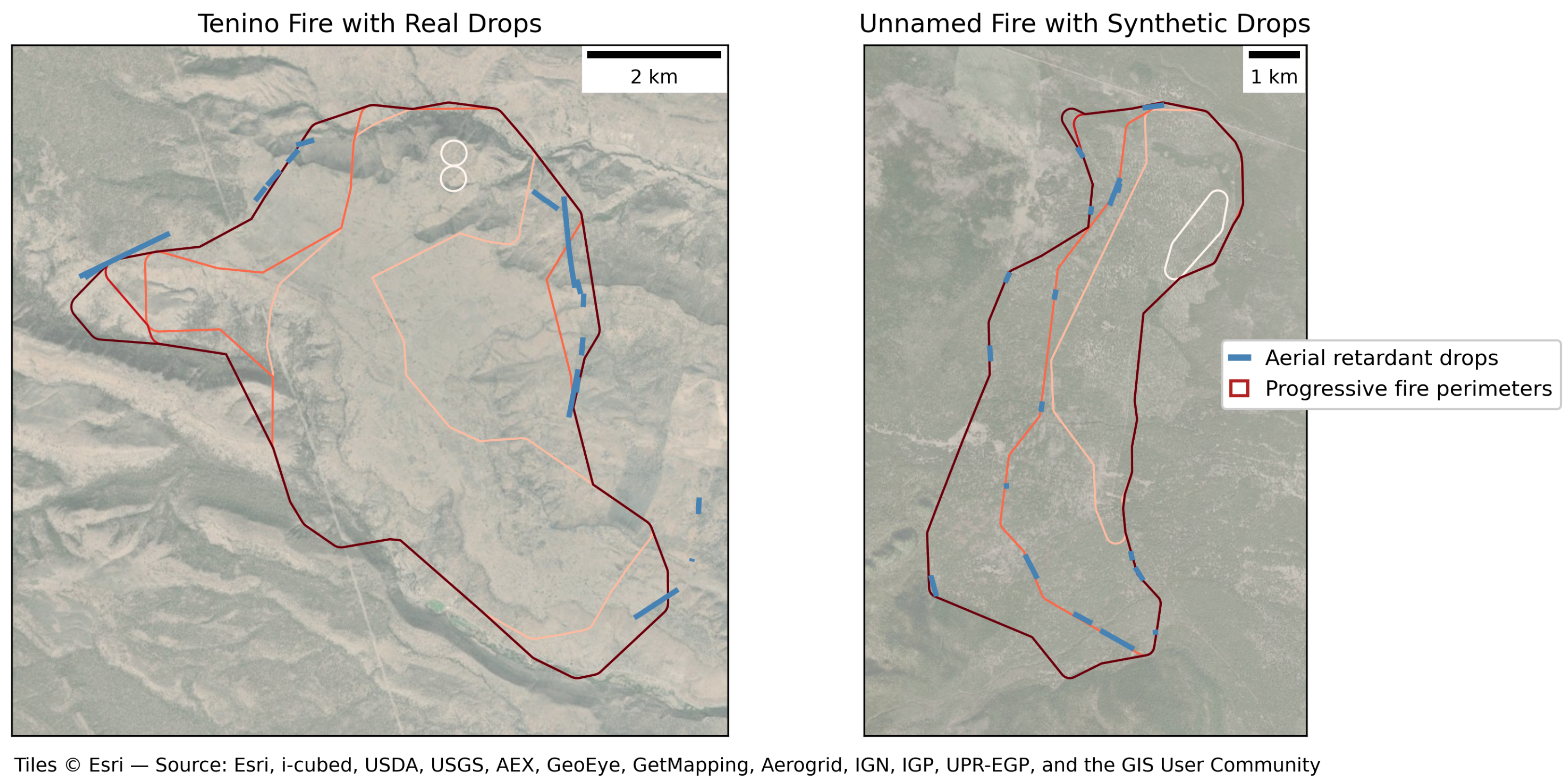
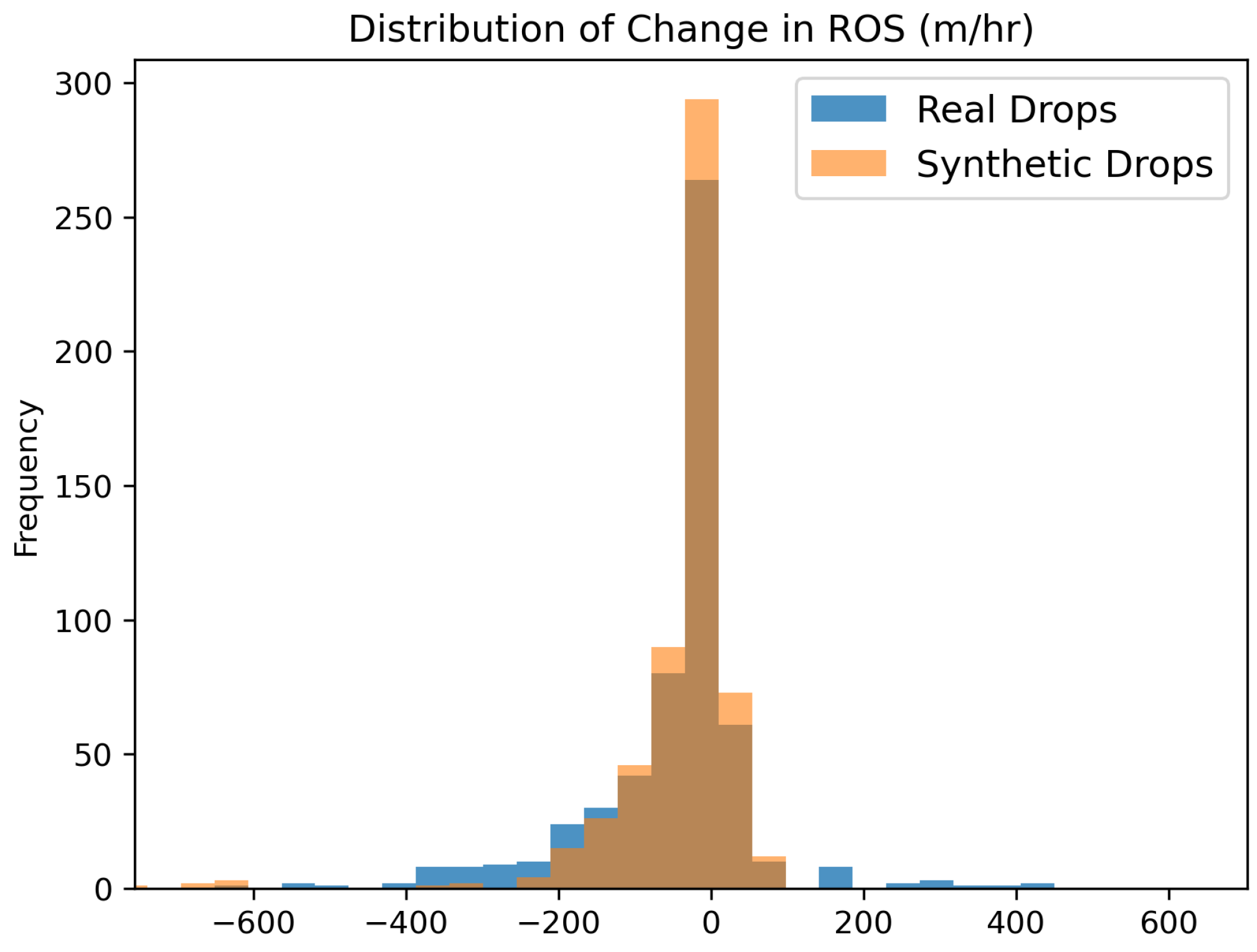
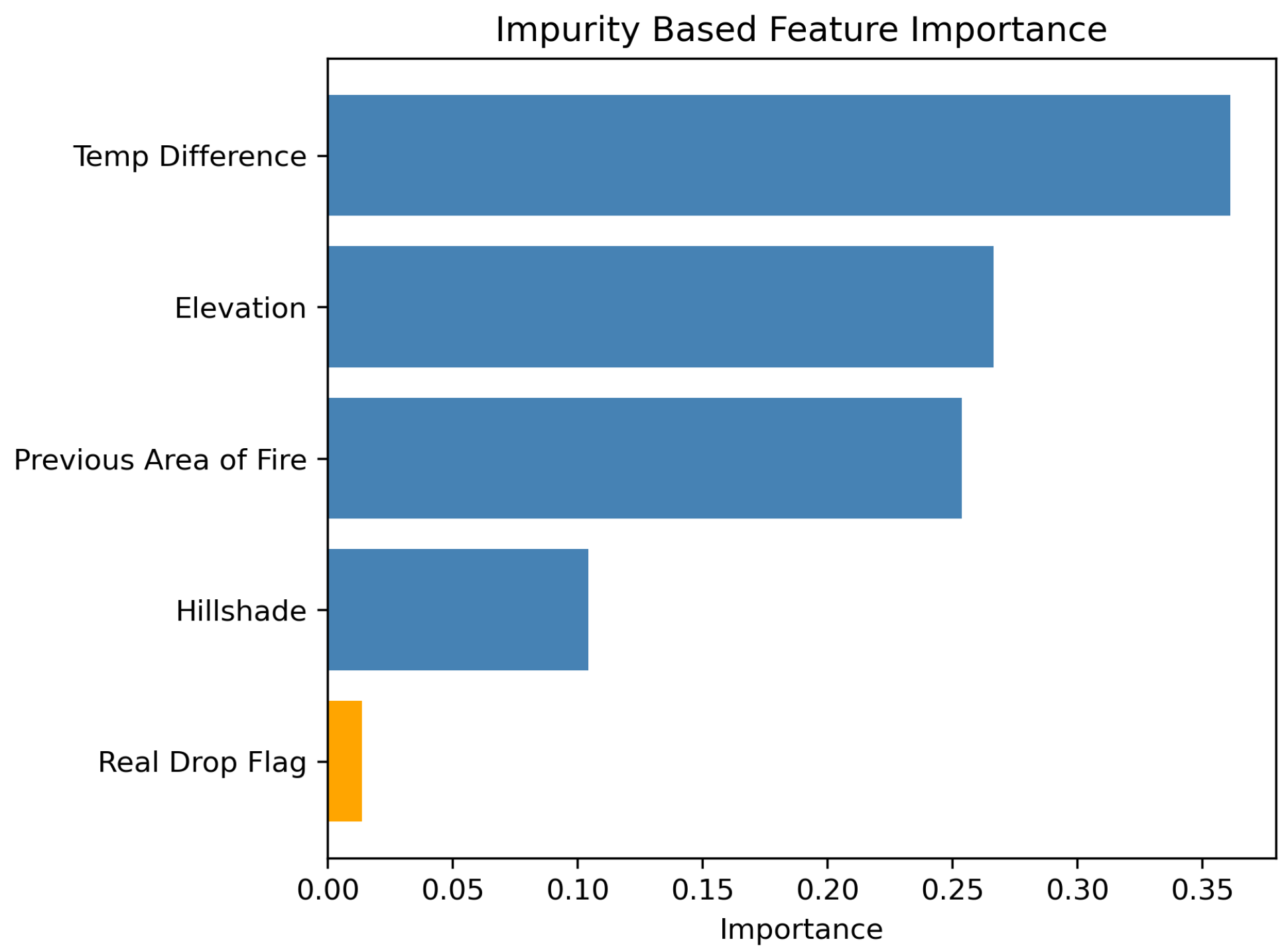
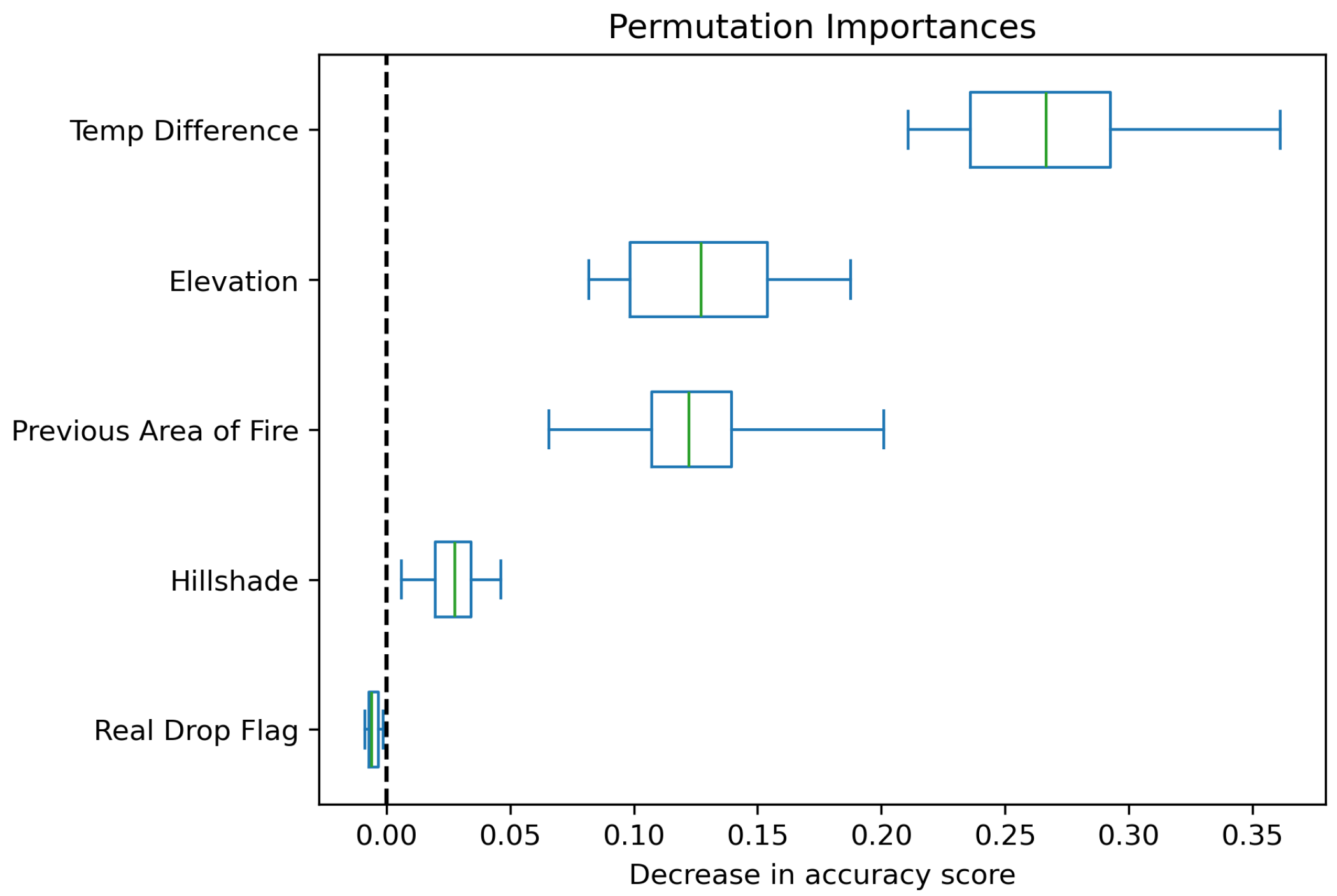
Aerial retardant drops are widely used in wildfire suppression, yet their effectiveness in slowing fire spread remains difficult to quantify at scale. This study evaluates their impact on wildfire rate of spread (ROS) using a framework that combines observed and counterfactual (synthetic) drop locations from 62 Oregon wildfires. Synthetic drops were generated to simulate a no-suppression baseline, enabling comparison of ROS with and without suppression. We trained two random forest classifiers: one with real and synthetic drops (full model) and one with only synthetic drops. Both incorporated environmental and topographic features to predict whether spread slowed following a drop. While the full model performed well, the real-synthetic indicator had low feature importance, offering limited causal evidence that aerial suppression consistently reduced spread. The synthetic-only model produced similar performance, suggesting that drops with observed ROS reductions often coincided with favorable environmental and topographic conditions and may have occurred independent of suppression. These findings highlight the challenges of evaluating suppression at scale and emphasize the need for finer data, detailed operational records, and advanced modeling to better assess the role of aerial fire retardant drops in future wildfire management activities.
Keywords: suppression; aerial retardant drops; fire management; rate of spread; causal inference; counterfactual modeling; machine learning suppression; aerial retardant drops; fire management; rate of spread; causal inference; counterfactual modeling; machine learning