
Article

Characterization of Acoustic Source Signal Response in Oxidized Autocombusted Coal Temperature Inversion Experiments

1
College of Safety Science and Engineering, Xi’an University of Science and Technology, Xi’an 710054, China
2
National Mine Emergency Rescue Xi’an Research Center, Xi’an 710054, China
3
Shaanxi Xikuang Zhitong Technology Co., Ltd., Xi’an 710054, China
*
Author to whom correspondence should be addressed.
Fire 2025, 8(7), 264; https://doi.org/10.3390/fire8070264
Submission received: 27 March 2025 / Revised: 19 June 2025 / Accepted: 25 June 2025 / Published: 3 July 2025
(This article belongs to the Special Issue Coal Fires and Their Impact on the Environment)

Abstract

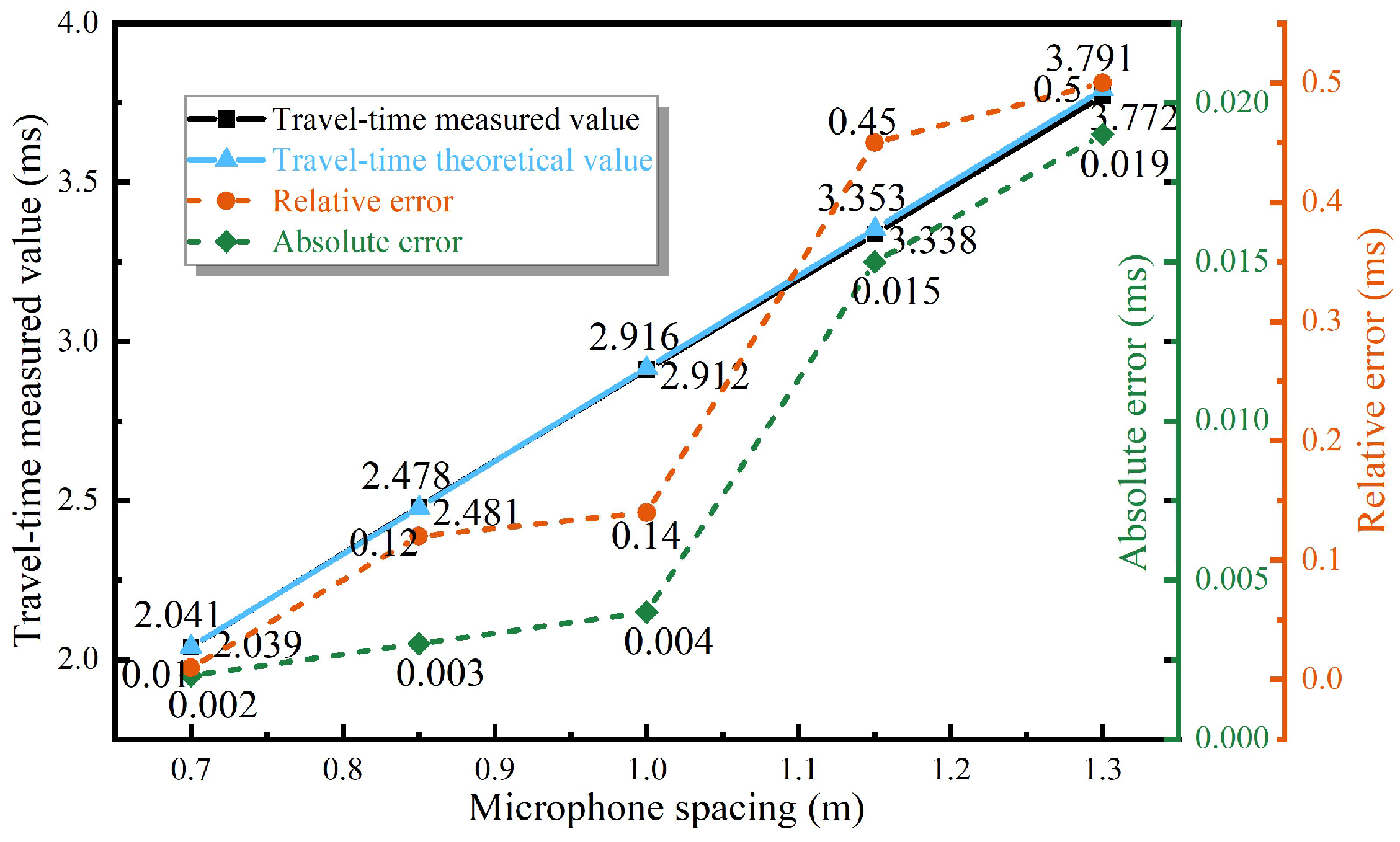
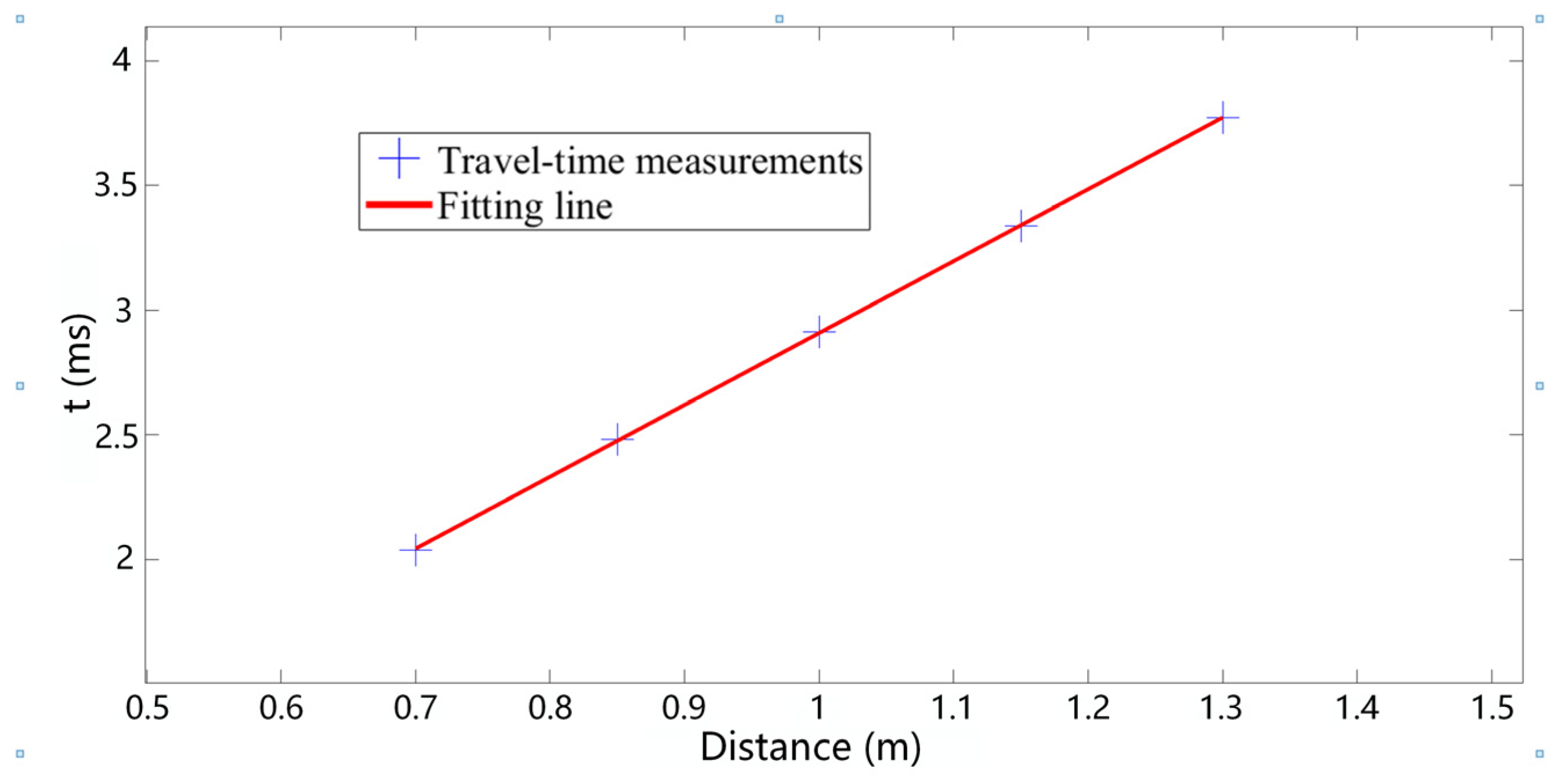
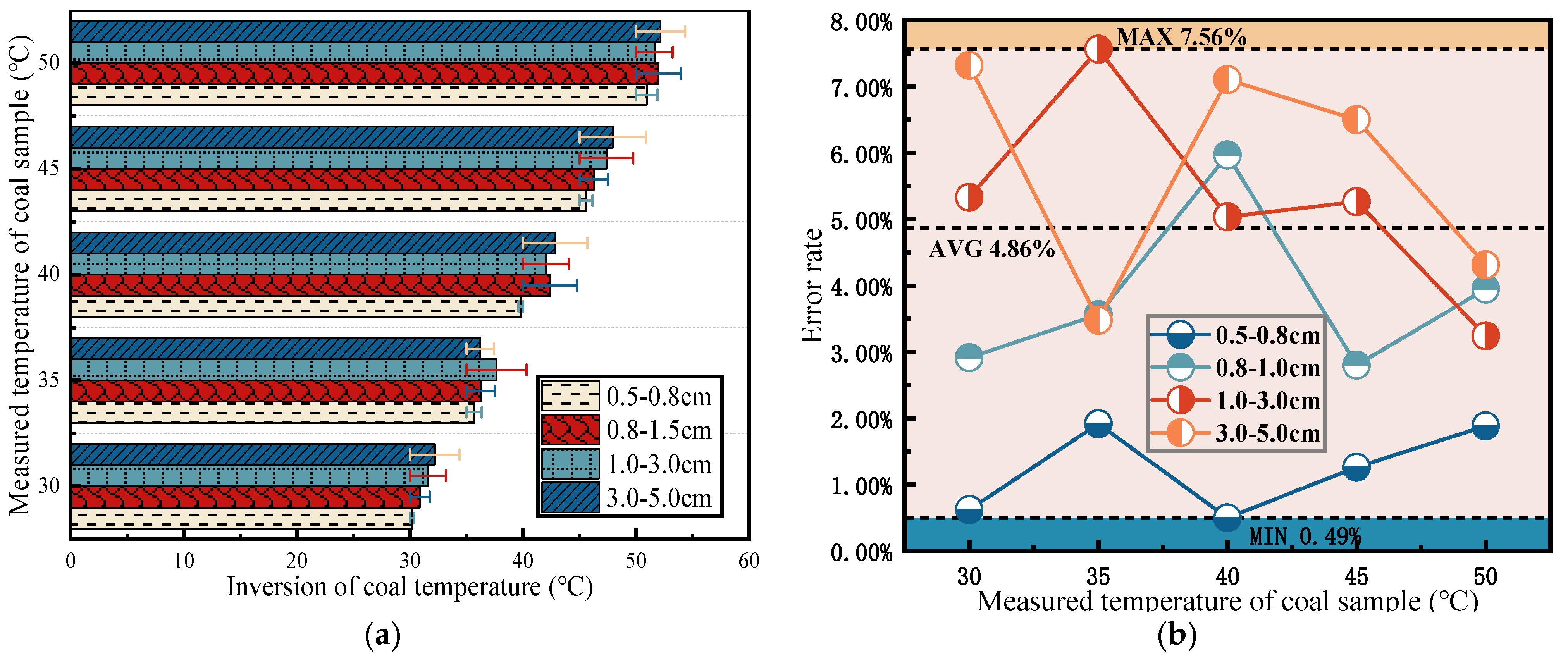
The measurement error of sound travel time, one of the most critical parameters in acoustic temperature measurement, is significantly affected by the type of sound source signal. In order to select more appropriate sound source signals, a sound source signal preference study of loose coal acoustic temperature measurement was performed and is described herein. The results showed that the absolute error of the swept signal and the pseudo-random signal both increased with increased acoustic wave propagation distance. The relative error of the swept signal showed a relatively stable upward trend; in comparison, the pseudo-random signal showed a general decrease with a large fluctuation in the middle section, and both the relative and absolute errors for the pseudo-random signal were larger than those of the swept signal. Therefore, the swept signal is expected to perform better than the pseudo-random signal in the loose coal medium. Based on the experimental results, the linear sweep signal was selected as the sound source signal for the loose coal temperature inversion experiments: the average error between the inverted temperature value and the actual value was 4.86%, the maximum temperature difference was 2.926 °C, and the average temperature difference was 1.5949 °C.
Keywords: loose coals; acoustic temperature measurement; sound travel time; pseudo-random signal; sweep signal loose coals; acoustic temperature measurement; sound travel time; pseudo-random signal; sweep signal